Parents who raised him, widow who shared his final years—and the painful inheritance disputes dividing families across the world
Death often reveals relationships that life managed to keep together.
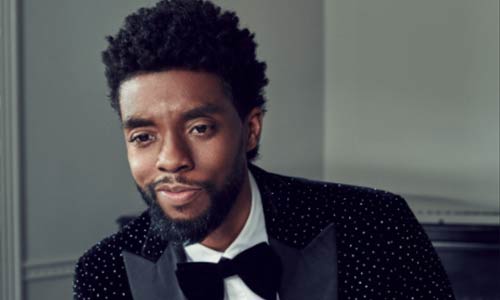
Nearly five years after the death of Hollywood actor Chadwick Boseman, the family of the Black Panther star has found itself at the centre of a legal battle that reaches far beyond money. It is a dispute over trust, legacy and a question that has divided families for generations: who should control the life and legacy of a loved one after death?
Court documents filed in Los Angeles show that Boseman’s brothers, Derrick and Kevin Boseman, acting on behalf of their parents, have asked a court to remove the actor’s widow, Taylor Simone Ledward, as administrator of his estate. They accuse her of failing to distribute estate assets, withholding financial information and excluding Boseman’s elderly parents from decisions affecting their late son’s multimillion-dollar legacy.
Ledward has not publicly responded to the latest allegations, and no court has determined that she acted improperly. The petition merely sets out the family’s claims, which she will have the opportunity to contest.
The dispute centres on an estate valued at approximately $3.8 million. Boseman died in August 2020 without leaving a will after a private four-year battle with colon cancer. Under California succession law, a court awarded half of the estate to his widow, with the remaining half divided equally between his parents. Ledward was appointed administrator of the estate.
According to the new filing, Boseman’s parents remain without the distributions they were awarded, while his widow allegedly continues to exercise exclusive control over the estate and the company established to manage his image, intellectual property and commercial rights.
For many observers, the case is another reminder that inheritance disputes are rarely driven by legal questions alone.
Behind almost every contested estate lies a complicated history that no courtroom can fully measure.
Parents often remember decades of sacrifice—raising a child, paying school fees, making personal sacrifices, encouraging dreams long before success arrived and standing beside them through years of uncertainty. Siblings frequently share those same memories, recalling years of struggle before fame, wealth or professional achievement transformed the family’s circumstances.
A spouse, on the other hand, may have shared only the final chapter of that journey but is recognised by law as the closest legal partner in marriage. The law protects that relationship because marriage creates legal rights and obligations that survive death. Emotional expectations within families, however, rarely follow the same legal boundaries.
It is within that gap that many inheritance disputes emerge.
Lawyers who handle probate matters often describe estate litigation as one of the most emotionally charged areas of legal practice. Arguments over money frequently conceal deeper grievances—feelings of exclusion, perceived ingratitude, unresolved family conflicts and competing beliefs about what the deceased would have wanted.
The Boseman case reflects that tension.
His brothers argue that their parents have been denied not only financial benefits but also meaningful involvement in preserving their son’s legacy. Their court filing describes ongoing emotional distress and speaks of the pain of watching Chadwick Boseman’s image continue to generate commercial value while they allegedly remain excluded from decisions concerning his estate.
Whether those allegations are ultimately upheld remains for the court to determine.
The dispute nevertheless highlights an uncomfortable reality that extends far beyond Hollywood.
Across Africa, Europe, the Americas and Asia, families have been torn apart after the death of successful parents, entrepreneurs, entertainers, politicians and business owners. In many cases, relationships built over decades collapse within months of a funeral. Brothers stop speaking. Parents become estranged from daughters-in-law or sons-in-law. Long-standing affection gives way to litigation.
Human nature often surfaces most sharply when grief intersects with wealth.
That is precisely why estate planning has become increasingly important. Lawyers consistently advise clients—particularly those with significant assets or public profiles—to prepare valid wills, establish trusts where appropriate and communicate their intentions clearly while they are alive. Such steps cannot eliminate every disagreement, but they often reduce the uncertainty that allows suspicion and conflict to flourish.
For Chadwick Boseman’s admirers, the court proceedings present a poignant contrast.
The actor who inspired millions through his portrayal of a king determined to unite his people has become the subject of a family dispute over the stewardship of his own legacy.
The courts will determine the legal issues.
The emotional questions may take far longer to resolve.