Apparently overwhelmed by Nigeria’s worsening electricity crisis, the Federal Government has asked all 36 states to take charge of power supply.
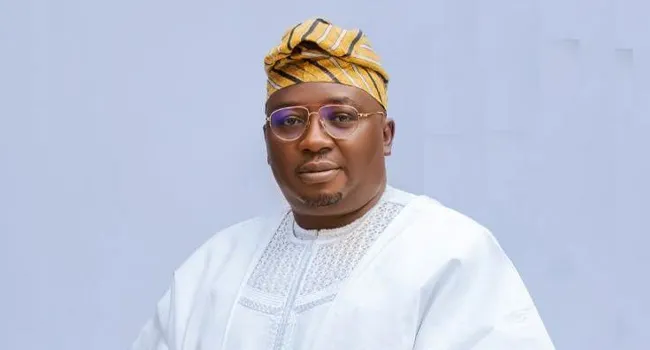
Minister of Power, Adebayo Adelabu, said states must now generate, transmit, and distribute their own electricity.
He spoke at the Nigeria Energy Leadership Summit in Lagos, declaring that power centralisation “can never work” for a country this large.
According to him, the Electricity Act 2023 has ended Abuja’s monopoly over the power sector.
“The Act decentralises electricity and gives states full control to generate and regulate power within their territories,” he said.
Adelabu insisted that only decentralisation can solve Nigeria’s persistent electricity failures, adding, “From Abuja, you cannot guarantee light for everyone.”
He explained that the new law allows states to set up their own electricity markets and attract private investors.
So far, 15 states have gained regulatory autonomy, with Enugu leading the way through its own Electricity Regulatory Commission.
Adelabu challenged governors to stop waiting for the Federal Government and start driving power generation in their regions. “You must take steps to activate this autonomy,” he urged. “Cows don’t make milk; you milk them.”
He called on states to woo investors into building solar, wind, hydro, and thermal plants to secure local energy independence.
“Many Nigerian states are bigger than some West African countries,” he said. “They should run their power systems like nations.”
Adelabu also asked governors to challenge distribution companies and the Transmission Company of Nigeria for better grid supply.
“Get closer to the DisCos. Track them. Challenge them,” he charged. “Electricity is an electoral promise.”
He noted that 21 states have yet to establish electricity markets despite the powers granted by the 2023 Act.
Enugu’s power regulator, Chijioke Okonkwo, confirmed that states are ready to take over electricity delivery. “States must drive this revolution. That’s the way forward,” Okonkwo said, inviting investors to build mini-grids in Enugu.
Lagos Governor Babajide Sanwo-Olu also pledged readiness to partner with investors willing to power the state’s industries.
Katsina Governor Dikko Radda made a similar call, promising to invest heavily in renewable and local power generation.
Adelabu disclosed that the power sector earned N1.7 trillion in 2024, with revenue projected to exceed N2 trillion next year.
He said private sector investment remains vital, warning that government funds alone cannot sustain the power industry. “We must open the door to private capital,” he said. “No government can fund this sector alone.”
Nigeria currently flares over 241 million standard cubic feet of gas annually—enough to power several cities. Despite having 20 power plants, generation now fluctuates between 2,000 and 3,500 megawatts.
Experts blame gas shortages, unpaid debts, and ageing infrastructure for the country’s declining electricity output.
Nigeria owes gas suppliers $1.3 billion, even as gas worth $1.9 billion was flared between 2020 and 2024.
Analysts call this a national tragedy and an act of economic sabotage.
“The irony is painful,” an energy analyst said. “We flare what we need and borrow to buy it back.”
The minister admitted that Nigeria’s 10GW of stranded power capacity could light up industries and boost exports. “We are open to partnerships to unlock this potential,” Adelabu said.
Energy experts say renewable energy could finally end the nation’s electricity nightmare.
They argue that solar, wind, and hydro power—backed by the Electricity Act—could secure energy and cut emissions.
“The answers are here,” one expert said. “What Nigeria lacks is the will to act.”
As power generation drops and tariffs rise, Nigerians wait for light—literally and politically.