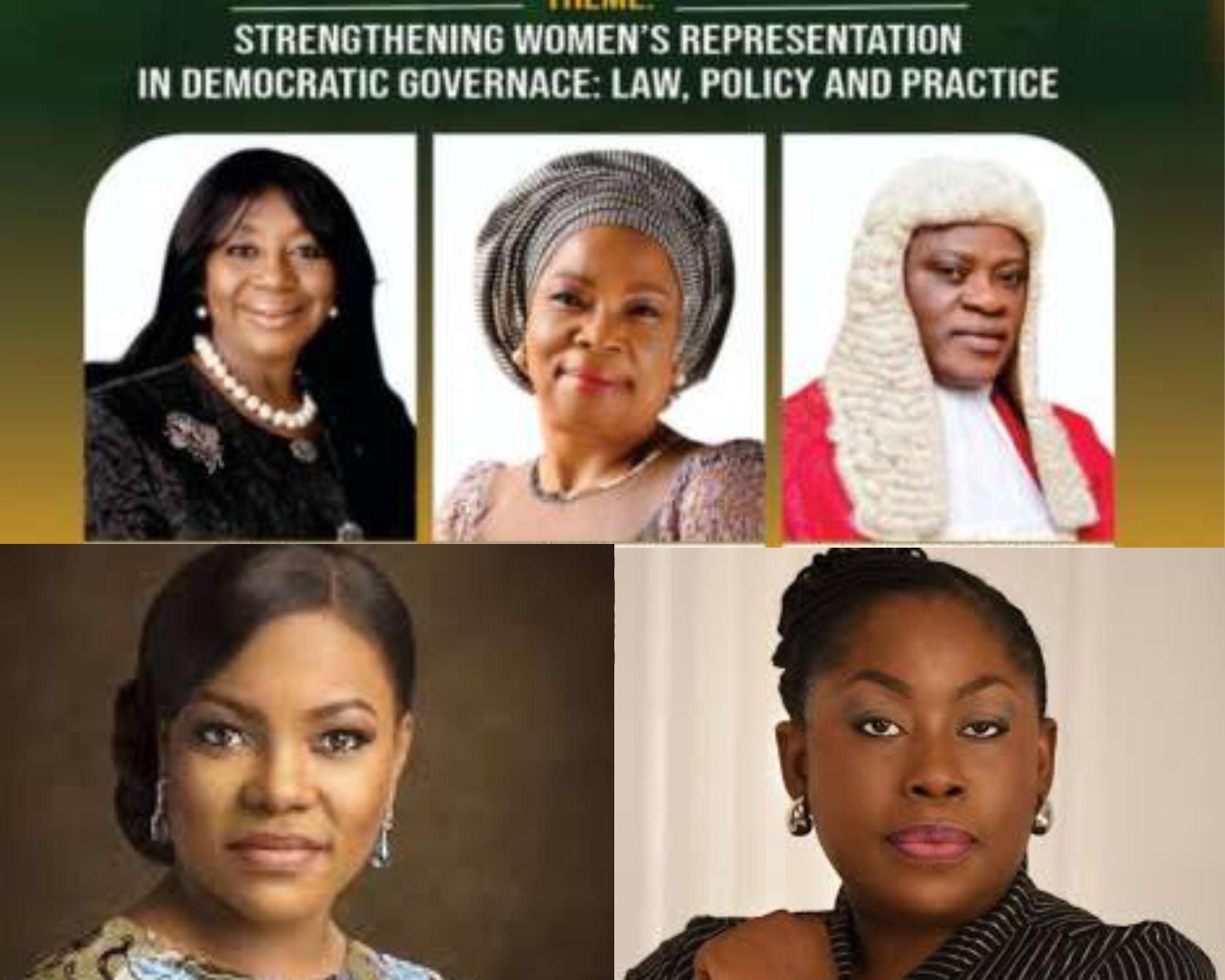
Represented by Hon. Justice Maryann E. Anenih, the FCT Chief Judge says women’s exclusion from power is a justice issue—not charity—as former lawmaker Nkoyo Toyo and FIDA leaders intensify calls for sweeping political reforms ahead of 2027.
The Chief Judge of the Federal Capital Territory (FCT) High Court, Hon. Justice Husseini Baba Yusuf, has declared that Nigeria cannot build a truly democratic and inclusive society while women remain on the margins of political leadership and public decision-making.
Represented by Hon. Justice Maryann E. Anenih at the opening ceremony of the 2026 Second Quarter National Executive Council (NEC) Meeting of the International Federation of Women Lawyers (FIDA) Nigeria in Abuja, the Chief Judge said the demand for greater representation of women in governance is rooted in constitutionalism, justice and democratic legitimacy—not tokenism.
Speaking under the conference theme, “Strengthening Women’s Representation in Democratic Governance: Law, Policy and Practice,” Justice Anenih said democracy is measured not merely by elections but by the fairness, inclusiveness and quality of participation within its institutions.
“Women must not be seen as peripheral actors in governance, but as indispensable stakeholders whose perspectives and capacities are essential to building responsive institutions and sustainable societies,” she said on behalf of the Chief Judge.
She stressed that the conversation should move beyond numerical representation to ensuring women have genuine influence over policymaking and institutional leadership, while dismantling the social, political and structural barriers that continue to impede their advancement.
Justice Anenih further challenged participants to confront difficult questions about how the law can be deployed as an instrument of inclusion and transformation, insisting that courts, lawyers and civil society must work together to preserve democracy and protect fundamental rights. She praised FIDA Nigeria’s role in advocacy, litigation and legal reform, describing the organisation as a critical partner in advancing justice and equality.
The judicial intervention aligned closely with the keynote address delivered by former diplomat and ex-member of the House of Representatives, Hon. Nkoyo E. Toyo, who argued that legal equality alone has failed to translate into substantive political inclusion for women.
Toyo maintained that although Nigerian women possess the formal right to vote and contest elections, entrenched cultural, economic and institutional barriers continue to deny them equal opportunities in practice. She urged organisations such as FIDA to sustain pressure for affirmative action reforms, including passage and effective implementation of the proposed Special Seats Bill and broader electoral reforms capable of addressing systemic exclusion.
She also called for stronger gender quotas within political parties, campaign finance reforms, protection against electoral violence targeting women and sustained advocacy beyond the 2027 elections to transform formal equality into meaningful representation.
Welcoming delegates from 46 FIDA branches across the country, Chairperson of FIDA Nigeria, Abuja Branch, Chioma Onyenucheya-Uko, described Abuja as the rallying ground for advancing women’s rights, protecting vulnerable persons and strengthening democratic institutions.
According to her, representation is not simply about occupying seats but about influencing outcomes, shaping public policy and ensuring governance reflects the experiences and aspirations of all citizens. She praised the commitment of members who travelled from across Nigeria and urged participants to ensure that the conference produces practical, solution-driven outcomes capable of moving women’s representation “beyond aspiration into sustainable reality.”
Onyenucheya-Uko also commended FIDA Nigeria Country Vice President Eliana Martins for her leadership and lauded the presence of distinguished guests, including the FCT Chief Judge, keynote speaker Nkoyo Toyo and Court of Appeal Justice Suzette Eberechi Wike, a matron of FIDA Abuja, saying their participation underscored the growing collaboration between the judiciary, legal profession and civil society in advancing justice and inclusive governance.
As Nigeria inches toward the 2027 general elections, the consensus emerging from the Abuja summit was unmistakable: strengthening democracy requires more than constitutional guarantees. It demands deliberate reforms, institutional accountability and a political culture that enables women not only to participate but to lead.