Home Blog Page 999

Punishment for Tenant that Forces Landlord Out.

Punishment for Tenant that Forces Landlord Out. Daily Law Tips (Tip 760) by Onyekachi Umah, Esq., LL.M, ACIArb(UK)

Introduction:

“Punishment for Tenant that Forces Landlord Out” may sound unpopular when compared to “Punishment for Landlord that Forces Tenant Out”. In reality, there are situations where tenants are very cantankerous to the extent of seeking to perpetuate their stay without rent or to escape with unpaid rent. The Nigerian law has punishment for tenant that forces landlord out (ie, unlawfully retaking possession premises from landlord). For every wrong, there is a remedy.

Unlawful Repossession of Property:

Where there is a dispute arising from a tenancy agreement, parties are to seek justice in court. A landlord is always a landlord and there is no way a tenant will take over the property of a landlord. No matter the duration of a tenancy relationship or the sum paid as rent or the failure of a landlord to repair property, a tenant cannot forcefully take over the property of a landlord.

A landlord can recover his property from a tenant by approaching a court of law for an order for repossession of property. Courts will not grant such orders without hearing the case of landlord and that of his tenant. Also, ahead of such hearing a landlord is expected to have served a “Notice to Quit” and a “Notice of Owner’s Intention to Recover Possession”. However, there are few cases where a landlord does not need to issue a “Notice to Quit” to a tenant. It is based on evidence placed before a court, that a court will grant a landlord repossession of property and also order tenant to vacate the property.

Where a court grants an order of repossession to a landlord, the tenant can appeal the judgment, where the tenant believes there is injustice in the processes of the court that led to the order. If there is no appeal, then the tenant must obey the order of court and vacate the premises, so that the landlord can repossess his property.

There are cases where after an order of court (judgment) grants repossession to landlord, tenant refuses to vacate the property or the tenant vacates but returns to retake the property. This is a foolish violation of an order of court. Where there is an order of court, there, is the power of government. One that disregards a landlord that has an order of court, is one that has disregarded a court and the powers of government. For every action there is a consequence and for every violation of an order of court, comes sanctions.

It is a criminal offense for a tenant that has vacated a property following an order of court to unlawfully retake possession of the property from the landlord. It is an offence punishable with a fine of One Hundred Naira (N100.00) or imprisonment for six (6) months or both. This is the punishment in Abuja, the Federal Capital Territory and this punishment differs from what is obtainable in some states in Nigeria.

Conclusion:

Arguably, since there are more tenants than landlords in Nigeria and the poverty lines are expanding, one may hear more disturbing stories of harsh landlords. It does not mean that tenants are saints. There are cases where tenants have dealt mercilessly with their landlords; escape with unpaid rents, maliciously damage property, sublet property, accumulate utilities and even fraudulent sell or attempt to sell the property of their landlords. So, both landlords and tenants need legal protection, since man is naturally greedy and self-seeking.

Where for any reason, a tenant vacates a property sequel to an order of court, the tenant has no right to seek to forcefully repossess such property from the landlord. The punishment for such is a fine or imprisonment or both. While the imprisonment is 6 months, the fine is N100.00 and with minimum wage at N30,000.00, the fine is too poor. The fine of N100.00 cannot deter crime. The federal legislatures must amend the 1945 law on landlords and tenants in Abuja (Recovery of Premises Act) to flow with present day realities. And, state legislatures must also do same for their states.

My authorities, are:

  1. Sections 1, 2, 3, 6, 33, 34, 35, 36, 37, 38, 39, 40, 41, 42, 43, 44, 45 and 46 of the Constitution of the Federal Republic of Nigeria, 1999.
  2. Sections 1, 2, 4, 6, 7, 8, 9, 10, 13, 19, 20 and 27 of the Recovery of Premises Act 1945, Laws of the Federation of Nigeria (ABUJA) and other similar tenancy laws across the states in Nigeria.
  3. Onyekachi Umah, “What Happens To Tenants When Property Is Sold?” (LearnNigerianLaws.com, 4 March 2021) <https://learnnigerianlaws.com/what-happens-to-tenants-when-property-is-sold/> accessed 18 March 2021.
  4. Onyekachi Umah, “Can Money Spent on Repairs be Recovered from Rent?“ (LearnNigerianLaws.com, 25 February 2021) <https://learnnigerianlaws.com/can-money-spent-on-repairs-be-recovered-from-rent/> accessed 18 March 2021
  5. Onyekachi Umah, “Punishments For Landlords and Tenants In Nigeria” (LearnNigerianLaws.com, 1 February 2021) <https://learnnigerianlaws.com/punishments-for-landlords-and-tenants-in-nigeria/> accessed 18 March 2021.
  6. Onyekachi Umah, “Why Tenant Should Accept Letters & Notices From Landlord” (LearnNigerianLaws.com, 20 January 2021) <https://learnnigerianlaws.com/why-tenant-should-accept-letters-notices-from-landlord/> accessed 31 January 2021.
  7. Onyekachi Umah, “Tenants & Squatters Can Sue Landlords For Violation of Human Rights” (LearnNigerianaws.com, 18 September 2020) <https://learnnigerianlaws.com/tenants-squatters-can-sue-landlords-for-violation-of-human-rights/> accessed 19 January 2021.
  8. Onyekachi Umah, “Should Landlord Stop Rent-Owing Tenants from Moving Out?” (LearnNigerianLaws.com, 26 August 2020) <https://learnnigerianlaws.com/should-landlord-stop-rent-owing-tenants-from-moving-out/> accessed 19 January 2021.
  9. Onyekachi Umah, “Covid-19 and Landlords: Can Government Force Landlords not to Eject Tenants?” (LearnNigerianLaws.com, 15 April 2020) <https://learnnigerianlaws.com/covid-19-and-landlords-can-government-force-landlords-not-to-eject-tenants-daily-law-tips-tip-548-by-onyekachi-umah-esq-llm-aciarbuk/> accessed 19 January 2021.
  10. Onyekachi Umah, “House Rent and COVID-19: Can Landlords Evict Tenants?” (LearnNigerianLaws.com, 7 April 2020) <https://learnnigerianlaws.com/house-rent-and-covid-19-can-landlords-evict-tenants-daily-law-tips-tip-542-by-onyekachi-umah-esq-llm-aciarbuk/> accessed 19 January 2021.
  11. Onyekachi Umah, “Landlords Are Entitled To Rent Sum Even Where Notices To Quit Are Served On Tenants“ (LearnNigerianLaws.com, 23 October 2018) <https://learnnigerianlaws.com/daily-law-tips-by-onyekachi-umah-esq-tip-211-landlords-are-entitled-to-rent-sum-even-where-notices-to-quit-are-served-on-tenants/> accessed 19 January 2021.
  12. Onyekachi Umah, “Rights of Tenants and Landlords in Nigeria” (LearnNigerianLaws.com, 2 September 2018) <https://learnnigerianlaws.com/rights-of-landlords-and-tenants-in-nigeria/> accessed 19 January 2021.
  13. Onyekachi Umah, ““After A Property Occupied By Tenants Is Sold, Who Should Such Tenants Hold Responsibile?” (LearnNigerianLaws.com, 16 July 2018) <https://learnnigerianlaws.com/daily-law-tips-by-onyekachi-umah-esq-tip-142-after-a-property-occupied-by-tenants-is-sold-who-should-such-tenants-hold-responsibile/> accessed 19 January 2021
  14. Onyekachi Umah, “Estate Surveyors and Valuers Cannot Prepare Tenancy/Land Documents” (LearnNigerianLaws.com, 30 November 2020) <https://learnnigerianlaws.com/estate-surveyors-and-valuers-cannot-prepare-tenancy-land-documents/> accessed 19 January 2021.
  15. Onyekachi Umah, “How To Prove Payment of Rent and Who Must Prove It.” (LearnNigerianLaws.com, 1 October 2020) <https://learnnigerianlaws.com/how-to-prove-payment-of-rent-and-who-must-prove-it/> accessed 19 January 2021.
  16. Onyekachi Umah, “Can a Landlord Increase Rent During Economic Hardship?” (LearnNigerianLaws.com, 8 September 2020) <https://learnnigerianlaws.com/can-a-landlord-increase-rent-during-economic-hardship/> accessed 19 January 2021.
  17. Onyekachi Umah, “Should a Landlord Remove Roof of a Tenant For Failure to Pay Rent/Pack out?” (LearnNigerianLaws.com, 3 August 2020) <https://learnnigerianlaws.com/should-a-landlord-remove-roof-of-a-tenant-for-failure-to-pay-rent-pack-out-daily-law-tips-tip-624-by-onyekachi-umah-esq-ll-m-aciarbuk/> accessed 19 January 2021
  18. Onyekachi Umah, “Should a Landlord Lock Gates/Doors of a Tenant for Failure to Pay Rent/Pack Out ?” (LearnNigerianLaws.com, 29 July 2020) <https://learnnigerianlaws.com/should-a-landlord-lock-gates-doors-of-a-tenant-for-failure-to-pay-rent-pack-out-daily-law-tips-tip-620-by-onyekachi-umah-esq-ll-m-aciarbuk/> accessed 19 January 2021.
  19. Onyekachi Umah, “Should a Landlord Cut-off Tenant from Water/Electricity Supply for Failure to Pay Rent/Pack Out?” (LearnNigerianLaws.com, 17 July 2020)  <https://learnnigerianlaws.com/should-a-landlord-cut-off-tenant-from-water-electricity-supply-for-failure-to-pay-rent-pack-out-daily-law-tips-tip-612-by-onyekachi-umah-esq-ll-m-aciarbuk/> accessed 19 January 2021.
  20. Onyekachi Umah, “Can a Landlord Increase Rent Without Consent of his Tenant?” (LearnNigerianLaws.com, 9 June 2020) <https://learnnigerianlaws.com/can-a-landlord-increase-rent-without-consent-of-his-tenant-daily-law-tips-tip-585-by-onyekachi-umah-esq-llm-aciarbuk/> accessed 19 January 2021.
  21. Onyekachi Umah, “How To Legally Make Landlord Pay Back Or Deduct From Rent, Money Spent On His Property By Tenant” (LearnNigerianLaws.com, 9 November 2019) <https://learnnigerianlaws.com/how-to-legally-make-landlord-pay-back-or-deduct-from-rent-money-spent-on-his-property-by-tenant-daily-law-tips-tip-454-by-onyekachi-umah-esq-llm-aciarb-uk/> accessed 19 January 2021.
  22. Onyekachi Umah, “The Making of a Hybrid Tenancy/Lease Agreement; a Guide for Lawyers and Landlords in Nigeria.” (LearnNigerianLaws.com, 6 July 2019) <https://learnnigerianlaws.com/the-making-of-a-hybrid-tenancy-lease-agreement-a-guide-for-lawyers-and-landlords-in-nigeria/> accessed 19 January 2021.
  23. Onyekachi Umah, “Effect Of A Notice To Quit In Nigeria.” (LearnNigerianLaws.com, 3 August 2018) <https://learnnigerianlaws.com/daily-law-tips-by-onyekachi-umah-esq-tip-156-effect-of-a-notice-to-quit-in-nigeria/> accessed 19 January 2021.
  24. Onyekachi Umah, “Rights of a Tenant In Nigeria.” (LearnNigerianLaws.com, 11 March 2016) <https://learnnigerianlaws.com/rights-of-a-tenant/> accessed 19 January 2021.
  25. Onyekachi Umah, “Rights of a Landlord In Nigeria” (LearnNigerianLaws.com, 11 March 2016) <https://learnnigerianlaws.com/rights-of-a-landlord/> accessed 19 January 2021.

Sabi Law Projects:

#SabiLaw

#DailyLawTips

#SabiBusinessLaw

#SabiElectionLaws

#SabiHumanRights

#SabiLawOnBeatFm

#SabiLawLectureSeries

#CriminalJusticeMonday

#SabiLawVideoChallenge

Speak with the writer, ask questions or make inquiries on this topic or any other via [email protected], [email protected] or +2348037665878 (whatsapp).

To receive free Daily Law Tips, join our free WhatsApp group via https://chat.whatsapp.com/DgFYxiYw6Mm8MdvOl3N1yn  or Telegram group, via the below link: https://t.me/LearnNigerianLaws

To keep up to date on all our free legal awareness projects of Sabi Law Foundation, follow us via

Facebook Page:@LearnNigerianLaws, Instagram: @LearnNigerianLaws, Twitter: @LearnNigeriaLaw and YouTube: Learn Nigerian Laws

Please share this publication for free till it gets to those that need it most. Save a Nigerian today! NOTE: Sharing, modifying or publishing this publication without giving credit to the author or Sabi Law Foundation is a criminal breach of copyright and will be prosecuted. This publication is the writer’s view not a legal advice and does not create any form of relationship. You may reach the writer for more information.

This publication is powered by www.LearnNigerianLaws.com {A Free Law Awareness Program of Sabi Law Foundation, supported by the law firm of Bezaleel Chambers International (BCI).} Sabi Law Foundation is a Not-For-Profit and Non-Governmental Legal Awareness Organization based in Nigeria.


Free Copy of the Nigeria Civil Aviation Regulations 2015

Click to download a free copy of the Nigeria Civil Aviation Regulations 2015 

On 7 December 2015, the Director General of Nigeria Civil Aviation Authority (NCAA), signed into law the Nigeria Civil Aviation Regulations 2015. The Nigeria Civil Aviation Regulations (Nigeria CAR) was first promulgated in 2006 to provide national requirements in line with the provisions of the Civil Aviation Act, 2006 and for standardized operational procedures, equipments and infrastructure including safety management and training system in conformity with Standard and Recommended Practices (SARPs) contained in the Annexes to the Chicago Convention. Free Copy of the Nigeria Civil Aviation Regulations 2015 is here

The Nigeria Civil Aviation Regulations 2015 constitutes the third amendments to the Nigerian Civil Aviation Regulations since its promulgation in November 2006. The Nigeria Civil Aviation Regulations 2015 has been updated to incorporate the most recent ICAO amendments to the SARPs and now contains a new Part 20 to conform with the ICAO Annex 19 on Safety Management.

The Nigeria Civil Aviation Regulations 2015 has 20 Parts. Each Part of the Regulations contains Implementing Standards which provides detailed requirements that support the intent of a regulation in the Part. The parts are:

Part 1—General Policies, Procedures and Definitions ; Part 2—Personnel Licensing ;
Part 3—Approved Training Organization ;
Part 4—Aircraft Registration and Marking ;

Part 5—Airworthiness ;
Part 6—Approved Maintenance Organization ;
Part 7—Instrument and Equipment ;
Part 8—Operations ;
Part 9—Air Operator Certification and Administration ;
Part 10—Commercial Air Transport by Foreign Air Operators within

Nigeria ;
Part 11—Aerial Works ;

Part 12—Aerodrome Regulations ;
Part 14—Air Navigation Services Regulations ;
Part 15—The Safe Transport of Dangerous Goods by Air Regulations ; Part 16—Environmental Protection Regulations ;
Part 17—Aviation Security Regulations ;
Part 18—Economic Regulations :
Part 19—Consumer Protection Regulations ; and
Part 20—Safety Management.

Click to download a free copy of the Nigeria Civil Aviation Regulations 2015 

Sabi Law Projects:

#SabiLaw

#DailyLawTips

#SabiBusinessLaw

#SabiElectionLaws

#SabiHumanRights

#SabiLawOnBeatFm

#SabiLawLectureSeries

#CriminalJusticeMonday

#SabiLawVideoChallenge

Speak with the writer, ask questions or make inquiries on this topic or any other via [email protected], [email protected] or +2348037665878 (whatsapp).

To receive free Daily Law Tips, join our free WhatsApp group via https://chat.whatsapp.com/DgFYxiYw6Mm8MdvOl3N1yn  or Telegram group, via the below link: https://t.me/LearnNigerianLaws

To keep up to date on all our free legal awareness projects of Sabi Law Foundation, follow us via

Facebook Page:@LearnNigerianLaws, Instagram: @LearnNigerianLaws, Twitter: @LearnNigeriaLaw and YouTube: Learn Nigerian Laws

Please share this publication for free till it gets to those that need it most. Save a Nigerian today! NOTE: Sharing, modifying or publishing this publication without giving credit to the author or Sabi Law Foundation is a criminal breach of copyright and will be prosecuted. This publication is the writer’s view not a legal advice and does not create any form of relationship. You may reach the writer for more information.

This publication is powered by www.LearnNigerianLaws.com {A Free Law Awareness Program of Sabi Law Foundation, supported by the law firm of Bezaleel Chambers International (BCI).} Sabi Law Foundation is a Not-For-Profit and Non-Governmental Legal Awareness Organization based in Nigeria. (Learnnigerianlaw)

Access To Justice Calls For Cancellation Of Selection Process For Court Of Appeal Judicial Nominees

— Says Process Largely Biased And Not Objective
— Accuses The Judiciary Of Being Indifferent Towards Its Declining Reputation
— Faults Unnecessary Meddlesomeness Of Executive In Judicial Affairs

A civil rights Non-governmental organization, ‘Access To Justice’, has called for the cancellation of the entire process adopted by the National Judicial Council [NJC] in screening Judicial nominees for possible elevation to the Court of Appeal.

In a press statement by Joseph Otteh, Convener and Deji Ajare, Project Director titled, ‘ Court of Appeal Appointments: Nigeria’s Judiciary Is Failing to Re-Inspire Public Trust Again’; the NGO noted that the Nigerian Judiciary has constantly failed to reorganize itself in ways capable of re-inspiring public confidence in its branch of government, noting that the confidence reposed in the Judiciary, has over the years been brutally shaken, yet, the Judiciary continuously acts indifferently to this public perception and image.

The civil rights group also noted the constant meddlesomeness of the executive arm in judicial affairs, especially with regards to its composition. It recalled the nonchalance of the presidency with regards to some selected names for appointment to the Supreme Court, until another list was sent, which allegedly had the names of persons from a particular tribe which was appealing to the presidency.

See below the full publication:

Introduction

On 19th of March, the National Judicial Council (NJC) announced, following its meeting of 17-18 March 2021, that it was recommending the appointment of eighteen (18) judges to the President for appointment as Justices of Court of Appeal. These appointments come on the heels of widespread controversies over the manner the selection of the recommended candidates was done, as well as over the geo-political composition of the selectee list forwarded to the NJC by the Federal Judicial Service Commission (FJSC). Quite a number of organizations representing various ethnic and faith communities alongside other stakeholders expressed dismay over the list, alleging that the process leading to candidate selections had been very compromised.

In her rebuttal, the President of the Court of Appeal Justice Dongban-Mensem stated that the current exercise passed through the due and usual process of appointment into the judiciary.

Appointments Come within Backdrop of Overt Political Interest by the Presidency in Appointing Preferred Persons into Appellate Court Positions

These appointments are taking place within the backdrop of past efforts by the Presidency to influence how the Judiciary is constituted. Recall that in October 2019, the NJC had submitted the names of four Justices of the Court of Appeal to the Nigerian President for confirmation[1] and appointment as Supreme Court Justices, but the President refused to forward those names to the Senate for confirmation until the NJC submitted, in August 2020 and nearly one year after, a further list of another four Justices, all from a particular region, , to him  for appointment as Supreme Court Justices. Soon after the submission of this additional list, the President sent all eight Justices’ names to the Senate for confirmation to the Supreme Court. The President’s letter to the Senate specifically said that the confirmation of all the Justices were “according to their ranking of seniority at the Court of Appeal”.

Appointment Procedures Flawed, Lacked Transparency with no Assurance that Selection Decisions Were Merit-Based

Given available information, including published remarks by an eye-witness – the Nigerian Bar Association (NBA) President – there is no evidence that the selection process of the Court of Appeal nominees met the standards of objectivity and merit stipulated by the Extant Revised NJC Guidelines & Procedural Rules for The Appointment of Judicial Officers of All Superior Courts of Record in Nigeria (“Appointment Guidelines”).

The FJSC which is responsible for ensuring that candidates for federal judicial office are selected based on stipulations of transparency, objectivity, a level-playing field and merit, has a dismal and notorious history of flouting the Appointment Guidelines and shielding information about what was actually done from the public.

There is nothing to indicate, for example, that the FJSC published the Court of Appeal vacancies on its website, or invited applications from all qualified persons for those vacancies, or placed vacancy notices on the notice boards of the NBA alongside sending relevant notices to the leadership of the NBA all of which is required under the Guidelines.

The outcome of the selection exercise shows that no nominee for the Appeal Court positions was selected from the Bar, in spite of the broad range of professional competencies found amongst practicing lawyers and academics. It further shows that the Judiciary is still maintaining its narrow, insular and counter-productive policy of excluding other qualified members of the legal community from consideration for appellate judicial positions, in spite of provisions of the Constitution and the appointment Guidelines.

Nigeria’s Judiciary Still Shooting Self in the Foot and Making Recipes for Disaster

Access to Justice is very concerned that Nigeria’s Judiciary is still failing to reorganize itself in ways capable of re-inspiring public confidence in that branch of government – confidence that has been brutally shaken in the last few years. The Judiciary appears not to be concerned that its public perception and image has undergone significant shifts over the years, and is rapidly declining.

On the contrary, the Judiciary is continuing its culture of “business as usual”; it is even doing more now to further weaken its poor standing. A broad range of public opinion will regard the selections for the Court of Appeal positions as mostly flawed and uninspiring, and will feel that the Judiciary is increasingly becoming the new frontier and battlefield for geo-political dominance and supremacy, rather than the politically non-aligned and neutral place it ought to be for settling legal disputes.

There are huge credibility gaps between the laid down judicial appointment procedures and what was actually followed by the FJSC in recommending the 18 candidates for appointment. The outcome of the selection process does not show, on the balance, that the process leading to the selections satisfied the criteria for appointments, nor met with the overall objective of putting the Judiciary’s front foot forward in matters of judicial appointments.  It is unfortunate that the Judiciary is stumbling in this way and allowing itself to be perceived with more and more distrust each passing day. We are concerned that the Judiciary continues to rob itself of the opportunities to refresh the button and reset how it moves forward with regard strengthening its capacity, given the stellar professional resources available in Nigeria.

Access to Justice therefore Demands:

  1. A cancelation of the entire judicial selection exercise and the commencement of another one, beginning with a Call for Expression of Interest.
  2. The adoption of a much more transparent, objective and rigorous process for evaluating the strengths and credentials of those applying for the available positions.
  3. The FJSC must use clear and uniform standards for assessing the strengths of those who express interests in the position. An institution or Committee of reputable legal experts quite independent of the FJSC should be tasked with the responsibility of examining and evaluating the credentials of all the nominees on their merits and submitting their recommendations to the FJSC. Based on the overall performance of the nominees, a short-list is sent to the NJC, which will use this as a basis of its review and recommendations.

[1] Even though process adopted in nominating those Justices did not comply with the relevant appointment Guidelines, the President nonetheless did not challenge the process. ()thenigerialawyer

Parents Give FG, El-Rufai 48 Hours To Rescue Abducted Students

Parents of the 39 students kidnapped at the Federal College of Forestry Mechanisation, Afaka, Igabi Local Government Area of Kaduna State, have given the Federal Government a 48-hour ultimatum, to rescue their sons and daughters that were kidnapped 12 days ago.

They gave the ultimatum at a press briefing shortly before they staged a peaceful protest at the premises of the College on Monday.

Addressing journalists’ spokesman of the parents, Comrade Friday Sanni said, they do not think enough was being done by the government to rescue their children.

The parents queried the Government’s alleged inaction towards the rescue of the children, noting that, when such ugly incident happened in Katsina, Zamfara and Niger states, the governments acted swiftly and ensured safe and timely rescue of the victims.

According to Sanni, “It is now 12 dark dreary days since the unfortunate incident happened and we as parents have not received any positive message from either the school management, the Minister of Environment under whose ministry the school is or the Kaduna State Government under whose territorial jurisdiction the school is located. This silence is unacceptable as it only feeds our hopelessness with each passing day.

“We have therefore called for this press conference to call the attention of Government at State and Federal levels and all stakeholders involved, and indeed the world, to act with dispatch to ensure the immediate and safe release of our children.”

Meanwhile, the protesting parents temporarily blocked the Kaduna-Birnin Gwari highway, carrying banners and placards with inscriptions like; “Bring Back our Children”, “Bring Back Our Students” and so on. (Thenigerialawyer)

Insecurity: Nigeria Is In A Critical Situation, Says Defence Minister

…DHQ Mulls Kinetic Approach To Tackle Insurgency, Banditry

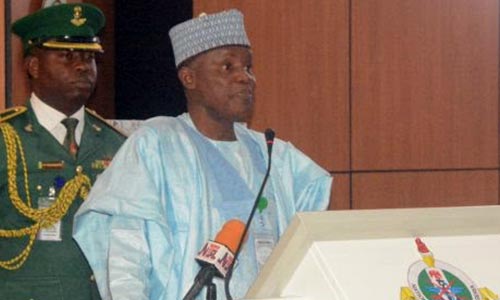
The Minister of Defence, Major General Salihi Magashi (rtd), Monday, hinted that Nigeria is in a critical situation following resurging terrorists’ attacks, banditry and abductions across the nation.

He however opined that the security challenges require support and collaboration of the civilian populace and critical stakeholders in the national task of securing the country.

According to the Minister who spoke at a National Defence and Security Summit organized by the Defence Headquarters with the theme ‘Promoting Kinetic Operations as a Major Plank for Counter Terrorism and Counter Insurgency in Nigeria’, “we are in a critical situation that requires the understanding, buy-in, support and collaboration of important stakeholders and key players in this strategic option and national task. This is important to minimize distractions and maximize civil support in order to facilitate operational success and mission outcomes.”

He added, “this Summit is coming at a sobering time in the life of our dear nation. A time, when merchants of violence are threatening to tear the very foundations of our nation; a time when diverse manifestations of security threats dot the landscape and impact individuals, communities and almost all sub-national entities in disconcerting ways; a time when fear and uncertainty pervades the land; and a time when global indicators of national insecurity give room for serious concern.”

“Physical insecurity in Nigeria unexpectedly, has both forward and backward linkages to different shades and forms of national security. Indeed, it is linked to political instability, economic under-development and social inequalities. Others are food insecurity and cumulative environmental degradation. These indicate the multi-dimensional nature of national insecurity.

“In view of these realities, the Federal Government of Nigeria has over the years applied a multi-lateral approach with our contiguous neighbours and multi-dimensional efforts domestically. In Southern Nigeria, the security approach include, but not limited to: the convening of various stakeholder dialogues in the Niger Delta; mounting of Single-Service, Joint and Special Task Forces; establishment of the Niger Delta Development Commission (NDDC); establishment of the Ministry of Niger Delta; declaration of the Presidential Amnesty Programme for repentant Niger Delta militants; proscription of the Independent Peoples of Biafra (IPOB); and the establishment of the Multinational Maritime Coordination Centre Zone E in the Gulf of Guinea.” (thenigerialawyer)

Is There A Reduction Of Levy For Imported Cars And Trucks?

Daily Law Tips (Tip 761) by Onyekachi Umah, Esq., LL.M, ACIArb(UK)

Introduction:
There is a federal law made on 31 December 2020 that became effective on 1st January 2021, that has brought in laudable changes in the Nigeria’s taxation climate. The Finance Act 2021 caused 80 amendments that affected about 13 existing federal laws. The law is popular for; the increase of Value Added Tax from 5% to 7.5%, creation of the Unclaimed Funds Trust Fund and the Crisis Intervention Fund of N500 Billion, and the exemption of low-income earners (earners of minimum wage or less) from Personal Income Tax, among other inventions. The 2020 Finance Act also affected the federal government levy on imported cars.

Imported Cars and the Finance Act:
One of the down sides of importation into Nigeria is the unpredictability of government levies. Practically, there is often no reliable algorithm for the assessment of importation levies/charges in Nigeria. Prior to 2021, import duty for cars was 30%, 35% for mass transit vehicles, trucks and tractors.

The Finance Act 2020, has caused a reduction of levy for imported cars in Nigeria. As from 1st January 2021, the Import duty on tractors has been reduce from 35% to 5%. Also, the import duty on mass transit vehicles (motor vehicles for the transportation of more than ten persons) and trucks (motor vehicle for transportation of goods) has been reduced from 35% to 10%, while import duty for import duty for cars has been reduced from 30% to 5%. Although the Finance Act was signed by the President of Nigeria on the 31 December 2020, the law came into force on the 1st January 2021. As such, the reduction of levy mandated by the law, became due on 1st January 2021.

Conclusion:
Relying on the new Finance Act 2020, import levy on cars, trucks and tractors have been reduced by the federal government of Nigeria. While the sprouting local automobile manufacturers lament over the reduction, the Federal Government of Nigeria insists that the reduction will reduce the cost of transportation in Nigeria. Also, the Comptroller-General of the Nigeria Customs Service, believes that the reduction will discourage unlawful importation (smuggling).

My authorities, are:

1. Sections 1, 2, 3, 4, 5 and 6 of the Constitution of the Federal Republic of Nigeria, 1999.
2. Sections 1, 38, 81 and 81 of the Finance Act, 2020. Click to download a free copy of the Finance Act, 2020 <https://learnnigerianlaws.com/free-copy-of-the-finance-act-2020/>.
3. Bassey Udo, “Why Nigeria is slashing duty on imported cars from 35% to 5% — Osinbajo” (PremiumTimes, 24 November 2020) <https://www.premiumtimesng.com/news/top-news/427760-why-nigeria-is-slashing-duty-on-imported-cars-from-35-to-5-osinbajo.html> accessed 21 March 2021.
4. Onyekachi Umah, “Nigerian Customs Cannot Charge Import Duties On A Personal Luggage” (LearnNigerianLaws.com, 28 May 2020) <https://learnnigerianlaws.com/nigerian-customs-cannot-charge-import-duties-on-a-personal-luggage/> accessed 21 March 2021
5. Onyekachi Umah, “Why You Cannot Import Bees And Bee-Keeping Equipments Into Nigeria” (LearnNigerianLaws.com, 6 February 2020) <https://learnnigerianlaws.com/why-you-cannot-import-bees-and-bee-keeping-equipments-into-nigeria/> accessed 21 March 2021.
6. Onyekachi Umah, “List of Fruits/Plants Prohibited from Importation in Nigeria” (LearnNigerianLaws.com, 5 February 2019) <https://learnnigerianlaws.com/list-of-fruits-plants-prohibited-from-importation-in-nigeria/> accessed 21 March 2021.
7. Onyekachi Umah, “It Is A Crime To Import Opium Into Nigeria”(LearnNigerianLaws.com, 17 October 2018) <https://learnnigerianlaws.com/it-is-a-crime-to-import-opium-into-nigeria/> accessed 21 March 2021.
8. Onyekachi Umah, “It Is An Offence To Import Live Fish Into Nigeria Without License” (LearnNigerianLaws.com, 5 October 2018) <https://learnnigerianlaws.com/it-is-an-offence-to-import-live-fish-into-nigeria-without-license/> accessed 21 March 2021.

Sabi Law Projects:
#SabiLaw
#DailyLawTips
#SabiBusinessLaw
#SabiElectionLaws
#SabiHumanRights
#SabiLawOnBeatFm
#SabiLawLectureSeries
#CriminalJusticeMonday
#SabiLawVideoChallenge

Speak with the writer, ask questions or make inquiries on this topic or any other via [email protected], [email protected] or +2348037665878 (whatsapp).

To receive free Daily Law Tips, join our free WhatsApp group via https://chat.whatsapp.com/L7h4f1exItZ38FeuhXG4WN or Telegram group, via the below link: https://t.me/LearnNigerianLaws
To keep up to date on all our free legal awareness projects of Sabi Law Foundation, follow us via
Facebook Page:@LearnNigerianLaws, Instagram: @LearnNigerianLaws, Twitter: @LearnNigeriaLaw and YouTube: Learn Nigerian Laws

Please share this publication for free till it gets to those that need it most. Save a Nigerian today! NOTE: Sharing, modifying or publishing this publication without giving credit to the author or Sabi Law Foundation is a criminal breach of copyright and will be prosecuted. This publication is the writer’s view not a legal advice and does not create any form of relationship. You may reach the writer for more information.

This publication is powered by www.LearnNigerianLaws.com {A Free Law Awareness Program of Sabi Law Foundation, supported by the law firm of Bezaleel Chambers International (BCI).} Sabi Law Foundation is a Not-For-Profit and Non-Governmental Legal Awareness Organization based in Nigeria.

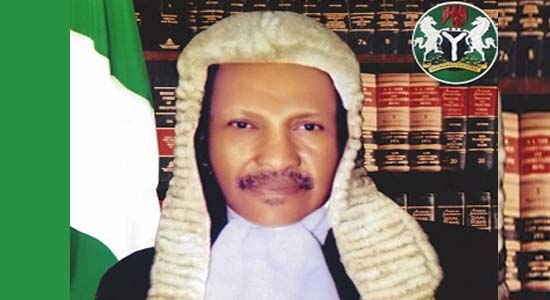
Olabode Rhodes-Vivour – The Legendary Jurist

By Ebun-Olu Adegboruwa, SAN

I was very young when I used to hear his name, as State Counsel in the Lagos State Ministry of Justice. He was popular with his adept handling of many criminal cases in court, so he was always in the news. I was thus very glad when he was elevated to the High Court Bench.

Many lawyers love to appear before him, as he was known to be well experienced and very practical in his approach to law and justice, generally. Then I had my personal experience in a protracted land matter wherein I appeared before him as counsel to the Claimants. He was not given to frivolous adjournments, technical objections and the usual tricks of counsel. He would have read the case file and was well abreast of the pleadings of the parties, such that he would confront you as counsel and challenge you to do the needful to achieve justice for all.

Then came the case of Gani Adams (now Aare Ona Kankanfo). Adams was arraigned before the Magistrate’s Court, Ebute-Metta, on trumped up charges and Chief Gani Fawehinmi, SAN, had his retainership. We filed an application for the enforcement of his fundamental rights and it was assigned to the Honourable Justice Rhodes-Vivour (as he then was). Before the application could be heard, members of the Oodua Peoples’ Congress who could not wait for due process of law, stormed the Magistrate’s Court in one of the sittings, in order to rescue and free Gani Adams, right inside the court. Chief Fawehinmi was furious, as he would not tolerate any assault on the rule of law.

On the day the application for the enforcement of fundamental rights was to be heard by Hon Jus Rhodes-Vivour, Chief Fawehinmi called me and instructed that we should withdraw our appearance in the case, in protest of the invasion of the Magistrate’s Court by members of OPC. I was a very young lawyer, with little or no experience. The case was adjourned for definite hearing, so how do I go before the judge to ask him to allow me to walk out of the case? Well, I had no choice in the matter, as Chief Fawehinmi was waiting for the outcome of the proceedings, with journalists all over the court.

When the case was called, I could not speak audibly, as I began to stammer, muttering some things only to myself. Hon. Jus Rhodes-Vivour kept asking me to speak up, to the extent that he asked me to move forward, so he could hear me clearly. Of course My Lord must have read about the court invasion, as it was all over the news media. I finally got some courage to explain that my principal, Chief Fawehinmi, had instructed that I should withdraw from the case. My Lord asked me why and I explained to him. He then asked me why I had to stammer to say that, as that is what he would have expected of Gani, knowing his antecedents.

His elevation to the Court of Appeal was greeted with wide acceptance, given his record on the High Court Bench. The Honourable Justice Olabode Rhodes-Vivour distinguished himself in the Court of Appeal as a consummate jurist and got his deserved elevation to the Supreme Court, thereafter.

My Lord is leaving the Supreme Court, walking tall and proud, of an illustrious career at the Bar and the Bench, having helped to reform the legal profession in Nigeria. Together with his amiable and ageless wife, Aunty Doyin Rhodes-Vivour, SAN, My Lord adopted our family into his, becoming a worthy role model to us and indeed to so many others across the globe.

No doubt the Supreme Court, the legal profession and indeed Nigeria, will miss this great mind, given his wealth of experience, intellectual depth and his transparent and result-oriented approach to justice administration generally. I dare say that a legal colossus has left the legal firmament of Nigeria.

It is a thing of joy that My Lord has fought a good fight and has finished the race without blemish.

Happy retirement, My Noble Lord.

EBUN-OLU ADEGBORUWA, SAN

Strict Adherence To Culture/Custom Over Islamic Prescriptions On Islamic Marriage: A Critical Need For Reconsideration And Reorientation

By Hameed Ajibola Jimoh Esq.

I have observed some of our Muslim brethren’s strict adherence to their cultures/customs especially as they concern Islamic marriage and these persons would go to any length to protect their cultures/customs even where Islamic laws provide otherwise or for a simple rules. They would insist on the would be groom to comply and or fulfill the would be bride’s cultural/customary rules (and it does not matter to them whether the cultural/customary rules required to be fulfilled are unrealistic or difficult for the would be groom to meet up with and regardless of whether the would be groom is able to meet up with the Islamic prescriptions). I felt that we as Muslims generally really need to reconsider our steps, actions and prescriptions as they concern Islamic marriage and I felt too that there is indeed great efforts to re-orientate ourselves on the need to prioritise Islamic values over cultural/customary values so that we could be in total submission to the will/religion of Allaah (Islam) as true Muslims, hence, this paper.

I must first state that Islamic law does not overrule all cultural/customary rules/practices regarding marriage. The customary practices are regarded as ‘’Urf’ or in another word ‘’aadaat’ under the Usuulul-Fiqh (Islamic Jurisprudence). Professor Abdur Rahman I. Doi, in his book Shari’ah: the Islamic Law, Taha Publishers Limited, London, 1997, at page 84, has the following to say about ‘’Urf’ or in another word ‘’aadaat’ ‘’Urf, the known practices and ‘aadaat’ or customs are recognised as a subsidiary source by all schools of Jurisprudence. The Maaliki school attaches more importance to custom than other schools. But customary rules are valid as long as there is no provision on the matter in the Qur’an and the Sunnah. If any of the customs contradict any other rule of Shari’ah, they will be considered outside the pale of Islamic law’. Therefore, this paper is not to the effect that cultures/customs relating to Islamic marriage are prohibited (where such cultures/customs do not violate Islamic rules on same subject of marriage), however, what this paper is appealing for is the need for ‘leniency’ and ‘simplicity’ as any strict adherence to cultures/customary requirements where the Islamic requirements are met or are much more easier and simpler to meet up with would bring difficulty and excessiveness which would in turn cause disregard for Islamic requirements. If I am to say, I would recommend with due respect, that the Islamic requirement should be the yardstick for measuring compliance with marriage rites for every Muslim family then, the cultures/customs should be secondary where the primary (Islamic laws) has been met! But the situation that I have observed in some of Muslim families is the contrary which is a situation where the cultures/customs are considered as the primary while the Islamic requirements are regarded as the secondary to be met! One would also observe with due respect, some selfish interests or the interests of some persons being brought into the customary rules when it comes to marriage and because, people see the need to fulfill the personal interests of these set of people (bride’s family relatives), then, the Islamic law’s requirements (which ought to be the yardstick) is considered less important! In fact, the bride’s family would go to any length to refuse any good man/suitor who would not comply with their customary requirements (even where the man is able to meet up with the Islamic law’s requirements). This is where some of these Muslim families become extreme and violate the Islamic rules! This is an angle where I humbly call for reconsideration and reorientation! There are many challenges in marriage. The most important consideration in my humble view, to consider is righteousness in a man that your daughter seeks to marry! Where you find the righteousness, then, every other thing should become less in value/importance!  This the Messenger of Allaah (may Allaah’s blessings and peace be upon him) had admonished when he said ‘If a man comes to you seeking marriage, and you are satisfied with his diin and character, marry him- lest a fitnah (harm) and great destruction become rampant on the earth’. (Recorded by At-Tirmithy, Ibn Maajah abd others. Verified to be hasan by Al-Albaany (Shiihul- Jaami’ No. 270 & Shiihah No. 1022). For further education on this subject of Islamic marriage rules, please refer to: Al-Usratul-Muslimah (The Muslim Family) revised by Muhammad Mustafaa Al-Jibaaly, Alkitaab & Assu-Sunnah Publishing, Vol. 1-4. Therefore, the righteousness (in both religion and characters) of a man seeking to marry a Muslim lady should be the priority of every Muslim lady and her family, else, if they reject such a righteous man (on grounds not on Islamic grounds), such a family might be cursed and cause calamity on earth! I view these as the repercussion that we face today in relation to marriages! Some Muslim marriages are contracted on ‘benefits’ or ‘material benefits’ either by the bride to be or her family relatives! These become the reason why ‘fornication’ and ‘adultery’ (Zinah) become very rampant on earth the situation which does not exempt Muslims! I pray Almighty Allaah rescue us all from these wrath of His and not to cause our path to deviate from His path! Aamiin!

As an emphasis on the consequences of fornication and adultery which should cause every Muslim to fear the consequences of Allaah’s wrath on earth, there was a question and a ruling on the question on islamweb.com which would be supplied here as it is useful for the purpose of this paper which goes thus

‘Question

A non-Muslim friend asked me how is it possible, in recent life, to avoid having relations with a girl before the marriage as long as there are many means to avoid pregnancy or diseases? I want to convince him the dangers of Zina.

Answer

All perfect praise be to Allah, The Lord of the Worlds. I testify that there is none worthy of worship except Allah, and that Muhammad  sallallaahu  `alayhi  wa  sallam ( may  Allaah exalt his mention ) is His slave and Messenger.

Zina (fornication or adultery) is a grave major sin. It is prohibited in all religions due to fatal diseases such as AIDS. It does not only bring down Allah’s wrath, but also causes crimes, generates hatred among people, spoils the chastity of the person and his/her lineage and so forth. Allah, the Exalted, has imposed a great punishment on those who commit Zina in this worldly life and in the Hereafter.

Allah Says (what means): {And those who do not invoke with Allah another deity or kill the soul which Allah has forbidden [to be killed], except by right, and do not commit unlawful sexual intercourse. And whoever should do that will meet a penalty. Multiplied for him is the punishment on the Day of Resurrection, and he will abide therein humiliated – Except for those who repent, believe and do righteous work. For them Allah will replace their evil deeds with good. And ever is Allah Forgiving and Merciful.} [Quran 25: 68-70]

On the Night of Israa’ and Mi’raaj, as recorded in Saheeh Al-Bukhaari, the Prophet  sallallaahu  `alayhi  wa  sallam ( may  Allaah exalt his mention ) saw naked men and women on a building similar to a furnace, wide at the bottom and narrow at the top, and a fire kindling from the bottom. When the fire starts, they cry and come up; when it goes out, they return to their previous state. When the Prophet  sallallaahu  `alayhi  wa  sallam ( may  Allaah exalt his mention ) asked about them, the answer was: ‘They are those who committed Zina.’ They will be tortured in the same way till Resurrection.”

Allah warns us against committing Zina as He Says (what means): {And do not approach unlawful sexual intercourse. Indeed, it is ever an immorality and is evil as a way.} [Quran 17:32]

As for the punishment of Zina in the present life, if it is proved, an unmarried person is to be lashed one hundred times, and then, the man should be exiled for one year. This should be carried out by the Muslim ruler. As regards a married person who commits Zina, he should be stoned till death.

Allah Says (what means): {The [unmarried] woman or [unmarried] man found guilty of sexual intercourse – lash each one of them with a hundred lashes, and do not be taken by pity for them in the religion of Allah, if you should believe in Allah and the Last Day. And let a group of the believers witness their punishment.} [Quran 24: 2]

This punishment is for unmarried persons guilty of the above sin but if married persons commit it, the punishment is to stone them to death, according to Allah’s Law.

The Prophetic Hadeeth explained the above verse stating: “One hundred lashes and one year exile for a bachelor and a married one should be stoned (to death).” [Muslim, At-Tirmithi, Ibn Maajah]

As for your friend’s saying ‘How can I endure?’, we clearly state that whoever believes in Allah, the Final Day, the Reckoning and the punishment, Hellfire and Paradise, should have patience, fearing Allah and longing for His reward.

On the other hand, using medical condoms and so on does not change the Sharee’ah rulings for a believer. But, for a disbeliever, we are to do our best to convince him of Islam and belief since there will be no profit to convince him of the dangers of Zina as long as he is not a believer.

Therefore, dear brother, your first step is to convince him of Islam and the dangers of disbelief. Then, he – Allah willing – will automatically believe in the dangers of Zina.

Allah knows best.’. (Underlining is mine for emphasis).

From the above question and the answer provided, it is clear what happens where cultures and customs are made to be strictly required than the Islamic law’s dictates on marriage. What happens?! Fornication and adultery are encouraged! Then, the generations find their ways into ‘Hell fire’ (may Allaah save us all and our generations from such calamity!

Furthermore and most worrisome today is the way and manner some of our Muslim males and females get so used to getting closer (if not into) fornication and adultery against Allaah’s order! I admonish them to repent to Almighty Allaah and to heed warnings and to fear the calamities of such unlawful enjoyment in this world and in the hereafter! Some Muslim males and females now freely intermingle on the social-media (even at workplaces) leading to unwarranted chats and relationship! In fact, a righteous Muslim (man) who would love to marry but fears Allaah in not moving close to fornication or adultery would find it very hard to win and or convince any of such females that he is interested in to marry without ‘dating’ or ‘courting’ her and or without (if not sexually attached to her i.e. by having sex with her, even within the shortest days of meeting her) and without making fake and deceitful promises to her! Subhaanallaah (may Allaah be glorified)! This is very critical! Sexual relationship is getting rampant among some Muslim males and or females in Nigeria (Allaah knows best) and the various Muslim families seem less concerned about this calamity! This development I got to know about in the cause of my search for a mathnaa (second wife to marry), which I am still in serious search for (though with prayers and patience and hoping in Allaah)! There have been many rejections due to various Un-islamic reasons ranging from: I cannot marry him (or he cannot marry our daughter because he is not from our tribe/language); I cannot marry him because he is married and I cannot marry a married man; he does not have what it takes in (wealth) to take care of me and I cannot suffer with any man; etc., (even where some of these commentaries are not spoken, one would understand the action from the reactions) whereas, some of these Muslim females fall easily into the hands of some males who do not fear Allaah or have no good intention for them or who are not even ready to marry them but only offers fake promises! It is important for me to state this fact for the purpose understanding how bad the situation/calamity has become! Virginity is no more celebrated! Immorality is marked as a sign of exposure especially some of those so much entangled with the western world, whereas, the fact that you are educated in western education should not make you to become immoral rather it should expose you intellectually! Today, marriages breakdown easily without any regret (even the family relatives have their own shares of the calamities)! Materialisms and fake promises pervade marital relationships! The one who is righteous is seen as either a ‘fanatic’ or an ‘extremist’, just because he only fears to violate the laws of his Lord! Males and or females get so exposed to sexual relationship right from Junior Secondary School! This is likely one of the reasons why many males and or females do not think of marriage because they now have alternative of ‘boyfriend’ and ‘girlfriend’ (with sexual enjoyment), hence, the need not to even think of marriage early! Then, some females of this generation whom a righteous male considers to marry on a close proposal become exposed as having a secret partner already for years without necessarily being ready for marriage! These females would tell you ‘I have someone already’! or ‘at least, I have a choice in choosing the man that I love’! There and then, where a man finally gets the approval of a Muslim lady to marry, he must cross the path of her family relatives who are not reluctant to sacrifice their family requirements for any good! The would be groom is issued a list of materials and objects to buy and offer to the lady’s family, to show his readiness to marry her! The costs of meeting up with this list when evaluated might run into millions of naira, whereas this money would have saved them (the couples) from economic hardship that would have befallen them (the couples) after their marriage and afford them the opportunity to plan a better life after the marriage! Different cultural ceremonies are organized on the expectation of the marriage whereas at this time, no one of the family is thinking of the need for fulfillment of the Islamic values and or requirements! It is very unfortunate that all these excessive acts are encouraged by the fact that these people have little or no knowledge about what awaits them as punishment for some of these unlawful acts (especially the fornication and adultery committed by would be bride and or groom) that they commit daily except if they truly believe in Allaah, the Final Day, the Reckoning and the punishment, Hellfire and Paradise and except for those who repent, believe and do righteous work. For them Allah will replace their evil deeds with good. And ever is Allaah Forgiving and Merciful.} [Quran 25: 68-70] and they should therefore have patience, fearing Allah and longing for His reward. Some of us as Muslims and or as Muslim families do not also value Islamic education for ourselves and the children anymore!

Finally, I humbly admonish myself and my fellow Muslim males and females to truly believe in Allah, the Final Day, the Reckoning and the punishment, Hellfire and Paradise and for us to repent, believe (in Allaah) and to do righteous work. As then, for us Allah will replace our evil deeds with good and ever is Allaah Forgiving and Merciful.}. We should therefore have patience, fearing Allah and longing for His reward.  I also admonish the respective Muslim family respectfully, to always allow the Islamic law’s requirements for marriage to be the yardstick in approving and disapproving a suitor introduced to the family by the daughter sought to be married. Also, cultural/customary requirements should be made to strengthen family bonds between the two but new families coming to get into a bigger family, hence, the cultural/customary requirements should be such that are simple and considerate! Islamic law does not forbid cultures/customs based on mutual understanding and which would not input hardship on one another! I therefore pray to Almighty Allaah to guide us all aright to His path to paradise! I also pray to Almighty Allaah to forgive me for whatever error resulting from this paper! Only Allaah knows the best!

Email: [email protected]

‘Data Protection Is The Nucleus Of Digital Economy’

Data protection is the nucleus of digital economy, the CEO of Data Services Protection Limited (DSPL), Mr. Tunde Balogun, has said.

Balogun, who is also the convener of the Association of Licensed Data Protection Compliance Organisations of Nigeria (ALDPCON), said Nigeria’s increasing official interest in data is because government is coming to terms with data as the real asset of the new or digital economy.

He spoke, on Sunday, during a training session for some ministries, departments and agencies (MDAs) in Ibadan, Oyo state, monitored online by our reporter.

According to him the Federal Government in its wisdom, through the National Information Technology Agency (NITDA), issued the Nigeria Data Protection Regulation (NDPR) of 2019 as the principal data protection legislation to address concerns around privacy and protection of personal data which also focuses on the grave consequences of leaving personal data processing unregulated.

The NDPR issued by the NITDA on 25 January 2019 pursuant to Section 32 of the NITDA Act 2007 as subsidiary legislation to the NITDA Act 2007 is only a purveyor of the wider sets of data legislations now at the National Assembly expected to guide Nigeria’s data protection journey and march into the digital economy said Balogun whose company is licensed to operate as a Data Protection Organisation (DPCO).

DPCOs are licensed under the NDPR to provide professional data protection services to public and private entities. There about over 70 licensed DPCOs tasked with monitoring compliance to the NDPR.

Balogun, whose company offer data protection tasks for a number of private and public clients including the governments of Plateau and Oyo states, admitted that there is a growing awareness among stakeholders on data as an asset worth a high level of protection.

“The good thing is that some of our people are beginning to understand why data must be protected in all ramifications. Plateau state started this journey last year. Also, a good example is the government of Oyo state where we are currently implementing data protection services for about eight ministries, departments and agencies as part of the first phase of the scheme,” he said. (Thenigerialawyer)

Peterside Seeks National Debate over $1.5bn Vote for Refinery Repair

The founder of Stanbic IBTC and Anap Foundation, Mr. Atedo Peterside, yesterday called on the federal government to subject the approval of $1.5 billion for the rehabilitation of Port Harcourt refinery in Rivers State to “an informed national debate.”

Peterside, in a tweet yesterday, asked the federal government to halt the repair of the refinery pending when the debate is held.

The Federal Executive Council (FEC) had on Wednesday announced the approval of the $1.5 billion for the rehabilitation of the refinery.

Minister of State for Petroleum Resources, Mr. Timipre Sylva, said the rehabilitation would be done in three phases of 18, 24, and 44 months.

He said the contract had been awarded to Tecnimont SPA, an Italian company, and that funding would be sourced from the Nigerian National Petroleum Corporation (NNPC) internally generated revenue (IGR), Afreximbank and budgetary provisions.

Peterside, who served as a member of the National Council on Privatisation between 2010 and 2015, said experts preferred the outright sale of the refinery to qualified investors.

“FG should halt $1.5 billion approval for the repair of Port Harcourt refinery and subject this brazen and expensive adventure to an informed national debate.

“Many experts prefer that this refinery is sold “as is” by BPE to core-investors with proven capacity to repair it with their own funds,” Peterside tweeted. (Thenigerialawyer)

TIPS