Home Blog Page 983

‘DANGOTE Vs BUA: BORROWING FROM GANDUJE’S INITIATIVE’

Inside Stuff With MARTINS OLOJA

Abdullahi Umar Ganduje, Governor of Kano state who seems to be brushing aside that retrogressive weapon called political correctness to be a significant bridge builder between the North and the South appears to have realised too that he needs to be a peacemaker at home at this time.

The two business giants (who hail from Kano) Alhaji Aliko Dangote, Chairman of Dangote Group, Africa’s richest man and Alhaji Abdussamad Isyaka Rabi’u, Chairman of BUA Group, have been fighting ‘a good fight’ over some business-related matters in the South. It is noteworthy that the two tycoons bowed to the initiative of their resourceful governor who brokered peace between them last week at the Governor’s Lodge in Abuja where they vowed to work together “for the growth and development of the country”.

The businessmen have been in the news over a rift on control of sugar production in the country. Both parties had dismissed the allegation that Dangote was planning to see to the increase of sugar price, through pressurising BUA to succumb to the increment.

‘Origin of the conflict’

In the statement on the resolution of the conflcit, the governor’s Chief Press Secretary, Mr. Abba Anwar, said the reconciliation meeting took place on Wednesday in Abuja. Anwar said the meeting was held to end claims that the duo was at loggerheads over the control of sugar business in the country. According to the report, after the meeting, the leaders of the two companies agreed to work together to supply enough sugar to the country. “They all dismissed allegations that Dangote was planning to see the increase of sugar price, thereby pressurising BUA to succumb to the increment. They described the allegation as baseless and lacking any iota of truth. The meeting was seen as the zenith of other similar efforts to reconcile the two giants by the governor. Alhaji Aminu Alhassan Dantata played the role of a father during the meeting,” the statement added. The meeting was also attended by some prominent Kano indigenes, including Alhaji Aminu Alhassan Dantata; a representative of the Emir of Kano and Sarkin Dawaki Babba, Alhaji Aminu Babba Dan Agundi; Chairman of Nigeria Export Processing Zones Authority (NEPZA), Mr. Adamu Fanda; Chairman Kano State Council of Jumaat Mosque Imams and the Imam of Ahmadu Tijjani Mosque, Kofar Mata, Sheikh Nasir Adam, and the Minister of Industry, Trade and Investment, Mr. Niyi Adebayo. In their separate remarks, Ganduje and Dantata admonished the two businessmen on the danger the economy may face if they allow the misunderstanding between them to grow.
In their response, the two business moguls promised to avoid anything capable of creating misunderstanding between them.

We need to understand that the conflict between the two prominent businessmen from Kano isn’t new, after all. Even Reuters, an international news agency was among reporters of the grudge in 2017 when BUA Group asked President Muhammadu Buhari to intervene in a Dangote mining feud.
Then it was reported that Nigerian conglomerate BUA group had accused Dangote group of trying to force it to relinquish mining rights in a limestone field as part of a bid to monopolise the cement market and asked the president to intervene, according to a letter BUA’s chairman authorised.
Both BUA and Dangote have an interest in cement in Nigeria and have expanded rapidly across Africa. Nigeria, which has Africa’s biggest economy, has become a cement exporter from being a net importer. But the 2016 recession and currency crisis had hit domestic demand, reducing sales for companies, which were then trying to cut costs.

BUA’s chairman, Abdulsamad Rabiu, said Dangote group was undermining security around his plant in south-south Edo state, a region with limestone, a key ingredient in cement. Dangote’s cement operation is in the central state of Kogi. A Dangote group spokesman then referred news media to the Mines ministry statement and said he did not wish to comment further on the issue. The Mines ministry said BUA group did not have a mining lease for the disputed site, which is the subject of a legal case. The ministry, in a statement, also said it had issued a stop work order to BUA. It said the area was within a section owned by Dangote.
“Our cement business has of late come under intense, consistent attacks … as the minister, Dangote group and their cohorts have sought to employ instruments of state … to forcefully wrest control of our mining areas,” BUA said in a letter to President Muhammadu Buhari. Rabiu called on Buhari to investigate. He said the company was under pressure to relinquish its mining area to Dangote. Dangote group, majority owned by Africa’s richest man Aliko Dangote, already has around 70 per cent of market share in terms of output in Nigeria. Lafarge Africa, the local unit of Franco-Swiss cement maker, LafargeHolcim ranks second, industry analysts said then.

Last week, (specifically, on April 8, 2021), before the peace mission in Abuja, there again emerged another crisis, between Dangote, Bua groups, this time it was not over cement, it was a dispute over who controls the sugar market in Africa’s biggest economy. While Dangote accused his competitor of attempting to appropriate undue advantage, Rabiu said Dangote wanted to monopolise the market and manipulate prices. Dangote denied the price-fixing allegation in a statement on April 9.
But documents obtained on the dispute have thrown some light on the accusations and counter-accusations by the two sides, and the government’s role in the feud. In January this year, Dangote Sugar Plc, supported by Flour Mills of Nigeria Plc, accused rival BUA International Limited of skirting the backward integration policy of the National Sugar Development Council (NSDC) by setting up a sugar refinery in Port Harcourt. Backward integration is simply a business model in which a firm expands into its supply chain rather than buy raw materials elsewhere. As an example, instead of buying maize from external suppliers like farmers, a company producing infant food may choose to invest and own maize farms and supply itself. This often helps in reducing cost. There is also forward integration, in which a company buys its own products for other purposes.

In the sugar business context, the Nigerian government through the regulator, NSDC, has mandated sugar companies not to build refineries and process imported sugar extract, but invest in developing the supply side — namely, sugar cane plantations. This is expected to reduce Nigeria’s import-dependence, stimulate the economy, create jobs and support the Naira.
While that is being developed to meet the country’s demand volume, the NSDC allocates quotas of sugar extract firms can bring into the country based on its backward integration investment size. Dangote Sugar Plc, supported by Flour Mills of Nigeria Plc, two of Nigeria largest sugar makers, argues that BUA has not met the backward integration requirement of the government to set up a new refinery, which they believe would confer an advantage on the firm. The government had in 2019 assured that no new sugar refinery would be allowed for now, they said.
In a joint letter to the Minister of Industry, Trade and Investment, Niyi Adebayo, Mr Dangote and John Coumantaros, respectively chairs of Dangote Sugar and Flour Mills of Nigeria, argued that BUA’s new refinery in Port Harcourt could stand-in the way of “the attainment of the National Sugar Master Plan (NSMP) and the sustainability of Nigeria’s local sugar industry.”
The migration of the ‘good fight’ from cement to sugar was the point at which the peace maker, Governor Ganduje stepped in last week and the rest they say is history. ‘Blessed are the peace makers…’, I believe.

Doubtless, we need more Gandujes at this time to work for reconciliation, lest we will shout ourselves into trouble again as we did from 1964 to 1966 when we lost federalism and self-governance to ‘soldiers of fortune’. Now we are shouting for restoration of federalism from the creators of the ‘Federal Republic of the Nigerian Army” we have been running. There are so many irreconcilable differences in all parts of the country that require wisdom and presence of our elders without making noise. This country needs quiet operators like Ganduje who would not want to throw away the babies and the bathwaters all over the place. There have been too many broken walls we need Nehemiahs at all levels to rebuild, lest we will be too divided to develop the country together. We need the Nehemiahs who will weep over the debris, the swamp we have stepped into because of incompetence and corruption of our leaders at all levels. This should not be read as a campaign weapon for Ganduje. It is not, as conspiracy theorists always conclude these days. Let’s just give him the credit that he deserves as a peacemaker at this time. You don’t have to be president or governor to be significant in your country. You may need to be political leaders to be prominent but you don’t have to be elected as a president or vice president to be significant as a citizen.

You don’t have to be a minister or a group chief executive of an oil corporation to be significant. You may need such positions just to be prominent. But as Rick Warren, that purpose-driven cleric and author I have repeatedly quoted here teaches, not all prominent people are significant, after all. According to the author of ‘The Purpose-Driven Life’, you can be prominent without being significant because not all prominent people in this world are significant. In the same vein, you can be significant without being prominent but God the almighty, our creator is daily waiting for significant people to remake the world and prepare people for his kingdom. So, those ‘crisis entrepreneurs’ who would like to seek gains from the national insecurity our country is facing, so that they can be prominent enough to seek leadership positions in the country should note that they will not be regarded as significant in the country. We will point out the place of notoriety in their prominence and so they will surely get their reward sooner than later here on earth. We can’t continue to be potential leader of the black race as the federation with a complex diversity is slipping away from us, no thanks to incompetence everywhere we go now. Here is the thing, we need authentic reconcilers, for instance who will reconcile the ‘aggrieved’ and seemingly ‘unforgiving’ Fulani boys who have taken to the forests to be bandits. Professor Yusuf Usman, not an ignorant Fulani brand ambassador, told us at a webinar on banditry and kidnapping last week Thursday that the Fulani nation is desperately fighting some injustice done to them, although another contributor told him that the Fulani should not think they have “monopoly of grievances”. We need reconcilers and peacemakers like Ganduje, anyway so that we can find peaceful settings to do business of developing our country.

#

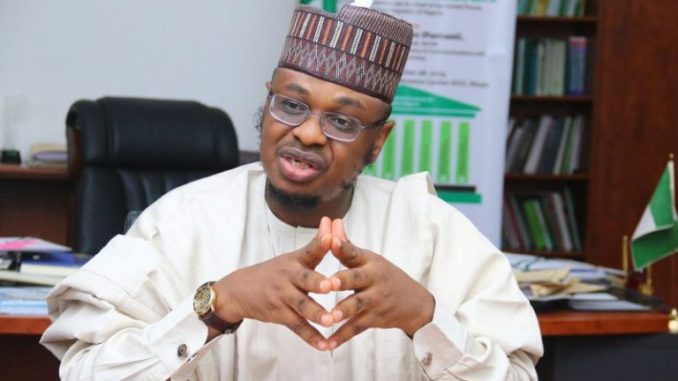
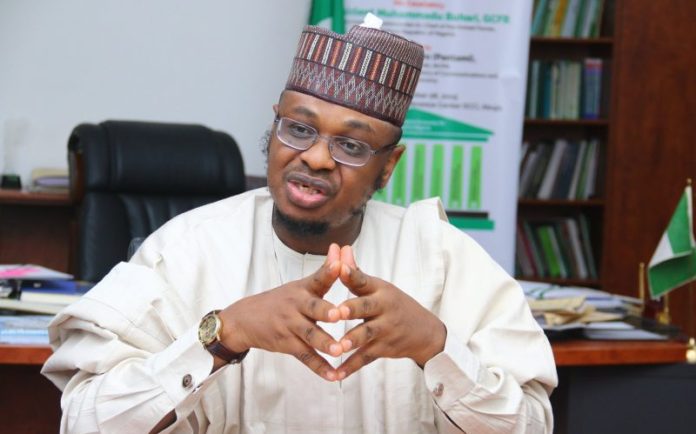
Security experts reject Pantami’s plea over pro-Taliban, Al-Qaeda comments

Some security experts on Saturday dismissed the apology by the Minister of Communications and Digital Economy, Isa Pantami, over some controversial comments he made in the past in support of global terrorist groups, Al-Qaeda and Taliban.

The security analysts said Pantami’s comments were too weighty to be discarded, demanding either the minister’s wilful resignation or sacking by Muhammadu Buhari.

For instance, a retired Army Captain in the United States Army, Bishop Johnson, said it was not common for people with extremist ideologists to change overnight.

He said it was more troubling when people with extremist ideologies were in charge of sensitive national data.

“When people have radical ideologies, they don’t change overnight. They will carry such ideologies into whatever offices they occupy. So people with extremist ideologies should not occupy sensitive positions,” Johnson said.

Pantami has been under fire lately over comments he allegedly made several years ago in support of Al-Qaeda – an extremist group founded by the late Osama bin Laden, the mastermind of the September 11, 2001 attacks in the United States. Bin Laden was killed on May 2, 2011 by the US Navy SEALs inside a private residential compound in Pakistan.

Pantami also made comments in support of Taliban, a Sunni Islamist movement and military organisation in Afghanistan currently waging jihad within the country.

“This jihad is an obligation for every single believer, especially in Nigeria,’’ Pantami was quoted to have said in one of his vicious preaching in the 2000s. “Oh God, give victory to the Taliban and Al-Qaeda,” he was also quoted to have prayed.

As massive outrage and demand for his sacking continued on social media on Saturday, Pantami renounced his controversial comments on terrorism.

He stated that some of his past views were made out of immaturity, alleging that attacks on him by Nigerians were politically instigated.

He spoke during his daily Ramadan lecture in Abuja on Saturday.

Pantami said, “For 15 years, I have moved round the country while educating people about the dangers of terrorism. I have travelled to Katsina, Gombe, Borno and Kano states, and Difa in the Niger Republic to preach against terrorism.

“I have engaged those with Boko Haram ideologies in different places. I have been writing pamphlets in Hausa, English and Arabic. I have managed to bring back several young persons who have derailed from the right path.”

He added, “Some of the comments I made some years ago that are generating controversies now were based on my understanding of religious issues at the time, and I have changed several positions taken in the past based on new evidence and maturity.”

Pantami said he made some of the controversial comments when he was still a teenager and insisted that he had changed his views about the issues being used against him currently.

He said, “I was young when I made some of the comments. I was in the university. Some of the comments were made when I was a teenager. I started preaching when I was 13.

“Many scholars and individuals didn’t understand some international events and, therefore, took some positions based on their understanding. Some have come to change their positions later.”

Some officials of the Ministry of Communications and Digital Economy had also defended the minister and expressed worry over social media attacks against Pantami lately.

The minister’s aide, Uwa Suleiman, told Sunday PUNCH that Pantami had always kicked against acts of terrorism and wondered why he was being attacked on terrorism issues.

However, despite Pantami’s regrets over the comments, Johnson, the retired US Army Captain, said the minister should be sacked by the President should he (Pantami) fail to resign.

“When there is an outcry by the people, such a person should resign but if he doesn’t, the President who appointed him into the office has the obligation to relieve him of his duties so that the issue doesn’t drag the administration,” Johnson said.

Johnson added that the Pantami issue could be likened to the situation with a former Minister of Finance, Mrs Kemi Adeosun, who resigned over the National Youth Service Corps certificate scandal.

“You are aware of the NYSC certificate scandal of the former Minister of Finance, Kemi Adeosun. She resigned when the issue was dragging the administration. It’s similar to the Pantami case. He (Pantami) should not occupy that kind of office,” Johnson said.

He also cautioned against poor vetting and screening of people holding public offices in the future.

“Up to the university level, you have to look at the theses they wrote because all these things will help to know the individual’s ideology and philosophy. The screening process in Nigeria is a joke. The ministerial nominees just go before the Senate and take a bow, without asking them any questions and looking at their pasts,” he added.

Also, the National President of Criminology and Security Practitioners Association of Nigeria, Williams Ekposon, said though Pantami claimed to have renounced his support for terrorist groups, the minister was not worthy of being entrusted with information as sensitive as Nigerians’ data. He urged Pantami to apologise to Nigerians and resign from his appointment.

Ekposon said, “We have to be very careful of our speech and how we go about doing things. Professionally, that kind of person should not be in charge of the data of Nigerians. No statesman will admire being identified with Al-Qaeda or Taliban or any other terrorist group.

“In the light of the position he is holding, Nigerians are not secure; our data are not secure with somebody who had wept sentiments with terrorists. A terrorist is a psychedelic being. If a sensitive public office holder has made a statement that is in connection to terrorists, there is something fishy about it. He should apologise to Nigerians and humbly resign. Let it be that the appointment was made in error.”

Also, a Lagos-based security expert, Dickson Osajie, advised the minister to tender his resignation on account of his “romance with terrorists” in the past.

He said if effective pre-appointment screening was put in place, an investigation would have revealed that Pantami had a soft spot for terrorists and he would have been disqualified from holding such a critical ministerial position.

He stated, “The problem we have in Nigeria is that we don’t carry out effective pre-employment screening before we employ people into strategic positions. The office Pantami is occupying is one of the most sensitive positions.

“For me, I expected that before he was appointed, there should have been a pre-appointment screening which would have looked into his data as far back as 30 years ago. We are not talking about repentance here; we are talking about national security. I read one of his articles where he said he had repented.

“But the truth is that the comment he made resulted in instigating terrorist groups. I don’t think people like that are qualified to hold public offices. People must be held accountable for their statements and actions.”

Osajie said if Pantami lost his position, it would be a deterrent to those who think they could make any statement in the public space and go scot-free.

He added, “I am not contesting the fact that he had repented as he claimed. But the truth is he needs to resign because he needs to set an example for upcoming extremists that they don’t have to put Nigeria at risk. There is power in the tongue. Whatever you say today can destroy many lives.

“Since he had in previous times had mercy on Al-Qaeda, and other terrorist groups, that shows that he had romanced terrorism before. Whoever has romanced terrorism before is an enemy of the state. He needs to tender a public apology and resign from his appointment. I cannot trust that kind of person because I don’t know his level of repentance.”

Similarly, a security consultant and Fellow, Institute of Security, Mr Chigozie Ubani, said the minister ought to have stepped aside so the allegations against him could be investigated.

Ubani said, “Anybody can be accused but once it is weighty enough that he has in any way previously or currently entangled, either by lectures, professions, affiliations with both local and international terrorist organisations, he should voluntarily step down while further investigation is going on.

“Unfortunately, here we are; I have said this several times, you cannot talk about the security architecture without investigation, profiling the architect. That piece of architecture is a product from the deep or shallow thought processes of the architect. So, if the architect is not well skewed, then the architecture is expected to be very flawed.

“So this brother (Patani) should step down if there is enough evidence to prove this, and let us have some peace. It’s too sensitive to manage our data, information and all that at a period when terrorists are gaining ground, establishing caliphates and gaining territory. We cannot joke with who is managing our information.”

Also, a retired Colonel of the Nigerian Army, Hassan Stan-Labo, demanded Pantami’s sacking.

“The minister has no role to play in the Federal Executive Council anymore. Ordinarily, he should have resigned from the cabinet due to his comments,” he said.

Retaining minister not in national interest –PDP

Also, the Peoples Democratic Party said it would be wrong to continue keeping the embattled minister as a member of the Federal Executive Council.

The PDP said going by the public outrage against his utterances in the past, the best “is for him to resign and even tender his unreserved apology to Nigerians for his utterances in the past.”

The National Chairman of the party, Prince Uche Secondus, who spoke with one of our correspondents, asked the President to relieve the minister of his job if he fails to resign.

“The best thing is for the minister to resign, apologise to Nigerians and start preaching against terrorism in the open and to the knowledge of everyone. For now, it is not in the interest of Nigerians and national security to continue to keep him in office,” he said.

Secondus added that persons in public office should cultivate the habit of leaving office when they were perceived to have done something wrong, insisting that “people should stop imposing themselves on the citizens especially when they have moral burden.

Credit:sundiatapost

What is a Friendly Loan?

What is a Friendly Loan? Daily Law Tips (Tip 776) by Onyekachi Umah, Esq., LL.M, ACIArb(UK)

Introduction: 

There are several seasons in life and so are there several seasons in the finance of men. When a person is in need, he/she will most probably request for support from his/her family, friends and associates. Often the financial support from family and friends could be a gift (there are given freely and never to be repaid). However, in some cases, the financial support from family and friends are not gift but loan/debt (they are freely given but to be repaid). Repaying for loan/debt from family and friends could be with or without interest. And, a loan from family and friend can be a friendly loan, not because it is from friends but because of its nature. This leads to the need for a definition and nature of a friendly loan under the Nigerian laws. When will the Nigerian courts declare a debt to be a friendly loan?

 Nature of Friendly Loans:

There is really no fixed term as a “friendly loan” rather, it is the circumstances of a loan that will determine whether the loan is a friendly one or not. The Court of Appeal in Nigeria has had an opportunity to explain the nature of a friendly loan in its judgment in the case of; CHAMPION BREWERIES PLC v. SPECIALTY LINK LTD & ANOR (2014) LPELR-23621(CA). In that case, Justice Mbaba, held that;

“A friendly loan, as the name implies, is a loan from a friend to a friend, which makes no room for usury or interest or penalty. It connotes a lifeline thrown by a friend to a friend, to bail him out of trouble and does not contemplate profiting from the gesture, financially. I looked at the Black Law Dictionary and other English dictionaries for the meaning of “friendly loan” I did not see in the ones I consulted. But I saw the meaning of the adjective “friendly” to mean – “kind; behaving as a friend, relating to, or typical of a friend, being a colleague, helper partner etc” In the sense of that word a “friendly loan” therefore does not admit of interest, or any thing that detracts from kindness, friendship, help and partnership, which charging of interest or usury is likely to cause. See First Bank of Nigeria v. I.A.S. Cargo Airlines Nig. Ltd (2011) LPELR- 9827(CA) where Salawa, JCA held: “However, where the Plaintiff happens to be a

private person, or the loan is stated to be a “friendly loan” and no interest charge is fixed at the time of entering into the loan agreement, the Court is precluded from awarding interest in such circumstances.” See UBN v. SAX Nig Ltd (1994) 8 NWLR (Pt. 361) 150; UBN v. OZIGI (1994) 3 NWLR (Pt. 363) 385; Hausa v. First Bank of Nigeria Plc CA/J/295/981 unreported decision of this Court delivered on 12/4/2000; UBN v. SALAMI (1998) 3 NWLR (Pt. 538) See also IDAKULA v. RICHARD (2001) FWLR (Pt. 693) 111 where AKPABIO, J.C.A. (of blessed memory) said: “… The Court will readily award a pre-judgment interest, where the plaintiff is a Commercial Bank, and the rate of interest fixed at the inception of the loan or over draft transaction; whereas, if the plaintiff was a private person; or the loan stated to be a “friendly loan” and nothing said about interest charges at the time of entering into the loan agreement, the Court will not award interest in such circumstances.”

The Supreme Court of Nigeria is not left out in this issue. The apex court has in the case of DIAMOND BANK LTD v. PARTNERSHIP INVESTMENT CO LTD & ANOR (2009) LPELR-939(SC), held that; “…the general rule at Common Law, is that interest is not payable on a debt or loan in the absence of express agreement or some course of dealing or custom to that effect. See London Chattam and Dover Railway v. South Eastern Railway (1893) A.C 249. Thus, interest will however, be payable where there is an express agreement to that effect and such an agreement, may be inferred from a course of dealing between the parties. See Re-Duncan and Co, (1905) 1 Ch. 307 or where an obligation to pay interest arises from the common or usage of a particular trade or business and I add like in banking.” Per OGBUAGU ,J.S.C ( Pp. 29-30, paras. D-A ).

Also, in the case of ISHOLA v. SOCIETE GENERALE BANK (NIG) LTD (1997) LPELR-1547(SC), the Supreme Court, held that “But where there is no express agreement as to the rate of interest payable, it seems that the bank is entitled to charge interest rate on the basis that there is now an established custom to that effect or that the customer has impliedly consented where, without protest, he allows his account to be debited with such interest. See Barclays Bank of Nigeria Ltd v. Alhaji Maiwada Abubakar (1977) 10 SC 13.” Per IGUH ,J.S.C ( P. 53, paras. B-c )

Conclusion:

From the above judgments of the courts, it is safe to conclude that a friendly loan is a loan that was given out of kindness and without any intention to receive interest from or on the loan. The courts in Nigeria will often not allow an interest to be received on a loan that was given out of kindness by a private person without any agreement as to payment of interest on the loan (it is a friendly loan).

However, where a loan is given by a bank or a corporate body in the business of moneylending or with the custom of collecting interest on loans, even where there is no agreement as to interest, the courts will most probably believe that it was the intention of parties that interest should be paid on the loan. For example, having in mind the nature of the business of banks and moneylenders, one cannot convince a court of law that it received a friendly loan from a commercial bank, unless there is a signed agreement or proof that the loan is a friendly one.

My authorities, are:

  1. The judgment of the Supreme Court of Nigeria in the case of DIAMOND BANK LTD v. PARTNERSHIP INVESTMENT CO LTD & ANOR (2009) LPELR-939(SC)
  2. The judgment of the Supreme Court of Nigeria in the case of ISHOLA v. SOCIETE GENERALE BANK (NIG) LTD (1997) LPELR-1547(SC)
  3. The judgment of the Court of Appeal in the case of HAMPION BREWERIES PLC v. SPECIALTY LINK LTD & ANOR (2014) LPELR-23621(CA)
  4. Onyekachi Umah, “No Bank In Nigeria Can Unilaterally Change /Vary Interest Rate In Its Agreement With A Customer” (LearnNigerianLaws.com, 23 August 2018) <https://learnnigerianlaws.com/daily-law-tips-by-onyekachi-umah-esq-tip-168-no-bank-in-nigeria-can-unilaterally-change-vary-interest-rate-in-its-agreement-with-a-customer/> accessed 15 April 2021
  5. Onyekachi Umah, “Duty of Care Owed By Banks in Nigeria.” (LearnNigrianLaws.com, 1 April 2021) <https://learnnigerianlaws.com/duty-of-care-owed-by-banks-in-nigeria/> accessed 15 April 2021
  6. Onyekachi Umah, “It Is An Offence To Sell A Vehicle Purchased With Unrepaid Bank Loan” (LearnNigerianLaws.com, 2 October 2018) <https://learnnigerianlaws.com/daily-law-tips-by-onyekachi-umah-esq-tip-196-it-is-an-offence-to-sell-a-vehicle-purchased-with-unrepaid-bank-loan/> accessed 15 April 2021
  7. Onyekachi Umah, “Creditors, Debtors And The Covid-19 Lockdown?” (LearnNigerianLaws.com, 21 April 2020) <https://learnnigerianlaws.com/creditors-debtors-and-the-covid-19-lockdown-daily-law-tips-tip-552-by-onyekachi-umah-esq-llm-aciarbuk/> accessed 15 April 2021
  8. Onyekachi Umah, “The Supreme Court Has Warned Efcc And Police Against Recovering Debts And Investigating Disputes From Civil Transactions” (LearnNigerianLaws.com, 26 October 2019) <https://learnnigerianlaws.com/the-supreme-court-has-warned-efcc-and-police-against-recovering-debts-and-investigating-disputes-from-civil-transactions-daily-law-tips-tip-444-by-onyekachi-umah-esq-llm-aciarb-uk/> accessed 15 April 2021
  9. Onyekachi Umah, “When, Why And How Can A Guarantor/Surety Be Held Liable For Debt Guaranteed” (LearnNigerianLaws.com, 25 July 2019) <https://learnnigerianlaws.com/when-why-and-how-can-a-guarantor-surety-be-held-liable-for-debt-guaranteed-daily-law-tips-tip-380-by-onyekachi-umah-esq-llm-aciarb-uk/> accessed 15 April 2021
  10. Onyekachi Umah, “EFCC Cannot Recover Debts” (LearnNigerianLaws.com, 25 July 2018) <https://learnnigerianlaws.com/daily-law-tips-by-onyekachi-umah-esq-tip-149-efcc-cannot-recover-debts/> accessed 15 April 2021
  11. Onyekachi Umah, “Conditions for Assignment of Burden or Benefit of Debt” (LearnNigerianLaws.com, 30 March 2021) <https://learnnigerianlaws.com/conditions-for-assignment-of-burden-or-benefit-of-debt/> accessed 15 April 2021
  12. Onyekachi Umah, “Owing Debts And Refusing To Pay Is Not An Offence In Nigeria” (LearnNigerianLaws.com, 14 December 2019) <https://learnnigerianlaws.com/owing-debts-and-refusing-to-pay-is-not-an-offence-in-nigeria-daily-law-tips-tip-478-by-onyekachi-umah-esq-llm-aciarb-uk/> accessed 15 April 2021
  13. Onyekachi Umah, “You Cannot Be Arrested For Breach Of Contract/Refusal To Pay Debt” (LearnNigerianLaws.com, 15 October 2018) <https://learnnigerianlaws.com/daily-law-tips-by-onyekachi-umah-esq-tip-205-you-cannot-be-arrested-for-breach-of-contract-refusal-to-pay-debt/> accessed 15 April 2021
  14. Onyekachi Umah, “It Is An Offence For Hospitals/Creditors To Detain Patients/Debtors For Debts” (LearnNigerianLaws.com, 26 July 2018) <https://learnnigerianlaws.com/daily-law-tips-by-onyekachi-umah-esq-tip-150-it-is-an-offence-for-hospitals-creditors-to-detain-patients-debtors-for-debts/> accessed 15 April 2021
  15. Onyekachi Umah, “It Is Not a Crime to Be a Debtor In Nigeria” (LearnNigerianLaws.com, 20 June 2018) <https://learnnigerianlaws.com/daily-law-tips-by-onyekachi-umah-esq-tip-124-it-is-not-a-crime-to-be-a-debtor-in-nigeria/> accessed 15 April 2021
  16. Onyekachi Umah, “Nigerian Police Cannot Be Used For or Be Part for Debt Recovery” (LearnNigerianLaws.com, 28 May 2018) <https://learnnigerianlaws.com/daily-law-tips-by-onyekachi-umah-esq-tip-110-nigerian-police-cannot-be-used-for-or-be-part-for-debt-recovery/> accessed 15 April 2021
  17. Onyekachi Umah, “Tips On Recovery of Debt’ (LearnNigerianLaws.com, 10 March 2016) <https://learnnigerianlaws.com/tips-on-recovery-of-debt/> accessed 15 April 2021
  18. Onyekachi Umah, “How to Recover Property Wrongly Seized by Court” (LearnNigerianLaws.com, 9 March 2021) <https://learnnigerianlaws.com/how-to-recover-property-wrongly-seized-by-court/> accessed 15 April 2021
  19. Onyekachi Umah, “Does Police Have Powers To Settle Civil Disputes In Nigeria?” (LearnNigerianLaws.com, 13 May 2020)  <Does Police Have Powers To Settle Civil Disputes In Nigeria?> accessed 15 April 2021
  20. Onyekachi Umah, “A Guarantor/ Surety And A Witness Are Not Same” (LearnNigeriansLaws.com, 12 May 2020) <https://learnnigerianlaws.com/a-guarantor-surety-and-a-witness-are-not-same-daily-law-tips-tip-567-by-onyekachi-umah-esq-llm-aciarbuk/> accessed 15 April 2021
  21. Onyekachi Umah, “Minimum Period For Defence Of Undefended List Case In Abuja” (LearnNigerianLaws.com, 25 February 2020) <https://learnnigerianlaws.com/minimum-period-for-defence-of-undefended-list-case-in-abuja-daily-law-tips-tip-512-by-onyekachi-umah-esq-llm-aciarbuk/> accessed 28 March 2021
  22. Onyekachi Umah, “Bounced Or Dud Cheque And Its Legal Consequence In Nigeria.” (LearnNigerianLaws.com, 5 March 2016) <https://learnnigerianlaws.com/bounced-or-dud-cheque-and-its-legal-consequence/> accessed 15 April 2021
  23. Pic credit; Dreamstime.Com

Sabi Law Projects:

#SabiLaw

#DailyLawTips

#SabiBusinessLaw

#SabiElectionLaws

#SabiHumanRights

#SabiLawOnTheBeatFm

#SabiLawLectureSeries

#CriminalJusticeMonday

#SabiLawVideoChallenge

Speak with the writer, ask questions or make inquiries on this topic or any other via [email protected], [email protected] or +2348037665878 (whatsapp). To receive free Daily Law Tips, join our free WhatsApp group via https://chat.whatsapp.com/L7h4f1exItZ38FeuhXG4WN or Telegram group, via the below link: https://t.me/LearnNigerianLaws

To keep up to date on all free legal awareness projects of Sabi Law Foundation, follow us via

Facebook Page:@LearnNigerianLaws,

Instagram:@LearnNigerianLaws,

Twitter: @LearnNigeriaLaw,  

YouTube: Learn Nigerian Laws

WhatsApp Groups via (https://chat.whatsapp.com/L7h4f1exItZ38FeuhXG4WN),

Telegram Group: (https://t.me/LearnNigerianLaws),

Facebook group: (https://www.facebook.com/groups/129824937650907/?ref=share)

or visit our website: (www.LearnNigerianLaws.com)

Please share this publication for free till it gets to those that need it most. Save a Nigerian today! NOTE: Sharing, modifying or publishing this publication without giving credit to the author or Sabi Law Foundation is a criminal breach of copyright and will be prosecuted. This publication is the writer’s view not a legal advice and does not create any form of relationship. You may reach the writer for more information.

This publication is powered by www.LearnNigerianLaws.com {A Free Law Awareness Program of Sabi Law Foundation, supported by the law firm of Bezaleel Chambers International (BCI).} Sabi Law Foundation is a Not-For-Profit and Non-Governmental Legal Awareness Organization based in Nigeria. For sponsorship and partnership, contact: [email protected], [email protected] or +234 903 913 1200.

3 REASONS NIGERIANS PANT OVER PANTAMI’S NEW “BORN AGAIN” STATUS

The Nigerian Minister of Communications and Digital Economy, Dr. Isa Ali Pantami, has been in the news lately for controversies surrounding comments he made in the past which appeared to support some ideologies held by some terrorist groups. This has made many to extend to him the appellation of a “terrorist.”

The Minister has been under fire, with many calling for his resignation (#PantamiResignNow) or immediate sack by the President. But in reaction, Pantami claims that he has turned a new leaf following exposure and further education. He was reported to have said:

Some of the comments I made some years ago that are generating controversies now were based on my understanding of religious issues at the time, and I have changed several positions taken in the past based on new evidence and maturity… I was young when I made some of the comments. I was in the university. Some of the comments were made when I was a teenager. I started preaching when I was 13… Many scholars and individuals didn’t understand some international events and, therefore, took some positions based on their understanding. Some have come to change their positions later.

More so, like a new convert, he claimed to have embarked on a mission to save those lost in the dark clouds of those beliefs he previously held. According to him: 

Below are some of the reasons Nigerians are unable to digest Pantami’s renunciation of those extreme beliefs, as reported by Punch.

1. People with radical ideologies don’t change overnight

For 15 years, I have moved round the country while educating people about the dangers of terrorism. I have travelled to Katsina, Gombe, Borno and Kano states, and Difa in the Niger Republic to preach against terrorism… I have engaged those with Boko Haram ideologies in different places. I have been writing pamphlets in Hausa, English and Arabic. I have managed to bring back several young persons who have derailed from the right path.

A retired Army Captain in the United States Army, Bishop Johnson, observed:

When people have radical ideologies, they don’t change overnight. They will carry such ideologies into whatever offices they occupy. So people with extremist ideologies should not occupy sensitive positions…

2. Our data are not secure

The National President of Criminology and Security Practitioners Association of Nigeria, Williams Ekposon, argued:

…In the light of the position he is holding, Nigerians are not secure; our data are not secure with somebody who had wept sentiments with terrorists. A terrorist is a psychedelic being. If a sensitive public office holder has made a statement that is in connection to terrorists, there is something fishy about it…

In support, a security consultant and Fellow, Institute of Security, Mr Chigozie Ubani, said:

So this brother (Patani) should step down if there is enough evidence to prove this, and let us have some peace. It’s too sensitive to manage our data, information and all that at a period when terrorists are gaining ground, establishing caliphates and gaining territory. We cannot joke with who is managing our information.

It is one thing for something to be secure and another thing for you to feel it is secure.

3. Whoever has romanced terrorism before is an enemy of the State

Lagos-based security expert, Dickson Osajie, believes that the extent of Pantami’s repentance is unknown and that previous romance with terrorism is an issue of national security. He questioned how Pantami made it through screening before being appointed Minister and concluded that:

…Since he (Pantami) had in previous times had mercy on Al-Qaeda, and other terrorist groups, that shows that he had romanced terrorism before. Whoever has romanced terrorism before is an enemy of the state. He needs to tender a public apology and resign from his appointment. I cannot trust that kind of person because I don’t know his level of repentance… 

Questions

What precisely are those beliefs the Minister now claims to have renounced? Specificity is key, as the Minister never claimed to have renounced all, but several. What creed does he presently profess? Has anyone or body taken time to investigate the impact of the Minister’s position at the material time before his repentance? Can that investigation go on successfully why he remains the Minister? On what basis is the Minister refusing to resign notwithstanding the public outcry? Nigerians are eager to know. Ordinarily, it is not easy for a person with extreme views to publicly renounce those views. But you never know with politicians. They can give up anything or claim to do so just to retain office and be politically relevant.

Credit:Stephenlegal

Child Naming & Birth Registration by Single Mothers.

Child Naming & Birth Registration by Single Mothers. Daily Law Tips (Tip 774) by Onyekachi Umah, Esq., LL.M, ACIArb(UK)

 Introduction:

Although, it takes a man and a woman to make and have a child, the society frowns and often abuses single mothers. Our judgmental society expects every mother to have a husband and every child to have a father and mother. Unfortunately, the realty remains that there will always be single mothers and single fathers, too. Although marriage is a not a condition for pregnancy and birth of a child, most children of single parents (especially single mothers) suffer great discrimination from birth.

For example, single mothers are often rejected by landlords; clergies are often reluctant to conduct naming ceremonies for children of single mothers; many private schools reject children of single mothers and many caregivers /teachers look down on single mothers, the list is endless. However, single fathers have little or no discrimination in the Nigerian society. The focus here is on the growing discrimination of single mothers and their children with respect to child naming, contrary to the position of the law.   

Child Rights to Name & Registration: 

You probably will be surprised to learn that Nigeria has laws focusing on child naming. This surprise is not strange, since child naming is in the present-day Nigeria, almost a big religious feast. In many parts of Nigeria, the feast of child naming is often officiated by religious practitioners or heads of families, in the midst of family members and well-wishers. Well, it is rarely flamboyant for children of single mothers, if at all they are privileged to have a feast. However, this present day practise of child naming is far away from the simple legal process and procedure for child naming.

Among the rights of a child is the right to have a name. Yes, every child in Nigeria must have a name. The name of a child is a right and not a privilege. Hence, a federal law (the Child’s Rights Act) and similar laws across states in Nigeria mandate every child to be given a name at birth or at such other date as the culture of the parents or guardian of the child may permit. The said laws, also acknowledge that the birth of very child be registered in line with the Birth, Death, etc. (Compulsory Registration) Act, 1992. At this point, it is obvious that it takes a parent/guardian of a child to name a child. There is also no statutory style for child naming. Hence, a single mother can name her child, she does not need a man for such. She does not need a clergy, head of family, villagers, government or friends for a child naming. 

A visit to another federal law (the Birth, Death, etc. [Compulsory Registration] Act) reveals that every child that is born in Nigeria must be registered. Births are to be registered within sixty (60) days of birth of a child by the parents/guardian. It is the duty of a father or a mother to register the birth of a child. Hence, this allows single mothers to register the birth of their children at the nearest office of the National Population Commission (NPC) or its registration center.

Where there is need to change the name of a child after registration of the birth of the child or to state the name of the child after such registration, any parent/guardian of the child can apply to the NPC for such, within 12 months of the registration of the birth of the child. The law expressly stated that a single mother does not need the father of her child for there to be a registration of the birth of her child. As such, in the register of births, there will be no need for the “… name of any person as the father of the child” of a single mother. However, where a father wants his name in the register as the father of a child born out of wedlock, the said father and the mother of the child will have to sign the register jointly. Also, such a father can sign the register, at the request of the mother of the child, with a declaration made by the said mother of the child or a statutory declaration made by the said father of the child. 

Upon registering a live birth,  the Registrar at the registration centre of NPC must deliver to the informant (single mother) free of charge, a certificate of birth for the child and a certificate of registration of birth. Failure/refusal of a parent (including a single mother) to register the birth of a child is a criminal offence. It is an offence punishable with fine of Fifty Naira (N50) or imprisonment for one month or both.  

Conclusion:

The name of child and the naming of a child as well as the registration of the birth of a child are all the rights of a child. A child should not be denied of such rights. Being a single mother is not an offence in any part of Nigeria. Single mothers can name their children and register the birth of their children, freely without any form of discrimination. Discrimination is a violation of fundamental human rights and a breach of the Constitution of Nigeria. Where there is a violation of any human rights of a single mother, the single mother and or her well-wishers should report to the National Human Rights Commission or seek legal remedies in court. 

The federal legislators should amend the Births, Deaths, etc. (Compulsory Registration) Act, 1992. The fines contained in the said law are too poor. Fine of Fifty Naira (N50) is ridiculous and cannot deter offenders or prospective offenders, in a nation where the minimum national wage is Thirty Thousand Naira (N30,000.00). The imprisonment term of one (1) month should be increased to a minimum imprisonment term of one (1) year in order to increase compliance. There should also be a strong partnership between the National Population Commission (that handles registration of births, deaths and marriages) and the National Identity Management Commission (that manages the National Identification Numbers and database) to improve data cleaning, sharing and reliability. No national can develop without data, so Nigerians must be encouraged and forced to freely deliver data on births, deaths and marriages, among other issues.

My authorities, are:

  1. Sections 1, 2, 3, 4, 5, 6 and 42 of the Constitution of the Federal Republic of Nigeria, 1999.
  2. Sections 1, 7, 8, 9, 10, 11, 12, 48, 50 and 52 of the Births, Deaths, etc. (Compulsory Registration) Act, 1992
  3. Sections 1, 5, 277 and 278 of the Child Rights Act, 2003. 
  4. Regulations 1, 8, 10, 14, 16, 19, 51 and 52 of the Births, Deaths, etc. (Registration) Regulations, 1996
  5. Onyekachi Umah, “Deadline for Registration of Births in Nigeria” (LearnNigerianLaws.com, 13 November 2018) <https://learnnigerianlaws.com/deadline-for-registration-of-births-in-nigeria/> accessed 13 April 2021.
  6. Onyekachi Umah, “What is The Approved Time for Child Naming in Nigeria” (LearnNigerianLaws.com, 24 January 2020) <https://learnnigerianlaws.com/what-is-the-approved-time-for-child-naming-in-nigeria/> accessed 13 April 2021
  7. Pic credit: grandmotherafrica. com

Sabi Law Projects:

#SabiLaw

#DailyLawTips

#SabiBusinessLaw

#SabiElectionLaws

#SabiHumanRights

#SabiLawOnTheBeatFm

#SabiLawLectureSeries

#CriminalJusticeMonday

#SabiLawVideoChallenge

Speak with the writer, ask questions or make inquiries on this topic or any other via [email protected], [email protected] or +2348037665878 (whatsapp). To receive free Daily Law Tips, join our free WhatsApp group via https://chat.whatsapp.com/L7h4f1exItZ38FeuhXG4WN or Telegram group, via the below link: https://t.me/LearnNigerianLaws

To keep up to date on all free legal awareness projects of Sabi Law Foundation, follow us via

Facebook Page:@LearnNigerianLaws,

Instagram:@LearnNigerianLaws,

Twitter: @LearnNigeriaLaw,  

YouTube: Learn Nigerian Laws

WhatsApp Groups via (https://chat.whatsapp.com/L7h4f1exItZ38FeuhXG4WN),

Telegram Group: (https://t.me/LearnNigerianLaws),

Facebook group: (https://www.facebook.com/groups/129824937650907/?ref=share)

or visit our website: (www.LearnNigerianLaws.com)

Please share this publication for free till it gets to those that need it most. Save a Nigerian today! NOTE: Sharing, modifying or publishing this publication without giving credit to the author or Sabi Law Foundation is a criminal breach of copyright and will be prosecuted. This publication is the writer’s view not a legal advice and does not create any form of relationship. You may reach the writer for more information.

This publication is powered by www.LearnNigerianLaws.com {A Free Law Awareness Program of Sabi Law Foundation, supported by the law firm of Bezaleel Chambers International (BCI).} Sabi Law Foundation is a Not-For-Profit and Non-Governmental Legal Awareness Organization based in Nigeria. For sponsorship and partnership, contact: [email protected], [email protected] or +234 903 913 1200.

CAN SOMEONE WHO HAS NO LICENSE LEND MONEY?: WHAT THE LAW ACTUALLY SAYS

                           By

        O. G. Chukkol, ACIArb (UK)

If you have lent money before or have borrowed money before or wish to lend money to someone, this article is for you. Money lending is legally a complex transaction that if not handled with caution, a lender will lost his money and even court cannot assist him in recovering the money.

Money lending is generally regulated by the ordinary law of Contract alongside the Money Lenders Laws of various states. However, is peculiarity of a transaction that determines the law that applies to it. Having said that, section 6(b) of the Money Lenders Law of Lagos State provides that “If any person… carries on business as a moneylender without being in possession of a valid moneylender’s licence authorising him so to do, he shall…be liable on summary conviction to a fine of two hundred naira and in the event of a second or subsequent conviction to imprisonment for three months or a fine of two hundred naira or both;.”

The wordings of the section above are word for word replication of the provisions of the Money Lenders Law of practically all the States in Nigeria and they have been subject of judicial interpretation in several cases. The implication is that for one to lend money, he must first obtain a license to do so, else, the agreement will be illegal and the money will be irrecoverable.

Thus, in Nnamdi v. Ndulue & Ors (2017) LPELR-43593(CA) a suit was filed “for and on behalf of Ofuobi Committee of Friends” against one of its members for failing to pay N200, 000 lent to him and a supposed interest of N36, 000. The court held that the Association was a money lender and since the Association was not registered and had no license, the suit was statute barred and the money irrecoverable.

Also in Kekong v. Abang & Ors (2010) LPELR-9013(CA), the debtor lent the sum N500, 000 to be repaid interest free within one month but with 30% interest Per month for the subsequent months upon failure to repay the money within one month. The court held that the transaction was money lending because the said transaction was one in a series of business transactions. Thus, the transaction was held to be illegal, unenforceable and the money irrecoverable.

The question is: do I automatically become a money lender by merely lending money to another person? In other words, does it mean that I have no right at all to lend money if I don’t have license?

WHEN LICENSE IS NOT NEEDED
There are three categories of persons that cannot be called money lenders within the meaning of the Money Lenders Law even if they lend money to someone and these are:
• A banker,
• An insurer and
• A person who does not have for his primary object the lending of money.

It follows therefore that a person will not be designated as a money lender even though he is involved in money lending, in so far as he is a banker or an insurer or the primary object of his business is not money lending. In Ibrahim v Bakori (2009) LPELR-8681 CA it was held that a person who lends money to a friend to resuscitate his ailing business should not be termed a money lender. See also Chidoka v FCFC Ltd. (2013 5 NWLR (Pt. 1346) 144

In Max Blossom Ltd v. Victor & Ors (2019) LPELR-47090(CA) the Appellant loaned N10 Million to the Respondents to be repaid with N7.5 Million interest. The Respondents argued that the Appellant was not a licensed money lender therefore the loan agreement was illegal and the money irrecoverable. The court disagreed with them and held that the agreement was enforceable and lawful.

In his concurring judgment, Sanga JCA said, “My learned brother dexterously and delicately dissected the convoluted reasoning by the respondents who after benefitting from a loan transaction turn round to castigate the said transaction by saying it was illegal ab initio. My learned brother in the lead judgment rightly observed on page 20 that ‘the respondents in this appeal are only trying to be clever by half..’In other words, they want to use the instrumentality of the law to aid their nefarious activity which is akin to the proverbial saying of eating their cake and having it at the same time. This Court cannot be a party to such an arrangement wherein the respondents derived benefit from the transaction, only to turn round on being called upon to pay to argue that the transaction did not meet the requirements of the money lenders Law of Rivers State.

In Lubcon Ltd v. Classmate Technologies Co. Ltd (2019) LPELR-47414(CA), the Respondent as Claimant before the High Court of Kwara sued to recover the sum of N10 Million which she lent the Defendant including the monthly 8.5% interest thereon making the total amount to recover to be N20, 200,000. The Defendant raised objection on the basis that the agreement was illegal because the Claimant had no money lending license neither was the Claimant a bank. The Preliminary objection failed and the Court of Appeal affirmed the decision of the trial Court on the basis that the transaction was a simple contract and therefore enforceable.

Also, the case of Nwankwo v. NZERIBE (2003) LPELR-5452(CA) is relevant. The facts of the case are that both the plaintiff and the defendant were friends. They were also politicians. The defendant requested from the plaintiff loans to enable him finance his political ambition of contesting the governorship of his State, Enugu State. The Defendant promised to pay back to the lender within 90 days of his taking office as Governor of Enugu State. Unfortunately he lost the election and when the Plaintiff sought to collect his money, the Defendant objected on the basis that the Plaintiff was not a licensed money lender so the money was irrecoverable. The court rejected the argument and held that the Plaintiff was not a money lender and the burden was on the Defendant to show that the Plaintiff was a money lender. Having failed to discharge the burden of proof, the decision of the trial Court was affirmed. Another basis for affirming the decision of the trial Court was the principle of unjust enrichment. The court held thus:

“Finally, as it was not denied by the appellant that he never received the amounts which the plaintiff/respondent said he lent to him at his request, I think the principle of unjust enrichment should be made applicable in the instant case. Under the said principle, the appellant, who freely entered into the loan agreements and benefited from them by receiving the various sums advanced to him under the said agreements, should not be allowed to rely on frivolous excuses and thereby continue to unduly enrich himself from the benefit he received under the loan agreements.”

It is important to clarify at this stage that any person who lends money at interest shall be presumed to be a money lender until the contrary is proved. That is why in Idika v. Uzoukwu (2008) 9 NWLR (Pt.1091) 34 at 54, paras. A-C (CA) the Appellant at various times lent money to the Respondent totaling N195, 000 and the cumulative interest of the four transactions was N165, 000. The court held that the transaction was not a money lending transaction but a simple contract. However, Saulawa in his dissenting judgment held that by granting loan to the Defendant four times, the Plaintiff had held herself out as a money lender and she should have been treated as such. I agree with Saulawa’s dissenting position. Since it is proved that the Appellant had lent money four times with interest, she should have been treated as a money lender so that she should not recover her money since she didn’t have license.

Furthermore, mere lending money with interest does not make one a money lender that will require one to have license. This position was confirmed in the case of Veritas Insurance Co. Ltd. v. Citi Trust Invest. Ltd. (1993) 3 NWLR (Pt. 281) 349 thus: “…Learned counsel for the appellant made heavy weather out from a reasonably fine cloud on the issue of interest. As it is, the respondent claimed an interest of 5% on the amount. It is certainly not my understanding of the law that once a plaintiff claims interest on an amount, the transaction automatically comes within the ambit or preview of the moneylenders law…There is no such provision either in the moneylenders law or in any other law …”

CONCLUSION
A man does not become a moneylender by reason of occasional loans to relations, friends or acquaintances, whether interest be charged or not. Nor does a man become a money lender merely because he may upon one or several isolated occasions lend money to a stranger. There must be more than occasional and disconnected loans. There must be a business of money lending; and the word ‘business’ imports the notion of system, repetition and continuity. License is needed only when one lends money for a living. Farewell, J in Lintchfield Vs Dreyful (1906) 1 KB 554 at 559 was correct when he said that the Money Lenders Law was intended to apply to persons who are really carrying on the business of money lending and not to persons who lend money as incident business or to a few old friends.

                        ✍
    O. G. Chukkol, ACIArb (UK)
             Final Year Student, 
               Faculty of Law,
                   ABU, Zaria
    [email protected]
               08032470318
               April 16, 2021

How to Certify Documents & Make Affidavits Without Courts.

How to Certify Documents & Make Affidavits Without Courts. Daily Law Tips (Tip 775) by Onyekachi Umah, Esq., LL.M, ACIArb(UK)

 Introduction:  

Most Nigerians will only visit a court of law, when in need of an affidavit or to authenticate a power of attorney/land document. With the growing call for the declaration of assets of pubic officers and employees of financial institutions, the need for Commissioner for oaths in courts have increased, tremendously. Also, the demand for affidavits of loss by telecommunication companies before reissuing lost telephone numbers as well as the demand for affidavits of facts by dispute resolution centers have equally increased the demand for Commissioners for oaths. Many school applications, job applications, loan applications and contract bidding forms all require declaration to be taken before Commissioner for Oaths, among other persons. Hence, aside dispute resolution (litigations), the Nigerian courts play vital role in the ease of doing business and in the everyday lives of Nigerians. 

Like any other government institution/sector in Nigeria, the courts (judiciary) are not beyond temporal blackouts/strikes. Like in the Nigerian educational and health sectors, the judiciary (especially, court staff) often have to embark on a nationwide strike before federal or state governments will listen to their demands for their earned benefits. One wonders the fate of disputants and prisoners, whenever the courts are shutdown. Also, what is the fate of many Nigerians, who wrongly believe that oaths, affidavits and authentication of documents can only be made in courts by the commissioners for oath, during such strikes? 

Well, this work will expose the alternatives (licensed persons) that can perform the duties of Commissioners for Oath at all times, whether there is strike or not. These are persons that are permitted by the laws in Nigeria to administer oaths, swear-in public officers, sign affidavits, authenticate and certify documents across Nigeria, just like the courts and their Commissioners for Oath.

Alternatives to Courts and Commissioners for Oath:

Nigeria is a country created by law and governed by law. All persons and offices that perform official roles are also created by law and bound their respective laws. To ensure people state only facts, people are made to make affidavits. To ensure that documents are not forged or made out of fraud, documents are required to be certified and authenticated. Then, to administer oaths, swear-in public officers, sign affidavits, authenticate and certify documents across Nigeria, the laws in Nigeria have empowered some classes of persons to perform such duties. 

  1. Here are persons that can administer oaths, swear-in public officers and sign affidavits in any part of Nigeria; “… the Chief Justice of Nigeria, a Justice of the Supreme Court, the President and Justices of the Court of Appeal and any judge of the Federal High Court, a Notary Public, and any Commissioner for Oaths”. So, where there is a strike or shutdown of courts, it may affect judges and Commissioners of Oath, since there may not be able to access their offices/instruments and to perform their roles. However, at all times Notaries Public are available at their respective offices and homes, and never affected by court strikes. Click this link to learn more about Notaries Public; <https://learnnigerianlaws.com/requirements-for-a-lawyer-to-be-appointed-as-a-notary-public-for-nigeria/>. 
  2. Here are persons that can administer oaths, swear-in public officers and sign affidavits outside Nigeria; “Every Nigerian official of the rank of Secretary or above in a Nigerian Embassy or delegation may in any country where he exercises his functions, administer any oath and take any affidavit and also do any notarial act which a notary public can do within Nigeria.” So, where the Judges, Notaries Public and Commissioners for Oaths are not accessible in Nigeria, one can visit any Nigerian Embassy in any country to access such services. Also, for persons outside Nigeria, there is no need to send documents to Nigeria, simply stop by the nearest Nigerian embassy. 
  3. Here are persons that can authenticate and certify documents (power of attorney) in any part of Nigeria; “… a notary public or any court, judge, magistrate, consul or representative of Nigeria or, as the case may be, of the President …”. Generally, when a power of attorney is executed (signed) before any of the listed persons and authenticated by such person, the power of attorney is presumed by court to have been truly signed by the parties that claimed to have signed it. This is the simple reason that make many persons to rush to courts and Notaries Public to authenticate their power of attorney. A detailed work on this issue can be accessed via link; <https://learnnigerianlaws.com/effect-of-power-of-attorney-not-executed-before-a-notary-public/>. 

Conclusion:

The strike by court workers and the total shutdown of courts across Nigeria has a huge implication, however, it is for the greater good of democracy and the entire country. Judiciary must be truly independent (including, financially), for it to be impartial. While the courts are shutdown, Judges and Commissioner for Oaths may not be able to administer oaths, swear-in public officers, sign affidavits, authenticate and certify documents across Nigeria. 

Since the laws in Nigeria will never allow a vacuum to exist in any office or role, the shutdown of courts does not mean there are no alternatives to courts and Commissioner for Oaths. The Notaries Public (senior legal practitioners that have been sworn-in as Notaries Public) across Nigeria, in their law firms, offices, homes and even remotely, are always available to administer oaths, swear-in public officers, sign affidavits, authenticate and certify documents across Nigeria. Whatever a Commissioner of Oath can do, can also be done by a Notary Public and even more. 

My authorities, are:

  1. Sections 1, 2, 3, 4, 5 and 6 of the Constitution of the Federal Republic of Nigeria, 1999.
  2. Sections 1, 10, 12 of the Oaths Act, 1963
  3. Sections 1 and 2 of the Notaries Public Act, 1936
  4. Section 1, 258 and 259 of the Evidence Act, 2011
  5. The Judgment of the Supreme Court of Nigeria (on the functions of Notary Public for Nigeria) in the case of Buhari V. INEC & ORS (2008) LPELR-814(SC)
  6. The Judgment of the Supreme Court of Nigeria (on the effect of Power of Attorney not Executed before a Notary Public) in the case of MELWANI V FIVE STAR INDUSTRIES LTD (2002) 1 SC 120
  7. The Judgment of the Court of Appeal (on the effect of Power of Attorney not Executed before a Notary Public) in the case of CHIEF G.N. OKOYE v. MR. NONSO DUMEBI (2014) LPELR-24155(CA)
  8. Onyekachi Umah, “Effect of Power of Attorney Not Executed Before a Notary Public” (LearnNigerianLaws.com, 23 March 2021) <https://learnnigerianlaws.com/effect-of-power-of-attorney-not-executed-before-a-notary-public/> accessed 14 April 2021
  9. Onyekachi Umah, “You Don’t Need To Register Any Agreement In Courts or With A Notary Public” (LearnNigerianLaws.com, 2 December 2020) <https://learnnigerianlaws.com/you-dont-need-to-register-any-agreement-in-courts-or-with-a-notary-public/> accessed 14 April 2021
  10. Onyekachi Umah, “How To Make Power Of Attorney To Be Genuine And Acceptable.” (LearnNigerianLaws.com, 16 April 2019) <https://learnnigerianlaws.com/how-to-make-power-of-attorney-to-be-genuine-and-acceptable-daily-law-tips-tip-312-by-onyekachi-umah-esq-llm-aciarb-uk/>  accessed 14 April 2021
  11. Onyekachi Umah, “Agreements in Nigeria Do Not Require Signatures of Notaries Public or Magistrates or Court Staff to be Legal and Binding” (LearnNigerianLaws.com, 13 January 2018) <https://learnnigerianlaws.com/daily-law-tips-by-onyekachi-umah-esq-tip-121-agreements-in-nigeria-do-not-require-signatures-of-notaries-public-or-magistrates-or-court-staff-to-be-legal-and-binding/> accessed 14 April 2021
  12. Onyekachi Umah, “Stamps and Seals of Courts and Commissioners for Oath Are Not Needed for Agreements To Be Valid.” (LearnNigerianLaws.com, 8 June 2018) <https://learnnigerianlaws.com/daily-law-tips-by-onyekachi-umah-esq-tip-118-stamps-and-seals-of-courts-and-commissioners-for-oath-are-not-needed-for-agreements-to-be-valid/> accessed 14 April 2021
  13. Onyekachi Umah, “Requirements For A Lawyer To Be Appointed As A Notary Public For Nigeria” (LearnNigerianLaws.com, 3 June 2020) <https://learnnigerianlaws.com/requirements-for-a-lawyer-to-be-appointed-as-a-notary-public-for-nigeria/> accessed 14 April 2021
  14. Onyekachi Umah, “It Is Not “Notary Public Of Nigeria” But  “Notary Public For Nigeria” (LearnNigerianLaws.com, 30 January 2020) <https://learnnigerianlaws.com/it-is-not-notary-public-of-nigeria-but-notary-public-for-nigeria/> accessed 14 April 2021
  15. Onyekachi Umah, “Power Of Attorney Can Not Transfer Ownership/Title Of A Property” (LearnNigerianLaws.com, 19 July 2018) <https://learnnigerianlaws.com/daily-law-tips-by-onyekachi-umah-esq-tip-145-power-of-attorney-can-not-transfer-ownership-title-of-a-property/?> accessed 14 April 2021
  16. Onyekachi Umah, “Contents of a Valid Affidavit of Change of Name” (LearnNigerianLaws.com,17 May 2018) <Contents of a Valid Affidavit of Change of Name> accessed 14 April 2021
  17. Onyekachi Umah, “Things that Cannot Be Contained In An Affidavit” (LearnNigerianLaws.com, 15 May 2018) <https://learnnigerianlaws.com/daily-law-tips-by-onyekachi-umah-esq-tip-101-things-that-cannot-be-contained-in-an-affidavit/> accessed 14 April 2021

Sabi Law Projects:

#SabiLaw

#DailyLawTips

#SabiBusinessLaw

#SabiElectionLaws

#SabiHumanRights

#SabiLawOnTheBeatFm

#SabiLawLectureSeries

#CriminalJusticeMonday

#SabiLawVideoChallenge

Speak with the writer, ask questions or make inquiries on this topic or any other via [email protected], [email protected] or +2348037665878 (whatsapp). To receive free Daily Law Tips, join our free WhatsApp group via https://chat.whatsapp.com/L7h4f1exItZ38FeuhXG4WN or Telegram group, via the below link: https://t.me/LearnNigerianLaws

To keep up to date on all free legal awareness projects of Sabi Law Foundation, follow us via

Facebook Page:@LearnNigerianLaws,

Instagram:@LearnNigerianLaws,

Twitter: @LearnNigeriaLaw,  

YouTube: Learn Nigerian Laws

WhatsApp Groups via (https://chat.whatsapp.com/L7h4f1exItZ38FeuhXG4WN),

Telegram Group: (https://t.me/LearnNigerianLaws),

Facebook group: (https://www.facebook.com/groups/129824937650907/?ref=share)

or visit our website: (www.LearnNigerianLaws.com)

Please share this publication for free till it gets to those that need it most. Save a Nigerian today! NOTE: Sharing, modifying or publishing this publication without giving credit to the author or Sabi Law Foundation is a criminal breach of copyright and will be prosecuted. This publication is the writer’s view not a legal advice and does not create any form of relationship. You may reach the writer for more information.

This publication is powered by www.LearnNigerianLaws.com {A Free Law Awareness Program of Sabi Law Foundation, supported by the law firm of Bezaleel Chambers International (BCI).} Sabi Law Foundation is a Not-For-Profit and Non-Governmental Legal Awareness Organization based in Nigeria. For sponsorship and partnership, contact: [email protected], [email protected] or +234 903 913 1200.

Generational Tension And Children Up In Arms, By Azu Ishiekwene

Azu Ishiekwene

I was visiting a senior over the weekend when our conversation devolved into the soul of the Nigerian banter: how is the country going, I asked?

He paused. After a moment of reflection, he took a deep breath and said, “There is tension.”

I thought that was obvious and required no special gift to see. The tension sucks. There is tension between those in government and those who are not. Even among those in government, there is tension between the cabal and the fringe players. Tension between those who think policies ought not to be governed by fear and those who think government by fear modelling is the only way.

Tension between those in one section of the country who feel hard done by and excluded, and those who think the other section is crying wolf where there is none.

Tension between those in the ruling All Progressives Congress (APC) and the opposition Peoples Democratic Party (PDP). And even within the parties there is tension between the natives and the migrants, between those who hold the purse strings and those making noise and spending the money.

There is tension between farmers and herdsmen; tension between communities where fault-lines have surfaced and those where deep-seated resentments have washed up.

There is even tension between fintech companies and banks; between service providers and users; and between employers and labour unions. Tensions motivated by religion, weaponisation of political appointments, and so on.

Tension is the mother of motion. So, what’s the problem?

He repeated that there is “serious tension” in the country and, this time, his words carried a strangeness and urgency that caught my attention.

The senior explained that the tension he was referring to, was not in any of the categories I had in mind. It had little or nothing to do with ethnicity, partisan politics or position in government. It was a more insidious, more dangerous and potentially malignant kind of tension, one which had not only come to define our existence in recent times, but which threatens to consume us.

It’s potentially destructive tension.

I was all ears. And then he continued. In Nigeria today, there are broadly two classes – those between the ages of 25 – 45 (the #ENSARS generation); and those above, say between 50 and 65, the new population on the threshold of the geriatric ladder.

Back in the day, he said, by the time our fathers reached the age of 45 or 50, they would already be looking old and grey. There were a few exceptions, of course. The point was that the vast majority of 45-and-above lived relatively short, perilous and laborious lives, with very little of the benefits of modern medicine, science and technology that we currently enjoy.

By the time they reached middle age, the senior said, our fathers looked really advanced in age; some, in fact, like the great-grandfathers of today. A good number of them coveted the security of the civil service or other pension-paying jobs. They retired quite early and were happy to enjoy their retirement drawing on their pension, which never failed.

If there was tension at that time, the senior said, it was a different kind of tension, comprising mostly ribaldry over politicians and their shenanigans, community disputes and whether or not their children would have a better future. Life was, well, good.

He paused. And with a countenance that seemed overcome by a sudden flush of misery, he continued. Today, when you ask, “How is the country?”, the answer is different. It’s different because the tensions have changed quite dramatically. Those between the ages of 25 and 45 are pitched in a deadly oedipal war against those between the ages of say, 50 to 65.

This, he said, was what he meant. Today’s young people, those in that first age bracket – derisively called the #ENDSARers – are a different breed. Millions of them have the best education abroad, while those who went to school at home are making the most of technology to improve themselves and their place in society.

They are wiser, more adventurous, more independent and determined. They are increasingly impatient with excuses for why Nigeria is being so badly and catastrophically run. For them, for example, the country’s predicament and the incompetence of the old guard are summarised by Jack Dorsey’s decision to set up Twitter’s Africa headquarters in Ghana instead of Nigeria whose 25million Twitterratti nearly equals Ghana’s population.

Their confidence in the system is so broken, so badly damaged that for days during the #ENSARS protest, for example, they refused to appoint leaders, because for them, “leader” has become a byword for corruption, incompetence and retrogression.

The young, today’s young, want a place at the table and they want it now. Some think it’s driven more by entitlement rather than by preparation or performance. Or perhaps by that feeling in every generation that its burden is the heaviest. Whatever it is, the senior said, #ENDSARS 2.0 is only a matter of time.

On the other side of the barricade are those who are between the ages of 50 and 65 mostly living longer, healthier lives. That should be good news for the younger generation that their parents are living healthier, longer lives, but it’s not.

Ask rhythm and blues icon, Brian McKnight, who made a video about one year ago entitled, “Ungrateful children”, in which he accused one of his children of saying, “Dad is better dead.” But dad isn’t going yet. Science, medicine and technology have led to longevity. As lives have lengthened, however, so have complications and uncertainty arising from money issues and the economics of longevity.

And this, the senior said, is at the crux of the tension. While the younger generation cannot wait to take the helm in politics, business and government, the older generation increasingly more responsible for looking after themselves in middle and old age, and without the certainty of job security or pensions, is clinging to power.

Older people are particularly impacted by the tension in countries such as ours with virtually no social safety net and runaway inflation. They are forced to stand their ground and fight with hair dye and foundation-reinforcing facial make-up to keep the young from encroaching.

For those in government used to extravagant comfort, it’s another matter altogether. They dig in through means fair and foul to keep their place at the table because they believe they still have gas in their tank and are young at heart.

The senior told me that at 60, he could still do all the things he used to do at 45 – and that includes all things good and not-so-good. He said he could think like a 45-year-old and though he’s an outlier in the Executive Management, with people mostly in their late 30s and early 40s in the majority, when the chips were down, they could hardly out-think him.

This is where the tension lies: the young consider themselves prepared to take over, and can longer wait to do so.  But the older generation, faced with the vagaries of the sunset years, especially the ravages of inflation, higher health maintenance costs, and mounting family pressures, is still not prepared to yield, whatever they might say about the youth being tomorrow’s leaders.

The senior insisted that at the heart of the multi-faceted tensions that I may prioritise, this particular type – tension between the young and the middle-age/old – cuts across: it cuts across ethnic and regional boundaries, across party lines, communities and families. Youths across all regions of the country, he said, want basically the same things – opportunities to express themselves, platforms to unleash their creative energies, and space to innovate and build.

But they are not getting any of that. Instead, what they are getting are failed promises and long lines of warmed-over politicians or their godchildren, all determined to recycle themselves.

That lack or denial of opportunity is what is manifesting as protests, massive migration and, in its regrettable and extreme form, separatism or insurgency. That is “The Tension.”

In typical Nigerian manner, we agonised over the matter, knocked it back and forth, and moved on, hoping – and perhaps praying – that the problem will go away. I don’t know. Perhaps sociologists and psychologists would examine the conundrum of generational tension and the impact of oedipal wars on social progress?

  • Ishiekwene is the Editor-In-Chief of LEADERSHIP

Thecrestng

Zion Train Is Coming Our Way, By Femi Adesina

Femi Adesina

A quiet revolution took off on April 8, 2021, by 11.05 am. It was unheralded, without ostentation, almost unsung. But it was something that would have great impact not only on today, but also on tomorrow, and the future.On the date in question, a train took off from Warri, headed to Itakpe, bearing 96 pipelines to be used for the Ajaokuta-Kaduna-Kano (AKK) gas pipelines project, being undertaken by the Nigerian National Petroleum Corporation (NNPC).It was the first major haulage being undertaken through rail, using the standard gauge line constructed by the Muhammadu Buhari administration as part of the infrastructure renaissance in the country. Under that revolution, you have massive road projects, bridges, rail, airports, and many others.Quietly, significantly, without pomp, circumstance or much ceremony, the train took off on April 8. It carried those 96 dead weight pipes that would otherwise have been freighted on the roads by equivalent of 32 trailers, with attendant danger and destruction. But in eight hours, the train, with its princely cargo arrived its destination, a development NNPC describes as “less costly, safer, faster,” and something that would protect our roads.Looking at the train taking off from Warri to Itakpe, I remembered three things. The first was a footballer in the 1980s, who played for New Nigerian Football Club, and the Super Eagles. His name was Samson Ozogula.The way stocky and thickset Ozogula moved with the ball caused fans to nickname him Zion Train. He advanced like a thundering typhoon, slicing and meandering through the defence lines of opponents, before dumping the ball at the back of the net. Ozogula was a moving train. (By the way, where is he now? Like most of our sporting heroes, he is probably forgotten somewhere, forced to eke out a living, remembering his own exploits with a shake of the head).Seeing the train move from Warri enroute Itakpe, I also remembered Femi Anikulapo-Kuti and his Positive Force Band. As a young journalist, I covered that band, sitting through their many rehearsals, first somewhere in Somolu area of Lagos, and later at Omole Estate, in Ikeja area. They had one vigorous dance style called the Ozogula dance. It was rhythmic, pulsating, energy sapping. If you were not fit, and you engaged in Ozogula dance, you were bound to see stars. No wonder I didn’t see any member of the band with spare flesh on their bodies. Ozogula dance was like Zion Train, a cyclone rumbling through the countryside.And again, as the train took off, I remembered Bob Marley and the Wailing Wailers. (I mean good wailers, not some yeye ones we currently have in the country, crying perpetually like babies who had their lollipops taken away). Marley and his band ‘wailed’ about ills of the society, using music to advocate for peaceful change.The last studio album released by Bob Marley before he died of cancer in 1981 was titled ‘Uprising.’ It had star hits like Redemption Song, and Zion Train.Oh people, get on board (you better get on board)…Don’t gain the world and lose your soul (just don’t lose your soul)Wisdom is better than silver and goldTo the bridge (ooh, ooh)Oh where there’s a willThere’s always a waySoul train is coming our wayZion train is coming our way…Two thousand years of historyCould not be wiped so easily….That was the music Zion Train by Bob Marley. Rastafarianism, to which Marley subscribed, believes that there’s an earthly Paradise/Heaven located somewhere in Ethiopia, Africa, where Emperor Haile Selassie, the totem of the Rastafarian movement hailed from. So, Marley asked as many as were willing to “get on board now,” as Zion Train moved.Our own train that moved on April 8 is Buhari train. The train of economic emancipation. Transportation nirvana, ecstasy, dream come true for Nigerian businesses. “You better get on board now.”I’ve always said it, and I say it again: Nigeria currently has serous challenges, particularly in the areas of security, joblessness, quality of life, and the like. But that is not all that typifies the country. Under President Buhari, massive other things are happening. Second Niger Bridge, Lagos-Ibadan Expressway, Enugu-PortHarcourt, Bonny-Bodo, hundreds of other roads, Loko-Oweto bridge, new, ultra-modern airports, AKK gas pipelines, railway infrastructure round the country, and many, many other good things. True, insecurity dwarfs these lofty things for now, however they are there, if we would but see them, and talk about them, and encourage our hearts that Nigeria is not what the poet Godfrey Chaucer calls “thoroughfare of woes.”Marley’s Zion Train is a metaphor for a path or channel that leads to Heaven. And he urged people to get on board, for “wisdom is better than silver and gold.” The Buhari train is physical, leading Nigeria to an economic kingdom, a Canaan, flowing with milk and honey. Get on board now. It is transportation emancipation. Liberation. Release. Relief. Doorway to business success and prosperity. “You better get on board now.”Marley sang that “two thousand years of history, could not be wiped so easily.” True. That is how the footprints of Muhammadu Buhari would remain indelible in Nigeria. The man who came, and made our resources work for us, who turned infrastructure around, knowing there can’t be meaningful or sustained development without infrastructure. “Where there’s a will, there’s always a way.”President Buhari has shown us the way. Oh, people, get on board. You better get on board.*Adesina is Special Adviser to President Buhari on Media and Publicity.

thecrestng

Amotekun, Ebubeagu and all that folly; By Steve Osuji

A PANDEMIC OF IDIOCY: Folly, mediocrity, idiocy and acute lack of commonsense has defined this epoch from 2015 to date.
And shorn of the crippling equivocation which has been the signpost of these times, I put it all down to the status of Nigeria’s current NUMBER ONE: PRESIDENT MUHAMMADU BUHARI.
He, or to be charitable, his leadership seems to have spread a thick incubus over the landscape of our dear country Nigeria. Imagine for a moment, a large, dark blanket spread over a country… that seems to be the Nigerian imagery since 2015.
The wise among us have become somewhat stupid and the previously simple of mind have been force-fed with a repast of knavery …

Today, Nigeria seems to suffer a pandemic of idiocy!
Every action and inaction of government at all levels portrays a polity that has virtually gone off the hook. Consider the question of security (insecurity if you like): federal and state governments have continued to act as if Nigeria is the only country in the world where humans are naturally imbued with tendencies for vice. Perhaps all the criminals of the world have found home in Nigeria whereupon the problem has become utterly unmanageable!
But that would be a fallacy. Man is man everywhere, only the capacity to manage him makes the difference anywhere.
Nigerians have been buffeted with every known malaise in the last decade (but compounded in the last five years). The entire security cum military and paramilitary hierarchy in the land has been defied by a band of forest gangs for all of 10 years.
Buoyed by the successes in the northeast the marauders of the northwest have banded up and are intent of chasing away so-called elected governments.

In the southwest and southeast, youths of these areas are being radicalised by an obdurate federal government, unbeknownst to it. The FG seems to be walking joyously into the sophisticated antics of youths of the south.
KNEE-JERK RESPONSES TO FUNDAMENTAL ISSUES: Has anyone in government given a deep thought to this 10-year-old security miasma that has dogged us all? Heck no.
In the first place, Western countries and international conflict organisations were aghast at the situation here but somehow, they couldn’t understand the crisis. This is because the atmosphere is muddied by a peculiar Nigerian graft. How could ISIS or ISWAS be troubling Nigeria and the world see no cause for alarm? Why is terror uprising prevalent only in Nigeria out of all countries of the continent? We don’t hear anyone ask these kinds of questions.
Joint regional forces of adjoining countries were initially activated and deployed but it soon fizzled out. Why? Nobody is asking.
Why has Boko Haram been decimated in Cameroon, Chad and Niger yet Nigeria with a better economy and a more sophisticated military remains a hotbed of BH? A poser for you.
Why is it that with all the military arsensl at our disposal, including air power, we cannot checkmate an uprising within our borders?
A scrappy civilian vigilante Joint Task Force (JTF) was cobbled up to no avail; more air power was procured and a rather obnoxious internal air bombardments are allegedly going on. Yet no respite and no critical questions raised.
Service chiefs upon service chiefs have fallen rather disgraceful at the feet of the waif, Shekau; yet the war rages on… only in Nigeria.
Hundreds of military generals are promoted every season (I would be ashamed to be labelled a general in Nigeria today), yet a band of sahel rats continue to worst them.
Nobody seems to be thinking and asking the right questions.

AND NOW THE FOLLY OF AMOTEKUN AND EBUBEAGU: Of course, terror dressed in different uniforms threatens to consume the entire country and our leaders are completely at their wits end.
Southwest leaders after huffing and puffing for months, managed to raise a useless contraption called Amotekun. Since it fully took off over a quarter ago, incidents of crimes and vices seems to have doubled in the zone; with citizens becoming refugees in Yorubaland.
While we may give the Yoruba political leaders thumbs up for being able to think through and deliver a security scheme no matter how flawed, their Igbo counterparts have been completely stumped in the face of all sorts of marauding danger.
But a few days ago, governors in Igboland announced the founding of a zonal security outfit to he known as EBUBEAGU: the fearsome awe of the lion! What a laugh!

Three elements are common to this fuddy-duddy they call security outfits:
One, between Amotekun and Ebubeagu, both Yoruba and Igbo are confused whether they refer to the lion, tiger or leopard as the symbol of the two outfits.
While the originators may have the the image of the lion in their minds, it turned out that what the lion (king of the jungle) means in English is a bit confusing from what it means in Yoruba and Igbo.
For weeks, my Yoruba kins grew much grey hair over this little matter and eventually settled for the leopard, the poor cousin of the feline family when compared to the lion and tiger.
My Igbo people are still pounding their cranium against a hard surface to determine between agu and odum, which one is actually the lion and the tiger.
It is this childish superficiality that has underlined what’s supposed to be a crucial matter of state.
Two: these security outfits: Amotekun and Ebubeagu are not allowed to bear arms by the federal government so what we have are mere DRESSED UP MANNEQUINS, not really better than the boys brigade.
Three: these two babies have been conceived by the governors while ‘standing up’ therefore they have birthed imbecilic creatures.
The governors have only succeeded in wasting our time while our security woes continue to escalate. And while they are about their folly, our people, especially the youths have found heroes and indeed saviours in Sunday Igboho and Nnamdi Kanu.

While our governors doodle, Igboho and Kanu have managed to raise a ‘force’ that has repelled Buhari’s naive 21st century Fulani resorgimento. But while majority of Yoruba and Igbo are joyous, the Igboho and Kanu phenomenon is simply an attempt to counter Buhari’s failed leadership with acute illegality. The result, eventually, would be mutually assured death: MAD!

HOW TO SAVE THE DAY: One: southern leaders need to stand up as one and call Buhari to order over the incipient Fulani hegemony he has overtly encouraged and tolerated,
Two: southern leaders ought to have challenged Buhari in court over his discarding of restructure, especially as it concerns State police. It’s not too late to commence the process NOW,
Three, and most crucial, there’s a need to convoke conferences on the state of Nigeria’s economy and another on the root causes of insecurity in the land.
Finally, Buhari certainly needs help. His mediocre and nepotistic appointments need to be disbanded immediately so that Nigerians who are capable and fit-for-purpose would onboard.

TIPS