Home Blog Page 973

The Tacit Complicity Of The Nigerian Police In The Increasing Spate Of Crime In Nigeria; The Need For A Radical Tactical Change In The Fight Against Crime In Nigeria

By Nkem Okoro Esq

The Nigeria Police Force is established by section 214 of the Constitution of the Federal Republic of Nigeria 1999, as amended and Part 2 section 3(1) of the Nigeria Police Act 2020.

By section 4(a) of the Nigeria Police Act, 2020, the primary or core functions of the Nigeria Police Force, include among others;

Prevent and detect crimes, and protect the rights and freedom of every person in Nigeria as provided in the Constitution, the African Charter on Human and Peoples Rights and any other Law.

Maintain public safety law and order

Protect the lives and property of all persons in Nigeria

Facilitate the free passage and movement on highways, roads and streets open to the public etc

By section 5 of the Act, the Police Force is responsible for promoting and protecting the fundamental rights of persons in police custody as guaranteed by the Constitution.

The pertinent question that agitates the minds of every concerned Nigerian at this critical moment in the history of our nation, would be, has the Nigeria Police Force, carried out its core functions, as provided for by the Constitution and the Police Act, effectively? The obvious answer to this question is certainly “NO”. This piece is, therefore, aimed at identifying the various factors that had militated against the performance of the core functions of the Police in Nigeria.

The Acting Inspector General of Police, upon resumption of office, took far-reaching steps towards restoring the confidence and trust of the public in the Nigeria Police. He said thus; “In line with this, the policing Mission of my leadership shall be,’ To restore police primacy and to bequeath to the nation a modernised,citizen-led, rule of law guided, and professional police force that Nigerians can truly trust and depend on to achieve the policing Mandate enshrined in sections 4 and 5 of the Nigeria Police Act, 2020”. This honest statement by the new Acting Inspector General of Police, is a clear admission of the obvious fact, that the Nigeria Police, has failed woefully in its core mandates as provided for in sections 4 and 5 of the Nigeria Police Act 2020.

This failure is further highlighted by the recent nationwide protest against police brutality on innocent citizens. The Police, whose core mandate includes the protection of lives, is responsible for most cases of killings, as witnessed in Nigeria during this democratic dispensation.

The Nigeria Police, rather than protecting the lives and properties of Nigerians, had hitherto, deprived forcefully, Nigerians of their lives and properties. The Nigeria Police has also failed in its core mandate of preventing and detecting crimes. The Police rely on funding from private citizens, to investigate any reported case of crime in any part of Nigeria. Hence, where a case is reported to the police, by someone unable to fund the investigation, the case dies a natural death. This, in turn, had led to an increase in crime in Nigeria and the inability of the police to also prevent the same.

The personnel of the Nigeria Police Force, are seeing their privileged position, as an opportunity to make money or amass wealth for themselves. Every case of reported crime in Nigeria is seen as an opportunity to make money from both the nominal complainant and the suspect. This had, in turn, led to shabby investigations into serious cases bordering on terrorism, culpable homicide, rape, and fraud, and also aided the continued occurrence of such preventable crimes in Nigeria.

These noticeable lapses on the part of the average Nigerian Police personnel, are majorly induced by corruption in the Police Force itself. A situation where monies meant for investigation and prevention of crimes in Nigeria are allegedly embezzled by the top police hierarchy, leaves the lower police personnel with no other option than to extort the private citizens, whom they were to render their constitutional services, at no cost at all.

A situation where monies budgeted for the welfare of the average policeman in Nigeria, is allegedly pocketed by the privileged few high-ranking officers, leaves the lower-ranking officers, with no other option, than to extort monies from innocent Nigerians, to meet up with their increasing family responsibilities given the high inflation rate in Nigeria.

A situation, wherein, private citizens, who provide information to the police about the commission of crimes, are made the number one suspects, in the course of the police investigation, does not encourage the public who leave among these criminals, to leak any information to the police, to aid in the prevention and detection of crimes.

A situation where the police constitutive itself into a court of law, by condemning suspects, and extra-judicially killing them, without a proper trial and conviction before a court of law, does not also encourage the citizenry to have confidence in the Police. This also does not align with the core functions of the Police.

A situation where the Police, in a bid to extort monies from road users on the highways, block the highways, inflicting hardship on innocent road users, does not in any form, align with the core functions of the Nigeria Police. A situation where criminals are freed by the police, for allegedly offering the police huge sums of monies, does not in any form aid, the police in its core function of prevention of crime.

The Acting Inspector General of Police, Usman Akali Baba, who has made wonderful pronouncements and taken incisive steps towards repositioning the Nigeria Police, should understand that there is a need to identify, the major channels of leakages in the police funding for the welfare of its personnel. If the Billions of Naira, budgeted yearly, for the funding of the Police, especially as it affects the welfare of the police, were well utilized, we will not be where we are today.

Police officers who are placed on transfer from one state of the Federation to another, are starved of funds, to enable them to transport their families and properties to their new postings. If you visit the Force Headquarters in Abuja, you will notice the deplorable conditions, under which some police officers sleep, who have no accommodations. Virtually every police station, or command in Nigeria, is littered with makeshift accommodation camps by the police personnel who cannot afford any decent accommodation in their states of posting. Some police personnel have their luggage in their various offices or under the staircases in their offices.

How do we expect these men to put in their best, in their core duties of protecting lives and properties when there is no adequate protection for their own lives and properties? What about the cases of police officers who lost their lives in the course of duty? Their families most often, are neglected and left to suffer in abject poverty and penury.

The new Acting Inspector General Police should know that charity they say, begins from home. Sir, there is an urgent need to look into the welfare of the average Police personnel in Nigeria. Sir, there is a compelling need, for you to identify and block the various channels, through which the funds budgeted and released yearly, for the welfare of the police, have been leaking away.

Except there is an urgent improvement in the general welfare of the Nigeria Police, the Police, will continue to fail, in its core constitutional mandate, to the Nigerian people. The time to change the status quo is now. Disbandment of the IGP Monitoring Unit is a step in the right direction sir. However, if no immediate steps are taken as a matter of grave urgency, to address the welfare of the Police, I doubt, if any meaningful change, will ever be realized. There is an urgent need to boost the morale of the entire police force, by ensuring that the various welfare packages meant for them, are not taken away by the few high ranking Police Officers.

Nkem Okoro Esq, Constitutional Lawyer & Human Rights Activist Abuja.

Who wants to overthrow Buhari? By By Fredrick Nwabufo

When there are murmurs and whispers of a putsch, someone somewhere may be fiddling with the sticks. Where there is smoke, there is fire. Turning and turning in the widening gyre, the hawks and vultures circle seeking supper from anarchy and insecurity in the land. But may it never be said that Nigeria experienced a coup d’état after 22 years of democratic experiment.

In political science, coups are often governed by the zeitgeist – the prevailing mood of the time. In the 70s, 80s and 90s coups were fashionable in Africa, and particularly in West Africa. But with the turning of the 21 century, democracy stabilised in the region. However in 2019, there was a divergence from the assumed norm. The military struck in Sudan, deposing President Omar al-Bashir after weeks of popular protests.

The protests over prices of bread and petrol and violent crackdowns on citizens by security agents created the tenor for the usurpation of power by the ‘’barracks boys’’.

In 2020, there was a mutiny in the army in Mali. The rebellion thickened and degenerated into a coup which sacked the democratically elected government of President Ibrahim Boubacar Keita. Mali had been in the throes of a deadly insurgency and soldiers were being killed in quotas. This quandary was compounded by an alleged fraudulent election conducted by the government — effectuating citizens’ revulsion which climaxed in the unsolicited intervention of the military. There is always a ‘’mood to the madness’’.

In April, Idris Deby of Chad was murdered by rebels but the speculation that the killing of the Chadian strongman was an insider plot remains dense. His killing happened on the heels of protests over his unending commandeership of the country. For keen political watchers, it is clear that the wraith of coup is hovering over West Africa again. Really, some Africans have become disillusioned with the democratic system government over the years owing to intractable corruption, insecurity and state repression. Democracy may not be perfect. We cannot pretend it is. But it is still the best form of government among all other forms.

We cannot obviate the fact that Nigeria is at a perilous intersection – insecurity is defying effort, the economy is prostrate and unemployment rate is on the stratosphere. The mood of the nation is ominous; it portends danger. Political tradesmen are on hand seeking to extract a toll and make merchandise out of the general malaise and discontent.

It is regrettable that at a time of great tribulation when Nigeria needs statesmen, there are merchants and pallbearers seeking gain from anarchy. But if Nigeria burns, we all burn. This is a time we all have to cast aside whatever personal interest we hold and put our hands on the wheel to roll Nigeria out of the doldrums.

Political leaders should know their unpalliated public statements are capable of making the cauldron boil over. Keeping Nigeria as one and preserving our democracy is no longer a choice, but a bounden duty. This is not about President Buhari. It is about our country and everything we hold dear. We should not give relief to crisis entrepreneurs and pirates.

Again, keeping Nigeria as one is no longer a choice but a duty – a patriotic duty. We should not give in to anarchists, ethnic flag-wavers, and political despoilers. Nigeria is the home we know and all that most of us have. It is not without obstacles but the challenges are not insurmountable.

A military coup is never an option. It is never a solution to any problem. We cannot traipse helplessly into a dark past of state terror. We cannot come this far in our political evolution only to slither back into the abyss of coups and military interregnums.

The countries in Africa where there have been recent military interventions are still steeped in crisis. Mali is still devastated by insurgency. Chad is still in a jeopardous state, and Sudan has not recovered from the chaos of 2019.

Every insinuation and suggestion of coup should be repudiated and dispelled by all-well meaning Nigerians. The only way to effect a regime change remains the ballot not the gun barrel.

May Nigeria not return to a past of jackboots.

By Fredrick ‘Mr OneNigeria’ Nwabufo is a journalist and a writer

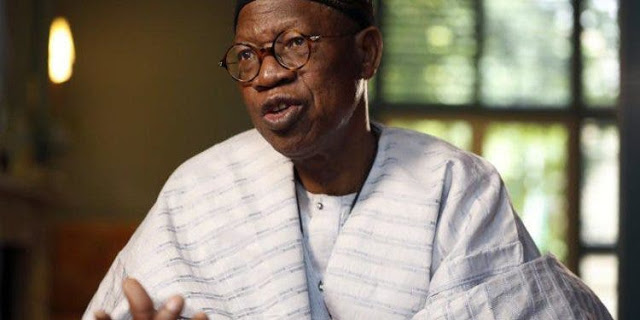
It’s not the duty of FG to prosecute kidnappers, bandits —Lai Mohammed

Lai Mohammed

Minister of Information and Culture, Alhaji Lai Mohammed, has said it was not the responsibility of the Federal Government to prosecute suspected kidnappers and bandits.
The government spokesperson who said this on Tuesday, May 4, 2021, explained that kidnapping and banditry were not federal offences.
Mohammed said this at a press conference in Abuja, while responding to statements credited to the opposition Peoples Democratic Party on the security challenges facing the country.
“The PDP alleged that kidnappers and bandits are not being brought to justice. This is apparently aimed at the Federal Government.
“It is shocking that a party that ruled this nation for all of 16 years does not know that kidnapping and banditry are not federal offences.
“The PDP should therefore call out the states, including those being controlled by it, to ensure a rigorous prosecution of arrested kidnappers and bandits.
“Meanwhile, PDP conveniently forgot that as far as terrorism, a federal offence, is concerned, this Federal Government has successfully prosecuted thousands of Boko Haram members in Kainji, as part of a continuing exercise. We are now seeking the cooperation of the judiciary to continue with the trial of arrested terrorists,” Mohammed said.

Credit:newsmart

Ex-Ekiti lawmaker and PDP chieftain accused of rape, wife kicks

A former member of the Ekiti State House of Assembly and chieftain of the Peoples Democratic Party, Dr. Samuel Omotoso, has been accused of rape by his family’s house help.

According to available information, the house help reported the rape allegation through her school.

The Ekiti State Attorney General and Commissioner for Justice, Olawale Fapohunda, said the State Government took over the case after it was reported by the school.

Fapounda said: “Immediately the matter was reported through the girl’s school, we took a statement from the alleged rape victim and forwarded the matter to the police for investigation.”

However, Omotoso’s wife, Abimbola, has kicked over the issue.

Abimbola said the state government was using the girl, who had lived with the household for over five years, to achieve the sinister motive.

She said: “The girl in question is an ill-mannered lady and all what she wants is total freedom for her reckless lifestyles as testified to by her mother and brother.

“The allegation is untrue, politically motivated just like many others made against my husband in the past and I wonder when he will be allowed his freedom to private life.

“My husband is a Medical Doctor and Peoples Democratic Party politician who contested, won and served as the House member from Oye Constituency 1, the same constituency with His Excellency, Governor Kayode Fayemi of Ekiti State, in the  fifth assembly.

“The constant harassments and intimidations of my husband have caused me and my children immense mental torture, pains and financial losses and it is a form of severe gender based violence against my person.”

But Fapohunda said it was wrong for Abimbola to accuse the government of complicity.

Credit:theeagleonline

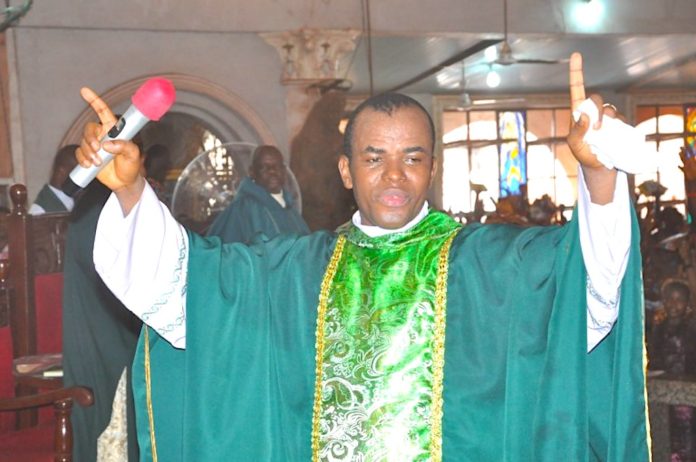
Father Mbaka’s Sin, By Reuben Abati

This is really a different kind of priest.

Mbaka represents an emerging face of the Church, a living embodiment of the rise of utilitarian capitalism in the Church of Christ, and the conflation of priesthood with hedonism. Catholic priests were known ordinarily as persons who had taken the Oath and dedicated their entire life to service and prayers. They disconnect from earthly pleasures.

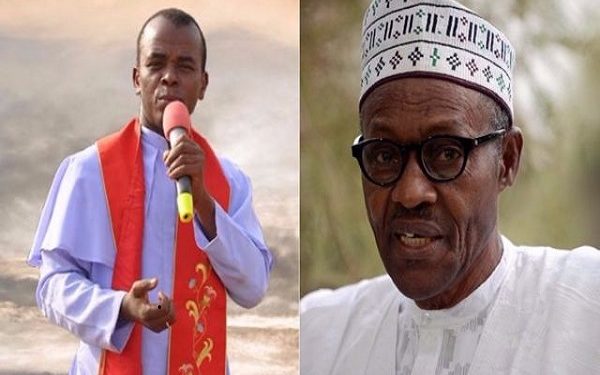
Father Ejike Mbaka, Spiritual Director of the Adoration Ministry, Enugu, attracts controversy the way flies are attracted to dung. He is completely unfazed about it. He comes across as a priest who does not mind what Pope Francis once referred to as “the sin of scandal”. Last week, Fr. Mbaka stirred the hornet’s nest again when he announced to his congregation that he had changed his mind about President Muhammadu Buhari, or perhaps he had received another message from God to the effect that if Nigeria’s President Buhari does not resign for failing to find a solution to Nigeria’s problems, he should be impeached. This came as a rude shock to many. Fr. Mbaka was a staunch supporter of President Buhari and the ruling All Progressives Congress (APC) in the 2015 and 2019 general elections. He used his pulpit to campaign for the APC. In 2015, he openly opposed then incumbent president, Dr. Goodluck Jonathan and his wife, Patience Jonathan. He would later claim that an attempt was made on his life. Mbaka wields enormous influence in the Eastern Region of Nigeria. He runs a personal ministry, more of a personal business, which he calls Adoration Ministry and that deploys a combination of the scriptures, combined with faith healing, theatrical, spell-binding tactics, metaphysical hallucinations and a bit of shamanism to hypnotise an attentive audience. In a country where poverty is widespread and the people are looking for salvation on earth and in the hereafter, anyone who is able to offer a combination of these elements is bound to be a celebrity. And Mbaka is. He is a celebrity. Something of a rock star! But where and when did he and his APC friends part ways? He did not really say anything earth-shaking or original, but coming from him, a Buharideen and an APC apologist, the weight of his new revelation attracted the right measure of attention.

In the past few days, we have been treated to a tit-for-tat between the Presidency and their Enugu-based star-gazer. Presidential spokesperson, Garba Shehu, did not allow the saliva in Mbaka’s mouth to dry up before issuing a statement to state that Mbaka, the Catholic priest, is not what he projects himself to be. Shehu gave an account of how Mbaka once visited Aso Villa to see the president with three contractors in tow. He wanted contracts from the Federal Government of Nigeria. But the president directed that due process must be followed. Garba Shehu, an experienced spin-doctor, thus used Mbaka to score three quick points: (1) that Mbaka is a businessman in priestly garment and an influence peddler; (2) that his so-called prophesies are at best personal opinions, depending on his calculations of likely benefits and; (3) Mbaka should be grateful that when he visited the Villa, the Presidency was kind enough not to expose him by publishing his photographs.

Garba Shehu was not alone. Yekini Nabena, the Deputy National Secretary of the APC also found it necessary to advise Mbaka to desist from making statements that could destabilise the country, and if he fails to do so, he would be reported to the Vatican. Nabena even quoted the Bible to remind the Catholic priest of his priestly obligations and the Example of Christ. Beyond the Villa and the APC, other Nigerians waded in, including Reno Omokri, the self-confessed “Buhari Tormentor”, who accused Mbaka of hypocrisy and further sent “An Open Letter to Pope Francis” to draw his attention to the delinquency of one of his priests in Nigeria. The Department of State Services has also since reminded religious and political leaders to eschew divisive politics, because the Nigerian state will not hesitate to defend the country against all forces of destabilisation.    

Clearly, the Nigerian government is embattled and it is not ready to tolerate additional pressures from any quarter. Even the World Press Freedom Day statement that was issued by the Presidency yesterday, May 3, while expressing commitment to free speech and the freedom of information, condemned licentious freedom, and gave a small lecture on responsible journalism. And it does not matter whether you were once a friend like Fr. Mbaka, the priest or Eedris Abdulkareem, the artist. The other week, Eedris Abdulkareem dared to criticise the Minister of State for Labour and Employment, Festus Keyamo (SAN) in a new album. Keyamo promptly released text messages between him and Eedris in which the musician begged the Minister for money to pay hotel and hospital bills, in exchange for his support for the Buhari administration. This may be a new tactic. Nobody should be surprised if one of these days state officials release images of some vocal critics eating jollof rice and fish bone as Nicodemus guests at the Presidential Villa.

This is really a different kind of priest. It is not beyond him to rain down curses like confetti at a wedding! I find his response naïve and contradictory, and strange, given the fact that the Catholic Church traditionally provides its priests the benefit of a sound education and clerical training.

But Fr. Mbaka is taking it all, as they say, on his chest. He is practically making a mockery of the reactions to his statements. He said it is stupid “to be attacking a messenger of God” and that yes, he took three white men who are contractors, who asked for his assistance, to the Villa; so what? They were asking for security contracts for themselves, not for him, and they didn’t get the contracts; so what? He accuses the Buhari government of not having “a reward mechanism”: “All the people they have been giving contracts, are they better than me? Am I begging them, do they know how many people I feed? Fortunately, they reported that they denied me of the contract – which contract? …They have shown that they don’t have what we call reward mechanism. If Shehu is a human..I don’t even know who the Shehu is. He should be apologising that they have not come down to say Nagode Allah for surviving what they are passing through. The last person this administration should fight is Father Mbaka talking here because if they speak against me, the anger of Heaven will be upon them and their end will shock everybody…”

This is really a different kind of priest. It is not beyond him to rain down curses like confetti at a wedding! I find his response naïve and contradictory, and strange, given the fact that the Catholic Church traditionally provides its priests the benefit of a sound education and clerical training. He is not the first Catholic priest to be controversial or outspoken in recent times. Recently, Bishop Matthew Hassan Kukah of the Sokoto Catholic Diocese pointedly accused the Buhari government of nepotism. The government and its agents hemmed and hawed. There were threats that Kukah would be expelled from Sokoto. But in the end, nothing happened. Kukah has since then delivered more stinging homilies and public lectures on the state of the nation. They have learnt to leave him alone. Nobody accused him of bringing contractors to the Presidential Villa. Father George Ehusani is another prominent Catholic priest. He succeeded Kukah as Secretary General of the Catholic Secretariat. He is not afraid to express his mind. He is consistent and blunt. He sings. He preaches. He runs a public-spirited NGO on leadership. Nobody has disturbed him because he does not phone politicians or government officials to ask for favours. In Ewu, Edo State, there is Father Anselm Adodo, the Benedictine Monk who is pushing the frontiers of Alternative Medicine and Epidemiology at the Pax Herbal Clinic and Research Laboratories. Fr. Anselm is so busy with research, he probably does not know where the Government House in Edo State is. To go higher within the hierarchy, John Cardinal Onaiyekan has been in the business of speaking truth to power before Mbaka gained admission into the seminary. Nobody has ever accused him of drinking tea with a cup belonging to the Nigerian government.

There is also Ignatius Ayua Kaigama, former Archbishop of Jos, who is now the Archbishop of Abuja. No contractor, white or black, would ever dare ask him to wear his cassock to go and lobby for contracts. But Mbaka is truly different. He is the priest of “reward mechanism”.  His public persona is that he is a Catholic priest of election seasons. He is a one-man Electoral Commission that can predict election results or anoint gubernatorial candidates.  In 2015, he reportedly rejected money that was donated to the Adoration Ministry by the Jonathan administration. One of his proclaimed achievements is that he correctly predicted that Senator Hope Uzodinma would become governor of Imo State through the Supreme Court. But now, Uzodinma no longer picks his calls. He was also once a friend to former Governor Chimaroke Nnamani. It didn’t take long before they quarrelled and the Oracle of Adoration began to see new visions. In December 2018, former governor of Anambra State, Peter Obi apparently did not understand the meaning of “reward mechanism” when he attended an annual harvest and bazaar celebration at the Adoration Ministry. He was accused of being “stingy.” Mbaka attends road commissioning ceremonies. Only the God he worships knows how many contractors he has taken round the South-East in search of contracts.

The Diocese of Enugu, to which Fr. Mbaka belongs, has often disclaimed his remarks as his personal opinion. The Catholic Bishops Conference has also always warned against the promotion of partisan politics in the context of Mass. But Mbaka appears untouchable. Reno Omokri, who is himself a preacher of the word, has reported Mbaka to Pope Francis. But Mbaka is thoroughly amused. He tells his critics: “If Rome hears that Father Mbaka is challenging evil governance, Rome will clap for me, so quickly go to Rome…” He is probably amused because he knows that those rushing to the Vatican may not know how the Catholic church system works. The Pope does not get directly involved in the disciplining of priests. Under the Code of Canon Law, it is the responsibility of the Congregation of the Doctrine of Faith that deals with crimes of an ecclesiastical nature committed by priests. But the Rules stipulate that the local church must take the first step in disciplining a delinquent priest, and outcomes of investigations and conclusions can then be forwarded to Rome. Omokri’s petition will be referred to the local church in Nigeria. Will the local church act? Does Mbaka’s Bishop see anything wrong in what he does? Is his Adoration Ministry so rich and so supportive of the Church that not even the Catholic Bishops Conference can apply the essential norms? The problem is probably not Mbaka, but the Catholic Church of Nigeria and its leadership. Mbaka’s style is also probably environmentally determined. He has received words of encouragement from Nnamdi Kanu of the Indigenous Peoples of Biafra (IPOB). Ohanaeze Ndigbo has also publicly supported him. Nnamdi Kanu even said Mbaka also has the right to change his mind like Sheikh Isa Pantami! In Nigeria, religion and ethnicity provide ready cover-ups for anything.

This new tendency of priests who do not want to suffer, who would rather choose the hedonistic life, explains the new character of the Church. Priests no longer get enough financial support. Priests now want to own estates. They drive exotic cars if they can. They want to travel First Class too. They argue that even St. Paul had a business on the side that gave him extra income. 

Mbaka represents an emerging face of the Church, a living embodiment of the rise of utilitarian capitalism in the Church of Christ, and the conflation of priesthood with hedonism. Catholic priests were known ordinarily as persons who had taken the Oath and dedicated their entire life to service and prayers. They disconnect from earthly pleasures. Riches do not mean anything to them. They are happy to commit to the task of salvation. It is therefore most shocking that a priest like Reverend Mbaka, as far back as 2016, was described in one report as the owner of a Ministry within the Catholic Church, the Adoration Ministry, which he runs as a personal “business”. When he was asked to move from Christ the King Parish, Enugu to Our Lady of the Rosary Parish, Emene, his main concerns were the assets of the Adoration Ministry and the fact that he would “suffer.” This new tendency of priests who do not want to suffer, who would rather choose the hedonistic life, explains the new character of the Church. Priests no longer get enough financial support. Priests now want to own estates. They drive exotic cars if they can. They want to travel First Class too. They argue that even St. Paul had a business on the side that gave him extra income. Hence Mbaka can tell the Presidency: “…do they know how many people I feed?” We are in the age of billionaire priests who run business empires. With the offertory no longer generous, since members of the congregation are mostly poor, and in need, some enterprising priests can no longer rely on their meagre stipends. They are creating businesses and opportunities in the name of God to live well, and to support others and whenever they can, take care of the Bishops too. They have forgotten that the Lord Jesus was born in a rented manger. He was buried in a borrowed tomb.  

Where is the Church? In November 2014, Pope Francis gave an interesting homily on this same subject at the Saint Martha Guesthouse at the Vatican. His focus was the Gospel of Luke. He said that “there are two things that the people of God cannot forgive: a priest attached to money and a priest who mistreats people. This they cannot forgive! It is scandalous…” Quoting the Gospel of Luke, the Pope recalled how Jesus turned tables and drove away people who were selling inside the church: a sacred place of prayer which had been turned into a business place. He added: “I think of how our attitude can scandalise people with unpriestly habits in the Temple: the scandal of doing business, the scandal of worldliness…It is scandalous when the Temple, the house of God becomes a place of business…” The Bishop of Rome has certainly not yet heard of the Nigerian phenomenon. Everyone who has had cause to comment on the Federal Government and Fr. Mbaka’s saga, including Yekini(!), has been quoting the Bible. Let me add this passage from the Gospel of St. Mark, Chapter 11: 15-17:

“Then Jesus went to the Temple and began to drive out those who bought and sold in the temple, and overturned the tables of the money changers and the seat of those who sold doves. And He would not allow anyone to carry wares through the temple. Then He taught, saying to them: Is it not written, my house shall be called a House of prayer for all nations? But you have made it a den of thieves.”  This is the word of God to us.  May the Lord bless His Word…

Reuben Abati, a former presidential spokesperson, writes from Lagos.

Human rights key to industrial harmony — NHRC

Executive Secretary, National Human Rights Commission (NHRC), Mr Tony Ojukwu on Sunday said that human rights were key to industrial harmony.

This is contained in a statement signed by Mrs Fatimah Agwai- Mohammed Deputy Director, Public Affairs of the commission in commemoration of the 2021 International Workers Day (IWD) celebrated every May 1.

Ojukwu reiterated the commission’s commitment to ensure that human rights principles are mainstreamed into labour practices in various workplaces and amongst labour unions across Nigeria.

“This is to ensure sustainable industrial harmony, improved productivity, and efficient service delivery.

“Mainstreaming human rights in the operations of Ministries, Departments, and Agencies (MDAs) as well as in the private sector holds the key to job satisfaction and increased productivity,” Ojukwu said.

According to Ojukwu, it is in this connection that the commission has continued to train and retrain law enforcement personnel, labour force in the MDAs, and workers in the private sector.

“This is for them to understand and appreciate the need to deploy and mainstream human rights principles and norms while carrying out their official duties.

“On the other hand, the Nigerian workers both in the public and private sector should not renege on their own responsibility of delivering quality and efficient services to justify the trust and confidence reposed in them by their employers.

“Demand for improvement in the welfare packages of the workforce is a legitimate human response in the light of current challenges facing the workforce,” he said.

He added that where resources were not immediately available to address such demands, it behooved workers to show understanding while pushing for their demands.

Ojukwu enjoined the government and employers of labour to always try to pay just wages that could address the basic needs of workers for industrial peace and harmony.

He commiserated with families of those who lost their relations in the line of duty as a result of hazards associated with their occupation or from natural causes.

“We must as a matter of necessity remember them whenever we mark Worker’s Day, given their sacrifices and contributions to nation-building.

“The current COVID-19 pandemic which resulted in the death of many people across the globe seriously affected workers especially health workers including Doctors and Nurses.

“This calls for comprehensive life insurance policies for Nigerian workers to mitigate the burden of such casualties on any affected family,” Ojukwu added.

Credit:sundiatapost

Mbaka: Villa and its Vulture

By Lasisi Olagunju

Vulture means Igún in Yoruba. At the very beginning of time, he was the priest of the earth. The priest was also earth’s doctor. It happened that Olófin, the king in Ile-Ife that time, had his life in total disarray – a life broken like calabash and rent like cloth (ayé e rè fó bí igbá/ó fàya gbaragada bí aso). The town was dry; the hungry were hungrier; the sad, sadder. Birds were no longer chirping like birds; rats lost their vocal cords. The town boiled; the king’s world was in turmoil. Nothing worked for the palace – and for the people. Then, the king remembered the old priest and hurried to the house of Vulture. He begged the priest to be present in Ile-Ife. There, the king’s broken life was mended; the rent town was sutured. Olófin was happy; his people danced to the beats of healing and victory. They were all whole again.

But the priest was not a one-station man, he had to move. Vulture travelled to the house of Olodumare and overstayed there. Six years in the house of God, he came back to Ile-Ife. He arrived hungry and tired. He knocked at the first door, what he got was a big knock on his head. Shocked. He knocked at the second door, he got the same treatment on his aching head. Could it be because it was dusk that his beneficiaries could not recognize him? He flew into the night waiting for the break of a new day. Morning came and Vulture went straight to the palace. If the people were dumb, the king won’t be crazy. But the king saw him and shouted at his guards to push him out and lock the gate. The king forgot the days of fear and tears. He refused to recognize his benefactor.

Why would the king refuse to recognise and honour his benefactor? My people have the answer: They say Oore pé, asiwèrè gbàgbé (favour is long done, the insane forgets). Palace guards did more than their lord commanded them; they gave Vulture hard knocks repeatedly on the head, then pushed him out. The assaulted stood shocked for six days outside, in rain and in sunshine, waiting and wailing. The seventh day broke and the priest, broken and sad, went back home, bald headed. He arrived in his room and murmured to himself: Olófin lóun ò tún mo Igún mó…Oore pé, asiwèrè gbàgbé (The king says he no longer recognizes Vulture! So, it is true that favour long done gets forgotten by madmen).

But did it end there? Olófin soon contracted a terminal disease and all around him had neither cure nor succour. Only one medicine stood between him and the grave – and the patent was held by the old, powerful Igún. The king learnt this and summoned Vulture to the palace. Vulture, the priest, heard the palace messenger, touched his bald head and silently thanked his creator (eleda) for the grace of wisdom. His head told him: You do not say no to the king but you may also not say yes. Vulture sent words that he would soon be by the king’s bedside. He never went back to Ile-Ife to save the one who must die. Oore pé/Asiwèrè gbàgbé.

The above is not just about Father Mbaka, the Catholic priest with a million tongues. If Vulture had done any violation to truth, as Mbaka did serially for politicians, he wouldn’t have had a chance for his pound of flesh. But there is nothing the Buhari regime has said or done to Mbaka that it has not said or done to the hundreds who were maimed, killed and displaced in Katsina, Zamfara, Niger and Kaduna, and who all voted to make the “perpetually unelectable” man our president in 2015. He has done it to the hundreds who were abducted across the Middle Belt and to the murdered in the south. Or did you not hear the slam-shut sound of presidential gates when and where empathy was needed? You heard government fuming that killings were being reported as if murder had never happened before. They said mass murder had been in existence since forever and their god was simply the target of weeping victims and their wailing sympathisers.

Leadership is not a pleasure cruise; it is a rescue mission. When a leader asks the afflicted to shut up, that leader is lost. While our president and his presidency major in minor things, kissing Father Mbaka and telling the world without shame, the real enemy is out there taking down the country. Are they aware that the country no longer has a roof over its head? And it is raining acid! A great misfortune it is when a besieged town is headless. It is pouring. A recent statistics released by the Katsina State Emergency Management Agency (SEMA), revealed that over 33,000 people are internally displaced in the state. These are persons forced out of their homes by free-reigning bandits. They are displaced and taking shelter across major towns and cities in the state. Out of this number, 20,868 are children; 8,886 are adult females; the remaining 3,376 are adult males. The president is from Katsina State. What has he done to help and rescue these people, his own kin, who carried his destiny on their heads and forgot their own at the polling booths in 2015 and 2019?

The dictionary meaning of ingratitude is “a discreditable lack of gratitude.” Disgraceful is the direct meaning of discreditable. If you do not know how to appreciate small and big favours, you lack character and grace. You cannot preen in cassocks of piety and integrity – you lack both. There is no culture in Africa, even in the sinks of Fouta Jalon, that celebrates anyone who takes favours as rights and views everyone as his debtor. That is why the Fulani order their birds to “sing the praise of where they spend their hot seasons.” The Arabian tale of King Jafar of Roum is another strong story of a king who thanked his helper with imprisonment. He ended badly.

President Buhari’s people in Daura have a very beautiful story on the imperative of keeping promises and showing gratitude. Less than a month after Buhari became president in 2015, the Emir of Daura pronounced him as Bayajidda II. He got a gold plated sword and a horse as totems of that office. But what did that mean? The title is rooted in the legend of Bayajidda, the founder of the Hausa states. A historian tells the story this straight way: Bayajidda slayed a snake that lived in a well in Kusugu, a place in modern-day Daura. The snake had terrorized the people and deprived them of water. It only allowed water to be drawn from the well on Fridays. In spite of the warnings, Bayajidda went to fetch water at the well on a Thursday. When the snake attacked him, he cut off its head with his sword. As a reward for killing the snake, the Queen of Daura, Daurama, promised him half of her kingdom. But Bayajidda cleverly refused and instead asked for her hand in marriage. This was unheard of, since all previous queens there had practised celibacy. However, Daurama felt indebted to him and agreed. This legend is reenacted every year in Daura as a reminder to the community’s ancestral fidelity to gratitude. So, why is Bayajjida II, Muhammadu Buhari, not helping his people to kill the Kusugu bandits after he was kitted with the long-sought sword of Nigeria? Why has his government surrendered its monopoly of violence to bandits and kidnappers? The Alaafin of Oyo asked the same question at the weekend. Nigeria is waiting for the answer.

So, Mbaka’s misfortune is just a metaphor for all who have lost their investments to the Buhari-must-be-in-Abuja project. The Olófin/Vulture story above is a consolation to all victims of ingratitude. The story is also for all Nigerians, home and abroad, whose toil and sweat still feed this government of tooth pickers. It is a warning too to the regime that has thrown all, including those who had no hand in the affliction, out of comfort and safety. More importantly, the story is an assurance that redress is a red card in the hands of God – even at injury time. Enough.

Why Pantami Must Step Aside From Government

The public interest and good of having Mr Pantami vacate his ministerial position far outweighs any other consideration, as his continued stay in office will only constitute a distraction at a time of rising ethnic, religious and nationality tensions in the country.

The storm surrounding the Minister of Communications and Digital Economy, Isa Ali Ibrahim Pantami, highlights the fragility of democracy and its guardrails in Nigeria, and the arduous task required to strengthen the nation’s brittle socio-political fabric.

Our appraisal of the saga leaves us with only one conclusion: Mr Pantami needs to take leave of his exalted public office or be relieved of it.

This is necessary to protect the modest democratic gains that Nigeria has made over the past 21 years under the hard-won Fourth Republic, and assuage reasonable fears about the integrity of government, its agencies and officials, alongside the commitment to the values that underpin a united and prosperous nation.

This saga began a few weeks ago when a newspaper reported that Mr Pantami had been placed on the watch list of the United States Intelligence Service over his alleged ties to leaders of international terrorist organisations.

Although the newspaper promptly withdrew the report under the threat of libel litigation, the matter opened the gate for a stream of multi-media evidence that has since torn the shroud of public amnesia covering the minister’s considered extremist religious worldview and fiery past. What we now behold is a worrying persona whose occupation of an exalted ministerial seat in a country with a complex diversity has become highly untenable.

Some of the evidence are from audio and video recordings of Mr Pantami’s old sermons as an Imam speaking to Muslim congregations around the country. We note that while there has been misreporting and decontextualisation of some past sermons, his overall worldview, to the extent that the tapes reviewed by this newspaper revealed, are troubling enough.

Mr Pantami initially stood by the controversial sermons, saying they had been taken out of context. In an interview with Premium Times, he said: “…all that they have been spreading is probably because they do not understand the context in which the lectures were presented. Usually, all the lectures they mentioned were presented around 1998, 1999, 2000. The most recent could be around 2006, which is also 15 years ago. Most of them were firstly, academic lectures from Islamic perspective, and we were presenting the lectures in order to calm our youth that were being recruited to join extremism.”

However, following the exhumation of more archival audio and video clips, and with angry Nigerians demanding his resignation or sack from government, Mr Pantami buckled, saying he had since adjusted his views on some matters contained in his old sermons.

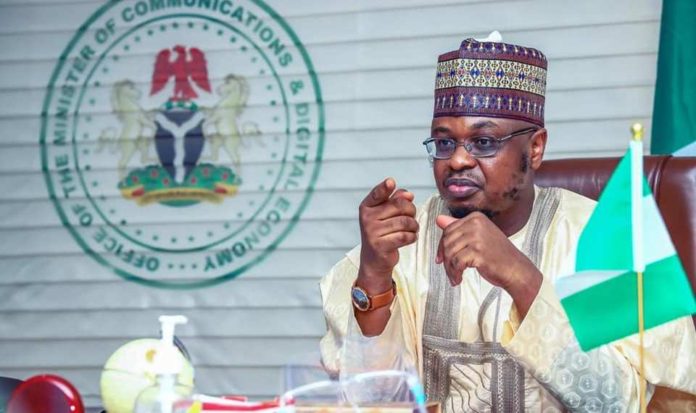
Minister of Communication, Dr Isa Ali Pantami [PHOTO CREDIT: Dr Isa Ali Pantami on Facebook]

During his daily Ramadan lecture at Anoor Mosque in Abuja on April 17, the minister said:

“There are some people who have been sharing some of my old clips of debates, some of them I did since the 90s. I started teaching people and preaching when I was 13. It is obvious that at that time that I was young, I would make mistakes. As a young student preacher, as an undergraduate, yes you are not matured enough to get everything right.

“As you grow older you think better, understand better and do things better. Anyone who listens to us now will know that we have grown older and wiser and we understand things better than before. It is a pattern in life, we always grow into things we do and understand things better. I have travelled widely, studied and taught in foreign countries. If you listen to me now, of course, it will not be like how we did before now and my stand in life will remain what I say now. There might be a lack of maturity when you are younger, but when you grow in life you behave with maturity.”

The Presidency, which had initially maintained an undignified silence on the saga, later sided the embattled minister, brushing aside the calls for his exit from government. Presidential spokesperson, Garba Shehu, was bullish in the fulsome defence of Mr Pantami:

“Today, there is an unfortunate fashion in public discourse that makes leaders in politics, religion, and civil society liable in the present for every statement they have ever made in the past – no matter how long ago, and even after they have later rejected them.

“This insidious phenomenon seeks to cancel the careers of others on the basis of a thing they have said, regardless of when they said it.

“The Minister of Communications and Digital Economy, Dr. Isa Ali Ibrahim Pantami is, currently, subject to a “cancel campaign” instigated by those who seek his removal. They do not really care what he may or may not have said some 20 years ago: that is merely the instrument they are using to attempt to “cancel” him. But they will profit should he be stopped from making decisions that improve the lives of everyday Nigerians.

“The Minister has, rightly, apologised for what he said in the early 2000s. The views were absolutely unacceptable then, and would be equally unacceptable today, were he to repeat them. But he will not repeat them – for he has publicly and permanently condemned his earlier utterances as wrong.

“In the 2000s, the Minister was a man in his twenties; next year he will be 50. Time has passed, and people and their opinions – often rightly – change.”

But the Presidency’s argument completely missed the point. Nigeria is a healthily pluralistic society whose democratic political preferences, propose a big tent hold for its multiple ethnic groups and religious allegiances to co-exist peacefully. The Constitution, for that reason, guarantees every citizen the liberty to choose and practice his/her religion, as long as this practice does not infringe on the rights of others.

Nigerians find it comforting that the two dominant religions in Nigeria preach peace and tolerance in inter-religious relationships. Anyone who holds extreme views cannot be understood to be speaking for either religion.

What has emerged from Mr Pantami’s past therefore, are suggestive of a religious hardliner, who was intolerant of choices and views different from those consistent with his worldview. Despite his claims to have now embraced moderate religious views, it is difficult at this time to measure the extent to which he has reverted from such mindsets.

Still, while Mr Pantami might have had cause to revise some of his positions in relation to the need for Western education (he holds a PhD from a Scottish university and strings of certificates from American Ivy league universities), as more recently expressed in the media, it is difficult to say how much of this has influenced his core religious beliefs, which some still suspect to be extremist.

The foregoing have made it difficult for many Nigerians to accept Mr Pantami’s credentials as an unblemished bearer of inclusive and democratic values, or that he agrees, beyond mere rhetoric, to the ideals that we seek to build into a multicultural future as a country.

What Nigerians who have spoken loudly on this matter have expressed is that President Buhari needs to understand that they would remain uncomfortable having Mr Pantami in the federal cabinet overseeing a highly strategic department of government. The concern has also been expressed on how he balances his religious beliefs with the imperatives of our national interests.

This reasoning has been deployed to challenge the wisdom of having him as the Minister of Communications and Digital Economy, overseeing agencies responsible for managing the databases of Nigerians and expatriates in the country, as well as the web infrastructure of most government ministries and agencies, the armed forces, intelligence agencies, and Nigeria’s satellite infrastructure that provides communication and navigation support for the air force.

Minister of Communication, Dr Isa Ali Pantami [PHOTO CREDIT: Dr Isa Ali Pantami on Facebook]

On this case, and in spite of himself, the president needs to act in a manner that sends a strong message to Nigerians that even if divisive persons manage to find their ways into sensitive positions of trust, he can muster the courage and strength to ask them to step aside.

The survival of democracy depends on vigilance and a commitment to safeguarding the good of the greater majority, on the part of citizens, and the sturdiness of national institutions to promote the essential diversity that enhances social harmony.

Yet, there are other issues that the Pantami Saga bring into question: the integrity of the vetting process for appointments into high public offices in Nigeria, which involves security clearance and the scrutiny of the National Assembly. This prompts a sense of alarm as Mr Pantami has been in government for close to half a decade, first serving as Director-General of the National Information Technology Development Agency (NITDA), before his current appointment as a Minister.

It should also be remembered that Mr Pantami did not carry out his controversial activities as a cleric in remote or obscure places. He started in Bauchi, a university city and state capital. Did his sermons escape the notice of the media, civil society, his colleagues and students in the University? How come no one waved the red flag when he was tapped to administer aspects of the affairs of Nigerians?

While this issue questions the efficiency of the internal security services and the worth of the intelligence reports presented to government on candidates for appointment, there is an urgent need to now tighten up and secure this process. Also, the effectiveness of screening presidential appointees by the upper chamber of the National Assembly, calls for more rigorous measures, including possible public hearing.

President Buhari needs to put this saga behind Nigeria. Keeping Mr Pantami in government will only deepen divisions that have been created, and intensify the tensions in the polity, whilst questioning the motives of the president. The public interest and the desirability of having Mr Pantami vacate his ministerial position, in our opinion, far outweighs any other consideration, and his continued stay in office will only constitute a distraction at a time of rising ethnic, religious and nationality tensions in the country.

Credit:premiumtimesng

Bandits use ransom to buy weapons, settle informants – Sheikh Gumi

Kaduna-based Islamic cleric, Shiekh Ahmad Gumi has disclosed that bandits use proceeds from kidnapping to purchase arms and settle informants.

Gumi disclosed this while dismissing claims that government officials and the elites are behind the increased activities of banditry in the North.

Speaking with DAILY POST, the cleric also disclosed that bandits are fighting an ethnic and not ideological war.

He said: “That was a small metamorphosis in the process, but now the bulk of the money they collect is used to buy weapons. Bandits are independent now, and nobody influences them. In fact, they

are fighting an ethnic war which makes it easier because they are not fighting for ideology.”

Gumi also maintained that the current state of insecurity cannot paralyze Nigeria.

He pointed out that the number of those involved in banditry and kidnapping are small when compared to the population of Nigeria.

“There is a high state of insecurity, but it has not reached the state where it will paralyse Nigeria. We still travel around despite more frequent and sporadic attacks.

“The issue has not got to the stage of paralysing Nigeria. The active people involved are few, and I do not think they are more than 10, 000 actively engaged in kidnapping among the herdsmen,” he said.

He further urged the Federal Government to engage these bandits in a roundtable discussion with the view of ending the menace.

“Government should do the right thing, and honestly speaking, Nigerians have to swallow these bitter pills which is getting these people on a table and set in place a machinery to rehabilitate them,” Gumi said.

Daily Post.

Why Buhari’s government is collapsing — Amechi

Nigeria’s first Minister of Transport and Aviation, Chief Mbazulike Amechi, has raised the alarm that the country is in a precarious with the “total collapse of the security architecture.”

Amechi, who is now the only surviving minister in the First Republic, said the government of President Muhammadu Buhari Buhari is also collapsing in addition to the security system.

Speaking exclusively with Sunday Tribune on the state of the nation, the nonagenarian said the government was collapsing because Buhari chose to be a president for the North, preaching Fulani ownership of the country.

The Anambra State-born elder statesman lamented that nothing serious was being done to arrest the downward slide in the country.

He called for an urgent dialogue involving the leaders of the country to review the basis of a new federation that must emerge from the current arrangement. “It’s inconceivable kidnappers, bandits, insurgents have over-run government,” he said.

A former president of the Church of Christ in Nations (COCIN) and chairman, Plateau State Inter-Religious Group, Professor Pandam Yamsat, has described the worsening security situation in the country as frightening, saying it is inconceivable that banditry and kidnapping can cripple the government.

“It is like the government cannot protect its citizens anymore as the people appear without protection. It is generally believed that there is no power that can rise above that of government, no matter powerful it may be.

“But the undesirable elements are holding the country to ransom and operating freely. It appears the government is now handicapped … It is either the government is working against itself of the government does not know what it is doing,” the elder statesman said. (Sunday Tribune)

TIPS