Home Blog Page 905

Can Nigeria develop without equity, justice and fairness?

Last Friday, Nigeria celebrated her 61st independence anniversary having got freedom from British colonialists on October 1, 1960. I have the privilege of discussing the import of that independence and the President’s Independence Day speech on a number of media platforms, both radio and television. I also listened and read other people’s opinions on Nigeria at 61. There is a unanimity of views that though we are not where we used to be, at the same time, we are not where we ought to be. The President in his broadcast said: “I fully understand the anxiety of many Nigerians on the inability of this country to go beyond a never-ending potential for becoming a great nation to an actually great one.” What then is the missing link to our national development? I dare say a part of it is lack of equity, justice and fairness.

There are some pointers to this. Right now, there is a raging controversy over the issue of power shift or rotational presidency between the North and South, the same as the issue of Value Added Tax, separatist agitation, herders-farmers clashes, fiscal federalism and clamour for restructuring. Why are these issues controversial? It’s largely because of perceived marginalisation and discrimination as well as attempt to dominate and exploit one tribe, ethnic group or region by another.

Take for instance the clamour for power shift from Northern Nigeria to Southern Nigeria in 2023. The Southern governors at their last meeting issued a communiqué that, “The Forum reiterates its commitment to the politics of equity, fairness and unanimously agrees that the presidency of Nigeria be rotated between Southern and Northern Nigeria and resolved that the next president of Nigeria should emerge from the Southern Region.” Various Northern groups namely the Northern Governors’ Forum and Northern Elders’ Forum openly disagreed with this call. They said it is unconstitutional and has no merit. Some Northern leaders even said the Southern leaders were threatening and blackmailing them to support power shift and that they have the numerical strength to determine presidential election victory in the country.

Well, what does the 1999 Constitution of the Federal Republic of Nigeria as amended say about this issue? While power rotation may not have been expressly written in the constitution, Section 14 (1) of the grundnurm says, “The Federal Republic of Nigeria shall be a State based on the principles of democracy and SOCIAL JUSTICE (emphasis mine). Section 14 (3) says, “The composition of the Government of the Federation or any of its agencies and the conduct of its affairs shall be carried out in such a manner as to reflect the federal character of Nigeria and the need to promote national unity and also to command national loyalty thereby ensuring that there shall be no predominance of persons from a few states or from a few ethnic or other sectional groups in that government or in any of its agencies.”

Sub-section 4 of that Section 14 also says, “The composition of the government of a State, a Local Government council, or any of the agencies of such Government or council, and the conduct of the affairs of the Government or council or such agencies shall be carried out in such manner as to recognise the diversity of the people within its area of authority and the need to promote a sense of belonging and loyalty among all the peoples of the Federation.”

The issue of federal character is not limited to governance. That is why Section 223 (1) (b) of the Constitution says, “The constitution and rules of a political party shall ensure that the members of the executive committee or other governing body of the political party reflect the federal character of Nigeria while sub-section 2(b) says … The federal character is reflected only if the members belong to different states.

How does all of these copious constitutional provisions relate to issue of equity, fairness and justice? The framers of Nigeria’s constitution deliberately made provision for federal character in order to promote, national unity, social justice, national loyalty and sense of belonging among others. If the Northern leaders do not want power shift or rotational presidency and decided continually to rule the country, will that not be in breach of the provisions of the aforementioned sections of the supreme law of the country? The real fact is that the North cannot do without the South and vice versa. Even in the determination of presidential victory, a candidate to that seat must in addition to scoring a majority of lawful votes cast also have 25 per cent of votes in at least two-thirds of the country, plus, the Federal Capital Territory.

That is 24 out of the 36 states and Abuja. Administratively speaking, there are 19 states in the North, thus any presidential candidate still needs 25 per cent of the votes in five of the 17 southern states.  Since 1999, Northern Nigeria has produced both President Umaru Yar’Adua and the incumbent, Major General Muhammadu Buhari (retd.), the same way the Southern Nigeria has produced Presidents Olusegun Obasanjo and Goodluck Jonathan. I am reliably informed that the Constitutions of the Peoples Democratic Party and that of the All Progressives Congress prescribe zoning of political offices. Be that as it may, where lies the illegality or unconstitutionality of zoning and power shift arrangements?

On the issue of VAT, I learnt it was previously a consumption tax collected by the states but the collection was centralised by one of the military for easier collection. The agitation that first made Lagos State and more recently Rivers State to challenge the collection of the VAT by the Federal Inland Revenue Service in court was borne out of lack of equity in the distribution of the collected sum. On September 8, 2021, while addressing a shareholders’ meeting in Port Harcourt, Rivers State, Governor Nyesom Wike “lamented the injustice in the country”, saying Rivers State generated N15bn VAT revenue in June this year, but got N4.7bn in return, while Kano generated N2.8bn in the same month and got the same N2.8bn back. The governor also said N46.4bn was collected from Lagos State in the same month but the Federal Government gave Lagos N9.3bn. Is this an equitable distribution of this tax? I am of the considered view that if only the FIRS or the Federal Government will evolve an equitable sharing formula for the distribution of this controversial tax, then all the litigation surrounding the issue can be settled out of court.

One of the key highlights in the May 11, 2021 communiqué of the Southern Governors’ Forum was that in deference to the sensitivities of our various peoples, there is a need to review appointments into Federal Government agencies (including security agencies) to reflect federal character as Nigeria’s overall population is heterogeneous. What could have necessitated this recommendation? It’s borne out of the fact that there is no fair representation of all the major ethnic groups in the appointments into these positions especially the military or security agencies. For instance, a preponderance of the heads of security agencies are from Northern Nigeria while the Igbo are not even represented in the top six, namely, Chief of Defence Staff, Chief of Army Staff, Chief of Naval Staff, Chief of Air Staff, Inspector-General of Police and the Director-General of the Department of State Security. Do you blame the Indigenous People of Biafra if they want out of Nigeria when the South-East is alienated from key government positions and projects?

While the Federal Government was quick to declare IPOB as a terrorist organisation and arrested Nnamdi Kanu who is the leader of the group and also hounded Sunday Igboho to Beninese jail, it ignored the resolution of the National Assembly to declare bandits and killer herdsmen as terrorists.  Does that portray equity, justice and fairness?

The three pillars of rule of law, according to Prof. A.V. Dicey, are supremacy of the law, equality before the law and fundamental human rights. If we continue to play by George Orwell’s catchphrase in his classic book, Animal Farm, where he said: “All animals are equal but some are more equal than the others”, then there will be no sustainable peace, progress and development in Nigeria. Inclusive governance based on equity, justice and fairness are the core values we need to apply to resolve many of our national challenges. Strict observance of the federal character principles at all tiers of government is the gateway to achieving national cohesion, peace and stability.

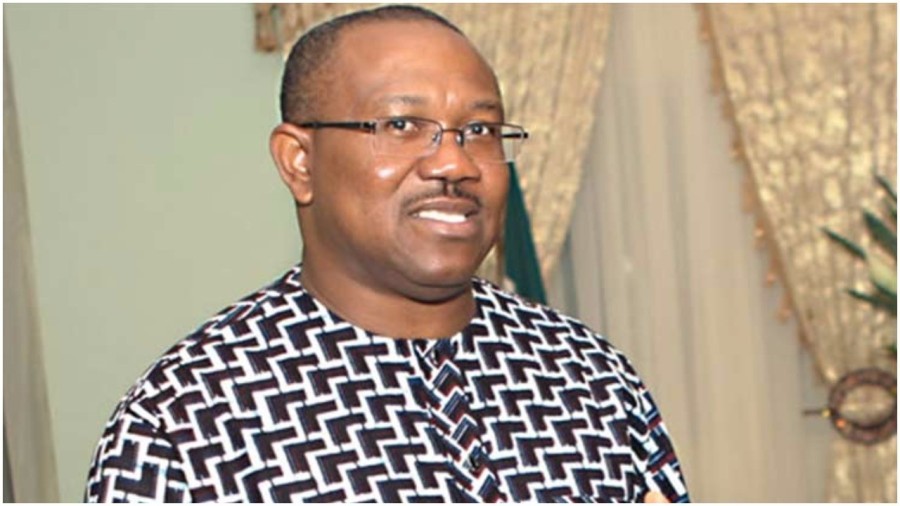
Premium Times report on Obi: A hatchet job ‘lacking in substance’ and ‘purity of motive,’ says group

By Ishaya Ibrahim, News Editor

As the 2023 elections draw closer and politicians jostle openly and behind the scenes for positions, some are throwing the kitchen sink at their perceived opponents.

This is the position of a human rights group, Nigerians For Justice (NFJ), which on Monday dismissed what it called an “obvious sponsored inquest” against Mr. Peter Obi, former Governor of Anambra State and Vice Presidential candidate of the Peoples Democratic Party (PDP) in the 2019 elections, by Nigeria’s online newspaper, Premium Times. Advertisement

In a report on Monday titled, “Pandora Papers: Inside Peter Obi’s secret businesses — and how he broke the law,” Premium Times alleged that the former governor and business mogul “serially violated the law by failing to declare to the Code of Conduct Bureau the companies and assets he tucked away in secrecy havens.”

But in what read more like an editorial comment rather than a news report, Premium Times said, “Peter Obi, the ex-governor of Anambra State in Southeastern Nigeria, is widely regarded in Nigeria as an advocate of good governance, openness, and transparency.

“In addition to speeches on his governance records and statistics-laden prescriptions for Nigeria’s development, he likes to talk about how hugely successful he became in business before diving into politics.

“In speeches and in printed literature, Mr. Obi is never shy, reeling out his numerous business affiliations and accomplishments.”

NFJ in a statement on Monday in Asaba, Delta State capital, faulted the report, which it dismissed as lacking in both substance and style.

The group insisted that the Premium Times report on Obi’s alleged foreign business activities only tried to create a wrong impression about him.

The statement signed by NFJ’s Chairman, Mr. Francis Ezeoka, accused the newspaper of bad faith and of doing a hatchet job “lacking in substance” and “purity of motive.”

The statement linked the report to desperate political forces afraid of Obi’s rising political profile ahead of the 2023 elections.

NFJ said the online newspaper betrayed its motive right from its opening paragraph where, without even the benefit of the said reports, it started passing judgement, thus betraying the fact that they were on a sponsored mission targeted at tarnishing Obi’s reputation.

NFJ, which described Nigerians as very intelligent and discerning people, said it was confident that they would ask Premium Times the ultimate questions: “Did you trace any missing government money to any company Obi has real or imaginary interest? Is any public money missing in any public establishment Obi has had contact with, such as Anambra State, Security and Exchange Commission?”

The group also wondered the nexus between Obi’s numerous speeches the report referred to and the actual issue the newspaper pretended to be investigating.

Dismissing the report as failing short of expectations by trying to make a mountain out of a molehill, NFJ said: “There is nothing in the Premium Times report that impeaches Obi’s integrity. It provides no proof of corruption by Obi but merely alleges failure to declare his foreign assets.

“To prove that he has nothing to hide, we learnt that Obi made himself available to Premium Times and honestly answered all their questions. Apparently disappointed that they could not establish a case of corruption against him, the newspaper resorted to editorialising and playing the prosecutor contrary to the journalism tenet of fair reporting.

“We know many fantastically corrupt Nigerians and the property they acquired while in government, as well as how they stole the money of their states and ended up plunging their states into debt and yet Premium Times did not consider them objects of investigations,” NFJ further said.

In the same vein, a former bank chief who spoke to TheNiche anonymously said the story was sponsored.

“In this silly season of politics as Americans will say, we should expect more of these sponsored reports. Politicians who are scared of Obi’s political profile and knowing how popular he is with the ordinary Nigerians have started throwing the kitchen sink at him.

“They will stop at nothing. Those who know are aware that Obi is one of the most investigated politicians in Nigeria in the last eight years. They went to every length in 2019 when he ran as the Vice Presidential candidate of the PDP but they found nothing.

“That Premium Times report is an act of desperation. It did not establish any case of corruption. It is sheer witch-hunt but it will fail. While fighting corruption is good, it must be differentiated from witch-hunt,” he said.

Coincidentally, in an exclusive interview with TheNiche on Thursday, Obi, who insisted that he was never a pauper before he became governor of Anambra State, said he can explain every wealth he has.

Pushing back against some allegations that he may have run afoul of the law when he was governor, Obi who has never had any encounter with the Economic and Financial Crimes Commission (EFCC) since he left office eight years ago said he was not bothered by the allegations.

https://youtube.com/watch?v=OEALMd32HHs%3Ffeature%3Doembed

“Before I became governor, I was a director in several financial institutions and some other quoted companies by virtue of my investments,” he told TheNiche.

“I had thriving businesses and the businesses were not folded up because I wanted to be governor. They were there. They were all going concerns. All people need to know is that if there is anything you have seen, investigate it properly, ask valid questions and you will be provided with the right answers.”

Rather than throwing stones, the former governor advised: “What I want people to concentrate on is this: if you see anything that you think is suspicious that belongs to Peter Obi, investigate it properly, most especially, get to the source of the wealth. So, if you see an account belonging to Peter Obi, please investigate the source of the wealth. That’s most important.

“For me, it is not a question of throwing tantrums and saying he did this; he did that. Yes, Peter Obi before coming back to be a governor had a very thriving business in the United Kingdom (UK). A private company was there, supported by borrowings and everything from the Western world. And the business was doing well. When I became governor, I should not throw those things away or throw my businesses here in Nigeria, away.”

Obi said he can explain his wealth and the source and anyone who is not satisfied can investigate.

“Rather than scandalizing someone, check the source of wealth. Then, go to where the person served and see if there was any missing link. For example, if I have an account, say, in the UK (just assuming), when I was in government, can you check whether there was any payment, credit into it within that period?

“If I have accounts in Nigeria, can you check credits that went into it? If I had business with a group of people, can you ask them the growth of the business within that time? And if you want, you can come and ask me the source of the wealth.

“I can explain every wealth that I have and everybody knows that I am not an extravagant fellow. I am not somebody who earns money and throws it away. I am a business man. Even as we speak, I am creating wealth and the wealth is multiplying. But what you notice is that some people are looking for what to say about Peter Obi.”

Insisting that he was not worried by the allegations, Obi wondered why those peddling the rumour are only doing so now, eight years after he left office.

“So, eight years after leaving office, they have not found anything. They are now saying ‘oh, he owns a house in London’. I wasn’t living in the streets in London. I owned my house in London. I had a business that was being run effectively and had overdraft of several million dollars.

“Being a black man and being a Nigerian in London, was double challenge. Being a Nigerian made you a suspect and being a black man compounded the situation. Yet, I had a business of several millions of dollars. And the evidence is there.

“I challenge those accusing me to please show me those who left the record I did in office so that we can compare.” (TheNiche)

Prof. Humphrey Nwosu, the Option A4 genius, turns 80

Ikechukwu Amaechi

By Ikechukwu Amaechi

Prof. Humphrey Nwosu’s life is intertwined with Nigeria’s history in many ways. The month of October is significant to both.

While Nigeria became a sovereign state on October 1, 1960, Nwosu was born on October 2, 1941. So, while Nigeria celebrated its 61st anniversary on Friday, Nwosu became Nigeria’s newest octogenarian on Saturday.

Advertisement
Custom Text
The month of October is significant. Taken from the Latin word octo, which means ‘eight,’ a number said to be a symbol of wealth, prosperity, peace and fertility and October being the time of the year when farmers harvest their crops, the month, metaphorically, represents creation – the major force from which all other numbers come.

Professor Nwosu radiates that force. Unfortunately, Nigeria represents the opposite.

Nwosu tried helping to redirect the country’s democratic trajectory in 1993 as the chairman of the electoral umpire, the then National Electoral Commission (NEC), but a country with a leadership that reveled in the self-defeating act of shooting itself on the foot failed him.

Since then, the erudite Professor of Political Science has stayed out of limelight even as he continued to serve humanity.

But no-matter how hard he tries to stay away from the glare of publicity, the events of the annulled June 12, 1993 presidential election which he superintended with remarkable integrity, makes him the axiomatic goldfish with no hiding place.

As Professor Nwosu marks his 80th birthday, surpassing the biblical three scores and ten years with a decade, definitely, a celestial blessing, and as Nigeria continues to wobble democratically with each election worse than the previous one, many still remember the heroic feat of the man who dared a vengeful military junta in the service of fatherland.

Twenty eight years after that patriotic outing, Nwosu’s name still resonates loudly whenever Nigeria’s democracy is discussed. Even when the military did all it could to dim his otherwise glowing fire of excellence, he is still remembered as the man who conducted the country’s freest, fairest and most credible election.

When the self-styled military president, General Ibrahim Babangida, went head hunting for the man who would midwife his transition programme four years after he overthrew the military junta led by Major-General Muhammadu which sacked the democratically elected government of President Shehu Shagari on December 31, 1983, the lot fell on the then 45-year-old erudite academic and Professor of Political Science at the University of Nigeria, Nsukka.

Thus, on February 28, 1989, Babangida tapped Prof. Nwosu to head the NEC. If Babangida, from the onset, disingenuously wanted a transition to nowhere, then he backed the wrong horse by appointing Nwosu as events proved later.

In his book, “Laying the foundation for Nigeria’s Democracy: My account of June 12, 1993 presidential election and its annulment,” Prof. Nwosu saw his appointment as “an opportunity to participate in carrying out major electoral reforms that would restore the confidence of generality of Nigerians in the electoral process.”

Though he was wary of the political temperament of the military overlords, particularly with the way his predecessor, Prof. Eme Awa, a highly respected and experienced political scientist, was removed, Nwosu, as a disciplined academic working in an environment with a well-defined etiquette and code of behavior, nevertheless, accepted the job with the sole goal of making a difference.

‘’In accepting the appointment, I felt in my inner–most heart that I owed accountability to three levels of authorities. The first authority was the Nigerian state. I strongly believe in the Nigerian state and the Nigerian nation. The two are more enduring than individuals and societal historic groups as well as regions. I was, therefore, determined that in doing my job at the National Electoral Commission (NEC), the interest of Nigeria and Nigerians would be uppermost in my mind.’’ That is patriotism at a premium.

Besides, Nwosu was supremely confident in his capacity to deliver on the job. As he noted in his book, “While there were older political scientists with some bouts of experience in public service, certainly my intellect as well as my public service experiences were quite strong.”

Anyone who acquired a Bachelors Degree in Political Science from the University of Nigeria, Nsukka with First Class Honors, graduated Magna Cum Laude with Masters and Doctorate degrees in Political Science from the University of California, and capped it with a professorship at the age of 35 years as Nwosu did earned his stripes.

But, apparently, he didn’t reckon with the guile of his military employers. But come to think of it, how could he have imagined that a leader would embark on a merry-go-round in the name of a transition programme, spending billions of tax payers’ money, with the goal of transiting to nowhere?

It is even more absurd when the same Babangida promised him a national honour should he and his colleagues conduct a credible, free and fair election.

Nwosu delivered. But like the lizard in Igbo forklore that spoilt its mother’s funeral, Babangida pulled the rug from under his feet. Fortunately for him and unfortunately for his tormentors, he had ensured that the genie was already out of the electoral bottle.

Reminiscing years later on the outcome of the poll which pitted Bashir Tofa of the National Republican Convention (NRC) against Moshood Abiola of the Social Democratic Party (SDP), Nwosu said: ‘’Undoubtedly, the June 12, 1993 presidential election was adjudged by both national and international observers as the freest, fairest, and most peaceful election in Nigerian history. For the conduct of this election, its result as well as its annulment had forever changed the political landscape of Nigeria.”

That is true. But it also did one more thing. It cemented his legacy and secured him a place as a member of the country’s pantheon of the all-time greats, because it is futile for anybody, no matter how highly placed, to ignore or erase the importance of the June 12 event in laying the foundation for democracy in Nigeria.

The more efforts are made to wish away and blot out the importance of June 12 as well as its aftermath, the greater its impact on the Nigerian national psyche and the direction for its better future, as Nwosu once noted, because people realize that he put his life on the line, literally, challenging the shenanigans of the military oligarchs.

It was an unsurpassed act of pluck, tantamount to standing in front of a moving train. But Nwosu considered no price, not even the ultimate price, too much to pay for the sake of Nigeria’s democracy.

Though the cataclysmic events that followed led to the death of the ill-fated Third Republic, it is a testimony to Nwosu’s courage that like a phoenix, Nigerians hunger for democracy still rose from the ashes with renewed vigour after it was incinerated on the funeral pyre of Babangida’s transition mendacity.

Because of his dramatic actions, by the time Babangida’s treacherous hammer fatally fell on the process, Nigerians were already aware of the outcome of the election.

Abiola, the SDP candidate not only won but also defeated Tofa, the NRC candidate, in his home state of Kano, a fact which was acknowledged 25 years later by President Muhammadu Buhari when he honoured him and his running-mate, Babagana Kingibe, with the nation’s highest award of Grand Commander of the Federal Republic (GCFR), and Grand Commander of Order of the Niger (GCON) respectively.

That Buhari left out Nwosu in the awards is true to character. But he was not bothered. It is not about self. He was happy for the country. As he noted in a letter to the Secretary to the Government of the Federation, Boss Mustapha, on the investiture of Abiola on June 12, 2018, declaring June 12 Democracy Day and honouring Abiola “will rekindle the national consciousness of all Nigerians for a better nation.”

Though one of the darkest episodes in the country’s chequered peregrination to nationhood, June 12 defined Prof Nwosu and cemented his place in the nation’s history, even as Babangida struggles to explain, in vain, what really happened.

Twenty eight years after, the self-acclaimed evil genius – a double-speak prodigy – has not been able to offer a coherent explanation on what happened, not even with his latest outing on Arise Television to mark his own 80th birthday.

But for Prof. Humphrey Nwosu, the global community acknowledges his huge contributions not only to Nigeria’s democracy but humanity.

As Dr. Benjamin Chavis, Jr., the iconic American civil rights leader, noted in his tribute, Prof. Humphrey Nwosu is a “trailblazer who tirelessly and unselfishly created and executed an election strategy for Africa’s most populous country, Nigeria,” a brave statesman who “demonstrated democratic values in a practical, measurable, doable, free, and fair elections.”

UAE convicts 6 Nigerians for wiring $782,000 to Boko Haram, FG official indicted

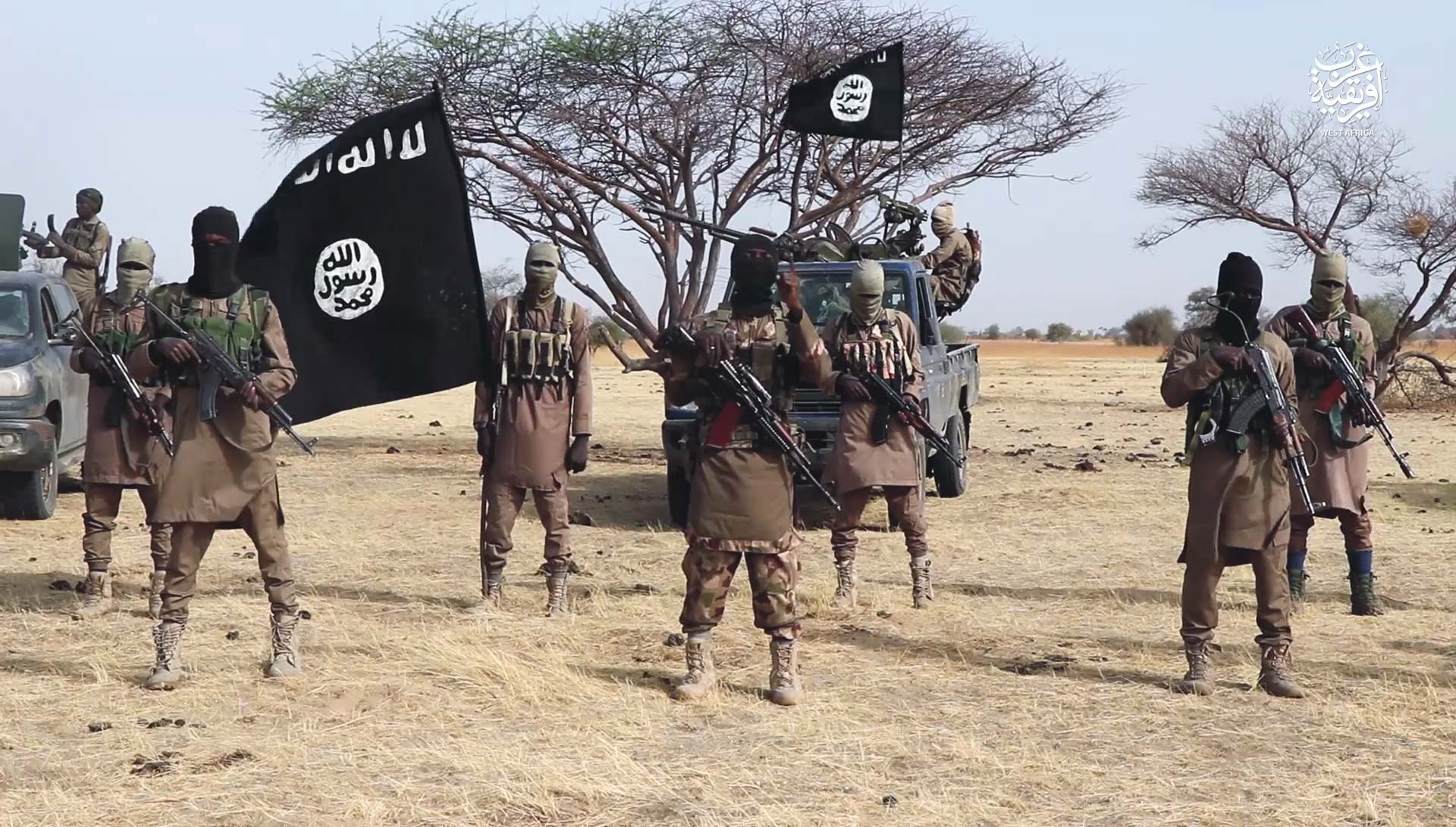
An Abu Dhabi Federal Court of Appeal in the United Arab Emirates (UAE) has convicted six Nigerians over alleged funding of Boko Haram.

The conviction was upheld by the appellate court after they lost an earlier appeal at a lower court.

Daily Trust reported on Monday that Surajo Abubakar Muhammad and Saleh Yusuf Adamu were sentenced to life imprisonment.

The rest, Ibrahim Ali Alhassan, AbdurRahman Ado Musa, Bashir Ali Yusuf and Muhammad Ibrahim Isa, got ten-year imprisonment each.

Court documents show that between 2015 and 2016, the convicts were allegedly involved in cash transfers totalling $782,000.00 to Boko Haram.

The act was contrary to Article 29, Clause 3 of UAE’s Federal Anti-Terrorism Law No 7 of 2017.

National Security Bureau said investigation of the Nigerians “confirmed their involvement and membership of the Boko Haram”.

They were arrested between April 16 and 17, 2017, and their homes searched according to the search warrant issued by the National Security Prosecution office dated April 16, 2017.

Abubakar and Adamu were charged for joining Boko Haram knowingly.

This negates Article 22/2 of UAE’s Federal Anti-Terrorism Law No 7 of 2017 punishable by death or life imprisonment.

Alhassan, Musa, Yusuf and Isa were charged with assisting the sect knowingly.

The crime, under Article 31, Clause 1 of the same law, is punishable by life imprisonment or at least five years in jail.

Most of the transactions were facilitated by two undercover Boko Haram agents based in Nigeria. One of them is “Alhaji Sa’idu”.

The other “Alhaji Ashiru” was described as “a Nigerian government official”.

He also reportedly funnelled misappropriated public funds to terrorists.

Sa’idu’s modus operandi is using unidentified Arab persons on a visit to Dubai from Turkey to hand over US Dollars to one of the convicts, who then remit Naira equivalent to the agent.

Families of the convicts say they were “framed up”, insisting their bureau de change business in the UAE was legitimate. (Dailypost)

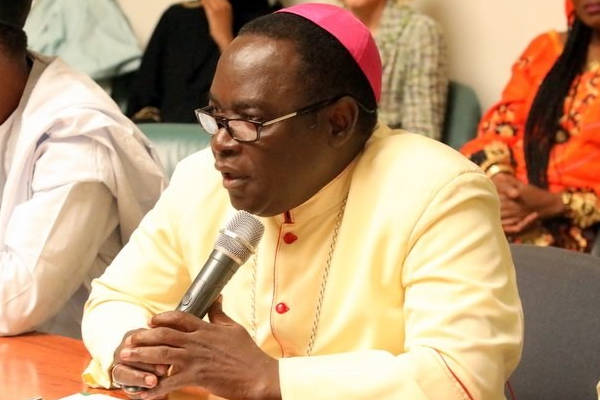
Nigeria decomposing under Buhari – Fr. Kukah declares

The Archbishop of Sokoto Catholic Diocese, Bishop Fr. Matthew Kukah, has described Nigeria as a being “decomposing from within.”

Fr. Kukah who spoke in a sermon at the Priestly Ordination of Five Deacons at the Holy Family Cathedral, said Nigerians hearts were broken due to the daily killings, kidnapping, etc.

While stating that President Muhammadu Buhari administration is not sincere in dealing with terrorists killing Nigerians, the Archbishop wondered why it is difficult for the government to release names of sponsors of Boko Haram terrorists.

His words, “Nigeria is a broken country. It is decomposing from within. Our heart is broken and lives are hemorrhaging by the day. We cannot go on like this.

“The country and people have become so traumatised and sedated by horrible news, that have now become comfortable in ‘this swamp of evil’.

“No number of horrific deaths, murders, sexual violence and kidnapping of children or adults can make us stop our life of debauchery,” he said.

Igbo, Akunyili and Mailafia By Lasisi Olagunju

Igboland is the new home of Hades, lord of death, and king of the underworld. The land writhes in pains as rough men roast it for supper. Vultures have descended on its forests; hawks feed on its cities. Every dove there is in fearful flight. There is no sacred bird the bad boys are not shooting down. They do violence to the hymen of honour; they violate the sacred grove of peace; they defile their ancestors’ holy soil with libations of abominable blood. They hack down freedom while wearing vests of liberation. They are murdering their mother’s daughters and killing their father’s sons because they want to be free from the chains of their abusive neighbours. Their brothers’ heads are the hearthstones of their separatist broth. The land needs help; good people there are helpless.

My very worried Igbo friend gave me a proverb: Okenye a naghi anó n’ulo, Ewu a múò n’óbu (an elder does not allow bad things to happen in his presence). I should not be the only one asking why the elders are watching lamely as the Igbo goat is delivering on a leash. You are killing your east because the north is oppressing you! Is that a measure of wellness? You forget that if Leopard’s leg is broken, Deer will soon come with taunting demands. What is that bad thing that Nigeria has done to Igboland that its own gunmen are not doing to it today? A society dies the moment it no longer protects its pristine values. The end result of what is happening in Nigeria’s southeast is definite desolation. I don’t know the questions the Igbo in Igboland ask themselves. I will help them ask if there is any difference today between Zamfara and Imo States. Or more broadly, between life in Hausa/Fulani north and in Igbo south. Both are today zones of death, of fear, and of certainty of violence. The sight of blood used to be of horror in disagreeable proportions; but now, the cliche of violent death brings out excitable cameras.

I was told that there is a video of the last moments of Dr. Chike Akunyili, struggling, blinded by blood! I could not watch it; I lacked (and still lack) the liver to do so. ‘Unknown gunmen’ shot the medical doctor; an Igbo person shot the hideous video clip while others watched. It didn’t start last week with that family. Dora Akunyili told the British Broadcasting Corporation (BBC) in a September 1, 2006 interview: “My car was shot from behind on 26 December 2003. The bullet went through my headscarf and passed through the windscreen of the car, leaving my hair burnt.” Dora drove through that horror that happened right in the heart of Igboland on her way to her village. She was then in NAFDAC fighting a war with barons of fake drugs. She did not die that day because hot-lead death was not hers. But the bullet meant for her head ultimately hit a bus driver who died instantly. Even for soldiers in battle, it is terrifying to be shot at. That woman brushed her burnt hair and went back to her NAFDAC duties unfazed. But Dora’s husband, Chike was twice not as lucky as his wife. During the civil war, the man took a bullet in the head which remained lodged in there till the very end.

Nigeria has always been a very dangerous country. For the Akunyili family, the fact of how deadly Nigeria could be was brought crudely home to them on Tuesday, 28 September 2021. Unlike his wife whose missed shot came from the back, Chike’s fatal shot was frontal. He was shot in the face by gunmen who also killed his driver and police escort. The same ‘lovely’ Igbo homeland he fought for and for which he took a bullet to the head 51 years ago watched him die last week. He did not offend his attackers; he was coming from a memorial event in honour of his Dora who died in 2014 a national heroine. He was a good man who was good to every man and woman who sought a cure in his clinic. But he was shot in the face and Igboland is still scratching its head, asking: who did it? Humanity, Nigeria, and, especially, Igboland owe so much to that couple of gold. If they would not be celebrated for their stellar services to the land of their birth, at least, they should be appreciated for birthing six first-class children of dominant global presence: three medical doctors who are very eminent on the world stage, and three others who also reign world-class in their professions.

One of them is Njideka who sits pretty on the global throne of visual artistry. In 2017, Njideka won MacArthur Foundation’s Genius Grant (cash prize: $625,000) for her  “extraordinary originality and dedication in (her) creative pursuits and a marked capacity for self-direction.” She continues to be a whirlwind in her world; records say that the prices of her work and worth continue to soar. One of her paintings, Drown, in November 2016, sold at Sotheby’s for $900,000; another of her work, The Beautiful Ones (Series #1c), was sold in Mach 2017 in London by a collector for $3 million. The following year, she set an auction record with her painting, Bush Babies, which reportedly sold for nearly $3.4 million. That is the person whose mother was casually shot at in Igboland in 2003; she is the daughter of a father who was shot dead by ‘unknown gunmen’ in broad daylight and without consequences in 2021 Igboland.

The bewildered Akunyili boys and girls are likely asking the same question which Ken Saro Wiwa asked in his final moment: What kind of country is this? For Dora, the labourer’s task was over in June 2014. For her heartthrob, Chike, the battle day became past in September 2021. Husband and wife have now united once again on the farther shore. Now, how may the Igbo help themselves going forward? Redirected by homegrown violence, the Igbo springwater is headed to the desert. There is no regeneration where it flows. Ghanaian writer, Ayi Kwei Armah has that idea of springwater in love with the desert. The future of that course is extinction, he warns. What is the cost of cutting off your nose to spite your face? There was a Saint Ebba, the Mother Superior of the monastery of Coldingham, Scotland. To protect the chastity of her nuns from Viking raiders in 867 AD, she asked her girls to cut off their noses and upper lips. But the resultant ugliness did not protect the nuns from the invaders; it, instead, destroyed them.

The disgusted Danes did not recoil forever; they returned to burn down the convent with all the ugly nuns, including Ebba. Igbos should reclaim who they are – and stand firm. Murder, to their ancestors, was an abomination – so was terror. There is no freedom with gunmen and gunrunners. May it not be too late very soon. OBADIAH MAILAFIA: On Sunday, August 15, 2021, Dr. Obadiah Mailafia, public intellectual and former deputy governor of our Central Bank was the guest and I was a panelist on The Toyin Falola Interviews, a global online programme anchored by a very distinguished scholar, Professor Toyin Falola. It was our first (and last) face-to-face engagement – and it was on zoom. And for over four hours, Mailafia sat there answering questions, dissecting issues on ‘Nigeria: How to fix a failing state.’ His energy was boundless, his intellect awesome and his conviction very real.

Later that night, we exchanged WhatsApp messages. I told him he was great on the programme; he replied that I was “formidable.” I laughed lightly and wondered what that word meant. Then I suggested that he should demand a copy of the event’s recording – for his children who should be very proud of their father. He replied: “Will do. My son was watching from Brussels. But they are always worried when I talk – because the last trauma hasn’t left them…” I replied that the children should just be praying for him. He replied: “Mo dupe, aburo mi.” He died exactly one month, four days after.I never met him in person but he was my older friend. He used to call me ‘Aburo mi’ (my younger brother). That was how he started and ended all his private chats with me.

Fate and writing for the Nigerian Tribune brought us together. He wrote a back-page column for the newspaper appearing in the same editions with my Monday Lines. I am working on some books, he wrote the Foreword to one of them – which should be out very soon. But his egret is gone now forever with his whiteness; he didn’t wait to see the finished work. He was reported dead on Sunday, September 19. Our president is generous with condolence messages but there has been none for Obadiah. He was just 64 but he lived his life so well that he did not need the crutches of a presidential condolence statement to stand tall and be celebrated worldwide. Millions of appreciative Nigerians mourned his thunderbolt exit with immeasurable shock and grief.

He was another of our voices gone.Mailafia, Akunyili; who is next? The hideous scar of these deaths is etched on the ugly forehead of our country. When patriots die, the nation sinks deep in poverty. These ones who are dead are free – they gave a good account of themselves while on this shore. Someone said “neither fire nor wind; birth nor death can erase our good deeds.” I agree. Do your best and take your rest – the world is not entirely blind to goodness. Death is also an opportunity for the living to appreciate small and big favours. Think of it: how much of sweetness of beauty would be savoured without the bile of ugliness? “What would life be worth if there were no death? Who would enjoy the sun if it never rained? Who would yearn for the day if there were no night?” I owe that quote of questions to Danish writer, Glenn Ringtved. These deaths come in torrents. Here today, gone tomorrow is what we read and hear every day. We do not know who is next. In the same year that we buried Yinka Odumakin and Junaid Mohammed, we are mourning the avoidable passage of Obadiah Mailafia. We are in shock over the violent death of Chike, Dora Akunyili’s husband. How many more will die before enough will be enough?

Reflection on 2023:

Leonard Karshima Shilgba

Mathew 20:23: “And he [Jesus Christ] saith, Ye shall drink indeed of my cup, and be baptized with the baptism that I am baptized with: but to sit on my right hand, and on my left, is not mine to give, but it shall be given to them for whom it is prepared of my Father.”

As Nigeria’s 2023 general elections approach, we need to be reminded of the following facts:

  1. Each elective position has been PREPARED by God for specific people, who shall WIN those elections regardless of how and what any of us will think about the VICTORIES. Some may struggle with this reality, but their struggles can’t alter the fact. It should be noted, however, that the divine choice is not always for the prosperity and welfare of the governed.

When, because of the egregious lifestyle or choices of the people, God wants to punish them, God will give them their kind to rule over them and worsen their condition of living. Then, the wicked WIN the elections. This is called DIVINE JUDGMENT. On the other hand, when God chooses to bless a people, he endows them with kind, knowledgeable, visionary, and skilful leaders, who will WIN the elections.

There are a few exceptions when wicked people have kind, capable, and “good” leaders. But “good” people are never burdened with bad leaders.
Let us watch to see God’s mind toward us in 2023; we can decode from the quality of leaders that shall emerge then.
So LEADERSHIP COMES FROM GOD.

  1. Lobbying is often considered a necessary requirement in politics, but, just like John and his brother James failed to secure a definitive assurance in their lobbying of Jesus for the two notable positions in the future theocratic kingdom of Christ, we must learn not to put so much capital on lobbying. By the way, death could strike this one and that one. James was the first martyr.

As 2023 approaches, please, plan with fear of God, deference to God, and in humility. Don’t be like the fool, who was planning on pulling down the “smaller barns” and building “bigger barns.” That same night, as he planned, his Creator told him, “You fool, this night, your soul shall be required of you, then, whose shall those things be?” Jesus applied this to all of us: “So shall it be done to anyone who is not RICH TOWARD GOD.”
My friend, are you rich toward God, or you are too busy planning to tear down your “smaller bans” (current political attainment) and build “bigger bans” (your desired higher elective position) to have time to check up with your Maker? Sadly, some aspirants may not see 2023; and this also is a fact.

  1. Finally, those who are lobbied should be wise enough to also check up with their Creator, and avoid intruding where only the Father decides, lest they be struck down before their time.

May God give you understanding.

© Shilgba

This is Nigeria

Leonard Karshima Shilgba

Nigeria turned 61 on Friday, October 1, 2021 as an independent nation. The number of years is not such an attraction to me to qualify for a dignified commentary. Rather, I address the “independence” of thought, courage, and action.

Independence, used in relation to man, and in further connection to any engagements or relationships involving man, is absolutely subjective. No nation is absolutely independent of other nations in every human endeavour and on all scores. The manufacturing process of an automobile typifies this. All nations are inter-related and inter-connected.

The progress, yes, PROGRESS, that Nigeria has made since 1960 is due to the independence of thought of a number of her citizens. Every time you meet some Nigerians profusely lamenting and complaining about “government”, blaming “government” for their woes, and raining vicious obscenities on Nigeria, there you have come face-to-face with unhealthy “dependent” minds, which see the role of “government” as partenalistic instead of as a facilitator.

It is upon the sum of the creativity and innovation of their citizens that nations create opportunities and jobs for better standard of life of the inhabitants thereof. The Nigerian national and state governments have highly subsidized education, which affords millions of Nigerians to achieve variegated levels of learning and acquisition of skills.
Sadly, I have observed an insidious mindset that does not facilitate societal growth. After benefitting from a government subsidized education, a typical Nigerian would fail to innovate, but blame the “government” for not providing him a job in its Civil Service! The interpretation is this: Many Nigerians still believe that over six decades after political independence, “government’s” preoccupation should remain providing subsidized education to her citizens in order to fill-up Civil-Service vacancies! Sorry, friends, that era has passed, and it’s not coming back.

College education’s main focus is improvement of the thought process and quality, and on these hang innovations, emergence of new businesses, and creative forging of gizmos. Some talk about relevance to today’s challenges of choices of college degree or diploma programs of study. I don’t disagree; I would add, however, that this is not the whole. Partly, analytic skills, writing skills, organisational skills, and communication skills can be learned irrespective of the choice.

I am glad to report that while some Nigerians gripe, fume, throw tantrums, see nothing good or worth celebrating in Nigeria, and deliberately work to undermine the country, there are Nigerians, both old and young, who are innovating, creating, and sacrificing to fix their nation’s challenges. Dangote and his collaborators are working to fix Nigeria’s downstream petroleum refining challenge, with huge positive impact on job creation, naira stability, foreign reserves growth, and increased foreign investors’ confidence in the Nigerian economy. Instead of multiplying hotels across Nigeria, as less cerebral Nigerian moneybags do, Dangote keeps intervening in critical sectors of the Nigerian economy. What an independent man!

Paystack is an online payment application developed by Shola Akinlade, a Nigerian graduate of computer science at Babcock University (my daughter’s alma mater). I was impressed when my publisher decided to integrate this application into my author website. Great independence of thought!

Interswitch (owners of Quickteller, an online payment solution) was founded by a Nigerian (Mitchell Elegbe, an Electrical Engineering graduate of University of Benin) in 2002. The company has a published net worth of over 26 billion US dollars, and has expanded its operations and acquisitions across Africa. This is another example of independent creative thinking of Nigerians.

Time and space will fail to talk about audacious undertakings such as Innoson Motors, Dangote-Peugeot automobile venture, the rapidly expanding Nollywood industry (with a new proposition to build a global franchise), Globacom telecom, Nigerian takeover of modern grocery retail business (culminating in the recent purchase of Shoprite, which has resulted in growing Nigerian products in the supply chain), and many footprints by young Nigerians in the ICT world, which I believe, shall soon result in mega buck-yielding ICT businesses in the class of Facebook, Apple, Twitter, Zoom, etc., with improved public revenue from taxes on those businesses.

The recent decision by the Nigerian National Petroleum Corporation (NNPC) to buy a twenty-percent stake in Dangote Refinery teaches us that the Nigerian government can buy into excellence created by Nigerian innovators, entrepreneurs, and wealth creators.

Many Nigerians are working and solving Nigeria’s problems, not waiting on “government”. The Nigerian media should devote more time to reporting more the audacious creativity and risks being taken by Nigerians to tackle their country’s challenges right here in Nigeria.

Governments in Nigeria have their roles, but the citizens must not deny their responsibility to build a more perfect union through their personal creativity and risk-taking.

We have a lot to blame for our “failings”, but those excuses cannot solve our problems. We can blame Nigeria’s imperfect military-framed constitution, for instance. Yet, state governors, who have mastered the art of governance, are using the same powers that are either given or not obstructed by the same constitution to serve their people, including approaching the law courts in the process. We cannot afford to make a “perfect constitution” BEFORE we shall start governing. By the way, there is no perfect constitution anywhere. The people, working together, disagreeing and agreeing, improve their nation in degrees, generation-after-generation. No one generation fixes all of the problems. It is a generational relay race we are involved in.

This is Nigeria; this is our story. This is Nigeria; this is our progress. We are marching forward, in spite of the naysayers, who seek a leader to take them from the wilderness back to Egypt, away from our journey to the Promised Land.
Don’t tell us stories of “better years in Egypt” when you “sat and ate plenty of meat and garlic”! We have seen the fruits of the Promised Land. A few spies among us have held right before our eyes the evidence.

Leonard Karshima Shilgba

© Shilgba

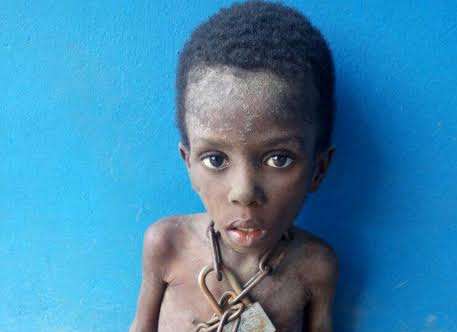
TERRIBLE! ! ! 9- Year- Old Boy Chained And Starved By His Father, Pastor For Six Months

We don’ t just give birth to children because we feel like it. There are responsibilities attached to giving birth, one of which is feeding the child according to your means. When you feed a 9- year- old child a quarter cup of rice and you have the means of giving him or her half cup of rice, you’ re predisposing the child to stealing the other quater. You know that portion is too small to satisfy the child. The child may be blameworthy but such parent is more at fault. You don’ t expect a child who is still underage to go look for how to feed himself. So the options are definitely narrowed down, stealing from you or dying of hunger.

9- Year- Old Boy Starved And Chained By Dad

A Celestial Church of Christ Pastor, Francis Taiwo starved and kept his 9- year- old son in chains for months for alleged stealing a pot of soup. The boy confessed he truly stole but explained why he did so.

” It is true that I stole a pot of soup and a bowl of eba in our house. I also stole in the neighborhood. My father’ s inability to give money to my stepmother for the upkeep of our family caused it. When I was chained, my father and stepmother fed me twice a day. Some days, I was not given any food. I want to go back to school because I want to be a doctor in the future. I do not want to go back to my father’ s house.

The Arrest

A neigbor whose name has been withheld for security reasons was the one who exposed the cruel father who doubles as a pastor. Upon arrest, 40- year- old Francis Taiwo, the owner of CCC, key of Joy Parish in Ajibawo Atan in the Ado- Odo/ota local government area of ogun state disclosed that he was sure his son had been possessed by the devil. In his capacity as a pastor, he believes Korede’ s stealing isn’ t ordinary and that was why he chained him up for months. Pastor Francis is no longer married to Korede’ s mum, which made the suffering to go on for a while. Moreso, the stepmother, Kehinde also allegedly aided the cruelty meted out on Korede of which she denied.

” I was ordained a pastor in the CCC in 2022. I had divorced two wives including Korede’ s mother, Maria. She is late now. She had four children for me- two boys and two girls before she divorced me in 2007 after she gave birth to Korede. I chained Korede because he is possessed. An evil spirit makes him to steal. He needs deliverance. His siblings are not living with me” , Pastor Francis reveals.

Witness Account

One of the neighbors, Elijah testified go the mistreatment of the little boy. He said that people in the community have on several occasions appealed to Pastor Francis to be a little compassionate with his son, Korede but he wouldn’ t listen.

He kept believing his approach is the only way to correct the child and save the child from the web of evil doers.

” His father has been chaining him for the past six months. He would chain him for hours and release him. His grouse is that Korede and runs away from home and he thinks a spirit is controlling. He once took him to a river in chains for deliverance” , Punch reports.

Writer’ s Opinion

It may be true that Korede was actually possessed but who treats his possessed son in that manner just because you want to deliver him. Before assuming that the child is possessed, Pastor Francis never tried doing the needful by giving the boy adequate food and water to see if he would stop the stealing habit. As a pastor, he definitely has other people that have been brought to him under the notion of being possessed, not one of these people have he chained and maltreated like he did for his child. This makes it look like a deliberate act of wickedness on the child which could eventually lead to the boy’ s death.

Police Report

The case was confirmed by the Ogun state Police spokesperson, SP Muyiwa Adejobi.

” The case has been transferred to the Anti- human trafficking and Child Labour Unit of the Command for necessary investigation and actions as directed by the Assistant Inspector- General of Police in charge of zone 2, AIG Abdulmajid Ali.

Why do parents maltreat their own flesh and blood?

Is what Korede did enough a reason to chain him for 6 months whilst depriving him of food and water till he looked like a skeleton?

Is chaining a child like a dog even reasonable?

Kindly drop your comments below.

by MARYAM SALAHUDEEN

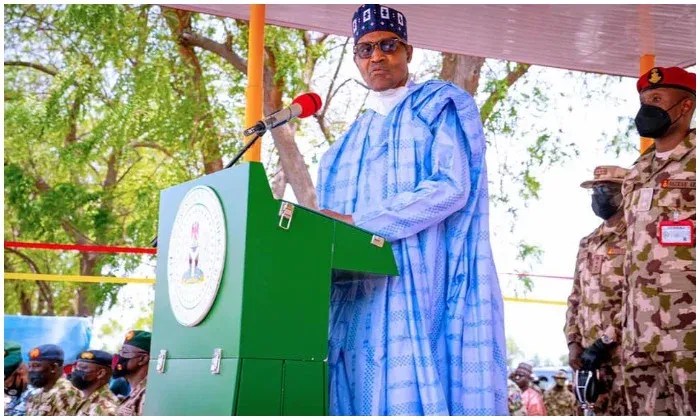
What weed did Buhari’s speech writers smoke? By Farooq Kperogi


I’ve stopped bothering to listen to or read Muhammadu Buhari’s speeches for quite a while now not only because I’ve given up on the regime he leads but also because he has some of the most inept speech writers Nigeria has ever had, particularly in the last two years.

But a portion of the speech a friend shared with me instigated me to read the entire speech. The speech was, as usual, vacuous, insipid, poorly written, tediously mind-numbing, and filled with audaciously transparent lies. Nonetheless, even by the horrible standards of Buhari’s speeches, his October 1, 2021 Independence Day speech would go down in the records as perhaps one of the worst speeches by the leader of any country on an occasion that invites solemnity, contemplation, and sobriety.

I have identified a few major parts of the speech that muddled basic history, turned logic on its head, and outright lied.

In the very second paragraph of the speech, Buhari claimed, “Today should not only serve as a reminder of the day the British handed over the reins of power to Nigerians, but also unified Nigerians from all ethnic groups, religions and regions.”

Buhari’s claim that the British “unified Nigerians from all ethnic groups, religions and regions” is historically inaccurate. The British didn’t unify ethnic and religious groups in Nigeria; they exacerbated our differences and planted the seeds of disabling fissiparity that hold us back—all for their convenience.

The British cobbled together a disparate people, imposed artificial boundaries around them, called their new artificial space “Nigeria,” then divided and conquered them for the benefit of the British. Britain had not the wispiest interest in unifying “Nigerians from all ethnic groups, religions and regions.”

It’s absurd, but not surprising, that a post-independence Nigerian leader would make this sort of ahistorical claim in an Independence Day broadcast. It’s like the victim of a rape thanking her rapist for unifying her with her child.

But that’s self-pitying lamentation. A serious country would have worked to reverse the damage the British created and left behind. But Nigeria’s post-independence leaders turned out to be thoughtless, self-loving epicureans with zero emotional investment in the country.

That explains why Buhari who makes the most excessively pious noise about patriotism is the most servile Anglophile Nigeria has had as a leader. After allocating billions in the national budget for Aso Rock clinic, he goes to London to treat even the most elementary ailment.

Plus, there has been no more divisive leader since Nigeria’s founding than Muhammadu Buhari. He has inspired almost every part of the country to demand a divorce from the British-born Nigerian union, which is consistent with what I’d warned would happen should he win a second term.

Even Buhari admitted this when he said, “the past eighteen months have been some of the most difficult periods in the history of Nigeria. Since the civil war, I doubt whether we have seen a period of more heightened challenges than what we have witnessed in this period.” But he failed to concede what is responsible for this: his dreadfully infernal incompetence, his noticeable absence from leadership, and his unprecedentedly in-your-face bigotry.


In another preposterous moment in the speech, Buhari equated drugs with food and declared them as indistinguishable from each other. He said, “on our approach to food security, I am proud to announce Nigeria has commenced its journey to pharmaceutical independence.” Huh? What connects “food security” and “pharmaceutical independence”?

Well, he elaborates: “This journey, which will take years to achieve but will ultimately result in Nigerian based companies developing the Active Pharmaceutical substances and competence needed for us to make our own drugs and vaccines.” I know that’s a senseless run-on sentence, but let’s just focus on the substance of the speech.

The speech didn’t acknowledge the fact that most farmers in the country have abandoned farming because of ceaseless attacks by bandits and the increasing brazenness with which cattle destroy farm crops. Many farmers no longer see any wisdom in farming because they might get kidnapped while farming or their entire crops might end up being used as pasture for cattle without any consequences.

But Buhari and his speech writers think enabling Nigerian pharmacists to make drugs and vaccines at home will quench the mass hunger in the land!

Buhari also hopes he doesn’t need to work to bring about peace, underscoring why the country is drenched in avoidable bloodbath. He said, “our hope is not to fight for peace. We can always settle our grievances peacefully without spilling any blood.” What kind of leader doesn’t want to fight for peace when the country he leads is beset by bloodstained violence everywhere?

Maybe his speech writers meant “our hope is that we don’t have to be violent to stem the tide of violence.” If so, why didn’t they say it that way? To fight for peace is to work toward bringing about peace—except the speech writers are being literal in their understanding of “fight,” which would be embarrassing for a presidential speech.

In any case, the regime has consistently used violence to tamp down legitimate expressions of dissent in the form of peaceful protests. As recently as September 28, that is, three days before Buhari’s speech, eight unarmed members of the Islamic Movement of Nigeria were murdered and 57 of them arrested by Nigerian security forces for merely holding a procession in Abuja that caused a snarl-up. Hundreds of them were similarly murdered in Kaduna in 2015. That’s literally “fighting” for peace.

In the speech, Buhari repeated the bromide that “Nigeria is for all of us. Its unity is not negotiable.” That sterile cliché should have been thrown to the rhetorical refuse dump by now. “Unity” that is non-negotiable isn’t unity. It’s slavery. And it won’t endure. Unity comes from harmony and, as Steve Goodier reminds us, “We don’t get harmony when everybody sings the same note. Only notes that are different can harmonise. The same is true with people.”

Any unity that is non-negotiable is worthless and unworthy of anyone’s commitment. Threatening to “take decisive actions against secessionist agitators and their sponsors,” which basically means visiting violence on them as the regime has been doing, contradicts the earlier hope that the regime won’t “fight for peace,” however this strange phrase is understood.

Secessionist agitations don’t emerge out of thin air. They are activated by grievances, a profound sense of alienation, loss of faith in the promises of the country, systemic exclusion from the orbit of governance, etc. State-sanctioned violence won’t stop it. Sanctimonious appeals to patriotism won’t, either. What would attenuate it is deliberateness in instituting justice, fair play, inclusion, and equity.

You can’t smack a child repeatedly and insist that silence in the house is non-negotiable, that crying is an offence that will be punished with more smacking. That’s both cruel and clueless.

Buhari took escapism to an undreamed-of height when he claimed that in spite of glaring evidence to the contrary, “our food production capacity has increased.” In which alternate universe do Buhari and his incompetent speech writers dwell? They certainly don’t live in everyday Nigeria.

Buhari and his speech writers conceded that “food prices have been going up” but attributed this “to artificial shortages created by middlemen who have been buying and hoarding these essential commodities for profiteering.” Ha! Buhari has been blaming “middlemen” for the poverty and misery his boneheaded policies inflict on Nigeria since his first coming as a military dictator in the 1980s. He hasn’t stopped. He won’t stop.

Finally, he lied that he suspended Twitter in Nigeria because it was “misused” as “the platform to organise, coordinate, and execute criminal activities, propagate fake news, and promote ethnic and religious sentiments [sic].”

No, he banned it precisely because it deleted his tweet that it said violated its terms and conditions, which he agreed to abide by when he signed up to use it. Twitter’s action hurt his brittle ego and he decided to precipitously suspend it, which has cost Nigeria billions of naira in lost revenue. It has cost Twitter exactly zero in revenue loss.

If any proof is needed that the next few years of Buhari’s leadership would be worse than the past few years he has vandalised what remained of Nigeria, the Independence Day Speech provided it.

TIPS