Home Blog Page 90

Pause Kidnapping for Ramadan’? Cleric’s remark follows deadly Kebbi bloodbath as kidnapped women beg for help in disturbing video

Nigeria’s spiralling security crisis took a grim turn last Wednesday as at least 34 people were killed in coordinated terror attacks across rural communities in Kebbi State, just as outrage mounted over a cleric’s controversial call for bandits to “pause” kidnapping during Ramadan.

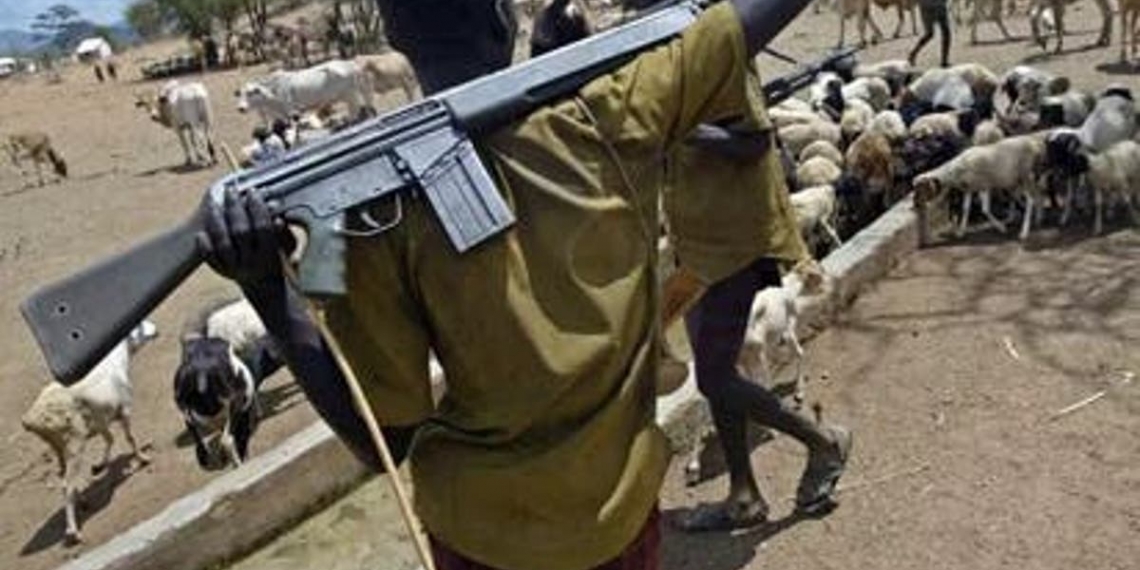
The attacks, blamed on suspected Lakurawa terrorists, unfolded on February 18 in villages across Arewa Local Government Area, including Bui and several neighbouring settlements. Survivors described a calculated, multi-pronged assault in which heavily armed gunmen stormed remote border communities and opened fire indiscriminately.

Security sources confirmed a grim toll: 16 killed in Mamunu, five in Awashaka, three in Masama, and two each in five other villages. Entire families fled into the bush as attackers torched homes and gunned down residents in what officials described as an unprovoked massacre.

“Heartless Terrorists”

When contacted, Kebbi State Police Public Relations Officer SP Bashir Usman confirmed the incident.

Reacting on behalf of the government, the Special Adviser to Governor Nasir Idris on Communication and Strategy, Alhaji Abdullahi Idris Zuru, condemned the attackers as “heartless terrorists” and insisted the violence was “the last kick of a dying horse.”

According to Zuru, the militants, many described as spillovers from neighbouring Niger Republic and Sokoto—have no permanent base in Kebbi and are being tracked in joint operations involving the Nigerian military.

“The Kebbi State Government is committed to deploying all available resources to secure lives and property,” Zuru said, adding that survivors would receive immediate assistance.

Security forces have since been deployed to secure affected communities, assist displaced residents, and block potential escape routes as tracking operations continue.

Hostages on Camera: “Please Help Us”

Even as Kebbi reeled from the bloodshed, a disturbing video surfaced online showing two young women abducted more than a month ago by bandits operating across forest corridors straddling Zamfara and Sokoto states.

The visibly traumatized captives—clothes soiled, faces swollen, voices trembling—were seen crying and pleading for rescue.

“Please help us. Help us out,” they repeated, struggling to contain their emotions as an armed man speaking Hausa taunted them from behind the camera, coercing them to speak louder about their ordeal.

Mrs. Aisha Al-Mustapha, a teacher who shared the footage on X, identified one of the victims as her friend, Maryam, who was reportedly abducted while traveling from Zamfara to Sokoto to resume school.

“My friend Maryam has been in captivity for the past one month. Her only sin was travelling to go to school,” she wrote. “It really pains me how banditry has been normalised and human beings are being priced like animals.”

The circumstances of their abduction remain unclear, but their captivity underscores a grim pattern: students, commuters and rural dwellers have become prime targets in the North-West’s entrenched kidnapping-for-ransom economy.

“Pause Kidnapping for Ramadan?”—Backlash Erupts

The carnage has been compounded by controversy surrounding remarks attributed to Muslim cleric Sheikh Musa Asadu, who reportedly urged bandits to suspend kidnapping activities during Ramadan.

The statement ignited fierce backlash nationwide. Critics argued that urging criminals to “pause” violence during a holy month dangerously frames kidnapping as a negotiable vice—wrong only when religious observance demands restraint.

Columnist Lasisi Olagunju sharply questioned what he described as “seasonal morality,” asking whether the cleric’s logic implied that abductions would become tolerable once Ramadan ends.

Quoting Qur’an 5:32, “Whoever kills a soul… it is as if he has killed all mankind”—Olagunju challenged religious authorities to confront violent actors with the same zeal often directed at minor public infractions during fasting.

He further cited a Hadith recorded in Sahih al-Bukhari and Sahih Muslim defining a Muslim as one “from whose tongue and hand the people are safe,” asking when such teachings would be applied to those orchestrating mass killings across Kebbi, Zamfara and beyond.

A Region Under Siege

North-West Nigeria, particularly Zamfara and Sokoto states, has endured years of escalating banditry, mass abductions and village raids. Despite repeated military offensives and government assurances, armed groups continue to exploit forested terrain and porous borders to stage attacks with alarming frequency.

Residents describe a climate of normalized fear, where ransom negotiations have become routine and entire communities sleep with one eye open.

For families in Kebbi burying their dead, and for Maryam and countless others still trapped in captivity, Ramadan has brought not peace—but mourning.

As security forces intensify tracking operations, the pressing question remains: can Nigeria’s embattled northern corridor break the cycle of bloodshed, or is the region bracing for yet another chapter in a crisis that shows little sign of ending?

Breaking Nigeria’s Cycle of Stagnation: The choice is ours

By Kachi Okezie, Esq.

“We are very talented globally but things just refused to go well in our country.”

That was the comment made by one Muktar Shinkafi on Facebook. It was not malicious. It was not careless. In fact, it echoed a sentiment many Nigerians hold sincerely. But it triggered me. And that is precisely why it deserves scrutiny.

Because in that single sentence lies one of the most dangerous ideas shaping Nigeria’s stagnation: the belief that national failure is something that simply “happens” to us—mysterious, inevitable, and beyond human agency.

Things do not “refuse” to go well for a country. Nations are not governed by fate or cursed by geography. They are built—or broken—by choices people make. By what their citizens tolerate, what their leaders prioritise, and what institutions are allowed to rot without consequence.

To frame Nigeria’s condition as bad luck is not compassion. It is evasion.

There is no serious argument that Nigeria lacks talent. From Silicon Valley to London hospitals, from global finance to the arts, Nigerians excel wherever systems reward merit and discipline. The issue has never been ability. It is environment—and environments are designed, maintained, and defended by people.

Yet we speak of Nigeria as though it were an accident rather than a collective project.

Over time, fatalism has embedded itself deeply into our political culture and religious imagination. We explain poor governance with phrases like “that’s how Nigeria is.” We reduce corruption to a cultural flaw rather than a policy failure. We pretend to abhor corruption when in fact what we abhor is having one of our indicted for it. We invoke patience where urgency is required and prayer where accountability is absent.

This mindset is not neutral. It has consequences.

It teaches citizens to endure dysfunction instead of challenging it. It conditions young people to hustle around broken systems rather than demand their repair. It normalises small acts of dishonesty—bribes, shortcuts, forged credentials—that accumulate into institutional collapse.

We condemn looters in Abuja while excusing everyday corruption in our own neighbourhoods and communities. We curse bad leadership but reward ethnic loyalty, political godfathers, and mediocrity at the ballot box. Then, when outcomes predictably disappoint us, we retreat into the language of inevitability.

But inevitability is a lie.

Nigeria’s leaders are not imposed by destiny. They emerge from systems we emplace or tolerate and processes we often ignore. Elections are rigged, yes—but apathy rigs them too. Institutions are weak, yes—but silence weakens them further.

The uncomfortable truth is this: we are not merely victims of Nigeria’s failures; we are participants in their maintenance.

Nowhere is this more urgent than with Nigeria’s younger generation. This is the most connected, informed, and capable generation in our history. Yet it faces a critical choice: to inherit fatalism as wisdom or to reject it as a fraud.

The world is moving fast. Rwanda, Vietnam, Bangladesh, and others—countries once written off—have made deliberate choices to reform institutions, discipline leadership, and demand results. Nigeria, by contrast, remains suspended between potential and paralysis, endlessly discussing what could be while avoiding what must be done.

We are told to wait. To be patient. To trust in God, time, or history. Faith has its place, no doubt. Culture has its value, too. But when they are used to excuse inertia, they become obstacles to progress.

Responsibility cannot be outsourced to providence.

Rejecting fatalism does not mean denying Nigeria’s complexity. It means refusing to romanticise dysfunction. It means recognising that while history shapes us, it does not imprison us. Choices—be they policy choices, civic choices, or moral choices—still matter.

Nigeria is not cursed. It is just been poorly governed and insufficiently challenged.

Our destiny will not be rewritten by slogans or sympathy. It will be rewritten when citizens insist on competence over sentiment, institutions over individuals, accountability over excuses. When we stop explaining failure and start confronting it.

So when we hear statements like Muktar Shinkafi’s “things just refused to go well in our country”—we should respond not with indignation, but with clarity.

Things do not refuse to go well. We refuse to make them go well.

And until that changes, Nigeria will remain exactly where it is—rich in talent, but poor in resolve.

The views expressed by contributors are strictly personal and not of Law & Society Magazine.

Ramadan, Lent and a trickster state, By Lasisi Olagunju

Ours is a country where piety and perfidy share a table — where, as William Shakespeare wrote in Hamlet, “One may smile, and smile, and be a villain.” The Christian Lent is on as I write; Muslims are on with the Ramadan fast. Both seasons stand in spiritual symmetry. Ramadan calls the faithful to discipline: no food, no water, no sex, no smoke, no slander. The fasting mouth must not gossip; the fasting tongue must not wound; the fingers of the fasting must not kill. Yet in our republic, leaders fast by day and poison the nation by night. They do so and soothe their consciences. They act as though they stand above law and religion. And they truly are.

Northern Nigeria’s sharia enforcers, Hisbah, arrested nine people in Kano last week for not fasting. It is an annual ritual. The arrested are the poor — anonymous, expendable. In that city, the moral police are everywhere. They patrol the markets, cafés are searched, and bodies are inspected for piety. Yet, iniquity reigns undisturbed in the gilded palaces of those who commissioned the Hisbah to enforce morals.

“We have arrested them and they are with us where we are going to be teaching them the importance of fasting, how to pray, read the Quran and become better Muslims,” Hisbah’s deputy Commander-General, Mujahid Aminudeen, told the BBC. He said the nine were made up of seven males and two females, and accused them of feigning ignorance that Ramadan had begun. The report said the arrested were still in detention as of Friday.

The trickster state polices the stomach and ignores the soul. Kano is the national headquarters of millions of street children wandering in search of hope. Northern Nigeria’s collapse of order radiates outward in kidnapping, banditry and mass murder. The North is the reason every Nigerian is unsafe. Yet the North’s moral police and their enablers find no urgency in restraining those who kill and maim during Ramadan – and those who sponsor them.

What they sell is not what they eat. In March 2000, Bello Jangebe had his right wrist cut off in Zamfara for stealing a cow. Politicians who stretched sharia beyond the civil in recent decades have EFCC cases for stealing states, people, peace, and destinies—but they are not tried in sharia courts where limbs are lost. Their cases are in courts where white thread and black thread do not contrast. The system is rigged against the poor.

A northern Nigerian sheikh is in the news for urging bandits to “pause” kidnapping “because of the month of Ramadan.” An influencer from the Muslim North watched the video and wondered if morality had become seasonal. He asked the sheikh whether his statement meant that “once Ramadan ends, kidnapping becomes acceptable again.”

I have searched in vain for any sign that the moral police or other authorities of Nigeria, in the North, have confronted the aberrant scholar. But they are quick to recite the Qur’an to the poor who eat in daylight during Ramadan. When will they recite Surah Al-Ma’idah to Bello Turji and his bandit brothers, killing the young and the old across the country? The Surah declares: “Whoever kills a soul… it is as if he has killed all mankind; and whoever saves one, it is as if he has saved all mankind” (Qur’an 5:32).

The Hisbah proclaims its duty to teach good Muslim conduct. Yet an authentic Hadith, recorded in Sahih al-Bukhari and Sahih Muslim, preserves the Prophet’s definition of a Muslim. Narrated by Abu Hurairah, The Messenger of Allah [SAW] said: “The Muslim is the one from whose tongue and hand the people are safe, and the believer is the one from whom the people’s lives and wealth are safe.” When are northern Nigeria’s moral policemen going to teach this to the mass murderers of Kebbi, Kwara and Zamfara?

When a state enforces fasting but cannot guarantee safety, it has abdicated its first covenant with God and man.

In unremitting mass murders during Ramadan; in the contrived crises in the polity; in legislative voice votes that smother audible majorities; in hurried passing and signing of electoral laws; in the brazen boast that future election results will be written in bedrooms and handed to the electoral umpire at midnight, we see a fasting nation reconciled with sin, and rehearsing its own collapse.

Scholars remind us that fasting at the very beginning of man prepared rulers for sacred responsibility. In ‘Fasting and Modernization’, Joseph Tamney draws on figures like A. M. Hocart and Jan Wagtendonk to show that ancient kings fasted before coronation; they called it symbolic death before moral rebirth. In some Yoruba cultures, the oba-designate does not eat on his way to Ipebi, his place of orientation rites. Hocart wrote in his ‘Initiation’ in the journal, Folklore, of December 31, 1924 that kingship aspirants fit themselves for duty by fasting in seclusion. In those days of piety, fasting was consecration, a discipline aligning private conscience with public duty.

Today, fasting has become a reluctant routine, a spectacle. Ours is a post-religious age. We mistake paralysis for presence; oversight operates as obstruction, even as deliberate confusion. Every act of state, long before this Lent and Ramadan, already bore the colour of class and politics. That we fast now has changed nothing.

Very religious Nigeria increasingly resembles a trickster state. Esu is the Yoruba trickster deity. In our politics, Esu routinely walks in “through the gutter… when people are on guard against his coming through the gate.” While you guard elections, party congresses and legislative debates, power slips through violence, through procedural gutters and sewage of technicalities, through voice votes and opaque manoeuvres.

Esu’s oríkì, heard through a page of Abiola Irele’s ‘The African Scholar’ (1991), tells us exactly who the trickster is and how he works on a heedless nation:

“Esu sleeps in the house

But the house is too small for him;

Esu sleeps on the front yard

But the yard is too constricting for him;

Esu sleeps in the palm-nut shell

Now he has enough room to stretch at large.”

Read the praise name beyond the ambivalence. The disruptor does not shrink to fit the space; it is the space that shrinks to reveal his measure. Boundless in confined places, he needs only a palm-nut shell to stretch at large. And when a nation makes itself small through deceit and injustice, disruption finds in its narrowness all the room it requires.

The restless trickster does more than ambivalent disruption. Many thanks to Joan Wescott and Peter Morton-Williams, two white persons who translated other lines of the oríkì in June 1962 for me to use freely now with my own infusions: Esu is the god who comes on horseback through the gutter of the house when people are guarding against his coming through the gate. He is the man with sixteen hundred clubs. When he sees two people quarrel, he brings out a rod so that one could beat the other to death. He stands at the pounded yam seller’s stall, not to buy but to shoo away real customers. He sits at the pounded corn seller’s and, again, does not buy. Esu works on his chosen to their ruin. But one whom Esu is working on will not know it…

A nation can be acted upon by Esu while believing itself sovereign. “One whom Esu is working on won’t know it.” A trickster state survives on cunning and on citizens who refuse to recognise when they are being worked upon. The tragedy is not the trickster manipulating the nation; it is the pretence that we are unaware of it.

Yet we are a very religious nation. We bind the devil and stone al-Shayṭān, but we are governed by paradox. Leaders abstain from bread and water, yet feast on moral rot and public betrayal. They advertise denial of earthly pleasures, even as they dump political and economic toxic waste into our collective backyard.

Fasting is supposed to discipline appetite, impeach injustice and enthrone fairness in leadership. But from the north to the south, the pyramid of justice and peace is inverted in Nigeria. Yet, we are fasting, Christians and Muslims. We pray in ostentatious pursuit of piety and penitence, but our deeds betray what we are.

We started fasting last week. Inside the chambers of the Senate and the House of Representatives, lawmakers, Christians and Muslims, sat side by side, abstaining from food and drink, in fasting and penitence. Yet when the clause of a bill mandating electronic transmission of election results was put to vote, a loud “Aye” was struck down as “Nay,” and a fasting majority rejoiced.

What fast or religion legitimises iniquity in high places? In Christianity, Lent is both an act of penance and prayer by abstinence. Read David Lambert’s ‘Fasting as a Penitential Rite.’ In Islam, Ramadan teaches self-discipline and moral responsibility. Yet in northern Nigeria, we see religious hypocrisy writ large: a state that enforces fasting on the poor while tolerating murder, banditry, and theft by the powerful. Rituals are performed, prayers recited, bodies restrained, but hands that maim, steal, and oppress remain free.

Fasting is for moral and spiritual transformation; it is not social posturing or hierarchical display. In both Islam and Christianity, it is not theatre. The Qur’an declares: “Believers! Fasting is enjoined upon you, as it was enjoined upon those before you, that you become God-fearing.” The Bible asks: “Is not this the fast that I choose: to lose the bonds of wickedness… to undo the heavy burdens?” (Isaiah 58:6).

A nation does not rise on ritual; it rises on righteousness. If abstinence is purification, let it cleanse everyone who is dirty – and we all are. Otherwise, we are left with the spectacle of men who conquer hunger but not hubris; men who fast by day while feasting on sin by night.

This holy period should call the human mind to justice and to peace where there is war. But the deceitful state does not settle disputes; it stokes them. Esu is man of 1,600 clubs who brings out for the quarrelers a wooden rod. The cunning authority does not end quarrels; it cultivates them. In its court, conflict becomes curated theatre; ethnic and religious identities are wielded as a murderous rod. The regime alternates between referee and combatant. Think Rivers. Think Kano and its stalemated emirship. Think our politics and the crises within the parties. Think.

Nigeria need not remain enchanted by the trickster. The charge in the oríkì of Esu is instructive: “All in our house pay heed to the trickster.” Vigilance must move from ritual to righteousness. If fasting is purification, let it cleanse the conduct of the high and the low. If it is self-restraint, let it restrain power. A nation does not stand on spectacle; it stands on justice, on gates guarded against the subtle seepage through the gutter, against visible and masked trickster intruders. Forces of iniquity act as though they stand above law and religion — and our silence crowns them. Enough.

The views expressed by contributors are strictly personal and not of Law & Society Magazine.

Altered Sheets, Old Suspicions: Why Nigeria’s 2026 FCT elections feel uncomfortably familiar

By Lillian Okenwa

Nigeria has been here before.

On paper, the 2026 Federal Capital Territory (FCT) Area Council elections were meant to showcase progress—biometric accreditation, digital uploads and security deployments positioned as proof that Africa’s largest democracy is refining its electoral process.

Instead, images of visibly altered result sheets—figures scratched out and rewritten in pen—have reignited a debate that has haunted Nigerian elections for decades: when exactly are votes truly decided?

The Images That Sparked Outrage

Photographs circulating online showed result sheets uploaded to the Independent National Electoral Commission’s (INEC) Result Viewing (IReV) portal with handwritten alterations. Critics allege the changes favored the ruling All Progressives Congress (APC).

One observer, after examining a sheet online, reacted angrily.

“Look at what was uploaded on IReV. Nigerians should not be allowing this. This is 2026, for God’s sake. They didn’t even bother to tipex.”

Whether isolated incidents or signs of something broader, the optics were damaging, particularly in a country where electoral credibility has long been contested.

The Shadow of Past Elections

The controversy arrives against the backdrop of Nigeria’s turbulent electoral history.

In the 2019 general elections, observer missions—including the European Union Election Observation Mission—raised concerns about collation transparency, vote-buying and procedural inconsistencies. That election saw voter turnout of just 35.6 percent—the lowest since Nigeria’s return to civilian rule in 1999.

By 2023, INEC introduced the Bimodal Voter Accreditation System (BVAS), designed to curb multiple voting and identity fraud. The commission also expanded use of the IReV portal, promising near real-time uploads of polling unit results to improve transparency.

Yet the 2023 presidential election became engulfed in controversy after delays and technical glitches affected uploads to IReV. Opposition parties argued that the failure to achieve seamless real-time transmission undermined public confidence, even though INEC maintained that results were transmitted in accordance with the law.

Voter turnout in 2023 fell further—to approximately 27 percent, the lowest in Nigeria’s democratic history.

Against that statistical backdrop, the 2026 FCT elections, marked again by low participatio, have intensified fears that technological upgrades alone cannot repair deep institutional distrust.

Heavy Security, Thin Participation

Observers reported early deployment of police and other security personnel across polling units in the six Area Councils of the FCT. In several locations, security operatives arrived before voting began.

Yet turnout remained generally low across many units monitored.

Logistical lapses compounded the perception of disarray. A driver conveying INEC ad hoc staff reportedly could not locate an assigned polling unit. Some staff were dropped at incorrect locations.

At Polling Unit 073 on Benghazi Street in Wuse Zone 4, voters relocated from another unit complained they received late notification and struggled to find their new voting site.

Yiaga Africa observers documented additional irregularities. At Polling Unit 004 in Wuse Ward, Zone 2 Primary School, the voter register was initially unavailable and produced only after objections. Voting cubicles were missing in several polling units in Abaji Area Council. An ink pad required for voting was reportedly absent in one location.

Individually, such issues might appear administrative. Collectively, critics argue, they reinforce a pattern Nigerians have seen before.

“This Is Where the Magic Happens”

For some analysts, the real contest does not end at the ballot box.

Abuja-based lawyer Joseph Onu Silas contends that the ward collation stage—where polling unit results are aggregated—is the system’s most vulnerable point.

“After polling unit voting is done, next is the election ward collation of votes. This is where the magic happens and votes are stolen by mutilating ballot papers to rewrite figures,” he wrote.

Collation centres are typically tightly controlled environments, secured by police and other operatives. Participation is limited to accredited officials and party agents. Critics allege that opposition representatives are sometimes excluded or compromised, claims authorities have historically denied.

The phrase “just vote and leave the rest” has become shorthand among sceptics who believe that polling day transparency can be undone during collation.

The Real-Time Transmission Fault Line

It is this suspicion that fuels the relentless demand for full, legally guaranteed real-time electronic transmission of results directly from polling units.

Proponents argue that immediate digital uploads would make post-voting alterations significantly harder. Once results are publicly visible, they say, discrepancies at collation become easier to detect and contest.

But implementation has been uneven. In 2023, technical challenges during uploads to IReV, despite the rollout of BVAS, sparked widespread criticism. INEC has cited legal interpretations, infrastructure constraints and operational realities as complicating factors in deploying universal real-time transmission.

The political class, critics argue, has little incentive to eliminate ambiguity in a system where influence at collation can still prove decisive.

Opposition Gaps

The controversy is not one-sided. Analysts also point to structural weaknesses within opposition parties. Reports suggested that the African Democratic Congress (ADC) failed to deploy polling agents to approximately 45 percent of polling units in the FCT elections—limiting on-the-ground oversight.

In tightly managed collation environments, the absence of party agents can prove consequential.

A Democracy at a Crossroads

Nigeria is home to more than 200 million people and holds some of the most consequential elections on the African continent. Yet turnout has steadily declined, falling from over 50 percent in the early 2000s to historic lows in recent cycles.

Each new election is framed as a test of reform. Each controversy deepens scepticism.

The 2026 FCT elections may not determine the presidency, but the tensions surrounding them strike at a central question: can technology, transparency and institutional will converge to restore trust—or will Nigeria remain trapped in a cycle where altered sheets and collation center disputes overshadow the will of voters?

In a post via his X handle (formerlly Twitter), law teacher and ex-Chair of the National Human Rights commision said: “So @inecnigeria cannot organize a local election in the Federal Capital Territory but folks expect it to do national elections in less than 1 year? Advocacy for #CredibleElections under this lot in #Nigeria may sound good but it’s surely not sane.”

For many Nigerians, the fight is no longer just about who wins elections.

It is about whether their votes truly do.

Lucky Luciano’s Fall: How One overlooked black female lawyer helped destroy America’s most powerful mob boss

In 1936, in a New York City courtroom, a Black woman sat quietly, alone, unnoticed. To many in the room, she was invisible. But that mistake would cost America’s most powerful mobster his freedom.

At the time, Lucky Luciano ruled the streets. He controlled the money, the cops, and the Five Families—the very heart of organized crime. His empire was massive, untouchable. Prosecutors, investigators, and witnesses were all stymied. Luciano was a ghost who couldn’t be caught.

Then came Eunice Hunton Carter.

Born in Atlanta in 1899, Eunice grew up in a country that made it clear Black lives were expendable. At the age of seven, she witnessed the horrific 1906 Race Riot, when white mobs rampaged through the city, burning Black businesses and hunting Black families. The memory of the violence and fear stuck with her, not as trauma but as fuel for a fire she carried her whole life.

Her family fled the South during the Great Migration, looking for safety in the North, and Eunice vowed not just to survive—but to fight for justice.

By 1921, she was already making history. She earned both a bachelor’s and a master’s degree from Smith College in just four years, an achievement rare for any woman at the time. But she wasn’t done. Eunice set her sights on a career in law, despite the enormous hurdles of sexism and racism. In 1932, she became the first Black woman to graduate from Fordham Law School. But her law degree didn’t open doors—it slammed them shut. No law firm would interview her, and her achievements were ignored.

So Eunice created her own space.

In 1935, New York City’s Mayor Fiorello LaGuardia appointed her as a prosecutor in “women’s court,” a division meant to deal with minor offenses like prostitution. It was supposed to keep her occupied, contained, out of the way. But the system underestimated Eunice.

As she sat day after day in that courtroom, Eunice began to see something that no one else noticed. The same names kept cropping up. The same lawyers, the same bail bondsmen, the same women cycling in and out of the system. Everyone else saw chaos. Eunice saw a pattern—a design.

When Special Prosecutor Thomas E. Dewey launched his “Twenty Against the Underworld” task force, Eunice was the only Black person and the only woman on the team. They assigned her the “meaningless” work—prostitution cases, interviews, and paperwork. They thought it was small. Eunice saw the door.

She started building an index of every brothel in New York City, read through records that others dismissed, and spoke to the women whom society had cast aside. One name stood out: Abe Karp, a lawyer who represented prostitutes across the city. He was not the power himself—he was the entry point.

Behind him stood the untouchable Luciano.

Eunice connected the dots. Luciano had built his criminal empire on prostitution, using it as his financial backbone. He forced women to surrender half their earnings, using violence to ensure compliance. This wasn’t just prostitution—it was modern slavery.

On February 1, 1936, under Eunice’s direction, police raided dozens of brothels simultaneously. Over 100 arrests were made. And something extraordinary happened: the women began to speak. They testified about the violence, the coercion, the forced labour. Eunice’s case had broken open the facade of Luciano’s empire.

The trial in May was dubbed the “Trial of the Century.” Hundreds packed the courthouse. Cameras flashed. Thomas Dewey, the star of the show, took center stage. But the architect of this case, the woman who had made it possible, was left in the shadows. Eunice was not allowed to speak in court. She sat in the gallery, arranging witness protection, preparing testimonies, keeping the case from falling apart.

On June 6, 1936, Lucky Luciano was convicted on 62 charges and sentenced to 30 to 50 years in prison. The most powerful mobster in America fell—not because of the police or the press—but because a quiet Black woman paid attention when no one else did.

But Eunice didn’t stop there. She continued to rise through the ranks, eventually leading the largest bureau in the prosecutor’s office. She advised the United Nations and worked internationally to advance women’s rights. She never sought applause, never demanded recognition. She simply kept opening doors that were never meant to be opened.

Eunice Hunton Carter died in 1970, but for decades, her story was erased from history. When HBO’s Boardwalk Empire introduced a character inspired by her, critics dismissed it as unrealistic—an impossible feat for a Black woman in the 1930s to dismantle the mob.

They were wrong.

In 2018, her grandson, Yale Law professor Stephen L. Carter, restored her legacy with the book Invisible. Today, the world is finally beginning to acknowledge her.

Eunice Carter taught us a powerful truth:
Power doesn’t always announce itself.
Revolutions aren’t always loud.
And the most dangerous person in the room isn’t always the one at the podium.

#BlackHistory #WomenInLaw #HiddenFigures #SocialJustice #EuniceCarter

Nigerian election history and the crisis of confidence

By Joseph Onu Silas, Esq.

Yesterday, I made a short post about voters apathy and how it is incrementally becoming very obvious that Nigerians have lost faith in our model of democracy, especially in the electoral system. This is not a matter unknown to @inecnigeria or the political actors. Everyone knows the dangers posed by the declining interest of Nigerians in the democratic process.

One of the core causes of this declining interest is that Nigerians have continually realized that the political class and @inecnigeria only require participation in elections to justify their manufactured results, one that is disconnected with reality and the overall will of voters. Usually, voters are allowed to exercise their franchise at the polling units and are legally asked to vote and go home. This is deliberate, to ensure that the next step in the process is controlled for desired outcome.

After polling unit voting is done, next is the election ward collation of votes from the polling units. This is where the magic happens and votes are stolen by mutilating ballot papers to rewrite figures for preferred candidates/political party. This is possible because at this stage, participation is highly restricted and enforced by the military, police and other security agents. Those allowed to be present are usually the ruling political elites and their agents. In most cases, even collation agents of opposition parties are not allowed into the controlled collation venue or those of easy virtue are compromised to look the other way.

It is particularly for the above reason that the clamor for real time electronic transmission of results from polling units have become the main desire of voters in Nigeria. I said the desire of voters, because the political class and INEC do not want that to ever become a reality as it will finally empower the voters by making voters the true determinants of electoral outcomes – as it ought to be. Little wonder why we continue to witness the excuses given for the inability to deploy full real time electronic transmission of results from polling units – impostors will be retired and banished from ever holding public offices in Nigeria.

So, because the voters are not too important in determining the outcome of elections, the politicians also have begun to talk down on Nigerians. They now are good to say things like, “just do your own at the polling units and leave the rest for me”. They are simply saying that at the stage of collation, they’ll deploy their superimposing influence and control to alter the will of the voters. This acts have also been continuously endorsed by the judiciary, who find nothing wrong with mutilated results and makes it practically impossible for anyone to successfully challenge the alteration of results at collation stage.

Now, with the refusal to deploy real time direct electronic transmission of votes from polling units, what options are there to ensure that results are recorded as they were cast at the polling units? It is simple and easy to secure outcomes of an election at the polling units. That will require a bold reform, one which will reduce the involvement and control of INEC in the collation process and throw the process open to all voters/the public. To this end, here are my thoughts and recommendations:

  1. Remove INEC control at the collation stages by creating a college of collation officers comprising of participating political party nominees, whose responsibility is to record results emanating from polling units, for the Ward Collation, as each polling unit publicly announce the outcome of votings in such a polling unit.
  2. The polling unit returning officer is not to take the result of his or her polling unit to the collation Centre alone. He or she must be accompanied by agents of political parties from the polling units and any interested voter from the polling unit, together with observer. The job of the returning officer is to call out his or her result when called upon by the college of collation officers.
  3. Collation of polling unit result must commence at the specified time that it ought to commence, irrespective of the fact that some polling units are still lagging behind. Those polling units that are ready should be taken, while those who are yet to conclude are encouraged to conclude before night fall. It makes no sense at all that it has become a tradition for collation to be done only at night. Why must simply tabulation of results take the whole day and night?
  4. INEC is to be present at the collation Centre as observers of the process, to ensure that law is adhered to and no one is denied his or her right of participation in the process. At the end of each phase of collation, INEC is to collect the original collation results sheets, while each member of the college of collation officers retain a counterpart copy.

5.The collation must be held in an open place, without restricting members of the public from witnessing the process. Therefore, security personnel must be ordered to know their role and not be engaged in causing rancor or being used to block entry into collation centres.

Above are some immediate actions that must be put in place to curb the endless electoral heists in Nigeria and restore voters confidence in the process. It will also cut down the logistics and cost of conducting elections for INEC. The involvement of players in the collation process will eliminate election litigation almost completely, if implemented.

Abuja – Nigeria.
22.02.2026

The views expressed by contributors are strictly personal and not of Law & Society Magazine.

Tinubu must address rising mass massacres now

By Farooq Kperogi

Recent events show a widening pattern of killings, abductions and reprisals stretching from Borno to Zamfara, Kebbi, Niger, Kwara and elsewhere. The scale of fatalities alone demands sustained national attention. But the Bola Ahmed Tinubu government’s muted presence in the public response raises troubling questions about its priorities and its appreciation of the fierce urgency of the moment.

Start with Borno State, long regarded as the epicenter of Boko Haram’s insurgency. International media outlets reported last Friday that Boko Haram militants attacked a Nigerian military formation, killing at least eight soldiers and leaving dozens wounded. Casualty figures varied across accounts, but the deaths of eight soldiers were consistently reported.

Incidents of this nature once triggered nationwide debate and highly visible federal reaction. They now pass with limited public engagement outside specialist security coverage. That shift in attention probably reflects outrage fatigue, but it does not reduce the severity of the threat.

In the northwest and north central zones, mass casualty attacks have become distressingly frequent. Reports from Kebbi and Zamfara States describe repeated bandit raids, civilian deaths and abductions. Again, an Associated Press dispatch from last Friday documented coordinated assaults in Kebbi resulting in at least 33 fatalities. That number alone represents a catastrophic loss for rural communities, yet the federal government hasn’t even acknowledged these tragedies much less comfort victims. This is increasingly becoming a pattern.

The Borgu region, where I am from, illustrates how violence transcends state boundaries while policy responses remain fragmented. Borgu’s communities span Kebbi, Niger and Kwara States. They share historical and cultural ties but operate under different administrative authorities. Armed groups exploit this fragmentation. Attacks in one area of the region reverberate across others and reshape daily behavior far beyond the immediate site of violence.

In Tungan Makeri, Konkoso and Pissa in Borgu Local Government Area of Niger State, news reports and police statements from this week confirmed deadly pre-dawn raids by gunmen. Initial figures indicated about 32 civilians killed across the affected settlements. Specific breakdowns varied, with six deaths reported in Tungan Makeri and as many as 26 in Konkoso, according to local accounts cited in early coverage. These numbers represent entire families extinguished within hours. They also underscore the persistent vulnerability of communities repeatedly targeted by armed groups.

Earlier in the year, Borgu recorded another mass casualty episode at Kasuwan Daji market. Credible reporting placed the death toll at 30 or more people killed, with several others abducted. Shops were burned. Civilians were shot. Survivors described chaos, devastation and disorientation.

The recurrence of large-scale lethal attacks within the same geographic zone should have triggered an unmistakable escalation in federal visibility. That response has not been evident at the level many residents consider commensurate with the losses.

Across the Kwara axis of Borgu, the psychological impact of nearby massacres is now frighteningly noticeable. In Baruten, formerly part of the historical Borgu configuration, fear recently overwhelmed a weekly market day.

A vehicle passed through town. Someone suspected it might be transporting terrorists. The reaction was immediate and visceral. Traders and buyers fled. Goods were abandoned. People ran without coordination, and injuries followed. Some residents reportedly broke limbs in the stampede. Elderly individuals fell and required hospitalization. Many retreated indoors, remaining inside overheated rooms for hours. Goods abandoned in the market were stolen.

But no attack occurred. The vehicle posed no danger. It was the panic itself that inflicted the harm. This happened in my hometown on a Wednesday, a bustling market day that serves as both an economic outlet and a space of interaction, exchange and communal vitality.

Such reactions are not irrational. They reflect what psychologists call learned responses in environments where credible violence repeatedly erupts nearby.

In adjacent Kaiama Local Government Area of Kwara State, residents recount continual episodes of extreme brutality in the hands of bloodthirsty terrorists, the recent mass slaughters in Woro and Nuku that captured the national and international attention being the latest.

Residents across Borgu consistently describe a sense of exposure and disabling siege. In the Niger State sector, communities report repeated attacks on the same settlements. In Konkoso, for example, locals say after militants killed large numbers of villagers, the assailants returned on February 17 to burn the remaining homes. Whether every detail withstands subsequent verification, the pattern of repeated raids across the region is corroborated by multiple independent reports of killings and abductions.

Governmental reaction shapes how citizens interpret both tragedy and state legitimacy. In Kwara State, the governor’s visit to sites of violence in Kaiama was widely noted by affected residents. Such gestures cannot reverse fatalities, but they acknowledge suffering and communicate presence. Insecurity is not only a military problem. It is also a political and psychological one.

In contrast, many inhabitants of Niger State’s Borgu communities express dissatisfaction with the state government’s posture following major incidents. Residents recount episodes in which official statements emphasized blame.

After the Papiri abductions, villagers say responsibility was publicly shifted toward school authorities without a gubernatorial visit to the affected location. Following reports that more than 70 people were killed in Kasuwan Daji, locals similarly describe narratives of fault attribution unaccompanied by direct engagement with survivors. These perceptions may not capture every administrative constraint, but they significantly influence public trust.

The more pressing concern, however, lies at the federal level.

The cumulative death toll across Borno, Kebbi, Niger and Kwara States in just these few cited incidents exceeds any threshold that should trigger unmistakable national urgency.

Eight soldiers killed in Borno. Thirty-three civilians killed in Kebbi. Thirty-two civilians killed across Tungan Makeri, Konkoso and Pissa. Thirty or more killed in Kasuwan Daji market, with local claims of even higher figures, including over 70 fatalities. Locally reported deaths approaching 300 in Woro and Nuku. These are not sporadic disturbances. They are large-scale lethal events distributed across multiple states.

Yet the federal government’s public posture has lacked the intensity typically associated with crises of this magnitude. There has been no sustained national address centered on these specific killings. No widely visible mobilization signaling exceptional concern for Borgu’s repeated devastation. No consistent federal narrative that conveys to affected populations that their losses command the same urgency as tragedies elsewhere.

I agree that security challenges in Nigeria are undeniably complex. Intelligence failures, logistical limits and political coordination problems complicate rapid response. None of these constraints, however, justify the normalization of mass fatalities or the attenuation of federal visibility. When killings of dozens or hundreds struggle to command durable national attention, citizens inevitably question whether their suffering is fully recognized within the national hierarchy of concern.

Persistent violence also produces cumulative secondary effects. Economic activity contracts. Mobility declines. Educational continuity suffers. Residents alter movement patterns, avoid gatherings and recalibrate routine decisions around perception of threat. Fear becomes a structural condition rather than an irregular reaction.

Operation Savannah Shield, recently launched to address insecurity across parts of the north, offers an opportunity for recalibration. Its effectiveness will depend not only on tactical operations but on geographic scope. Borgu’s border communities, repeatedly affected by lethal raids and abductions, require explicit incorporation into security planning. Fragmented jurisdiction has long benefited attackers. Coordinated federal presence could begin reversing that asymmetry.

The number of people who have died unjustly in the hands of nihilistic terrorists this week alone is already staggering. A repetition of this number would signal deeper systemic failure. Preventing that outcome requires more than periodic, contingent deployments. It demands sustained federal attention, interstate coordination and a public posture that communicates unmistakable commitment to civilian safety.

It is worth recalling that even at the height of insecurity during President Goodluck Jonathan’s administration, the scale and frequency of mass killings did not approach what many communities now experience, yet Bola Tinubu, then an opposition figure, publicly urged Jonathan to resign.

Invoking resignation today, however, feels like an exercise in futility because no Nigerian elected official has ever relinquished office solely on account of failure, incompetence or public dissatisfaction. Rather than dissipate intellectual energy on an outcome with no historical precedent, a more pragmatic appeal is necessary.

The president should address the nation directly, acknowledge the severity of the crisis, and demonstrate a visibly intensified commitment to protecting lives. If the state proves unable or unwilling to guarantee basic security across vulnerable regions, then a serious national conversation must also consider whether citizens should be legally empowered to defend themselves, including through responsible firearm ownership, instead of remaining defenseless sitting ducks in the face of unremitting terrorist and bandit violence.

The views expressed by contributors are strictly personal and not of Law & Society Magazine.
It’s time to save judicial appointments from corruption

By Chidi Anselm Odinkalu

For nearly five years, Abia State has been the site of a bewildering contest over the crisis of corruption that now bedevils Nigeria’s judicial appointment process. Essentially, the appointment of judges in Nigeria has become something akin to a life-and-death contest, not for or on behalf of those seeking to get justice from the courts but for people who see judicial appointment as a meal-ticket for life or as leverage in the dark arts of Nigeria’s rentier theatre.

Those who control the process now seem very much to use it only to benefit their families and networks; those on the outside of this circle feel entitled to the good life that they believe judges now seem to get. The contest between these two camps is increasingly embittered and publicly so. In Abia State, this contest has been raging for nearly five years. In the past fortnight, the Court of Appeal has weighed in.

The facts are both simple and complicated.

With consent of the National Judicial Council (NJC) in 2021, the Judicial Service Commission (JSC) of Abia State initiated a process leading to the appointment of new judges. As required by the constitution, the JSC was to conduct initial sifting of the applicants with a view to presenting a long-list to the NJC who were to undertake final interviews and selection in Abuja.

Before the completion of the process at the state level, however, advocacy group, Access to Justice, lodged a petition with evidence showing that it “was marred by corruption”. Indeed, “a Chief Magistrate slumped and died over reports that her name was not included in the final list of candidates submitted to the NJC after she had borrowed funds to pay bribes for that purpose.” In response, the JSC was forced to abort the 2021 judicial recruitment process in Abia State.

The following year, in 2022, the Commission re-opened the process and once again invited interested persons to apply for judicial vacancies in the High Court of Abia State. This time, the Abia State JSC concluded the process at the State level and forwarded names to the NJC for the final screening. The State Security Service screened the candidates and, on 17 October 2022, the NJC reportedly interviewed them.

Thereafter, however, some persons who had applied in the cancelled 2021 process initiated legal proceedings effectively asserting a right of first refusal to the judicial vacancies the subject of the 2022 recruitment. Access to Justice also intervened, alleging that the list of candidates sent to the NJC “included person(s), who have falsified their ages, as well as those implicated in financial malpractices during the time they held certain positions.” The group also claimed that during the selection exercise “no tests or examinations were conducted for the candidates before they were shortlisted.”

The NJC never completed the process.

By May 2023, when a new administration came into office in Abia State, the burden of work created by the deepening crisis of judicial vacancies in the state was intolerable. To address this, the Abia State JSC returned to the NJC to obtain fresh authorization for the recruitment of 10 new judges but this triggered a fresh avalanche of litigation.

In January 2024, the Attorney-General of Abia State initiated proceedings before the NICN asking the court to decide whether the state government could proceed with a fresh round of judicial recruitment. Joined in the suit were two aggrieved candidates from the previous processes, Eusebius Agwulonu and Ijeoma Oluchi, as well as the State JSC and the NJC.

In its judgment, the NICN established that under Nigeria’s constitution, the Federal High Court did not have powers to decide upon employment matters of this sort. It also upheld the constitutional duty of the relevant institutions of the Government of Abia State and the NJC to conduct fresh judicial recruitment in the 2024 process.

Very importantly, the court held that where a process of judicial recruitment is tainted by “corruption and impropriety” such as in this case, that would warrant a cancellation of the process and the “commencement of a fresh exercise.” The court, therefore, granted the state government permission to proceed with the fresh judicial recruitment.

Separately, however, Uzoamaka Ikonne and Victoria Nwokeukwu, two ostensibly aggrieved candidates from the inconclusive round of judicial hires in 2022, had equally approached the Federal High Court to restrain the state government from recruiting any more judges until the completion of the stalled 2022 process. Nine months after the decision of the NICN, in April 2025, the Federal High Court issued an order suspending the process pending the determination of the case.

From the judgment of the NICN, Eusebius Agwulonu and Ijeoma Oluchi eventually sought permission to proceed to the Court of Appeal. On 4 February 2026, the Court of Appeal ruled denying their application for permission to appeal. In reaching its decision, the Court of Appeal upheld the duty of the State to cancel a process of judicial recruitment tainted “with any form of corruption or illegalities in any procedure.”

The court took a very dim view of the conduct of the aggrieved candidates from previous processes of judicial recruitment in Abia State and accused them of wilfully and deliberately seeking to “stall any…. future judicial appointment exercise, thereby holding the process ad infinitum in perpetual abeyance without lawful justification.” Unlike the NICN, which did not award any costs, the Court of Appeal awarded costs of three million Naira against the candidates, after making the quite weighty finding that they had “lied on oath” in their filings, effectively killing any aspirations they had for judicial office.

It is a thing of utmost regret that judicial appointments in Nigeria these days are now beset with the kinds of allegations that have brought the tortured tale of frustration which has cost Abia State the better part of five years to resolve. This is not to mention the untold hardship this situation must have inflicted on the serving judges who have had to deal with an unmanageable toll of judicial dockets caused by rising judicial attrition.

Those who have responsibility for judicial recruitment would do well to pay heed. It is the only way to ensure that judicial appointments are saved from the mire of corruption into which they have fallen. It will also preclude a test for an observation contained in the ruling of the Court of Appeal in this case. With neither provocation nor foundation in its judgment, the Court of Appeal claimed that “employment or appointment of judicial officers are (sic) not justiciable.” The court felt no need to follow up this observation with any explanation, justification or authority.

With this sentence, the court claims that it is not possible to undertake lawful proceedings in court to challenge judicial appointments. It said this in a decision in which it also affirmed a duty on the part of relevant authorities to set aside any process of judicial appointment that is tainted with corruption.

But it is not at all difficult to see how a corrupt or corrupted process of judicial appointment can claim impunity under this observation to afflict the judicial system with crooked judges from a crooked process. Unquestionably, we have not heard the last of this issue.

In the interim, the Court of Appeal granted the JSC in Abia State permission to proceed to completion with a fresh round of judicial hires for the 10 vacancies in respect of which it has received the sanction of the NJC. Hopefully, the JSC will learn from the previous experience and undertake the process with transparent standards that alone can eschew a repeat of the scandal of corruption which destroyed the previous processes.

A lawyer and a teacher, Odinkalu can be reached at [email protected]  

Trump erupts at Supreme Court after 6–3 tariff blow, imposes new 10% global levy

For years, the Supreme Court was one of President Donald Trump’s most reliable institutional allies. On Friday, it became his target.

In a 6–3 decision, the Supreme Court struck down Trump’s sweeping use of emergency powers to impose broad global tariffs—ruling that his administration had exceeded its legal authority. The decision did not just curb a trade policy. It clipped one of Trump’s most aggressive tools of executive power.

Within hours, Trump lashed out.

“I’m ashamed of certain members of the court—absolutely ashamed,” he said in a hastily arranged White House appearance. He called the ruling “a disgrace to our nation.”

The rebuke was particularly striking because two of the justices in the majority—Amy Coney Barrett and Neil Gorsuch—were appointed by Trump himself. They joined Chief Justice John Roberts and the court’s three liberal justices to form the ruling bloc.

For a president who reshaped the judiciary and frequently benefited from its conservative majority, the moment marked a rare public rupture.

A Court That Often Sided With Him

The Supreme Court has repeatedly delivered victories central to Trump’s political survival and expansion of executive authority. From immigration powers to presidential immunity, the court’s conservative majority often validated his expansive reading of presidential power.

But trade policy proved different.

Legal analysts say the ruling sends a clear institutional message: emergency powers do not grant a blank check.

“This is a decisive statement,” said Michael Strain of the American Enterprise Institute. “On trade policy, the administration clearly exceeded its authority.”

Trump had framed the case in existential terms in the weeks leading up to the ruling, warning that invalidating his tariff regime would “literally destroy” the country. At one point, he described the stakes as “LIFE OR DEATH.”

On Friday, he shifted from fury to defiance.

“Other alternatives will now be used,” he said. “In fact, I can charge much more than I was charging.”

Doubling Down: A New 10% Global Tariff

The White House quickly announced a new 10 percent across-the-board tariff under a separate legal authority that allows duties of up to 15 percent for 150 days without congressional approval.

The maneuver buys time—but not certainty.

Unlike the emergency powers struck down by the court, this authority is narrower and temporary. Any extension beyond 150 days would require Congress to act.

“It’s a little more complicated,” Trump acknowledged. “But the end result is going to get us more money.”

Behind the scenes, administration officials have been planning fallback options for months. Some are slower, more procedurally complex pathways that would rebuild parts of the tariff structure piece by piece.

What they cannot replicate, trade experts say, is speed.

The ability to impose sweeping tariffs overnight—often used by Trump as geopolitical leverage—is now sharply constrained.

Billions in Refunds—and Legal Chaos

The ruling raises immediate financial questions.

Companies that paid billions under the invalidated tariffs are preparing to seek refunds. The court offered no guidance on how repayments should occur.

Trump declined to commit to returning the money.

Instead, he suggested the matter could become tied up in years of litigation—potentially freezing billions in economic limbo.

The uncertainty rattles businesses already adjusting supply chains to accommodate Trump’s trade war, which critics argue has increased consumer prices and complicated global alliances.

Political Fallout Before a Major Address

The timing could hardly be worse for the White House.

Trump is preparing a major national address next week designed to project economic strength ahead of midterm elections. Instead, he now faces renewed questions about the durability of his economic strategy.

Vice President JD Vance joined the president in attacking the court, calling the ruling “lawlessness” despite the court’s conservative majority.

Trump, for his part, seemed to relish the confrontation.

As for the justices who ruled against him—many of whom once formed the backbone of his legal victories—he signaled little interest in reconciliation.

“They’re barely invited,” he said of their expected attendance at his speech. “Honestly, I couldn’t care less if they come.”

A Test of Executive Power

Beyond tariffs, the ruling represents something larger: a boundary test.

The same court that expanded Trump’s view of presidential authority in other arenas has now drawn a line on trade.

Whether that signals a broader recalibration—or simply a narrow statutory interpretation—remains to be seen.

What is clear is that Trump is not retreating.

If anything, he is escalating.

The president who once relied on the Supreme Court as a legal shield is now openly challenging it—vowing that his trade war, and his aggressive use of executive power, are far from over.

Is he a crown or fake bling-bling?

By Funke Egbemode

An old schoolmate of mine simply moved out of Lagos to the East when his mother came armed to his house everyday to torment and taunt his wife. The poor woman’s sin was not even barrenness. They had kids. It was just that my friend made a few bad business decisions in his bid to leave paid employment and his fortunes took a nosedive. Trust Yoruba people. In such situations, the wife bears the brunt. She is the one with two left legs.

She is the harbinger of failure.

The poor girl was miserable and being an old school introvert, she refused to report her mother-in-law who always chose the time her son was not around to unleash her special brand of terror. She would cry and cry. She was losing weight because it was getting too much for her. Until one day, mama was found out in her iniquity by her son. He simply asked for a transfer to the East. They were there for five years before they made contact with the old woman. The rest is history.

Show me a woman who does not believe in love and I will show you a liar. Every woman wants to be loved. We all long for that indescribable feeling that keeps our heads in the cloud. That feeling that makes you feel that you and your man are the only ones on the surface of the earth and when he touches you, you feel this tingling sensation running down your spine. His voice does things to your system, etcetera, etcetera.

It is a feeling that makes a woman see life through rose-tinted glasses. It is a delicious feeling. It leads you into temptation. It makes you do things that you may later in life wonder how you ever contemplated at all. Sometimes it puts a smile on your face in a crowd of serious people doing serious business, when your mind wanders to those loving moments. They all look at you like you are losing it but you are glorying in something you hold or once held so dear.

Sometimes a love experience does not end in marriage and till death do you part but it does not take away from the solid fact that for the rest of your life, you will never forget it. Remember that song:

Everybody, think back

To your very first time

Oh, not when you lost your virginity this time. That could be memorable too but we will talk about that sometime soon.

Love. It makes you defy reason, logic, sound advice. Anything that wants to come between you and your Romeo would simply have to step aside or go to blazes, whichever they prefer.

Did you ever defy your parents for the lover boy? Did you steal your mother’s jewellery to sell, so your Romeo could buy a ticket to Britain? The things we have all done for love… the things women are still doing for love, in the name of love…Ah. They scare me but what is life without love? It is a feeling every man, every woman must experience. And because cupid’s arrow does not strike often, for some people it is a once in a lifetime thing, it must be savoured.

But is love enough to make a marriage work? Is it all the ingredient that makes a relationship work and worth it? Which is more valuable in marriage, or any serious relationship: love or respect? The tendency is that everyone will scream love. Or am I mistaken? I’m not prescribing anything here. Let us just all look at the two emotions as dispassionately as possible.

A man loves his wife. His wife loves him. In fact, they married for love. They have two kids, both girls, both delivered through caesarean section. The last almost cost the woman her life. The doctor advised that because of the peculiar complications that surfaced in the theatre (doctors always have a name for everything even when we think an ailment is the handiwork of witches and wizards), Madam should stop at two. For a few years, the man lived with this harsh fact that he’d never have a son from his wife. Then he started dropping hints about alternative medicine and the wonders of local herbs. And how God is a miracle worker.

All the sweet talks to get Madam to get pregnant again. She also wanted a boy and fell for it because she was also afraid of the alternatives open to her husband, a second wife, for instance. By the time she was 10 weeks gone, it became obvious that she was on a suicide mission. She could no longer move about without sudden dizzying spells. The doctor recommended abortion. The man said he would fly her out of the country for better care. She wept, scared she would die trying to find a son. Who would be the mother to her pretty daughters? The doctors did their best but everything came loose at 11 weeks. She was distraught and relieved at the same time. Hubby was angry and accused her of conniving with the doctor to abort the baby. Crazy, isn’t it?

Was that love? Would respect have made the situation easier to handle? He went on to get a second wife and he luckily got a son.

If a woman respects a man, do you think she would let her own brothers disrespect him? If she treats him like a king, her siblings would do the same but if she rains abuses on him in their presence, the chances that they would look down on the ‘fool their sister married’ would be high. How many men can stand disrespect from their in-laws? How long does it take for love to take flight when a man feels like he’s less than a man in his own house?

In the same vein, there are men who allow their sisters, brothers and mothers to ride roughshod over their wives. Have we not heard of women who have been beaten up by their sisters-in-law? A younger friend of mine who got married in 2006 was looking like a bad replica of herself when I saw her two weeks ago. She used to be very attractive with a beautiful spring in her steps.

Today her skin is leathery, lips chapped and she generally looks 10 years older. I locked my office door and asked her to spill it, all of it. She started crying.

“I have been through a lot, auntie. If I had known this is what marriage is like I would not have bothered. My in-laws are mean. Because I could not conceive, within one year they started persecuting me. They have called me everything from a male dog to a man.

Because my business is doing fine, my mother-in-law told my husband, in my presence, that I have done money rituals with my womb and that is why I can buy a new car when I’m supposed to be looking for a child. I have done all the tests the doctors prescribed but I’m still not pregnant. My sisters-in-law are even worse than their mother.”

What did her dear husband have to say about this domestic violence against his wife?

“He tells me to ignore them. I don’t think he is the problem…”

If you ask me, Joy – that’s her name – is living in denial. Her problem is largely her man. I think the guy is actually less than a man if you take away what is in between his legs. How can you tell a woman being harassed by your mother and sisters to ignore her assailants? Do you treat headache by ignoring it? When a mosquito perches on your skin, does ignoring it reduce its bite or stop it from passing malaria parasites into your bloodstream? A man who respects his wife will protect her. That is why he is the crown, the head of his home. But a man who watches his mother torment his wife is a fake crown. His home is headless. How long will it take love to fly away from such a relationship?

So what do you think, which is a bigger ingredient, love or respect? Is your man a protector or a liability? Is a shield in times of attack? Is he a real crown or just a bling-bling accessory?

TIPS