Home Blog Page 890

Access To Justice And Multi-Door Courthouse System In Nigeria; Challenges And Prospects.

By Samuel A. Oguntuyi, Esq.

INTRODUCTION

The Court or the judicial system as an institution for the adjudication of disputes and claims is an age-long system. Through the years, it has evolved from the traditional method of practice to a more regimented model in every modern society. Significantly, its role in the administration of justice is sacrosanct to a peaceful and stable human society. Being the third arm of government, it is instructive that the Judiciary today provides guidance on what the law is, and how people should conduct themselves to ensure they are in compliance with it.

Unarguably, the primary dispute resolution process available to litigants through the formal justice system is litigation before the courts. Conventionally, the Court’s doors are open to the public, hence the colloquial reference to the judiciary as the last hope for the common man. This is in view of the all-important responsibility of justice dispensation assigned to them by society. However, despite these crucial roles of the judiciary, the judicial process is often painstakingly slow and leaves much to be desired. This has occasioned loss of confidence in using the courts as it is mostly believed that Justice served at a later time has as little impact as justice not being served at all.[1]

It is instructive that an effective judicial system is critical to inspire a sustainable environment of economic and social stability and the rule of law, in which other critical sectors can flourish.

Accordingly, the clamour for judicial reform has been a recurrent decimal in the annals of our socio-legal life, as well as in the history of many developing countries of the world. It is therefore important to state that one of the key areas of judicial reform is access to justice.

Thus, the success of a judicial system is measured in terms of its aptitude to provide timely and appropriate justice to parties in a dispute; sadly, the Nigerian justice system is overburdened, sluggish, expensive, complex, and even made cumbersome. Many poor and vulnerable persons cannot access the court as a result of acute impecuniousity and the eroding confidence in the system hence, the expedient need to deploy an alternative system.

THE MULTI-DOOR COURT HOUSE CONCEPT

The Multi-door courthouse is a concept first brought to light in 1976 by Professor Frank E. A. Sander, Professor of Law Emeritus at the Harvard Law School. He sought to expand on a lecture earlier delivered in 1906 by Professor Roscoe Pound about the problems associated with delayed justice delivery. To solve this problem, Sander proposed the concept of the Multi-door courthouse where citizens could have access to various alternative ways of resolving their dispute. In that address, Sander’s proposed solution of a dispute resolution center offering a multitude of dispute resolution services addressed two main concerns or causes:[2]

First, matching dispute resolution mechanisms to the individual character of the dispute and secondly reforming the systems of Court and their procedure. Furthermore, his fundamental suggestion and the one that is of lasting importance to us was to explore alternative ways of resolving disputes to the adversarial and litigious procedure and to institutionalize the alternative dispute resolution processes in a single resolution center. Sander was considered to develop a system of justice that was most effective in handling the full suite of disputes that came before the courts. This necessitated first addressing the characteristics of the various dispute resolution processes and secondly developing criteria for allocating various types of disputes to different dispute resolution processes.[3]

Sander reminded conference participants of the limitations of traditional litigation with its “use of a third party with coercive power, the usually ‘win or lose’ nature of the decision, and the tendency of the decision to focus narrowly on the immediate matter in issue as distinguished from a concern with the underlying relationship between the parties.”[4]

THE MULTI-DOOR CONCEPT IN NIGERIA

The first multi-door courthouse in Africa, the Lagos Multi-Door Courthouse (LMDC) was established in Lagos, Nigeria on June 11, 2002. This was done via collaboration between the Negotiation and Conflict Management Group (NCMG) and the High Court of Lagos State. The High Court of Lagos provided space while the NCMG and the Law firm of Aina, Blankson & Co. funded the project. Abuja Multi-Door Courthouse followed in 2003.[5] Many other states have thereafter established Multidoor Courthouses including Kano, Enugu, Akwa-Ibom, Rivers, Cross River, Delta, Ogun, Oyo, Kaduna, Ondo, Bayelsa, Abia, Edo, Borno and Katsina State; there were up to 15 at the last count.[6]

Though the concept of the Multidoor Courthouse is relatively new in Nigeria, many countries including the United Kingdom, Canada and United States have long embraced the concept. Multi-Door Courthouses are court connected ADR centres which help parties settle disputes through mediation and other types of ADR mechanisms, including Mediation, Arbitration, Early Neutral Evaluation other Hybrid processes. All types of cases are resolved Conciliation and especially through Mediation. These include loan default defamation mild Custody/maintenance, of Estates, negligence, Administration of Estates, Banking, employment, land, breach of contract and landlord and tenant conflicts. “Multi-Door” envisions one courthouse with multiple dispute resolution doors through which cases are compartmentalised appropriately. The multi-door courthouse provides citizens with easy access to justice, reduce delay in justice delivery, and provide links to related services, making more options available through which disputes can be resolved. The use of ADR at the MDC assists parties to reach agreements that meet their interests, preserve relationships, and save time and money.

Objectives:

Generally, the objectives of an MDC in Nigeria are to:

(a) Enlarge resources for justice by providing enhanced, timely, cost-effective and user-friendly access to justice for would-be and existing Claimants and Defendants[7]

(b) Enhance access to justice by providing alternative mechanisms to supplement litigation in the resolution of disputes[8]

(c) Minimize citizen frustration and delays in justice delivery by providing a standard legal framework for fair and efficient settlement of disputes through Alternative Dispute Resolution (ADR):[9]

(e) Serve as the focal point for the promotion of Alternative Dispute Resolution in the State:[10] and

(f) Promote the growth and effective functioning of the justice delivery system through Alternative Dispute Resolution methods.[11]

The main functions of an MDC include:[12]

(1) Applying mediation, conciliation, negotiation arbitration neutral evaluation and any other ADR mechanisms in the resolution of such disputes as may from time to time be referred to it, from the courts, Private Persons, Corporations, Public institutions and dispute resolution organizations.

(2) Encouraging disputing parties to appear before it for the resolution of their disputes.

(3) Assisting parties in the resolution of their disputes and act as administrators in the conduct of ADR proceeding locally or internationally.

(4) Publicizing its service by informing and sensitizing the public about its facilities.

(5) Rendering assistance in the conduct of ad-hoc arbitration or mediation proceedings.

(6) Encouraging disputing parties whose matters are already listed before the court for hearing to appear before it to explore settlement options.

(7) Maintaining registers of suitably qualified persons to act as mediators, arbitrators or natural evaluators.

(8) Promote or undertake projects or other activities including but not limited to the settlement week, which in the opinion of the Council will further assist in decongesting the courts and help to achieve the purpose for which it was established.

There are three ways in which a matter can come before the Multi-Door Courthouse:

  1. By Court referrale. the Court refers the matter to the Multi-Door Court House.
  2. By parties walking into the Multi-Door Court House themselves
  3. By direct intervention by the workers of the Multi-Door Court House of the Negotiation and Conflict Management Group (NCMG).

ALTERNATIVE DISPUTE RESOLUTION (ADR)

The term Alternative Dispute Resolution (ADR) is used generally to describe the different methods and procedures used in resolving dispute either as alternatives to the traditional dispute resolution mechanism of the court system or in some cases supplementary to such mechanisms. Alternative Dispute Resolution comprises various approaches for resolving disputes in a non-confrontational way, ranging from negotiation between the two parties, a multi-party negotiation, through mediation, consensus building, to arbitration and adjudication. ADR can also refer to everything; from facilitated settlement negotiations in which disputants are encouraged to negotiate directly with each other prior to some other legal process, to arbitration systems or mini-trials that look and feel very much like a courtroom process.[13]

THE LEGAL REGIMES

  • CONSTITUTION OF THE FEDERAL REPUBLIC OF NIGERIA

Section 19(d) approves arbitration in Nigeria

  • FEDERAL HIGH COURT ACT CAP. F12, 2004

Section 17 provides:

  1. In any proceedings in the court, the court may promote reconciliation among the parties thereto and encourage and facilitate he amicable settlement thereof.
  • THE RULES OF PROFESSIONAL CONDUCT FOR LEGAL PRACTITIONERS, 2007 (RPC)

The RPC also adopted the usage of ADR as can be seen in the following rules;

Rule 15(3): Representing client within the bounds of the law

(3) In his representation of his client, a lawyer shall not –

(a) fail or neglect to inform his client of the option of alternative dispute resolution mechanisms before resorting to or continuing litigation on behalf of his client.

  • THE HIGH COURT ACT, LFN, 2004

Section 18 of the High Court Act, states:

  1. Where an action is pending, the Court may promote reconciliation among the parties thereto and encourage and facilitate the amicable settlement thereof.

See also Section 26 and 27 of the District Court Act, Cap 495Sections 82 through to 88 provide specifically for Officials, Special Referees and Arbitrators.

  • NATIONAL JUDICIAL POLICY

On the 30th September 2013, the Hon. Justice Aloma Maryam Mukhtar, GCON gave under her hand the National Judicial Policy. Section 6(g) and 11 of that policy states:

“6 (a) In order to enhance Access to Justice, more courts should be built especially at the lower level, so that justice is brought to the doorsteps of all the citizenry

 (g) Alternative Dispute Resolution (ADR) should be adopted by all courts.”

“11(a) All judiciaries within the Federal Republic of Nigeria should ensure that all courts in their jurisdictions further the overriding objective of justice by actively managing cases (b) A judicial officer shall always encourage parties before the court to explore Alternative Dispute Resolution (ADR) procedure where appropriate.”

  • INTERNATIONAL ARBITRATION LAWS

E.g. the United Nations Commission on International Trade Law (UNCITRAL Model Law of 1985) and UNCITRAL Arbitration Rules have been domesticated in Nigeria by virtue of the Arbitration and Conciliation Act (ACA).

These laws therefore enjoin the courts to promote ADR. The problem before now has been lack of a forum or a structured process through which the court will achieve its mandate as stipulated in the Acts.

PRINCIPAL STATE ACTORS IN THE OPERATION OF THE MULTIDOOR COURTHOUSE IN NIGERIA

  1. Lagos Multi-Door Courthouse

The Lagos Multi-Door Courthouse (LMDC) was established on 11 June, 2002, as a public-private partnership between the High Court of Justice, Lagos State and the Negotiation and Conflict Management Group (NCMG), a

non-profit private organization. It was the first court-connected Alternative Dispute Resolution Centre in Africa.

Legal Frameworks:

ORDER 8 of the High Court of Lagos State (Civil Procedure) Rules 2019 provides:

“All originating processes filed in the Registry shall be screened to determine suitability for ADR and may be referred to the Lagos Multi Door Court House or any appropriate ADR institution or Practitioner in line with the Practice Direction issued by the Chief Judge.”

ORDER 28 of the Lagos Rules also provides for the mode of application and enforcement of arbitral awards.

Lagos Multi-Door Courthouse Law includes:

  1. The creation of ADR judges with powers to compel an unwilling party to take part in the ADR process in situations where at least one of the parties to a dispute is willing to seek ADR.
  2. Ensuring that all “terms of settlement” are enforceable as orders of the High Court, thereby giving legal weight to agreements which may not have ever been litigated in addition to providing security for parties that the ADR process, if successful, will result in a legally enforceable judgment of the High Court of Lagos.
  • The Multi-Door Courthouse model of the LMDC has lent itself to replications in other jurisdictions such as Abuja and Kano and in other states where the judiciary have indicated an interest in having an MDC established.[14]

THE ABUJA MULTI-DOOR COURTHOUSE (AMDC)

Sixteen months into the establishment of the Lagos Multi-Door Courthouse, specifically on October, 13 2003 the High Court of the Federal Capital Territory established the Abuja Multi- Door Courthouse (AMDC) in Abuja. It was officially commissioned by the then Chief Justice of Nigeria.[15] The AMDC is wholly funded and staffed by the High Court of the Federal Capital Territory.

Legal Frameworks

Order 2 Rule 7 of the High Court of the Federal Capital Territory (Civil Procedure Rules), 2018 provides:

“7. All originating processes shall upon acceptance for filing by the registry be screened for suitability for ADR, and where it is considered appropriate, the chief judge may refer the case to:

(1) The Abuja Multi Door Court House.

(2) Or other appropriate ADR institutions or practitioners in accordance with the practice directions that shall from time to time be issued by the chief judge of Abuja.”

Order 19 on Alternative Dispute Resolution provides:

  1. It shall be the duty of a court or a judge to encourage settlement of matters either by: a) Arbitration b) Conciliation c) Mediation d) Or any other method of dispute resolution.

Furthermore, pursuant to S.259 the Constitution of The Federal Republic of Nigeria 1999 (As amended) empowering the Chief Judge of the High Court of the FCT, Abuja to make Rules regulating the practice and procedure of the High Court of the Federal Capital Territory, the Chief Judge of the High Court made the Practice Direction of the AMDC, which contains the rules that will guide proceedings at the AMDC.[16]

Commencement of Action at the AMDC

STAGE 1

1) Request Form (Form 1) is filled and filed at the AMDC by the initiating party, attaching a brief Statement of Issues (4 copies).[17]

2) Within 7 days of filing a Request Form at the AMDC, Notice of Referral is sent to the other party(ies) by the ADR Registrar along with a Submission Form (Form 2), Memorandum to Parties (Form 3) and a copy of the Applicant’s Statement of Issues.[18]

3) Within 7 days, the Responding party/ies is/are to return the duly completed Submission Form to the AMDC, indicating submission to the ADR processes and certification to the receipt and understanding of the Memorandum to Parties. Four (4) Copies of the Respondent’s brief Statement of Issues is to be attached.[19]

STAGE 2

4) The ADR Registrar confirms receipt of the Statement of Issues between parties. Thereafter, Intake Screening is carried out and a pre-session meeting may be convened with the Dispute Resolution Officer (DRO). Here, the process is explained, issues clarified, interest identified and an ADR process agreed upon.[20] At this stage, the DRO provide the parties with a Confirmation of Attendance Form (Form 4) and a Confidentiality Agreement Form (Form 5), which are to be filled and signed by the parties. Also the bio-data of the recommended neutral (Mediators or Arbitrators) are given to the parties so that they can select the neutral of their choice.[21]

STAGE 3

5) An ADR Session is scheduled tentatively, and a Notice sent to the Mediator or Arbitrator along with the Disclosure Form.[22] The Mediator or Arbitrator is to reply to the Notice within 7 days accepting or declining his nomination with the duly completed Disclosure Form returned to the ADR Registrar.

6) A Mediation or Arbitration session is convened.

Kinds of cases the AMDC Handle

Whether it is a commercial, employment, Banking, Maritime, Energy, a family or business dispute, the AMDC provides clients and their attorneys with effective alternatives for resolving disputes.

THE ENUGU STATE MULTI-DOOR COURTHOUSE (ESMDC).

The Enugu State Multi-Door Courthouse (ESMDC) on the 6th Sept 2018, opened its doors to the public. The ESMDC was conceived to offer alternative dispute resolution methods for resolving commercial disputes and ensuring speedy justice delivery within the State.[23]

Legal Frameworks:

Order 25 Rule 8 of the High Court Rules of Enugu State, 2020 provides:

“Subject to any other Law or Rules in force, the Judge may in appropriate cases during the pre-trial conference refer a matter to the Enugu State Multi-Door Courthouse or any other person or forum for amicable resolution of the case after which the terms of settlement duly signed by the parties and authenticated by the dispute resolution officer concerned shall be filed in Court for the Judge to adopt as a consent judgment”.

The Enugu State Multi-door Courthouse scheme like that of Lagos, is currently incorporated as part of the public justice system with the Objectives set out in as follows:

  1. Enhance access to justice by providing alternative mechanisms to supplement litigation in the resolution of disputes;
  2. Minimize citizen frustration and delays in justice delivery by providing a standard legal framework for the fair and efficient settlements of disputes through Alternative Dispute Resolution (ADR);
  3. Serve as the focal point for the promotion of Alternative Disputes Resolution in Enugu State, and
  4. Promote the growth and effective functioning of the justice system through Alternative Dispute Resolution methods.[24]

These objectives are the same as that of the LMDC and other MDC in Nigeria because it was structured after the LMDC scheme or model. Hence, upon the completion of ADR proceedings in ESMDC, settlement agreements, which are duly signed by the parties, shall be enforced as a consent Judgment between the parties and the ADR Judge further endorses such contracts, it shall stand as a judgment of the Court.[25]

Functions and Powers of the ESMDC includes the power to-

Apply mediation, arbitration, neutral evaluation and any other ADR mechanisms in the resolution of such disputes as may be referred to the ESMDC, from the High Court, Magistrate Court and Courts of other

  • jurisdiction outside Enugu State, Federal courts, private persons, Corporations, Public Institutions and Dispute Resolution Organisations;[26]
  • Encourage disputing parties to appear before ESMDC for the resolution of their disputes;[27]
  • Assist disputants in the resolution of their conflicts or disputes and act as administrators in the conduct of ADR proceedings locally or internationally;[28]
  • Publicise its services by informing and sensitising the public about its facilities.[29]

Additionally, in sec. 25 (1) of the ESMDC aligned with the provisions of the order 25 Rule 1(I)(c) of the Rules of the High Court of Enugu State Civil; Procedure Rules. Which requires the judges to encourage and refer cases that are suited to ADR to ESMDC to facilitate just and speedy disposal of cases.[30] Thus the Chief Judge under the ESMDC law must initiate such practice directions as he or she may deem fit as may be necessary for the effective administration and prompt delivery of the ADR services at the ESMDC.

Scope of cases covered by the ESMDC 

The ESMDC provides clients and their counsel with effective alternatives for resolving disputes in commercial, family, land, trespass, inheritance, defamation & libel, landlord & tenant, and other conflicts. It has also dealt with some criminal aspect like simple offences and misdemeanours only except felonies (Restorative Justice Door).

THE STATISTICS

The Delay in justice delivery can best be appreciated in the light of the following study as quoted by Prof. Yemi Osinbajo SAN at the 4th NCMG African ADR Summit in November 2009:[31] The National average time taken to conclude cases; without the intervention of interlocutory applications is presented below;[32]

LAND CASES

High Court                          6.2 years

Court of Appeal                  4 years

Supreme Court                    6 years

Total                                     16.2 years

CIVIL CASES

High Court                          3.4 years

Court of Appeal                  2.5 years

Supreme Court                    4.5 years

Total                                     10.4 years 

CRIMINAL CASES

High Court                          1.5 years

Court of Appeal                  3.5 years

Supreme Court                    2.0 years

Total                                     7 years

From statistics from the Lagos State Judiciary for the period between 2008 and 2010, 16,072 civil cases were filed before the Magistrate courts while 25,807 civil cases were assigned in the High court.[33] It is therefore only conceivable that as the state experience surging population, complex commercial transactions, social imbalance, and societal inequities, the cases would have risen beyond the 25,000 in 2021. Comparatively, statistics from the High Court of the Federal Capital Territory shows that between 2018 and 2020, a total of 15,271 civil cases were handled by the Court, while a total of 1,440 criminal cases were entertained by the Court between the said periods.[34]


Penalty For Donating Blood For Financial Reward

#OBSCURELEGALFACTS BY AROME ABU

In Nigeria, it is an offence for a person who has donated blood to receive any form of financial or other reward for such donation.

EXCEPTION
Reimbursement for payment made in health establishment for the procurement of the blood.

PENALTY
Fine of 100,000 or imprisonment for one year of both

See Section 53 of the National Health Act.

Arome Abu is the Managing Partner of TCLP.

CAVEAT: Note that this information is provided for general enlightenment purposes and is not intended to be any form of legal advice.

Pendulum: President Buhari And His Love Of Global Stage

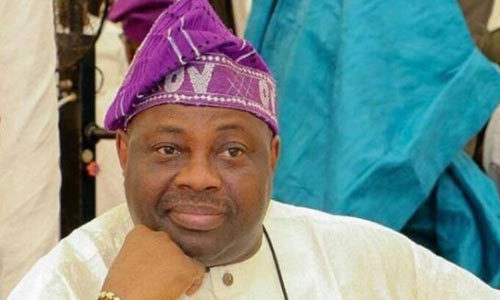
By Dele Momodu

Fellow Nigerians, I don’t know if you saw the interesting picture I received and posted about two days ago. It was a photograph of our dear President Muhammadu Buhari standing in front of the Vice President of the United States of America, Kamala Harris and seemingly having a discussion with her. No one is sure of the topic of their discussions, whether they were just exchanging pleasantries or talking about serious affairs of state. Or even whether they understood each other or whether it was a mere photo-op. All I know is that both leaders met in France at the opening ceremony of the Paris Peace Forum, where World Leaders gathered to discuss issues regarding how to foster peace in the world.

It is obvious that President Muhammadu Buhari loves the global stage and craves being under the spotlight of the klieg-lights and the flashing bulbs. President Buhari looks most happy whenever he is climbing into his Presidential jet and flying abroad. His look of sullenness when he returns is sometimes a pretty picture. Home doesn’t look like paradise for him. Not that I blame him though. Nigerians can be tiresome, and Nigeria is obviously tiring to rule particularly if you are really a fish out of water like our President is. Whatever you may feel, the President clearly appears much more relaxed and comfortable and less taciturn when he is overseas. He hardly misses any opportunity to fly out of the country which compares to his abysmal record of internal flights to visit places that a President should normally visit, especially in times of disaster and calamities.https://googleads.g.doubleclick.net/pagead/ads?client=ca-pub-2023028789149162&output=html&h=200&slotname=5559997686&adk=3949489395&adf=1820231409&pi=t.ma~as.5559997686&w=200&lmt=1636876933&psa=1&format=200×200&url=https%3A%2F%2Fthenigerialawyer.com%2Fpendulum-president-buhari-and-his-love-of-global-stage%2F&flash=0&wgl=1&adsid=ChAIgITDjAYQ5uCFx8qBos1kEj0ADZ4y2cL-cfkgbKaRGuOFUq7Pjz0f76AdItG7La1urZ6H70Kin_uc6dBBxLHcOHWr5lKtcF3L0el7Fc36&uach=WyJBbmRyb2lkIiwiOC4xLjAiLCIiLCJTTS1QNTg1IiwiOTUuMC40NjM4Ljc0IixbXSxudWxsLG51bGwsIiJd&dt=1636900824172&bpp=6&bdt=35381&idt=6&shv=r20211109&mjsv=m202111080101&ptt=9&saldr=aa&abxe=1&cookie=ID%3D54f6c2230de2c5d5-22fa342f98cc00df%3AT%3D1635541237%3ART%3D1635541237%3AS%3DALNI_Mb_AeFC9heEO3pF5noVLAPUPw0PcA&prev_fmts=800×280%2C0x0%2C800x1160%2C800x99%2C468x60&nras=3&correlator=5427382283175&frm=20&pv=1&ga_vid=940724978.1635541227&ga_sid=1636900796&ga_hid=1062708303&ga_fc=1&u_tz=60&u_his=1&u_h=1280&u_w=800&u_ah=1280&u_aw=800&u_cd=24&dmc=2&adx=30&ady=2639&biw=800&bih=1160&scr_x=0&scr_y=0&eid=182982100%2C182982300%2C21067496&oid=2&psts=AGkb-H-UKArG-20J8e8_2eMhWGqFdQu92ognNGoCpTngwO8VGnFz3_s1ec6gvPHGrYO5ewgoyz0vw6bpmLA%2CAGkb-H-cUJDz4fEs-X5ydS-kdGlCbdIfDKZFZznd2FMNjNsfB0yT5oaBYjelPqv_A_rfK3dJTcM7-tw-9vcSIszaHmhAH_TfG_4-huI3&pvsid=303337539252097&pem=860&eae=0&fc=896&brdim=0%2C0%2C0%2C0%2C800%2C0%2C800%2C1160%2C800%2C1160&vis=1&rsz=%7C%7CleEbr%7C&abl=CS&pfx=0&fu=0&bc=31&ifi=7&uci=a!7&btvi=2&fsb=1&xpc=e9IDOGSPcj&p=https%3A//thenigerialawyer.com&dtd=30

The President’s penchant and love for foreign travel you will recall that even when South Africa was rude to Nigeria by slapping and beating our citizens black and blue, and worse still, maiming and killing them, our very own President Buhari flew to South Africa to inspect military parades, enjoy gun salutes, and personally received whatever apologies President Matamela Cyril Ramaphosa and his people had to offer for the unprecedented hostility, humiliation and murders suffered by our people at the bloodthirsty hands of the natives. In the same vein, our President had no time to resolve the debilitating and economically damaging issues of the Nigerian shops that were shut down in Ghana, but he found time to attend ECOWAS meetings which should have addressed such flagrant breaches of the right of free movement, commerce and trade between member nations and their citizens. Our President only grants Press interviews at home once in a blue moon but prefers to speak to foreign media at every opportunity even if such occasions lead to gaffes and goofs. The Reno Omokris attempt to make the President’s stay abroad uncomfortable and miserable are not enough to deter him from embarking on his traveling spree. Such is his love for foreign trips which understandably oftentimes also serve as clandestine forays to visit his doctors.

To be quite honest with you, President Buhari was the last person I expected to attend such a world conference on peace and unity. How can a man who has blatantly and studiously refused to promote peaceful options at home find the temerity to attend such an event? How can our President stand confidently, and with a straight poker face, tell the world about how Nigeria has been more peaceful than he met it in 2015, or how he has worked tirelessly to unite Nigerians? I don’t get it. To be quite frank, a lover of peace would never do what President Buhari has been doing to fellow Nigerians in the last six years. A few examples of his unbelievable and unfortunate transgressions and flagrant trampling on peace and unity will suffice.

In President Buhari’s first term, the attacks against the National Assembly which is supposed to be the second tier of government and one of the bastions of democracy was so rampant and blistering. It was so bad that at a point many of us feared for the life of the then President of the Senate, Dr Abubakar Bukola Saraki. Such intolerance and malevolence are uncommon in a Democratic setting, but our President appeared unaware, unperturbed and unconcerned. Yet Saraki was one of those who had worked day and night to get him back into power after his long hiatus and sojourn in the cold and dark political wilderness. Thank God for Saraki’s calmness, resilience and cosmopolitanism, he absorbed all the darts thrown at him with equanimity to the very end. And when they couldn’t get him in Abuja, they pursued him to his homestead and made sure he did not return to the Senate and have even the slightest degree of power, possibly as leader of the opposition in the Senate. Such was the venom, vindictiveness and ingratitude, of the ruling government of President Buhari.

Please, step forward Omoyele Sowore. The New York based Publisher of Sahara Reporters remained in Buhari’s gulag for such a lengthy period of time until the overwhelming voice of the people necessitated his release. Nonetheless the radical Presidential candidate in the 2019 election has remained virtually under arrest and restriction in Abuja and is unable to leave to express himself within Nigeria or to even join his family in America. His simple offence is that he dared to say that there would be a revolution in Nigeria. It matters not to Buhari and his goons whether Omoyele was being metaphorical, intentional, or just being hyperbolic. It mattered less whether he even has the capacity or ability to spearhead any kind of revolution. The Government’s paranoia about the word revolution is all too obvious for us to see, notwithstanding that in a democracy it is a simple and harmless word except to those who have become too jittery of ordinary shadows. For this innocent, innocuous, and vacuous offhanded remark, Sowore has since literally been chained to the city gates of Abuja on the excuse that he might jump bail and escape back to America and stir up this revolution. Images of Nnamdi Kanu perhaps! The truth is that the god that is Buhari is not that easy to appease. Thus, the man who flew all the way to Paris to discuss peace and unity finds it difficult to reach out to his imaginary or real enemies and offer an olive branch. For him, even ants must be crushed with a sledgehammer.

Let’s bring forward an entire race before returning to individuals. The people of South East Nigeria were alleged to have contributed only about five percent of the votes won by Buhari and they were simply marked down as enemies of our maximum ruler in civilian garb. The President said it openly that they did not deserve his mercy and largesse, as if government money was a personal fortune. No race in Nigeria has suffered so much in the hands of this government than the Igbo nation. Soldiers are drafted to the scene at the flimsiest of excuse. Military exercises with dreadful and fearsome codenames are unleashed on the unsuspecting and unwitting Igbo people. Watching the videos is like watching horror movies. Their only supposed offense is that some of them said they are tired of being an integral part of Nigeria and therefore want a new nation called Biafra. The IPOB Leader, Mazi Nnamdi Kanu, has been calling for a referendum which the Buhari government does not want to hear about. The demand for a referendum is a legitimate right of the people and is sanctioned both domestically and internationally. Kanu has since been kidnapped from God-knows-where and spirited back home to face a trial. Instead of inviting him to dialogue like President Olusegun Obasanjo did with Asari Dokubo and some other militants in those days, Buhari stubbornly refuses to be democratic and is not ready to hold any conversation with anyone. For him, might is always right and his goons are best pleased to move to South East instead of the many evil forests where the bandits hide.

As if this is not bad enough. The people of South West Nigeria have also been registered inside President Buhari’s black book. The reason is not far-fetched. Some Yoruba people had the effrontery and audacity to say some marauding herdsmen should stop destroying their farmlands, raping their wives, daughters and sisters, kidnapping them, and making insane and insatiable demands, and murdering them. A brave gentleman by the name Chief Sunday Igboho Adeyemo, who was so enraged by the apparent culpability of government security agencies who refuse to arrest the criminals, threatened to revenge the killing of his people. How he proposed to do this was not stated. Despite this obvious failing the Government assumed the worst. He immediately became the enemy of the Buhari government. His home in Ibadan was invaded in the dead of the night and the government security left their sorrow, tears and blood in their trail. Sunday has also been pursued to Bénin Republic where he was arrested but the courts have been more merciful by not deporting him to Nigeria to be eaten alive by political gods.

Meanwhile, in this same country and under the same watch of this same government, some terrorists and bandits have been sauntering in and out of their forests of a thousand daemons. In addition, Governors, Sheikhs and others have been busy over pampering them and giving irrational excuses on their behalf. This is obviously how not to lead and build a nation, when we are not living in George Orwell’s Animal Farm where “All animals are equal, but some are more equal than others…”
Now that Baba has gone to listen, hopefully, to genuine peace talks, I hope he will return home to free Nigeria and Nigerians from the shackles of absurd dictatorship in a Democracy. I hope he will call terrorism by its real name and draw the lines that must not be crossed. I pray he will invite all agitators to a peace conference and for once find out their demands and make amends. Like joke like joke, the tenure of this government is drawing to a close. In less than two years, this Buhari government would have become history.https://googleads.g.doubleclick.net/pagead/ads?client=ca-pub-2023028789149162&output=html&h=121&slotname=5559997686&adk=860532342&adf=842781776&pi=t.ma~as.5559997686&w=484&fwrn=4&lmt=1636876933&rafmt=11&psa=1&format=484×121&url=https%3A%2F%2Fthenigerialawyer.com%2Fpendulum-president-buhari-and-his-love-of-global-stage%2F&flash=0&wgl=1&adsid=ChAIgITDjAYQ5uCFx8qBos1kEj0ADZ4y2cL-cfkgbKaRGuOFUq7Pjz0f76AdItG7La1urZ6H70Kin_uc6dBBxLHcOHWr5lKtcF3L0el7Fc36&uach=WyJBbmRyb2lkIiwiOC4xLjAiLCIiLCJTTS1QNTg1IiwiOTUuMC40NjM4Ljc0IixbXSxudWxsLG51bGwsIiJd&dt=1636900794575&bpp=10&bdt=5784&idt=1907&shv=r20211109&mjsv=m202111080101&ptt=9&saldr=aa&abxe=1&cookie=ID%3D54f6c2230de2c5d5-22fa342f98cc00df%3AT%3D1635541237%3ART%3D1635541237%3AS%3DALNI_Mb_AeFC9heEO3pF5noVLAPUPw0PcA&prev_fmts=800×280%2C0x0%2C800x1160%2C800x99%2C468x60%2C200x200%2C200x200&nras=4&correlator=5427382283175&frm=20&pv=1&ga_vid=940724978.1635541227&ga_sid=1636900796&ga_hid=1062708303&ga_fc=1&rplot=4&u_tz=60&u_his=1&u_h=1280&u_w=800&u_ah=1280&u_aw=800&u_cd=24&dmc=2&adx=30&ady=6243&biw=800&bih=1160&scr_x=0&scr_y=1231&eid=182982100%2C182982300%2C21067496&oid=2&psts=AGkb-H-UKArG-20J8e8_2eMhWGqFdQu92ognNGoCpTngwO8VGnFz3_s1ec6gvPHGrYO5ewgoyz0vw6bpmLA%2CAGkb-H-cUJDz4fEs-X5ydS-kdGlCbdIfDKZFZznd2FMNjNsfB0yT5oaBYjelPqv_A_rfK3dJTcM7-tw-9vcSIszaHmhAH_TfG_4-huI3%2CAGkb-H-yAyKDXxPwfHEizPfuv4YOpfOF0vE7jpFf3-UWu1w8UPPhkLUZsCWLu6G0LiKOZ-mQmFJbqW4WvQ%2CAGkb-H_7ZWJGjZrttDPc7i-vxKdAQBWC_dQEJZQBfkNl4_3nEAnQSas22vk7p8cVR6OWoFCcUdqaBU5GHw%2CAGkb-H-fkjeHcwPE1o6Ule0lx-N8c6vAR79RIfB6GPSwAhf7HTJY6fYjQZKFBYGVdnu-OSX4dE5zrMDkg7c%2CAGkb-H8VXwnUuC5UB_H-TnLXnYjNCj140GI6J9s9icOoo6xN3co0VR1zAuDawtlVkzBkuSx5QELr2sZg&pvsid=303337539252097&pem=860&eae=0&fc=896&brdim=0%2C0%2C0%2C0%2C800%2C0%2C800%2C1256%2C800%2C1256&vis=1&rsz=%7C%7CoeEbr%7C&abl=CS&pfx=0&cms=2&fu=128&bc=31&ifi=2&uci=a!2&btvi=3&fsb=1&xpc=cXXq1BjWqK&p=https%3A//thenigerialawyer.com&dtd=M

What position it would occupy in the story of Nigeria will be determined by history. It would have frittered away many opportunities in eight years that can never be recovered. That will be most unfortunate for a Leader that God loved so much by giving him a second chance as well as a second life after many had feared the worst. At the moment, the prospect of an enduring legacy seems very dim. In all honesty, Buhari has squandered all the goodwill that he enjoyed at the beginning of his administration. The hopes, aspirations and expectations of millions of Nigerians have been spectacularly dashed. The second coming was prophesied to be beginning of light at the end of the tunnel, the beacon and ray of hope that all Nigerians had clamoured for. Instead, it has been gloom and doom and the President’s traducers have apparently been proven right.
This is not how to repay God’s undeserved kindness and benevolence.

‘Writings on the wall of Anambra 2021′

MARTINS OLOJA

Inside Stuff With MARTINS OLOJA

I hope that our dealers who have been parading themselves as leaders are keeping well enough to read the great writings that just appeared on the wall of Anambra-2021. I also hope that they heard the remarkable people of Anambra state loud and clear when they sounded their trumpet of hope to a hopeless nation last week. I only hope too that their powerless oracles haven’t dismissed the very clear warning signals from APGA organic Anambrarians call ‘our own’. I can only hope that our dealers, sorry leaders absorb the power of the inconvenient revelation that the Anambra-2021 represents at the moment.

I hope the powerful people in the nation’s capital can muddle through the present darkness with the aid of their handset’s torchlight to read the writings on the wall of Anambra that Nigeria’s broken walls can be rebuilt, after all through the people power.

One can only hope too that the men without chests in the two major political parties, the APC and the PDP who have been building war chests to exploit our dangerous civil incompetence again in #Project2023 have got the message from Awka that Super Tuesday that they are meretriciously prominent but not significant, after all.

I hope the artful ‘carpet crossers’ from darkness to darkness saw the fire from heaven that finally burnt their shenanigan and peccadillo in Anambra that Wednesday when the result was announced. How are the mighty fallen! We can tell it in Awka and publish the clear message in the Streets of Ebenebe so that Oriental daughters can rejoice – that the wickedness of the wicked in Nigeria can come to an end, after all.

I do hope that our flabby and jaded politicians who have helped in destroying all our institutions that should support democracy can read another message on ‘The Great Wall’ in Anambra that when the people are sufficiently tired and angry about the recklessness of their oppressors they can arouse the conscience of the nation to stand together as one –to fight injustice to all.

Hopefully, our duty bearers can deepen their understanding of another writing on the Oriental wall that if institutions including elections management agency and even police are well funded and left alone to function, they can stand up too to be counted.

As a citizen, in the early hours of that Wednesday when Professor Charles Soludo was declared winner of the keenly contested election, my spirit man recalled Jimmy Cliff’s 1970 classic: ‘You Can Get It If You Really Want’.
‘You can get it if you really want; You can get it if you really want; You can get it if you really want; But you must try, try and try;
Try and try, you’ll succeed at last; Look here; Persecution you must bear; Win or lose you’ve got to get your share; Got your mind set on a dream; You can get it, though harder they seem now; You can get it if you really want; You can get it if you really want; You can get it if you really want; But you must try, try and try…
Try and try, you’ll succeed at last I know it, listen; Rome was not built in a day; Opposition will come your way; But the hotter the battle you see; It’s the sweeter the victory, now;…I know it; Don’t I show it? You don’t give up now…

In the same vein, there is a sense in which we can warn the victors in Anambra not to ignore an ancient writing on another wall that, ‘Goliath Hath Children’ another warning signal to the rejoicing daughters of Anambra that they should add this hymn to their song-list: ‘Christians, seek not yet repose, Hear thy gracious Saviour say; Thou art in the midst of foes; Watch and pray; Principalities and powers, Mustering their unseen array, Wait for thy unguarded hours; Watch and pray….’

Surely, the vanquished in the epic battle are not going to give up so easily. They have been curiously collecting mandates from the courts. This is Nigeria where elected officers cannot sleep well until the final arbiter (court) has pronounced them duly elected. This is the new deal on electoral justice system that has remarkably devalued the majesty of democracy in Africa’s most populous country.

Meanwhile, there are so many other deliverables from the Anambra 2021 election. It is more than emergence of a very experienced technocrat and professor, Charles Soludo. Election isn’t an event. It is a process. The outcome of the election has had some unintended consequences. The first takeaway is that with the way the election management agency has collaborated with the civil society organisations including the media to sensitise a section of the political class to the legalisation of electronic transmission of result and strategic approval of direct primary that will return power of co-ownership to the people (members of the political party, there is “hope of a better tomorrow”, which Ngugi wa Thiong’o, a significant African writer says, ‘is the only comfort you can give to a weeping child’.

It signposts a lot of possibilities, notably that it is possible to elect good, trusted and knowledgeable leaders, after all. Despite all the glitches that delayed so many processes in Anambra, the good people came out, voted for the governors they wanted and their votes counted. Only one bad loser the people and leaders across parties actually worked and voted against is complaining and threatening recourse to curious ‘judicial election’. That belongs in the past. I see hope of a better Nigeria where the judiciary will be restored to its organic essence as the last hope of the common man. That hope can’t be deferred anymore.

The political leaders who worked hard with unscrupulous ministers in the temple of justice, notably lawyers to desecrate the temple will receive the wrath of the God we serve. He can’t be deceived. He has revealed to mankind though His word that, “whatever a man sows, he shall reap….” I know Him. Note this ancient word: ‘Righteousness and justice are the foundations of His throne’. He won’t allow those who have corrupted the justice system in Nigeria to assume office in a new Nigeria that will sooner than later be a pride of the black race. His Son has also revealed to mankind that only good trees can produce good fruits (bad trees produce bad fruits). Interpretation of this writing on His wall: We need to be wary of children of Goliath who are the bad trees of Nigeria. They should not be allowed to cross over to 2023 where they want to continue to produce bad fruits. This is a time for even the cocky elite whose complacency has been responsible for election of nincompoops and scoundrels who are gearing up again to cross over to 2023 to continue business as usual. Our elite and even young people who executed the #EndSARS revolution strategy should no longer beat a retreat at this time because of demonisation by our dishonest state actors who can’t face the power of truth.

They should regroup like the youth of Zambia who the other day mobilised their nation to defeat reactionary forces. The Young in Zambia heeded the voice of Steve Biko who once advised the back people of the world, not to refer their physical problems to God anymore. Biko counseled:

‘…I would like to remind the black ministry, and indeed all black people that God is not in the habit of coming down from heaven to solve people’s problems on earth’.

The good people of Anambra took the wise counsel of Biko and used the dominion and will power the same God has given to all us to defeat the forced of darkness. The few of them at home who were inspired by APGA stalwarts earlier obtained their voter cards. They didn’t depend on God to do that for them. They preserved their cards. They waited patiently when there were technical hitches. They even waited till the night. They didn’t get angry with INEC. Some provided ‘Personal Hotspot’ of their ‘Wi-Fi’. They stood firm to deepen democracy in the state. They went out. They saw. They persevered. And they conquered satanic forces! As I was saying concerning the resurgent youth in Zambia, the youth in Nigeria should work with reliable local leaders to defeat the forces of darkness who are already strategising to be leaders at all levels in 2023. They are already discussing and padding the 2022 budget details with dubious projects they want to use for #Project2021. They are even borrowing to finance 2023. Have you seen the haste with which the Senate approves borrowing spree? Shakespeare knows them. He tells us: ‘…There is but one mind in all these men, all bent against their country…. Let’s study the APGA spirit and the Anambrarian strategy papers – just to prevent these wicked aspirants from sowing tares in our democratic vineyards. The way to tell them that we know they are wicked is through strategic planning and execution – the discipline of getting things done. It begins with registration as voters. It begins with organising Movements to change these bad people.

‘The Register’s editorial in 2018 can be quite instructive:
‘Politicians can ignore bumper stickers, yard signs, phone calls and marches on capitals. They can dismiss public opinion polls, editorials and griping constituents. The one thing they cannot ignore: the majority of voters on Election Day….’

We the people decide whether a candidate has a job in public office come May, 2023. We help decide the fate of our country, state and even our own families — by casting a ballot for candidates best aligned with our own values.
The old and the young and even the elite should build some consensus around this: that democracy can’t function if citizens don’t vote. Without the people, power defaults to special interests and their money. The question now is whether you will use your power by voting in 2023. Reason: the outcome of elections matters very much. Yes, as it has been widely noted that elections have consequences. The consequences of our choices in 2015 are still bruising.

Ask teachers in underfunded Nigerian schools if elections matter. Ask low-income and jobless Nigerians if they know elections matter. Ask human services workers, veterans, tourists stunned by our impassable roads and waterways and Nigerians and even our people in IDP camps who don’t have access at all to health services.

There is no question, the individuals who hold elected office affect every part of our lives. We have seen what even federal and state legislators can do to national (under)development. They determine the future of everything through legislation and oversight. Where are we on these fronts?
Now is the time for each of us to speak up against the wickedness of the wicked in Nigeria. And it’s easy to participate in elections now that INEC is gaining credibility. What we need is to conquer our fears. ‘The wickedness of the wicked will not come to an end just because God said it. We need to step out and find some rods to put in our hands. God can only bless the rods in our hands. And the rods now include our voter cards and determination to say no to gifts politicians dispense to make ways for them at the polling stations. We should be determined to say no as the Ebenebe woman who rejected a candidate’s N5000 bribe.

#

Anambra election: Lessons for South-west By Bolanle Bolawole

By Bolanle Bolawole [email protected] 0705 263 1058

The Anambra elections have come and gone but the reverberations will continue for some time to come. The “Igbo party”, APGA, trounced the APC and PDP combined, with the APGA candidate, Prof. Charles Soludo, winning with a wide margin that surpassed the combined votes of the APC and PDP. The other parties, except the APC candidate Andy Uba, appeared to have accepted the result but Uba is spitting fire and has threatened court action to retrieve what he described as his stolen mandate! Some politicians! But never put anything past our politicians and never take their threats as empty! Who could have thought that Hope Uzodinma, the man who came fourth in an election, would be enthroned as governor of Imo State? That decision by the apex court descended from the blues like a thunderbolt just like that of his Kogi State counterpart before him, Yahaya Bello, who lost his party’s nomination but eventually got installed by the court as beneficiary of an election effort he contributed next to nothing into! Is Uba just grandstanding, trying to save face after his woeful outing in the Anambra governorship election? Is his intransigence that of a desperado bent on winning at all costs? Is his action a coded language – which is usual of our politicians – so the winner could call him in for negotiations? Or does Uba have something up his sleeves, possibly a repeat of the Imo miracle? In the language of our First Republic politicians, Uba lost his deposits in the Saturday, November 6, 2021 Anambra governorship election, which dragged on to the next Tuesday, November 9th. Except he knows something we do not know, Uba should have quietly gone under to count his losses, lick his wounds, and gently recover the recoverable but knowing the Ubas for who they are – their antecedents speak loud and clear – tell APGA and Soludo to watch it! As they say, it is not over until it is all over!

It is in the spirit of the Anambra election that I seek to comment on the press conference addressed by the Afenifere leader, venerable Pa Ayo Adebanjo, on Thursday, 11th November, 2021 on the state of the nation, as it were, but titled “Fixing Nigeria before the fall”. I felt sorry and sad at the same time to hear the nonagenarian war-horse bemoan the state of the nation. Sorry, that a 93-year-old could still be forced by our self-inflicted circumstances to return, again and again, to the barricades and storm the Bastilles, as it were, even as he served notice he could be at the departure hall of life. But only God gives and takes life! Long may you live, Sir, in sound mind and good health! Your unquantifiable services are still direly needed! In what some may term as his parting shot to us, Pa Adebanjo lamented: “Nigeria is dying. To be sure, the Nigerian state that was negotiated before independence in 1960, the one that was birthed and named on the 1st of October, 1960, is long dead. It was mortally wounded in January 1966 and was slaughtered in July of 1966. Its funeral obsequies were held between 1966 and 1970. The Frankenstein monster that was cobbled together in place of the dead nation that was agreed (upon) has survived this long on the back of repression, lies, illusions, and outright delusions. But (the current President and Commander-in-Chief, retired Major-General Muhammadu) Buhari has finally killed it by his endless arrogance, the manifest incompetence, and the vile ethno-religious agenda with which he is dangerously strangling the insufferable Frankenstein”

It could not have been better put! But the solution proffered by Pa Adebanjo also made me sorrowful, sad and sorry. Hear him: “It was the position of Afenifere and NADECO that there existed an urgent need to convene a Sovereign National Conference of the ethnic nationalities that have become known as Nigerians. Afenifere’s position has not evolved. We remain convinced that the need for a sovereign national conference is imperative. THE BASIS OF THE NIGERIAN STATE MUST BE CLEARLY NEGOTIATED (his emphasis)”. Pa Adebanjo said Afenifere’s position “has not evolved” from what it used to be: but I say it should have! The problem gets worse; the noose of slavery, internal colonialism, subjugation, suppression, oppression, even annihilation tightens more grotesquely around our neck; yet, Afenifere’s tepid “solution” remains the same. Is it that as the problems worsen – and no one can deny that the problems of the subjugated ethnic nationalities in Nigeria have multiplied and worsened under Buhari – is it that as the problems worsen, Afenifere expects its age-long ineffectual solution to become more efficacious? It is said that we cannot do the same thing the same way and expect a different result.

Pa Adebanjo must be too trusting for him to still appeal to the patriotism, sensibilities, sense of judgement and rationality of Buhari. Pardon me if I say “old school”! Buhari belongs, possibly leads, the most audacious, the most conservative, and the most reactionary section of fundamentalist Islam in Nigeria. Argument, reason, pleas, and sound judgment do not move them. They only shift when they collide against stone walls. When they perceive you as a weakling, they pile misery. As the Yoruba will say, “Kaka ki ewe agbon nwon de, lile ni n le si” Says Asiwaju Bola Ahmed Tinubu: “Power is not served a la carte. You have to struggle for power”. Concurs Chairman Mao Tse-tung: “A revolution is not a dinner party, or writing an essay, or painting a picture, or doing embroidery; it cannot be so defined, so leisurely and gentle, so temperate, kind, courteous, restrained and magnanimous. A revolution is an insurrection, an act of violence by which one class overthrows another”.

French philosopher, Jean Jacques Rousseau, left no one in doubt that power relations, the kind we are up against in Nigeria, does not yield to pleas of morality when he said: “Man is born free; and everywhere he is in chains. One thinks himself the master of others, and still remains a greater slave than they. How did this change come about? I do not know. What can make it legitimate? That question I think I can answer. If I took into account only force, and the effects derived from it, I should say: ‘As long as a people is compelled to obey, and obeys, it does well; as soon as it can shake off the yoke, and shakes it off, it does still better; for, regaining its liberty by the same right as took it away, either it is justified in resuming it, or there was no justification for those who took it away’…The strong is never strong enough to be always the master unless he transforms strength into right and obedience into duty” Failure to heed Rousseau’s admonition will, ultimately, become the Achilles heel of Buhari and his co-travellers in the fullness of time!

Frederick Douglass, a Black freedom fighter, put it more succinctly when he said: “If there is no struggle, there is no progress…Power concedes nothing without a demand. It never did and it never will. Find out what any people will quietly submit to and you have found the exact measure of injustice and wrong that will be imposed upon them, and these will continue until they are resisted with words or blows or both… Who would be free, themselves must strike the blow” Pleas alone will not do. The Yoruba must brace up to fight for their rights. They must be ready to strike the blow. The Yoruba themselves know that “ati gb’omo l’owo ekuro kii s’oju boro” Buhari holds the knife and he also holds the yam. He has left no one in doubt that he wants to give the whole yam solely to his own tribal people and their few surrogates and he uses the “knife” to scare away anyone who may wish to disturb his peace. Buhari is not interested in sharing, despite the fact that his favoured people’s contribution to the national coffers is negligible. They want the whole yam; leaving only the yam peels for the rest of us. We must find a way to put Buhari’s back to the wall and collect either the yam or the knife or both from him. It is thereafter that any meaningful sharing (or restructuring) can take place. Otherwise, I doubt if restructuring will see the light of day during Buhari’s watch.

It is in this regard that I think the South-east appears to have got it right while the South-west still dilly-dallies blowing grammar or speaking “turenchi” that leads nowhere. Say whatever you may of IPOB, the fear of IPOB has become the beginning of wisdom in the South-east. Check your history; there is hardly any liberation organisation or leader that did not start out bearing the label of a terrorist. If they fail, they face the music but if they succeed, they form the government and become legitimate. Same between a failed military coup and another that succeeds. I am an apostle of peace but Mao, again, teaches that to have peace, prepare for war! It is when you are strong enough to defend yourself that others will fear to ride roughshod over you. In international relations it is called the principle of mutual assured destruction (MAD), which breeds deterrence. For instance, it is because Isaac Newton’s third law is not in operation in the Middle Belt – action (by herdsmen) and reaction (by the Middle Belt’s hapless and defenceless people) are not equal and opposite – that Gov. Samuel Ortom keeps weeping every day as the Middle Belt bury their dead. Where action and reaction are equal and opposite, there will be mutual respect on both sides!

The Igbo took another giant leap in the direction of respectability and identity politics with the Anambra election. They brushed aside the APC and PDP and voted an Igbo party. Will this be a one-off thing or is a pattern emerging? “All politics is local” is a phrase commonly associated with a one-time Speaker of the US House of Representatives, Tip O’Neill. Waiting for restructuring to start in or from Abuja may be illusory. Seizing the initiative at the local or regional level and creating a firm footing for one to challenge a behemoth Centre appears to me the most sensible thing to do – short of a violent revolution. Archimedes was credited with saying “Give me a place to stand and with a lever I will move the world”

In the South-west today, what is the alternative to the APC and PDP, same fingers of same leprous hand? This, I think, is the urgent task before Pa. Adebanjo. He must earnestly bring all the warring and factionalised self-determination groups in the South-west together and provide the required leadership. He must set the goal: To brush aside the APC and PDP and birth a regional party that will point the Yoruba in the right direction. Elections are due in Ekiti and Osun next year. There is no time to waste! Those who think they will canvass election boycott should learn from Anambra and perish the thought. The Nigerian state will rally the ruling class – or is it the other way round? – wangle its way through and write results. Someone said the outcome of such an exercise will lack legitimacy; yes, but those in the saddle now, what legitimacy do they command? If Yahaya Bello is ruling; if Hope Uzodinma is ruling, what else can you not have in Buhari’s Nigeria?

EXCLUSIVE: $300,000 Blackmail Scandal: EFCC, DSS probe Peoples Gazette Editor, Samuel Ogundipe

Insiders have revealed that Samuel Ogundipe, the editor of Nigerian website, Peoples Gazette, is now on the run after the Economic and Financial Crimes Commission (EFCC) and the Department of State Services (DSS) launched an investigation into his alleged attempt to blackmail the Chairman of Air Peace,  Allen Onyema, into paying him $300,000.

Newsdiaryonline gathered that about five months ago, Ogundipe had contacted Onyema to say his paper was working on a stinker on him. He, however, offered to drop the story if paid $300,000.

Our sources said for days, Mr Onyema tried to convince Ogundipe that the allegations being packaged against him by Peoples Gazette were false and only calculated to tarnish his reputation. 

When the editor refused to back down, according to those familiar with the matter, the Air Peace chairman alerted the EFCC and the Department of State Services (DSS) on the plot to blackmail and extort from him by Ogundipe.

The EFCC and the DSS then set up a joint sting operation on the matter, our sources said. They asked Onyema to play along while the two agencies continued to monitor and record the communications between the Peoples Gazette Editor and the Air Peace chairman.

While playing along, Mr Onyema offered to pay Ogundipe $150,000 in three installments. After some back and forth, the journalist agreed.  

Those familiar with the matter said the Air Peace chairman then requested Ogundipe to provide an account number to which the money could be paid but the journalist insisted that he would only accept the payment in cash.

Onyema continued to play along in line with the script given to him by the law enforcement agencies involved in the operation. He invited Ogundipe to his office in Lagos to collect the first installment of $50,000. 

The journalist, however, said he was away in Dubai, the United Arab Emirates, at the time but that he would send a representative to collect the money on his behalf.

On the appointed date, the representative, said to be a female staff of Peoples Gazette, showed up at Onyema’s office as agreed, to receive the bribe.

But at this time, armed operatives of EFCC and DSS, had planted recording devices in Onyema’s office while also taking positions around the facility.

Law enforcement insiders said immediately Ogundipe’s front received the money from Onyema, the operatives emerged from their hiding positions and swooped on her.

She was immediately arrested and driven to the Lagos office of the EFCC where she was interrogated and detained for one week.

The suspect, law enforcement sources said, told detectives that she did not know that the money Ogundipe sent her to collect was a proceed of blackmail. 

The EFCC held on to the suspect for days and invited Ogundipe to show up for questioning. The journalist has since gone underground and has so far refused to return to Nigeria from Dubai. 

Meanwhile, a further screening of the suspect’s telephone revealed information that further implicated the Peoples Gazette editor, our sources said.

Ogundipe was a reporter with Premium Times until mid 2020 when left after the medium accused him of unethical conduct.  (Newsdairyonline)

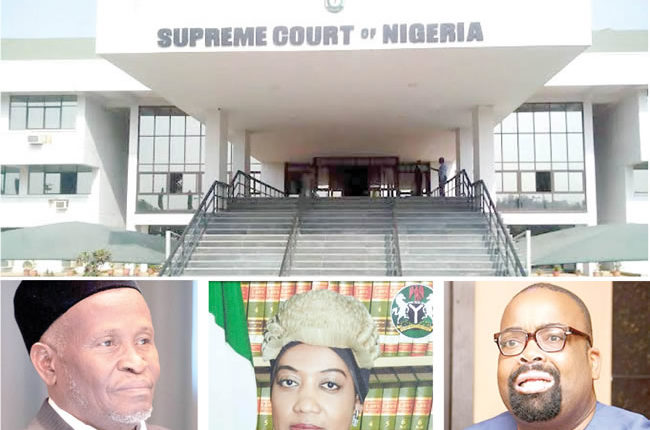
Contest For Supreme Court Chief Registrar’s Seat

NBA chief wants open contest

LANRE ADEWOLE examines the issues and undercurrents trailing the appointment of the most important officer for the apex court.

On August 6, 2021, the Chief Justice of Nigeria, Justice Tanko Mohammed announced Hajo Sarki-Bello as the acting Chief Registrar of the Supreme Court, considering she was the most senior of the Deputy Chief Registrars of the court, at the time the last occupant of the prestigious and influential office, Hadizatu Uwani Mustapha, clocked the retirement age.

Ms. Mustapha hit the mandatory exit age of 60 on Sunday August 8, after being in the saddle for four years and Ms. Sarki-Bello assumed office on Monday August 9.

If seniority-by-succession arrangement which drives most of the crucial appointments in the judiciary is to be the singular barometer, it should be given that the Niger-state born Hajo, would be the 18th Chief Registrar of the court and the second woman in quick succession, to occupy the “hot” seat.

As the most senior administrative officer of the court, second only to the Chief Justice in decision-making as well as serving as the secretary to the “powerful” Legal Practitioners and Privileges Committee (LLPC), which handles the yearly appointment of senior advocates, the chief registrar of the apex court, is possibly only second in prestige, to the secretary of the National Judicial Council (NJC).

The occupant of the office practically runs the apex court, horizontally and vertically, and all the who-is-who at the Nigerian Bar, get to relate with him or her, for obvious reasons, as the chief registrar is the actual king, when it is nomination cycle for SANship, since the office serves as the secretariat. The office is equally central to the proceedings for imposition of sanctions on erring lawyers.

Apart from being the administrative head of the apex court, the chief registrar is also the chief accounting officer, making the office, the clearing house for all financial matters, before the endorsement of the Chief Justice. As the chief accounting officer of the court, all contractual agreements also go through the chief registrar as a matter of necessity, which also puts the occupant in charge of the yearly budget of the apex court, in the count of billions of naira.

As the office grew in influence over the years, politics of appointment also came into the mix and because it is not a tenured job, occupant per time, holds the job, at the pleasure of the Chief Justice and those in circle of influence, particularly retired jurists, who regularly wade into appointment matters.

Announcing her acting appointment, Supreme Court Director of Press and Information, Dr. Festus Akande, says of the importance of the office; “the Chief Registrar is the highest civil servant of the apex court in charge of the general administration of the court. The position holder is also expected to assist the CJN in the discharge of his administrative duties.”

The politics

After two unsuccessful attempts at tying the seat down permanently, Sarki-Bello is understandably having all eyes on her again.

The travails of Hajo, believed to be a mentee of former Chief Justice Ibrahim Alfa Belgore, became public knowledge in 2014 when Sunday Olorundahunsi as the Chief Registrar was exiting alongside his appointor, then CJN, Mariam Aloma Mukhtar, in what has gradually become the norm of a new CJN appointing a new Chief Registrar and exiting with him or her, now that the office, judiciary-wide, operates like chief of staff to incumbent head of the system. Hajo, as the most senior deputy chief registrar, was expected to be a shoo-in, per, the succession-by-seniority arrangement.

Now, a high court judge in Ondo State, Olorundahunsi was not a fan of his deputy and the tension between the duo, was a poorly-concealed secret within the system.

Expectedly, Hajo, was by-passed despite acting occasionally when Olorundahunsi was out of town and a junior, in hardworking and reform-oriented Gambo Ahmed Saleh, was favoured for the job, coming into office, alongside Aloma’s successor, Justice Mohammed Mahmud. Hajo had to accept her fate, retaining her position as most senior, known as DCR 1.

In 2017, fate again opened vacancy for Hajo to fill. Saleh emerged the winner of all the tests conducted for applicants to the vacant office of NJC’s Secretary, following the retirement of the long-serving Halilu Danladi, and was deservedly appointed the Council Secretary, but it was also not to be for Hajo.

Mahmud’s successor, Justice Walter Nkanu Onnoghen, bypassed Hajo again and settled for immediate CR, Hadizatu Uwani Mustapha, head-hunted from Sharia Court of Appeal, Abuja. Hajo had to play second fiddle again.

The seat is vacant again, following Ms Mustapha’s retirement and Hajo is acting again. System stakeholders are now waiting with bated breath if she would be third time unlucky.

Appointment procedure

The appointment of a substantive chief registrar for the Supreme Court is statutorily conducted by the Federal Judicial Service Commission (FJSC), headed by the Chief Justice of Nigeria. Essentially, who gets the job depends on the CJN he or she is going to work with.

The singular statutory requirement is for the person under consideration to be a lawyer, called to the Nigerian Bar.

Ms. Sarki-Bello is a 1989 Law graduate from Uthman Dan Fodio University, Sokoto, Nigeria, and was called to the Nigerian Bar on June 7, 1990, which should make her eminently qualified for the seat.

Over time, other unwritten conditions have come into play in appointing occupants of the seat. In recent time, serving as a magistrate before joining the apex court workforce is now being projected as an advantage.

Ms. Bello does not have a record of serving at any magistrate court.

Because the requirements to qualify for the office are not cast in iron unlike appointments to the Bench, past holders of the office have done so basically at the pleasure of the CJN they worked with and without doubt, Bello’s fate is in the hand of Justice Tanko.

As the office is not tenured, so also is the acting period. Tuesday, November 8, makes the acting period of Ms. Bello three months, which should have been statutory threshold for a renewal or termination, for a judicial officer appointed in acting capacity. But in the nature of the fluidity that governs the appointment process, the acting appointment runs at the pleasure of the CJN, who alone can determine when the FJSC which he heads, can determine Ms. Bello’s future on the seat.

Except the CJN notifies the Commission of his intention to have her confirmed for the job, the body, which has the Attorney General of the Federation and Minister of Justice as a member, cannot on its own, act outside the agenda of the CJN, as the chairman, though he must inform the body of the acting appointment of the CR.

When contacted by Nigerian Tribune, Dr. Akande said he was slightly indisposed and could not be definite about FJSC’s next meeting and if Ms. Bello’s substantive appointment would be on the agenda.

It was learnt that the acting appointment may run for as long as six months and once there is a decision to bypass Ms. Bello again, the favoured candidate would be screened straightaway by FJSC as the substantive CR.

Already, the powers-that-be in the system are said to be eyeing the secretary of one of the agencies of the judiciary, where the CJN is also chairman, as the substantive CR. He briefly served as an aide to a Supreme Court top jurist, now late, before his current assignment.

If he eventually gets the job, it would be the second time an outsider would beat Ms. Bello, to the top prize.

If not appointed, she would be required, to revert to her former position as DCR 1.

It should be thrown open -NBA chief

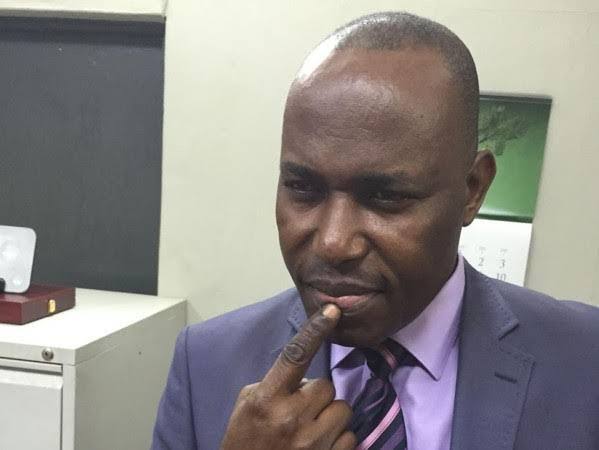
The National Welfare Secretary of the Nigerian Bar Association and immediate National Publicity Secretary of the lawyers’ body, Mr. Kunle Edun wants the position advertised, for the best candidate to emerge through a transparent and rigorous procedure.

Mr. Edun, who is also the Executive Director, Centre for Transparency and Defence of Human Rights said, “The office of the Chief Registrar of the Supreme Court is a very important and sensitive office in the administration of justice system in Nigeria.

“The occupant of the office also acts as the Secretary of the Legal Practitioners Privileges Committee and other statutory committees. Therefore, the need to have someone with vast experience and knowledge of law and practice cannot be over emphasised. It will, therefore, be prudent that the search should not be limited only to a certain group or categories of staff but it should be advertised for persons that are qualified to apply.

“It is high time that we moved away from the archaic system of entitlement to an office because a person works in the same establishment or application of mundane criteria. The same way some of us advocate for a good mix of the Supreme Court bench by career Justices, academicians and litigation practitioners, the office of the CR should also be thrown open to all to apply.”

Who is Hajo?

She attended the Nigerian Institute of Advanced Legal Studies (NIALS) in Lagos where she studied Legal Drafting. She also obtained a Master’s Degree from Ahmadu Bello University, Zaria, in International Affairs and Diplomacy. She worked in Law firms and commercial organisations before joining the Supreme Court of Nigeria in 1996 as Senior Registrar. In 2001, she was promoted to the position of Acting Deputy Chief Registrar and later became substantive Deputy Chief Registrar in 2006.

The list

The first ever Chief Registrar of the apex court is C.O Madarikan esq who was in office between 1958 and 1960, followed by G.S Sowemimo esq (1960 to 1961), J.A Adefarasin (1961 to 1962), O.R. I George (1962 to 1963), M.A Macauley (1963 to 1967), Akinbo Savage (1967 to 1972), K. Ibidapo Obe (1972 to 1977), G. O Jackman (Mrs)  (1977 to 1983), F. A. Owobiyi (1983 to 1989), R.A Kasim (1989 to 1991), T. I. Adesalu (1992 to 1995), M. M. Dodo (1995 to 2003), D. Z. Zenchi (2003 to 2007(, Usman Alh. Musale esq (2007 to 2010), Mr. Sunday Olorundahunsi (2010 to 2014), Ahmed Gambo Saleh Esq (2014 to 2017) and Hadizatu Uwani Mustapha (2017 to 2021).

If Ms. Bello gets it this time, she would be the third female in history to occupy the seat.

Viral Voice Note On WhatsApp Billing False

Claim: A viral WhatsApp voice note, purportedly made by the director and CEO of WhatsApp, claims users will have to start paying for WhatsApp services.

Verdict: The viral WhatsApp voice note claim is a hoax. The content is not new and has been circulated as a broadcast message several times in the past.

Experts Say Mixture Of Snail Slime, Evaporated Milk Cannot Cure Stroke

CLAIM: A Facebook user claims water gotten from snails (snail slime) and peak milk can cure partial or full stroke.

VERDICT: The claim that water gotten from snails (snail slime) and peak milk can cure partial or full stroke is false.

FULL STORY: On July 26, 2020, a Facebook user, Prince Nnamdi Enyinnaya Emelelu Eluwa, in a post claimed that water gotten from snails (Snail slime) and peak milk can cure partial or full stroke. The post which is over a year old has recently been reshared by other Facebook users.

Marburg Virus: What You Need To Know About Disease Recently Detected In West Africa

On Monday, August 9, 2021, the World Health Organisation (WHO) confirmed the first case of Marburg virus in West Africa in Guinea. This development has sent shivers down the spines of West Africans who are still grappling with the effects of the coronavirus pandemic. But before this dreaded disease is greeted by rumours and misinformation, here is what you have to know about the virus.APC states to establish Health Emergency Trust Fund…

FACT CHECK: US Did Not Give Nigeria 48 Hours Ultimatum To Detain Abba Kyari

CLAIM: Several social media posts claim the United States of America (USA) gave Nigeria’s Federal Government 48 hours to detain suspended Deputy Police Commissioner, Abba Kyari, or face severe sanctions.

VERDICT: The claim is false and misleading. The US did not give Nigerian Federal Government 48 hours ultimatum to detain Abba Kyari.


Credit: https://tribuneonlineng.com/contest-for-supreme-court-chief-registrars-seat/

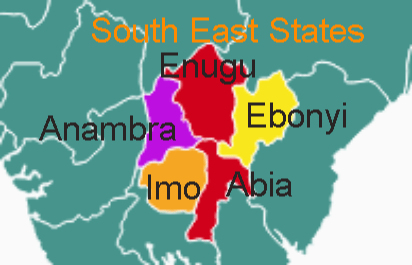
The hostage situation in Nigeria’s South-East, By Osmund Agbo

Agosu if you go tell them,
Tell Nyidevu, Kpeti, and Kove
That they have done us evil;
Tell them their house is falling
And the trees in the fence
Have been eaten by termites;
That the martels curse them.
Ask them why they idle there
While we suffer, and eat sand.
And the crow and the vulture
Hover always above our broken fences
And strangers walk over our portion.”

Kofi Awoonor
“Songs of Sorrow”

There is no other way to describe the appalling situation in the Southeast today other than to call it what it is; a hostage crisis. We are at a point where one Finland based clown that IPOB had already renounced, could just wake up from the comfort of his apartment and declare a total lockdown. The land once inhabited by great warriors, has been vanquished by rag-tag groups of non-state actors and one could only imagine our ancestors turning in their grave, horrified and in utter disbelief.

Criminals are holding sway and dictate when an Igbo man can go out to source for his daily bread or forced to sit-at-home like a petulant child on a time-out. In the ensuring chaos, shambolic schmucks baptised as governors continue in their drunken brawl on who becomes the most subservient thrall. Tufiakwa

In the viperish world of spycraft, a mole pretends to serve one government while actually working for another. In the book, The psychology of espionage, David Charney and John Irvin, both former CIA agents sought to explain that which will make a citizen turn against his country or an individual work against his people. They identified one or a combination of Money, Ideology, Compromise/Coercion, and Ego as most common reasons. But this piece is hardly about spies and their bags of dirty intrigues. It is about the actions of elected officals who have no qualms auctioning off their people for a morsel of bread.

Mgid

Reacting to a resolution of Southern Governors’ Forum for states to start collecting Value Added Tax (VAT), during their meeting in Enugu on Thursday, September 16th, Gov. Dave Umahi of Ebonyi State cautioned that he would not support the consensus. “When they (Southern governors) say that this VAT collection is part of true restructuring, I said I never believe in total restructuring; I believe in administrative restructuring,” he was quoted to have said.  Whatever that means, this is not the first time the governor will take a position that is at cross purpose with the people he is meant to serve. But he would rather have us believe that his decision was based on what is best for our people and has nothing to do with staying in the good books of the man he calls his father or the rest of the Aso Rock cabals he reckons, hold a key to his political future.

With the formation of the Civilian Joint Task Force (CJTF) in mid-2013 to fight Boko Haram insurgency in the northeast followed by the launching of Operation Amotekun in the Southwest on 9 January 2020, there was a huge clamour to establish a similar security outfit in the Southeast to tackle the menace of killer herdsmen in the region. Rising from a meeting held on 31 August 2019, the Gov. Umahi-led SEGF (South East Governors Forum) appointed his brother, Gen. Obi Umahi, to lead a proposed Southeast security committee as its chairman. The committee was charged with drafting a framework for the establishment of an effective outfit to cater to the security needs of the zone. But that never happened.

In his resignation letter dated 4 June 2021, about ten months after his committee was set up, Gen. Umahi disclosed that not only was his committee not funded, even a single room office was not allocated to his team. The governors failed to reach an agreement on the nature of the outfit. It was later alleged, however, that Gov. Umahi, leveraging the weight of his position as the group chairman, used every trick in the book to frustrate the idea of a joint regional security outfit in the Southeast. Instead, he lobbied for President Buhari’s amorphous community policing model. This failure of leadership was what set the stage for IPOB to come up with the Eastern Security Network (ESN) in order to fill the void. The ensuing chaos with harvest of deaths, wanton destruction of property, the scourge of the unknown gunmen and the rest of the lawlessness that is now synonymous with the Southeast, is an indirect consequence of such a monumental betrayal of the people.

Gov. Umahi has been the Chairman of the South East Governors Forum (SEGF) since 2015 but it’s hard to point out one particular instance where his leadership has positively impacted the generality of Ndigbo or southern Nigeria. Under his leadership of SEGF, IPOB, a group of chest-thumping and bombastic but largely non-violent agitators at the time was proscribed in 2017 and branded a terrorist organisation. Today, we now have monstrous criminals brandishing AK-47 and holding the entire Southeast hostage.

With all his egocentric politics, however, Gov. Umahi has done well in terms of infrastructural investment in his home state of Ebonyi, especially in Abakaliki, the state capital. The man is reputed to have transformed the place, complete with all the trappings of a modern city to the admiration of all and seen by some as a hero . As laudable as his effort is in that regard, his politics continues to work against Ndigbo and the broader southern Nigeria’s interests.

Even as we have focused thus far on the retrogressive politics of Governor Umahi as the chairman of the SEGF, the other four out of the five ‘leprous’ hands are no better. Their infractions are no less egregious. Or how else to explain that in a consequential summit such as the one just held in Enugu, only the host, Gov. Ifeanyi Ugwuanyi was present. The rest found a reason to go AWOL and instead, sent their deputies. Truth is, they are all worried about what would become of their political future should they be seen to go against the wishes of Mr. President. The famed Prof. Moses Ochonu captured it well when he stated that “Southeast governors treat Buhari’s regime as a sacred entity which must not be criticised or offended as if stipulated in an eleventh commandment.” How sad!

The soldiers of fortune we have today as Igbo political leaders are so lucky to have come from Southeast Nigeria where traitors suffer zero consequence. These mercenaries will continue to play the treacherous game of betrayal hoping to be rewarded by their masters. They failed to learn the rich lesson of history. But one day, just one day, ‘monkey go enter market e no go see road return.’

•Dr. Agbo, a Public Affairs analyst is the coordinator of African Center for Transparency and Convener of Save Nigeria Project. Email: [email protected]

Sanwo-Olu’s 360 Degrees Wahala By Olusegun Adeniyi

Until last week Monday, I had never heard the name Femi Osibona. But within a few hours of the collapse of his Ikoyi 21-storey building in Lagos, I came to learn a great deal about the late proprietor of the ‘360 Degrees Towers’. From the ‘prophetic laying of hands’ that catapulted a man selling shirts on the streets of London to a multi-billionaire global property developer, to tales about serving as a front for Abuja politicians, religious bigotry and business sharp practices, the ‘biography’ of Osibona is now in the public arena. And it doesn’t seem to matter that everything we ‘know’ about Osibona are from single stories at a period he is no longer around to defend himself.

I never met Osibona so I have no way of disputing what has been said or written about him. For the record, I am also concerned that someone could be undertaking gigantic building projects without the necessary support systems that come with organized business structures and I find the videos of his altercations with Lagos authorities quite disturbing. However, I still believe that a little empathy and sensitivity will serve us in times like this, especially when we do not have all the facts.

Meanwhile, barely 24 hours after the Ikoyi building came down in rubble, Governor Babajide Sanwo-Olu ordered the indefinite suspension of the General Manager, Lagos State Building Control Agency (LASBCA), Gbolahan Oki. But not before Oki had made some chilling revelations. “He (Osibona) got approval for a 15-storey building and he exceeded his limit,” Oki told the News Agency of Nigeria (NAN) on the telephone, shortly after the building collapsed. “I am on ground here and the materials he used, the reinforcement, are so inferior and terrible.”

Sadly, this is a tragedy foretold. Less than three months ago, specifically on 23rd August this year, the University of Witwatersrand, South Africa, published an article by Olasunkanmi Habeeb Okunola, a Nigerian postdoctoral fellow at the Global Change Institute. In ‘Building Collapses are all too Common in Lagos. Here’s Why’, Okunola revealed that 152 buildings collapsed in Lagos between 2005 and 2020, comprised of 76.6% residential, 13% commercial and 9.4% institutional. With data from architects, builders, structural engineers, town planners, estate surveyors and valuers, Okunola wrote that “most of the buildings that collapsed are typically multi-storey buildings,” with more than 4,000 families rendered “homeless and traumatised.”

Although Sanwo-Olu has constituted the usual probe panel on the collapsed Ikoyi building, few Nigerians believe that anything will come of the exercise. In 2014, we experienced a similar (and bigger) tragedy at the Synagogue Church of All Nations (SCOAN). The Lagos Coroner’s Inquest returned a verdict that indicted the church for “criminal negligence” and recommended prosecution for the death of 116 persons. According to the Coroner’s Court, presided over by Chief Magistrate Oyetade Komolafe, the Church did not obtain the necessary permit or approval before commencing construction of the building. Of the 116 victims, 85 were South Africans, 22 Nigerians, two Beninoise and two Togolese. Six could not be identified. In typical Nigerian fashion, the ‘crime scene’ became a pilgrimage for prominent people, including then President Goodluck Jonathan, who paid solidarity visits to commiserate with the church promoter, late Pastor T.B. Joshua!

However, the more bizarre incident occured two years later, in March 2016, when a five-storey building collapsed in Lekki, claiming over 30 lives. Then Governor Akinwunmi Ambode made the usual noise and dance before the state filed a six-count criminal charge against the Managing Director of Lekki Gardens, Richard Nyong and seven others. With the matter out of public glare, a ‘plea and sentence agreement’ was signed for the developer to pay N100 million to the state government and N10 million each to families of five victims, to discontinue the case. Unfortunately for the dealmakers, the trial Judge at the Ikeja Division of the state High Court was incensed when the case came before her in February last year. In addition to condemning the fact that the scandalous agreement was drawn up between the state government and the developer without representatives of the said families, Justice Sybil Nwaka faulted the amended charge for omitting criminal aspects of the original charges.

The amended charge, according to Justice Nwaka, “is talking just about the failure to obtain building permits and other building approvals. The amended charge did not contain negligence, loss of lives and others (which were in the original charge filed by the Lagos State government). Many lives were lost, breadwinners of many families,” she said. When the developer’s lawyer sought to justify the agreement, Justice Nwaka asked, “Are you saying you are paying more to the state government than the deceased families? Five families will get N50 million while the state will get N100 million?”

Justice Nwaka deserves commendation for her courageous stand. And Lagos State should be ashamed. Collecting blood money from a building promoter whose criminal negligence led to the death of innocent people is unconscionable. ‘Pay-as-you-kill’ cannot be an acceptable way to deal with the systemic problem around building and construction regulations that engender serial disasters.

I understand that land is a scarce commodity in Lagos. As I wrote in a recent column, Niger State alone is 23 times the size of Lagos in land mass. To worsen matters, the small space within Ikoyi is where Lagos Big Boys and Girls want to congregate. It is the ultimate status symbol outside ‘Banana Island’–easily the most expensive slum to be found anywhere in the world. Especially during rainy season! So, there will always be high-rise buildings in Lagos. The challenge is that due to a glaring regulatory failure, quacks are taking over the building sector. Not only in the state but all over Nigeria, to our collective detriment.

Meanwhile, I am an admirer of Governor Sanwo-Olu who is always on top of situations whenever duty calls. But the conventional wisdom that it is better to erect a fence at the top of a cliff than to build a hospital below will serve him at this period. The Ikoyi tragedy should compel a more rigorous introspection than a four-week perfunctory probe. There are several issues to examine and address. The first is about response to emergencies. One can only imagine the agony of victims trapped for hours under the fragments of concrete and mangled rods in Ikoyi. As well as the trauma experienced by their families in the intervening period. We can do better than that.

The second is the dignity of those who lost their lives. We are not the only country where people have mobile phones with cameras. But here, security personnel and first responders are more interested in taking pictures of those in distress than in helping them. Some of the gory photographs from the collapsed building are a sad commentary on the value we place on human life in Nigeria and there must be a way to stop such callous and irresponsible acts. The third and most important issue is that of regulation. Ordinarily, building construction should be managed by qualified professionals whose duty it is to ensure that everything is done in accordance with approved plans and standards while paying attention to necessary details, including the quality of materials being used.

In my September 2015 column, ‘Catalogue of Made-in-Nigeria Tragedy’, I examined some of the cheap deaths in Nigeria: Electrocution from dangling power cables, emission of carbon monoxide from ‘I-better-pass-my-neighbour’ generator fumes, heavy duty containers skidding off bridge to land on vehicles below, explosion of petrol tankers on the highway, over-the-counter sale of prescription drugs, capsizing of overcrowded canoes on waterways, incessant collapse of buildings etc. Behind these tragedies is the near absence of safety standards in most areas of public exposure in Nigeria today. We cannot continue to run our affairs like that.

On Monday, the Lagos State House of Assembly expressed concern “over the wide speculation that the (Ikoyi) building was raised to 21 floors contrary to the 15 floors approved by the Lagos State Physical Planning Permit Authority (LASPPPA) for the owner,” as well as on “the constant collapse of buildings in the state …(which) can be attributed to unqualified or unskilled builders, use of sub-standard building materials, illegal conversion or alterations to existing structures and lack of maintenance to mention a few.”

The Lagos lawmakers should go beyond passing motions. Until there are stringent laws that penalize developers who infringe on building codes and regulators who shirk their responsibility, we will continue to witness this harvest of monumental tragedy.

Echoes from Anambra Guber Poll

Barring another judicial abracadabra, the next Governor of Anambra State will not be decided ‘The Ben Johnson Way’. With Tuesday’s declaration of Prof Chukwuma Soludo duly elected by the Independent National Electoral Commission (INEC), I do not expect those who came 4th at the poll to upstage the former Central Bank of Nigeria (CBN) Governor with exhausting court runs that are traditionally part of election processes in Anambra State. But if there is any major take-away from the election, it is the validation of how important technology is to credible polls. Voter turn-out was low and that was reflected in the results, leaving little room to maneuver for those adept at gaming elections. By replacing the Smart Card Reader (SCR) with the Bimodal Voter Accreditation System (BVAS) device, INEC has upped the game, especially given that the much-abused incident form is now history.

Despite teething challenges, we need to support INEC in their use of technology. But I agree with the submission by CLEEN Foundation that the Commission needs to improve logistic and operational challenges associated with BVAS. “INEC result portal should be improved for more transparency and accountability through automation of the sum of votes received by political parties at the polling units; INEC should prosecute electoral offenders to serve as deterrent to others,” CLEEN recommends. “INEC should provide enough sensitive materials, such as Braille for voters with visual impairment; the commission should train and retrain electoral officers and ad-hoc staff to enable them meet with the changing needs of the electorate in Nigeria.”

I am sure the Commission will take those suggestions on board as they prepare for future elections. However, when I learned the Minister of Labour, Dr Chris Ngige, was nagging over the failure of the BVAS to accredit him for voting last Saturday, I was amused. When his own party, the ruling All Progressives Congress (APC) conducted the Anambra gubernatorial primaries where Senator Andy Uba emerged the candidate in June this year, Ngige told Nigerians that he was at his hometown of Alor waiting for the exercise to commence when he heard the announcement of result in the news!

To Soludo who must now provide the much-touted Solutions to Anambra State problems, I offer my hearty congratulation!

The Yar’Adua Study on Subsidies (IV)

In this part four of a 2008 study instituted by the late President Umaru Musa Yar’Adua to determine the extent of subsidy and tariff implementation in five critical sectors of our national life, I am taking the bits on Agriculture. The study, drawing on the experiences of several countries, highlights important issues to be addressed in the design of framework for subsidies and tariffs implementation in these key sectors of the economy (power, education, health, agriculture, and petroleum) which should enable the government to target the poor adequately. After this, I am taking a long break until an appropriate time to conclude with subsidy in the downstream sector of the petroleum industry. So, I conclude today with the aspect of the study (based on charts converted into a flowing narrative) dealing with subsidy in Nigeria’s agricultural sector.

Most of the special programmes for boosting food production in Nigeria since the 1970s have relied on input subsidies as the main channel of providing incentives to farmers. But the subsidies have continued to reduce over the years and now stand at 25% for fertilizer, 50% for seeds and 25% for agrochemicals. Others are tractor and equipment/implements (25%) and processing equipment (25%). Owing to defective distribution/marketing strategy, middlemen have hijacked the commodity thus depriving the farmers the benefit of the low price arising from the subsidy.

In Nigeria, the three tiers of government have been involved in subsidizing agricultural inputs in various areas such as fertilizer, crops, livestock, and fisheries. These policies have suffered a lot of inconsistencies over the years, especially in fertilizer. Fertilizer policies kept changing from year to year in a bid to answer problems of availability, leakage, and arbitrage. In 1997, the federal government opted for a full withdrawal from fertilizer procurement and subsidy leaving the industry stranded. Meanwhile, the National Seed Service (NSS) of the Federal Ministry of Agriculture and Rural Development was established in 1992 to coordinate the development, monitoring policy and implementation of quality control for agro-seeds.

The agricultural research institutes were responsible for the production of breeder seeds. The resource-poor rural fishermen in the artisan fisheries sub-sector enjoy subsidies from seed monies/loans provided under the Artisan Fisheries Development Project, Sustainable Fisheries Livelihood Project, and ECOWAS Fund Accelerated Artisan Fish Production Project. Also, industrial fisheries sub-sector provides incentives to fish exporters, operators in the sector exporting fish above one million US Dollars, enjoy incentives of over 30 per cent paid to them in equivalent Naira.

In 2001, N5.042 billion was spent to purchase 170,000 quantities. With real value to the farmers put at N4.877 billion, the subsidy was N1.219 billion. In 2002, N5.163 billion was spent to purchase 163,700 quantities while the real value to farmers was N3.597, leaving a subsidy of N899.266 million. In 2003, N5.814 billion was spent to purchase 120,000 quantities valued at N4.620 for farmers, leaving a subsidy of N1.551 billion. In 2004, N13.314 billion was spent to purchase 245,400 quantities at the value of N11.080 billion to farmers, leaving a subsidy of N2.77 billion. And in 2005, N9.044 billion was spent to purchase 156,000 quantities valued at N8.342 billion to farmers, leaving a subsidy of N2.085 billion. For agrochemicals, which attracted 100 percent subsidy, 26,500 litres were purchased in 2004 at N66.25 million, 118,090 litres were purchased in 2005 at N295.225 million, 130,937 litres were purchased in 2006 at N360.076 million, 174750 litres were purchased in 2007 at N480.563 million.

The scheme has put a lot of stress on the finances of both the federal and state governments, while taxing the efficiency of implementing institutions. In terms of benefits, subsidized input seemed to have been monopolized by a few influential urban based farmers, while the peasant farmers who constitute the majority (about 75 percent) of farming households in Nigeria had little or no access to these inputs. Problems encountered in the implementation of agricultural subsidy include dual market prices for sale of fertilizer and procurement problems. Meanwhile, problems that require interventions include aged farming operative, Lack of credit facilities, absence of enabling environment, subsistence agriculture due to land tenure system, poor quality of products and low production of certified seed. Malawi presents a good case study.

MALAWI: The Malawian government eliminated agricultural subsidies including for fertilizers in the 1980s and 1990s through the influence of the World Bank. A fallout of this action was that the country experienced a series of disastrous agricultural harvest that peaked in 2005 with millions of people needing emergency food aid. Indeed, Malawi was for many years at the brink of famine. With the advent of a new regime, the government embarked on an agricultural policy reversal with turn-around effect through a policy thrust that followed what the West (Europe and America) practiced and not what it preached on agriculture subsidies. Thus, Malawi implemented an agricultural policy that reinstated and deepened subsidies particularly on fertilizer, improved seedling, as well as credit and agricultural research. The modalities for the subsidies include distribution of coupons to farmers that allowed them to purchase two 1101bs sacks of fertilizers for about US$7 – one-fifth of the market price.

Coupons were given to buy enough seeds for planting. The subsidies programme cost the government about US$62 million or 6.5 per cent of total budget despite the virulent opposition by the World Bank and IMF. The outcome of the new approach to subsidies was a massive turn-around with a phenomenal jump in corn/maize production from 2.4 million metric tons in 2006 to 3.4 million metric tons in 2007. Malawi was also able to save US$12 million it had spent importing food in 2005 due to the bumper harvest. It also realized US$120 million in sales of maize to Zimbabwe and other countries, thus raising questions about the policies promoted for several-years under the aegis-of the Bretton Woods Institutions.

It is also important to note that the administration of subsidies remains problematic in the countries like China, India, Canada, Japan, Switzerland which were examined. However, the spate of reforms which these countries have embarked upon is yielding results for increased involvement of the market mechanism. One of the most successful models of fertilizer distribution system is the one introduced in Albania by the International Fertilizer Development Centre (IFDC) and United States of America.

Apart from the fact that the burden of subsidies on the treasury is growing, the target groups do not have access to agricultural inputs at the open market. They buy at exorbitant prices. Also, information is not readily available on the other agricultural input to allow for a meaningful analysis. Emphasis should be directed at farmers that cannot afford to pay for fertilizer i.e. peasant farmers. The Malawian model of distributing coupons for the purchase of fertilizers could be adopted rather than government getting involved in outright distribution of fertilizers to farmers which never get to them. Large scale farmers should be protected against unfavorable price fluctuation. Alternatively, the implementation of output- based subsidies could be considered by the government. This can be achieved by providing a guaranteed minimum price for each farm gate crop.

The advantage of this idea is that it is explicitly targeted at the farmers and cannot be exploited by non-farmers/middlemen as is the case now under the fertilizer subsidy. For this mode of output-based subsidies to succeed, it must be announced ahead of the planting seasons so that farmers can decide what agricultural crop/product to farm for the season. Such guarantee minimum prices have the potential of enhancing overall output through the incentive it offers. The federal government should use subsidies to encourage the production of some strategic products- food staples, export crops, livestock, and agro-raw materials for domestic agro-industries.

Agriculture could be subsidized through non-recourse loans i.e. government giving farmers loans and using their future harvest as collateral. The government should enforce restrictive tariffs and subsidies to certain domestic crops. Government should resuscitate NAFCON to minimize the burden of subsidy on fertilizer and ensure its availability. The federal government should urgently solve the problem of inadequate supply, unintended beneficiaries, and diversion to the black market across the borders by leaving fertilizer procurement, distribution, and marketing in the hands of the private sector.

Proponents of subsidy have argued on the need for income redistribution due to wide income disparity particularly, in the developing countries. However, recent developments have shown that such good intention of the government fail to address the inequality as the better-off benefits more from subsidy than the poor in the society. Therefore, it is necessary to develop a new framework for the implementation of subsidies in the various sectors of the economy.

• You can follow me on my Twitter handle, @Olusegunverdict and on www.olusegunadeniyi.com

DAILY LAW TIPS by Onyekachi Umah,Esq. (Tip 81)

A wilful, persistent and continued refusal to consummate marriage (have sex with spouse at least once after wedding) without a reason is a good ground to seek and obtain divorce in a court.

See sections 15 and 21 of the Matrimonial Causes Act.

#DailyLawTips
#LearnNigerianLaws
#SabiLaw

To receive our Daily Law Tips for free follow our Facebook page, Twitter or Instagram via “LearnNigerianLaws”.

Powered by www.LearnNigerianLaws.com

TIPS