Home Blog Page 889

#EndSars Panel As Model For Nigeria (1)

By Ebun-Olu Adegboruwa, SAN

On October 19, 2020, the Governor of Lagos State inaugurated the Lagos State Judicial Panel of Inquiry on SARS Abuses and Other Related Matters, originally as a body with the mandate to probe into cases of human rights abuses, police brutality and other crimes against humanity, made by citizens against the officers and men of the Nigeria Police Force, especially the dreaded Special Anti-Robbery Squad, SARS. The day after the Panel was inaugurated, darkness hung its veil over the nation, on account of the incident that happened at the Lekki Toll Gate on October 20, 2020. There was international outrage, the nation shook like never before and a call for justice rented the atmosphere, all over the world. The terms of reference of the Panel was then extended to include a probe of the Lekki Toll Gate Incident. That proved to be a big task indeed, but Panel members were up to the task, given its composition.

There was initial controversy on the validity of the terms of reference of the Panel but upon proper dissection of the enabling law, which is the Panel of Inquiry Law of Lagos State, it was clear that the Panel was sufficiently clothed with legal mandate to proceed on its assignment. Section 1 of the said law provides as follows:

“1. Power to constitute Tribunal of Inquiry:

(1) The Governor may when necessary, constitute one or more persons by a signed instrument, a Tribunal with authority to inquire into the conduct or affairs of any officer in the public service of the State, or any officer in a local authority in the State, or of any chief, or the management of any department of the public service or of any local authority or declarations of customary law relating to selection of an Oba or a recognized Chief or any matter relating to any chieftaincy dispute, or INTO ANY MATTER IN RESPECT OF WHICH IN THE OPINION AN INQUIRY WOULD BE FOR THE PUBLIC WELFARE.”

Given the position of the courts on the famed Oputa Panel, it became imperative to be well guided. In the opinion of the State, the Panel was primarily an attempt to heal wounds, to relate with victims of human rights abuses, by the police and other law enforcement agencies, such as Vehicle Inspection Officers, LASTMA, local government tax collectors, etc and then offer compensation. The Governor had assured the Panel of a Victims Trust Fund already established with a take-off grant of N200m, from which due compensation would be paid to the victims, as determined by the Panel. This sum was exceeded and replenished as the Panel handed down its decisions in favour of victims of SARS and other related abuses.

The Panel members were sworn in at a brief ceremony at State House, Marina, on October 19, 2020 and we set to work immediately, by visiting the venue of its sittings at the Lagos State Waterways Authority office at Falomo, Ikoyi, Lagos. We indicated our disagreement with the venue for many reasons and the authorities obliged us with a change of venue to the Lagos Court of International Arbitration, LCIA, Lekki Phase 1. We requested for an independent secretariat and other facilities, in order to be truly independent of the government. Then came the Black Tuesday, at the Lekki Toll Plaza, on October 20, 2020, when darkness and sorrow engulfed the nation. There was national and international outrage on the events that happened at the Lekki Toll Plaza, especially as to different accounts from social media influencers. By Friday October 23, 2020, the Governor made a state broadcast by which he added the Lekki Toll Gate Incident to the terms of reference of the Panel. As usual, Panel members demanded for an Instrument in this regard and we were again obliged.

We then set to work, developing the rules of practice and procedure for the Panel, to interview and interact with members of the Secretariat and to conduct physical inspection of the venue for the sittings of the Panel. It became very clear to me then that the State was serious about the Panel. I received quite a number of calls, counsel and prayers, about my membership of the Panel. Why would I accept to serve a government that I had battled with in court for so many years? I did a lot of explanations. First, the cases that I filed in court were not meant to derail the government but rather to strengthen the rule of law and help the government. Second, having fought tooth and nail for democracy, good governance and the rule of law these many years, any opportunity created for engagement should not be ignored by those directly involved in the struggle to liberate our people. Or how else do we secure victory if we run away from the solution? The Governor stated to me clearly and indeed in all his public declarations on the matter that he wanted people with independent minds and who have the integrity to do a thorough job without being influenced one way or the other. Pray, how do I run away from an engagement that will lead to the compensation of victims of government brutality, most of whom are the masses of our people? What then is the essence of the struggle over the years, if we shy away from holding the government accountable for its actions and inactions?

I was myself a victim of brutality, by the police and by soldiers, by LASTMA and by other government officers, so I know what it means to be a victim. I count myself also as worthy and deserving of some compensation for the many abuses that I have suffered in the past but I drop my own personal case on this occasion in the interest of others since God has been merciful to help me survive and overcome the trauma of my ordeals. So then I accepted to serve on the Panel, given the assurances of the Governor, the commitment shown with the signed legal Instrument constituting the Panel, my letter of appointment and the other members of the Panel who all showed the desire to do a thorough job. Looking back now, I thank God that I did not shy away from this national duty. A preview of the past one year at the Panel showed to me clearly the need for activists to be involved in the business of rescuing Nigeria from the hands of predators. Many times I threatened to leave the Panel on account of certain irreconcilable differences but my Comrades and colleagues in the civil society, other Panel members and indeed my wife, would encourage me to see it through.

Yes of course Lagos State had its representatives on the Panel but by and large, the Panel established its own procedures, maintained its independence and adopted a very robust debate mechanism to decide on major issues, failing which it resorted to voting. The Panel members maintained their independence, discussed issues freely and when superior arguments were canvassed in conference, logic and sound reasoning held sway. There were occasional brick bats here and there but by and large, the Panel got round to building a consensus as a means of resolving most knotty issues.

At the commencement of the Panel’s work, I took two basic decisions and resolved to keep to them till the very end. First, I decided to make the assignment a sacrifice to the nation, for the entire duration of my service. I spoke to the Honourable Attorney-General and negotiated with him to allow me work on a part-time basis and he agreed, after consulting with the Governor and this was eventually the pattern for other members. The sitting allowance of other members was itself marginal, when compared to the work of commuting from distant locations such as Ikorodu, Ibafo, etc for some of the Panel members, but serving pro bono was very important for my own philosophy and identity. The second decision was a very hard one to take but I took it and kept to it. I decided that I would not interact with any member of the Panel outside the official sitting procedure at the venue of the Panel. I was not going to call any Panel member on phone to discuss any matter relating to the Panel privately, I was not going to send messages or entertain any message from any Panel member and I was not going to attend any private meeting with any other member on account of the subject matter before the Panel. There would be no interaction with Petitioners, with witnesses or indeed counsel appearing before the Panel. It was very difficult indeed, as such a decision was capable of being misinterpreted in our clime but I took time to explain to other Panel members and they respected my decision. Indeed, part of the joy of working with the Panel was that all the members were concerned with their integrity and they were all men and women who had put in so much selfless service, who had useful knowledge and experience in several areas and had been involved in the resolution of so many national issues.

Why would I not communicate with any Panel member at all? It became extremely difficult to build camps within the Panel for the purpose of influencing decisions one way or the other. Whatever discussions anyone may have held behind Panel members, you have to come to the Conference to defend it or else you forget it. The head of the Panel was so very articulate, mature, principled, disciplined and she was very accommodating. She would listen patiently to lengthy submissions and presentations by Panel members and once she sensed a particular line of thought of the majority of the members, she would gladly go with us. And in some cases she would seek to persuade us based on her peculiar experiences on the Bench and at other times she would just cast the vote to resolve a lot of issues. And we all could not but thank God for her, given her age, that she was not absent on any day of sitting of the Panel. So, we did not have to adjourn on account of the absence of the presiding officer.

And this is why I regard the Panel’s work as a model for Nigeria, in the sense that if the real motive is service to humanity, then there would be no need for these games that we see our leaders play in the national political space, with the collective destinies of our people. If politicians can be allowed to serve on a part-time basis, with minimal sitting allowances, without forming factions, without godfathers and without hidden allegiance to tribe and religion, then our nation will move forward.

The Panel submitted its report to the Governor of Lagos State on November 15, 2021, for onward transmission to the federal government through the National Executive Council. We will discuss other matters in detail in subsequent editions. Suffice it to thank you all for the confidence reposed in us for this critical assignment.

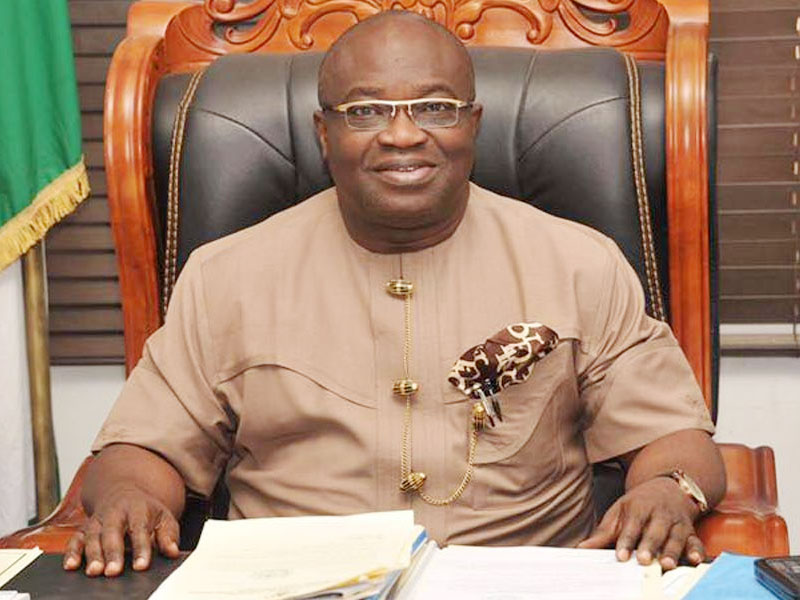
Abia Is In A Mess

By Ndubisi Francis

If we allow the same crop of leaders who have held Abia State by the jugular in the past 22 years to have their way in 2023, I am afraid we may not have a state to call our own any more. We have had successive administrations that are everything but purposeful, visionary and forthright.

They appropriate our commonwealth to interests that are selfish at the expense and eternal agony of the long-suffering masses. What’s so difficult about running a small state like Abia with a surfeit human and material endowment?

About 11 years ago, a popular editor from the South-west confessed openly during our editorial meeting that if he was the governor of Abia State, he would only need the IGR from Aba to successfully run the state without recourse to federal allocations. During the misgovernance that characterised the Orji Kanu era, Aba was a reproach to Abia State.

The Abia axis of the Aba-Port Harcourt Expressway was swallowed by refuse for almost the entire duration of his administration. It was that bad that vehicles could not access the road.

Fast forward to the Theodore Orji drudgery, it was another case of arrested development in the state. While hired sycophants and praise singers were beside themselves on how to fashion out appropriate eulogies, outsiders (including journalists) who had one reason or the other to visit the state made snide remarks on the level of under-development and decay.

As the 2015 general elections drew close, and faced with the stark reality that the opposition might take over the state due to poor performance, President Goodluck Jonathan prevailed on the then Finance Minister, Dr. Okonjo-Iweala to leverage her connections with development partners for a kind of Marshall plan on Abia. Consequently, in September 2014, the African Development Bank, UNDP and a few others were mobilised to Abia.

I was on the entourage as a journalist. The teams toured Umuahia and Aba. Many roads in the Umuahia metropolis were in serious state of disrepair. By the time they concluded their visit and came to brief Ochendo with Okonjo-Iweala, the usually vocal Abia governor was lost for words, especially on the level of water pollution and erosion in Aba. All he could mutter was that it was the Ndi Egoro erosion problem in Aba that earned the late Sam Mbakwe the moniker “The Weeping Governor”.

I was sitting beside Paul Nwabuikwu and we exchanged a glance at each other and asked ourselves if that was an admittance of hopelessness. This episode happened in the conference room of the Abia State Government House, Umuahia, where a good number of seats in the room were dilapidated, and not even worthy to grace the living room of a respectable poor man. I recall Paul Nwabuikwu painfully telling me that from what he had seen in the room (and heard), he felt ashamed as an Abian.
Under the T.A. Orji administration, many World Bank-assisted projects attracted by Okonjo-Iweala, which only required counterpart funding were spurned.

Peter Obi leveraged on a number of such projects for Anambra. I never expected Okezie Ikpeazu, PhD, being a product on an uninspiring past to perform wonders, but I couldn’t imagine the level of abysmal performance with all the Paris Club refunds, bailouts and sundry funds at his administration’s disposal.

Six years and still counting, he couldn’t deliver a single flyover in Osisioma, and people are justifying such brazen maladroitness. There’s nothing in the state capital to depict that it’s the seat of government. As of August this year, the state was owing resident doctors and polytechnic workers 20 months apiece, in addition to several other unmet obligations in several quarters. Rightly or wrongly, Ebonyi State used to be seen as the epithet for poverty and underdevelopment in the South-east.
But today, a visionary, people-centred governance has transformed the state capital and many rural communities. I do not think the verdict of history will be fair to the successive administrations in Abia, including Ikpeazu’s irrespective of the deluge of obfuscation by pro-establishment and favour-seeking individuals.
Abia is in a sorry state, irrespective of a sprinkle of positive steps in Aba and elsewhere.

Should Abuja Residents Pay Tenement Rates?

Should Abuja Residents Pay Tenement Rates?
DAILY LAW TIPS by Onyekachi Umah,Esq. (Tip 85)

Tenement rate is a tax chargeable on land developed and occupied. It is payable by occupant of such property to concerned local government authorities across states in Nigeria and area councils in Abuja.

Technically, residents of property in Abuja were exempted from tenement rates because it was argued that there is no ACT of National Assembly empowering Area Councils on how, what and when to collect tenement rates. This position seems to be supported by the cases of:

  1. Bamak Pharmacy Ltd & Ors V. Abuja Municipal Area Council (2010) LPELR 3850-CA.
  2. Judgment of Justice Valentine Ashi of the FCT High Court on 12 April 2018 in the case of Planned Shelter Limited V. Abuja Municipal Area Council & 5 Ors. (Unreported)

However, this position seems to have changed with the recent judgments in the below cases. It is the argument that the Tenement Rate Collection Bye-Law (No.22) 2012 was made pursuant to sections 52, 55 and 56(s) of the Local Government Act of 1976, applicable to the FCT by section 7 and the 4th Schedule to the Constitution. Also, that the Niger State Local Government Edict is applicable in the FCT, having been adopted and contained in Vol.3L-35 III Laws of the Federal Capital Territory. The following judgments support this position and there is no contrary decision from the Supreme Court:

  1. Judgment of the Supreme Court of Nigeria (On the exclusive powers of the Local Governments & Area Councils to assess and collect tenement rates) in the case of Knight Frank & Rutley (Nig) Limited & Anor V. AG, Kano (1998) LPELR 1964-SC. ().
  2. Judgment of the Court of Appeal on 12 May 2014, (on the powers of AMMAC to assess and collect tenement rates) in the case of AFDIN VENTURES LTD & ORS V. CHAIRMAN, ABUJA MUNICIPAL AREA COUNCIL (2014) LPELR 23509(CA).Copy of the Judgment: AFDIN VENTURES LTD & ORS V. CHAIRMAN, 
  3. Judgment of the High Court of the FCT in the case of Next Levels Resort V. AMMAC (Suit No. FCT/HC/CV/1072/2011).

#DailyLawTips
#SabiLaw

Nigeria shatters in Buhari-Osinbajo hands

Tunde Odesola

If necessity is the indisputable mother of invention, creativity is its anonymous father. Undoubtedly, the human mind is a complex mechanism. A reflection of the mind’s complexity is seen in its perpetual preoccupation with self-gratification as exemplified by biblical and quranic stories of creation.

Self-gratification towered above obedience plus penitence on the day Eden witnessed the nakedness of Adam and Eve, and Adam hid behind a finger, ashamed to meet his Creator. Husband and wife never really said sorry for the very first sin, but both hid to preserve self-pride amid excuses.

According to the father of psychoanalytic theory, Sigmund Freud, human behaviour can be compartmentalised into three distinct boxes namely: instinct, reality and morality.

In corroboration of his belief, Freud, a Jew, unveiled to humanity the three parts of the human mind, which he explained in his Personality Theory of 1923, to include the id, the ego and the superego.

Whereas the id is the primitive and instinctual part of the mind containing sexual, impulsive and aggressive drives and hidden memories, the ego mediates between the unrealistic id and the external world, says SimplyPsychology.org, adding that the ‘superego’s function is to control the id’s impulses, especially those which society forbids. It also has the function of persuading the ego to turn to moralistic goals rather than simply realistic ones and to strive for perfection’.

I agree with psychology that human behaviour holds a mirror to the mind. However, I think only money and maybe a few other innovations attract man like the physical mirror does. Or, why, apart from greed and wickedness, did Africans sell their brothers and sisters into slavery for MIRRORS, alcohol, iron, guns etc?

To date, egotism, a form of obsession with self, explains man’s everyday strutting before the mirror like a peacock.

When I close my eyes to imagine the reaction on the faces of African slave merchants in the slave trade era upon seeing the mirror for the first time, I see modern-day Nigerian political leaders – frenzied and convulsing at the sight of the treasury and its contents.

After the late King of Pop, Michael Jackson, released the monster-hit album, Thriller, on November 30, 1982, he worked on a perfect follow-up album six years later. And Bad was born.

In the Bad album is the song Man in the mirror, which is a call for CHANGE and the realisation that CHANGE starts with self.

Written by Siedah Garrett, a great vocalist, and Glen Ballard, an awesome composer, Man in the mirror was Jackson’s answer to personal and global turmoil, amid mounting accusations of paranoia, and worldwide agitation over hunger and war.

For Jackson, man is capable of overcoming personal and global challenges on the wings of love, determination and courage.

The blockbuster Man in the mirror features a montage of clips of children in Africa, Jesus Christ, Martin Luther King Jr, Mother Teresa, Mahatma Gandhi, Nelson Mandela, Ronald Reagan, Coretta Scott King, Bishop Desmond Tutu, Robert F. Kennedy, John F. Kennedy, kids in graduation, and other historical figures.

The video also includes groups like Nazi and Ku Klux Klan who represent the ills the aforementioned figures stood against.

In a soulful tune that witnessed many fans weeping and fainting due to sheer hysteria, Jackson, in his trademark jerry curls, uniform jacket, blings, white socks and black loafers, sings:
I’m starting with the man in the mirror
I’m asking him to change his ways
And no message could’ve been any clearer
If they wanna make the world a better place
Take a look at yourself and then make a change

I can’t avow that Nigeria’s President, Major Muhammadu Buhari (retd.), is a Michael Jackson fan. But I can vow that the president has never heard Man in the mirror. And if he has, the president has not, in the last six years, heeded the advice given by Jackson in the song – make a change.

If the old soldier had heard and heeded the song, Nigeria wouldn’t have dropped from his old hands and smashed into smithereens of ethnic agitations, terrorism, kidnapping, strife and despair.

I’m not sure the pastoral calling of the Vice President, Yemi Osinbajo, allows for moonwalking and backsliding a la Jackson. But, I’m sure the Nigerians’ cry of agony is reaching the ears of veepee even in Aso Rock.

In 2015 and 2019, Buhari-Osinbajo stood before the mirror of the Nigerian electorate and made promises. They promised to fight insecurity and protect every Nigerian. Today, the Abuja residence of a Supreme Court judge, Justice Mary Odili, was raided – just like other midnight raids on judges across the country.

In 2015 and 2019, Buhari-Osinbajo looked in the Nigerian mirror and promised to curb corruption. Today, the Buhari-Osinbajo regime hasn’t released a cop from the North, Abba Kyari, for trial in the US over alleged complicity in multi-million dollar international fraud.

In 2015 and 2019, Buhari-Osinbajo promised to be fair to all Nigerians, irrespective of language, tribe or creed. Today, disgraced ex-acting Chairman of the Economic and Financial Crimes Commission, Ibrahim Magu, hasn’t been charged to court despite disturbing allegations of fraud levelled against him.

The Buhari-Osinbajo regime has yet to implement the recommendations of the Justice Ayo Salami-led panel, which probed Magu over alleged financial scandals, one year after the submission of the report.

Magu will retire early next year, lie low for sometime and re-emerge to contest and win election into the Senate or Borno State Government House, where he would continue the anti-corruption war.

The toothless and barkless anti-corruption dog of the Buhari-Osinbajo regime is long dead and buried. Were it alive, it should’ve barked in Ikoyi, and bitten at Bourdillon, where bullion vans scurried an undisclosed amount of money into the villa of a kingmaker on the eve of national elections.

When Kyari was indicted in July by the FBI, I predicted that the Buhari-Osinbajo regime will defend his extradition to the death. It’s four months on, Kyari is still enjoying his freedom while the leader of the internet syndicate, Ramon Abbas aka Hushpuppi, has settled down to life in US prison.

I believe that if the US became serious and persistent on having Kyari, an arrangee panel of inquiry will suddenly indict Kyari for snoring in his sleep and send him to jail in his Borno residence.

Nigerians are still waiting for explanations from the Buhari-Osinbajo regime as to why the Attorney General of the Federation, Abubakar Malami, withdrew the N25bn fraud case against a former Gombe Governor, Danjuma Goje, barely three weeks after the ex-governor abandoned his ambition to run for Senate presidency, and decided to endorse Senator Ahmed Lawan, who was the choice of Aso Rock.

Sadly, the country that the Buhari-Osinbajo regime is bequeathing to Nigerians in 2023 is the one that makes stealing appear highly profitable as pension rogue, Abdulrasheed Maina, gladly got eight years for a N2bn heist, knowing full well that he would spend his time in a luxurious jail – before heading home to contest election.

At the beginning of 2021, I had a new year resolution. It’s to enter the Guinness Book of World Records. A few weeks to the end of the year, however, I’m yet to fulfil my dream. I’m looking for a tailor who can make me a babanriga with the deepest pocket in the world!

The current owner of the babanriga with the deepest pocket resides in a big mansion in Kano, where he holds aloft the Guinness Book of World Records for the deepest babanriga pocket. He stuffs dollars in his babaringa pocket, I’ll stuff some whatchamacallits into mine. At least, what is sauce for the goose is sauce for the gandollar.

Email: [email protected]
Facebook: @tunde odesola
Twitter: @tunde_odesola

Everything that happens is not God’s will

Now and then when some things happen, people take comfort in saying that it is God’s will. Why not? God is Omnipresent, Omniscience and Omnipotent. However, why the last assertion is correct, the former is not. To say that everything that happens is the will of God is a religious statement, not a biblical truth.

People lie against God that everything that happens is His will. That God knows about everything, has all power and is present everywhere does not mean that everything that happens is His will. God has created man as a free moral agent; man has the power to make choices. God won’t violate his right.

If a driver chooses to get drunk and kills people, how is that the will of God? If a man gets angry and pulls out a gun and kills his neighbour, how can that be the will of God? If a husband or wife gets angry and stabs the spouse to death, how can that be God’s will? If a woman goes to commit abortion and kills her unborn baby, can that be the will of God?

Can the foolish decision of someone, such as investment in a Ponzi scheme, be the will of God? If a student fails to attend classes and study and fails his exams, should that be regarded as God’s will?  How can all the senseless killings going on in different parts of the world from wars, violence, and all kinds of crises be the will of God?

If corrupt government officials divert public money into their accounts, is that the will of God? If politicians subvert the will of the people and massively rig elections to gain power, do you call that God’s will? Is terrorism, kidnapping, banditry, rape, or armed robbery also the will of God? If all of this is the will of God, then we shall be praying against His will if we ask Him to stop them! In other words, we are asking God to go against Himself or His will, which He will not. If everything that happens is the will of God, then there will be nothing like sin.

Many times, we fail to address the real issues and just swallow the bitter pill that everything that happens is the will of God. That’s a lie against God. That also does not help human beings to accept responsibility for their actions and hold others accountable for their wrong actions or sins.

Indeed, the Bible says all things work together for good to those who love God, to those who are the called according to His purpose (Romans 8:28). This scripture has been wrongly interpreted to mean everything that happens is God’s will.

This scripture simply means that no matter what happens, negative or positive, God will cause everything to turn out well for those who love Him and are called according to His purpose. It doesn’t mean that any negative thing that happens is His will or everything that happens will work together for the good of everybody. It will work only together for the good of those who love God and are called according to His purpose.

If everything that happens is God’s will, why does the Bible classify some behaviours as sin? If everything that happens is God’s will, then David’s adultery with Bathsheba and the subsequent killing of her husband, Uriah the Hittite, was God’s will (2 Samuel 11,12). The killing of Naboth by Jezebel and attempt by her husband, Ahab, to take over Naboth’s vineyard must have been God’s will (2 Kings 21). That would mean they didn’t sin.

However, because these two cases and several others in the Bible were not God’s will, God judged the characters involved. Amos 3:6 says, “If a trumpet is blown in a city, will not the people be afraid? If there is calamity in a city, will not the LORD have done it?” (New King James Version). The word calamity here refers to the punishment of sin.

In other words, punishment of sin is from the Lord. It is also in this light that we must understand Isaiah 45:7 where the LORD says, “I form the light and create darkness, I make peace and create calamity; I, the LORD, do all these things” (New King James Version). Again, calamity refers to the punishment of sin. God does not do evil, but He punishes evil. He is not willing that any should perish but that all should come to repentance (2 Peter 3:9b). Nevertheless, the soul that sins must die (Ezekiel 18:20a). Whatever anyone sows, he shall reap (Galatians 6:7).

Nobody should blame God when he reaps what he sows. Nobody should use the will of God as an excuse for the evil or sin he has committed. No one should hide under the “will of God” to perpetrate evil or injustice. Evil or injustice happens, and God is aware of it, but He is not the author. It is not His will. It would be an injustice to punish evildoers for doing God’s will if everything that happens is His will. The oppressors or the wicked should not use “everything that happens is God’s will” to justify their actions. They should not tell their victims that what they’re going through is God’s will for them. That’s a wicked religious statement.

Although God knows about everything, has absolute power and is everywhere. He’ll judge sin. He’ll work all things together for the good of His children. However, don’t always fold your hands and accept everything as God’s will. We live in an imperfect, sinful, wicked world. We must confront evil.

Everything that happens is not God’s will although nothing is hidden from Him. Also, when people suffer the consequences for their actions, they should admit it and not blame God for it as His will for them. It’s not everything that happens that is God’s will, although He’ll work all things together for the good of His children because they love Him, and they are called according to His purpose.

Talking about the rebellious children of Israel, the LORD said they walked “to go down to Egypt, and have not asked My advice, to strengthen themselves in the strength of Pharaoh, and to trust in the shadow of Egypt!” (Isaiah 30:2 New King James Version). That was their own choice, not the will of God. “Therefore the strength of Pharaoh shall be your shame, and trust in the shadow of Egypt” (verse 3 New King James Version). That was the consequence of their choice.

People can suffer from the consequences of others’ bad choices or wrong decisions. In addition, Satan has not ceased from his work on the earth. He is a thief. He wants to steal, kill and destroy (John 10:10a).

Avoid making bad choices so that you don’t suffer the consequences. There is a way that seems right to a man, but its end is the way of death (Proverbs 14:12; 16:25). You won’t be a victim of anyone’s bad decisions or wrong decisions and every plan of Satan shall succeed against you in Jesus’ name.

Don’t always accept everything as God’s will and do nothing about it. We live in a fallen, broken, sinful world. We must confront evil. Jesus taught us to pray in Luke 11:2: “Our Father in heaven, Hallowed be Your name. Your kingdom come. Your will be done on earth as it is in heaven” (New King James Version). This further shows that everything that happens is not God’s will. Humans must work to ensure God’s will is done on earth.

The Word of God tells us the will of God. Study your Bible to know His will. God can also reveal to individuals His will for them that is not written in the Bible. Pray to God. Ask for the will of God and do it. God will not do anything inconsistent with His character. We should pray that His will should be done but that does not mean it will come to pass by being idle and not performing our responsibilities.

Sometimes people credit the devil’s works to God as His will! This serves as a consolation for them or a description for any occurrence they don’t understand or cannot find reasons for. But it is not everything that people say is the will of God that is.

TAKE ACTION!

If you are not born again, you need to give your life to Jesus now. I urge you to take the following steps: *Admit that you are a sinner, and you cannot save yourself and repent of your sins. *Confess Jesus as your Lord and Saviour. *Renounce your past way of life – your relationship with the devil and his works. *Invite Jesus into your life. *As a mark of seriousness to mature in the faith, start attending a Bible-believing and Bible-teaching church. There they will teach you how to grow in the Kingdom of God.

Kindly say this prayer now: O Lord God, I come unto You today. I know I am a sinner, and I cannot save myself. I believe that Jesus is the Son of God who died on the cross to save me and resurrected the third day. I repent of my sins and confess Jesus as my Lord and Saviour. I surrender my life to Jesus now and invite Him into my heart. By this prayer, I know I am saved. Thank You, Jesus, for saving me and making me a child of God.

I believe you have said this prayer from your heart. Congratulations! You will need to join a Bible-believing and Bible-teaching church in your area where they will teach you how to live your new life in Christ Jesus. I pray that you flourish like the palm tree and grow like the cedar of Lebanon. May you grow into Christ in all things and become all God wants you to be. I will be glad to hear from you. The Lord be with you.

PRAYER POINTS: Whatever is contrary to Your will for my life, family, ministry, business, I nullify it; I reject it. It will not stand in Jesus’ name. Father, let Your will be done. I will not be a victim of evil perpetrated by anyone or a victim of anyone’s bad decisions or wrong choices. Neither will my loved ones be. Exempt us from all evils. No plan of Satan shall succeed against us in Jesus’ name.

This is wisdom for living, and it’s worth sharing. Please share.

(For over 600 in-depth and powerful messages by T. O. Banso, visit www.cedarministry.org).

▪︎ Pastor Banso heads Cedar Ministry International, Abuja, Nigeria & can be reached at [email protected], [email protected];
Tel No: +2348155744752, +2348033113523;   
WhatsApp No: +2349081295947

For Madam Odili and Journalist Salem, by Lasisi Olagunju, Ph.D

In a very recent interview with The New Yorker, an American news magazine, Professor Wole Soyinka was asked to name his favourite song of Fela. He had no problem quickly declaring that “My favorite is ‘Zombie.’” And what was his reason? He answered: “That song, ‘Zombie,’ applies not merely to the military in terms of their conduct to the people of this nation, but ‘Zombie’—and that is what Nigerians have not yet realized—they have become mimic people. They act like zombies. They accept orders, even if those orders are intolerable. They develop habits that they should not develop.”

Zombies are the living-dead; they are humans without human qualities. A zombie citizenry enables crime to rule. What does it take for a country to become a criminal entity? Someone said you know a land is in the vice grip of criminal organizations when its official rein is re-purposed to power private agenda and the people hail their Hitler. You see the state failing and falling but the power elite tell you your eyes aren’t seeing right. They insist ‘failure’ is ‘success’ by other routes; the ‘bush’ is the ‘road’ and the people agree with them or acquiesce to their designs. When the skies of such worlds rend and tumble, we think the regime is failing. No. It is not the government that is failing; “it is actually criminal organizations pretending to be governments that are succeeding.” The words in quotation marks above belong to Sarah Chayes, author of ‘Thieves of State.’ The writer says when gangs take over elements of state, daily experience of personal humiliation becomes the people’s lot; and when the people’s personal dignity is injured by the overbearing state, the people develop a sense of grievance; the “people can get angry.” Here, the author is wrong. In Nigeria, no matter how wounded we are, there is no anger anywhere in our heart; we shift and adjust and move on.

The government can prey on the people; there is no problem here. Things happened last week that tell us this is not an ordinary country. In a single day and on a single piece of paper, our Senate approved a loan of $16,230,077,718; €1,020,000,000 and a grant component of $125,000,000 for the Buhari government. The loans were approved without the terms and conditions. Those ones could come later – or may forever not come. The Senate was too much in a hurry to share and spend what it did not earn. The Senate signed and opened a blank cheque for the executive. There were gasps of shock and horror. These per-second billion dollar loans, who will pay them back? Definitely not the loan takers and the sharers of benefits. We were shocked but the shock vanished almost immediately it bumped on us.

Things are happening. Did you watch the parade of those said to have invaded the residence of Justice Mary Odili? We were told they were fake agents and specialists; we agreed. We were told government knew nothing about the invasion; we agreed. The invaders had a court order for their gestapo act. The attempted search was fake; was the search warrant fake? The magistrate who signed it, was he fake too? No. Those suspects are a perfect combo: (fake) journalist, (fake) lawyer, (fake) policemen, (fake)soldiers, fake everything and fake other specialists in the cell and at large. This may be a new low for us as a nation. But is the drama really completely new? French philosopher and sociologist, Geoffroy de Lagasnerie, in the introduction to his ‘Art of Revolt’ argues that “only rarely does something new emerge in the political sphere.” He, however, explains that while the architecture of misbehaviour is constant in politics, by “good fortune, new matters of contestation, new sources of outrage, and therefore new battles unfold without end in the social world.” In the drama of Odili’s travails are the cliches of noisome acts of the diseased Nigerian state. What is new here is the dimension of the insults to the collective intelligence.

Closely following the Odili action film was the public exhibition of a man who confessed that he killed the Vanguard reporter, Tordue Salem, whose corpse was announced discovered on Thursday, November 11. He had been missing for a month, last seen on October 13, 2021 somewhere in Garki, Abuja. This ‘suspect’ said he hit the journalist and ran. He said he was on top speed. He said “the place (where) I knocked this person down is a criminal place; everybody knows that place.” So, for the journalist to be in that place that day, he must be a criminal or what was this man saying? He actually said he thought the journalist was an armed robber. He said other things. The police believed his confession and paraded him as a trophy. With our silence, it appears we’ve accepted him and his story. He appeared calm in the video I watched. He did not look like someone shamed by his high crime; he flaunted no air of contrition. He was a Nigerian, through and through, delivering a message of sorrow with supernatural calmness.

Let us read the report again as published by a newspaper: Parading the suspect before newsmen at the force headquarters in Abuja on Friday, November 12, the police said the driver, Itoro Clement, was arrested following an investigation carried out by the Force Intelligence Bureau. According to the police, Clement who was driving a 2004 Model Camry with number plate BWR 243 BK confessed to having hit Tordue at about 10pm on the night of 13th October, 2021, around Mabushi area of Abuja after which he ran away. The police said it swung into action shortly after Tordue was declared missing and a major breakthrough was made after Tordue’s phone was found at a motorpark in Abuja. Now, listen to what the confessed killer said about that phone: “I thought it was an armed robber that I knocked down until the following day when I saw a smashed phone on my windscreen. The phone was not working again so I threw it away.” That is what the man said about the ‘phone.’ Questions? The man spoke further. He said after the accident, he met some police officers at a checkpoint and told them what happened. He said the police officers advised him to report the matter at the Wuse police station. But did he make the report? The man said he never did.

From Odili to Salem, we watched two confessions in two days, yet there are unasked, loaded questions in the air. It is true that “confession heals, confession justifies (and) confession grants pardon of sin.” It is true still that “all hope consists in confession (and) in confession there is a chance for mercy.” I am, however, not sure that 7th century Spanish scholar and cleric, Isidore of Seville, who uttered those words would apply them to the Nigerian setting. Things get muddled up here – including admittance of sin.

Nigeria is a crime scene. The state and its henchmen hit and run over us every day. And their unscratched car would be on the road the next hour for the next accident. Sometimes, they abduct us and tell the kind of story the exhibit-man told above. Ever watched films of roaming tribal gunmen and of felonious rogues who sin and blur the footprints of their crime? How about the ones where the law is diverted, dragged off the road into swamps of confusion? But, warts and all, our police force has great men and women of intelligence. Can they dig deeper into these crimes beyond the cloudy confessions of the paraded? They should.

How acceptable are those accounts of the horrendous crimes and criminals? The sad happenings and the state’s official ‘explanations’ for them do not collocate with sense. If we want to do detective films, we should go for great ones to copy. Americans have excellent film producers and script writers; some of them may be dead but many are alive. Send our leaders and their agents there. If we want to be bad, let us be intelligently bad. I may not be an avid film-watcher, but I read pictures as they move; I read about films, their scenes and plots. There is the ‘Touch of Evil’ written and directed by George Orson Welles. The twists and turns of that ‘touch’ belongs to the legends. If there are miscues in that work, they exist to reinforce the plot of felony, human theft and society’s ruination. There is Knate Lee’s ‘Kidnap’, a racy thriller of abduction and death and pile-up distractions and resolution. The Indians have their own ‘Kidnap’ directed by Sanjay Gadhvi. There are many more. Each of these works of art speaks to the genius of their creators and respect for the audience’s intelligence. Nigeria and its ‘elements’ should go learn how to act well, capture cynics and do better even in deceit and distraction.

Nigeria is an alley. Its darkness confounds the brightest of humanity. But we should keep the rock of questioning rolling. Tortoise was found cooking stone in a season of hunger and starvation. He told his unsatisfied world to, at least, commend him for doing something to keep hope alive. I salute the Nigeria police for always squeezing water out of the Nigerian conundrum. But it is not over until it is over. They need to do more on these nagging cases. Traumatized Justice Odili deserves justice; the slain journalist cries for justice too. The foundation of justice is good faith and the first duty of society is justice. That is the combined opinion of Cicero, imperial Rome’s statesman, and of Alexander Hamilton, one of the founding fathers of the United States. Cicero died in 43 BC, Hamilton died in 1804; almost 2,000 years separate these great men, but justice and its definition unite them. That is to say justice at the beginning of time is justice now and same forever. But Nigeria thinks it can tinker with that universal truth – and it does it, daring us to hiss. Why is it that we think we serve justice when we bury or burn equity with the victim? When our society plays snooker with justice, why do we all look away? Because we are not the direct victims? Should outrage and tears of irreplaceable loss stream from only the eye-sockets of the affected? Daily, we suffer vices, mental and physical but our surrender to the intolerable tells the depth of our decadence. We can’t all be Zombie and Mister Follow Follow and not be run over by drunk drivers of the Nigerian state. No.

Ndigbo and the politics of identity, By Hassan Gimba

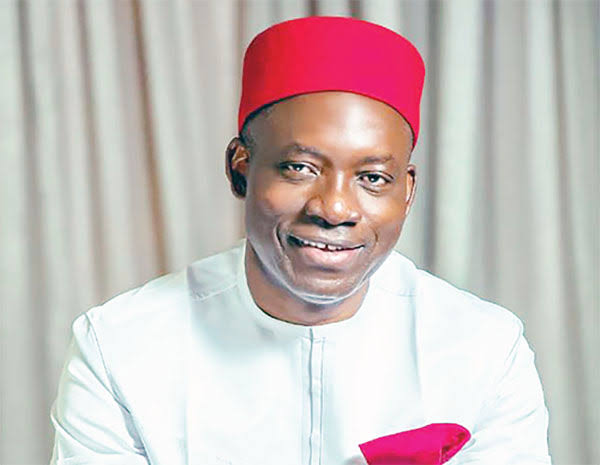
Even though Anambra has been in the kitty of the All Progressive Grand Alliance (APGA) for a long time, the recently concluded gubernatorial election in which Professor Charles Soludo bested other candidates to emerge winner is a straightforward case of identity politics.

Identity politics is a political approach in which people of a particular gender, religion, tribe, ethnicity, race, social background, class, etc., develop political agendas based upon these identities. The term can apply to multiculturalism, women’s movements, civil rights, lesbian and gay movements, and regional separatist movements.

While a majority of the Igbo may not be comfortable with a separate country called Biafra, the impact and hovering influence of the separatist movement, Indigenous People of Biafra (IPOB), cannot be discountenanced. And with the authorities unable to save the average person, the menacing threat of its militant arm, the Eastern Security Network (ESN), is a constant reminder for the average Igbo living at home to play ball or else…

However, because of the strident call for a sovereign Biafra by a totalitarian IPOB using the ESN as a whip to keep naysayers in check, the entire South-East will adopt a political identity that will set it apart from the rest of the country.

In the First and Second Republic, the South East aligned with the North. That rapport is now lost, for now, if not forever.

Perhaps because of the civil war, coming out of it with a loser mentality, the average Igbo man respected – perhaps with a tinge of fear – the average Northerner. Not anymore.

The problem with giving too much respect to a person is that in more cases than one, revolt against the subject of respect, or fear, sets in overtime. So, almost all history of slavery has a time when there was a revolt by the slaves.

While the average Northerner had a certain swagger around him because of the mentality of the victor in the civil war, yet he could have managed his political ally better. Now that respect has given way to derision, and the fear to agitation.

They achieved this through a deliberate demonization of the northerner, specifically Muslim northerner, stereotyped as Fulani and knowingly but falsely attributing to him the agenda of Islamising the country, or “confiscating” Igbo lands.

The Peoples Democratic Party (PDP), hitherto seen by the South East Igbo as their party, first ruled Anambra State from 1999 for about seven years before APGA, founded by the late Chukwuemeka Odumegwu-Ojukwu in 2003, took over the state in March 2006 with Peter Obi as governor.

With the din of secession, which is a cry for more control of their affairs, growing ever louder, the Igbo will identify more with the party that they see as really theirs, and that’s APGA.

However, as the saying goes, you can’t have your cake and eat it, or more appropriately, as you make your bed, so you shall lie on it: the South-East elite should know what they are going into and be truthful to their followers. I will come back to this after a little digression.

There is a false narrative in the South East that they would have been greater if not for the North, but that is not true. For one, no one stops anybody from excelling in Nigeria. The Coscharis and the Innosons are thriving. Ditto for the Elumelus and the Jim Ovias. 

All the states of the federation get their allocations from the centre based on a certain formula and the people of each state govern their states. You will not see an Olawale or Usman running the affairs of Ebonyi State, for instance.

Every one of our states elects its leaders from among their people. This goes without saying that any state that lags behind lags behind because of the failure of its elected and appointed representatives to do what’s right.

Anambra State has been a lucky state concerning electing sound minds to govern its affairs. Peter Obi is a great material anywhere, any day. And so is Soludo. Hopefully, Soludo will let the people know that no one from somewhere has “tied down their destinies” but their rulers.

The way the South East is going is towards regional politics, the politics of identity. Because of their agitation, they will gravitate towards APGA and that party may take over political control of the zone. The people know that even the IPOB will prefer the party to any other Soludo was smart enough to foresee this, and he cashed in on it. They have given up on the PDP and, to them, the All Progressives Congress (APC) is a Northern and South Western party.

But the leaders who are going to reap from this turn of events, and even those who will lose political mileage by it, must let their people know they should not cry of marginalisation when they get into their cocoon and metamorphose into regional players.

Rochas Okorocha in 2015 lamented that the Igbo would have produced the Senate president had they voted for one of their ranking senators on the platform of the APC. But so shall it be in the future for such positions and even that of the president. It will be difficult for any party knowing it has zero electoral chances in a zone to take its presidential candidate from there.

If they know this and accept it, fine and good, but they should not assume a victim mentality and accuse the nation of marginalising them regarding the presidency. You cannot have your cake and eat it.

It is not a bad idea at all if they can secure their zone, politically, turn their economic fortunes into the envy of others, transform their area into an Eldorado and all that. Maybe the rest of us will troop over there to learn how they did it. Or perhaps ask one of them to come and do it for the whole.

Therefore, if, after securing their home, they will now move up to play at the national turf, like the Action Congress and All Nigeria Peoples Party, then they are on course.

Apologise When Wrong

If someone can prove me wrong and show me my mistake in any thought and action, I shall gladly change. I seek the truth, which harmed no one: the harm is to persist in one’s self-deception and ignorance. – Marcus Aurelius.

A former naval officer, Commodore Kunle Olawunmi (retd.) who claimed to have served the Nigerian military intelligence for the past 35 years, in the aftermath of the attack on the Nigerian Defence Academy on August 24 this year, in which two officers lost their lives and one Major was abducted, accused Muslims of the attack. He said in a Channels Television’s breakfast programme, Sunrise Daily, that the NDA, like other military environments in the country, carelessly opens its doors to everyone on Fridays for Juma’at prayer, adding that terrorists and criminals profile military environments during Muslim prayers on Fridays.

However, after painstaking investigations, Nigeria Airforce Sergeant Torsobo Solomon was arrested concerning the attack. Olawunmi, the “super spy” is yet to come out and reveal to the nation whether the name of the Sergeant is actually Tanimu Sulaiman, spelt wrongly.

However, after painstaking investigations, Nigeria Airforce Sergeant Torsobo Solomon was arrested concerning the attack. Olawunmi, the “super spy” is yet to come out and reveal to the nation whether the name of the Sergeant is actually Tanimu Sulaiman, spelt wrongly.

Solomon may have Muslim co-conspirators, but that does not mean the attack was by Muslims in the name of Islam or by Christians in the name of Christianity. We must avoid stereotyping and speaking flippantly on what we know not but what our hearts want us to believe. Why Nigeria is in a social crisis is because her elites speak what their gullible followers, made idiotic by them, want to hear as the truth. Or the elite are themselves uninformed attention seekers who think they know it all.

Lest I forget

Kudos to the Nigeria Police for unravelling the hit-and-run killer of Tordue Salem. An amiable gentleman, we worked together at Leadership newspaper. The police can solve crimes. They just need more hands, funds and equipment.

Questionable Practices In The Judiciary Are Due To Poor Remuneration, Greed And Lack Of Patriotism — Sowemimo, SAN

*Says It’s Scandalous For Senators To Earn More Than Judges

 A Senior Advocate of Nigeria, Mr Seyi Sowemimo, has said that the corrupt practices in the judiciary is as a result of a combination of some factors, including low pay, greed, and a lack of patriotism.

He said it during an interview with the PUNCH Newspaper when asked whether poor remuneration and welfare packages could have encouraged some judges to engage in questionable practices

Sowemimo warns that judges should not be tempted with low pay. According to him, it will be unfair to expect a judge to determine cases fairly in issues involving billions or trillions of naira if you pay them a pittance.

He called for good welfare packages for judges. He said, “It’s a mix of all those things; poor remuneration, greed and lack of patriotism, but the fact remains that we should not expose our judges to temptation by giving them very poor remuneration. It will be unfair for you to pay a judge a paltry sum and expect them to decide fairly in disputes involving billions or trillions of naira. There is a limit to which many people can endure such.

“I think before we condemn and apply severe punishment, let it be that you pay them very well, so that if they are found to be corrupt, there will be every justification to punish them and we would know it was caused by greed. The vast majority of judges have done well, otherwise we won’t have a judiciary to talk of today. We have an idea of what senators and members of the House of Representatives get as salary and allowance.

“It takes a huge sacrifice to be on the bench and be seeing all these things going on, so I’m always in support of a good welfare package for our judges. Until we are able to reach that position, we will not really be too justified to breathe down the neck of any judge. However, it will never justify it. Anybody who accepts that appointment knows that it calls for a lot of sacrifice. You can’t get there and say you don’t know what you signed for.”

On whether compulsory retirement of judges, which has been the practice, is a sufficient sanction for misconduct, Sowemimo said the judiciary is a very sensitive institution and the way and manner you deal with its erring members would also affect the integrity and the way the serving members are perceived. He said the judiciary as an institution will be rubbished if judges are rubbished.

He said, “The judiciary is a very sensitive institution and the way and manner you deal with its erring members would also affect the integrity and the way the serving members are perceived. If you rubbish them, what you end up with is rubbishing the institution itself.

“I think whatever wrongdoing they are guilty of, they are nowhere near what a member of the executive or legislative arms is guilty of. I believe every act of infringement by any judicial officer should be taken case by case. There will be instances where it’s not simply okay to just retire them. I remember the last one; after the raid on the houses of the judges, one or two of them were taken to court and fortunately, maybe their offences did not warrant imprisonment but they were prosecuted and because they won the cases, if I may put it that way, it appears like they were not adequately punished. I think some of them were acquitted on technical grounds.

“However, I think people are just mindful of the fact that they don’t want to do things that would affect the institution, but I believe judges should be monitored more closely, just like the way any public official should. I think there is no question that we all believe the standard of living of judges needs to be improved and I believe a lot should be done in that regard. When you compare what judges earn to what senators earn, the difference is scandalous, and these are people who do sensitive jobs. The NBA and other professional groups need to continuously focus attention on their conditions of service.”

Let’s Talk About BVAS

Nigeria’s Independent National Electoral Commission, INEC, deployed a new gizmo in #AnambraDecides2021. It’s called the Bi-Modal Voter Accreditation System (BVAS). Anambra was not the first time INEC had deployed BVAS. Its first promenade was in the Isoko South Constituency 1 bye-election in Delta State on 10 September, 2021 in which “some presiding officers…. complained that the machine had difficulties capturing the thumbs and faces of some of the voters, especially the aged.” Few noticed.

The Anambra election is, therefore, the most consequential outing so far of the BVAS and the first time it was deployed in a state-wide contest. It will be deployed again in both Ekiti and Osun, two governorship contests in 2022 in which the territorial footprint will be significantly more demanding than Anambra’s 4,844 km² and which have greater rural sprawl. The performance of the BVAS in Anambra bears close attention and scrutiny. The reason will become evident shortly.

Context is essential. Democracy is quantum arithmetic. In a democracy, we count the people, we count their votes and we count their money. Through counting the votes, leaders acquire the legitimacy to count and account for the people’s money. This simple proposition assumes the existence of political numeracy skills and an institutional ethics of honest counting and accounting. In all three endeavours of counting the people, their votes and their money, Nigeria’s abysmal performance was over 55 years ago immortalized by Wolfgang Stolper in the classic, Planning without FactsWe are more adept at inventing numbers than counting them. Thus, for us in Nigeria, democracy has never been about honest counting and accounting. Rather, it is “a game of numbers”.

In elections, numbers that have no relationship to the votes actually cast are routinely written up all over the country. Judges and Senior Advocates of Nigeria (SANs), most of whom never needed to pass mathematics in order to dorn the wig and gown, then make lots of money deploying Latin to excuse innumerate political ethics. Usually, we never had problems with voting as such. Our problem was always with collation and with election litigation.

In 2015, INEC hit upon a technology solution in the form of the card reader to verify the Permanent Voters Card (PVC) and close the gap between voter authentication and the voting tallies and achieved over 50% in using the device to accredit voters in the presidential election. The result was that for the first time in Nigeria’s presidential election history, the loser declined to sue and, overall, the percentage of elections ending up in the courts fell to about 43%. Only eight years earlier, in 2007, 86.35% of all offices contested ended in court. In 2011, it was just over 51%. In 2019, the proportion of voters that INEC accredited with the card reader had dropped to under 20% and the number of contests ending up before the courts rose again to above 51%. It does not take the rarefied skills of a theoretical physicist to correlate an effective technology solution with electoral credibility.

In the Nasarawa Central State constituency bye-election in August 2020, INEC introduced the Z-Pad to test a successor solution to the card reader in voter accreditation. It met with very mixed results. In the Edo Governorship off-cycle election the following month, INEC deployed the Z-Pad mostly as an interface with its new INEC Result Viewing (IReV) portal, which was credited with helping to preserve the will of the people in the contest o24.22% turnout.

The BVAS is a successor to the Z-Pad, reputed to achieve convergence of the essential features of these solutions in combining voter enrolment, voter accreditation, and results interface capabilities in one device. Theoretically, this should eliminate the gaps that enable analogue manipulation of numbers in elections. The voter accreditation capability combines fingerprint, Iris and facial recognition technologies supposedly to eliminate guesswork in voter identification and accreditation. To preclude hacks, the application requires regular software updates and serviceable broadband access, requiring 4G technology for convenient download. Many issues arise here; I confine myself here to four.

First, in one sentence, BVAS is a technology solution based on Artificial Intelligence and is only as good as the both the age of the data and the training that the Algorithms receive. The use of this technology as a solution on the scale required for credible election administration in Nigeria is challenging given its flawed reputation and at a time when many of its pioneers are pulling back from it. In the Anambra election, for instance, it was clear that voters recently registered in INEC’s Continuing Voter Registration (CVR) were the most easily accredited because their features were current. However, older voters or voters whose PVCs were a few years old generally reported serious problems with accreditation, mostly because their features had changed in the intervening years between data capture and accreditation. Thousands of them may have been disenfranchised as a result. This raises legitimate questions about both the provenance of the Algorithms and their training. INEC needs to disclose more information about these parameters.

Second, technology solutions need complementary systems. In its 2020-2025 National Broadband Plan, the National Communications Commission discloses that broadband penetration rate in the country at the beginning of last year was about 37.8% and sets a target of 70% penetration by the time of the next general election in 2023. Since these targets, however, rather than expand the footprint, much of the telecommunications infrastructure in north-west Nigeria have been shut down for supposedly more pressing purposes. MTN, the leading carrier in the country with 38% market share, currently reports only 60% 4G penetration. In Dunukofia, Anambra state, most of which is covered by 3G networks, for instance, several presiding officers had to enlist local motor bike providers to take them to neighbouring communities where they could access the 4G Network to download BVAS updates.

This raises a third issue: BVAS is geospatially dependent. Anambra is Nigeria’s second smallest state at 4,844 km², with a dense population, in which communities live cheek-by-jowl with one another. The next two states in which INEC will audition BVAS before the 2023 presidential election, Ekiti (6,353 km²) and Osun (9,251 km²), combine for only 15,604 km² of landmass or nearly the size of Lagos State smaller than the smallest state in northern Nigeria, Gombe State (18,768 km²). By contrast, Niger State, the biggest state in (northern) Nigeria at 76,363 km² is about two and a half times the size of Oyo State, which at 28,454 km² is the largest state in southern Nigeria but only the 14th in the country. In Anambra, INEC could get away with the electoral frustrations of BVAS but they are unlikely to do so in Zamfara State with 39,762 km² or in Taraba State’s 54,473 km².  Yet, despite its evident geospatial sensitivities, BVAS will only have been tested in three relatively small states of southern Nigeria before the 2023 elections but nowhere in the north. A situation in which BVAS can only be deployed in southern Nigeria in 2023 but not in the north will rather problematic, to put it mildly. INEC should know this.

I have not mentioned Network failure.

Fourth, in the Anambra ballot, serious human agency deficits were very evident. It was clear that many electoral and presiding officers had little or no training in the BVAS. In mitigation, INEC could claim that they suffered unavoidable deficiencies in the withdrawal of trained election officials because of the attrition induced by the well-advertised pre-election violence. That excuse is unlikely avail them in Ekiti and Osun.

The voluble complaints about “voter apathy” in Anambra governorship election will not reckon with these factors nor volunteer the numbers whose suffragist aspirations were frustrated because facial recognition technology is partial to smoother features than Nigeria’s long-suffering people may routinely claim or possess.

In the euphoria that has followed the completion of the Anambra election, these issues are unlikely to receive the attention they deserve. That will be tragic. Voters in Azare or Rigassa are unlikely to be as patient with the frustrations of BVAS as we saw with their peers in Aguata or Oleh. The BVAS could be a potential game changer in closing the gap between electoral democracy as an enterprise in political numeracy and Nigerian elections as a cynical exercise in political voodoo. Whether or not this happens will depend on how seriously INEC treats the clear deficits that were on show in Anambra and, more importantly, on whether it even wishes to do so.

Chief Wole Olanipekun SAN @70: An Unauthorised Paean

By Lanre Adewole 

When Chief Wole Olanipekun was born in the twilight of 1951, precisely November 18, LEB, (Life Expectancy at Birth), in Nigeria, was 33 years. Today, it has improved to 55.12 years. In Japan, it is about 83 years. You covet that? Then be ready for an unusual menu, including a hardcore drink that requires soaking lizards in Japanese rice wine for “a flavour you can’t find anywhere”. Kecking with disgust here.

By the time he clocks 70 this Thursday, by God’s special grace, the foremost SAN would have done more than a double, against the predicted mortality of his birth-time and if God preserves his life and he’s willing to add the above Japanese wine to his obviously-Spartan lifestyle, which has kept him as slim as I have always known him, including his midriff, why not, he could do a brace against the current LEB, to become a distinguished member of the vanishing republic of the centenarians. In 2015, only 417, 000, existed worldwide.

Beyond human projection, there is a ready-made divine assurance of making 100. The Word of God which Chief holds dear says if a righteous man dies at 100, it would still be considered as a child dying, meaning dying prematurely. So, it is there for the taking, once the condition is met. God’s Word doesn’t fail.

In the chant-like, over-used “happy birthday to you”, two of the casual wish; long life and prosperity, have found manifest expression in his life and Ijesa people, who Chief knew firsthand during his post-primary education at Ilesa Grammar School, would be quick to hoist him as the ideal longevity symbol. They detest being old and broke. They are quick to remind that “olokunrun o pe laye, apenu lo pe (a grounded fellow who lives long, lives in vain).

I can’t remember precisely how I became acquainted with Chief Olanipekun in my days as a judiciary reporter in Abuja, but I will definitely not forget my first business interaction with him, because I almost came away with a monstrous perception of him as a troublous over-demanding customer, wondering what it would look like working for him.

He had authorised an advert to celebrate the birthday of the legend, Papa Afe Babalola and asked me to put the text together, not knowing then, it was a rare privilege. Then, he wanted to hear my composition. It was late afternoon of a Sunday, and thus began, a syntactical back and forth; “Lanre, you didn’t put comma there”, “I will put it Chief when doing the final copy”, “No, no, put it now”. Lanre, repeat that line, something is missing there”, “Sir, I don’t think so”, “Just read again”, “Ok sir”. You would think I cobbled a tripe!

As precious production time ebbed away from correcting and re-correcting the dots, I almost asked if he would just dictate a fresh text. Well, he eventually acknowledged my lines as okay, only that I went the way of those who don’t pay attention to details. He blamed fate for his aborted journalism dream.

12 years after, another advert for Papa Afe, and his perfectionism had notched, steps higher. This time, ready-to-publish artwork was sent me. Uncle has inexorably boxed himself into tight diligence corner! So, it was a huge surprise when in the course of a conversation, he motioned I recommend a “good” writer as his media assistant. Thankfully, before I could say a word, he said he wasn’t offering me the job, because he couldn’t afford me, as I’m now up there (me:-not starting yet). He assumed I was above his vacancy and unstated wage. Chief is so enamoured of excellent English language engagement that only a professor of English would last months on the job.

And he isn’t on his grammar enterprise to spite outsiders. In 2018 when the third family-SAN emerged through Bode, his second son, the then-35 year old kept a letter from his famous dad from his days at Olashore International School. He read a portion to guests at his after-party. While replying his son’s letter which should ordinarily be about “how do do”, “doxology” and other father-son stuff, Chief Olanipekun was busy editing his son’s grammar, pointing out acceptable use of “simultaneously” and faulting the young man’s application of commas and full stop! Who does that! Well, Chief was the father who did that, as his brand of motivation. Today, Bode manages his dad’s law firm.

If you are as unsparing about excellence as Chief Wole, wel not every corner of the street would be smiling with you. The disgruntled will say a o ko bobo yen je (we don’t fancy him). But in the matter of law, you can liken his extraordinary testimonial to that of Pa. Alphaeus Taiwo Olunaike of Alajo Somolu fame. By the time he died on August 11, 2012, his legendary status had morphed into a fable. Many will swear he didn’t exist and the story about him collecting thrift from numerous customers for three years, without any documentations and paying everybody correctly is just a old wives’ tale.

Uncle Wole, the lawyer living the mischief interpretation of “agbejoro ijoba” (he is the choice pick for presidents, governors, lawmakers, et al, for election litigation), might eventually get to the Alajo Somolu’s fabulous height in human memory, but as of now, his page in history as a jurisprudential genius is inked.

He loves electrifying anywhere he finds himself. Beyond speaking English language like eating soft dodo (soft fried plantain, he likes being dapper in outlook. His first son, Dapo, testified to this in an interview. That should make the old man stylish? But no doubt, whether before a judge or an ordinary journalist like me, his presence sparks. In our recent interview, I smiled through his eclectic adjectives. He can be breathtaking in delivery.

Chief Olanipekun’s passion for education is understandable. He is a choice pick for Chancellorship and Pro-Chancellorship at federal, state and private varsities. Only God knows how sloppy Board members cope.

Above all, Chief is omo Yoruba atata. He may never write a tell-all autobiography, but the race should celebrate him for crucial interventions. He has earned his badge of honour.

Gibbers’ greatest joy is that he is running a heavenly race. I pray for Omega anointing for this Omoluabi Patriot and Afenifere, to end well and finish strong. Here is Gibbers’ toast.

Sliding from too much money to too much debt

General Yakubu Gowon was reported to have said in his days as the nation’s military head of state that money was not Nigeria’s problem but what to do with it. But that has since changed, especially in the past few years. Now, the country is grappling with debts huge enough to sink a skyscraper.

According to the Debt Management Office, the external loan component of Nigeria’s debt as of June 30, 2021, stood at $33.47billion. When the $4bn Eurobond loans as well as the $16.23billion and €1.02billion loans recently approved by the National Assembly are added to the June figure, the total external debt of the country would be $54.87billion. This is in spite of the debt forgiveness which the administration of Chief Olusegun Obasanjo secured for the country in 2006. As an effect of the Everest-like debt, almost a third of Nigeria’s annual budget is spent on debt financing. With no clear provision made for generating resources to defray the debts, not only is the country headed back to the pre-2006 era, her ability to embark on programmes and projects that could improve the lot of her citizenry is seriously threatened.

But how did we arrive at this sorry pass? How did we transit from Too Much Money Street to Too Much Debt Avenue? Ours is a typical illustration of the story of a fool and his money.

Consequence upon our failure to judiciously deploy the money we made without much labour, our oodles of money became our source of endless sorrows. Too much money stalled our thinking and stunted our development as the nation engaged in a ballroom dance; one step forward and two backwards. The more money we made, the poorer we got and the more we borrowed. The more money we made, the faster our facilities failed. The more money we made, the higher the rate of unemployment rose in our country. The more money we made, the worse our education indicators got. Our abundant wealth choked us so much that it threatened to snuff life out of us.

Economists say a scale of preference becomes inevitable as a result of scarcity of resources. But Nigeria did not have any problem with scarce resources and subsequently did not engage in any ‘time-wasting and energy-sapping’ planning. The leaders did whatever appealed to them. It was governance by the rule of thumb. After all, money was not a problem. That is why development became haphazard. This explains why projects are routinely abandoned. In Nigeria, most projects are usually a product of exigencies, once the urgency of the need abates, they are abandoned, irrespective of the huge sums of money already expended on such projects.

The East-West road was conceived in 1972 by Alfred Diete-Spiff, then military governor of Rivers State, as a way of opening up the Niger Delta area. Almost five decades later, the expanded road is still under construction. The Ajaokuta Steel Mill, established in 1979, has gulped billion of dollars and, as of 1994, had reached 98 per cent completion. But 42 full years after work started on the project, the sprawling mill, which sits on 24,000 hectares of land, has yet to produce any steel. The Ikere Gorge Dam, built to boost electricity generation and agriculture in the South West, was fully ready by 1983. Despite everything being in place, the dam has never been utilized for its intended purpose.

Since 1999, efforts have been on to improve power generation in the country. The efforts resulted in the passage of the Electric Power Sector Reform Act, the forebear of the National Integrated Power Projects (NIPPs). The government of Obasanjo injected billions of dollars into the NIPPs, assuring Nigerians that their days of epileptic electricity supply would soon end. But nothing came out of the huge amount of money spent on the NIPPs as most of the funds were stolen, yet nobody is in jail for misappropriation of the funds. Succeeding administrations wasted no time in awarding fresh contracts for power generation before the facilities were eventually privatised. Even the current administration has put billions of naira into power generation and transmission, yet most Nigerians still resort to generators for electricity supply.

When the country was making serious money, leaders made it their business to steal, and they stole without qualms. According to reports of international agencies, the bulk of the country’s petro-dollar earnings in the last 50 years was stolen by members of the political class. They stole unabashedly and pillaged our resources heartlessly. They stole us blind and turned around to make a mockery of us, saying our poverty was a result of laziness. They went about with the airs of those doing us a favour by plundering our commonwealth.

Unfortunately however, the malfeasance in public office received the tacit support of the populace who egged on the thieving leaders because of the belief that no matter how much the leaders stole, there would still be money left and it would sooner or later be their own turn to steal from the national treasury as well. That emboldened those in public office to continue to steal. But now that the till is empty, where does that leave those applauding the kleptomaniac leaders?

Julian Castro was the keynote speaker at the Democratic Party’s National Convention in 2011, where he said something very profound. He said, “America didn’t become the land of opportunity by accident. My grandmother’s generation and generations before always saw beyond the horizons of their own lives and their own circumstances. They believed that opportunity created today would lead to prosperity tomorrow. That’s the country they envisioned, and that’s the country they helped build. The roads and bridges they built, the schools and universities they created, the rights they fought for and won—these opened the doors to a decent job, a secure retirement, the chance for your children to do better than you did.”

But the reverse is the case in Nigeria; the forebears consumed the wealth and left debt for their successors. They never saw beyond their own horizon and made no plan for the future. Instead of creating opportunities that would lead to prosperity, they wiped up all the opportunities and lapped up the prosperity.

That is the tragedy of our country; the tragedy of a country that had too much money but lacked any expressed value, thus piling up debts for coming generations as a consequence.

Editors Note; Written By Lanre Adewole Originally published in Tribuneonlineng

TIPS