Home Blog Page 825

Why Lagos must not legalize abortion

By Engr. Jerry Okwuosa

I read with keen interest the advocacy of Dr. Abiola Akinyode-Afolabi writing on behalf of Women Advocates Research & Documentation Centre (WARDC) requesting for the legalization of abortion in Lagos. Her reason for this request is as follows:

“It gives women improved health-care services; sets guidelines on safe termination of pregnancies for legal indications; women have a right to their bodily integrity and to life; the guidelines are pushing to save women from preventable deaths and It will reduce maternal mortality”.

It is important to recall here that before the European union (EU) forced Ireland to legalize abortion a few years ago, Ireland and Chile have been two of the safest places in the World for pregnant mothers and their unborn children as they achieve lower maternal mortality rates (mmr) than even the United States, UK, France, Germany etc. W H O reports on mmr confirm a trend: countries with restricted abortion laws or who prohibit abortion out rightly have the lowest mmr in their regions. The WHO 2009 report informs that the nation with the lowest mmr in African is Mauritius whose laws are among the Continent’s most protective of the unborn. The report further shows how countries like Ethiopia that have decriminalized abortion in recent years in response to pressure have failed to lower their maternal death rates. Ethiopia’s mmr is 48 times higher than Mauritius’. Similarly, the WHO statistics for the South East Asia region show that Nepal, where there is no restriction on abortion, has the region’s highest mmr. The lowest in the region is Sri Lanka, which has one of the most restrictive abortion laws in the world, with a rate 14 times lower than Nepal. It is not surprising therefore that Chile, which protects unborn life in its constitution is the country with the lowest mmr in South America and that the country with the highest mmr there is Guyana, with an mmr 30 times higher than Chile. Ironically, one of the two main justifications used in liberalizing Guyana’s law was to enhance the “attainment of safe motherhood” by eliminating deaths and complications associated with abortion. This is one of the arguments WARDC is using in Lagos. Evidence therefore abound that legalization of abortion in any country worsens its mmr. Check out the mmr of Ghana and Republic of South Africa before and after the legalization of abortion in those two African countries to confirm the evidence.

The Dublin Declaration (DD)

Unveiled at the International Symposium on Maternal Healthcare in Dublin Ireland in 2012, and has since been signed by over 2,000 medical experts, the Dublin Declaration (DD) states: “As experienced practitioners and researchers in obstetrics and gynaecology, we affirm that direct abortion – the purposeful destruction of the unborn child – is not medically necessary to save the life of a woman. We uphold that there is a fundamental difference between abortion and necessary medical treatments that are carried out to save the life of the mother, even if such treatment results in the loss of life of her unborn child. We confirm that the prohibition of abortion does not affect, in any way, the availability of optimal care to pregnant women.”

In the light of the above declaration, what then is the basis of WARDC’s claim that the STPG give women improved health-care services whereas the medical experts through DD “confirm that the prohibition of abortion does not affect, in any way, the availability of optimal care to pregnant women”.

As for WARDC’s assertion that the document in question sets guidelines on safe termination of pregnancies for legal indications, we argue that the so-called “safe” termination (abortion) of any pregnancy is an illusion because every abortion kills a baby and harms the mother, so how can such a procedure be declared safe AND that there are no legal indications for abortion in Nigeria because abortion remains illegal here.

Yes, it is only when they are not pregnant that women have a right to their bodily integrity. Once a woman becomes pregnant either by choice, accident, rape or incest, she can no longer lay claim to the integrity of her body because she no longer maintains one body but two bodies. As regards the right to life, this is always taken care of – whether or not a woman is pregnant – by doctors being trained (especially in countries where abortion is not legal) to see two patients and two lives (mother and child) in every pregnant woman that needs medical care.

WARDC’s claim that the guidelines are pushing to save women from preventable deaths is a false claim and a misrepresentation of facts because pregnancy is not a disease which if not treated may result in the death of the mother and fertility is not a curse but a blessing most African women desire. As the DD makes abundantly clear, “there is a fundamental difference between the lifesaving treatment a woman may need during pregnancy, and abortion, which is the direct and intentional taking of the life of the unborn child”.

Finally, WARDC claims that the STPG will reduce maternal mortality. Even if this claim were to be true, its immediate effect will be to increase infant mortality – abortions kill babies -. But this is unacceptable because human life has equal value; the mother’s life is not more valuable than the baby’s. If this claim is true it leaves the wrong impression that God blesses women with childbearing only to let them die of a disease called pregnancy. The claim is actually false because statistics show that abortion contributes 11% of maternal deaths in Nigeria i.e. if our women do not attempt abortion, 11% more of them will be alive to cuddle their new born babies. As a nation, we should, while enforcing the ban on abortion, focus attention on the other causes of death (89%) of our pregnant mothers as these include Haemorrhage (23%); Infection (17%); Obstructed labour, Eclampsia, Sepsis and Anemia (11% each) and Others (5%). Through the Dublin Declaration, obstetricians, gynecologists, neonatologists, pediatricians and other doctors from across the specialties of medicine and surgery confidently testify that “a country does not need legalized abortion in order to preserve maternal health and reduce maternal mortality” but here is WARDC misleading us to believe that legalized abortion will reduce maternal mortality. A principal signatory to the DD, Dr. Eoghan de Faoite, advises that “The first step towards turning today’s society against abortion, is to show it that legal abortion is not needed in maternal healthcare, that it is not needed to save women’s lives and that banning abortion does not bring about a rise in maternal mortality”.

WARDC and its culture of death co-promoters should listen to the voice of reason – pregnancy is not a disease and fertility is not a curse – and to the medical experts who took the time and trouble to educate the world by issuing the Dublin Declaration and see abortion for what it really is – a killer of innocent unborn babies and does enormous damage to their mothers – and work to restore the culture of life for which Africans are well known. If it is any consolation, their arguments are sound only if what is inside a pregnant mother is not a baby. It is only fair to state that a baby once conceived has a right to be born because the right to light is fundamental and inalienable.

Engr. Jerry Okwuosa.
Director-General, Project for Human Development (PHD)

Because our leaders live by bread alone – Part 2

By Martins Oloja

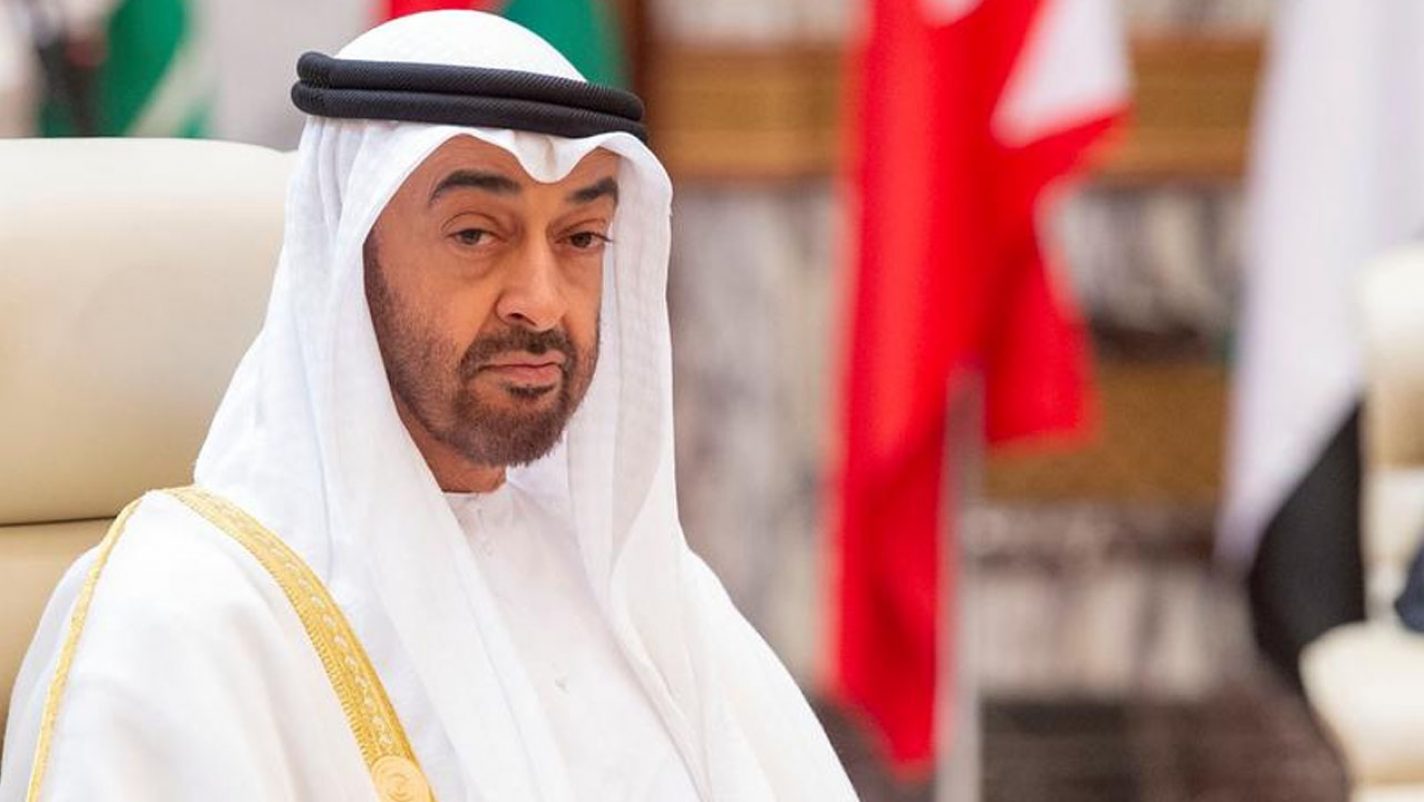
FILE PHOTO: Abu Dhabi’s Crown Prince Sheikh Mohammed bin Zayed al-Nahyan attends the Gulf Cooperation Council (GCC) summit in Mecca, Saudi Arabia May 30, 2019. Picture taken May 30, 2019. Bandar Algaloud/Courtesy of Saudi Royal Court/Handout via

(Still On Sheikh Zayed)
Let’s continue with the study of the biographies of great men who didn’t live by bread alone as I was saying. The story of Sheikh Zayed should not be disrupted by space constraint. It is great story of a significant statesman whose integrity laid the foundation of what UAE has remarkably become. We read last week that: In 1952, just when he needed every rupee he could lay his hands on to feed and clothe his own family, the Saudis offered him (Zayed) forty two million dollars to give up his fight against them and their claim on Buraimi. It was an astounding amount of money – overwhelming to Sheikh Zayed who scarcely had one hundred rupees in his pocket at the time and less than a week’s supply of food in his palace. But because he believed in what he was doing and because he is a selfless man, he turned the bribe down proudly. He told the Saudis he did not want their money: he was interested only in the welfare of his people and his homeland. No amount of money could buy his loyalty or change his determination to achieve a peaceful settlement giving the people of Abu Dhabi what was rightfully theirs. The bribe was so incredible that it was registered in the ‘Guinness Book of World Records’ as the highest ever offered to anyone in the world….

According to Mohammed Al-Fahim, in ‘FROM RAGS TO RICHES: A STORY OF ABU DHABI: The British, who were central to getting oil in Zayed’s land exported, wanted to see a solid economic foundation in place for the continued exploitation of the vast resources. They wanted development too because they needed it to make the oil industry work properly and profitably. Growth of the oil industry could only be achieved with more qualified staff, better housing, better roads, water resources, electricity, a business community, the list was almost endless. With the then Ruler’s continued resistance to implement change, the pressure intensified on Sheikh Zayed, his brothers and the ruling family to initiate the development process. At the time, neighbouring sheikhdoms and countries including Dubai, Qatar, Bahrain and Saudi Arabia knew what kind of revenues were being generated in Abu Dhabi as a result of the oil industry. They were astonished that nothing was being done with the proceeds. Of course, it was to their advantage for Abu Dhabi to stay as it was: no development there meant people would continue to turn to them for goods and services. They could not believe their good fortune.

Meanwhile, any one of the neighbours might have successfully claimed rights on Abu Dhabi territories because the defences were weak and the loyalty of the tribes was wavering as the government did little to improve their lot. Had any one of them initiated such a claim the rest would have followed suit and it could well have been a free-for-all with Abu Dhabi being carved up into chunks and divided between its neighbours. Even the thought of this potentiality was completely unacceptable to Sheikh Zayed. He was a fiercely patriotic man who loved his country and its people above all else. He took up arms at the age of fourteen to fight against tribes who were infringing on the territory of Abu Dhabi. He fought against neighbouring countries that claimed their lands. Later, in the 1950s, he used his charm and diplomatic skills to inspire loyalty from the various tribes throughout the eastern area. He negotiated with the British on the one hand and with the Saudis on the other.

When the oil revenues began pouring in, he was the one the people turned to for development initiative. Unfortunately, he lacked the financial resources as well as the power to start the process, much as he would have liked to. He was the youngest of four brothers, and the eldest was the Ruler. True, he was an accomplished diplomat with a lot of common sense and a charismatic personality. He also had some influence with his elder brother whom he could sometimes sway or prevail upon to see things differently. But he was not the Ruler. So, he remained frustrated by his inability to effect changes that he thought were crucial to the long-term wellbeing of his country, and his countrymen. His frustration mounted throughout the early and mid-1960s. At the same time, he came under increasing pressure to act – from the people of Abu Dhabi, the ruling family itself, the British, and from the intensity of his own convictions. By 1964, the pressure grew so much that he could no longer stand by accepting the status quo, as the revenues from the oil exports accumulated tremendously. Sheikh Zayed felt it was his duty to act.

Over the next eighteen months he rallied the ruling family around him, including his brothers and cousins who agreed that the situation could not continue as it was, and, with the help of the British, a change in the rulership was effected on August 6, 1966. On that memorable day, Sheikh Zayed became the Ruler of Abu Dhabi. The former ruler went to Bahrain, then to Iran and finally to Lebanon where he lived for many years.

Starting From Scratch
BECAUSE his efforts had been frustrated for so long, particularly in the four years (prior to his administration), Sheikh Zayed began his rule with an unprecedented goodwill. Then an amazing transformation began. As soon as he was in control, Sheikh Zayed began taking steps that would bring Abu Dhabi out of the dark ages. The task was enormous. First, he needed to put together a strong bureaucracy because nothing existed at the time. He started from scratch, building the government department by department: water and electricity, finance, municipal planning, police, defence, communication, internal affairs, external affairs, protocol, health, education, judiciary and more. Here was a man who had never been to school, a man who had lived a nomadic (Bedouin) life since his youth. Yet he conceived and implemented the ideas that would be the foundation of the entire infrastructure of modern day Abu Dhabi/UAE. Naturally, he had to rely on expatriate expertise to a large extent because the local population was simply not qualified then to complete the tasks needed. Without functional schools, most people were still uneducated. So most of the people who ran the government departments initially were brought from elsewhere, seconded from other Arab countries or hired from abroad for their skills. Setting up the framework for the government consumed the first two years of Sheikh Zayed’s rule. But that certainly did not mean that nothing else happened during that time. On the contrary, he was actually implementing some of the development plans as the departments were being formed. With the help of his extended family and knowledgeable Abu Dhabians, he began executing development plans without delay.

The Iconic Lee Kuan Yew Of Singapore
Joseph Nye, the Harvard University political scientist who coined the terms ‘soft power’ and ‘smart power,’ once described Lee Kuan Yew as a man “who never stops thinking, never stops looking ahead with larger visions. His views are sought by respected senior statesmen on all continents.” Leaders sought out Lee for his vision and his grasp of geopolitics, but his power came from his achievement. He turned a mosquito swamp (Singapore) into a first world nation in a single generation. The legend, Yew was also a powerful communicator, putting across his thoughts in a simple, clear and precise manner. His two-volume memoir (The Singapore Story and From Third World to First) as well as his speeches and interviews offer an engaging master class in governance.

His clear vision: Since Singapore separated from Malaysia in 1965 — an event Mr. Lee called his “moment of anguish” — he had seen himself in a never-ending struggle to overcome the nation’s lack of natural resources, a potentially hostile international environment and a volatile ethnic mix of Chinese, Malays and Indians.

“To begin with, we don’t have the ingredients of a nation, the elementary factors: a homogeneous population, common language, common culture and common destiny. So, history is a long time. I’ve done my bit.”

His resilience and tenacity: Lee had gone through his toughest period when Malaysia chose to separate itself from Singapore. His shedding tears on public television marked one of the most historic moments in Singapore history. However, he never gave up, strengthened his resolve and continued to believe that he could develop Singapore into what he envisioned it to be.

His innovative approach: Zainuddin M. Z, an Indonesian scholar pays tribute to Lee’s strength of character, saying he did not waste his time moping over the separation but instead drew strength from it to create his vision of a Singapore that is “better and stronger” than Malaysia. He says Lee realised that vision by making sure that Singapore achieved developed-nation status before Malaysia would. He credits this to Lee’s creativity and innovative spirit. The scholar adds: “Lee succeeded in developing a strong new nation that transcends the divisions of race and religion. Not only did he suppress Malay communalism but he killed the racial institutions of the Chinese, including Chinese schools and colleges, and he wiped out their secret societies.
His Incorruptible Nature:

This played a big part in shaping Singapore into one of the least corrupt countries in the world. “He presented to the world a Singapore that is clean, efficient and trustworthy) under an administration that is tough against corruption and scandal.”(NYT, 2015 when he died). In a policy intended to remove the temptation for corruption, Singapore linked the salaries of ministers, judges and top civil servants to those of leading professionals in the private sector, making them some of the highest-paid government officials in the world.

Doubtless, LKY was able to lead his one city country from ‘Third To First World’ because he never attempted to live by bread alone. He lived and died for his country. Let all our aspirants to high offices and public servants in Nigeria read the biographies of the two great men here for re-orientation on how to rebuild the broken walls in Africa’s most populous country and indeed the hope of the black race!

As Nigeria gets set for presidential campaigns

By Chidi Anselm Odinkalu

The mantra of candidate Muhammadu Buhari in the campaign that eventually took him to Nigeria’s presidency in 2015 was one word: “Change”. For a fact, it was not original. 32 years before 2015, in the 1983 presidential election, Dr. Nnamdi Azikiwe’s Nigeria Peoples Party (NPP) first deployed that slogan in their unsuccessful bid to make President Shagari a one-term president.

The moment then seemed ripe for that message. Under the watch of President Shagari’s National Party of Nigeria (NPN), a unique mixture of poor luck and official criminality conspired to bring Nigeria to its knees. The desire for change seemed very real but then the NPN did not plan to quit power and its opponents were too divided to offer any potent threat. So, Shehu Shagari managed to increase his share of the announced results from 36% in 1979 to 47.5% in 1983. Nnamdi Azikiwe, despite the resonance of his slogan, only ended up with 13.99%.

Muhammadu Buhari, then a Major-General in the Nigerian Army, decided thereafter to procure with the gun what the opposition could not with the ballot box: he ousted President Shagari in a military coup. Having taken power as a soldier from Shagari in 1983, Buhari went back to the future in 2015 to purloin the mantra of the NPP. It is doubtful whether Buhari knew in 2015 that his slogan was a genuflection before the altar of an “Igbo party”, which was how many people viewed the NPP.

To be fair, it was not only president Buhari’s All Progressives’ Congress (APC) that cannibalized the remains of the NPP in 2015. The NPP’s party slogan was “Power to the People” which the Peoples’ Democratic Party (PDP) had stolen at inception in 1998. So, going into the 2015 election, the two leading parties drew their inspiration from one source.

The real challenge in 2015 was one that is all-too-familiar in African politics: an anti-climax of fulfilled political expectations. The ruling party had been so long in power, it had no effective plan for transition into opposition and the opposition party had become so comfortable in that role it did not prepare for governance.

The electorate had to take considerable responsibility for this. People were so enamoured of the unproven powers of the Buhari magic, they decided not to bother with asking him to explain what kind of change he meant. It should have been evident to anyone who cared that “change”, is value neutral. It implies motion without necessarily promising movement or progress. It’s direction can be negative or positive. It has precisely the kind of laconic quality to empty it of any clear commitment. With the promise of “change”, candidate Buhari promised everything while simultaneously committing to nothing.

Four years later, when he ran for re-election, President Buhari reached back into precisely the same bag of trickery, promising “next level” without indicating “of what?”

In less than four weeks, on 28 September 2022, the campaign season for the 2023 presidential election will begin. If Nigerians are not to fall into the same error as in 2015, when the electorate seemed hynoptised into choice without information, then in 2023, there has to be a concerted effort to get clarity concerning the positions of leading candidates on the issues that matter.

It is a measure of the misadventure that has been the Buhari presidency that the two issues that arguably did more than any others to persuade Nigerians to his corner will not much bother most people in 2023. One is integrity and the other is corruption. On both issues, the Buhari presidency has been characterized by “a yawning gap” between rhetoric and reality, which has spawned a rich supply of choice epithets from “a fraud” to “dishonest integrity”. Many believers, shell-shocked from the duplicities of this Buhari era, seem to have decided that they will not mind capable rogues who can get things done.

This is why as the campaign season begins, the voters need to put themselves in a position to identify the issues on which every serious candidate must show that they have done some contemplation.

One is coexistence. It has become cliched that Nigeria has not been this frayed since the end of the Civil War in 1970. The major reason for this is that President Buhari, in the memorable words of former military governor of Kaduna State, Col. Abubakar Umar, has profoundly “mis-managed Nigeria’s diversity.” As a testament to this, on the approach to the 40th anniversary, the landscape of the 2023 elections could potentially reprise the 1983 elections. There will be two major candidates from the south, one from the north, and an unending supply of dog whistle. It will be a brave candidate who campaigns boldly on a message of coexistence. But may be such is the kind of candidate that the country needs at this time. Every serious candidate needs to be pressed on this point.

Two, what is the value of a Nigerian life? By the most conservative counts (based on open sources), 5,797 persons in Nigeria have been killed in the first half of this year but the numbers do not do justice to the desperate straits in which the country finds itself. We have become used to the president neither acknowledging the human abattoir that the country has become under his watch, nor having any interest in empathy or fellow feeling. This indifference has set the country asunder when it should be coming together against the common threat of insecurity. Economic activity has been blighted and a nation-wide food security crisis could be imminent.  In many cities, such as Kaduna in the north-west and Jos in the north-central, going from one part of the city to another could be a death sentence. Even the uniformed security services are struggling to protect themselves. Each serious presidential candidate must be prepared to show from the first hour of office what they propose to do to alleviate insecurity.

Three, how will the Commander-In-Chief optimize the security services? This is probably the most important job of a president. It is also the one that the present incumbent has proved most inept at. Under him, the federal government retrenched the police, transferring its responsibilities to the armed forces. When he addressed the cohort at the National Defense College in 2017, then Interior Minister, General Abdulrahman Dambazau, described the situation of the country as “military operations other than war, (MOOTW)” and proclaimed the doctrine that the armed forces are now “spearheading all internal security operations due to the fact that the Nigeria Police is no longer in position to handle such matters effectively.” As proof, today, the army is actively deployed in all 36 states of the Federation in 18 special, expeditionary theatres. What this means is that the army is too stretched to be effective against threats upon the homeland while the police is too demoralized to do its primary task of safeguarding law and order. Every serious candidate must have a plan to reverse this and make the security services fit for purpose.

Four, the economy will require attention in respect of both monetary and structural reforms. The president who will be inaugurated on 29 May 2023 will not have the luxury of a honeymoon. He’ll have to confront a disabling debt overhang, the removal of petroleum subsidy, a fiscal cliff, and a national currency in free fall. Every serious presidential candidate must be pressed on his strategy for ending the calamity that is the current Governor of Nigeria’s Central Bank.

Five, to make progress on the above four issues, every serious candidate has to answer the question: are you prepared to serve only one term? This is not a matter of political convenience or deals. Rather, any president who desires to make progress on these must be prepared to confront committed blowback. If they are too in love with a second term, then the first term will be wasted. This indeed may be the defining issue of all.

Still on Bishop Kukah:

There were three errors in my piece of last week on Bishop Hassan Matthew Kukah. First, he is the Convener of the National Peace Committee, not the Secretary.

Second, Kevin Aje, who came from Kanke Local Government Area of Plateau State, was the first Nigerian Bishop of the Catholic Diocese of Sokoto. Kukah was the second.

Third, the Diocese of Sokoto does not cover Kaduna. In fact, Sokoto Diocese was under the old Kaduna Diocese and is currently under the Kaduna Ecclesiastical Province. The Diocese of Sokoto covers Katsina State, Zamfara State, Sokoto State, and parts of Kebbi State (Jega, Kamba, Birnin Kebbi, Argungu). Zuru, Koko, Yauri, and some other parts of Kebbi state within those axis belong to Kontagora Diocese. My thanks to Fr. Chris Omotosho, Director, Social Communications, Catholic Diocese of Sokoto, for this.

A lawyer and a teacher, Odinkalu can be reached at [email protected]  

Who actually needs weapon?

By  Rotimi Akeredolu

The news concerning the purported award of pipeline contracts to some individuals and private organisations by the Federal Government has been unsettling. More disquieting is the barely disguised hostility displayed against either the idea or the actual establishment of security outfits by some State Governments to fill the widening gaps in the scope of security coverage noticeable nationally.

The Federal Government, through the Office of the National Security Adviser, has been consistent in its refusal to accede to the request by some States in the Federation to strengthen the complementary initiatives adopted to protect lives and property. This is done in spite of the knowledge that the very issues which necessitated the creation of these outfits support providing adequate weaponry. All attempts to persuade the Federal Government to look, critically, into the current security architecture have been rebuffed despite the manifest fundamental defects engendered by over-centralisation.

It is, therefore, shocking to read that the Federal Government has maintained the award of the contract to “protect” the country’s pipeline from vandals to private organisations. This story, if true, leaves a sour taste in the mouth. The NSA will, obviously, not advise the President to approve the award of a contract of such magnitude if the operators have not displayed sufficient capacity to checkmate the criminal activities of equally powerful groups. Consequently, it is safe to conclude that the Federal Government has, impliedly, permitted non state actors to bear heavy assault weapons while denying same privilege to the States, the federating units.

The award of contract to private organisations to protect vandalisation of pipelines raise fundamental questions on the sincerity of the advisers of the Government on security issues. The open and seeming enthusiastic embrace of this oddity, despite the constant and consistent avowal of the readiness by the Security Agencies in particular the Navy to contain the pervasive and deepening crises of breaches and threats to lives and property, attracts the charge of insincerity bordering, deplorably, on dubiety. If the State Governments, which are keenly desirous of protecting their citizens, establish ancillary security outfits and there has been pronounced reluctance, if not outright refusal, to consider permitting them to bear arms for the sole purpose of defence, granting private individuals and or Organisations unfettered access to assault weapons suggests, curiously, deep-seated suspicion and distrust between the Federal Government and the presumed federating units.

The engagement of private organisations to handle serious security challenges reinforces the belief that the whole defence architecture in the country needs an urgent overhaul. The Federal Government cannot be seen to be playing the Ostrich in this regard.

ARAKUNRIN OLUWAROTIMI O. AKEREDOLU, SAN
GOVERNOR, ONDO STATE

Nigeria’s dysfunctional banks

By Sonnie Ekwowusi

Last Thursday I went to one of the branches of the Access Bank to carry out a transaction on one of the accounts of our law firm. This particular account was opened about 17 years ago long before Access Bank acquired  Diamond bank. And since the opening of the account, our law firm has been successfully operating without any hitches or hiccups.  Almost all staffers of this particular branch of the Access bank are well known to me. In fact, I know some of them by name.

On their part, most of the bank staffers know me very well by my name too. They know I am a lawyer who comes to the bank from time to time to carry out bank transactions on our accounts. So, I have had about 17 years of smooth and cordial relationship with this bank.

But something strange happened last Thursday between me and the bank. I had arrived at the bank, as usual, to carry out the usual bank transaction. After presenting my cheque at the counter, one of the ladies at the counter held my cheque in her right hand, looked at it closely, and muttered some inaudible words. Asked what was amiss, she directed me to the inquiry desk. On getting to the desk, the lady desk officer took a studied look at the cheque, tapped her computer keyboard, looked at the screen, and said to me: “Sir, this account needs reactivation”. ”Why the reactivation?”, I queried. “Because it has been rendered dormant. It is no longer active”, she responded. Visibly angry, I retorted: “But what makes it dormant? What will I do to reactivate it”. She quickly opened the drawer by her side, pulled out a sheet of paper containing some bank requirements, threw the paper at me, and said: “Sir, these are the requirements for reopening the account. We need two references from you, your means of identification. We also need your utility bills, signatures of signatories to the account, Special Control Unit Against Money Laundering (SCUML) Certificate.

Flabbergasted beyond belief, I carefully explained to the lady that I was an old customer of the bank, and, that at the time of opening account 17 years I satisfied all bank requirements for opening a corporate account, and that the SCUML certificate wasn’t a requirement at the time I opened, and, in fact, does not apply to law firms. At this juncture, my contention attracted the attention of the bank branch manager and he left what he was doing and joined the discussion. After it dawned on me that the bank was unyielding to my conviction, I left the bank and returned to the office. After about two hours I returned to the bank with a copy of the Court of Appeal judgment in Central Bank of Nigeria V Nigeria Bar Association delivered on June 14 2017 wherein the court held, inter alia, that the Money Laundering Act 2011 (SCUML), in so far as it relates to legal practitioners, is repugnant to the Legal Practitioners Act and the Evidence Act, and, therefore not applicable to law firms.

As soon as I entered the bank hall I flashed the copy of the judgment before the lady. I saw her countenance change a little bit. But that was the only change I could see in her. After a moment of silence, she stood up, looked me in the eyes, and returned her previous verdict- to the effect that I must produce a SCUML certificate failure for which our law firm account will remain closed. Considering that the bank had neither respect for the rule of law nor respect for their long-time customer, I told the bank that I was applying to permanently close the account. Upon the grant of my application, I quickly put pen to paper and instantly closed the account. Before leaving the bank, I turned and told the bank staffers who cared to listen to me that disobedience to the court order and contemptuous treatment of customers were not only capable of damaging the image of the bank but could land the bank in big trouble someday.

Most Nigerian banks have a reputation for acting contrary to the law and interests of their customers. Truth to tell, at times I am tempted to buy the argument that most Nigerian banks are just dysfunctional. To begin with, the apex bank, the Central Bank of Nigeria (CBN) is working against the interest of many Nigerians respectfully Nigerian exporters and importers. The current CBN is a pawn in the chess of the Buhari government. The governing board of the CBN is not insulated from partisan politicking. In fact, Emefiele’s CBN functions as if it is an appendage to the Presidency. President Buhari habitually directly issues instructions to the CBN Governor and the latter obeys without qualms. More than 2,000 manufacturing companies and would-be investors including Dunlop Plc have been forced to flee Nigeria owing to the CBN’s strangulating forex policy and monetary policies.

The CBN obstructs food importation into the country even though it cannot tackle food scarcity in the country. For example, recently the 10 products selected by the CBN for special intervention to reduce food importation in the country fell short of the target contained in the bank’s five-year policy plan. Whereas the CBN easily denies manufacturing companies the foreign exchange to import raw materials and other essential goods into Nigeria, it prints trillion upon trillions of the Naira currency and freely doles them out to President Buhari and others for the satisfaction of their personal needs. Small wonder Governor Emefiele nurses the ambition of becoming the President of Nigeria. As far as he is concerned, he is in the good books of President Buhari’s and therefore he is qualified to be the President of Nigeria

Under the pretext of charging their customers bank charges such as value-added tax, or service charges or alert charges, or charge on transfer (COT), new cheque book charges, overdraft charges, returned cheque charges, or any other bogus charges, most commercial banks in Nigeria are quietly “stealing” depositors’ funds without the knowledge of the depositors. The annoying aspect is that these unsolicited prohibitive charges are arbitrarily and recklessly imposed on customers without prior consent of the customers. Also, the charges are discriminatorily imposed. For instance, a bank may exempt some wealthy customers with fat bank accounts from paying COT charges and turn around to impose heavy COT on other customers of the bank with lean bank accounts.  Besides, some bank statements are replete with calculation inaccuracies and errors. And considering many bank customers do not cross-check their bank statements or statements of account, such inaccuracies and errors are undetected. Fund transfers from abroad are also heavily charged. The last time I transferred some funds abroad my bank charged me an incredible percentage as transfer charges despite the fact that I maintained a domiciliary account with the bank. Not to mention the Automated Teller Machine (ATM) and the various e-payment bloated charges. Bank customers in Nigeria groan under the yoke of oppressive ATM charges.

From the foregoing, it is obvious that the CBN and many commercial banks in Nigeria are in dire need of reinvention to guarantee their efficiency and ethical practices, and professionalism. It beats the imagination that banks which ought to render customers the best bank services turn around to maltreat their customers as well as impose prohibitive bank charges on them. The tragedy is that Emefiele’s CBN which ought to exercise a supervisory role over the commercial banks is in dire need of supervision at the moment. For sure, the accumulated rot at the CBN cannot be cleansed in one fell swoop: it requires constant cleansing possibly in the coming years until the whole rot is cleansed away. Certainly, we cannot continue to live in a country with dysfunctional CBN and commercial banks.

That said, bank customers should learn to cross-check their statements of account to ascertain that they are not fraught with errors. We need an enlightened bank citizenry that is keen on protecting their rights. In keeping with bank-customer good relationships, banks should treat their customers with respect, refinement, and delicacy. According to the popular saying, customers are always right. A customer is never wrong. Therefore requesting that a bank customer should first and foremost procure a SCUML certificate before his account is reopened is punitive and disrespectful. I thought banks were supposed to make opening of bank accounts easier for their customers in order to encourage them to continue to patronize the banks. Definitely, by making the procurement of a SCUML certificate mandatory many customers would be forced to shut down their bank accounts as I recently did.

Therefore in order to enhance smooth bank-customer relationship, the CBN should scrap the SCUML certificate requirement. First, getting a SCUML certificate from the EFCC is tedious. The process takes almost a month. So, needless to place this unnecessary SCUML burden on the shoulders of a bank customer who is simply patronizing the bank. If the EFCC and our security operatives are seriously out to track down and arrest money launderers or those involved in financial crimes, they know the best way of going about it. Certainly harassing an innocent bank customer over the non-possession of a SCUML certificate is improper. Therefore the CBN, as I earlier said, should reinvent itself. First and foremost, it should regain its independence. It should serve the interest of all Nigerians not only the interest of the Presidency. Above all, it should perform its duties responsibly. In the coming months, we look forward to seeing a revamped CBN capable of fulfilling its statutory duties diligently and responsibly no matter whose ox is gored.

On their part, commercial banks should treat their customers with due respect and regard.

Bank of Expertise and Intellectual Capital unveiled

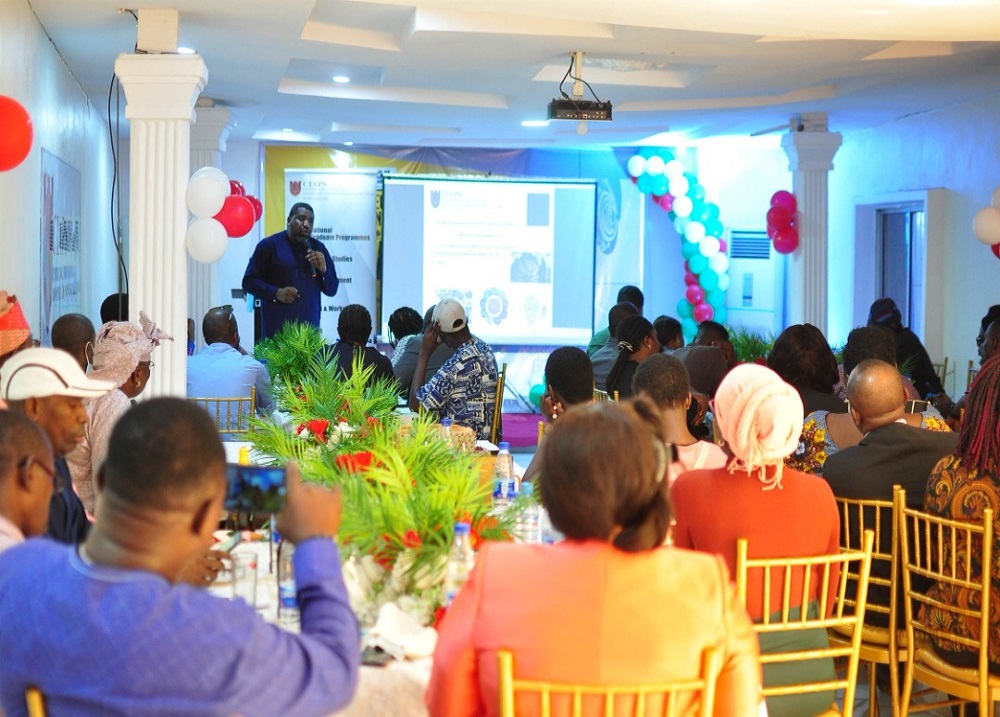
A Lagos-based International Graduate School, CIAPS (the Centre for International Advanced and Professional Studies) has unveiled a Bank of Commonwealth Expertise and Intellectual Capital.

The initiative tagged CIAPS Network of Academics and Professionals (CNAP) has been conceived as a Commonwealth Network of selected Academics, Certified Experts, and Professionals that interact to share views, opportunities, and partnerships based on their expertise and projects.

As a Bank of expertise and intellectual capital, members of the CNAPS network provide insights, geopolitical and sector experience, and expertise to the public, corporate, and other non-governmental organisations in their quest for growth and development.

CNAP members assist organisations with professional information and analysis before engaging investments and contracting partnerships. They work with organisations and institutions to execute their strategic aims across the globe.

CNAP members also offer strategic advice to governments in formulating policies and assist private organisations to understand the implications of government policies.

Members of the Network will benefit from facilitated access to Research Funding, Publishing of General and Specialist Papers, Directory of Guest Lecturers and Expert Witness, Directory of Public and Private Sector Consultants, Becoming a Non-Executive Director, Participation in International Partnership and Collaborations plus International Exchange Programmes.

Speaking to journalists at the unveiling of the Network in Lagos, CIAPS Center Director, Prof Anthony Kila clarified that “to become a CNAP member, you need a Ph.D. or at least 10 years of experience in your sector or industry. Kila also stated that organizations and academics as well as professionals interested in joining or working with CNAP can search out more information on the website www.experts.ciaps.org.

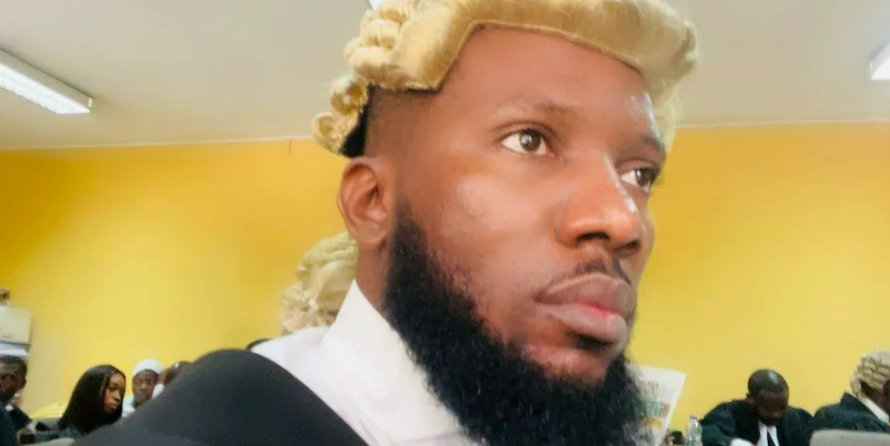
“I came to Prison to follow the path of my ancestors, the Gani Fawenhinmi” – Read What Inibehe Effiong Said After Being Released From Prison

I want to thank God Almighty, the one who said He knew me before I was formed in the womb. The one who said that He had consecrated me and that He has appointed us as prophets to the nation. I thank God for making today to be possible.

For me, like I always say, “History will vindicate the just”. Well, I have just finished my one month appointment with destiny. I came to the custodial centre to follow the path of my ancestors, the Gani Fawenhinmi of this world, and those who over the years have had to sacrifice their personal comfort in order to defend their convictions.

For me and those who came to visit me throughout my period of incarceration, you would have left with one clear message, that I was totally unbothered, totally unmoved and not perturbed. I consider it an honour to be incarcerated for standing by the truth. I want to extend my appreciation to my family. They have been solidly behind me, I want to thank the Nigerian Bar Association, the Olumide Akpata-led administration and all lawyers of conscience in this country, who without having opportunity to hear clearly from me believed in my innocence, stood by my conviction and fought to vindicate me.

I must also thank Mr Femi Falana, SAN, my lead counsel, the other Senior Advocates of Nigeria, and of course members of the NBA leadership who are also part of my legal team. My brother, Augustine Asuquo who is standing beside me and every lawyer that has been part of my legal team for standing solidly behind me.

Again, I must also thank the Nigerian civil society and the human rights community for standing by one of their own. But I will not fail to appreciate my friends in the media. The fourth Estate of the realm who have taken it upon themselves to take the truth to all the four corners of this world. And I thank conscientious Nigerians, conscientious Akwa Ibomites and every single person that has spoken out in my defence to demand my freedom in the last one month.

Well, you would have heard that I was convicted for contempt of court but I might just be, maybe the only person to be remanded as a lawyer, at least currently in this country that was said to have been convicted without any charge preferred against him, without an opportunity to take a plea, without his offence being disclosed or any of the principles of fair hearing being accorded him.

So, for me it is a great honour to have passed through this road. But let me state clearly and unequivocally that while I am grateful to God for this experience because as you may have seen it yourself, this has only strengthened, this has only fortified me. I only feel sorry for those who feel they can break me by incarcerating me because the Inibehe that has just come out of incarceration is brimming with fire. Fire to fight for the common people of this country and no oppressor can quench that fire.

But let us not be mistaken. I never, and I say this as a child of God, you can see, while in incarceration I had the Bible as my companion and I had ‘Long Walk to Freedom’ as my friend. And these are the books that kept me active for the last one month.

So I say it as a child of God that I never at any time pointed my hand at the Honourable Chief Judge of Akwa Ibom. I never at any time banged the table. I never at any time shouted at the court. These accusations only came to me while I was in incarceration.

But you know, deception and lies may prevail for a while but there are two judges that no man can deceive; the judge of heaven and the judge of conscience. The Honourable Chief Judge of Akwa Ibom whose office I respect knows in her conscience that I never acted in any insolent manner. I never disrespected the court.

All I did on the 27th of July when I announced my appearance along with my colleague Augustine to defend my client Leo Ekpenyong was simply to raise two fundamental observations, that I feel every judicial officer, with profound respect, and that every legal practitioner in this country should pay attention to. When I arrived the court, My Lord had announced clearly that today His Lordship is coming in with anger and that the court will not tolerate any nonsense from anybody. And because we knew the antecedence of this matter, we have always accorded the court absolute respect.

Even before we announced appearances, My Lord ordered the (police) orderly to invite into the courtroom two armed Mobile Policemen. I am not against policemen being within the court. I want to be understood clearly because the judiciary cannot function without the aid of the police. The police is an integral part of the administration of justice.

And then, I reminded the court when the policemen arrived that My Lord there is a pending application for recusal urging My Lord to disqualify himself from this case on grounds of bias or likelihood of bias which application we filed on the 23rd day of June, 2022. And of course as it has been, My Lord shouted me down and I rested the issue and said the court will take that application whenever the court deems fit.

And of course, My Lord ordered that the continuation of cross examination should continue and a certain witness for the Governor, one Richard Peter, that is the name he gave the court, entered the dock and I started cross examination. I was on about the second or third question when My Lord furiously, and I say that with all sense of respect to the court, ordered a certain Saviour (Imukudo), a reporter with Premium Times to stand up and he stood up and My Lord asked him who are you and he said he was an observer. My Lord said who are you to observe the court, are you a party to this case? He said no My Lord, I am a journalist. My Lord asked, are you a government journalist? And he said no, I work with Premium Times. Hell was let loose. What I witnessed was unprecedented in my young and little years, for the 8 years I have been practicing as a lawyer. My Lord ordered his phone to be seized and the policemen to take him away.

I had a responsibility having been called to the Nigerian Bar, having taken that solemn oath to defend the constitution of this country, myself being an advocate of press freedom and of course a citizen who knows what is and what is not right to speak out, I stood up, I did not confront the court. I said My Lord, with profound respect, section 36 of the constitution guarantees publicity of trial and provides that court proceedings shall be held in public. I was not even shouting at the court, I was urging My Lord. I said My Lord, I had thought that in view of that constitutional provision that members of the public including journalists should be free to access the court and observe proceedings and of course, My Lord didn’t accept that.

Maybe, that was my offence, I did not give up. I still urged the court and then My Lord said except you are the one who brought him to tarnish my hard earned reputation. So I saw that the issue had become very personal. So I rested the issue.

I was about to continue my cross examination and I turned back, again I saw two armed policemen with AK47, one to my right, one to my left. This had created so much hostility and I said My Lord I have also observed the presence of two armed policemen in court. I said, My Lord, even though I am ordinarily not intimidated by their presence but by their being here with arms sitted behind me they have created hostility in the court which has made it uncomfortable for me and difficult for me to proceed with the proceedings and I pleaded with the court to excuse them. My Lord didn’t accept our plea. Again, maybe that was my offence. I did not give up because I have a duty as a lawyer to defend the course of justice.

I said My Lord, respectfully I am now making it as a formal application in which case Your Lordship would have to render a decision and I said however, if Your Lordship overrules me I would be bound by the order of the court and I would proceed with my cross examination. At that point, My Lord picked a pen, My Lord started writing. You know as a lawyer when you are addressing the court and the court is writing you are excited that the court is taking note of what you are saying. Unknown to me, I thought My Lord was writing what I was saying not knowing it was my committal order to prison. The next thing I heard was ‘you there, step out of the bar’. I stepped out of the bar. I did not fight. And then my Lord said derobe yourself and I must also say again I did not derobe immediately. I must place the record as it is because I cannot derobe as a lawyer in court if I don’t know the reason why I should derobe. It is like taking away my Call-to-Bar certificate. I said My Lord if I derobe I can no longer address the court as a counsel. My Lord said ‘you are no longer a lawyer, I no longer recognize you because I am sending you to prison’.

I didn’t believe it. The next thing my Lord did was to read what My Lord had already written ‘you are hereby sentenced to one month imprisonment, to be remanded at the Correctional Centre until you purge yourself of contempt’.

And then I had removed my wig. My Lord ordered the two armed policemen ‘hold him, hold him. Make sure he does not leave. Hold him, make sure he does not escape’. And I told the policemen, even if I escape, people outside will know that I am the one that is running. Where will I run to? Where in Akwa Ibom will I hide? So, I told them, I don’t have problem, I will follow you to prison. I will not be first (to be there).

All I have told you is what transpired. So, those who say Inibehe does not know how to say ‘As the Court pleases’, Inibehe was disrespecting the court, these are lies. And I say that on my honour. And I’m using this opportunity to publicly urge and appeal to My Lord the Honourable Chief Judge of Akwa Ibom State, My Lord the Honourable Justice Ekaette Fabian Obot to please release the Close Circuit Television (CCTV) camera of that day. Because I am told, I am aware to the best of my knowledge that there is CCTV inside that courtroom, My Lord the Chief Judge’s court. Let all lawyers in Nigeria see when Inibehe pointed at the Honourable Chief Judge. Let them also see when Inibehe banged at the table. Even if I was the most insolent lawyer in Nigeria, you do not have to scandalize my name and attribute to me a conduct that never took place in court just to justify what is clearly unjustifiable.

So what I have told you is the truth. Any account outside what I have told you is a lie and it will remain a lie forever.

I can announce to you that I have taken steps to secure the release of 17 inmates at the Uyo Custodial Centre, in fact one left last night. The others would have come but the authorities were concerned that people were gathering too much so I couldn’t wait. I was supposed to come out with them. We had to spend significant and substantial amount of money to make that happen. These are people that were admitted to bail at Magistrate Courts, they had nobody to take them on bail. In fact, the young man who left yesterday was admitted to bail, subsequently his charge was struck out, the court did not come to inform the Custodial Centre. He was just there. It was until the person I asked to go and perfect his bail went to court yesterday, that was when they came to secure his release. This is someone that had no business being in detention but this shows you how bad the system is.

So, the remaining 17 I am hopeful that before the end of today they will be out. And I am doing that to also let people know that the Criminal Justice system in Akwa Ibom and Nigeria as a whole needs to be revisited. There are a lot of innocent people that are there. The society may condemn all of them as criminals but if there was any doubt that I had as a lawyer that innocent people can be sentenced, by my experience I am now a witness of truth. By my own experience having been sent to prison with no offence disclosed, without any misconduct, then there are innocent people there.

Well, the prison life is what I have always been prepared for. That is why I laugh at those who were celebrating my incarceration. I have always been prepared. I knew this was inevitable because you do not consistently fight those who are oppressing our people and you do not expect to be incarcerated. Life in the prison is a different life entirely. These are the abandoned citizens of Nigeria. They have been abandoned by the Federal Government of Nigeria. They have been abandoned by the Akwa Ibom State Government. As a matter of fact, I have also undertaken to take up cases of some of the inmates and in the coming days, you will get to learn of some of these pathetic cases.

For me, all I needed to do was just to adjust to the environment. There are so many things I had to adjust to. But get this clear, if I have ever had sound sleep in my life it was while I was in the prison. I had opportunity of sleeping for not less than 8 hours a day. I don’t have that in Lagos. So, I must also thank My Lord for this well-deserved vacation. I am grateful to the Chief Judge of Akwa Ibom. You may think it is funny but the day I arrived here from Ikot Ekpene on the 10th of this month, I went to the clinic to check my weight. I was weighing sixty-something but as I am leaving I am seventy-something. So that shows that I was never bothered while I was in incarceration. That is why I pity those who say oh when he comes out, he will not speak again. The voice they so hate is now louder.”

Being Barr. Inibehe Effiong’s address to journalists, friends, and well-wishers following his release from prison custody on Friday 26 August, 2022 after a 30-day cumulative incarceration in both Ikot Ekpene and Uyo Custodial Centres. Excerpts captured by TheMail Newspaper.

Matthew Hassan Kukah: Nigeria’s Bishop

By Chidi Anselm Odinkalu

There was a time when the church was very powerful…. Things are different now. The contemporary church is so often a weak, ineffectual voice with an uncertain sound. It is so often the arch supporter of the status quo. Far from being disturbed by the presence of the church, the power structure of the average community is consoled by the church’s often vocal sanction of things as they are. Martin Luther King Jr., “Letter from a Birmingham Jail”, (April 1963)

Two days before Nigeria’s presidential election scheduled to take place on 28 March 2015, President Goodluck Jonathan and General Muhammadu Buhari, the two leading candidates in the contest for the presidency, met at the Transcorp Hilton Hotel in Abuja to sign an accord and solemnly forswear against violence in the ballot. At the head of the witnesses to the accord was Abdulsalami Abubakar, retired army General and Nigeria’s former Head of State. In the background but also a witness was a clergyman, Matthew Hassan Kukah. In his day job, he also worked as the Bishop of the Catholic Diocese of Sokoto in north-west Nigeria.

This accord was the handiwork of the National Peace Committee, which General Abdulsalami chaired. His deputy was Ebitu Ukiwe, a retired Navy Commodore who served as the second-in-command to Nigeria’s military ruler Ibrahim Babangida from August 1985 to October 1986. Bishop Kukah served as its secretary.

Emotions were at fever pitch and threatening to boil over. Around the world, there were credible fears that the aftermath of the ballot could degenerate into mass violence.

There were three good reasons for these fears. First, the announcement of the result of the presidential election four years earlier had been followed by an outbreak of serious violence in which 943 people were officially confirmed killed. The actual numbers were almost certainly much higher. Second, an earlier peace accord signed between all the political parties on 14 January 2015, including the parties of President Jonathan and General Buhari, and witnessed jointly by the former Secretary-General of the United Nations, Kofi Anan, and his counterpart in the Commonwealth, Emeka Anyaoku, had proved rather fragile. Third, the Independent National Electoral Commission (INEC) had postponed the presidential ballot from 14 February to 28 March 2028, which made all sides quite fidgety.

Many people were sceptical about the peace accord. While the votes were still being counted on 29 March, a columnist in The Nation, a newspaper published by the leader General Buhari’s All Progressives Congress (APC), called it “misconceived”. But the symbolism of President Jonathan and General Buhari embracing one another while publicly renouncing violence and agreeing to abide by the result of the polls was not lost on the country.

The Peace Accord did more than hold. The Guardian newspaper described it as “the peace that was not foreseen.” As proof, Nigeria’s 2015 presidential election set many records in Nigeria’s history. It remains the only one in which the opposition defeated an incumbent. It is also the only one that did not end up in a contest before the election tribunal.

INEC may have organized the election but its work would have come to naught if not for the high level and concerted effort that went into ensuring a soft landing for the country. At the head of that effort was Matthew Hassan Kukah. The convening of the National Peace Committee was his brainchild and he was the Svengali behind the accord.

This was the culmination of a life that had designated him as officiating minister in the marriage of theology and civics in Nigeria’s abusive relationship with its citizens. Providence had prepared Kukah for the role. Kukah is Bakulu (Ikulu), one of the ethnic communities indigenous to the Zangon Kataf Local Government Area of Southern Kaduna – a part of the country that has known its fair share of troubles, violence, and killings. His family has a history of leadership and service. His younger brother, Yohanna Sidi Kukah, the Agwam Akulu II, is the paramount ruler of Ikulu. There is the appetizing thought that Kukah could have ended up on the throne if he had not ended up in the seminary.

Born on 31 August 1952, young Matthew Hassan Kukah was old enough to experience the colonial segregations that blighted the lives of the peoples of southern Kaduna under the baleful practices of Lugard’s “Indirect Rule”. It shaped his road through St. Joseph’s Minor Seminary in Zaria and St. Augustine Major Seminary, Jos, from where he received his qualifications in philosophy and theology leading to his ordination as a 24-year-old priest on 19 December 1976.

At that time, there were not too many indigenous priests from north-west Nigeria and Kukah could easily have been content with a quiet but influential pastoral life. Instead, he forged an intellectual and academic pursuit in peace studies, equipping himself with graduate degrees from the University of Bradford in 1980, and culminating in 1990 in a doctorate degree from the School of Oriental and African Studies (SOAS), University of London. A version of his doctoral research was published in 1993 under the title: Religion, Politics, and Power in Northern Nigeria. He also has a graduate degree in public policy from the Harvard Kennedy School of Government.

In nearly 46 years as a priest, Matthew Hassan Kukah has combined pastoral, civic, and intellectual roles to telling effect. Six years after becoming a priest, Dominic Ekandem, Cardinal Archbishop of Abuja, took Kukah under his wings inviting him to work as a special assistant in Abuja. After the completion of his Ph.D. work, Kukah returned to Nigeria where he worked first as the deputy secretary-general and then the secretary-general of the Catholic Bishop’s Conference of Nigeria. He would later return to Kaduna as the Vicar-General of the Kaduna Archdiocese, from which role the Pope consecrated him as the first Nigerian Bishop of the Diocese of Sokoto on 8 September 2011.

When he was appointed Bishop of the Catholic Diocese of Sokoto in 2011, Kukah became in effect the administrator of the second largest territory in the country after the President. The Diocese of Sokoto covers Kaduna, Katsina, Kebbi, and Zamfara States, including three of the four principal outposts of the Caliphal system established by Dan Fodio (with the exception of Zazzau). Rather ironically, his seat is also located in Sokoto, not far from the seat of the Sultanate. It is a testament to Kukah’s unusual combination of skills that he has managed to foster amity with the communities on the one hand while at the same time deepening the confidence of his congregation.

The Pope may have appointed him to the Diocese of Sokoto but Kukah easily forged a role as Nigeria’s Bishop. He always accepted the priestly vocation as one of public service in which the altar is a mere platform and the country is his congregation.

Kukah arrived at this point with considerable preparation. From June 1999, he combined his role in the Catholic Secretariat with service as the Secretary of the Human Rights Violations Investigation Commission, which was better known as the Oputa Commission, ending in May 2002. Three years later, in 2005, Kukah also headed the Secretariat of President Obasanjo’s National Political Reforms Conference (NPRC).

All through these various roles, Kukah never hid his own ethical and intellectual struggles with calibrating the pitch of his voice against the inequality and injustice that blighted the lives of most of the people from whence he came. These struggles were routinely captured in his public interventions on various aspects of the Nigerian condition. In the past decade, he seems to have crystallised his cadence with confidence.

No one could possibly accuse Kukah of being an “ineffectual voice with an uncertain sound.”      For his troubles, Kukah inspires both deep admiration and committed attacks in equal measure. Not for once, he has been accused of “mixing several issues up and missing the point once again.” In point of fact, however, it is Nigeria’s rulers and their enablers who have chronically missed the point and habitually mixed up issues.

It is easy to attack those who point this out and who, with equal persistence, seek to make the point that there is nothing inevitable in the Nigerian condition. As he turns 70 on 31 August 2022,  it is fair to say Bishop Kukah has earned his place as both the doyen of this vanishing breed and as the voice of a country in search of a conscience to hold it to account.

A lawyer and a teacher, Odinkalu can be reached at [email protected]

Epiphany Azinge emerges as President Commonwealth Secretariat Arbitral Tribunal

Notable Academic, Nigerian Lawyer, and judge at the Commonwealth Arbitral Tribunal Sitting in London, which represents Nigeria and Africa, Prof. Epiphany Azinge has been appointed as the President of the Commonwealth Secretariat Arbitral Tribunal (CSAT).

A 23 August 2022 letter signed by the Rt. Hon Patricia Scotland QC revealed that Prof. Azinge was appointed “pursuant to your nomination to, and selection by, the Board of Governors of the Commonwealth Secretariat, and in accordance with the Statute of the Commonwealth Secretariat Arbitral Tribunal (CSAT).”

The highly cerebral Prof. Azinge would be assisted as President by the other members of CSAT and supported by the Executive Secretary to the Tribunal. The service as President of CSAT is one that is largely honorary and unremunerated.

The letter equally disclosed that Azinge would receive an additional gratuity of £600 per annum, met by the Commonwealth Secretariat.

Joyce Oduah: NBA Failed the Rule of Law Test, Charity Should begin at Home – Adegboruwa SAN

Senior Advocate of Nigeria, and Human Right Crusader, Ebun Olu-Adegboruwa SAN has berated the Leadership and the Elders of the Nigerian Bar Association, NBA, for their fatal error of judgement in ratifying the suspension of the General Secretary of the Association, Joyce Oduah, while there is a pending court case against the purported suspension by the other EXCO members of the Association.

In a statement yesterday, Adegboruwa SAN warned that the NBA should not get to the Level of provoking the Bench.

He described the NBA action as “Sad Commentary stating that he was not surprised that the Federal High Court declared the action null and void.

SEE THE FULL COMMENT:

This was easily predictable. It is shocking that the “Elders of the Bar” could not extricate themselves from this fatal error of judgment.

We shouldn’t get to the level of provoking the Bench against us. NBA lost the battle for sanity, rule of law and due process on behalf of all lawyers and it is a sad commentary, given what the NBA President himself had represented in times past, at the NJC meetings, BOB meetings, etc.

This calls to question the quality of representation at the NBA NEC. I have admired the administration of Mr Olumide Akpata but when we fail to look at wrong in it’s ugly face, we end up the way it has ended at the Federal High Court today.

It was an unnecessary battle for the NBA, as to all intents and purposes, it has taken the shine off the on-going Conference.

What message are we preaching to other Nigerians with all the topics that we have beautifully outlined for the Conference if it was so difficult to observe common rule of law and due process, by the only Association of lawyers put together? The NBA failed the test. Charity should always begin at home.

TIPS