
Register and join the conversation.

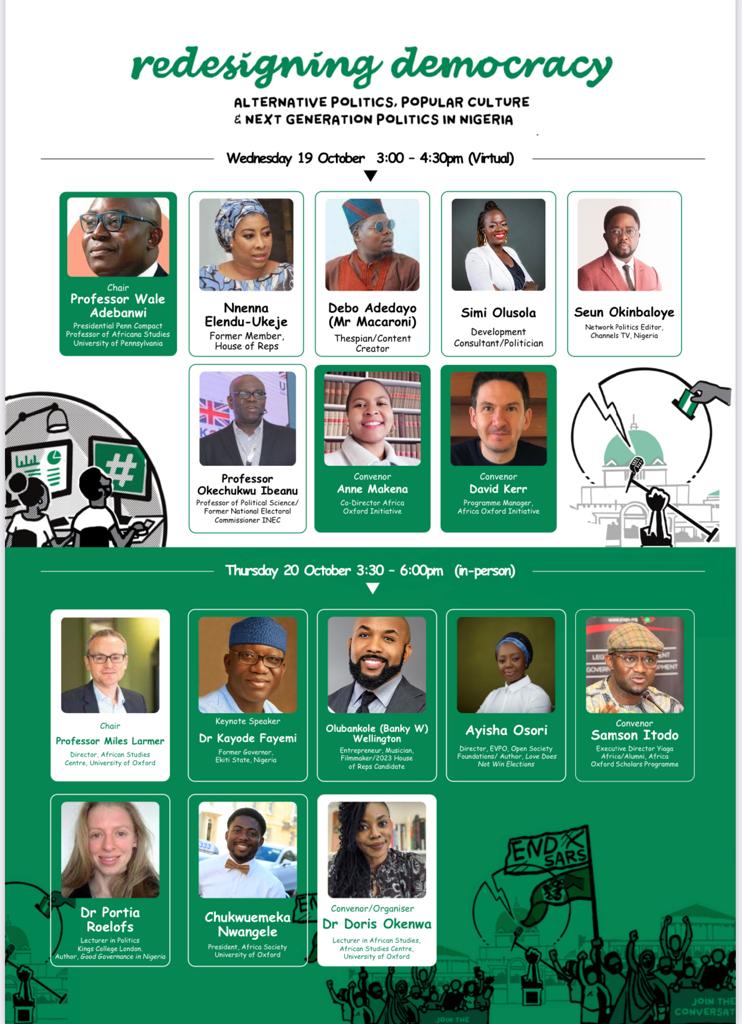
https://www.eventbrite.co.uk/e/is-africa-ready-for-alternative-politics-tickets-438925025567

Register and join the conversation.
https://www.eventbrite.co.uk/e/is-africa-ready-for-alternative-politics-tickets-438925025567
By Chinua Asuzu
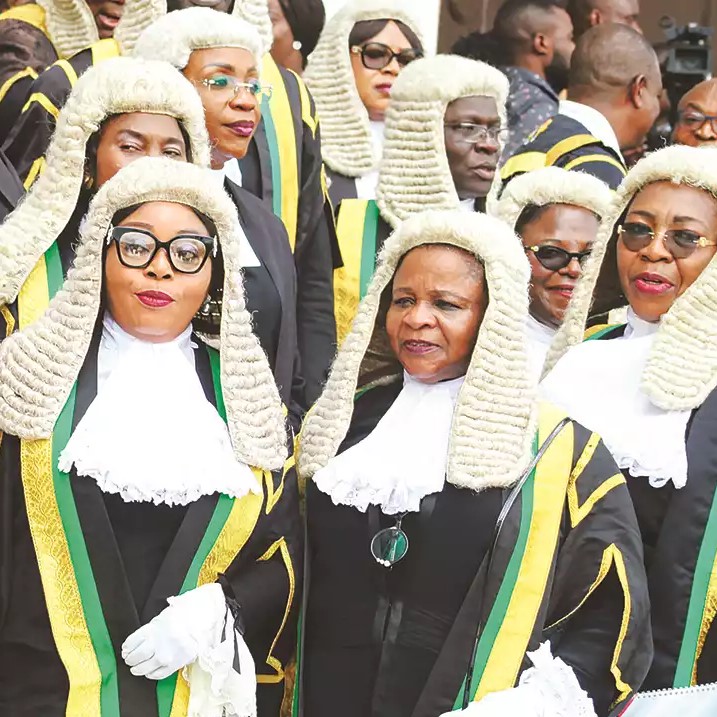
“If you appear before a female judge who doesn’t like being called lady, then address her in the third nonperson, as this Honorable Court. Never address a female judge as my lord or your lordship. You don’t have to partake of her ladyship’s unrepentant illiteracy. Nor must you join the cult of linguistic gender-benders.” – Chinua Asuzu
Nigerian bench and bar speak quirky legal language. They address female lawyers as gentlemen on the long-dead fiction that “there is no lady at the bar.”
Of course, there are ladies at the bar, and they deserve to be addressed as ladies.
Some members of the Nigerian legal community also refer to female judges as he, his lordship, lords, their lordships. They also say sir to female judges.
They use these sexist forms of address with the acquiescence and even eager support of allegedly educated and supposedly enlightened Nigerian women.
Some female judges even demand or expect to be addressed as men. Apparently, they don’t like being women; so they opt for a linguistic sex-change operation. One would expect women to be proud of their sex and gender and be keen to be recognized for whom and what God has, in his infinite wisdom, made them.
The sexist language originated in ancient England when, indeed, there were no females at the bar, let alone the bench. Well, we live in a different era now—one of open, clear, comprehensible, and user-friendly communication, with millions of ladies in the profession.
Address a female judge as my lady or your ladyship. Speak of her as her ladyship. If you are a judge yourself, of either sex, address your female colleagues on the bench as my learned sisters. Drop the linguistic gender bender. Judges of both sexes are learned brothers and sisters, not learned brethren or learned brothers.
The UK Supreme Court today comprises 11 male members and 1 female member. The male members have the title of Lord; the sole female that of Lady. As I write this in October 2022, the female member is Lady Rose.
And do you remember the Oscar Pistorius trial in South Africa? The female judge was addressed as my Lady.
Male judges can always be addressed as sir. Female judges should welcome ma’am.
Senior Advocates of Nigeria should refer to a male colleague of the inner bar as a brother silk, a female as a sister silk, and a mixed group as fellow silks.
Thanks for joining the war against linguistic sexism. And while you’re at it, fight other discriminatory isms, whether based on age, caste, class, cultural background, disability, economic status, ethnicity, gender, marital status, race, religion, sex, sexuality, or social standing or status.

By Lillian Okenwa
It has since been reported that operatives of Tantita Security Services Limited, the surveillance outfit of ex-militant leader, Government Ekpemupolo, alias Tompolo, discovered major tapping points on the Trans-Forcados/Ramos Pipeline in Delta State, through which International Oil Companies, security officials, oil bunkerers, and locals have colluded to hemorrhage the country, over the years. The Federal Government through the Nigerian National Petroleum Corporation Limited, NNPCL, awarded Tompolo’s company a N48 billion-a-year contract to protect pipelines bearing petroleum products. Not long after, he began to make discoveries.
His initial findings were delivered to the Chief of Defense Staff, CDS, General Lucky Irabor, and Group Managing Director, Nigerian National Petroleum Corporation Limited, NNPCL, Alhaji Mele Kyari. NNPCL and security officials identified 16 breaches on the pipeline operated by Shell Petroleum Development Company, SPDC, at Yokri community and environs in Delta state.
General Irabor, who spoke to reporters after inspecting the breaches, vowed that the Ministry of Defence would not leave any stone unturned in fishing out the culprits.
The NNPCL boss, Kyari, who acknowledged that the company was getting massive support from security agencies and other stakeholders in the campaign to stop illegal oil bunkering asserted that “anyone involved in this process…will be dealt with.”
But in an interview on Channels Television Tompolo alleged that top officials of Nigeria’s security agencies are behind crude oil theft. Tompolo said the stealing of crude oil is being carried out by the same security agencies that are supposed to catch the thieves.
Months ago, Labour Party (LP) presidential flag bearer, Mr. Peter Obi, blamed the government for the rising incidence of oil theft in the country while challenging the Nigerian Government to publicly name highly placed leaders involved in crude oil theft in the country.
Days after this discovery, Tompolo’s group discovered another huge illegal pipeline connected to the 48-inch Trans Forcados Export Trunk line, at the rear of a military security post in Burutu Local Government Area, Delta State.
It is believed that oil companies, oil bunkers, Nigerian National Petroleum Corporation, NNPCL, and security officials jointly steal crude oil through the illicit pipeline connected to the trunk line through an abandoned pipeline by the Nigerians Agip Oil Company Limited, NAOCL, and linked to a location in the high sea, where they load crude oil into vessels and sell overseas.
Meanwhile, the Oil Spill Victims Initiative, OSPIVV, has threatened to sue NNPCL and Shell Petroleum Development Company, SPDC, over the illegal pipeline connections used to siphon the country’s crude oil. The Shell Petroleum Development Company, SPDC, operates the Forcados Terminal in Ogulagha, which has a nameplate capacity to export 400,000 barrels per day. It takes delivery of crude from the Forcados Oil Pipeline System and is the second largest pipeline network in the oil-producing region, after the Bonny Pipeline System in the eastern Niger Delta.
The newest discovery is similar to the earlier illegal 4-km pipeline also attached to the same Trans–Forcados export trunk line, equally exposed by Tompolo’s men. Prior to this latter discovery, Tompolo’s Tantita Security Services Limited ambushed and arrested eight members of a suspected crude oil syndicate while they were pumping crude oil from a Chevron Nigeria Limited, CNL, pipeline in Delta State, into an improvised 87-metre long ocean-going vessel, MT Deino.
At the time of arrest Ship captain, Captain Temple Manasseh, and seven other suspects, had pumped 605 cubic metres of crude oil into the vessel with 12 compartments from an illegal connection attached to a CNL crude pipeline, between Abiteye community and Escravos in Warri South Local Government Area.
The same vessel was said to have been arrested in September 2021 for oil bunkering, but was later released and continued illegally loading crude oil from Nigeria to Ghana for many years. Owners of the ship who have not been unmasked reportedly offered an official of Tantita N25 million dollars to release the vessel, but he declined the offer.
The eight suspects, including the captain, were subsequently handed over to the Joint Task Force, JTF, in Niger Delta. Rather than commence investigations, the Nigerian Navy set the vessel ablaze. While condemnations trail the burning of the vessel, the Chief of Defence Staff said no investigation was needed. But the House of Representatives has promised to investigate the circumstances surrounding the destruction of the vessel by security agents.
Also faulting the action, a civil advocacy group, the Centre for Human Rights and Anti-Corruption Crusade, said the military “has chosen to destroy the evidence of the alleged crime” and that it lacked constitutional rights to set ablaze an intercepted crude-laden vessel as it was done on Monday 10, October 2022.
Part of the statement titled— “Crude oil theft: Setting fire on the arrested vessel Is condemnable: We call for probe,” reads: “The news making rounds on the airwaves that the vessel, MT Deima with International Maritime Organisation Number: 7210525 which was arrested by the brave and incorruptible workers of Tantita Security Services Limited was set on fire by the Nigerian security agents.
“We have been informed that Tompolo’s team workers, i.e Tantita Security Services workers who tracked and arrested the vessel, handed it to the Nigerian security agents with the crew onboard for investigation and possible prosecution. We are surprised that the military rather than discharging the contents to the NNPC Limited and arresting the vessel to carry out their investigation has chosen to destroy the evidence of the alleged crime.
“Those who destroyed the ship rather than using legal means to enforce the law, we believe have something they know. Nigerians were happy that a patriotic Nigerian in the person of High Chief Government Ekpemupolo has embarked on a suicidal mission to secure the nation’s economic assets. The security agents are supposed to be complementing the bold efforts of Tompolo by prosecuting those found wanting which includes confiscating the proceeds of crime to the Federal Government.
“How can the security agents effectively carry out their investigation on the vessel to prosecute those found wanting when the very sensitive and overwhelming evidence has been destroyed? If NNPC Limited and the security agencies want Nigerians to know the monster behind the mask then those security agents involved in burning the arrested vessel should be probed immediately. Let no stone be left unturned.
“It’s condemnable. One of the reasons why NNPC Limited has chosen to engage private companies to secure the pipelines is the environmental despoilation by the economic saboteurs. The security agents who destroyed that vessel have committed grave environmental degradation. NNPC Limited and the defense headquarters should call the military to order before they further abuse the environment with impunity. We will not hesitate to take remedial action against NNPC Limited and the security agencies should there be any repeat of this grievous act.
“Now that the operatives of Tantita Security Services Limited are seriously and courageously combing the creeks to arrest oil thieves, those culprits handed over to the security agents should be tried by the law. Destruction of proceeds of crime may sabotage Tompolo’s efforts in ridding the Niger Delta region of oil theft. NNPC Limited and the military hierarchy should therefore caution the security agents guiding the nation’s oil facilities in the region.”
But the army claims that the swift destruction of the vessel was in line with the rules of engagement. CDS Irabor who added that no investigation was needed to carry out the action said:
“There are various approaches, various solutions to a problem and at any time based on certain factors, certain considerations, available to those that are at the frontline, actions are taken based on the directive which are contained in the rules of engagement. So, the burning of the vessel is because the thief was caught in the act and the procedure, if you are caught in the act, is that everything you are using to undertake that criminal activity should be destroyed, and that was done.
“What investigation do you need that you find somebody who decided to deplore several pumping machines and has several hoses that are deployed to a dug-out pit where crude oil is stored over a period?
“It was caught in the act. So, the instrument of operation was what was destroyed. I think it is straightforward. Whether that is the best is a different matter entirely but did they act in line with the rules of engagement? Yes, they did.”
In 2013, the National Economic Council (NEC) approved N15bn for equipment to check oil theft. The result is yet to be seen.
Condemning what appears to be the government’s complicity in oil theft, Rights Activist, Chief Femi Falana, SAN said the government’s negligence in adopting modern technology to tackle oil theft is meant to sustain the pilfering of the nation’s resources. Falana who revealed that seven years ago NNPC acquired N50 billion worth of equipment which has not been installed, requested that it should be promptly installed to stop crude the menace.
“The NNPC acquired software seven years ago to monitor and track every tanker loading fuel in Nigeria and that software was installed with about 50 billion Naira.
“You are told that 400 barrels of crude oil are stolen daily in Nigeria. Nigeria is the only oil-producing country that has refused to install a metre to know how much oil is produced daily. The government of smugglers has refused to install the necessary technology.
“Why the government has refused to be modern is this: if they install the technology, there won’t be stealing.
“So we are saying here today that the NNPC must disclose to Nigerians why the software acquired seven years ago has been disabled by the government so that tankers can take out fuel.
“We are also challenging the government to install the machine, the meter, that allows the government to know the quantity of fuel that is produced daily.
“Every ship that takes fuel from anywhere in the world is monitored. The way our oil is stolen. The point of taking out oil, the ship is loaded and the criminal taking out the fuel will determine how many litres of fuel is being smuggled and then collect money.
“Between January 2011 and Feb 2014, it was discovered that crude oil left Nigeria to Philadelphia port alone and not recorded in Nigeria was 62 million barrels valued at 12.7 billion Dollars.”
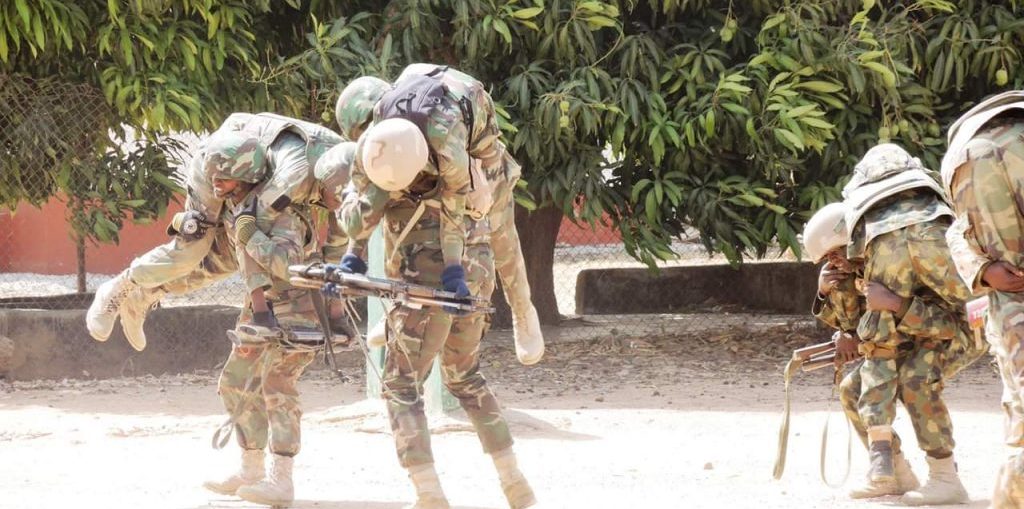
With the advent of democracy in 1999, expectations were high that unlike in the military era, respect would be accorded to decisions of the court.
The flagrant disobedience of court orders by the federal government has since dampened these hopes as the federal government, its agencies, and agents particularly the military continue to treat orders of court with contempt.
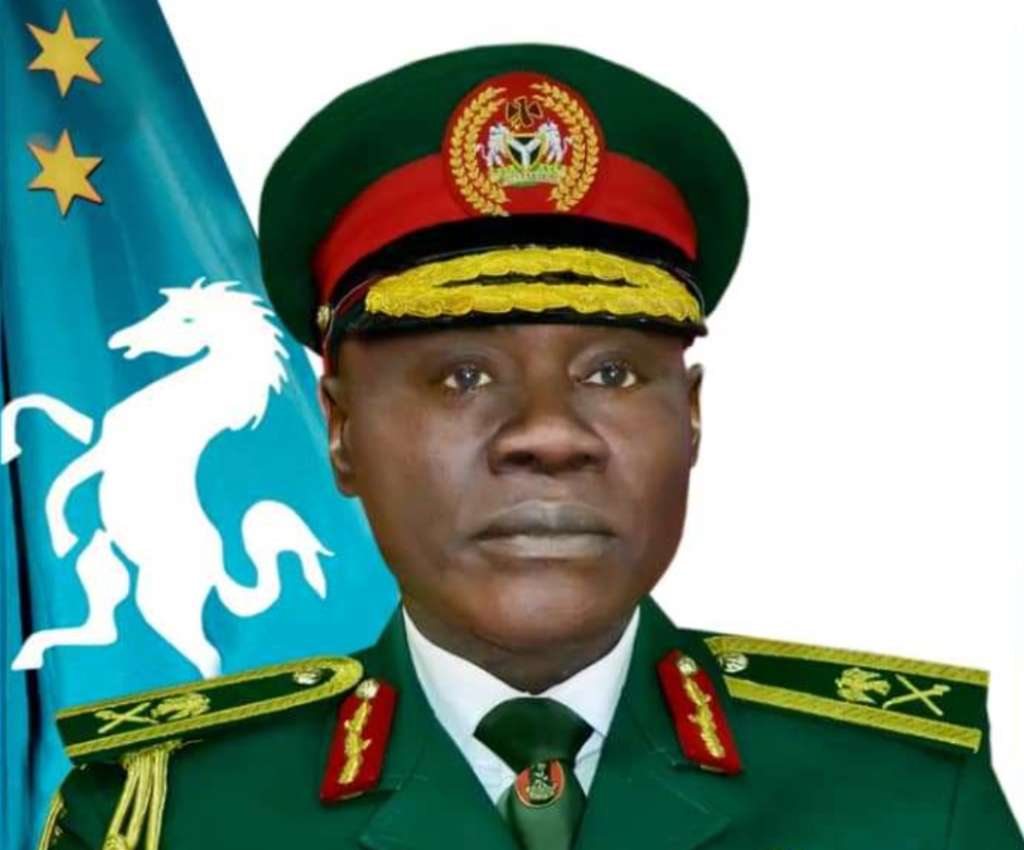
A three-member panel of the Court of Appeal in 2021 upheld the judgement of an Abuja National Industrial Court which ordered the reinstatement of army Colonel, Danladi Hassan into the army.
When the army refused to comply with the order, Colonel Hassan petitioned the House of Representatives urging it to compel the army to reinstate him and pay his entitlements.
The Nigerian Army however insists that it will not honour the orders to reinstate Hassan who was sacked in 2016. In a letter to the House of Representatives Committee on Public Petitions dated 7 October 2022, the army also said it will not pay the complainant his legal fees, salaries, and allowances as directed by the court.
The army in a letter signed by its Director of Legal Services, MU Wambai on behalf of the chief of army staff, disclosed that the Appeal Court failed to factor in the peculiarities of military conditions of service in delivering its judgement.
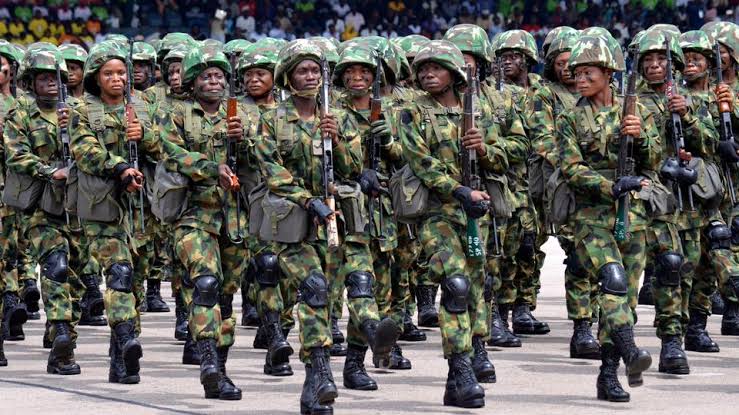
Hassan, who led troops to recapture Bulabulin and Damboa from Boko Haram in 2014, was compulsorily retired in 2016. He was retired alongside 37 other officers. Following his forceful retirement, he approached the National Industrial Court of Nigeria (NICN) which in January 2019 ordered his reabsorption into the army.
Hon. Justice Sanusi Kado who tried the matter held that the army failed to convince the court of the disciplinary grounds for the forceful retirement. The army appealed and the Court of Appeal dismissed the appeal for lacking in merit.
According to the letter signed by Major General Wambai, the petitioner had already exceeded the age for his rank and can no longer be reinstated.

“In the light of the above, it is the position of the NA that the Appellate Court did not appreciate the peculiarity of the Military Service while passing its judgment when it ordered for the reinstatement of the Petitioner into the NA.
“This is because the Officer’s Military Services was regulated by provisions of the then Harmonized Terms and Conditions of Service Officers 2012, particularly as it relates to Age Ceiling on a particular rank. The Petitioner who was a Colonel until his retirement in June 2016 is no longer promotable as a result of Age Ceiling and as such makes it difficult to reinstate him,” he said.
On the payments of salaries and allowances, the army said he did not work for that period and cannot be paid but that it has magnanimously granted the petitioner the privilege of retiring with his rank, pension, gratuity, certificate of service, and identity card.
“Also, the Petitioner’s request for payment of salaries and allowances over the period he was out of service and when it is clear to him that he did not work for the period will amount to cheating on the Nigerian Army in particular and the Government of the Federation in general.
“The NA. reiterates that it has done the needful by magnanimously granting the Petitioner the privilege to retain his substantive rank of Colonel, Gratuity, Pension, Certificate of Military Service and Retired Officer’s Identity Card.
“The Petitioner’s additional request for his reinstatement into the NA and payment of all his salaries and allowances for the period he did not work is difficult because of the peculiarity of Military Service.
“Under the Harmonized Terms and Conditions of Service Officer 2012, particularly Chapter 1 Paragraph 01.04 (0), Military Service of an officer is a period of unbroken Service in the Nigerian Armed Forces from the date of commissioning to the date of retirement from Service except for Executive Commission/Special Duty/Branch Commission Officers whose Military Service commences from enlistment.
“Also, with the chain of Service being broken, it will not be in the interest of the NA and public security to reinstate him to Military Service.
“Additionally, Military Service is a Service which ensures that discipline is sustained through regimentation. Therefore, bringing the Petitioner back to Service as a Colonel when his juniors are already on the rank of General will affect Military discipline, as he will not be 100% loyal to his superiors who were formally his juniors; thereby same having a negative effect on the Military command and control. In view of the above, it is in the interest of justice that the NA recommends for the Petitioner to write to the Army Council to convert his Compulsory Retirement to Voluntary Retirement,” he said.”
Colonel Hassan’s 37 colleagues that were equally compulsorily retired in 2016 got judgements for their reinstatements but they were disregarded
During an occasion, Chairman of the Nigerian Bar Association Section on Public Interest and Development Law, NBA-SPIDEL, Dr. Monday Ubani said disobedience to court judgments by the federal government, is a dent on democracy.
In his words: “Every government in Nigeria has always disobeyed court orders and trampled upon the rule of law with impunity. Our thinking was that Buhari’s government that promised change would have been different but that is not the situation.
“The present government has surpassed previous governments in disobeying Court orders and trampling on the rule of law. We have lost count in the number of court orders they have disobeyed. In disobeying court orders, the present government does not do itself any good as the records are there for future use and will remain a permanent dent to those who operated our democracy within the time in question. They still have enough time to change their behaviour and cleanse the negative image they have created for themselves in their penchant for disobeying court orders.”
Decades ago in Ibrahim & Ors v. Emein (1996)2 NWLR (pt. 430) 322 Hon. Justice Tanko Muhammad, JCA as he then was, held that:
“If for any reason the executive arm of government refuses to comply with court orders, I am afraid that arm is promoting anarchy and executive indiscipline capable of wrecking the organic framework of the society. The corporate existence of Nigeria, it must be admitted, postulates the principle of cooperation between the three arms of government (Executive, Legislative, and Judiciary). Where these work together in the same framework, then the rule of law shall prevail in that society. But where each selects to work in isolation and/or in utter disdain of the other, then havoc wrecks the society. thus by this unique position, each knowing the limits of its powers and not to attempt to enter brusquely into the preserve of the other or ride roughshod of the powers of the other, then their rule of law has achieved its purpose which is ensuring respect for the law.”

By Rev. Fr. George Ehusani
A MAJOR paradox of human life is that we are constantly looking for the easy way out, even when we know that nothing good comes easy. We are constantly drawn to the glamorous path even when we recognise that not all that glitters is gold. We are continually looking for more and more comfort; for more and more pleasure, for more and more wealth, and of course, for more and more power, prestige and popularity, even when we know that they don’t necessarily bring contentment and fulfilment.
We put all our attention and all our energy into pursuing wealth, pleasure and power, seeking to find happiness thereby. Yet, we know that these things do not in themselves bring ultimate happiness. This is precisely what St. Augustine meant when he noted that men and women pursue happiness even when they live in such a way as to make happiness impossible.
With all the distractions of our age, many people find it very difficult to reflect on the fundamental question of life’s ultimate purpose. We prefer to just live through each day, struggling for space, competing for power, and grabbing as many toys as we could lay our hands on along the way, rather than engage in the more philosophical question of the essence and the purpose of our existence. We often get so engrossed in the rat race to succeed in business, to get to the top in politics, and to become social celebrities, that we miss out on what truly matters in life and what really gives meaning to life.
Indeed, today, we are all under such intense pressure to live on the fast lane, to be like the Joneses, to consume more and more goods, to indulge in more and more pleasures, and to acquire more and more personal freedom, that we have little time left to ask ourselves what meaning there is in all our earthly preoccupations. The Greek Philosopher Socrates observes that a life that is not reflected upon is hardly worth living. As human beings, we are created for a purpose. Our ultimate fulfilment and happiness lie in the realisation of that purpose. We are designed in such a way that we can neither find happiness nor attain fulfilment within ourselves – no matter how much we try. We are wired in such a way that ultimate happiness and fulfilment for each one of us lie beyond us.
No degree of academic or professional success, no amount of material wealth or pleasure, no aggregate of political power and security, and no level of popularity or celebrity status, can provide for us the joy, the peace, or the authentic happiness which is only available in God our Creator. Indeed, the human heart hungers and thirsts after something beyond all that is available to acquire in the material world. The author of Ecclesiastes came to this realisation when he wrote that classic poem titled, “Vanity of vanities, all is vanity” (Ecclesiastes 1:1-15). Yet, we are witnessing today what appears to be an epidemic of widespread thoughtlessness, as a result of which many people are leading very destructive, meaningless, empty and futile lives.
We are witnessing a major crisis in marriage and family life, and an attendant crisis in the parenting enterprise, on account of which the lives of many of our young people are devoid of any strong moral foundation. We are witnessing in the generation of youths to which our graduating class belongs, what some of us perceive as heightened individualism, gross indiscipline, and crass materialism. We are witnessing today the spread of a culture of instant gratification, the widespread glamorisation of pleasure and the senseless idolisation of the champions of the modern entertainment industry, including sports, music, movie and comedy celebrities.
Yes, we are witnessing in our day what has been described as Acute Celebrity Syndrome, by which popular TV and Social Media personalities, movie, music, and comedy celebrities, as well as beauty pageant competitors, are not only treated like objects of worship while they are performing on stage, but they have become the most powerful influencers of our young people’s behaviour. Yes, celebrities of the entertainment industry and social media influencers are adored, glamorised, and deified by our young people, even when many of them are chronic alcoholics and pitiable drug addicts, terrible sexual deviants, and confused perverts, and such cognitively disoriented and socially dysfunctional persons that they should normally be kept away in an asylum. But they have largely become the “moral influencers” of a good number of our often vulnerable and gullible young people, who have often not had the benefit of good parenting, and perhaps also have not had the good fortune of coming by powerful godly mentors among their teachers, in the course of their sojourn through school. These so-called social celebrities – who are largely champions of the 21st Century global hedonistic culture or agents of the rotten part of a dying Euro-American civilisation – are now dictating much of the conduct of our young people.
Yet, some of the most popular global and national celebrities are now and again reported to be suffering from chronic depression, to be going in and out of drug rehabilitation centres, to die of drug overdose, or to commit suicide – from Whitney Houston to Bobby Brown her daughter, and from Michael Jackson to Cheslie Kryst (the 2019 Miss USA who jumped to her death from the window of a 23-storey New York building early this year)! Yes, the year 2022 alone has recorded a shockingly high number of celebrities who have taken their own lives, perhaps because in spite of their rich and comfortable lives of glamour; in spite of their celebrity status that makes them objects of envy; in spite of their being adored and deified by millions of fans across the world; perhaps in spite of their apparent success, they themselves have often found their lives to be empty, futile and meaningless.
Thus, as our young people glamorise and idolise the Naira Marleys, the Portables, the Bobriskys, as well as such Nollywood, Big Brother Naija and Instagram celebrities, who are sick enough to promote the smoking of marijuana on stage, to strip themselves naked in public, to record themselves in sex-videos and shamelessly post such disgusting videos on the internet for the whole world to watch, I am left with many questions: What has happened to the disciplined political legacies of Mrs. Funmilayo Ransome Kuti, Chief Michael Opara, Chief Obafemi Awolowo, Chief Anthony Enahoro, Alhaji Lateef Jakande, Alhaji Aminu Kano and Alhaji Waziri Ibrahim? Have the children of our generation not been told inspiring stories of these moral icons of our nation?
As we witness our young behaving like orphans abandoned to the streets, and are following the madmen and women who are dancing naked in the marketplace, I ask: What has happened to the pioneering academic legacies of Prof. Ishaya Audu, Prof. Ango Abdullahi, and Dr.Bala Usman of the Ahmadu Bello University? What have we done with the outstanding legacies of Prof. Ayodele Awojobi, Prof. Chike Obi and Prof. Eni Njoku of the University of Lagos? What have we done with the remarkable records in academics and leadership we have seen in such personalities as Prof. Solomon Wangboje, Prof. Grace Alele Williams, and Prof. Lillian Salami at the University of Benin? And what have we made of the giant strides in the Health Sciences made by Prof. Adeoye Lambo, Prof. Olikoye Ransome Kuti, and Prof. Umaru Shehu (of the University of Ibadan, University of Lagos, and University of Nigeria, respectively)?
What have we made of the truly exceptional records in the literary arts set by Prof. Wole Soyinka, Prof. Chinua Achebe, and Prof. John Pepper Clark – exceptional records, which are still being celebrated in institutions of higher learning across the world, with Soyinka receiving the Nobel Prize for Literature, and Achebe’s Things Fall Apart being translated into over forty international languages? What have we done with the brilliant legacies of such towering Nigerian women academics as Prof. Jadesola Akande of the University of Lagos, Prof. Bolanle Awe of the University of Ibadan, and Prof. Joy Ogwu of the Nigerian Institute of International Affairs? Didn’t we tell the inspiring stories of their phenomenal achievements to our children?
As our vulnerable and gullible youths applaud, lionise, and seek to imitate a gang of socially dysfunctional and ill-mannered personalities in our day, I ask the men and women of my generation, including parents and schoolteachers, as well as pastors and preachers: What has happened to the stunning records of lifelong service for the common good bequeathed by Michael Imoudu, Margaret Ekpo, as well as Tai Solarin (of the Mayflower College fame)? What have we done with the spectacular record of integrity in private and public life of the likes of Chief Akintola Williams, Chief Philip Asiodu and Dr. Christopher Kolade? What has happened to the extraordinary records in the legal profession of Chief F. R. A. Williams, Chief Gani Fawehinmi, Prof. Ben Nwabueze, and Justice Chukwudifu Oputa?
If our young people are enchanted by exploits in the broadcast and entertainment industries, then I would ask: What has happened to the decent legacies of such pioneer Nigerian actors and broadcasters as Joke Silva, Justus Esiri, Anike Williams, Tom Adaba, Siene Allwell Brown, Frank Olize, Eugenia Abu, and Cyril Stober? Did we not tell them about the meaningful lyrics and the sweet melodies of Oliver De Coque, Onyeka Onwenu, Christy Essien Igbokwe, Dan Maraya Jos, as well as Victor Uwaifo and Prince Nico Mbarga (of the Jeromi and Sweet Mother fame, respectively)?
How come today’s generation of parents and teachers failed to inspire their children with the dazzling lives of the above trailblazers in the educational enterprise, in the legal profession and in civil service, as well as in broadcasting and the entertainment industry? How did today’s generation of leaders end up creating such a regrettable gap in national memory that our children are now left to grope in the dark, and, confusing notoriety for popularity, they are now adopting as their models and exemplars, a bunch of brazen but vile entertainers, many of who are often struggling with depression, drug addiction, sexual perversion and suicide ideation?
To what extent have the men and women of my generation, who are now raising young adults, seen some of the above listed elders as exemplars, mentors and inspirers in integrity and purposeful existence? And what efforts have we made to introduce these trailblazing Nigerians in various fields of human endeavour to our children for their emulation? Are the pictures of some of these icons of our nation prominently displayed in our homes, our schools, and our offices, so the young people can get to know who they were, what they achieved and what principles they lived by?
Shouldn’t we hold today’s parents and teachers responsible for the failure to project and signpost for their children and wards the brightest stars and the finest flowers that are truly worthy of emulation, whom the good Lord has blessed this land with? Now tell me: How can we dissuade our young people from following and emulating those who have only recently catapulted their way to instant fame and rapid wealth, by their sheer audacity in the brazen and uncensored display of nudity and vulgarity, and the callous exploitation of the undomesticated sensualism of a good number of our youth population? How do we convince our young people not to take as mentors and models, the devious politician, the rogue public servant, the counterfeit pastor, the internet fraudster, and the drug dealer who on account of their ill-gotten wealth, are celebrated as successful men and women in the rotten environment of contemporary Nigeria?
How do we rescue the multitude of our young people that are today racing towards the angel of death, because no one has pointed their attention to the many beacons of light that this country has all the while been blessed with? Who will take on the challenge of re-instituting in our school system at all levels, a creatively new, dynamic, and functional study of history and civic education, such as will convince our children and young adults (many of whom have become so enamoured by the lives of the rich and famous with no antecedents or pedigree), that the Nigerian public square has not been bereft of iconic, honourable and adorable elders and trailblazers? Yes, who will help convince our young people that all appearances to the contrary notwithstanding, post-independence Nigerian history is full of exemplary politicians, academics, professionals, entertainers and sundry achievers, who have left us with a legacy of decency, excellence, integrity, self-sacrifice and purposeful existence?
The task at hand is a very serious and urgent one, because we are about to lose millions of our young people whose teeth are on edge today because their fathers and uncles have eaten sour grapes. We are about to lose millions of our young people who are suffering constipation today because their mothers and aunties have eaten the forbidden fruit. True, many of our children have not been adequately parented, nor have they been sufficiently taught and mentored in the art of purposeful existence. They have often not been shown practical examples of truth and integrity, discipline and diligence, service and sacrifice, passion for justice and patriotism, such as were manifested in the lives of the above highlighted patriarchs and matriarchs – enough to motivate them.
We of the older generation must own up before our young people that we have betrayed our fatherland and failed to lay the necessary foundation for a wholesome future for our children. We must own up to the fact that we have often stolen food off the hands of our own children. Each one of us is guilty to the extent that we have contributed in some way to the mess of the moment. As parents and teachers, and as preachers and pastors, we have often failed to inspire our young people to see integrity, discipline, and sacrifice for the common good, as the pathways to wholesome existence and lasting happiness and fulfilment.
As leaders and elders, we have often failed to serve as a beacon of light to the coming generation. Instead, many of us have been a source of scandal for our own children and the children of our country. Have we not seen in this country many so-called leaders and elders that are habitual violators of truth and honesty? Have we not seen how many persons who occupy high public office, constantly sacrifice the elementary principles of integrity on the altar of greed and the lust for power?
There is serious work to be done by all of us who belong to the adult society in Nigeria if we are not to kill tomorrow before today’s sunsets. Those who seek to bestow hope on the coming generation must recommit themselves to such values that make for nation-building as truth and honesty, and justice and equity. The time has come for repentance. For us who are believers in God, the situation may be bad enough but not hopeless. We should believe that redemption is possible for our land by the power of God who creates and recreates.
We can experience rejuvenation, if today we begin to retrace our steps, and get back to the basics. We should believe that from the rubble of our shattered motherland, a rich, powerful, peaceful, and united country can emerge, by the power of God who puts back flesh on dry bones. Those who seek to bestow hope on the coming generation must recommit themselves to the life of truth, justice, and righteousness. Parents must be ready to make sacrifices for the sake of their children, including the sacrifice of quality time with them, and not to think that they would succeed in raising good children if they can only afford to send them to expensive boarding secondary schools in Nigeria, or some ivy league colleges abroad. Teachers on their part must recognize that they teach more by their lives than by the content of their classroom lessons.
I now turn to you, my dear young people: It is true that we your parents and teachers, as well as your political and religious leaders, have often not shown you good enough examples of truth and integrity, service and sacrifice, fidelity and chastity. Yet if you want a better society for yourself, and for your children and children’s children, you must reject the foolish pattern of life which has led our nation to the mess of the moment. I urge you instead to seek after the higher values that will foster in each one of you, meaningful existence, as well as lasting happiness and fulfilment. If today you and your peers cultivate these virtues, then you would have laid the foundation for a more wholesome future for your country and for the world.
I believe that a better Nigeria and a better world is possible, but you must begin to work towards it right now. You must shun crass materialism, senseless consumerism, and blind pleasure, which have become the dominant passion of your generation. You will never realise your purpose in life if you allow the inordinate passions of the flesh to overwhelm and enslave you. Instead of seeking escape in the plastic wings of sensual pleasure and the vanity and vainglory daily offered by modern-day celebrities on social media, you must seek the fear of God, which Proverbs 1:7 says is the beginning wisdom.
If those of you who are here today, who happen to be among the most privileged of Nigerian youths; if you allow your lives to be shaped along the path of deferred gratification instead of the instant gratification that is now the order of the day, then the future may still be salvaged, and tomorrow may not be lost. If today you choose the culture of life in place of the prevailing culture of violence and crime; if you choose the culture of discipline, service and sacrifice in place of the destructive culture of reckless and unmitigated pleasure that is advertised and promoted everywhere today, then you are sure to have a brighter future ahead of you.
Finally, I will address those of you who are graduating today: In the course of the last six years, the administrators and teachers of this school would have done their best to inculcate in you some of the best humanistic and Christian values for your wholesome existence and for the transformation of our dysfunctional society, according to the well-celebrated educational record of the Jesuits worldwide.
As you leave today, the challenge is for you to let the seed sown in you these past six years grow to maturity and to bear fruits for yourselves, for your families, for your country, for humanity and to the glory of God. With the quality of education that you have received here, a number of you will surely get into positions of power and influence in the increasingly interconnected global society.
Wherever you find yourself in the short term and in the longer term, you must champion the cause of promoting integrity, disciplined, as well as responsible and purposeful existence, in accordance with the spirit of St. Ignatius of Loyola. I challenge you all to begin today to reflect upon and discuss seriously, creatively new intervention strategies towards changing the face of our society and the face of our world to the glory of God, for as Psalm 29:18 says, “where there is no vision, the people do perish.”
A Commencement Speech at the 2022 Graduation Ceremony of Loyola Jesuit College, Gidan Mangoro, Abuja, August 14, 2022, by Rev. Fr. George Ehusani, Executive Director, Lux Terra Leadership Foundation.
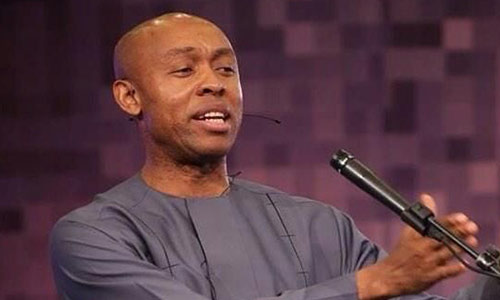
By Chidi Anselm Odinkalu
“It is not titles that honor men, but men honor the titles.” Nicolò Machiavelli, Discourses on Livy (1531)
At the beginning of August 2022, President Muhammadu Buhari constituted a nine-member National Honours Nominations Committee with a four-year tenure. It is chaired by Alhaji Sidi Muhammad Bage, the senior judge who resigned from Nigeria’s Supreme Court in 2019 to become the Emir of Lafia in Nasarawa State. Minister for Special Duties and Inter-Governmental Affairs, George Akume, inaugurated the committee on 16 September with the mandate “to screen and select eminent Nigerians and friends of Nigeria, who have contributed to the development of the country.”
In what would have been a record of unprecedented efficiency in the annals of such committees, a list emerged a mere fortnight later of recipients of national honours. Among the recipients, it listed the Emir of Lafia, himself the newly inaugurated chair of the National Honours Committee, for one of the highest honours – Commander of the Federal Republic (CFR).
After initially repudiating that list, the government’s “authentic” list, when it finally came out, did not much differ from the repudiated one. However, it appears that the government had approved a national honours list at least six months earlier in April 2022 which suffered some last-minute tinkering in October.
Indeed, over seven and a half years into his tenure, Muhammadu Buhari as president had only ever conferred national honours once on three Nigerians, two of whom were dead. That was on 12 June 2018 when he honoured Moshood Abiola, the late winner of the presidential election annulled in June 1993; Babagana Kingibe, his running mate; and Gani Fawehinmi, the remarkable lawyer who made a vocation of lawyering in the public interest. No committee took part in that decision.
Prior to the inauguration of the Sidi Bage-led National Honours Committee, there had in fact been no committee in existence. So, how were these decisions made? To answer this, it is necessary to address four questions.
The first is the legal bases for national honours in Nigeria. Part 1(B)(6)(iii) of the third schedule to the 1999 Constitution empowers the National Council of State to “advise the President in the exercise of his powers with respect to the award of national honours.” In force since October 1963, the National Honours Act confers discretion on the President to “by warrant, make provision for the award of titles of honour, decorations and dignities.” As a matter of law, the president’s discretion on the award of national honours appears unlimited. He does not even need any committee to help him do it.
This leads to a second question relating to who should be eligible for the national honours. This is also arguably a matter of law. In the 2022 list, presidential intimates and serving public officers are the leading categories among recipients. However, the Code of Conduct provisions in the 5th Schedule of the 1999 Constitution prohibits a serving public officer from accepting “benefits of any kind ….for anything done or omitted to be done by him in the discharge of his duties.” Does conferring national honours on serving public officers violate this constitutional prohibition? President Buhari clearly thinks not.
So, thirdly, what then are the governing criteria? The answer in one word is nothing. Among the things that the president should specify under the National Honours Warrant, the National Honours Act mandates him to provide “for the deprivation of an honour in a case where a recipient conducts himself in a manner which the President considers to be inconsistent with the honour.” This implies that the National Honours system must strive to be credible. It should not, to reprise John Steinbeck, be lavished on “the embezzler, the tramp, the cheat.”
But several previous recipients of Nigeria’s national honours, such as bankers Richard Akingbola and Cecilia Ibru, and former Inspector-General of Police, Tafa Balogun, have kept the awards despite being the subjects of judicial verdicts for criminal malfeasance. To date, no president has made rules for lifting the national honour from those who bring it into disrepute. Like Hotel California, Nigeria’s national honours system seems “programmed to receive…. But you can never leave.”
This is why the issue of criteria on the basis of which people can get honoured matters. The assumption is that certain categories are reserved for people who have held certain positions. So, Heads of State, for instance, enjoy a monopoly of the very highest honour, Grand Commander of the Order of the Federal Republic (GCFR). In 1981, President Shehu Shagari made an exception to this and granted that honour to Chief Obafemi Awolowo, leader of the Opposition Unity Party of Nigeria (UPN), affirming that high office does not itself alone confer honour or merit. His successors have failed to appreciate that point.
This leads naturally to a fourth question as to whether there is a process to ensure that the honours system is not brought into disrepute by being populated with too many undeserving people or by simply being transactionalised. When he chaired the National Honours Nominations Committee at the turn of the millennium, Alhaji Liman Ciroma proposed a set of reforms to make it more credible. Among other things, he recommended a cap on the maximum number of recipients of the national honour in any year to not more than one hundred persons; a gender diversity ratio reviewable every three years to ensure equal recognition of both men and women; a limit on the number of nominations proposed by the Presidency to not more than 25% of the maximum; a prohibition on honours for serving public officers; and a requirement for the publication of nominations for objections or comments at least 90 days before the decision.
President Obasanjo did not find these deserving of implementation. Over two decades later, therefore, President Buhari’s national honours list in 2022 reads like a friend and family affair. The recipients include his spokesperson, his two closest nephews, and the closest members of his backroom. Surely, even a president is entitled to his favourites but being a presidential intimate does not require nor does it import honour.
Even if there were any criteria – there are none – they are not consistently applied. Among the recipients of the honours this time are Nigerians serving in leadership positions in various multilateral agencies including the Director-General of the World Trade Organisation (WTO), and the Deputy Secretary-General of the United Nations. Chile Eboe-Osuji, the Nigerian who led the International Criminal Court (ICC) in The Hague as its president for three years until 2021 is missing.
So, Nigeria’s National Honours system is not exactly national and does not seem to confer honour. Chinua Achebe rejected it in the past. On this occasion in 2022, Chimamanda Ngozi Adichie appears to have done so too; and the family of a late Chief of Army Staff is reported to have boycotted it all together. Buhari only managed to pin it on Gani Fawehinmi long after he had died.
In response to the question “what is the worth of a national honour in Nigeria?”, columnist, Reuben Abati guffaws that “it is a nice chieftaincy title which comes with a medal, a certificate and a pin on your chest, to which anyone who has ever served Nigeria feels entitled. It doesn’t matter if you were a houseboy in the corridors of power, the thrill of the recognition is in itself the thing.”
Current Majority Whip of Nigeria’s Senate, Orji Uzor Kalu, has for a long time appended the suffix, “MON” after his name. Most people assumed that it denoted that he was a recipient of the National Honour of “Member of the Order of the Niger.” It turns out, however, that he had never in fact been granted any such honour. According to Kalu, “his version of M.O.N. meant ‘Madu Oha Nile’, that is the Igbo interpretation of ‘a man of the people.’” Under section 2(c) of the National Honours Act, this is an offence punishable with up to six months in prison. Instead, Orji Uzor Kalu is responsible for party discipline in Nigeria’s Senate. That says all there is to say really about Nigeria’s national honours system.
A lawyer and a teacher, Odinkalu can be reached at [email protected]
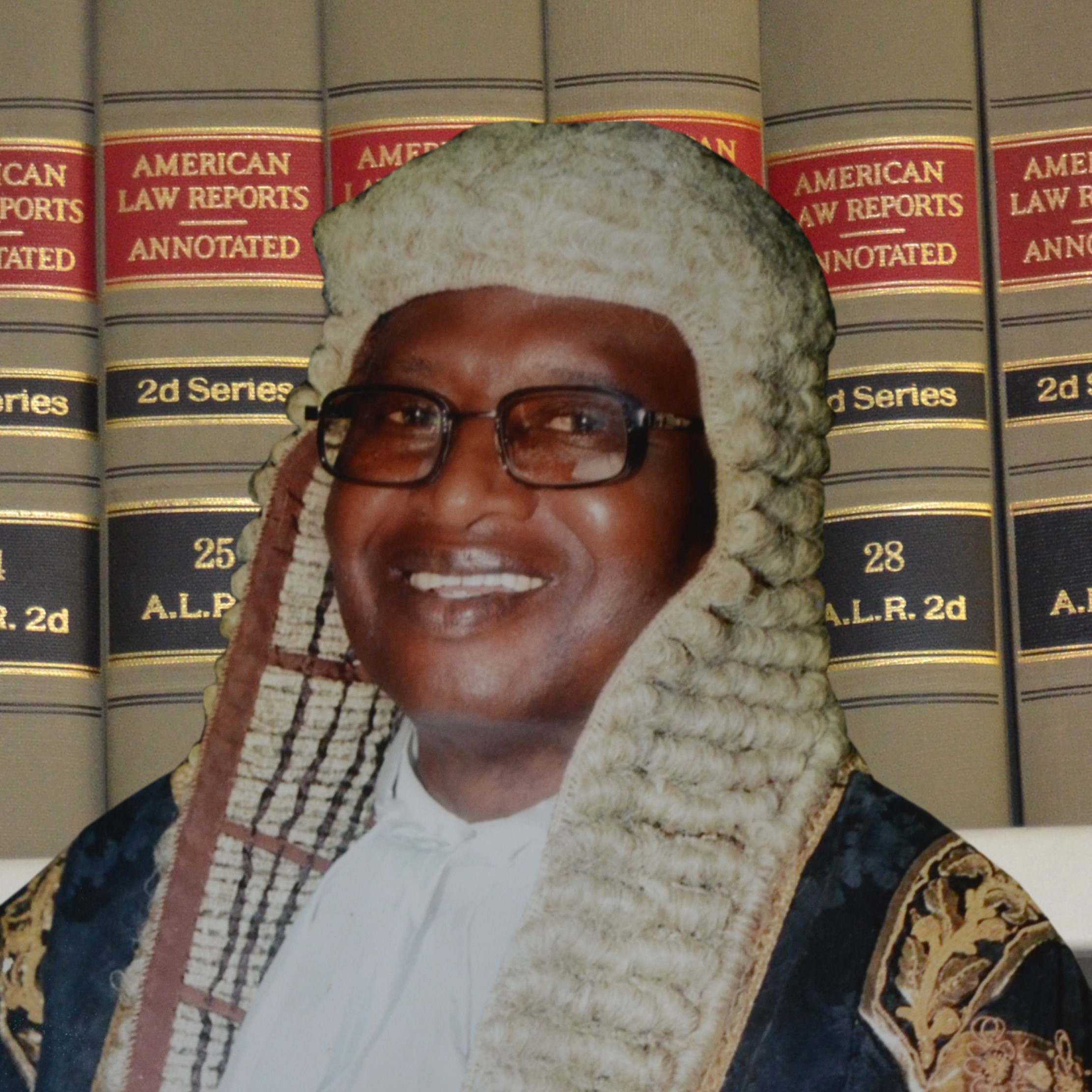
By Lillian Okenwa
Weeks ago, a panel investigating violations of human rights by the defunct Special Anti-Robbery Squad, SARS, and other police units awarded N287million in compensation to 74 beneficiaries of police brutality.
The panel was set up by the Federal Government in November 2020 following the “ENDSARS Protest” which was triggered by nationwide allegations of Police brutality. The first batch of N146million compensation was awarded on Dec. 23, 2021 to 26 persons. The panel which handled 297 petitions across Nigeria was Chaired by Hon. Justice Suleiman Galadima.
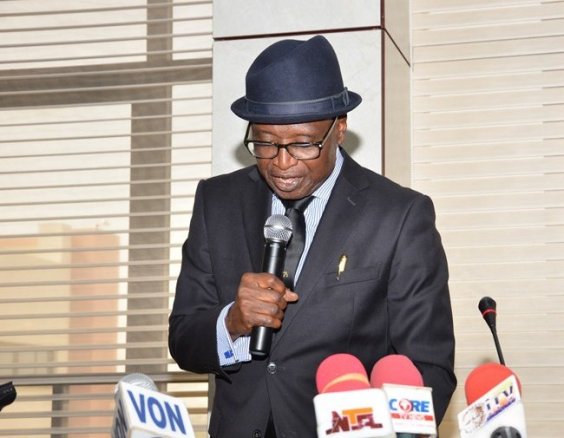
Hon. Justice Suleiman Galadima, (rtd.) who retired from the judicial service on October 10, 2016, after six eventful years at the Supreme Court was born on October 10, 1946 in Shafa Abakpa Village, Nasarawa State.
His Lordship joined the Qua Iboe Mission (QIM) Primary School, Shafa from 1953 to 1957. In 1957, having spent four years at QIM, his Junior Primary School came to an end, and it was time to advance to Senior Primary School. In the whole of then Keffi- Nasarawa Divisions, there was only one Senior Primary school, and it was at Laminga; somewhere between Keffi and Nasarawa. The journey from Sofiyo to Laminga to resume at the boarding school marked the first time he would board a vehicle – being a lorry which at that time, was the only means of transportation.
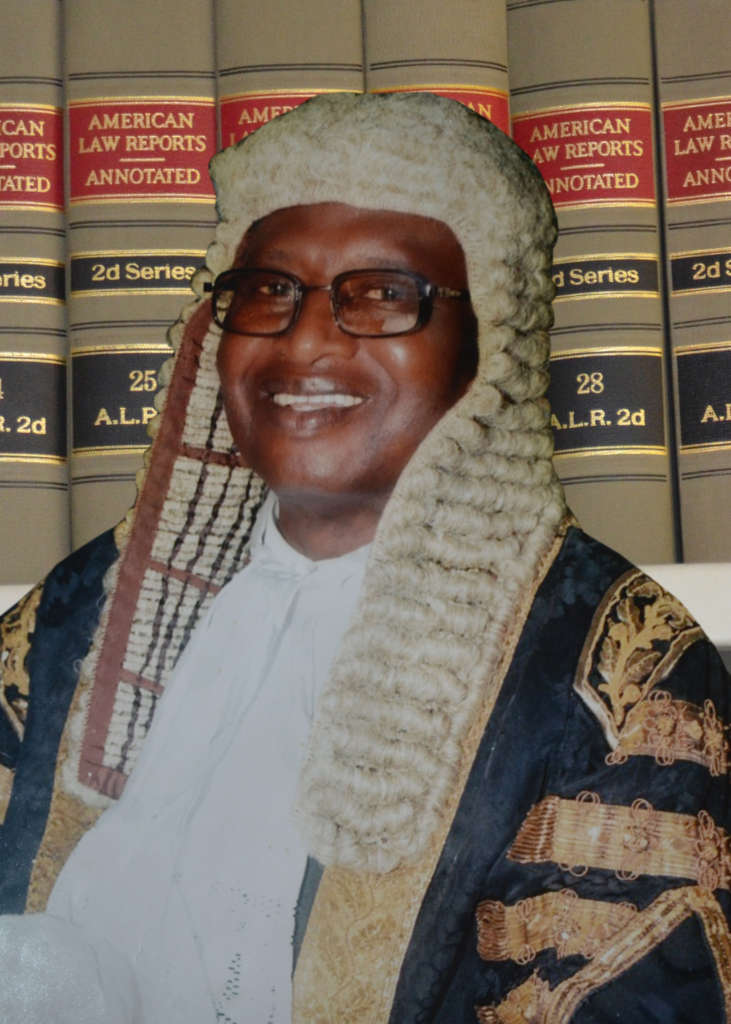
He attended Katsina-Ala Provincial Secondary School from 1960 till 1964, becoming the deputy head boy of the school in 1964, as well as the captain of the college volley ball and rugby teams, as well as a member of the athletic team. In 1965, he proceeded to the Government College, Keffi, for his higher school certificate. He was elected senior prefect in 1966. The effect of these positions of responsibility at an early stage contributed indelibly towards forging his lordship’s future career.
Subsequently, his Lordship joined Kirkpatric and Partners (an Engineering Consultancy Company) in Kaduna as a technician between May 1966 and October 1967. In due course, he became a market research assistant with Lever Brothers, Kaduna and Kano between 1967 and 1968. He attended Ahmadu Bello University, Zaria – first bagging a diploma in law in 1969 and later embarking upon an LLB degree after a brief working spell with Customs and Excise. Between May 1960 and October 1975, he was revenue officer/ legal officer with Customs and Excise. While with the Customs, he performed the following duties amongst others: collection and accounting of revenue, supervision of revenue officers, investigations of customs cases, preparation of legal opinions, advice and prosecution of cases.
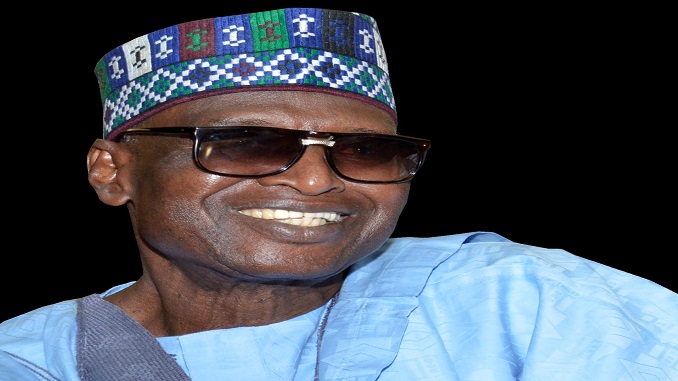
Galadima was appointed higher registrar, High Court of Justice, Jos, Plateau state, and he served from May 1976 to August 1977. Between August 1977 and June 1978, he did the compulsory one-year National Youth Service Corps (NYSC) programme in Enugu, the capital of the old Anambra State. And during his service year, he was Assistant Legal Aid leader, State Counsel at the ministry of justice, and later, secretary Law Review Commission.
After undergoing the NYSC programme, he proceeded to the Nigerian Law School, Lagos and was called to the bar in 1978. He eventually received a Master of Laws degree from the University of Jos, in 1985. His Lordship was a Magistrate from July 1978, rising to the rank of Acting Chief Magistrate, before being seconded to become the Deputy Company Secretary, Ajaokuta Steel Company, then in Kwara State (in the present day Kogi State), where he served till November 1984. His first posting as a Magistrate was to Bukuru in Plateau state. It was a nine-kilometre journey that took him an hour from Jos town to Bukuru in public transport with litigants and suspected criminals alike.
At that time, the conditions of service were very discouraging – no internal transfers, ill-equipped court-room. In fact, he shared the same office (Chambers) with his secretary. There were no incentives; little salary and allowances. He earned about N875 in a year; less than N1,000. He spent two years at Bukuru before gaining his promotion. Thereafter, he practiced law under the firm of Galadima-Husaini & Co., until March 1990, when he was appointed Attorney General and Commissioner of Justice of the old Plateau State.
In May 1991, Suleiman Galadima was elevated to the bench as a Judge of the High Court of Plateau State, and when Nasarawa State was created in 1996, he became the pioneer Chief Judge of the State, serving from October 1996 until December 9, 1998, when he was promoted to the Court of Appeal bench.
It was during his time at the High Court that the then Chief Justice Nigeria, Hon. Justice M.L Uwais held that when the position of Chief Judge is vacant in a state, the most senior judge in the High Court becomes the Chief Judge and not the President Customary Court of Appeal.
Justice Uwais made more clarifications in an interview with The Authority Newspaper on Wednesday 6 April 2016.
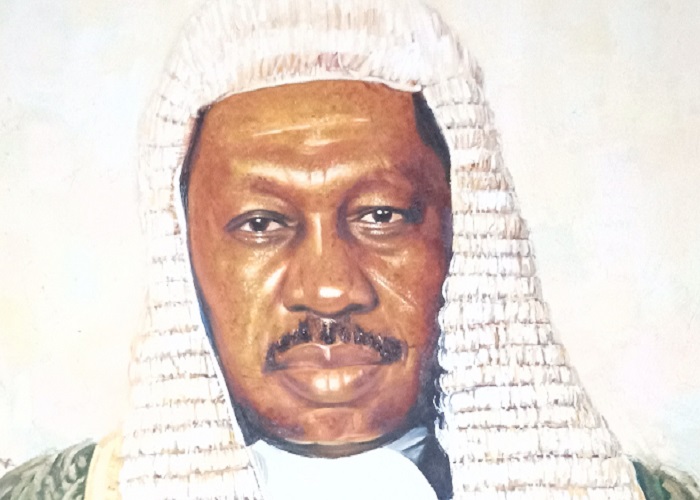
Q. When Nasarawa state was newly created, the President of the Customary Court of Appeal wanted to be Chief Judge but you insisted that the most senior judge from the High Court should be the state’s, Chief Judge. What was your reason?
“The two courts are different. You have the High Court and the Customary Court of Appeal. When it comes to the volume of work in terms of jurisdiction, the jurisdiction of the High Court is heavier than that of the Customary Court of Appeal.
“The Customary Court of Appeal is concerned with marriage, chieftaincy, things that are akin to customs. Whereas the High Court has jurisdiction that covers almost everything except that which is allocated to the Customary Court of Appeal and the Sharia Court of Appeal.
“Then the Chief Judge is the Chairman of the Judicial Service Commission of the state. Of course, the President of the Customary Court is a member and the Grand Kadi is also a member of the state Judicial Service Commission. The two courts are separate but it is very clear that the leadership is with the High Court.
“The reason why persons in the Customary Court of Appeal want to be Chief Judge is because when they leave the High Court to head Customary Court of Appeal, they see themselves as equal to the Chief Judge. But if they should go back to the High Court, they won’t be at the level of the Chief Judge, they would be lower. If you want to determine the seniority of two judges, it does not arise. You determine the seniority in the hierarchy of courts and the High Court is clearly higher.
“So, in the Nasarawa case, it is on that basis, I took the view that the Chief Judge was to come from amongst judges of the High Court; not for the President of the Customary Court to just cross over and become the Chief Judge. That was the policy and that is still my view.”
His Lordship made his mark on the appellate bench, serving at various divisions such as Lagos and Enugu, before going on to be the Presiding Justice in Port Harcourt division from September 2006 to 2010. His first posting was to Enugu. This was in 1998 shortly after he was sworn in. Elevated to the Supreme Court of Nigeria on September 16, 2010, he is a recipient of the National Honours of Officer of the Federal Republic (OFR), which was conferred on him in 2011. He was later honoured as Commander of the Federal Republic (CFR). He has also been bestowed
His Lordship is presently Chairman of Corruption and Financial Crime Cases Trial Monitoring Committee (COTRIMCO).
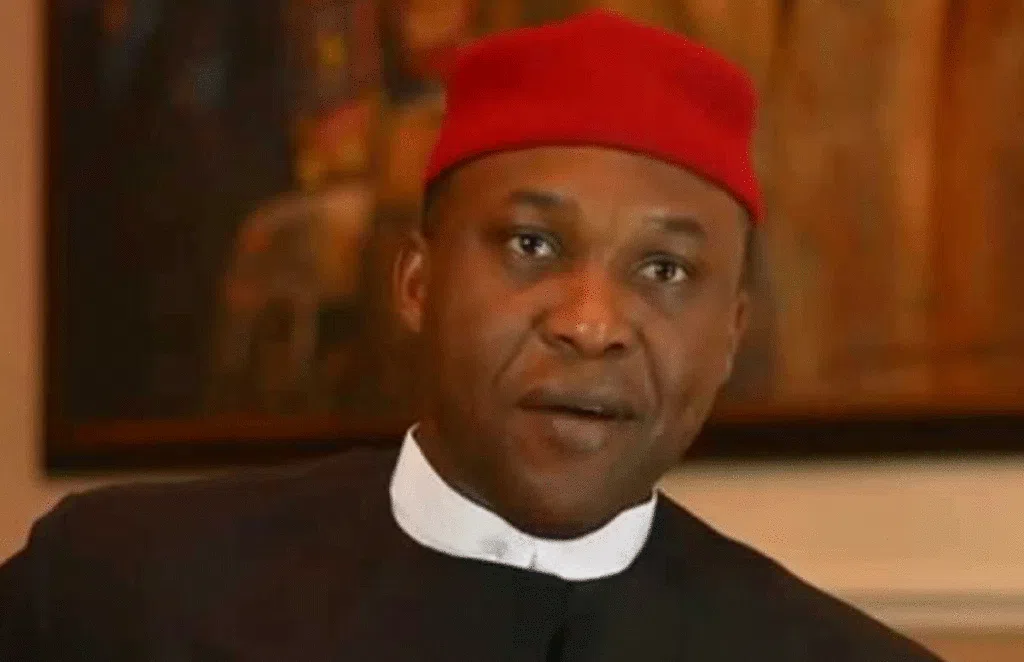
I wrote about the inevitability of death as we approach the fifth decade conscious of the fact that the life expectancy of a Nigerian is 54 years.
Today death visited. My brother-in-law Apost Paul Egbon husband of my only sister Ada Chidoka Egbon died at age 56.
Yesterday, he was at the Federal Medical Centre Jabi with a complaint of chest pain. The Doctor who saw him prescribed painkillers and recommended ECG and other tests. At the Lab, they said it was late in the day and asked them to come back today Saturday. He walked to the car and they drove home. Allowing him to go home was a questionable decision.
I couldn’t help but recall when as a grad student, I walked into Arlington, VA General Hospital with a chest pain complaint. They brought a stretcher immediately and took me to emergency. They ran all the tests and held me fastened to the bed until all the results came and they concluded it was a chest muscle pain.
Early hours of this morning about 5 am he suffered, what we suspect, to be a cardiac arrest. My sister rushed him to the same federal Medical Centre Jabi. A doctor came out saw him in the car and pronounced him dead. They gave her a form and told her to take him to the mortuary. Yes, you read right. They told a grieving woman, who was told without any preparation, to take her dead husband to the morgue.
Early hours of this morning about 5 am he suffered, what we suspect, to be a cardiac arrest. My sister rushed him to the same federal Medical Centre Jabi. A doctor came out saw him in the car and pronounced him dead. They gave her a form and told her to take him to the mortuary. Yes, you read right. They told a grieving woman, who was told without any preparation, to take her dead husband to the morgue.
They did not remove the corpse from the car. Apparently, there is no protocol to receive a patient brought in dead. She was in the car with her dead husband when my Uncle, a medical doctor, arrived. I arrived shortly after. She was in the car crying holding her husband in the car park of the hospital. A hospital they have used for years.
We struggled to get her out of the car before we moved the corpse to the morgue. The hospital did not receive the body formally. No attempt at separating a wife from a corpse. No official record of the review that pronounced him dead. They did not counsel her or even empathise with her. It was not a medical failure; wrong diagnosis or lack of treatment. It was a process and cultural failure. Something has gone wrong with our humanity and sense of empathy as a people.
I advise, go for regular medical checkups. Have a primary health physician who knows you personally and has your history. Your primary physician is likely to be the difference between life and death. Our institutions are weak and our public servants are neither public-minded nor interested in service.
Together with the departed, we pray for God’s mercy and love upon us all. Amen.
Osita Chidoka
October 2022
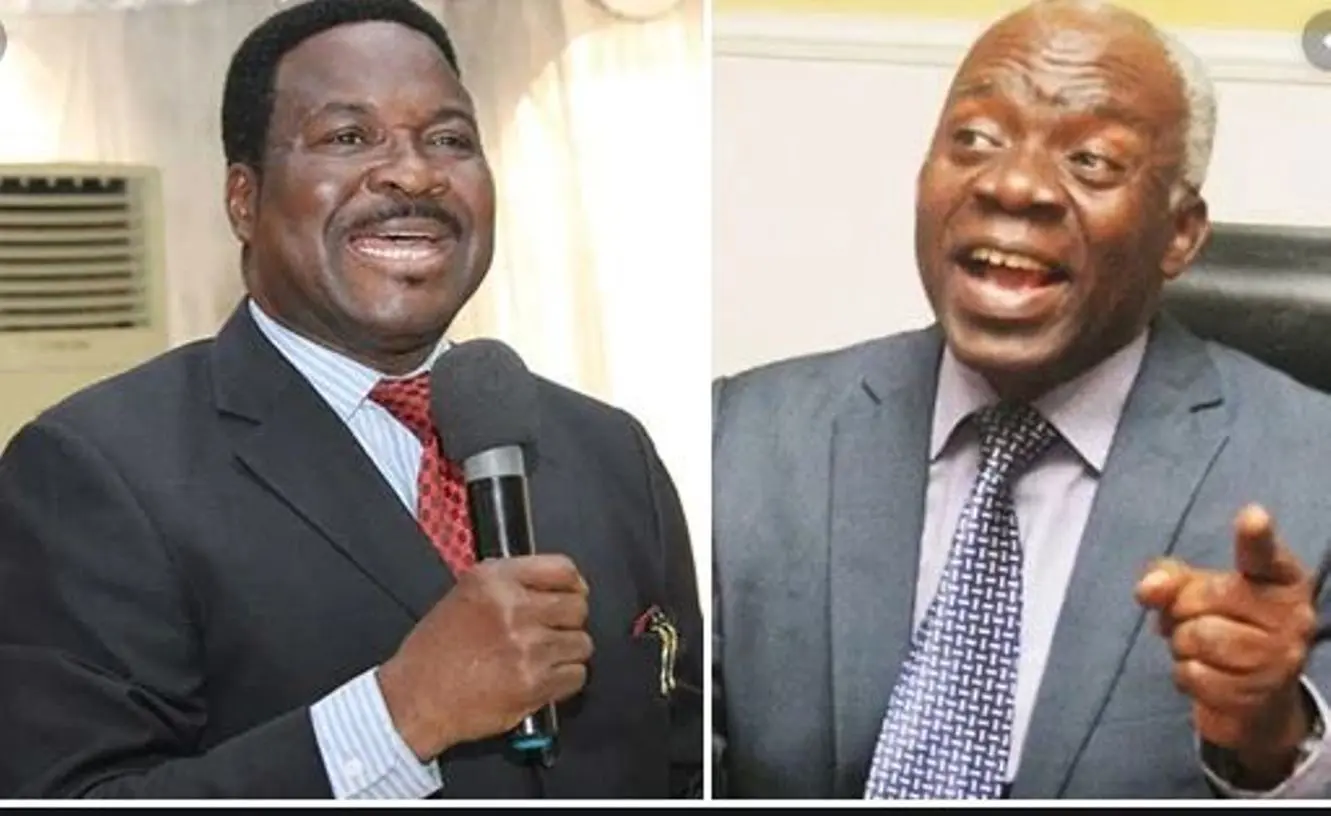
By Lillian Okenwa
Senior lawyers have continued to criticize the statement made by the Attorney-General of the Federation and Minister of Justice, Abubakar Malami, who contends that the leader of the Indigenous People of Biafra (IPOB), Nnamdi Kanu was merely discharged by the appellate court and not acquitted.
The Senior Advocate of Nigeria (SAN) in a statement made through his Special Assistant on Media and Public Relations Officer, Dr. Umar Jibrilu Gwandu, said that “for the avoidance of doubt and by the verdict of the Court, Kanu was only discharged and not acquitted.”
However, Kanu’s lead counsel and Senior Advocate of Nigeria, Mike Ozekhome, maintains that the Department of State Services (DSS) should let Kanu go home immediately after his lawyers present a certified true copy of the judgment.
Ozekhome who remarked that Kanu’s acquittal is too complex for human understanding noted that the lower court glossed over the case placed before it on the “kidnap, torture and extraordinary rendition” of Kanu from Kenya back to Nigeria, but the Appellate Court discharged him.
Responding to Malami’s submission said, “What it (the ruling) means is that Nnamdi Kanu was discharged today. That means he is a free man. And he should be allowed to go home tomorrow by the time we get a certified true copy of the judgment, we serve it to the Office of the Attorney-General and the DSS to allow Nnamdi Kanu to go. Let my people go.”
Likewise, Kanu’s special counsel, Aloy Ejimakor in a statement described the AGF’s position as “flatly wrong and it is perverse to boot.
“If the Federal Government refuses or stalls on releasing Kanu solely because it desires to levy further or new charges, it will amount to a burgeoning holding charge which is impermissible in our jurisprudence.
“Thus, before the levying of any new charges can have a toga of legality or chances of conferring prosecutorial jurisdiction, Kanu has to be released first. Anything to the contrary will be nugatory.”
Meanwhile, Mr. Femi Falana, SAN has issued a statement asking the federal government not to twist the judgment of the Court of Appeal on Nnamdi Kanu.
The statement titled: FG Should not twist the judgment of Court of Appeal on Nnamdi Kanu, reads:
In the case of Nnamdi Kanu v Federal Government of Nigeria, the Federal High Court had upheld the preliminary objection of the defence team led by Chief Mike Ozekhome SAN and dismissed 8 out of the 15-count charge against the defendant. (See: _”UPDATED: Court strikes out eight of 15 charges against IPOB leader Nnamdi Kanu (Full List)” (8 April 2022: Premium Times)
In its judgment delivered yesterday the Court of Appeal dismissed the remaining 7-count charge and discharged Mr. Kanu on the main ground that his rendition in Kenya had rendered the entire proceedings in the Federal High Court illegal under the Nigerian Constitution and under international law. Consequently, the Court of Appeal ordered Mr. Kanu’s immediate and unconditional release from the custody of the State Security Service.
Therefore, the claim of the Federal Government that there are some pending charges against Mr. Kanu in the Federal High Court is a contemptuous mockery of the Court of Appeal whose judgment is binding on all authorities and persons in Nigeria by virtue of section 287 of the 1999 Constitution of the Republic.
In addition, a legal practitioner and a former prosecutor in the District of Columbia and member of the Maryland bar, Chief Chukwuma Odelugo said: “The prosecutor represents the interest of the public at large, which is different from representing an individual.
“The interest of the public and the duty of the prosecutor is to keep the public safe. For the most part, the public isn’t made safe by locking up the one-time offender, whose sole crime is already done. The public is made safe by putting away career criminals, and repeat offenders.
“This is why when a court orders a release, we would release immediately, within 24 hours. Our theory is that we were confident that if you repeat, we could and would pick you up and charge you again. And the dismissed charges will be considered in your next bail application. When this happens, the government would release and look good to the public. The government doesn’t want to look petty, vindictive, or personal in any criminal prosecution. It undermines public confidence in the criminal justice system as a whole.
“An appeal is also risky for the FG. If they lose, it will cement this new jurisprudence. Courts will now be required to examine the circumstances of every arrest or detention in Nigeria.
“A good prosecutor’s office would move carefully and wait for a perfect case to use to challenge this apparent new jurisprudence.”
By Ige Asemudara Esq.
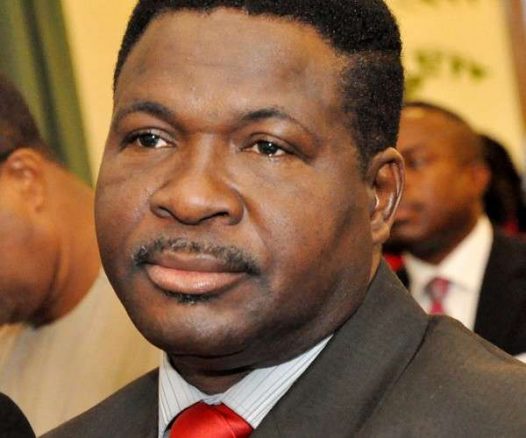
When Vladimir Lenin first employed the phrase “Commanding Heights”, it was to describe the control of perceived key segments of a national economy as further espoused by Daniel Yergin and Joseph Stanislaw when they first published their book, “The Commanding Heights: The Battle Between Government and the Marketplace That Is Remaking the Modern World” in 1998. However, today I am employing the phrase in its metaphoric signification to access and situate the life, works, struggles, and agitation of the Iviukwe-born Chief Mike Agbedor Abu Ozekhome SAN who was just conferred with the national honour of the Commander of the Order of the Niger. The phrase is quite suitable especially in view of the original ideological history of Chief Ozekhome as a Leninist who has also struggled to rescue the commanding heights of the Nigerian economy from the forces that have held it back. Yes, on the 15th of October, 2022, Chief Mike Ozekhome SAN will be Sixty-Five years of age; hale and hearty 65!
I first began to read and hear about Chief Mike Ozekhome in the year 1997 when I worked under my first employer and political tutor, Mr. Akin Ayebiwo, a school principal who in those days made it a point of duty to buy dailies daily. He would read them, give them to me and we would discuss the top political stories even late into the night whenever he was free. It was a time the struggle to unseat the military leaders and confine them to the barracks was climaxing under General Sani Abacha. I found the various protests; civil disobedience and litigations challenging the status quo intriguing. I also found a set of Nigerians featuring consistently in the fight very inspiring. I always looked forward to the day I would join them at the barricades on the street of Lagos. Chief Gani Fawehinmi SAN, Olisa Agbakoba SAN (CLO), Chief Mike Ozekhome SAN, Mr. Femi Falana SAN (CDHR), Beko Ransome-Kuti (CDHR), and a few others were always at the forefront. Back in Okitipupa, my boss would tell me of their glowing days at the University of Ife and how Ife shaped the lives of most of the names at the forefront of the struggle, and why the military must go. I took interest in all of them and their struggles to the extent that when in 1998 I took the JAMB form, I had no hesitation in filing Obafemi Awolowo University as my University of first and second choice. I also chose law as my first and second choice. For me, only a knowledge of the law could empower me like these worthy and strong Nigerians, and only the Obafemi Awolowo University could offer me the right spirit; and fire the ember of struggle in me. I had no second choice, my mind was made up. I got what I wanted.

I passed that University Matriculation Examination; I got admission into OAU on merit. The week of my resumption, I joined the CLO and the CDHR which I also later coordinated briefly on campus and remained a member till I graduated. When we were in the third year, I had the privilege of meeting Chief Mike Ozekhome in his chambers on Ogunlana Drive in Surulere, Lagos alongside a few other law students. I got more interested in him because he was as brilliant as he was exciting and never let any opportunity to be humorous and throw banters slip away.
Chief Ozekhome is a repository of history, philosophy, politics, literature, economics, and very sound knowledge of the law. His knowledge is not accidental. He was first admitted into the Department of English Language of the Faculty of Arts, the University of Ife in 1977. He sought to cross to the Faculty of Law but was not allowed unless he could muster a benchmark performance, Ozekhome had an easy cross as he topped his class in the English Language Department. He graduated among the best in the faculty of law in 1980. He returned to obtain a Master’s degree from that university in 1983. As of today, Chief holds a Doctor of Law degree from Alliance International University, Lusaka, Zambia with a specialty in Constitutional Law. On the 20th of October, 2022, he will deliver the 10th Convocation Lecture of the Afe Babalola University, Ado-Ekiti (ABUAD), and the following day, he will be conferred with the Doctor of Laws degree (Honoris Causa). That will be the twelfth of such honourary doctorates he has received from different institutions which include the International Biographical Centre, (IBC), Cambridge, England, American Heritage University, San Bernardino, California, USA, Edo State University, Uzairue, Edo State among others. He has received well over four hundred honours and awards locally and internationally including the UN Ambassador (Eminent Peace), honourary citizen, and recipient of the keys to the cities of Atlanta Georgia, USA (2002) and Dallas, Texas, USA (2002).
Trained by the inimitable Chief Gani Fawehinmi SAN, SAM, GCON, Chief Ozekhome is a workaholic, a walking law library, an orator, and a very creative law practitioner. In 2010, he was, alongside eighteen others, conferred with the prestigious rank of Senior Advocate of Nigeria (SAN). Chief is driven, in his practice of law, by a need to subject everyone to the rule of law and afford everyone a fair hearing whether high or low and this reflects in his cases and the varied statuses of his clients. To the poor, he appears as poor, to the rich he appears rich, and to those in captivity, he wears his shackles as bands. Although Chief Ozekhome can no longer, in my humble view, be strictly described as a Leninist or leftist as his ideology is more or less that of a very radical centrist, he is however a very passionate human rights activist who believes in equality and social justice and does everything within his capacity to engender a just society.
As a lawyer, I have had the privilege of closely working with Chief Mike Ozekhome SAN in not less than ten cases at the Federal High Court and at the Appellate Courts. I first worked directly with him in FRN V. Dudafa & others where we acted for different co-defendants together with the equally experienced Gboyega Oyewole SAN, a former Attorney-General of Ekiti State. We all also worked together in a number of cases including the case of Patience Jonathan v. EFCC where we also acted for different parties but as a team. Chief Ifedayo Adedipe SAN would also bring his leadership to bear in those cases just as our beloved but now deceased Glanville Abibo SAN brought knowledge, glamour, and candour. Chief Ozekhome brought knowledge, strength, and audacity to the team.
Chief Mike Ozekhome has through various cases and court verdicts written his name in gold. The law reports are awash with his Midas touch on law and legal works. He seems to be a reincarnate of King Midas in Greek mythology, his latest breakthrough being the victory recorded in Nnamdi Kanu’s case at the Court of Appeal. Chief dazzles and dazes his opponents with the law and some courtroom theatrics. You need to see him at some of his finest moments when he addresses the court. Telling can never equal seeing. Hey! He has a memory as green as spirogyra! It is a unique gift from God deliberately watered by Chief himself through avid reading and prolific writing.
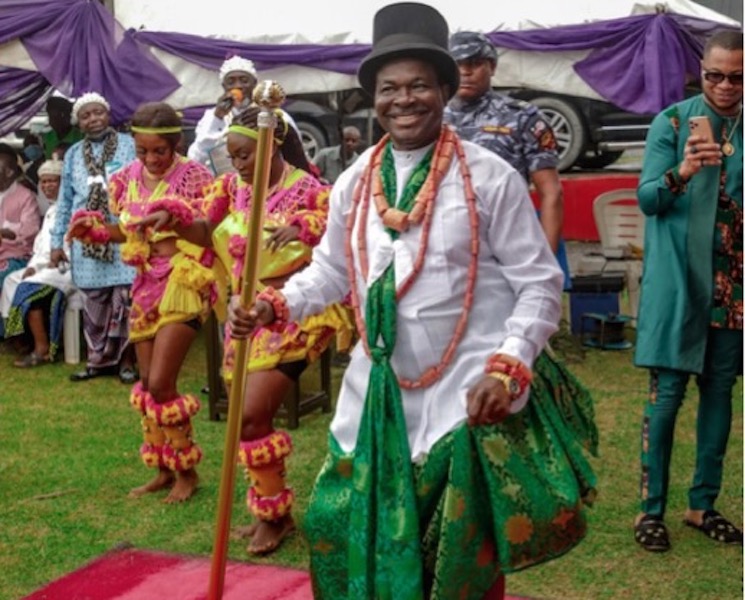
In recognition of his works as an activist, he was in 2014 conferred with a national honour; Officer of the Federal Republic (OFR) by the President of the Federal Republic of Nigeria. On 12th October 2022, President Muhammadu Buhari who he has always publicly criticized awarded him a higher national honour than he previously had. He was awarded the Commander of the Order of the Niger (CON) as if the president just admitted that Ozekhome has always been right in the critique of his regime.
Chief Mike Ozekhome SAN remains in the vanguard of the struggle to free the Nigerian people from the shackles of oppression, poverty, and economic suffocation and to hand over the commanding heights of the economy to the Nigerian people; the wretched of the earth. In doing this, he employs a very strategic and dialectical approach to solve both legal and political problems. Just a few days ago, Chief Ozekhome followed the ideological prescription of Paulo Freire in recommending the dialogue option to President Muhamadu Buhari to resolve the IPOB’s Biafra secessionist impasse. Whilst that letter was pending on the President’s table and he had not taken action, the Court of Appeal discharged Nnamdi Kanu and struck out the charges against him. Freire had written in his Pedagogy of the Oppressed that “Leaders, who do not act dialogically but insist on imposing their decisions, do not organize the people – they manipulate them. They do not liberate, nor are they liberated. They oppress”. General Muhammadu Buhari may be adamant but he surely has learnt his lessons.
At 65, Chief Ozehome SAN still fires on all cylinders, he soars like an eagle! He has done well in the classroom, in the courtroom, and in the “other room”. Although he has every right to borrow the immortal words of the Bard of Avon, William Shakespeare through the character of Gratiano in his 1597 dramatic work, Merchant of Venice to gladly say “with mirth and laughter let old wrinkles come”, the Akpakpavighivighi of Edoland has rather chosen to typify the words of American writer Mark Twain that “age is an issue of mind over matter. If you don’t mind, it doesn’t matter.” Little wonder no wrinkle has come at 65, it is youthfulness all round as the Commander still has many rivers to cross and so many fleets to command. At the commanding heights, Chief Mike Ozekhome still soars! Bravo!
Ige Asemudara Esq., a lawyer is the Convener, Mission Against Injustice in Nigeria (MAIN).

Law & Society Magazine is a general interest magazine with a bias for law and its effects on the society
Contact us: [email protected]
© 2025 Copyright - Law & Society Magazine

