Home Blog Page 80

Full List: Tinubu names OCJ Okocha, Ikpeazu, Ibas, Ita Enang in 65 Ambassadorial Postings

A former President of the Nigerian Bar Association, Onueze Chukwujika Joe Okocha, SAN, former Sole Administrator of Rivers State, Vice Admira Ibok-Ete Ekwe Ibas (Rtd), former senator Ita Enang, and former Abia State governor Okezie Ikpeazu are among prominent figures named in the list of 65 ambassadorial postings approved on Friday by President Bola Ahmed Tinubu.

The development was disclosed in a statement issued by the President’s Special Adviser on Information and Strategy, Bayo Onanuga.

According to the statement, the list comprises 31 career diplomats and 34 non-career ambassadors, whose nominations were earlier confirmed by the Nigerian Senate in December.

OCJ Okocha, SAN, was posted to Dublin, while Ibok-Ete Ekwe Ibas was assigned to the Philippines. Former senator Ita Enang will serve in South Africa, as former Abia State governor Okezie Ikpeazu heads to Spain and his Enugu counterpart, Rt. Hon. Ifeanyi Ugwuanyi, to Greece.

Also on the list, former presidential aide Reno Omokri has been assigned to Mexico, while former Chief of Defence Intelligence Lateef Kayode Are will head Nigeria’s mission to the United States.

Below is the comprehensive list.

1.  SENATOR GRACE BENT: LOME-TOGO

2.  SEN. ITA ENANG: SOUTH AFRICA

3.  IKPEAZU VICTOR: SPAIN

4.  NKECHI LINDA UFOCHUKWU: TEL-AVIV, ISRAEL

5.  MAHMUD YAKUBU: QATAR

6.  PAUL OGA ADIKWU: THE VATICAN CITY HOLY SEE

7.  VICE ADMIRAL IBOK-ETE EKWE IBAS: THE PHILIPPINES

8.  MR. RENO OMOKRI: MEXICO CITY, MEXICO

9.  HON. (ENGR.) ABASI BRAIMAH (FMHR): BUDAPEST, HUNGARY

10.  MRS. ERELU ANGELA ADEBAYO: PORTUGAL

11.  BARR. OLUMILUA OLUWAYIMIKA AYOTUNWA: TOKYO, JAPAN

12.  RT. HON. UGWUANYI IFEANYI LAWRENCE: ATHENS, GREECE

13.  BARR. CHIOMA PRISCILLA OHAKIM: WARSAW, POLAND

14.  AMINU DALHATU: UNITED KINGDOM, UK

15.  LT. GEN ABDULRAHMAN BELLO DAMBAZAU: BEIJING, CHINA

16.  HON. TASIU MUSA MAIGARI: GAMBIA

17.  OLUFEMI PEDRO: AUSTRALIA

18.  BARR. MUHAMMED UBANDOMA ALIYU: ARGENTINA

19.  LATEEF KAYODE ARE: USA

20.  AMB. JOSEPH SOLA IJI: RUSSIA

21.  SEN. JIMOH IBRAHIM: UN PERMANENT REPRESENTATIVE

22.  FEMI FANI KAYODE: GERMANY

23.  PROF. ISAAK FOLORUNSO ADEWOLE: OTTAWA, CANADA

24.  AJIMOBI FATIMA FLORENCE (F): AUSTRIA

25.  MRS. LOLA AKANDE (F): SWEDEN

26.  AYODELE OKE: FRANCE

27.  YAKUBU N. GAMBO: SAUDI ARABIA

28.  SENATOR PROF. NORA LADI DADUUT: SEOUL, SOUTH KOREA

29.  BARR. ONUEZE CHUKWUJIKA JOE OKOCHA SAN: DUBLIN

30.  DR. KULU HARUNA ABUBAKAR: TUNIS, TUNISIA

31.  RT. HON. JERRY SAMUEL MANWE: PORT OF SPAIN, T&T

POSTINGS OF CAREER AMBASSADORS / HIGH COMMISSIONERS LIST

1.  AMB. NWABIOLA EZENWA CHUKWUMEKA: COTE D’IV/OIRE

2.  BESTO MAIMUNA IBRAHIM: NIAMEY-NIGER

3.  MONICA OKWUCHUKWU ENEBECHI: SAO TOME, STP

4.  AMB. MOHAMMED MAHMUD LELE: ALGIERS-ALGERIA

5.  ENDONI SYNDOPH PAEBI: OUAGADOUGOU-BURKINA FASO

6.  AHMED MOHAMMED MONGUNO: CAIRO EGYPT

7.  AMB.JANE ADAMS (NEE OKON) MICHAEL (F): KINGSTON-JAMAICA

8.  AMB. CLARK-OMERU ALEXANDRA (F): LUSAKA-ZAMBIA

9.  CHIMA GEOGGREY LIOMA DAVID: BAMAKO-MALI

10.  AMB. ODUMAH YVONNE EHINOSEN: MALABO –E/GUINEA

11.  AMB WASA SEGUN IGE: BEIRUT, LEBANON

12.  RUBEN ABIMBOLA SAMUEL (F): ROME, ITALY

13.  AMB.ONAGA OGECHUKWU KINGSLEY: MAPUTO, MOZAMBIQUE

14.  AMB.MAGAJI UMAR: KINSASHA, DR CONGO

15.  AMB.MUHAMMAD SAIDU DAHIRU: NEW DELHI-INDIA

16.  AMB. ABDUSSALAM HABU ZAYYAD: DAKAR-SENEGAL

17.  AMB SHEHU ILU BARDE: ACCRA GHANA

18.  AMB.AMINU NASIR: ETHIOPIA

19.  ABUBAKAR MUSA MUSA: N’DJAMENA, CHAD

20.  AMB. HAIDARA MOHAMMED IDRIS: THE HAGUE-NETHERLANDS

21.  AMB.BAKO ADAMU UMAR: RABAT-MOROCCO

22.  AMB. SULU GAMBARI OLATUNJI AHMED: MALAYSIA

23.  AMB.ROMATA MOHAMMED OMOBOLANLE (F): TANZANIA

24.  AMB. SHAGA JOHN SHAMAH: BOTSWANA

25.  SALAU, HAMZA MOHAMMED: TEHRAN, IRAN

26.  AMB.IBRAHIM DANLAMI: KENYA

27.  IBRAHIM ADEOLA MOPELOLA (F): COTONOU-BENIN

28.  AMB.AYENI ADEBAYO EMMANUEL: BRUSSELS, BELGIUM

29.  AMB.AKANDE WAHAB ADEKOLA: BERNE-SWITZERLAND

30.  AMB. AREWA (NEE ADEDOKUN) ESTHER (F): WINDHOEK-NAMIBIA

31.  AMB.GERGADI JOSEPH JOHN: LIBREVILLE-GABON

32.  AMB. LUTHER OGBOMODE AYO-KALATA (F): SIERRA LEONE

33.  DANLADI YAKUBU NYAKU : KHARTOUM-SUDAN

34.  BELLO DOGON-DAJI HALIRU: BANGKOK, THAILAND

Body of Benchers suspends 17 lawyers; EFCC says 100+ senior lawyers facing fraud charges

Nigeria’s Body of Benchers (BoB) has sanctioned 17 lawyers for professional misconduct with penalties ranging from two to five years.

The disclosure was made at the Body of Benchers’ annual lecture and presentation of the report of the Disciplinary Committee for the year 2025.

This is even as Chairman of the Economic and Financial Crimes Commission (EFCC), Olanipekun Olukoyede has revealed that over 100 senior lawyers are being prosecuted for financial fraud.

In attendance were senior members of the bar and bench, including the Chief Justice of Nigeria, Justice Kudirat Kekere-Ekun, the Attorney General of the Federation and Minister of Justice, Lateef Fagbemi, SAN, the President of the Nigeria Bar Association, Afam Osigwe, SAN, and several Senior Advocates of Nigeria.

It was the second annual lecture of the Body of Benchers holding in Abuja,

The conference, which featured the presentation of the yearly report of the Legal Practitioners Disciplinary Committee, was an opportunity for retrospect and to chart a new path to sustaining ethics and enhancing professionalism.

Conversations around discipline and mentorship for young lawyers were prioritised.

In the course of the event, the EFCC Chair expressed concerns over the rising cases of lawyers involved in financial fraud, disclosing that over 100 senior lawyers were currently being prosecuted by the commission over matters relating to financial fraud.

One critical aspect of the conference was the presentation of the 2025 Legal Practitioners Disciplinary Committee’s report, where 17 lawyers were penalised for various offences.

The Body of Benchers is the regulatory body for the legal profession in Nigeria, and as the second annual lecture ended, the message around discipline, ethics, and professionalism resonated strongly with participants.

Text, excluding headline: Channels TV

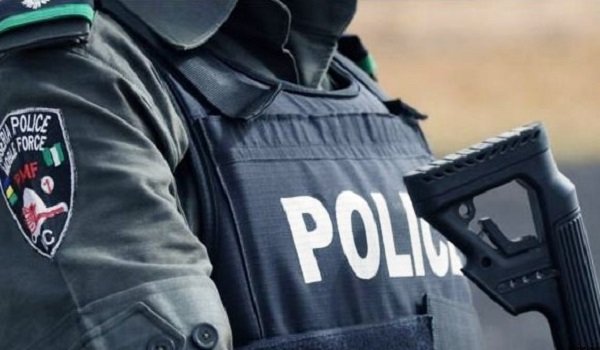
Tinubu ‘intervention’ rumours collapse as Frank Mba, top police chiefs retire in force shake-up

Speculation that President Bola Ahmed Tinubu had stepped in behind the scenes to shield some senior police officers from retirement has effectively collapsed following the quiet exit of Deputy Inspector-General of Police Frank Mba and several other high-ranking officials from the Nigeria Police Force.

The retirement wave comes amid a dramatic shift in the leadership structure of the force triggered by the departure of former Inspector-General of Police Kayode Egbetokun and the emergence of Tunji Disu as the new police chief.

For weeks, insiders in security and political circles had speculated that the presidency might intervene to extend the tenure of some senior officers affected by the leadership transition, particularly those approaching the statutory retirement threshold or considered influential within the force.

Such presidential interventions are not unprecedented in Nigeria’s security architecture, where political considerations, operational continuity, and internal power balancing have sometimes influenced the fate of top-ranking officers.

But Mba’s retirement after more than three decades in service, alongside other senior officers, suggests the anticipated reprieve never materialised, clearing the path for a new command structure under the leadership of Disu.

End of a High-Profile Career

Before his retirement, Mba served in the Department of Training and Development at Force Headquarters.

His exit after 34 years of service brings to a close a career widely regarded by colleagues and observers as one of the most intellectually distinguished within the modern Nigerian police hierarchy.

Mba joined the force in May 1992 as a cadet officer and graduated from the Nigeria Police Academy in Kano as the best cadet in academics, an early signal of the professional path that would define his career.

Over the years, he occupied several strategic operational and administrative roles across the country.

He served as Commissioner of Police in Ogun State, Commissioner of Police in charge of the Border Patrol Force at Force Headquarters, and held operational commands including Area Commander in Ajah and Festac, Lagos.

Beyond domestic assignments, Mba also represented Nigeria in global security operations, serving in the United Nations peacekeeping mission in Liberia between 2006 and 2007.

Scholar in Uniform

In addition to his policing credentials, Mba built an impressive academic profile.

A trained lawyer, he obtained a law degree from the University of Lagos and was called to the Nigerian Bar in 2002 after attending the Nigerian Law School in Abuja.

He later earned a Master’s degree in Law with distinction from the University of Dundee in Scotland.

His professional development also took him to some of the world’s most respected institutions, including the FBI National Academy in Quantico, as well as executive programmes at Harvard University and the University of Oxford.

“A Great Honour to Serve”

In his farewell message, Mba expressed gratitude to President Tinubu for the opportunity to serve under his administration.

“I am deeply grateful to President Bola Ahmed Tinubu for the privilege of serving our great nation during his administration,” he said.

“The confidence reposed in the Nigeria Police leadership and the support given to the institution during this period have been invaluable. It has been a great honour for me to contribute my quota to the security and stability of our country.”

He also thanked Nigerians for their trust throughout his policing career.

“Policing is a difficult but noble profession, and whatever success we recorded was made possible by the understanding and support of Nigerians,” he said. “I leave the service with a heart full of gratitude and pride for having had the opportunity to serve.”

Fresh Promotions on the Horizon

With Mba and other senior officers stepping aside, attention has now shifted to the next generation of police leadership.

At least seven Assistant Inspectors-General of Police are expected to appear before the Police Service Commission for interviews as part of the process for promotion to the rank of Deputy Inspector-General.

Among those tipped for elevation are Margreth Ochalla, Ekene Onwuemelie and Ishiaku Mohammed.

Their promotion would complete the emerging command architecture of the force as Inspector-General Tunji Disu begins what many observers describe as a new phase in the leadership evolution of Nigeria’s policing system.

Iran launches regional attacks, drones target US base in Iraq and explosions shake Doha

Iraqi forces have shot down a drone that attempted to attack a United States military base near Baghdad International Airport, local media have reported, as Iran continues to strike US assets in Arab countries, with the region plunging deeper into war after six days.

The drone attempted to target Victoria airbase overnight on Wednesday and was intercepted before it reached its target, according to the reports.

Videos that emerged early on Thursday showed a drone crash in the Al-Bu’aitha area of Baghdad in the presence of security personnel.

In a separate incident later on Thursday, a boat struck an oil tanker flying the flag of the Bahamas in the Iraqi port of Khor al-Zubair, causing damage and an oil spill, an Iraqi security source told Al Jazeera.

Later on Thursday night, Bahrain said an Iranian missile hit a state-run oil refinery. It said the fire was extinguished and the refinery was still working. There were no reports of casualties.

The attacks occurred as tensions in the Middle East soared due to the ongoing conflict set off by the US and Israel launching a war on Iran.

Qatar’s defence ministry said on Thursday that the country was targeted by several attacks, including 14 ballistic missiles and four drones coming from Iran.

Thirteen missiles were intercepted, and one fell in Qatar’s territorial waters, it said in a statement. All drones were intercepted, and no casualties were reported.

As multiple explosions were heard in the skies above Doha, authorities in Qatar sent out an “elevated” emergency alert to residents.

The country’s interior ministry ordered the evacuation of residents living near the US Embassy in Doha as a precautionary measure.

Al Jazeera’s Zein Basravi, reporting from the Qatari capital, said the US Embassy compound occupies a “very large area” that is located “in the heart of the city”.

Basravi added that the US embassies in Saudi Arabia and Kuwait, and the US consulate in Dubai, were all targeted by drones this week.

In the United Arab Emirates, six people were injured by falling debris from drones that were intercepted by air defence systems over Abu Dhabi, the emirate’s media office said.

In a post on X, the office said authorities had responded to debris falling in two locations in the Industrial City (ICAD II) district. The affected individuals, who were nationals of Pakistan and Nepal, received minor to moderate injuries from the debris.

New explosions were also heard in Bahrain. The Bahrain Defence Force said it destroyed 75 missiles and 123 drones “targeting the Kingdom since the start of the brutal Iranian aggression”, in a post on its Instagram account.

The reverberating violence has spread across the region, with attacks also reported in Saudi Arabia, Oman and Kuwait.

The Saudi Ministry of Defence said the latest drone sent into its territory was shot downloading unear the al-Jawf region, in the north of the country. This came after the ministry announced intercepting three drones east of al-Kharj governorate.

Oman’s Oil Marketing Company said one of its storage tanks was damaged in an “incident”, which preliminary assessments said was only minor. The company said operations at the affected site were taken offline, according to the Reuters news agency.

Oman’s Foreign Minister Badr Albusaidi called for an end to the war in a post on X. “Oman reaffirms its call for an immediate ceasefire and a return to responsible regional diplomacy,” he wrote. “There are off ramps available. Let’s use them.”

Kuwait’s Ministry of Interior said an explosion on board an oil tanker occurred outside its territorial waters, more than 60km (37 miles) from the Mubarak al-Kabeer port.

It said all crew were safe, but that the vessel had taken on water and that an oil spill could potentially cause ⁠environmental damage.

On Wednesday, Iran’s Islamic Revolutionary Guard Corps (IRGC) said it fired 230 drones at several facilities hosting US troops in the Middle East, including a base in Erbil in northern Iraq and the Ali Al Salem airbase and Camp Arifjan in Kuwait.

The IRGC said the attacks were among its “first powerful steps” in the war, despite Iran having attacked Gulf Arab states for days since Israel and the US launched their coordinated offensive on Saturday.

President Masoud Pezeshkian directly addressed Iran’s neighbouring countries on Wednesday, saying Iran sought to avert war through diplomacy, but US-Israel attacks left it “with no choice” but to retaliate.

“We respect your sovereignty,” the president said in two separate posts in Arabic and Persian on X.

Iran believes security in the region must be achieved through a collective effort, he added.

As Iran’s retaliatory attacks continued, so has the Israeli-US assault on Iran.

In the face of the continued war, Iran’s Foreign Ministry spokesman Esmaeil Baghaei warned that European Union countries will “pay the price, sooner ⁠or later” if ⁠they remain silent over the joint attacks on Iran. Baghaei made the comments to Spanish broadcaster TVE.

There was little to indicate at this stage, however, that European assets will be targeted in the same manner as US and Arab ones have.

Credit: https://www.aljazeera.com/news/2026/3/5/drone-targets-us-base-in-iraq-as-iran-attacks-hit-region-amid-us-israel-war

Breaking: Court halts NBA 2026 elections, bars NBA President from election process

The build-up to the 2026 National Officers’ Election of the Nigerian Bar Association (NBA) has been thrown into fresh controversy after a High Court in Oyo State issued a dramatic order halting activities related to the electoral process.

In a ruling delivered on Wednesday, Justice G. A. Opayinka of the Oyo State High Court sitting in Ibadan granted an interim injunction restraining the Electoral Committee of the Nigerian Bar Association (ECNBA) and the NBA President, Mazi Afam Josiah Osigwe, SAN, from taking further steps in connection with the election.

The order followed a Motion Ex-Parte filed by four lawyers, Ibrahim Lawal, Raymond Oki, Omotan Olusola Ogunmodede, and Chief Gabriel Ojo Adekunle Ijalana, who challenged aspects of the electoral process and the constitution of the ECNBA.

The applicants joined as defendants the Nigerian Bar Association, its President Afam Osigwe, SAN, the Body of Benchers, and the General Council of the Bar, represented through the Attorney-General of the Federation.

Also listed as defendants are members of the ECNBA: Aham Ejelam, SAN; Ibrahim Aliyu Nassarawa, Esq.; Muhamad M. Nuhu, Esq.; Uju Okafor, Esq.; and Ume Maduka, Esq.

In the interim order, the court restrained the 5th to 9th defendants from parading themselves as Chairman, Secretary, or members of the ECNBA, or performing any act connected with the conduct of the 2026 NBA National Officers’ Election.

Justice Opayinka further directed that NBA President Afam Osigwe must not take any step whatsoever toward the constitution or composition of the ECNBA, nor participate in supervising, influencing, or interfering with the electoral process pending the determination of a Motion on Notice seeking a substantive interlocutory injunction.

The application was argued by Tunji Ogunrinde, SAN, alongside R. O. Solahudeen, Esq., counsel to the claimants.

Legal observers say the ruling could significantly disrupt preparations for the NBA’s 2026 elections, which are expected to hold in about four months.

With the ECNBA now restrained and the NBA President barred from further actions relating to the committee’s composition, the decision is already raising serious constitutional and political questions within the Bar about the fate of the election timetable and the future of the electoral process.

The court adjourned the matter to 12 March 2026 for the hearing of the Motion on Notice for interlocutory injunction.

Poverty drives Nigerian families into overcrowded public schools despite failing infrastructure

By Ladidi Sabo

Nigeria’s worsening economic crisis is pushing thousands of families into a painful dilemma: sending their children to public schools that lack even the most basic facilities or withdrawing them from education altogether.

Across the country, parents who once struggled to keep their children in private schools are now transferring them to public institutions, not because they believe the schools offer better learning conditions, but because the country’s spiralling cost of living has left them with little choice.

The shift is flooding already overstretched government schools with new students, exposing deep structural failures in Nigeria’s education system.

Private School Exodus

Parents and education stakeholders say rising transportation costs, inflation, and the ripple effects of economic reforms have made private school tuition unaffordable for many households.

Education manager Mr. Alake Ayo said the cost of schooling has become unbearable for average Nigerian families.

“Tuition fees have increased even for families that could afford them before, while living expenses have surged fourfold,” he said.
“Many parents simply cannot keep their children in private schools anymore.”

As a result, thousands of students are leaving private schools and moving into public institutions that were already struggling with inadequate infrastructure and poor funding.

Education analysts estimate that millions of Nigerian students have dropped out of school in recent years, while many others are being pushed into the public education system as the only affordable option left.

Public Schools Buckling Under Pressure

The sudden influx of students is overwhelming government schools that already lack sufficient classrooms, teachers, and learning materials.

In some cases, classrooms designed for fewer than forty students now accommodate more than one hundred.

A teacher in a public school in Iba, Lagos, who spoke anonymously, described the situation as unsustainable.

“Even though we are already in the second term, parents are still bringing their children for admission,” the teacher said.
“Some classes now have over a hundred pupils.”

Such overcrowding is worsening long-standing problems in public schools, where dilapidated classrooms, broken furniture, poor sanitation and shortages of teachers are common.

Critics say the situation reflects years of weak governance and chronic underinvestment in Nigeria’s education sector.

Families Forced Into Difficult Choices

For many parents, transferring their children to public schools is not a preferred option but a survival strategy.

Books, uniforms, transportation and other associated costs have also risen sharply, leaving families struggling to keep their children in any form of schooling.

Some parents have gone further, pulling their children out of school entirely and sending them into informal work to support household income.

In Okokomaiko, Lagos, residents say children as young as seven are now seeking work in local factories and small businesses.

One concerned parent described scenes of children lining up outside a popular sachet-water factory in search of daily-paid jobs.

“Some parents even bring their children themselves to beg for work,” the parent said.
“They believe the small money earned each day will help the family survive.”

Schools Struggling to Stay Afloat

The economic downturn is also affecting the ability of schools to operate effectively.

School administrator Miss Akwa Ugo said the crisis is destabilising school management.

“Students keep leaving because their parents cannot pay fees,” she explained.
“Teachers are also quitting because salaries no longer cover basic living expenses.”

According to social commentator Mr. Stanley Uzo, the imbalance between school fees and teacher wages highlights the structural problems within the education sector.

“Teachers are building the future while being compensated as if they belong to the past,” he said.

Even Public Technical Schools Becoming Expensive

In some parts of the country, even government-owned institutions are becoming financially inaccessible.

Education advocate Mr. Alex Onyia pointed to technical schools in Enugu State where fees reportedly exceed ₦300,000 per term, a figure far beyond the reach of low-income families.

He also questioned the effectiveness of government programmes designed to support students.

“The government allocated ₦30 billion for school feeding, yet fewer than ten schools are benefiting,” Onyia said.
“Something in the system is clearly broken.”

A System Near Breaking Point

While a few low-cost private schools offering flexible payment plans have seen a rise in enrolment, analysts say such isolated cases cannot offset the broader collapse unfolding across the education sector.

The combination of poverty, failing infrastructure and weak governance is creating a perfect storm.

As public schools become overcrowded and underfunded, Nigeria risks producing a generation of students educated in conditions that make meaningful learning nearly impossible.

For many families, however, the reality is stark: public schools may be broken, but they remain the only schools they can still afford.

Coroner’s inquest without the deceased’s body

Leadership Newspaper Editorial

Nkanu Esege, one of Chimamanda Ngozi Adichie’s twins, died on 7 January 2026, following complications during a series of preparatory medical procedures at Euracare Multispecialty Hospital, Lagos.

A Coroner at the Yaba Magistrate Court, Lagos, has scheduled 14 April 2026 for the commencement of a formal inquest into the death of the 21-month-old son of the renowned author.

However, reports have emerged that the deceased’s body has been cremated, thereby leaving the Coroner without primary forensic evidence as to the cause of death.

Read Also: Baby Nkanu:  Negligence or meningitis?  A rejoinder

Read Also: Euracare slams probe as doctors face suspension in Adichie’s son’s death, accuses regulators of procedural lapses

This editorial examines the possibility of the Coroner’s inquest proceeding in the absence of the body of the deceased.

Suffice it to say that had the body of the deceased been buried, and not cremated, perhaps, the fears of the looming uncertainty as to the cause of his death, resulting from the absence of his body for the purpose of the inquest would have been allayed.

This is because, save in circumstances where it would be injurious to public health, or where there is no reasonable probability of a satisfactory result being obtained thereby, whenever it appears to a Coroner that the body of a person, who has died under circumstances requiring the conduct of an inquest, has been buried without being viewed or without an inquest having been held, the Coroner is vested with powers by dint of a warrant, to order the exhumation of the body for the purpose of holding an inquest as contained in Section 6 of the Coroner’s Act, 1945

Under Section 16 of the Coroner’s System Law of Lagos State. 2007, tampering with or disposing the body of a deceased person prior to conduct of a post-mortem examination is prohibited, except by the prior authorisation of the medical examiner.

It must be noted that this provision applies only where, prior to the tampering with the body, a Coroner’s inquest has begun, with a view to ascertaining the cause of the deceased’s death. This is also the jurisprudential basis for the provision of Section 10 of the Coroner’s Act which prohibits the burial or cremation of the body of a deceased person requiring an inquest until such inquest is held.

For ease of reference, Section 10 of the Coroner’s Act provides that: a coroner may prohibit the burial or cremation of a body lying within jurisdiction until an inquest is held.”

Also, Section 22 of the Coroner’s System Law of Lagos State, 2007 provides that: “A Coroner may order the postponement of chemical preservation or disposal of any body lying within his jurisdiction, until an inquest has been held.”

Notwithstanding the foregoing, a Coroner’s inquest can still be held in Nigeria even if the body of the deceased has been cremated, as the inquest focuses on determining the cause, time, and circumstances of death through evidence elicited from witnesses and medical reports, rather than relying solely on a physical autopsy/post-mortem examination. Thus, while cremation complicates forensic analysis/evidence, legal proceedings can proceed based on available records.

Again, in our opinion, it depends on the key details regarding this situation, such as the purpose of the Inquest. The primary goal is to determine who, where, when, and how the deceased died, which can be achieved through witness testimonies, circumstantial evidence, documentation, and the deceased’s available medical records.

There is also procedural flexibility which indicates that despite the cremation of the deceased’s body, an inquest can be initiated or continued based on evidence gathered before or after cremation, as aforestated.

On the proposition that a Coroner’s inquest can be conducted in the absence of the deceased’s body, provisions of Section 9 of the Coroner’s Act, 1945 provide that (1) where a coroner has reason to believe that a death has occurred in the area within which he has jurisdiction in such circumstances that an inquest ought to be held, and that owing- (a) to the destruction of the body by fire or otherwise; (b) or to the fact that the body is lying in a place from which it cannot be recovered, an inquest cannot be held except by virtue of the provisions of this section,he may, if he considers it desirable so to do, hold an inquest touching the death.

In an inquest under subsection (2) of this section, the Law relating to inquests shall apply with such modifications as may be necessary in consequence of the inquest being held otherwise than on or after view of a body lying within the coroner’s jurisdiction.”

The above provisions of the Coroner’s Act of 1945 are in pari materia with Section 21 of the Coroner’s System Law of Lagos State, 2007.

Section 9(2) of the Coroner’s Act refers to the use by the coroner of such means other than viewing of the deceased’s body or post-mortem examination to conduct the inquest.

Similarly, alternative means to be employed by the coroner in the absence of the body of the deceased include, as earlier highlighted, calling of witnesses to give evidence during the inquest, medical reports/records relating to the deceased prior to his death, as well as cogent and compelling circumstantial evidence.

On the powers of a Coroner to conduct an inquest by means of oral and written testimonies of witnesses, especially as in the instant case where the body of the deceased has been cremated, Section 17 of the Coroner’s Act which provides that (1) a coroner holding an inquest shall have and may exercise all the powers of a magistrate with regard to summoning and compelling the attendance of witnesses and requiring them to give evidence, and with regard to the production of a document or thing at the inquest.”

Also Sections 32 and 33 of the Coroner’s System Law of Lagos State, 2007 states that key witnesses in this regard may include the medical team that attended to the deceased while he was receiving medical treatment before his death, the deceased’s family members or such persons who are abreast of his medical history, who brought/accompanied him to the hospital where he died or who last saw him before his death under circumstances requiring the holding of an inquest.

Euracare slams probe as doctors face suspension in Adichie’s son’s death, accuses regulators of procedural lapses

Euracare Multi-Specialist Hospital has mounted a forceful defence of two of its senior physicians, placed on interim suspension by the Medical and Dental Council of Nigeria (MDCN) following the death of 21-month-old Nkanu Adichie-Esege, the son of celebrated author Chimamanda Ngozi Adichie.

The hospital also raised concerns about the integrity of the investigative process, alleging procedural lapses and breaches of confidentiality in what is fast becoming one of Nigeria’s most high-profile medical negligence cases.

Doctors Suspended Pending Tribunal

On Tuesday, the Medical and Dental Practitioners Investigation Panel announced the interim suspension of Euracare’s Medical Director, Dr. Tunde Majekodunmi, and its anaesthesiologists, Dr. Titus Ogundare. Also suspended was Dr. Atinuke Uwajeh, Chief Medical Officer of Atlantis Pediatric Hospital.

The trio has been barred from practicing medicine in Nigeria pending the outcome of proceedings before the Medical and Dental Practitioners’ Disciplinary Tribunal.

According to a statement signed by the panel’s Secretary, Dr. Enejo Abdu, investigators established a prima facie case of medical negligence in the treatment of the toddler, who died on January 7, 2026, following complications arising from preparatory medical procedures.

The panel further disclosed that it found sufficient evidence of professional misconduct against 10 additional doctors at Atlantis Hospital. Eight other physicians named in the initial complaint were cleared after the panel reviewed affidavits, counter-affidavits, and sworn oral testimony.

The investigation concluded during the panel’s 25th session held in Abuja on February 17 and 18. A coroner’s inquest is scheduled to begin April 14.

A Planned Medical Evacuation That Ended in Tragedy

According to accounts contained in a legal notice dated January 10, 2026—issued by counsel to the child’s parents—the toddler had first been admitted to Atlantis Hospital in Lagos for what doctors reportedly described as a worsening but initially mild illness.

As arrangements were being made to transfer him to Johns Hopkins Hospital in the United States for specialist care, Atlantis Hospital referred him to Euracare for pre-flight evaluations and procedures.

Those procedures allegedly included an echocardiogram, brain MRI, lumbar puncture, intravenous sedation with propofol, and insertion of a peripherally inserted central catheter.

The parents claim their son developed sudden and severe complications while being moved to the cardiac catheterization laboratory after undergoing the MRI.

He later died.

In their notice, the parents accused Euracare, its anaesthesiologists, and other medical personnel of failing in their duty of care and engaging in professional misconduct.

Euracare Pushes Back

In a statement issued Wednesday, Euracare said it remains committed to cooperating fully with regulatory and judicial authorities. However, it expressed strong confidence in the competence and integrity of its suspended physicians, describing them as seasoned professionals who have made significant contributions to healthcare delivery in Nigeria.

The hospital said it had conducted an internal clinical review consistent with its governance standards and best practices, maintaining that it has upheld transparency throughout.

But it also alleged that “certain established processes and protocols have not been followed in the manner required” during the investigation.

Euracare further raised concerns about what it described as the disclosure of confidential patient and institutional information outside appropriate channels—calling it a serious breach.

“All parties are entitled to a fair and impartial process conducted strictly in accordance with established rules,” the hospital said, adding that it would pursue its concerns through appropriate legal and regulatory avenues.

While defending its staff, Euracare expressed sympathy to the bereaved family, acknowledging that the loss of a child is “a grief without measure.”

High-Profile Case, National Scrutiny

The case has drawn widespread public attention not only because of the gravity of the allegations, but also because of the prominence of the child’s mother, one of Nigeria’s most internationally recognized literary figures.

As disciplinary proceedings and a coroner’s inquest move forward, the case is likely to test both Nigeria’s medical accountability systems and public trust in private healthcare institutions.

For now, three doctors remain suspended, more than a dozen practitioners have faced regulatory scrutiny, and a grieving family awaits answers.

Protest or Policy? Edo’s power crisis sparks leadership debate as governor joins protest

By Lillian Okenwa

As residents of Edo State grapple with blackouts, overbilling and rising generator costs, Governor Monday Okpebholo has taken an unusual step: joining a street protest against Benin Electricity Distribution Plc (BEDC).

The governor vowed to “break the monopoly” in electricity distribution, arguing that opening the sector to more players, similar to Nigeria’s telecom model, would improve efficiency and service delivery.

But as Edo debates distribution reform, critics say the deeper crisis lies elsewhere: weak generation capacity, fragile transmission infrastructure and sluggish policy execution.

And they point to a growing contrast, one unfolding hundreds of kilometres away.

A Tale of Two States

In Abia State, Governor Alex Otti has pursued an aggressive push toward embedded generation and alternative energy partnerships, leveraging new electricity reforms that allow states greater autonomy in power generation and distribution.

Abia has moved to strengthen independent power initiatives and attract private sector investment into localised generation, reducing dependence on the national grid and prioritising industrial clusters and urban centres.

Energy analysts say the strategy reflects a shift from complaint to capacity-building.

“Distribution is the last mile,” one power sector consultant noted. “If generation is weak and transmission is unstable, breaking a monopoly alone won’t solve the darkness.”

Nigeria’s Structural Power Problem

Nigeria’s national grid has long struggled with inadequate generation. producing far below national demand, alongside ageing transmission lines and recurring system collapses.

States now have constitutional and legislative pathways to:

  • Develop embedded power plants
  • Partner with independent power producers
  • Expand solar mini-grids in rural communities
  • Create state-level electricity markets

Yet execution varies widely.

For many Edo residents, the central question is whether joining a protest signals empathy — or a vacuum of structured policy alternatives.

Lessons From Smaller Nations

Globally, smaller economies facing similar infrastructure challenges have adopted diversified power strategies:

  • Rwanda has aggressively deployed solar mini-grids to electrify rural communities.
  • Costa Rica has invested heavily in renewable hydro, wind and geothermal power, dramatically reducing fossil fuel reliance.
  • Namibia has expanded independent power producer (IPP) participation to stabilise supply.

These countries demonstrate a core principle: sustainable electricity reform requires generation expansion, infrastructure investment and regulatory clarity — not only market restructuring.

Generation vs Demonstration

Governor Okpebholo’s argument centres on breaking BEDC’s dominance in distribution. But experts caution that without parallel investment in:

  • State-backed embedded generation
  • Public-private renewable projects
  • Infrastructure upgrades
  • Transparent regulatory frameworks

… additional distributors may simply share scarcity rather than create abundance.

Critics argue that the optics of a sitting governor joining a protest blur the lines of executive responsibility.

“When a governor protests, who exactly is he protesting against?” asked a Benin-based policy analyst. “Leadership means designing the solution, not marching against the symptom.”

The Governance Test

Edo’s electricity crisis is not just about bills and blackouts, it is about governance capacity in an era where states now have greater power-sector autonomy.

With inflation rising and small businesses strained by diesel costs, the demand is shifting from rhetoric to results.

Residents are not merely asking for solidarity. They are asking for sustained light.

As Abia experiments with generation-focused reform and smaller nations diversify energy portfolios, Edo faces a defining choice: move from protest politics to power-sector transformation.

In the end, the electorate may judge not who joined the rally, but who switched on the lights.

Moral Decay in Society: Abuse of vulnerable populations

By Richard Odusanya

The worse moral failure that undermines humanity is to be bribed with material intents in order to stand against the truth.

The above statement is morally forceful, and its central claim — that bribery in exchange for silence or distortion of truth is a deep ethical failure — resonates strongly within the Nigerian context. Corruption here is not abstract; it has concrete developmental, institutional, and even security consequences.

When corruption diverts public resources, the damage manifests in poorly equipped hospitals, abandoned infrastructure, unpaid teachers, fragile institutions, and weakened public trust. In that sense, the quotation attributed to Navi Pillay captures a real developmental truth: corruption is not merely about money lost; it is about opportunities denied and lives indirectly shortened.

However, to frame corruption solely as “spiritual decay” may be rhetorically powerful but analytically incomplete.

In Nigeria, corruption is not only a moral weakness of individuals; it is also embedded in structural incentives. Weak enforcement mechanisms, opaque procurement systems, politicized institutions, and patronage-driven political financing create an environment where corruption is often rationalized as survival or obligation. When systems reward loyalty over competence and shield impunity, moral exhortation alone cannot solve the problem.

The biblical reference to 1 Timothy 6:10 — “the love of money is the root of all evil” — is frequently quoted, but it is worth emphasizing that the text does not condemn money itself, but disordered attachment to it. In a country like Nigeria, where economic insecurity is widespread, the pursuit of money is often intertwined with fear — fear of instability, unemployment, healthcare costs, or political marginalization. The moral problem arises when that pursuit overrides justice, equity, and truth.

In the Nigerian state, corruption has evolved beyond petty bribery into systemic capture in some sectors — contract inflation, regulatory compromise, procurement manipulation, and electoral financing distortions. The cost is cumulative: weakened institutions discourage investment, capital flight increases, public cynicism deepens, and young citizens lose faith in meritocracy. Over time, this corrodes national cohesion.

Yet, a purely moralistic narrative risks overlooking reform pathways. Countries have reduced corruption not only through preaching integrity but through structural redesign: digitalization of government payments, transparent procurement portals, whistleblower protections, judicial independence, competitive civil service recruitment, and civic accountability.    When institutions reduce discretion and increase transparency, temptation declines.

The deeper Nigerian challenge, therefore, is dual: ethical renewal and institutional reform. Moral language is important because it shapes culture. But sustainable change requires aligning incentives with integrity — making corruption costly and honesty viable.

If truth can be “bribed,” it is often because systems permit it. The task ahead is to build institutions where truth is protected not only by conscience but by law, transparency, and consequences.

In the Nigerian context, that is not merely a spiritual aspiration; it is a developmental necessity.

In conclusion, the recent surge in high-profile corruption cases in Nigeria, particularly in the recent past years has indeed raised concerns regarding public sector integrity and the efficacy of anti-corruption campaigns. Reports indicate that despite efforts by anti-graft agencies, Nigeria has continued to face challenges, ranking 142nd out of 182 countries in the 2025 Transparency International Corruption Perceptions Index (CPI), with a consistent score of 26 out of 100.

Some Examples Below

  • Godwin Emefiele: The former Central Bank of Nigeria (CBN) Governor is facing multiple trials regarding alleged $4.5 billion fraud, procurement violations, and abuse of office.
  • Yahaya Bello: The former Kogi State Governor faces multiple charges, with trials in 2026 regarding alleged N80.2 billion and N110 billion money laundering.
  • Abubakar Malami (SAN): The former Attorney-General is facing prosecution over alleged money laundering totalling N8.7 billion.
  • Olu Agunloye: The former Minister of Power and Steel Development is on trial regarding a N6 billion fraud.
  • Suspends Humanitarian Affairs Minister Betta Edu Over N585m Paid into Private Account.
  • Former National Health Insurance Scheme (NHIS) Boss: Professor Usman Yusuf is under trial for alleged N90.4 million fraud.
  • Former Acting Accountant General: Chukwunyere Anamekwe Nwabuoku is facing charges related to N868 million money laundering. These and many others are issues of deep concerns.

@Richard ODUSANYA

The views expressed by contributors are strictly personal and not of Law & Society Magazine.

TIPS