With insecurity spreading across regions and economic pressures reshaping governance priorities, the African Bar Association (AfBA) has issued a sweeping call for papers ahead of its 2026 Annual Conference—seeking bold legal ideas to confront what it describes as Africa’s most defining challenges.
The call is more than a routine academic exercise. It is a direct appeal to legal scholars, practitioners, and policy thinkers to interrogate how law can respond to the growing intersection of military activity, security threats, and economic instability across the continent.
At stake, organisers suggest, is not just legal reform—but the durability of Africa’s development trajectory.
A Theme Rooted in Urgency
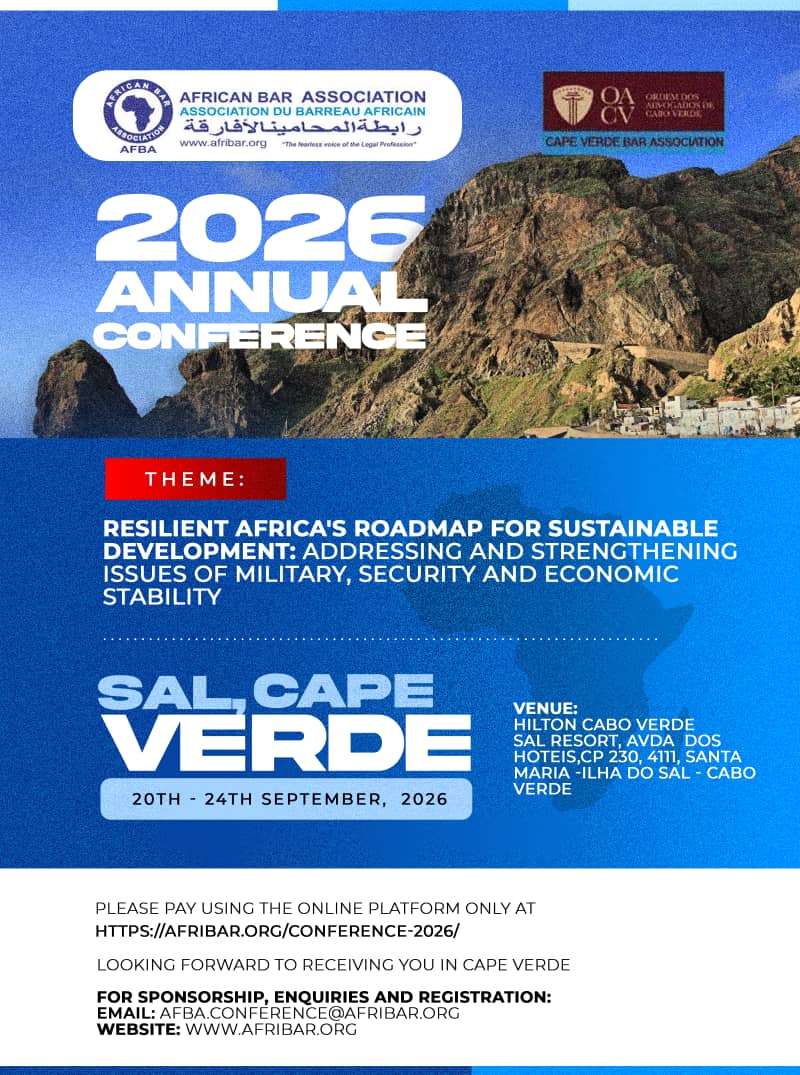
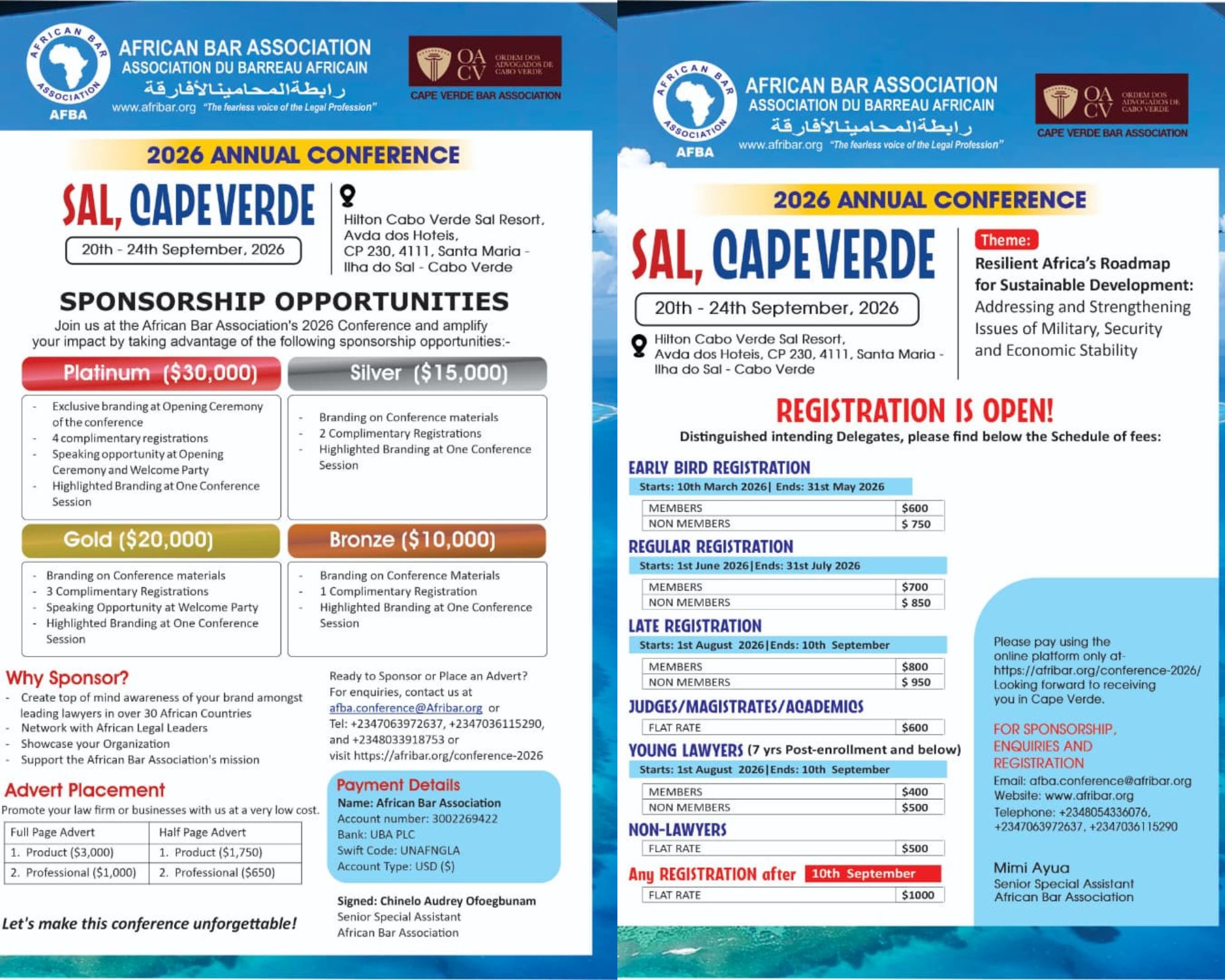
The conference, themed “Resilient Africa’s Roadmap for Sustainable Development: Addressing and Strengthening Issues of Military, Security and Economic Stability,” signals a shift toward integrated thinking.
AfBA is asking contributors to move beyond siloed analysis and instead explore how legal systems can simultaneously address conflict, governance breakdown, and economic fragility.
The scope is deliberately expansive.
From access to justice in conflict zones to the regulation of artificial intelligence, from cross-border trade disruptions to environmental damage linked to military activity, the call invites submissions across 18 thematic areas that collectively map Africa’s most pressing vulnerabilities.
Where Law Meets Instability
Central to the call is a recognition that traditional legal frameworks are being tested by rapidly evolving realities.
In regions affected by violence, questions of justice and human rights are increasingly shaped by security considerations. In economic corridors, instability is disrupting trade, finance, and investment flows. In digital spaces, emerging technologies are outpacing regulation.
AfBA’s call challenges contributors to confront these tensions head-on.
Key areas of focus include:
- protecting human rights during military operations
- strengthening legal frameworks for counterterrorism and anti-corruption efforts
- addressing cross-border legal challenges under the African Continental Free Trade Area
- building resilient financial systems capable of withstanding security shocks
- regulating digital transformation and artificial intelligence in fragile environments
From Theory to Policy Impact
Unlike purely academic calls, AfBA is placing emphasis on practical relevance.
Submissions are expected not only to diagnose problems but to propose workable legal and policy solutions—frameworks that can be adopted, adapted, or debated within real governance systems.
The goal, organisers indicate, is to generate ideas that move beyond conference rooms and into legislative, judicial, and institutional reform processes across African states.
Submission Requirements
AfBA has outlined a structured submission process:
- Abstracts: Up to 300 words, including title, author details, affiliation, and contact information
- Full Papers: Maximum of 8,000 words (excluding references), using OSCOLA citation style
- Format: Word document (.docx)
- Languages: English, French, or Arabic
Timeline:
- Abstract deadline: May 31, 2026
- Acceptance notification: June 30, 2026
- Full paper deadline: August 15, 2026
Submissions are to be sent to: [email protected]
No Honorarium, High Expectations
AfBA makes clear that participation comes without financial compensation. Contributors will not receive honoraria, and all submitted works must be original and unpublished.
Authors are also required to transfer intellectual property rights—excluding moral rights—to the association.
For many in the legal community, however, the value lies elsewhere: visibility, influence, and the opportunity to shape high-level discourse on Africa’s future.
A Defining Moment for Legal Thought
As Africa navigates overlapping crises—from armed conflict and political instability to economic disruption and technological change—the AfBA call positions legal scholarship as a critical tool in shaping outcomes.
The question now is whether the continent’s legal minds will rise to the challenge.