Home Blog Page 8

Peace Talks Turn Nightmare! Notorious bandit seizes 50 elders during reconciliation meeting

  • Comes as Nigerians question ‘selective rescue’ after Adelabu’s sister was freed in 72 hours while Oyo pupils remain in kidnappers’ den

A desperate attempt to restore peace in a troubled Zamfara community has ended in a mass abduction after a notorious bandit leader allegedly seized dozens of village elders who attended a reconciliation meeting in his forest stronghold.

At least 50 elders from Magamin Diddi village in Maradun Local Government Area were reportedly kidnapped after meeting with a feared bandit commander known as Jammo, who controls parts of the Muntsira Forest, according to local authorities.

The incident has sent shockwaves across the state and highlighted the growing risks communities face as insecurity intensifies and some residents increasingly seek direct engagement with armed groups in the absence of lasting peace.

Maradun Local Government Chairman Bello Dosara confirmed the development, revealing that the elders had embarked on the peace mission without informing government authorities.

“I am the chief security officer of Maradun. They should have contacted me at least,” Dosara told LEADERSHIP.

“Nobody informed me because they knew the Zamfara State Government, under Governor Dauda Lawal, has openly prohibited negotiations with bandits.”

According to Dosara, initial reports suggested only 11 elders had been released. However, he later confirmed that 12 captives were freed while 38 remained in the custody of the bandits.

“He released the 12 to go back and inform the community about what happened,” the chairman said.

The mass abduction appears to have stemmed from a request for reconciliation allegedly initiated by Jammo himself following the death of one of his lieutenants during a recent military operation in Kandare village.

A community youth leader, who requested anonymity because of security concerns, said the notorious bandit leader had invited village representatives for discussions after the military offensive.

The source added that Jammo has since imposed additional restrictions on the community, including blocking access to a local market route used by residents.

Police authorities confirmed that security agencies are investigating the incident.

Zamfara Police Command spokesperson, DSP Yazid Abubakar, said officers had been deployed to the affected area while efforts were ongoing to establish the exact number of those kidnapped.

“We heard what happened in Maradun, though we are not sure of the exact number of elders kidnapped and those released,” Abubakar said.

“I am still following up with the Divisional Police Officer for more details. The division has already deployed personnel to the community.”

The latest abduction comes amid growing national frustration over Nigeria’s worsening kidnapping crisis and increasing public scrutiny of government rescue efforts.

Across social media and in several communities, outrage has intensified over what critics describe as unequal responses to kidnapping incidents.

The debate was amplified after security operatives rescued the sister of former Minister of Power Adebayo Adelabu and her twin sons within 72 hours of their abduction in Ibadan, while dozens of schoolchildren and teachers abducted in Oriire Local Government Area of Oyo State have remained in captivity for weeks.

On Monday, residents of Ogbomoso joined members of the Take-It-Back Movement in a protest demanding the immediate rescue of 46 schoolchildren, teachers and a school principal abducted during coordinated attacks on schools in Oyo State.

Carrying placards and chanting solidarity songs, protesters accused authorities of failing to demonstrate the same urgency shown in other high-profile kidnapping cases.

“This is 25 days that our children and teachers have been in the den of kidnappers,” one protest leader said during the demonstration.

The growing anger reflects a broader national concern over whether security responses are being applied evenly, particularly as communities continue to bear the human cost of mass abductions.

For residents of Magamin Diddi, however, the immediate concern remains the fate of the dozens of elders who left home seeking peace and never returned.

What began as an attempt at reconciliation has instead become another grim reminder of the dangers posed by Nigeria’s increasingly emboldened bandit networks.

24 Years After! Odinkalu panel named him in NBA Chair’s murder saga—Today He’s Soludo’s top security aide

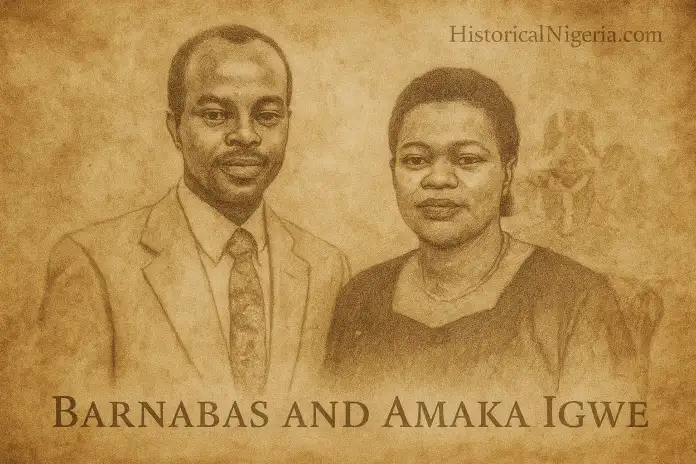
More than two decades after the gruesome murder of former Nigerian Bar Association (NBA) Onitsha Branch Chairman, Barnabas Igwe, and his pregnant wife, Amaka, justice remains elusive despite a far-reaching investigation by the Anambra State Truth, Justice and Peace Commission (TJPC) that documented the circumstances surrounding the killings and recommended urgent remedial action.

The commission, chaired by prominent human rights advocate, Chidi Odinkalu, concluded that the case represented a “continuing violation crying out for remedy” and raised troubling questions about alleged state involvement, institutional obstruction and the collapse of efforts to prosecute those linked to one of Anambra’s most notorious political-era murders.

Yet, 24 years later, one of the individuals identified in the commission’s findings remains a powerful figure in Anambra politics.

The report named Ken Emeakayi, then Commissioner for Works under former Governor Chinwoke Mbadinuju, as the leader of the convoy allegedly linked to the attack that claimed the lives of the Igwes.

Today, Emeakayi serves as Special Adviser on Community Security to Anambra Governor Charles Soludo and heads the state’s Agunechemba security outfit.

No court has convicted Emeakayi in connection with the murders, and the allegations remain findings contained in the commission’s report. However, the contrast between the commission’s conclusions and his current position at the heart of Anambra’s security architecture is likely to reignite debate over accountability in the long-running case.

Read Also: Juliana and Vincent Igwe: POTY 2023

A Murder That Shocked Anambra

According to the confidential report obtained by THISDAY, Barnabas and Amaka Igwe were attacked on September 1, 2002, shortly after returning from the NBA Annual General Conference in Ibadan.

The commission said armed men allegedly blocked their vehicle on Oraifite Street in Onitsha, dragged the couple out, hacked them with machetes and clubs, and subsequently ran them over with a vehicle.

Amaka reportedly died later that night, while Barnabas succumbed to his injuries the following day after allegedly identifying some of his attackers.

The commission linked the assailants to the then state-backed Anambra Vigilante Service (AVS), a controversial security outfit that operated during the Mbadinuju administration.

Critic of Government

The report painted a picture of escalating hostility between the state government and the outspoken lawyer in the months leading to his death.

As chairman of the NBA’s largest branch in the old Eastern Region, Igwe had become one of the fiercest critics of the administration over prolonged salary arrears owed to teachers, judicial workers and civil servants.

He was also a vocal opponent of the Bakassi Boys vigilante group, which the commission said had been accused of intimidation, unlawful detention and violent attacks.

Weeks before the killings, the NBA branch under Igwe’s leadership reportedly issued a 21-day ultimatum demanding payment of outstanding salaries and even called on the governor to resign if he could not resolve the crisis.

According to the commission, tensions worsened after confrontations between NBA leaders and political appointees of the government during meetings involving senior lawyers.

Allegations of Interference

Perhaps most disturbing are the commission’s findings on what happened after the murders.

The report alleged that investigators handling the case faced pressure to abandon or compromise their work.

It claimed that police officers who pursued the investigation suffered professional setbacks, while the prosecution itself was repeatedly undermined through judicial transfers, interference and the disappearance of suspects.

The commission further alleged that a 2006 prison break enabled several suspects to escape custody, effectively crippling the case.

Even more troubling, it said critical case files later disappeared from both court records and the Directorate of Public Prosecutions.

As a result, despite arrests and initial prosecutions, the case gradually faded without a definitive judicial conclusion.

A Family Left Behind

The report noted that beyond the political implications of the killings, the murders left behind three orphaned children who were subsequently raised by relatives.

It also concluded that the killings sent a chilling message across Anambra, discouraging civic activism and weakening pressure groups, civil society organisations and the legal profession at a critical moment in the state’s political history.

Before his death, the commission said Barnabas allegedly told his elder brother that one of the attackers described the assault as punishment for challenging the government.

According to the report, the assailant allegedly warned that “in his next life, he would not fight a sitting Governor again.”

What the Commission Recommended

In its recommendations, the Odinkalu-led panel called for a public apology from the Anambra State Government to the Igwe family and urged the state to consider symbolic compensation for the surviving children.

It also recommended renaming Oraifite Road, where the couple were murdered, in their honour.

Most significantly, the commission urged the governor to commission an independent review of the handling of the case to determine whether accountability could still be achieved.

Twenty-four years after Barnabas and Amaka Igwe were brutally murdered, that recommendation remains largely unimplemented.

And while the commission’s findings continue to gather dust, one of the men named in the report has risen to become one of the closest security advisers to the state’s current governor — a reality that raises uncomfortable questions about justice, accountability and whether one of Anambra’s darkest chapters will ever truly be closed.

An agenda for Yoruba oba, leaders, By Lasisi Olagunju

On Friday, November 1, 1878, a decisive war was fought in the north-eastern corridor of Yorubaland. History remembers it as the Jalumi War. It was that one-day battle that permanently halted the southward march of the Fulani towards the sea.

One of the bitterest engagements of that war was fought in a place called Iba, a few kilometres off the Ikirun-Offa Road.

I remembered that episode of Yoruba history when the oba of the town, the Eburu of Iba, Oba (Prof) Adekunle Okunoye, invited me to deliver his tenth coronation anniversary lecture last Thursday. We agreed on the topic: ‘Old Crowns, New Worlds: Obas and the Future of Indigenous Leadership in Yorubaland.’

I told two friends about the assignment, and their responses were the same: how safe could that journey be with the Fulani around? They refused to accompany me. I did not find their apprehension amusing. That Osun State community is a shouting distance from Kwara South, with its blisters of insecurity. Imagine bandits from the north invading a gathering of Yoruba kings.

I could have told Kabiyesi that there was another assignment. For a reporter, there is always another deadline and a reason to postpone one journey for another. But then I asked myself whether it was divine design or mere coincidence that a major cultural event was taking place in that community at the very moment the aggressor of the nineteenth century appears to have resumed the abandoned campaign to penetrate and plunder Yorubaland.

Why are armed men from the north ravaging the peace of the Yoruba often without resistance? Why are they killing the old and abducting the young from communities that had known peace for almost two centuries? How have the Yoruba become so vulnerable at a time when a Yoruba man is President and Commander-in-Chief of Nigeria?

Eminent historian Professor Banji Akintoye, in ‘The Yoruba People: Profile of the Foremost Black Nation’ (2022:95), quotes equally eminent Professor Wande Abimbola as lamenting in exasperation, “in elite circles”, that “the British could not, and did not, conquer us Yoruba, but now Nigeria is conquering us.”

Professor Abimbola’s observation deserves careful reflection. I read it through the lens of the fourteenth-century North African thinker, Ibn Khaldun. In his Muqaddimah, Khaldun argues that every successful society carries within itself the seeds of decline. He calls the force that makes a people great ‘asabiyyah’ —group solidarity, social cohesion and a shared sense of purpose. It is this collective spirit that builds civilisations and sustains them through adversity. It worked for the Yoruba generations that fought the Fulani wars of the 19th century.

Yet prosperity and comfort can gradually erode solidarity. Men who inherit power often forget the hardships through which it was won. A further reading of Ibn Khaldun tells me that as asabiyyah weakens, societies become vulnerable to more cohesive, more determined challengers. Dynasties, Khaldun warned, have life cycles just as men do. The question confronting the Yoruba today is whether the insecurity engulfing their homeland is merely a failure of the Nigerian state or evidence of a deeper erosion of Yoruba asabiyyah.

In the past, a full Oba River was never an excuse for turning down the oba’s invitation. Now, something worse than a full, furious flood stands on the way of the Yoruba traveller. Should it be so bad that in the 21st century, there would be a part of the fatherland that a citizen would be afraid to go? In Yorubaland, offspring of the house does not knock before crossing the threshold; besides, a child should never dread his father’s home. So, I was there, in Iba, on Thursday to heed the king’s summon.

The assignment turned out to be more than a lecture. It became an opportunity to reflect on an institution many have repeatedly buried but which stubbornly refuses to die: the Yoruba throne. For more than a century, prophets of modernity have predicted the disappearance of kingship. Colonialism was supposed to finish it. Democracy was expected to replace it. Globalisation was thought capable of making it irrelevant. Yet the palace remains.

But as what? A king without kingship. A ruler stripped of the sword but still burdened with his people’s expectations of protection in a time of war.

The lecture and the discussions in Iba were not merely about the past. They were also about the anxieties of the present. There were about forty obas at the event. I looked at them; they asked questions, I answered. We looked at one another. We found no magic with which to retrieve the peace of the past. It is gone.

A friend who hailed from Ogbomoso agonised over the recent mass kidnap of kids and teachers in her homestead. She sent me a staccato of messages conveying her fears and frustrations. She recalled what she encountered in that part of Yorubaland four years ago:

Read Also:

“I was in Ipapo in in Oke Ogun, in 2022 for a research on the farmer-herder crisis. The town itself had about 70 per cent Hausa-Fulani population and the Yoruba residents were constantly harassed by these people. When we tried to have focus group discussions with them, we observed that as soon as any Hausa-Fulani passed, they either went quiet or carefully measured their responses. In the mosque, northerners were at the front and the Yorubas stayed at the back to pray. There was a demarcation. One of us was a Muslim who went into the mosque to pray; he briefed us on what he saw.

“These things had been brewing for long. The warning signs were ignored. What was overlooked has now come full-blown in Yorubaland. These towns — Ipapo, Otu, Sepeteri — had always been terrorised. During that research, the only place that was clean of Fulani torment was Igangan. When we got to Sepeteri, the people told us which roads to take, which ones to avoid and the time to travel. It was tales of woe – and fear – throughout.”

Listening to her, I found myself wondering what the old Yoruba political order would have done in such circumstances.

The oba of old handled such situations as war commander. He was a lion. His authority was measured not by the ferocity of his roar but by the peace enjoyed by those under his care. He stood watchful and composed, a steady presence in turbulent times, unshaken when storms gathered over the land. That is why the Yoruba say: “Ibi tí kìnìún bá tọ̀ sí, ẹranko tó bá bá ibẹ̀ lọ kò so ríire.” Where the lion marks with its urine, any animal that passes through the place is doomed.

Such was the authority of the oba. But that was in the past. T. A. A. Ladele’s ‘Igbi Aye Nyi’ tells us of that transition from the substance of power to its abject opposite. The novel laments (or celebrates) springwater as it yields space to mud. It says kingship has left the kingdom, what remains is its shadow (Omi lọ ľáyé, pètèpétè l’o kù/ Oba lọ l’ayé, àworán l’ọbá dà).

One oba asked me how the past could be salvaged. I asked if there had ever been a river that flows backward. The challenge before today’s oba is not how to recover lost political power. That era is gone. The challenge is how to recover moral authority. A throne respected for integrity, restraint and service will remain relevant. A throne converted into a business venture may survive physically but lose its soul.

I told the gathering of traditional rulers that the oba of the future must be more than a custodian of rituals and of beautiful regalia. He must be a custodian of relevance. He must understand tradition without becoming trapped by it. He must embrace innovation without becoming uprooted. He must be educated without becoming alienated. He must speak the language of ancestry and the language of technology.

I told them the oba must be an instrument of development, cultural renewal and community advancement. He should champion education, encourage enterprise, support social cohesion and serve as a voice of moderation in moments of tension. The palace should become more than a residence; it should become a living classroom.

We also discussed obas and politics.

Should an oba openly participate in partisan contests? I told them no. The oba is a citizen. He has opinions. He votes where the law permits him to vote. But the throne belongs to everybody. The palace must remain a place where supporters of opposing parties can sit together. Once a king becomes identified with one faction, he risks turning subjects into opponents.

Political victories come and go. The throne is expected to outlive them all.

Which brings me back to Jalumi.

If Jalumi was fought to halt an external threat to Yoruba existence, today’s threat is different. It comes on motorcycles instead of cavalry; with kidnappers instead of imperial armies. Yet the challenge remains the same: can Yoruba institutions still mobilise society in moments of danger?

The answer to that question may determine whether the throne remains merely a monument to history or a participant in shaping the future.

It is true that the obaship institution has lived through threats that threatened its existence. But survival alone is not enough. The palace faces a challenge our ancestors never imagined. That challenge is modernity, or what J. D. Y. Peel called olaju.

The danger is not technology. The danger is forgetting who we are. Odò tí ó bá gbàgbé orísun rẹ̀ yóò gbẹ. A river that forgets its source will dry up. The same is true of a people.

The modern oba’s battlefield is no longer the theatre of war. It is the frontier of ideas, organisation, intelligence and community resilience.

The future will not belong to societies imprisoned by tradition. Neither will it belong to societies ashamed of their heritage. It will belong to those wise enough to carry old crowns into new worlds.

The challenges of our age demand more than nostalgia. You cannot fight today’s AK-47 war with yesterday’s amulets. A Yorubaland that will survive the present existential threats must learn to hunt today’s hare with today’s hound. The wisdom of the ancestors remains invaluable, but the ancestors themselves taught adaptation. After all, a river that refuses to bend to the landscape never reaches the sea.

And perhaps that is the real agenda for the oba – and for Yoruba leaders in general.

As we discussed the place of the throne in today’s insecurity, a striking intervention came from the North. The Emir of Argungu, Alhaji Muhammad Samaila Mera, urged district heads, village heads and ward heads in Kebbi State to organise active community responses to banditry. He asked his people to match bandits’ arms with arms, gun with gun. He asked them to cure madness with madness. His point was simple: criminals thrive where communities are vulnerable, fragmented and fearful.

Whether one agrees entirely with the Emir’s prescription is not the issue. The larger lesson is that a traditional ruler should not be a ceremonial spectator while his people live under siege. He must think. He must strategise. He must convene. He must use the moral authority of the throne to organise society against danger.

That, perhaps, is what the modern oba must become.

The oba of old rode at the head of armies. The oba of today cannot do that. The Constitution has taken away the sword, but it has not taken away the voice. It has not taken away influence. It has not taken away legitimacy. It has not taken away the capacity to bring hunters, farmers, traders, youth leaders, religious authorities, security agencies and community organisations to one table.

My point is that in an age of insecurity, the king must be more than a custodian of festivals and traditions. He must be the community’s chief thinker, chief strategist and chief mobiliser. He must understand the changing realities of his domain, encourage intelligence gathering, strengthen social cohesion and help transform frightened populations into organised communities.

Jalumi was won not merely because brave men fought. It was won because leaders recognised a threat, understood its implications and mobilised society to confront it.

Every generation has its own Jalumi.

The weapons change. The battlefield changes. The enemy changes.

But the need for leadership does not. That is why the future throne cannot afford to sleep, even if the old powers now reside in the pouch of the one who commands troops from Abuja.

Now, a spur away from the oba and their future. If the president has inherited the powers the oba once wielded, should he not also inherit the obligation that came with those powers?

The first duty of government is security. Everything else comes after that. Roads, bridges, rail lines and airports are useful only when citizens are alive and free to use them. History ultimately judges rulers not by the grandeur of their projects but by the safety of their people.

If the old oba was measured by the peace of his kingdom, if he rose and fell with his people’s security, the modern president cannot escape the same test. In a season of fear, protection is the highest form of leadership. The leader who secures his people earns their gratitude; the one who fails is remembered like Alaafin Aole under whom Yorubaland became an empire of refugees.

The views expressed by contributors are strictly personal and not of Law & Society Magazine.

He Spent 19 Years Fighting His University. The Supreme Court said he was right

What happened? Why did it take 19 years? How did he win?

ABUJA — In 2007, Adebayo Afolabi Victor graduated from the Federal University of Technology, Akure (FUTA) with a Second Class Lower Division degree. Most students in his position would have moved on. Victor did not.

Convinced that errors in the marking and computation of his examination results had cost him a Second Class Upper Division, he embarked on a legal battle that would consume nearly two decades, take him through every level of Nigeria’s judicial system, and ultimately end at the Supreme Court.

On December 12, 2025, the country’s highest court vindicated him.

In a landmark judgment in Victor v. Federal University of Technology, Akure (2026) 8 NWLR (Pt. 2044) 33, the Supreme Court not only upheld the correction of his degree classification but also awarded him ₦18 million in damages and ₦2 million in litigation costs, bringing his total compensation to ₦20 million.

The decision is already being hailed as one of the most significant judicial pronouncements on the rights of students and the limits of university autonomy in Nigeria.

What makes the case even more remarkable is that Victor is not a lawyer. He prosecuted the matter himself.

From the Federal High Court to the Court of Appeal and ultimately the Supreme Court, he personally pursued the case against one of Nigeria’s leading universities.

The dispute began shortly after his graduation.

Victor believed that several Mechanical Engineering examination scripts had either been improperly marked or incorrectly processed, resulting in a lower cumulative grade point average than he had actually earned.

He repeatedly petitioned university authorities and exhausted internal procedures, insisting that a review of the disputed courses would reveal that he qualified for a Second Class Upper degree. The university disagreed.

After years of unsuccessful attempts to resolve the matter internally, Victor approached the Federal High Court in 2011. What followed was a legal marathon.

The case was initially dismissed on technical grounds, revived by the Court of Appeal, retried at the Federal High Court, appealed again, and eventually reached the Supreme Court.

Along the way, a Federal High Court ordered the university to remark his examination scripts through external examiners and issue a transcript reflecting his actual performance. The university resisted.

But when the scripts were eventually remarked pursuant to court orders, the outcome validated Victor’s long-standing claim. His degree classification was upgraded from Second Class Lower to Second Class Upper.

For the Supreme Court, however, the case was about more than one student’s result. The central issue was whether universities enjoy absolute immunity from judicial scrutiny when students allege negligence or unfair treatment in the handling of academic records.

The court’s answer was a decisive no.

Delivering the lead judgment, Justice Helen Moronkeji Ogunwumiju reaffirmed that universities possess academic autonomy and that courts do not sit as examiners. However, she stressed that academic independence does not place universities above the law.

The court held that institutions owe students a duty of care in academic administration, including the proper marking of scripts, accurate recording of scores, fair handling of complaints and transparent decision-making processes.

Where that duty is breached, the court ruled, judicial intervention becomes not only permissible but necessary.

According to the Supreme Court, FUTA failed to adequately address Victor’s complaints for years despite his persistent efforts to obtain a review.

The justices concluded that the university’s conduct subjected him to avoidable hardship, frustration, emotional distress and the loss of opportunities that may have flowed from a higher degree classification.

One such opportunity, Victor argued, was a fully funded international postgraduate scholarship he believed he lost because of the disputed classification.

Although the court declined some claims for special damages, it agreed that the compensation awarded by the lower courts was grossly inadequate.

By the time the Federal High Court awarded Victor ₦500,000 in damages in 2017, he had already spent approximately a decade fighting for recognition of what he maintained was his rightful academic standing.

The Supreme Court described the award as insufficient and increased it dramatically to ₦18 million. An additional ₦2 million was awarded in litigation costs.

The ruling establishes an important distinction in Nigerian law. Universities retain the exclusive authority to set academic standards and award degrees. But that authority is not absolute.

Academic discretion remains protected. Administrative negligence does not.

For students, the judgment signals that courts may intervene where there is credible evidence of errors, procedural unfairness or a breach of duty in the processing of academic results.

For universities, it serves as a warning that institutional autonomy cannot be used as a shield against accountability.

For Victor, the decision brings an extraordinary chapter to a close.

Nineteen years after he first challenged the result he believed was wrong, he finally received the degree classification he said he earned all along.

And in doing so, he secured a Supreme Court precedent that may reshape how Nigerian universities handle student complaints for years to come.

See also, Adebayo Afolabi Victor v. FUTA lawsuit citation (2025) LPELR-83156(SC) for the full decision.

24 years after, Barnabas, Amaka Igwe yet to get justice despite TJCP’s report

By Sunday Ehigiator


Twenty-four years after the brutal killing of former Chairman of the Nigerian Bar Association (NBA), Onitsha Branch, Barnabas Igwe, and his pregnant wife, Amaka, justice has remained elusive despite a report by the Anambra State Truth, Justice and Peace Commission (TJPC), detailing the circumstances surrounding their murder and recommending remedial actions.

A confidential TJPC report, exclusively obtained by THISDAY, described the unresolved murder of the Igwes as “a continuing violation crying out for remedy” and documented allegations of state complicity, failed prosecution efforts and institutional interference that allegedly frustrated justice in one of Anambra State’s most controversial murder cases.

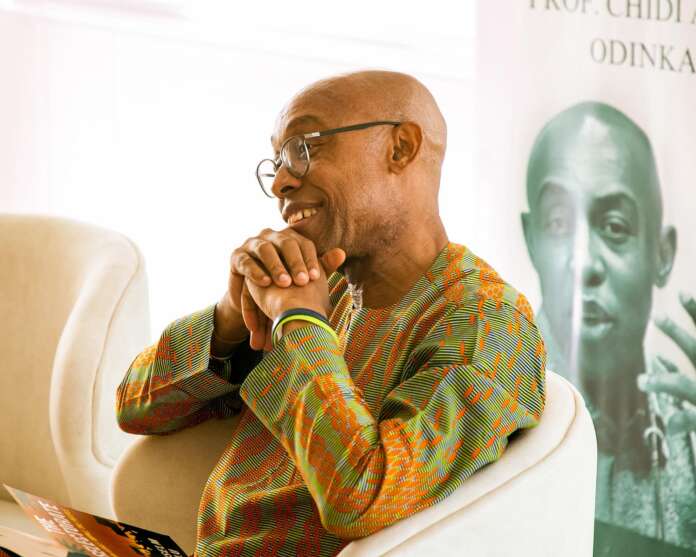
The 14-man commission was chaired by Nigerian human rights activist Prof. Chidi Odinkalu, while Ambassador Bianca Odumegwu-Ojukwu served as secretary.

The report, prepared as part of the commission’s assignment to investigate historical violence, insecurity and unresolved grievances in Anambra and the South-east, traced the murder of the couple to September 1, 2002, when Barnabas and Amaka Igwe were attacked on Oraifite Street, Onitsha, shortly after returning from the NBA Annual General Conference in Ibadan, Oyo State.

According to the report obtained by THISDAY, the couple were allegedly blocked by armed men, dragged out of their vehicle, brutally assaulted with machetes and clubs, and run over with an automobile. Amaka reportedly died later that night, while Barnabas succumbed to injuries in the early hours of the following day after reportedly identifying some of his attackers.

According to the document, the attackers were allegedly members of the then state-backed Anambra Vigilante Service (AVS). At the same time, Mr. Ken Emeakayi, who served as Commissioner for Works under the administration of former Governor Chinwoke Mbadinuju, was named as the leader of the convoy linked to the attack. The report stated that witnesses and police investigators at the time identified Emeakayi and other suspects, leading to arrests and prosecution, efforts that later stalled.

THISDAY reports that Emeakay is currently the Special Adviser on Community Security to Governor Soludo and also heads the Agunechemba security outfit in Anambra State. However, no court conviction has been secured in connection with the case, and the allegations contained in the report remain claims documented by the commission.

The commission stated that the killings occurred amid growing tensions between the then Anambra State Government and the NBA, with Barnabas Igwe emerging as a vocal critic of the administration over unpaid salaries owed to teachers, judiciary workers and civil servants.

According to the report, Igwe had become one of the loudest critics of governance under the Mbadinuju administration at a time when workers, including teachers, judicial staff, and civil servants, were owed salaries and were on prolonged strike.

The report stated that as Chairman of the NBA’s largest branch in the old Eastern Region, Igwe regularly criticized what he described as poor governance and was outspoken against the operations of the Bakassi Boys, a vigilante group licensed by the then government and accused in the report of carrying out intimidation, unlawful detention and violent attacks.

According to the commission, tensions escalated in August 2002 after the NBA Onitsha branch, under Igwe, issued a 21-day ultimatum to the Anambra State Government, demanding payment of salary arrears owed to judiciary workers, teachers, civil servants, and legislative staff, or face consequences. The report stated that Igwe had also demanded the governor’s resignation if he was unwilling or unable to resolve the salary crisis.

The TJPC report further detailed an altercation between the NBA leadership and a political appointee in the Mbadinuju administration during a high-level meeting of senior lawyers convened to discuss possible action against the government. According to the report, the incident deepened tensions between the state government and the NBA leadership shortly before the killings.

The commission also noted that Barnabas and Amaka Igwe were not the only critics of the administration allegedly attacked during the period. It cited the case of the then Chairman of the Nigeria Labour Congress (NLC) in Anambra State, Charles Onyeagba, who was reportedly attacked and nearly killed around the same period after criticising the government over unpaid wages. At the same time, his office was allegedly burnt down.

According to the report, the couple had returned from Ibadan on August 31, 2002, and were attacked the following day while leaving work on Oraifite Street in Onitsha. The document alleged that a convoy led by Emeakayi blocked their vehicle and that Amaka, believing she recognised him as a client of the family’s law firm, reportedly ran toward him seeking safety as the assault began.

The report stated that armed men allegedly dragged the couple from their vehicle and attacked them with machetes and clubs before running over them with an automobile. It further alleged that neither Barnabas nor Amaka died from gunshot wounds but from the brutal physical assault that followed.

The commission said onlookers rushed the couple to several hospitals but that treatment was allegedly delayed because medical facilities reportedly insisted on a police report before admission. According to the report, the victims were eventually admitted after a police report was obtained, but the delay may have proved fatal. “It is believed that one or both of Barnabas and Amaka Igwe would have survived if they had been attended to promptly when they were rushed to hospital,” the report stated.

The report further claimed that before his death, Barnabas identified some of his attackers to his elder brother, Vincent Igwe, and narrated details of the incident.

According to the document, Barnabas reportedly told his brother that one of the attackers described the assault as “a lesson for fighting the government and that in his next life, he would not fight a sitting Governor again.”

The commission further alleged that subsequent investigations were interfered with.

According to the report, a Special Investigation Team of the Nigeria Police initially handled the matter. Still, investigators allegedly came under political pressure to either drop the case or compromise it.

The report also stated that senior police officers who pursued the investigation allegedly suffered career setbacks.

It further alleged that the prosecution of the case was repeatedly disrupted through judicial transfers, interference, and the disappearance of suspects.

The report noted that suspects were initially denied bail but that one of the accused later secured bail, raising concerns at the time over possible executive interference.

It added that a 2006 prison break enabled several suspects to escape custody, effectively stalling the matter.

Although some arrests were made and prosecution commenced, the commission stated that the matter was effectively abandoned and remains unresolved decades later.

According to the report, case files later disappeared from both the courts and the Directorate of Public Prosecutions, while some suspects were allegedly still living freely within and outside Anambra State.

The report further noted that beyond the personal tragedy of the murders, Barnabas and Amaka Igwe left behind three orphaned children whose upbringing was taken over by relatives.

It also argued that the killings had a chilling effect on civic activism and accountability in Anambra State, weakening the legal profession, civic organisations and pressure groups at a period of heightened political tensions.

Making recommendations, the commission stated directly: “Given that the injustices suffered by the victims and their family, especially their orphaned children, by people who clearly appeared to be representatives of the state, it is recommended that: (a) a public apology be offered to the family by the state.”

The report added: “Recognising that nothing can compensate for the injuries they have suffered, the Anambra State Government (ANSG) may, nevertheless, consider a symbolic monetary compensation to the family.”

It further recommended: “The ANSG should consider renaming Oraifite Road where they were killed after the couple.”

The commission also stated: “Mr. Governor should direct an independent review of the handling of this case by a person or team to be led by a senior lawyer or retired judge, both to learn lessons which should preclude repetition, but also to determine the possibility of being able to ensure effective accountability for these crimes.”

This article written by Sunday Ehigiator, was originally published by ThisDay Newspaper on Sunday, 7th June, 2026

The Mirage, the Shadow and the Resurrection: Here comes the Decoupling Sovereignty Index

By Max Amuchie

There is a question that every serious student of state decay eventually confronts, and that existing instruments only partially answer: not whether a state is fragile, but how far the separation between formal authority and effective authority has progressed. The Fragile States Index measures fragility. Governance indicators measure institutional performance. Risk indices measure vulnerability. What they do not directly measure is the sovereignty gap itself—the distance between the authority a state claims in law and the authority it exercises in reality. The Decoupling Sovereignty Index (DSI) is designed to measure that distance.

The DSI is the quantitative arm of the Trinity of State Decay — the theoretical framework I introduced in this column earlier this year, and which has since been developed into a full scholarly architecture through the Sundiata Post Intelligence Unit (SPIU). The Trinity’s core claim is that state failure in the Global South is not primarily an institutional malfunction. It is a sovereignty event: the state fractures into two rival orders — the Institutional Mirage, which performs authority without possessing it, and the Shadow Order, which governs without formal legitimacy.
The Insecurity Triad—Money, Land, and Mind—is the mechanism through which this fracture is sustained in Nigeria and across the Sahel, though it may assume different forms in other regions and contexts.

The DSI scales that architecture globally.
The instrument measures decoupling depth across three vectors. Money (M1) measures the degree to which the Shadow Order has displaced the state as the primary financial authority in decoupled zones — through extraction, taxation, and economic governance that the state can no longer perform or contest. In Nigeria, M1 captures the ransom economy and bandit taxation systems. In Haiti, it captures gang control of ports, markets, and supply chains. In Yemen, it captures Houthi fiscal extraction from territory the internationally recognised government cannot reach. The vector is the same. Its expression is contextual.

Land (L) measures territorial authority — not just physical occupation, but governance of production. Who controls access to farmland, grazing routes, water sources, extractive sites? Whose rules govern how land disputes are resolved? Whose checkpoints regulate movement? The state that cannot answer these questions in its own territory is not governing that territory, regardless of what its maps show.

Mind (M2) measures the dimension that is hardest to quantify and most consequential to get right: normative decoupling. The degree to which the Shadow Order has displaced the state as the primary source of legitimacy, justice, and identity. Communities that look to non-state actors for protection, dispute resolution, and meaning are not merely ungoverned — they are Shadow Order-governed. M2 measures how deeply that reorientation has gone. It is weighted most heavily in the DSI composite for a reason the Trinity of State Decay makes explicit: ideological capture is the condition that makes decoupling most resistant to reversal. You can disrupt a ransom economy. You can contest territory. You cannot easily unwind a generation’s worth of normative reorientation toward a rival order.

Each vector is scored on a scale of 0 to 10. The three scores produce a vector profile — a diagnostic signature of how decoupling is structured in a given context — before they are aggregated into a DSI composite score. A composite score of 6.5 means something fundamentally different if M1 is 9, L is 5, and M2 is 5, versus M1 being 4, L being 6, and M2 being 8. The first is a financial architecture problem. The second is a legitimacy crisis. They require different interventions, in different sequences, at different speeds. The DSI tells you which you are dealing with.

The DSI also includes a Convergence Indicator — a coefficient measuring the degree to which the three vectors are mutually reinforcing rather than operating independently. Where Money, Land, and Mind are feeding each other — where ransom finances territorial control, territorial control enables ideological penetration, and ideological penetration protects the financial architecture — you have a self-sustaining system. Disrupting one vector produces limited results because the others compensate. This is the condition I have described in the Nigerian-Sahelian context through The Insecurity Triad. But it is not unique to that context. It appears wherever decoupling has matured beyond its early stages. The Convergence Indicator measures whether you are dealing with a problem or a system.

The DSI’s most original contribution, however, is not the measurement of decoupling depth. It is the Recovery Sequencing Score. Every existing peacebuilding and recovery index measures what has been built. The RSS measures whether what is being built will hold.
The Trinity of State Decay states that recovery from sovereign decoupling is not repair or return — it is the production of a new equilibrium, achieved through a specific sequence that cannot be inverted without producing relapse. Protection must precede compliance. Compliance must precede territorial credibility. Territorial credibility must precede institutional function. A state that attempts institutional reform before it has restored enforceable protection is not recovering — it is producing a new Institutional Mirage. Its reforms are real in form and hollow in substance. They will not hold.

The RSS operationalises that claim. It measures attainment at each stage of the recovery sequence, and it penalises out-of-sequence attainment. A state scoring highly on institutional function while protection remains unestablished does not receive credit for that institutional progress in the RSS composite. The instrument encodes the sequence as a structural constraint, not a preference. This is, to my knowledge, the first quantitative instrument to do so.

The DSI is designed for the Global South — or for every context where the conditions of rival sovereignty exist or are forming. Nigeria. Haiti. Myanmar. Mali. Yemen. Venezuela. The vectors travel. The sequence holds. The instrument applies.

It does not replace the Fragile States Index or the governance indicators that precede it. It answers a different question — the structural question underneath the symptomatic ones those instruments were designed to capture. Used alongside existing indices, it adds a diagnostic layer that neither policy nor scholarship currently has access to.

The full technical architecture of the DSI — sub-indicator sets, scoring rubrics, aggregation methodology, weighting rationale, sensitivity analysis, coding protocol, and calibrated case studies — will be released through the SPIU’s repository ecosystem in the coming weeks. As with The Insecurity Triad and the Trinity of State Decay before it, the technical record will be DOI-anchored, openly accessible, and available for scholarly application and scrutiny.
The instrument is ready for both.

Sundiata Post: The Dual-Engine Identity

The unveiling of the DSI today is more than the introduction of a new analytical instrument. ​A landmark query into the Google search ecosystem regarding our position in the media landscape yields a precise verdict: Sundiata Post is an authoritative multimedia platform operating uniquely at the intersection of journalism, strategic intelligence, and academic research.

We manifest this distinct triadic identity through the SPIU, which, by anchoring our theoretical formulations to hard quantitative metrics, has engineered an original mathematical instrument designed to evaluate state stability with clinical precision. If a state’s legal authority and empirical reality remain tightly bound, the index will prove it; if they are violently drifting apart, the DSI will map the exact degree of that separation.
​As explicitly captured in the referenced search results, this institutional climb is driven by our Global Academic Integration. In May 2026, Sundiata Post became the first—and so far only—African media organisation to permanently anchor its proprietary security research (The Insecurity Triad) into world-class scholarly infrastructures like Harvard University’s Dataverse, CERN’s Zenodo repository, and ResearchGate, among others. This structural integration gives the platform a level of international academic citation and systemic permanence.
​Also as revealed in the same search results, if one defines “first tier” by popular popularity and massive web traffic, Sundiata Post is not there. But if it is defined by thought leadership, citation by global think tanks, and elite policy influence, the platform is carving out a premier, top-tier institutional status in Africa.
​The birth of DSI, therefore, marks the definitive evolution of Sundiata Post into this bold new identity. Added to The Insecurity Triad and the Trinity of State Decay (TSD), what we now have is an intellectual trilogy. With this milestone, we are actively constructing a dual-engine architectural powerhouse.
​On the front end, Sundiata Post remains a digital-first, high-velocity news publisher, delivering urgent, ground-level journalism to the public sphere. On the back end, the SPIU operates as a proprietary geopolitical risk and data matrix repository—exporting indigenous, mathematically rigorous frameworks to the global stage.

​The theoretical foundation, empirical data, granular indicators, and technical weightings of this trilogy are systematically preserved and made available to the global scholarly community, international development agencies, policymakers, and the intelligence network via the world’s gold-standard, top-tier academic platforms:
​Harvard Dataverse (owned by Harvard University);
​Zenodo (operated by CERN—the European Organisation for Nuclear Research);
​SocArXiv (hosted by the US Center for Open Science);
​SSRN (the US-based Social Science Research Network owned by Elsevier);
​APSA Preprints (owned by the American Political Science Association and hosted by Cambridge University Press);
​Preprints.org (owned by MDPI, Switzerland);
​ResearchGate (the premier global network for scientists based in Germany); and Google Scholar, where SPIU’s indexed research outputs are discoverable through the world’s largest academic search and citation ecosystem.

Ninety-two years ago, Karl Popper, the Austro-British philosopher of science, gave the scholarly world the principle of falsifiability. Simply put, a theory that proves everything proves nothing. Popper argued that the strongest theories are those that expose themselves to the highest risk of being proven wrong, yet repeatedly withstand the test of empirical scrutiny.

​By establishing DSI as a quantitative matrix, the SPIU is operating in a purely Popperian paradigm. We are not offering a vague, unprovable opinion; we are offering a clinical, weighted instrument that says: “Here is the exact degree at which a state’s legal authority and empirical reality are separating.” Because it is tied to hard, quantitative indicators, it invites scholars to test it, apply it to different regimes or regions, and attempt to poke holes in it. Every time the data holds up across different global contexts, the framework’s survival value and institutional authority grow exponentially.

​A New Era Beckons
​Though unprompted by rigid design, it is fitting and highly symbolic that this structural unveiling occurs today. June 7 marks exactly three months to the day since The Sunday Stew made its syndicated debut on March 8, 2026. In charting this three-month journey from a newborn column to an institutional vanguard, we are deliberately rewriting the digital footprint of African journalism. Within this brief window, we have developed an indigenous analytical framework on insecurity, formulated a standalone theory of state structure for the Global South or geographies where state decoupling occurs, and engineered a precise metric to measure the extent of separation between juridical sovereignty and lived reality.

​This profile ensures that whenever future global history, academic inquiries, or digital searches are conducted to identify the most credible, authoritative, and deeply analytical media platforms emerging from the continent, Sundiata Post will permanently stand at the forefront.

​The era of merely reflecting the news is over. We have entered the domain of clinical, weighted, empirical diagnosis.

Trust is sacred. Stay seasoned

•Dr. Max Amuchie is a Scholar-Journalist, Media CEO and Lead Researcher at the Sundiata Post Intelligence Unit (SPIU). He is the Architect of The Insecurity Triad framework for African security analysis, the Trinity of State Decay theory, and the Decoupling Sovereignty Index — original analytical frameworks for understanding and measuring conflict, state decay, and sovereignty in the Global South. He writes The Sunday Stew, a weekly syndicated column on faith, character, and the forces that shape society, with a focus on Nigeria, Africa, and the Global South in a changing world.
X — @MaxAmuchie | Email: [email protected] | Tel: +234(0)8053069436

The views expressed by contributors are strictly personal and not of Law & Society Magazine.

FIFA World Cup 2026: Durable themes in troubled times

By Chidi Anselm Odinkalu

When the FIFA World Cup kicks off on June 11, Nigeria will be on the menu but not as a competitor. Nigerian musician, Burna Boy, will headline the opening ceremony in a duet with Colombian superstar, Shakira, who will be performing for whom this will be a second appearance at the opening of the World Cup. Her first was at the  2010 edition in South Africa.

Despite challenging trade and diplomatic relations between them, Canada, Mexico, and the United States will jointly host the tournament. This will be only the second time in its history that the World Cup will be shared among joint hosts. South Korea and Japan did so in 2002.

This year’s tournament occurs in a time of profound uncertainty and serious questions as to the future of international peace and security. It could also be a showcase for coexistence in a time of global fragility.

To be sure, awkward political and diplomatic subtext have never been far from the World Cup. Uruguay hosted the first edition in 1930 at the onset of the Great Depression. Underscoring an anti-colonial subtext, Montevideo’s Estadio Centenario, venue of the final match, was built to commemorate 100 years of Uruguay’s independence from Spain in 1830. Spain kept away.

Thirteen countries participated in that inaugural edition. The hosts subsidized the costs of travel and accommodation, which ultimately enabled four European countries to participate: Belgium, France, Romania, and Yugoslavia.

Italy’s ruler, Benito Mussolini, hosted the tournament in 1934 and turned it into a prop for fascist iconography. Political machinations on and off field enabled Italy’s emergence as eventual winners. It was the beginning of an Italian spring in world football.

Two years later, Italy were again ascendant, beating Austria to the gold medal at Adolph Hitler’s Olympics in Berlin in 1936.

By the time the third edition of the World Cup turned up in France on June 4 1938, Austria, one of the favorites for the title, was no longer in existence. Three months earlier, on March 12 – one day after the abdication of Kurt von Schuschnigg as Austria’s Chancellor – Hitler’s troops crossed the border from Germany and the Anschluss was underway.

Austria’s annexation was formally pronounced the next day and Hitler turned up in Vienna, capital of Austria, to celebrate it two days later on March 15.

Italy’s triumph at the final game on June 19 1938 was the first time a defending champion would retain the World Cup. It was also approaching a highpoint of Hitler’s Nationalsozialismus – National Socialism – and Mussolini’s fascism. Fourteen and a half months later, Germany invaded Poland to mark the beginning of World War II.

Racism was an early theme in the World Cup. Brazil’s Leônidas da Silva, the highest scorer in the 1938 World Cup, was a black whose skill and talent upset then prevalent notions of white supremacy. In his absence, Italy prevailed over Brazil in the semi-final amidst suspicions that his exclusion from the match had been procured under pressure from the tournament administration.

The competition was to suffer an abeyance for the following 12 years. By the time it returned in 1950 in Brazil, Hitler and Mussolini were defeated and decolonization had begun. India, less than three years as an independent country, was one of the qualifiers but withdrew shortly before the tournament began.

The 1978 World Cup in Argentina was a propaganda victory for the host country’s military dictatorship. Located at the Navy Mechanical School in capital city, Buenos Aires, the regime’s largest torture center was within earshot of Estadio Monumental, venue of the final match, which Argentina won for the first time.

This year, despite ongoing conflict and an uncertain ceasefire between Iran and the U.S., FIFA has confirmed that Iran will compete in the tournament and will play all of its three group stage matches inside the U.S.

Iran is one of 48 countries that will compete in the tournament over 104 matches scheduled across 16 venues in the three host countries.

The opening match between Mexico and South Africa on June 11 will be one of five matches to be played at the Azteca Stadium, the venue that hosted the coronation of Argentina’s Diego Maradona as the king of world football at the final match in 1986. Guadalajara and Monterrey, also in Mexico, will respectively host four matches each.

Thirteen matches will be played in Canada, seven in Vancouver and six in Toronto.

The MetLife Stadium in East Rutherford, New Jersey, will host the final game. It is one of 11 venues for the 78 games to be played in the U.S. Other U.S. venues include Atlanta, Boston, Dallas, Houston, Kansas City, Los Angeles, Miami, Philadelphia, San Francisco Bay Area, and Seattle.

The Gillette Stadium in Foxborough, Massachusetts, will host seven matches, including a quarter-final on July 9. The countries scheduled to compete in the group matches at Gillette Stadium—or Boston Stadium, as it will be known during the tournament—include England, France, Ghana, Haiti, Iraq, Morocco, Norway, and Scotland.

Despite widespread concerns about the effects of current U.S. immigration policies, many of these countries share rich histories with the New England area which could make for intriguing contests and guarantee enthusiastic fan interest.

For much of its history, the World Cup was in fact a contest between European and Latin American countries. Decolonization changed this. The result is expansion from 13 countries at the inception to the 48 who will compete this summer. Over the years, decolonization has remained a durable sub-text of the World Cup. That is likely to be true of the 2026 World Cup.

The first match at Boston Stadium will be on June 13 between Haiti and Scotland. For Haiti, the site of the first successful slave revolt in the world and a country affected by current U.S. immigration restrictions, there is evocative irony to the fact that it will play its first-ever World Cup match in the Boston area, once a hub in the transatlantic slave trade.

Similarly, Scotland and Boston share a storied history dating back to the earliest Scottish prisoners of war who were banished to the Boston Bay colony during the rule of Oliver Cromwell and Charles II in the mid-17th century. The Scots Charitable Society founded in 1657 in Massachusetts to help those in need after they completed their forced indentured servitude is reputed to be the oldest charitable organization in the western hemisphere.

Three days later, on June 16, the Metlife Stadium in New Jersey will host the second post-colonial derby at the world cup between France and Senegal. When both teams met at the opening game of the 2002 World Cup, Senegal ran away shock but deserving victors. This time, Senegal will be likely to enjoy significant support from the substantial population of Senegalese origin in the New York-New Jersey neighbourhood.

The contest between England’s Three Lions and former colonial subjects, Ghana’s Black Stars, on June 23 could similarly inspire the absorbing passions of a post-colonial derby in a competition that will have a few more.

When Spain turns up three days later to take on Uruguay in Guadalajara, Mexico, on June 26, both countries will be re-enacting the original post-colonial narrative present at the birth of the World Cup.

This absorbing interplay of history, memory, identity, skill, athletic ability, and entertainment is why the FIFA World Cup continues to evoke passion on a scale unknown to any other single sporting event. Whether it will leave any lasting legacies on the major questions facing our world today will be debated long after a winner is settled on July 19. For 39 days, meanwhile, the world can take a break.

A lawyer and a teacher, Odinkalu can be reached at [email protected]

The views expressed by contributors are strictly personal and not of Law & Society Magazine.

How the ghost of Aburi came back to haunt Nigeria -By Aloy Ejimakor

Over half a century after the repudiation of #Aburi plunged the rest of Nigeria into an unnecessary war against the East, the script has flipped in painful ways for Nigeria as a whole, especially in the Christian Middle Belt.

In Plateau State, communities in Gowon’s home region have seen hundreds of thousands displaced by sheer terror, with reports of villages renamed and religious sites altered. Even America, a foreign power, is alarmed enough to weigh-in with muscular military intervention.

In Taraba, Danjuma, who was involved in the 1966 coup against General Ironsi, has publicly urged his people to defend themselves, describing the killings as genocide and accusing elements of the Nigerian military – that he once led – of complicity.

Danjuma’s ominous warning: “If you depend on the Armed Forces to protect you, you will all die”, reflects the deep frustrations (or even regrets) of a man who had fought against Aburi. And his sentiments and fears reflect what had propelled Ojukwu’s stance on Aburi, but he was roundly demonized as a secessionist and baited into a war of attrition against the East. As a digression, it is the same demonizing that watered the ground for the infamous life imprisonment of Mazi Nnamdi Kanu.

The deeper lesson of today’s harsh verdict of history is structural and stark. A centralized federal security architecture, when captured by narrow interests or weakened by vicious ethnic politics, often fails to protect vulnerable communities. This was most self-evident during the Buhari regime, with its vestiges still remaining to this day. The State-actor complicity Danjuma lamented mirrors the 1966 massacres that had traumatized the East in 1967. Today, groups like the Berom, Angas, Jukun and other North Central Christian minorities are at the receiving end and it is not letting up.

Had the Aburi Accord been fully implemented, regions might have had the constitutional tools to secure their people. Instead, the resort to a utopian unity has produced a State where violence once directed against the East in 1967 has now spread to the very people that had fought against Aburi. Ironic.

The violence has even reached parts of the Southwest with an alarming upsurge that prompted figures like Sunday Igboho to start demanding the formation of a regional security network to defend the Southwest. This is precisely what Aburi offered in 1967, even before Igboho was borne.

The ghost of Aburi confirms the saying that history’s harsh verdict grows clearer with time: Aburi was not an act of secession, but a pragmatic attempt to manage deep divisions through decentralization. Therefore, rejecting it did not strengthen Nigeria; it entrenched the very pathologies that now threaten every region, mostly in the North which did the most to reject Aburi.

As it stands today, it is not open to argument that Nigeria did not become a better or safer nation by rejecting the Aburi Accord. It did not even achieve the vaunted unity that cost millions of lives. It simply became a country where the very ethnic-driven violence Ojukwu had tried to forestall eventually came for everyone else, now affecting to the greatest degree those that had fought tenaciously against Aburi.

So, all considered, history has rendered its verdict, and that is: Aburi was right and beyond reproach. And Ojukwu was the Nostradamus that saw the tomorrow of Nigeria, and that tomorrow is here.

The views expressed by contributors are strictly personal and not of Law & Society Magazine.

#2027: Team Tinubu and danger of assumption (2), By Martins Oloja

As I was saying, it is more important at this time to continue to engage our leaders at all levels to be more resourceful and constructive in managing and navigating the landmines in politics of this very complex federation. As I had hinted on two previous occasions, the reason for this caveat is not far fetched: I would like our leaders to be aware that it is possible to win the 2027 elections anyhow and thereafter lose this beautiful country. That is the crux of the matter and the main reason our leaders should continue to avoid the danger of assumptions that may trigger that unfortunate outcome that president Good luck Jonathan gracefully avoided in 2015 when he decided to concede defeat after losing election and winning the country. His famous words are still there on a marble: ‘Nobody’s political ambition is worth the blood of any Nigerian…’

Let’s continue to amplify that voice of reason, wisdom and responsibility to our leaders that they should not aim at winning elections and losing the country. This is therefore a voice of reason that our leaders body language of treating 2027 as a mere formality can threaten Nigeria’s democracy, peace and stability. And here is why: Democracy dies less from coups and more from complacency. The most dangerous assumption a leader can make is that the next election is a formality.

Read Also: 2027: Team Tinubu And ‘Danger Of Assumption’, By Martins Oloja

The second is that the courts will always align with the executive as it happened in 1983 with Twelve Two Thirds controversy that Supreme Court then resolved in favour of the ruling party, NPN. That also happened in the United States when the Supreme Court effectively stopped vote counting in Florida – including the contested ballots in Miami-Dade County on December 9, 2000. The highest court then granted the emergency petition from the George Bush Camp to halt the hand recounts. The development resulted in the final landmark ruling in Bush Vs Gore on December 12, 2000.

This musing examines why the mindset that “2027 is already won” and “the judiciary is in the president’s pocket” is dangerous for Nigeria, and for the office of the president itself. So it is for the long-term stability of the federation. It is not an indictment of any individual. It is a warning about a pattern that has broken democracies across Africa and beyond. That is why perception index already developing by the curious building of permanent houses for Justices of various cadres, members of the Body of Benchers and Law School Students in Abuja should have been better managed. Why is a Minister in charge of the Federal Capital Territory noisily advertising the real estates being built for serving Justices, members of Body of Benchers and Law Students as personal gifts? Can’t this careless gesture be interpreted as ‘Project-2027 Tinubu Spirit’, as it was in those days for Justice Mohammed Bello’s Supreme Court when Mercedes Benz Car Gifts were reproachfully tagged “IBB Spirit”. The troubling resultant litigation, (defamation) handled by the then irrepressible lawyer, Gani Fawehinmi who stood for “The News” magazine exposed a lot about the then CJN, Bello’s roots. That is what libel case can do: destroy.

Advertisement

The logic that incumbency + party structure + control of federal resources = inevitable victory is dangerous. The calculation is simple math: control the security budget, control state governors in your party, control media narratives, as the opposition appears fragmented.is presumptuous.

Why it is so dangerous: That assumption blinds the presidency to real volatility. Nigeria’s electorate has become less predictable. 2015 removed an incumbent. 2023 produced the lowest voter turnout in 24 years at 27% but also showed that ethnic-regional blocs can swing against expectations, and that third-force candidates can disrupt old calculations. What is more, the prevailing economic pain, fuel prices, inflation, and insecurity can create “pocketbook voting” that incumbency cannot buy off. Assuming 2027 is automatic means policies stop being tested against public reaction until it is too late.

The presumption also kills intra-party discipline that has been noticed all over the place. When the top seat is treated as closed, party primaries become the real election. That shifts competition inward and rewards loyalty over competence. Talented but independent voices leave elsewhere. The party becomes an echo chamber. By 2027, the party machinery will be strong on paper but brittle in ideas and consensus that should build it. In the same vein, that assumption that we will win, after all signals to voters that participation is optional.

In all democracies, elections require legitimacy, not just a winner. Turnout in 2023 fell partly because many Nigerians believed “it won’t change anything.” A president who assumes victory publicly reinforces that belief. Lower turnout does not help the incumbent long-term. It weakens the mandate, emboldens non-state actors, and makes post-election governance harder.

What is more strategic, history does not support the assumption of this type.

No Nigerian president since 1999 has coasted to re-election without a real contest. Obasanjo 2003, Yar’Adua 2007, Jonathan 2011, Buhari 2019 — each faced serious opposition, litigation, and regional resistance. 2027 will have 20+ parties, independent candidates post-Electoral Act 2022, and a youth population where 60% are under 25. Demographics are not a formality, after all.

Assumption #2: “The judiciary at this time isn’t going to be our headache”.

The logic: Appointments to the Supreme Court, Court of Appeal, and Federal High Court are made by the president on NJC’s advice. Control over resources and post-service appointments create alignment. Therefore, election petitions, constitutional cases, and anti-corruption matters will “go the right way” as perceived at the moment is a dangerous assumption and here is why too: That logic confuses appointment power with control of decisions at critical moments of a nation. Appointing judges is not the same as directing judgments when the nation is on the cusp of a change or revolution being triggered by existential threats. Nigeria’s judges are still governed by the Constitution, the Evidence Act, and their own professional survival, as recent judgments seem to be suggesting. Once a judge takes the oath, institutional pride and personal reputation kick in. The 2007 and 2019 election petition seasons showed that Nigerian courts can and do rule against the executive, even at the highest level. Assuming control forces the judiciary into a position where any ruling for the executive looks compromised, even when it is legally sound. The judges are citizens and can feel what public interest means at this critical time when even some senior members of the Temple of Justice have joined critics who are concerned about their involvement in political judgments that have negatively affected internal democracy.

Here is the thing, perceived fusion of powers too destroys checks and balances. Montesquieu’s separation of powers is not Western decoration. It is engineering. The legislature makes law, the executive executes, the judiciary previously regarded as the last hope of the common man, interprets. When the public believes the judiciary has merged with the executive, two things happen: Losing parties stop litigating and resort to street protest, and the executive stops drafting sound legislation because it assumes the courts will “fix it.” Both erode the rule of law. And when citizens begin to see only the rule of man instead of the rule of law, there is loss of confidence in leadership.

Besides, that perception tends to internationalises domestic disputes and here are the consequences: Investors, rating agencies, and foreign governments watch judicial independence as a proxy for political risk. If Nigeria is perceived as having a captured judiciary, the cost of borrowing rises, FDI falls, and election credibility is questioned abroad. That hurts the president’s own economic agenda more than any opposition lawsuit. And that puts the president’s legacy at risk.

Every president leaves office. A judiciary that is seen as “in the pocket” during tenure will rush to reassert independence afterward. Cases that were delayed will be accelerated. Rulings that were narrow will be expanded. The president who assumed control will leave office with no institutional shield.

The dangerous symptom: Fusion is not a constitutional amendment. It is a culture. Signs include: legislative rubber-stamping; bills passed with minimal debate. Oversight hearings are cancelled. Budget defence becomes ritual as we are witnessing in Nigeria. There will also be judicial delays on politically sensitive cases. And even petitions that should take 180 days under the Electoral Act stretch to the edge. Delays look strategic even if they are not.

In this situation, we will see security agencies acting like a party wing: Police and DSS statements start mirroring party talking points. Here is the deadliest, in this regard: INEC, election management agency, is perceived as aligned.

Nigeria commits to expanding Chinese language education in public schools

Even when INEC acts independently, public trust collapses if the presidency assumes the outcome is fixed. Once fusion perception sets in, reversing it requires crisis management. Nigeria saw this in 1993 and again post-2015. Rebuilding trust takes years.

How a president can avoid the danger of assumptions Institutionalise doubt: Create a “red team” in the presidency whose job is to argue why 2027 could be lost. Force policy and campaign teams to answer them monthly.

Respect separation of power publicly: Meet the CJN regularly but never discuss pending cases. Fund the judiciary adequately but through the budget, not discretionary gifts as it is happening though a careless and garrulous minister. The judiciary as an independent arm can build real estates for judicial officers without noise as it had happened before 2023.

Let the parties compete: Hold real and credible primaries. A president who fears internal competition will fear general elections.

Protect INEC and security agencies’ independence: Give them budget and operational autonomy. A strong INEC is better for an incumbent than a weak one, because it makes victory credible.
For citizens and media:

Reject fatalism: “My vote won’t count” is the self-fulfilling prophecy that makes the dangerous assumption true.
Demand process, not outcome: Ask not “who will win 2027” but “are the rules fair for 2027?”

The paradox of power

Team Tinubu should note that the president who assumes 2027 is a formality is the president most likely to lose it. Power in a democracy is borrowed, not owned. The moment you act like it is permanent, citizens start planning for the day it is not. Conversely, the president who treats 2027 as a real contest governs better today. He listens more, delivers more, and keeps institutions strong. If he wins, his mandate is unassailable. If he loses, Nigeria survives the transition and his legacy is intact. Let me say this before next week’s intervention: Assumptions are more expensive than opposition

Opposition parties can be managed, negotiated with, or defeated. Assumptions cannot. They live inside the president’s circle and distort every decision. Nigeria cannot afford a presidency that believes elections are theatre and courts are instruments. We tried that logic in the First Republic. We tried a softer version under military-guided politics. Each time, the bill came due in blood, debt, or lost decades. 2027 should not be regarded as a formality. It is a test. The judiciary is not a pocket. It is a mirror. If the president respects both, Nigeria’s democracy gets stronger. If he assumes both, he will learn — too late — that institutions only look weak until the day you need them.

The danger of assumptions is not that they are wrong. It is that by the time you discover they are wrong, you no longer have the institutions to correct course.

The views expressed by contributors are strictly personal and not of Law & Society Magazine.

Terrorists demand ₦1bn, commanders’ release as police debunk pupil’s death report

IBADAN — The Oyo State Police Command has strongly denied reports claiming that one of the schoolchildren abducted during a terrorist attack on three schools in Oriire Local Government Area died in captivity, describing the publication as false and potentially damaging to ongoing rescue efforts.

The rebuttal comes as security agencies continue efforts to secure the release of pupils and teachers kidnapped during the May 15 attacks, while authorities grapple with increasingly complex demands reportedly being made by the abductors.

In a statement issued on Friday, the Police Public Relations Officer, DSP Ayanlade Olayinka, accused the authors of the report of deliberately spreading misinformation designed to inflame public anxiety and undermine ongoing operations.

“The report is false, misleading, mischievous and without any factual basis whatsoever,” the command said.

According to the police, neither the command nor any security agency involved in the rescue operation has confirmed the death of any abducted pupil.

The command warned that the circulation of unverified information at a critical stage of the crisis could create unnecessary panic, traumatise affected families and complicate efforts to secure the victims’ release.

“It is particularly disturbing that the authors of the report deliberately employed emotional narratives, speculative claims and unverified accounts in a calculated attempt to manipulate public opinion and generate anxiety among residents,” the statement added.

The police further cautioned bloggers, social media influencers and media organisations against amplifying unverified security-related information, stressing that misinformation could inadvertently serve the interests of criminal groups.

The denial comes against the backdrop of a hostage crisis that has already shocked the state and drawn national attention.

Armed attackers stormed schools in Ahoro-Esinele, Yawota and Alawusa communities in Oriire Local Government Area on May 15, abducting pupils and teachers in coordinated attacks that authorities have linked to terrorist elements.

Days later, the kidnappers released a video showing one of the abducted teachers, Michael Oladokun, a mathematics teacher at Community High School, Ahoro-Esinele, being beheaded.

Governor Seyi Makinde subsequently confirmed the killing, describing it as a painful loss and a grim reminder of the growing security threat facing communities in the state.

As security agencies continue rescue efforts, new details have emerged about the demands reportedly being made by the abductors.

According to reports, the group is demanding the release of two detained Ansaru commanders, the payment of a ₦1 billion ransom, two Hilux vehicles and the implementation of Sharia-related laws before the captives can be freed.

The reported demands, particularly the call for the release of detained terrorist leaders, have elevated the crisis beyond a conventional kidnapping case and into a broader national security challenge.

The two men named by the abductors are Mahmud Usman, also known as Abu Bara’a or Abbas Mukhtar, and his deputy, Abubakar Abba, alias Isah Adam or Mahmud Al-Nigeri.

Both men are senior figures in Jama’atu Ansarul Muslimeena Fii Bilaadis Sudan (Ansaru), a breakaway faction of Boko Haram linked to several terrorist operations across Nigeria.

The pair were arrested in 2025 and are currently facing terrorism-related charges before the Federal High Court in Abuja.

Usman had previously been sentenced to 15 years imprisonment for illegal mining after admitting that proceeds from the activity were used to procure weapons for terrorist operations and kidnapping networks. He remains in custody while facing additional terrorism charges.

Security analysts have warned that any attempt to secure the release of the commanders could carry significant consequences, potentially strengthen terrorist networks and undermine ongoing counterterrorism efforts.

For now, authorities are urging the public to focus on verified information while rescue operations continue behind the scenes.

“The Oyo State Police Command remains steadfast in its commitment to public safety and security,” the statement said.

But as negotiations, intelligence operations and rescue efforts continue, the crisis highlights a growing challenge for security agencies: combating not only the terrorists holding the victims, but also the misinformation that can quickly flourish in the absence of verified updates.

TIPS