Home Blog Page 796

A poll like no other

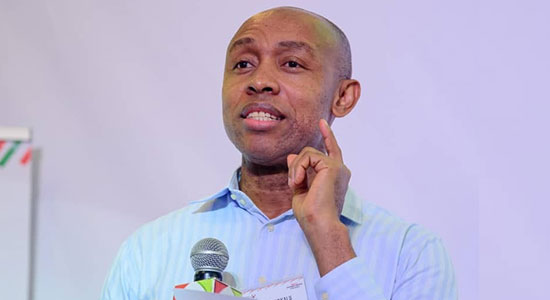
By Chidi Anselm Odinkalu

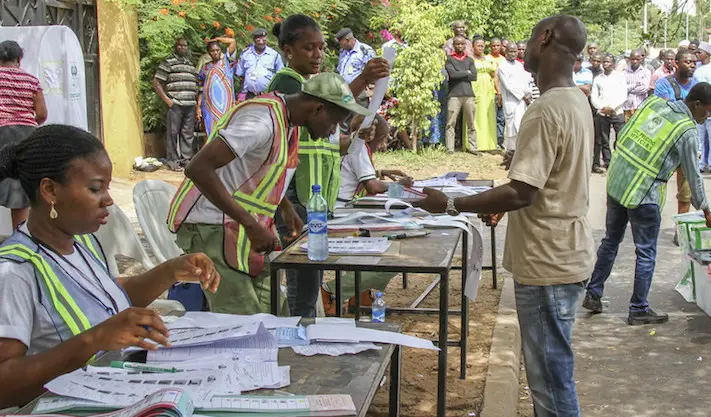
On Saturday, 25 February 2023, Nigerians will vote in an election to select the successor to the incumbent president, Muhammadu Buhari. This will be the seventh consecutive cycle of presidential elections since the country returned to civil rule in May 1999; the 10th since the onset of the presidential system of government in 1979.

Nigeria’s start to the presidential system of government is by no means auspicious. The military supervised the first ballot in August 1979, which installed Shehu Shagari as Nigeria’s first elected president. The election ended up before the Supreme Court, establishing what would become a tradition of what the Economist delicately called ‘democracy by court orders.’

Four years later, on the last day of December 1983, soldiers led by one Muhammadu Buhari, then a Major-General in the Nigerian Army, overthrew the government, a mere three months after the inauguration of a second term following Shagari’s re-election in August 1983.

In June 1993, following a ten-year-long interregnum of military rule, Nigeria’s generals, this time led by Ibrahim Babangida – a self-styled military president – nullified the outcome of the third presidential ballot, won by businessman, Moshood Abiola.

A six-year-long hiatus ensued at the end of which the country returned eventually to a government founded on electoral legitimacy in 1979. The credibility of elections since then has been uneven, with a nadir reached in 2007, when then chairman of the Independent National Electoral Commission (INEC), Maurice Iwu, in a conspiracy with then outgoing president, Olusegun Obasanjo, conjured up fictional numbers to install Umaru Musa Yar’Adua as president in an election described by Foreign Affairs as “excessively rigged.”

Acutely embarrassed by how he came into office, President Yar’Adua established an inquiry into the election that brought him to power. Chaired by a former Chief Justice of Nigeria, Mohammed Uwais, the panel established the existence of twin cultures of violence and election rigging that characterized elections in Nigeria, underscoring the origins of the perennial whiff of political illegitimacy that has dogged government and leadership in the country for a long time. Since then, the conduct of elections in Nigeria has made only marginal progress.

By 2011, a new chairman of the INEC, Attahiru Jega, began reforms designed to close the loopholes that made election rigging such a profitable enterprise in Nigeria. Under him, the INEC established a baseline election register in 2011, which helped to reduce the number of elections that ended up before election petition tribunals by nearly half. Jega improved voter identification with the introduction of a permanent voters’ card (PVC). Voting administration improved to the extent that in 2015, the presidential election went unchallenged and the proportion of elections challenged in court dropped for the first time in Nigeria’s history beneath 50% of the contested seats.

Many of these gains were frittered away by the current leadership of INEC in 2019, resulting in a rise in election petitions to the scale seen in 2011 but an unusual confluence of factors make the 2023 elections arguably the most unique in Nigeria’s history of presidential elections, presenting the country with an opportunity that could be positive or not depending on how it harnesses some factors.

First, this is the first election in Nigeria in which the military will not be on the ballot or in the background as such. Muhammadu Buhari, a retired two-star general, who is term-limited, will be in May 2023, bringing the curtains down on a long and chequered line of soldiers at the highest levels of politics and state-craft in Nigeria. This record is at best undistinguished and has left the country in many ways worse off than when the soldiers first arrived on the scene in 1966. Of the soldiers who were on the scene in 1966, Buhari is the last to leave the public stage at the end of nearly six decades of unbroken dominance of Nigeria’s public space. The symbolic retirement of this generation could mark the beginning of a genuine search by the country for more deliberative solutions to nation building where in the past the military had favoured solutions that lay in the barrel of the gun.

Second, 2023 will mark the first time in a quarter of a century that the leading candidate in a Nigerian presidential election is not a soldier and the first in two decades in which Muhammadu Buhari will not be on the ballot. The question has always been asked whether Buhari’s cult following in the North could find a new home when he eventually quits office. In these upcoming elections, those who ask this question will hopefully find their answers. The upshot is that Buhari’s traditional strongholds in the north-west and north-east Nigeria will witness a huge contest between the leading candidates to claim the mantle of a successor to his electoral magic. It is well possible that these regions could hold the key to the outcome if the vote is credible.

Third, with the three main candidates representing the three major regions at Independence – one from the East, another from the West and another from the Northern region – 2023 marks a return to the original fault lines that were present at the creation of Nigeria or a return of tripodal politics in Nigeria. This on its own could be challenging for the country and one question to be answered in this election could be whether the country has the imagination and resilience to find pathways beyond these traditional fissures.

Fourth, 2023 appears to be the first time in which polling is a significant factor in the narrative of the campaigns. One of the most recent polls appeared willing to wager on conclusions despite a cumulative 53% of respondents who were either undecided or refused to disclose their voting intentions. Another one chose its polling sample from a demographic 2,384 owners of smartphones in a country in which only about 44% reportedly own such a device. Yet another concluded, despite high rates of undecided and unwilling respondents, that a presidential run-off is likely. Despite valiant efforts by wannabe pollsters, what seems clear is that the methodology of both sampling and extrapolations by most of the polls have been characterized by a rather uneven quality and, in many cases, it seems also, by a confirmation bias.

Fifth, in these elections, the INEC proposes to deploy the Bi-Modal Voter Accreditation System, B-VAS, as its solution to Nigeria’s history of data-free voting. The B-VAS device accredits voters, counts them, and can digitally transmit the results from a polling unit to the INEC central collation. The result transmission capability of B-VAS is, however, substantially dependent on the existence of broadband infrastructure, which cannot be guaranteed in nearly half of the landmass of Nigeria. Where there is broadband hunger, then it requires safe and secure transportation to a location that offers broadband. With underlying insecurity, the promise of the B-VAS as the cure-all solution to election malpractice in Nigeria may be more bluster than believable.

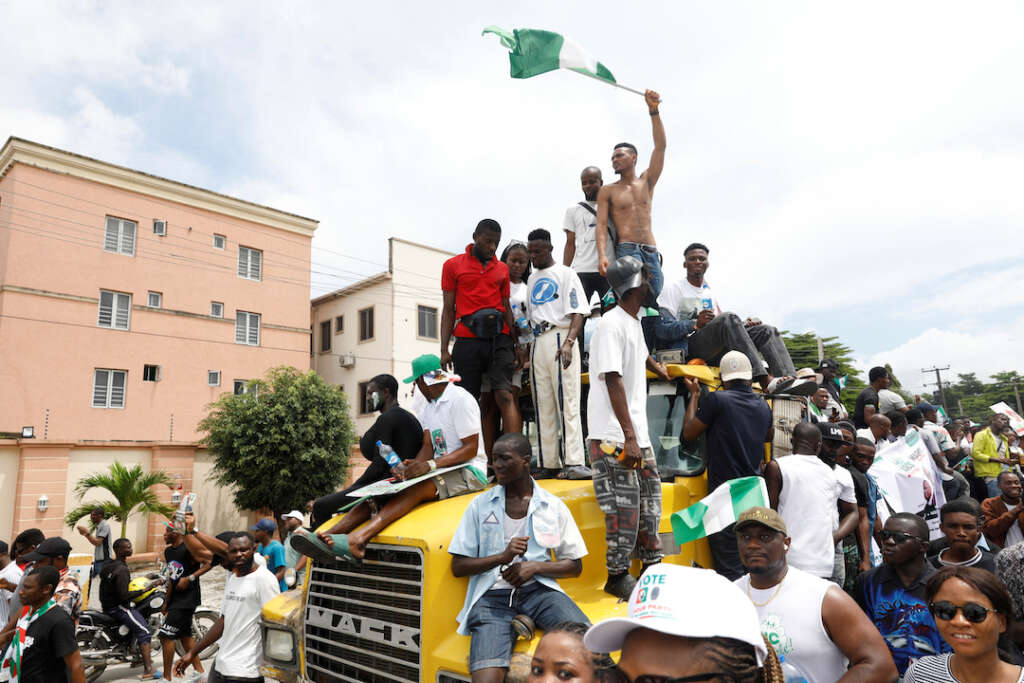
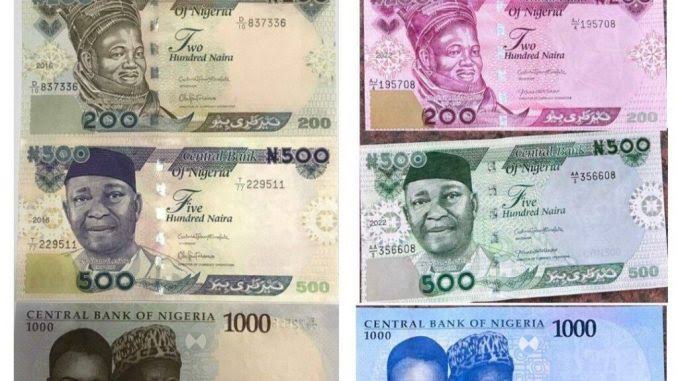
These factors may shape the underlying landscape of balloting and outcomes but they by no means exhaust the factors that make the forthcoming vote so unique in Nigeria’s history. Not to be forgotten is the reality of widespread violence all over the country which has blighted campaigning in many places and is likely to make voting, counting, and collation quite hazardous in many parts of the country. President Buhari is already a huge factor in the ballot with his insistence that the Central Bank’s currency reform should carry forward through the election season. The voting will take place in an atmosphere of hardship and restiveness. The last man standing, after all, has fallen prey to the starvation of cash could well be declared winner.

A lawyer and a teacher, Odinkalu can be reached at [email protected]

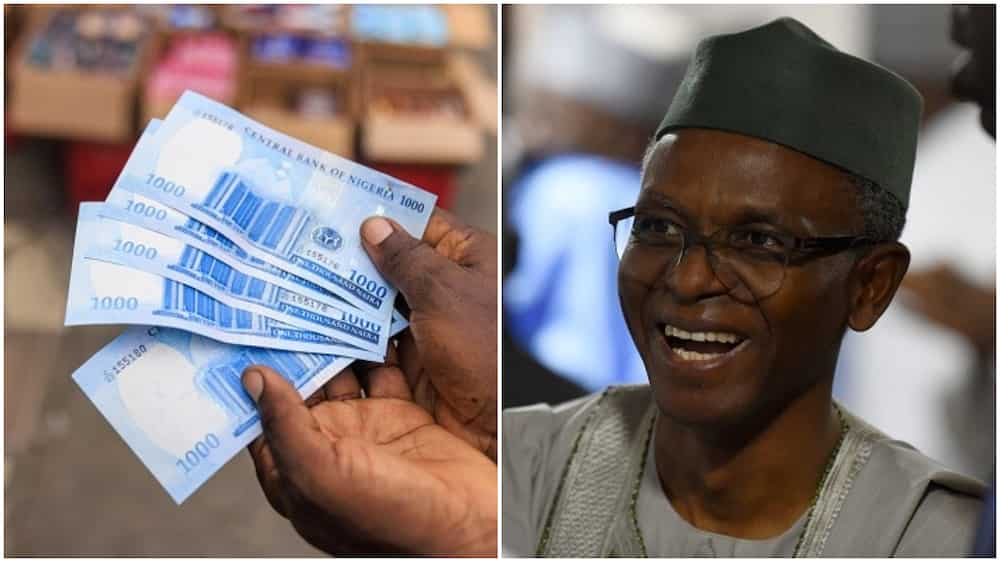
Currency Redesign: Open letter to Governor Nasir El-Rufai by Gloria Mabiam Ballason Esq.

Dear Governor Nasir Elrufai,

 In the normal course of events, this would have been an engagement on marking down your last 100 days as Governor of  Kaduna, Nigeria’s third-largest state.

 However, your sudden love for the masses and the rule of law against your customary disdain for the masses and penchant for picking and choosing what laws to obey; makes this letter imperative.

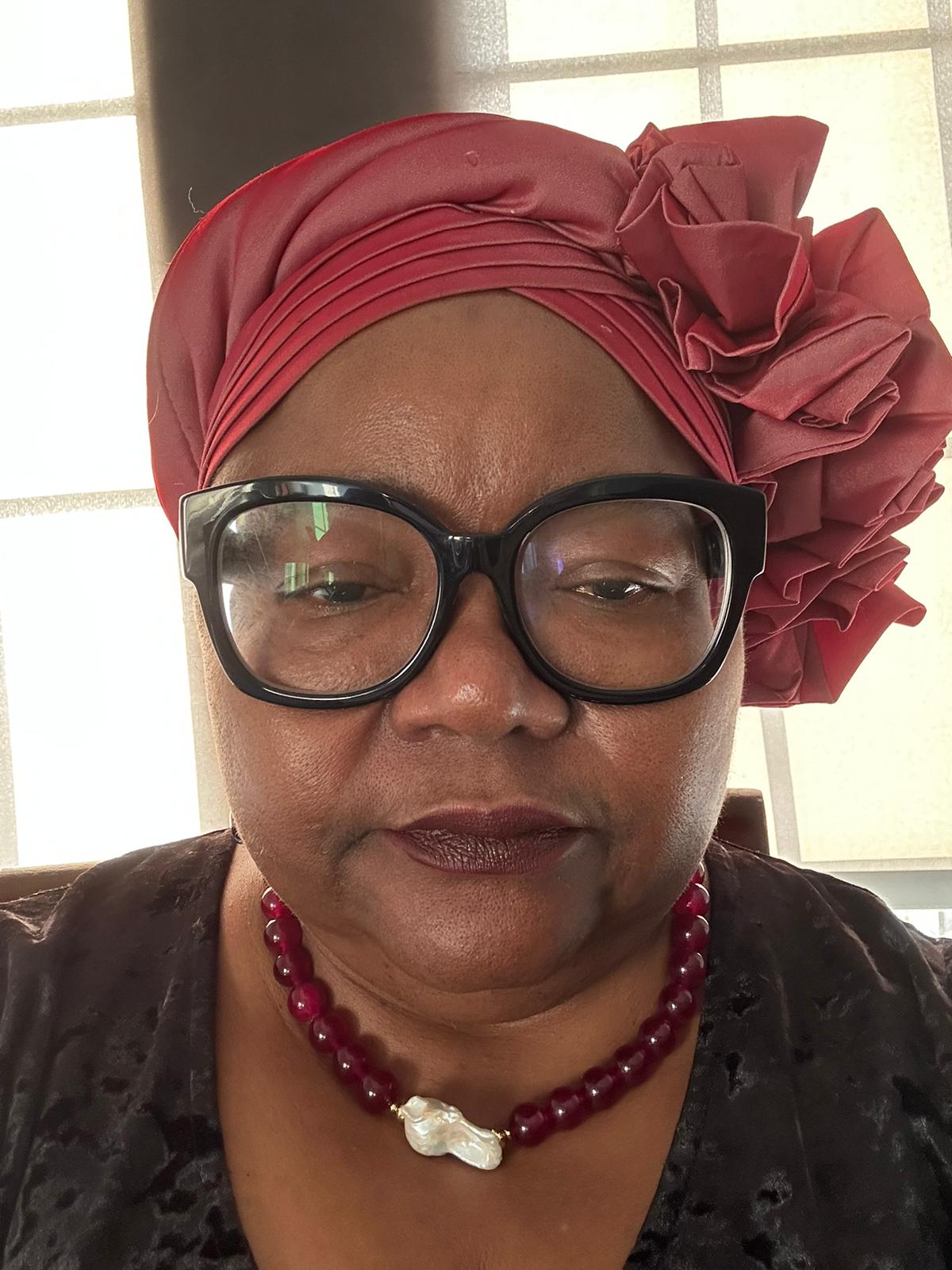
Gloria Ballason

  Over the last two weeks, you have struggled hard to stop the redesign of Nigeria’s currency. What you are doing is neither random nor incidental. True, Nigerians are undergoing an unprecedented scenario of cash and money crunch and citizens are having to buy the naira with naira. Difficult as the situation is, your intervention is not without purpose; it is in the course to executing a plan – a plan to ensure your presidential candidate monies himself into governance. In furtherance to your plan you hope to conscript the people of Kaduna state as your foot soldiers against the Federal Republic of Nigeria- now that is downright dangerous!

     In your broadcast of Thursday 16 February 2023, you told the people of Kaduna State to continue to use currencies that have been abrogated by the  Central Bank of Nigeria and the Presidency. You have also committed to seal off and prosecute persons and organizations in Kaduna who do not accept the currencies. By your broadcast, you have invoked for yourself, executive, legislative, and judicial powers. You are inciting the people in Kaduna state to overthrow the Federal Government for the establishment of a Kaduna Republic which you imagine should have its own currency and sovereignty within the Nigerian state.

You have not only thumped the President in the chest, you have also trampled under foot the Constitution of the Federal Republic of Nigeria which enshrines currency, coinage and legal tender as the 15th item under the exclusive legislative list.  This is a grave offence against public order.

  On the 6th of February, 2023, you wrote about fifth columnist that do not mean well for Nigeria. The problem is, you appear not to see that you are what you described. Indeed, there are none so blind than those who would rather not see. You seem to ignore how volatile elections are in Nigeria and how your actions at heating the polity at this moment is a terrible idea. During the 2019 elections, you carried out the same experiment in Kaduna when you trumped up a story of 66 Fulanis being killed in Kujama, a story the State Commissioner of Police denied. You have now moved your antics to the national space and you are pitching your ploy against a Supreme Court ruling in a matter that is purely an executive prerogative.

Separation of powers exists for good cause- the cause of democracy.

The people of Kaduna State and Nigerians have laboured under the yoke of the present administration. The democratic train is fast moving to  February 25, 2023 (in 8 days), it will be in your own interest to jump off the rail track.

   You have recently been all about your lovey-dovey affection for ‘talakawas’; which of them do you refer to? For the avoidance of doubt, here is a summary of your score sheet in the talakawa and governance business:

1. Kaduna State under your administration, has witnessed unprecedented insecurity and deaths. You admitted to accessorizing murders by ‘paying killers to stop killing’ yet in the urban, rural and suburban areas, people and ‘your  talakawas’ are either killed, kidnapped or on the line to suffer either of the two dreadful fates.

interview-why-i-paid-herdsmen-to-stop-southern-kaduna-bloodshed-el-rufai-the-gov/https://punchng.com/just-in-bandits-attack-kaduna-communities-security-operatives-feared-killed/?amp;

https://www.premiumtimesng.com/news/headlines/268782-birnin-gwari-10-feared-killed-as-armed-bandits-attack-kaduna-communities.html?tztc=1;

https://www.icirnigeria.org/question-85-killed-in-one-month-%E2%88%92-whats-in-birnin-gwari/?amp=1.

 2. At $586.78 million,  Kaduna State has the highest foreign debt profile of all the states next only to Lagos state.

https://businessday.ng/amp/business-economy/article/states-with-highest-foreign-debt/

https://www.dmo.gov.ng/debt-profile/sub-nationals-debts/4122-states-and-fct-domestic-debt-stock-as-at-september-30-2022/file

3.  You threw thousands of talakawa traders out of jobs by demolishing markets and destroying goods and services without compensation.

https://dailytrust.com/kasupda-begins-demolition-of-kasuwar-barci/

4. You made hundreds of thousands of people homeless by demolishing their homes without compensation and devoid of legal cause.

https://www.latestnigeriannews.com/p/969770/governor-elrufai-demolishes-graceland-zaria-kaduna-photos.html

https://www.tvcnews.tv/2021/10/kaduna-govt-demolishes-140-houses-in-zaria-lga/

https://www.channelstv.com/2016/07/28/gbagyi-villa-residents-protest-planned-demolition-by-kaduna-govt/amp/

5. You destroyed the houses of those who held different opinions to yours in your own party and outside it. Sen. Hunkuyi’s home you demolished and turned into a park. Former Attorney General, Inuwa Abdulkadir died while waiting for justice for his destroyed house.

https://www.vanguardngr.com/2018/02/governor-demolishes-senators-house.

https://www.vanguardngr.com/2018/02/demolition-go-court-aggrieved-kaduna-govt-tells-hunkuyi/amp

https://www.google.com/amp/s/www.sunnewsonline.com/el-rufai-converts-hunkuyis-demolished-house-to-childrens-park/%3famp

http://httpwww.thisdaylive.com/index.php/2017/04/06/apc-zonal-chairman-accuses-el-rufai-of-demolishing-house-over-political-differences/amp/

https://www.thisdaylive.com/index.php/2020/07/06/apc-mourns-ex-national-vice-chairman-inuwa-abdulkadir/

6.  You sacked thousands of teachers from their jobs and refused to pay teachers their salaries. Some teachers had it worse, they were killed while trying to undergo needless verification exercises you imposed.

https://saharareporters.com/2021/05/16/kaduna-governor-el-rufai-has-sacked-about-70000-workers-2016

https://www.sunnewsonline.com/agony-of-kaduna-teachers-over-unpaid-salaries/?amp https://dailytrust.com/zaria-blast-kills-dozens-injured-many-workers/.

7.  Traditional Rulers were killed under your watch in questionable circumstances while you decapitated what remains of the institution – proscribing chiefdoms,  changing the identity of people and sacking traditional rulers.

https://saharareporters.com/2019/05/06/exclusive-how-kajuru-monarch-galadima-was-killed-refusing-give-stool-after-visiting-el

https://www.vanguardngr.com/2018/10/kidnapped-kaduna-traditional-ruler-killed-by-kidnappers/

https://www.google.com/amp/s/theperiscopeglobal.com/2021/05/20/tribute-to-dr-ishaku-damina-the-distinctive-lamp-extinguished-the-sacrificial-lamb-slain/

https://guardian.ng/news/gunmen-kidnap-south-kaduna-monarch-yohanna-kukah/

https://ynaija.com/opinion-hrh-dr-ishaku-sabo-damina-bgwan-kurmi-persecuted-el-rufai/

https://saharareporters.com/2020/11/07/frustration-southern-kaduna-indigenous-traditional-structures-seeming-step-complementing

https://www.google.com/amp/s/www.channelstv.com/2021/06/20/kaduna-security-bandits-kill-village-head-in-sanga-lga/amp/

8. The children of talakawas cannot go to school because of the over 200% increase in school fees while in Southern Kaduna, you shut down tertiary institutions at your whims.

https://theinterview.ng/2021/04/27/kaduna-govt-increases-tertiary-institutions-fees/amp/

https://dailypost.ng/2017/06/14/closure-institutions-southern-kad.

https://newsdiaryonline.com/deputy-gov-kasu-tuition-fees-increase-painful-but-necessary/

https://guardian.ng/news/schools-to-remain-closed-in-southern-kaduna-until-security-improves-says-government/

https://www.icirnigeria.org/insecurity-kaduna-govt-orders-closure-of-13-schools/?amp=1

9. The Nigeria Labour Congress tried to resolve the crises between you and Kaduna State workers but you turned the NLC’s intervention into a wrestling spree.

https://placng.org/Legist/kaduna-boils-as-govt-labour-battle/

https://dailytrust.com/kaduna-shutdown-fg-intervenes-as-el-rufai-labour-stick-to-their-guns/

10. Even the journalists and activists who endeavored to report the rape of law and justice carried out by your government, were arbitrarily thrown by you into prisons.

https://www.theoasisreporters.com/electronic-media-personality-segun-onibiyo-arrested-by-police-in-kaduna-for-hate-speech/

https://saharareporters.com/2019/05/08/breaking-police-arrest-kajuru-journalist-stephen-kefas-re-posting-article-facebook

https://www.thisdaylive.com/index.php/2019/01/02/between-el-rufai-and-journalist-segun-onibiyo-2/amp/

https://www.csw.rg.uk/2022/02/04/press/5572/article.htm.

The verdict of Nigeria’s Senate is that you are not a fit and proper person to occupy public office.

https://www.vanguardngr.com/2018/03/952809/amp/; https://dailytrust.com/why-el-rufai-should-not-hold-public-office-dantiye/

At this point, My dear Governor, it should immediately be clear to you, that you are already known for who you are rather than the overnight self-acclaimed activist for the masses you seek to make yourself out to be.

 Let Democracy Thrive and Get Thee Off the Way.

  Gloria Mabeiam Ballason

17/2/2023

Ballason is the Chief Executive Officer of House of Justice and Principal Partner MIVE LEGALS

Tales My Patients Told Me: Grandpa sings Tra la la; Grandma Tro lo lo!

First week of January 2023, Johnny, a 78-year-old Grandpa returned from the Christmas/New Year holidays in the Bahamas and came to the Richmond Hill office for his annual check-up. The visit went very well. Physical examination was unremarkable. Electrocardiogram showed no new changes. Blood tests were ordered and medications were renewed. I ended the visit with my usual smile, my signal that “it’s time to see my next patient, but grandpa remained seated and dropped a bombshell: “Doctor, I think I have syphilis!”

I looked at Johnny sharply: “you have what?” “Yeah, I had sex with this woman back in my home country two weeks ago, and then she told me she has syphilis”. I took the information in slowly, my head churning it. After practicing medicine for forty-three years, you would think you would have seen everything there is to see at least once, but this is a novel event: syphilis within two weeks of an actual documented exposure!

Your typical syphilis case is the young man or woman with the painless ulcer in the private part (the syphilitic chancre), or more usually a screening non-treponemal test like RPR turns up positive during a routine checkup, and you confirm the diagnosis with a treponemal test like FTA. These events usually occur months after exposure. So what do you do with someone with documented exposure only two weeks earlier?

It was a very busy morning, and I had no time to research the correct way to handle the situation. I was pretty sure that the screening test RPR was unlikely to be helpful. It takes 4-6 weeks to become positive after an infection. I was not sure when the confirmation FTA becomes positive, but if I ordered RPR, and it was negative, the lab would not bother to do the confirmation FTA test. So I ordered RPR, and FTA (not reflex, but must be done, irrespective of RPR result). The last question to be answered was treatment. The usual treatment for syphilis is high-dose Bicillin injection through a large calibre needle in the butt. The cost is prohibitive, north of $1000. The insurance would never approve that in the absence of a concrete diagnosis. So I chose the alternative treatment, doxycycline tablets twice a day for one month, usually reserved for those with penicillin allergy. It costs less than $30.

Johnny’s results came a few days later. Meanwhile, I checked the natural history of syphilis after exposure: just as I suspected, the screening RPR becomes positive in 4-6 weeks while the FTA which is used in confirmation, takes only 1-2 weeks to convert. Johnny’s result was exactly as expected for syphilis after two weeks: his RPR was negative while the FTA was positive. This means that if the woman had said nothing, and Johnny had his annual physical with the usual RPR only, and no FTA, he would have carried his syphilis for another year and infected all his consorts in that time period. It raises the question of when we should be screening with FTA, which becomes positive quickly, rather than RPR. A laboratory actually did that for my patients many years ago until I asked them to stop. Treponemal antibodies like FTA cross-react with many other non-treponemes Spirochetes in the soil, and many of my patients, especially Africans, had false positive treponemal antibodies. They had unnecessary tests and stress for syphilis they did not have. So, sadly, there is no perfect answer to this conundrum

This case reminds me of another funny syphilis case in an elderly patient. Grandma, 84, lived in Holland. In 2018, her daughter living in NY filed papers for her to come and live in America. Grandma came to my office to do the required Medical Examination by a Civil Surgeon before she could be allowed to be Permanent Resident. We did all the medical examinations and blood tests and grandma was asked to return for the completion of the 13-page USCIS form in three days.

When I checked Grandma’s result, I almost fell out of my chair. RPR positive 1:64; FTA Confirmation Test = Positive. As I reviewed the results, Grandma and her daughter, who was in her fifties, watched me closely. How on earth do you tell an 84-year-old Grandma that she had syphilis?

Clearing my throat, I avoided her peering gaze. “Excuse me Ma,” I began slowly. “There is a little bit of a problem. I had hoped to sign off on your case today, and give you your medical package for the USCIS. I am afraid there is an abnormality in your test. Ma, you have syphilis”. I finally was able to breathe again after completing my testy presentation. I waited for the earthquake and volcanic eruption to follow.

What happened next took me completely by surprise. Her daughter smiled and exclaimed: “So the Department of Health doctor was telling the truth after all!” “What?” “Yes, she had a medical examination done at the Public Dept of Health (where people with no medical insurance could go for free medical check-ups). They called her back that she has syphilis. We refused to believe it.”

With the second confirming opinion, Grandma came clean. She has a boyfriend in Holland, who services her regularly. I informed Grandma that she could not get her papers until we treat syphilis. We are going to need three shots of Penicillin every week for three. Since she had no medical insurance, I send her to the Department of Health for free treatment.

Syphilis is an old friend of randy mankind. Grandpa sang Tra la la, and Grandma was singing Tro lo lo.

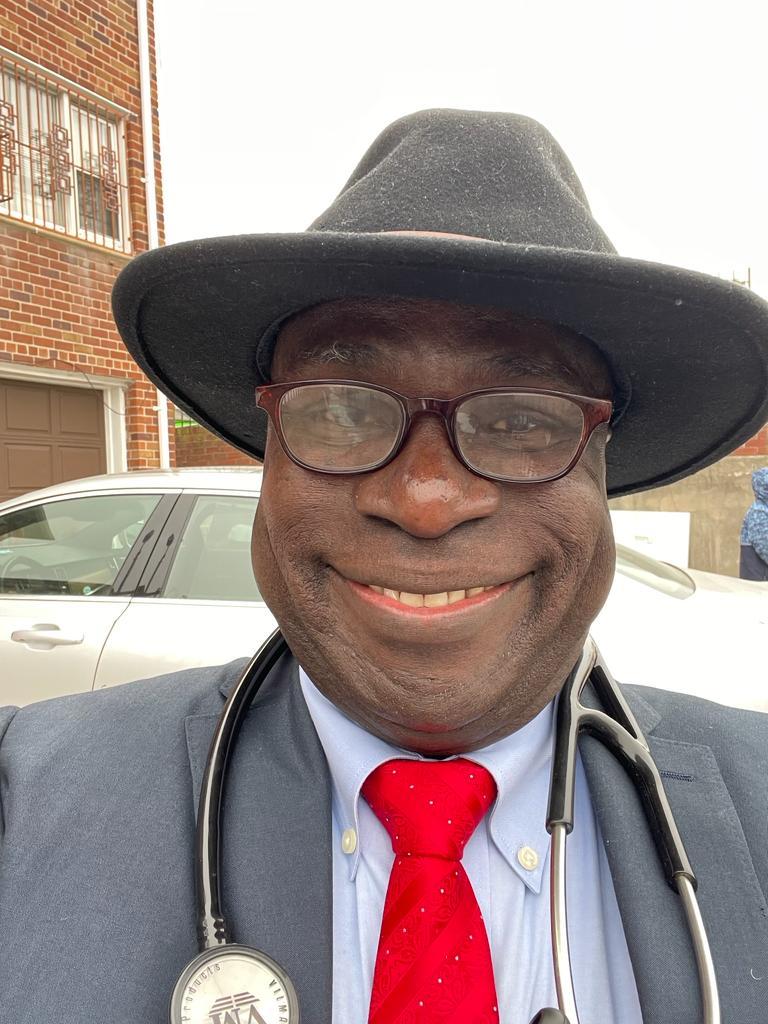
Emmanuel O. Fashakin, M.D., FMCS(Nig), FWACS, FRCS(Ed), FAAFP, Esq.
Attorney at Law & Medical Director,
Abbydek Family Medical Practice, P.C.
Web address:
http://www.abbydek.com
Cell phone: +1-347-217-6175
“Primum non nocere”

Judicial Coups: Lessons from IBB

By Calixthus Okoruwa

The years of military coups are now best forgotten by Nigerians. But they were years in which military adventurers turned Nigeria into one huge playing field, in an unbridled quest for political power.

Even though coups were a widespread military phenomenon, General Ibrahim B. Babangida  (IBB) is deliberately used to headline this piece because among others, he self-confessedly, participated in all successful coups in the country, including the one which ushered him to power.

As the military coupists have themselves admitted on different occasions, coups were typically opportunistic. Ambitious soldiers simply capitalized on the pervasive wave of discontent by civilians with the outgoing regime – civilian or military – in executing their coups. In those days, not only was it common for civilians to openly invite the military to take over power, especially at periods of discontent or dissatisfaction with the order of the day, it was also common to find civilians jubilating when some coups succeeded.

The often undisguised clamour for military incursion to politics was a strong fillip for the IBBs of the Nigerian military. It was the first step for justifying the illegal takeover of government.

Next was the imperative of seeking legitimacy as a prelude to full consolidation of power. IBB understood this only too well. When he overthrew General Buhari after his 1985 coup, he immediately began a series of elaborate public relations schemes. The Buhari administration had been increasingly loathed by the public and IBB understood that pandering to the people and presenting to them a picture of himself that was radically different from that of Buhari would bring the people to his side.

The Nigerian Bar Association, NBA, had been very critical of Buhari. IBB simply appointed its then president, Bola Ajibola as his Minister of Justice and Attorney-General. Decree 4, much detested by the Nigerian media and by which journalists could be imprisoned for publishing stories – whether true or untrue – that embarrassed public officers was promptly abrogated.

The Nigerian Security Organization, NSO, by then the local equivalent of the FBIs and KGBs of this world had come under heavy criticism for its high-handedness. IBB got this agency to throw its doors open and the public was fed with images showing how pathetically the outgone government had treated detained Nigerians. Not even IBB’s nomenclature was spared. Whereas his predecessors were known as “Head of State”, IBB preferred the more populist appellation, “President.”

From one gimmick to another, IBB deliberately strove to appease the people and charm them to lose their vigilance, forget that he was a usurper of power and believe that he was to be preferred to the man he overthrew.

IBB, an intelligent veteran in the power game, understood that legitimacy for his government could only flow from the people. He realized that even though he controlled a large military with a considerable arsenal, it was with the people that real power resided.

IBB earned not only legitimacy but also love for his new regime. A famous activist writer quipped on national television that IBB’s regime was “one of the best things to happen to this country.” In the process, he consolidated power, making it ever more difficult for the people to rise up against him and his co-travellers.

We now know that the era of military coups was a big disaster not only for the military itself but for the country as well. The military completely demystified itself. Where once people regarded it as a beacon of decorum, integrity and altruism, in unravelling, the military put a lie to all of this, and let it be known that they were no better than their civilian counterparts. The military is still reeling from its self-destructive incursion into politics. I wonder how career officers feel whenever another chunk of Abacha loot is reported to have been returned to Nigeria as has happened routinely since 1998 when Gen. Abacha, IBB’s successor passed on.

It is in the light of all of these that one must ponder the fate of Nigeria on one hand and the Nigerian judiciary on the other hand as the judiciary journeys on the same route that is devastatingly similar to that from which the military has since beaten a retreat.

It would appear that the judiciary is increasingly finding the allure of politics and the company of politicians, irresistible.

In the last several years, a number of curious judgements have steadily emanated from our courts. Two have been particularly telling in recent times, largely because they have emanated from the highest court in the land, the Supreme Court.

In the first of these cases, the Supreme Court in 2020, disregarded official and uncontroverted evidence that showed that a gentleman had come fourth among other contestants in the gubernatorial election in Imo State and ruled that he was the winner of the election. So, in a democracy, the Supreme Court itself ignored the universal norm where the wish of the majority as expressed in an election is upheld. You could say that Governor Uzodimma of Imo State, aided by the court, executed a successful coup against the people.

In a more recent case, Senate President Ahmed Lawan had in bidding for the presidential ticket of the APC, not participated in the official primary election (sanctioned and witnessed by INEC) for the ticket for the Yobe North senatorial district. But this did not affect the ruling of the Supreme Court which has since pronounced him winner of the primary election in which he didn’t participate. In what can be interpreted as another coup, Ahmed Lawan is, by courtesy of the Supreme Court, now the APC senatorial candidate for the zone.

In taking these and similar decisions, the courts do not seem to take into cognizance the public’s perception of them. Unlike IBB for whom legitimacy by cozying up to the public was an art form, the courts have so far carried on rather unabashedly.

Indeed, only recently, the Supreme Court has had to issue a stern, even if inelegantly articulated warning to the public to desist from criticizing the latest or in fact any judgement of the Supreme Court.

Unlike IBB, the court appears to have forgotten that the Supreme Court does not exist for its own sake. It exists at the pleasure of the people to whom it owes a duty to dispense justice equitably and transparently. Ultimately it is to the people that the power which it believes it has, actually belongs. When judgements that curiously overturn the legitimate wishes of the people are dispensed brazenly by the Supreme Court, of all courts, the people have a right to call the court to question.

A good number of citizens has since taken the Supreme Court to task for its questionable judgements. This is the way to go. More socially-conscious Nigerians need to lend their voices to these condemnations, and stridently too. Operatives in the judiciary will become more circumspect in the understanding that there is an educated and activist public painstakingly scrutinizing their every move.

Collective vigilance is one way by which we can help to curtail the apparently growing influence of politicians in the judicial space. As our experience with military coup plotters has shown, had Nigerians duly appreciated their innate power and exerted it in the days of yore, coups would not have succeeded and both Nigeria and its military may have been spared the ordeal of military incursion in politics.

We owe it a duty to our country to stop our once-revered judiciary from going the way of the military.

  • OKORUWA works for the communications consultancy, XLR8

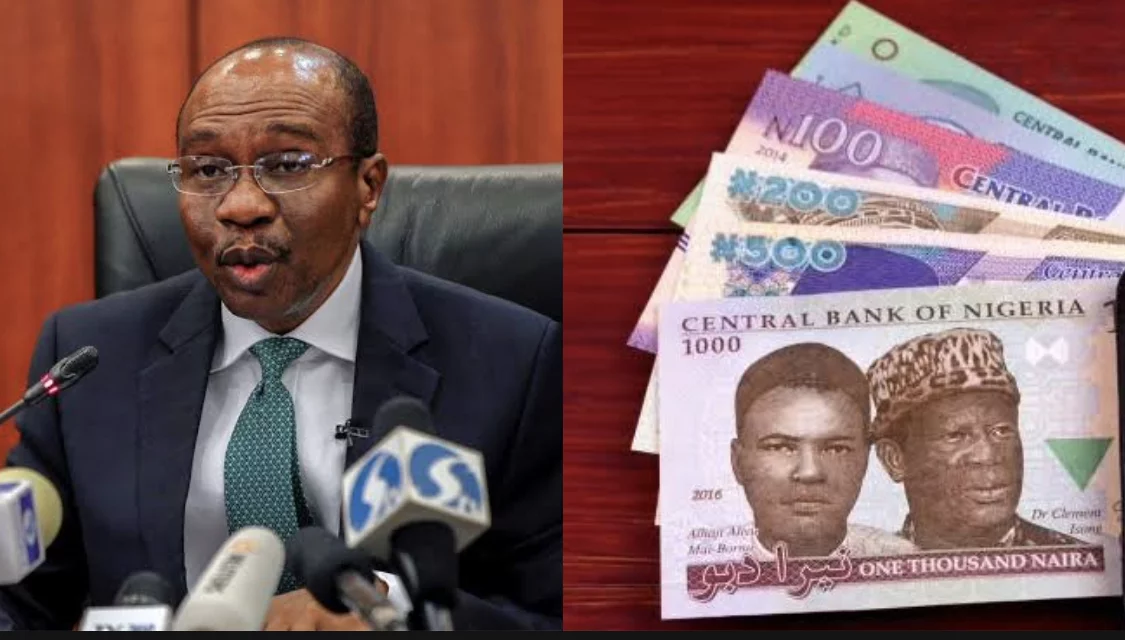
Even if one treats the CBN as an ‘Agency’ of the Federal Government, the Supreme Court still lacks original jurisdiction to entertain lawsuits over CBN’s Naira redesign, withdrawal, and swap policies — A reply to Femi Falana, SAN

By Sylvester Udemezue

Please, I beg my readers and all to make out time and read my first three works on the brouhaha over the Naira Redesign, Withdrawal Limit and swap policies of the CBN, and on whether the Supreme Court has original jurisdiction in a lawsuit filed in respect thereof: (1).  “Re: “Give Me 7 Days To Resolve Cash Crunch, President Muhammadu Buhari Begs Nigerians” By Sylvester Udemezue (4 February 2023; TheNigeriaLawyer); (2).  “THE NAIRA REDESIGN AND SWAP HULLABALOO: WHY I THINK THE SUPREME COURT OF NIGERIA LACKS ORIGINAL JURISDICTION” By Sylvester Udemezue (10 February 2023: NewsDeskNg);  (3).  “SUPREME COURT OF NIGERIA AND THE NAIRA SWAP BROUHAHA: WHEN NON-JOINDER IS FATAL”  By Sylvester Udemezue  (13 February 2023; BarristerNG).

 Please, note that in the second work cited above, I had advised thus: “While we await the decision of the [Supreme] Court on this matter, it is important to respectfully urge all parties and stakeholders, including the CBN, to endeavour to respect the rule of law and due process by conducting themselves responsibly and honorably pending the decision of the Supreme Court one way or the other”. Thus, my current reply to Mr Femi FALANA SAN is strictly with respect to the learned silk’s argument on whether the Supreme Court has original jurisdiction over the Naira Redesign, Daily Cash Withdrawal Limit and swap policies recently introduced by the Central Bank of Nigeria (CBN).

In a piece titled “SC & CA say that CBN is not independent because it is an agency of FG” and published by BarristerNG on 14 February 2023, Mr Femi Falana SAN wrote as follows:

“In misleading the CBN Management, some lawyers have insisted that the  apex bank is an independent institution and that it is not a party to the case of Attorney-General of Kaduna State & 2 Ors v Attorney-General of the Federation pending at the Supreme Court. Interestingly, the Supreme Court ruled that the CBN is an agency of the Federal Government in the case of Obiuwvera v Central Bank of Nigeria where Rhodes-Vivour JSC held: ”This suit has to do with the administration or management and control of the Federal Government. The respondent is a Federal agency and the appellant is/was its employee. The termination of the appellant’s appointment is on administrative action by an agency of the Federal Government, the respondent.” In the same vein, in the case of Fayose v EFCC & Anor (2018) LPELR 46474(CA) the Court of Appeal dismissed the claim of that the CBN is an independent institution when Dongban-Mensem JCA (now PCA) held: “The independent status of the 2nd Respondent touted by the Appellant is a lame link. Section 1(3) of the Central Bank of Nigeria (Establishment) Act has not been shown to be independent of the legal guidance of the Hon. Attorney-General of the Federation who is the Chief Legal Officer of the Federal Republic of Nigeria. Nor was it demonstrated to the Court of trial that the independent status of the CBN takes it out of the supervisory management of the Hon. Ministry of Finance who is a Public Officer.”’

 MY REPLY TO MR FALANA, SAN

Before I proceed to answer directly and specifically to Mr FALANA’s argument with a view to showing, with the greatest respect, that Mr FALANA SAN ‘s position is grossly erroneous being (as I see it) irrelevant to the essential issues that arise towards determining whether the Supreme Court possesses original jurisdiction in the present scenario, permit me to to start by respectfully submitting that Mr FALANA SAN has completely misunderstood the reasoning behind, and the actual  dimensions of, Nigeria’s Central Bank’s status as an “independent body” pursuant to Section 1(3) of the CBN Act, 2007. There is no doubt that the head of the Central Bank of Nigeria (the Governor) is apointable by the President of the Federal Republic of Nigeria. Besides, certain decisions of the Central Bank are subject to the approval or directive of the President. However, by analogy, even the President of the Federal Republic of Nigeria, in the course of the performance of the functions of his office, is himself likewise under constant supervision of the National Assembly. Many decisions and actions of Mr President (as a condition precedent to their validity) are subject to the approval of the National Assembly or an arm of it. Does this detract from the fact that the President is the number one citizen of Nigeria, the overall head of the Federal Government and the wielder of the executive powers of the Federal Government of Nigeria? The CBN is an Independent Institution, but the independence of the CBN is not an absolute independence, just as the independence of the office of the President of the Federal Republic of Nigeria is not absolute. As observed by George Okorie, “In the CBN Act of 2007, the operational autonomy of the Bank is clearly expressed in line with international best practice. This has not only facilitated the achievement of its mandate but also instils stakeholder confidence”. The nature and scope of the independence of the CBN is specifically defined in section 1(3) of the CBN Act which provides: “In order to facilitate the achievement of its mandate under this Act and the Banks and other Financial Institutions Act, and in line with the objective of promoting stability and continuity in economic management, the [Central] Bank shall be an independent body in the discharge of its functions”. Accordingly, when it is said that the Central Bank is “independent” it is meant to say that as the monetary authority of the country with a mandate to formulate and implement monetary policies, the CBN is free from direct political or government interference in the conduct of its affairs. An example:  the Central Bank possesses

a monopoly on issuance and printing of the national currency, which usually serves as the nation’s legal tender. Central Bank’s role includes taking measures to attain and ensure price stability and the maintenance of a safe, sound, and stable financial system. To this end, THREE DIMENSIONS of the Central Bank’s Independence are identified by Okorie : (A). Goal independence: In this type of independence, the central bank has the right to set its own policy goals i.e., inflation target, interest rates,

money supply and stable exchange rate. (B). Instruments independence: Instrument independence confers on the

central bank the ability to freely choose appropriate instruments or

adjust its existing policy tools in pursuit of the goals of monetary policy. The central bank has the independence to determine the best way of achieving its policy objectives, including the types of instruments to be used and the timing of their use. This is the most common form of central bank independence. (C). Operational independence: The central bank has the authority to run its

operations (appointing staff, setting budgets, and so on.) without the overbearing oversight of the government. This type of independence helps to facilitate other forms of independence. See: “Understanding Monetary Policies No 13: Central Bank Independence” by George Okorie <https://www.google.com/url?sa=t&source=web&rct=j&url=https://www.cbn.gov.ng/Out/2022/MPD/Series%252013.pdf&ved=2ahUKEwiNrcPuhpb9AhX1gf0HHbmHCgwQFnoECA4QAQ&usg=AOvVaw11DVNw1xUWo7g2ftc6HojQ>.

Having said this, I believe that if one reads my works Number 2 and 3 referred to above, one would not have any difficulty immediately disagreeing with Mr FALANA, SAN on whether the Supreme Court of Nigeria has original jurisdiction to hear a case over the Naira Redesign, Withdrawal Limit and swap policies of the CBN. It is respectfully submitted with more emphasis, that the court cases cited by Mr FALANA SAN (see above) are wholly irrelevant and therefore inapplicable to the present scenario/discussion. My reasons are as follows:

(1).  The case of Obiuwvera v Central Bank of Nigeria referred to by Mr FALANA SAN, deals entirely with “the administration or management and control of the Federal Government”. This was made clear by the Court in the Case itself. Issues or proceedings relating to the administration or management and control of the Federal Government are provided for in section 251(1)(p) of the Constitution of the Federal Republic of Nigeria, 1999.  The current scenario regarding the Naira Redesign, Daily Cash Withdrawal Limit, and swap policies of the CBN, are covered by section 251(1)(d) of the Constitution which leaves no one in doubt about which court has exclusive jurisdiction: “Notwithstanding anything to the contained in this Constitution and in addition to such other jurisdiction as may be conferred upon it by an Act of the National Assembly, the Federal High Court shall have and exercise jurisdiction to the exclusion of any other court in civil causes and matters — connected with or pertaining to banking, banks, other financial institutions, including any action between one bank and another, any action by or against the Central Bank of Nigeria arising from banking, foreign exchange, coinage, LEGAL TENDER , bills of exchange, letters of credit, promissory notes and other fiscal measures…”.  Thus, the legal provision applying to the present scenario is section 251(1)(d) and not section 251(1)(p) which was the subject of consideration in the case referred to by Mr FALANA SAN.

(2).  Even if one decides to (although, with due respect, I do not at all) agree that the current scenario has anything to do with “administration or management and control of the Federal Government”, the question still remains that lawsuits over “administration or management and control of the Federal Government” are within the exclusive jurisdiction of the Federal High Court by virtue of section 251(1)(p) of the Constitution; the Supreme Court lacks original jurisdiction.

(3).  It’s respectfully further submitted that apart from section 251(1)(d) of the Constitution which is the governing law in the present scenario, the other aspect of section 251(1) that could be said to apply is section 251(1)(r) which relates to “any action or proceedings for a declaration or injunction affecting the validity of any executive or administrative action or decision by the Federal Government or any of its agencies”. Thus, if one agrees with me that the Naira Redesign, Daily Cash Withdrawal Limit, and swap policies are “executive or administrative” actions undertaken by the CBN but that (as FALANA SAN wants us to believe) those actions or policies were undertaken/introduced by the CBN AS AN AGENCY OF THE FEDERAL GOVERNMENT OF NIGERIA, then it could be suggested that Mr FALANA SAN would still be wrong in his suggestion that the Supreme Court of Nigeria has original jurisdiction in such matters. Contrary to what Mr FALANA SAN wants us to believe, the truth is that (with due respect to the learned silk), by virtue of section 251(1)(r) of the Constitution, the Federal High Court has EXCLUSIVE JURISDICTION over “actions or proceedings for a declaration or injunction affecting the validity of any executive or administrative action or decision” by

 any agency of the Federal Government of Nigeria. Naira Redesign, Daily Cash Withdrawal Limit and swap policies are executive and administrative actions of the CBN taken pursuant to Sections 19 and 20 of the CBN Act,2007. In AG KANO V. AG FEDERATION (2007) 3 SC (PT 1), the Supreme Court held that “Any complaints against the Government of the Federation or any person who exercises power or authority on its behalf like the Inspector-General of Police as asserted by the learned senior for the plaintiff in his address before this Court, are completely outside the jurisdiction of this Court.”

(4). Assuming (for the purpose of argument) that the CBN should be treated as an “agency of the Federal Government”, it is still respectfully submitted that in respect of any action taken by the CBN in exercise of its powers under the CBN Act (example Naira Redesign and Daily Cash Withdrawal Limit, and swap policies), it’s wrong to for a State in Nigeria sue the AG Federation at the Supreme Court. Thus, in my opinion, the Supreme Court has no  jurisdiction to hear such a matter. The decision of the  Supreme court in AG KANO v. AG FEDERATION, leaves no one in doubt, and and has not been overruled. In the case (AG KANO V. AG FEDERATION (2007) 3 SC (PT 1),*Kano State had (through its Attorney-General) dragged *AG Federation to the Supreme Court over an action taken by the Inspector-General of Police. His lordship Mahmud Mohammed, JSC (as he then was), while dealing with the … provisions of Section 232(1) of the Constitution of the Federal Republic of Nigeria,1999 in the lead judgment, held that “Any complaints against the Government of the Federation or any person who exercises power or authority on its behalf like the Inspector-General of Police as asserted by the learned senior for the plaintiff in his address before this Court, are completely outside the jurisdiction of this Court.” Continuing, the apex court (Per Mohammed, JSC at 38) stated that “The statement of claim disclosed a dispute between the Government of Kano State and its agencies and the Government of the Federation through the Inspector-General of Police and Minister of Information, exercising their power or authority on behalf of the government of the Federation. The venue for settlement of such disputes (i.e. against Inspector-General of Police and Minister of Information), was in the various courts of first instance whose jurisdictions were clearly outlined in the same 1999 Constitution – and not the Supreme Court”. The Supreme Court went further to explain (Per Mohammed, JSC at 38) that ‘The word “Federation” in section 232 of the 1999 Constitution bears the same meaning as “Federal Republic of Nigeria” or “Federation of Nigeria”. The plaintiff’s claim did not accuse the Federation of Nigeria or the Federal Republic of Nigeria of taking any action against the Hisbah Law of Kano State or the operation of the Hisbah Corps in Kano State; or of arresting and detaining commanders of the Hisbah Corps in Kano State. There was no dispute between Kano State in its status as a component unit of the Federation and the unit of the Federation itself’. Also, in the case of BHS INTL LTD v. AG LAGOS & ORS (2016) LPELR-40084, the Court discussed (set out) the Conditions that must exist before the ORIGINAL JURISDICTION of the Supreme Court can be invoked. The Court States:

“Section 232 (1) of the Constitution are concisely and precisely in the following terms: “The Supreme Court shall, to the exclusion of any other Court, have original jurisdiction in any dispute between the Federation and a State or between States if and in so far as that dispute involves any question (whether of law or fact) on which the existence or extent of a legal right depends.” I must state that these provisions, in addition to being concise and precise, are plain, clear and unambiguous in words, context and purport. That is the verdict of the apex Court, per Onnoghen, JSC in the lead judgment in the case of A.G. Abia State v. A.G. Federation (supra) also reported in (2007) 2 SC, 146, when he stated that: “The provisions of Section 232(1) of the 1999 Constitution, which confers original jurisdiction on this Court, is very clear and unambiguous. It is clear from the above that for the original jurisdiction of this Court to be invoked in a civil action; (a) the action must be between the Federation and the State(s) or between States, and there must be a dispute between the Federation and a State or States; (b) the dispute must involve a question of law or fact or both; and (c) the dispute must pertain to the existence or extent of a legal right.” The erudity and proficient Lawlord did not stop there, but defined what a “dispute” is in the context of the provisions when he said: “It has been held by this Court vide Belgore, JSC (as he then was) in A.G. of the Federation v A.G. of Abia State (2001) 11 NWLR (PT.725) 689 at 737, inter alia, that the term dispute as used in Section 232(1) of the 1999 Constitution”…, involves acts of argument, controversy, debate, claims as to rights whether in law or facts, verying opinion, whether passive or violent of any disagreement that can lead to public anxiety or disquiet” Then in the case of A.G. Kano State v A.G. Federation (2007) 3 SC (PT 1) 59, Mahmud Mohammed, JSC (as he then was) had held, while dealing with the same provisions of Section 232(1) in the lead judgment that:”Any complaints against the Government of the Federation or any person who exercises power or authority on its behalf like the Inspector-General of Police as asserted by the learned senior for the plaintiff in his address before this Court, are completely outside the jurisdiction of this Court.”His lordship had expatiated the above position when he said; “However, quite contrary to the requirements of Sections 232(1) of the 1999 Constitution, the dispute disclosed in the plaintiff’s statement of claim is a dispute between the Government of Kano State and its agencies and the Government of the Federal and its agencies, particularly the police and the Federal Ministry of Information through the Inspector General of Police and the Minister of Information in their capacities as persons exercising power or authority on behalf of the Government of the Federation …. certainly if the plaintiff has any dispute with the Inspector General of Police and the Minister of Information for their respective roles in the various declarations they made on the Hisbah Laws, the operation of the Hisbah Corps and the arrest and detention of the officials of the Hisbah Corps, the propervenue for the settlement of such dispute does not lie in invoking the original jurisdiction of this Court. The venue for the settlement of such dispute lies elsewhere in various Courts of first instance whose original jurisdictions are clearly outlined in the same 1999 Constitution”The clear principle laid down in the above authorities is that the original jurisdiction of the apex Court under Section 232(1) cannot be invoked over a dispute in respect of the acts or performance of the duties of the Federal Govt through or by its agencies, which are legal entities that can sue or be sued, since they are not the Federation or a State in the Federation.” Per MOHAMMED LAWAL GARBA, JCA (Pp 27 – 30 Paras B – D).

If as the court has confirmed, the Supreme Court does not have jurisdiction to hear a lawsuit against the AG Federation over an action taken by the Police/IGP who is clearly an agent of the Federal Government and is not declared independent by any law, for any purpose at all, how can anyone validly argue that the Supreme Court could have original jurisdiction to hear a lawsuit against the AG Federation over the Naira Redesign, Withdrawal and swap policies which are actions/policies of the Central Bank of Nigeria (CBN), a body expressly declared independent by section 1(3) of the CBN Act. Imagine the Minister of Information who is not only apointable by the President, but could be dismissed at will by the President. Yet, in AG KANO V AG FEDERATION, the Supreme Court still said in respect of a lawsuit challenging an action taken by the Minister or Ministry of Information, the supreme court is not the appropriate forum for resolution at first instance. One then wonders how the SC could now be validly said to possess original jurisdiction in a lawsuit challenging an action taken by the CBN, an institution legally declared to be independent and whose head can’t be dismissed at will by the President.

(5).  Besides, apart from the aforesaid, section 251(1) expressly states that actions relating to Naira as Nigeria’s Legal Tender must be filed at the Federal High Court.Is an action over Naira Redesign and Daily Cash Withdrawal Limit, and swap policies introduced by the CBN, not a lawsuit over the Legal Tender? If we agree it relates wholly to the Legal Tender, how can anyone validly argue that the Supreme Court could have original jurisdiction in such a matter?

(6).  Further, the present case presents a clear exception to the general rule that  non-joinder of a necessary party is not fatal. See my article referred to above: *”The Naira Redesign and Swap Brouhaha: When Non-joinder is Fatal” * Does it not sound strange that any lawyer could suggest that a lawsuit over CBN’s Naira Redesign and Daily Cash Withdrawal and swap policies (which relate wholly to the Legal Tender) could be effectually and conclusively resolved without joining the CBN as a party? Section 17 of the CBN Act provides that “The Bank shall have the sole right of issuing currency notes and coins throughout Nigeria and neither the Federal Government nor any State Government, Local Government other person or authority shall issue currency notes, bank notes or coins or any documents or token payable to bearer on demand being document or token which are likely to pass as legal tender”. Section 19(1) (b) provides that “The currency notes and coins issued by the Bank shall be of such forms and designs and bear such devices as shall be approved by the President on the recommendation of the Board”. Section 20(1) of the CBN Act provides that “The currency notes issued by the Bank shall be the legal tender in Nigeria at their face value for the payment of any amount”. Section 20(3) of the CBN Act provides that “….the bank shall have power, if so directed by the President and after giving reasonable notice in that behalf, to call in any of its notes or coins on payment of the face value thereof and any note or coins with respect to which a notice has been given under this subsection shall, on the expiration of the notice, cease to be the legal tender, but subject to section 22 of this Act, shall be redeemed by the Bank upon demand”. From the above, it is clear that the CBN has the responsibility and power to issue a Legal Tender for Nigeria and to redesign any denomination of the Legal Tender. Also, fixing of deadline for cessation of validity of the old Naira notes are issues falling within the sole powers of the CBN pursuant to the President’s directive in line with Sections 19(1)(b) and 20(3) of the CBN Act. Accordingly, I am surprised that anyone who has a complaint or grievance in respect of the redesign of the legal tender by the CBN could be said to be right in commencing such a case at the Supreme Court. Now, if one agrees that failure to join the CBN is fatal, then one is entitled to agree that the Supreme Court in its original jurisdiction has no business with such a matter because one could not have lawfully joined the CBN in any lawsuit at the Supreme Court exercising its original jurisdiction.

Finally, Mr FALANA, SAN, has argued also that the CBN’s Naira Redesign, withdrawal limit and swap policies could never have become valid without the approval of the President of the Federal Republic of Nigeria.  This argument appears to be beside the point, with due respect and my response to the learned silk’s argument is as follows:

First, by way of an apt analogy, the POWER TO APPOINT (say) a Justice of the Supreme Court belongs to the President of the Federal Republic of Nigeria. But we know that the appointment would not be valid unless it’s done on the recommendation of the NJC and is subsequently APPROVED by the Senate.

 QUESTIONS ARISING:

(1). Does the fact that Senate plays the role of APPROVING the appointment (which is essential) make the Senate the APPOINTING AUTHORITY?

(2) Does the fact that NJC plays the role of recommending (which is essential) make  NJC the APPOINTING AUTHORITY? 

(3). Do we agree that Mr President remains the APPOINTING AUTHORITY notwithstanding that the respective  complementary roles of the Senate and the NJC are essential conditions precedent for the validity of the appointment?

(4). Does Mr President (the legal custodian of the POWER OF APPOINTMENT) become an AGENT of either the Senate or of the NJC merely because the part played by each of the Senate and the NJC is a sinequanon in the process of such an appointment?

Please, let’s look at it this way:

As shown in section 19 of the CBN Act, the CBN has the power to redesign the Naira. But the law requires that after redesign, CBN must obtain the APPROVAL of the President. Similarly, the President of Nigeria has the power to appoint Supreme Court Justices. But the law requires that in doing the appointment, the President must get the APPROVAL of the Senate

 Further Questions:

Why is it that one would in one breathe, agree that lawsuits in respect of APPOINTMENT of justices of the Supreme Court are properly filed at the Federal High Court (FHC) against  Mr President (who is the APPOINTMENT AUTHORITY) and not against the the Senate (approving authority) to the exclusion of Mr President, but one would turn around in another breathe, in the case of action taken by the CBN with the approval of Mr President, to justify a suit filed against the approving authority which suit completely leaves out the REDESIGNING AUTHORITY? In my opinion, no matter the angle from which one looks at it, if the CBN is left out in such a lawsuit, how would one expect the court to make orders that would bind or otherwise affect the CBN? Section 19 (1) CBN Act did not assign to Mr President the job of redesigning the Naira; it’s to the CBN that is expressly assigned the job, which CBN has to do with the approval of Mr President. Second, section 20(3) CBN Act assigns to the CBN (and not to Mr President) the job of setting deadlines for old currency swap. However the CBN has to do this job (which is its) on the directive of Mr President. Accordingly, leaving out the CBN in any such suit clearly pertaining to or arising from the performance of CBN’s powers (to Redesign the Naira and to set deadline to phasing out of the old notes) appears, I submit with due respect, is legally unsupportable and logically unjustifiable.

Check these out: (a) Who did the Redesign? CBN. (b) Who is in the best position to answer all questions arising therefrom? The CBN. (c) Who set the 10 February 2023 deadline for Naira swap? The CBN. (d). Who is a the best position to explain everything surrounding the Naira Redesign, Withdrawal Limit, and swap carried out by the CBN, with the president’s approval/directive? The CBN

(e).The suits filed at the Supreme Court, by some States against the AG Federation, are complaining that the new naira notes are in short supply. Now, who is the right person and in the best position to respond to questions raised by the allegations made by the plaintiffs? The CBN (f). Can any meeting or proceeding to discuss issues or challenges arising from or pertaining to the Naira as the Legal Tender be fruitfully and conclusively carried out in the absence of the CBN? Capital no.

This was why, even the Nigerian Council of State had to invite the CBN to come to the Council’s meeting, to brief the Council about the Naira Redesign, Daily Cash Withdrawal Limit and swap policies of the CBN. (g)  Would a meeting of Nigeria’s Council of State (having as its sole agenda-item, discussions about alleged challenges arising from recently introduced Naira Redesign and Daily Cash Withdrawal Limit policies of the CBN) be meaningful fruitful if the CBN had not attended? No. (h). How then would a court of law be able to conduct in the absence of the CBN, proceedings instituted to discuss only alleged challenges arising from Naira Redesign, Daily Cash Withdrawal Limit and swap policies introduced by the CBN? It’s yet to be seen.

In conclusion, it remains my humble submission that the Supreme Court lacks original jurisdiction to entertain any lawsuit filed at the Supreme Court by a State in the Federation against the AG Federation over CBN’s Naira Redesign, Withdrawal Limit and swap policies.  The appropriate forum for such a suit is the Federal High Court and the most essential party to the case is the CBN. One may choose to join the President of the Federal Republic of Nigeria (if ones chooses to).

Respectfully,

Sylvester Udemezue (Udems).

08109024556.

[email protected].

(14 February 2023)

Court Judgments are Open to Criticism

  • Statement by Ben Nwabueze Center for Constitutional Studies and the Rule of Law

It is obvious that some of the recent judgments of the Nigerian courts, especially the Supreme Court, in high-profile political cases have generated understandable controversy. Understandable, because some seemingly settled principles of law have been made by the decisions to appear not so settled and also challenged many people’s sense of justice. It is equally not in doubt that some of the criticisms are beyond the pale, degenerating in some cases to personal vituperative attacks on individual judges. Some of the disagreements, especially by some lay persons, undoubtedly appear to have been disagreeably expressed.

Against this backdrop, the President of the Nigerian Bar Association [NBA] reportedly issued the misguided warning to lawyers criticizing the judgments that they would be subjected to disciplinary proceedings. There then followed the unprecedented move by the Supreme Court of recourse to a press statement joining issues with critics of its judgments. The Ben Nwabueze Center has thus felt the need for its present public intervention on this matter of critical importance to administration of justice, constitutional propriety and overall good sense in the public space. Perhaps all concerned may be better guided in future and avoid recurrence of the unedifying distracting public spectacles. 

It is straightaway necessary, it does appear, that the Nigerian public and the legal community in particular need the reminder that criticism of judges has a long recorded history, at least since the biblical times. St. Paul in Acts of the Apostles (chapter 23, vs.3) trenchantly criticized the judges who subjected him to punishment for acting contrary to the law in his view, and unflatteringly lampooned them as “whited sepulchers”. Even judges are known to criticize themselves in their judgments, sometimes quite trenchantly. Lord Denning in frustration at his conservative predecessors and their ilk sitting with him on the case, and who were unwilling to toe his unabashedly liberal line, famously dismissed them as “timorous souls” in Candler v. Crane, Christmas [1951] 1 All ER 426. This was a fanciful way of calling them cowards. There were no hard feelings beyond the riposte from his brother justice on the panel, Asquith L.J., that he would bear the condemnation with all the fortitude he could command. Lord Denning was himself at the receiving end of Lord Simmonds ringing denunciation in Magor and St. Mellons RDC v. Newport Corp. [1952] A.C. 189 for engaging in “naked usurpation of legislation function under the thin guise of interpretation.”   

The issue, however, is fundamental and goes beyond the rarefied intellectual climes of appellate court judgments and law journals, contrary to the suggestions of some people. Apart from the critical need for public accountability of all facets and institutions of the state apparatus, including the judiciary, criminalization of criticism of judges is not consistent with the fundamental right to freedom of expression enshrined in the Nigerian Constitution. The contrary suggestion is erroneous on many fronts. This position, from general principles, is so axiomatic as to not require validation by judicial authorities. Nonetheless, it may be useful out of abundance of caution to advert to juridical lodestars from other common law jurisdictions, especially United Kingdom and United States.

Lord Denning who was criticized as an “ass” after one of his judgments without countering with any threat illuminated the matter thus in R. v. Commissioner of Police [1968] 2 QB 150:

“Let me say at once that we will never use this jurisdiction to uphold our own dignity. That must rest on surer foundations. Nor will we use it to suppress those who speak against us. We do not fear criticism, nor do we resent it. For there is something far more important at stake. It is no less than freedom of speech itself. It is the right of everyman, in parliament or out of it, in the press or over the broadcast, to make fair comment, even outspoken comment, on matters of public interest. All that we ask is that those who criticize us should remember that, from the nature of our duties, we cannot reply to their criticism. We cannot enter into the public controversy. We must rely on our conduct itself to be its own vindication.”

Justice Frankfurter of the U.S. Supreme Court in Bridges v. California, 314 U.S. 252 [1941] had also insightfully observed that “Judges as persons, or courts as institutions, are entitled to no greater immunity from criticism than other persons or institutions. Just because the holders of judicial office are identified with interests of justice they may forget their common human frailties and fallibilities. There have sometimes been martinets upon the bench as there have also been pompous wielders of authority who have used the paraphernalia of power in support of what they called their dignity. Therefore judges must be kept mindful of their limitations and of their ultimate public responsibility by a vigorous stream of criticism expressed with candor however blunt.”

A military historian of the American Civil War made the point, in eulogizing  the Confederate Supreme Commander General Robert E. Lee, that the greatest spiritual asset of an army is the belief of the ordinary soldier in the invincibility of the commanding general. For the Court which has neither arms nor soldiers at its behest, there is even a more absolutist need for spiritual strength; a moral authority, founded upon well-nigh unshakeable conviction of not only lawyers but the general public that its essence is pursuit of justice. The same way war is too important to be left to generals alone, law and its effects are too important to be left for judges and lawyers only to contemplate and comment upon.

Indeed, administration of justice is a social good and of which the general public are the consumers. How could the consumers conceivably be denied an opinion on the product, especially one which they are forced to purchase in the circumstances? Lest we forget that the people of Imo State, and neighbouring Anambra State, are having to endure the consequences of an apparently deeply loathed politician occupying the position of Governor courtesy of a Supreme Court judgment. Can they justifiably be denied the right to criticism of the otherwise insufferable position they have been boxed into, and as has found expression in their denial of the occupier’s legitimacy with the cynical term “Supreme Court Governor”?     

Truth be told, these consumers and their advisers have had cause for serious worry with the trend in the recent past. For many areas of law and procedure the Nigerian legal practitioner is routinely confronted with conflicting decisions of the superior courts, including the apex court. This makes the lawyers’ job almost impossible bearing in mind that in many significant ways the law, according to the legal philosopher Wendell Holmes, is nothing more pretentions than “the prophecies of what the courts will do in fact”. It is clear that there would be nothing short of crisis of the rule law if the Court becomes afflicted with recurring schizophrenia.

This state of affairs should worry more all concerned stakeholders especially the NBA whose motto is promotion of the rule of law. Aside the befuddling conflicting decisions of the apex court, there is its undue attachment to technicalities which is clearly at variance with the magisterial intellectual gravitas of such courts in other jurisdictions. It would for example be difficult for an intelligent lay person to understand the sense in the Supreme Court making a fetish of whether a court process was signed in the name of a person or a law firm, and nullifying otherwise meritorious cases notwithstanding that issues of life and death may be involved.

Adverting to the APC v. Machina case, one of the surprises is that some informed persons are apparently surprised that the populace was bestirred into raising pointed questions. It was most curious for the Court to focus on the sterile technical issue of the form of action and avoided the substance which involved issues fundamental to not only to the understanding of the extant Electoral Act 2022 but also the architecture and nature of Nigerian democracy. The Court, it must be borne in mind, has whilst standing on technicality seemingly circumscribed the choice of voters in the Yobe North senatorial district regarding their representative. And this was notwithstanding that the Court had many times in the past cited with approval the almost century old Lord Atkin’s celebrated criticism of placing undue importance on forms of action in United Australia v. Barclays Bank [1941] A.C. 1, 29:

“When these ghosts of the past stand in the path of justice clanking their mediaeval chains the proper course of the Judge is to pass through them undeterred.” 

It is noteworthy that this latter day elevation of obeisance to technicality into an article of faith by the Nigerian Supreme Court has sadly occasioned the loss of attention which its pronouncements used to enjoy in the international academic legal community, particularly the Commonwealth. It would have been more tolerable if the problem of the unflattering overall image of administration of justice in Nigeria stopped with the overseas academic community, but it does not. Foreign nationals and entities with disputes otherwise determinable before Nigerian courts avoid them like the plague, and recourse to anti-suit injunctions in foreign jurisdictions (to forestall their adversaries commencing proceedings in Nigeria) has become a standard operating procedure for lawyers to such entities. The humiliating picture painted of Nigerian courts abroad is that of Charles Dickens’ fictional ‘Court of Chancery’. Beyond national pride, the negative effect on foreign direct investment and the Nigerian economy in general is catastrophic.

In the final analysis, the court speaks for and defends itself through its judgments, the strength or lack thereof of which-intellectual and moral- is almost invariably self-evident. As Lord Denning said, let the judge’s work speak for him. And the judge, imbued, as he should be, with great learning, character and wisdom whilst noting criticisms should be so self-assured as to waive aside misguided and ill-informed criticisms, appropriating for himself the position of Shakespeare’s Brutus:

“There is no terror, Cassius, in your threats,

 For I am armed so strong in honesty

 That they pass by me as the idle wind,

 Which I respect not.”-Julius Caeser, Act 4, sc. 3.

In an article, ‘Criticism is not contempt’, by Karan Thapar published in Hindustan Times of March 11, 2008 reference is made to the following pertinent views of an Indian judge, Justice Katju, in a lecture: 

“If a person calls me a fool, whether inside a court or outside it, I for one would not take action as it does not prevent me from functioning, and I would simply ignore the comment, or else say that everyone is entitled to his opinion. Afterall words break no bones….Either the criticism was correct, in which case I deserved it, or it was false in which case I would ignore it….Sometimes an honest and learned judge is unjustifiably criticized. But for one such person criticizing an upright judge, one hundred people will immediately rush to his defence….why then should judges get upset or be afraid of criticism, particularly when we live in a democracy?”

As for those inclined to criticize the judges, whilst it is their right to do so, such should be done as fairly and constructively as possible. Moreover, malicious criticisms of judges are not immune from the strictures of the law of defamation. Again, even if Justice Katju would do nothing to anyone calling him a fool, nobody- lawyer or lay person- should say that to or about a judge, or indeed make recourse to other forms of vulgar abuse in criticizing a judge. Vulgar abuse would detract from the inherently serious business of rigorous interrogation of judicial conduct and pronouncements in a democracy. All other considerations apart, simple decency requires that restraint must be applied in attacking a person who, by the nature of his job as Lord Denning reminded us, is not allowed to respond to criticism.

Signed: CHIJIOKE OKOLI, SAN

Coordinator, Ben Nwabueze Center for Constitutional Studies et al.                 

So the actress is in Kirikiri for spraying naira notes but where are the big guys?

By Lillian Okenwa

Oluwadarasimi Omoseyin, the 31-year-old Nigerian actress who was said to have sprayed naira notes at a public event has now been sent to the Kirikiri Correctional Centre pending the determination of her bail application.

Hon. Justice Chukwujekwu Aneke of the Federal High Court sitting in Ikoyi, Lagos ordered the remand of Omoseyin was apprehended by operatives of the Independent Corrupt Practices and Other Fraud Related Offences Commission(ICPC) on Wednesday, February 1, 2023, along Awolowo Road, Ikoyi, Lagos.

Not long ago, a viral video showing the President’s daughter, Hanan Buhari dancing with her groom while being sprayed with money at her wedding made the rounds. Nigerians took to social media to make various comments regarding the event, stressing that while the law was being violated at the presidential villa, the Central Bank of Nigeria (CBN) has been campaigning against the abuse of the Naira, with penalties for anyone found culpable of this offence.

Hanan Buhari and husband at her wedding

Omoseyin’s charges include tampering with the sum of N100, 000.00 issued by the Central Bank of Nigeria by spraying same in the said occasion and thereby committing an offence contrary to and punishable under Section 21 (1) of the Central Bank Act, 2007.

On 5 February 2023, Chief Ibe Ikwechegh a Lawyer, Consultant at Indent, and Law & Society Magazine Columnist in his article Between Omoseyin and the real abusers of Naira raised some posers. Here it is.

The news media is awash with stories of the arrest of Oluwadarasimi Omoseyin, an actress and cosmetologist for allegedly spraying and stepping on the new Naira Notes, an offence, the authorities say is contrary to Section 21 of the CBN Act 2007. It is reported on one hand that she offered the new Naira notes for sale on social media and on another note that she was arrested after the video of her spraying and stepping on the newly redesigned Naira notes at a party surfaced online. It is believed that the authorities would charge her when, supposedly, they have all their evidence down. Section 21 already referenced says that ‘a person who tampers with a ..note is guilty…’ Then the next paragraph says that the note is deemed tampered if impaired, diminished, lightened, engraved, mutilated torn, squeezed, etc. Then paragraph 3 specifically spoke of spraying the notes or dancing or matching on it.    

In the document, A Brief On The Central Bank of Nigeria (CBN) Act, 2007, put together by the Legal Services Division of the Central Bank, it states in its paragraph 8 titled ‘Abuse of Naira’ that; ‘In order to stem the abuse that the Naira is constantly subjected to, increase the active life of the Naira notes and coins, and promote confidence in their usage as a medium of exchange, refusal to accept the naira, trading in naira notes and coins, spraying of the Naira and all such abuses have been criminalized and the appropriate sanction imposed.’

And so, spraying the naira notes specifically is considered an abuse of the Naira. But how so? It is not hard to understand that any government would be interested in preserving the lifespan of the money once printed. It would amount to economic sabotage if each batch of money printed would not really make much rounds and subject the printing and minting mill continually busy, unduly re-printing money with its consequential costs. But how does spraying of money abuse it so much so that it shortens its active lifespan?

To begin with, it has never been shown that monies sprayed constitute any significant ratio of monies in circulation. That is to say, a very insignificant portion of monies printed was ever sprayed. Money spraying has come to become the culture of the people of Nigeria and they will do so at wedding ceremonies where they would spray the bride and the groom. Same as burial ceremonies and other ceremonies where people are merry and would spray at the celebrant or even on one another.

These activities are organized to accommodate spraying. These monies are typically sprayed on people’s bodies and not on burning furnaces.  They fall to the floor and are picked by the beneficiaries or those appointed for that purpose. It is hard to see at what point in the chain of spraying and ultimately picking that the monies suffer any type of abuse. If anything, those spraying them and those upon which they are sprayed have great interest in seeing that it retains useable form or else it would be useless to the beneficiaries. Money is an inanimate object and so unlike, for instance, a baby that one might say that the act of throwing by itself amounts to abuse, throwing monies in so far as they do not reduce their active life nor depreciate confidence in their use as a medium of exchange cannot reasonably be held to have been abused.

Omoseyin’s arrest which may put section 21 of the CBN Act to test came at a time when millions of Nigerians are facing unprecedented hardship. Naira has been redesigned or put more poignantly, has been re-colored. Many have no access to the money. Most countries redesign their monies with the old ones remaining legal tender. This way, when the old notes make it to the banks they do not come out again, making the transition seamless.  But here is not the case. There is a deadline of so short a time for turning in billions which had been in circulation among more than 200 million Nigerians and yet there does not seem to be anything near enough to facilitate the exchange. 

And so, it is not impossible to see how a government grappling with the difficulties in which it has plunged itself as a result of low-grade planning, would in its frustration turn to chase the ‘mice when its house is on fire’. It is not far from the blame game tradition that has for so long bedeviled governance so that accountability takes backstage and blame shifting becomes sublime. We can fancy a government spokesperson telling us how it is some among us who have frustrated the transition by spraying and dancing on the new notes thereby causing a great shortage. 

If the government in true perspicacity resolves to find why the Naira notes suffer abuse, why the notes are all too soiled sometimes with grease and oil and the monies folded many times that just one next tender touch would reap them apart, it would, by simple candor and sincerity to itself.

Depletion of the value is one very good reason why money suffers reduced active life. Money is generally printed on high-quality paper that is designed to wear well and be used for a long time. But this quality is constantly challenged where there is always a need to carry so much of it at all times. For instance, slipping a one-hundred-dollar bill in one’s wallet cannot be compared with stuffing in its equivalent of eighty thousand naira in one’s back pocket. Here is a wad of eighty notes or one hundred and sixty notes or even more depending on the denomination.  It is so easy to see how devalued money makes it imperative to bundle so much of it into our tight pockets and pouches. Many Nigerians no longer know what wallets look like; it is not meant for an economy such as ours.

It has been suggested that a cashless economy would address the problems of hauling so much cash wherever we go, but there is yet no infrastructure for our government’s cashless policy. What the average man understands cashless economy to mean is that Automatic Teller Machines have replaced the cashier at the bank for indeed that’s all the difference we see. We still need to take the cash out for our shopping, because the average trader there does not have POS, and those who have, find them grossly unreliable.

A woman cried home because she had swiped her card to withdraw money to feed the family and the POS won’t show approved or the ATM won’t dispense and yet she would have been debited. With no access to funds, she would have to wait till the next working day to complain and then wait for another week or more or even indefinitely for the problem to be resolved. So, in the interim, what happens to her hungry children? Tales like this are commonplace. Many who are travelling have been stranded for placing faith in the so-called cashless economy. Electronic payment of money is not guaranteed. A bank teller saying, ‘Madam, we don’t have network’ is almost a familiar incantation. There is a complete system’s failure to implement, support, or sustain our cashless policy. And so, cash would continue to swelter around, enduring the worst but inevitable form of abuse.

We would leave out, for now, the fact that many, for fear of cyber theft of their monies, a crime that the government has failed to protect its citizens from, store their monies at home. This may well be in humid and damp conditions.

It is these system failures that have created an environment where overhandling of cash has become imperative.

We shall look forward to what the judge may say when Omoseyin would be hounded in before him.  A textualist judge may insist that section 21 of the CBN Act 2017, speaks of spraying money and so that by itself is an abuse and thus it would not matter if the money was gently sprayed and caught with wool gloves. Maybe a pragmatic judge would like the case to be adorned with some analysis of how Omoseyin’s spraying of money has indeed made the particular notes sprayed lose its ‘active life’ or lose ‘confidence in its usage’. I guess that may involve tendering the very notes involved in the episode and examining the abuse done to it.

We just can never be certain what outcome to anticipate if the case goes to trial, but one thing that is certain is that whichever way the case may go, the public is not unaware of the real factors that make our naira notes look so dilapidated and invariably who the real culprits are.

Watch the video of the President’s daughter’s wedding.

https://youtu.be/ukv3K0Q-kRo

2023 Elections: Will the grand promises be fulfilled? Somber Tuesday series by Mojúbàolú Olufúnké Okome

#SomberTuesday! It’s Valentine’s Day. I pray that all Nigerians experience love despite the difficulties of coping with various challenges, including having to buy new notes with old ones, rising fuel costs, and anxiety over the possibility of electoral violence. Political candidates for office and their proxies are now having final rallies since the elections are coming soon. The grand promises made by candidates are numerous. Will they be fulfilled? Time will tell.

What is certain is that most politicians will promise anything and everything to be elected. Citizens who vote for them must tenaciously demand accountability in order for any of these promises to be fulfilled. While in the ideal, politicians should keep promises, there’s higher likelihood of their doing so with citizens‘ civic engagement and constant demand that promises are fulfilled. Accountable action by elected officials is a necessity.

Nigerians deserve true democracy plus political, economic, and social transformation. The masses bear the brunt of bad governance since their needs tend to be ignored. Politics is a struggle for resources, thus, the masses must embrace civic action by not only voting but also as active participants throughout the electoral cycle. They must be focused and consistent, to receive attention to their needs. Civil society organizations must hold government accountable. Nigerians should organize pro-poor coalitions with a long-term perspective on producing a democratic system that caters to the interests of the majority.

Insecurity has been normalized and seem to be intractable due to acquiescence to the political economy of kidnapping/abduction. There’s unbearable financial cost to families of those abducted/kidnapped who are forced to pay exorbitant ransoms to secure the release of their loved ones. We are yet to truly understand the trauma of dealing with the catastrophic effects of abduction by the victims and survivors as well as their friends and family. Nigeria has a huge population of internally displaced people coping with the enduring ramifications of environmental disasters, ethno-religious conflicts, insurgencies, and conflicts between herders and farmers. These and many other problems would have defeated less resilient people.

Thus, Nigerians’ eternal optimism is a great asset. However, hopefulness must be combined with positive action for anything to change. Do we have conscientious and selfless elected officials that are committed to producing the giant of Africa that their campaigns promise? Do we have well-functioning institutions and good infrastructure? We live in a competitive, dynamic world. If Nigerians want to thrive in this world, we have to organize and focus. We must be effective, efficient, tenacious, and consistent in our responses to our problems. If Nigeria is to be transformed, all citizens must work together for national development. We must stop insecurity, inequality, unemployment, and underemployment from being normalized. These are some of the EndSARS protesters’ demands.

The youths demanded good governance, an end to impunity, violence, and police brutality. They were violently suppressed by state security forces. Two years on, #Nigeria must remember that a democratic government does not massacre peacefully demonstrating protesters as done to the #EndSARS protesters at #LekkiTollGate and other locations. #NigerianWomenArise #EndPoliceBrutalityinNigeriaNOW #EndSars #EndSWAT #EndImpunity 

As the elections approach, I appeal to all Nigerians to vote for the best candidates that we believe will put the interests of the country and its masses at the center of the governance agenda.

Like a broken record, I repeat these words of Howard Zinn to show their relevance to Nigeria’s politics: “Civil disobedience, that’s not our problem. Our problem is that people are obedient all over the world in the face of poverty and starvation and stupidity, and war, and cruelty. Our problem is that people are obedient while the jails are full of petty thieves, and all the while, the grand thieves are running the country. That’s our problem.” Let the kleptocrats give back our stolen wealth so that we can fix our infrastructure, schools, hospitals, and also offer worthwhile social protection to our people.

Let the masses enjoy the full benefits of citizenship in Nigeria. Let the leaders and political class repent and build peace with justice. This is no time for politics as usual. The people elected should be those trusted to bring justice, equity and human security to the entire country, not expedient, unethical,l and egocentric individuals determined to dominate for self-aggrandizement or sectional gain. We don’t need oligarchs’ continued domination. We also need a government that puts the interests of majority of citizens first.

Prof. Mojúbàolú Olufúnké Okome is a professor of political science at Brooklyn College in New York.

INEC: A call to duty!

By Kachi Okezie

Delivering a FREE, FAIR AND CREDIBLE ELECTION, is to all intents and practical purposes, the sole raison d’tere of INEC, the INDEPENDENT National Electoral Commission of Nigeria (uppercase supplied for emphasis).

This, as a national strategic goal for the institution, includes being seen to be doing so.

However, it would appear so far that on all issues of controversy or obvious impropriety identified and highlighted, often by the media, INEC’s response has failed to be proactive and decisive. Rather the institution has been reticent, slovenly and foot-dragging, to put it tamely.

Kachi Okezie, Esq.

Today I saw a petition going round calling on INEC to sack or redeploy a Resident Electoral Commissioner alleged to have made threats potentially amounting to incitement to hate crime and genocide, crimes against humanity in both municipal and international law.

Yet, we’ve seen no swift and decisive action befitting such weighty allegations such as suspension pending investigation or an incident report to the police.

This petition is travelling across the world; it was forwarded to me from a law firm in Washington DC! What an absurd way to advertise your independence and impartiality to the watching world!

Similarly, another issue, which ordinarily would be a no-brainer, is the rumour making the rounds that a known individual whose unflinching loyalty to one the main contenders in the Presidential election and whose disposition to thuggery and violent behaviour is public knowledge, is to be put in charge of logistics for delivery of the sensitive materials! What a scandal of a notion.

Such a person shouldn’t even be in any way remotely involved with any aspect of the official process let alone being seised of any materials, sensitive or not.

But, as yet, true to form, INEC has not delivered the robust and timely rebuttal and repudiation that should clear the air, dispel the rumours and leave no one in any doubt as to its commitment to being an independent and impartial arbiter in this all-important national event of global significance.

It is understood at the time of writing this commentary that at least one of the top contenders in the Presidential election has written to INEC demanding these actions and responses, but to no avail, yet.

The gripping question then is this: who will INEC blame for any loss of confidence in its ability to deliver a free, fair and credible election in 2023? Is it the media – the usual suspects?

No, INEC needs to come to terms right now with the fact that should it fail to deliver a free, fair and credible election in 2023, it would have only itself to blame for wasting the huge financial, economic, political and intellectual resources invested in it to deliver what it promised to deliver.

It will stand in the dock of both legal and moral trials and face judgement for these failings.

And there will be further consequences, including lawsuits using innovative jurisprudence of an order not yet known in the Nigerian legal firmament. The evidence gathering is already on, and it is granular.

Let no one be under any illusion about that.

Kachi Okezie, Esq . is an Abuja-based Legal Practitioner

Supreme Court of Nigeria and the Naira Swap brouhaha: When Non-Joinder Is Fatal

By Sylvester Udemezue

May I humbly appeal that you kindly make out time and first read my earlier opinion titled “Naira Redesign and Swap Hullabaloo: Why I Think the Supreme Court of Nigeria Lacks Original Jurisdiction” (10 February 2023; it is online) to see that, as I submitted in that commentary, virtually all the issues arising from the current controversy over the Naira Redesign and Daily Cash Withdrawal Limit policies recently introduced in Nigeria by the Central Bank of Nigeria, as well as the deadline set for use or swap of old Naira, revolve around the Central Bank of Nigeria, considering the provisions of sections 17,18,19 and 20 of the Central Bank of Nigeria Act, 2007. Apart from that Section 1(3) of the Central Bank Act, 2007 provides that the Central Bank of Nigeria “is an independent body in the discharge of its functions”, Section 17 of the Act provides that “The Bank shall have the sole right of issuing currency notes and coins throughout Nigeria and neither the Federal Government nor any State Government, Local Government other person or authority shall issue currency notes, bank notes or coins or any documents or token payable to bearer on demand being document or token which are likely to pass as legal tender”; while Section 19(1) (b) provides that “The currency notes and coins issued by the Bank shall be of such forms and designs and bear such devices as shall be approved by the President on the recommendation of the Board”. Section 20(1) of the Act provides that “The currency notes issued by the Bank shall be the legal tender in Nigeria at their face value for the payment of any amount” while Section 20(3) of the provides that “….the Bank shall have power, if so directed by the President and after giving reasonable notice in that behalf, to call in any of its notes or coins on payment of the face value thereof and any note or coins with respect to which a notice has been given under this subsection shall, on the expiration of the notice, cease to be the legal tender, but subject to section 22 of this Act, shall be redeemed by the Bank upon demand”. Meanwhile, Section 251(1)(d) of the Constitution of the Federal Republic of Nigeria, 1999 provides that “Notwithstanding anything to the contained in this Constitution and in addition to such other jurisdiction as may be conferred upon it by an Act of the National Assembly, the Federal High Court shall have and exercise jurisdiction to the exclusion of any other court in civil causes and matters — connected with or pertaining to banking, banks, other financial institutions, including any action between one bank and another, any action by or against the Central Bank of Nigeria arising from banking, foreign exchange, coinage, LEGAL TENDER , bills of exchange, letters of credit, promissory notes and other fiscal measures…”.
In the article cited above, I have given five major reasons why I think the Supreme Court of Nigeria does not have original jurisdiction over the cases recently instituted at the Supreme Court by some states in Nigeria, challenging the Naira Redesign; the Daily Cash Withdrawal Limit and the deadline for swap of Old Naira Notes.

Although non-joinder is the least of the issues I discussed in the article refered to above, yet I respectfully am of the opinion that it may be considered befuddling that, without joining the Central Bank of Nigeria as a party, some States in Nigeria would file cases (at the Supreme Court of Nigeria) with the Attorney-General of the Federation as the Defendant, but challenging CBN’s Naira Redesign Policy, Daily Cash Withdrawal Limit policy, and the deadline set by the CBN for use of old Naira notes (N200, N500, and N1,000) in Nigeria. The major questions are: (a) would it be fair or possible for the Supreme Court in the absence of the CBN, to make any orders that could bind or affect the CBN? (b) And can the issues for determination in the cases be fairly, properly, conclusively and effectually resolved in the absence of the CBN?

Some learned colleagues have argued that setting a deadline for naira swap was done by the CBN on the directive of the President of the Federal Republic of Nigeria, and that accordingly, it was an act of the president, through the CBN “as an agent of the President”. Unfortunately, with due respect, these respected learned colleagues failed to address and appreciate the fact that section 20(3) of the CBN Act, 2007, by its express provisions, leaves no one in doubt that the POWER to set the said deadlines for currency swap or for use of old Naira notes is CBN’s power, and not Mr President’s power to exercise. Put differently, it is the Central Bank of Nigeria that has power to set, and to exercise the POWER to give notice setting a deadline for naira swap. The fact that the Central Bank, in giving the Notice of such a deadline, is required to take directives from Mr President, does not detract from the fact that the Notice was issued by the CBN in exercise of CBN’s powers. Thus if one agrees that the power is legally stated to be that of the CBN, then one is entitled to agree that the CBN in exercising a power that is LAWFULLY its own, cannot be validly classified as an “agent” of the President for this purpose, especially as section 1 of the CBN Act has emphasized that the CBN is an INDEPENDENT INSTITUTION, having an independent existence, with powers to sue or be sued in its own name, and not (as) an appendage of Mr President. See the words used by section 20(3) of the CBN Act: “….the [Central] Bank SHALL HAVE POWER, to call in any of its notes or coins… and any note or coins with respect to which a NOTICE has been given under this subsection shall, ON THE EXPIRATION OF THE NOTICE, cease to be the legal tender…”.

How then does anyone think that any lawsuit over the Naira Redesign, Daily Cash Withdrawal Limit, and the deadline for swap of Old Naira notes could be fairly effectually and conclusively resolved/determined with relevant orders made to bind or otherwise affect the CBN, in the absence of the CBN? I seriously doubt that.
And this brings us to consider whether the present scenario does not bear any similarities with what happened in the recent (Supreme Court) case of AKEREDOLU V. JEGEDE (SUPREME COURT APPEAL MO: SC/448/21). A fair summary of the relevant portion of the judgement in AKEREDOLU V JEGEDE has been offered as follows:
“The candidate of the Peoples Democratic Party (PDP) in the election, Eyitayo Jegede and his party had challenged the competence of Akeredolu’s nomination/sponsorship for the election by the APC, claiming that the letter conveying his nomination/sponsorship to the Independent National Electoral Commission (INEC) was incompetent, having been signed by Buni and others. They contended that by the provision of Section 183 of the Constitution and Article 17 (4) of the APC constitution, Buni acted unlawfully by being the Yobe Governor and serving as APC’s Chairman at the same time, and as such, the nomination/sponsorship letter he signed for the APC, notifying INEC of the candidacy of Akeredolu and Lucky Aiydatiwa (as governorship and deputy governorship candidates) was void. In his lead majority judgment, Justice Agim held that, since Jegede and the PDP made Buni the centre of their allegation of constitutional breaches, he ought to have been made a party in the case to enable him to defend himself in line with the doctrine of fair hearing. The appeal was based on the ground that Mai Mala Buni, the Chairman of the National Caretaker Committee of the party, that is, the second respondent (APC) was holding office as the Governor of Yobe State, contrary to the provision of Section 183 of the Constitution of the Federal Republic of Nigeria (1999). “All the issues raised, revolved around Mala Buni. But, Mala Buni, who is at the centre of the dispute was not made party to the petition. It is obvious that the determination of the said issues will affect him.. Therefore, the court below was right to have held that he was a necessary party to this suit. Failure to join him renders the determination of the matter impossible. To proceed to do so would have violated the fair trial of the case” [See: “Akeredolu vs Jegede: Details of Supreme Court split ruling that awards victory to APC”; 29 July 2021; Daily Post] .

Thus, in respect of non-joinder of Governor Mala Buni the Supreme Court held that arguments to the effect that Governor Mai Mala Buni as Governor of Yobe State had violated Section 183 of the Constitution of the Federal Republic of Nigeria, 1999 by holding the office of the acting National Chairman of the APC while at the same time holding office as the serving Governor of a State, was a serious issue having grave consequences for him and no doubt the political party, but that it would be unfair to try that particular issue and pass decisions thereon in the absence of the Governor without joining him as a party to the petition; that it was impossible to achieve a fair trial of such an issue without joining him as a party. [Please, download and read a CTC of the full judgement or the Supreme Court: “EYITAYO JEGEDE V INEC & 3 ORS.: Judgement Dismissing The Election Petition Filed Against Governor Rotimi Akeredolu SAN. [DOWNLOAD JUDGEMENT]”; TheNigeriaLawyer; August 05, 2021]

Finally, while restating the general rule that mere non-joinder of a necessary party is not fatal to the case (as the court could go ahead and determine the suit between the parties actually before it), the Supreme nevertheless drew attention to an important exception to the general rule, namely — when non joinder could be fatal. I reproduce the words of my Lord, Agim, JSC at pages 38-39 or the judgement:

“…the contention that Governor Mai Mala Buni as Governor of Yobe State has violated S. 183 of the Constitution by holding office of acting National Chairman of the 2nd respondent is a very serious one with grave consequences for him and no doubt for the 2nd respondent as well. The judicial determination of that issue here would involve the enforcement of the Constitution against him and would certainly affect him personally as I have shown above. It would be unfair to him to try that issue in his absence without joining him as a party to the petition. The fair trial of the such issue in his absence without joining him as a party is impossible. There is no need to stress the point that he is a necessary party to the case because the issue upon which the appellants have predicated their case, namely, the invalidity of Mai Mala Buni’s signature in exhibit P21 and the invalidity of the said exhibit itself cannot be fairly, effectually and conclusively determined without joining him as a party to the case. A necessary party is one whose right or interest would be affected by the determination of the the dispute and the dispute cannot be fairly, effectually and properly resolved in his absence. This restatement has been made by this court in several cases. See for example Green v. Green (1987) LPElR-1338(SC), Babayeju & Anor v Ashamu (1998) 7 SC (PT 1) 156, Panalpina World Transport Nig Ltd v J.B Olandeen International & Ors (2010) LPELR-2902(SC) and A-G of the Federation v A-G of Abia State & Ors (2001) 7 SC (Pt 1) 32. The exception to the rule that non joinder of a necessary party to an action may not vitiate the action is where the non joinder makes the fair and effectual trial of the case impossible. See Okoye & Ors v Nigerian Construction & Furniture Co Ltd & Ors (1991) 7 SC (Pt III) 33, Okonta v Phillips (2010) 18 NWLR (pt 1737) 37 (SC) and NURTW & Anor v RTEAN (2012) LPELR-7840(SC).”

The implication of the above pronouncement is, I submit, that although non-joinnder of a necessary party does not vitiate an action, an exception exists (to the rule) where the non joinder in a particular case would reasonably render the fair and effectual trial of the case impossible. In other words, non-joinder of a necessary party may be fatal where the non joinder makes the fair and effectual trial of the case impossible. It is accordingly my humble submission that the fair, effectual, proper and conclusive trial and resolution of the issues arising for determination in the lawsuits instituted against the Attorney-General of the Federation as the sole Defendant, at the Supreme Court of NIigeria by each of the Attorneys-General of Kaduna, Zamfara, Kogi, Kano, Ondo, Niger States, etc, over the Naira Redesign and Daily Cash Withdrawal Limit Policies recently introduced by the Central Bank of Nigeria (CBN) pursuant to CBN’s powers under section 19 of the CBN Act, 2007, as well as the deadline set by the CBN (pursuant to its powers under section 20(3) of the CBN Act) for swap or use of old N200, N500 and N1,000 notes in Nigeria, would be impossible in the absence of the CBN as a necessary party to the case, each of the cases being one that revolves virtually around the CBN while all the issues that may arise for determination in the suits would one way or another affect the CBN. This is one of the reasons it’s respectfully suggested that the case should never have been filed at the Supreme where it’s impossible to join CBN, a necessary party in whose absence it appears impossible to fairly, effectually, properly, and conclusively resolve the issues arising in the case for determination. In the final analysis, I am afraid this may turn out to be “Like Mai Mala Buni in the Akeredolu case, Like Central Bank of Nigeria in the Naira Redesign/Swap Hullaballoo”. Just as sauce for the goose is sauce for the gander, it’s a principal requirement of the doctrine of Stare Decisiis culminating in the principle of binding Judicial Precedent, that similar situations be treated similarly? Well, we watch and see how it turns out! May the rule of law prevail in the end. Amen!
Respectfully,
Sylvester Udemezue (Udems)
08109024556.
[email protected]
(12 February 2023)

TIPS