Home Blog Page 751

The demystification of Jagaban Borgu

Ikechukwu Amaechi

The demystification of Jagaban BorguEvents in the last two months have proved that the fabled Tinubu phenomenon is nothing but a farce and this ride which Nigerians have been forced to hitch with the rickety emi lo kan wagon will be bumpy. One hopes he does not crash Nigeria.

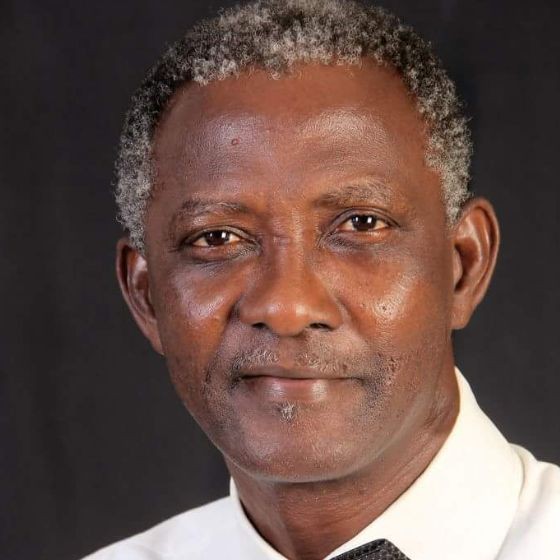
By Ikechukwu Amaechi

It took less than 60 days for the fabled political wizardry and leadership ingenuity of President Bola Tinubu, the Jagaban Borgu, to unravel. In fact, the jury is still out as to who, between him and his predecessor, former President Muhammadu Buhari, unravelled faster. Some say Tinubu did. At this stage in Buhari’s presidency, his so-called ‘body language’ still enthralled many. Not so for Tinubu – there is no body, not to talk of language.

At the end of the day, the biggest tragedy of the unfolding saga is the likelihood of comparing Tinubu to Buhari and the former president, warts and all, besting him. That will be the day! So far, there is practically nothing Tinubu has done better than Buhari in Aso Rock, yet, we were told he would hit the ground running.

He hit the ground and fell flat on his face and those who were busy insulting anyone who dared to ask candidate Tinubu questions before the election are today pleading for understanding and time. But time is a luxury that we can ill-afford in the prevailing circumstance.

Before his inauguration on May 29, Tinubu’s spin doctors promoted him as the best thing that happened to Nigeria’s democracy. He is a quintessential democrat, an astute politician, they ululated; a technocrat par excellence with the axiomatic Midas touch in public office. He is the father of Modern Lagos, they crowed, and a rule of law aficionado. Nigeria is lucky to have Tinubu as president, they chorused. All he has to do in Abuja to pull the country back from the precipice is to recreate the ‘Lagos magic.’

Tinubu amplified that chorus line in his inaugural speech: “Our administration shall govern on your behalf but never rule over you. We shall consult and dialogue but never dictate. We shall reach out to all but never put down a single person for holding views contrary to our own. We are here to further mend and heal this nation, not tear and injure it.”

He further listed five principles, which he said will guide his administration. And first is a solemn vow: “Nigeria will be impartially governed according to the constitution and the rule of law.”

But it is no surprise that the Tinubu administration failed in the very first rule of law test – the Godwin Emefiele travails in the hands of the presidency-supervised Department of State Services (DSS) – because, to borrow a local parlance, all the hype is nothing other than ‘packaging.’ Tinubu is the exact opposite of the picture painted of him by his minions.

The president is not a democrat and has no respect for the rule of law. He has the reflexes of a dictator – a maximum ruler who brooks no contrary views. For him, politics is a zero-sum game where the winner takes all. Many Nigerians seem to have forgotten that Tinubu holds the dubious record of being the only governor in this Fourth Republic that had three deputies.

READ ALSO: ‘Tinubu tax’ and perverse subsidy gambit

He took oath of office on May 29, 1999 as Governor of Lagos with Senator Kofoworola Akerele-Bucknor as deputy. But by 2002, the Afenifere chieftain had fallen out of favour and was humiliated out of office. Even Femi Pedro, the investment banker with whom Tinubu started his second term in 2003 as deputy governor, equally fell out of favour, was demeaned and forced to resign. He completed his second term with Prince Abiodun Ogunleye, a chartered accountant, who today has the unflattering record of Nigeria’s shortest serving deputy governor – 13 days only.

Elections are the hallmark of democracy and for elections to express the will of the electorate, they must be free and fair. Tinubu does not believe in the tenets of free and fair polls. He is a disciple of the Machiavellian school of thought that believes in the end justifying the means, a philosophy he expounded so eloquently in London in December 2022.

In a video that went viral shortly after his Chatham House outing late last year, Tinubu was seen admonishing top APC operatives in London to grab power by all means – fair and foul – in the 2023 elections.   

“Political power is not going to be served in a restaurant. They don’t serve it a la carte. At all cost, fight for it, grab it and run with it,” he told them. And that was exactly what he did on February 25 that has thrown the country into a paroxysm.

He has lived by that philosophy all his political life, deploying ruthless methods, including using maximum violence to scuttle voting in opposition strongholds, particularly in Lagos. As president, he has no qualms replicating the same formula nationwide going forward. In Lagos, Musiliu Akinsanya, alias MC Oluomo, is the enforcer. Could that be the role Asari Dokubo is being primed to play at the national level? Time will tell.

Is Tinubu the architect of modern Lagos? I doubt if anyone will, in good conscience, answer in the affirmative. That honour, many believe, should be bestowed on Alhaji Lateef Jakande, who was governor in the Second Republic.

In the 50 months that Jakande governed Lagos, the poor breathed. His administration introduced housing and educational programmes that targeted the poor, built new neighbourhood primary and secondary schools and provided free primary and secondary education. He established the Lagos State University and the Nigerian Institute of Journalism, constructed over 30,000 housing units, including low cost estates; completed the General Hospital in Gbagada and Ikorodu and built over 20 health centres. The metroline project he started to facilitate mass transit was stymied by the Buhari junta that sacked the Second Republic.

So, what exactly did Tinubu achieve in Lagos State that advertised him for the job of being President of Nigeria? Okay! He was an efficient tax collector who increased the internally generated revenue (IGR) of Lagos from about N600 million monthly in 1999 to about N6 billion monthly by the end of his tenure in 2007.

But good governance is not all about taxing the people, exactly what he has found out with the splurge of taxes, which is what the sudden removal of fuel subsidy, proposed increase in electricity tariff, hike in school fees, import duties, etc., is all about. Governance must have a human face and a leader must have the milk of human kindness and empathy.

In just two months, President Tinubu now has the dubious record of throwing more Nigerians into the poverty loop than any other administration – military or civilian – in Nigeria’s chequered 63-year history.

What is even more galling is his unpreparedness. To imagine that two months after Tinubu thundered at his inauguration that “subsidy is gone,” the president has no clue whatsoever what to do to reduce the suffering of Nigerians because there is no actionable plan, hence the resort to Buharinomics. Borrowing the Buhari template of cash transfer to ghosts, literally, is the greatest disembowelling of the so-called genius.

To imagine that it has taken a man who said Nigeria’s presidency was his life-long ambition, a man who knew from the time he picked the presidential ticket of the All Progressives Congress (APC) that he would be declared winner of the February 25 poll willy-nilly and five months after he was declared winner, regardless, to accomplish the simple task of compiling his ministerial list.

Perhaps as you are reading this, the Senate President, Godswill Akpabio, will finally be reading out the names of the would-be ministers. But that will only be because the law now says the president must present a ministerial list to the National Assembly not later than 60 days after inauguration. If not, we may well have faced the embarrassing situation, once again, where it took the president six months to draw up a list of cabinet members.

It is a double whammy for a president who professes rule of law to sit down in his office and watch the DSS, an agency of state directly under his purview, flagrantly disobey court order as it did on Tuesday at the Federal High Court in Lagos where the suspended Central Bank Governor, Godwin Emefiele, was arraigned without a whimper. The only reason why the DSS would act so recklessly was because their action had presidential imprimatur.

Welcome to the Jagaban country – a country where thousands of citizens are thrown into abject poverty everyday; where poor implementation of policies has worsened an already precarious situation; a country where gangsters and thugs are treated like royalty even as they flaunt their private army and brandish sophisticated weapons.

Could all these be what it means to be an astute politician? Maybe! But this astuteness pushes Nigeria dangerously to the edge.

As Tinubu wilfully abdicates presidential responsibilities, handing same to unelected aides, some of them boasting that they have become Nigeria’s de facto Prime Minister, the only reason why Nigeria has not erupted in mass protests is because the propagandists are in Aso Rock. The vuvuzelas who know how to psyche up the people and wheedle the unwary with lies and whoopla are in power.

But one thing is clear. Events in the last two months have proved that the fabled Tinubu phenomenon is nothing but a farce and this ride which Nigerians have been forced to hitch with the rickety emi lo kan wagon will be bumpy. One hopes he does not crash Nigeria.

Between Tinubu and Asari Dokubo: Is the tail wagging the dog?

By Ayo Lijadu

When a dog wags its tail, it is no news, but if ever a tail is seen wagging the dog, then that becomes the greatest news item the world over.

The reason is simple, the dog, (with its body mass constituting more than 99.9% of itself, less the insignificant percentage left to its tail), obviously has everything to its advantage, (brain power and physical power), to control and wag its tail at its pleasure.

The point being made with the illustration of the dog and its tail is that, as far as the power equation is concerned, as it is in the animal kingdom, so it is in the human kingdom. The Lion is the King of the Jungle. The bush rat cannot dare to move within miles of where it knows its king resides, talk less of flexing muscles and boasting that it can do and undo in the kingdom where the Lion King resides. For with the swipe of the Lion’s paw the bush rat will become dead meat.

Since the advent of President Bola Ahmed Tinubu’s ascendancy to power barely two months ago, we have seen the bizarre happen, (as far as the power equation is concerned), between citizen Asari Dokubo and President Bola Ahmed Tinubu, in this Federal Republic of Nigeria, where the incumbent President is assumed to be both the de jure as well as the de facto Chief Executive and Commander-in-Chief of the armed forces, having sworn on oath to uphold the rule of law and order all over the Republic.

On at least three different occasions, Mr. Asari Dokubo has publicly threatened the lives of individuals and ethnic nationalities, doing so both from within the nation’s seat of power, (with the seal of the Nigerian Presidency as his backdrop), and from without, while openly brandishing an assault weapon(AK-47) on one occasion, to drive home the seriousness of his threat. All of these bizarre unlawful and felonious offences were captured on video, went viral on social media as well as the national news media channels, but not once has this one individual been investigated, arrested, and charged by any arm of the security agencies for the crime of threat to lives and breach of the public peace and order.

In all of the above mentioned bizarre actions of Mr. Asari Dokubo, President Bola Ahmed Tinubu has kept mum. Even the video that surfaced revealing that this individual maintains a private army whom he is seen and heard asking to prepare to unleash mayhem on his and Tinubu’s imagined adversaries who behave “anyhow” has not elicited even the least “slap on the wrist” kind of reprimand from the President.

Silence, it is said, means consent. By President Tinubu’s very loud and deafening silence on this Asari Dokubo’s rascality and impunity, would one be wrong then to come to the conclusion that this rascal of a man has the tacit approval of Mr. President? If Tinubu’s government, on barely getting into the seat of power, can go after the former Central Bank Governor, Mr. Godwin Emefiele, with all the ferocity of state power at its disposal, with only a civil offence of possession of firearm as the only charge brought against the ex-CBN Governor, that has necessitated his being incarcerated for over one month now, is his offence greater than that of Asari Dokubo who came brandishing AK-47 in public and threatening the lives of an entire ethnic group in a viral video? Does Asari Dokubo have an official licence to possess and carry about an assault firearm of the calibre of an AK-47? Exactly what pact does President Bola Ahmed Tinubu have with this distasteful and nauseating individual that he has allowed him to continue to disturb the peace of this country unhindered? The President should let us know.

In both the animal and human kingdoms, what we know as natural is that it is the one that has absolute power at his disposal that determines who flexes muscles in his vicinity. The Lion cannot be present in his territory and the bush rat will be boasting, huffing and puffing, and threatening the subjects of the king of the jungle. Likewise the dog cannot decide to rest its tail in his moments of quietness, and the tail decides it wants to disturb the peace of its owner and then begins to wag the dog. In the power equation, whether by physical strength, body mass, or by brain power, the dog’s tail does not have the capacity or the ability to wag its owner.

However, in President Tinubu’s Nigeria, we see a nonentity and non state actor, (with no recognisable, approved, neither officially assigned security portfolio), gallivanting contemptuously and audaciously, threatening fire and brimstone, in the face of a sitting President who, with all his paraphernalia of state and executive powers, appears to have been struck deaf, and dumb, and paralyzed with fear from taking expected and appropriate actions to curb this felon.

So in the face of this obvious incongruity, it is pertinent to ask these questions: Between President Bola Ahmed Tinubu and Mujahedeen Asari Dokubo, who is the Lion, and who is the Bush Rat? Who is the Dog and who is the Tail? Is the lion surrendering it’s power and authority to the bush rat? Or the dog allowing its tail to wag it?

Nigerians need to know so we can be sure to know who, between the two is the defacto and the dejure President of the Federal Republic.

  • Ayo Lijadu is a veteran actor, former Presidential aspirant, and later Senatorial candidate of Kowa Party for Lagos East senatorial district in the 2019 General Elections. He features regularly in the daily TV soap, Tinsel, and writes from Lagos.

Premiere Academy tells Court of Appeal to stop inquiry into Karen’s rape

Determined to stop the Federal Competition and Consumer Protection Commission (FCCPC) from investigating it for service failure, which allegedly led to the rape and death of its 14-year-old boarding students, Miss Karen Aondodoo Akpagher, Premiere Academy, Lugbe, Abuja has urged the Court of Appeal, Abuja Division to stop the probe until its appeal is determined.

Premiere Academy, Lugbe, Abuja had made an earlier attempt to stop FCCPC from investigating it for failure of service to Karen, which allegedly led to her rape and eventual death by filing a suit before the Federal High Court, Abuja Division, praying it to restrain the consumer protection agency on the claim that it wanted to usurp the investigative powers of the police.

But, in her judgement, Justice Evelyn Maha dismissed Premiere Academy’s suit “for being frivolous and lacking in merit” because according to her, it is within the powers of FCCPC to investigate disputes arising from alleged service failure as provided by the commission’s enabling act.

Dissatisfied with the judgment, Premiere Academy has approached the Court of Appeal, Abuja Division, seeking to upturn the decision of the lower court, which paved the way for FCCPC to investigate the school for service failure, that allegedly led to the rape and death of Karen.

Premiere Academy in its notice of appeal is asking the Court of Appeal for an order to restrain FCCPC from commencing its investigation until the outcome of its appeal.

In one of its nine grounds of appeal, Premiere Academy argued that “in the event that this appeal succeeds after the execution of the said judgment (of the Federal High Court) by the respondent (FCCPC), the appellant/ applicant (Premiere Academy) will be in a precarious and unfavourable situation.”

Although FCCPC (1st respondent) and the 3rd Respondent (mother of the late 14-year-old, Mrs. Vivien Akpagher) are yet to file their counter application, the latter told reporters all she wants is for the truth to be unraveled concerning the rape and death of her daughter.

“How would investigating and finding out what happened to my daughter injure Premiere Academy? Except they have something to hide, I would expect that the reasonable thing to do is for everyone to cooperate with FCCPC to uncover the truth. All I seek is closure and healing and except the truth is uncovered that cannot happen”, Mrs. Akpagher stated.

No date has been fixed for hearing of the appeal.

Credits: The Conclave

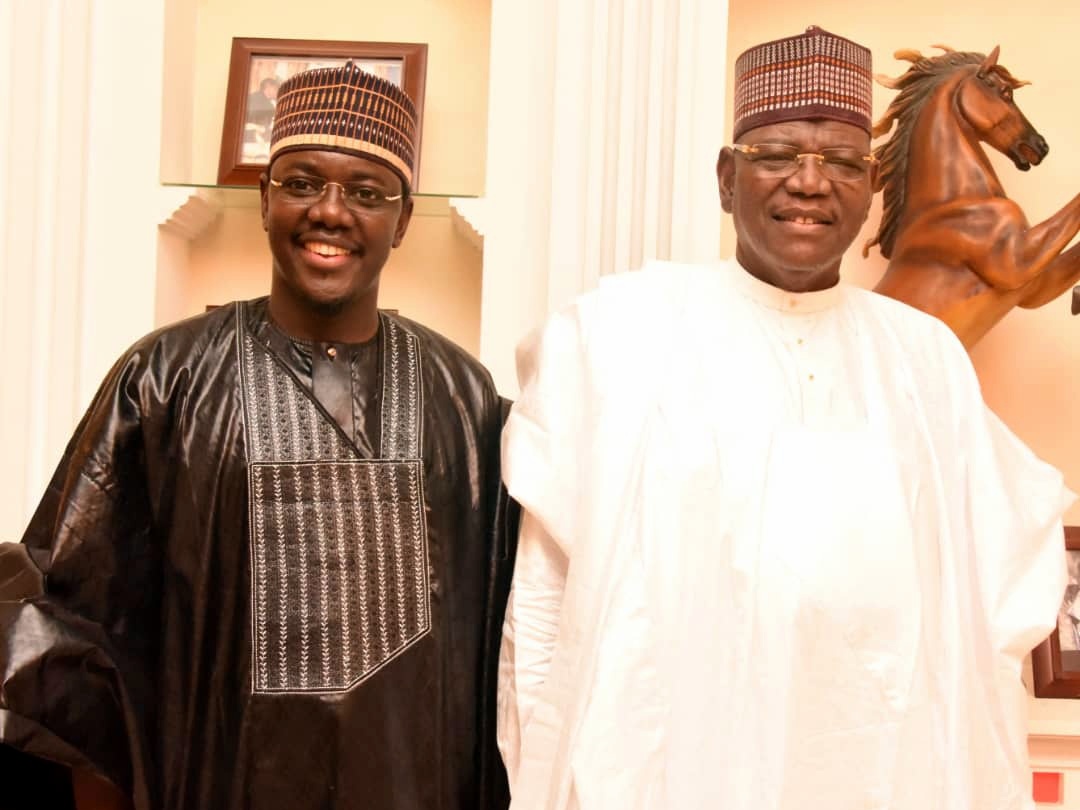
Money Laundering: You are discharged! Appeal Court tells Sule Lamido and son

After nearly nine years of long-drawn litigation, the Court of Appeal in Abuja on Tuesday discharged Sule Lamido, a former governor of Jigawa state, and his two sons, of the N712 million money laundering allegation brought against them by the Economic and Financial Crimes Commission (EFCC).

In 2015 the EFCC slammed 37 amended charges bordering on money laundering against Lamido and two of his sons – Aminu and Mustapha

Other defendants in the case are Aminu Abubakar, business associate to the former governor, and four companies – Bamaina Company Nigeria Limited, Bamaina Aluminium Limited, Speeds International Limited and Batholomew Darlington Agoha.

EFCC called 16 witnesses before closing its case in 2022 and instead of opening their defence, the defendants filed a no-case submission, arguing that the prosecution had not placed sufficient materials before the court to warrant such.

The Court of Appeal in the lead judgment delivered by Justice Adamu Waziri resolved the issues on appeal against the respondent and in favour of the appellant.

Justice Waziri held that the trial court ought not to have heard the suit since the offence committed was not within its territorial jurisdiction.

The Court added that the case should have been filed in Jigawa state where the offences were allegedly committed.

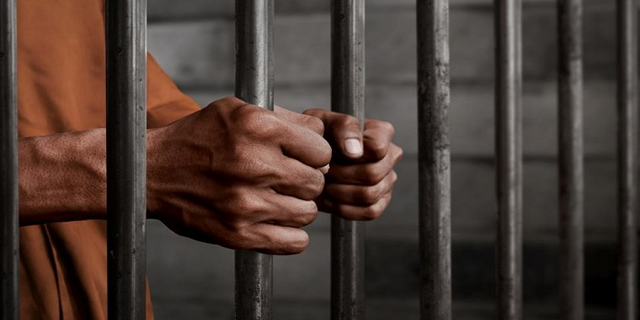
Cleric bags seven years with hard labour for defiling and impregnating member’s teenage daughter

  • 41-year-old docked for defiling lover’s 12-year-old daughter

A 55-year-old cleric, Piler Erekwa has been sentenced to seven years imprisonment with hard labour by the Rivers State Family Court.

Piler Erekwa earned his conviction for defiling and impregnating the 15-year-old daughter of his church member in the Ndele community, Emuoha Local Government Area of the state.

Erekwa, who is the presiding pastor of the Glorious Covenant Church was arrested in late June 2023 by men of the Rumuji Police Division.

In his judgment on Wednesday, July 19, 2023, the presiding Chief Magistrate, Ogeh Elkanah, ruled that Pastor Erekwa would pay the sum of N500,000 to the family of the abused teenage girl for the medical bills accrued during pregnancy. 

Chief Magistrate Elkanah said the cleric will pay the bills upon completion of his jail term. Erekwa had pleaded guilty to one count charge of sexual abuse when the charge was read. 

The charge was preferred against him by the State Criminal Investigation and Intelligence Department of the Police Command.

The cleric had also allegedly proposed termination of the pregnancy, but the girl’s family who had confronted him with the issue objected to it.

Meanwhile, journalists were barred from covering the court proceedings, as the Chief Magistrate excused newsmen from the courtroom immediately after he called for the matter.

The Chief Magistrate explained that the Family Court was not like a regular court, hence journalists must seek leave of the court before reporting a matter from a family court. 

Likewise, Chief Magistrate Bola Osunsanmi of the Ikeja Chief Magistrates’ Court, sitting at Ogba, has ordered the remand of a 41-year-old man, Nnamdi Dike, for allegedly defiling his lover’s 12-year-old daughter.

Dike, a security guard, who is a resident at No. 27, Salami Street, Akute, in Ogun State, is facing a count charge of sexual assault preferred against him by the police.

The magistrate, who did not take the defendant’s plea, ordered that he should be remanded at the Kirikiri Custodial Centre pending legal advice from the Director of Public Prosecution.

The prosecutor, Raji Akeem, an Assistant Superintendent of Police, had earlier told the court that the defendant committed the offence in November 2022 at No. 37, Shogbade Street, Powerline area, Ifako Ijaiye, Lagos.

He said the 12- year-old girl had confided in her teacher how the defendant, being her mother’s lover, allegedly sexually molested her.

Akeem stated that the defendant usually molested the victim whenever her mother was not at home and would threaten to kill her if she told anyone.

The prosecutor added that the teacher, however, informed the victim’s mother, who reported the case at the police station.

According to him, the offence contravened Section 137 of the Criminal Law of Lagos State, 2015.

Consequently, Magistrate Osunsanmi remanded the defendant in the custodial centre and adjourned the case for the DPP’s advice.

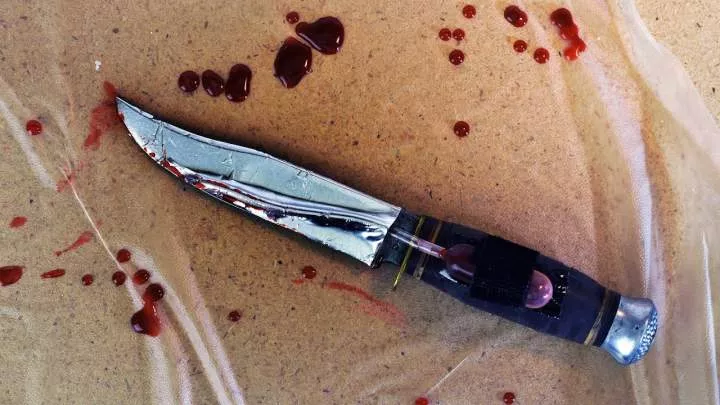
15-year-old stabs classmate to death over a girl

A 15-year-old boy has reportedly stabbed his classmate to death with a kitchen knife following a dispute about a girl in Mwenezi, Zimbabwe. 

The incident happened near Masongwe Secondary School around 3 pm on 18 June 2023, and it was gathered that the victim, whose name was not released, was gored on the shoulder and head and died instantly.

The Zimbabwean Republic Police said in a statement; 

“Police in Mwenezi are investigating a case of murder in which a male juvenile (15) stabbed another juvenile (15) with a kitchen knife on the shoulder and head after an argument over the suspect’s girlfriend on 18/07/23 near Masongwe Secondary School. The victim died on the spot.”

Not long ago a teenager, Miss Idowu Abosede, was arrested by the Police in Ogun State for stabbing her boyfriend, Aliyu Ibrahim, to death with a kitchen knife.

It was learnt that following an argument between the two over N3000 Abosede took from where her boyfriend kept it, Aliyu pulled a knife to compel her to return it but she was unyielding and as they struggled over the control of the knife, the girl wrested it from Aliyu and stabbed him on the chest.

He was said to have dropped to the ground and died afterward.

The Police Public Relations Officer in the State, in a release stated that one Seriki Hausa in Sagamu alerted the Police that the suspect and her deceased boyfriend were arguing over N3,000 which resulted in a fight that ended the life of the deceased.

“The suspect claimed that she came to pass the night with the deceased and when she was about going in the morning, she took the sum of N3,000 from the deceased but he was not ready to give her the whole N3,000 and that was what led to an argument between them.

“She stated that it was the deceased who brought out the knife and while dragging it with him, the knife stabbed him on his chest.”

How Samson the drug addict strangled his mother

  • Experts warn about growing appetite for drugs among Nigerian youths

Unlike the biblical Samson whose immense physical strength reportedly enabled him to kill a lion with his bare hands, this Samson allegedly strangled his biological mother.

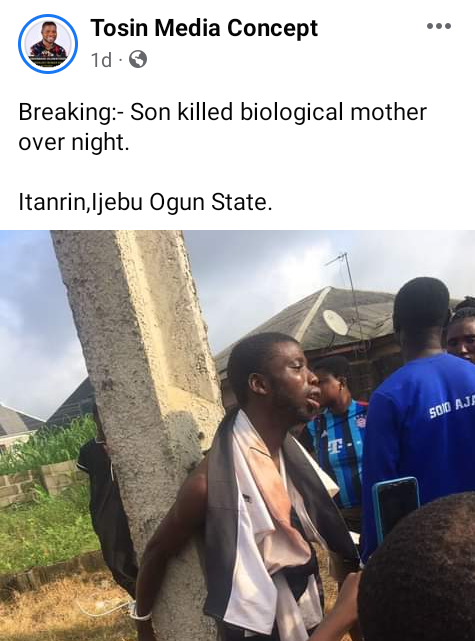
Samson Sikiru, suspected to be a drug addict has been arrested for purportedly killing his mother, a prophetess, in Itanrin Axis of Ijebu Ode in Ogun State.  

According to Ogun journalist, Tosin, the 32-year-old suspect strangled his mother to death in the early hours of Sunday, 16th July, 2023.  

A distress call was made to Ijebu Rewa Organisation about the sad incident that happened overnight after Samson’s younger brother who was on night shift, had gone to work.  

According to neighbours, Samson left home for over five years, only for him to return home a month ago. 

His mother was said to have made several complaints to neighbours and security operatives about the suspect using hard drugs.  

“A neighbour who wants to be anonymous told Ijebu Rewa that Samson rushed to him in the early hours of today (Sunday) saying that the Prophetess (Samson’s Mother) had slumped and died.

“After the neighbours rushed inside and only for them to realize the mother was strangled to death as evidence of marks were all over her neck and leg, the left hand had broken, there was blood stain mark on Samson’s fingernails.

“The neighbors held onto him and he started saying he does not know anything and how it happened. It dawns on them that Samson was under the influence of hard drugs to have strangled his own mother to death,” the report says. 

 “It is indeed a sad day for the people in Itanrin axis of Ijebu-Ode. Samson has been handed over to the Nigeria Police Force and the mother’s corpse has been deposited at the Morgue for further investigation.”

Expressing grave concern over the growing appetite for drug abuse among Nigerian young population, Dr. Oche Joseph Otorkpa, a Public Health specialist and Fellow of the Royal Society for Public Health United Kingdom, said it is an epidemic that must be contained before it gets out of hand.

Part of his statement reads:

“According to the United Nations Population Fund, Nigeria has a youthful population, with approximately 60% of its population below the age of 30. This demographic group represents a significant portion of the country’s workforce and has the potential to drive economic growth and development. However, a growing portion of that population is falling prey to the snares of drug traffickers.

“Drug trafficking in Nigeria has a complex history that can be traced back several decades. The illicit drug trade in the country is fueled by a combination of factors, including Nigeria’s geographic location, economic disparities, political instability, and global demand for drugs.

“In recent years, Nigeria has witnessed an increase in the production of methamphetamine within its borders. Nigerian criminal networks have been involved in the clandestine manufacture of methamphetamine, often utilizing makeshift laboratories and precursor chemicals imported from countries like China.

“Nigerian drug traffickers have also established connections and collaborations with transnational criminal organizations, such as Latin American drug cartels and West African criminal networks. This enables them to access a global market and sophisticated smuggling techniques.

“The significant amount of drugs confiscated by the revitalized National Drug Law Enforcement Agency (NDLEA) from drug traffickers at Nigerian airports over the past two years provides a vivid insight into the unfortunate predicament faced by young people in Nigeria.

“These seizures, occurring within a relatively short period, paint a troubling picture of the pervasive drug trade that poses a grave threat to the younger generation. The repercussions of this dire situation are evident in the rising number of young individuals who find themselves entangled in addiction and dependency issues. Rather than pursuing their educational aspirations and the opportunities provided by academic institutions, these vulnerable individuals are now compelled to seek solace and rehabilitation in dedicated facilities.

“The situation is so bad that teachers have become customers to young drug peddlers within their schools while drug cartels have taken over nightclubs and the entertainment industry training our young people on how best to self-destruct while they smile to the banks with illicit wealth extracted from helpless addicts.

“This must not be allowed to continue, Nigeria like many other countries, must as a matter of urgency address the growing drug appetite among its young population if not the country will have no future.”

But Professor Alphonsus Okoh  Alubo SAN’s thoughts on this matter is one that begs for answers. “With the gumbo of security agencies: Customs, NDLEA, Immigration, NSCDC, etc., it is mind-boggling that these drugs are brought in and in some cases, taken out with ease.”  

A slow journey to Venezuela

Venezuela is suffering an unprecedented man-made humanitarian disaster. It resembles a country at war and some of their major problems include extreme food and medicine shortage, rampant crime, and constant electricity blackouts.

Some of these problems resemble another country I know.

Venezuela is experiencing what Economists describe as an extreme case of hyperinflation. In this case, the prices of goods double every 26 days. One source reported that a cup of coffee cost 450 Bolivares in 2016. By 2019, the same cup of coffee was a shocking 2.5 million Bolivares.

90% of Venezuelans live in poverty and their currency is practically worthless. The poor citizens have to rely on the barter system to get what they want while the rich ones use the US dollar.

But it was not always so…

In the 1960s and 1970s, Venezuela was the richest country in Latin America. You might call her the giant of Latin America.

This resembles another Giant of a continent I know.

If you told South Americans 50 years ago that in the early 21st century, Venezuela would be among the poorest countries in the world, they would have laughed. At that time, Venezuela was one of the wealthiest countries in Latin America.

Forget Russia and Saudi Arabia. Venezuela has the largest oil reserves on earth. Over 18% of the world’s reserves are in Venezuela. Leaning on it’s oil industry and exports, she became richer and richer in the 1960s.

In the 1970s, oil prices quadrupled almost over night. Venezuela became insanely wealthy.

This resembles the phenomenon described as the oil boom of the 1970s in another country I know.

Because of this exteme wealth, Venezuela fell into what is described as a RESOURCE CURSE. This happens when a country fails to diversify it’s economy, relying heavily on one resource. Instead of using the oil money to develop it’s agriculture or manufacturing processes, the country imported most of what it needs and pays for it with the oil money.

This resembles another country I know.

Unfortunately when a country depends solely on one resource, that nation’s future is dictated by the price and demand of that resource. This became a problem for Venezuela as in the late 1970s, the demand for oil dropped.

In 1980, oil price was 34 dollars per barrel and in 1986, it had dropped to 10 dollars per barrel. This was the beginning of trouble for Venezuela. The government was in debt. It had debts of over 33 billion dollars.

What did it do, well it turned to the IMF for loans. It started borrowing more and more money just to keep the country moving.

This resembles another country I know. Maybe it is on a journey to Venezuela.

Some of the conditions for these loans were austerity measures on the citizens. Subsidies were removed on many goods, prices went up and life became very hard for the citizens. A riot broke out in 1989 and the military intervened by shooting and killing protesters.

Sounds familiar? It resembles another country you might have heard of. Is it on a journey to Venezuela?

The situation became worse when the rich transferred their money abroad. There was a capital flight. The rich bought up US dollars and set up foreign bank accounts. It means that the wealth was no longer in Venezuela or serving it in any way.

And then Hugo Chavez happened!

He contested the presidential elections promising the citizens CHANGE!
In 1998 he was surprisingly voted into power.

Sounds familiar?

When he took power, he went on a spending spree on social programs. To do this, he had to use the country’s oil profits thereby creating an even bigger dependence on oil. The social programs put some money in people’s pockets but it was a temporary fix.

Unfortunately Chavez didn’t spend any money maintaining oil facilities. This led to a slow down of production.

Chavez also failed to diversify the economy. He was a popular and charismatic leader who had promised CHANGE! So he was quite popular. He started having autocratic tendencies and thought he could do whatever he wanted. He put his friends and supporters in positions of power regardless of their expertise and expanded the military’s power and control.

Doesn’t this resemble another country that you know? A country that’s slowly moving towards Venezuela?

The final straw happened in 2010 when Chavez declared an economic war. He devalued the currency to make up for budget deficit. also, he made it difficult for the citizens to get Forex for their imports.

What resulted was the massive hyperinflation that persists today.

Chavez died in 2013 of cancer. His successor, made things worse for the economy. He ruled nu decree, he arrested opposition leaders and shut down websites critical of him.

Venezuela has the world’s largest oil reserves but citizens queue for days to get petrol in their cars. Why? There are no working refinaries. All the refined oil is imported. So people are getting rich on oil importation while the rest of the country dies of poverty.

Am I still talking about Venezuela or another country I know? It’s hard to tell the difference at this point.

By 2016, inflation in Venezuela was 800%. Today, it is around 9000%

In summary, Venezuela’s problems were caused by the following factors.

  1. Extreme dependence on oil (the resource curse).
  2. Failure to diversify the economy.
  3. Political and economic mismanagement.
  4. Corruption.
  5. Plummeting oil prices.

Hmmmm.

This formula will always produce the same result whether in Latin America or West Africa!

Any country that goes down this road is unfortunate.

IT IS ON A SLOW JOURNEY TO VENEZUELA!!!

Author unknown

CBN raises interest rate to 18.75%

The Central Bank of Nigeria (CBN) has raised the Monetary Policy Rate (MPR), which measures interest rate, from 18.5 percent to 18.75%.

Acting CBN Governor, Folashodun Shonubi, announced this on Tuesday after the bank’s Monetary Policy Committee (MPC) meeting in Abuja.

But, Senior Advocate of Nigeria, Ikeazor Akaraiwe posits that “utilizing pure monetary and fiscal economic instruments without balancing this with the understanding of economic history is the core reason WHY African economies stretching from Senegal, Ghana in the West to Kenya in the East and Egypt in North double down on same policies of ‘fighting inflation’, ‘cutting/removal of subsidies’ that actually pauperize themselves even further.”

This is the first decision of the monetary committee since President Bola Tinubu’s assumption of office on May 29, 2023.

It is also the first decision of the committee in about a decade without embattled Godwin Emefiele who was suspended as the governor of the apex bank on June 9, 2023.

Last week, Nigeria’s headline inflation rose to 22.79% in June from the 22.41% recorded in May 2023 amid soaring food prices and rising cost of transportation occasioned by the removal of subsidy on Premium Motor Spirit known as petrol.

This was according to the latest Consumer Price Index (CPI) report released by the National Bureau of Statistics (NBS). The CPI measures the rate of change in prices of goods and services.

Shonubi, who addressed pressmen at the CBN headquarters in Abuja on Tuesday, said “Hiking the interest rate has made a lot of difference in moderating the rate of inflation”.

The CBN MPC voted to hike MPR by 25 basis points to 18.75% from 18.5%. The committee narrowed the asymmetric corridor to +100/-300 from +100/-700 and retained the Cash Reserve Ratio (CRR) at 32.5%

He also said the volatility around foreign exchange rates would soon normalise.

Credits: Channels TV, additional reports by Law & Society Magazine

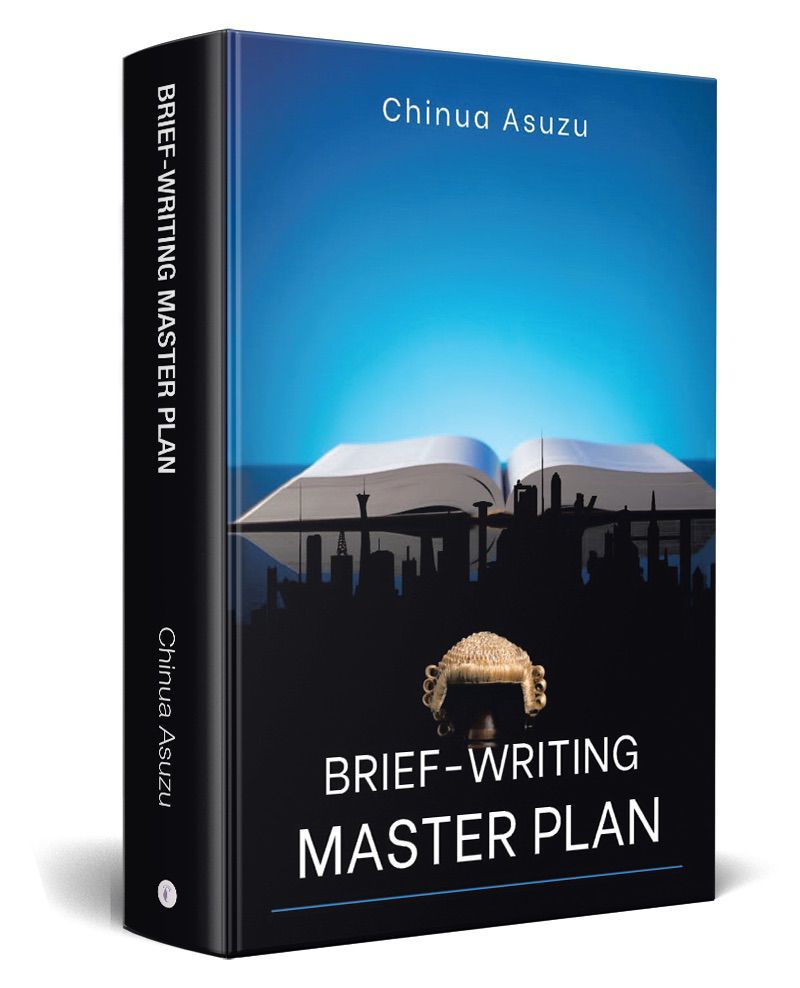
Why should you buy Brief-Writing Master Plan?

Brief-Writing Master Plan offers an unparalleled and unprecedented curriculum of written advocacy.

It’s a sparkling, alchemical blend of doctrine, ethics, and skills.

It recruits linguistics, logic, psychology, rhetoric, and semantics into the arsenal of learned advocacy.

It contains the rhetorical wisdom of ages, pages, and sages.

An advocate files a brief to persuade the judge to decide the lawsuit in favor of the advocate’s client. The keyword is persuade. Too often, advocates forget this and write to please themselves. They address themselves instead of the court. They write in chest-thumping prose and style.

Advocates will do well to keep in mind that in advocacy, all that counts is persuading the judiciary. Hence, Brief-Writing Master Plan responds to the judicial wish list for advocates’ writing style and substance.

This book is a transformative resource with the potential to accelerate court proceedings by easing judicial burdens and caseloads.

A sober reflection on the advocate’s duty to the court, Brief-Writing Master Plan encourages professional candor, decency, and honesty.

Writing as taught in this book will surely propel you to the top 1% of the global legal profession and secure your legacy.

To get a copy of the newly published 728-page Brief-Writing Master Plan, please pay 65k for the hardcover or 55k for the softcover to Chinua Asuzu, 0002655807, GTBank. Then share your delivery address within Nigeria. The prices include delivery anywhere in Nigeria.

To contact the author, email [email protected] or call +234 (0)803 341 2508.

TIPS