When this article under the heading Saving the Supreme Court from Crises was published by The Cable on 12 November 2022, it addressed the multiple dimensions of the crises of attrition, retention, and replacement in Nigeria’s Supreme Court as well as the pathologies that make these resilient… Three issues were immediately in focus.
One is occupational health and well-being for Supreme Court Justices. The tendency to reduce the triple crises of attrition, retention, and replacement in Nigeria’s Supreme Court to an issue of appointment of brilliant academics or supposedly proven practitioners avoids the real problem. Indeed, the records suggest that premature mortality on the court has been most unkind to its brightest and best.
For instance, Chukwunweike Idigbe was reputed to be arguably the sharpest and most rigorous mind on the court at his death in 1983. Augustine Nnamani was only the fourth holder of a doctorate degree in law to be appointed to the court, after Taslim Elias, George Baptist Ayodola Coker, and Egbert Udo Udoma; and Okay Achike was only the second law professor and the third legal academic to sit on the Supreme Court after Taslim Elias. Adolphus Godwin Karibi-Whyte, another academic who preceded him to the Supreme Court and who, like Achike, retired in 2002, was an Associate Professor at the University of Lagos before the onset of his judicial career. Niki Tobi, former Dean of Law at the University of Maiduguri, followed later.
The Supreme Court does not appear to have been the kindest of working environments its most brilliant minds and there is nothing to say that it will be kinder to any bright minds who agree to go there now. If anything, the court has been somewhat of a cemetery in a quite literal manner to the brightest legal minds…
“Wise persons think of others, helping them as much as they can, and the result is happiness”, the Dalai Lama once said.
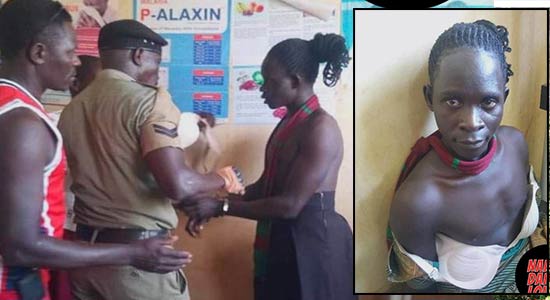
But an attempt by a newly appointed magistrate Musa Semwogerere to assist his girlfriend by writing her law exams has gone awry.
While disguised as a woman, Musa Semwogerere who was promoted to grade one Magistrate by the Judicial service Commission barely weeks ago, sought to write the exam at the Uganda Legal Development Center (LDC) Lira.
Magistrate affectionately referred to as Mukisa Anthony, was caught on Friday, July 28, 2023 while writing the exam for his girlfriend, Irene Mutonyi.
The officer of law who recently started sitting in judgment against persons accused of crime but now in court as an accused person has been charged with two counts of forgery.
He will remain in jail until August. A picture of him dressed as a woman with pigtails has gone viral on social media.
In a statement LDC director, Frank Nigel Othembi said Semwogerere’s offence was contrary to Section 351 of the Penal Code Act and an Impersonation contrary to Section 381 of the Penal Code Act.
Othembi said: “We reported the matter to the Police and he has been charged with two counts of uttering a false document contrary to Section 351 of the Penal Code Act and Impersonation contrary to Section 381 of the Penal Code Act and remanded to prison till August, 3, 2023. We will ensure that this case is prosecuted fully to its conclusion, including all other culpable persons.
“LDC is currently conducting final written examinations across all its three Campuses- Kampala, Lira and Mbarara. LDC does not condone any act of examination malpractice. We will continue with our zero tolerance policy towards any such conduct.”
In another statement, the Judiciary confirmed that the suspect was a grade one magistrate appointed recently by the Judicial Service Commission but revealed that he will be relieved of his appointment.
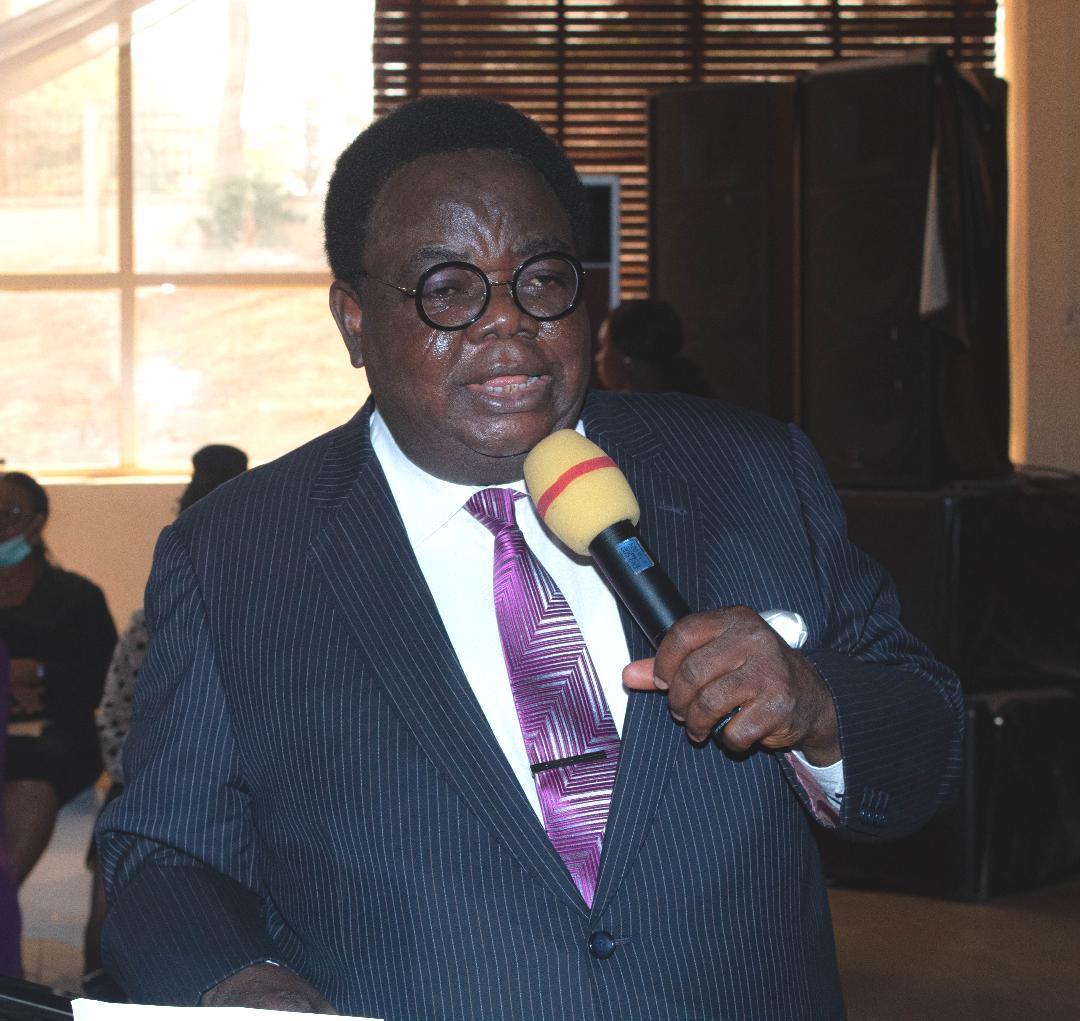
Nigeria’s legal community is reeling with shock over the news that the Supreme Court of Nigeria’s Hon. Justice Chima Centus Nweze has reportedly died.
No official announcement has emanated from his family or the Supreme Court but sources close to the family said he died on Sunday.
Justice Nweze, popularly known as C.C Nweze was said to have been very sick the most part of last year and even slipped into coma about four months ago but eventually came out of it.
Events leading to his death on Sunday are still sketchy but not unconnected to the health challenges he has been battling with over time.
Born on 25 September 1958, he would have been 65 years old on 25 September.
C.C Nweze graduated with an LLB (Hons) from the University of Nigeria, Nsukka in 1983, BL from the Nigerian Law School in 1984, LL.M 1995, and a Ph.D. in Law 2001 from the University of Nigeria, Nsukka.
Justice Nweze became very popular following his dissenting judgment in 2020 which declared Emeka Ihedioha of the People Democratic Party winner of the 2019 Governorship election in Imo State against the decision of the majority of the panel.
He was also among the panel of Justices who refused the Peoples Democratic Party, PDP, Atiku Abubakar’s request to inspect the Independent National Electoral Commission’s server while challenging President Muhammadu Buhari’s victory in 2019.
Also, in a split judgement of three against two, Nweze delivered the controversial judgement of the Supreme Court which declared the then Senate President, Ahmad Lawan as the authentic candidate of the All Progressives Congress, APC, for Yobe North Senatorial District for the 25 February general election.
Justice Nweze was a native of Obollo, Udenu Local Government Area of Enugu State.
He was elevated to the Supreme Court in 2014 by former President Goodluck Jonathan following the recommendation of the National Judicial Council.
Earlier this month, another ranking justice from Enugu state and the Presiding Justice of the Calabar Division of the Court of Appeal, Hon. Justice Raphael Chikwe Agbo died at age 69. He was billed to retire in October shortly after the resumption of the Courts from vacation at age 70.
Leader of the Indigenous People of Biafra (IPOB), Mazi Nnamdi Kanu has met with his personal physicians in an Abuja hospital outside the facility of the State Security Service (SSS).
According to The Nation, Kanu’s lead counsel, Sir Ifeanyi Ejiofor, disclosed this in a tweet on Sunday.
He said: “Sequel to our avowed assurance to always keep Ezigbo UmuChineke abreast of pertinent happenings especially with Onyendu’s health status, welfare and update on his legal matters, we are pleased to inform you that Onyendu Mazi Nnamdi Kanu met with his choice personal physician yesterday in a hospital in Abuja, outside the facility of the State Security Service (SSS).
“As was part of the protocol, I witnessed the consultation. The medical examination was seamless and productive, and he will be progressing to the next stage soon.
“As the entire world has always been informed, Onyendu Mazi Nnamdi Kanu has consistently made his position on the infamous sit-at-home known, and his directive is that this must be stopped.
“Onyendu’s legal team, under the able leadership of Prof. Mike Ozekhome, SAN, and the leadership of the Indigenous People of Biafra (IPOB), have been the lone voice conveying this important message on all media platforms available to us, as well as condemning in unequivocal terms, the heinous criminal activities of the serial fraudster in Finland.
“To this end, we urge all Ezigbo UmuChineke and indeed, the members of the public to respect and carry out the wishes of Onyendu and accordingly, desist from any further engagement with those whose primary intention is to ensure that Onyendu is kept in perpetual captivity, and consequently, destroy the entire Southeast through unauthorized sit-at-home and its enforcement.
“Interestingly, the bad news for these enemies of our people is that they have failed and failed woefully, and the long arm of the law will surely catch up with them.”
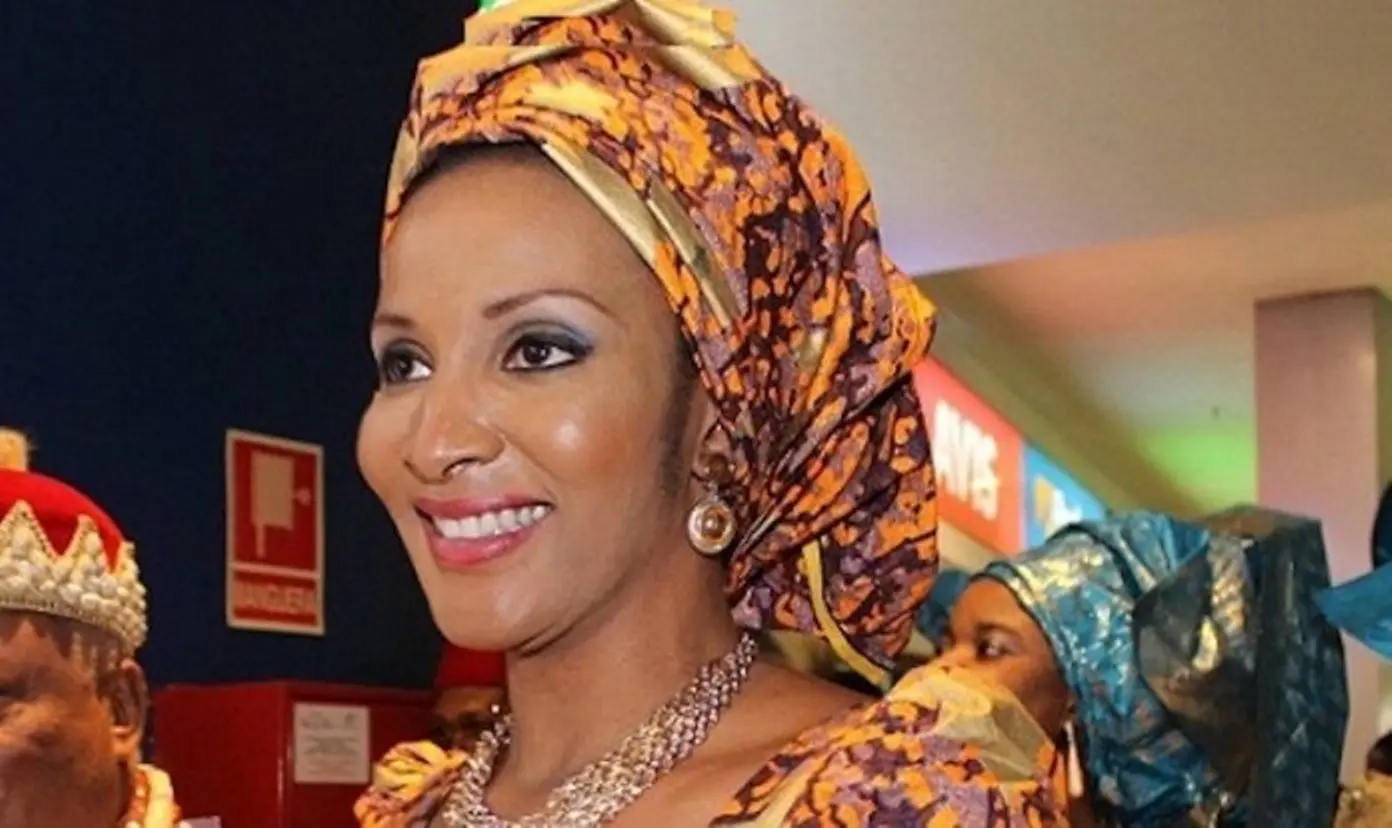
A Lagos High Court sitting in Ikeja, has delivered judgement in Favour of the widow of late Igbo leader and Ikemba Nnewi Dim Chukwuemeka Odumegwu Ojukwu and her Children in the case involving the management and control of some of the assets of Ojukwu Transport Ltd( OTL) the family company of which her husband was a Director prior to his death.
The suit filed by Bianca Ojukwu in 2012, on behalf of the claimants being her two sons, Afamefuna and Nwachukwu who were infants at the time, against Ojukwu Transport Limited (OTL) and seven others ( brothers of the late Dim Ojukwu, their sons and property agent) before the court, over their alleged move to take possession of their residence at No. 29 Oyinkan Abayomi Drive, Ikoyi, Lagos as well as some of the company’s property in Lagos which were under the management and control of their late father, Dim Ojukwu.
The Defendants in the suit filed in 2012 are: Ojukwu Transport Ltd, Prof Joseph Ojukwu, Engr. Emmanuel Ojukwu, Lotanna Putalora Ojukwu, Dr. Patrick Ike Ojukwu, Arch. Edward Ojukwu, Lota Akajiora Ojukwu, and Messrs. Massey Udegbe (doing business under Massey Udegbe & Company).
The claimants stated that at about August 4, 2011, while their father Dim Chukwuemeka Odumegwu Ojukwu was sick and hospitalized in London, the 4th-7th defendants attempted to forcibly take possession of their home at no 29 Oyinkan Abayomi Drive( formerly Oueens Drive), Ikoyi, Lagos, and that after the death of their father and soon after his burial, the 2nd-7th Defendants went on to appoint a property agent, the 8th defendant, to take over, not only their father’s residence at Oyinkan Abayomi Drive but also other properties under the possession, management, and control of their father, namely No. 13 Hawksworth Rd ( now known as 13 Ojora Rd) Ikoyi; No. 32A Commercial Ave, Yaba, Lagos, No. 30 Gerard Rd, Ikoyi, Lagos and No.4 Macpherson Avenue, Ikoyi, Lagos.
The Court, presided over by Justice A. M Lawal having regard to all the evidence adduced by the parties in the course of the proceedings spanning about 10 years was of the opinion in his ruling of 24th June, that the Claimants, being biological children of the late Dim Chukwuemeka Odumegwu Ojukwu and by virtue of which, therefore, they are entitled to the estate of their father as well as his entitlements as a deceased director and shareholder of the Ist defendant. The Hon. Justice further stated that Equity is fairness and fairness is equity and that as a court of equity, it would not allow the dispossession of claimants who are children of a foundation director of the company while other directors are in hold and control of other property of the Ist defendant and deriving benefits from the same.
Therefore, the claimants are entitled to possess and control what their late father possessed and controlled in the company (OTL)when he was alive. It was the Court’s observation that the fact that the 1st defendant allows the family of the company to live on, and derive income from the assets of the company all these years is a decision of the company by conduct.
Furthermore, the 2nd defendant who had refused to surrender the properties under his control for joint management cannot now lead the battle of having the deceased director’s children hounded out of possession of the properties that were managed by their late father. The learned judge pronounced that ‘this very act is enough to make the dead Chukwuemeka Ojukwu shiver in his grave’.
The counterclaim instituted by the defendants were struck out for lack of competence and the court declared as follows : That the Claimants are entitled to the possession and occupation of the property known as No. 29 Oyinkan Abayomi Drive( formerly Oueens Drive), Ikoyi, Lagos, until the harmonization of the management of the assets of the Ist defendant;
That the threat of forceful ejection of the Claimants from No.29 Oyinkan Abayomi Drive, Ikoyi, Lagos, by the defendants is illegal;
That the Claimants are also entitled to the possession of the properties known as No 13 Hawkesworth Rd, Ikoyi ( Now known as No 13 Ojora Rd, Ikoyi), No. 32A Commercial Avenue, Yaba, Lagos, No. 30 Gerard Rd, Ikoyi, Lagos and No. 4 Macpherson Ave, Ikoyi, Lagos., which were some of the properties that were under the possession of the late father of the Claimants from the time the properties were released from Government acquisition
That the 2nd-8th Defendants are restrained either by themselves or through their agent or privies from interfering with the Claimant’s possession and control of the 5 listed properties, being the subject matter of the suit.
Present as the Judgement was read were the Ist, 5th and 8th Defendants, with the 5th Defendant, a director of the Ist Defendant representing the Ist Defendant.
In July 2013, Abdel Fattah al-Sisi, then Egypt’s army chief, sacked his benefactor and Egypt’s first democratically elected president, President Mohammed Morsi, in a military coup, installed himself as military ruler of the country and suspended the country’s constitution. 11 months later, at the end of May 2014, the General proclaimed himself the elected ruler of Egypt, winning 93% of the votes in an election with a pre-determined outcome in which he was the only candidate with any chance of being declared winner.
The African Union, which had previously decided that coup plotters should not use the benefit of their incumbency to confer democratic legitimacy on themselves, quickly embraced General Sisi, even making him Chair of their Assembly of Heads of State and Government in his first term four years later.
In the decade since the overthrow of President Morsi until the beginning of this year, the continent has witnessed at least 21 attempts by the military to take over power in various countries, of which at least eight were successful. The successful military coups occurred coups began with the overthrow of Robert Mugabe in Zimbabwe in 2017. Guinea has witnessed one such coup while Sudan, Mali, and Burkina Faso have seen two each.
Since 1950, 45% of coups and attempted coups worldwide have occurred in Africa. Since 2013, 62.5% of successful coups on the continent have been in West Africa. In October 2021, Secretary-General of the United Nations, Antonio Guterres, described this trend as “an epidemic of coups.”
But not all the coups in Africa have been by the military. The continent’s count of coups now also must include the overthrow of constitutions by civilian rulers elected under them. Take Guinea (Conakry), for instance, where former President, Alpha Conde, who was term limited, decided to make himself life president. In April 2020, he organized a civilian coup in the form of a violent referendum in which scores were killed, manufactured entirely with the pre-determined outcome of enabling him transform his expired presidential tenure into a life presidency.
All this happened with the blessing of Africa’s regional institutions, including the African Union (AU) and the Economic Community of West African States, ECOWAS, who first gave a clean bill of health to the referendum and then certified the pre-determined election that followed in October 2020 as kosher, even before the results were announced.
When longtime strongman and president of Chad, Idris Deby Itno, was killed by rebels in April 2021, the military in Ndjamena took the opportunity to topple the constitution and install his son, a General, as new president. The African Union whose executive arm is headed by a loyal acolyte of the Deby military-political family in Chad, took it upon itself to invent a justification for the coup in Chad, claiming that it was necessitated by a security imperative imposed by an attack by “foreign mercenaries”. The AU did not see fit to extend the same rationale to Burkina Faso, whom it suspended at the beginning of February 2022 after a coup, despite the fact that the country had been under prolonged assault by foreign jihadists.
Over the years, therefore, the continent’s regional institutions, including ECOWAS and the AU, have shown a marked lack of fidelity to the principles of democratic governance. Despite a much touted prohibition against coups, they have developed an unhealthy habit of certifying crooked elections and legitimizing indefinite presidential tenure. This makes it impossible to take them seriously when they condemn military coups. By the time, for instance, the military overthrew Alpha Conde in September 2021, both the AU and ECOWAS had long sacrificed their ability to condemn the coup with any credibility or authority.
Almost exactly on the decade-long anniversary of General Sisi’s coup in Egypt, presidential guards in Niamey, the capital of Niger Republic, sacked the government of President Mohamed Bazoum in a palace coup, bringing to an end, the country’s tortured experiment in elective government which began in 2000. It was Niger’s fifth successful coup in 50 years, an average of one every decade. Two weeks before this coup, on 12 July, the AU launched the Africa Governance Report, 2023 with a focus, ironically, on coups in Africa.
General Abdourahmane Tchiani, who has now been announced as Niger’s latest strongman, was supposed to be in charge of protecting the man whom he has overthrown. His reasons for leading the coup reprises a familiar litany by the region’s putschists, at the top of which is rising insecurity. Al Jazeera has rightly described this as the “go to reason” for all recent coup plotters in Africa’s Sahel. The military takeover in neighbouring Burkina Faso and Mali, justified on similar grounds, have made no significant dent on the Islamist violence and tide of insecurity in both countries. The outcome is unlikely to be different in Niger.
The installation of soldiers as the new rulers in Niamey consummates a takeover of the Sahel – from the Atlantic Coast in Conakry to the Gulf in Port Sudan – by military strongmen. It is the latest in a blowback against the international strategy of securitizing responses to stability and migration in north Africa through support for convenient authoritarianism in the Sahelian corridor. Ironically, the biggest loser in this turn of events, has been France, which has done the most in evolving, supporting, and promoting this strateg
Six weeks before the coup in Niamey, the European Union on 8 June announced military assistance “worth €4.7 million to support the Nigerien Armed Forces with military equipment designed to deliver lethal force in full respect of relevant international law.” According to the EU, “the assistance measure will strengthen the operational capacities of the Nigerien Armed Forces by facilitating the mobility, presence and security of the land forces in the most insecure areas of Niger.” It is uncertain whether any of the equipment delivered under this programme of assistance was deployed in this coup. However, the symbolisms are at best wretched and it is difficult for the EU to escape the imputations that must flow from the optics.
The international response to the events in Niamey, meanwhile, has been somewhat confusing. ECOWAS, led by Nigeria, has been vociferous in its condemnation and has scheduled an extraordinary summit in Abuja on Sunday, 30 July, (as this column goes to press) to deliberate on the situation. For its part, the Peace and Security Council of the AU in a communique on 28 July frowned at the “alarming resurgence of military coups” and asked Niger’s military “to immediately and unconditionally return to the barracks.”
Around the region, however, many question the authority both institutions on this subject matter, holding them complicit for a series of squalid elections around the continent and for the rich supply members of the AU’s rulers who lack any credibility on the subject matter of upholding democratic legitimacy.
Beneath an appearance of unanimity in condemnation of the coup in Niamey from around the world, however, there lurk a significant divergence in the details. France, for instance, has announced that it will decline recognition to the new strongmen in Niamey. By contrast, the United Nations – which has still not found time on its agenda for the war in Sudan – has asked them for an “immediate and unconditional” release of deposed president, Bazoum, implying limited recognition of sorts. The United State has made a similar demand.
When they meet on 30 July in Abuja, Heads of State of the ECOWAS are likely to announce a familiar menu of measures, including suspension of Niger from the Community, likely to be followed shortly thereafter by similar measures by the African Union. In 20 years, the African Union has implemented such measures in at least 14 member countries. That has not stemmed the rising attraction of coups on the continent.
If anything, there is recent evidence that Africans in many countries are increasingly open to the return of military rule under certain conditions. This is a tragic turn of events. The continent can still stem this tide but, to do that, Africa’s institutions can no longer afford to certify crooked elections or approbate presidents who manufacture ways to stay in power until the day after eternity. What is good against the soldiers must be good also for their civilian wannabes.
A lawyer and a teacher, Odinkalu can be reached at [email protected]
A five-year-old boy who fatally shot his baby brother in the US was high on cocaine while the toddler had marijuana in his system, according to prosecutors.
Sixteen-month-old Isiah Johnson died from a gunshot wound to his head on 28 March in Lafayette about 60 miles north of Indianapolis, after his brother found a handgun in the family’s apartment, prosecutors said.
They added that Isiah had marijuana in his blood and his brother tested positive for cocaine.
After the shooting, police found 93 fentanyl pills, marijuana and paraphernalia inside the apartment, they added.
Prosecutors have filed neglect and drug charges against parents Deonta Jermaine Johnson, 27, and Shatia Tiara Welch, 24, of Lafayette.
The charges were unsealed on Tuesday following their arrests the day before in LaPorte, news outlets reported.
Johnson was asleep inside the apartment at the time of the shooting, authorities have said while Welch was not present.
Welch told police she owns the gun, but she usually kept it locked in a box under her bed.
R
Johnson also faces a charge of obstruction of justice for removing marijuana from the apartment before police arrived after the shooting, prosecutors said.
As FCC chairman battles allegations of ‘‘selling’ MDA jobs for N7 million each to jobseekers
For defrauding job seekers the sum of N11, 300, 000, three men have been arraigned before an Abakaliki Magistrates’ Court 1 in Ebonyi state capital.
News Agency of Nigeria (NAN) reports that Chidiebere Ndigwe, 46, Ikembuchukwu Donatus, 27, and Madu Chioma, 47 respectively are facing a two-count charge bothering on conspiracy/false pretence and fraud before the Chief Magistrate of Abakaliki, Mr Ojemba Isu-Oko.
Earlier in the week, social media was awash with news that the Executive Chairman of the Federal Character Commission (FCC), Muheeba Farida Dankaka has been ”selling jobs” in federal ministries, departments and agencies (MDAs).
FCC commissioners made the allegations during the House of Representatives ad hoc committee investigating MDAs and parastatal and tertiary institutions on employment racketeering in Abuja.
Meanwhile, the charge against the alleged Ebonyi fraudsters read: “That you, the defendants and others now at large, between April and May, 2023, at National Obstetric Fistula Centre Abakaliki, did conspire amongst yourselves to commit felony to wit Advance Fee Fraud.”
The Prosecutor, Insp. Bassey Okon told the court that the defendants committed the fraudulent act between April and May 2023. adding that the offence is punishable under section 8(a) of the advance fee fraud and other fraud-related Offences Act, CAP A6, Laws of Federation of Nigeria 2006.
He said the defendants also, on the same date and aforesaid place, by false pretence and with intent to defraud, obtained a sum of N11,300,000 from job seekers.
He said some of the job seekers and victims included Ituma Margret, Agashi Azuka, Clement Agbo Stella and many others.
“The defendants promised to give them employment at the National Obstetric Fistula Centre, Abakalik, which is false,” he explained.
The defendants’ pleas were not taken to all the charges when they were read in court.
The defence counsel, Mr Azubuike Emebula, thereafter, moved for a bail application on behalf of his clients, which was opposed.
The Chief Magistrate, Isu-Oko, who rejected the bail application, said the court lacked the power to handle the case and adjourned the matter until Aug. 25.
On the Federal Character Commission (FCC) matter, the commissioners equally alleged that Ms Dankaka connived with the Economic and Financial Crime Commission (EFCC) to stop a petition written against her on job racketeering by the commissioners.
“We petitioned the EFCC to investigate her, but to our dismay, nothing has been done. Jobseekers pay as low s N750,000 and as high as N7 million depending on the MDAs where the jobs are being sought. The money from the various accounts is transferred into the main account in Access Bank,” they told the committee.
The FCC commissioners who made the allegations included Abdulrasaq Adeoye (Osun), James Dan’iya (Kwara), Abdulwasiu Bawa-Allah (Lagos), Moses Anaughe (Delta), Mamman Alakayi (Nasarawa), among others.
They further alleged that the chairman often moved her son from one lucrative agency to another.
But in a swift reaction to the barrage of allegations, Ms Dankaka said, “When you fight corruption, corruption will fight back.”
The embattled FCC chair added, “I did not come to make money but to serve my fatherland. What some of them are looking for is money. Before I came here, I had made my money. Some of them have their reasons for attacking me. For instance, the Osun commissioner is always in my office. What they are accusing me of is not true.”
Ms Dankaka said before she assumed office in July 2020, all the commissioners were “selling jobs,” adding that her refusal to join the fray spurred their anger against her.
According to her, for instance, the commissioner representing Osun bought a property and told the person that he would repay with job slots.
According to her, this necessitated her letters to MDAs that they should not honour any letter from commissioners if they did not see her signature.
The FCC chairwoman said she refused their offer to compromise, adding that she would be the last person to sell jobs and that the commissioners were behind campaigns of calumny in the media and on social media.
On the issue of EFCC, she said the agency wanted to employ personnel and got the approval, adding that at no time did she compromise.
The house committee chair, Gagdi Yusuf, said the legislators would not be part of the politics of any agencies.
“We will do our job, and justice will be done,” stated Mr Gagdi.
He queried why documents relating to the commission’s activities in terms of employment would be allegedly missing.
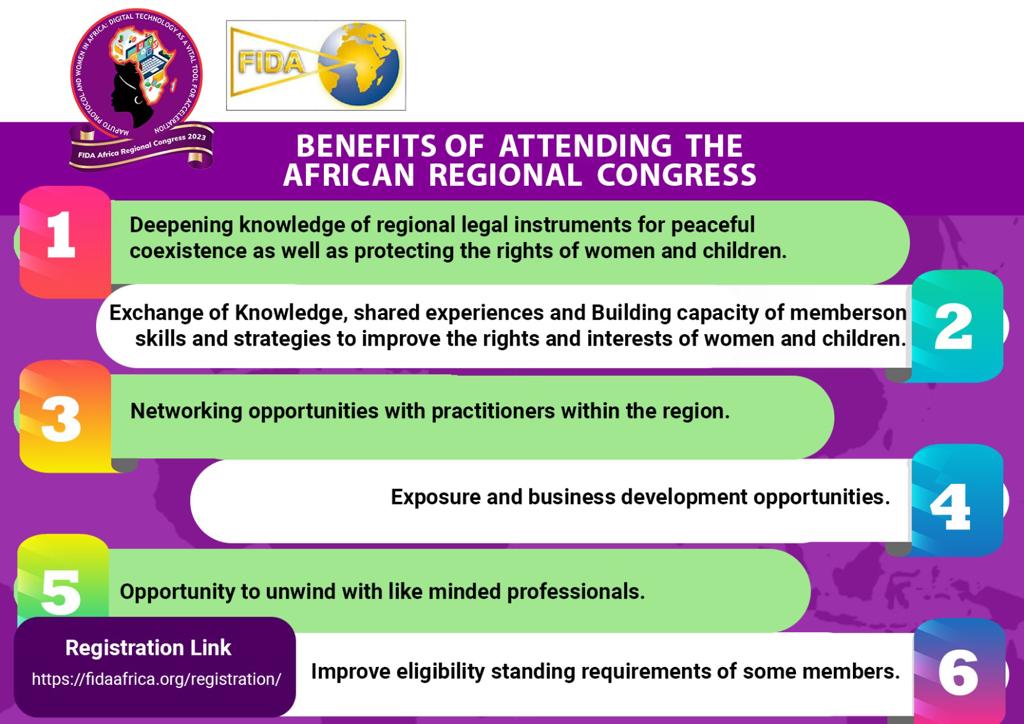
In a few weeks, female lawyers from various parts of Africa and across the continent will converge in Abuja for the triennial Africa Regional Congress of the International Federation of Women Lawyers (FIDA).
The event with the theme: “MAPUTO PROTOCOL AND WOMEN IN AFRICA: DIGITAL TECHNOLOGY AS A VITAL TOOL FOR ACCELERATION” is slated to commence from August 24 to 27 2023.
According to the Africa Regional Vice President (RVP) (West and North Africa), Mrs. Joy Ejim (formerly Joy Ezeigbo) the 2023 Africa Regional Congress is designed to “mirror the aims of FIDA International, to connect, collaborate, support, encourage and engage FIDA members across Africa to continue to focus on our mission to promote, protect, and preserve the rights, interests, and well-being of women and children in our societies through the instrumentality of the law.
The triennial congress is set to discuss the gains and travails of the Maputo Protocol on Gender Equity, with a focus on digital technology as a vital tool for socio-economic acceleration for women in Africa.
The Congress billed to take place at Barcelona Hotel in the Wuse 2 district of Abuja, is expected to attract a cross-section of top legal juggernauts from the Bar, the Bench, academia, government, and other professionals, including women from varied sectors and levels in the society.
The Planning Committee revealed that delegates will be treated to a welcome reception on Thursday, 24 August ahead of the opening ceremony on Friday, 25 August.
Part of the statement by RVP Joy Ejim obtained from the FIDA Africa Regional Congress, 2023 notes that: “Digital technology usage is intensifying, and proactive governments and institutions are building the capacity of their workforce to become more digital technology savvy in order to address the gaps in social welfare…
“The theme of the Africa Regional Congress coming up in August 2023 in Abuja, Nigeria, “MAPUTO PROTOCOL AND WOMEN IN AFRICA: DIGITAL TECHNOLOGY AS A VITAL TOOL FOR ACCELERATION” has been carefully chosen to reflect the mood of the moment. Thus, the Congress would be an appropriate channel to deliberate on “Maputo Protocol @ 20: An Assessment of the Past, Present and Future”, amongst other interesting topical subjects.
“Improving women’s rights is a precursor to their overall advancement in socio-economic and political spheres and the rise in technology tools offers a glaring opportunity to accelerate the robust empowerment of women and girls in Africa. FIDA will leverage digital tools to improve women’s participation and is already making giant strides in using digital tools to enhance cooperation with regional actors including regional/national/local chapters, national governments, civil societies, private sector and international/donor agencies…”
Hon. Justice Elsie Thompson, a Judge of the High Court of Rivers State, a former Judge at the African Court of Justice, Arusha Tanzania, and one-time FIDA Country Vice President will kick start the first plenary session titled, “The Maputo Protocol @ 20: An assessment of the Past, Present and Future.”
This will be followed by technical sessions on August 25 and 26, where a number of interesting themes will be x-rayed. These sub-themes include the following:
– Engaging Men & Women Towards Gender, Equity, Equality & Inclusion in the Public Space; and
The event will equally highlight other key areas that concern women. They include:
The intervention of new and potentially disruptive technologies (such as artificial intelligence, AI) into the legal profession.
The use and drawbacks of social media in the legal profession.
Current and emerging trends in social media use will be examined in sessions with themes such as:
– Education, Using Cutting-Edge Technology: A Sine-Qua-Non for Gender Equality In Africa;
– Dissecting Digital Tech Platforms & Assessing Opportunities For Accelerating Investment for Women [African Continental Free Trade Agreement in Focus]; and
– Unlocking The Power of Digital Branding: Building Online Presence & Strategies for Protection Against Cyber Bullying/Digital Pornography.
Among the over 20 leading speakers billed to share their expertise, experience, and insights at the Congress are:
– Hon. Justice (Prof.) Elizabeth Ama Orji of the National Industrial Court;
– Amb. Rossette Nyirinkindi Katungye, Adviser on Regional Integration in the Cabinet of the Chairperson of the African Union, Addis Ababa, Ethiopia;
– Mrs. Mfon Usoro, Maritime & Business Development Expert at Paul Usoro & Co.;
– Mrs. Abimo Toyosi Olayiwola, CEO Abilegal Digital Solicitors and Network, Ibadan, Oyo State, Nigeria;
– Dr. Monday Ubani, immediate past chairman of, NBA Section on Public Interest And Development Law (NBA-SPIDEL).
On the sidelines of the Congress will be an outreach/advocacy programme to the adopted FIDA Ward at Gwarimpa Hospital, as well as the end-of-congress Dinner Ball. The Planning Committee has set the Dinner cards at the rate of N5,000 only. Also on schedule are Muslim Jumaat and Christian Thanksgiving services on Friday, August 25, and Sunday, August 27, 2023, respectively.
The Committee has assured delegates of comfortable accommodation at the rate of N24,000 per night as well as adequate security throughout their stay in Abuja.
The registration fee for members is N50,000, and the window runs from July 12 to August 12, 2023, while the fee for non-members is N55,000, with the window also running from July 12 to August 12, 2023.
Intending conferees are expected to effect payment before Saturday, 5 August.
In the same vein, the Planning Committee is urging prompt registration payments on the part of prospective delegates – to be made to the following account: – Account Name – REKIA R. ADEJO-ANDREW
– Account Number – 0175344577
– Bank Name – GTB.
The Committee also advises prospective delegates to confirm their payment by dialing Adebanke Adebola on 08032428516.
For further information on all aspects of registration and participation, prospective delegates are advised to go to https://fidaafrica.org/registration/, and for confirmation and other clarifications, they are advised to contact 08030781825.
Nobody understands. How could she do it? Why did she do it after all these years? An affair after 25 years of marriage and three grown-up children? What is she still looking for? What has God not blessed her with? Her husband is well-to-do, healthy and the children are doing well. But Madam B did it and it’s done. She’s 52 and is cheating on her husband. It’s hard to understand, I guess, but it happened and somewhere, as you read this, it is probably happening again. Older women stepping out on their spouses. There are researches to even prove that it’s not a Nigerian thing. So, why are grandmas having affairs?
Let’s look at the case that inspired this column today. I must confess, I can’t tell you all the wheres and wheretofore. Just that I get to hear things, all kinds of things but this one I’m sharing.
Madam B and Uncle Akin have been married for 25 years and have three grown-up boys who schooled and are schooling in Canada. Meaning: the nest is empty. It is just the couple and their domestic staff now at home. The problem is that Akin is hardly around. Madam B was once a top executive in a bank but is now retired with plenty of time on her hands. She goes to the gym four times a week, parties at weekend to keep herself busy.
According to her, she goes to those parties just to fill time and space. “The truth is I have been lonely for a long time now. Even when I was in the bank, my husband hardly had time for me. He was either on one long trip or the other or hanging out with his friends. There was always one meeting or the other in Nigeria or abroad. Yes, he picked his bills and we were comfortable but I hardly saw him. As a working woman, my job kept me busy, and tired at the end of the day and at weekends. I coped better then. I knew he had girlfriends too but he kept them away as much as he could, but I knew most of the time, though.
“However, the last three years have been really difficult. I run a consultancy now and rarely go out. Meanwhile, Akin is still as busy as ever. When I complained of his absences and my loneliness, he laughed it off and told me to go and spend more time with my children. He asked if old women get lonely. But I don’t feel old. In fact, I don’t feel any different from how I felt 10 years ago. I’m also one of these women that reach menopause late. My sexual needs are still there but over and above the needs for sex is the need to be with my husband, spend time with my man. But he was hardly ever here. I eat alone, sleep alone and watch television alone.
“It got so bad I’d started sitting on the balcony and chatting with the gardener while he worked. So, this thing with Daniel just happened. My husband had not made love to me in seven months. When he was home, he was too tired to do more than a kiss and a hug. Dan is a divorcee who used the same gym with me. We were both two lonely people killing time in the gym. He makes me laugh. We share the same taste in novels and entertainment generally. One thing led to the other and we had breakfast together, then dinner, then, we got intimate.
“At first, I was ashamed, so ashamed that I couldn’t go to church the following Sunday. I felt really dirty. It’s the first time in 25 years that another man was seeing my nakedness. I felt guilty but somehow, felt alive, good, like a woman again. It’s been six months now since Daniel and I started this and I must confess that it has been fun. I’ve lost weight and I’m making efforts to keep Dan interested. My husband still comes and goes, thinking, I guess, I’m an old woman who should be worried about her blood pressure, be more concerned about her children’s welfare and not sex. Dan thinks I’m fine old wine to be savored. We’re secret lovers eating the forbidden fruit that for now, is too delicious for me to spit out.’
Madam ‘B’ has not been caught pants-down yet but we can generally declare her guilty. Of what? Infidelity. But what is her husband guilty of or is he clean and innocent? He’s the wronged party who didn’t deserve to be cheated on? No such thing. Let’s be realistic. Uncle Akin left his farm unattended to and now weeds are choking everything he’d planted in 25 years.
Our site uses cookies. By clicking “Accept All Cookies”, you direct Law and Society Magazine to store cookies on your device and disclose information in accordance with our Cookie Statement: cookie policyACCEPTREJECT
Privacy & Cookies Policy
Privacy Overview
This website uses cookies to improve your experience while you navigate through the website. Out of these cookies, the cookies that are categorized as necessary are stored on your browser as they are essential for the working of basic functionalities of the website. We also use third-party cookies that help us analyze and understand how you use this website. These cookies will be stored in your browser only with your consent. You also have the option to opt-out of these cookies. But opting out of some of these cookies may have an effect on your browsing experience.
Necessary cookies are absolutely essential for the website to function properly. This category only includes cookies that ensures basic functionalities and security features of the website. These cookies do not store any personal information.
Any cookies that may not be particularly necessary for the website to function and is used specifically to collect user personal data via analytics, ads, other embedded contents are termed as non-necessary cookies. It is mandatory to procure user consent prior to running these cookies on your website.