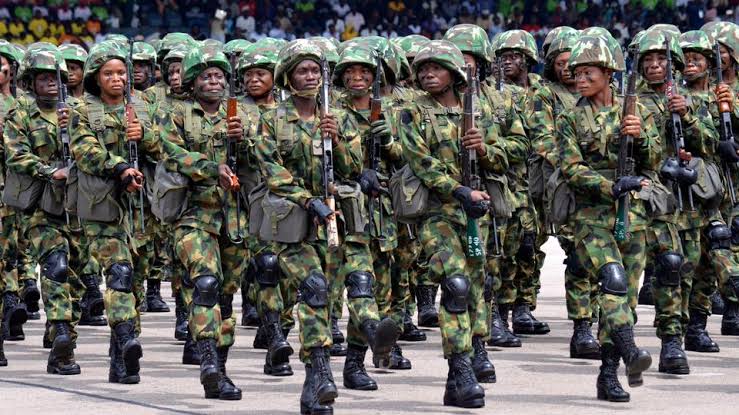
The Nigerian Army has announced the upward review of Ration Cash Allowance (RCA) for its personnel.
The RCA takes care of the feeding of Nigerian military personnel in lieu of “central feeding”.
In the signal exclusively obtained by SaharaReporters, the army said the move was sequel to the recent removal of fuel subsidy by the Nigerian government which had caused an increment in prices of goods and services across the country.
The signal was dated July 28 and signed by E.E. Emekah, a Major General on behalf of the Chief of Army Staff.
“Sequel to the recent removal of fuel subsidy by the Federal Government of Nigeria, with its attendant rise in the prices of goods and services across the country, the COAS has graciously approved upward review of Ration Cash Allowance (RCA) for troops from One Thousand Naira (N1,000:00) to One Thousand Two Hundred Naira (N1,200.00) with effect from August 2023,” it read.
“Relatedly, requisition for Petroleum, Oil, and Lubricants (POL) are to be subsequently calculated as 30 litres of PMS/Vehicle/Day and 50 litres of AGO/Vehicle/Day. I am to respectfully add that you forward your sustenance requirements to this Headquarters not later than 15 of every month in line with the new rates for necessary action. Please acknowledge receipt.”
Chima Centus Nweze, until his death, occurred on Sunday, July 30, but formally went viral on Tuesday, August 2, 2023, was Justice of the Supreme Court (JSC) of Nigeria. He was appointed to the apex court, the highest career progression of judicial officers in Nigeria, by former President Goodluck Jonathan, in 2014, from the Court of Appeal, where he was elevated in 2008 from the Enugu State High Court.
A native of Obollo, Udenu Local Government Area of Enugu State, the erudite jurist, who was born on September 25, 1958, apart from being reputed to have had a sterling career, was seen as one of the most fearless judges in recent Nigerian history. In his about 30 years on the bench, which began after his appointment from private practice as a lawyer in 1995, he was one of the judges who had promoted the doctrine of justice must be done, though the heavens fall.
This was demonstrated in 2020, when he practically cried blue murder as he tried to rebuff what he saw as the attempt by his colleagues at the apex court to assault the temple of justice with one of the most unbelievably odious judicial pronouncements in the history of Nigeria, by handing the Douglas House, Owerri, to Hope Uzodimma of the All Progressives Congress (APC) in place of Emeka Ihedioha, of the Peoples Democratic Party (PDP), had won the governorship election in Imo State and was sworn into office on May 29, the previous year.
He was the only one that gave a dissenting judgement, to say no, out of the seven justices that sat on the case, to hand over power to Uzodimma, who had come a distant fourth in the said election and who has remained in office since then. For that singular, which was a demonstrable example of his ability to demonstrate braveness, had stood him out in the minds of many informed quarters as a man of courage and forthrightness.
But that reputation suffered a mortal blow when on February 6, 2023, he read the lead judgement in the case of Bashir Machina against Ahmad Lawan then Senate President on whom should be the rightful candidate for the Yobe North Senatorial election. It was a three-two split decision judgement with Nweze on the other side.
Not a few Nigerians saw the outing of the erudite jurist and scholar as completely direct opposite to that of his firm stance in the Uzodimma case. For emphasis, Nweze had cautioned his colleagues to reconsider their position after Ihedioha had returned to urge the apex court justices to reverse themselves. In the dissenting judgement, Nweze, who had held that Uzodinma misled the court by crediting unverified votes in 388 polling units to himself, had warned: “This decision of the Supreme Court will continue to hunt our electoral jurisprudence for a long time to come. This court has a duty of redeeming its image, it is against this background that the finality of the court cannot extinguish the right of any person.
“I am of the view that this application should succeed. I hereby make an order repealing the decision of this court made on January 14 and that the certificate of return issued to the appellant (Uzodinma) returned to INEC. I also make an order restoring the respondents (Ihedioha) as the winner of the March 9, 2019 governorship election.”
So, what happened that he could switch in such a manner so soon after? For one, going by the doctrine of justice must not only be done, but seen to have been done, many saw and still see the case of Uzodimma carrying the same weight as that of Lawan, in terms of misapplication of justice. They could not be bothered about the technicality upon which the late jurist and his two other colleagues relied on.
All what a completely stunned public could see was the meat of the case. Lawan had contested the presidential ticket of the APC held in June of 2022 and by virtue of the Electoral Act of that year, was clearly not qualified as the amended act, had barred anybody from contesting for two positions in an election circle. So, what happened that Nweze, a known advocate could jettison this clear provision, in preference to mere technicality?
How could such a character with steely mindset on delivering justice at whatever cost be associated with such an obvious judicial heist? That has become the basic question, which has been accentuated with his death. There are fears that the late jurist did not act out of self-will. There is a version that claimed that he was forced to deliver the judgement.
In fact, one account stretches the issue further, informing that, that singular outing that became a serious blemish on his otherwise blistering career quickened his death and sent him to his early grave, metaphorically and literally. First, it was said that he could not live with the consequences. Second, he was said to have been denied visa to travel to the US to attend to his health.
Unverified as it appears, what if that narrative is the true picture? What does it portend for the Nigerian judiciary? The answer is obvious. If someone as hard-willed as Nweze could capitulate under pressure, as it was alleged, who then could survive? Indeed, right from time immemorial, the case of the independence of the judiciary or lack of it, has always come to the fore in justice systems across the world.
While there is the belief that no judiciary is completely free anywhere in the world as judges are prone to external influence, the case of Africa is considered worse, with Nigeria being no different. In fact, the 1962 comments of George Sodeinde Sowemimo, in the celebrated treason trial of the late Obafemi Awolowo against the Federal Government, remains one of the most historic examples. Before the late judge sent the former Leader of Action Group (AG) to jail, he had prefixed his pronouncements with the expression – my hands are tied. Tied by what, whom? The answer has not been provided till date.
Ironically, Nweze’s death came hours to the conclusion of cases at the Presidential Election Petition Tribunal hearing the challenges of Atiku Abubakar of the Peoples Democratic Party (PDP), Peter Obi, his Labour Party (LP) counterpart and the Allied Peoples Movement (APM), against the declaration of Bola Ahmed Tinubu as winner of the 2023 presidential election by the Independent National Electoral Commission (INEC).
The PEPT at its last sitting on Tuesday, presided over the adoption of their final addresses by all the parties in the petitions and would now retire to give their judgement at a date they say would be made known to the public. How far could the case of Nweze and numerous examples dotting the judicial history of Nigeria guide the judges to deliver their judgement? How formidable are the judges, both at the Court of Appeal currently sitting as PEPT, to withstand the forces of influence that would come, if any?
If indeed, Nweze was forced to capitulate to the level of not only acquiescing but delivering the obviously integrity-questioned judgement, what might be the threat? From fiction stories in books like The Godfather, judges who were in the pockets of mafia gangs, were either willing collaborators or victims of blackmail or outright threat.
Such blackmails could be threats to expose their dark secrets, including lurid pictures of their making out with fellow men as homosexuals, or sleeping with other people’s wives or evidence of their involvement in high crimes such as murder or drug deals or outright threats of physical harm to them and their family members. How many judges could with the threat of the kidnap of their precious sons and daughters or the image of dar-goggled thugs hovering around their premises?
It is even more pronounced in Nigeria, where virtually everybody has one yoke or the other hanging on their necks. Whoever thought that Walter Onnoghen, would be thrown out as the Chief Justice of Nigeria (CJN), in such a sorry manner or his successor, Tanko Muhammed, with his fellow judges at the various levels including the National Judicial Council (NJC), either watching like rain-beaten chickens, unable to lift a finger or even leading the process?
But even so, are all hopes lost? What if the judges decide to damn the consequences? What if they decide to redeem what is left of the odious situation that has sent shivers down the spine of Nigerians? Again, Nweze provides an abiding answer. Whatever led him to make that perceived odious judgement, whether he was purely looking at the law or due to inducement or threat, the fact remains that he did not live forever.
Like William Shakespeare, wrote: The purest treasure mortal times afford is a spotless reputation. Would Nweze have reached the same decision or made the same pronouncement in the Lawan case, if he knew that he would die in less than six months and thereafter face his maker to account for the talent he was given? The answer blowing in the wind.
Because nobody knows at which hour, it now becomes imperative, for those who want to preserve their names to do the right thing. For the judges in the PEPT case, would any lesson have been learnt? If indeed Nweze acted on external influence, where has it left him? If he was induced, where are the proceeds? If it was blackmail, would he have redeemed himself before his maker? If it was a threat, has he lived?
Today, Nigeria is standing on the edge of a cliff. A tip could see it crashing down the slope to the jagged rock at the base. On the other hand, it could be pulled back from the brink towards the direction of hope and prosperity. Whatever it would be, the adequate resolution of the 2023 presidential is key. The judges are, therefore, central to whether the country would take the plunge or soar high above.
But one thing is sure, if for whatever reason, they allow the plunge, one thing is certain, it would lead to two kinds of death – the death of a country or the death of human beings. In this, nobody knows who would survive. It is either the PEPT judges kill Nigeria finally or save it. What would it be? Would the judiciary destroy Nigeria or save it? Enough said!
Originally published by Whirlwindnews on 2 August 2023.
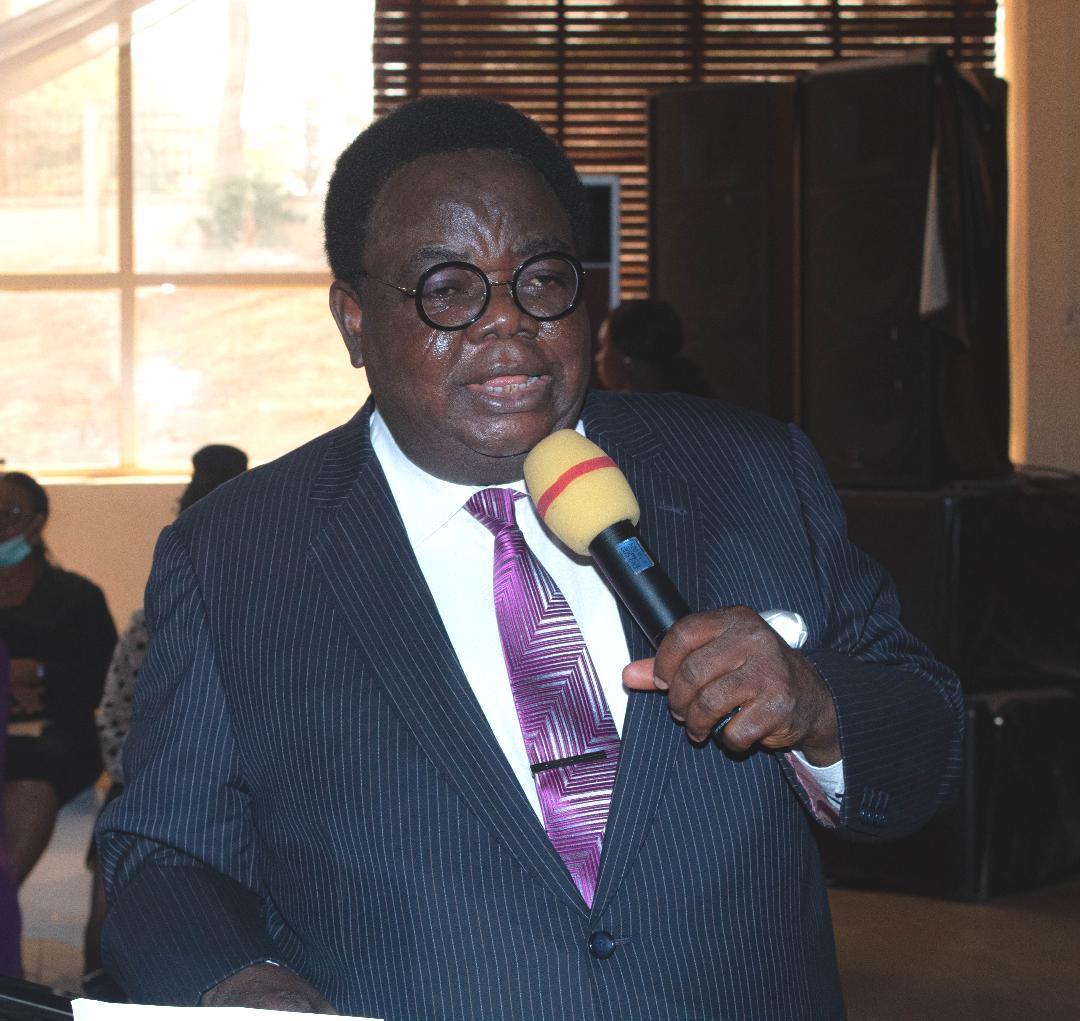
Ex Chair of the National Human Right Commission, Prof. Chidi Anselm Odinikaku has cautioned that Nigeria might be on the brink of genocide following the threatening level of ethnicity and tribalism in the country.
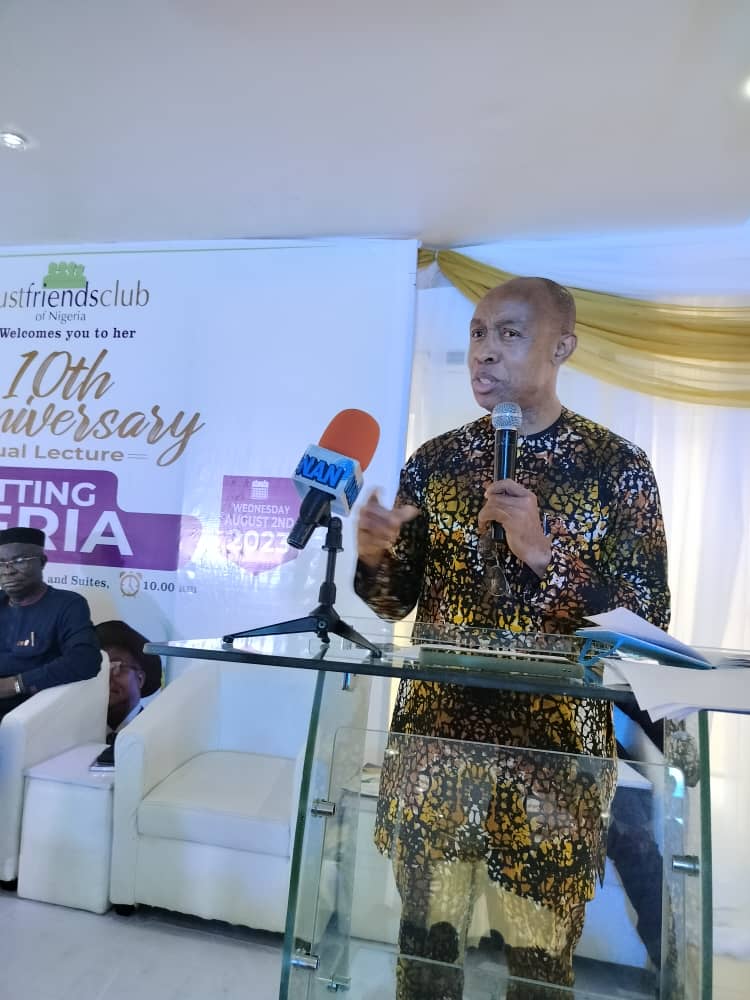
Calling for the resetting of core values in Nigeria, Odinkalu in his keynote presentation titled: Resetting Nigeria noted that in spite of the prohibition against discrimination in section 41 of the 1999 constitution, discrimination has become institutionalized.
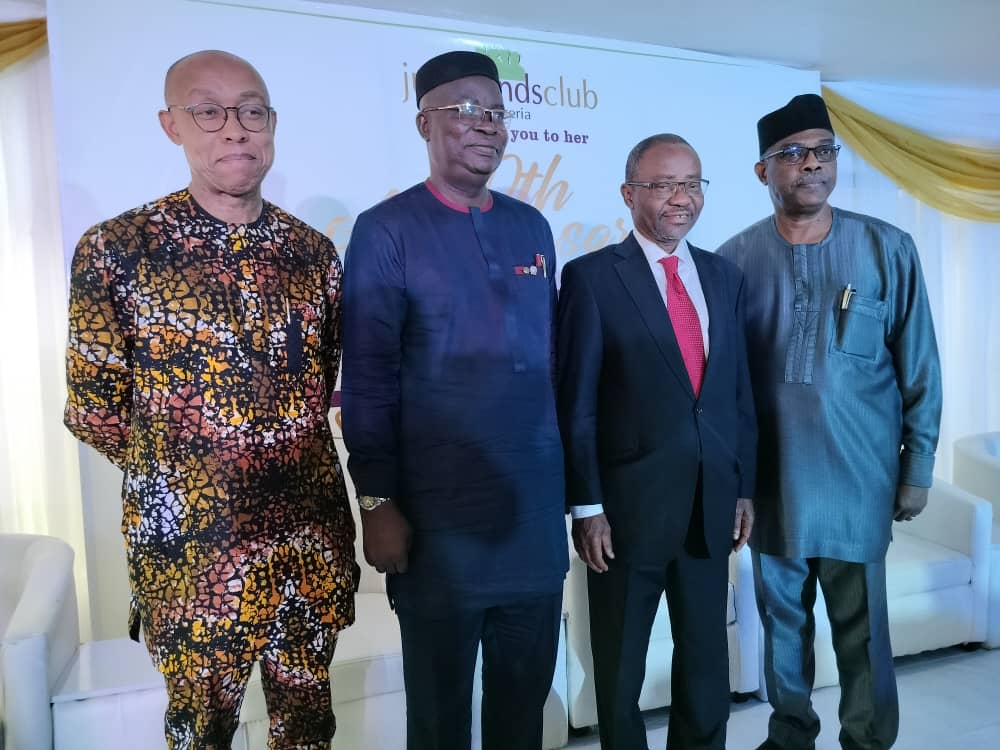
L-R: Guest Speaker, Prof. Chidi Odinkalu; Chairman of Occasion and President of Historical Society of Nigeria, Prof. Sam Aghalino; President of Just Friends Club of Nigeria( JFCN); Mr. Fred Ohwahwa; and Mr. Ohi Alegbe at the 5th Annual Lecture of JFCN …August 2, 2023
The Professor of Practice in International Human Rights Law at the Fletcher School, a guest speaker, at the 10th-anniversary annual Lecture organized by Just Friends Club of Nigeria, JFCN in Abuja said as long as Nigeria continues to dwell on indigenes rather than citizenship, insecurity may persist across the country. He added that: “Those who think they do service would only seek to serve those that they know not those who need to be served. “
Odinkalu in his paper said, “Nigeria’s diversity is a positive resource, not a curse but recognise that Nigeria’s leaders have, for the most part, failed to transcend the narrownesses inherent in this diversity.”
He said Nigerian political leaders are looking at the socio-political symptoms of Nigeria rather than the real underlying illness, stressing that for Nigeria to grow it must be reset.
Odinkalu who is the Senior Team Manager for the Africa Programme of Open Society Justice Initiative also identified Nigeria’s failure to evolve national citizenship and forging of nationhood being among the factors fuelling the crisis in the country.
He said that for the country to move forward, we must count genuinely in areas of votes, and resources, stressing that Nigerian politicians have been criminally allocating votes, and resources to undeserving areas and people.
“Fundamentally flawed political economy is compounded by long-established ethics of deliberate political innumeracy. As a political economy, we specialize in fraudulent counting and accounting, legitimized post-hoc by the instruments and skills of the law”, he said.
Prof Odinkalu stressed that the country’s “dysfunction with civics and citizenship itself is reflected in a leadership ethos that is incapable of treating citizens with dignity as well as a national preoccupation with discrimination.
“In Nigeria today, the only significant minorities are Nigerians. We are all polarized along a multiplicity of lines: Christians vs. Muslims; Militants vs. Boko; Men vs. Women; ruling party vs. opposition; Indigenes vs. Settlers; Poor vs. Rich; Army vs. Police; Police vs. Bloody Civilians, ” he said.
Earlier in the welcome address, President of the JFCN, Fred Ihwahwa also advocated for urgent resetting of Nigeria.
He said: “Whatever angle you look at it, Nigeria requires resetting. Be it in infrastructural development, the educational sector, health, internal security, the economy, our politics, our value systems, etc.
“We need to reset ourselves at the individual, communal, corporate, and government levels. We need a rebirth as a people. Otherwise, we will keep wallowing in the doldrums.”
For the past couple of preceding years, I lost enthusiasm for listening to presidential speeches. There was neither any enthusiasm for the one delivered on the 31st of July either. However, I happened to be in a vehicle when the speech was broadcast on the radio station on play and I had no option but to listen to the broadcast. I was getting agitated at a point when the President kept on emphasizing that the entire subsidy sum was going to the pockets of a few and making them extremely rich to the detriment of the country. His scriptwriters emphasized and re-emphasized this point not less than 3 times in that less than 15-minute speech.
The President obviously knows these powerful few but has no power over them. However, the point of interest/disappointment with the President’s speech for me was the failure of the President to address the particular issue bedeviling Nigeria which has made us a victim of subsidy or no subsidy. Nothing was said about putting any of the dead four refineries to use. Nothing was said about repairing them in the nearest future or building new ones so that our prices can compete with the international market.
One thing our government fails to understand is that as long as Nigeria imports its refined products, we will forever be at the mercy of the international market. If the international market increases the price to N2000 per litre today, Nigeria will have no option but to do likewise and then we will be back to the starting point again or either increasing pump price or government paying subsidy again. This is unwise. We have the crude, we have the refineries, why not see to it that you make it work and we can determine our prices by ourselves? It would be a relief even if this is only the thing this government can achieve in its 4 years in office.
Repairing the refineries is a more permanent solution to the crisis than all those palliatives that would be diverted as usual. I have little belief or confidence in most of the listed cushions mentioned by the President. The reason is that these cushions hardly get to the common man on the street. The palliatives are still being shared among the powerful. We saw it happen in the aftermath of the COVID virus. Everything the President said in his speech as a form of palliative, relief, etc, to cushion the effect of the price hike is typically referred to as damage control and not a solution. They are temporal and have the potential of being bastardized because the execution of policies is one of our biggest undoings in Nigeria. A permanent solution to the crisis of facing Nigerians with respect to the downstream sector is the only way out. Repairing our refineries is a more lasting, long-lasting solution to the Nigeria oil sector and the reoccurring problem of price increases.
Again, I had thought that the speech of the President will address the recent hike in tuition fees that is spreading across the country like the Australian Wildfire. School fees of Unity schools across the country were increased by over 100%. It has also been in the news that several Federal universities have increased their tuition fees thereby causing a possibility of street protests by disgruntled students. Are these issues not germane enough to enjoy an immediate presidential intervention vide his national broadcast? These are issues that have been in waiting in the last few weeks that require urgent attention and possibly a quick reversal. You say nothing, we hear nothing, you do nothing, but Nigerians should remain hopeful that the pains of today will give way for the ease of tomorrow.
Mr. President Sir, we heard so much about bearing with the pains of today for the ease of tomorrow. Unfortunately, there has never been an easier tomorrow in governance.
While we remain hopeful that it would get better for Nigeria and Nigerians, we hope the government will take further steps that will aid and make life and living in Nigeria more bearable.
May the Almighty help us.
Akintayo Balogun Esq., LL.B (Hons), BL, LL.M, is a legal practitioner in private practice, based in Abuja, FCT. A prolific writer, public affairs analyst, and commentator on national issues. [email protected]
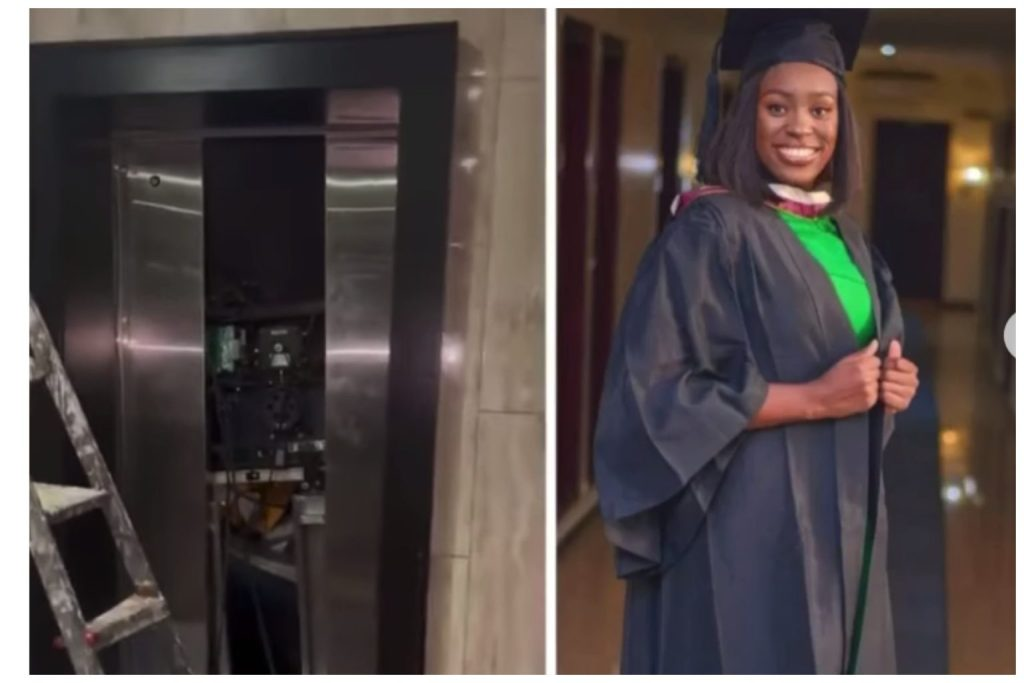
The elevator of the General Hospital, Odan in Lagos State Nigeria has been reportedly faulty since 2018. It is incontrovertible that the hospital like other government bodies receives monetary allocations to run its affairs. It is also not in doubt that there is a head of maintenance in that hospital but typically, government institutions in Nigeria are poorly supervised. And a lot of times as in this case, people die.
A social media post aptly captured the loss of Dr. Vwaere:
“And We Lost Dr. Vwaere to Nigeria’s Anyhowness.”
According to the post. “When Dr. Vwaere was being inducted as a Nigerian doctor after her six-year sojourn at Babcock University last year, she had high hopes and expectations.
“She had hopes for a flourishing medical career.
“Expectations to use her newly learned medical skills to benefit the community and society at large.
“Training a child at a Babcock medical college is quite expensive and does not come cheap.
“3.5 million per annum for school fees alone during her time; it is now 6.5 million per annum, but her parents did it because they wanted to give the best to their daughter and then to avoid the anyhowness in the Nigerian university ecosystem.
“Post-induction, Dr. Vwaere got a place to do her internship at General Hospital (Odan, Lagos Island), a facility owned by the Lagos State Government.
“Before Dr. Vwaere joined the General Hospital as a student doctor, it was noticed by the resident doctors and staff of the hospital that the only elevator at the hospital had been in bad shape since 2018 and then there was no running water in the hospital.
“But because of Nigeria’s anyhowness, one big madam, or Oga, siphoned or embezzled the money meant to replace the elevator while patchy work was done at the elevator to serve as a temporary respite, endangering people’s lives in the process and turning deaf ears to the genuine complaints by resident doctors at the hospital.
“The elevator was so bad that it stopped at intervals, and you had to manually use your hand to close it in order to continue your journey.
“The carelessness, wickedness, and anyhowness culture we have here have finally ended the journey and the dreams of Dr. Vwaere.
“Just like the rest of us, Dr. Vwaere woke up today with bright hopes for the month of August.
“She was upbeat for one reason: her housemanship at General Hospital (Odan, Lagos Island) was finally coming to an end.
“She had less than two weeks to round up.
“She went to work excited that she has less than 2 weeks to complete her housemanship.
“And this afternoon, a dispatch rider who brought the food she ordered online called her on the phone to let her know that he was around.
“Since she was free, she elected to go and pick the food herself from the ground floor where the dispatch rider was, and on her way to meet the dispatch rider,
“She entered the faulty elevator.
“And then disaster struck.
“The elevator fell from the 10th floor, where she was, to the ground with a loud thud that shook the foundation of the hospital.
“Even the dispatch rider who was waiting at the entrance of the elevator thought that Armageddon was here when he heard the noise, so the man ran for his dear life.
“It took one hour before Dr. Vwaere was rescued from the debris of what was once the elevator.
“She was still alive, though badly injured, and was bleeding when she was brought out and rushed to the emergency section of the hospital.
“And from multiple accounts of those who witnessed the surreal drama
“Dr. Vwaere was crying that she did not want to die; even while stuck in the elevator for hours, she was crying for help.
‘I don’t want to die; help me,’ she cried nonstop.
“She cried that she wanted to live and not die, but her desire to live was truncated by Nigeria’s anyhowness, which snuffed the life out of her.
“Again, Nigeria’s anyhowness kicked in and deprived her of this chance to live.
“She was taken to the emergency section of the hospital, but after another delay because there was no blood,
“That was how Dr. Vwaere gave up the ghost.
“The young lady died just like that.
“Corruption kills, and this is another part of corruption we don’t discuss well enough.
“We just lost Dr. Vwaere because of that hydra-headed monster and Nigeria’s culture of anyhowness.
“I am visibly upset as I’m writing this.
“This is not right.
“We can’t continue like this.
“We can’t continue living like this, like animals.
“For how long will we continue to tolerate losing our best and brightest to this culture of mediocrity?
“Nigeria keeps devouring its youth.
“Nigeria failed Dr. Vwaere; may her innocent blood spilled for no reason haunt and punish those criminals who embezzled the money meant for a new elevator.”
The lateDr. Chinelo Megafu
Just before she died, Dr. Chinelo Megafu tweeted that she had been shot, calling for prayers. She died from terrorists’ bullets during the 28 March 2022 terrorists attack on an Abuja–Kaduna train. Dr Chinelo a brilliant and bright dental surgeon was billed to travel abroad shortly to further her medical career having performed excellently in her exams. She had gone to Abuja to pick up her referral letter from the National Hospital, where she did internship and also Kaduna where she did National Youth Service Corps (NYSC) and worked briefly. Many other shining lights and hapless Nigerians were swallowed up by that terror attack. Till date no one has been found culpable. No arrest was ever made. Nobody was ever made to account for that monumental waste of Nigerians.
A Superintendent of Police, Goddy Ihende, told a Lagos State High Court sitting at the Tafawa Balewa Square that a driver of the Lagos Bus Rapid Transit (BRT), Andrew Ominikoron, who allegedly raped and murdered his passenger, Oluwabamise Ayanwole (Bamise), always raped his victims in secluded places.
Just before the cover-up commenced, Andrew Nice the bus driver revealed that the 22-year-old Bamise was raped before being murdered. Reacting to the intrigue, rights lawyer and Senior Advocate of Nigeria, Ebun Oluwa Adegboruwa in a statement, accused the Lagos State Government of attempting to cover up Bamishe’s rape and murder insisting that the federal authorities should take over investigations into the rape, abduction and death. The statement reads:
Bamise was brutally cut down
“Events unfolding concerning the murder of Miss Oluwabamishe Ayanwole are as intriguing as they are worrisome. Following public outcry and media monitoring, the Lagos State Government hurriedly packaged the Bus Rapid Transfer driver for media interview, to give the impression that he was innocent of the crime,” he said.
“Some further revelations have now thrown up very serious questions that the Lagos State Government must answer, if it is not covering up this dastardly act of daylight murder.
In a homicide matter of this magnitude, how can a prime suspect who was declared missing, be handed over to government by the security agencies?
“A video of his initial arrest showed that the driver confessed to having carnal knowledge of the deceased, in very remorseful fashion. He was dressed in shabby and disheveled attire, truly reflecting his fugitive status as of the time of his arrest.
“Who then packaged a crime suspect, to turn out clean shaven, dressed in specially designed Lagos State Government outfit and now well tutored to claim innocence to set up the cock and bull story of hijack?
“Why was Lagos State Government romancing a murder suspect?
“And why was he paraded on a selected media of TV Continental, over which Lagos State has influence through patronage?
“What is the business of Lagos State in the interrogation of a murder suspect?
“The Commissioner of Police had earlier addressed the press to the extent that the suspect had confessed to the crime before Lagos State emerged with the latter James Bond storyline.
“What interest is the government serving to cover up a clear case of blue murder?
“Has there been other cases of ritual killings in BRT buses to which the government has become accustomed?
“Why will a driver whose bus was hijacked and has thus become a victim himself then bolt away for days without reporting to his employers?
“Your employee that was trusted with human carriage took your citizen who boarded the bus innocently based on trust that it’s a government outfit, your driver allegedly saw the citizen abducted, your driver drove the bus to you, he did not report the incident but handed over the bus and disappeared and after public outcry, he was apprehended and all you do is dress him up for press interview to lie to the public, after killing an innocent girl?
“What kind of government will do this wickedness and expect to earn the trust of its people?
“It will be a sad day for humanity in general for a responsible government to stoop so low to try to cover up a clear case of murder, just for public relations. It is unthinkable that Governor Babajide Sanwoolu that we know would be a party to this nonsense story of hijack, which does not add up at all.
“It is clear that the Lagos State police command cannot be trusted to handle this case, given that it surrendered a murder suspect still under investigation to the Lagos State Government for media packaging.
“I, therefore, urge the federal government and the Inspector-General of Police to take over this investigation immediately, before the case is completely compromised.”
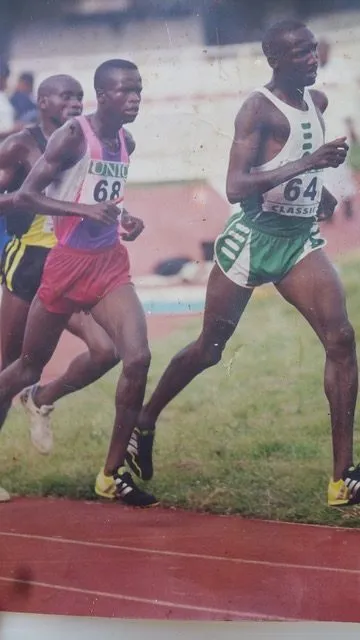
Hagack, number 64, during a race [Courtesy of Hagack]
What about Gideon Hagack whose victory was hijacked after he won the Milo International Marathon in Lagos on October 9, 1994? Thankfully he survived it. “While still dressed in his running gear, he was arrested for cheating, held in jail, and had his career irreparably damaged,” wrote Oluwashina Okeleji in Aljazeera on 22 July 2023.
Continuing, Okeleji said: “Hagack was whisked away to what he initially assumed was a private reception at Government House. After waiting there for six hours, shivering and famished in his drenched running garb, he was accused of cheating and his immediate detention was ordered by the governor…
“Following the formation of an independent panel of sports administrators that placed the burden of proof on the accusers, the AFN was subsequently unable to prove their case and Hagack was officially exonerated by the panel in early November 1994.”
When will people be held accountable for gross negligence and crimes in Nigeria? The real perpetrators; not their alter egos or petty criminals. W that ever happen?
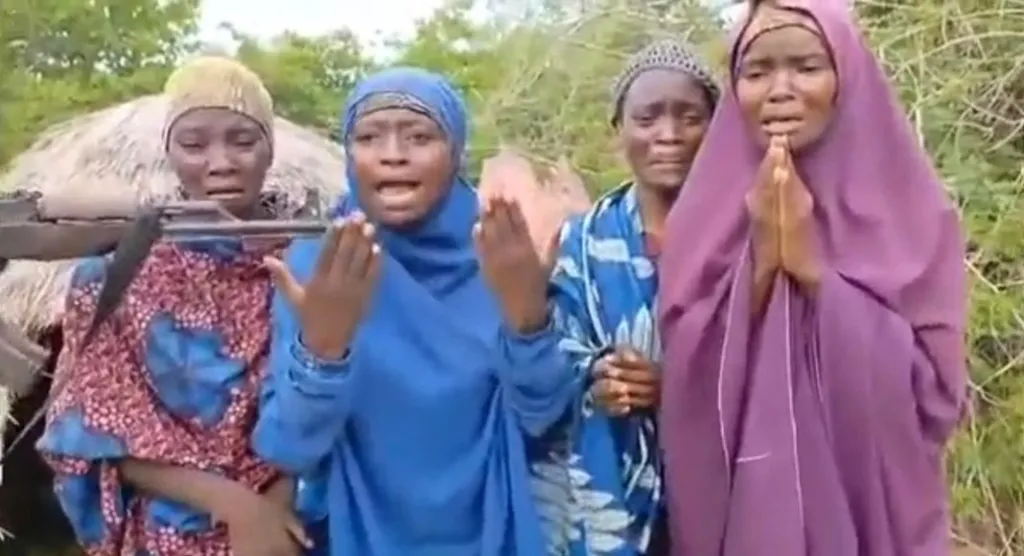
Female students of Zamfara College of Art and Science, who were abducted over 174 days ago, plead with authorities to rescue them from being married off by bandits.
In the viral video tweeted by a counter-insurgency expert and security analyst in the Lake Chad region, Zagazola Makama, the students called on both the federal and state governments to come to their aid.
The kidnapped victims, especially pleaded with the Zamfara State Governor, Dauda Lawal to rescue them and save them from being married off by their abdu+ctors.
Recall that the students were kidnapped earlier in the year and the terrorists have demanded a ransom of N50 million to free them.
In the video tweeted by Zagazola, one of the students, while pleading and crying at gunpoint, said they had been in captivity since the administration of former Governor Bello Matawalle, who failed to rescue them till he left office on May 29, 2023.
She said: “For God’s sake, our mothers, we are in big trouble. We have been here since the administration of the former government,” she said tearfully. “We have spent 174 days inside the forest; that is almost six months.
“For the sake of God, our mothers, we have no one apart from you. Come and rescue us. The former governor could not rescue us. We are begging the new government of Dauda Lawal to help us.
“I am an orphan, my father is dead. please help us for God’s sake. My mother has no resources, please help us. These guys have vowed to marry us off within a week.”
A 37-year-old farmer, Joseph Agbomu has bagged life imprisonment for defiling his neighbour’s six-year-old daughter in Owo Ondo State.
In his judgement, Hon. Justice Yemi Fasanmi of Ondo State High Court, Akure, held that the prosecution proved the case of rape beyond reasonable doubt.
In February this year, a 27-year-old farmer in the same Ondo State raped a 10 year old girl to death and claimed it was a mistake.
Agbomu was arrested by officers of the state police command after committing the act in Ijebu-Owo, Owo Local Government Area of the state on September 12, 2018, at about 7:30 pm.
He was later charged to court in March 2019.
The convict, however, pleaded not guilty to the charge.
The prosecutor said the offence committed contravened Sections 375, 378 of the Ondo State Criminal Code, 2006.
Justice Fasanmi also held that the testimony of the victim was convincing and truthful.
According to His Lordship, the convict, in his extra-judicial statement obtained on December 12, 2019, confessed to the commission of the crime, that he had carnal knowledge of the victim in his room without using a condom after taking a herbal alcoholic drink.
According to the court, the victim’s testimony is corroborated by the convict’s confessional statement that he had unlawful sexual intercourse with her.
Justice Fasanmi highlighted the severe, emotional, and psychological trauma inflicted upon the victim, who had regarded Agbomu as a paternal figure due to their connections as kinsmen.
The judge added that the victim’s trust was shattered by the abhorrent actions of the perpetrators, leaving a lasting impact on her well-being.
The court’s ruling acknowledged the gravity of the offense committed by Agbomu, recognizing the irreversible harm caused to the young girl and the need for justice to be served.
“The defendant (Agbomu) is hereby sentenced to life imprisonment for the defilement of a child to serve as a deterrent to others who might engage in such an act,” the court held.
Back in March, Isreal Ikumuyi, a 27-year-old farmer, was arraigned before a Magistrate Court in Oke Eda, Akure, for raping a 10-year-old girl identified as Esther Friday to death.
The incident happened on February 2, 2021, at Akinfosile village near the Igbotako community in Okitipupa Local Government Area of Ondo state.
It was gathered that the primary school girl was lured into the room by the suspect who promised to give her some money.
Ikumuyi claimed that he never intended to kill Esther, saying that he suffocated her to death while covering her mouth with a cloth to muffle her cries for help.
He reportedly told police interrogators that he had no girlfriend and developed a sexual urge when the victim followed him to his room.
“She came to meet me in my kitchen asking me for money, but I told her the money I have is to cook soup. After some time, she returned; she followed me from the kitchen to the bedroom, still begging me for money. I later gave her N100 and slept with her in the room,” he explained.
He stated that as she lay beside him on the bed, he developed amorous feelings since he has no girlfriend.
“Initially, I didn’t mean to rape her, but when she slept with me on the bed. I felt aroused and decided to have sexual intercourse with her quickly. I did not force her to have sex with me.
“We were together on the bed, but I had trouble penetrating her despite all my efforts, and I had to cover her mouth with a cloth so that she could not raise the alarm.
“She was crying, but nobody could hear or come for her help as I covered her mouth with a cloth. She suffocated to death in the process. She died when I was having sex with her.”
He said he became afraid after he noticed that the girl died so he decided to lock her in the room. The neighbours found Esther’s dead body on his bed.
But Police Prosecutor, Inspector Uloh Goodluck, informed the court on Friday that the suspect lured the victim into his room with the promise of giving her N100.
He said that the accused person’s offence contravened sections 316, 319(1) of the Criminal Code Cap 37, Vol. 1 Laws of the Ondo State of Nigeria 2006.
Goodluck urged the court to remand the accused person to prison pending the outcome of the legal advice from the Department of Public Prosecution.
The plea of Isreal was not taken as he had no counsel.
Presiding Magistrate, N. T Aladejana remanded him at the Owo Correctional Centre, pending DPP advice.
“Friends speak the truth to each other. Good friends speak the bitter truth” – Israel’s President Herzog, in an address to the US Congress, July 19, 2023.
Herzog stunned the US Congress (National Assembly) by confessing that his country is now practising the same apartheid for which South African whites were globally condemned in the last century. American elected officials who had gathered, expecting another denunciation of Palestinians as terrorists, were shocked into silence. That took courage. Nigeria needs that sort of courage from anybody seeking to advise you on how to run your government – if the courts give you the go ahead.
But, you should be full of prayers. Pray for your victory in court. Otherwise, any decision calling for a national run-off election will mean the end of your presidency. Not because most of the voters actually believe that whoever emerges will save Nigerians from facing the harsh consequences of corrupt management of the presidential form of government since 1999; but, because you are the one left holding the bag. You are the one now administering the more painful therapy; which your cowardly predecessors avoided in bids to win the next election. I have one definition of corruption which is in a book that will soon be published.
LEADERSHIP AND CORRUPTION
“Corruption in this context is disloyalty to purposes for which an institution was set up” – Emeritus Professor Edward ‘B Attah, OON.
Professor Attah is the senior brother of Obong Victor Attah, a former Governor of Akwa Ibom State; and a human library. No matter how much you read, you will find your match in Prof; and, with the memory of an elephant, he remembers everything – not just Pathology. Six planned interviews have left me feeling badly educated. He is one of three Nigerians who induced that feeling each and every time we met. Prof, Pathologist, has played a major role in our national life. He participated in the autopsy of the late Chief M. K. O. Abiola to determine the cause of death of the generally-accepted winner of the June 12, 1993 election. But, he had given us a working definition of official corruption which we can adopt to examine the conduct of our leaders – Presidents, Governors, Senators, Representatives, Ministers, Governors of Central Bank, Justices etc.
All these officials represent institutions which were created by statute – constitution, laws, precedents and conventions. Invariably, they have been established in order for every transient occupant of the position to serve the national interest. They were not created for a President to refuse to do the right thing; if it means that his political party will lose the next election. That is sabotage bordering on treason.
Since 1999, we have experienced a series of economic policies and programmes embarked upon by all the governments which were anchored on payment of fuel subsidy – even when Obasanjo, Yar’Adua, Jonathan and Buhari knew it was not in the national interest to continue the unsustainable and, ultimately, ruinous policy. No army of foreign invaders could have worked for so long to wreck the Nigerian economy as the Presidents before you had done. Follow me down very recent history.
NIGERIA’S BEST KEPT SECRET FOR 50 YEARS
“A secret is best kept; if it is between two people with one dead” – Anonymous American satirist.
We can forgive the American homourist for his statement. He was living in a more decent society than our own. Nigeria is the only country known to me where more than eight Heads of State, military and civilian, have ruled, paid more in fuel subsidy than most of our national debt – and the people have never been told who were the recipients of the trillions of naira that had been paid out.
President Tinubu, if you are ever going to rescue your government and yourself, the first thing you should ask for is an annual list of those who collected the funds paid out for subsidy, how much they supplied, when and why? Fuel subsidy payment accounts for a great deal of debt you have inherited from Buhari; which you will spend the next four years trying to repay. Before you assume responsibility for repayment of the debts incurred, find out how much of fuel subsidy payments were justified. You will be shocked to know how many trillions were pure “authority stealing” approved by all your predecessors to be paid.
Garba Shehu, Buhari’s Senior Special Adviser on Media, recently gave a hint of how deliberate the Buhari era scam was. According to him, Buhari postponed subsidy removal because there was an election coming; and the All Progressives Congress, APC, would have lost if the right thing had been done. Economic sabotage and corruption of governance, by a President, could not have been more openly admitted. The Presidency is an institution; and its occupant is elected to work in the national interest – not in party interest. Buhari, obviously, subverted the national interest, which he swore to uphold, in order to get you elected. Unfortunately for you, he only piled more debt on top of what was there before for you to come and pay. And, he dug a pit for you to fall into as well.
That alone would have been dishonourable enough; because it reveals another slice of Buhari unknown to us. The long delay, by Buhari, in ending subsidy, allowed members of the cabal in his Aso Rock to clean up on fuel subsidy. Buhari was never interested in you as his successor. You forced your way into the Presidency. The man remains Fulani, Muslim, and hegemonic till today. Fuel subsidy was retained for two reasons.
THE LAST SHARE OF THE CAKE
“O What a tangled web we weave/ When first we practice to deceive” – Sir Walter Scott, 1771-1832
One, Buhari delayed the right decision in order to allow his cronies, who had become the largest beneficiaries of fuel subsidy, to have more pieces of the national cake. If you doubt that statement, just ask for the list of beneficiaries of fuel subsidy from 2015 to 2023.
Two, Buhari might be called a Major-General, but he was a paper tiger and a coward. He was obviously not very brilliant. He nevertheless must have been told about the social and economic repercussions of subsidy removal; unless a robust and comprehensive set of palliatives was ready to be implemented. He was keenly aware that his cabinet, full of incompetent economic managers, could never come up with such a fiscal programme. Hell would break loose.
Our Major General chickened out. He passed the buck to the next President. It was a mere coincidence that you are now the victim of that duplicity. In fact, if the managers of the PDP campaign had not committed a serious blunder, by allowing the five Governors to walk away, you would not be siting in Aso Rock now – holding the bagful of atrocities which Buhari left behind.
At any rate, the election was in February. Why was subsidy removal not started in March to save us three months’ payments? So, don’t believe the nonsense Garba Shehu uttered about why Buhari waited until May for subsidy removal.
A RAGING STORM IS IN THE HORIZON: WHAT DO YOU DO?
“You can get in more trouble with good ideas than bad ones; it is so much easier to push a good idea to excess” – Ben Graham
You have not only inherited the disasters left by Buhari and former Senate President Lawan, you alone will now face the horrors of the national storm now building up. You are also the victim of all those erudite columnists urging you to “hit the ground running”. Well, you hit the ground, took three strong steps – fuel subsidy removal, exchange rate unification and University Students Loans Bill signed. There was applause. But, it was brief. Now, you have stumbled very badly; and a fall might occur – unless you can take four urgent corrective measures. They will not totally erase the hostility which has been directed at you – even by people who voted enthusiastically for you. But, they will distribute the burden of antagonism to others deserving them.
First, develop revenue-generating ideas and pursue them immediately. You can still improve on expected revenue for the last four months by as much as N0.5 trillion – if you want. Thereafter, your 2024 Budget should emphasise revenue-generation; not deficit spending and more borrowing. In 2024 you should almost double Buhari’s best record – again, if you want.
Second, publish the names of the subsidy recipients; and invite them to justify the funds collected in an open probe. Otherwise ask for refund with interest.
Third, institute a deep probe into the Social Investment Programme, SIP, the cash transfers and School Feeding during COVID-19; the N52 billion allegedly paid to youths by the Ministry of Labour and, finally, institute an inquiry into the assets forfeited to the FG through the EFCC and how they were disposed of by Mr Abubakar Malami, the former Attorney-General of the Federation.
Believe me, more than N5 trillion is waiting for you to be collected.
Fourth, address Nigerians. Tell them the truth about the past 24 years. Let them know that you are not responsible for their woes. Then, plead for time.
Love potion. Is it real? Does it still work? Can a wife be that mean as to administer it on the man she married, the father of her children? Love potion, if you ask me, is like magun; only those who live to tell the story know that it is still efficient.
This is a major sensitive subject. It is one that rubs many people, especially men, the wrong way. It is one of the topics that earned me a warning from one of my close friends, Steve.
‘You want to be teaching our wives bad, bad things, right?’ He once scolded me.
Well, it is not like that. This is an age-old sensitive matter in marriages. It is spiritual. It really does not matter what the Gen-Z thinkers think. It may not be as commonplace as it once was but who wants to dare it, whether it still works or not? Who wants to be the guinea pig volunteer so we can finally chalk it up as a scientific find?
By the time Jane discovered that she had made the one wrong choice that had led to a dozen more wrong choices, it was too late to cry. In the beginning, she thought it was love. Toye was all over her, refused to let her spend her money. He assured her he was going to pick all her bills, that that was the way he was raised. All Jane’s friends were green with envy. After the wedding, Toye’s true colours started emerging. First, he wanted Jane to quit her job. She didn’t need it. He was picking all the bills already. Jane resisted. She kicked. She begged. She refused to stop going to work. That was when the demons strolled out of Toye’s closet, in a fine line. It started with the occasional slaps. Then he made good his threat to lock her out of their apartment. The embarrassment was indescribable for her. She slept on her balcony all night. Toye made sure of it. After that, things moved from bad to worse.
Toye wanted his breakfast to be ready by 7 am and his lunch packed by the time he finished breakfast. He didn’t want the housekeeper touching his food in any way or at any stage. Jane knew she was in trouble, but she didn’t want her friends to know. How do you tell your friends who thought you married a keeper that your husband is actually a killer? She concealed her pain and maintained the façade. If she had a party with the girls at the same time she was wearing a black eye or her arm was in a sling, courtesy Toye’s raging fists, she would come up with a gigantic lie, like she and her mother-in-law were going to see ‘mama’s cardiologist.
Then came the day she knew she must be ready to die in her marriage or must do something about it. Jane had fallen ill and gone to the hospital in a taxi because her husband always locked all car keys up somewhere or took them to the office. She was asleep from all the drugs and injections when Toye arrived hungry and angry. Jane had not cooked. What effrontery? He dragged her out of bed, down the stairs into the kitchen, and ordered her to make dinner. A sick, groggy woman dragged down the stairs and locked in the kitchen. You got the picture, right? Of course, all Jane could do was lean on the kitchen island and cry bitter tears. Bitter tears don’t make dinners. No dinner meant more walloping for Jane and Toye really beat her that night.
After three days in bed, Jane decided to seek counsel and a way out of her troubled marriage. You see, there was an ‘aunty adugbo’ a neighbourhood big sister whose husband used to be a beast but is now a ‘born-again’ husband. Jane took her burden to big aunty and pleaded with her to teach her what she did that made her husband now caring and loving. Long story short, Toye is now a born again husband. He no longer beats his wife. If she goes to work or even a party and is not back by midnight, Toye waits outside, harmattan or downpour, on the balcony for Jane. Toye cooks and cleans now. He calls Jane honey and sweetheart. If Jane says he should not go out, he stays home. Jane decides when he goes to hang out with the boys and once she blows the whistle, he packs his things and returns to his ‘honey’. Imagine the man who once pulled his wife’s newly braided hair until she wept like a baby now opening the door for her, carrying her bags, and massaging her feet and back every day after work?
Did you say it is not ‘ordinary eye’? Ah, that’s my point exactly. It was also not ‘ordinary eye’ when he was pummelling another woman’s daughter, was it?
Women in abusive relationships react to their pains in different ways. Some pray and hope that God will change the man. Some just bear the punches until they die or end up in a psychiatric ward. Some talk about their pain. Many cover the gashes and scars. Some leave in the night while others have been known to kill their abusers in fits of frustrated rage.
The group under discussion here are those who opt for self-help by changing their husbands with dark magic. They call it love potion. I call it changing your husband’s heart and forcefully remoulding him. The only problem is the ‘dosage’ and ‘directions for use’ of this dark magic do not specify the ‘spec’ you will end up with. Too often we’ve heard of a once confident man becoming a super-mumu, a fool who the wife does not even recognise. A remodelled abusive husband is usually extremely different from his original self. But if their wives like the pimped version, who are we to explain?
All it takes, I heard, is a sprinkle of the life-changing powder in the food of the abusive bully. In the case of Toye, the powder was put in his favourite soup, seafood okro. Now, he’s a pimped, prim, and proper husband.
My stand has always been this. A man who will be fed with a love potion always asks for it. Good husbands and responsible fathers do not end up with a belly full of dark magic powder. A loving man who does what he should do when he should do it is not a problem his wife wants to solve. A man who protects and respects his wife will not be changed to a model his mother will not recognise.
These are the men who are likely to be served love potion along with their dinner, today or in no distant future.
Men who beat their wives regularly or irregularly.
Men who disappear from home to hibernate with side chicks for weeks.
Men who impregnate multiple women without marrying or catering for them or their children.
Men who think they are special gifts to women and so should take and not give back in a relationship or marriage.
Rich, fine young men who are known for breaking the hearts of women who trust and truly love them.
For a while, these iniquitous men may get away with their bad ways, but the day they meet their match or waterloo, their ‘ofada’ rice stew or ‘ofe nsala’ or groundnut soup will be spiced with love potion. And that’s when they become good husbands by force, washing toilets and driving madam to the market and waiting until she finishes shopping.
Guys, I’m not interested in any debate over whether love potion exists or if it works or not. I’m just a concerned mum trying to do my bit. Whatever names medical doctors call ‘magun’, it has been seen in action, including its cousin that glues a man and a woman together via their private pens and ink-pot, until they become a spectacle.
Isn’t it just better to change your ways, your bad manners, my brother, before your wife changes it for you with just a pinch of powder? And fellow mothers, let’s pull our sons, wards, brothers’ ears before they are pimped into models we can’t recognise. Let’s stop encouraging these young men to do evil things in the name of tradition. Their wives are their partners, not commodities. These Gen-Z girls are wired differently. Let’s not push them into taking matters into their own hands.
As for recalcitrant men who like to test fate, go on, keep abusing your wife physically and mentally. When you have had a full dose of the dark powder, and you start your Mondays with sorting your wife’s coloured pants and bra from the whites, we will be here to cheer you up.
The crisis afflicting the Supreme Court in the Nigerian judiciary sooner or later occasions system-wide contagion, Odinkalu wrote in this October 30, 2022article. Nine months after, nothing has changed. Rather Nigeria continues to lose judges in quick succession to poor health.
In March 2017, columnist, Eric Teniola, began his article tracing the history of appointments to the Nigerian Supreme Court with the following lines: “[c]risis is not new to the Supreme Court in Nigeria. From inception, there has always been one crisis or the other in that court.”
That crisis of appointment has often been accompanied by a crisis of retention and mortality. When Stafford Foster Sutton retired as the last foreign Chief Justice of Nigeria (CJN), the government appointed an Egba prince, Adetokunbo Ademola, to succeed him on 1 April 1958. Fourteen months later, Olumuyiwa Jibowu, the first Nigerian on the then Federal Supreme Court, whose supercession by Ademola into the office of the CJN was facilitated by a suspiciously well-timed complaint about partisanship (which supposedly made him unfit for the office) died suddenly at 59. Since then, the Supreme Court has lived with triple crises of attrition, retention, and appointments.
Twenty years ago, Nigeria’s Supreme Court was in a very bad way. On 3 October 2002, Vanguard newspaper in Lagos led with the caption: “Severe ailments ravage three Supreme Court Justices.” One of the Justices named in the story was Okay Godfrey Achike, whose judicial trajectory followed the academic route.
Obi Nwabueze, distinguished law professor and currently Nigeria’s senior-most Senior Advocate of Nigeria (SAN), no less, described Achike as “a first-rate academic and a fine teacher”. A distinguished academic career had taken Okay Achike through the faculties of law in the University of Nigeria, the Ahmadu Bello University, and Nnamdi Azikiwe University as well as the universities of Benin, Jos, and Lagos. In May 1986, Okay Achike became a judge of the High Court of Anambra State. 15 months later, in September 1987, Achike joined the Court of Appeal Bench.
In November 1998, Okay Achike became the 54th appointment to the Supreme Court bench. He was just under 66 years old and due to retire on 23 December 2002.
However, early in 2002, Justice Achike suffered a stroke forcing him ultimately to take early retirement from the Supreme Court at the age of 69 in August of the same year. He was too ill to even attend his own valedictory session the following month. One year later, in August 2003, he died.
The early retirement of Justice Okay Achike happened at the beginning of a bad season for Nigeria’s Supreme Court. Over the next three years, seven Justices left the Supreme Court. These were Justices Emmanuel Ayoola, Dennis Edozie, Anthony Iguh, Ekundayo Ogundare, Obioma Ogwuegbu, Chukwudinka Pats-Acholonu, and Samson Uwaifo.
Of these, Ekundayo Ogundare died in London in December 2003 from causes associated with colon cancer, while Chukwudinka Pats-Acholonu died suddenly on 14 May 2006 of suspected cardio-vascular incident. Two others – Anthony Iguh and Obioma Ogwuegbu – survived hospitalisation for critical illness shortly before retirement. Indeed, Justice Ogwuegbu described his own survival as “a medical miracle.”
In comparison to the three serving Justices who died or were incapacitated over three years between 2003 and 2006, the Supreme Court suffered the death of three of its serving Justices over the 25 years from 1977 to 2002: Onuorah Dan Ibekwe in 1978 at the age of 58; Chukwunweike Idigbe in 1983 at the age of 59; and Augustine Nnamani at 67 in 1990. No Justice of the Supreme Court died in service in the 12 years to 2002 since the untimely passing of Augustine Nnamani.
Before the untimely death of Dan Ibekwe in 1977, the death of a serving Supreme Court Justice was almost unheard of. When he died on June 1, 1959, Olumuyiwa Jibowu was a Justice of the then Federal Supreme Court, which was the equivalent of today’s Court of Appeal. The apex court for the country then was the Judicial Committee of the Privy Council in London. John Idowu Conrad Taylor, who died at 56 as the Chief Judge of Lagos in 1973, had served for three years as Justice of the Supreme Court from 1964 until he accepted appointment as the Chief Judge of Lagos State in 1967. Similarly, Buba Ardo, who died at 60 in 1991 as Chief Judge of Gongola State had stepped down from the Supreme Court into that role.
Two weeks after the death of Justice Pats-Acholonu, on 30 May 2006, this writer complained in an article about “the stresses our judges go through”, which argued that “mortality figures of the Supreme Court also tell a story about the working conditions of the Supreme Court.” Even worse, they tell a story about how those working conditions have evolved over time in the wrong direction. This matter of increasing attrition and mortality of Justices is also a reflection of the management of work streams, occupational health, and well-being in the Supreme Court and, therefore, of a deterioration in deliberative assets that go into the court’s decision-making.
Sixteen years after that complaint in 2006 about the stresses that Nigerian judges have to endure, memories appear to have faded and the recent complaint by the current Chief Justice of Nigeria (CJN), Olukayode Ariwoola, about the triple crises of attrition, retention, and replacement at the Supreme Court appears to have inspired a reflex of handwringing, attended by a flurry of consciousness most of which look both undigested and hardly helpful.
It all began with the valedictory session on 15 September 2022 for Abdu Aboki, the most recent Justice to retire from the Supreme Court, where the CJN complained that his exit had “drastically depleted” the ranks of the Bench of the Court from the constitutional ceiling of 21 to 13. When they began the year, the CJN lamented they were 17.
From the Body of Senior Advocates of Nigeria, BOSAN, the reaction was swift and immediate. On behalf of the Body, Onomigbo Okpoko, SAN, claimed that the complaint of the CJN was self-inflicted because of an appointment process that “appears to have been designed and operated to exclude good and competent lawyers from being appointed Justices of appellate courts.” Two years before this, the Independent Corrupt Practices Commission (ICPC) had reported that some senior lawyers were knee-deep in corrupting the judiciary with unmentionable sums. BOSAN did not seriously appear to have noticed this report.
The implicit suggestion by the BOSAN is that there is a sudden or quick fix to these crises in the Supreme Court, which are nearly 65 years at least in the making. The idea that the country can appoint or replace its way out of these crises is unviable because such an approach does not respond in any way to the underlying pathologies that afflict the court. The issues are much more complex than that.
Three reasons make this a good and necessary time to undertake a careful diagnosis of what afflicts the court. First, the legal profession, the public, and the politicians very much agree that the Supreme Court is living through a crisis, but few have bothered to lay out clearly what the nature of the crisis is or how it came about in order for consensus to emerge as to how to fix it.
Second, all major issues in democratic and electoral politics in Nigeria sooner or later become the subject of litigation or judicial decision-making. The Economist in 2008 famously described Nigeria as a democracy by court order. In the pecking order of the courts, the Supreme Court dictates what happens. Any crisis afflicting the Supreme Court in this system sooner or later occasions system-wide contagion.
Third, the country is in an election season which will be followed by a transition to a different government in another seven months. A competent diagnosis at this time should enable the country to provide fixes ahead of the election dispute resolution season or prepare to provide them immediately after the transition.
These rationales dictate, therefore, that we take a first principles look at the issues that afflict Nigeria’s Supreme Court. That is the only way to find out what can be done to address them.
A lawyer and a teacher, Odinkalu can be reached at [email protected]
Our site uses cookies. By clicking “Accept All Cookies”, you direct Law and Society Magazine to store cookies on your device and disclose information in accordance with our Cookie Statement: cookie policyACCEPTREJECT
Privacy & Cookies Policy
Privacy Overview
This website uses cookies to improve your experience while you navigate through the website. Out of these cookies, the cookies that are categorized as necessary are stored on your browser as they are essential for the working of basic functionalities of the website. We also use third-party cookies that help us analyze and understand how you use this website. These cookies will be stored in your browser only with your consent. You also have the option to opt-out of these cookies. But opting out of some of these cookies may have an effect on your browsing experience.
Necessary cookies are absolutely essential for the website to function properly. This category only includes cookies that ensures basic functionalities and security features of the website. These cookies do not store any personal information.
Any cookies that may not be particularly necessary for the website to function and is used specifically to collect user personal data via analytics, ads, other embedded contents are termed as non-necessary cookies. It is mandatory to procure user consent prior to running these cookies on your website.