Home Blog Page 741

Woman apprehended for allegedly using 10-year-old niece as a drug mule

  • Hides drugs in girl’s panties

A 44-year-old woman, Taiwo Abass is presently in police custody for using her niece as a drug courier in Lagos.

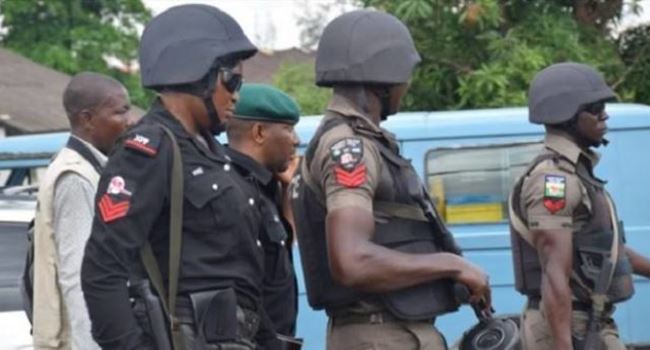
The Lagos State Police Public Relations Officer (PPRO) Benjamin Hundeyin paraded the woman before newsmen on Tuesday at the State Police Command Headquarters in Ikeja.

Hundeyin said that the suspect was arrested after a concerned citizen found the unnamed 10 years old girl around the Agege area of the state.

The preteen was reportedly taken to Pen Cinema Police Station, where police discovered prohibited drugs in her panties while trying to bathe her.

Hundeyin said ” The discovery prompted further questions, which revealed that this has been going on for a long time. So, we have to extend the investigation to her house and we were able to bring her guardian (suspect) to the police station.”

“She did not deny it. She admitted that this had been her way to courier her drug from her house to the shop where she sells them to beat police checks.”

The Lagos police image maker also stated that ” That is why we are exposing her to Nigerians and the method used by drug barons to courier drugs within the metropolis,”

Hundeyin stated that the little girl will be handed over to her parents, who are based in Ilorin, while the suspect will be prosecuted.

The young girl told newsmen that she was brought to Lagos from Ilorin, Kwara State by the suspect, who is her mother’s sister.

She added that two days after she came to Lagos, her aunt, whom she called ‘ Mummy’, planted the drugs into her pants and instructed her to take them to her shop.

The victim said ” My ‘mummy’ told me that she has to plant the drugs on me because of police search. I will pass the police, they will not search me.”

” I am always sad anytime she planted the drugs on me. I will not complain because she will beat me. My father has died, my mummy is in Ilorin.”

The little girl also added that ” I want the police to take me to my grandfather. My grandfather is in this Lagos.”

The suspect confessed to the crime of selling illicit drugs but claimed that she was only introduced to the business three months ago by a man he identified simply as Azeez

She stated that she had sent the little girl to buy bread when she went missing and pleaded for forgiveness from the police.

Tribune

The destruction of seized crude oil in Nigeria, a wasteful approach in the fight against oil theft

By Akintayo Balogun Esq. 

The reports of the destruction of seized crude oil and the vessels conveying the crude illegally siphoned or explored from the Niger-Delta region of Nigeria by Joint Task Force and other security agencies in recent times have drawn comments, criticisms, and series of reactions as to the impropriety or otherwise of destroying these seized crude oil and vessels immediately upon arrest without any legal action or seeking any court order to carry out the destruction of the substance. It has been a practice of the Joint Task Force that immediately upon the impounding of crude oil and the vessels as well as arresting the culprits, they proceed to destroy the substance found with them.

In a recent interview, the Director, of Defence Media Operations, Major General Edward Buba, disclosed during the military’s biweekly press briefing in Abuja that the burning of the vessel was in line with the military’s Standard Operating Procedures on stolen crude oil. He stated thus, “There are Standard Operating Procedures concerning arrested vehicles, equipment, and vessels, among others, that are associated with oil theft. That procedure stipulates that such equipment, vehicle, or vessels should be destroyed instantly.” This position by the military has been met with much criticism and disaffection by the general public and particularly the National Assembly. The burning of the vessel drew criticisms from some quarters with the Nigerian House of Representatives cautioning the military and other security agencies to desist from burning vessels with stolen crude.

As much as the action/effort of the Joint Task Force and other security agencies is laudable and plausible in the fight against crude oil theft and other vices in the Niger Delta region of Nigeria, the destruction of crude oil and vessels seized by the security operatives is doing more damage than good to the country at large. There is absolutely no justifiable reason for the destruction of these substances and their carriers.

Allegation of cornering of stolen crude oil 

Unfortunately, the immediate destruction of these seized substances and their carriers has raised more suspicion as to the honesty and sincerity with which the crude oil is being destroyed. There have been unconfirmed reports that not all the crude oil that is seized is being destroyed during the destruction exercise. A good portion of the crude oil is being reserved and then sold again by the arresting officers. However, a certain quantity is destroyed to cover up as an entire destruction of the stolen crude. While we may not be able to confirm the veracity of the above allegation, we must state categorically that the destruction of stolen crude oil does in any way help neither the Nigerian economy nor the environment that is at the receiving end of the resulting pollution. 

 Effects of the Destruction of crude oil and their conveying vessels

1. Severe Environmental Pollution: This is the first major disaster that follows the destruction of crude oil. When the so-called destruction is being carried out, so much pollution is done to the environment. There is air, water, and land pollution. The atmosphere is contaminated with hydrocarbon substances and other dangerous chemicals released into the atmosphere which is poisonous to humans, plants, and animals. There is also pollution on the ground surface where the burning/destruction takes place. The environmental damage is enormous. The Niger Delta region is already being severely affected by various activities such as gas flaring, oil spills, and other forms of pollution. Now adding the burning of seized oil vessels to the already bleeding environment is adding insult to injury. The burning/destruction of seized oil vessels is to all intent and purposes very wrong. The ecosystem in the Niger Delta region is already being heavily polluted by oil exploration. The destruction of this stolen only further deepens the destruction of the ecosystem in the region. 

2. Safety of lives and property: It is reported that some of the destruction carried out by the Nigerian forces is done by bombing the vessel that had been seized from the oil thieves. Apart from the environmental hazards caused by the destruction, the act of bombing these vessels also causes a major security threat and psychological trauma to the inhabitants of the communities where the crude oil is being destroyed. The sound of bombing can send a community into serious panic.  

3. Destruction of sources of livelihood: The destruction of crude oil-laden vessels also deprives the people of their sources of livelihood. When the chemical waste from burnt vessels and crude oil comes in contact with the environment and particularly the water, it kills and or contaminates the aquatic life and poisons the surrounding soil. Several fish farmers in the Niger Delta region have been rendered jobless following the severe contamination of the water bodies upon the destruction of seized vessels and crude oil. 

4. Loss of Economic earnings to the Federal Government of Nigeria: Destroying badges of crude that run into millions is equivalent to denying the nation and its people the revenue that can be derived from such large amounts of crude. This is a country in dire need of resources to rebuild the economy, build infrastructures, and to better the lives of the people. The country is in heavy debt, yet we are destroying the sources of enhancing our economy. The burnt vessels can be transformed into other uses like enhancing the work of seafarers in the country. Nothing stops the Federal Government from taking immediate possession of seized crude oil and with the backing of the court; the same is forfeited to the Federal Government. We must state that the fact the crude was stolen does not make the crude bad. The stolen crude is the same crude being explored by Shell and other exploration companies in the Niger Delta.

5. Absence of evidence to prosecute culprits: We stated earlier that culprits involved in stealing crude oil from the Niger Delta are being apprehended. Now what is the evidence that you have against them to prove their activities when all exhibits have been destroyed? As a legal practitioner defending persons being prosecuted for being in illegal possession of crude oil, I will demand the said substance to be tendered in court or any court order regarding their lawful and proper disposal. Failure to produce the evidence for which the accused persons are standing trial goes to the root of the charge. Having destroyed the crude oil found with these burglars, what evidence does the government have to tender against them at the court of law if they are charged in court? There were recent judgments of the Federal High Courts in Nigeria where persons accused of oil theft were let off the hook because the materials that would have formed the evidence to be used against the accused persons had been destroyed or were not brought to court. The vessels and crude oil ought to be preserved as exhibits to prosecute the owners of the vessel. 

A typical example is the statement by the military high command which stated that it has discovered and destroyed no fewer than 23 illegal crude oil refineries and “arrested 60 suspected oil thieves in the last two weeks”. However, the entire badges of crude worth about N202, 788, 300.00, seized from the suspects were allegedly destroyed. What then do you do with the 60 suspected oil thieves in the custody? It will be futile to charge them in court or keep them in custody indefinitely when there is no evidence whatsoever against them. 

All these and more are reasons why the Federal Government of Nigeria must put an immediate stop to the destruction of seized crude oil and the vessels conveying them and give a counter order to the Joint Task Force. The action of the Joint Task Force or any other security agencies involved in the destruction of seized crude oil is doing much more damage to the environment and the economy than solving it. 

Solution to Disposal of stolen Crude Oil

There is just one way out in terms of a solution to the problem of disposing of stolen crude oil. All the government needs to do is to get a court order forfeiting the said crude oil to the government with proper documentation. Using the case of stolen funds for example, over the years in Nigeria, it has been the practice in the Nigerian courts that when funds obtained by fraudulent means are being recovered, the court usually makes orders that the monies be forfeited to the purse of the Federal government or the State government either temporally or permanently depending on the nature of the suit. This same rule should apply to stolen crude oil and the vessel used in conveying them that has been recovered. They should be forfeited to the Federal government which in turn can take them as the same crude oil it has been exporting or refining.

This is a more profitable way to handle oil theft for the government and the community where these products are being stolen from. This to me serves a better form of deterrence to oil burglars than destroying the substances. It would be more painful for oil burglars to see government benefit 100% from their malevolent labour than for both parties to lose out completely. What the government needs to do once substances of this nature are being seized, they should obtain a court order seeking the leave of the court to temporarily or permanently forfeit the seized crude oil to the Federal Government. This should however be done with proper documentation and profiling as well as pictorial evidence which could serve as evidence in court if the existence of the substance needs to be tendered in court.

Conclusion 

The concept of destroying crude oil seized from oil burglars is hasty, unwise, wasteful, unnecessary, and a very bad decision by the officers of government both economically, environmentally, psychologically, and in every wise to the members of the community and even Nigeria at large. The suggestion that it would serve as a deterrent to others who are involved in oil theft goes to no issue and is a very shallow argument. Oil theft has been for decades in Nigeria and destroying stolen crude oil has never changed or stopped the practice. For the sake of the communities where these explorations have taken place, the act of destroying crude oil seized from oil thieves should be stopped as a matter of urgency. The revenue that the nation should have generated vide the said crude oil is being thrown away for just nothing. Nigeria is in serious debt and has spent the last eight years living on borrowed funds from every borrowable source. While this is the situation, Nigeria is carelessly throwing away the bath water and the baby. This ought not to be.  

Akintayo Balogun Esq., LL.B (Hons), BL, LL.M, is a legal practitioner in private practice, based in Abuja, FCT. A prolific writer, public affairs analyst, and commentator on national issues. [email protected]

7 Habits that turn boys into men

7

1. Taking Responsibility:

Real men understand the importance of taking responsibility for their actions and decisions.

They don’t make excuses or blame others for their circumstances.

Instead, they own up to their mistakes, learn from them, and strive to do better.

2. Developing Self-Discipline:

Men cultivate self-discipline in all areas of life.

They set goals, create effective routines, and stick to them.

By mastering self-discipline,

they resist instant gratification and make choices that align with their long-term visions.

3. Seeking Continuous Growth:

Men are committed to personal growth and lifelong learning.

They actively seek new knowledge, skills, and experiences.

They embrace challenges, step out of their comfort zones,

and constantly push themselves to improve in all aspects of life.

4. Cultivating Emotional Intelligence:

Men understand the importance of emotional intelligence.

They develop self-awareness, regulate their emotions, and empathize with others.

They communicate effectively, handle conflicts maturely,

and build strong, meaningful relationships

5. Showing Respect:

Real men treat others with respect, regardless of their background or status.

They:

– Listen attentively
– Value different perspectives
– Treat everyone with dignity

They understand that respect is earned through actions, not demanded.

6. Practicing Integrity:

Men uphold high moral and ethical standards.

They act with:

– Honesty
– Honor
– Integrity,

in their personal and professional lives.

They value trust and are true to their word,

consistently aligning their actions with their values and principles.

7. Embracing Leadership:

Men embrace leadership in their lives.

They take initiative, make decisions, and inspire others to reach their full potential.

They lead by example, empower those around them, and contribute positively to their:

– Families
– Communities
– Workplaces


Subscribe to ENTERPRENEUR LIBRARY for more.

Reintroduction of the Park and Pay Policy By The FCTA: An exploitative and obnoxious venture in the midst of hardship

By Obioma Ezenwobodo Esq.

The recent plan by the Federal Capital Territory Authority to reintroduce the notorious and exploitative park and pay policy in the FCT has once again shown the utter disconnection between the government and the governed in Nigeria. In a time when Nigerians and residents of the FCT are experiencing biting hardship due to the sudden withdrawal of fuel subsidy, the least the FCTA, which is a primary beneficiary of the subsidy removal, could do is to enact a policy that would further tighten the noose on innocent motorists in the FCT.

Ezenwobodo Esq.

It must be noted that this same policy was in operation in the FCT before it was nullified by Justice Peter Affen of the FCT High Court, Apo Abuja in 2014. Before then, roads in the FCT were partitioned to different unregulated contractors who unleashed all manner of touts and street urchins to harass, intimidate and exploit innocent motorists and residents under the guise of restoring sanity on the roads. Such was the level of carnage before they were sent packing by the court.

The renewed attempt by the authority of the FCTA to reintroduce this policy under the belief that it has acquired necessary legality is deceptive and lacking legal basis. 

The FCTA should not capitalize on its inability to provide affordable and efficient public transport system in the FCT to impose obnoxious levies on innocent motorists who are filling the gap by providing their own transport system. The FCTA is advised to concern itself with ways of alleviating the hardships residents of the FCT are undergoing. This can be done by reintroducing the defunct “El’Rufai” Bus Shuttles as palliative measures for the benefit of the residents.

Obioma Ezenwobodo Esq.

Chairman,

NBA Garki Branch, Abuja

Grandfather father from Hades sold daughters baby for N700,000

Officers of the Oyo State Police Command have arrested a grandfather who allegedly snatched his daughter’s day-old baby in Oyo town and sold the female infant to a baby factory in Abia for N700,000.

So far five accomplices of the grandfather have been arrested at the baby factory.

The Oyo state Commissioner of Police, Mr. Adebola Hamzat, told newsmen in Ibadan on Saturday that the grandfather took the baby girl from her teenage mother, Sarah Chukwuka, on July 10.

He was later arrested at his hideout in Ibafo, Ogun.

“The suspect, who identified himself as the biological father of the teenage mother of the day-old baby girl, confessed to the crime.

“He explained how he took the baby from the mother, pretending that he would hand over the baby over to a caregiver.

“The suspect also explained how he moved the baby to Abia where he sold her to the owner of the baby factory at Obehi in Okwa West Local Government Area of the state for N700,000.

“A raid on the baby factory led to the arrest of a female suspect identified as Bunmi and four other accomplices,’’ Hamzat said.

He said a bundle of new birth certificates and some equipment used in labour rooms were equally recovered from the factory.

The police commissioner said the five additional suspects could not explain the parentage of the babies recovered from the factory.

Hamzat also paraded six other suspects arrested for robbery, kidnapping and cultism and car theft.

He said the suspects robbed a victim of expensive mobile phones, laptops, and jewellery and some other valuable items worth millions of Naira in Ibadan while armed with machetes, jack knives and other dangerous weapons.

Hamzat said the suspects also confessed to a series of previous criminal activities they had masterminded at different locations in the Oyo State capital.

Nurture the pinciting habit

By Chinua Asuzu

Pinciting means using pinpoint or jump citations—citations to the precise page you’re referring to or quoting from.

“Pinpoint citations are those that include the exact page on which the quote, proposition, holding, or rule is found. Use them to show your reader the exact source of important points.” Mary Barnard Ray & Jill J. Ramsfield, Legal Writing: Getting It Right and Getting It Written, 4th ed. (Thomson West, 2005), 72–63.

In your citations, include pinpoint references when appropriate or available. Pinpoints refer to the page of the passage in an article, book, case, or law report you cite, quote, or rely on.

“The brief should always disclose, not only the page on which the opinion begins, but also the exact page on which the pertinent discussion occurs.” Mortimer Levitan, ‘Confidential Chat on the Craft of Briefing,’ 4 Journal of Appellate Practice & Process (Issue 1, 2002), 305, 310.

Pinpoints are always helpful when referring to any species of authority, but in judicial authority (cases and law reports), they’re essential when your citation refers to dicta, holdings, propositions, quotations, or rules, as generally happens.

Pinpoint citations to judicial authority refer to precise pages (and in some law reports, the paragraphs).

For example, in the citation “Emordi v Igbeke [2011] 9 NWLR (Part 1251) 24 (SC), 35G–H (Fabiyi JSC),” the case is reported from page 24, the pinpoint is page 35, and the pinpoint paragraphs are G to H.

Don’t insert the words page or its abbreviation p. or pg., whether in lower- or uppercase.

Don’t precede the pincited page number with at or particularly at.

When addressing the court orally, you can say at or particularly at [page], but don’t write either term.

Forget per [judge] when you pincite. Just add the judge’s name in parentheses after the pinpoint page.

The Nigerian Weekly Law Reports includes lettered paragraphs (not paragraphs in the grammatical sense). So pinpoint to the paragraph: 107G–H (Ademola JSC).

Pinciting is part of your task of making the reader’s task easier. Pinciting enables a reader desirous of verifying your citation to do so easily and quickly.

Don’t waste your readers’ time by forcing them “to scroll through the entire case to find the relevant part. Pinciting makes it easy for the court to confirm that the law says exactly what you say it says. Being reliable when citing the law makes you credible.” Gerald Lebovits, ‘Persuasive Writing for Lawyers–Part II,’ 82 NYSBA Journal (No. 3, March/April 2010), 64.

Pinciting lends credence to your analysis and enhances your ethos.

If you cite a concurring or dissenting judicial opinion, say so after your pincite: (Augie JSC, concurring) or (Nweze JSC, dissenting).

If you cite an article in a law journal, you cite the page of the journal from which the article starts. To pincite, you then pinpoint the page you are quoting from.

Maxwell Ukpebor, ‘Abuses in Transfer Pricing,’ 2 West African Tax Journal, 18, 32.

In the above example, you’ve cited an article by Maxwell Ukpebor titled ‘Abuses in Transfer Pricing.’ The article is published from page 18 of volume 2 of West African Tax Journal. This means that page 18 is where the article begins. The passage you quote from is on page 32. Including this page is pinciting.

Intimate Affairs: That she may vibrate and ring, By Funke Egbemode

Excerpt from another of our regular Girls Day Out (G-DO)

‘I was finally dozing off when I felt Zack’s fingers running down my back. I moved closer to the wall, taking most of the duvet with me. Trust him, he didn’t take the hint. He simply pulled me close and started searching for those buttons that disarm me normally. He worked them as much as he wanted but he didn’t get the usual response. Why? Because I was fuming inside. Although I must confess it took every ounce of all the willpower in me not to moan and just give in to the waves running down my spine. Somehow, Zack didn’t relent until he unveiled the main event and I refused, still, to dance to his beat. He had his way and I made my point and he didn’t find it funny. When he was done, he returned to his side of the bed. You could almost touch his anger and frustration but what the heck, he can’t always have his cake and eat it.’

‘Kenny, so what rule did Zack break that earned him the one-wing flight?’ Lillian asked. I must have been frowning so badly that Kenny decided to take me on instead of answering Lillian’s question.

‘Funke, don’t even look at me like that. Do you know what he did? Do you?’

‘I don’t but if a man paid in full for an oil rig, nothing should stop his exploration activities…’ I responded.

Bola was on my side too: ‘We were all there when Zack prostrated with his uncles and he bought everything on that your long engagement list, abi?’

Kenny was very furious now. ‘Maybe it’s time he got a refund. Maybe this is not working.’

‘Eh eh eh, calm down Kenny. You know nobody knows how to operate your buttons like Zack…’

‘Which is why you gave him two sets of twins in six years. The guy is too much.’ We were all laughing now.

‘Fine, so you girls should encourage me to try another man and see if my buttons won’t work somewhere else.’

‘Buttons wey don rust?’ That earned me two throw pillows in the face.

Anyway, we eventually calmed Kenny down. Not that Zack’s rig was at risk of a hostile take-over but Kenny was very upset and it was our duty at our Girls’ Day Out (G-DO) to truly unwind and compare notes in ways that help our individual relationships.

The problem was Zack had said some very unsavoury things earlier in the evening to Kenny and the poor girl had had a good cry in the shower where their last child, a very perceptive 10-year-old, would not hear her. She blamed her bloodshot eyes on the new antiseptic soap.

It was one of those days in Lagos accompanied by a demonic, frustrating traffic jam, the type that had you hissing every 10 minutes. All through the four-hour drive, Kenny was working on her laptop, doing a report of a project which she must get ready for the Board before the week ran out. So, she got home late and her darling husband had to help his daughter with her homework, cook her noodles and buy diesel because Kenny forgot to make all the arrangements in the morning. She had planned to get home early.

Zack flared up, obviously from a ‘conglomerate’ of frustrations of Kenny working late. He went like this:

‘What kind of job is it that keeps you away from being a proper mother and wife? We hardly see you? When last did you cook for me? If you don’t do something about this nonsense, you will have to choose between that job and this marriage.’

Aaaah! That was killing a mosquito with a sledgehammer. Ultimatums are bad and somebody should have told Zack that ultimatums are a major killer of the female libido.

‘So do you still blame me? Even you, Funke…?’

Cheeky girl. Why was she mentioning me in particular now? I’m no longer a member of the Wives Club but I understand why she was focussing her ‘aggro’ on me. I am of the school of thought that a man who wants real action at night must be nice and kind during the day. If a man is mean during the day, then he must do a one-wing flight at night. Don’t deny him altogether but let him see the difference between a full flight at 33,000 feet above sea level and a noisy, harsh one-wing one.

That a woman is now your wife does not mean you can treat her like trash or take her for granted. You cannot call her names during the day or insult her parents at the dinner table and expect to get her to do all you want two hours later in bed.

Men, they like their women to function at full-installed capacity in bed. They like the moans and really hip ringtones. Throw in a few colourful lines and they rev up the speed. Oh yes, and real women know when to make the right noises. It is all legit and holy too, to do all that, in marriage. Every good wife knows how to claim her rights and even ‘obtain’ her husband when he is on cloud nine.

On the other side of the Cloud Nine Street, however, is the cold-fish-and-log-of-wood Boulevard, where women just do their duties and let the man roll off. Now, men don’t generally like those two acts and they need to know why their women move from hot, to warm and then to cold.

Bros, you need to pay attention. You need to watch your caustic tongue and hurtful attitude. A woman is not wired to turn the bedroom heat on and off anyhow any time. Only men are made like that. The honey place of a woman is hidden deep in her and connected to her heart and head. If either of those places are hurting, she will not vibrate, least of all ring out. She will be on permanent silent mode.

Women are not like men. We are very emotional beings, which is a good thing and the reason why we do well at whatever we focus on. Our feelings run very deep and we are not wired to turn it off and on like men are able to. While a woman’s intimate palace is deep in her body, a man’s staff of office is situated outside his body. It’s like an independent service provider. It can rise to the occasion even when the man is ill and hospitalised. A man’s third leg has a mind of its own and has the ability to recover quickly from insults, harassments and so on. Not a woman. She takes the insult to heart. She may act normal but her hurt runs deep.

If you as much as insinuate that your wife is having an affair, she may never forget it and it certainly will affect your sex life. If your mum comes and makes her life hell all day, you can’t expect maximum response when you start running your fingers through her hair later. If you let your siblings run roughshod over her without cautioning them, you can’t expect her to wrap her arms and legs around you later.

Fine, nobody is asking you guys for red roses and purple prose but if you want to fly with both wings, your wife’s feelings must be kept warm and cosy. If she’s unhappy, other activities will be unhappy, if you get my drift.

You guys know how you pamper and spoil your girlfriends rotten and that’s why you get the total works, ain’t it? Can you extend the same graces to the wives?

If you want her buttons to work, you need to keep them oiled. A long flight always costs, and to get ‘there’, you need two wings. Great. Now go and deliver the real dividends of conjugal democracy.

Funke Egbemode can be reached on —[email protected]

Who will cry when our leaders die? 

By Martins Oloja

The word on marble above shows the organic source of the topic. It is from a classic from Robin Sharma, the original ‘Monk Who Sold His Ferrari’. The topic derives from his book, “Who Will Cry When You Die?” It is a time to resort to motivational writing for our leaders who don’t seem to be listening to what oracles and sages in the civil society including the media have been saying and writing. Our leaders appear to have missed the road again. They hate media reports of their listless activities. They don’t like the constitutional role of the media – monitoring governance and holding government to account.

They lean only on their understanding through their friends and relations who pose as consultants and experts. They don’t want to respect even the organic law of the land, the constitution, let alone public service rules and regulations. They don’t like to comply with treasury rules as encapsulated in the financial instructions. They drop the appropriation acts as soon as the executive ink on the documents dries up. They don’t study editorials and commentaries as warning signals and writings on the walls anymore. After all, our leaders have invested heavily in the multi-media business. They don’t need the ‘irritation’ of independent media anymore. After all, the political economy of a free press is quite toxic and complicated at this time.

Our leaders can afford to recruit even media executives to do even dirty jobs for them. They can pay hack writers to publish what they would like to read. They now pay dubious ‘media entrepreneurs’ to monitor adversarial reports about them. They constantly receive awards from such artful ‘media entrepreneurs’ who have polluted the media space. They have assisted in diminishing the influence and agenda-setting role of the media. Our leaders don’t listen to what the people are saying through the media anymore. Sadly, they don’t understand the times. We have written and written, spoken and spoken million truths to their power. They pretend to be deaf and dumb. They are even specialising in denying reports they regret giving out. They engage lawyers to write to the editors to remove even authentic stories from digital portals. They don’t want anybody’s voices of reason and wisdom. They don’t want the law to rule them. They are the law. They are the lords. It is the rule of lords, not the rule of law. They don’t care about features that after elections, there should be governance.

They don’t care about the implications of winning elections and losing the people. They don’t listen to commentators who warn daily about the danger of ignoring civic competence in governance. They celebrate mediocrity as long as the mediocrities and neophytes they recruit are loyal and useful for tomorrow’s political engagements. They employ mercenaries daily to appear on early-hour television shows to deceive the people. They don’t know about the power of the truth they daily bury in the grave. They haven’t read in their classics that you can bury truth in a grave but it won’t stay there. Yes, our leaders lean only on their understanding. They can’t understand why Authur Miller once warned leaders to note that, “a good newspaper… is a nation talking to itself”’. They don’t know why a leader of leaders once preferred a newspaper without government to a government without a newspaper. They want to kill the independent media.

But we will not give up the fight for a new Nigeria that works for all. That is why I would like to resort to motivational talks to our leaders. Maybe that will make them listen. Let’s share some tested words of life with them. I would like to encourage our leaders to get some soft power from words of grace from the masters such as Robin Sharma, among others who have been motivating successful business and political leaders who care to listen to what the civil society, including the media is saying to them. I mean leaders who will not bury the truth told to their power in the grave. And so let me introduce some wisdom nuggets from the classic of Sharma, “The Monk Who Sold His Ferrari”. It isn’t a compilation of editorials. It is a compact and useful book our leaders should read too. But they should also ask their political consultants and aides to buy for them the one that inspires today’s topic: ‘Who Will Cry When You Die?’

We are unarguably passing through an area of turbulence and our pilot, the commander-in-chief, is supposed to tell us that there is nothing to fear. But we the citizens in the flight can’t believe the hubris from our pilot that we have nothing to fear now. This is therefore a time to motivate our leaders at all levels that they need to do some introspection on who will genuinely cry in this country if they die today. We may even extend it to them to reflect well on ‘who will cry if their regime, sorry government dies today?’. That is the motivational message here today. It is also a time to stir their conscience about what another author and inspirational writer, David McRaney calls  “the public goods game”.

“When you were born, you cried while the world rejoiced. Live your life in such a way that when you die, the world cries while you rejoice.”― Ancient Sanskrit saying

Does the gem of wisdom quoted above strike a chord deep within our leaders? Do they often feel that life is slipping by so fast that they just might never get the chance to live with the meaning, happiness and joy they think they deserve? If so, then this very special book (‘Who Will Cry When You Die?’) by leadership guru Robin S. Sharma, that has transformed the lives of thousands, will be the guiding light that can lead them to a brilliant new way of living and governance.

In this easy-to-read yet wisdom-rich manual, Sharma offers more than 100 simple solutions to life’s most complex problems, ranging from a little-known method for beating stress and worry to a powerful way to enjoy the journey through life while creating a legacy that lasts. When our leaders are finally ready to move beyond a life spent chasing wealth and popularity through media from pages and prime time without life-changing projects, to one of deep significance, this is the ideal manual for them. They need to reflect today on a life of significance, Rick Warren, another purpose-driven author has written extensively about.

Our leaders who keep recycling themselves from commissioner to governor and from governor to senator and from governor to minister should look into the seed of time and ask themselves: Who will cry when you die? If this set of dealers, sorry leaders feel that few people will miss them, it may be a time to make some changes. To give your best and to enrich other people’s lives takes a bit of effort, but it’s worth it. All these never-do-well leaders should aim to find personal fulfillment and live their lives to their full value. They can make an active change by using their time productively and recognising what is most important to the people. They will then realise that the best version of them is one that will surely be missed by others.

In ‘Who Will Cry When You Die?, Sharma offers advice on overcoming the difficulties of life while developing personality and skills.
Our leaders, once again, ask yourself:  Who will care about you when you die? Have you ever thought about who will attend your funeral? Who will speak? Who will cry? And who will still be loving you? Asking ourselves questions like these can bring peace and calm to our daily life. These questions help remind us that we are human. We are not robots, and our days do not have to be repetitive.

Similarly, Sharma’s manual urges us to schedule our daily life tasks. This is what will make our leaders think more about accountability and servant leadership. We should pay attention to this schedule and identify when we are not spending enough time being human.  We must allocate time for our loved ones, family, friends, and nature. We must also allocate time to being alone. Being alone allows us to think about life and the communities we serve. We should do what we love to do. Scheduling, passion, and self-discipline are ideas that consistently arise throughout the self-development manual. Scheduling is an important art that everyone needs to master to become highly effective and successful. Our leaders who daily make mistakes even on simple governance issues need to take the basic lessons seriously. We should make a to-do list to be significant in office and power every day.

The real secret to getting things done is to know what things need to be left undone. Our leaders appear disorganised and disoriented every day. That is why we are not making progress. An ancient word of life teaches us that we should let things be done properly and in order. I learned from a Middle-East ancient journal that being organised and orderly, is a national culture that is driving development in the United Arabs Emirates (UAE) and indeed most parts of the oil–producing and prosperous Middle East.

Studying ‘Who Will Cry When You Die? can help leaders live life to the fullest. People dying is a tragedy but often people’s lives are a greater tragedy. This is because they are wasting their time on frivolities on earth. We all want to leave a legacy when we die. We all want people to remember us forever. Let our leaders talk of life’s concept remarkably without losing its very essence. Our leaders should work to show themselves approved by the people they govern. Let’s look at some of our past leaders we cried for when they died. Most southwest political leaders like to don the famous Awolowo cap. But how many of them can be cried for as we continue to do for the late Chief Obafemi Awolowo who died since 1987 at the age of 78?

The iconic Awolowo, an uncommon strategic thinker and planner who was once referred to as “the best president Nigeria never had” introduced a free and compulsory basic education policy as a fundamental objective and directive principle of state policy in Western Nigeria. He established a world-class regional university as a ‘global’ centre of research for tropical agriculture and medicine. Another leader, Sir Ahmadu Bello in the North also established another world-class university, Almadu Bello University in Zaria. In the same competitive federalism spirit, Dr. Nnamdi Azikiwe established another remarkable University in Nsukka. Inexplicably, a federal military government seized all the three centres of excellence in 1975 without paying compensation to the regions. But then, before we debate their return to the owners someday, let our leaders of today note that when the three leaders, (Awo, Bello, and Azikiwe) died, we all cried for them. And so our leaders should ask themselves today: who will cry when they die?

Ministers Miscellaneous

By Chidi Anselm Odinkalu

161 days after the Independent National Electoral Commission (INEC) picked a winner in the Nigeria’s presidential election at the beginning of March and 72 days after the inauguration of a new administration, the Senate on 8 August, 2023, transmitted to the presidency the names of 45 persons whom it had cleared for appointment as ministers, including some politicians described as some of “the most violent, corrupt politicians the country has ever seen.”

Azu Ishiekwene – a columnist who is not unsympathetic to Bola Ahmed Tinubu – writes about the in-coming cabinet that “a few nominees…. make the legend of Robin Hood look like a child’s play” and raises informed doubts about the “integrity of the nominees list”. This is an insult to Robin Hood who is reputed to have accomplished some good with his plunder.

This raises two legitimate questions about the cabinet list. The first concerns its provenance. On this, Leadership newspaper alleged that an original list of cabinet nominations had been “tampered with”, laying responsibility for this at the feet of the Chief of Staff and former Speaker of the House of Representatives, Femi Gbajabiamila. The new chairman of the ruling All Progressives Congress (APC) and immediate past governor of Kano State, Dr. Abdullahi Ganduje, claimed that neither he nor the president knew anything about a female nominee from his state who was subsequently stood down from the list of nominees, before being replaced.

The second question goes to the strategy that informs the list. For an answer to this, we must look at the composition of the cabinet list. Eight of the 45, representing 17.78%, are women. This is marginal improvement on the seven women (16.67%) who made Muhammadu Buhari’s 42-member cabinet in 2019 but considerably less than the 13 (31%) in the 41-member cabinet of President Goodluck Jonathan in 2011. Three of the eight women are from the south-east zone, which gets the least number of ministers. Two are from the north-west, which has nearly double the number of ministers from the south-east.

The final list that returned to the presidency also features eight former governors and a similar number of former or serving legislators. With a ministerial list largely comprising a majority of former elected officials or senior political office holders, the screening felt like a mutual admiration club mostly bereft of both seriousness and purpose. What passed for ministerial screening for most of the nominees was a process of ritualized bowing, after which the senate set them free to go.

In response to what has become known as “bow-and-go”, columnist, Nosa Igbinadolor, complained that the “Senate has turned its screening powers into a laughable jamboree that ensures that incompetent and corrupt former governors and unproductive MDA chiefs walk boldly through the process to become ministers because they are not being sufficiently asked critical questions.”

For playing their part excellently in this ritual, Senate President, Godswill Akpabio, himself also a former Governor and former Minister, announced to the senators with some initial relish at the end of the process, that they were the proud recipients of a “token” to see them off to their holidays. When some fastidious officials called his attention to what appeared to be a faux pas, Senator Akpabio upgraded the token to “prayers”. This was a mere fortnight after he appeared to take equal relish in joking about the contagion of poverty in Nigeria. The appearance of a self-absorbed senate leadership was not lost on Nigerians.

As they departed for their holidays after the screening, some senators at least appeared to share that feeling. Senators reportedly let it out that the “token” sent to them from the Senate President was a mere two million Naira. Some of them could not hide their disappointment at the “paltry sum” while others appeared to be clearly upset that the Senate President had gratuitously exposed the fact “that they received bribe money from ministerial screening.”

Premium Times computed the sum of money administered among senators for this “token” at 218 million Naira, a figure ostensibly arrived at by multiplying the number of Senators (109) by two million. It is claimed that the money was part of a pot of one billion Naira contributed by or on behalf of the ministerial nominees to facilitate the screening process. If so, then it seems clear that some members of the Senate would have received more than just two million Naira and that the sum of N218 million is only a fraction of what got shared out, unless the Senate President was overcome by an uncharacteristic affliction of selflessness.

Sources in the senate compare this with the sum of $30,000 which was the reported capitation for each Senator after the conclusion of a similar process four years ago. If that figure is correct, it was nearly fifteen times the size of the “token” administered this time around to the senators.

If, however, the suggestion that the screening process was under-written by a deferred quid pro quo turns out to be true, it could go a long way in explaining why the process felt like a mutual back-slapping festival enacted with parliamentary circumstance. For instance, the Senate failed to account for the fact that at least two of the nominees, a male from Lagos and a female from Katsina, do not appear to have done the mandatory National Youth Service Corps (NYSC) scheme. The NYSC Act, which is entrenched in the 1999 Constitution, makes national service mandatory for eligible persons. Those who fail to undertake it are ineligible for employment assuredly in the public service or political office. 

In 2018, Kemi Adeosun, whose NYSC discharge certificate turned out to have been invented, was forced to resign as Finance Minister. Five years later, the 10th Senate under the leadership of Senator Akpabio appears to have decided to retrench the NYSC Act into a statutory artefact without any need for a formal parliamentary process.

For some reason that remains still undisclosed, however, the Senate at the point of voting through the confirmations, failed to extend its forbearance to three nominees. One of the three is former Minister of the Federal Capital Territory and recent Governor of Kaduna State, Nasir el-Rufai. Neither the senate nor the presidency has issued any formal reason for the failure the confirm Mr. el-Rufai besides the unspecified claims of delayed “security clearance” or “suppressed animosity” from the presidency. 

Mr. el-Rufai’s first ministerial screening in 2003 was nearly scuppered after he accused some senators then of bribery. This time around, his nomination appears to have been sunk by “allegations of human rights abuses, unguarded public utterances, and a purported flood of petitions” masterminded by some well-connected persons.

In a quarter of a century in public life, he has got into what has been delicately described as a “romance with controversy.” In 2016, Mr. el-Rufai gloated as state governor that he had paid identified killers in Southern Kaduna to stop killing. As State Governor, he gleefully took credit for the death in 2010 of President Umaru Musa Yar’Adua, who was his senior in high school. Ahead of the 2019 general election, he threatened international observers, warning them that they would “go back in body bags”.

Shortly thereafter Mr. El-Rufai went to Lagos, the political home of Mr. Tinubu, to attack him as a political godfather who needed to be defenestrated. He has been viciously intolerant of criticism and one of his foremost critics as governor, Dadiyata, has been missing for over four years. This record forced the Nigerian Bar Association (NBA) in 2020 to cancel an invitation to him to address their annual general conference.

After the Senate declined to vote through his nomination, Mr. El-Rufai remembered that he is a doctoral student in the Netherlands and stood down so he could return to school. It is not inconceivable that his record as governor will attract attention if and when he reports to Europe to pursue his doctoral research.

In the interim, Muhammad Pate, an accomplished doctor in both medicine and the academia and one of the few experts in the world on health systems, emerged as one of the few bright spots on the ministerial list. Another bright spot on the list is the talented Yusuf Tuggar, Nigeria’s current Ambassador to Germany. Both Yusuf and Muhammad, coincidentally, are from Bauchi State.

A lawyer and a teacher, Odinkalu can be reached at [email protected]

Teenager spends 5 Years in jail on false charges

I was in court today for a matter and witnessed something in another case that warmed my heart. But still left me hopping mad.

Three young boys were on trial for cultism-related charges. They were being prosecuted in the State High Court by the Ministry of Justice.

The IPO was cross-examined today by counsel to the 3rd Defendant.

The IPO confirmed that the boy made a statement that he was not at the scene of the alleged crime on the day/time in question.

Read Also: How Nigerian prison officials arrange for young people to serve jail terms for criminals, convicts— Falana

The IPO confirmed that the boy told him where he was on that day and who he was with.

But he never went there to talk to them.

The IPO confirmed that he went to the boy’s house to search and never found anything related to cultism there.

Finally, he was asked: from the totality of your investigation and the evidence you have given, there is nothing to tie the 3rd Defendant to the offence of cultism.

Read Also: A slow journey to Venezuela

After five minutes of looking up and down, he said, yes.

The court asked, “Any re-examination?”

Prosecuting counsel took another five minutes rustling through her file before she said, none.

My thought: then why was he charged?

It’s like the court was reading my mind.

With the witness still in the box, he asked the prosecutor and IPO, why did you charge him?

No answer.

“How long has he been in prison awaiting trial?”

3rd Defendant counsel, “Since 2018”.

Court: why do you people behave like this? He told you where he was that night, you didn’t go to check. You didn’t see anything incriminating in his house. Yet you charged him and he’s been in detention for 5 years? I will write my judgment now and acquit him!

The litigants at the back erupted in applause. I almost joined them. But held myself.

The judge discharged him immediately.

While I celebrated the triumph of justice over technicality (seeing that the judge did not wait for defence counsel to file a no-case submission), I felt deep anger for what that boy had been through. For nothing.

Dear colleague in the Ministry of Justice, you are not there just to earn a salary or secure a conviction at all costs.

You are there to ensure justice is done in all matters assigned to you. Justice to the State. Justice to the victim. Justice to the accused.

Your legal advice to the police can save a mother, a wife, or a family from needless sleepless nights.

Some cases should not come to court. This one should not have. If the prosecution had reviewed the file properly, she’d have seen that there was no case against this boy and recommended his release years ago.

It’s at times like this that I weep for a judicial system that can not or will not compel the state to compensate a victim of wrongful prosecution.

That boy sure deserves it.

Onlinebar

TIPS