Home Blog Page 738

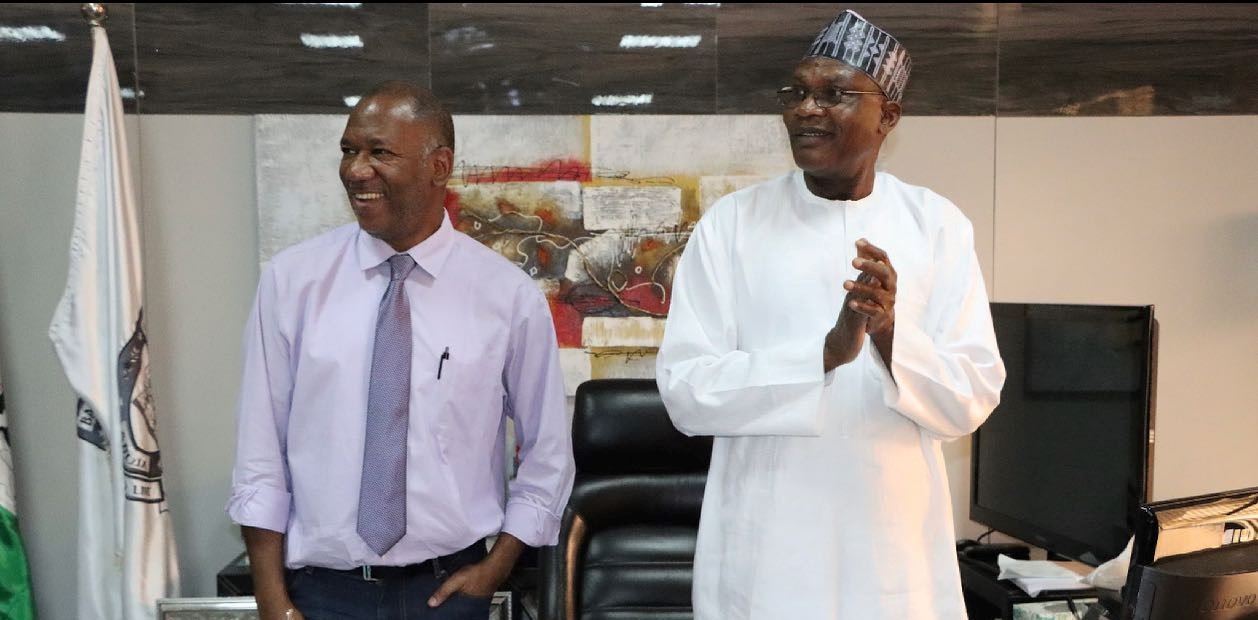
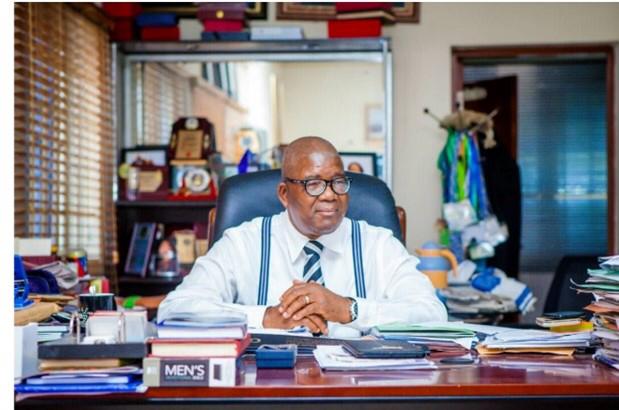
Tahir Mamman’s Appointment as Education Minister: Yusuf Baba Datti-Ahmed is the real hero – Moses Ebute, SAN

“True leaders don’t create followers they create more leaders” – Ralph Nader

“There is a difference between being a leader and being a boss. Both are based on authority. A boss demands blind obedience; a leader earns his authority through understanding and trust.” Klaus Balkenhol

When the prolific law teacher, Sylvester Udemezue in his article, Implications of President Tinubu’s Choice of Tahir Mamman as Nigeria’s Education Minister wrote the following: “Prof Tahir Mamman, a chieftain of the All Progressives Party (APC) and member of the Bola Ahmed Tinubu Presidential Campaign Council during the 2023 presidential elections in Nigeria, remained (throughout the period, and until his current appointment) the Vice Chancellor of Base University, an institution owned by Yusuf Baba Datti-Ahmed, the Vice Presidential Candidate of the Labour Party (Eluu P) in the same election.

“What do you say about the fact Tahir Mamman was able to effectively manage the situation and diverse interests, and being careful to render to Caesar what is Caesar’s, and to God what’s God’s?”; a Senior Advocate of Nigeria and former Chair of the Nigerian Bar Association (NBA), Abuja (Unity Bar) Moses A. Ebute remarked that “Yusuf Baba Datti-Ahmed is the real hero here.”

Reacting to the commendation that Tahir managed his relationship with the Bola Ahmed Tinubu Presidential Campaign Council and his boss, Datti-Ahmed so well that there was no conflict, Ebute said: “I think it is not just about him.

“I think Yusuf Baba Datti-Ahmed is the real hero here. He allowed Tahir to have his way.

“Other persons or Nigerians as University owners would have relieved him of his appointment for daring to be on the other side, politically.

“Our Nigerian politicians should learn from this uncommon demonstration of maturity. My take.”

Unical’s sex scandal that won’t go away

By Olusegun Adeniyi

The viral video of female law students protesting alleged sexual harassment against Professor Cyril Ndifon at the University of Calabar was disturbing. Carrying placards with inscriptions that are too obscene to be repeated here, the protesters (led by the Law Students Association of Nigeria, Unical branch president, Benedict Out) made serious allegations against the Dean of the Law Faculty. Why should that be of special concern to me? Well, Ndifon happens to be one of the central characters in my 2020 book, ‘NAKED ABUSE: Sex for Grades in African Universities’. A huge scandal which I detailed in the book involved the eminent professor, the Police, the State Security Service (SSS), the Independent Corrupt Practices Commission (ICPC), a female student (who alleged that Ndifon sexually abused her), parents of the girl, a prominent NGO, the National Industrial Court, the Federal High Court, and the local media. 

Before I proceed, let me state that Ndifon has countered the latest allegation against him, describing it as politically motivated. “Since I defeated some persons in an election that was keenly contested, to emerge as Dean of the faculty, it hasn’t been easy. These allegations are baselessly masterminded by my detractor, who had vowed to ensure that my image is dragged to the mud just because I won the faculty elections twice,” Ndifon told CrossRiverWatch, an online platform. “If you look at the placards, you will discover that the placards have one person’s handwriting. Again, how come the protesters know that we were holding a meeting with the Vice Chancellor if it is not the handiwork of an insider.” 

It is indeed possible, as Ndifon alleged, that campus bad losers may have been behind the protest. But something is not right if allegations of sexual misconduct continue to be levelled against the professor of law. Before I come to why resolving this issue is important for the University of Calabar and the entire university system in Nigeria, I want to take readers through the earlier sex scandal involving Ndifon (as captured in my book).  

=============================================================

On 29 August 2015, in a letter titled, ‘Report of Sexual Assault and Harassment by Professor Cyril Ndifon on Me’, addressed to the Vice Chancellor of the University of Calabar, Miss Nkang Akpan told of her harrowing experience when she sat for a test on ‘Law of Trust’, a class taught by Ndifon. The test was to last one hour. However, approximately 40 minutes into the exercise, according to the student, the professor ordered everyone to submit their scripts. As is often the case in such circumstances, students were making frantic efforts to write more, in the hope of properly completing their work. Nkang was unlucky. Ndifon walked up to her, took the script, tore it, and threw the shreds on her seat as he walked away. For a 400-level student, this was an academic death sentence. The implication was that she would not graduate that year. Immediately, the girl was at the mercy of the professor. As she recalled: “All my classmates who saw what happened exclaimed and sympathised with me.” 

The events that followed were captured in the story of the humiliated student who explained that when she was heading back to her hostel with friends, they passed through the faculty as Professor Ndifon was driving in. He asked if the distressed girl still had shreds of the test script. Jubilant and hoping that God had granted her a reprieve and touched the heart of her lecturer, the girl quickly produced the torn script which she had kept in her bag. The Dean then instructed her to gather the pieces of paper, get a new foolscap sheet, and go to his office to recopy it. Keen to ameliorate a situation capable of extending her academic years on campus, the student quickly went to the office of the professor as directed. Her friends waited downstairs, hoping she would soon finish the task and rejoin them. Considering how the Professor of Law later countered the allegation, it is important we first take the story as told by Nkang herself:  

‘I met his secretary and two other staff and explained to them so they could let me sit in their office and write it. He later came into his secretary’s office and told me to go to his private office upstairs so that I could be more comfortable since in his secretary’s office, I was keeping it on my lap to write. On getting to his office, five minutes into when I started writing, he came in with a glass of alcoholic wine, he told me to kiss him with the wine in his mouth and I refused. He offered me the drink and I resisted it, telling him that I don’t like alcoholic drinks. He left me and went downstairs. He came back in another five minutes. This time around, he locked the door and took the key, telling me he also had some work to do while I’ll be recopying the test. He sat on his chair doing his work when suddenly he stood up and walked up to me and asked me again to kiss him. I told him I can’t, and he pretended to let me be and told me I shouldn’t worry that I should continue with what I was writing. Not up to ten minutes after, he walked up to me again, and he tried to force me to take the alcoholic drink.  

‘On my refusal, he put the drink inside his mouth and came to forcefully kiss me. As God would have it, I tightly sealed my lips and while he tried to kiss me with the drink in his mouth, it spilled on the floor and the cloth I wore. He dragged me up from the chair and pushed me to a two-seater seat in his office and told me that he wanted to have sex with me. I bluntly told him that I cannot have sex with him. He dragged my clothes in a bid to remove them, I screamed amidst struggling but there was no way anyone could hear me because his office is on the last floor and his secretary, and two other staff were in his official office on the first floor. He removed his cloth and brought out a condom from a shelf in his office, wore it and penetrated (me) forcefully and painfully. We heard a knock on the door, he picked up his clothes and quickly wore them and acted like everything was normal then he proceeded to open the door. He left me there and went downstairs with the person that knocked.  

‘I seized that opportunity, put myself together and tried to rush up and finish writing the test before he came up again. After about twenty minutes, he came back into the office, and I just finished recopying the test and I submitted it to him. About to leave the office, he pulled me back and locked the door. At this point, my friends that have been waiting for me downstairs started calling repeatedly because they were worried why I stayed too long upstairs. This time around, he came in with a bottle of Guinness Stout which he started drinking. He once again asked me to drink it and I told him that I don’t take alcoholic drink. He told me this time it’s by force that I must drink. He tried to force the drink through the bottle into my mouth and I spat it out on the floor of his office. He dragged me, forcefully opened my mouth, and transferred the drink in his mouth into my mouth. I immediately spat it on the floor of his office again. He got angry and dragged me, telling me to strip off my clothes at the count of three.  

‘At this point, I was tired and exhausted coupled with the fact that I had not eaten since morning. When he finished counting three and I still did not strip like he ordered, he dragged me to the chair, locked my knees with his legs and started dragging my trousers forcefully and in the process spoilt the zip. As exhausted as I was, I started crying and begging him that I was weak and had not eaten since morning. He refused to hear, telling me that I was acting and that I’ll make a very good actress; that he has met a lot of my type so many times. I finally succeeded in pushing him off my body and knelt to beg him since I no longer had the strength to continue struggling. He persisted and pushed me down again, wore a condom and penetrated. When I threatened to faint, he finally told me that I can go and offered to drop me off since I was exhausted. I rejected the offer and told him I was going on my own. He insisted but I strongly refused. At that instance, as I was walking out of his office, staggering and very drowsy, he sent me to help him carry his bag to his car downstairs. That’s when one of his staff and himself locked the faculty and they drove off.’ 

Humiliated and dejected, Nkang said she sat by a new building beside the Law Library, crying. A man driving by saw the young lady in her pathetic state and decided to ask what was wrong. It was the concerned passer-by who reportedly persuaded Nkang to take the matter to the police. At the police station, after she wrote her statement, Nkang was referred to the police clinic where she underwent a medical examination. That marked the beginning of a protracted battle for justice that involved her parents, the police, university authorities and the ICPC.  

Determined to get justice for their daughter, Nkang’s parents took the case to the media. Mrs Irene Akpan also corroborated her daughter’s allegation in a letter to the management of the University of Calabar. She maintained that the lecturer forcibly had sex with her daughter after a fierce struggle. The moment the complaint became public, both the University Registrar, Mr Moses Abang and the Vice Chancellor, Prof James Epoke, described the issue as being of “grave concern to management for such an awful report to be associated with a professor of this University and the Dean of our Law Faculty for that matter.” The accused was asked to answer, in writing, the allegations against him. The university authority subsequently established a panel to investigate the lecturer; and on 11 September 2015, Ndifon was suspended.  

THE FIGHTBACK 

As is perhaps expected, Professor Ndifon disputed the allegations levelled against him by Nkang Akpan. By March 2016, he had filed a suit at the National Industrial Court sitting in Calabar, challenging his suspension. However, in a judgement delivered on 21 September 2016 by Justice Eunice Agbakoba, the suspension was affirmed. Ndifon then approached the Federal High Court, Calabar, where he joined issues with the ICPC and the accuser as respondents. In addition to asking the court to grant him an ex-parte order for the enforcement of his fundamental rights, the lecturer sought an interim injunction restraining the ICPC from “harassing, molesting, arresting, abducting, detaining or further threatening to arrest and detain” him.

According to Ndifon, he was invited for questioning on the date the student laid her criminal report against him with the police in Calabar. When he reported at the station, he was arrested, detained, and subsequently released on bail. After the police conducted a discreet and thorough investigation into the matter, according to Ndifon, nothing incriminating was found against him. Apparently not satisfied with the police investigation, Nkang’s parents petitioned the State Security Service (SSS), Calabar Office; and on that account, he was rearrested, detained, and again released on bail.

Still, in Ndifon’s account, at about the time officers were concluding their investigation, an NGO, the Nigerian Feminist Forum (NFF), petitioned the Inspector General of Police, requesting him to take over the case from the Cross River Command. The matter was subsequently transferred to the Force Headquarters in Abuja for investigation. The lecturer asserted that he was further subjected to another cycle of arrest, detention, and bail. As with previous investigations, he noted that nothing incriminating was found against him. 

Ndifon further stated that his main concern in approaching the court was that, while the parties were awaiting the official police report, the ICPC Chairman, Mr Ekpo Nta, speaking at a public function in Abuja on 17 September 2015, announced that the commission had concluded arrangements to prosecute him (Ndifon) for alleged abuse of office. The lecturer alluded to an alleged claim by the accuser and her parents that the ICPC chairman, being their relation, had assured them that the commission would deal with him. To Ndifon, therefore, the ‘hasty’ presumption of guilt and the ICPC decision to prosecute him supported the alleged threats by the Akpans. The professor alleged: “The operatives and men of the ICPC are unabatedly hounding, harassing, and threatening to arrest and detain me even upon the same incident, allegations, facts, circumstances and matters which are presently pending investigations at the Force Headquarters, Abuja, and the Department of the State Security (DSS), Calabar. I also know as a fact that the respondent’s threat to arrest and detain me under the foregoing circumstances is wrongful and unlawful.”

NTA RESPONDS 

The former ICPC Chairman has denied any relationship with Ndifon’s accuser. “I am not in any way related to the girl and never knew her until the scandal broke. In fact, the investigation by the ICPC on the alleged abuse of public office was based on a petition sent by the victim’s mother,” said Nta, currently Chair of the National Salaries, Income and Wages Commission (NSIWC), during our chat at his office in Abuja in December 2019. According to him, the whole idea of fighting abuse of power on campuses started following the collaboration between the National Universities Commission (NUC) and ICPC, which led to the University System Study and Review (USSR) to address corrupt practices in the university system. “This gave rise to several students, parents and other stakeholders seeking redress from ICPC over abuse of processes, including malicious non-release of results, victimization, and sexual harassment. The petition on Ndifon was just one of such petitions received. Other similar ones came from Ambrose Alli University and the University of Lagos,” Nta said. 

Aside the petition to the ICPC by Nkang’s mother, there were other interventions on the matter. For instance, the ‘Class of 1997’ Alumni of the University of Calabar Faculty of Law, in an online petition dated 14 September 2015, demanded for Ndifon to be prosecuted. Claiming, as his former students, to know the professor very well, the alumni members, 31 in number, made several damaging allegations against Ndifon before concluding with what they considered to be the critical issues in the case. Some are as follows: 

‘It is against university regulations for a lecturer to hold a test on a Saturday in a programme that is full time. Assuming that the girl had been guilty of examination malpractice as alleged by Prof Ndifon, tearing up her answer script was not the proper course of action to take, as the university has a clear protocol for dealing with examination malpractice issues. Assuming that the girl had been guilty of examination malpractice, Prof Ndifon had no authority whatsoever to forgive her as she broke university rules, not his private rules. In asking her to recopy the answers on a fresh sheet, he therefore acted ultra vires as a lecturer; and, in covering up a wrongdoing, he fell afoul of university regulations. In fact, he broke extant law. There is no satisfactory explanation for why Prof Ndifon took the girl from his office as a Dean, where there were two or three other people, to his personal office as
a lecturer – where there was absolutely nobody. The facts reveal that the girl had been carefully chosen as a target.’ 

However, there was a contention about whether the petition was authorised. In a statement released two days after the petition went viral, Mr James Ibor expressed regret over “the embarrassment caused to all the persons wrongly named as signatories in the petition” while promising that “an authorized statement duly signed will be published soon.” 

BATTLE OF WITS 

Ndifon’s defence before the University of Calabar authorities, set out in his response to the query from the office of the registrar dated 2 September 2015, is certainly interesting. After a lengthy account as to what transpired in his two offices between him and the student, Ndifon deployed his knowledge of law and logic to argue that it was impossible for a sexually harassed female student to behave in the manner reported in Nkang’s police statement. He wrote: “According to Ms Nkang Sinemobong Ekong, I locked up the office, dragged her clothes and raped her and her screams [for] help were not heard because my office was on the last floor of the building.” This, the professor claimed, was mere fantasy. Quoting from the accuser’s statement as to how he supposedly went to open the door for someone who had knocked, before coming back to further molest her, Ndifon raised critical posers:  

‘At this juncture, certain fundamental questions beg for answers. Why will a hapless girl who a while ago screamed for help not seize the golden opportunity of the sudden presence of a third party to ask for help and rescue? Why will a hapless girl who is being raped still find the composure to complete the academic assignment of recopying the test without any fear or trauma whatsoever? Why will a hapless girl who is being raped in an office still find comfort to remain in the same office even after the assailant had left the office for about 20 minutes instead of fleeing from this ugly scene? When her worried friend repeatedly called her phones in my absence when I went downstairs, why did she not inform them of her abduction and assault in my office? As a follow-up, whilst her parents alleged in their attached petition that I seized her phones, the student is stating the contrary that she was in possession of the phone even in my absence. Why this contradiction? Who do we believe?   

‘Why will the hapless girl who had the opportunity to escape stay back until I returned for another round of un-consented sex with her? Why will the same girl who had been raped repeatedly be so ‘nice’ to carry my bag from the office to the car at the parking lot, and when she met staff at the Faculty of Law, she never seized the opportunity to report the incident to them? One is curious and will like to ask why would a person that has just been raped and traumatized choose not to report to the university’s security post which is five metres from the scene, and the Medical Centre which is also is five minutes’ drive from the scene? These first responders (security post and medical centre) are closer to the ‘victim’ than the Airport police station.’ 

THE POLICE EXONERATION 

The police exonerated Ndifon in June 2016, after completing their investigation. According to the report signed by Assistant Superintendent of Police Babatunde Lasisi of the ‘Force Gender Unit’ in Abuja, three findings were made, none of which indicted the accused. “The evidence of the complainant, according to the police report, [was] incoherent and partly disjointed; there is no material evidence to corroborate the testimonies of the complainant and build this offence of rape around the suspect sufficiently. Sexual intercourse is deemed complete upon proof of penetration of the penis into the vagina,” Lasisi wrote.  

The report added that the police officers who took Nkang’s statement after the alleged incident observed that she looked “too calm” to have undergone such harassment. “The voluntary statement of the medical officer revealed that the complainant’s clothing was intact, no sign of rumpling nor torn pant, and she was calm as she gave her stories.” The report further noted that, upon examination: “There was no bleeding part of her body, no laceration, abrasions nor bruises on her body. On vaginal examination, her panties were not stained, normal female external genitals observed, no abrasion, bruises, no laceration. There was no hyperemia to show forceful penetration within her vulva and pineal region including her anus.” 

Nkang’s parents dismissed the police report as dubious. “The police went to the scene six days after the report was lodged, at about 8 p.m. the following Thursday, after the incident happened on Saturday, August 29, 2015. This indicates compromise by the police there,” Nkang’s parents said. The ICPC, meanwhile, continued their investigations. In March 2017, a Federal High Court sitting in Calabar ruled that the commission had the right to investigate Ndifon. In setting aside the police report upon which Ndifon had sought to restrain the ICPC, Justice I.E. Ekwo concluded that other issues had arisen which were within the purview of the ICPC to investigate. The judge added that the offence of sexual gratification was contrary to Sections 8, 9, and 19 of the ICPC Act, which refer to any public officer who receives benefit of any kind in the discharge of his duties or uses his position to confer corrupt advantage upon himself. 

However, relying on the police report that exonerated him, the University of Calabar recalled Ndifon in November 2017, along with another suspended lecturer, Mr Joseph Odok. Upon his reinstatement, Ndifon held a church thanksgiving service where a clergyman and lecturer with the Catholic Institute of West Africa (CIWA), Rev. Fr. Francis Adeyemi asked him to “forgive” the accuser and her family. “Seek not for vengeance, put your trust first in God, for vengeance belongs to God who is in heaven. For many who would have similar experience would want to seek fetish means for solution,” said the priest. 

Reputed as the first Professor of Law from Cross River, Ndifon is by no means a small man in the South-South state. This was reflected in the number of prominent personalities in attendance at the church service. “What happened was that they aimed to destroy my career, reputation, the reputation of my family, my village, state, and everything that I stand for. They took me and my family through the valley of the shadow of death, but God delivered me and did not allow their scheme to succeed,” Ndifon told the congregation. “You won’t understand that there was an unseen hand manipulating and directing the movie but, in all things, I give God thanks, I always saw the hand of God. The fact that I am alive today is a miracle. If not for God, there were many avenues to have brought me down. When the medical report came out, I was exonerated, when the police report came out, I was exonerated and they passed the file from Federal Attorney General to the State Attorney General but in all these, they gave the verdict that I had no case to answer; and to sum it up, it shows the favour of God.” 

Although the case appears to have gone cold – the Court of Appeal did not sit on 25 September 2019 when the matter was to come up for hearing again – the accuser, Nkang Akpan, seems to have moved on. She completed her Law degree with a Second Class Upper. She also made Second Class at the Nigerian Law School. 

ENDNOTE:  

It is interesting that more than three years after the publication of my book, fresh allegations of impropriety are being levelled against Professor Ndifon by his students. Even if Ndifon is innocent of the new accusation, the University of Calabar has a problem on its hands. If one of their most respected lecturers continues to face this kind of accusation from his female students, can the authorities continue to ignore it? Similarly, can a University also sanction an accused lecturer who claims innocence and there is no evidence with which to prove otherwise? This is particularly difficult considering that the last time they tried, Professor Ndifon was exonerated by the police. 

Beyond the case at the University of Calabar, we must deal with what has become a systemic challenge. The latest Ndifon allegation broke on Monday, sparking an avalanche of stories on social media by women who recall their experiences on campus at the hands of lecherous lecturers. I also detailed many cases across different campuses in Nigeria and 29 other countries on the continent in my book. Incidentally, with the controversy generated over the content of a blurb, I withdrew copies of the first edition from circulation and gave them free to Universities, NGOs, and development agencies. In my column on 30th September 2020, I rendered account of how the 5000 copies were shared. 

Meanwhile, I was approached by the then Vice Chancellor of Obafemi Awolowo University (OAU), Ile-Ife, Professor Eyitayo Ogunbodede for a collaboration to organize a Webinar with the theme, ‘Finding safe spaces for female students in Nigerian Universities’. The University provided the platform for the session which held on 16th September of that year. Fortunately, all the people I invited agreed to participate. And they all did, including former Vice President Yemi Osinbajo, SAN, GCON, who gave a keynote speech and stayed for more than an hour after. My Governor, Mr Abdulraham Abdulrazaq, and former Governor of Cross River State, Mr Donald Duke, also joined in. And so did Harvard Professor, Jacob Olupona, and Ekpo Nta, who as ICPC Chairman started to beam searchlight on university lecturers who abuse their trust. I republished the book after the Webinar to accommodate the contributions of eminent personalities. 

The current edition, which features seven fresh chapters from the Webinar, captures the interventions by Osinbajo, then Deputy Senate President Ovie Omo-Agege, the 14th Emir of Kano, HRH Muhammadu Sanusi II, First Lady of Ekiti State, Erelu Bisi Adeleye-Fayemi (who also wrote the book’s foreword), WRAPA Secretary General, Hajiya Saudatu Mahdi and the late Director, West Africa Office, Ford Foundation, Mr Innocent Chukwuma of blessed memory who provided the grant for my research. Other interventions in the book include those by President of the Queens College, Lagos Alumni and former Federal Inland Revenue Service (FIRS) Chairperson, Mrs Ifueko Omoigui Okauru, former Head of Service of the Federation, Mr Steve Oronsaye and that by Prof. Joy Ezeilo of the University of Nigeria, Nsukka. Views canvassed by Lagos lawyer, Adeyinka Olumide-Fusika, SAN as well as by Professor Okey Ikechukwu and Prof. Francisca Aladejano are also reflected.  

The main takeaway from the Webinar is that in Nigeria, we are yet to deal with the challenge of unequal power and the abuse that goes with it in our university system. While the social dysfunction that encourages this misconduct on university campuses may be an aspect of a larger problem of corruption in Nigeria, the conclusion of participants was that there should be no place for sexual predation in an environment of learning. That’s why I hope that the University of Calabar will find a way to resolve what I referred to as ‘The Cyril Ndifon Palaver’ in my book with justice availed to all parties while at the same time offering female students the needed comfort for a safe campus environment.


Implications of President Tinubu’s choice of Tahir Mamman as Nigeria’s Education Minister

By Sylvester Udemezue

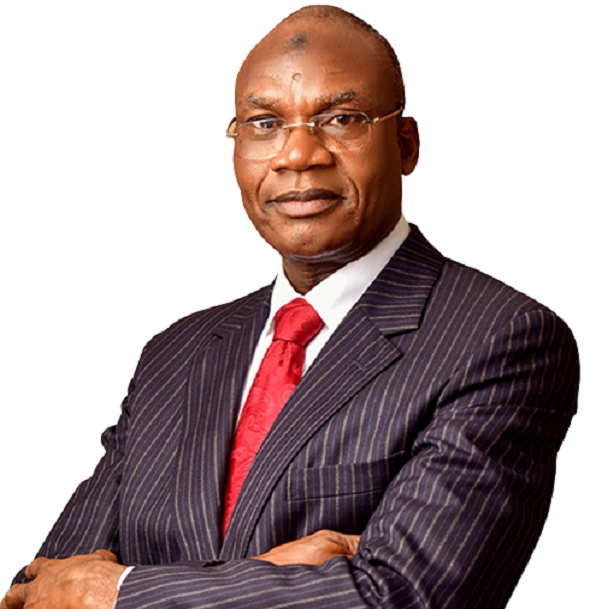
The appointment of Professor Tahir Mamman as Nigeria’s Education Minister is a square-peg-in-a-square-hole decision, and comes at a most auspicious time. In my opinion, only very few appointments on the entire Ministerial list could be reasonably described as apt as his. Before he assumed office as the Vice Chancellor of Baze University, Professor Tahir Mamman had performed fantastically well as the Director-General of the Nigerian Law School: 2005-2013. A humble, sagastic and pragmatic administrator, Tahir Mamman had in 2008 introduced a reform that radically changed for the better, the entire landscape of teaching and learning in the Nigerian Law School by introducing what is now known as the “New Curriculum”, a new system of teaching and learning that measures meets international best practices and prevailing 21st-century benchmarks in the sector.

Of Nigerian Law School’s “New Curriculum”, I was later to write:
“Teaching in the Law School under the New Curriculum[xiii] is practice-based, and is aimed at producing lawyers who would be in a position to measure up to contemporary benchmarks and international best practices in the legal profession…. vocational training at the Nigerian Law School under the New Curriculum is not just business as usual. The system appears somewhat challenging, and is designed to ensure that only serious-minded people are enrolled into the legal profession, which itself is rather tasking. Accordingly, success in the Law School depends much more on hard work and determination than on mere possession of talent; at the Nigerian Law School, hard work would beat talent if talent does not work hard. There is no room for anything goes; the School is not a dumping ground for the “never-do-wells,” who try to get enlisted into the legal profession through the back door”.

See: “CONTEMPORARY TRAINING AT THE NIGERIAN LAW SCHOOL: AN INSIDER’S ACCOUNT” [29 January 2017; https://udemsyl.wordpress.com/2017/01/29/education-at-the-nigerian-law-school-an-insiders-acount/]. To cut a long story short, one may not be wrong if one held the view that the New Curriculum in the Nigerian Law School is not only a brainchild of, but is indeed synonymous with, Tahir Mamman! Tahir Mamman is among the best Directors-General the Nigerian Law School has ever had, having carried out other innovative development efforts that changed the face of that great law citadel. Speaking generally, four other qualities stand Tahir Mamman out as an outstanding leader of this century:

(1). HE’S AN EFFECTIVE MANAGER OF PEOPLE: Stuart Pearce thinks that “management is about…managing people via man-to-man skills”, while Agha Hasan Abedi has this to say: “The conventional definition of management is getting work done through people, but real management is developing people through work”.

(2). A PRAGMATIC, IMAGINATIVE THINKER: Pragmatic leaders focus on the practical — “how do we get this done”, and in doing this, they work hard to remain sensitive to others. Indeed, in order to avoid anxiety, a pragmatic leader will ensure to socialize his thoughts and ideas with all stakeholders before formalizing any approach. Pragmatic leaders build healthy relationships with people and influence them towards positive outcomes

(3). A HUMBLE, UNASSUMING LISTENING LEADER: Being a good listener is absolutely critical to being a good leader. Yousef Munayyer said, “Humility is a great quality of leadership which derives respect and not just fear or hatred”.

(4). A BROADMINDED, ALL-INCLUSIVE ADMINISTRATOR: Simon Sinek once said, _”One of the best paradoxes of leadership is [that] a leader’s need to be both stubborn and open-minded. A leader must insist on sticking to the vision and stay on course to the destination. But he must be open-minded during the process.”

Tahir Mamman is a colossal man of action; not the type who waits to believe in action before acting, but the one who acts as he breathes. He understands that the true test of a real leader lies in action, and that good leadership is all about impacting lives. If a leader fails to positively impact lives, then he’s not a good leader, even if people keep telling him that he’s one. Truth is, he’s not, because the essence of good leadership is not just in spotting the problems but in providing solutions to the problems. Besides, good leadership is synonymous with thinking out of the box. And this is why Tahir Mamman’s apposite; he has foresight, is broadminded, and has the exceptional habit of knowing how to assemble pragmatic and capable hands on the job, to ensure timely effectiveness.

Leaders that aim to succeed must adopt all-inclusiveness as their motto, so as to be able to create an environment in which all individuals and sections feel empowered to express their opinions freely within the larger group. Diversity of thinking is critical to effective collaboration and management. A leader has not begun leading until the leader has learned to rise above the narrow confines of his individualistic concerns, to the broader concerns of all members of team/society that he leads, and in fact the whole of humanity. In Jesse Jackson’s words, “inclusiveness is not a matter of political correctness. It is the key to growth. When everyone is included, everyone wins.”

Apart from being a great innovator, one more attribute which many a Nigerian leader lacks, but which is present in Tahir Mamman, is the wisdom to understand that good leaders are not known nor made by the number of their subjects they tramp down, trample upon or cause to tremble in trepidation.

It also needs to be given to him that he’s an effective manager of diversity. Check this out: Prof Tahir Mamman, a chieftain of the All Progressives Party (APC) and member of the Bola Ahmed Tinubu Presidential Campaign Council during the 2023 presidential elections in Nigeria, remained (throughout the period, and until his current appointment) the Vice Chancellor of Base University, an institution owned by Yusuf Baba Datti-Ahmed, the Vice Presidential Candidate od the Labour Party (Eluu P) in the same election. What do you say about the fact Tahir Mamman was able to effectively manage the situation and diverse interests, and being careful to render to Caesar what is Caesar’s, and to God what’s God’s?

Fellow Nigerian, I praise President Tinubu for his foresight in choosing Tahir Mamman to serve as the Education Minister for the next four years. I strongly believe that if given a reasonable level of free-hand to operate and manage his ministry, Tahir Mamman would assemble capable hands to effectively implement positive, radical reforms that would help to lift Nigeria’s education sector from its current doldrums of acute decay, rottenness and appalling dilapidation. Tahir Mamman comes on board at a very critical time. Nigeria’s education sector is too backward. And unless and until we get it right in education, we might never begin the type of progress necessary to lift Nigeria to a top-player position in the comity of nations.

In an earlier commentary, I wrote:
‘…education is the most powerful weapon you can use to change your country and the world… an investment in education pays the greatest dividend….. education is not the filling of the pail; it is the lighting of a fire. Good and quality education replaces an empty mind with an open mind… a country without good and quality education is bereft of good life…education is not just a preparation for life; it is life itself. ”A nation without a good education and education system possesses no soul!”’ [See: “A Nation`s Journey To True Greatness: What Nigerians Must Copy In the Americans” by Sylvester Udemezue on May 29, 2017; ]

No doubt, one of the best and easiest ways to bring development and civilization to a country is to start by developing its education system and sector. But I must quickly add that Education is everyone’s responsibility; hence, let’s lend our helping hands to leaders in that sector in order to succeed.

All eyes on Professor Tahir Mamman; failure is ruled out because you’ve during your 2,928 days as the Director-General of the Nigerian Law School, set for yourself an enviable standard, below which you must never perform. Best wishes, prof, sir. God help Nigeria!
Respectfully,
Sylvester Udemezue (Udems)
08109024556.
([email protected]).
(17 August 2023)

Abuja gears up to host FIDA Africa Regional Congress

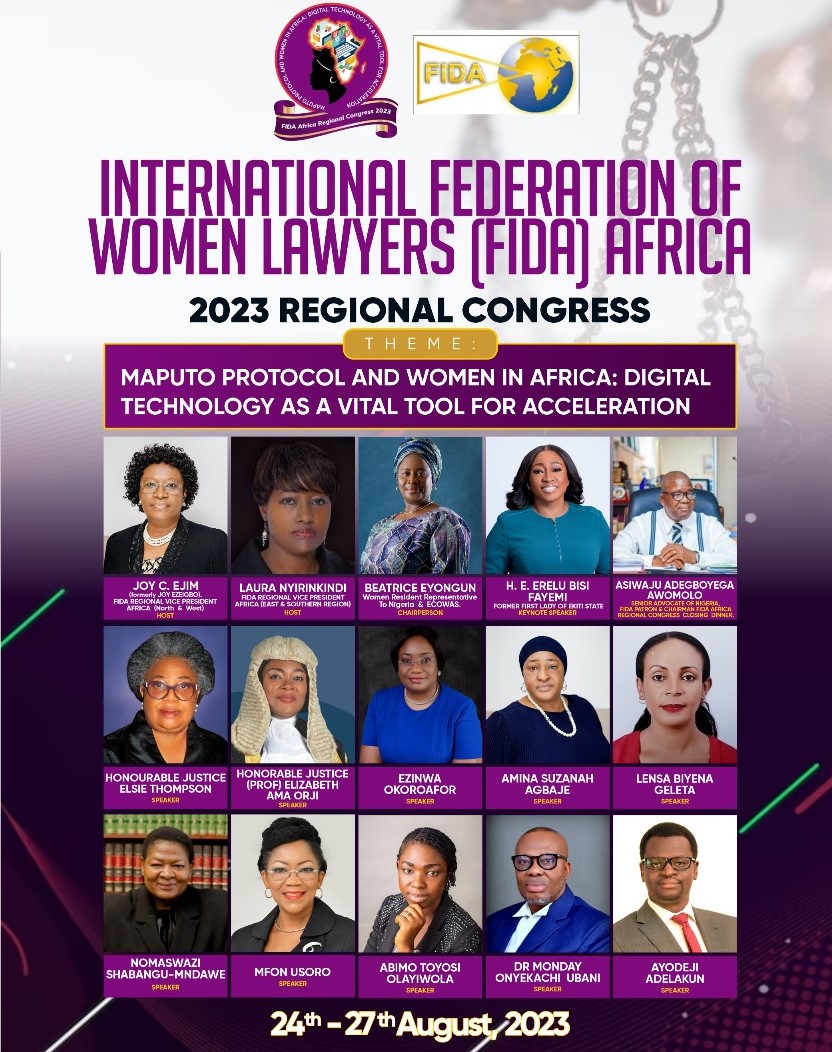
In less than a fortnight, the city of Abuja will play host to the biggest gathering of female lawyers in one space as the International Federation of Women Lawyers (FIDA) gears up for its Africa Regional Congress.

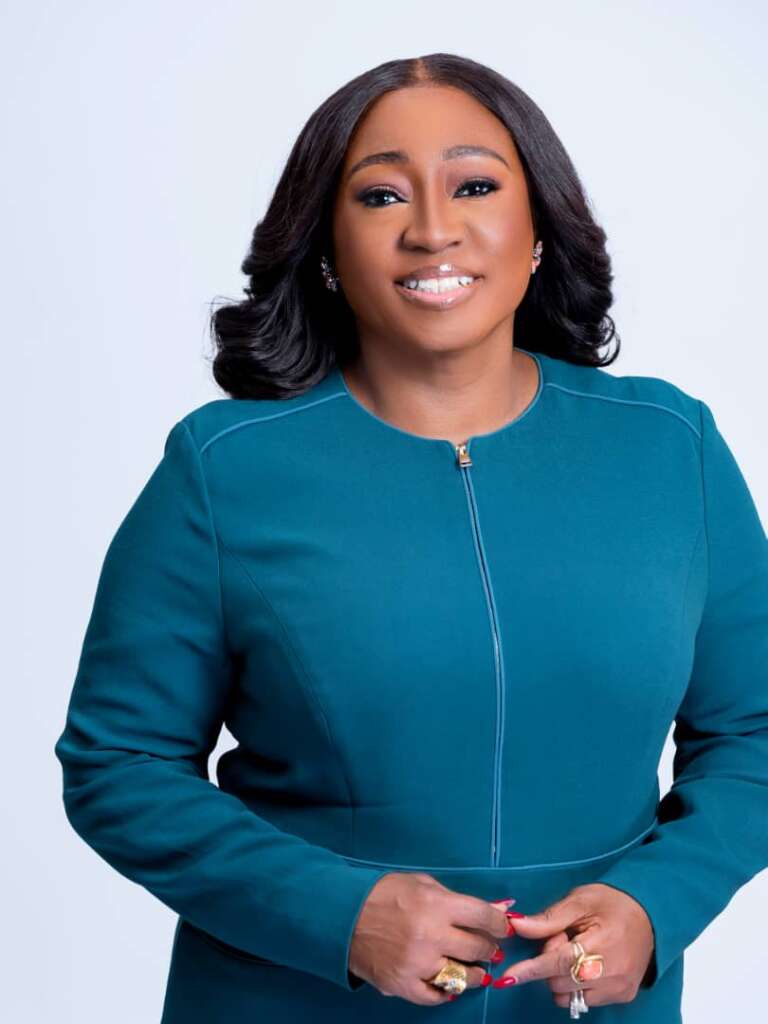
The triennial event, with the theme “MAPUTO PROTOCOL AND WOMEN IN AFRICA: DIGITAL TECHNOLOGY AS A VITAL TOOL FOR ACCELERATION parades a host of notable speakers with former First Lady of Ekiti State, Erelu Bisi Adeleye-Fayemi leading the pack as keynote speaker.

Her Excellency Erelu Bisi Fayemi

Moreover, the United Nations (UN) Women Representative to Nigeria and ECOWAS, Ms. Beatrice Eyong, is Chairperson of FIDA Africa Regional Congress 2023.

Eyong was born 1963 in Cameroon and has over 38 years of professional working experience in promoting gender equality and women’s empowerment.

Lending his weight to the occasion, Vice Chairman of Nigeria’s Body of Benchers and FIDA Patron, Asiwaju Adegboyega Awomolo, SAN, will chair the Congress closing dinner.

R

Chief Adegboyega Awomolo, SAN 

FIDA Regional Vice President Africa (North & West) Joy C. Ejim (formerly Joy Ezeigbo) is co-hosting the event with her counterpart Laura Nyirinkindi, FIDA Regional Vice President, (East & Southern Region), a Ugandan lawyer with expertise in Governance, Human Rights, Gender, Rule of law and Development.

L-R: Joy C. Ejim (formerly Joy Ezeigbo) and Laura Nyirinkindi

Other dignitaries and speakers that will grace the congress include:

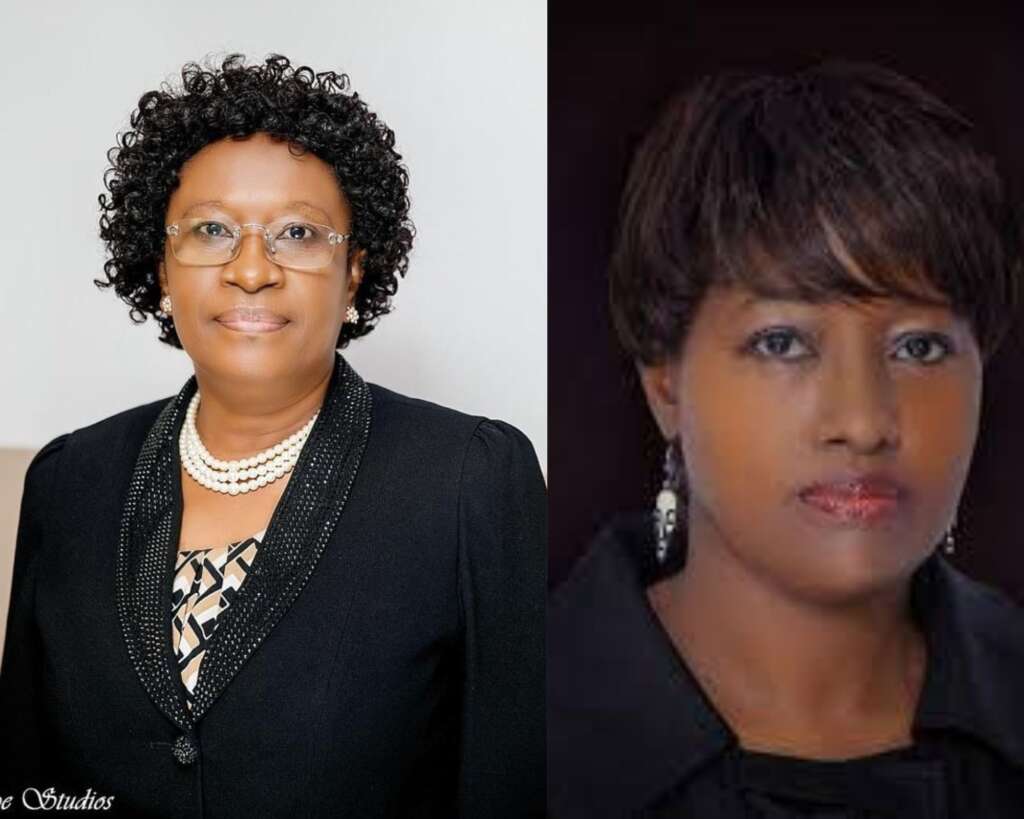
Hon. Justice (Prof.) Elizabeth Ama Oji FCIARB(Uk)

Hon. Justice Ama Oji is a Judge of the National Industrial Court, Lagos Division. She was a Professor at the Nnamdi Azikiwe University, Awka. She has written over 100 articles/papers both nationally and internationally; including the book “Responsibility for Crimes under International Law.” She is a co-author of “Employment and Labour Law in Nigeria.” She is a two-time recipient of the United Nations Fellowship in International Law, and an Alumna of The Hague Academy of International Law, Netherlands. She was inducted as a Fellow of the Chartered Institute of Arbitrators(UK) on 5th November 2021.

A

Hon. Justice Elsie Nwanwuri

Hon. Justice Elsie Nwanwuri Thompson is a serving Judge of the High Court of Rivers State Nigeria. Prior to her appointment as a High Court Judge, she served in several associations notably the International Federation of Women Lawyers (FIDA) where she held several posts including Country Vice President (National President) and Regional Vice President for Africa.

Ezinwa Nwanyieze Okoroafor

Ezinwa Okoroafor a Nigerian legal practitioner is FIDA International Director. She is the immediate past International Secretary of the association. Okoroafor had served as Regional Vice President for Africa and was once the Country Vice President for Nigeria. An ex-council member of the Nigerian Bar Association women forum she was the national chairperson of the Society of Women in Taxation of Nigeria and a delegate to the Nigeria National Conference of 2014.

Dr. Monday Onyekachi Ubani

Dr. Monday Onyekachi Ubani, principal partner of the law firm of Ubani & Co., established in 1992 was the Second National Vice President of the prestigious Nigerian Bar Association (NBA) and later the Chairman of NBA-SPIDEL(Section of Public Interest and Development Law) from 2021 to 2023. He was also a former Chairman of the Nigerian Bar Association (NBA), Ikeja, between 2012 and 2014.

Nomaswazi Shabangu-Mndawe

Nomaswazi Shabangu-Mndawe is the President of the South African Women Lawyers Association (SAWLA). An association that focuses on gender equality in the legal profession and
the empowerment of women lawyers. She is also the Country Vice-President of the International Federation of Women Lawyers (FIDA South Africa). Shabangu-Mndawe is a member of the Judicial Service Commission appointed by His Excellency President CM Ramaphosa to be one of his representatives.

Ayodeji Adelakun

Ayodeji Adelakun is the Group Chief Financial Officer and Executive Director of GZ Industries Ltd a foremost beverage can manufacturer in Nigeria and West Africa. Prior to joining GZI, he was the Group Head of Finance of Forte Oil Plc where he was responsible for the finance functions of the Group. He is a Fellow of the Institute of Chartered Accountants of Nigeria (ICAN) & the Chartered Institute of Taxation of Nigeria (CITN), and more.

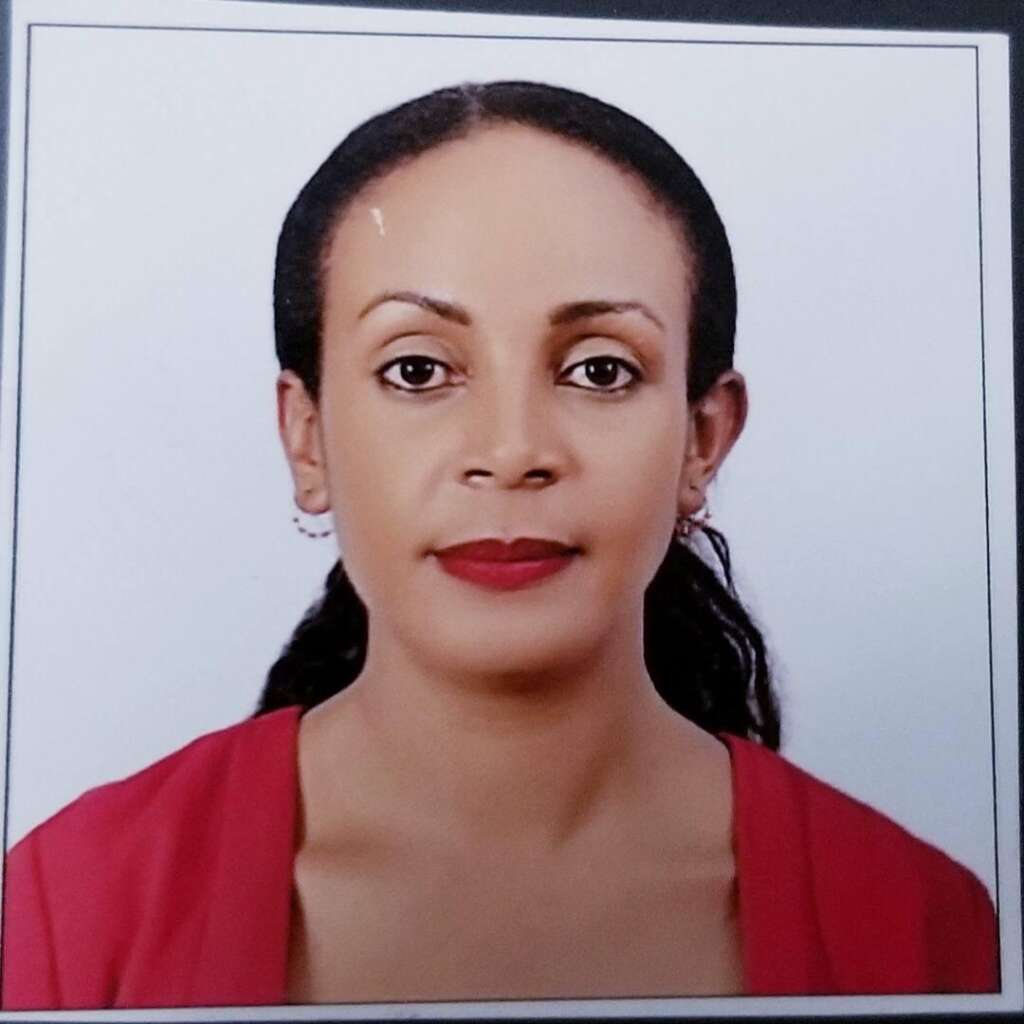
Lensa Biyena Geleta

Lensa Biyena Geleta is the Executive Director of the Ethiopian Women Lawyers
Association (EWLA). She has served and is serving as a board of director, founding member, and research and advocacy advisor of several CSO organizations. Lensa is a young professional
passionate about advocating matters that concern Human rights, Democracy, Peace and
security

Mrs. Nfon Usoro

Mrs. Nfon Ekong Usoro is an internationally acclaimed expert in transport laws and project finance. She is the pioneer Chair of the Nigerian Bar Association African Continental Free Trade Area Agreement Committee and served in that capacity up till June 2023. She continues to serve
as a member of the newly reconstituted Nigerian Bar Association Working Group on AfCFTA.

Abimo Toyosi Olayiwola

Abimo Toyosi Olayiwola is the Principal Partner of ABILEGAL Barristers & Solicitors and the founder of Digital Lawyers’ Network, a community of over three thousand digitally savvy lawyers across the world. She coaches lawyers, some of whom are senior lawyers and highly respected Professors of law, on the necessary skills to run a profitable digital law practice. Her contributions to legal practice have been highly recognised, making her a recipient of various awards.

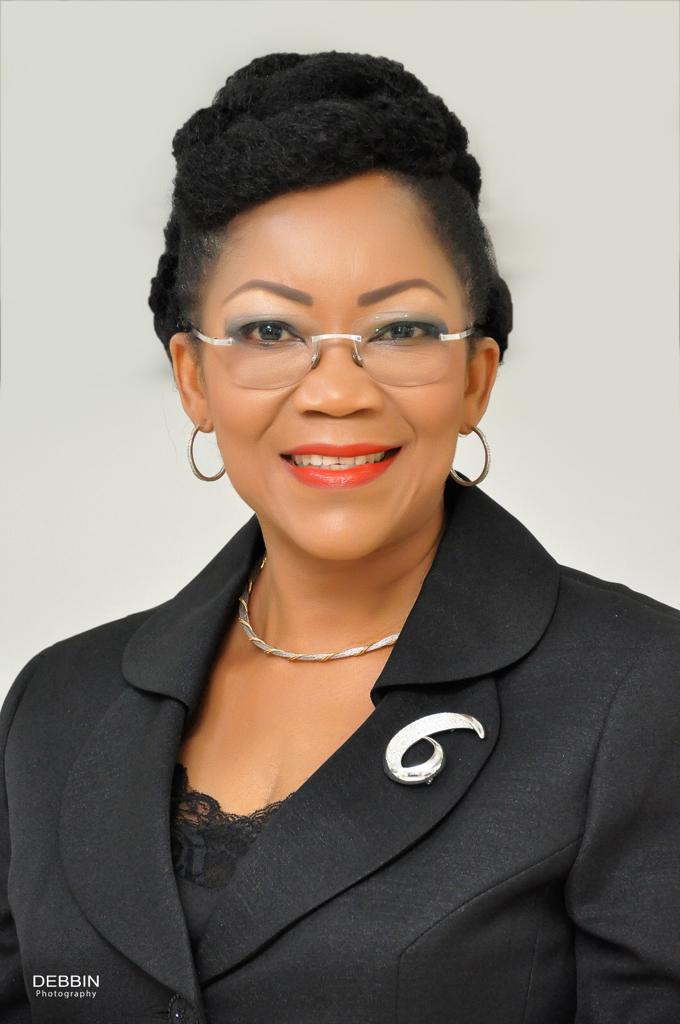
Amina Suzanah Agbaje

Amina Suzanah Agbaje is the Country Vice President/National President of FIDA Nigeria. She has served in other capacities such as the Deputy Country Vice President of FIDA Nigeria. She was a Chairperson and General Secretary of the (FIDA) Nigeria, Abuja Branch. Through hard work, dedication, and competence Amina has gained expertise in gender mainstreaming and Child’s rights.

Registration is still ongoing. Members can secure their spot for N50,000, while non-members can avail themselves of this opportunity for N55,000 during the same period. To register, simply visit https://fidaafrica.org/registration/. If you have any queries or need clarification, please don’t hesitate to contact 08030781825.

)

o

Mbiabet Ikot Udo: The Akwa -Ibom community where mothers of twins are denied access to water

Who would have believed that over a century after Mary Mitchell Slessor, the Scottish Presbyterian missionary stopped the killing of twins in the old Cross River state comprising of the present Cross River and Akwa Ibom states, twins are still being discriminated against in certain parts of the region?

In a shocking discovery that indicates babies who arrive in pairs are vicariously victimised, the Coordinator of Water, Sanitation and Hygiene – Gender Project Team, Prof. Emmanuel Akpabio, revealed that mothers of twin children are not allowed access to drinking water at a community in Akwa Ibom over beliefs that the water would dry up.

Another unfortunate group that is also barred from accessing drinking water in the community is menstruating women.

Prof. Akpabio, who is the Director, Directorate of International Programmes, University of Uyo, made the disclosure recently in Uyo while briefing newsmen to highlight the report of the team’s research in three local government areas of Akwa Ibom State.

The university Don who pointed out that the community in the Mbiabet Ikot Udo in Ini Local Government Area of the state has held on to this belief for decades unchallenged noted that the practice has subjected women to psychosocial and other forms of gender-based violence, which would in turn affect their health.

“Our attention was drawn to the challenges of menstrual hygiene management (MHM) in the study communities. There have been so much misconceptions, myths, and gaps in knowledge and awareness around MHM for women and girls.

“When women and girls are denied access to water on account of menstruation, when they have to walk long distances to access WaSH facilities, or when acute water scarcity forces reliance on available but usually of degradable quality sources, their right to decent, hygienic and sanitary living is severely compromised, creating avenues for possibilities for disease outbreaks.

“The stress of having to contend with stigmatisation and extra physical and mental efforts to secure sanitary living translates to serious psychosocial violence.

“MHM needs adequate access to water, soap, sanitary towels, and safe space for using water and changing menstrual towels. A majority of women and girls in our rural areas can neither afford nor have access to these basic necessities.

“When women in their menstrual cycles are denied access to water and safe spaces for menstrual hygiene management as in Mbiabet Ikot Udo, they are directly and indirectly subjected to psychosocial and other forms of gender-based violence, as well as affect their health, as they struggle to make up for such deprivation. Their human dignity is severely violated, and they lack the voice and capacity to surmount such challenges.

“For Mbiabet Ikot Udo, there is only a single source of drinking but stagnant water (idim Affia) sustained through under surface outflow with brown coloration. This serves an estimated population of 1,200 and six more villages (over 6000 people) in the dry season when other available sources would have dried up. This water source is also obtained for domestic and other needs.

“Mothers of twin children are restricted from accessing this water. We were told the stream will spew all manner of impurities and strange substances and gradually dry up anytime it is accessed by a mother of twins, and only comes back to normalcy once sacrifices/rituals are performed by the community.

“Women in their menstrual cycles are also traditionally restricted from having access to the stream and the consequence for violation is prolonged blood discharge. The victims can only get water through their spouses, children, paid services, or voluntary support from members of the community. Where they cannot get any support, they will stay without water for that period,” Akpabio said.

Christos Church holds “Higher and Better” empowerment seminar

  • To empower 50 participants

To help people cope, and even flourish, in these harsh times, the Christos International Worship Centre, Apo District, Abuja, will host a seminar on Saturday 19th August and Sunday 20th August, 2023 for the church members and the general public.

The empowerment conference themed “Higher and Better” will help participants to become better in their endeavours despite the economic hardships prevalent in the country. Participants will learn new ways of weathering the economic storms, of avoiding stress in these stressful times, in finding contentment and fulfillment while doing things in profitable and new ways. They will be taught how Christianity could help them maximize their potential to become elevated in their careers and businesses.   

Bishop David Nwachukwu Ogudu, the General Overseer of Christos International Worship Centre, Abuja, explained that the “is a journey to excellent life, excellent living, destiny maximization (which will make people) to achieve much more than they had ever thought possible, and become role models to their generations.”

According to a statement from Rev. Esther Chibuikem, Head of Media for Christos, the main speakers include Queen Prophetess Naomi Silankunola Ogunwusi from Nigeria, a women’s right and empowerment advocate and an avowed antagonist against gender-based vices. She is the Founder of Women in Need of Guidance and Support (WINGS). Apostle Amos Deya from England, is another speaker, just like Pastor Mike Barrett from Australia, a renowned preacher of over two decades who partners with governments and organizations in ministering to the hurting, traumatized and substance abuse victims.

The host/convener and fourth speaker, Bishop Ogudu, is the founder and Presiding Bishop of Christos International Worship Centre, an author of over 50 books, who is also President of Wisdom Training Centre, a Leadership Institute founded in 2004. He is a Prophet commissioned into self-discovery and destiny-fulfilment through the word of prophecy, healing and deliverance. Now he is going beyond that to help people discover how to maximize their three T’s; talent, time and treasure instead of abusing or neglecting them. He said that many people have failed in life because they neglected their talents or were too afraid or too timid to dare to succeed.

Cleared of doping allegations, Tobi Amusan set to compete in Budapest

The Athletics Integrity Unit, (AIU) has cleared Nigeria’s Tobi Amusan of doping violations with the provisional suspension on her lifted.

Having now received an all-clear, Amusan who is the World, Commonwealth, and African champion in the 100 m hurdles, will take part in the World Championship billed for Budapest, Hungary.

In a statement, AIU, an organisation founded in 2017 to combat doping in the sport of athletics disclosed that Ms. Amusan has not committed any offence in which case her “provisional suspension has now been lifted with immediate effect.”

“A panel of the Disciplinary Tribunal, by majority decision, has today found that Tobi Amusan has not committed an Anti-Doping Rule Violation (ADRV) of three Whereabouts Failures within a 12-month period,” the Athletics Integrity Unit (AIU) said in a Thursday evening statement.

“AIU Head Brett Clothier has indicated the Athletics Integrity Unit (AIU) is disappointed by this decision and will review the reasoning in detail before deciding whether to exercise its right of appeal to the Court of Arbitration for Sport (CAS) within the applicable deadline.

“The decision is currently confidential but will be published in due course. Amusan’s provisional suspension has now been lifted with immediate effect.”

Pilot dies midair with 271 passengers on board

An airline pilot died after collapsing in the washroom of a Miami, U.S. to Chile flight with 271 passengers onboard.

Captain Ivan Andaur began feeling unwell three hours into the LATAM Airlines flight from Florida to Santiago and after collapsing in the bathroom, he received emergency treatment from the crew.

The flight took 30 minutes to divert to Panama City’s Tocumen International Airport and first responders declared Andaur, a 25-year veteran pilot, dead when the plane landed.

The LA505 flight, which was operating a Boeing 787-9 Dreamliner, left Miami at 10.11 pm on Monday 14 August, and also had a relief captain and first officer onboard when the incident took place.

“LATAM Airlines Group reports that flight LA505 yesterday, which was on the Miami-Santiago route, had to land at the Tocumen International Airport in Panama due to a medical emergency for one of the three members of the command crew. When the plane landed, emergency services provided life-saving help, but the pilot sadly passed away,” the airline said in a statement reported by The Independent, quoting Simple Flying.

“We are deeply moved by what has happened, and we extend our sincere condolences to the family of our employee. We are deeply grateful for his 25-year career and his valuable contribution, which was always distinguished by his dedication, professionalism, and dedication. During the flight, all the necessary safety protocols were carried out to safeguard the life of the affected pilot.”

Following the incident, the flight left Panama City on Tuesday and continued on to Chile.

According to the New York Post, Captain Andaur was 56 years old.

In March, a Southwest Airlines flight had to return to Harry Reid International Airport in Las Vegas when one of the pilots fell ill shortly after departing for Columbus, Ohio.

An off-duty pilot from another airline was onboard the flight as a passenger and helped with radio communications as the flight returned to the Nevada City.

In the US airline pilots require a medical certificate that must be renewed annually for anyone under 40, and every six months for those over the age of 40.

Finally, UniCal suspends Dean Faculty of Law over sexual harassment allegations

After intense pressure from netizens, rights activists, and public affairs analysts, the University of Calabar has finally suspended its controversial Dean of the Faculty of Law, Prof. Cyril Ndifon over the allegations of sexual harassment made by students of the faculty.

The suspension is a sequel to the protests organised by female students of the Faculty on Monday. A viral video on social media had shown students of the faculty storming the office of the Vice-Chancellor, Prof. Florence Obi, holding placards with inscriptions such as, “Ndifon must go for our sanity”, “We are tired of buying law journals”, “We are tired of lecturers not attending classes”, and “Law girls are not your bonanza; Prof. Ndifon should stop grabbing us and others.”

Cyril Ndifon’s suspension, effective from August 17, 2023, followed a probe by the management of the school into the alleged sexual harassment made against him by female students of the faculty on Monday.

The professor has however denied the allegations, stating that the protest was orchestrated by individuals within the faculty who held a grudge against him.

The university’s spokesperson, Eyo Bassey revealed that in a 17 August 2023 letter signed by UniCal’s registrar, Gabriel Egbe, the management said it was dissatisfied with the response to the query served on Prof. Ndifon.

Part of the letter reads: “Please refer to our letter Ref UC/REG/DISC.45A dated August 14, 2023 on your alleged violation of the provisions of the extant laws and policies of the University and your response to the said letter, which was dated August 16, 2023.

“The Vice-Chancellor has gone through your written representations and is not satisfied with your explanations.

“She has therefore directed that you be relieved of your position as Dean, Faculty of Law and placed on suspension while the matter is referred to a panel that will be set up to investigate these allegations.

“The relief of position as Dean, Faculty of Law, and suspension from official duties takes effect from August 17, 2023 You are to hand over all University property in your possession, including all official responsibilities presently handled by you to the Sub-Dean of the Faculty before vacating office.

“You are to stay away from the university premises except while responding to an invitation from the panel investigating these allegations.”

In his undergraduate days, Prof . Ndifon was said to have been a student of UniCal Faculty of Law but got expelled on the grounds of secret cult matters and proceeded to the University of Ife (now Obafemi Awolowo University).

Years after his call to Bar, the same university that expelled him gave him employment in the same faculty from where he was expelled.

Why America wants to war for Niger

By Emmanuel Ogebe, Esq.

US interests in Niger include of course Uranium resources for nuclear domination and control but It also includes a strategic military vantage point in the Sahel beyond AFRICOM’s offshore locations in Germany and Djibouti.

This is crucial not just because of broader global counter-terrorism but also because of threats to westerners in West Africa.

Mercy Corp, an American charity’s worker in Nigeria, British national Faye Mooney, was murdered by Islamist Fulani kidnappers in an Easter attack in 2020 – the self-same Fulani ethnoreligious syndicate that abducted visiting Canadian and American aidworkers also in northwest Kaduna state previously. Their international affiliates similarly abducted American missionary Philip Walton from the country of Niger and hid him in neighboring Nigeria – despite closed borders – until his rescue by U.S. Seals in late 2020. 

The survival of both sets of American captives, I believe, was because of the intervention of the US military as I can disclose here, exclusively for the first time, that in addition to Walton, the previous Canadian/American team abducted in Nigeria were rescued by US special forces. Why was the US rescue op of the Americans kidnapped in Nigeria never publicly stated by the US government, unlike the US rescue op of American Walton kidnapped in Niger?

Washington lawyer, Nina Shea testified, ‘The Fulani in the neighboring Sahel have been recruited by ISIS and Al Qaeda but State’s report neglects to examine whether they or Boko Haram are influencing or linked to segments of Nigerian Fulani; the report raises the Sahel conflicts only to note a questionable theory that “altered grazing routes” have caused conflict because the Fulani herders “are unaware of preexisting agreements between the local herding and farming groups.” ‘ (Congressional Hearing on Conflict and Killings in Nigeria’s Middle Belt)

What did these murdered Christian Briton and abducted American/Canadian aid workers have to do with “farmer and herder conflict“ or global warming?

I submit that the State Department discounts the terrorist Fulani group that killed four US Green Berets in neighboring Niger (ambushed by cows no less) which remains the highest American fatalities in the region not even from Boko Haram, ISWA, Al Qaeda and Ansaru – all older and more notable terror groups.

Per Shea, Esq. “In October, proof of cross border collaboration between networks of criminals and terrorists emerged in the international media when US special forces rescued American hostage Philip Walton from captivity in northern Nigeria.  He had been abducted from his home in terror-plagued Niger by six unidentified men armed with AKs and riding motorcycles, and trafficked into Nigeria. American officials feared he could be sold to Nigerian terrorist groups. Certainly, State has access to information of cross-border radicalization, terrorist recruitment or support among Fulani nomadic herdsmen in this area that it should have reported.”

At Easter 2012, President Obama’s Assistant Secretary of State Johnny Carson denied that religion was a factor in Nigeria’s violence, infamously saying, “I want to stress that religion is not driving extremist violence either in Jos or northern Nigeria.” Secretary Clinton refused to designate Boko Haram a Foreign Terrorist Organization and Secretary Kerry finally did it only after we fought for  it before congress. However Carson has just been reappointed as Special Envoy on Africa by Biden months ago.

This recurring state of denial by successive Democrat-led administrations has been a serial policy failure and reenacting this “Circle of lies” must run its course once and for all after over a decade for resolution to occur.

Unable to face the reality and overwhelming evidence of religious extremism and persecution in Nigeria, Secretary Blinken’s state department took the cowardly option of simply hiding the ball in the last two annual Religious Freedom Designations.

This situation is alarming because very recent history shows such policy fraud will be exposed and secondly it has dire consequences as we see now in Niger.

Secretary Clinton’s non-FTO designation is now recognized as one of her signal failings but Secretary Blinken has done worse by not merely ignoring evidence but for rigging the report required of him under the IRFA (Frank Wolf’s Law.)

The travesty is that he did this barely a month after ordering the evacuation of American diplomats and their families out of Abuja due to islamists’ failed attempt to blow up American diplomats’ homes in Nigeria.

The US continuously fails to acknowledge its role in the worsening of the terror situation in Nigeria and west Africa namely:

-the US invasion of Afghanistan and the freeing of Nigerian foreign fighters of Al Qaeda, allowed them return to Nigeria and foster Boko Haram

-the US/NATO invasion of Libya resulted in massive arms proliferation into terrorist elements in Nigeria and west Africa 

-the US dislodgement of ISIS in Iraq led to a relocation and realignment in Nigeria as ISWA

-the US/NATO arming of Ukraine has led to the influx of more arms in terrorist hands in West Africa

-the US refusal to acknowledge and address global jihadi ties to Nigeria have led to influx of arms from Hamas and Iran

-the US failure to enforce the FTO sanctions which we successfully pushed for nine years ago has enabled arms smuggling into Nigeria by Turkish Airlines 

The US embassy’s unprecedented mass evacuation from Abuja, highlights a grave serial policy failure, barely a year after the State Department delisted Nigeria’s prior designation as a Country of Particular Concern (CPC) for egregious religious persecution during Secretary Blinken’s November 2021 visit to Abuja.

In my November 2022 letter to the US Ambassador Mary Beth Leonard, I said, “I am concerned that in addition to ignoring the plight of Nigeria’s persecuted Christians over decades, the US government apparently also glossed over attacks on Americans in Nigeria leading inexorably to the current unfortunate situation.

Prior to the bomb discovery incident, an American missionary was kidnapped by Muslim Fulani Herdsmen in Nigeria’s middlebelt who said they were offered $20,000 to abduct a white person. Yet, this was neither reported in the news or in alerts to Americans in country.

In 2020, US Navy Seals rescued US missionary Philip Walton from Nigeria (where he was taken by the Fulani group who abducted him in Niger) to be resold to ISWA pursuant to the existing regional operational collaboration between the Fulani and Boko Haram jihadists…

But whereas the former US administration promptly designated Nigeria a CPC in 2020 weeks after the rescue of Phillip Walton from his Muslim Fulani abductors, the current Biden administration appears set not to rename Nigeria a CPC despite evacuating the entire US embassy from an Islamist threat!

It is notable that American diplomats were present at both of the first suicide bombings by Boko Haram in the nation’s capital Abuja in 2011. Yet the State Department resisted efforts to designate Boko Haram a Foreign Terrorist Organization until November 13, 2013 when myself and victim Habila Adamu testified in the US Congress https://pjmedia.com/tatler/2015/03/18/could-boko-haram-be-hillary-clintons-biggest-scandal-n199524

On this ninth anniversary of the belated FTO designation of Boko Haram,  I urge the Biden administration to redesignate Nigeria a CPC especially following its failure and inability to safeguard US interests from Islamist terrorists resulting in the precipitous and unprecedented mass evacuation of the US embassy in Nigeria’s history. It is high time for the US policy position to finally align with the facts…

The failure to designate and treat Boko Haram as the foreign global terror threat (FTO) that it was on time could arguably have resulted in the evacuation.”

Despite these facts, Secretary Blinken once again omitted Nigeria from the list of persecutor countries in November 2022.

My investigations have not uncovered this but it is highly likely the US military base in Niger played a role, either as a staging ground or intel and logistic support, for both the rescue ops carried out in Nigeria (Besides, there may be other rescue ops that we are not aware of.)

What we do know is that even the deaths of the American green berets in Niger were similarly shrouded in deceit and secrecy as revealed in the film “3212 Un-redacted”.

A news report says, “Sgt. 1st Class Jeremiah Johnson, Staff Sgt. Bryan Black, Sgt. La David Johnson and Staff Sgt. Dustin Wright were killed in the deadly Oct. 4, 2017, ambush. The Green Beret team and 30 Nigerien troops were returning from a village near the Malian border when they were overrun by scores of extremist… Islamic State-aligned militants that had been reportedly tracking the joint team’s movements for hours.

The investigation found that while the team was authorized to perform key leader engagements and advising for local forces, they were not authorized to perform capture or kill missions.

The concept of operations paperwork sent up through the chain of command reportedly mischaracterized the nature of the mission…

The investigation determined that the commanders who filed the paperwork were not being intentionally deceptive.

“The paperwork that was submitted, the packet was identical to a previous [concept of operations]. So it was done hastily, and there was a lack of attention to detail,” Cloutier said. “It wasn’t a deliberate intent to deceive, it was lack of attention to detail.” https://www.armytimes.com/news/your-army/2018/11/05/two-star-general-green-berets-punished-for-deadly-niger-ambush-that-killed-4-us-soldiers/

It is tragically ironic that more US lives were lost in Niger than in Nigeria which posed the greater threat to Americans. It should be clarified that apart from the US military rescue of the yet four unidentified Americans and Canadians, in 2018, most of the other Americans attacked by terrorists in Nigeria escaped by mere fate and luck – including those in whose home a bomb was found in Abuja just 10 months ago.

But since then the US continues to claim there’s no religious extremism, persecution that warrants relisting Nigeria as a Country of Particular Concern. 

Persistent falsehood has not helped but rather hurt and the US seems nowhere near honesty about the realities of Niger and Nigeria.

Former US Ambassador to Nigeria John Campbell and 20 “Nigeria experts” in U.S. academia were instigated by the USG to write a letter to the Department of State opposing an FTO designation of Boko Haram which I championed. https://www.thedailybeast.com/hillarys-state-department-refused-to-brand-boko-haram-as-terrorists

There was no single Nigerian American Professor amongst them despite the fact that the Nigerian American community is the most educated group in the US. Here’s what’s funny. When we researched the 20 signatories of those who supported the wrong side of history, we found out that some of them were experts on Niger masquerading as experts on “Nigeria.”

– Emmanuel Ogebe, Esq, is a US-based international human rights lawyer and Nigerian pro-democracy advocate with the US NIGERIA LAW GROUP in Washington. His advocacy led to the naming of Kudirat corner by Nigeria house in New York, the  US designation of Boko Haram as a foreign terrorist organization and International Criminal Court Prosecutor’s determination of crimes against humanity in Nigeria amongst others.

This month, he marks the 27th anniversary of his release from abduction and torture by Gen. Abacha for demanding an investigation of the assassination of pro-democracy icon Kudirat Abiola over the June 12 election annulment.

TIPS