Home Blog Page 717

Effective Justice Delivery – Pathway to Economic Development in Nigeria

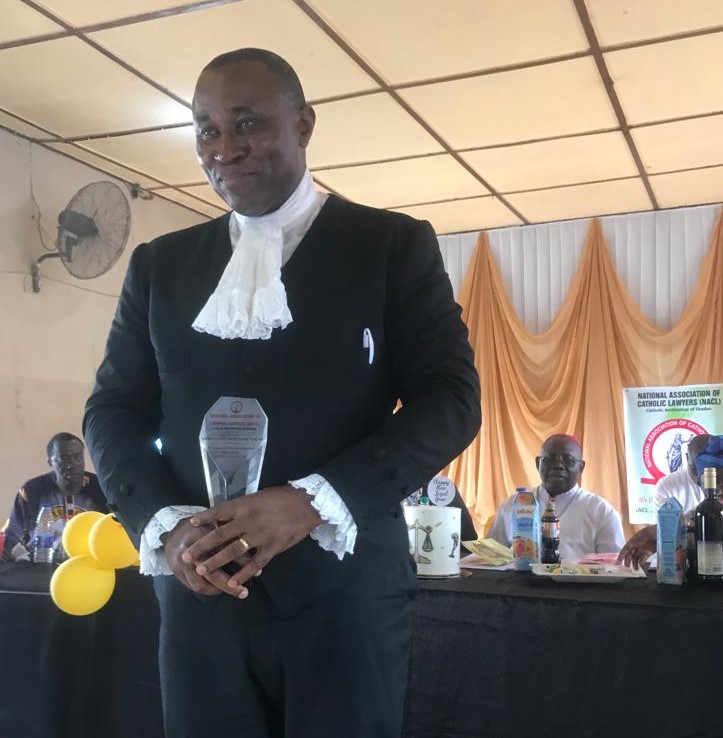
A Paper Presented at the Thanksgiving Mass, Public Lecture and Investiture of National Association of Catholic Lawyers (NACL), Catholic Archdioces of Ibadan on 8th October, 2023.

By Chimezie Victor C. Ihekweazu, SAN

INTRODUCTION/DEFINITION

Justice in its ordinary meaning depicts “Proper administration of Laws”[1] “In jurisprudence. The constant and perpetual disposition of Legal matters or dispute to render every man his due”[2]. The Concise Oxford English Dictionary defines justice as “just behavior or treatment. The quality of being just. The administration of the Law or authority in maintaining this…”[3]

The question is, how can one achieve Justice under our legal order and to what purpose? What should be the standard to be accepted in justice delivery? How can an effective justice system be realized in our given society and for what benefits? What impact would an effective justice system serve in our given society? These question in truth remain fundamental in our socio-political discuss and in truth only little appear to have changed. What structures and instruments exist in our society to achieve an acceptable system to drive economic development.

An effective justice system is the dream of every developing Nation. In one of my works, I stated[4] that “the base of sustenance of human freedom, free Enterprises, Fundamental Rights, Democracy, Due Process and Justice lie in having an effective and efficient judiciary with potent structures and capacity that deliver excellent services. It is a strong arm of government existing in cohesion with other arms to achieve and secure good governance. A weak judicial system ushers in a failed state where impunity and lawlessness thrive…”

RESOLUTION OF DISPUTE

Under our Constitution,[5] it is undisputed that the judicial resolution of dispute between persons in accordance with the law and judicial principles, remain the primary objective of establishing the Courts. This duty is done in the administration of applicable law to matters between persons within the society. In this regard, direction is provided through different levels of Court system to achieve it subject to the particular dictates of the Law where applicable. The law provides different levels of Courts seized with powers[6] and specific jurisdiction. In precise terms, the scope and exercise of these powers are provided under the written laws of the land and applied accordingly.

THE LEGAL AND INSTITUTIONAL FRAMEWORK

In Nigeria, justice delivery is guided by the Legal and institutional Frameworks as applicable in Civil and Criminal exercise of jurisdiction. Under the Legal Framework, National, State and Local Government Laws are provided in line with appropriate and due procedures with sufficient and needed adjectival laws and Rules of Court to guide the mind of the Court. In addition, Heads of Courts may approve Practice Direction and Professional Rules of Practice in exercise of their Constitutional powers to supplement the existing laws for additional support. In all, the application of these laws and Rules help to attain the ends of justice in dispute resolution. The adequacy of these Laws, remain subject for reformation, consideration and not limited in scope but guided by needs as may be apt. Law they say must be dynamic and suitable to societal needs.[7] Thus what works in a particular society may be difficult to apply in another society, a reason why acceptable cultural factors suitable in relation to the basic principles of justice are normally respected.

The effectiveness of Legal applications to a great extent relate to the operational institutions, innovative measures and structures guiding each process. The institutional framework consists of the judicial and non-judicial structures, Securities structures, policing and correctional facilities in the legal order. The Judicial structure is made up of the Courts in order of its Constitutional hierarchy as well as the quasi-Judicial/Tribunals like Arbitral structures operating with the Legal structures[8] and contractual structures,[9] permissible within the legal order. Clearly the target howsoever directed is to achieve a just determination of disputes, to enable a free and peaceful society. Other support structures like the Police, Economic and financial Crimes Commission and Nigerian Correctional Services to a great extent contribute in criminal jurisdictional matters to aid crime prevention, investigation and prosecution.

In action, it is preferable for these structures in both judicial and non-judicial standing to be manned by competent personnel qualified in absolute terms to discharge the responsibilities of the offices to fruitful satisfaction. In addition, they must be fair and independent in evaluation, conceptualizing and decision-making. In the Court system, we find seat of the Court/Court rooms, as well as the sections which include the Bailiff/Sheriff Section, Cash Office and Accounts, the Process/Record Section, The Archives, Appeal Section, Internal Audit, in addition to the Open Court Registry. These Court Sections are created and operated for the smooth administration of the Court. Competence, in Personnel Management as well as service delivery enhances fruitful administration of justice in a given society. Instances where leakages exist in any section ultimately affects the others and lead to incomplete delivery of result one way or the other.[10] This in effect, affects justice delivery in the system and lead to negative results and bring failures to the system, among other negative impact on the people.

DISPUTE RESOLUTION AND ECONOMIC DEVELOPMENTS

In truth, disputes arise in the socio-economic life of persons in any given society as well as other ills that affect life and security among people. The primary purpose of leadership in every society centers on the security and welfare of its citizens as well as the duty to maintain law and order. The fundamental objectives and directive principles of state policy[11] provide, inter-alia, that the security and welfare of the people shall be the primary purpose of government and enjoins the state to direct its policy towards ensuring the promotion of a planned and balanced economic development.[12]

Investments and economic activities strive where good structure exists for resolution of disputes that arise in economic activities, among other factors. Thus where potent structure exists for formal and informal resolution of disputes, the tendency is that such environment will allow for more economic activity and development. This situation creates magnetic attraction to sustained economic life among entities and persons within the socio-economic order. In a recent event,[13] a distinguished senior colleague,[14] recounted with nostalgia how the judiciaries faired’ over twenty-five years ago. In his remarks, cases and duration were predictable with adherence to precedent that assured every Practitioner almost a 100% percent certainty of the outcome. This position enjoyed the admiration of colleagues who never doubted its truthfulness. Time was more of the essence on decision whether civil or criminal were concluded within relatively shorter periods unlike what the present day brings. In fact, there were lesser Appeals since every practitioner could advise effectively in line with established principles of law that operated at any given time. In my understanding and assessment of the time, most businesses strived, with stable monetary policies and huge international trade relations and engagements that allowed the admiration of our dear nation. The records are there for comparison.[15] In Comparative terms A Judge from the UK Commercial Court once pointed out at an event15b that in determination of insolvency matters there is hardly an Appeal as every Officer in the temple of Justice from the Judge to the Administrative staff and Advocates are well informed to do the needful and accept the outcome.

In our Court, cases stay years before decisions are reached. In most cases, at the appellate stages, the Court of Appeal last over three years while at the Supreme Court, cases over 6 or more years save for time bound cases as provided in Law.[16] Unless, where special Laws[17] allow for speedy determination or circumstances allowing for exercise of judicial discretion,[18] which may be allowed in some cases. These states of

affairs cannot allow fruitful and meaningful economic activities that will benefit the society. To a great extent state income for development is affected negatively thus allowing for extensive borrowing which in turn impoverish the people and the state. Painfully, this has been the reality and we continue to suffer for it. My humble advice is not to allow this state of affairs to continue. Efforts should be made to ensure a change for the better.

Effective dispute resolutions allows for stability in the socio-political order and attracts investment as well as enhance rich economic activity. Disputes arise in our everyday activity and some wrongful acts may equally result in human relations as well as with the state. Fruitful and timely resolution of disputes, redress and or penalty/punishment as applicable reassures the people. This has contributed to the development in other countries like United States, South Africa and European States.

The question one may ask is how have we been affected in this Country? Recently, I attended some events where references were made about the protracted nature of some Arbitration and Insolvency matters that resulted to extensive and endless litigation of an average of seven (7) to twelve years. In my years of experience in Legal Practice, I have also had a fair share of this situation. Recently, I have been engaged in an Insolvency matter that has resulted in litigations of over six (6) years in a simple commercial matter. Surprisingly, the issues leading to most of the disputes were basically contractual and involving certain agreed terms and positions. This remains unfortunate. In business, time is of the essence, the micro and macro-economic realities point to the truth that values in economical benefit can no longer be the same. Events in the Financial and monetary sector are ready examples which cannot be ignored. The fear remains how long will the unfortunate situation continue and when will we see the light in the tunnel. The answers remain in our ability to build a viable judicial system.

In Civil and Criminal matters the applicable laws[19] and effective structures in addressing matters, lie in judicial resolution structures[20] as well as contractual resolution structures aimed to achieve justice. The question is to what extent can one say our Nation has been fruitful in justice delivery? What is the average life span of a case in the High Court, Court of Appeal and Supreme Court. Even in other alternative dispute resolution mechanisms like Arbitration, what reality exist in Nigeria today regarding recognition and enforcement of awards.  Clearly matters that can be concluded within two or three years may stand as exceptions to what stands as reality. This situation cannot encourage economic activity. It will also not allow meaningful co-existence of citizens.

The second issue relates to the structures that aid dispensation of justice. Competence, Facilities, Personnel and other condition of service, contribute tremendously to efficiency in the system. The manner and standard of each Personnel starting from the Court, the Registrars, Filing Room Staff, Cash Office etc go to a great extent to show what the result will be. In addition, the conditions of the workspace as well as the reward system encourage effective service, which in turn yield to development.    

CHALLENGES AND PROPOSAL FOR REFORM

Our judicial system today continues to face huge challenges on different fronts. The standard of appointment of judges must be reviewed to bring it to almost the same standard with that of the award of Senior Advocates of Nigeria. This will to a great extent guarantee satisfactory experience and background in dealing with legal matters as well as case management. In some jurisdictions like the United Kingdom, Advocates aspire to the Bench from the inner Bar. Though this may appear unusual but certainly it will guarantee passion, interest and good/service in the legal regime. There is nothing wrong with having a good percentage of our judges who have experienced active practice. In Nigeria, most of the courts are operating with limited facilities to aid and support their service delivery. Some of the conditions and facilities remain deplorable in most cases, while the rules of courts and practice directions advance in technology, the facilities required to make their rules effective are either unavailable or inadequate. This remains a major set-back and affects the justice delivery.

The next issue remains the limited capacity in human capital development to operate the system. Our Honorable Justices deserve extensive and rich trainings regularly to meet up with the times and the needs of justice in our societies. The challenge also besets other support staff who need these improvements in the call to service in the justice sector. Efforts should be made to achieve more gains in this regard.

Lack of efficient Research Assistants is a major challenge in our justice delivery system at different court levels. Our judicial Officers are human with the respective obligation ranging from potential, family, parental, among others and most work to lead and not work to die. The same thing applies to other personnel that work within the medical system to obtain the best from the system, the support structure must allow for efficient Research Assistance in human personnel as well as adequate Libraries among other provisions that will compliment their effort to produce timely and fruitful results.

A fertile environment for economic growth must be rich in terms of its legal and institutional framework for justice delivery. This will foster effective dispute resolution mechanisms and framework that will be beneficial for the society. This must be enhanced from the lowest Courts to the highest court in the sense of its jurisdictional limits of causes in respect of each original and appellate Jurisdictions.

The process of streamlining matters in its required attention must be defined through law reforms as well as. speedy. Clearly, certain matters require urgent attention for their extraordinary economic values. These will include matters toughing or relating to arbitration, Insolvency and Business Rescue, Tenancy matters, Company operation and survival as well as Employment, Labour and  Education among others. These matters touch on human survival, state revenue and

economic stability. In fact it may even affect state survival in the sense that economic adversity can lead to the collapse of the State. Settlement of dispute  in these areas must be achieved within limited period as time must be recognized as being of the essence. This is the reality and must be taken seriously.

Training and re-training of judicial officers and other administrative personnel of the courts must be consistent, sustained, structured and result oriented. These trainings must address key areas of concern. Constant structures must be put in place to evaluate these trainings to record and identify results and other benefits for graduated sustenance.

Mandatory health checks must equally be encouraged for our judicial officer as well as their administrative staff. This must not be ignored. It will help identify weak capacities as well as manageable standards in capacities so that realistic assistance, support needed and comfort can be provided. These issues relating to health must be carefully managed so that they can be assured that their welfare is guaranteed for them to attend to their other obligations and callings without any negative result for the state.

Finally on this point, I must mention that Judicial advocacy appears not to be given the required attention. Suitable information flow may not be penetrating wide enough in the medium that will reach the different parts of our society as well as authorities. Genuine and informed efforts should be made to achieve this as well as sustain the efforts and improvements.

CONCLUSION

Nigeria is a developing state and must be conscious of its socio-economic and political order. Statistics in its justice delivery system across all the levels of the court cannot be said to be improving for the better. A lot of businesses are failing and new ones appear not to be encouraged. The business space has continued to shrink with little attention being directed to the reasons for the fallings and means of rescue or survival.

There is need to keep watch at all times and address urgent needs in terms of the concerns or inadequacies in the legal framework at the state and national levels as well as the institutional structures within the justice delivery system. We must in comparative term work at what has worked elsewhere and pick the fruits as necessary in apt balances with our environment as to what will work. This practice must be continuous and consistent. To this end we will improve the judicial structures and by direct extension bring economic development to our nation and its people.

I must underscore the point that our social economic wellbeing to a great extent depends on the potency of the judiciary and its effectiveness. It concerns all of us no matter how we live and therefore requires constant review, examination as well as necessary reform to yield benefits to the entire citizenry of our nation.

Thank you.

CHIMEZIE VICTOR C. IHEKWEAZU LLM, FBR, FCArb. SAN
CHIKWEM CHAMBERS (C.V.C. IHEKWEAZU & CO)
27C KOLAWOLE CRESCENT, OFF BUNMI OLOWUDE STREET, LEKKI PHASE I, LAGOS, LAGOS STATE
TEL: 08033018974, 08057209005
Email: [email protected], [email protected], [email protected]


[1] Black’s Law Dictionary 5th Ed. by Henry Campbell Black, M.A. West Publishing Co. 1979 Page 776

[2] Black’s Law Dictionary 5th Ed. by Henry Campbell Black, M.A. West Publishing Co. 1979 Page 776

[3] Page 772 – Concise Oxford English Dictionary Eleventh Edition by Catherine Soanes and Angus Stevenson – Oxford University Press – 2004 P. 772

[4] “Reinforcing the Nigerian Judiciary and its Structures” Unpublished Article (2022)

[5] Section 6(6)b of the 1999 Constitution of the Federal Republic of Nigeria

[6] Section 6(6) a Ibid

[7] See … Practice Directions, Regulation and Rules that apply in our Courts

[8] Other Tribunals and Resolution panels within establishments recognized under the Legal Order

[9] Arbitral Tribunals permitted by Law

[10] See the Paper – “Ethical Considerations in Operation of Modern Court Registry” by Chimezie Victor C. Ihekweazu 2013

[11] See Chapter II, Section 14(2)b of the 1999 Constitution of the Federal Republic of Nigeria (as amended)

[12] Section 16(2)(a) ibid

[13] AGM of National Association of Catholic Lawyers Lagos Archdiocese

[14] Chief (Dr.) Anthony I Idigbe (SAN)

[15] It is important to note the level of economic activities in Nigeria across region in the 80s and 90s as compared with later years. The exchange rate in the Naira to the dollar and other National currency also show indication of these scenarios

[16] Election matters               

[17] Assets Management Corporation Matters and  EFCC matters, etc

[18] The Courts retain powers to grant accelerated hearing of cases

[19]

[20]

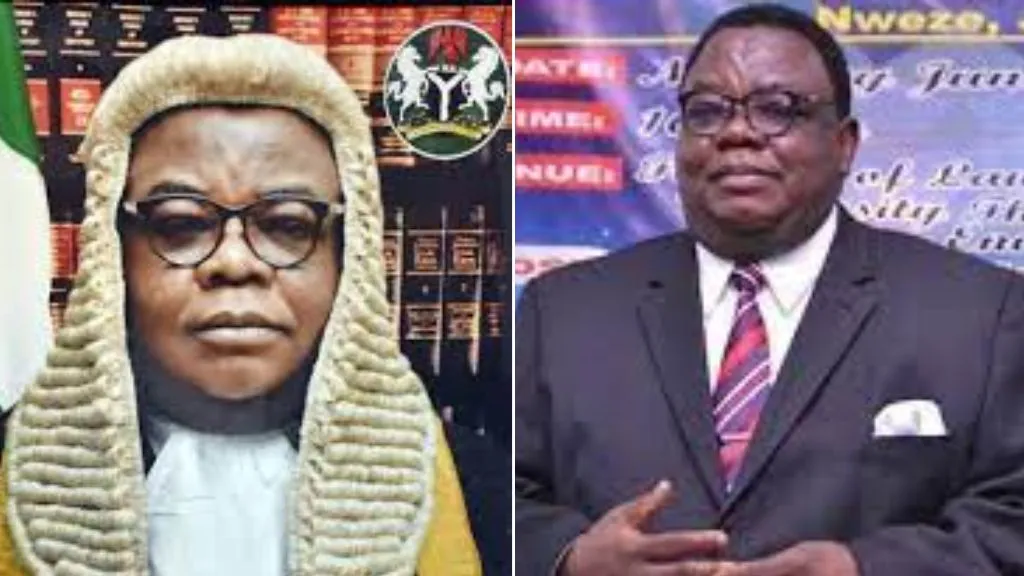
CJN, AGF, NBA, others pour encomiums on Late Supreme Justice Nweze 

  • He was a jurist of impeccable character – CJN

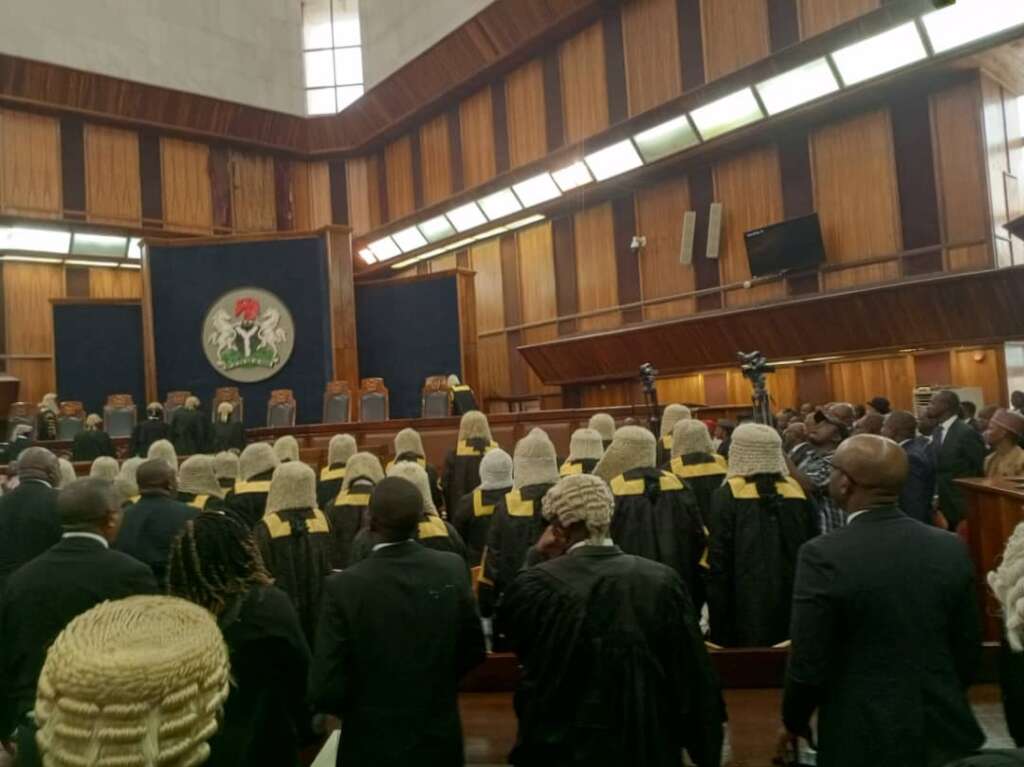
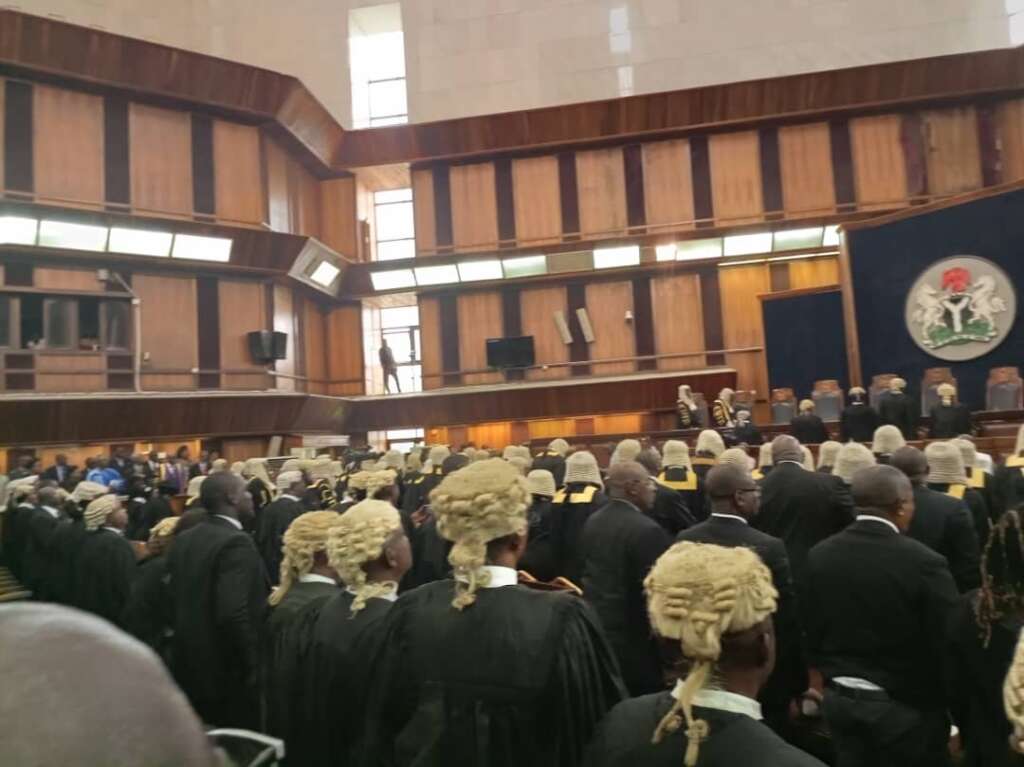
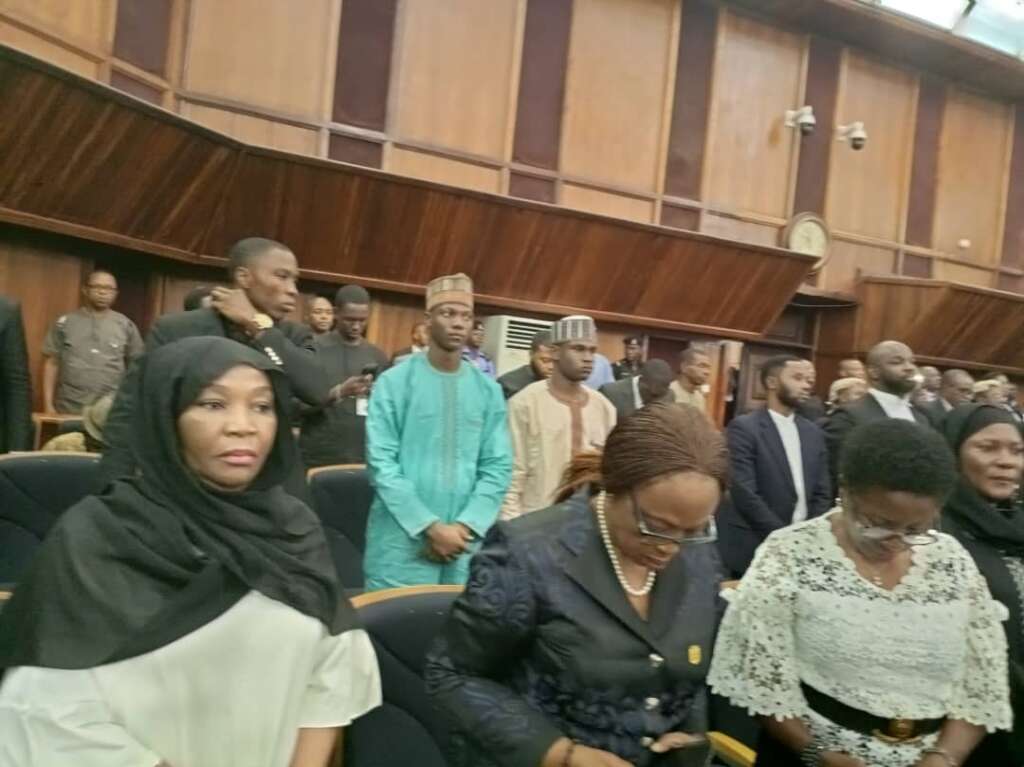
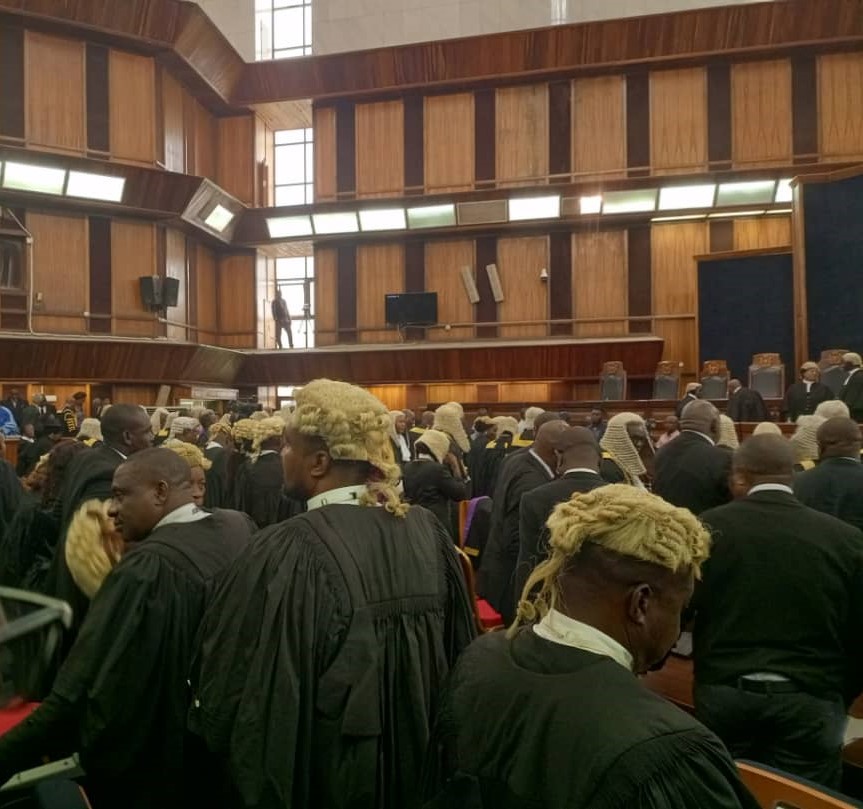
It was a festival of encomiums at the Supreme Court on Tuesday during the Special Court Session held in honour of the late Hon. Justice Chima Centus Nweze at the apex court’s ceremonial courtroom in Abuja.

As eulogies and more eulogies poured in, the Chief Justice of Nigeria (CJN), Hon. Justice Olukayode Ariwoola described His Lordship as a jurist of impeccable character who has contributed significantly to the enhancement of the Nigerian judiciary sector.

Justice Nweze died on Saturday, 29th July 2023, at the age of 64 at National Hospital Abuja, nearly six years before the statutory retirement age of 70 for Justices of the Supreme Court.

Justice Ariwoola told the fully packed courtroom that, Nweze who has over 60 publications in books and journals “was one of those cerebrally mobile judicial officers in contemporary history who had latched on court’s memory an enviable degree of intellectual eminence and legal finesse that encompassed all spheres of philosophy and methodical reasoning.”

Describing Nweze as a unique and nationalistic personality with a radical posture of justice and the rule of law, The CJN said: “He was always very warm and engaging, which underscored the litany of friends and admirers that were always milling around him. Like all great men, my Lord was a man of paradox; simple without being simplistic in disposition; elitist and dignified in carriage, yet he related exceptionally well with everyone around him, especially the underprivileged and the downtrodden in the society…

Justice Nweze’s entire life was completely devoid of duplicity, undue arrogance and elitism; as some people often manifest once fortune smiles on them and they are elevated to positions of influence and affluence… His Lordship was one man who strongly believed that honesty is the first chapter in the book of wisdom. 

Justice Ariwoola also remarked: “Nweze that I knew very well and had remarkable acquaintance with, was a dogged fighter for whatever cause he believed in; yet an astute advocate of the arts of mediation and reconciliation.

“He became a formidable refuge to a vast clan of followers who continually drew inspiration, succour and strength to guide their journey through life,

Those who knew him very well will harbour no doubt of his expansive landscape of courage that does not hurt or intimidate others. He epitomised the generosity that does not vaunt; and even showed a loving kindness for people that have arisen triumphant over his human frailties. 

Like the proverbial mountain of refuge, he willingly offered his enamoured curtain of cloud as a shield over his clan of friends and acquaintances. His judgments which were firmly rooted in law and wisdom, permeated even the most delicate hearts like a soothing balm. 

“He was a man with a very large heart that accommodated people from all walks of life and different shades of opinions and dispositions. He became a formidable refuge to a vast clan of followers who continually drew inspiration, succour and strength to guide their journey through life.”

On his part, the Attorney General of the Federation and Minister of Justice, Lateef Fagbemi (SAN) said the late Justice Nweze’s life will continue to shine as an example to all.

Represented by the Solicitor General of the Federation Mrs. Beatrice Jeddy- Agba, the AGF noted that, the late jurist contributed immensely to the development of the judiciary of the country.

A representative of the Body of Senior Advocate of Nigeria (BOSAN) Damian Dodo (SAN) and President of Nigeria Bar Association Yakubu Maikyau (SAN) also paid glowing tributes to the deceased jurist noting that his excellent judgements made significant impacts on the country’s jurisprudence.

It was also a very sobering event as it became even more apparent that the one who had the power of life and death over those who appeared before him in court as noted by Dodo, SAN “now stands alone before the judge of all judges” for the ultimate verdict.

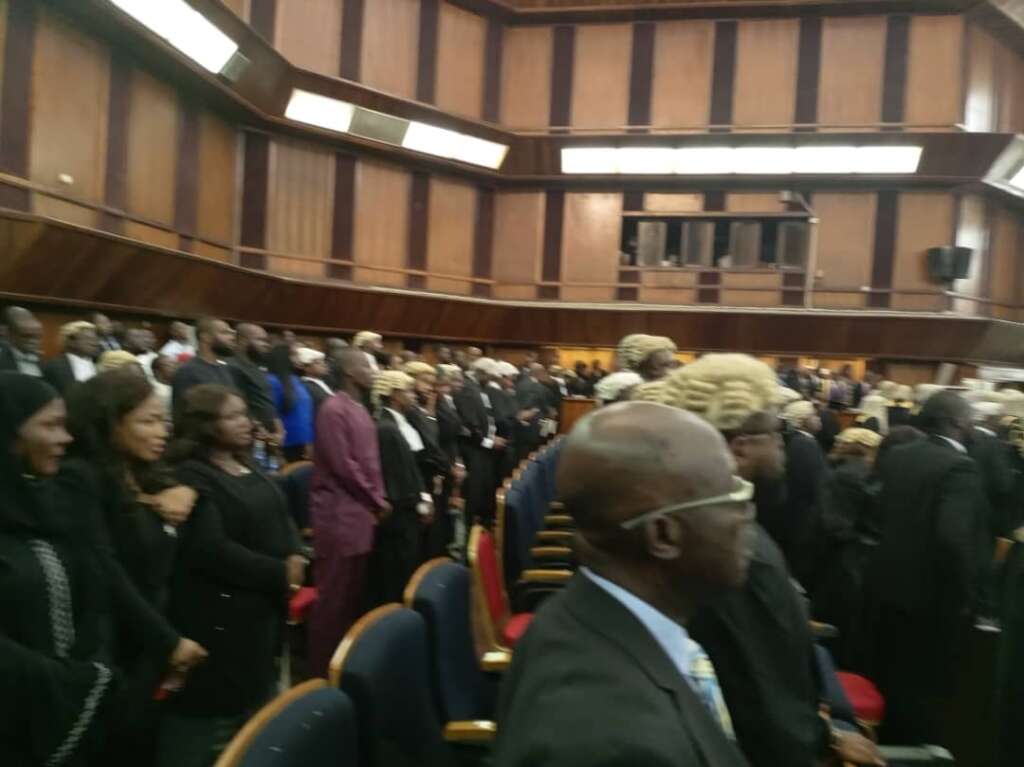
The event was attended by former Chief Justices Mahmud Muhammad and Walter Nkanu Onnoghen, serving and retired justices of the Court of Appeal, Heads of Courts, judges of other superiors courts of record, the Nweze Family and many others.

Intimate Affairs: Why can’t a side chick have a side guy?

By Funke Egbemode

I had not seen Fey (short for Feyikemi) in a while, a year and some weeks, I think. Until that bright afternoon last week. I was getting out of my car in the parking lot of my favourite spa in Victoria Island, Lagos. I had finally decided that I was ripe and ready for some head-to-toe professional pampering to take out the crinks and deep massage for the bunched-up muscles. I deserve a treat after all those tension-soaked months, even if I say so myself.

As I stepped out of my car, right beside me was this sleek Range Rover, white too. I’m a sucker for white automobiles, I confess. Still admiring the nice ride and Fey stepped out. We screamed, hugged and screamed some more. Fey, my Fey was looking totally luxe in a simple sky blue kaftan.

‘Babe. This Range na new one o.’ I winked. The Benz and Lexus I know but not this Range.

‘Yes o, it’s a gift from me to myself to console me.’ Fey and her lively sentences, I’d missed them but I didn’t miss the import of that particular statement. Why did my friend need consolation? Who died?

Nobody really, just her five-year relationship with B.J. Now, that was a truly sad one and a great affair must be mourned properly when it dies. Fey and B.J were a discreet item and we all thought they were going to live happily the rest of their days, one way or the other, somehow. I’ll explain.

Fey is a big Lagos babe, successful importer, a contractor who also plays in the real estate sector. B.J owns one the thriving real estate companies building estates left, right and center of Nigeria. He has his fingers in other pies too. He will be 60 later this year and he is married.

He and Fey met at one of the real estate industry events and hit it off from get-go. Fey’s two sons are in Canada and she was a searching, single mother. Fey and B.J were a couple to behold. They made time for each other within and outside the country, bae-cation and weekend getaways. Don’t ask me for details. The long and short of it all was B.J. was, is, a married man which made my friend a side-chick. Hard, sad reality. But Fey hoped for and wanted more. Months turned into years and B.J continued to spoil her, spending time, quality time with her.

So, what went wrong? The two of us went to the pool side, took up a table-for-two and ordered drinks. According to Fey, she was about to board her flight back to Nigeria in Qatar when she saw what she described as the most shocking story of her life on one of the online platforms. Real Estate Big Boy Takes Second Wife in Quiet Ceremony!!! B.J.’s photo accompanied the story.

‘Babe, my world went into a spin. My emotions went into a riot. First it was unbelief, then anger, denial and then shame, followed by more angry thoughts. Not my B.J. Then I told myself I was a fool anyway, foolish enough to have thought I was anything more than a warm body to him. I felt used and ashamed, wondering even if B.J. had me under a spell. My eyes misted over and I still don’t know how I didn’t stumble or fall between the lounge and the aircraft. I sank into my seat and did my best not to put my two hands on my head and bawl like a child.Thank God for the Business Class cabin. I had the privacy to sniff and cry into my handkerchief.

Fey had a dozen and one dozens questions for herself and tons for B.J. whose phones were switched off, including the one that was known only to the two of them. Yes, they were that close. Or so Fey thought. Reminds one of Atlantic Star’s Secret Lovers’ lyrics. That was what dawned on Fey. She was just his secret.

‘I felt like a fool, used, discarded and left to figure things out. I mean, B.J.’s phones were actually switched off and he took a second wife and left me to find out on the social media! I was faithful to him for five whole years, only him saw my nakedness. I cooked and shopped for him. I cancelled business meetings, rescheduled appointments to be available for him. I allowed him act out his fantasies. His clothes, shirts, agbada, socks, boxers were in my house. And in all those years he didn’t think I was good enough for a second wife. He wanted a second wife and he went shopping elsewhere. Can you beat that, Funke?

Fey felt like a slut, a regular runs-girl. Runs-girls, however, know the ‘score’ and don’t bother with expectations and loyalty. B.J didn’t call to explain for a whole week. I guess he was waiting for the inferno to become a controllable fire. When bad B.J eventually called, his explanation was really no explanation. But my friend was a fool in love, I think. You know how it is with a man you have loved deeply. Cutting them off is usually hard grind.

‘His familiar scent, charming sexy voice and smile did me in, I must confess. But my head was clearer and I told myself from there on I was putting my heart on vacation. I told myself I was no longer the exclusive preserve of B.J. ‘ That’s how a smart mature babe should roll.

Fey nicely, smartly, of course, painfully stepped away from B.J who somehow thought he could warm his way back into my friend’s heart and panties. He didn’t see my friend coming. When he called that he was coming over for dinner (dinners are dangerous with a man you are breaking off with), she sweetly told him lunch the following week would be a better idea. But B.J still felt he owned Fey lock, stock and barrel. Until that day in September at the Murtala Mohammed International Airport, Lagos.

‘I was going to South Africa with the new man in my life. We were getting our drinks at the lounge when B.J walked in with his pregnant new wife. Imagine if I was there alone to witness that! I’d have been miserable. Trust me, I milked the situation to the brim. I put my head on Emma’s shoulder, looked in his eyes constantly, dusted imaginary specks from his designer shirt. I got up twice to show off my cute arsenal and nicely wrapped Man-U. When B.J is upset, he chews on his lower lip. That day, he chewed it raw and it was a pleasant sight.’

So, Guys, tell me, what was B.J expecting? Perhaps the more appropriate question is why do married men expect their side chicks to be faithful and exclusive to them? Isn’t the side chic game built on unfaithfulness? Mr Married Man wants one on the side, why should Miss Side Chick be kept on ice when marriage proposal is not on the cards. Men, they are interestingly selfish, all the time but what can we do without them? They are fun and cool but certainly need to kick the cocky selfishness. Why would B.J. who had a wife and all the fun with a side chick who he ignored, passed over, dumped, to get a second wife chew his lips in anger until they bled, just because he saw her with another man? I don’t understand why a side chick can’t have a side guy. What is sauce for the goose should be sauce for the gander.

The side chick’s duties are clear. She’s is the one you go to when you want. She is the one who does not have a headache when you want her. She wears sexy lingerie to serve her man red wine after a hard day’s work. She fixes her nails and hair the way he wants it. She is his personal masseuse. She allows him as many missionary journeys as he wants as often as he wants. She does not just say sorry when he’s unhappy or loses a business deal. She puts his head in between her breasts and rocks him to sleep.

And if she’s a big girl side-chick, she comes through with soft loans and useful business contact. She is his go-to-girl, the one who does all the things Madam no longer has time for. Of course, she gets generous pampering for being sweet and warm. But side chicks are not forever. I mean, it’s not a status most women want to keep or be kept in forever. However when they are loyal, they can be totally loyal, totally devoted. And when they feel used and are tired of playing second fiddle, that’s when they start considering alternatives such as a side guy. Me, I think every woman should look out for herself and not allow her supple years to be sucked dry by a man who is not giving her something tangible in return. Oga, if you are not going to give your side chick the ‘more’ she wants, brace up, she just might get herself a side guy soon. That’s how a deregulated market works.

I’ll leave it here, for now.

[email protected]

Mohbad: Rights group questions press conference by police without autopsy result

A human rights group, Save The Poor And Needy Charity Initiative (SPANCI) has queried the rational behind the recent press conference called by the Lagos Police Commissioner of Police, Idowu Owohunwa, on the death of Ilerioluwa Aloba, (Mohbad) while the autopsy result which is expected to disclose the cause of his death is yet to be unveiled.

The group, in a press statement on Monday by its President, Comrade Bello Ezekiel (JP) commended the Inspector General of Police for promptly instructing the Lagos Police Command to conduct a thorough investigation of the circumstances surrounding the sudden death of Mohbad but questioned why the command did not wait for the result of the autopsy before the State Commissioner of Police addressed the press.

SPANCI said, “We are not satisfied with the release of the Lagos CP’s press statement on Mohbad’s death without the autopsy results. This could raise suspicion as the issue is a global issue and our legal and justice system is on focus not only by Nigerians but also international communities. Hence, the Lagos CP would have waited for the autopsy results since he has gotten a court order to detain the suspects for 21 days within which we believe the autopsy results would have been released.

“Why did Lagos CP not wait for autopsy results before making a press statement? Is the Statement not decisive, diversionary and concluding about the cause of Mohbad’s death? What is now the essence of autopsy results when police already told us how Mohbad died?

“Did the Police investigate the allegation of Primeboy on the wife based on the principle of fair hearing and justice?

“The hospital said he was brought in dead what of the man who claimed in a viral video that he saw Mohbad walk into the hospital by himself and even snapped with him but was shocked at the later occurrence? I think there are still needed investigations if justice will be done.

“We are of the opinion that people are losing hope and already doubting if justice can still be done because of the influence of the suspects and this act of preemption can lead to pervertion, prevention, obstruction and defeat of the cause of Justice.”

This madness of Chicago State University must stop now — Olisa Agbakoba

  • Nigerians disagree with Olisa Agbakoba on certificate Forgery Noise

An ex-President of the Nigerian Bar association (NBA), Senior advocate of Nigeria and rights lawyer, Olisa Agbakoba has expressed exasperation over the continued controversy being raked up over the President Bola Tinubu’s Chicago State University saga.

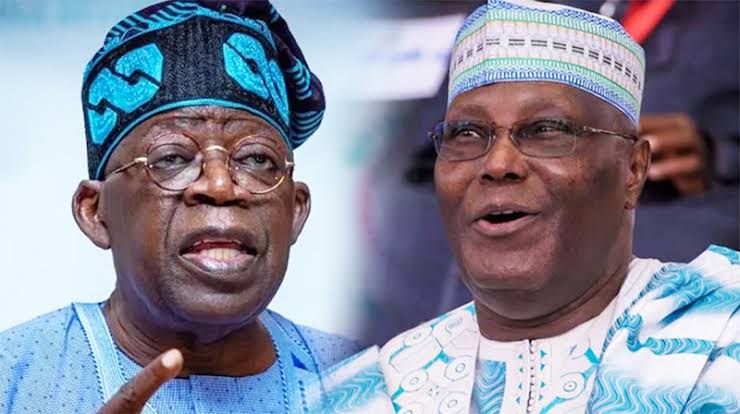
Urging lawyers and others discussing the issue in the media should stop their fireworks and await the judgment of the Supreme Court, the Senior Advocate said: “The cacophony of discordant voices on Tinubu / Atiku over the certificate matter is completely out of hand. This utter nonsense from arm chair lawyers is heating up Nigeria dangerously.”

Agbakoba in a post on “x” Monday said: “Please can we keep our opinions and views to ourselves awaiting a decision of the Supreme Court.

“I am so ashamed to see Lawyers on Television arguing one way or the other on the merits or demerits of the Chicago State University matter. This is most unhelpful! I call out all media that tolerate this nonsense of adjudicating the CSU matter on TV and Newspapers.

“I urge the President of the Nigerian Bar Association to call out lawyers that breach rules of ethics by turning the media into a Court of Law.

“Can we please stop heating up our country!!! Let us allow the Supreme Court of Nigeria to make a judicial pronouncement which is binding on us all!!!! This public nonsense must stop.

– OA.”

But Nigerians also gave their response…

@BolanleA4 said: ” I should wait for human being like me to dictate whether Tinubu forge his/her certificate? Because the person is so called a judge? Do we have any function sector in Nigeria right now?
Tinubu forged his/her certificate. Simple as a Abc.”

My dear respected SAN,

We love and cherish your contributions ever since, but on this issue of certificate forgery by the INEC-Select president, we will not be quiet a bit, because we know what will come out of the Supreme Court!

We press a STAND on the forgery, because it is a real national issue that must not be swept under carpet.

How can a president of a country forge a certificate to rule over the people and you said it should not be debated everywhere in the world?

We expected you to call out the president to step down immediately it was discovered he forged. This is not about the Supreme Court, it is not about Tinubu, it is not about lawyers or media, this is about Nigeria, and Nigerians!

They took our right to choose our leaders and they imposed a forger on us and we should all be quiet and wait for the judiciary that has been siding with plenty CORNs.

The supreme Court should be filled with Judges of impeccable characters and wisdom of the constitution, is that what we have today?”

Dear @oagbakoba
I’ll start on a gentle note to give you the benefit of the doubt that you speak out of disgust for the treacherous and d◇mbest comments made by YOUR COLLEAGUES from the APC, notably, Festus Keyamo. And that you are not writing this to muzzle the public opinions of Well-Meaning Nigerians.

If the above is the case, i’d advise you to speak more directly to the legal vipers that have infested the legal profession, otherwise, please keep quiet.

What Nigerians would not tolerate are the pontifications of men who should know better and who could have done better.

Lawyers should come down from the high horses and the exclusiveness because you all have failed us. We do not need any further interpretations from the Supreme Court to determine if Bola Ahmed Tinubu forged the CSU certificate. That much has been established already. What we need the Supreme Court to do is simple: disqualify him and cause him not to enjoy the benefits of his crime.

Thank you.”

@Spotlight_Abby

” You have been silence in various miscarriages of justice’s happening in the country. Please continue to do so.
You can’t gag anyone.
Where were you when the president of NBA was disparaging EU report?”

@adenike

Sir, the NBA president you called on is part of the problem. He was on TV to offer bias opinion on a case that was at PEPT level? He was seen with Tinubu, a party to the case few times before their “judgment”.

The plan is to set the mood to their already prepared verdict again.”..

@joeJohnseen

You can see all the responses on his timeline..

Unfortunately, any Nigerian still waiting and hoping on the Supreme Court of Nigeria to do the needful might be disappointed…. Who appointed those Judges? Same APC government abi?

Have you heard what Justice Ariwola said about ignoring public opinions?

These are same people Olisa Agbakoba is telling Nigerians to hope on?

So, after the Supreme Court completes what Justice Tsammani and hia crew started…. Then, Olisa Agbakoba would tell Nigerians, it’s what it’s.. We should move on and allow Such putrefying scandal as Certificate forgery be plastered on Nigerians for Generations to come?

Enugu Governor continuing with a forged NYSC certificate?

Such a terrible time we’re in…. 

Technical, yet troubling, thoughts on the 061023 Notice of Motion For the Westberg-CSU Additional or Fresh Evidence at the SC

By R.A.C.E Achara

Let’s hope the court will grant this discretionary application.

The motion is very persuasive, even compelling in its saliency and brevity. But I worry.

I worry not about the rightness of what has been presented but on doubtful prior decisions, which offer avoidable technical objections, which the applicant’s could have sidestepped without opening the opportunity for a possibly adverse ruling on them, one way or the other.

For example, I should have expected the applicants to preempt the objection that is to the effect that a court should reject evidence by way of a supporting affidavit if such an affidavit has been made by a legal practitioner representing any of the parties.

This objection is double edged.

If you say the material is such that only counsel for the applicant can understand and make it on his behalf, then, there’s judicial precedent to the effect that acting, qua counsel, the deponent is consequently supposed to have affixed his NBA stamp and seal otherwise his signature is to be regarded as not there. The supporting affidavit in this application is sans such a stamp and seal.

Without a valid signature, the affidavit is invalid. With the affidavit also vanishes all the exhibited documents; as well, consequently, of all parts of the thus naked motion paper and accompanying written address.

But if the deponent need be no counsel, there are yet, regrettably, recent SC authorities (in which counsel had unfortunately not drawn the attention of Their Lordships to their prior, not overruled, and thus binding 1986 full court decision to the contrary) in which there had been dicta to suggest that a supporting affidavit should be nullified, as unusable, if made by a legal practitioner or clerk in the law firm of such counsel!

There are conflicting CA decisions on the point.

The latest one is consistent with the 1986(87?) controlling SC decision, per Oputa, JSC leading, in Elabanjo v. Tijani.

But although, in my respectful submission, preferable, I’m compelled nevertheless to point out that it is per incuriam for ignoring the contrary earlier CA decision that nullifies such an affidavit.

The only saving grace is that that earlier CA decision is itself per incuriam a much earlier CA decision and inconsistent with the indisputably controlling SC decision in Elabanjo.

But why expose the application to this avoidable possible loophole?

To sidestep this expectable but unwarranted controversy, why not expressly indicate that the deponent is currently not acting, qua counsel, as seems probably the case from a cursory look at the list of the counsel expressly indicated as acting in that capacity (of applicants’ counsel) on the face of the motion paper and on the written address?

Why didn’t they get the applicant or the Chairman or Secretary of the 2nd applicant PDP, or, best of all, any administrative staff of the applicants that was present physically or virtually at the US court-ordered deposition and certification, to swear to these facts by signing the affidavit before the Commissioner for Oaths at the Supreme Court?

What could they possibly have lost by sidestepping this ‘overcomeable’ but potential landmine?

Again, but this is minor, the Written Address, which is filed along with the motion paper, omits addresses for service of the process on any of the three respondents.

A Supreme Court (SC) decision of 25/2/2021(22?) – I think Jarigbe and Ukpo or parties fighting over a Senate seat in Cross River State – decided that absence of an address for service is fatal; as being indicative of an intention, in a non ex parte motion, to proceed without notifying one’s opponents of the pending matter.

However, it would be crass ‘technicism’ (not just ‘technicality’) if under the present facts, the Hon. Court would feel persuaded to apply that decision to the present appeal.

This is because the missing addresses for service were fully included at the appropriate places on the motion paper to which the Written Address has been added as an inextricable part.

My other worry is in relation to the delivery machinery for the substantive evidence, which the appellants propose to inject as fresh or additional evidence to the appeal.

No doubt, the rules permit what they have done by way of prayers asking (without the intermediation of any direct witness or witnesses) for production, and when produced, receipt by the court of the, as it were, hearsay evidence of Westberg’s deposition and its certified true copy (by probably a court recorder or court clerk of a foreign court not within the Evidence Act’s judicially recognized ‘Commonwealth’).

The District Court of the State of Illinois and indeed even the entire United States of America are not part of the Commonwealth of States.

This has been so since at least the successful war of independence and thus before the creation of the Commonwealth of States which are or formerly had been under the suzerainty of the United Kingdom.

In the event, why not err on the side of excess by introducing the CTC and or original deposition through a person who was present at the deposition, witnessed its certification, and then got all these notarized at the Nigerian embassy in the non-Commonwealth country called the United States of America?

Anyway, I tend to worry too much and thus I attempt to fill gaps that might never even be noticed or canvassed.

Prof. R. A. C. E. Achara, Ph.D. (Nig.);
Doctoral Prizeman, University of Nigeria Postgraduate Prize for Law;
Bill & Melinda Gates Foundation Fellow of the Five College African Scholars Program, University of Massachusetts, Amherst;
Millennial Chairman, NBA Enugu Branch 2000-2002;
Principal,
Prof. RACE Achara Law Chambers,
New Haven, Enugu.
[[email protected]]
01:07, Sunday,
8 October 2023.

Bolanle Lawal: Justice served as killer policeman is sentenced to death by hanging

Although nothing can ever repay the loss of Bolanle Lawal and her unborn baby that were brutally and senselessly cut down by a trigger happy policeman on Christmas day of 2022, justice has been finally been served with the sentencing of Drambi Vandi to death by hanging by a Lagos State High Court.

Bolanle Raheeem who was shot dead by the suspended police officer at the Ajah roundabout in Lagos was a Lagos-based lawyer.

Having found the police officer guilty on one count of murder, Hon. Justice Ibironke Harrison in her her verdict on Monday said: ” You will be hanged by the neck till you are dead.”

The convict was a police officer attached to the Ajiwe police division in the Ajah area of the state. 

His revulsive act was widely condemned by Nigerians and he was suspended two days after the incident.

Lagos state government had presented a one-count charge of murder of the lawyer against the defendant and subsequently arraigned him.

Since the court trial started in January, the deceased’s husband, sister, police armourer, pathologist and seven others have testified against the defendant.

The prosecution tendered 27 exhibits.

Vandi was the only witness who testified in his own defence.

In his testimony before the court, Vandi told the judge that the bullet presented in court which was said to have killed Mrs Raheem did not come from the rifle he carried on the day of the incident.

A Captured Temple of Justice

By Chidi Anselm Odinkalu

In July 2023, the Chief Justice of Nigeria (CJN) presided over a meeting of the National Judicial Council (NJC) to appoint his own son a judge of the Federal High Court. On 4 October, as his father presided over the swearing in of his own son, it fell to the Old Students Association of Ikolaba Grammar School, which the new judge attended for his secondary education, to defend his appointment with the cringe-inducing statement that “contrary to claims in some quarters, Ariwoola Jr.’s appointment as a judge was not on the influence of his father, who is the CJN.” They lacked the standing to say this, of course, because they could not possibly know how he was appointed.

In June 2023, the NJC convened to approve the elevation of the President of the Court of Appeal’s son-in-law. This individual has previously been appointed as a judge of the National Industrial Court of Nigerian (NICN) a mere six years earlier in 2017.

In January 2021, the Governor of Plateau State swore in the wife of this same son-in-law, herself the daughter of the same President of the Court of Appeal, as a judge of the High Court of Plateau State.

The following year, the wife of the Judge President of the NICN was similarly appointed a judge of the High Court of the Federal Capital Territory. Her brother, like her husband, was also a member of the NJC.

Meanwhile, at the meeting where it approved the son of the CJN for a judgeship, the NJC also approved for appointment to the Federal High Court a nephew of the Chief Judge of Ogun State.

What is good for the judges is also good for the politicians. So, as the country headed into the 2019 elections, the then ruling party handed the ticket to represent Bauchi North in the Senate to the husband of the President Court of Appeal, who plays the primary role in election dispute resolution. On his exit from the Senate four years later, this Senator confessed that instead of using the bedroom to enjoy geriatric connubium, he had converted it into a venue where he habitually “encroached” on his wife’s judicial independence for the benefit of his political co-travellers.

Meanwhile, following the retirement of that President of the Court of Appeal, her husband became surplus to requirements and the party promptly re-allocated the ticket in 2023 for his senatorial seat instead to one of the sons of the then CJN.

Not to be outdone, another major political party handed a ticket to the House of Representatives to another son of the same CJN.

In 2022, the Governor of Bayelsa State appointed his wife as a judge of the state High Court. He is just one of many senior politicians around Nigeria who keep their own judges in their bedrooms.

These examples are just a tip of an iceberg of what has become a pattern of diversion and capture of high judicial office in Nigeria by a mutually sustaining incest of political and judicial insiders, mostly connected through bloodlines, personal favours, or genital relations. More than 63 years after Independence, this group have conspired to erode judicial independence in Nigeria.

Law professor, Itsejuwa Sagay, the Senior Advocate of Nigeria (SAN) who also chaired the Presidential Advisory Committee against Corruption (PACAC) in the administration of Muhammadu Buhari, was on firm grounds when he declaimed over three years ago that “sons and daughters of retired and serving judges and justices are being nominated for appointment into sensitive judicial positions at the expense of more qualified candidates without privileged support and backing.”

One response to this trend is the refrain that propinquity or relationship to a judicial or political insider should not bar qualified persons from judicial office. Yomi Aliyu, SAN, even goes further to claim that “the judiciary had become a family affair throughout the world, especially common law nations.” He could not produce any evidence to back up this unimaginative invention, which is not surprising because there is none.

Surely, if judicial temperament and skill were to be hereditary or sexually transmitted as Mr. Aliyu suggests, this tendency in Nigeria should have had some antiquity. But, among Nigeria’s first eight indigenous CJNs until after Mohammed Uwais who retired in June 2006, only the first, Adetokunbo Ademola, could count a child of his (Philip Adenekan Ademola) as a judge. Many among their successors since then used their office at the head of the NJC to prefer their own children to high judicial office with no care or concern for conflicts of interest. Indeed, a former CJN preferred two of his own children to the high court bench and another two into positions in the registry of different courts in the country.

The idea that these scions of the well-placed are more qualified for judicial office than others does not bear scrutiny. To begin with, the only constitutional requirement for judicial appointment in Nigeria is a minimum number of years of enrolment as a lawyer in Nigeria. There are no prescribed skill, character, or integrity thresholds.

The judicial managers of the appointment process skew it deliberately to ensure pre-determined outcomes. This will not be the case if their children, spouses and mistresses (with whom they choose to fill many judicial vacancies) were that competitive. In 2020, for instance, the NJC advertised 15 vacancies for the FCT High Court but nominated 34 persons for appointment, with all of the non-advertised nominations going to the children or relatives of judicial insiders. It seemed clear that they were deliberately parsimonious with disclosure of all the vacancies in order to be able to share those in an exclusive bazaar for judicial insiders.

This is not the only problem. Femi Falana, SAN, complained last year that “two years ago, a candidate who scored zero in the NJC interview was made a judge.” The qualification of that candidate was their relationship to a judicial insider. This is not an exception. A nephew of another senior judicial figure from southern Nigeria who similarly failed the written test was also jumped above other more qualified candidates in a recent round of judicial appointments.

The alacrity with which parents and paramours in high judicial or political office in Nigeria suddenly discover these days that the hidden genius of their scions or sleep mates deserve elevation to the highest levels of judicial office tasks every calculus of probability beyond the realm of plausibility. The only explanation for this pattern is that judicial office is hawked as a transactional token or filial favour, or for genital propinquity. In Nigeria, enabled by politicians in whose favour these offices are procured as inoculation against electoral misadventure, this pattern of abuse of judicial office prospers without credible challenge.

Most importantly, this practice of insider dealing in judicial appointments violates the United Nations Basic Principles on the Independence of the Judiciary as well as Judicial Code of Conduct established by the NJC itself. As a rule under the Basic Principles, “any method of judicial selection shall safeguard against judicial appointments for improper motives.” That is what happens when the best qualification of a nominee for judicial office is who they are related to or whom they sleep with.

Moreover, Rule 8.3 of the Judicial Code of Conduct contains this explicit prohibition: “a Judge who takes advantage of the judicial office for personal gain or for gain by his or her relative or relation abuses power.” It is impossible to not see that a CJN who sits as chair of the NJC to prefer his own child to judicial office violates this stipulation.

Yet this has become the rule not the exception. The result is that Nigeria’s judiciary now suffers a terminal credibility deficit that endangers civilized dispute resolution to the point of making vigilantism highly profitable. The Council of Foreign Relations validates this causality between “public mistrust of the police and the judicial system” on the one hand and what it calls Nigeria’s “epidemic of lawlessness” on the other.

There is no magic bullet out of this mess. But it is essential to return credibility to judicial appointments. That must begin with un-bundling the multiplicity of roles in the office of the CJN and making judicial appointments more transparent and less dependent on his or her whim.

A lawyer & a teacher, Odinkalu can be reached at [email protected]

Are you afflicted with steroidal semantics? Receive your healing today

By Chinua Asuzu

In a tendency that I call steroidal semantics, many nonnative English speakers perpetrate hypercorrection. They try to logically reconstruct English idioms, phrases, and words long blessed by usage. For example, they refer to a person’s male romantic or sexual partner as man friend instead of boyfriend, just because the partner is not a boy but a man. Well the correct word is boyfriend, no matter the age of the man, and it’s boyfriend not “boy friend”—it’s one word. Ditto for girlfriend. No matter the woman’s age, she’s your girlfriend if she’s your romantic partner.

In another instance of steroidal semantics, some people insert apostrophes at the beginnings of shortened names. You shouldn’t place apostrophes before shortened names except as an idiosyncratic stylistic quirk, like all-lowercase e.e. cummings. If your full first or middle name is Chukwuemeka or Nnaemeka, you’re Emeka, not ‘Emeka’ or ‘emeka. If your full first or middle name is Olaolu, you’re Laolu, not ‘Laolu or ‘laolu.

It’s also steroidal semantics to lowercase subsequent elements of a hyphenated name. You should capitalize both or all elements of a hyphenated name: Judge Bola Okikiolu-Ighile, not Okikiolu-ighile.

Ignorance of the subjunctive mood in grammar also results in aberrations like “How comes?” instead of the perfectly sound How come?

Except in the rarest contexts, the expression My names are might qualify as symptomatic of multiple-personality or split-personality disorder. The introduction My names are is awful, harmful, hurtful, painful, and sinful English. As an introductory phrase in a business, formal, or social setting, My names are is mangled grammar on steroids. Your several names (first name, middle name[s], and surname) make up your one full name, your one identity. Your full name, no matter how many elements it has, is a singular noun phrase. The subject name and the linking verb is must both be in the singular. Saying My names are is akin to saying I are If you say My names are, you’re building a list and you’ll need to insert commas between the several names—the elements of the list—and you’ll need a conjunction before the last element. My names are Albert, Chinualumogu, and Achebe for My names are Albert Chinualumogu Achebe.

Steroidal semantics forgets that usage sometimes trumps strict grammar. The phrases birth anniversary and birthday anniversary are the steroidal-linguistics equivalents for the more correct birthday. Do you have a dictionary? Open it—it won’t bite! Look up the word birthday. It has two main meanings: (a) the anniversary of one’s birth; and (b) the day of one’s birth. In most dictionaries, the anniversary sense is listed first. Stop saying “birth anniversary” or “birthday anniversary,” both of which border on steroidal semantics. The correct greeting is Happy Birthday!

Similarly, “typo error” and “typo-error” border on steroidal semantics, typo being the correct clipping meaning “typographical error.” The phrases typo error and typo-error are the steroidal-linguistics equivalents for the more correct typo. When you say, “typo error,” you’re really saying, rather nonsensically, “typographical error error,” since the clipping typo already means “typographical error.” Check your dictionary.

The construction “I’m +1 today” is inapt, inarticulate, inauthentic, inelegant, and inept. Say instead, “Today is my birthday.” If you say, “Today is my birthday,” all your hearers or readers in the English-speaking world know you’re referring to your age, even if they can’t tell what that age is. If you say, “I’m +1 today,” most hearers in the English-speaking world have no clue what you’re referring to: age, girth, height, income, size, or weight. In most parts of the world, “I’m +1 today” would be incomprehensible or at least confusing. “Today is my birthday” poses no comprehension difficulties anywhere. Even if we treat “I’m +1 today” as dialectal and thus invulnerable to global tests, it’s certainly inelegant, violating as it does the flow of both algebra and grammar. I=+1 is both ungrammatical and unmathematical. It lacks algebraic equatability. It lacks linguistic, literary, and lyrical collocation. It’s unidiomatic and semi-illiterate. It couldn’t be overheard in the Senate of the University of Nigeria. Besides, “I’m +1 today” is so clichéd as to be bereft of any charm, euphony, or melody.

In linguistics, we deal more with the world of desirabilities than the world of possibilities. Just because it is said doesn’t make it sayable. Were we to descend to the world of possibilities and allow whatever is said to be sayable, there would be significantly less need to teach language. We’d just let the lunatics run the asylum. Not even the ultra-descriptivist school of linguistics would go that far. We might let sleeping dogs lie, but we’re not about to let lying dogs sleep. Mendacity won’t be tolerated in linguistics.

Unless a culture, custom, form, medium, or platform really constrains you otherwise, state your name in this order: first name–[middle name or initials]–surname/last name. We’re not unaware that some Asian cultures state the surname first. That formula is correct in those cultures only. In most parts of the world including Africa, North America, South America, most of Asia, and Europe, people place their first names first and their last names last. In the entire English-speaking world including Australia, Canada, Ghana, Kenya, Namibia, New Zealand, Nigeria, Sierra Leone, South Africa, they place their first names first and their last names last. And no matter where you go, say and write your name in this order. Just because some forms, especially at school or at work, require you to state your last name first doesn’t make it the typical or correct style. Place your first name first and your last name last.

Chinua Asuzu, Uncommon Law of Learned Writing 2.0 (Partridge, 2023), 269–272.

They murdered their schoolmate because of a girl

On account of Helen of Troy, thousands of men lost their lives in that ill-advised Trojan war that dragged for 10 years.

On account of a girl, six students of the Federal University Dutsin-Ma in Katsina State murdered their schoolmate.

The university has since suspended the six over the alleged murder of a 200-level student of the institution, Abubakar Nasir-Barda.

The News Agency of Nigeria reported that the decision was contained in a statement on Sunday by the institution’s spokesperson, Habib Aminu-Umar

NAN reports that the state police command had earlier announced the arrest of six students of the university in connection with Nasir-Barda’s death.

The university’s statement announcing the suspects’ suspension read, “The management of the university, on behalf of its Senate, staff and students, is deeply saddened, concerned and highly regrets the unfortunate incident involving some of its students.

“It led to the sudden death of a 200-level Computer Science and Information Technology, from an unfortunate altercation over a female student.

“The university management has been up and doing since the occurrence of the unfortunate incident to ensure justice is served to all.

“The management upon getting wind of the incident swiftly constituted an interim ad-hoc committee to look into the case and feed management on development as they unfold.”

According to Aminu-Umar, a preliminary report submitted to the management on September 30, 2023, by the committee revealed that the incident occurred outside the university’s campus.

“But upon receipt of information, the university’s security were quickly mobilised to the scene for prompt intervention that halted further altercation between the students and apprehension of some students involved.

“The matter has already been taken over by the police, which led to the arrest of six students that are in connection with the incident as confirmed by the police’s press statement,” he said.

 According to him, the ad-hoc committee’s interim report had equally recommended the university management to invoke Section 5.5(a) of the University Academic Policy by suspending all the six students involved in the matter pending the outcome of the police investigation “which the management has approved by suspending indefinitely all the six students involved.”

PUNCH

TIPS