Home Blog Page 715

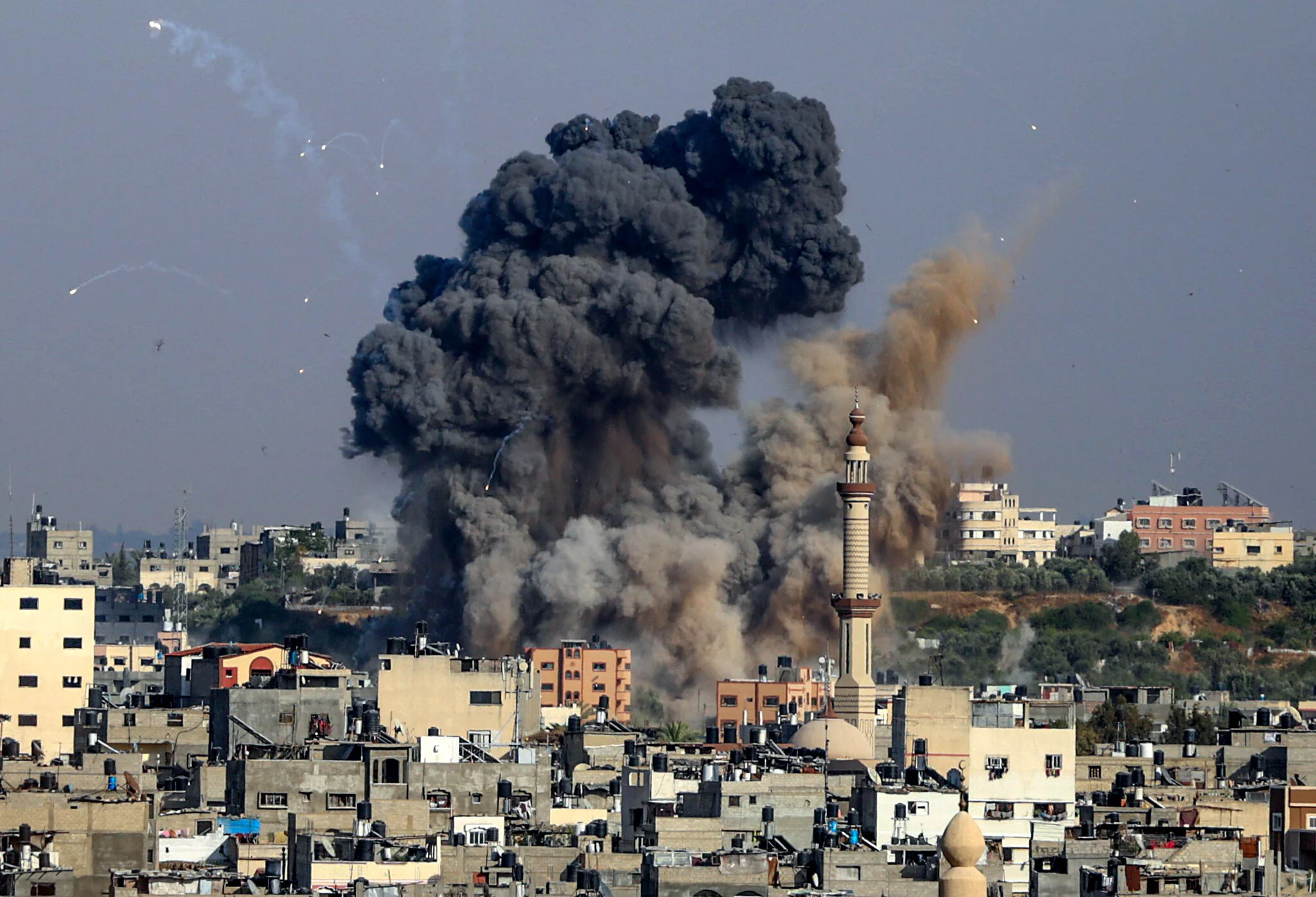
How Palestine rejected offer to have its own state 5 times in the past

If Israel just allowed the Palestinians to have a state of their own, there would be peace in the Middle East, right?
That’s what you hear from ambassadors, European diplomats, and most college professors.

But what if I told you that Israel has already offered the Palestinians a state of their own,
and not just once, but on five separate occasions?
Don’t believe me? Let’s review the record.

After the breakup of the Ottoman Empire, following World War I,
Britain took control of most of the Middle East, including the area that constitutes modern Israel. 17 years later, in 1936, the Arabs rebelled against the British and against the Jewish neighbors.

The British formed a task force, the Peal Commission, to study the cause of the rebellion.
The Commission concluded that the reason for the violence was that two peoples, Jews and Arabs, wanted to govern the same land. The answer, the Peal Commission concluded, would be to create two independent states, one for the Jews and one for the Arabs, a two-state solution.

1st Rejection
The suggested split was heavily in favor of the Arabs. The British offered them 80% of the disputed territory, the Jews the remaining 20%. Yet, despite the tiny size of their proposed state, the Jews voted to accept this offer. But the Arabs rejected it and resumed their violent rebellion.

2nd Rejection
Ten years later, in 1947, the British asked the United Nations to find a new solution to the continuing tensions. Like the Peal Commission, the UN decided that the best way to resolve the conflict was to divide the land. In November 1947, the UN voted to create two states. Again, the Jews accepted the offer and again, the Arabs rejected it.
Only this time, they did so by launching an all-out war. Jordan, Egypt, Iraq, Lebanon and Syria joined the conflict. But they failed. Israel won the war and got on with the business of building a new nation. Most of the land set aside by the UN for an Arab state, the West Bank and East Jerusalem, became occupied territory. Occupied not by Israel, but by Jordan.

3rd Rejection
20 years later, in 1967, the Arabs led this time by Egypt and joined by Syria and Jordan, once again sought to destroy the Jewish state. The 1967 conflict, known as the Six-Day War, ended in a stunning victory for Israel. Jerusalem and the West Bank, as well as the area known as the Gaza Strip, fell into Israel’s hands.
The government split over what to do with this new territory. Half wanted to return the West Bank to Jordan and Gaza to Egypt in exchange for peace. The other half wanted to give it to the region’s Arabs, who had begun referring to themselves as the Palestinians, in the hope that they would ultimately build their own state there.
Neither initiative got very far.
A few months later, the Arab League met in Sudan and issued its infamous three-NOs, no peace with Israel, no recognition of Israel, no negotiations with Israel. Again, a two-state solution was dismissed by the Arabs.

4th Rejection
In 2000, Israeli Prime Minister Ehud Barak met at Camp David, with Palestinian Liberation Organization Chairman Nasser Arafat, to conclude a new two-state plan. Barak offered Arafat a Palestinian state in all of Gaza, and 94% of the West Bank, with East Jerusalem as its capital. But the Palestinian leader rejected the offer.
In the words of U.S. President Bill Clinton, “Arafat was here 14 days and said no to everything.”
Instead, the Palestinians launched a bloody wave of suicide bombings that killed over 1,000 Israelis and maimed thousands more, on buses, in wedding halls, and in pizza parlors.

5th Rejection
In 2008, Israel tried yet again. Prime Minister Ehud Omar went even further than Ehud Barak had, expanding the peace offer to include additional land to sweeten the deal. Like his predecessor, the new Palestinian leader, Mahmoud Abbas, turned the deal down.

See How Much You Know About the Israeli-Palestinian Conflict

Africa China Press Centre/ CFR

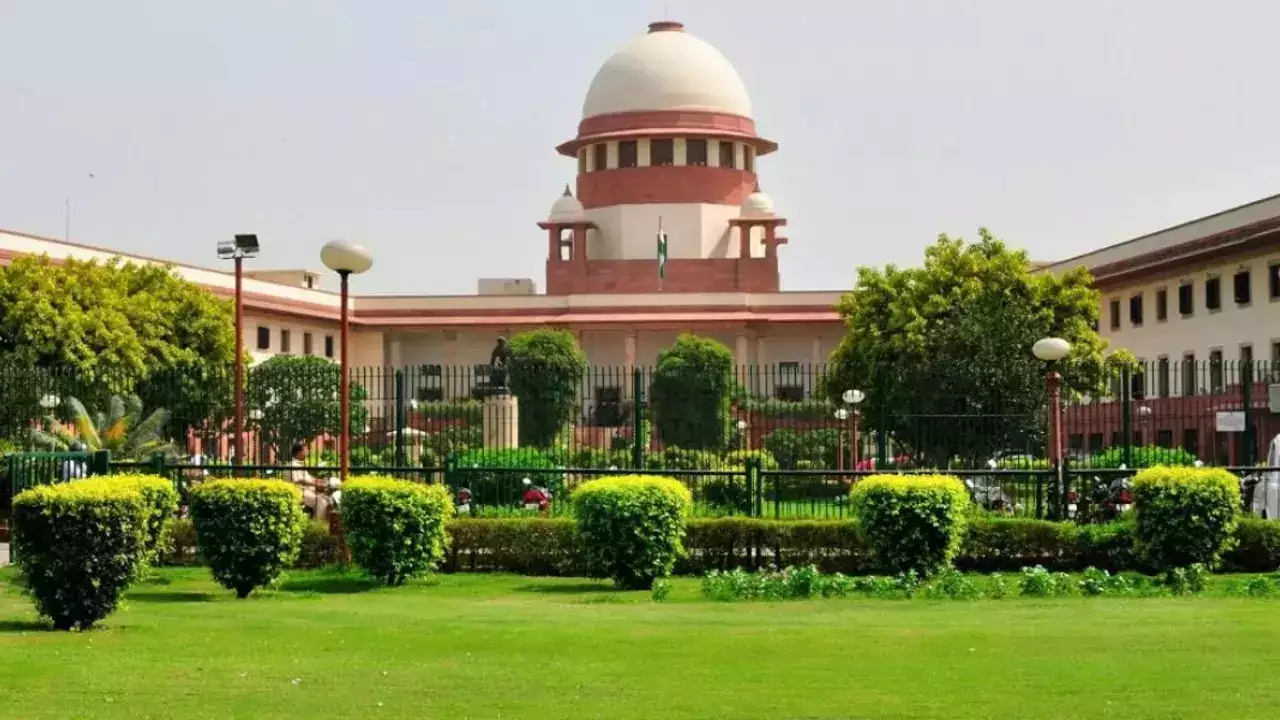
Supreme Court rejects plea by 89-year-old man to divorce 82-year-old wife

After 27 years of prolonged litigation, the Supreme Court of India denied an octogenarian male the right to divorce his wife of 60 years.

The application for dissolution of their marriage was instituted 27 years ago.

Divorce remains taboo across much of India with only one in every 100 marriages ending in dissolution, often owing to family and social pressure to sustain unhappy marriages.

Those seeking divorce must get approval from the courts, which typically only grant it if proof of cruelty, violence or undue financial demands is presented.

Nirmal Singh Panesar, 89, married in 1963 but said in filings with India’s notoriously glacial criminal justice system that his relationship had broken down irretrievably in 1984.

That year his wife Paramjit Kaur Panesar, now 82, had refused to move with him to the southern city of Chennai when the Indian Air Force posted him there.

Nirmal first filed for divorce in 1996 on the grounds of cruelty and desertion, granted by a district court in 2000 but overturned later that year after an appeal by Paramjit.

His case took another two decades to make its way before the Supreme Court, which denied the divorce petition despite agreeing their marriage was “beyond salvation”.

“The institution of marriage is still considered to be a pious, spiritual, and invaluable emotional life-net between the husband and the wife in Indian society,” said the court’s judgement, which was published Thursday.

The judgement said that granting the dissolution would be an “injustice” to Paramjit, who had told the court she did not want to die with the “stigma” of being a divorcee.

She also said she had made all efforts to respect their “sacred relationship” and was still ready to look after her husband in his old age.

The couple have three children together.

Chronic backlogs in India’s criminal justice system mean some cases take decades to reach a resolution.

Around 43.2 million cases were pending before courts across the country, the government said last year.

Vanguard

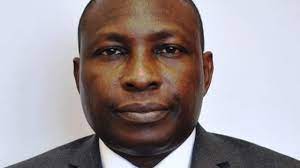
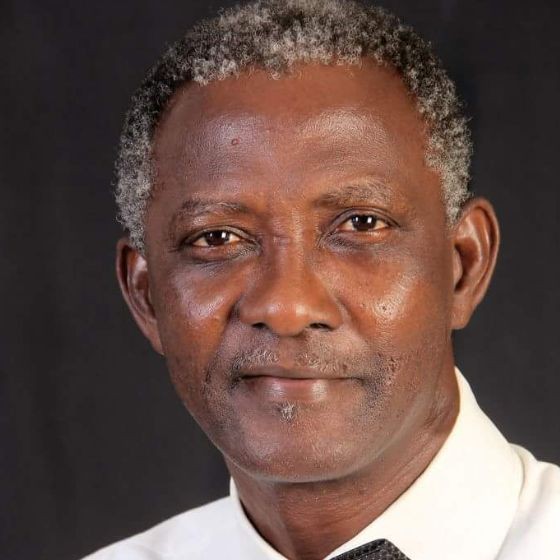
What you don’t know about the new EFCC Chair

Controversy has continued to trail the appointment of Olanipekun Olukoyede as the Chairman of the Economic and Financial Crimes Commission (EFCC),.

While many contend that the lawyer and former Chief of Staff to the ex-Acting Chairman of the Commission, Ibrahim Magu is not qualified to be EFCC Chair under the law establishing the anti-corruption agency, others insist that he is fit for the job.

The opposing parties hold that although Olukoyede was a former secretary of the EFCC and ex-Chief of Staff to a former Chair of the Commission, he failed to meet the requirements of section 2(3) of the EFCC Act, to be qualified for the appointment.

One of the three major criteria in the provision of section 2(1) of the EFCC (Establishment) Act, requires the chairman to have “15 years cognate experience”. The law also prescribes that a chairman of the commission “must be a serving or retired member of any government security or law enforcement agency not below the rank of Assistant Commissioner of Police or equivalent…”

Premium Times reports that the newly appointed Anti-Graft boss has no experience in any security or law enforcement agency until his first appointment at the EFCC in 2016 when he was appointed to serve as the Chief of Staff to then acting chairperson of the EFCC, Ibrahim Magu. He held the position from 2016 to 2018.

He was subsequently appointed as the secretary of the commission in 2018 and served in that capacity up till 2020 when he was suspended from office by then-President Muhammadu Buhari.

He was suspended alongside Ibrahim Magu and some other officials of the commission. He and Magu were never recalled.

While Mr Magu was replaced by Bawa in February 2021, Olukoyede was replaced by George Ekpungu as the secretary of the commission in June 2021.

However, the presidency’s statement announcing the new EFCC appointments on Thursday stated that Mr Olukoyede served as the secretary of the commission up till 2023.

His appointment is subject to Senate’s confirmation. if confirmed, he is expected to serve for a term of four years, upon confirmation.

The development followed the removal of the last occupant of the office of executive chairman, Abdulrasheed Bawa, some months ago for allegedly abusing his office.

Below are seven other things you might not know about Olanipekun Olukoyede:

  1. The 54 year-old was born in Ikere-Ekiti on 14 October 1969.
  2. He is from Ekiti State.
  3. He is a Pastor of the Redeemed Christian Church of God (RCCG).
  4. He will be the first Southerner to head EFCC since its creation.
  5. He is a Lawyer with over 22 years of experience as a regulatory compliance consultant and specialist in fraud management and corporate intelligence.
  6. He is an alumni of the Lagos State University; University of Lagos; Institute of Arbitration ICC – Paris, France and University of Harvard (Kennedy School of Executive Education).
  1. Ex-President Muhammadu Buhari nominated him to serve as Secretary to the EFCC (2018-2023)

For refusing to abort baby, security guard strangles pregnant lover

A security man attached to the University of Lagos, Isaiah Ofem is presently being detained at the Kirikiri Custodial Centre until December 6, 2023 for allegedly killing his girlfriend, Victoria Adeyemi.

The presiding officer at Yaba Magistrates’ Court, in Lagos State, Magistrate O. Y Adefope ordered that the 34-year-old Ofem be remanded again after he was brought to court a second time on one count charge of murder on Thursday.

The police prosecutor, Haruna Magaji, told the court that the incident occurred on June 17, 2023, at the University of Lagos, Akoka, Lagos State and that Ofem and Adeyemi had a disagreement on the pregnancy, which he directed her to abort.

According to the Prosecutor, when the deceased rejected the directive and attempted to walk away, Ofem, angered by her decision to walk out on him, pushed her and she fell off the staircase.

He further disclosed that the defendant quickly strangled her, threw her body over the fence, and cleaned up the blood stains from the stairs.

The defendant was eventually arrested after the deceased’s phone was tracked and found in his possession.

The charge read in part, “That you, Isaiah Ofem, on June 17, 2023, around 8.30pm, at the University of Lagos, Akoka, Lagos State, in the Lagos Magisterial District, did unlawfully kill one Victoria Adeyemi, aged 27 years, by strangling her to death and thereby committed an offence contrary to Section 222 and punishable under Section 223 of the Criminal Law of Lagos State 2015.

THE PUNCH reports that the plea of the defendant who was first arraigned on August 11 and remanded till October 3 was not taken.

Adefope adjourned the case to December 6, 2023, for the DPP’s advice.

Credits: The Punch

Mazi Afam Osigwe’s brother, Afe Babalola’s Daughter, Funmi Falana make SAN list

Elder brother of Mazi Afam Osigwe, a former National Secretary of the Nigerian Bar Association (NBA), Oseloka Godwin Osuigwe is among the 58 Legal practitioners that have been elevated to the rank of Senior Advocate of Nigeria (SAN) by the Legal Practitioners Privileges Committee (LPPC).

Though they spell their surnames differently Oseloka Osuigwe who is No. 8 on the list is the immediate elder brother of the ex-NBA Scribe.

Also on the list is Folashade Alli, daughter of legal luminary, Aare Afe Babalola, as well as Funmi Falana, a notable women/children’s rights activist, and the wife of popular human rights lawyer, Femi Falana (SAN).

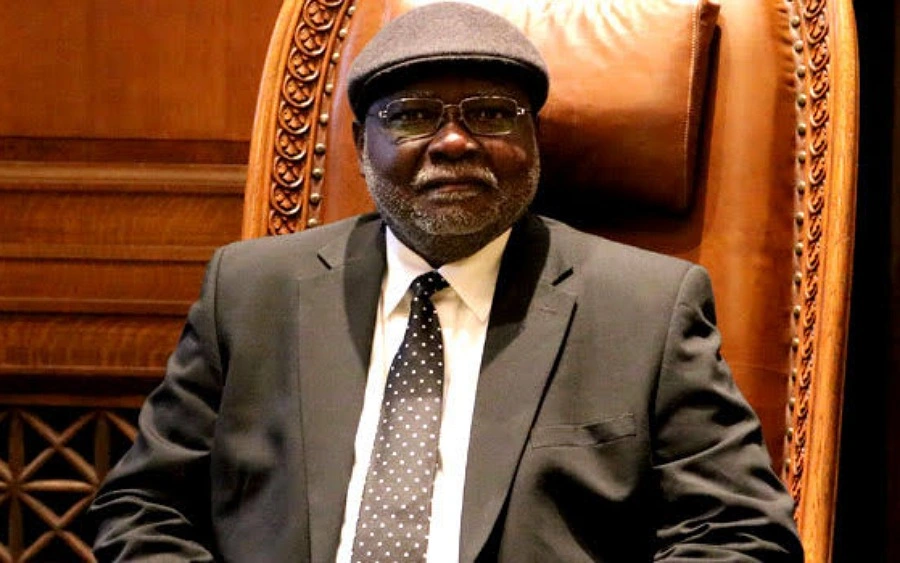
They will be sworn-in on Monday, 27 November, by the Chief Justice of Nigeria (CJN ) Hon. Justice Olukayode Ariwoolaat the Supreme Court complex.

The committee headed by the CJN confirmed the appointment of the new SANs which comprised 57 legal practitioners and one from the academic.

A statement by the Chief Registrar of the Supreme Court/Secretary of the LPPC, Hajo Sarki-Bello, said that the new SANs were appointed as a result of their excellence in the law profession and in the adherence to the code of ethics of the profession.

The statement says that the LPPC meeting considered four different petitions against some of the applicants and dismissed them for lacking in merit.

Others include rights activist, Kayode Ajulo, Felix Ota Offia, Lawrence Bankole Falade, Kingsley Obamogie, Abiola Isiaq Oyebanji, Bomo Olakunle Agbebi, Daniel Uruakpa, Babatunde Adeoye, Babaseyi Joseph, Emmanuel Moses Enoidem, Kehinde Olufemi Aina, Nghozi Oleh, Aaron Chile Okoroma, Ibrahim Angulu, and Olayiwola Afolabi among others.

“The rank of a Senior Advocate of Nigeria (SAN) is awarded as a mark of excellence to members of the legal profession who have distinguished themselves as advocates and academics,” Bello said.

“The meeting further considered four (4) different petitions written against some of the applicants and determined that each of petition lacked merit and thus dismissed.”

View the full list below:

FELIX OTA OFFIA, ESQ

LAWRENCE BANKOLE FALADE, ESQ

KINGSLEY OSABUOHIEN OBAMOGIE, ESQ

FOLASHADE ABOSEDE ALLI, ESQ

ABIOLA ISIAQ OYEBANJI, ESQ

BOMO OLAKUNLE AGBEBI, ESQ

DANIEL OSINACH URUAKPA , ESQ

OSELOKA GODWIN OSUIGWE, ESQ

BABATUNDE ADEOYE, ESQ

BABASEYI SIGISMUND JOSEPH, ESQ

EMMANUEL MOSES ENOIDEM, ESQ

KEHINDE OLUFEMI AINA, ESQ

NGOZI CHIDO OLEHI, ESQ

AARON CHILEOKWU OKOROMA, ESQ

IBRAHIM DALHATU ANGULU, ESQ

OLAYIWOLA EMMANUEL AFOLABI, ESQ

SULE SHU’AIBU, ESQ

ABIODUN OLANREWAJU OLALERU, ESQ

ALFRED OLUFEMI ATTEH, ESQ

KAZEEM ADEKUNLE SOBALOJU, ESQ

SHEHU WADA ABDULLAHI, ESQ

BAMIDELE OLAWOYE IBIRONKE, ESQ

OLUWASEYILAYO AKINKUNMI OJO, ESQ

FUNMI FALANA, ESQ

FELIX TAMARAUDENKEMEFA OKOROTIE,

SEUN OLUWAGBENGAAJAYI, ESQ

FRIDAY RAMSES AKIJ ONOJA, ESQ

AGADA JOHN ELACHI, ESQ

BOLA RASAQ GOLD, ESQ

PAUL KASIMANWUNA MADUEMENE, ESQ

RAFIU OYEYEMI BALOGUN, ESQ

OLUWOLE ALADEDOYE, ESQ

PAULYN OSOBHASE ABHULIMEN, ESQ

JONATHAN GUNU TAIDI, ESQ

TOCHUKWU JUDE ONYIUKE, ESQ

OLUKAYODE ABRAHAM AJULO, ESQ

CHRISTOPHER ADAPAR UMAR, ESQ

CHIBUEZE OGECHI OGBONNA, ESQ

YEMI ADEWALE M’SBAUDEEN ADESINA, ES

OMOYEMI LATEEF AKANGBE, ESQ

OLUMIDE AKINWALE OLUJINMI, ESQ.

MUSAADAMU ALIYU, ESQ

FIDELIS CHUKWUNONYE MBADUGHA ESQ

ONYEMAECHI CHUKWUDI ADIUKWU, ESQ

IKECHUKWU PHILIP ONUOMA, ESQ

YAKUBU PHILEMON, ESQ

JOHNNY UGWUGWAYE AGIM, ESQ

ALIYU LEMU IBRAHIM, ESQ

ISAIAH BOZIMO, ESQ

PRISCA OZOILOESIKE, ESQ

YAHAYA DAN’ASABE DANGANA, ESQ

ADEOLA OLUWASEUN ADEDIPE, ESQ

ADEDAYO SAMUE LADEDEJI, ESQ

CHIKAOSOLU OJUKWU, ESQ

MUSAAHMED ATTAH, ESQ

AYOTUNDE FOLUSO OGUNLEYE, ESO

OLAYEMI BADEWOLE, ESQ

SHORTLISTED ACADEMIC APPLICANTS IN ORDER OF SENIORITY AT THE BAR

JOHN ALEWO AGBONIKA

CAC, SMEDAN, SON, 11 others get new CEOs

Nigeria’s Corporate Affairs Commission (CAC), Small & Medium Enterprises Development Agency of Nigeria (SMEDAN) and the Standards Organisation of Nigeria (SON) are among the 11 agencies and parastatals of Federal Ministry of Industry, Trade and Investment that have just welcomed new Chief Executive Officers (CEOs).

President Bola Tinubu gave approval for the appointment of CEOs in line with his resolve to base Nigeria’s economic revival on the foundation of trade expansion through small, medium, and large-scale industry facilitation in the country.

The new appointees and the agencies are:

●Corporate Affairs Commission (CAC) — Hussaini Ishaq Magaji, SAN

●Industrial Training Fund (ITF) — Afiz Ogun Oluwatoyin

●National Sugar Development Council (NSDC) — Kamar Bakrin

●Nigeria Export Processing Zone Authority (NEPZA) — Olufemi Ogunyemi

●Nigeria Export Promotion Council (NEPC) — Nonye Ayeni

●Nigeria Investment Promotion Commission (NIPC) — Aisha Rimi

●Oil & Gas Free Zone Authority (OGFZA) — Bamanga Usman Jada

●Small & Medium Enterprises Development Agency of Nigeria (SMEDAN) — Charles Odii

●Standards Organisation of Nigeria (SON) — Ifeanyi Chukwunonso Okeke

●Financial Reporting Council of Nigeria (FRCN) — Rabiu Olowo

●Nigeria Commodities Exchange (NCE) — Anthony Atuche, CFA

●Lagos International Trade Fair Complex (LITFCMB) — Veronica Safiya Ndanusa

●Tafawa Balewa Square Management Board (TBSMB) — Lucia Shittu

●National Automotive Design and Development Council (NADDC) — Oluwemimo Joseph Osanipin

In view of the Renewed Hope Agenda of his administration, President Bola Tinubu expects all new appointees in this critical sector to optimally deliver in accordance with new key performance indicating benchmarks as established by the Federal Ministry of Industry, Trade and Investment.

By this directive of the president, all of the above listed appointments take immediate effect.

Is Judiciary truly a lost hope of the common man?

By Muiz Banire

IT was Chidi Odinkalu that recently wrote an article titled, ‘Judiciary As A Lost Hope of the Common Man’. The article which trended for a reasonable period in the social media, was misconstrued in some quarters to be an indictment on the judiciary and, by extension, the judicial officers.

I honestly do not see it from that perspective, and urge that we do not appreciate the import from that angle. For the simple reason that I am inviting those who missed the opportunity to read the piece to visit it, and for the stronger reason that it is not my intention to x-ray his thoughts in this conversation but merely interrogate the subject from another perspective, I have chosen not to share the content. By the Constitution of Nigeria, the grundnorm of all legal instrument in the country, the judiciary ought to be the last hope of the common man as well as, I dare say, the
uncommon man. The import of this is that while the Constitution provides for the institution to settle all conflicts amongst citizens, organs of state and institutions, be it public or private, the vulnerable in our society are calibrated to be the greatest beneficiary of the judicial institution.

This is explainable and justifiable on the ground that they lack the capacity to employ any other means or alternative to interrogate their threatened or violated rights. In other words, while organs of state can employ the extrajudicial myth available to them to abate any threat or remedy wrong done to them; same with the institutions and some privileged citizens, the vulnerable citizens amongst us do not have such capacity. Hence, the universal belief is that the judiciary, in their circumstances, is the only institution that can come to their aid in the protection of their rights.

This is the rationale behind the common saying that ‘judiciary is the last hope of the com- mon man’. In the context of the Nigerian situation, can we really say that the above is a truism? The answer to this is the kernel of our conversation in this discourse. For us to appreciate the discussion, I believe it is crucial and apt that we understand that for the judiciary to actually serve as the last hope of the common man, the promotion and sustenance of the rule of law is key and central. Without going into any legalistic or philosophical jargons or theories, permit me to just cursorily describe the rule of law in this context as the adherence to the laws by all citizens corporate or artificial and organs of state. Simply put, all acts and omissions of all must be regulated in the laws of the state at all times.

58 legal practitioners set for elevation as Senior Advocates of Nigeria in November

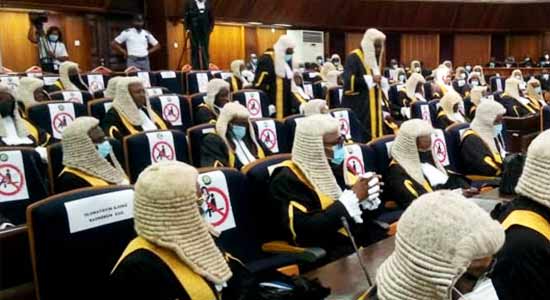
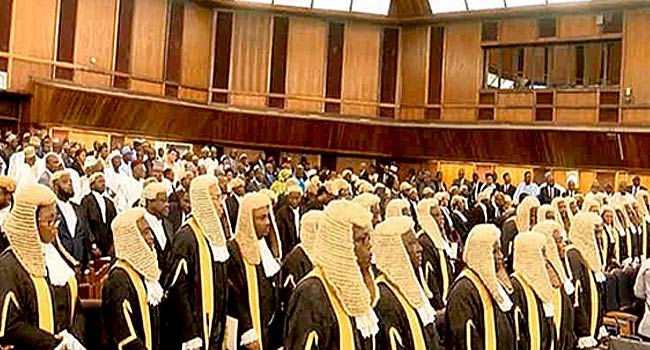
Come Monday November 27, 2023., the Chief Justice of Nigeria (CJN) Hon. Justice Olukayode Ariwoola will swear in 57 legal practitioners and one academic as Senor Advocates of Nigeria (SANs).

The swearing-in ceremony for the 58 successful applicants will hold at the ceremonial hall of Supreme Court.

Below is the list of the SANs in waiting.

ADVOCATE APPOINTEES (IN ORDER OF SENIORITY AT THE BAR)

1.​FELIX OTA OFFIA, ESQ
2.​LAWRENCE BANKOLE FALADE, ESQ
3.​KINGSLEY OSABUOHIEN OBAMOGIE, ESQ
4.​FOLASHADE ABOSEDE ALLI, ESQ
5.​ABIOLA ISIAQ OYEBANJI, ESQ
6​BOMO OLAKUNLE AGBEBI, ESQ
7.​DANIEL OSINACH URUAKPA , ESQ
8.​OSELOKA GODWIN OSUIGWE, ESQ
9.​BABATUNDE ADEOYE, ESQ
10.​BABASEYI SIGISMUND JOSEPH, ESQ
11.​EMMANUEL MOSES ENOIDEM, ESQ
12.​KEHINDE OLUFEMI AINA, ESQ
13.​NGOZI CHIDO OLEHI, ESQ
14.​AARON CHILEOKWU OKOROMA, ESQ
15.​IBRAHIM DALHATU ANGULU, ESQ
16.​OLAYIWOLA EMMANUEL AFOLABI, ESQ
17.​SULE SHU’AIBU, ESQ
18.​ABIODUN OLANREWAJU OLALERU, ESQ
19.​ALFRED OLUFEMI ATTEH, ESQ
20.​KAZEEM ADEKUNLE SOBALOJU, ESQ
21.​SHEHU WADA ABDULLAHI, ESQ
22.​BAMIDELE OLAWOYE IBIRONKE, ESQ
23.​OLUWASEYILAYO AKINKUNMI OJO, ESQ
24.​FUNMI FALANA, ESQ
25.​FELIX TAMARAUDENKEMEFA OKOROTIE, ESQ
26.​SEUN OLUWAGBENGA AJAYI, ESQ
27.​FRIDAY RAMSES AKU ONOJA, ESQ
28.​AGADA JOHN ELACHI, ESQ
29.​BOLA RASAQ GOLD, ESQ
30.​PAUL KASIMANWUNA MADUEMENE, ESQ
31.​RAFIU OYEYEMI BALOGUN, ESQ
32.​OLUWOLE ALADEDOYE, ESQ
33.​PAULYN OSOBHASE ABHULIMEN, ESQ
34.​JONATHAN GUNU TAIDI, ESQ
35.​TOCHUKWU JUDE ONYIUKE, ESQ
36.​OLUKAYODE ABRAHAM AJULO, ESQ
37.​CHRISTOPHER ADAPAR UMAR, ESQ
38.​CHIBUEZE OGECHI OGBONNA, ESQ
39.​YEMI ADEWALE M’SBAUDEEN ADESINA, ESQ
40.​OMOYEMI LATEEF AKANGBE, ESQ
41.​OLUMIDE AKINWALE OLUJINMI, ESQ.
42.​MUSA ADAMU ALIYU, ESQ
43.​FIDELIS CHUKWUNONYE MBADUGHA ESQ
44.​ONYEMAECHI CHUKWUDI ADIUKWU, ESQ
45.​IKECHUKWU PHILIP ONUOMA, ESQ
46.​YAKUBU PHILEMON, ESQ
47.​JOHNNY UNGWUGWAYE AGIM, ESQ.
48.​ALIYU LEMU IBRAHIM, ESQ
49.​ISAIAH BOZIMO, ESQ
50.​PRISCA OZOILESIKE, ESQ
51.​YAHAYA DAN’ASABE DANGANA, ESQ
52.​ADEDAYO SAMUEL ADEDEJI, ESQ
53.​ADEDIPE OLUWASEUN ADEOLA, ESQ
54.​CHIKAOSOLU OJUKWU, ESQ
55.​MUSA AHMED ATTAH, ESQ
56.​AYOTUNDE FOLUSO OGUNLEYE, ESQ
57.​OLAYEMI BADEWOLE, ESQ

The lone successful Academic Applicant is :

  1. PROF. BABATUNDE ADETUNJI ONI

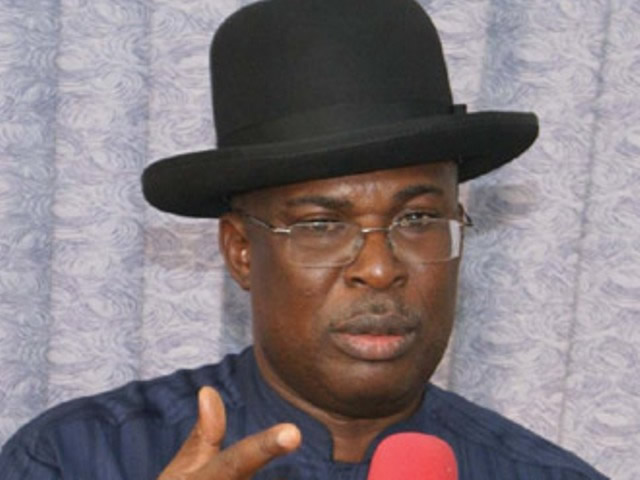
How Federal High Court disqualified Sylva from Bayelsa Guber

By P. D. Pius

Chief Timipre Sylva was first elected Governor of Bayelsa State in 2007.

  1. He enjoyed the office for few months from 29th May 2007 to 15th April 2008.

Then his election was nullified by the Court of Appeal and he had to vacate the office. There was an Acting Governor pending fresh election.

  1. He won the second election that was conducted in 2008. He was sworn into office the second time on 27th May 2008.

In 2011 when INEC said his tenure is over and they will conduct another election, Sylva filed a suit contending that the period of few months he stayed in office upon the 2007 election should not be counted since it was nullified by Court of Appeal and fresh election conducted. That his tenure of office can only be calculated from the 2008 election being the 2nd time he was properly elected.

This case came before the Supreme Court. There were other similar cases from Kogi, Sokoto, and Adamawa. The Supreme Court consolidated or joined the cases together to give one judgment. The judgment is the case of Marwa & Ors vs Nyako (2012) LPELR -7837.

In judgment, the Supreme Court rejected the argument of Sylva that the period of few months he stayed in office based on 2007 election should not be considered. The supreme court decided that even though the 2007 election was nullified the period stayed in office will be counted so long as it is the same person that won the rerun election in 2008. Hence, no one person is permitted to occupy the office of the Governor for a cumulative period of more than 8 years.

Now, the Federal High Court found that when you calculate Sylva’s first tenure of 2007 and the second tenure of 2008, he has spent a cumulative period of 4 years, 6 months and 2 weeks. The Federal High Court then reasoned that since Sylva has specifically lost the argument that his initial few months should not be counted and since no one can be Governor for more than 8 years by the Supreme Court interpretation of section 180 and 182 of CFRN, then Sylva is not qualified to contest again for another 4 years which could mean allowing him to stay in office beyond the maximum 8 years period.

Although this suit was filed by an APC member who is not an aspirant, the Federal High Court found that he has locus standi because it is a serious constitutional issue and a matter of public interest which anyone could have interest. That the case is not caught up by section 285(14) of Constitution or 29 of Electoral Act. This aspect of the decision gives vent to the need to open the door of Courts towards public interest litigation.

You cannot however, wish away the equally strong argument of Sylva in this case, that although he lost the case of Marwa vs Nyako, what the Supreme Court decided in effect is that he has completed one tenure only and is thus entitled to another tenure irrespective of the number of years and month he may have stayed cumulatively in office based on the 2007 and 2008 elections.

This argument is equally convincing but for the fact that, it cannot explain whether this case presents an exception to the maximum 8 years period for any person to be Governor.

I am sure that parties in this case may be going all the way to Supreme Court for a final determination of this case.

Interesting times ahead.

P. D. Pius, Esq., ACIArb. (UK)
Abuja, Nigeria
[email protected]

Tinubu, The ‘Árígi Ṣẹ́gi’

By Ayo Lijadu

“Tí Arígi Ṣẹ́gi bá ṣẹ́gi, orí ara rẹ̀ l’ó ma fi rù ú” – A Yoruba Proverb.

Since the deposition in a Chicago court by the Registrar of the Chicago State University, Carl Westberg few days ago, which shed more light on the authenticity or otherwise of the certificate submitted to the Independent National Electoral Commission (INEC) by the President Bola Ahmed Tinubu, two major opposing camps have emerged airing their opinions as to whether the certificate is authentic or a forgery.

I belong to the latter camp that believes it is a forgery for the simple reason that the University that purportedly issued the certificate submitted to INEC by President Tinubu, as represented by its registrar Carl Westberg, unequivocally declared under oath, and at the risk of perjury, that ‘The Diploma presented to INEC by Tinubu is not like those issued in 1979.’

The document, (deposition), contains so many explosive and earth shattering revelations, (including likely identify theft), that has left many people shaking in disbelief, and causing us, as a country, global embarrassment and opprobrium of unimaginable proportions.

For lack of space, I reproduce hereunder just a tiny portion of the document that leaves no sane mind in any doubt that what was submitted to INEC is a forged document:

·2· · · · Q· · And let’s take a look at the INEC diploma.
·3· ·The INEC diploma says that the diploma is granted on
·4· ·this 22nd day of June 1979, correct?
·5· · · · A· · Yes.
·6· · · · Q· · And CSU didn’t have a Board of Trustees in
·7· ·1979, did it?
·8· · · · A· · True.
·9· · · · Q· · So let’s look at the signatures on the INEC
10· ·diploma.· On the right it looks like one of the
11· ·signatures says Elnora Daniel, correct?
12· · · · A· · Yes.
13· · · · Q· · And Elnora Daniel was not the Chair or
14· ·President of CSU in 1979, correct?
15· · · · A· · Yes.
16· · · · Q· · She was the President from 1998 to 2008,
17· ·correct?
18· · · · A· · As far as I’m aware.
19· · · · Q· · For the other two signatures, the one on the
20· ·right looks like Herbert A. Conley?· It doesn’t state
21· ·”Dean” under it, correct?
22· · · · A· · It does appear that may be cut off from the
23· ·Xerox.
24· · · · Q· · But it is not there, correct?
Page 38
·1· · · · A· · I do not see it on the paper.
·2· · · · Q· · And Herbert A. Conley was not Dean in 1979,
·3· ·correct?
·4· · · · A· · As far as I’m aware.

There you have it!

Officials who were employed by CSU many years after our President supposedly graduated from that University have their signatures appended on the CSU diploma submitted to INEC by our President for the 2023 elections.

Was there time travel during the time our President allegedly graduated from Chicago State University? Specifically, did one of the signatories cited in part of the deposition reproduced above, that is, Elnora Daniel, employed in 1998, travel back twenty years to 1979, to sign Bola Ahmed Tinubu’s diploma, allegedly issued to him by CSU in 1979?

Mr. Westberg in his deposition stated categorically that Chicago State University DID NOT issue a diploma dated 27th June 1979 to Mr. Tinubu. So where did Mr. President get his certificate, as it was also established in the deposition that the University does not deal with third party vendors or issuers?

As I stated at the beginning, there are two opposing camps that have emerged following the publication of the CSU Deposition: (1) The Tinubu supporters group who affirm that what the President submitted was genuine, and (2) Those who affirm that the CSU diploma the President submitted to INEC is a forgery.

I have presented indisputable evidence citing parts of the contents of the deposition to advance the stand of the latter group.

What arguments have the President’s support group to canvass their position that the certificate he submitted to INEC is genuine? Just one line of argument, mainly; “all of this brouhaha is just opposition politics.”

This issue has nothing to do with “opposition politics,” What the average person, be he Nigerian, American, British, or citizen from any other part of the world, (seeing as this issue has attained global attention), just wants to know is; The Truth.

Anyone accessing that document, (deposition), from anywhere around the world, and juxtaposing the contents therein with the certificate submitted to INEC by Tinubu will come to only ONE simple conclusion; The certificate submitted by the President is A FORGERY.

Even if our Supreme Court rules in Tinubu’s favour, (on whatever grounds), it still cannot erase the fact that in the face of weighty evidence provided by the CSU Registrar’s deposition, and in the eyes of the average educated, intelligent, neutral, and unbiased global person, the simple, glaring, and indisputable FACT is that our President presented a FORGED CERTIFICATE.

No matter what ‘alternative facts’ or ‘alternative truth’ we may want to present as a country to the international community by claiming anything different from the truth established by that CSU deposition, it can never overturn the clear and unambiguous truth that has been unearthed by the deposition, which by now is already deposited in international data archives like Google which, as they say, is ‘your friend’, and on the internet of which it is said, ‘never forgets’

Should we continue in denial rather than jointly and unequivocally condemning our President for the crime of forgery which he, by himself, determined to commit long ago, we all will be doing ourselves an incalculable harm, and it will further diminish our already battered international image which suffers the unenviable description of a ‘fantastically corrupt country’

How anyone of us as Nigerians, (whether in support of or against Tinubu), will escape being tarred with the same brush as certificate and document forgers, will remain to be seen. No matter what educational, professional, political, or social status you might have attained, and no matter how many years so attained, other nations will continue to doubt the authenticity and genuineness of our documents, beginning with our passports.

Rather than letting one man carry his own shame, the whole nation of over two hundred million citizens will now be burdened with a collective shame.

A Yoruba proverb says, “Tí Arígi ṣẹ́gi bá ṣẹ́gi, orí ará rẹ̀ l’ó ma fi rù ú. Meaning, “He who cuts down wood from a tree for his own use, must use his own head to carry it.”

Rather than allowing over two hundred million Nigerians to get roped into a crime committed by one individual over four decades ago, and being tagged a nation of criminals because we continue to defend him and give excuses for his crime, we should leave him, alone, to face the consequences of his own criminal actions taken decades ago.

“Tí Arígi Ṣẹ́gi bá ṣẹ́gi, orí ará rẹ̀ l’ó ma firù ú.”

“He who cuts down wood from a tree for his own use, must use his own head to carry it.”

Let President Bola Ahmed Tinubu use his own head to carry his own load.

Ayo Lijadu is a veteran actor, former Presidential aspirant, and later Senatorial candidate of Kowa Party for Lagos East senatorial district in the 2019 General Elections. He features regularly in the daily TV soap, Tinsel, and writes from Lagos.

TIPS