Home Blog Page 707

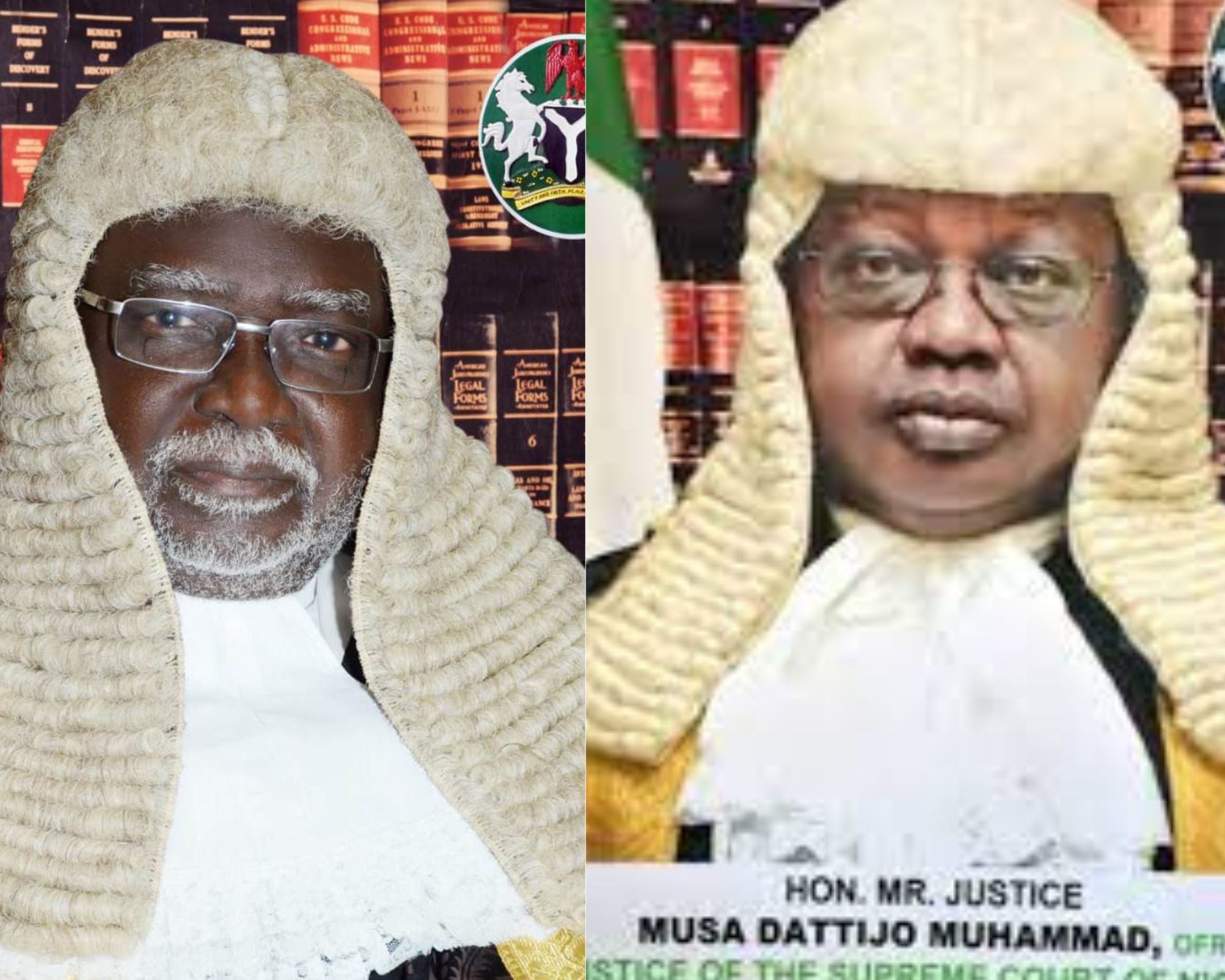
Dattijo, JSC, the last of the Russians leaves Supreme Court with a bang!

  • Says safeguards in judicial appointments for improper motive, is increasingly being compromised

By Lillian Okenwa

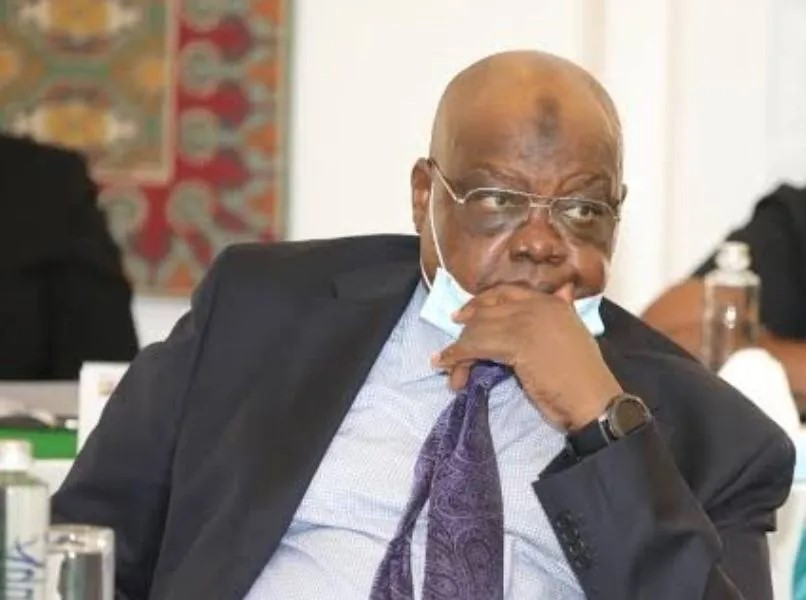
When 25 High Court judges were sworn-in as Justices of the Court of Appeal on 10th December, 1998 they were dubbed— The Russians (Rushians)— after the the Union of Soviet Socialist Republics (USSR) which was the largest country that ever existed. Russia was its capital. That appointment (25 judges) in one fell swoop was unprecedented. Hon. Justice Musa Dattijo Muhammad, JSC (Rtd.) one of the nine who made it to the Supreme Court was the last of the 25 to retire and when he exited on Friday, 27 October, it was with a bang and some characteristics akin to native Russians — strength and resilience.

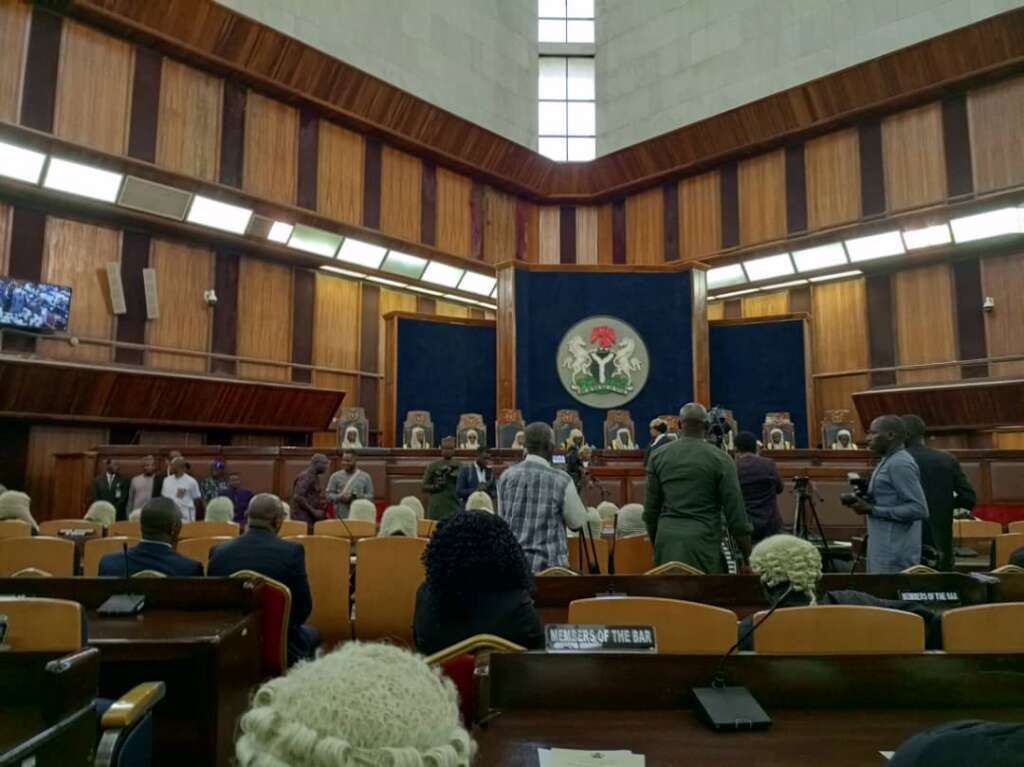
Notwithstanding whose ox is gored, Dattijo, JSC in a bare it all valedictory speech, shook the very foundations of Nigeria’s Supreme Court.

Below are some of his assertions.

Funding and Independence of the Judiciary

Allusions have been made innumerable times about poor funding and how the judiciary has been emasculated by inadequate funding. My lord, the late Hon. Justice Mustapha Akanbi CFR, a former President of the Court of Appeal in a publication titled “The Main Obstacles of justice According to Law” said:

“[A] good judgment flows from a mind that is not bogged by the thought of-where do I get my next meal? Or where do I get the money to pay my son’s school fees? Poor conditions of service, disturb the mind. It is an obstacle to clear and positive thinking…”(Underlining supplied for emphasis).

Beyond the issue of the salaries of Justices remaining static with no graduation for over 15 years now, it is instructive to enquire what the judiciary also does with its allocations. Who is responsible for the expenditure? An unrelenting searchlight needs to be beamed to unravel how the sums are expended.

In 2015 when President Muhammadu Buhari became the president, the budgetary allocation to the judiciary was ₦70 billion. In the 2018 Appropriation Bill submitted to the National Assembly, the President allocated ₦100 billion to the judiciary.

The legislature increased it to ₦110 billion; ₦10 billion above the ₦100 billion appropriated for the 2017 fiscal year. At the end of President Buhari’s tenure in May 2023, judiciary’s allocation had increased to ₦130 billion. That is an increase from ₦70 to ₦130 billion in 8 years. The present government has allocated an additional sum of 35 billion naira to the judiciary for the current financial year making the amount of money accessible by the judiciary to 165 billion naira. More than 85 percent of the amount appropriated by the gth Assembly has so far been released to the judiciary. It is envisaged that the additional 35 billion naira will equally be released by the present government.

Notwithstanding the phenomenal increases in the sums appropriated and released to the judiciary, Justices and officers’ welfare and the quality of service the judiciary render have continued to decline.

It may interest one to know that the Chief Registrar of the Supreme Court earns more than the Justices. While she earns ₦1.2m per month, justices take home ₦751,000 in a month. The CJN on his part takes home ₦400,000 plus. The salary of a Justice, curiously, drops rather than increases when he gets the added responsibility of being a CJN.

That the unjust and embarrassing salary difference between the justices and the Chief Registrar still abides, remains intriguing to say the least. Valedictory session, after valedictory session, lapses and challenges that should be nipped are restated to no avail. Why the silence and seeming contentment?

The process of the appointment of Judges and quality of judgments of courts.

A couple of years ago, appointment to the bench was strictly on merit. Sound knowledge of the law, integrity, honour, and hard work distinguished those who were elevated. Lobbying was unheard of. I never lobbied, not at any stage of my career, to secure any appointment or elevation. As much as possible the most qualified men and women were appointed. That can no longer be sad about appointments to the bench.

The judiciary must be uniquely above board. Appointments should not be polluted by political, selfish, and sectional interests. The place of merit, it must be urged, cannot be over-emphasized. Public perceptions of the judiciary have over the years become witheringly scornful and monstrously critical. It has been in the public space that court officials and judges are easily bribed by litigants to obviate delays and or obtain favourable judgments.

His lordship Adefope-Okojie JCA, at the point of exiting, had enthused, inter-alia, thus:-

“Pleas are expressed everyday by the generality of the public begging the judiciary to be just to be truthful, and to save the country from collapse. My question is whether the judiciary needs to be begged or cajoled? What is it that qualifies any person to bear that exalted name ‘Honourable Justice? Is it not for him to administer justice without fear or favour?… Unfortunately, It has been severely vilified, with the Apex Court so denigrated and called by a social commentator as a voter gaggle of useless, purchasable judicial bandits. How did the judiciary get to this level? Why is the whole country on edge for fear of what the public regards​as​unpredictable​judicial pronouncements? There must be a rethink and a hard reset. If the people we have sworn to defend have lost confidence, there is a problem that must be addressed.”(Underlining supplied for emphasis).

Recently, fresh allegations have been made that children and other relatives of serving and retired judges and justices are being appointed into judicial offices at the expense of more qualified candidates lacking in such privilege and backing. It is asserted that the process of appointment to judicial positions are deliberately conducted to give undue advantage to the “children, spouses, and mistresses” of serving and retired judges and managers of judicial offices.

At the Court of Appeal, it is also asserted, presiding Justices are now being appointed out of turn. And there is the further issue of the unpredictable nature of recent decisions of the courts as well. A number of respected senior members of the bar inter alia, citing the Ahmed Lawan, the former President of the Senate and the Imo Governorship appeals, claim that decisions of even the apex court have become unpredictable. It is difficult to understand how and where, by these decisions, the judicial pendulum swings. It was not so before, they contend.

In some quarters the view is strongly held that filth and intrigues characterize the institution these days! Judges are said to be comfortable in companies they never would have kept in the past. It is being insinuated that some judicial officers even campaign for the politicians. It cannot be more damnifying!

President Muhammadu Buhari in 2016 ordered the forceful entry into the houses and the arrest of justices some of whom were serving at the apex court. Not done, in 2019 the government accosted, arrested and arraigned the incumbent Chief Justice before the Code of Conduct Tribunal for alleged underhand conduct.​With his retirement apparently negotiated, he was eventually left off the hook.

In 2022 a letter signed by all the other justices of the Supreme Court, including the current Chief Justice, the aggrieved protested against the shabby treatment meted to them by the head of court and the Chief Registrar. At the centre of the friction was their welfare and the cavalier attitude of the Chief Registrar thereto. In the event, his lordship Ibrahim Tanko Muhammad disengaged ostensibly on grounds of ill-health. 

Now, it must be said, Chief Femi Falana is right that the safeguard in our appointment procedures against judicial appointments for improper motive, is increasingly being compromised. Certainly, by Rule 8.3 of the Judicial Code of Conduct, “any judge who takes advantage of his judicial office for personal gain or for gain by his or her relative or relation abuses the power vested in him!!!

My lords, distinguished invitees, ladies and gentlemen, it is obvious that the judiciary I am exiting from is far from the one l voluntarily joined and desired to serve and be identified with. The institution has become something else.

What to do?

Allow me at this point in time to recall that the 1999 Constitution as amended allows each and every one of us the freedom of choosing his religion, the company he keeps and what to say. I am sure we all know where these rights abate and where the rights the very same Constitution grants others take off.

I am a Muslim for whose conduct the Holy Quran in Chapter 4 (Nisa) Verse 135 provides:-

“O you who believe! Stand out firmly for justice, as witnesses to Allah, even though it be against yourselves or your parents or your kin, be he rich or poor, Allah is a Better Protector to both (than you). So follow not the lusts (of your hearts) lest you may avoid justice, and if you distort your evidence or refuse to give it, verily Allah is ever well a Acqunted with what you do.”

Chapter 9 (Tauba) verse 71 further requires that believers, both men and women, enjoin what is just and forbid what is evil.

In the A-Z of Qoutes I got stuck to this:-

“This is how a society goes down the drain really quickly first overlook evil,then it permits evil, then it legalizes evil, then it promotes evil, then it celebrates it and then persecutes those that still call it evil.”

Lastly, Adam Grant’s words, in moments like this, are also instructively apposite:-

“When you follow a concept, consider what

would lead you to withdraw your support. If

the answer is nothing, your integrity is in

jeopardy. Your highest loyalty belongs to

principles not concepts. No concept deserves
 

unconditional love. Commitment is earned

through character.”

My contribution towards reforming the judiciary is founded on the foregoing precepts.

Intrinsic in what I have said today are indices to dampen, nay eradicate, the lapses in the judiciary. The duty to revive the institution remains a collective one. We must persist. It suffices to have, for the purpose of this event, a respite at this point though…

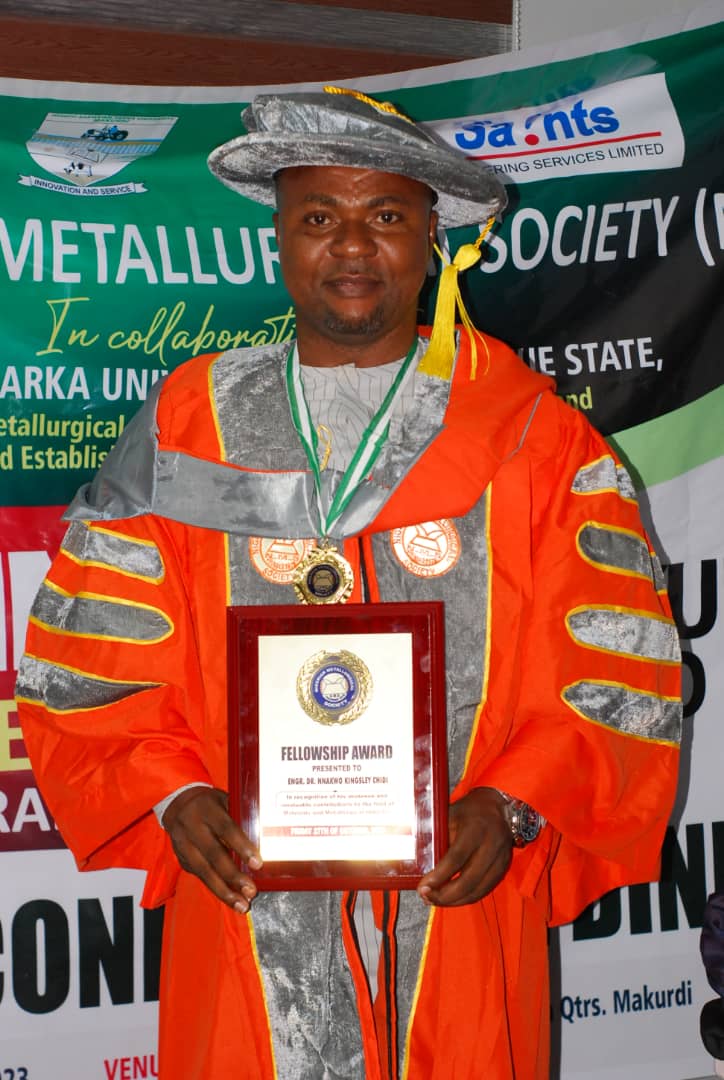
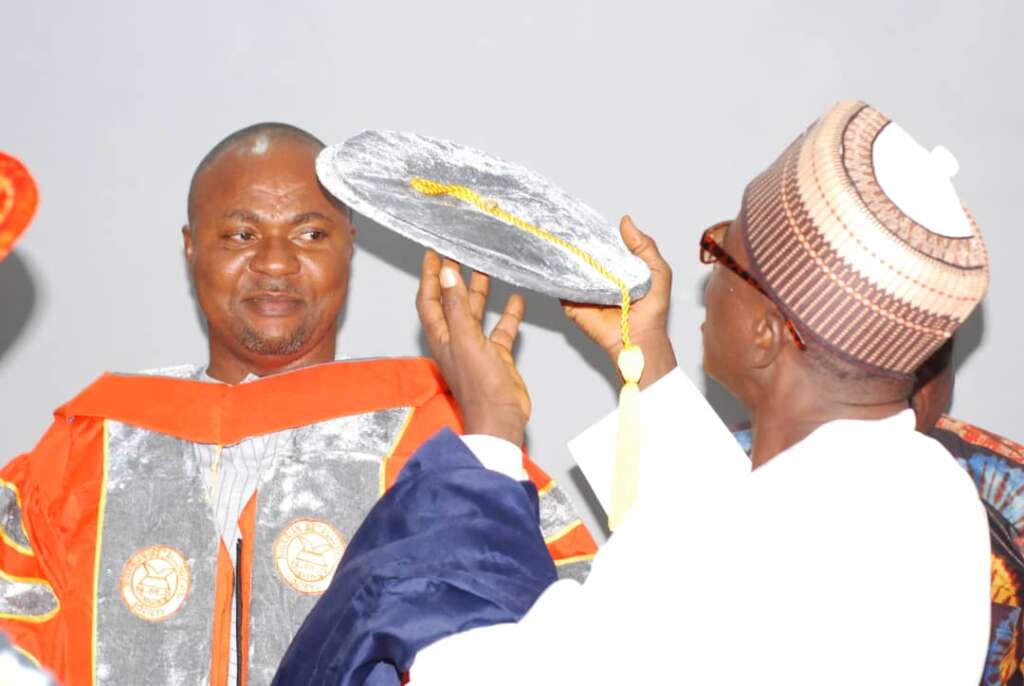
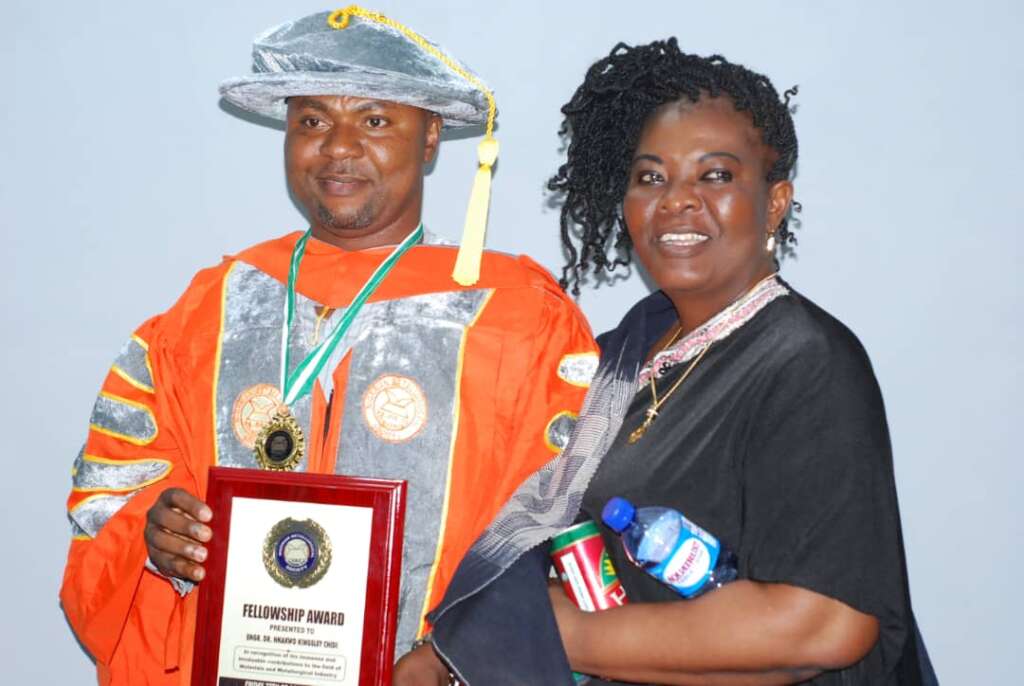
Enugu-born Metallurgical Engineer, Dr. Kingsley Nnakwo receives Society’s highest fellowship award

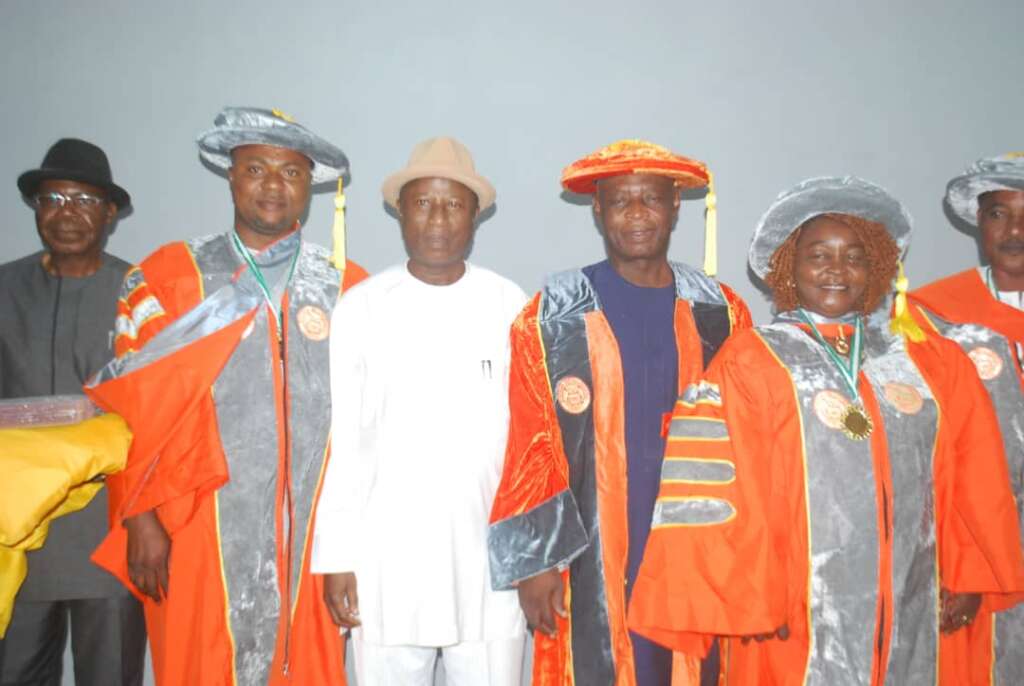
An Enugu State born Metallurgical and Materials Engineer, Dr. Kingsley Chidi Nnakwo, FNMS, MNSE, MMSN (NMS), on Friday, received professional fellowship award of the Nigerian Metallurgical Society (NMS).

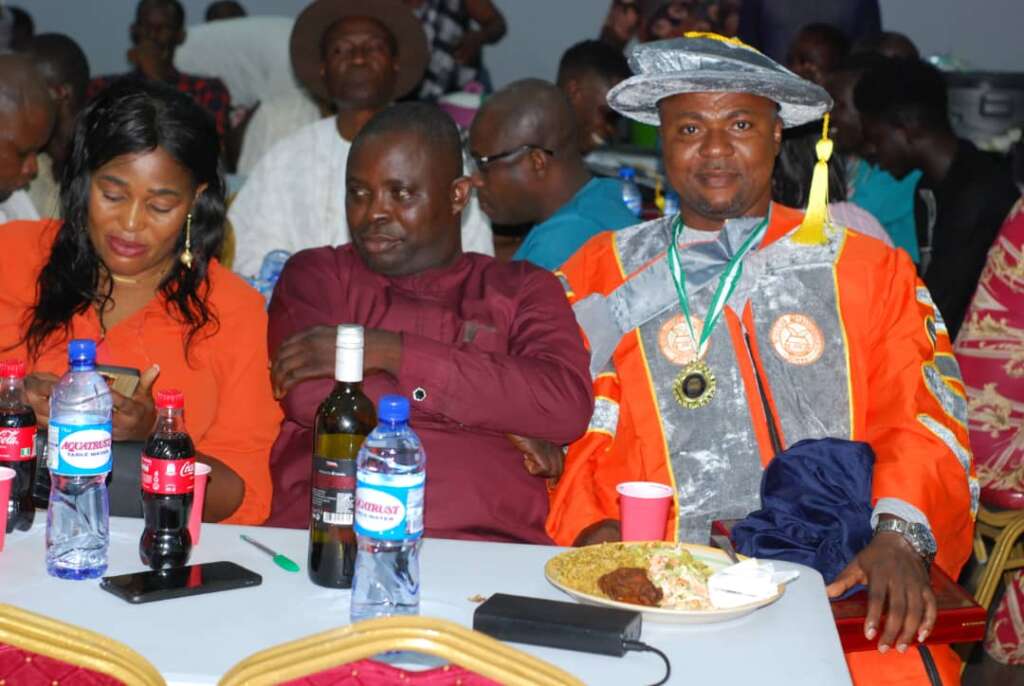
The event took place on 27th October, 2023, during the Fellowship Awards/Dinner Night at the Joseph Sarwuan Tarka University, Makurdi Benue State.

After the conferment, Dr. Nnakwo alongside other four awardees were automatically admitted to the College of Fellows and were allowed to enjoy all privileges and honor attached to the award.

Meanwhile a prefix was equally attached to their names as regards the grade of Fellowship awards conferred.

Excerpts from a letter written by the Engineering body to the awardees and sighted by the Correspondent of Enugupress.ng are published below.

“On behalf of the President, Engr. Prof. O.B. Oloche FNMS, I wish to inform you that Council at an emergency meeting held on Thursday 5 October 2023 through a ZOOM Meeting that lasted for one hour 10minutes considered all the applications before it, scrutinized and subsequently approved the election/upgrading of the members as were recommended by Membership Committee in conjunction of the College of Fellows.

“On this premises therefore, Ten(10) applications were received for election to various grade of membership which were considered and approved Five Professional Fellows, Four Honorary Fellows and One Meritorious as indicated in the table overleaf.

“This approval was granted in line with Section 31 sub-section iv of the Constitution haven met all the conditions and requirement to be elected to such extorted positions.

“Accept the Congratulations from members of this great Society,” the letter read.

Win your cases at the speed of trust

By Chinua Asuzu

Ethos encompasses these ingredients: broad and deep learning, a calm mind, civilization, courtesy, decency, equable demeanor, firm will, a kind heart, humility, moderation, modesty, noble spirit, stoic poise, and a modicum of ubuntu. Ubuntu is the ingredient that can power professional collaboration between adversaries at the bar.

Ethos enables advocates to function at the speed of trust. Once they show up, they begin to persuade before they say a word. “A solid reputation increases your presence and exaggerates your strengths without your having to spend much energy.” Robert Greene, The 48 Laws of Power (Penguin, 1998), 41.

Some advocates improve the viability of a case merely by being associated with it, as counsel of record, consultant, or amicus curiae. Ayo Obe, Babatunde Ajibade, Babatunde Fagbohunlu, Ben Nwabueze, Chijioke Emeka, Chukwuka Ikwuazom, Cyril Ogbekene, Fabian Ajogwu, Funke Adekoya, Kayode Sofola, Odein Ajumogobia, Olisa Agbakoba, Tunde Busari, and Yemi Osinbajo are just a few examples from the Nigerian bar.

Their good names precede them into the courthouse. “As they say, your reputation inevitably precedes you, and if it inspires respect, a lot of your work is done for you before you arrive on the scene or utter a single word.” Greene, ibid.

Look at Odein Ajumogobia. His credibility, grace, demeanor, equability, and poise endear him to bench and bar.

Chinua Asuzu, Brief-Writing Master Plan (Partridge, 2022), 604, 607–608.

Updated:[Download Full Speech] Justice Dattijo blasts CJN, Says absolute power corrupts

  • Cautions against non-replacement of retired Supreme Court Justices

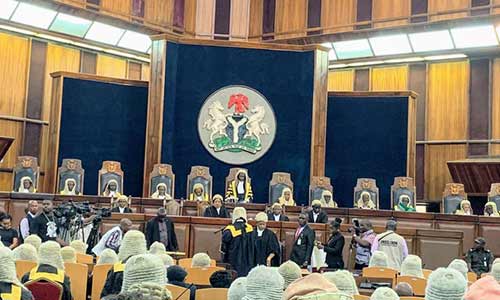
Hon. Justice Musa Dattijo Muhammad bowed out of the Supreme Court on Friday having attained the statutory retirement age of 70.

But His Lordship at the valedictory session attended by former Head of State, Gen. Abdulsalami Abubakar (Rtd.) and his wife Hon Justice Fati Lami Abubakar (Rtd.) a former Chief Judge of Niger state, Hon. Justice Sidi Bage, JSC (Rtd.), Emir of Lafia and one time Justice of the apex court, Attorney General of the Federation, Prince Lateef Fagbemi (SAN), President of the Nigerian Bar Association (NBA) Mr. Y.C. Maikyau ( SAN), Chief J.K Gadzama ((SAN), who represented the Body of Senior Advocates (BOSAN), a host of other dignitaries did not leave quietly without releasing a bomb that depicted his no-holds-bars personality.

The Powers of the Chief Justice of Nigeria

“As presently structured the CJN is Chairman of the NJC which oversees both the appointment and discipline of judges, he is equally Chair of the Federal Judicial Service Commission (FJSC) which recommends those selected for appointment to the NJC, the National Judicial Institute (NJI) and the Legal Practitioners Privileges Committee (LPPC) which appoints Senior Advocates of Nigeria. In my considered opinion the oversight functions of these bodies should not rest on an individual alone. A person with absolute power, it is said, corrupts easily and absolutely.

“As Chair of NJC, FJSC, NJI, and LPPC, appointments as council, board and committee members are at his pleasure. He neither confers with fellow justices nor seeks their counsel or input on any matter related to these bodies. He has both the final and the only say. The CJN has the power to appoint 80 percent of members of the council and 60 percent of members of FJSC. The same applies to NJC and LPPC. The power of being appointed a judge of any court rests squarely on him. Such enormous powers can be abused. Such enormous powers are effortlessly abused. This needs to change. Continued denial of the existence of this threatening anomaly weakens effective judicial oversight in the country.

“By the provision of Paragraph 20 of Part One of the Third Schedule to the 1999 Constitution of the Federal Republic of Nigeria, as amended, the NJC shall comprise the following Members: the Chief Justice of Nigeria, who shall be the Chairman; the next most senior Justice of the Supreme Court who shall be the Deputy Chairman. Regrettably, the next most senior Justice of the Supreme Court like Deputy Governors of States, shorn of any official function except at the pleasure of the Governor, is neither consulted on anything nor does he have any official function. His job as No. 2 is purely as the CJN pleases. It is incumbent that the system provides for more inclusion and consultation among stakeholders.

Depleting Number of Justices at the Supreme Court

“The conversation about the diminishing number of justices of Nigeria’s Supreme Court has become a refrain.  As I bow out today, the number is further reduced to 10 against the Constitutional requirement of 21 justices. That this avoidable depletion has affected the court and will further affect the court and Nigerians is stating the obvious.

“We are in an election season where the Election Tribunals and appellate courts are inundated with all manner of petitions and appeals. The Supreme Court is the final court in the Presidential, Governorship, and National Assembly election appeals. Yet, there are only 10 justices left to determine these matters. Constitutionally, each of these appeals requires a panel of seven justices to sit on them. When a panel of seven justices is constituted to sit on a particular appeal, only three justices are left out. Even when regular appeals are being heard in the Supreme Court, a panel of five justices is required to sit.

“We must not forget that the Supreme Court, being the highest court in the land receives all manner of appeals from the court below. Presently, there is neither limit nor distinction to the manner of appeals that come to the apex court. Again, beside election matters which are seasonal, the Supreme Court’s docket is overflowing with civil and criminal appeals, some of which took many years to arrive. Most of these are still pending. Several have not even been assigned hearing dates. The court also exercises original jurisdiction.

“As the justices who hear these matters are grossly overstretched, unable to meet the demands of their onerous assignment, the appellants who came to us seeking justice are left in limbo; waiting endlessly for justice to be served. These as I said before, are avoidable.

“When I exit today, the North Central region that I represent will cease to have any representation until such a time new appointments are made. My Lord Hon. Justice Ejembi Eko who also represented the zone retired on the 23rd of May, 2022. It has been a year and five months now. There has not been any replacement. With the passing of My Lord, Hon. Justice C.C. Nweze on 30th July 2023 the South East no longer has any presence at the Supreme Court. My Lord, Hon. Justice Sylvester Nwali Ngwuta died on 7th March 2021. There has not been any appointment in his stead for the South East.

“To ensure justice and transparency in the event of presidential appeals from the lower court, all geo-political zones are required to participate in the hearing. It is therefore dangerous for democracy and equity for two entire regions to be left out in the decisions that will affect the generality of Nigerians. This does not demonstrate federal character as required by our laws.

“Although it can be posited that no one expected the sudden passing of Justice Nweze, JSC, yet, it has been two years and seven months since the previous Justice from the South East died and no appointment was made. Ditto for the replacement of Justice Eko of North Central who exited nearly two years ago. Hon. Justice Sidi Bage, JSC, how His Royal Highness the Emir of Lafia, from the North Central, had earlier voluntarily retired. He is yet to be replaced.

“Also, it was clear ab-initio that I would be leaving the court this day on attaining the statutory age of 70. It is then not in doubt that there has been sufficient time for suitable replacements to have been appointed. This did not occur.

“When on the 6th of November 2020 the Supreme Court for the first time in its history got a full complement of 21 justices with the swearing-in of eight justices, little did anyone know that we were only a few steps to unimaginable retrogression. As it stands, only four geo-political regions —The South-West, South-South, North-West, and North-East are represented in the Supreme Court. While the South-South and the North-East have two serving justices, the North-West and the South-West are fully represented with three each. Appropriate steps could have been taken since to fill outstanding vacancies in the apex court.

“Why have these steps not been timeously taken? It is evident that the decision not to fill the vacancies in the court is deliberate. It is all about the absolute powers vested in the office of the Chief Justice of Nigeria and the responsible exercise of same.”

Click here to download the full judgment.

SPEECH-BY-HON.-JUSTICE-M.-DATTIJO

We must sanitize electoral process and shun giving power to thieves —N’ Assembly

National Assembly
  • Denounces use technicalities by court
  • To review INEC guidelines, 2023 election defects
  • Presidency shouldn’t appoint INEC chairman, Commissioners, RECs

The National Assembly has warned that if serious measures were not taken to sanitize the electoral process, Nigerian democracy would be under serious threats as politicians who did not win election would continue stealing mandates and taking over power through wrong means.

The legislature said Nigeria should introduce mechanical politics in its electoral laws that should interprete the use of technicalities by the courts in the electoral process.

While promising to review what happened during the last 2023 election, including the guidelines of the Independent National Electoral Commission (INEC) and look at what could be done to enforce electoral laws, the legislature also raised concern over the outcome of the elections for which out of 360 members of the House of Representatives, 320 members are in court due to issues which stem from the primaries.

The chairman of the House of Representatives Committee on Science and Technology, Dachung Bagos, representing Jos South and Jos East federal constituency of Plateau State, stated these in Abuja during an Electoral Reform Roundtable with the theme, “Unpacking Nigeria’s 2023 general elections and prospects for electoral reforms”, organized by a human rights organization under the aegis of Yiaga Africa and Kofi Annan Foundation.

The Deputy Chair, Senate Committee on INEC, Abdulaziz Yaradu’a, said that the National Assembly was working on plans and learning from stakeholders to build the election process to global standards for the benefit of Nigeria’s democracy.

He however, said that one of the issues being faced by the legislature was that while elections have been conducted and completed, most of the members of the National Assembly are still in court trying to protect their mandates.

Also at the event, stakeholders in the electoral process demanded further amendment of the Electoral Act to expunge the appointment of Resident Electoral Commissioners and chairman of INEC by the Presidency.

The Executive Director of Yiaga Africa, Samson Itodo, said the roundtable was convened to conduct a post-mortem of the 2023 general elections and to seek priority areas for reforms.

He said INEC needed to be unbundled adding that the current constitutional arrangements where issues relating to the appointment of the chairman and National Commissioners were vested in the Executive needed to be reviewed.

Itodo said that the Justice Muhammadu Uwais Electoral Reforms Committee recommendations that the President should not appoint INEC chairman and Commissioners should be implemented.

“You cannot have an electoral commission that is composed of persons who are appointed by the President and, in some cases, you have the incumbents as part of a political party or leading a political party.

“So in line with the Justice Uwais’ committee’s recommendations, the review of the appointment process of Commissioners and RECs into INEC should be implemented”, he emphasized.

According to Bagos, it was high time Nigeria put its house in order and avoid the current situation where the Independent National Electoral Commission and the court would be having different results.

He said, “As a people, going forward, we should not allow democracy in Nigeria to be that which Socrates defined 2000 years ago, in which at the end of the day, democracy will even give a thief a right because democracy wants to embrace everybody.

“At the end of the day, everybody fights for his own right and at the end of the day you don’t event know what it stands for. We need to define democracy on who we are as Nigerians. With what is happening now, out of 360 members in the House of Representatives, 320 are in court due to issues from the beginning of the process, not at the end or middle of the process.

“Basically, ours is to review issues that happened during the past election and to look at what can be done to enforce those laws and make guidelines to turn them into law, because there is a difference between guidelines and the law.

“So we’re going to review INEC guidelines, we’re going to review all these issues that Nigerians have problems with during amendment. We will now make them to be a law that it shall be. So for once it’s now a law. It’s no longer a guideline. Nobody will be able to change it at the dying minute. So these are issues that collectively, we’re all going to look at.”

“I don’t know where is the renewed hope. Maybe as we are reading mechanical engineering, we should have another topic of mechanical politics because at the end of the day with all the laws that we pass in the National Assembly, someone interprets it against the way he passed it through technicalities.

“So, there’s need to start how we can read mechanical politics so that we can understand the technicalities by how our laws are being interpreted against the way we passed the law and it is sad.”

The Senior Advisor and European Union Representative in Kofi Annan Foundation Sebastian Brack, said Nigeria is not just a key country for West Africa, but Africa as a whole.

He said given all the pressures on democracy facing the world, Nigeria’s successful democratic experiment is a priority.

“This particular roundtable is looking at how we can improve the situation for the next elections in a constructive and forward looking way”, he said.

The Special Adviser to the INEC Chairman, Prof. Mohammed Kuna, said that although elections are important, they are not enough in terms of deepening and consolidating democracy.

Kuna said that there was need to focus also on issues of governance issues, political accountability and conducting elections, adding that the commission was taking note them.

ENDS***

Ogun Cabinet: Women activists tell Gov. Abiodun to learn from Ekiti, Kwara

  • Condemn lack of gender balance in Gov’s appointments

Renowned human rights organization under the aegis of Women Advocates Research and Documentation Centre (WARDC) has commended Governor Dapo Abiodun of Ogun State for the appointment of Hon. Adijat Adeleye-Oladapo as the Commissioner for Women Affairs.

The organization said her appointment was indeed a case of a round peg in a round hole.

The Founding Director of WARDC, Dr. Abiola Akiyode-Afolabi, in a statement on Thursday in Abuja, on behalf of other women gender activists, however raised concern over the decline in the number of women representation in the Ogun cabinet, saying Governor Abiodun should learn from Ekiti, Kwara and other States.

She said, “While thanking the Governor, we are however concerned with the decline in the number of women representation in the Ogun governor’s cabinet. There are a total of 4 women out of 21 Commissioners and six women out of 22 Special Advisers.

“This is a paltry 19.1 per cent and 27.1 per cent respectively. This, without any iota of doubt, is a very poor performance. We expected more from governor, His Excellency Dapo Abiodun, who had promised that the interests of women would remain at the forefront of his administration’s agenda.

“We use this opportunity to call on the National Assembly to pass the gender bills into laws. These bills will help to secure a minimum of 35 per cent affirmative action for women in both elective and appointed positions.

“We urge our dear governor to do more for women in subsequent appointments. While Ogun state had always been in the lead in women appointments, today several states (including Kwara and Ekiti) have enviable records of women inclusion. Notably great Nigerian women are from Ogun state. We call on the governor to do the needful to tap from their wealth of knowledge to build the state.”

According to WARDC, Hon. Adeleye-Oladapo is adequately qualified for the role, adding that with her wide expanse of experience as a former two-term member of the State House of Assembly, she has also interfaced with women groups advocating for the rights of Nigerian women.

“We believe that she will live up to expectations, and make groundbreaking changes in the lives of Ogun state women. As a body, WARDC and other women groups are committed to supporting her and continuing with our work for the protection in the state.”

Individuals ‘driven by greed’ wanted Nigeria to pay a sum equal to its entire federal budget

The judgment of a High Court naming lawyers involved in an arbitration award under which Nigeria was ordered to pay a sum equal to its entire federal budget is to be sent to legal regulators.

Granting an application to overturn the $11bn award to oil and gas company P&ID on the grounds that it was ‘obtained by fraud’, the Honourable Mr Justice Robin Knowles said the case ‘sadly brought together a combination of examples of what some individuals will do for money’. The 140-page judgment follows an eight-week hearing earlier this year in which the government of Nigeria argued that it should not be required to honour the award. 

Giving judgment in Federal Republic of Nigeria v Process & Industrial Development Ltd today, the judge said that Nigeria succeeded on its challenge under section 68 of the Arbitration Act 1996, though not all of its allegations were accepted. 

In an endnote, the judge lambasted individuals who were ‘driven by greed and prepared to use corruption; giving no thought to what their enrichment would mean in terms of harm for others’. 

Click here to continue reading.

Watch live as Supreme Court delivers judgment on Atiku and Obi’s appeals!

The Chief Justice of Nigeria, Hon. Justice Olukayode Ariwoola, has directed that the Supreme Court judgment on the appeals filed by Atiku Abubakar and Peter Obi be broadcast live.

Click below to watch.

FRN v P&ID Case: Ojukwu, Faotu & Yusuf- (OFY-Lawyers) celebrates with Nigeria and Mishcon de Reya

The Law Firm of Ojukwu Faotu & Yusuf (OFY-LAWYERS) celebrates the victory of Nigeria in the P&ID case in London.

Shaistah Akhtar’s statement on the case is eloquent of the importance of the outcome. Shaistah Akhtar partner at Mishcon de Reya that led Nigeria’s legal team, expressed that “Today’s judgment is a historic result for Nigeria and its people. The Nigerian government’s resolve in pursuing a just outcome led to it uncovering overwhelming evidence of bribery and corruption. We are pleased that the Judge recognised the severity of the fraud perpetrated against the people of Nigeria in his judgment, and trust that this landmark decision will deter other potential fraudsters and their backers from exploiting the legal system in the pursuit of monetary gain.”

We are happy that on the instructions of Mishcon de Reya, our Law Firm assisted and our Partner Prof Ernest Ojukwu SAN , testified for Nigeria as the expert on Nigerian Law in the case.

We are hopeful that the Nigerian Government will take further steps to benefit from the in-depth work of Mishcon de Reya and the barristers instructed in the case beyond just the victory laps for the landmark judgment and the immediate financial savings made for Nigeria.

Ugochukwu Njoku, esq
Senior Associate
Ojukwu Faotu & Yusuf (Ofy-Lawyers)
23rd October 2023.
https://ofy-lawyers.com/frn-v-pid-case-ojukwu-faotu-yusuf-ofy-lawyers-celebrates-with-nigeria-and-mishcon-de-reya/

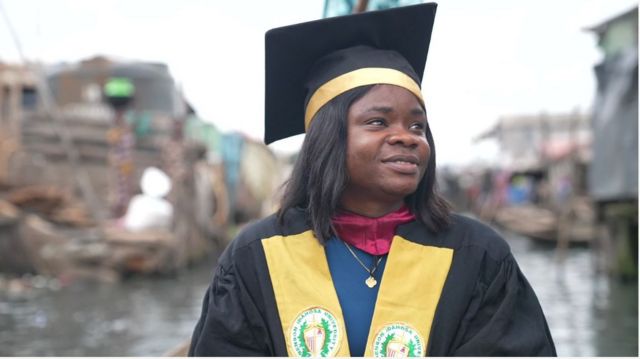
Hello BBC, Mary John is not Makoko’s first graduate

By Betty Abah

I feel compelled to respond to this viral video by BBC Pidgin about the supposed first graduate from the famous Makoko fishing community in Lagos. The label accompanying the viral video of the young ebullient woman featured in the video, who just graduated from the elitist Benson Idahosa University, Edo State and is being celebrated by fellow community folks, says “Makoko in Lagos produce (sic) their first graduate.Making me cry…happy tears🥲. Education, access to it…priceless” and was forwarded to me by several persons.

Hello, that’s not true. Makoko has had graduates dating as far back as 40 years ago. She’s neither the first nor even the first female graduate. Infact, I know a woman from Makoko, now a Masters holder and currently based in Finland, who bagged her degree more than 20 years ago

These incorrect narratives, backed by powerful media platforms like the BBC and sold to the unsuspecting reading, listening or vieiwng public, need to stop already. The motive I guess is to portray impoverished communities like Makoko as a stone age entity with ragged, perhaps clothless inhabitants just crawling out of craggy cave bottoms and helped by the benevolence of development saviour figures. While on a panel during an event at the University of Lagos a couple of months back, I had a hard time countering a lecturer who accused NGOs of using Makoko as a base for poverty tourism and selfish pecuniary motives. While that is not entirely true and Makoko, especially its women and children, has received unquantifiable support from nonprofits and good-spirited individuals in the face of government’s crass failure for decades “, I think however that false narratives such as this tend to embolden such slanted and malicious accusations.

Verily, helping a youngster like this gain the very empowering education is an excellent effort. Lying on top of that gesture to gain traffic, contrived goodwill and all is not noble, sorry. I expected the very impactful Slum to School NGO which obviously supported the interviewee, Miss Mary John’s educational dream, to have corrected the BBC’s video immediately before it became a viral lie.

Miss John, featured in this fast and fanciful BBC pidgin interview, didn’t even claim to be the first from Makoko to have seen the four glittering walls of a university, she says “In my community, it is very hard to see a graduate’. Then the BBC, and who knows, Slum to School NGO as well, decided to add salt, pepper and maggi to say she is Makoko’s first. Haba mana.

Ms John was one of our girls club members in the earliest days of CEE-HOPE back in late 2013 and early 2014 in the community and has always been a smart and enthusiastic fast learner. Girls and indeed children like her need all the support they can get especially educationally to wriggle free of the clutches of poverty and other socioeconomic barriers. Lagos has more than 100 informal settlements like Makoko (which is why it is tagged ‘The mega city of slums’) and living conditions there are extremely bad, to put it mildly. The hordes of NGOs helping out in the face of the state government’s failure to improve these conditions and indeed its perennial hostilities towards the communities in the forms of its routine and outrightly lawless forced eviction policy), which brutally displaces thousands of people including infants and school children annually), could continue doing good without painting exaggerated and filtered pictures.

Our narratives must be truthful and we must do genuinely right by our vulnerable communities.

Thank you. 

— Betty Abah

TIPS