Home Blog Page 706

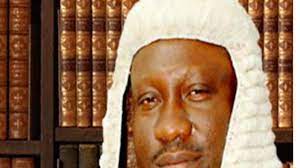
Sittings in Federal High Court halted with Justice Fatun Odohi Riman passing

With the sudden passing of His Lordship, Hon. Justice Fatun Odohi Riman of the Federal High Court, Awka Division, Anambra State capital city, sittings in all the divisions of the Federal High Court were halted on Monday on the directive of the Chief Judge of the Federal High Court, Hon Justice John Tsoho.

The death of Justice Riman occurred in London where he was flown to from his Awka judicial division to abroad for medical attention.

Before his death, he was the number 32 judge in the ranking of Federal High Court Judges.

His death was announced in a statement signed by the Chief Judge of the Federal High Court, Hon. Justice John T. Tsoho.

The statement reads:

My Lords,

NOTIFICATION OF THE DE.MISE OF HON. JUSTICE FATUN ODOHI RIMAN

I† is with a heavy heart that I inform Your Lordships of the demise of one of our Brothers, the Hon. Justice Fatun Odohi Riman, who until his death, was of the Federal High Court, Awka Judicial Division.

His Lordship passed on in the early hours of Saturday, 28th October, 2023, in England after having been admitted at the Lister Hospital on the 8th day of September, 2023.

Further information regarding his burial will be communicated to Your Lordships as soon as it is released by his family.

I join Your Lordships to pray for the peaceful repose of the soul of Hon. Justice Fatun Odohi Riman and that God will grant his family divine strength to accept †his painful loss.

Hon. Justice John T. Tsoho, OFR, FCIArb (UK)

Chief Judge

Foremost Nigerian Lawyer and Senior Advocate of Nigeria, Prof. Ben Nwabueze SAN is dead

The oldest Senior Advocate of Nigeria, notable constitutional lawyer and onetime Secretary General of Ohanaeze Ndigbo, Professor Ben Nwabueze, died Sunday evening at the age of 92.

Family sources said the notable Senior Advocate who was born in 1931 in Atani, Anambra State died in his home .

Conforming the news of his death, Vice-President, Ohanaeze Ndigbo Worldwide, Chief Damian Okeke-Ogene, said the Prof. Nwabueze would be missed for his “selfless service and dedication” to the progress of Nigeria.

Okeke-Ogene said, “It is a great loss both to Nigeria and the Igbo nation. He was a very decent constitutional lawyer and minister par excellence. He was known for being vocal and ensuring an anti-corrupt system.

“Indeed, the evolution of the entire legal system in Nigeria would not be complete without mentioning his invaluable contributions.”

He had an illustrious legal career and was considered one of Nigeria’s foremost constitutional experts. Nwabueze also served as Secretary General of the Igbo socio-cultural group Ohanaeze Ndigbo.

Known for his doggedness, Nwabuze authored many books on constitutional law and governance. He was a staunch advocate for constitutional democracy and rule of law in Nigeria.

His death is being mourned by the legal community and Igbo leaders. Many described him as an icon whose contributions to the field of law and Nigerian democracy will be immortalized.

The erudite professor and author will be remembered for his legal acumen, principled stance on national issues, and advocacy for constitutional order. His passing is a huge loss to Nigeria’s legal academia and public affairs.

African Tales in Engineering the Courts


By Chidi Anselm Odinkalu
At their summit in Nassau, The Bahamas, in 1985, the Commonwealth Heads of State and Governments (CHOGM), decided to establish an Eminent Persons Group to explore difficult dialogue with the Apartheid regime in South Africa. The EPG was to be led jointly by Australia’s former Prime Minister, Malcolm Fraser and Nigeria’s former military ruler, Olusegun Obasanjo. Emeka Anyaoku, the Nigerian diplomat who would later serve with considerable distinction as Secretary General of the Commonwealth, headed the secretariat of the EPG.

In 1986, the Group undertook its first insertion into South Africa. In his memoirs, The Inside Story of the Modern Commonwealth, Chief Anyaoku narrates that the mission was underwritten by a bargain with the Apartheid regime that all persons whom it met with would suffer no reprisals.

However, in Cape Town, Chief Anyaoku recalls, Trevor Manuel, who was then one decade away from becoming Finance Minister in the post-liberation administration, ended up in a police cell the night after meeting with the delegation. On the night of Trevor’s arrest, his lawyer called to notify Chief Anyaoku about the fate that had befallen his client. It was approaching mid-night when Chief Anyaoku called Mr. van Heerden, the liaison between the delegation and the South African regime, to accuse them of breaching the understanding at the very heart of the mission. Mr. van Heerden promised to investigate. Less than one hour later, according to Chief Anyaoku, Mr. van Heerden called him back to confirm that Trevor Manuel was indeed detained in a police cell.


In response to Chief Anyaoku’s insistence that Trevor be promptly released, Mr. van Heerden volunteered that he would be granted bail overnight to appear “before Magistrate Court
No. 13 the following morning.” According to Chief Anyaoku “Mr. Van Heerden then went on to tell me that, once the case was called, it would immediately be adjourned sine die…. I thereafter told him that I would make discreet use of the information he had given me. He interjected that I should please note that his ‘government and security services do not interfere with the judicial processes.’ I said, ‘of course, I know you don’t!’ and we both laughed.”

In a testament to Mr. van Heerden’s powers as a gifted clairvoyant, the court proceedings the following morning went exactly as he had predicted. His gods had engineered the courts. Apartheid South Africa did not enjoy a monopoly of such gifts of judicial engineering.

In November 1992, longtime trade Union leader, Frederick Chiluba, unseated independence ruler, Kenneth Kaunda, to emerge as the first president of a multi-party Zambia. His party was presciently named the Movement for Multi-Party Democracy, MMD. The year after President Chiluba’s ascent to power, the office of Chief Justice became vacant after the country’s first indigenous Chief Justice, Annel Musenga Silungwe, quit the office at the age of 57.

To succeed him, Chiluba appointed Matthew Ngulube. At the time, Zambia’s judges were poorly paid, a legacy from the era of Kaunda’s one-party state. Chief Justice Ngulube quickly became a darling of the international conference circuit, traveling the world and delivering homilies on judicial independence. As his second five year term of office came to an end, President Chiluba contrived a plan to succeed himself. Armed with a judiciary which he believed to be in his pocket, Chiluba believed he could overcome a constitutionally imposed term limit and run for a third term. Zambians declined his importunation, turfing him out in 2001 in favour of senior lawyer and
Chiluba’s own former Vice-President, Levy Mwanawasa.

At the beginning of President Mwanawasa’s tenure, it emerged that Chief Justice Ngulube’s preferred habitation was in Chiluba’s pocket. Once there, he burrowed himself into the favours of the former president, festooning himself with choice goodies, which enabled him to afford an extraordinary mansion on the outskirts of capital city Lusaka, valued at the annual budget of major government departments. He also trousered a reported $168,000 to finance his
tastes, including school fees for his children in order to “buy his loyalty”.

Decisions in all cases against Chiluba suddenly became fully engineered. When, for instance, the opposition sued
Chiluba – suspected to have descended from the Democratic Republic of the Congo (DRC) – over his nationality, the Chief Justice acted more like the president’s counsel than an impartial
judge. Zambia was not the only place where judges preached independence but failed to practice it. In Malawi, government engineered judges with generous awards of sugar distribution quotas.

In Nigeria, the revolutionary decision by the Supreme Court in January 2020 to award the governor’s office in Imo State to a man who had been well beaten to fourth position in the election conducted the previous year, was trailed a fortnight earlier by a grubby “man of god” with a nose for predicting only what the politicians pay him to.

Last year, as Zimbabwe headed towards elections conducted earlier this year, President Emerson Mnangagwa, overcome with unparalleled generosity, doled out $400,000 to each of the country’s judges claiming that it was housing loan in a country in which a luxury home cost about 20% of that sum or less.

By coincidence, Priscilla Chigumba, Chairperson of the electoral commission, which was to supervise the vote, just happened to also be a judge. The outcome was foregone. Around Africa, the encounter with elective government has cratered assumptions about judicial integrity and independence.

As a result, few are prepared these days to credit judges with virtues associated with Caesar’s wife. In many cases, judges now openly cavort with politicians and are unashamed about serving the interests of ruling parties, rather than holding them to account. The consequences can be brutal.

In April 2020, Mali’s Constitutional Court overturned the results of more than two dozen parliamentary seats won by the opposition. Its decision to hand these seats over to the ruling
party sparked an uprising that led to the government’s overthrow. When the court was busy robbing the opposition of its seats, the Economic Community of West African States (ECOWAS) and the African Union (AU), looked complicitly on. After the uprising had been consummated in a coup, they got their institutional knickers in a proverbial twist, protesting the travails of non-existent democracy. Judges who refuse to be so readily engineered can suffer intimidation.

In Malawi, former president Peter Mutharika launched an unprecedented attack on the judiciary after the Supreme Court upheld a Constitutional Court decision annulling his re-election and ordering re-run after finding the election to have been massively rigged. In what appeared to be an act of political reprisal, the president, himself a former law professor of considerable experience, moved to oust the Chief Justice, Andrew Nyirenda and another senior justice, Edward Twea, by ordering them to take compulsory leave ending in retirement. Tens of thousands of Malawians, led by hundreds of lawyers, protested in support of the judges.

On 14 June 2020, the High Court suspended the presidential order, staying the ouster of Nyirenda and Twea. The people of Malawi did the rest
seeing off the forgettable tenure of Peter Mutharika in the re-run that ensued.

Some judges may even pay with their lives. Such was the tragic fate of Congolese judge Raphael Yanyi, who presided over the unprecedented trial for corruption of Vital Kamerhe,
the Chief of staff to the president. On May 26, 2020, Judge Yanyi, who was supposed to be under close protection from a team of six specially-trained police officers, died suddenly.

The police initially claimed that the judge died of a heart attack “but an autopsy report revealed that he died from knife-like injuries to the head” or what the Justice Minister described as “the blows of sharp points or knife-like objects, which were thrust into his head.” Far from dying of natural causes, it was clear that Judge Yanyi has been murdered.

Wise judges work hard to avoid this fate with benefits. In the past, judicial greatness was calibrated in the currency of jurisprudence. Today, many of Nigeria’s senior judges prefer to measure their success in terms of propinquity to power and impunity with planting their children and intimates on the bench. That is the local currency of judicial engineering.

A lawyer and a teacher, Odinkalu can be reached at [email protected]

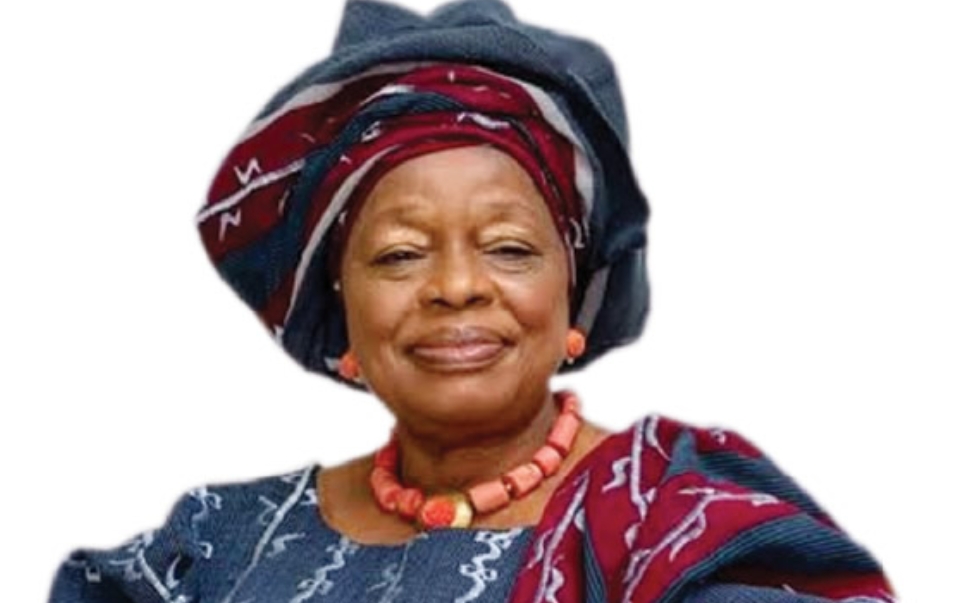
Alaba Lawson, Iyalode of Yorubaland dies at 72

By Mosope Michaels

Nigerian business magnate, entrepreneur, academician and the Iyalode of Yorubaland, Alaba Lawson has passed away.

The death of the popular Abeokuta socialite was confirmed via a statement made available by the Executive Secretary of Abeokuta Chambers of Commerce and Industry, Mines and Agriculture (ABEOCCIMA), AbdulRahman Maku, who said she died on Saturday, October 28.

“We regret to announce the demise of NACCIMA past president & ABEOCCIMA Matron/Chairman, Board of Trustees, Iyalode Alaba Lawson, which occurred in the early hours of today Saturday, 28th October, 2023.” the statement read partly.

Details of the death of the Proprietress of Lawson Group of Schools are still sketchy as of the time of filing this report.

The Ogun State-born educationist until her death, served as the first female president of NACCIMA and chairman of the board of the Governing Council, Moshood Abiola Polythecnic, Ogun State.

She was also the Iyalode of Egbaland and one of the past Presidents of ABEOCCIMA.

Born on January 18, 1951, into the Jiboku family in the Ago-Oko area of Abeokuta, the capital of Ogun State, Alaba Lawson died at the age of 72.

Credits: Thenicheng

Treat gunshot victims without police report – IG Police orders

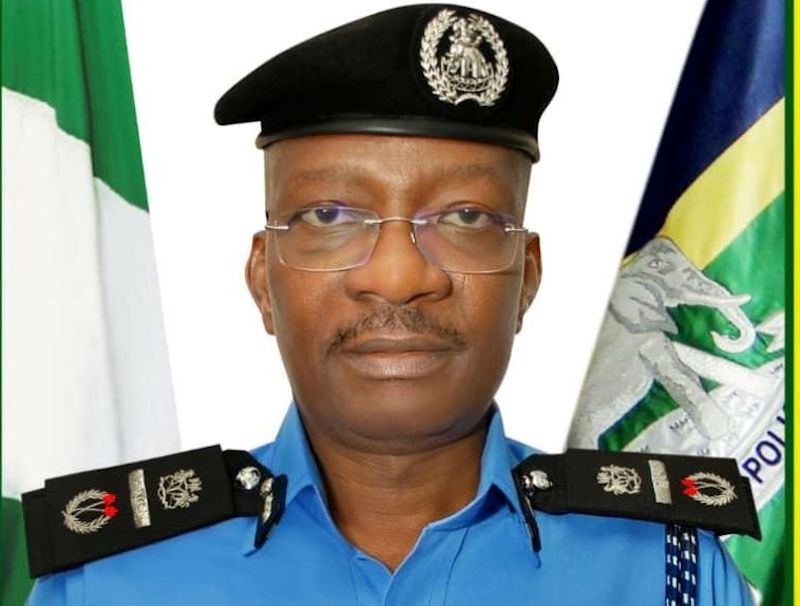
Following the senseless deaths of many gunshot victims in Nigeria on account of hospitals that denied them treatment without a police report, the Acting Inspector General of Police, Olukayode Egbetokun, has put an to weird practice by ordering the compulsory treatment of gunshot victims without police report.

The directive was contained in a police internal memo signed by the Force Principal Staff Officer, Olatunji Disu, on Wednesday.

IGP Egbetokun said the directive was in line with the Compulsory Treatment and Care for Victims of Gunshot Act 2017.

The memo reads, “I forward herewith a copy of letter HMSH&SW/IG/CTCV/ 10/2023 dated 3rd October, 2023 received from Federal Ministry of Health & Social Welfare on the above-underlined subject, and write to convey the directive of the Inspector-General of Police that you comply with and enforce the provisions of the Compulsory Treatment and Care for Victims of Gunshot Act 2017 without any hesitation.

“The Inspector-General of Police further directs that you make this a subject of lecture and circulate widely for the members of the public to be aware of our compliance with the National Law.”

INEC, not judiciary should determine winners of Elections — Falana

  • Says Nigeria has a long way to go in ensuring credible elections

As arguments continue outside the courts over Supreme Court’s decision on the 2023 Presidential election, rights lawyer, Femi Falana, SAN insists that the Independent National Electoral Commission (INEC) and not the judiciary should determine the outcome of elections in Nigeria.

The Senior Advocate of Nigeria was a guest on Channels Television’s Politics Today on Friday.

Falana said: “No doubt the judgment of the Supreme Court ascended the electoral contestation as far as the presidential election conducted in February this year is concerned, but for sure it is not a judicial endorsement of the conduct of the election by INEC.

“And what I mean is that even with the judgment, it is very clear that Nigeria has a long way to go in terms of ensuring that credible elections are conducted, elections that will be devoid of acrimony, elections that all of us will be proud of, but we are still a long way from there even with the judgment.

“Yes for now the presidential election is concluded, it should have been concluded in February, but it has just been concluded by the Supreme Court and it should not be so. The judiciary should not determine the winners of elections.

“Judges are not suited to determine the winners of election; that is a job that is the exclusive reserve of INEC if things are done properly and that is why we must put an end to the shame that has become our law in terms of conducting elections.”

Additionally, the fiery lawyer said Nigeria must realise at all times that it has the largest concentration of black people on earth and therefore has a greater responsibility to put its house in order so that black people will not be insulted all over the world.

Again he said it does not take much to conduct a good election if the political class are honest and dedicated in the conduct of transparent elections.

The Supreme Court in its ruling on Thursday, upheld the election of President Bola Ahmed Tinubu and dismissed the appeals by the presidential candidate of the Peoples Democratic Party (PDP), Atiku Abubakar; and his Labour Party (LP) counterpart, Peter Obi.

A seven-judge panel comprising of Justice John Inyang Okoro, Uwani Musa Abba Aji, Lawal Garba, I.N. M. Saulawa, Adamu Jauro, Tijjani Abubakar and Emmanuel A. Agim held that the opposition appeals over claims of fraud, electoral law violations, and Tinubu’s ineligibility to run for President lack merit.

26 years old Wendy Okolo bags PhD in Aerospace Engineering

Introducing Dr. Wendy Okolo. At the young age of 26, she achieved a remarkable milestone by earning her PhD in Aerospace Engineering from the University of Texas at Arlington, making her the first black woman to attain this qualification at the university.

Dr. Okolo’s journey began in Nigeria, where she received her early education at St Mary’s Primary School and later attended Queen’s College in Lagos.

Her exceptional contributions in the field of aerospace engineering were duly recognized by NASA. In 2021, she was honored with the NASA Exceptional Technology Achievement Medal. Dr. Okolo also received the 2020 NASA Ames Award for Researcher/Scientist and the 2019 NASA Ames Early Career Researcher Award. Notably, she was the first woman to be awarded the Ames Early Career Researcher Award.

Reflecting on her educational journey, Dr. Wendy Okolo remarked, “School was easy for me; I consistently earned A’s. My mother had a vision for me to become an Engineer, even before I fully understood what engineering entailed. From a young age, I aspired to be an Engineer, though I had yet to decide which specific field of engineering I would pursue. It wasn’t until I started my first semester that I chose to specialize in Aerospace, a decision I made later on because of the sheer fascination I developed for the subject.”

Facebook

Odinkalu, other experts say insecurity is destroying justice delivery and healthcare

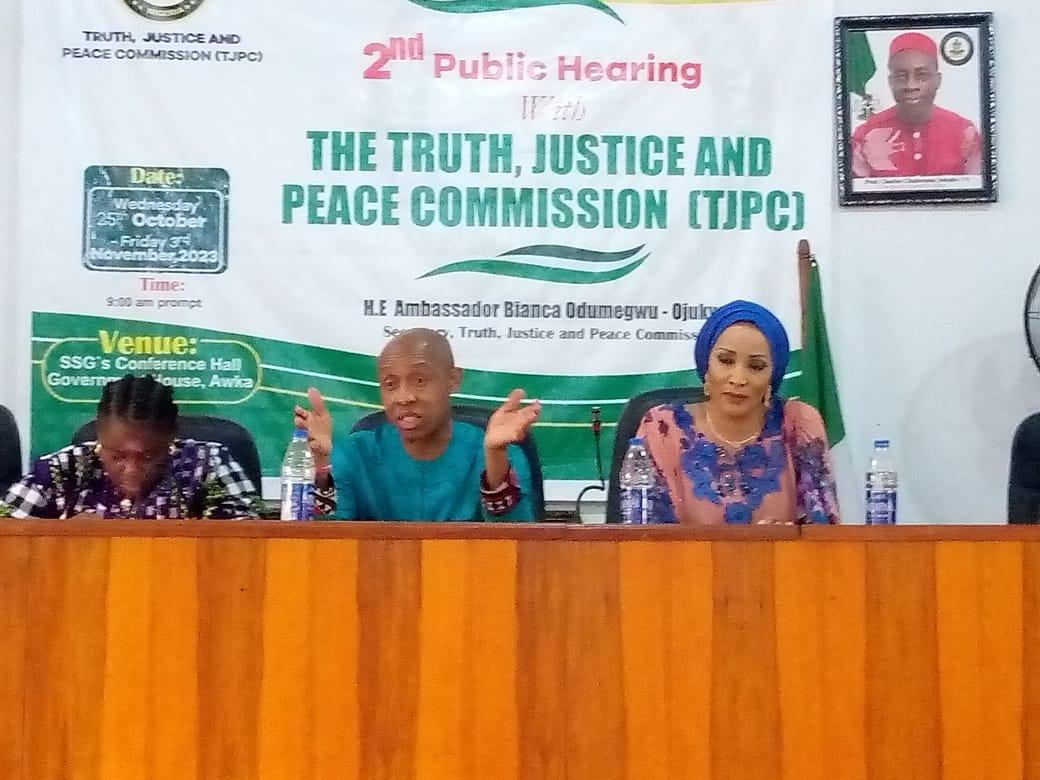
Witnesses, who appeared before the Anambra Truth, Justice and Peace Commission (ATJPC) on Friday, decried the negative impact of insecurity in Anambra, saying it is affecting the service delivery in the health sector and justice dispensation.

The Commission, which resumed sitting on Thursday, is taking testimonies from members of the public with a view to unraveling the causes of violence, identifying victims of violence and finding a lasting resolution of the issues.

Onwuka said insecurity fears had made them review their operational modalities such that they no longer wore their uniforms in the streets but the only at work.

She said they had also adjusted their schedule to allow only those living around the hospital areas to work on Mondays in order to address the challenges of sit-at-home.

According to her, “we no longer wear our uniforms outside because of fear of attack, Monday sit-at-home is affecting our services in some areas because of restriction of movement and absence of ambulance services.

“We are losing our members to other states and foreign countries,” she said.

Onwuka said Anambra was the second state with the highest concentration of nursing colleges, producing an average of 1,000 nurses annually.

She said about 138 nurses were employed by the state government in 2022 but only about 80 of them were still in service as others had left the job because of insecurity or poor remuneration.

The chairman also blamed unequal treatment of workers in the health sector for the shortage of nurses, noting that while government was implementing the salary scale of doctors at 100 per cent, it implemented nurses scale at 60 per cent.

On her part, Mrs Tessy Obuekwe, a representative of the Directorate of Public Prosecution, said Mondays were lost days in the justice delivery system.

Obuekwe said custody cases could not be treated on Mondays because there was no means of taking them to court as it was a condition that they should be present.

Dr Frank Ifeneme, Secretary of the Nigeria Medical Association in Anambra, in his testimony, reported the murder of two of their members in the last two years.

Ifeneme registered the protest of doctors and pleaded that government should deal with insecurity in the state as a matter of urgency to enable them operate optimally.

Earlier, the Commission paid an unscheduled inspection visit to a disused facility of the defunct Special Anti Robbery Squad (SARS) Annex facility in Neni, Anaocha Local Government Area.

The ATJPC team was led by Prof. Chidi Odinkalu, its chairman, in the company of medical experts and a section of the media.

Odinkalu said the visit became necessary following the number of complaints about human rights abuses linked to the facility by witnesses.

The team inspected the inside and surroundings of the facility, part of which has been converted to farmland.

Mrs Edith Onwuka, Chairman of Nurses and Midwives Association, Chukwuemeka Odumegwu Ojukwu University Teaching Hospital, Awka, said one of their members identified as Uche Ikemma went missing since December 2021 and had not been found till date.

Freedomonline

Indonesia conducts first commercial flight using palm oil-blended jet fuel

On Friday, Indonesia flew its first commercial flight using palm oil-blended jet fuel, as the world’s biggest producer of the commodity pushes for wider use of biofuels to cut fuel imports.

Operated by flag carrier Garuda Indonesia, the Boeing 737-800NG aircraft carried more than 100 passengers from the capital Jakarta to Surakarta city about 550 kilometres (342 miles) away, Garuda Indonesia CEO Irfan Setiaputra said.

“We will discuss further with Pertamina, Energy Ministry and other parties to ensure this fuel is commercially reasonable,” Irfan said during a ceremony, adding the plane was set to return to Jakarta later on Friday.

Garuda conducted several tests including a flight test on the new fuel earlier this month and an engine ground test in August.

According to Reuters, the palm-oil blended jet fuel is produced by Indonesian state energy firm PT Pertamina (PERTM.UL) at its Cilacap refinery, using hydroprocessed esters and fatty acid (HEFA) technology and is made of refined bleached deodorized palm kernel oil.

Pertamina has said the palm-based fuel emits less atmosphere warming greenhouse gases compared with fossil fuels, and palm oil producing countries have called for the edible oil to be included in feedstock for the production of sustainable aviation fuel (SAF), Reuters reports.

“In 2021, Pertamina successfully produced 2.0 SAF in its Cilacap unit using co-processing technology and was made of refined bleached deodorized palm kernel oil with production capacity 1,350 kilolitres per day,” said Alfian Nasution, a director at Pertamina.

Meanwhile, Harris Yahya, a director at the Energy Ministry, said the use of biofuel would lower the greenhouse effect.

The aviation industry, a major emitter of greenhouse gases, is looking for ways to cut its carbon footprint by using alternative fuels.

Experts say the industry will need 450 billion litres of SAF a year by 2050, if the fuel is to account for around 65% of the mitigation needed to achieve net-zero targets

Reuters

Tribute to Justice Ayoola at 90

By Bolanle Babalakin

It took me a whole while to conclude that I had to write a tribute to Justice Olayinka Ayoola as he turns 90 years old today, October 27, 2023. I had known Justice Ayoola as a colleague and friend of my late father, Justice Bola Babalakin, probably as early as about seven years old. I know he is not a man given to publicity. He actually shies away from it. I recall that while I was growing up, Olayinka Ayoola and Bola Babalakin used to feel very disdainful towards lawyers who sought publicity to attract clientele. They felt it was an antithesis to the legal profession and hoped it would not become the order of the day. In the 1960s and 1970s, it was an aberration to seek publicity in that manner. I cannot say what it is now. In their view, a brilliant legal practitioner was known for the quality of their arguments, their submissions in court, efficacy, diligence and comportment.

I apologise upfront to my Lord for writing this tribute and publishing it. You never asked for it and you will not be too happy that one of your boys did this to you.

My motivation for writing this piece is twofold. The first is historical. It is important to let the world know how great it was in the legal profession when I was growing up; and to celebrate those who are deserving of celebration and not those who, through a cacophony of sponsored media publicity, have acquired a reputation that is not premised on the quality of their character.

I recall writing about the legal practitioners who influenced me a great deal in my decision to practise law and the trajectory I have sought to follow. They are Justice Teslim Elias, Justice Olufemi Ayoola, Chief Fredrick Williams, Justice Yinka Ayoola, and Justice Bola Babalakin.

I grew up in the world of very successful and active lawyers. My influence to read law as a student was already established by the time I was 16 years old. We were neighbours to the Ayoolas. Olufemi Ayoola, arguably the most successful legal practitioner of his time, had a plaque in front of his house which I read every day. It was an inspiration. It stated as follows: “Olu Ayoola. BA, BCL, BSC, Econs, Dip ed.”

Olu Ayoola was born in 1928 and he was called to the bar of England and Wales in 1952, having bagged all the degrees stated above. As a young man, I wanted to acquire that sort of qualification at a very early age. Influenced by him and my very academic surroundings, I submitted my doctoral thesis in Cambridge University before I was 26 years old.

The Ayoola brothers, Olu and Yinka were a phenomenon in 1967. Olu Ayoola at 39 years old, was appointed a High Court Judge of Western State of Nigeria. His brother Yinka was appointed in 1976 at the age of 43 years old. Both were very great legal practitioners. They were part of the dominant group of outstanding legal practitioners who were appointed to the Bench in old Western Nigeria. Some of the other names are: Justice S. Ade Ogunkeye, Justice Abdul Agbaje and Justice Bola Babalakin.

In those days, following the English tradition properly, the brightest of lawyers were appointed as judges. They were all very successful and affluent. As a young man, I was taken to court by my father regularly to avoid leaving me at home, where I was going to organise parties in his absence. The legal profession was enthralling. The legal battles between Yinka Ayoola, Richard Akinjide and Bola Babalakin were consistent and enlightening. The law courts were centres for the display of brilliance without rancour. As a young man, I assumed wrongly that their very strong submissions against one another were a sign of a rift. I later discovered that there were no animosities. It was just in the natural course of practising the profession.

I was very impressed with the quality of life of these legal practitioners and particularly impressed with the sort of cars they drove. My father’s boss between 1959 and 1960 was Justice Ade Ogunkeye. He drove a Cadillac. Yinka Ayoola drove a Mercury Cougar, while Bola Babalakin drove a Mercedes 250.

This very substantial life of comfort did not prevent them from giving up their lucrative practices to take up appointments as judges. They all followed the tradition of the United Kingdom where judges are appointed from the most exceptional King’s Counsel. The motivating factor for taking up these appointments was “honour.” A judge was revered by all in Old Western Nigeria. He was an epitome of brilliance, comfort, composure, and grace, and the judges never mixed frivolously.

Even though remuneration was not the incentive, it was not miserable as it is now. A judge of the Old Western State earned more money than the Governor of the Central Bank of Nigeria. This was before the serial distortions began in our legal system. I do not believe that any judge today earns the salary and allowances of the members of the National Assembly. This is an unpardonable anomaly. It is interesting to note that in the English system, which we claim to follow, the Lord Chief Justice of England today earns more money than the Prime Minister of England. This is the natural order of things. The idea of judges not being very comfortable is very alien to my upbringing. The notion of a judge not being able to effortlessly fund a comfortable lifestyle offends my senses. We have to assess how we came to this level and ensure that we can draw a line from the past and begin to place judges in their right economic place of comfort and honour as an immediate pressing issue.

I continue to ponder about the role of senior lawyers. I do not understand how these lawyers make a fortune practising law and do not enhance the forum in which they practise the law. How can we have courts in Nigeria that do not have all-round electricity? How can judges earn less than members of the National Assembly? How can we continue to expect to submit disputes to a poorly funded and inadequately motivated forum? Why are senior lawyers not in the front line of insisting on repositioning the judiciary?

My worst fear is that most lawyers today never saw a vibrant, well positioned, well-funded judiciary. I believe the judiciary began its gradual decline in 1976 when outstanding judges were removed from the various courts without a proper process. They let go a lot of outstanding judges and since then other brilliant and successful practitioners refused to aspire to the Bench. A system where the best lawyers do not aspire to the Bench is not a legal system founded on the value and ethics of the English legal system.

Justice Ayoola was a judge in Oyo State. He later became the Chief Justice of The Gambia. He was in the Court of Appeal for a while before he was elevated to the Supreme Court.

Related News
Nigeria’s jurisprudence declining, Justice Ayoola laments
In the High Court, he was my dad’s soulmate. In those days, judges were hardly found in unstructured gatherings. I recall that thrice a week, he will drive to our house around 5.00 pm to have a game of tennikoit ring with my Dad till 6.30 pm. They played alone. There were no intruders. My role was to pick up the rings they were throwing at each other when it was flung outside range. I was a ball boy. They will sweat in the process and then return to have a bottle of chilled water or a soft drink. I was the servant. Nobody was allowed to come near them, and no visitor attempted to join. Everybody knew their place.

The house we moved to when my father became a Judge of the Western State was Quarters 609, New Reservation, Iyaganku. It was at that time a six-bedroom house with three living rooms, a substantial dining room that could sit about 20 persons effortlessly. It also had a well apportioned study. I do not recollect that we ever had a light out. There was always power from the source, or the court supplied generator and diesel. We had a two-bedroom visitor’s chalet which was so far from the main house that you had to walk down to call someone from the chalet. It was not within shouting range. The six-bedroom boys’ quarters was somewhere in a valley in the compound. I realised the property was on about two acres of land. This is how the judges that I grew up with lived.

Justice Ayoola’s house that was a stone’s throw away had similar facilities. You can imagine how depressed and downcast I am, when I learn that judges live in small buildings with little privacy and yet are grateful for the concession and feel they need to thank the government for the gesture. Judges in Western states had official Mercedes Benz cars before the government’s low-profile policy which benchmarked public servants Peugeot to 504. I believe the judges should have been excluded from this policy, but it was not obvious because almost all of them had very good personal cars which they drove outside official times. I believe a lot of states should not have the number of High Court judges they have today. They cannot provide for them adequately. They should expand the magistracy and its jurisdiction and appoint very few High Court judges that satisfy conditions similar to those we had in the old regions – Eastern, Northern and Western.

I can give direct evidence that the Western Nigerian judiciary was an epitome of intellect, discipline, composure, and character.

I have a lot of personal gratitude to Justice Yinka Ayoola. He was the man I ran to whenever I had serious arguments with my father. As a young man, I argued a lot with my father. It was a regular session on the dining table every afternoon. Sometimes it was very heated, and my loving mother was always very anxious about the outcome. On a particular day, I was so sure I had won the argument, and I stood my ground; the next thing was that I received a dirty slap from my dad. I had to be resuscitated by my mother. Later on, I discovered that my father enjoyed the arguments but found them totally unacceptable from a 13-year-old boy. He actually told my mother that if I developed the skill properly, it could be useful to me in the future. After this event, I cultivated the habit of discussing my issues with Justice Yinka Ayoola, who had a subtle way of mentioning it to his friend and getting the desired result for me.

Some of the incidents I remember included when I was going to secondary school. I had a choice of secondary schools. In those days, interviews to some top secondary schools spanned three days. I had been to some interviews in many secondary schools, and I had been admitted in all schools. My choice was Aiyetoro Comprehensive High School, which was then managed by an American Group. My fascination was the ambience of the school and the quality of the food. I wanted to attend very badly. Before discussing it with my father, I remember broaching the issue with his friend, Justice Ayoola. He advised me to go to Government College Ibadan which was this time consistent with my father’s view. Having listened to Justice Ayoola, my resistance crumbled. With Ayoola and my father standing on the same point, I had no choice but to comply with the situation. I remain grateful to the duo for making me attend arguably the most outstanding secondary school in Nigeria.

When I was going to commence my law degree, I wanted to join my friends from Government College Ibadan in the then University of Ife (now Obafemi Awolowo University). My mother was not keen on it. She wanted me to chart a course that will not be dominated by my father’s presence in the Western state. She wanted me to develop an independent personality. She opted for the University of Lagos and with Justice Yinka Ayoola’s support, this was a fait accompli. UNILAG was an eye-opener for me. In the course of my studies, through one of Chief Rotimi Williams cousins, I had access to his library. I was bowled over. I was overwhelmed by the richness of the library which was far better equipped than the University of Lagos Law Library. This began my affiliation with the Rotimi Williams family, and I remain very grateful for the exposure that I received from Papa Rotimi Williams, which culminated in a situation that his office was the only office I ever worked in my life apart from Babalakin & Co, where I work till date.

For my postgraduate education, I had options. I tried to persuade Justice Yinka Ayoola as a stepping stone towards convincing my parents to go to my preferred school. Justice Ayoola and Justice Bola Babalakin made it clear to me that the University of Cambridge was the best option for me. I agreed. I don’t believe I could have attended a better University. I thank them.

On arriving at Cambridge, I visited the university bookshop. I had never seen such a collection of very current books. They were all the latest editions. I was so enthralled by it all, that I bought more books than my allowance could afford. One of the books I bought was a present for Justice Yinka Ayoola. I recall inscribing in it a “thank you for all he had done for me.” On my return to Nigeria, I visited Justice Yinka Ayoola in his chambers. During the visit he brought out the book. I was overwhelmed with emotions. He did not discard a book gift given to him by an insignificant young man. He read it and kept it.

My father’s contemporaries and friends were selfless. There was no quid pro quo. Whatever they did for themselves had no financial consideration. It was a matter of honour. I needed a licence to publish some books. The licence belonged to Justice Yinka Ayoola. I approached him on the issue expecting some form of deliberation. He quickly granted it to me without conditions. I could not believe it. What a great gesture. I can only wish that the values upheld by that generation of lawyers and judges will once again become the order of the day in the Nigerian legal profession

As you turn 90 my Lord, may you continue to flourish and may the Almighty God enable us to recreate the legal profession in the mode which your generation represented. As my father fondly referred to you, “Yinkus” (please pardon my insubordination), I wish you very well.

My Lord, Justice Yinka Ayoola, I wish you a very fruitful 90th birthday.

I remain yours.

Dr Babalakin is a Senior Advocate of Nigeria and Senior Partner of Babalakin & Co Legal Practitioners


TIPS