Home Blog Page 698

Graft in the Judiciary: Establish Funds Allocation Committee to check excesses – Justice Ejembi Eko

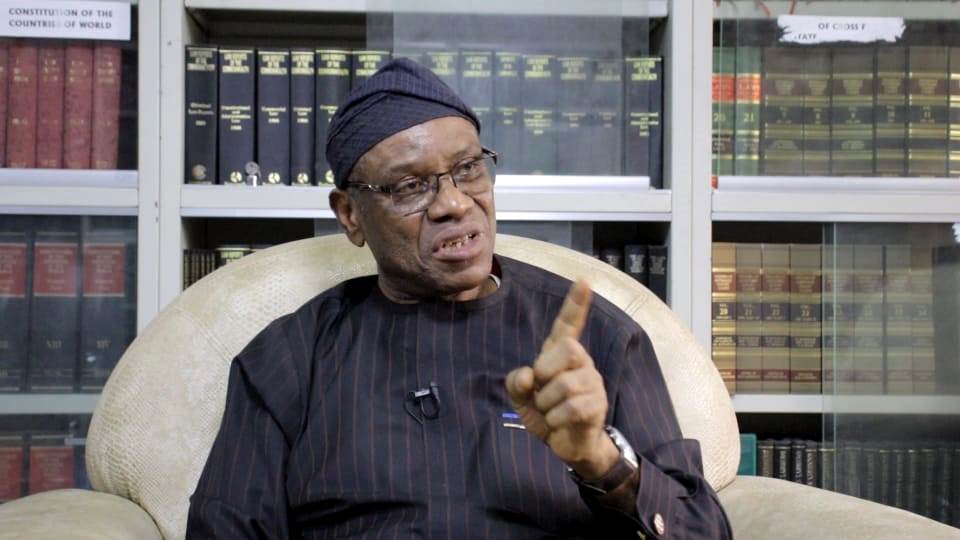
Ejembi Eko, JSC

“Adjudication being the main function of the Judiciary can only guarantee the much cherished independence of the Judiciary when the Judges, at all times, imbibe impartiality and integrity in adjudicatory process.” These are some of the thoughts shared by Hon. Justice Ejembi Eko on Monday at the ongoing All Nigeria Judges Conference of the Superior Courts, organised by the National Judicial Institute, in Abuja.

Delivering a paper paper titled: Independence of the Judiciary: The Way Forward, His Lordship said: “A corrupt judge”, according to Hon Justice S.O Uwaifo, JSC, in his valedictory speech on January 24, 2005, “is more harmful to the society, than a man who runs amok with a dagger in a crowded street. The latter can be restrained physically. But a corrupt judge deliberately destroys the moral foundation of society, and causes incalculable distress to individuals through abusing his office while still being referred to as honourable.”

Eko, JSC who also pointed out that financial independence is one of the vexed issues of independence of the Judiciary made further observations.

“It is being suggested that the heads of courts and the Management Staff, led by the Chief Registrars, are so recklessly corrupt for any meaningful dividend of financial independence to judiciously and fairly go round effectively. I am told that: all that the Judges hear, most times, is the usual refrain: ‘My noble Lord, there is no money’!!”

Proffering a solution, Justice Eko said: “The same arguments potentiate the fears that vesting enormous powers in the Heads of Courts and the Chief Registrars to manage financial autonomy of the judiciary may be counter- productive.

“In the way forward, those powers and excesses must be checked by establishing Funds Allocation Committee (FAC), comprising senior Judges and all the Directors, with the Chief Registrar as the Secretary. FAC worked seamlessly well in Benue State High Court, when I was there. I do not see how it cannot, with some modifications to improve on it, work in any other court or jurisdiction…”

Read the complete text of his paper below.

                      Independence of the Judiciary: The Way Forward

                                                         Presented By

                                        Hon. Justice Ejembi Eko, JSC (RTD)

My Lords, adjudication is the main business the Judiciary does. The court and the Judex are the hallmarks of the judiciary. The synonyms of adjudication are conclusion, decision, determination, finding, pronouncement, ruling, settlement, verdict. The judiciary whose business is adjudication is also a constitutional imperative. It is one of the Three Arms of government. The judicial powers of the Federation and the State are specifically vested in the courts of law by Section 6 of the 1999 Constitution as follows:

           6 (1) The judicial powers of the Federation shall be vested in the courts…

              (2) The judicial powers of a State shall be vested in the courts…

It is further provided in Section 17 thereof, to wit: –

               (1) The State social order is founded on ideals of Freedom, Equality and Justice.

               (2) In furtherance of the social order–

                   (e) the independence, impartiality and integrity of courts of law, and easy accessibility

                         thereto shall be secured and maintained.

Still in Section 36(1), the Constitution provides, by way of procedure and a fundamental human right

                   (1) In the determination of his civil rights and obligations, including any question or

                         determination by or against any government or authority, a person shall be entitled to a

                          fair hearing within a reasonable time by a court or other tribunal established by law and

                          Constituted in such manner as to secure its independence and impartiality.

The Constitution is the grund norm and the fountain of all powers exercised by the Legislature, the Executive and the Judiciary. In Section 1 thereof, the Constitution declares its own supremacy, thus:

               1 (1) This Constitution is Supreme and its provisions shall have binding force on all authorities

                        and persons throughout the Federal Republic of Nigeria.

                  (2) The Federal Republic of Nigeria shall not be governed, nor shall any person or group of

                        of persons take control of the Government of Nigeria or of any part thereof, except in

                        accordance with the provisions of this Constitution

                  (3) If any other Law is inconsistent with the provisions of this Constitution, this Constitution

                        shall prevail, and that other Law shall to the extent of the inconsistency be void.

The communal reading of Sections 6,17(1) &(2) and 36(1) of the Constitution, together with Section 1 of the same Constitution, makes a clear statement that “independence of the Judiciary” is a constitutional  imperative that cannot be derogated. The provisions make independence of the judiciary a basic constitutional right of every citizen; just as they make independence of the judiciary a “sine qua non” of the rule of law. It is time the Judiciary should be proactive about its independence. Reading Sections 1, 6, 17(1) &(2) and 36(1)  of the Constitution together with Section 318 thereof (that defines “government”); it appears that any legislative or executive action that negates or purports to inhibit independence of the Judiciary is an affront to the Constitution and thus attracting the wrath or sanction of Section1(2) &(3) of the Constitution; rendering such legislative or executive actions null and void.

The Judiciary is not an appendage of the Executive. Gone were the days when the Judiciary was regarded as “Judicial Department”. Two recent decisions pointing out how the Judiciary, like the Executive, shall present its budget or estimates to the Legislature for enactment deserve to be mentioned for necessary action. In OLISA AGBAKOBA, SAN v. A.G FEDERATION, NJC & Anor it was held that budgetary estimates of the Federal Judiciary need not be sent to the Executive for Inclusion in the Appropriation Bill. The court ruled that judicial estimates shall be submitted by the NJC directly to the National Assembly for consideration and appropriation. On March 7, 2023 the Delta State High Court (Hon G.B. Okolosi, J), taking a cue from the AGBAKOBA Case and the relentless efforts of JUSUN, held in JOHN AIKPOKPO-MARTINS & Anor v. GOVERNOR OF DELTA  STATE & Ors that, by virtue of Sections 120, 121(2) &(3),& 124 of the Constitution, the Chief Judge and the President of the Customary Court of Appeal are entitled to lay before the State House of Assembly the budget/estimates of the State Judiciary for consideration and appropriation; and that after passage by the House of Assembly , they automatically become a charge on the Consolidated Revenue Fund of the State. And that thereafter, the State Governor, his agents and/or subordinates lack the vires and power to, howsoever, tamper with it by imposing any conditions for their release or disbursement to the Judiciary.

While these decisions receive kudos or plaudits for being milestones in the road map for financial independence of the Judiciary; Mr. Abiodun Olatunji, SAN, commenting on “The Financial Autonomy of the Judiciary Must be Guaranteed”, opined in his paper: “Securing Judicial Independence- The Way Forward”, that “the quest for financial/judicial autonomy suffered a setback when the Supreme Court in Suit No: SC/CV/655/2020- A.G ABIA STATE & 35 Ors v. A.G FEDERATION… by a split decision decided 6-1 to nullify Executive Order 10, vide which the Federal Government of Nigeria had sought in 2019, to give effect to Section 81(3) and Section 121(3) of the Constitution, with regard to the financial autonomy of the 36 respective State Judiciary and Legislature, which had been observed more in the breach by State Governments and Governors..”

The Supreme Court, in the said case, struck down President Buhari’s Executive Order 10 for usurping legislative functions, and being ultra vires the executive functions of the office of the President of the Federal Republic of Nigeria under the extant constitution; and therefore, null and void by dint of Section 1(2) & (3) of the same Constitution. The Supreme Court in the said case was enforcing the rule of law under the written Constitution. It was indeed, metaphorically, the case of the chief priest preferring rather to going hungry than to succumbing to eating unclean profane foods.

With financial autonomy, has the Judiciary actually crossed the Rubicon? Stories from various jurisdictions tend to suggest that financial independence or autonomy may turn out to be an effort made to remove an earthworm and replacing it with viper. It is being suggested that the heads of courts and the Management Staff, led by the Chief Registrars, are so recklessly corrupt for any meaningful dividend of financial independence to judiciously and fairly go round effectively. I am told that: all that the Judges hear, most times, is the usual refrain: “My noble Lord, there is no money”!!

Financial independence is one of the vexed issues of independence of the Judiciary. This maybe the objective facet of the issue… being more of the struggle to be autonomous and independent of the other Arms of government, particularly of the Executive. This facet fits into the views of John Locke, a British philosopher through his book: SECOND TREATISE OF CIVIL GOVERNMENT (1690); wherein he focused on the need for governmental powers to be kept separate, and the need for one arm not to exercise overbearing and overriding influence on the other. Lord Acton, another British philosopher, had in another forum, stated that since power corrupts and absolute power corrupts absolutely; separation of power was very necessary. On his part the French Philosopher, Barron Montesquieu, advocating Separation of Powers, had stated that concentrating governmental powers in one arm was not in interest of the citizens as it would render the citizens subject to arbitrary and capricious will of their rulers; a condition manifestly contrary to the rule of law, and a threat to civil liberty. The rule of law and guarantee of civil liberties form the objective bases for separation of powers exercised by the arms of government.

The same arguments potentiate the fears that vesting enormous powers in the Heads of Courts and the Chief Registrars to manage financial autonomy of the judiciary may be counter- productive. In the way forward, those powers and excesses must be checked by establishing Funds Allocation Committee (FAC), comprising senior Judges and all the Directors, with the Chief Registrar as the Secretary. FAC worked seamlessly well in Benue State High Court, when I was there. I do not see how it cannot, with some modifications to improve on it, work in any other court or jurisdiction.

WHAT ABOUT THE SUBJECTIVES OF THE JUDGES?

Adjudication being the main function of the Judiciary can only guarantee the much cherished independence of the Judiciary when the Judges, at all times, imbibe impartiality and integrity in adjudicatory process. This is rather more of some personal discipline than a quality. It is of course a personal discipline that is sauced by  great learning and intellectual prowess. Authorities, responsible for recruitment, should put more emphasis on probing the character and learning of whoever is being considered for appointment. This must precede and supersede any other consideration, if independence of the Judiciary must prosper.

A corrupt judge, according to Hon Justice S.O Uwaifo, JSC, in his valedictory speech on January 24, 2005, “is more harmful to the society, than a man who runs amok with a dagger in a crowded street. The latter can be restrained physically. But a corrupt judge deliberately destroys the moral foundation of society, and causes incalculable distress to individuals through abusing his office while still being referred to as honourable”. This, of course, is a complete abnegation of the express letters of Sections 17(2) & (3), and 36(1) of Constitution, earlier referred to. It is as well a renouncement of both his Oath of Allegiance and the Judicial Oath in the Seventh Schedule to the Constitution: the sine qua non to his assuming, and exercising, Judicial Office. Paragraph 9 of Part I of the Fifth Schedule to the Constitution, prescribing that a public officer shall not do or cause to be done, in abuse of his office, any arbitrary act prejudicial to the rights of any other person knowing that such act is unlawful or contrary to government policy, makes abuse of office also an offence triable at the Code of Conduct Tribunal. The Code of Conduct for Judicial Officers also makes issuing of interim injunctions, ex parte, an abuse of judicial office.

Independence of judiciary includes ability of courts and judges to perform their duties free of influence or control by other actors, be it private or governmental; and its purport to instill in the judges the desired courage to decide fearlessly and without favour. In common law Jurisdictions, it dates back to the Magna Carta, 1215. Judges had since been enjoined to say with good conscience and without hesitation whatsoever: Nulli vademus, nulli negabimus, aut differemus rectum, aut justiciam; meaning: to no one will we sell justice, to no one will we refuse or delay right or justice. This is the subjective element of the concept of the independence of the Judiciary. This

subjective element relates to the personality and quality of the Judex; his character, integrity, learning, and independence of mind. Ogugoedeng Joseph Dimgba, in the paper: – “21st Century Judiciary: Whither Justice And Judicial Independence” (May 30, 2023), states and I agree that: “A Judge who lacks learning, industry, and integrity is less likely to be independent no matter the constitutional guarantee”. Similarly, a Judge who owes his appointment more to the Governor or other politician, not necessarily on the basis of merits, is more likely to less independent and more likely to be answerable to the interests of his benefactor than to the public. It is within this class that Judges who sell justice, who refuse or delay right or justice are abound, and are more likely to emerge in these times of adverse political litigations.

Lawyers prosecuting election petitions are vociferously grumbling about, what they suggest is, the misinterpretation of Section 137 of the Electoral Act, 2022; which in their view has done away the judicial principle against “dumping of documents” at the court of trial. The principle insists that a witness must, in oral evidence, at least speak to the document. Section 137 of the extant Electoral Act is clear and without ambiguity. It provides:

137. IT SHALL NOT BE NECESSARY for a party who alleges NON-COMPLIANCE with the provisions of this Act for the conduct of elections TO CALL ORAL EVIDENCE IF ORIGINALS OR CERTIFIED TRUE COPIES manifestly disclose the non-compliance alleged.

In most cases the documents in issue are pleaded against their maker, suggesting admission against interest. This provision is quite new and novel. The intent and purport are clearly to expedite proceedings in election disputes, election petitions being clearly sui generis. It becomes worrisome when the Judex construes an unambiguous provision in manner that defeats its purpose and intent. It is clearly not the duty of the court, in its interpretational jurisdiction, to construe any provision of statute not to mean what it means in actuality; nor to construe it to mean what it does not mean.

In OKUMAGBA v. EGBE, the Federal Supreme Court, per Bairamin, FJ, confirmed the principle thus:

Feeling that the appellant deserved to be punished, the Chief Magistrate replaced the words “another candidate ” by the words “any candidate” and enabled himself to punish appellant. In effect, he amended the regulation. But amendment is the function of the legislature and the courts cannot fill the gap which comes to light by altering the words of the regulation to make it read in the way he thinks it should be enacted. As Lord Bacon said in his essay on Judicature, the office of a judge is ” jus dicere non jus dare”, to state the law not to give law., and the court below should not go in for Judicial legislation.

The plain functions of the Judiciary are expressed in Latin, thus: “judicis est jus dicere non jus dare”. That is, it is the duty of the judge to declare and administer existing laws, and not to indulge in imposing what, in his opinion, the law should be the. Only a lawless judge engages himself in capricious lawlessness. We cannot deny the existence, in our judicial cycle, of this class of judges. The way out is for the NJC to be constantly alive to its disciplinary jurisdiction and powers. It should mete out appropriate and deserving punishment to erring judicial officers in order to instill discipline. It is a truism that the society goes down easily when it overlooks evil, when it permits evil, then celebrates evil; and the evil doer then promotes himself to outlawry, and impunity becomes the order of the day. The Judex should himself live above board. He shall do no evil, nor shall he give countenance to evil. As a Philosopher King the society has a lot to learn from him, as his every judgment or decision teaches a lesson.

Thank you for being a patient listening audience. I had just few days to put up this paper for this Session. Therefore, please accept the paper in spite of any inadequacies therein. Accordingly, I crave your indulgence to bear with me.

November 13, 2023

National Judicial Institute

Abuja

Mummy Calm Down: Lessons for an insensitive culture

Ibe Ikwechegh

‘Mummy calm down’ became a sensation in 2020, when a video surfaced on social media of four-year-old Orefeoluwa Babalola, desperately and passionately pleading with his mum Tolu Babalola to spare him from ‘torture’. The child with tears rolling uncontrollably down his face, his body convulsing in fear and with apprehension so clear in his eyes, and finding no possibility of intervention from any other human nor from the gods, advocated intensively for himself and at a point tried to negotiate what could be a ‘truce’ in the rational belief, even in his tender heart, that it was necessary for mummy to ‘calm down’ and perhaps take a sober reflection on what was obviously an abusive situation.

When this video surfaced, we never joined Ore to call the mother to reason and by that, extend our call to other abusive parents to ‘calm down’ and take a better perspective on the dangers of child abuse. We did not find it a good occasion to warn abusive parents of the damage abuse does to children’s psyche and general well-being. We did not care that such episodes produced in our children, low self-esteem. It was not important to us that abused children grow up with increased fear and distrust nor was it disturbing that such children find it difficult to maintain healthy relationships since they find those who should protect them as potentially dangerous. We cared not about the traumatic disorders, which like shadows, follow such children.

But here were the things we did; we shared the videos with friends and loved ones to amuse and entertain them. We thought of the potential of commercializing the ugly episode. Ore, most likely, did not get any evaluation for post-traumatic stress nor any form of rehabilitation but it was rather reported that he got a role in a movie so that he could further entertain us even at the risk of suffering a constant reminder of his abusive childhood. It was also reported that a governor was magnanimous to reach out to Ore but certainly not for any recondite reason.

Then, a few years after all this drama, it is now reported to us that Ore’s mum has taken her life. When the video she made of herself abusing her own child is placed side by side with this new fact of suicide, only a highly pretentious person would refuse to admit that in hindsight the video provided corroboration that Ore’s mum was troubled.  And so we have with us a video pointing to us a child living in an abusive condition and a mother deeply troubled and begging to be helped and yet we failed to apprehend either of these impending tragedies.

In the August 2018 edition of this magazine, we wrote an article titled ‘What the law doesn’t know about suicide.’ In that article, we pointed out that like some oxymoron, the law allows us to omit to take all necessary steps to preserve life, to clothe the body or to medicate for illnesses but prohibits a positive step to end our lives. After showing that the law, in criminalizing suicide, does miserably seem to have indistinct lines of passivity and activity, but sees suicide as behaviour, we argued that that in so doing, the law fails to take into account that people who commit suicide pass through the process of darkness, despair and resolve. So while the law unproductively focuses on effect and response, it has remained blind-sighted to the causes of suicide and because of that, the law may remain ineffectual in addressing the problem of suicide. We then submitted that the law must apprehend the moral, social, psychological, and philosophical underpinnings of the problems of suicide and create institutions of help and succour.

It is the dearth or ineffectuality of such institutions of help and succour, the lack of sensitivity of the government and of the people on matters of suicide and other welfare issues in general, coupled with this recent tragedy that has provoked, once again, many questions.  

Asking one to calm down is often heard among adults in settings of argument but more especially in friendly banters. It is not a language of children. Was there a possibility that little Ore would have severally heard this type of plea from his father, asking his mother to back down from some threat of violence or even a mere tirade? Is it not within reasonable imagination that Ore’s mum had occasionally been struck with bouts of loss of her mind for which asking her to calm down was a tactic to which Ore had become accustomed?  How come we did not see in that infant’s eyes that he was an abused child who perhaps constantly lived in the fear of imminent harm to himself, so much so that out of the exigencies of his peculiar condition, he had developed for himself a skill for negotiating out of violence? 

Why did the mother find such eerie pleasure in the child’s agony, which was sustained for minutes in the video we all watched and which for a child in distress must have seemed like ages? We know that African mothers spank children, yet it is one of those things that we do as parents but always wish we did not have to. Why was that episode so pleasurable for Ore’s mum, so much so, that she held a camera in one hand, threatened violence with the other hand and with the rest of her body language, emotionally tortured her own child and still had the atrocious nerve to post the video for the world to see.

What was the recording for? Was it for the entertainment of the public who will share in this sadistic pleasure or was she making a home video with which to entertain herself from time to time? The comedian, Mr. Macaroni, would have asked her, ‘Are you normal? And how come, we did not learn from that video that Ore’s mum was passing through darkness and despair, a precursor for suicide? Maybe that was not too obvious. What society would watch with ease such strong evidence of child abuse and rather than take remedial steps, watch and share for pleasure? What governor of any state will watch such a gory video and against contacting the relevant offices, the police, the welfare department and other relevant authorities, stretch his hand beyond his state to make the event a heroic one? Where then is the disincentivising for such occurrences?

Neil Postman in his book, Amusing Ourselves to Death, drew comparisons between George Orwell’s predictions in his book, Nineteen Eighty-Four and Arnold Huxley’s Brave New World Revisited. Orwell had more or less predicted a ‘Big’ government and its negativities that as a tool for manipulation and oppression would among other things, deprive its citizens of information and control people by inflicting pain. Drawing a comparison between this Orwellian nightmare and the then-obscure predictions of Aldous Huxley in his Brave New World, Neil Postman wrote:

“…. Orwell feared those who would deprive us of information. Huxley feared those who would give us so much that we would be reduced to passivity and egoism. Orwell feared that the truth would be concealed from us. Huxley feared the truth would be drowned in a sea of irrelevance…Orwell feared we would become a captive culture. Huxley feared we would become a trivial culture, preoccupied with some equivalent of the feelies, the orgy porgy, and the centrifugal bumblepuppy. As Huxley remarked in Brave New World Revisited, the civil libertarians and rationalists who are ever on the alert to oppose tyranny ‘failed to take into account man’s almost infinite appetite for distractions…In nineteen eighty-four…people are controlled by inflicting pain. In Brave New World, they are controlled by inflicting pleasure. In short, Orwell feared that what we hate will ruin us. Huxley feared that what we love will ruin us.” Neil Postman then concluded his thoughts that Huxley and not Orwell was, after all, right.

The truth is that today we have so much information at our disposal. The traditional media cannot by any means keep speed with social media. Events happening in the remotest part of Nigeria spread within seconds. There is scarcely any important development whose news is obscured.  But being abreast with information has not produced any real benefit. It seems that information that cannot be mutated for entertainment and pleasure is quickly despatched to the dustbin of extraneous things. Passivity, egoism, vanity and do-nothingism is a culture that has exploded upon us like dynamite.

Is it possible that things have become so tough in this country that in the pursuit of temporal amusement and entertainment, we have deprived ourselves of all sensitivities that otherwise characterise civilized humanity? Our desire for pleasure, or to borrow words from Huxley, our infinite appetite for distraction has made us such an insensitive culture.

It is not out of tune to say that in our pursuit for happiness, maybe as a reprieve from hardship, we have inflicted upon ourselves, a great desire for pleasure, only that this time, it is not the government that is wholly culpable as Huxley predicted, but the people themselves. Amusement, laughter, merriment and fun all have their places. But we very easily desire them to take centre stage and displace time for evaluation and action. In our culture, nothing is taken seriously, ‘all na cruise’. It is only this hedonistic pursuit for pleasure that would make a government, social services department, recondite organizations and the public at large ignore those signs that were all too obvious that Ore’s home was troubled. All those signs that stared us in the face like high-definition television were all left to drown in the sea of irrelevance and all that was left afloat was our inordinate perception of pleasure.  

It is highly probable that had we been more discerning and less unaffected, Ore’s mum might have been saved from this danger of death that was forever imminent and it is also highly probable that just with the right adjustment of attitude and readiness to suppress our ‘infinite appetite’ for distractions and pleasure, Ore and others like him would be saved from this type of calamity that has further portrayed us as very insensitive culture. The time for the change is now, before ‘what we love will ruin us.’

Saudi cancels 264 Air Peace passengers visas on arrival, deports them

The Saudi Arabia authorities have cancelled the visas of all the 264 passengers airlifted by Nigeria’s major carrier, Air Peace on arrival at the country from Kano.

They insisted that the airline should return them to Nigeria.

The flight took off from the Murtala Muhammed International Airport, Lagos, via the Aminu Kano International Airport, Kano on Sunday night and arrived in Saudi Arabia’s major city, Jeddah, today without issues.

However, on landing, the Saudi Arabian authorities announced that all the passengers’ visas were cancelled.

A source who pleaded anonymity said that all the passengers and the airline personnel were shocked at the cancellation of the visas because during check the passengers went through the Advanced Passengers Pre screening System, APPS, which was also monitored by the Saudi Arabia authorities before the flight left Nigeria.

The source wondered whether what happened was a strategy to discourage the airline from operating to the destination because since it started the operation it has been recording a high load factor and even the flight expected to leave on Tuesday to Jeddah was already fully booked.

When the Nigerian embassy waded in Saudi authorities were said to have reduced the number of passengers that would be returned to 170 from 264.

Saudi Air has been operating directly from Nigeria to Saudi Arabia and since Air Peace started flight service to the Middle East nation at relatively lower fares, it has been receiving high patronage and as a Nigerian carrier, it helps to conserve foreign exchange for the country.

A source from the Nigerian embassy in Jeddah said that even the Saudi immigration personnel said that they didn’t know who cancelled the visas but that they were cancelled when the airline was already airborne to Jeddah.

According to the source, “The airline was exonerated in all this as the APPS, which is live between both countries would have screened out any invalid visa and its passenger. The system accepted all affected passengers and passed them on.

“Those deported were 177 passengers and Air Peace has already left with them back to Nigeria. They are on their way to Nigeria now.”

Meanwhile, stakeholders in the sector have attributed the development to aero politics.

Stating that it is a way to force the Nigerian operator out of the route; unless the government intervenes, adopting the principle of reciprocity.

According to industry experts and the Chief Executive Officer, Centurion Aviation Security and Safety Consult, Nigeria, Group Captain John Ojikutu, the action of the Saudis is aero politics and diplomacy.

He also requested that the Ministry of Foreign Affairs should step in immediately and intervene in the case.

He said that what happened showed why it is important for the Nigerian government to stand strongly with any Nigerian carrier designated to operate international destinations.

Ojikutu said that Nigeria should designate Nigerian airlines approved to operate out of the country as flag carriers, noting that the United States has no national carrier but all the airlines are supported by the government and are designated as flag carriers.

“The action of the Saudi Authorities is shocking. There is geopolitics there and there is also diplomacy. There is the need for the Nigerian government to stand firmly with Nigerian carriers and also designate them as flag carriers; so that other countries will know that they represent Nigeria.

“Government must come out and intervene. The government must be behind Air Peace now to ensure that it is not denied its rights as contained in the Bilateral Air Service Agreement (BASA) between the two countries. The Ministry of Foreign Affairs must not keep quiet. Nigeria must not keep quiet. Ideally, the government is expected to stand behind any of the country’s airlines that it designates to fly overseas,” Ojikutu said.

Everydaynewsng

INEC should not be party to lawsuits, Fashakin, Esq. MD, as other experts say INEC has failed Nigerians

Widespread criticisms have continued to greet the role of state actors including security agencies and the Independent National Electoral Commission, (INEC) in the conduct of Saturday’s supplementary governorship election in Nigeria with Prof. Joy Ngozi Ezeilo, SAN declaring: Time devise innovative ways to deal with INEC in the face of diminishing performance.”

As Ezeilo, SAN called for reallocation of “humongous and unjustifiable INEC budget”, Emmanuel O. Fashakin, Attorney at Law & Medical Director, Abbydek Family Medical Practice, P.C. said:” INEC’s budget will be cut in half if our laws stop making them parties to lawsuits. At least 50% reduction in the budget. INEC should be non-partisan. They should not have to take sides when the parties duel out their mandates in the courts.

“And it is a lot cheaper for everyone. Without the albatross of lawsuits, most of which are frivolous, INEC can concentrate on their core objectives and the task at hand.”

Likewise, Ambrose Igboke, a public affairs analyst said: “Our elections are still characterized by violence, thuggery, ballot box snatching, murder, rigging and outright manipulation. This is despite all the technology deployed to assist us in the process; card readers, BVAS and I-rev.

“Elections are conducted my Nigerians and not technology and since we have failed to change our negative mindset to that which will give us credible elections, we still continue to grope. I recommended a change in the appointment of INEC Chairman and Commissioners, party funding, amongst others.

Watch details of Ambrose Igboke’s comment on YouTube.

Earlier in the year, Yiaga Africa announced that INEC and other actors failed to meet Nigerians’ expectations.

Yiaga Africa which was one of the election observers of 2023 general elections, stated this during the Presentation of the Yiaga Africa Report on the 2023 General Election tagged ‘Dashed Hopes?’ in Abuja.

While presenting the report, the Board Chair, Yiaga Africa, Dr Hussaini Abdu, described the 2023 general elections as one of the most meticulously planned since 1999 based on INEC’s four-year strategic plan and a detailed Election Project plan ahead of the election including a new Electoral Act enacted one year in advance, early release of election funds to INEC and empowerment of the Commission to deploy election technology (Bimodal Voter Accreditation System, BVAS, and INEC Election Results Viewing Portal (IReV) including introduction of electronic transmission of results.

Abdu said: “INEC and other electoral governance actors did not meet public expectations for the 2023 elections despite the confidence-building and voter mobilization initiatives that preceded the elections.

“INEC’s extensive preparations and public communications set the bar high for the election. Unfortunately, the Commission did not meet these expectations.

“The Judiciary delivered judgements that undermined provisions of the 2022 Electoral Act and rolled back reforms seeking to improve the candidate nomination process in political parties.

“The elections represented a missed opportunity, as incremental electoral reforms to enhance electoral integrity failed to deliver desired outcomes.

“Factors including poor logistics on election day, especially during the February 25 election; the failure of the technology designed to drive transparent result management, namely the result collation system and the INEC Results Viewing (IReV) Portal; poor communication provided by INEC at critical points in the process; tactical use of violence to influence electoral outcomes; voter suppression; vote buying; non-compliance with electoral law and guidelines; and apparent manipulation of results during collation cast doubts on the credibility of the process, resulting in broken public trust in INEC and the overall outcome of the elections.

“Processes and procedures influence the integrity of electoral outcomes.

“Therefore, a compromised process will produce questionable outcomes.

“Yiaga Africa deployed a comprehensive election engagement strategy for the 2023 General elections.

“Yiaga Africa deployed a total of 6,377 citizen observers for the 2023 general election. In the pre-election phase, 822 long-term observers were deployed across the 774 Local Government Areas (LGAs) in Nigeria from November 2022 through February 2023.

“The long-long term observers observed the pre-election landscape and reported their observations bi-weekly.

“Yiaga Africa observed party primaries, Continuous Voter Registration (CVR), Collection of Permanent Voter Card (PVC), INEC testing of the BVAS machines and Mock accreditation. On February 25, Yiaga Africa deployed the Process and Results Vote for Transparency (PRVT) methodology formerly known as PVT- Parallel Vote Tabulation, to observe the election day process. The PRVT leverages proven statistical principles for systematic observation of the election day processes.

“Yiaga Africa deployed 3, 014 observers to a random representative statistical sample of 1,507 polling units. An additional 822 mobile observers were deployed to specifically provide information on the election process in each LGA and observe the result collation process in the LGA and state collation centre.

“For the March 18th election, Yiaga Africa deployed a total of 1,547 citizen observers across 28 States to observe the governorship election. In Benue, Delta and Kano, the Process and Results Vote for Transparency (PRVT) methodology was employed while the observers relied on traditional observation methods in the other 25 States.

“With the introduction of the INEC Election Result Viewing Portal (IReV), Yiaga Africa launched the Election Results Analysis Dashboard (ERAD) as a complementary tool to monitor the INEC IReV portal. 1,561 data clerks were trained to observe and download the results from the IReV portal for the Presidential election.

“The citizen observers observed the entire election day process from the set-up of the polling units, ballot and counting, result announcement, posting of the official results and uploading of the polling units to the INEC Election Result Viewing Portal.”

On the report about outcome of the 2023 elections released by Yiaga Africa, he (Abdu) pointed out that “Electoral democracy is at an inflection point in Nigeria owing to weak electoral governance, procedural shortcomings, the zero-sum nature of politics, and electoral impunity.”

The report also indicated that, “Nigeria needs legislative, administrative, and policy action to enhance the integrity of elections, restore public trust, and guard against ephemeral enthusiasm in the electoral process.

“To achieve this, Yiaga Africa outlines five key messages from the elections and a pathway for reform and action in its final report. The final report is structured into four parts. Part, one highlights Yiaga Africa’s 2023 election strategy.

“The contextual issues that shape the outlook of the election are analyzed in part two. Part three focuses on Yiaga Africa’s assessment of the elections against electoral integrity principles such as transparency, inclusiveness and fairness.

“In Part four, Yiaga Africa proposes a framework for legislative, administrative and policy reforms to achieve eight key objectives namely, rebuilding public confidence in the election, strengthening INEC’s institutional independence, improving the commission’s effectiveness, addressing the ambiguities, complexities and inadequacies of the electoral legal framework, enhancing the integrity and accuracy of the voter register, protecting voting rights and inclusiveness of elections, safeguarding the use of electoral technologies and raising the quality of political engagement and candidate selection. “

According to the report, Big lessons from the 2023 general election include: Electoral reforms can deliver credible elections if stakeholders, especially INEC and political parties, comply with the rules and guidelines: Several innovations were introduced prior to the election to combat electoral fraud and enhance the integrity of the process. Innovations such as use of the BVAS for voter accreditation improved the transparency of the accreditation process. While it is unclear if the technical glitch that resulted in the delay of upload of presidential results was accidental or deliberate, the IReV would have deepened the credibility of the election, assuming the results were uploaded to the portal in real-time as provided in INEC’s guidelines.

“The newly introduced timelines in the 2022 Electoral Act availed INEC and political parties with sufficient time to plan for the elections. Full compliance with the guidelines on results management enshrined in the electoral law would have inspired public confidence in the electoral outcome. Unfortunately, the guidelines were observed in breach in several collation centers.

“The constellation of electoral technology, the 2022 Electoral Act and new political actors heightened optimism and appetite to participate in the elections: Citizens exhibited increased enthusiasm in the lead up to the elections due to the combined effect of the new electoral law, introduction of technology such as the BVAS and IReV, and new faces on the ballot. The enthusiasm displayed by voters especially young voters demonstrates belief in the power of the ballot to safeguard popular choice. The high turnout for the Continuous Voter Registration (CVR) and collection of the Permanent Voter Card (PVC) are indicative of improved public trust in the process before the election. Where voting rights were threatened by INEC’s poor handling of the PVC collection process, citizens instituted legal action to enforce their right to vote.

“Electoral technology is no silver bullet: To deliver its promise of transparent elections, the competence, integrity, and neutrality of vendors, operators and managers of electoral technologies must be guaranteed. It takes more than electoral technology to protect the integrity of elections. Additional oversight from political parties, civil society groups, media and citizens is required on all aspects of the election value chain.

” INEC requires fundamental reforms: An overhaul of the appointment process of INEC commissioners is needed to restore public confidence in the electoral commission. The commission showed signs of institutional capture following the controversial appointments of commissioners into INEC before the election. Some Resident Electoral Commissioners (REC), collation and returning officers sabotaged the elections through non-implementation of the logistics plan for the election, misapplication of guidelines on results management and manipulation of election results at the collation level.

“In addition, there is a pressing need to unbundle the commission and shift certain institutional responsibilities it bears currently to other institutions. For instance, the responsibility of political party registration and regulation, and electoral offences prosecution should be divested from the commission.

“The election reveals ambiguities, complexities and inadequacies with the election legal framework: The implementation of the 2022 Electoral Act for the first in a general election reveals existing gaps that constitute the basis of electoral disputes.

“The ambiguity with the provisions on results collation, margin of lead and electronic transmission of results made the process susceptible to manipulation and misinterpretation. Although the Act gives INEC powers to review election results declared under duress, the modalities and procedures for the exercise of this power were not prescribed in the Act or guidelines leaving a vacuum.

“Also, the legal framework places no statutory obligation on INEC to subject its electoral technologies to testing and verification. Standard practice requires institutions deploying electoral technologies to test and verify equipment, software and tools within a reasonable time before deployment for elections”, the report pointed.

Meanwhile, the report urged INEC to rebuild public confidence in the electoral process through; “Independent audit/review of the elections: A comprehensive multi-stakeholder independent audit of the 2023 general election is crucial for inspiring public confidence and ensuring accountability for operational lapses, electoral impunity and identifying fundamental changes required to enhance the quality of elections.

“Prosecution of electoral offenders: Investigation and prosecution of electoral offenders especially collation and returning officers engaged in results manipulation and flagrant violations of the guidelines on results collation. INEC is encouraged to provide regular updates on the prosecution and list of electoral offenders and convictions on its online and offline communication channels.

“Strengthening INEC’s institutional independence Professionalize INEC appointments: The criteria of non-partisanship and unquestionable character prescribed by the constitution have proven inadequate. Therefore, professional skills and qualifications should be considered when making appointments into INEC.

“Election administration requires individuals with diverse legal, IT, logistics, statistics, and communications skills. The appointing authority should consider the age, health status and gender of nominees when making appointments into the commission.

“Integrate and safeguard public participation in the appointment process: The appointing authority should subject nominees to public scrutiny before transmitting nominations to the Senate for confirmation. Screening of nominees into INEC by the Senate should be executed diligently and devoid of partisanship. Additionally, the Senate should issue guidelines for submitting petitions against nominations into INEC to promote effective public participation.

“Unbundle INEC:  The National Assembly should, through legislation, establish a Political Party Registration and Regulatory Commission and an Electoral Offences Commission to reduce INEC’s enormous and onerous responsibilities.

“Reduce over-dependence on third-party vendors and transport providers: INEC should recruit or build internal capacity for the design, production and maintenance of its technology. The commission should explore the use of private logistics companies or safe local facilities to reduce dependence on transport providers. Addressing the ambiguities, complexities and inadequacies of the electoral legal framework.

“Fix the ambiguities in the results management process: Further review to the electoral act to address the ambiguities in the results collation and transmission process and the role of technology in the results management value chain.

“Align reconfiguration of technological devices with election dates: Timelines for the reconfiguration of technological devices should be considered when preparing the timetable and schedule of activities for elections to avoid complications during general elections. The reconfiguration process should be open to political parties, media and election observers. Enhancing the integrity and accuracy of the voter register.

“Audit the voter register: INEC should undertake a comprehensive audit of the voter register to eliminate duplications, multiple registrants and ineligible voters to enhance the credibility of the voter register.

“The audit process should be subjected to public scrutiny to improve its transparency.

“Generate the voter register from the civil registry: The National Assembly should amend the electoral legal framework to enable INEC to produce the voter register from the national identify database compiled by the National Identity Management Commission (NIMC). This will reduce the cost of elections, facilitate regular updates to the register and foster harmonization of the national database.

“Review the requirement for voter identification: With the successful introduction of the BVAS that stores biometric information of voters, INEC should abolish the use of Permanent Voter Card (PVC) and adopt the use other legally acceptable means of identification for voter verification such driver’s license, international passport, national identity card. Protecting voting rights and inclusiveness of elections.

“Early voting: Amendments to the legal framework is necessary to introduce early voting for eligible voters on essential election duties such as security personnel, INEC staff, election observers, journalists etc. INEC should develop a framework for stakeholder engagement on early voting.Safeguarding the use of electoral technologies.

“Introduce legal timelines for testing, and mock exercise of electoral technologies: The National Assembly should make further amendments to the 2022 Electoral Act to establish the principles and introduce timelines for the mandatory conduct of testing and mock exercises for electoral technologies deployed by the electoral commission.

“Compulsory electronic transmission of results: Strengthen the electoral law to make electronic transmission of results mandatory including the upload of polling unit level results and results sheets used at different levels of results collation. Raising the quality of political engagement and candidate selection.

“Integrate governance accountability in voter education: Civil society, media, and other stakeholders should integrate governance accountability in voter education and citizen mobilization to sustain citizens’ participation beyond election day. Democracy doesn’t equate with elections; therefore, citizens should be engaged in the post-election phase to hold elected leaders to account for campaign promises and pressure leaders to undertake governance and electoral reforms before the next elections.

“Boost voter turnout: Voting at elections is a constitutional right bestowed on citizens to participate in decision-making that affects their lives, society and future generations.

“Therefore, citizens should cultivate the culture of voting in the exercise of their sovereign power to elect leaders. Democracy only delivers if citizens participate.

“Curb vote trading: Citizens should curb the menace of vote trading by resisting all the tactics employed by politicians to compromise their voting choices.”

Joy Ezeilo calls for reallocation of “humongous and unjustifiable INEC budget”

As Nigerians might never see the impact of the N355 billion budgeted by the Independent National Electoral Commission (INEC) for the 2023 general elections and the N18 billion assigned for the 2023 supplementary elections, a law professor, Senior Advocate of Nigeria and one-time United Nations Special Rapporteur on Trafficking persons in Africa, Prof. Joy Ngozi Ezeilo, SAN has said it’s “time devise innovative ways to deal with INEC in the face of diminishing performance”

Taking to her X handle, Ezilo said: “Time to devise innovative ways to deal with INEC in the face of diminishing performance. We should consider privatising, commercialising, and warning politicians and electorates to beware of their patronage—immediate gains reallocating the humongous and unjustifiable INEC budget”

Earlier in the year, a coalition of over 700 human rights organisations under the aegis of the Nigerian Civil Society Situation Room said INEC should apologise to Nigerians for not living up to expectations in the 2023 general elections.

“Since voter information no longer resides in the Permanent Voters Cards in future elections, INEC should consider abolishing the use of PVCs and introduce the use of alternative means of identification such as National Identity Card, International Passport, or Drivers’ License. This will further reduce the cost of elections in Nigeria,” the coalition also stated.

Demanding what it described as post-election audit to enable the commission to understand and account for lapses during the elections, the organisations called on the National Assembly to set up an independent readiness assurance investigation to ascertain the level of preparations before major elections.

The coalition said the recommendations were necessary to improve INEC and the electoral processes offered for consideration and possible implementation by election stakeholders in Nigeria.

According to them, the Nigerian constitution should be amended to eliminate the position of Resident Electoral Commissioners under the control and direction of INEC through the appointments of State Directors of Elections to replace RECs.

The CSOs said the suggestion by the 2005 Justice Muhammadu Uwais Committee for the unbundling of INEC should be considered and implemented without delay, while an effective legal framework should be formulated for the establishment of the Electoral Offences Commission and Tribunal, Political Parties Registration and Regulation Commission, and an agency to handle constituency delimitation.

A coalition of international election observers also blamed the Commission for lack of transparency in the conduct of the 2023 presidential and national assembly elections in Nigeria.

Sadly the Saturday supplementary elections has further left huge gaps in the conduct of elections in Nigeria.

Video: Senior Advocate of Nigeria leads ballot snatching in Imo, Odinkalu fumes

A video making the rounds on social media, particularly X (formerly Twitter) has shown how a Senior Advocate of Nigeria, Chukwuma Ekomaru, SAN led security agents and thugs to cart away ballot papers and boxes from some polling units during the Saturday gubernatorial election in Imo state.

The video shared on X by Law Teacher and ex-Chair of National Human Rights Commission, Chidi Odinkalu caught the Senior of Advocate of Nigeria,  security agents and the thugs with him disrupting and interfering with the election in a part if the state.

Confirming the incident, a ward collation office of the Independent National Electoral Commission (INEC) Stanley Uchi Onyea alleged that  Ekomaru SAN  along with some police and army officers manhandled and beat him up for resisting their attempt to grab and take away the ballot boxes and papers.

Describing the unending pontification on professional ethics by members of the Body of Senior Advocates of Nigeria (BOSAN) as hypocritical as its members are frequently involved in gross misdemeanours and malfeasance, Odinkalu his tweet, urged the Body to investigate the allegations,

The tweet reads: “Tomorrow, the Body of Senior Advocates of #Nigeria, #BOSAN, will be issuing lectures to us all on ethics. I hope they will find these allegations of #ElectionViolence against Chukwuma Ekomaru, SAN, husband of @Hope_Uzodimma1’s deputy in #ImoBleeds2023, deserving of attention.”

Odinkalu, ever strident in his condemnation of lawlessness and abuse of power by senior lawyers, politicians and other top members of the society has also not spared the judiciary in his scathing rebukes.

“Lots of lawyers & judges in post-colonial, common law contexts speak breezily of #AdministrationOfJustice when in fact they mean administration of the law. Very often, many of them are involved in using the law to profit their pockets & frustrate justice. They “administer justice” with no interest in delivering it. That is administration of injustice. In #Nigeria, for instance, many judges deliver judgment that injure justice, bringing it into disrepute. The politicians & their thugs have captured the courts. When they want to laugh at you, they tell you to #GoToCourt. The result is that most citizens & court users regard lawyers & judges as no more than ostentatiously dressed up #SexWorkers. Many with disputes have turned to vigilantism, self-help, and jungle justice, enhancing insecurity and violence around the country. For many lawyers & judges, still, the penny has not yet dropped….”

Meanwhile, suspected political thugs, on Saturday, harassed journalists covering the governorship election in Omuma Community in Oru East Local Government Area of Imo State. Omuma is the hometown of the state governor, Hope Uzodinma, who is also the candidate of the APC in the election.

A PREMIUM TIMES reporter narrowly escaped attack when he visited Polling Unit (PU) 028 Ama Ozaraigwe to monitor the exercise at about 12:03 p.m.

The polling unit is a few miles away from Mr Uzodinma’s polling unit. The suspected thugs, who appeared apprehensive by the reporter’s presence at the polling unit, ordered him to leave the premises.

“You’re making people uncomfortable here. Just go. You have seen enough,” one of thugs, a young man, told the reporter.

“Your face is strange. We know ourselves here.”

There was no security operative at the polling unit at the time of the incident.

When the reporter reminded him he was accredited for the election, another thug retorted: “Anyone can come here with a tag and say he’s accredited.”

“No! We are not even doubting you, but you have seen enough,” the first suspected thug added, while pushing the reporter away.

While the reporter hesitated, one of the thugs flared up and threatened to deal with him if he failed to leave immediately.

“You can check other polling units,” many of them said almost in unison.

At the entry point, the reporter attempted to take photograph of an INEC poster showing details of the polling unit, but the thugs prevented him and attempted to lynch him.

“No. No! Are you going to report this?” One of them enquired.

“Move, move!” another shouted.

Many other suspected thugs from the polling unit came out, apparently angry at the reporter.

“Quickly go now. Just go now!,” a woman whispered to this reporter in Igbo language.

Minor harassment
Some minutes after, at polling unit 002, Court Hall Etiti within the community, the reporter was again asked to leave the unit’s premises by a suspected thug.

The suspected thug told the reporter that if he must be allowed into the premises, he must see a man believed to be their leader.

When the reporter accepted, the thug led him to a man – in his forties – who enquired from this reporter what he came to do at the unit.

Apart from the unidentified man, there were other people seated in the area, some miles away from the unit.

After explanations, the man granted the reporter access, but signalled to the thug to keep close watch on the reporter.

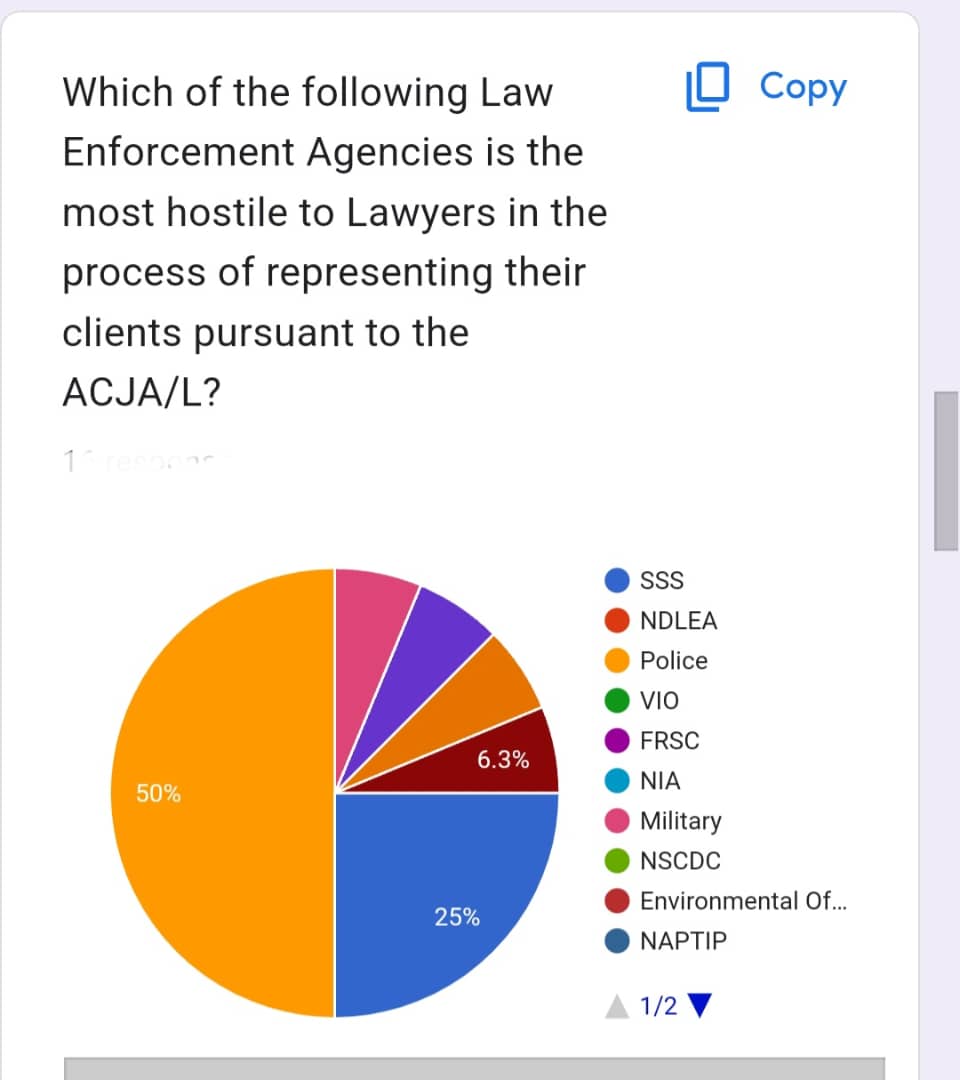
Survey by the Human Rights Committee of the NBA Abuja Branch

The Human Rights Committee of the branch invites members of the branch and all Lawyers to participate in this survey towards the 2023 International Human Rights Day.

The Survey seeks to examine the hazards faced by Lawyers in the Administration of the Criminal Justice Act/Laws.

Kindly Click here to participate: https://docs.google.com/forms/d/1fDtdn4jDooQReCWvT0KrVP8d909bRiPu4HSG0fXCWGw/edit?usp=sharing_eip_m&ts=653ed68b

Signed:

Odebode Adefunsho, Esq.
Vice Chairman of the Branch/
Chairman Human Rights Committee.

NBA Abuja Branch hosts webinar on Opportunity in Academia for Lawyers

Webinar! Webinar! Webinar!

The Nigerian Bar Association, Abuja Branch invites all members and Lawyers to her Webinar on Opportunity in Academia for Lawyers

On Zoom:
https://us06web.zoom.us/j/86339224355?pwd=F87Wb7zaS5rsb245Ub4YLbhfom6T9o.1
Meeting ID: 863 3922 4355
Passcode: 368959

Date and Time:
Monday, 13th November 2023 at 2:00 PM Prompt.

See flyer for details.

Signed:

Michael Awo Ejeh,
Publicity Secretary,
NBA Abuja.

Understanding the friendly enemies of Nigeria

By Mon-Charles Egbo

“The first law of nature is self-preservation. Cut off that which may harm you. But if it is worth preserving, and is meaningful, nourish it and have no regrets. Ultimately, this is true living and love of self…from within.” ― T.F. Hodge

“The people that do us most harm are the people who shield us from reality” –Agatha Christie

Nigeria manifests every index of an ailing state. By every standard of assessment, the country is distressed and at the lowest ebb of its socio-economic and political development.

And though this complicated circumstance is self-inflicted, the most culpable of all the factors are the elites. These are the compatriots who by priviledged exposures and opportunities acquired certain advantages over the rest. They lack the numbers yet they shape the outcomes in all aspects of our national life, notably politics and economy. This they achieve sequel to their unbridled access to the media and other state resources.

Majorly, they cut across every segment of the economy and politics. The arrowhead of their agenda is to always remain relevant and influential to keep the masses on the line. In this ideology, they are united except when, once in a while, their partisan interests clash which mostly do not last long.

The two quotes above aptly describe their guiding philosophy and strategy. To achieve and sustain “self-preservation”, they must constantly “shield us from reality”.

Hence, they wilfully and skilfully take advantage of the vulnerable to advance their agenda. They exploit the desperation of the poor and ignorant to propagate divisive tendencies.

Once again, they know the truth but choose to ignore it. They have the solutions but deliberately compound the problems. They preach the truth only when their interests conflict. Then, they resort to sermonizing and telling the people things that soothe the ears even when all the while they have been acting the opposite.

For example and as highlighted earlier, Nigeria’s present predicament is worrisome to every well-meaning citizen. Even the government of the day is agitated. The masses are increasingly overwhelmed by despair. And of course, the elites are not spared. How can they be, when despite their relative advantages, they have less-privileged dependants, neighbours and associates around them?

And so except for ignorance or mischief, Nigeria’s economic woes predate the present national assembly. The high cost of governance has since been identified as the major opening for economic wastage in the country. Manifesting as over-bloated public service, poor budgetary system and weak institutions which are all being driven by corruption, these cumulatively weigh down on the economy and derail every effort at revitalization. Next to them are also the effects of the military incursion in Nigeria’s politics before 1999. That inglorious era, just like the civil war, eroded every semblance of democratic norms and tenets as well as greatly undermined senses of nationalism and patriotism among the citizenry. These have constituted a clog in the wheels of Nigeria’s journey to nationhood.

However, successive federal governments, including legislatures, have initiated and implemented a series of interventions to stem the tide. There have been governance policy thrusts and legislative agenda serially targeted at the economy. There have been laws made and agencies established with the sole aim of rescuing, stabilizing and growing the economy and politics of the country.

But in all these, no specific attempt has even been made in the area of holistic reduction of the cost of governance. The salaries and allowances of public officials are still at an all-time high. Nigeria today finds it expedient to borrow to pay the salaries of its workers. Also pathetically, the country still borrows to service existing debts and even until recently, it borrowed to pay for petroleum subsidies. Maintenance of the elected and appointed public officials gulp the highest chunk of annual budgets. In short, politics is now the only viable industry in the country where public offices have become so attractive that it is now a culture to pay one’s way to positions of authority.

And quite painfully amidst all these, it is only the elites that are benefitting. They are always conscious that it is to their eternal advantage that the masses are suffering and looking up to the elites for survival.

To further illustrate these assertions, it is common knowledge that in the evolving democracies, the legislature is as powerless as it is at the mercy of the executive. The powers of the president and the state governors are so enormous that they determine the dimension and direction of legislative outputs. Financial dependence is the greatest albatross of the legislature. Without operational funds and logistics, the legislature is as toothless as it cannot even bark. In practical terms, the legislature does not possess the ability to protect itself from executive dominance, ridicule and exploitation. Just recently, the Senate and the House of Representatives were begging cap-in-hand for President Bola Tinubu to make his appointees honour legislative summons particularly relative to budget passage. More than anyone else, the elites know this but choose to downplay it in their commentaries. After all, to attain and sustain self-preservation, the people must always be shielded from reality.

Again, the laws of the land are utterly obsolete and faulty. By the constitution, there is nothing practically that the legislature can do to stop the executive from achieving whatever it desires, including borrowing and or spending without approval as well as engaging any number of appointees. And until these laws are repackaged, meaningful developments will continue to elude Nigeria. The elite are aware of these but they cannot allow it to form parts of topical issues for national discourse. Even organized labour cannot lead protests against the outdated constitution.

Another dimension to this aspect of the elitist hypocrisy played out in the recent attempt at altering some sections of the Constitution. There were legislative public hearings across the geo-political zones. The thematic areas of interest and the schedules of the event were widely publicized earlier. It was expected that the elites would seize the opportunity to mobilize and sensitize the people towards a productive outcome. But in the end, the events were greeted with apathy and curiously also, no mention was made in any manner, of the overriding need to reposition the legislature for optimal performance. Meanwhile, the state governors had hoodwinked most state legislatures into undermining the national assembly concerning the items on the concurrent list. Yet we expect to make progress as a people. And once again, the elites, in the spirit of self-preservation, are not moved into positive actions by all these, simply because the citizens’ welfare is not the motive.

Furthermore, there is a monetization policy wherein public officials pay a valued sum, at the end of their tenures of office, to assume ownership of certain operational items such as furniture, stationery and vehicles, including in some cases, residential accommodations. The idea is to take the attendant maintenance costs off the shoulders of the public. It thus implies that at the inception of every dispensation, there are budgets for those used and disposed items. This has been the practice in the three arms and three tiers of government in the country. No doubt, it contributes to the unfortunate high cost of governance which ought to have been addressed before now. But the elites will feign ignorance only to politicize it at every four-year interval just to maximally exploit the general mood of the masses in maligning and vilifying the legislature. It bears repeating that since 1999, there has yet to be a specific campaign championed by the elites for a reduction of the cost of governance, across the board. Not even one! The issue of purchasing vehicles for public officials which incidentally is lawful has rather become a seasonal warfare surreptitiously targeted at engineering massive perception of the lawmakers as being insensitive and wasteful. The presidency, governors, local council chairmen, ministers, commissioners and heads of MDAs as well as other sundry appointees are immune to such public attacks and clamour for national sacrifice. Even some of the vocal elites have variously benefitted from this policy. So one can sense sufficient contradictions in most of the commentaries in the land. Otherwise, calls for national sacrifice should not be selective and seasonal.

Though there are several other key areas to underscore the fake bravados and skewed narratives supporting the warped ideologies of the elites, this intervention is a clarion call to the masses. They should see the urgent need to liberate themselves from the slavish allegiance to a moribund convention that has since mortgaged their future. People should realize that stupidity is knowing the truth and believing otherwise and also that doing the right at the wrong time smacks of hypocrisy. They should interrogate every offering of the elites to see if it supports good governance, inclusivity and political participation where citizens’ welfare defines every word and deed.

This is because the elites at every contact point are determined to advance their cause. As such they keep playing the ostrich and propagating diversionary narratives aimed at holding the masses down perpetually. And also, it is only when their partisan interests conflict that they resort to public commentaries which are veiled efforts at inciting the masses against the government, particularly the legislature. Their criticisms are merely impassioned rhetoric motivated by political expediency and self-preservation, especially about the last general election.

Otherwise, are they just realizing that fundamental issues have been crying for attention for a long in the country? Do they have a history of being the solutions beyond grandstanding? Why do insecurity, corruption, electoral fraud and social inequality still fester in the country, if truly the elites are altruistic? Where did the individual elites stand during the last general elections?

But in the interim fellow countrymen and women, may we always remember that “self-preservation is the first law of nature” while “the people that do us most harm are the people that shield us from reality”. For it is only in this that Nigeria can develop meaningfully.

Egbo is a parliamentary affairs analyst.

Who’s Afraid of good journalism?

By Martins Oloja

The oracles have looked again into the seeds of time again and seen that soon and very soon, the political establishment in Nigeria will take advantage of the unfavourable climate in the political economy of a free press to move against good journalism. And so this is a time to warn their operatives against such retrogressive policy strategy that will set back democracy. I mean, we should warn those who are beginning to feel uncomfortable with good journalism in Africa’s most populous black nation that there is indeed some remarkable link between good journalism and development. In other words, when state actors in the country under any subterfuge approach, begin to undermine press freedom, we will understand immediately that they are just in power to foster a growing culture of ‘national greed’. The expediency of getting our leaders to understand the role that a sycophantic press can play in their destruction is the reason for this article, which is a subtle recourse to an old diary of commentaries on the same issue at different times since 1999 when we began another uncertain democratic journey to nationhood. It is indeed a time for reputation managers of our leaders to realise that telling them to learn the rudiments of public relations and public engagement at this time after elections, isn’t an insult. Their remit is recognise broadcast and publication of facts that can assist in gauging groundswell of public opinions about their principals.

And here again is the thing, a recent debate on various platforms about the propriety of the style of questioning of an Arise News anchor, Oseni Rufai and recent commentaries by even our veterans on how some official reputation managers are feeling about some newspaper columnists in the country, has raised some alarm about imminent crack down on good journalism.. It is even curious that some professional journalists who should know are joining the clique of haters of good journalism by condemning what they call adversarial journalism at this time. The writings we are beginning to see on the walls of official ‘cyber soldiers’ indicates that the next job frontier for some fake and dubious journalists is to condemn good journalism on all fronts. They are beginning to use strange sophistry to impress state actors on different digital platforms.
After reading and listening to debates and responses to commentaries on so many platforms, I am afraid that good journalism will soon be under an attack in Nigeria where democracy is currently experiencing a crisis of coherence and confidence. That will be tragic! How will there be democracy that should nurture development without good journalism? How will there be a focus on dealing with Nigeria’s enemy number one, corruptionwhen the right to know through civic competence isn’t guaranteed via good journalism? That is why we need to talk to our people who have been empowered to manage communications at this time that they need to unlearn bad behaviour of attacking good journalism through acidic rejoinders. They need to collect facts and data from good journalism so that they can strengthen their skills in risk analysis that will improve governance reforms the current administration needs so urgently. And here is how to achieve that development strategy: 

Journalism, power and development
Let’s examine the following lines from a United Nations MacBride Commission report in 1980: Under Rights and Responsibilities of Journalists, the Commission reiterates the role of investigative journalists this way: 

‘Those in authorities often tend to conceal that which is convenient or likely to arouse public opinion against them… Active pursuit and disclosure of facts which are of public interest is one of the criteria to judge a journalist’s professional capacities…The role of the investigative journalist is to question and probe the action of those in authority and to expose them whenever there is abuse of power, incompetence, corruption and other deviations….’ Let’s deconstruct this further from the way some giants in journalism have explained this aspect of good journalism:
 
‘The Philippine Centre for Investigative Journalism (PCIJ)’ defines Investigative Journalism as journalism that targets systemic errors, aiming to right a wrong.  This is how one of the founders of the Centre Ms Sheila Coronel summarises the definition in a case study for World Bank Institute:

‘The PCIJ always addresses systemic problems.  We never look at individual cases or incidents unless we can put them in a wider context of important issues such as the environment, corruption or social disintegration.  We are always looking at the specific case as part of a bigger pattern in order to point out what is wrong in the system. This is what makes these investigations possible…. For us, investigative journalism is not just techniques, it is very important to understand investigative journalism-on a philosophical level-as journalism, which holds powerful individuals and institutions for their actions..  We are very conscious of the role investigative journalism can play in a young democracy in terms of enriching public debate, catalysing reforms and holding the powerful to account….’

Let’s deconstruct journalism in this context as defined by a practitioner in a book on the press by Dr Dokun Bojuwade, former executive of the Nigerian Institute of Journalism (NIJ) who retired from the old MAMSER as a director (now NOA) in the early 90’s. An unidentified practitioner in Bojuwade’s book on ‘the press and public policy’ defines the role of the press this way:

The ideal press is the First Estate of the Realm, not the Fourth…that keeps a watchful eye on the judiciary if the institution is wrongly interpreting the law…that moderates the activities of the executive if found to be presiding over a tyrannical mandate…that keeps the parliament on its toes if the body is putting out repressive legislation…

We need to get it right here as they did in the Philippines that thorough, investigative reports are capable of:
*Arousing public opinions against authorities or governments.
*Questioning actions of those in authorities.
*Exposing them whenever there are traits of corruption, incompetence and deviations.
*Drawing attention to tyranny, oppression, wrong interpretation.
*Exposing hypocrisies, double standard and allied matters…
*Exposing something somebody in power or office wants to hide.
This is the World Bank’s Framework on Investigative Reporting…

The world-class investigative story the World Bank Institute has been showcasing to the world in the Philippines took the investigators eight months. Tagged ‘Journalistic Legwork that Tumbled a President’, the report documented by Lars Moller and Jack Jackson for the World Bank Institute is about how a handful of Filipino journalists pulled the red carpet from under their powerful President Joseph Estrada in 2021.  

The World Bank has recommended the legwork in the Philippines as a brilliant case study for journalists around the World.  It is therefore pertinent for young and old journalists to understand the fact that newspapers can only be influential by the quality of regular investigative reports it publishes. It cost the Filipino investigative journalists eight million US dollars. Public officers who are afraid should expect this as we deepen democracy here.

We can see from this notebook as I have been claiming here that organic journalism isn’t public relations that most followers of people in power and their publicists want journalists to practise. Public relations goal is to manage reputation and control damage done to reputation perhaps though good journalism. This is yet another opportunity to explain this conceptual confusion to most people who do not understand what journalism is all about.  Those who like to teach journalism to journalists need to know that state actors all over the world want journalists to do public relations job for them. But good journalism seeks to cover what is odd, bizarre and unusual about peoples, places and events. 

That is also why some scholars have defined the most valuable product journalists sell, ‘the news’ as ‘something, somebody somewhere is trying to hide, the rest is advertising’. And facts, which are the main ingredients of news, are regarded as sacred. Journalism is people-centric. So, it is the remit of journalists to cover people, places and events but most people in authority, especially the power and business elite, would like journalists to cover up for them at all times as if journalists were their reputation managers. Anyone who does this for personal gains should not be regarded as a journalist. This should explain why before the kingdom of God will come to man again, journalists and state actors including those who are even doing well, will never be good friends. Such friendships never last. Reason? No reader or viewer or listener outside the state houses will subscribe to media that are full of praises of state actors who are mostly underachievers.

Readers and listeners want to read or listen to items, notably about unusual affairs of states such as robust investments in education, critical infrastructure that lead to visible and remarkable feats in WAEC/WASCE, JAMB/UTME results. People want to read about or watch on television extraordinary investments in massive road construction and healthcare facilities that will prevent medical tourism to India, Egypt, Saudi Arabia, South Africa, etc. But our political actors will renovate only four school classrooms and they want the classrooms photo and the commissioning on the front pages and prime time news on radio and television. What is unusual or extra-ordinary there? What is of public interest here?

What is more nauseating, our federal legislators with strange alacrity for approving foreign loans for even consumption will want journalists to hail their recklessness.

The federal legislators who would like to approve N160 million x 109 and N130 million x 360 worth of sport utility vans (SUVs) at a time of economic hardship like this would like journalists to praise them on front pages and prime-time news. The 109 senators who conducted worthless  screening of ministerial nominees and imposed on the nation a cabinet of many mediocrities would like journalists covering them to cover up their ordinariness. Where is pubic-interest content in today’s parliamentary proceedings in Nigeria? What about strangeness we see daily in judicial decisions and electoral justice system? 

All told, what our leaders are exhibiting in Abuja and many state capitals will always set off hard questions from good journalists. You can’t advertise a lean government and set up a bloated bureaucracy and expect public relations questions from good public affairs journalists. Even a Supreme Court that adds up votes to make number four governorship candidate number one after an election can’t expect soft editorials and questions from the media. A presidency that sets up a chaotic and incompetent bureaucracy that can’t scrutinise credentials of presidential nominees before announcements cannot blame journalists who ask hard questions about disorderliness and mediocrity in the presidency. Note this again, good journalism focuses on unusualness, extraordinariness, oddities in all aspects of human affairs. Yes,  good journalism isn’t about your prominence, oratory and sophistry in lying about banditry. Good journalism won’t be hard on your significant service delivery initiative and sustainable development goals for the common good.

And so, those who want to cast stones at those who ask hard questions in the context of journalism should note that there is a correlation between good journalism and development. Therefore, sycophancy is the enemy we should be afraid of, not good journalism.  
***We should continue this conversation here.    

TIPS