Home Blog Page 695

The Ejigbadero case highlighted the human aspect of the chaotic land laws in Nigeria —Justice Isiaka Isola Oluwa

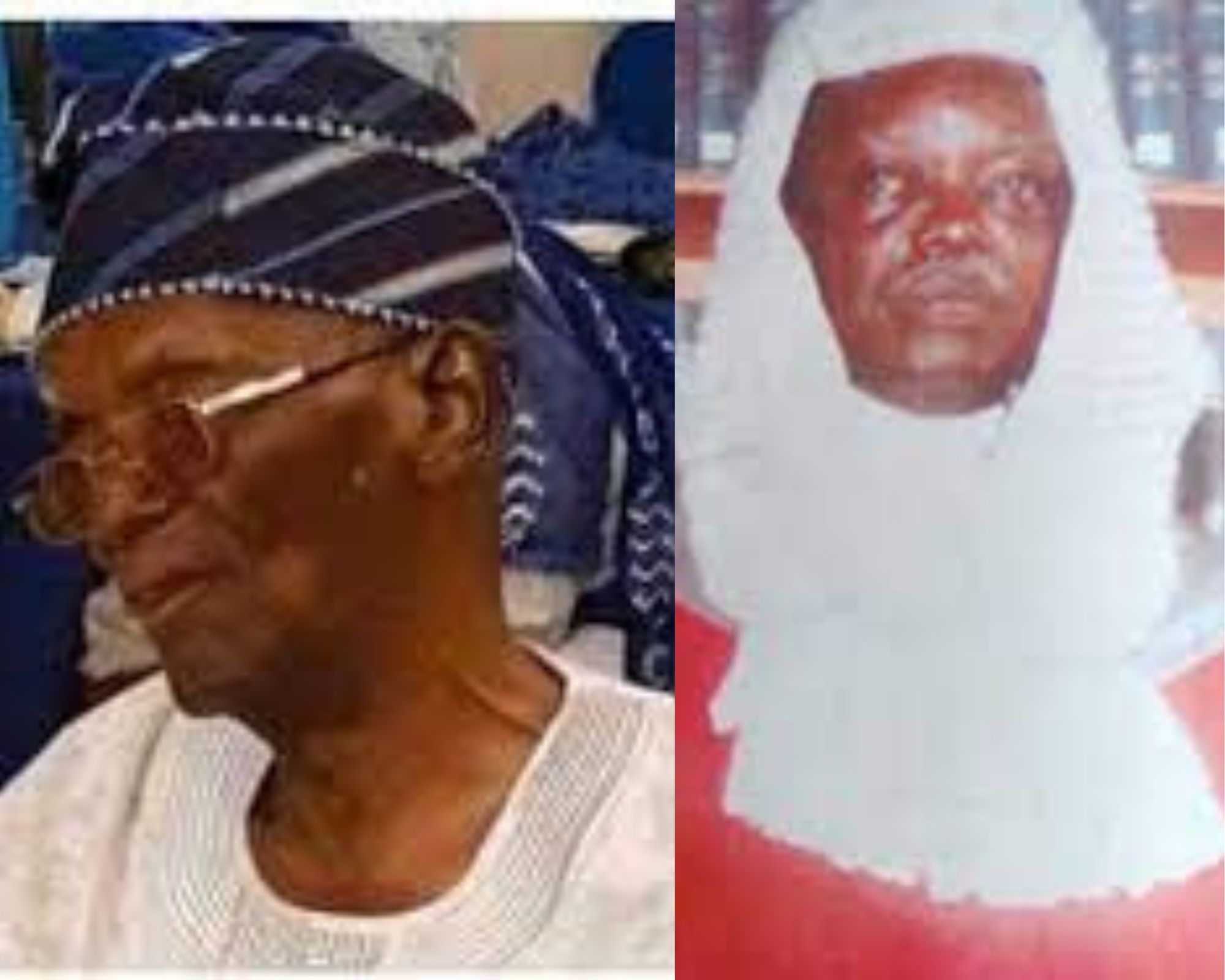
When he died at the age of 102 in his Ilupeju residence at Lagos, Hon. Justice Isiaka Isola Oluwa (Rtd.), was the oldest judge in Lagos State.

In June 23, 2018, 43 years after after his judgment in the famous Ejigbadero case , the then 100-yr-old Justice Oluwa in his autobiography titled: ‘A Life in Motion Reminiscence of a Jurist at 100 years’, spoke about his role in the excerpt published by the Saturday Tribune on the celebrated case.

According to Saturday Tribune‘s publication, Justice Oluwa said he believed the celebrated murder case influenced the enactment of the Land Use Decree (now known as Land Use Act) by the military government of General Olusegun Obasanjo.

His account of the case as contained in the book is as follows:

“As a judge, many controversial cases were brought before me that made headlines in the newspapers. One of such cases was the criminal case of Ejigbadero. I was assigned the Ejigbadero case by the Honourable Chief Justice of Lagos State in 1975. The case attracted a lot of public interest because it involved a well-known socialite, one Jimoh Ishola who was the executive chairman of Jimsol Nigeria Ltd, a nail manufacturing company in Lagos. Ishola was better known by his alias, Ejigbadero. He had his factory at the Matori Industrial Estate, and lived in Mushin with his large family, including his four wives. Apart from being an industrialist, Ejigbadero was a well-known land speculator and property dealer. What brought him to my court was a case of murder when he was accused of killing one Raji Oba.

“As a judge, one must remain impartial about every case and not allow public sentiments to affect one’s judgement. Evidence must be presented and witnesses must be led to support or disprove every evidence. I would like to dwell more on the Ejigbadero case, which I believe generated a lot of public interest and in the long run, had more impact on the policy formulation of land matters both at the Federal level and at the State level.

“The Lagos State Director of Public Prosecution led the prosecution and built an impregnable fortress of evidence against Ejigbadero. Sometime in 1974, Ejigbadero had gone to Alimosho village on the outskirt of Lagos, to clear a piece of land which he claimed he had bought. He was challenged by some of the villagers who  disputed Ejigbadero’s claim to ownership.

“The land which Ejigbadero decided to clear for a new building construction, contained cocoa, kolanut and some other cash crops. The villagers accused Ejigbadero of an attempt to seize their land illegally. Ejigbadero had come to the land with some boys alleged by the villagers to be thugs. Ejigbadero claimed they were his workers. When the villagers did not allow them to work, Ejigbadero retreated after the first encounter. He returned several times thereafter and this led to clashes during which some of the villagers, including Raji Oba, were wounded. The police at Alimosho intervened and tried to bring peace but to no avail. No one was charged to court at that stage and the police also did not make any arrest.

“On August 22, 1975, Raji Oba was relaxing in front of his house at Alimosho. It was around 7.30 p.m. as his wife hurried in. She said she had seen Ejigbadero in the neighbourhood and warned her husband that he may have come again to cause trouble. The husband agreed with his wife, saying he suspected that Ejigbadero may have come to bury charms on the farm, an all too familiar occurrences in disputes over land owernership in Yorubaland. It was at this point that a gunshot shattered the stillness of the night. Raji Oba fell. His wife, Sabitu Oba, was later to give evidence that she saw Ejigbadero fleeing from the scene of the crime in the company of six other persons. Raji Oba was rushed to the hospital where he was pronounced dead.

“Later that night on August 22, policemen arrested Ejigbadero in his Mushin residence. He was in the middle of a family celebration. Ramota, his young wife, who was delivered of a baby eight days earlier, was having a lavish naming ceremony with its attendant lavish party worthy of a big socialite of Ejigbadero’s social status. The party was attended by many top Nigerians including lawyers, judges, policemen, businessmen and women, socialites, top military officers and public servants. That was his alibi before the court. On the day of Raji Oba’s murder, Ejigbadero claimed he was far from the scene, attending to guests at his baby’s naming ceremony.

“Evidence presented to court was convincing enough, including that of policemen  who saw Ejigbadero at Alimosho on the night of the murder. Some other villagers also gave evidence insisting that Ejigbadero came to Alimosho that night in the company of others in a Peugeot 504 station wagon. One Kehinde, one of the prosecution witnesses, gave evidence before the court. He said he was a security guard at Ejigbadero’s factory premises at Matori. He said on the night of the murder, the accused took time off from his naming ceremony, to visit the factory in the company of six other persons who were well-known to Kehinde. He named the six of them. He said they left from the factory premises in a white Peugeot 504 station wagon and returned in the night around 9p.m.

“The defence, led in evidence by Chief Sobo Sowemimo, made great effort to cast doubt on the testimonies of the prosecution witnesses. They also called witnesses to support their alibi that Ejigbadero never left his naming ceremony on that day. They called witnesses but not one of them was with Ejigbadero throughout the day. From the evidence presented before me, I had no doubt in arriving at my verdict that Ejigbadero was our man and that he committed the cold-blooded murder. He was guilty and sentenced to death.

“He appealed my judgement, but the Federal Court of Appeal in 1977 affirmed the judgement. The appeal was heard by Their Lordships Mamman Nasir, Adetunji Ogunkeye and Ijoma Aseme. Dissatistfied, Ejigbadero moved to the Supreme Court and a panel of Their Lordships Alexander, Fatai-Willimans, Irikefe, Bello and Idigbe, affirmed my judgement. The death sentence on Ejigbadero was carried out in 1979.

“The Ejigbadero case was sensational and became of national interest. It highlighted the human aspect of the chaotic land laws in Nigeria, especially in Lagos and its environs and its attendant capacity to disrupt and even destroy the lives of ordinary people. By the time the case came before my court, Nigeria was undergoing tremendous changes. The regime of General Yakubu Gowon, which came into power in 1966, had been toppled and replaced by another military regime headed by General Murtala Muhammed. When Muhammed was killed in the abortive coup of February 13, 1976, he was replaced by General Olusegun Obasanjo.

“I believed General Obasanjo or those close to him were interested in the Ejigbadero case. In 1978, the Obasanjo regime came out with the Land Use Decree which tried to streamline the issue of land ownership in Nigeria. Though it was a one blanket solution for the whole country, the decree is especially useful in Lagos for it gives full discretion to state governors on the issue of land. It also vested the ownership of all land in the state in the governor who can decide to acquire any land for the public interest.

“In the subsequent years, the decree has been replaced with the Land Use Act, but its essential features remained intact. In the past few years and especially since 2016, various state governments have attempted to address the issue of indiscriminate land-grabbing.  Both the Ogun and the Lagos State governments have passed laws to prohibit seizure of land by force.”

This story was originally published by the Nigerian Tribune of 23 June, 2018

Judicial Mercenarism

By Chidi Anselm Odinkalu

In July 1977, the Organization of African Unity adopted a Convention for the Elimination of Mercenarism in Africa. It offered a definition of a mercenary to include someone who “is motivated to take part in hostilities essentially by the desire for private gain and in fact is promised by or on behalf of a party to the conflict material compensation.” The drafters of the Convention for the Elimination of Mercenarism in Africa probably did not foresee that it would encompass the conduct of judges.

Yet, at the beginning of this month, the immediate past president of the Nigerian Bar Association (NBA), Olumide Akpata, took to the floor of the International Bar Association (IBA) conference in Paris, the capital of France, to invite the association to take an active interest in a new species of judicial subornation in Nigeria which can best be described as judicial mercenarism.

Carl von Clausewitz, the Prussian General, is credited with the insight that war is the continuation of policy by other means. The converse can also be true: that policy and politics could also be war by other means. Private military contractors, also known as mercenaries, are paid to fight in other people’s wars.

Judicial officers are ordinarily not politicians. So, when they choose to immerse themselves in the theatre of power politics, it is impossible to avoid the conclusion that elements of mercenarism are involved.

This mercenarism can manifest itself in the form of judicial fornication, soliciting, or contumeliousness. Let’s begin with judicial fornication. In his memoir, The Accidental Public Servant, former Minister of the Federal Capital Territory (FCT) and recent governor of Kaduna State, Nasir El-Rufai, recounts that the Chief Judge of the FCT when he became Minister, Justice Lawal Hassan Gummi, had preceded him to the Barewa College in Zaria. As Minister, he desired “to ensure the judiciary was fully on board with our reform directions”. Although advised by his staff to invite the Chief Judge to a “briefing” with the Minister, El-Rufai exultantly recalls that he overruled them because “our old boys’ protocol trumped all others they may have in the FCT.” So, in obedience to the supreme law of the Barewa Old Boys Association (BOBA), El-Rufai “visited Justice Gummi, met with his team of senior judges and…. prayed for their support.”

The result, El-Rufai further exults, was that “the FCT judiciary supported us strongly throughout my tenure”, and the official pay-off was a Ministerial decision “to budget an annual grant to support our judiciary to procure court recording and automation equipment.”

The reader may note two things. One is that in the narration of the Minister, the FCT judiciary became transformed from an institution established to hold a fair balance between different interests in society to one dedicated to servicing the Minister and his FCT administration. The second is that the judiciary thus became – in his telling – part and parcel of the government of the day to be instrumentalized as the government dared, not an independent institution to hold the government to account. This was judicial fornication at Ministerial beck-and-call.

After the publication of this book, some non-governmental organisations under the aegis of the Civil Society Network against Corruption (CSNAC), petitioned against Lawal Gummi to the then Chief Justice of Nigeria (CJN), Aloma Mukhtar, who also chaired the National Judicial Council (NJC). In response, the CJN issued a disciplinary query to the Chief Judge of the FCT “seeking explanation over an annual grant made to the FCT judiciary by the FCT administration during Nasir El Rufai’s administration.” Reluctant to be dragged through the process, Lawal Gummi took early retirement and promptly got translated to the stool of the Gummi Emirate in Zamfara State. 

One decade later, the current successor to the seat of the Chief Judge of the FCT, Husseini Baba-Yusuf, preferred to take matters a notch higher by showcasing his skills in judicial soliciting. Rather than have the Minister pay him a visit, the Chief Judge went to promenade for the Minister of the FCT instead, and took the opportunity to show off his plumes. Assuming the role of a judicial Vuvuzela, he began by hailing the Minister as having “exceeded the level that people had thought you would perform”, before reminding him that “as the judiciary, we are part of the government and we expect that we should be able to do things that will make government work.”

In claiming that the judiciary is “part of the government” the Chief Judge was fully aware that he was inviting the Minister into an intimate transaction.

So, the Chief Judge let it be known that he had issued directions to the judges under him that “all cases involving the FCT will only be assigned by the Chief Judge….” A suitably tingled Minister of the FCT happily nodded “thank you”, while the judges and sundry hangers-on accompanying the Chief Judge clapped uproariously in full expectation of full-on consummation.

While the conduct and verbiage of the current Chief Judge were even more egregious than those of his durable predecessor from one decade ago, few expect him to suffer anything like the consequences that followed the revelations in The Accidental Public Servant. The reason is because these days judicial mercenarism occurs in the full glare of the records.

Judicial decision making is ordinarily deliberative and its language, even in the pen or keyboard of the colorful, is usually clothed with dignity. These days, however, some judges in Nigeria are not shy about announcing which political side has penetrated their judicial orifices. They are not merely contumelious but choose to advertise it.

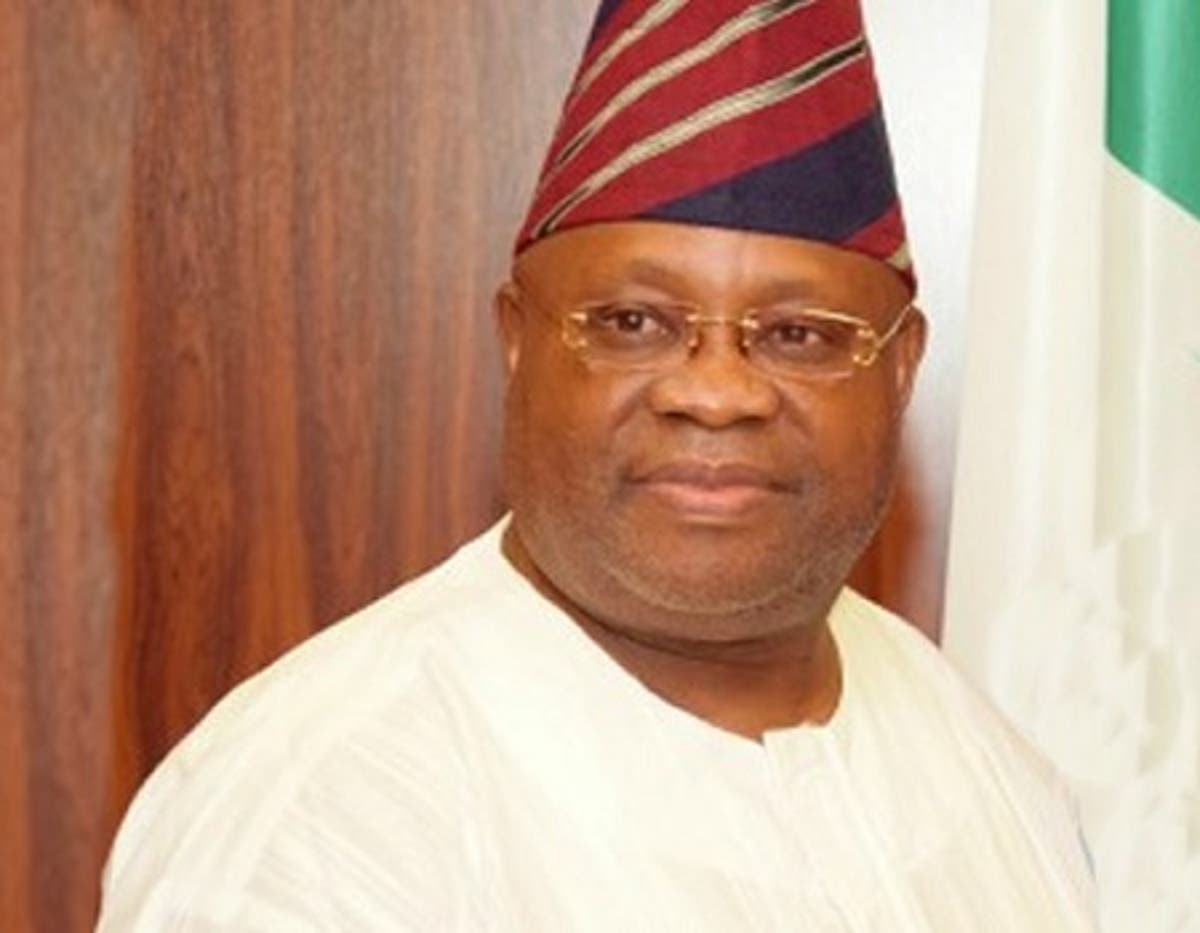
When it decided to nullify the election of Governor Ademola Adeleke of Osun State earlier in the year, for instance, Justice T.A. Kume, who sat as part of the Governorship Election Petition Tribunal relied on the high authority of Kizz Daniel’s popular single, Buga, to hold that Adeleke “cannot ‘go lo lo lo lo’ and ‘buga won’ as the duly elected governor of Osun State.

In the Kano State governorship election petition decided last September, Benson Anya, a judge on the tribunal went one step further. Relying on matters that were never in evidence or in dispute before the Tribunal, he described one side to the case as “bandits in politics” and decided “to condemn the gang of Red Cap wearers (a reference to the supporters of the second respondent in the case) who, like a violent and terrorist cult, chased us out of Kano and put us in the fear of our lives. We believe that only Allah is the giver of power. Those who believe in Allah must bow to his (sic) will and submit to the authority of Governmental (sic) power.”

For the avoidance of doubt, the author of this insightful theological distraction is a Christian from Abia State in south-east Nigeria and no question about Allah or His supremacy was even remotely in contention in the case. It did not require any imagination to understand that the god under reference by Benson Anya existed entirely in his head, probably from vanities he harboured about the finality of the judicial vote in determining election outcomes.

It is no surprise that this kind of thing only happens in political and election disputes where politicians chase judges with money and induce open trades in the outcome of judicial proceedings. This is why Judicial mercenarism is often accompanied by unconcealed hubris. Just this past week, Yargata Nimpar, a Justice of Appeal, informed the appellants in the judicial contest over the governorship of Lagos State that they “came empty-handed and left empty-handed. They merely enjoyed their day in court.”

The courts no longer even pretend to tether their pronouncements to any sense of principle, precedent or proportion. To use an expression originated by our neighbours in Cameroon, judicial mercenarism now manifests itself in an open jurisprudence of “buy am; sell am.”

A lawyer and a teacher, Odinkalu can be reached at [email protected]

As Supreme Court Justices groan under the weight of overflowing appeals, NJC says Justices’ nomination list is the work of mischief makers

As justices groan under the weight of overflowing apex court docket

The National Judicial Council (NJC) insists that reports in the social media that it is aware of the nomination of 22 justices for appointment to the Supreme Court is false.

NJC’s Director of Information, Barr. Soji Oye at the weekend restated that the Council did not receive any nomination list for Supreme Court vacancies from the Federal Judicial Service Commission (FJSC) and described the social media reports as deliberate handiwork of mischiefmakers.

Insisting that reports on such matters are always transmitted by an official press statement from the Council through his office, Oye cautioned against unverified reports regarding Supreme Court nominations and the process being followed to fill vacancies on the bench.

It will be recalled that reports stated that the FJSC released 22 names for NJC’s consideration to fill vacancies at the Apex Court bench.

According to the report, the nomination of Justices for the bench followed complaints in September that the Supreme Court was operating with only 10 out of its constitutional strength of 21 Justices.

Based on the depletions of Justices due to retirement and deaths, it was reported that the FJSC subsequently submitted a shortlist to address the vacant positions.

Oye warned that the media, especially social media operators, should always get their information from rightful sources and not misinform the general public on Supreme Court nominations and the process being followed to fill vacancies on the bench.

During his valedictory session on 27 October, 2023, Hon. Justice Musa Dattijo Muhammad, JSC, (Rtd.) expressed grave concern about the depleting number of justices at the Supreme Court and pointed out the dangers of have having inadequate hands to man the affairs of the appellate court.

“The Supreme Court is the final court in the Presidential, Governorship and National Assembly election appeals. Yet, there are only 10 justices left to determine these matters. Constitutionally, each of these appeals requires a panel of seven justices to sit on them. When a panel of seven justices is constituted to sit on a particular appeal, only three justices are left out. Even when regular appeals are being heard in the Supreme Court, a panel of five justices is required to sit.

“We must not forget that the Court, being the highest in the land, receives all manner of appeals from the court below. Presently, there is neither limit nor distinction to the manner of appeals that come to the apex court. Again, beside election matters which are seasonal, the Supreme Court’s docket is overflowing with civil and criminal appeals, some of which took many years to arrive. Most of these are still pending. Several have not even been assigned hearing dates. The court also exercises original jurisdiction.

“As the justices who hear these matters are grossly overstretched, unable to meet the demands of their onerous assignment, the litigants who approach the court seeking justice are left in limbo; waiting endlessly for justice to be served. These, as I have said before, are avoidable.

“When I exit today, the North Central zone that I represent ceases to have any representation until such a time new appointments are made. My lord Hon. Justice Ejembi Eko JSC who also represented the zone retired on the 23rd of May, 2022. It has been a year and five months now. There has not been any replacement. With the passing of my lord, Hon. Justice Chima Centus Nweze, JSC on 29th July 2023, the South East no longer has any presence at the Supreme Court. My lord, Hon. Justice Sylvester Nwali Ngwuta JSC died on 7th March 2021. There has not been any appointment in his stead for the South East. To ensure justice and transparency in presidential appeals from the lower court, all geo-political zones are required to participate in the hearing.

“It is therefore dangerous for democracy and equity for two entire regions to be left out in the decisions that will affect the generality of Nigerians. This is not what our laws envisage. Although it can be posited that no one expected the sudden passing of Hon. Justice Nweze JSC, yet, it has been two years and seven months since previous Justice from the South East died and no appointment was made. Ditto for the replacement of Justice Eko JSC of North central who exited nearly two years ago. Hon. Justice Sidi Bage JSC, now His Royal Highness the Emir of Lafia, from the North Central, had earlier voluntarily retired. He equally is yet to be replaced. Also, it was clear ab-initio that I would be leaving the court this day on attaining the statutory age of 70. It is then not in doubt that there has been sufficient time for suitable replacements to have been appointed…”

Like father, like scion, how Ejigbadero’s son was remanded for murder

When The Punch Newspapers published the story Return of violent land grabbers leaves trail of blood, deaths in Lagos, many took it with a pinch of salt. But one story that has left jaws dropping is the recent arraignment and remand of Abiodun Ishola Ejigbadero, a suspected land grabber and son of Jimoh Ishola Ejigbadero, the then famous King of Land Grabbers who was sentenced to death in the 1979 for conspiracy and murder of a man whose land he attempted to grab.

In fact, his naming ceremony was in full swing when his father, Ishola Ejigbadero withdrew to murder Raji Oba and take over his land. Like his father, he is facing a murder trial. Like his father, his is said to be notorious for land grabbing.

Read Ishola Ejigbadero’s story here.

Following allegations of terrorizing land owners in Alimosho area of Lagos State, the Chief Magistrate Court, Yaba on May 18, 2023 ordered the remand of Abiodun Ishola Ejigbadero on the basis of suspected land grabbing, fraud, theft and like his father —conspiracy to murder

The accused is facing a five-count charge of conspiracy to murder, unlawful possession of firearms in suit number A/52/2023, and will be remanded in prison pending the Attorney-General’s legal advice.

The charge reads: “That you, Abiodun Ishola Ejigbadero (M) and others still at large sometimes on or before 13th day of January 2022 at Akowonjo road, Alimosho Lagos, in the Lagos State Magisterial District, did conspire among yourselves to commit felony with assault ocassioning harm and thereby committed an offence punishable under 411 of the criminal law of Lagos State of Nigeria, 2015.

The Second charge reads: “That you Abiodun Ishola Ejigbadero, (M), and others at large on the above mentioned date, time and place assault one Olugbenga Bakare (M) with first blows which caused him bodily harm and thereby committed an offence punishable under section 174 of the Criminal code laws of Lagos State of Nigeria 2015.

The third charge reads: “That you, Abiodun Ishola Ejigbadero (m) and others still at large on the same day, time and place in the aforesaid Magisterial district with intent to defraud, did knowingly made false statement on oath in suit No ID/9661LMW/202 wherein you misrepresent yourself as Prince Ishola Akapo and thereby committed an offense punishable under section 86 of the criminal code laws of Lagos State of Nigeria 2015.

The fourth charge reads: “That you, Abiodun Ishola Ejigbadero others still at large on the same day, time and place in the aforementioned Magistrate District, with intent to defraud, did knowingly made a false document to wit: forged land documents dated 18th December, 1974 with intent that it may in anyway be used or acted upon as genuine whether in Nigeria or elsewhere to the prejudice of Olubunmi/Olubimi family and others and thereby committed an offense punishable under section 365 (1) of the criminal code laws of Lagos state of nigeria 2015.

The fifth charge reads:”That you, Abiodun Ishola Ejigbadero and others still at large on the same day, time and place aforementioned Magistrate District, did fraudulently presented yourself to the office of the Local Government Chieftaincy Affair, Alimosho LGA as a member of Olubunmi Chieftaincy family with intent that you will be crowned Baale of Alimosho Town and thereby committed an offence punishable under section 380 (1) of the criminal law of Lagos State of Nigeria 2015.

The Prosecutor, MS A.O Olatunbosun ESQ, in her ruling, denied the bail application by the accused counsel and ordered that the accused be remanded in prison, pending the Attorney-General’s legal advice.

The lawyer to the suspect, Samson Ajala, pleaded with the court not to grant the remand application, rather the court should consider the age of his client and admit him to bail in the most liberal term.

Lawyers insist nomination of justices to Supreme Court without involving NJC is invalid

By Yetunde Ayobami Ojo

Following the revelation that the National Judicial Council (NJC) was not carried along by the Federal Judicial Service Commission (FJSC) in shortlisting 22 Justices of the Court of Appeal for elevation to the Supreme Court, lawyers have declared that the nomination would be invalid if indeed the NJC was not involved.

NJC’s Director of Information, Soji Oye, had yesterday explained that the Council was not carried along with the shortlist of 22 justices made by the FJSC for the bench of the Supreme Court of Nigeria.

Reacting to the development, a senior lawyer, Terkura Douglas Pepe (SAN), told The Guardian that the constitution does not recognise the FJSC as a nominating agency.

He stated that Section 232 (1) of the 1999 Constitution makes the appointment of Justices of the Supreme Court the responsibility of the President upon the recommendation of the NJC, subject to confirmation by the Senate.

“This process subjects the appointment of Justices of the Supreme Court to political interference. It cannot be correct to say the NJC was sidelined in the nomination process. There can be no valid nomination at all if the NJC was not involved.

“The constitution does not recognise the Federal Judicial Service Commission as a nominating agency. Aside from these observations, I think all the nominees are eminently qualified. There was no point distinguishing them as “priority” and “reserved,” he said.

For human rights crusader, Mr. Kabir Akingbolu, the role of the FJSC is to advice the NJC and not to shortlist. He said the appointment of anybody to the bench of the Supreme Court is guided by statute.

“That provision of the law must be followed strictly without any exception. Any contravention of that section of the law will be void or unconstitutional.

“By virtue of the provision of Section 231(2) of the of the Constitution of the Federal Republic of Nigeria 1999 as amended, the appointment of anybody to the bench of the Supreme Court or judge for the Supreme Court must be done by the president on the recommendation of the NJC.

“So, it is not by the Federal Service Judicial Commission. The appointment, nomination or shortlisting was allegedly done by FJSC, but it has no role to play here. The purported nomination is unconstitutional and has no effect in law because the spirit and letter of the law in the constitution has not been followed.

“The power to nominate was given to NJC. They are to make recommendations of the judges to the President for appointment. The FJSC cannot do that. The provision of the law cannot be circumvented by any guise at all. The purported list is unconstitutional except if it is done by NJC,” he said.

He stated that by paragraph 13 of the Third Schedule to the 1999 Constitution, the only role the FJSC plays is to advise the NJC on the nomination of the persons to be appointed as the judges of the Supreme Court.

On his part, Abdul-Wahab Olawale said, “it will be magical and unfortunate if NJC claimed it was out in the dark in the steps and procedures leading to the shortlisting of the proposed Justices of the Supreme Court.”

He explained: “The selection and appointment of the Justices of the Supreme Court of Nigeria is not a straight jacket appointment. It cuts across the three arms of government viz- the Legislative, Executive and the Judiciary, like other appointments of justices of the superior court of record.

“Specifically, Chapter 7, Part 1, Section 231 defines how Justices of the apex Court shall be appointed. The bottom line is that the President shall make the appointment by the recommendation of the NJC subject to confirmation of such appointment by the Senate of the Federal Republic of Nigeria.

“However, the recommendation by NJC will not come from the blues. It has long procedural rules which involved the FJSC, which serves as a midwife to the appointment from the advertisement to conduct of various administrative procedures, which will culminate into the selection of who to be recommended for the NJC, which eventually recommend same to the President, who will finally get the nod of the Senate for the confirmation of the Justices of the apex court bench.

“On the issue under consideration, the NJC headed by the Chief Justice of Nigeria cannot deny the knowledge of the procedure for the shortlisted Justices to be appointed. The reason being that such a list has to pass through the NJC before it gets to the president.

“The response from the Supreme Court Spokesperson may be a passing message to the journalist who made enquiry into the list of those shortlisted and for eventual appointment.”

This story was originally published by The Guardian on 18th November 2023

NBA to Gov. Adeleke – We’ll not recognise Osun Acting CJ

The Nigerian Bar Association (NBA) has condemned the removal of the Chief Judge of Osun, Justice Adepele Ojo, by Gov. Ademola Adeleke.

The NBA said in a statement issued on Saturday by its National Publicity Secretary, Mr Akorede Lawal, that it would not recognise Justice Olayinka Afolabi, the Acting Chief Judge appointed by the governor.

Lawal said that the NBA’s position was anchored on the constitutional doctrine of separation of powers and the independence of the judiciary.

“The tenure of a judicial officer cannot and should not be subject to the mood of politicians,” he added.

The National Publicity Secretary said that the action of the governor has not only negated the principle of separation of powers but was also a clear disregard to a court order.

Lawal said the association unequivocally condemned the “unlawful” actions, adding that the provisions of the 1999 Constitution are not ambiguous as to the way and manner a Chief Judge of a state could be removed from office.

“The law has since been settled in Nganjiwa v FRN (2017) LPELR-43391 (CA) that any misconduct attached to the office and functions of a judicial officer must first be reported to and determined by the National Judicial Council (NJC).

“The Supreme Court in Elelu-Habeeb & Anor v AG Federation & Ors (2012) 12 NWLR (Pt 1318) 423 has clearly stated that the Chief Judge of a State cannot be removed under any guise including the infamous “step aside style” without recourse to the NJC,” Lawal said.

According to him, NBA is troubled that in going about its actions, Osun Government chose to ignore the lawful order of interim injunction granted by the National Industrial Court sitting in Ibadan.

“The interim injuction restrained the Governor of Osun from interfering with the office of the Chief Judge of Osun State.

“All decisions of court must be obeyed and complied with until they are set aside by a superior court of competent jurisdiction,” the NBA spokesman added.

Lawal, therefore, said that the NBA would not recognise Justice Afolabi as acting Chief Judge of Osun.

The substantive Chief Judge was removed by Gov. Adeleke over allegations of misconduct, abuse of power, corruption, and disregard for rule of law.

NAN

Three in police net for alleged sexual molestation of a three-year-old

The Police Command in Enugu State has arrested three people suspected of sexually molestating a three-year-old pupil in Enugu.

The arrest is part of ongoing investigation into the sexual molestation of the girl, who is a pupil of of Tenderlink School, Trans-Ekulu, Enugu.

According to the spokesperson of the command, DSP Daniel Ndukwe, those arrested and facing interrogation included a teacher in the school and two others.

“Preliminary investigation proves that the child (name withheld) was found to have been sexually molested, with physical injuries and patches of blood observed on her private part, after the school bus dropped her at home on Tuesday, Nov. 14, 2023.

“This is in addition to the receipt of similar complaints by parents of other children in the school.

“Three suspects, comprising the victim’s female teacher, the school’s bus attendant and driver have been arrested for interrogation,” he said.

Ndukwe said that the Commissioner of Police, Mr Kanayo Uzuegbu, “appreciated the Enugu State Government’s decision to shut down the school pending the conclusion of the investigation.”

He said that anyone found culpable would face the full wrath of the law.

NAN

Disappointment, frustration for litigants denied justice by snail-speed proceedings

By Tunde Ajaja

TUNDE AJAJA examines how delay in justice delivery frustrates litigants and most often, makes a mess of the court’s processes and quest for justice by many Nigerians.

On Sunday, March 10, 2019, Dr Washington Osifo finally heaved a sigh of relief.

He was elated that his years of toiling in politics finally came to a glorious end, when, after two previous failed attempts, he won the primary and general election to represent his Uhunmwode Constituency at the Edo State House of Assembly.

“It was my first time winning the primary and a general election,” he noted in a recent interview with our correspondent.

Out of the eight parties that participated in the March 9, 2019 election, Osifo of the All Progressives Congress won with 12,453 votes, while the Peoples Democratic Party candidate came a distant second with 5,475 votes.

“I put in everything because I was in the race to win,” he averred. “No election or ambition is small, and we all know how expensive elections are in Nigeria – and by the grace of God and the support of the people, I won. As a Christian, I even went to Church for thanksgiving.”

Such was the excitement and fulfilment that greeted his victory. But unfortunately, his hard-fought victory and overwhelming joy were short-lived and paled into insignificance over time.

For the four years he was to represent his constituents at the hallowed chamber of the Edo Assembly, he was never sworn in as a member, thanks to a protracted court case that lasted the four-year tenure of the Assembly. The matter, which has still not been concluded, became “academic”, a classic testament to the slow pace of justice delivery in the country.

Interestingly, Osifo, who holds a PhD in Law, wasn’t the only victim of the protracted court case; the same ugly fate befell 13 other members-elect, making the 24-member Assembly to run for four years with only 10 members.

Fruitless journey

The drama that eventually shut out the 14 members began on June 17, 2019, when the Assembly was inaugurated following the proclamation issued by Governor Godwin Obaseki. But following political disagreements over how the inauguration was done, in which case 14 members-elect were not present during the exercise, the excluded members swiftly took the matter to court.

On one hand, Osifo and the 13 others said the inauguration was done at 9:30 pm without their knowledge. “They didn’t communicate to us but a nocturnal inauguration was held, which they have also admitted. Three days after they did the shady inauguration, they made publications in three national newspapers that there would be an inauguration. By the time their letter came out in the paper, we were already in court seeking to be inaugurated,” he added.

On the other hand, Frank Okiye, who emerged as the speaker of the 10-member Assembly, alleged that the 14 members stayed away because of their loyalty to former governor Adams Oshiomhole, who had become a rival to the incumbent governor.

The 14 members approached the court, demanding their inauguration. They also approached the Federal High Court seeking an injunction to bar the Assembly from declaring their seats vacant, and bar the Independent National Electoral Commission from conducting any election to fill their seats.

Sadly, for the four-year tenure of the Assembly, the cases were never resolved, plunging the 14 members into depths of despair. Likewise, other related cases filed were placed on hold pending the determination of the same delayed, substantive suit.

Lamenting the stalling of the case about three years after it was instituted, the then APC chairman in the state, Col David Imuse (retd.), stated, “The case has been taken to all eight high courts in Edo State with no solution in sight. The case starts afresh when it gets to a new court.”

Speaking on behalf of all the excluded members, Osifo stated, “What you and I have seen is a travesty of justice. It’s inhuman, wicked and unbelievable. It’s also sad that the judiciary came up as an accomplice, yet they were supposed to be the last hope of the common man. That a matter which required urgency could drag on for four years is unfortunate. The most painful thing is that they didn’t allow us to represent our people within those four years.

“When we filed the case, there was an affidavit of urgency filed alongside it, but the matter didn’t go beyond the stage of hearing. We went through four Chief Judges and several courts, but they came with all manners of stumbling blocks. At the end of the day, the judiciary helped to trample on democracy and justice delivery.”

The counsel for the 14 members-elect, Prof Job Odion, told our correspondent that the suit was filed in June 2019 shortly after the botched inauguration but that it was soon plagued by adjournments. “The series of adjournments stretched into 2023. As of March, 2023 when elections were conducted to elect another set of persons into the Edo State House of Assembly, the suit became abated,” he added.

On what caused the delay, Odion pointed out, “The defendants’ lawyers filed all manner of Interlocutory Applications just to delay the hearing of the substantive suit and ultimately wind down the tenure of the plaintiffs (the lawmakers). Furthermore, the defendants’ lawyers kept writing petitions against the judges assigned to hear the suit. More than three judges were forced to hands off the suit and this meant the suit had to start afresh each time.

“In addition, the courts were not firm and refused to grant the plaintiffs’ application for interlocutory injunction. This would have protected their rights as validly elected members of the ninth Edo State House of Assembly.”

Interestingly, an element of the suit is still in court as of November, 2023. “For the sake of setting the law straight and ensuring that these 14 elected persons get their emoluments for the four years they ought to be in office, we are still pursuing the suit,” Odion noted.

A disturbing trend of delayed justice

The popular maxim ‘justice delayed is justice denied’ is a fitting illustration of the travails of the 14 lawmakers-elect. While the seeming distrust that triggered the crisis was political, the failure of the courts to adjudicate in time denied the plaintiffs justice and violated their rights to justice.

It also made a mockery of Latin maxims like Justitia nemini neganda est, meaning ‘justice is to be denied to nobody’; and Boni judicis est judicium sine dilation mandare executioni – ‘it is the duty of a good judge to cause judgment to be executed without delay’.

The delay in justice delivery that has characterised the judiciary in Nigeria has not only frustrated litigants and denied many people justice, it also eroded confidence in the courts. People who waited for years without justice now describe the courts as the lost hope of the common man.

Speaking at the Wole Olanipekun & Co Summit in 2021, with the theme ‘Implementing Justice Sector Reforms’, the then vice president and professor of law, Yemi Osinbajo (SAN), described the gridlock in processing cases through the courts as an elephant in the room.

Osinbajo, previously the Attorney General and Commissioner for Justice in Lagos State, stated, “Regarding delays in Nigerian courts, the United Kingdom Court of Appeal had an occasion to comment in the case of IPCO vs NNPC in 2015. The court referred to the delays in the parallel proceedings in the Nigerian court as catastrophic and noted that it would take another 30 years to resolve. Incidentally, the expert witness who testified on the delay in Nigerian courts was a former Chief Justice of Nigeria, who testified that it could take 20 to 30 years to resolve a case in the Nigerian courts.”

Indeed, across the country, there are instances of plaintiffs or appellants who have spent years waiting for justice. Some have died in the course of waiting for justice, while some others languish in detention facilities with their cases ‘forgotten’.

On November 1, 2023, two correctional centre inmates were released by the Lagos State High Court after four years in detention without appearing in court throughout. On November 16, three inmates were again released by the court. After their arrest in early 2018 for “sundry offences”, their matter was heard once and adjourned since then, until the court ordered their “immediate and unconditional” release on 16th.

As of November 8, information on the website of the Nigerian Correctional Service showed that out of the 80,704 inmates in the country, a whopping 68 per cent are awaiting trial – some suffering serial adjournments or neglect by the courts, while 32 per cent have been convicted. In its bid to help, the Legal Aid Council said it undertook 17,255 criminal cases and 7,808 civil cases between 2019 and 2022.

For the criminal cases, it undertook 5,065 cases in 2019; 2,450 in 2020; 3,837 in 2021; and 5,903 in 2022. For the civil cases, 247 cases were handled through mediation; 3,185 were given legal advice; and a massive 4,376 offered legal representation.

Many reasons have been adduced for the delay in justice delivery, including the volume of cases pending in the courts, the inadequate number of judges and justices (in the case of the Supreme Court), poor remuneration and welfare of judicial officers, a disincentive that could lure some into corruption, writing proceedings and judgments with longhand, structure of the judiciary and excesses of lawyers who deliberately frustrate speedy dispensation of justice.

A lawyer and public affairs analyst, Mr Jiti Ogunye, expressed sadness that while many cases languish in court, some are eventually overtaken by events. He stated, “Take the Edo Assembly case as an example, even if they go to court now, it is said that the court doesn’t treat dead matters; or that the matter has become academic or it has been overtaken by events; all sorts of very terrible adjectives that confess helplessness.”

“Whereas the mantra of justice delivery is that justice delayed is justice denied, or let justice be done though the heaven falls (Fīat iūstitia ruat cælum), those maxims are there, but in reality and in our contemporary situation, how well are they respected?” he queried.

He said the Federal Government ought to have gone to the Supreme Court on the matter to preserve democracy and defend the Constitution, given that a legislature had been corrupted. “That (Edo) example spoke to the issue of dilatory justice delivery, but it spoke also to the irresponsibility of the custodians of the Nigerian state,” he added.

Before delving deeply into the factors that cause delayed justice delivery – except in election cases made possible by timelines through an isolated amendment by politicians in the National Assembly – several other examples abound of how the delayed justice delivery had frustrated plaintiffs and denied the litigants of justice.

Onnoghen, a CJN who fell victim

In 2019, delayed justice, a monster wreaking silent havoc in the nation’s temple of justice, caught up with the then Chief Justice of Nigeria, Walter Onnoghen, when the Court of Appeal delayed judgment in his time-bound appeals until after the Code of Conduct Tribunal, a lower court, had sacked him. The appellate court later said the matter had become academic.

On January 25, 2019, former President Muhammadu Buhari announced the CJN’s suspension, citing a CCT order dated January 23. The Code of Conduct Bureau had filed a six-count charge against the CJN at the CCT over allegations of false assets declaration.

The embattled CJN filed four different appeals at the Court of Appeal in Abuja to: challenge the validity of the CCT’s ex parte order ordering his suspension; the arrest warrant against him; the refusal of the CCT to decide on his motion challenging its jurisdiction before going ahead with the substantive suit; and CCT’s decision to continue with the hearing despite orders from the Federal High Court and National Industrial Court directing it to suspend sitting.

The three-man panel of the Appeal Court, led by Justice Stephen Adah, on February 27, 2019, heard the appeals and reserved judgment, even though the CCT continued with the trial.

Worried by the delayed judgment months after it heard the matter, Onnoghen’s lead counsel, Chief Adegboyega Awomolo (SAN), in an interview with The PUNCH, said, “We are highly disappointed that the Court of Appeal has not delivered its judgments on the appeals by the CJN despite the far-reaching constitutional implication of the appeals.”

The prosecuting counsel, Mr Aliyu Umar (SAN), who also argued against the appeals on behalf of the Federal Government, told The PUNCH, “The Court of Appeal has three months within which to give judgments, and they are still within their right, as long as they don’t exceed three months.”

By the time the Court of Appeal delivered its ruling on May 10, 2019, the CCT had since April 18 convicted and ordered Onnoghen’s removal from office, rendering the belated judgment of the Court of Appeal inconsequential.

“The Court of Appeal refused to deliver its ruling in the matter for about three months,” Chris Uche, one of Onnoghen’s lawyers, said on behalf of the Body of Senior Advocates of Nigeria.

In its eventual ruling, the Appeal Court struck out the four appeals, saying three had become academic since the trial had been concluded by the CCT while noting that the fourth appeal was incompetent.

Despite striking out the appeals, the court admitted that the CCT’s ex parte order suspending the CJN was obtained in a manner “shrouded in secrecy and clandestine manoeuvre”.

Belatedly, the Appeal Court also lamented that while all the parties to the case during the January 22, 2019 trial agreed with the tribunal to have the case adjourned till January 25 for the hearing of pending applications, the prosecution went behind the defendant to obtain the ex parte order on January 23.

Furthermore, the court held that the CCT ought to have been bound by the various court orders from the National Industrial Court and the Federal High Court stopping the trial, noting that the tribunal ought to have “tarried a while” and filed an appeal at the Court of Appeal to have the orders set aside, instead of ignoring the orders.

Overall, its ruling was tantamount to medicine after death, denying the embattled CJN of justice.

VAT case continues in perpetuity

Another classic case of delayed justice is the protracted case between the Rivers State Government and the Federal Inland Revenue Service over the appropriate authority to collect Value Added Tax. Since August 2021 when the Federal High Court in Port Harcourt gave its ruling, the matter has stalled at the Appeal Court since September 2021.

In the case instituted by the Rivers State Government, the court, in suit no FHC/PH/CS/149/2020, ruled on August 10, 2021 that the state government, and not the FIRS, should collect VAT.

Dissatisfied with the ruling, the FIRS filed an appeal at the Court of Appeal in Abuja, after which over 10 states applied and joined Rivers State as respondents in the appeal. The appellate court on September 10 asked all parties to maintain status quo ante bellum as it also transferred the matter to its Port Harcourt Division.

Given the heated public debate and huge interest the issue generated nationwide, and to avoid confusion among taxpaying entities, many Nigerians expected an expedited hearing in the matter. But to date, the Appeal Court has yet to deliver its judgment on the matter, more than two years after.

Bothered by the impact of delayed justice in the business environment, the former Fiscal Policy Partner and West Africa Tax Leader at PricewaterhouseCoopers, Mr Taiwo Oyedele, had told our correspondent in a January 2021 interview that the judiciary needed to ensure speedy justice delivery to assure investors that disputes could be resolved timeously.

Oyedele, who is now the Chairman of the Presidential Committee on Fiscal Policy and Tax Reforms, set up by President Bola Tinubu, had said in the interview, “If you violate our contract and I go to court, I shouldn’t spend 15 years to find out whether I was right or wrong, but this is what happens in Nigeria.”

A Lagos-based lawyer and public affairs analyst, Liborous Oshoma, said while it is convenient to say the wheel of law grinds slowly but surely, some people tend to forget that justice delayed is justice denied.

He added, “A lot of people have even forgotten these cases you cited. In the Edo case, the matter passed through nine judges and they kept recusing themselves for one reason or the other. In the case of Onnoghen, he was to be removed, and when that was done, the matter could be warehoused as long as it was necessary.”

Reasons for delayed justice explained

One of the factors found to be responsible for the slow justice delivery is the huge number of pending cases in the courts at all levels. This, in conjunction with the inadequate number of judges, has crippled quick justice delivery.

For example, at the Supreme Court, the Chief Justice of Nigeria, Olukayode Ariwoola, said in November, 2022 at the investiture of new SANs that the apex court had a whopping 6,884 pending cases, including 4,741 appeals and 751 moribund appeals.

Interestingly, at the time he made the disclosure, the apex court had only 13 justices instead of the 21 full complement prescribed by the Constitution. As of the time of filing this report, the number had dropped to a measly 10, and conversely, the number of cases had sustained a rapid rise.

The latest justice to retire from the apex court, 70-year-old Muhammad Dattijo JSC, said on October 27 during the valedictory court session held in his honour that there was no justifiable reason for not appointing more justices, noting “that this avoidable depletion has affected and will further affect the court and litigants is stating the obvious. Appropriate steps could have been taken to fill the outstanding vacancies in the apex court. Why have these steps not been timeously taken?”

Same quandary at Court of Appeal, FHCs

While the situation at the apex court is deeply disturbing as cases spend years at the final court without being sat on, the situation at the Court of Appeal is equally horrendous, denying people  access to justice as well as violating their rights to justice.

The President of the Court of Appeal, Justice Monica Dongban-Mensen, said on September 25, 2023, that there were 39,526 pending cases at the court, with only 81 judges.

What obtains at the Federal High Court is just as appalling. The Chief Judge, Justice John Tsoho, said in December 2022 that 135,592 cases were pending, with some judges having over 1,000 cases in their dockets. There were 75 judges instead of the 100 recommended.

The pending cases comprised 41,788 civil cases, 31,832 criminal cases, 39,799 motions and 22,173 fundamental rights enforcement applications. For the latter, it means people could have died without justice while some of those whose rights had been trampled upon might have to endure the violation.

“There is a crying need to speedily increase the maximum number of judges for the court, in the interest of the litigating public and the general society,” he had noted.

Meanwhile, at the various state High Courts, the situation is the same. For example, in the case of the two suspects, Friday Uche and Sulaman Isah, released by the Lagos State High Court in Ikeja, they had been in custody for four years without trial and the day they were released was their first appearance in court. This explains the abysmal record of 68 per cent of inmates awaiting trial.

The trial judge, Oyindamola Ogala, released them on the grounds that they had been in custody and by law must have served the terms for their offence; keeping unlawful society.

Poor remuneration as disincentive

The poor salaries and allowances of judicial officers have also been identified as a disincentive for judicial officers who are constrained to contend with many cases. While the advocacy for improved pay has continued for years, nothing concrete has been done to make it better.

Dattijo, the recently retired Supreme Court justice, pointed out that justices of the apex court earn a niggardly N751,000 monthly, while the Chief Registrar of the court earns N1.2m monthly, saying it’s unjust and embarrassing for the Chief Registrar to earn more than the justices.

The President of the Court of Appeal had in September 2021 disclosed that she earned a meagre N206,425 monthly, while other judges on the bench earned N166,285 monthly, noting that both in Africa and other Commonwealth countries, Nigeria ranked poorly in terms of salary structure for judicial officers.

Notably, while judges and justices earn peanuts, senators receive about N13m monthly as a mere running allowance, excluding their humongous salaries and allowances. Those in the executive, including even advisers, also earn a lot more than even the Supreme Court justices.

Corruption at the temple

While many judges and justices work under difficult circumstances and live on their meagre income, there have been allegations that some judicial officers involved in corruption, often in cahoots with some lawyers, frustrate cases, ultimately denying people justice.

The Independent Corrupt Practices and Other Related Offences Commission reported in December 2020 that a survey it conducted between 2018 and 2020 indicated that a whopping N9.4bn was paid as bribes for justice. “The money involved in the high-level corruption in this sector was categorised into money demanded, offered or paid. Demands are made by court officials, including judges, while bribery offers and payments are made by lawyers and litigants,” the ICPC said.

The 2016 raid of some judges’ houses by the Department of State Services on the evening of October 7 till the early hours of October 8 also indicated that sums of money were found in some homes. The cases, bordering on corruption, filed against those found culpable were all dismissed by the courts on technical grounds.

Oshoma noted that administration of justice, in most cases, is about remedy and restitution, which should be done swiftly “but corruption is a big impediment”.

Another factor that has also been identified as causing the delay in justice delivery is the archaic manner judicial officers record proceedings and write their judgments manually, which leads to fatigue and slows down justice delivery.

Oshoma added, “Sometimes, the judges handling these matters are sent on national assignment or training and so there are adjournments upon adjournments, yet the courts are daily overwhelmed.”

Current judicial structure, an avoidable bottleneck

According to Ogunye, the current structure of the judiciary promotes delay in justice delivery. He said further, “For example, you have many high courts in Nigeria, court martials, etc, that feed the Court of Appeal, and all the divisions feed the one and only Supreme Court. The constitution says the Supreme Court could have 21 justices but for years they never had their full complement.

“So you have cases at the Supreme Court that last eight to nine years. How can that be justice? So what is the remedy? It’s to restructure the judiciary. Unfortunately, most people appointed into political offices don’t want to shed power.”

He explained that in South Africa, for example, the Constitutional Court is separate from the Supreme Court. Our correspondent’s findings showed that countries like Italy, Thailand, Turkey, Romania, Korea and Indonesia also have constitutional courts distinct from the Supreme Court.

Ogunye added, “In the United States, the 50 states have their own Court of Appeal and Supreme Court and there is the Supreme Court of the United States taking only important cases involving the state and the Federal Government. You will never hear that the US Supreme Court is deciding a murder case or a case of theft. So, there are institutional obstacles that frustrate quick dispensation of justice in the country.”

Way out of the woods

According to the counsel for the 14 Edo lawmakers, one of the ways to prevent “this kind of injustice and travesty” is to enforce judicial autonomy granted to the judiciary by the constitution and re-enforced by the courts. He said if this was done, the influence of the executive over the judiciary would have been dealt with.

Also, the CJN had tasked Nigerians to embrace alternative dispute resolution as they would free the courts of case overload.

Ogunye also advocated the need for the Legal Aid Council to be well funded so it could aid more people in getting justice. “The lawyer people expect to take over cases pro bono also wants to earn a living, and without being incentivised professionally by any fees, no matter how little, they are not motivated to do the job,” he added.

While lamenting that poor people were worst hit by the impact of slow justice delivery, he noted, “Ordinary litigants who do not even have litigation strength and stamina and whose cases languish in the courts for years suffer so much from slow delivery of justice.”

Oshoma also advocated the need to create more courtrooms and segment the courts, which he said could be simply done with practice direction, in addition to appointing more judges.

He added, “Despite the amendment of the Administration of Criminal Justice Act that says criminal matters shall be heard every day, there are other cases in the same courts that want to be heard every day. So, sometimes, you get to some courtrooms and everywhere is jam-packed with lawyers and nowhere to sit. As the population is rising, the disputes are swelling and the number of courts is not increasing.

“With all the courts in Nigeria, you have divisions of the Court of Appeal across the country and they all feed only one Supreme Court, with three courtrooms. Why shouldn’t we have regional Supreme Courts? Why should all manner of cases get to the apex court? We need to create more courtrooms.”

Speaking on the implications of the delay, he stated, “If the delay is not addressed, gradually people will lose hope in the judiciary. Delay breeds frustration, and there is no limit to the extent a frustrated man can go to get justice, especially when the society cannot guarantee him justice.”

Indeed, until the challenges are addressed, delayed justice will continue to rob litigants of justice, people’s rights trampled upon perpetually, while the beneficiaries mock their victims and plunge the respected institution of judiciary into ridicule.

This story was originally published by PUNCH on 18th November 2023

NBA Abuja educates members on Capital Gains Tax

The NBA Abuja monthly meeting for November 2023 was held on a Friday, 10th of November 2023 at the Auditorium of the NBA National Secretariat CBD, Abuja.

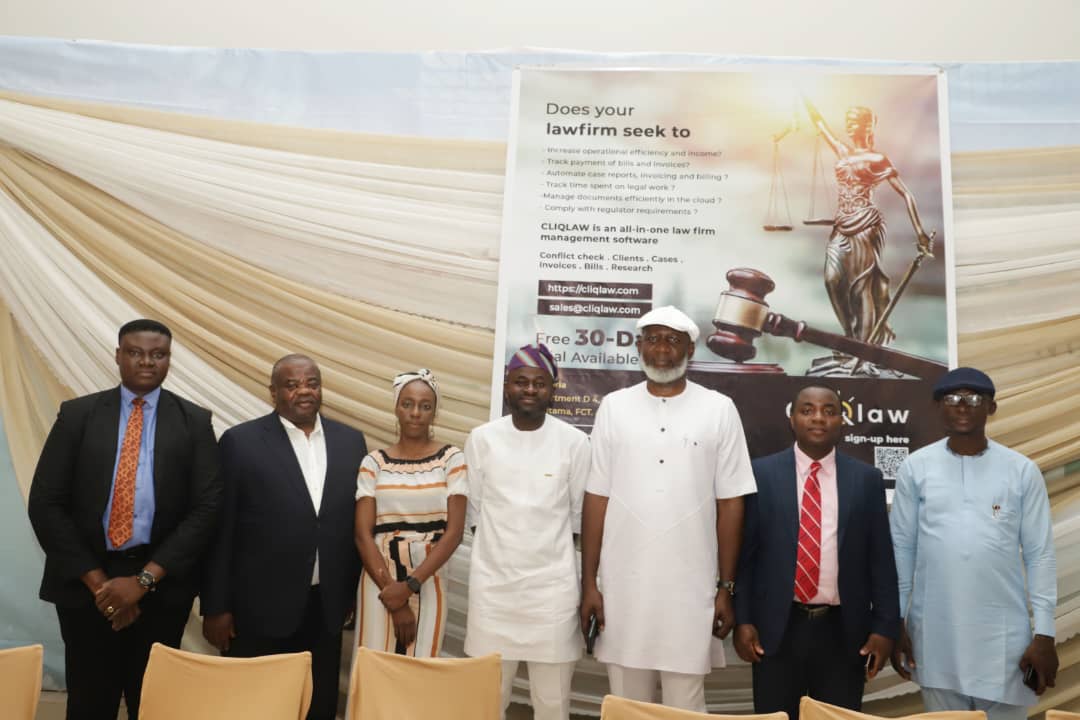
The meeting had several events, including a presentation from the Lawyers without Borders, a talk on Capital Gains Tax, presentations by the Federal Road Safety Corps and Cliqlaw Law Firm Management Application, as well as the Human Rights Committee.

What you need to know about Capital Gains Tax

Capital Gains Tax (CGT) is a tax on the profit obtained from disposal or exchange of certain kinds of assets. In Nigeria, Capital Gains tax is 10% of the profits from the sale of the qualifying assets. It is recognized in law under the Capital Gains Tax Act.

While CGT is 10% of your Capital Gains, the tax authorities provide guidelines for determining what can be deducted from the sales proceeds before arriving at the Capital Gains. The formula for calculating Capital Gains Tax is as follows:

N

Sales Proceeds                                   XXX

Less: Allowable Expenses             (XXX)

Net Sale Proceed                               XXX

Deduct: Cost of Acquisition          (XXX)

Capital Gains                                      XXX

Capital Gains Tax at 10%               ZZZ

Steps used in computing CGT

Step 1: Identify what the Sales proceeds of the asset you disposed of.

Step 2: Deduct the allowable expenses as determined by the tax office to arrive at the Net Sales Proceeds.

Step 3: Deduct the cost of acquiring the asset originally from the Net Sales proceeds to arrive at the Capital Gains.

Step 4. Multiply the Capital Gains by 10% to arrive at the Capital Gains Tax.

As mentioned earlier, certain allowable expenses must be deducted from the sales proceeds before arriving at the Net Sales Proceeds. They are as follows:

  • Selling expenses such as advertising and marketing cost spent before you sold the asset
  • Professional fees such as fees paid to Estate Agents, Solicitors, Surveyors, Accountants, Estate Valuers, commissions, etc.
  • Cost of refurbishing or improving the asset before being disposed

Note that allowable expenses are typically considered under the company income tax or petroleum profit tax is not allowed. For example staff salaries, payment to suppliers, utility bills, etc. Also, note that when Assets are sold as stock or in the ordinary course of business, their profits are not subject to capital gains tax but to corporate tax of 30%. For example, if your business involves buying and selling houses then those houses are considered as stock and will be subject to capital gains tax.

What if I sell part of an asset?

This falls under partial disposal of an asset and is still subject to Capital Gains Tax. However, when part of an asset is sold, the problem is that of determining what the cost of the part being disposed of is.

For example, imagine you bought a box of jewelry worth N1million 5 years back. You now decide to sell part of the jewelry for N822,000. Assuming the remaining jewelry is valued at N2.1million What is the capital gains to be paid assuming you spent N55,000 on selling expenses.

Since we need to determine the actual cost of part disposed of the formula recommended by law is as follows;

     X       Multiplied by Z

X   + Y

X – Sales proceeds of part disposed

Y- Market Value of part not disposed

Z – Cost of acquiring the whole asset

We know X = N822,000, Y= N2.1million and Z= N1million.

Cost of part not sold, therefore, is N822,000/N822,000+N2,100,000 = 28.1%

28.1% multiplied by N1,000,000 = N281,314.17.

Capital Gains Tax can now be calculated as follows;

Sales Proceeds                N822,000

Less Expenses                (N55,000)

Net Sales Proceeds       N767,000

Cost of Part Sold         (N281,314.17)

Capital Gains                N485,685.83

Tax @10%                     N48,568.58

Are all Assets Sold subject to Capital Gains Tax? 

No. The following assets are exempted from Capital Gains

1. Gains on Stock, shares, and other government securities such as
treasury bonds, premium bonds, and savings certificates.

2. Ecclesiastical, charitable or educational institutions of a public
character.

3. Any statutory or registered friendly society.

4. Any co-operative society registered under the Co-operative
Societies Law of any State in the Federation of Nigeria.

5. Any trade union registered under the Trade Union Act.

6. Gains on a decoration awarded for gallantry conduct.

7. Gains accruing to statutory bodies.

8. Gains arising from acquisitions, mergers, or takeovers provided
that no cash payment is made in respect of the shares acquired.

9. Gains on policies of assurance or deferred annuity unless the
beneficiary is not the original Owner as in an estate.

10. Compensation for a wrong or injury of libel, slander, enticement,
loss of office in a personal or professional capacity.

11. Gains from the main or only private residence of the individual
provided that the area does not exceed one acre.

12. Gains on private vehicles.

13. Gains on any asset used for the purpose of a trade or business
provided that the gain is used for replacing the old asset sold.

14. Gains from a provident or retirement benefit scheme.

15. Unit holders of a Unit Trust provided the proceeds are not
reinvested.

16. Any diplomatic body.

Who collects Capital Gains Tax?

The Federal Inland Revenue Service.

Who collects Capital Gains Tax in Abuja?

As provided by the Capital Gains Tax Act, 2004, which imposes a tax of 10 percent on the total amount of chargeable gains – after making allowable deductions from the computation of such gains, the FCT-Internal Revenue Service is the body authorised to collect Capital Gains Tax in the Federal Capital Territory.

After the session, Chairman of the branch, Afam Okeke, Esq. congratulated the branch’s 17 members who are set to be sworn-in as Senior Advocate of Nigeria. He urge members to honour them by attending the conferment ceremony at the Supreme Court and the reception afterwards.

The meetings sponsored by Cliqlaw had several Senior Advocates, past officers of the branch and members in attendance. Members were hosted to dinner at the close of the meeting.

NBA Abuja, DG Law School, Ojukwu, SAN, unveil opportunities in the academia for lawyers

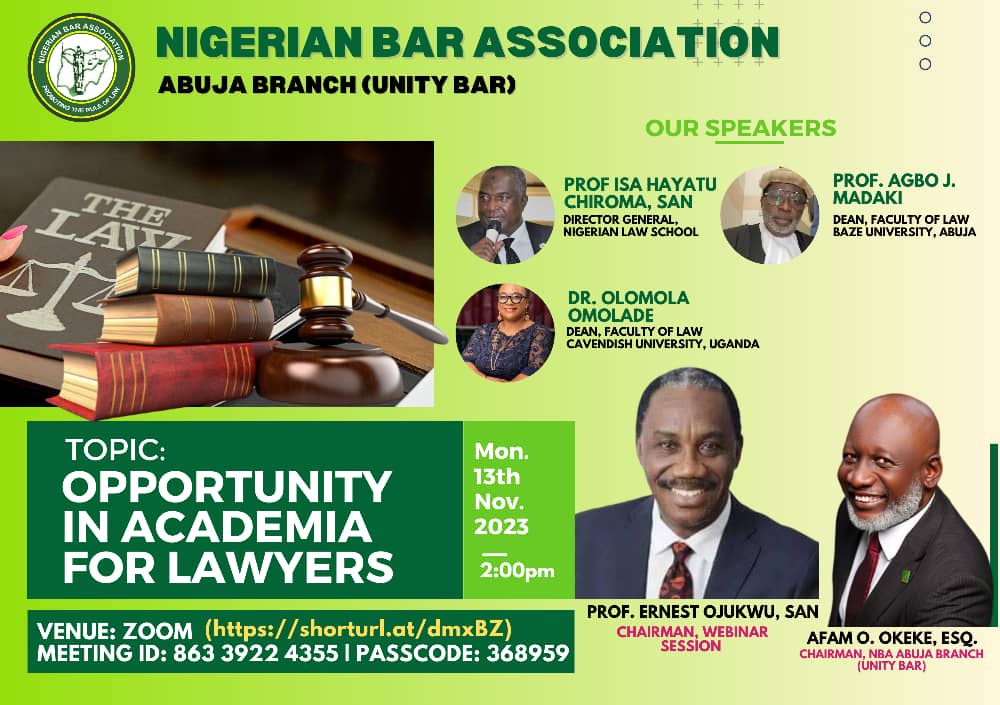
While the archetypal notion of a lawyer is that of a courtroom brawler, the Nigerian Bar Association, Abuja branch (Unity Bar) altered the narrative days ago by organising a webinar on opportunities in the academia for lawyers.

The event which had many lawyers in attendance was hosted by the Chairman of the branch, Afam Okeke, Esq. and Chaired by the influential law teacher, Professor Ernest Ojukwu, SAN. Treasurer of the branch, Chinelo Audrey Ofoegbunam was moderator.

Discussants at the webinar including the Director General of the Nigerian Law School, Prof. Isa Hayatu Chiroma, SAN, Professor Agbo Madaki, Dean of Faculty of Law, Baze University, Abuja who spent about six years lecturing in East Africa before coming back to Nigeria, and Dr. Omolola Omolade, Dean, Faculty of Law, Cavendish University, Uganda encouraged lawyers to explore opportunities in the academia.

Sharing insights on what it takes to succeed as a law teacher the law professors who pointed out that gender expertise, intellectual property law, data privacy and cybersecurity law, are some of the sectors taking centre stage added that lawyers who can serve as Law Librarians are presently in high demanded.

Participants got to learn that academia is not for the lazy and that to rise in the field, lecturers are required to publish sound academic works in reputable journals on a regular basis as well as update their knowledge of the law from time to time by attending conferences, workshops and participating in peer reviews.

TIPS