Home Blog Page 694

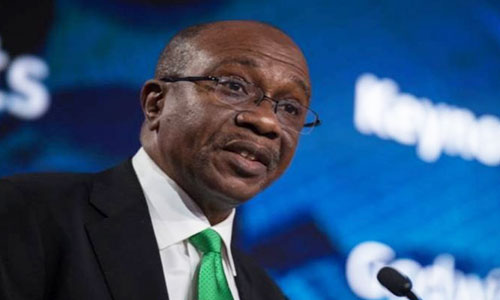
Why Godwin Emefiele shouldn’t go down alone

By Etim Etim

It is a bit of a relief that Godwin Emefiele is finally having his day in court. He now has the opportunity to defend himself, and possibly prove his innocence. He is facing a six-count illegal procurement charge in which he’s accused of awarding a contract for the purchase of 43 vehicles worth N1.2 billion between 2008 and 2020 to a female staff of the bank, Sa’adatu Ramallan Yaro, in violation of Section 19 of Corrupt Practices and Other Offences Act 2020. The law bars public officials from awarding contracts to themselves, their relations or their staffs. In his initial arraignment in August on the same offence, the former CBN Governor faced nine charges, the vehicles were worth N6.9 billion and Mrs Yero and her company, April 1616 Investment Company Ltd, were co-accused.

By dropping her and her company from the current charges, it is likely that Mrs Yaro has agreed to serve as the prosecution witness against Emefiele, indicating that the government wants to send him to jail by all means. When an accused person becomes a prosecution witness (PW), it is usually in return for a favour, which may be dropping of all or some of the charges. The implication is that the prosecuting authorities (EFCC, in this case) will have more evidence against the defendant and a greater chance of winning the case. Mrs Yaro will tell the court everything she knows about the contract and the involvement of the former CBN governor.

I pity Emefiele because he could be facing a prison sentence of over 10 years without an option of fine. I have spoken to a few senior staffers in the CBN who have hinted that the said Mrs Yaro is related to a former governor of Kaduna State and she was hired into the bank ‘’to pursue business agenda’’. ‘’I have spent over 28 years in this bank, and I don’t know her. ‘’She must be one of those people hired by the former governor as contract staff for specific agenda’’, a director told me over lunch last weekend.

But why is Emefiele facing his predicament alone? Where are his colleagues in the Bank, his bosses and the cabals in the Villa who benefitted from his years of service? Clearly, Emefiele did not run the bank alone. What of the four deputy governors who worked with him? Are they so honest and clean that nothing could be found against them? What of those powerful cabals who were so close to the former president that they used their influences to benefit massively from the arbitrage created by the dual exchange rates? Why are they not facing any charge? What of the former President himself?

Was he not aware of what was happening inside the CBN? Was he not aware of the huge profits the cabals were making just by buying FX in the official market and selling them in the unofficial market? These people were so wealthy that one of them bought a bank and a mobile telecommunications company without moving from his chair. All they did was roundtripping the dollars from one market to the other. Every morning, they would wake up with calculators to compute the billions of Naira they were making in profit. Is the EFCC not aware of this? If Emefiele turns out to be the only person tried out of the lot that participated in what he did and benefitted from him, it would seem that he is a victim of grand vindictiveness.

Have his friends and associates intervened on his behalf? Where is Jim Ovia; James Ibori; Udom Emmanuel and all his other powerful friends and associates in the banking and oil industries? Where are those in government and business who wined and dined with him when the goings were good? Why have they abandoned him now? Where is Emefiele’s wife, by the way? Why has she not been showing up in court to support him? Or has she left the country? You know, some women can’t face trouble.

I saw Godwin Emefiele in the court premises the other day, and I shed tears for him. He looked gaunt, tired, desolate and helpless. This was once the CEO of the largest bank in the country; an influential voice who could move the market and set stock prices flying; a man who easily signed off on a billion-naira credit to a customer and a man who was an influential presence in the banking industry and the Bankers’ Committee meetings. For six months now, he’s been in detention apart from a one-week break granted by the court in November. He has been in Kuje prison since last week, pending when the court would consider his bail application this week. His fall is one of the greatest tragic events in recent memory, and it holds some lessons for some public officials who believe that they are too powerful.

But what led to his fall and what lessons can we learn? Poor judgement and lack of character to stick to what is right. Emefiele came to the CBN in June 2014 after President Goodluck Jonathan had intimidated, harassed and forced out Mr. Sanusi Lamido Sanusi for his courage, boldness and outspokenness. As CBN Governor, Sanusi had written to President Jonathan in 2013, informing the President that the NNPC was not remitting crude oil sales proceeds into the consolidated federation account as stipulated by the Constitution.

Nigerians had always suspected that the NNPC was a leaking basket when it comes to our commonwealth, but the government did not nothing. That December, former President Obasanjo wrote Jonathan a stinker of a letter, accusing the President of cluelessness and making reference to the Sanusi letter, which was not made public then. Obasanjo accused Jonathan of doing nothing about the missing billions from the NNPC. There was outrage across the land and the Jonathan administration went on overdrive to counter the damage the Obasanjo letter caused. It was a mortal blow to Jonathan, then already perceived as the weakest Nigerian leader ever.

Jonathan was livid with rage with Sanusi and he wasted no time in forcing him out of office. But surprisingly, he did nothing to NNPC or his oil minister, Mrs Diezani Allison-Madueke, who was then swimming in her own ocean of corruption scandals. So, when Emefiele was appointed in 2014 to replace Sanusi, I understand that he was warned by Jonathan’s officials that if he did not ‘cooperate’, he would meet the same fate that befell Sanusi. In other words, Godwin Emefiele went into office as our fifth CBN Governor frightened, fearful and intimidated given what his predecessor went through. Villa officials were constantly hammering into his head that ‘’you must be loyal to Oga o’’, and he took it to heart. And that explains why he willingly opened the CBN vault to Aso Rock and PDP officials to take as much dollars as they could to prosecute the 2015 presidential elections. Until this day, I can’t seem to understand why it is so easy for the CBN Governor to withdraw so much foreign exchange cash from the CBN on the orders of the President. Has the practice stopped?

I was surprised that President Buhari, who came to office in 2015 as anti-corruption czar, did not prosecute Emefiele for being complicit in this massive looting of the CBN. I wrote about it, but nothing happened. Unknown to me, a more massive ‘looting operation’ was to unfold under the new President. A powerful three- man cabal emerged and it quickly designed a roundtripping scheme and made billions under President Buhari. Again, Emefiele was a willing tool in their hands because they too kept telling him that ‘’the President is in the know and he is part of it’’. It was a big bazaar!

By the time Emefiele completed his first five-year term in June 2019, he too had become a powerful and wealthy member of the cabal and an insider in the Villa. It was therefore not difficult for them to sell the idea of running for President to him. he was told that ‘’Oga wants him’’. The campaign was well funded and the media ads ran into billions. I wrote two articles asking him to stop the charade, but like a drunken sailor, he paid no attention. You may not take a heed to the admonitions in my articles, but sooner or later, I will always be borne out. Truth is constant!

The eventual crash of Emefiele’s presidential bid angered him to no end, and he thought of nothing else than to stop the ambition of the leading contender in that race. There began his downward spiral to where he is today. He was essentially consumed by greed, graft, anger, envy and his inability to make sound judgement in the face of contending interests. His story is the biggest tragicomedy of the Fourth Republic.

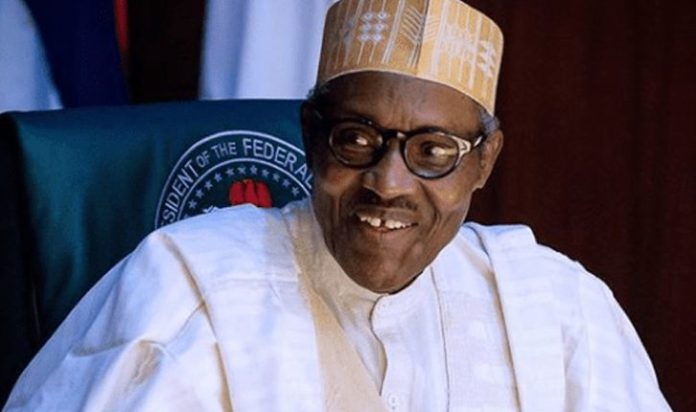
I achieved my goal in security, economy and employment – Buhari

In the last few hours, former President Muhammadu Buhari who had been taciturn since the expiration of his tenure in May has been making waves on social media.

This is on account of his disclosure during a recent interview with the Nigeria Television Authority (NTA).

Buhari in the interview published on NTA’s X handle bragged that he successfully fought insecurity, unemployment and ensured investments.

Not only that; the former President announced with flourish that Nigerians can now see the difference in these areas when compared to when he was in office.

In addition, he added that his success in fighting insecurity brought about investments in Nigeria while he was in office.

Former president maintained that his administration suppressed insecurity and boosted the economy in comparison with the administrations he took over from.

On whether he achieved his goals, Buhari said: “Not quite, but I would like Nigerians to reflect on the condition of Boko Haram before we came in and also the economy.

“So security, economy, and fighting corruption were the objectives I set before the government I led. I hope Nigerians have been following it and saw the difference.

“I know the government I led was lucky to get the governor of Borno State, he is young and incorruptible. We were lucky to have him in charge of the Northeast where Boko Haram was operating.

“I achieved my goal in security, economy, employment, and because we succeeded in insecurity, Nigerians developed confidence in their country and they invested more and people from outside came and invested.”

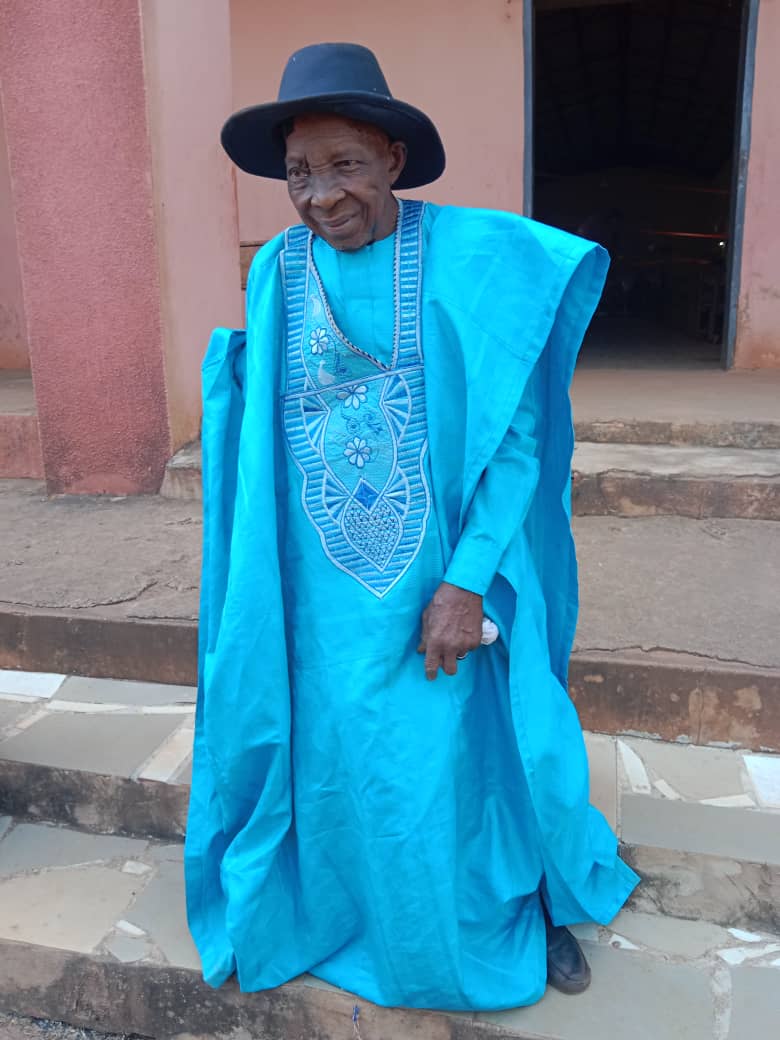
Announcing the Passing of a Good Man: Pa Nweke Udemezue

With sadness in our hearts, but with sincere gratitude and total submission to the will of God Almighty, we, members of the family of the Nweke Udemezue family of Enugu-Na-Uwani, Akiyi-Umulokpa, Uzo-Uwani LGA of Enugu State, Nigeria, announce the sudden passing of our beloved husband, father, grandfather, great-grandfather, uncle, and brother, Pa Nweke Udemezue. He passed away peacefully at about 5:00 pm on Saturday, November 18, 2023, aged 82 years.

Pa Nweke Udemezue was a loving man and community leader who touched the lives of many people throughout his life. He was respected for his transparent honesty, forthrightnes, wisdom, kindness and generosity; he dedicated his life to serving others, and to defending the rights of others. His memory will remain with us forever, and we will always cherish the time we were able to spend with him.

While we mourn his loss, we find comfort in the knowledge that he is survived by a brother, a sister, his wife, 07 (seven) children, 19 (nineteen) grandchildren, 06 (six) great-grandchildren, and numerous nieces, nephews and other relatives and well wishers.

The funeral arrangements will be announced later.

While thanking everyone for their support, messages, calls and condolences, we ask for your prayers during this difficult time, and especially for the peaceful repose of papa’s gentle soul.

Rest in peace, Papa; your legacy will live on.

Signed:
For the Family

Sylvester C. Udemezue (Udems)
08039136749, 08109024556.
[email protected].

Pastor who sold “heaven Visa” for N310,000 re-arrested for kidnapping in Ekiti

The founder of Christ High Commission Church, Araromi-Ugbesi in Omuo-Oke, Ekiti State, Noah Abraham, who was arrested and arraigned last year for allegedly collecting three hundred and ten thousand Naira from church members for the purpose of of getting them to heaven has been re-arrested for kidnapping of over nine persons.

This time, Abraham was arrested by the Ekiti State Police Command in collaboration with National Agency for Prohibition of Trafficking in Persons, NAPTIP, for alleged kidnapping of over nine persons including minors and impregnating the wife of his choir coordinator.

It was gathered that some of the hostages are children of his members whom he had reportedly hypnotized, brainwashed and set against their parents.

Narrating their ordeal, some of the parents of the children who were kept hostage, church members and even the legal wife of Pastor Abraham, who had staged a protest to the Ekiti State Police Command pleaded with Government and appropriate authorities to assist them in getting their children, wife and relatives out of the captivity of the Pastor.

According to them, Pastor Abraham forced their children to withdraw from school while a 27-year-old man who was already working in a company where he was given an official vehicle was asked to resign and kept in the camp without a specific mission.

In an interview, the choir coordinator of the church, Mr Dare Ikuenayo confirmed that the pastor snatched and impregnated the mother of his three children.

He said: “I joined the church in Kabba, Kogi State but one day, the pastor called me and notify me that my wife had a gift of prophesy that I should allow her stay with him for a month and work for God which I oblige.

“But suddenly I noticed that my wife was not even willing to see nor talk to me. While I was trying to raise eyebrows, the pastor announced in the church that he had taken my wife and no one can take her from him.

“I tried my best but all to no avail until he impregnated her and moved her into his house fully.”

In her testimony, the wife of the pastor, Mrs Mary Abraham said after they came together to Omuo-Ekiti for the aborted heavenly mission, her husband came in one night and asked her to move out because he wants the wife of the choir coordinator to move in.

According to her, “He said the present work in his hand requires the woman to be with him and that was how he forced me out and denied me access to my three children.

“He withdrew all of my children from school, made their life miserable, I wept when I saw my son yesterday after police brought him here. I am begging Nigerians to help me take my children from him.”

Similarly, one of the pastors working under Abraham, said his son, who was already working in a reputable institution was asked to resign and held hostage.

The Pastor said, “Even when I logged complain at the police station, I was offered access to two of my three children but on our way home he called them and asked them to run back which they did.

“He is always telling us that we have different curses and evil spirit working against us, he would ask us to sell our property and bring the money to him. I have invested almost 7million in the church, I am left with nothing. Even my children don’t want to see me, I don’t know what he did to them.”

Another old woman who is the elder sister to Pastor Abraham alleged that he took almost a million naira from her on different occasions on the account that he want to cleanse her of evil spirit.

It was also gathered that there are many other complaints against Pastor Abraham with different stories too elaborate and sensitive for media publication.

In an interview, Pastor Abraham said the heaven ticket saga was his first assignment, saying he is done with what God had sent him to earth to do and he is ready to go back to his creator.

He said he is fulfilled because he had concluded his assignments as directed by God while declining to give any reason for his actions.

Meanwhile, the wife of the coordinator whom he impregnated is still at large.

In a chat with journalists, the spokesman for the Ekiti State Police Command, DSP, Sunday Abutu said investigation is ongoing in collaboration with NAPTIP, saying the police would revert on the next line of action.

Recall that Pastor Abraham was arrested on the 27th of April, 2022 in Omuo-Ekiti after he converged over forty persons in a camp and collected the sum of three hundred and ten thousand Naira from them as ticket fee to heaven but was granted bail at a Magistrate court.

Roundoffnews

Powerful Lagos, powerless Osun State

By Lasisi Olagunju

If I were a politician, my devotion hours would be to the courts instead of pouring oil on INEC and voters, deities of limited powers. If the gods complain, I would ask them where they were when ugly death was killing sinners and saints. The buck – our electoral buck – stops at the courts. That is our reality.

A list of candidates for elevation to the Supreme Court was released last week by the Federal Judicial Service Commission. Every Nigerian should be interested in every name on that list; they are the electors of our future presidents and governors and lawmakers. They will decide the price of rice and beans tomorrow. Whether salaries and pensions will be paid and drugs will be affordable for the sick are attached to tomorrow’s decisions of the Supreme Court. It is our electoral college. We should ask questions on its proposed justices. How did the nominated get on the list? What qualified them to be there? What disqualified others who are not there? Why is Lagos on the list when it has already filled its quota?

History is replete with cases of people who went to bed free, slept too much and woke up a conquered people. Conquest used to be by the force of arms; now it is mostly through the courts. In Nigeria, the courts are the new military; they take and distribute power to politicians. To live well, escape poverty and captivity, we should take interest in our law courts and in those who sit in judgement there. How are the courts, particularly the Supreme Court, constituted? Ask questions; insist on answers.

The courts are under threats of abduction, immediate past president of the Nigerian Bar Association, Olumide Akpata, warned at the International Bar Association (IBA) conference in France last week. He described the selection process of Nigerian judges as “bizarre”. He said there was “a deliberate attempt” by the Nigerian political class “to capture the judiciary.” He added that they are “achieving results.” He painted the picture of a helpless nation. I agree with him.

There are 22 jurists on the nomination list released last week, but like in Animal Farm, the chosen are not equally favoured. The big men of power who drew the list put ‘priority’ in front of some; they stamped ‘reserve’ in front of others. What was the criterion (or were the criteria) for giving some priority over the others? Seniority? The seniority list in the Court of Appeal is publicly available on the court’s website; the nominations mock it, particularly for the South-West. Check the nomination list. Crosscheck it with the seniority list of justices of the Court of Appeal. In all the other five zones, seniority appears to have counted in arriving at the recommendations. But, in the South-West, it is a no. So, what was the goal of the appointers? And this is where I am going. I plead that you follow me.

I am from Osun State and I am interested in how it is affected by that list. There are two nominees from the South-West; one was chosen from Lagos and one from Osun State. The one from Lagos has a crown of ‘priority’ placed on it; the gentleman from Osun State is put on the reserve bench. The truth is: Lagos has no slot to fill; it already has Justice Kudirat Kekere Ekun as the number two of the Supreme Court. The slot is ordinarily for Osun State to fill and there is a history to that claim. Justice Emmanuel Ayoola, JSC, was the last candidate from Osun State on the Supreme Court bench. Ayoola retired at age 70 in October 2003. He was 90 last month. In simple arithmetic, for the past 20 years, Osun State has not been represented in the apex court – the result of a deliberate act of misallocation. And I will explain.

Listen. How many justices are supposed to be on the Supreme Court? The court itself answers that question on its website: “The Supreme Court of Nigeria consists of the Chief Justice of Nigeria and such number of Justices of the Supreme Court, not exceeding twenty-one, as may be prescribed by an Act of the National Assembly. Presently, the Supreme Court is made up of the Chief Justice and nine (9) other Justices.” A CJN plus 21 justices cannot go round all the 37 states of Nigeria at the same time. When eight masquerades are on the line and there are six bean cakes, the system has a way to get every ancestral costume round the basket of cakes. There is always a way. For the Supreme Court slots to go round, the states are paired or combined in twos and threes and allotted slots which rotate between or among them. Ekiti and Osun states are a pair here.

Justice Olufunlola Oyelola Adekeye got on the Supreme Court bench representing Ekiti State in March 2009. She retired from the Supreme Court in November 2012. Her exit created a vacancy that should, by right, be filled by Osun State. But smart Lagos, which already had Bode Rhodes Vivour occupying its own slot, got up in July 2013, did a fast one and took what should go to Osun State. It happened and there was no protest from Osun State. You wonder why? It was because Osun State of that era was a colony of Lagos. What happened was a case of olówó gbà’yàwó òle (the rich snatched the fool’s wife). They do that very often. Instead of Osun State’s Justice Jimi Bada of the Court of Appeal moving up to his rightful place at the top, Lagos snatched the slot for its Kudirat Motomori Olatokunbo Kekere-Ekun. The Centre of Excellence then had two slots while Osun State had zero. It is because of ‘Gbajue’ steps like this that the hinterland people like me (àwa ará òkè) always salute Lagos as Eko Ile Ogbon (Eko, home of wisdom).

The wisdom of Lagos here means craftiness and determination. It gets anything it wants because it is Lagos. If you don’t have money, everything you have amounts to nothing – including your wisdom. Lagos is rich both in means and guile – and that combination is lethal. Osun’s strength is more in needless crises and in acquiescence to rape of all kinds.

The retirement of Justice Bode Rhodes Vivour in 2021 should ordinarily reset justice for Osun State at the Supreme Court. But no; it does not appear this will happen. Instead of returning the snatched slot to Osun State after Rhodes-Vivour, Lagos is now positioned to grab it as an addition to Kekere-Ekun. The Federal Judicial Service Commission headed by the Chief Justice of Nigeria last week nominated Hon. Justice Adewale Abiru from Lagos State as South-West’s ‘priority’ nominee to join Kekere-Ekun who is already representing Lagos. Check the seniority list of the Court of Appeal where all the candidates were drawn from, Abiru has seniors in the South-West; two of them from Osun State. One of the two from Osun is, in fact, the number two in that court -Justice Jimi Olukayode Bada; another is number 15, Justice Tunde Awotoye. The favoured Lagos man, Abiru, is number 22 – far behind those two. They ignored numbers 2 and 15 and went for number 22 – because he is from Lagos. Even if, for whatever reasons, those two seniors refuse to move up and the choice of the commission is Osun State’s Justice Olubunmi Oyewole (number 32), should he be made to be a ‘reserve’ candidate as the commission has done given the fact that the slot is for Osun State to fill?

In all these, we’ve seen how untrue our laws are that Nigerian states are equal. There is no equality of states in Nigeria; there are 22 Supreme Court seats for 37 states, Lagos alone takes two. Why is Lagos investing its men in the courts, particularly the Supreme Court? Lagos may be plain-speaking but it is never plain-dealing; it cheats, and it does it without consequences. I call Lagos the Napoleon of the West; it fights for other Pigs by cheating them. When an elder plays a game of ayò with a younger person, he must win, whatever it takes. Kí ni wón nfi àgbà se? What is the usefulness of age if you cannot deploy it to cheat children? That is the political and moral compass of the political entity called Lagos. If you like, disagree with this and flaunt Osun as the elder because it is the ‘cradle’, the ‘beginning’. But, know this: in Yorubaland, the rich is the elder – Olówó l’àgbà. Anyone with loads of years without money exists to be ignored, cheated and exploited.

I suspect the courts are being eyed by interests because with their gavel, judges confer privileges, advantages and freedoms. They also oppress and subjugate. Check how the original owners of lands in the United States lost their rights over their lands and were converted into tenants. Read Lindsay Robertson’s ‘Conquest by Law’ (2005), how the American Supreme Court awarded “all discovered lands” to European “sovereigns” and gave “occupancy rights” to the original owners. How did it happen? Would it have happened if the judges were not of European origin? The Nigerian people have their feet firmly on that route. Their own conquest by law will be complete and completed soon unless they cap their sleeping hours.

A whole country can be helpless. Nigeria is. My dictionary says ‘helplessness’ means “weak or dependent: a helpless invalid deprived of strength or power; powerless; incapacitated.” A whole people can be helpless, especially if they choose to. The 1823 American case referenced above, Johnson v M’Intosh, gave birth to the Discovery Doctrine which, if applied here, would bequeath River Niger and all its lands to Mungo Park and his descendants. Fortunately, our politicians and the judges have not thought of importing it into our laws complete with affidavits averring that they are heirs to Mungo Park’s estate. They may still do it, once they are through with the construction of the courts in the image of their desires.

The Supreme Court should be the afflicted’s locus amoenus, a pleasant place of refuge, safety and comfort. But how do we tell the story of a court built of blocks of injustice? That is what I see in those who have enough taking from those who have none right inside the temples of justice. Our ancestors had neither good names nor prayers for warlords who pull straws from their neighbours’ roof so that theirs would stop leaking. The current flood from the rains will wash away the house of justice if the owners look on. It is almost a week since that Supreme Court list was out, I have not heard a whimper of protest from those holding the short end of the stick. Osun’s forbearance is legendary. But is it not stupidity to stay in queue when the other party wants everything? Lagos that has Surulere (patience is profitable) has never believed in waiting for its turn.

“He that oppresseth the poor to increase his riches, and he that giveth to the rich, shall surely come to want” (Proverbs 22:16). Enablers of iniquity have not read that verse in their Bible. They have also not read Romans 12:19. – “Let love be without hypocrisy. Abhor what is evil. Cling to what is good.” To those who are Muslims and who excuse evil for reasons of class, creed and ethnicity; to them that teach or plead or enforce acquiescence as evil multiplies itself, I commend the words of the Prophet as reported by Abu Sa’id al-Khudri: The Messenger of Allah (peace and blessings be upon him) said, “Whoever among you sees evil, let him change it with his hand. If he cannot do so, then with his tongue. If he cannot do so, then with his heart, which is the weakest level of faith” (See Sahih Muslim, 49).

Evil will grow and flourish if it is manured with helpless acceptance. And that will be the death of Nigeria, its democracy and our freedoms. Khalil Gibran (1883-1931) was a Lebanese-American writer, poet and visual artist. He warned us never to refuse anything by accepting it; he said we should never nurse half hopes and fight half battles. He wrote many powerful lines, the most engaging are in his book, ‘The Prophet’ with the avant-garde poem ‘Do Not Love Half Lovers’. I reproduce it here: “Do not live half a life/and do not die a half death/ If you choose silence, then be silent/When you speak, do so until you are finished/If you accept, then express it bluntly/Do not mask it./If you refuse, then be clear about it/for an ambiguous refusal is but a weak acceptance./Do not accept half a solution/Do not believe half-truths/Do not dream half a dream/Do not fantasize about half hopes/ Half the way will get you nowhere/You are a whole that exists to live a life/not half a life.”

I pray we listen – and loudly refuse to choose silence.

Many Nigerians are resorting to suicide

 Editorial

Reports of suicide are featuring with dreadful frequency across the country, adding to the prevailing general misery. Many Nigerians were heartbroken when the Edo State Police Command confirmed the death by suicide of Toluige Olokoobi, who became a social media sensation via a video where her son whom she was reprimanding, asked her repeatedly to ‘calm down.’ But there are many more reported cases of self-murder and attempts nationwide. This trend presents another challenge for the government, social organisations, and families.

Olokoobi reportedly took her own life in the presence of her one-year-old child, leaving behind three kids. Neighbours said she had recently been battling depression.

A Nigerian Army captain, Alphonsus Bazza, also reportedly hanged himself in Uyo, Akwa Ibom State, leaving behind a wife and a child. In Abuja, 29-year-old Terver Orfega committed suicide by swallowing a lethal chemical early this month, reportedly after a business failure and inability to repay a loan.

Last month, the Bauchi State Police Command reported that Betwom Bitrus, 17, of Bombar, Bogoro Local Government Area, hanged himself after telling his family he was heading for a stream to take a bath.

Two cases gained media traction in July: a 72-year-old resident of Ede, Osun State, Kareem Aderemi, shot himself with a twin-barrelled gun; and in Anambra State, a young pastor, Prosper Igboke, allegedly jumped to his death from a multi-storey building in Nnewi, ostensibly after a failed romance. Security personnel said Aderemi had been struggling with partial blindness, and depression.

A video post went viral in August showing passers-by physically restraining a Lagos socialite, Fareeda Abdulkabir, from jumping off the Third Mainland Bridge into the lagoon, while, amid tears, she poured out her marital frustration.

In 2022, 79 persons died by suicide in Nigeria, according to The PUNCH. Lagos ranked highest with 12 cases; followed by Oyo 10; Kano, four; while Anambra, Edo, Delta, Ogun, and Rivers recorded three each. Experts say some cases are never reported.

Likewise, DSP Bright Edafe, the spokesperson of the Delta State Police Command, took to the social media to raise alarm over the increasing rate of suicide, especially among couples.

He urged everyone to take care of their mental health because a person who takes his/her life has missed out on what life has to offer.

The PRO stated this on Wednesday, November 15, after a man and a 16-year-old girl committed suicide over domestic issues.

“Suicide has been increasing recently, especially among couples. A man was beating his wife, and while at it, neighbors came to her rescue, only for the man to enter his house and hang himself,” he wrote.

“In another incident, a sixteen-year-old lady who slept outside her father’s house was scared of being beaten by her father. Upon doing all she could to appease the father and mother to no avail, she also hanged herself.

 “Let’s look out for our mental health, the person who dies is the one who loses. Anywhere that you do not find peace is not for you. Let’s look out for each other. PEACE.”

post

Frustration in the land, say experts, is affecting people’s mental health. With joblessness, poverty, hunger, insecurity, and uncaring governance prevalent, many Nigerians slip easily into depression, and some contemplate suicide.

Suicide, says the World Health Organisation, is the fourth leading cause of death among 15-29-year-olds globally. Over 703,000 persons commit suicide worldwide each year, with the most common means being ingestion of pesticides, hanging, and firearms. The frequency of suicides by its ingestion once prompted the Nigerian government to briefly curtail the sale of the Sniper pesticide brand.

Social workers also say the breakdown of traditional family values, drug abuse, cultism, mental ill-health, and bullying, can lead to depression and eventually, suicide.

Undiagnosed mental health is also potent, says the Association of Psychiatrists in Nigeria, which disclosed that over 60 million Nigerians live with various degrees of mental ill-health. It further lamented that there were only about 200 mental health experts available in the country.

Experts say suicidal feelings can affect anyone of any age, gender, or background, and at any time. Feelings of hopelessness, worthlessness, and frustration can graduate to depression. Parents, families, friends, and communities are therefore advised to pay attention to all persons around them.

But the WHO insists that suicides are preventable, and recommends limiting access to their means – pesticides, firearms, and poisons; identify and monitor persons exhibiting suicidal behaviour, and interact with the media for responsible reporting.

CSOs want the government to decriminalise attempted suicide; the suicidal need care, not punishment.

Government and all levels, communities, families, and faith-based organisations should collaborate to bring down suicide levels.

Ibe Ikwechegh, a legal practitioner and consultant with Indent holds that: “At the centre of most suicide is depression. Yet depression only in the eyes of the law may not meet the threshold of insanity, enough to provide exculpation. But depression is as bad as insanity, depriving us of the volition to sound judgment….Suicidal instinct longs for love, for emotion, for genuine human sympathy, for touch, for a heart to heart talk and understanding which cannot be provided for by criminalizing it….

“Our punitive law for attempted suicide does not square up well with our criminal justice theory of punishment. It does not protect society since no one else is supposedly at risk except the attempter who is both the criminal and the victim. There is no evidence that it deters future attempt….”

Credits: PUNCH Editorial with additional reports from Tori.ng/Law & Society Magazine

Top police officer detained for shouting at Chief Justice

A lawyer and an Assistant Superintendent of the Ghana Police Service Akolgo Yakubu Ayamga, has been arrested and detained on the orders of the Supreme Court for contempt during court proceedings.

On 14 November, 2023 when his application was rejected, Ayamga reportedly screamed at the Chief Justice and other members of the Supreme Court bench.

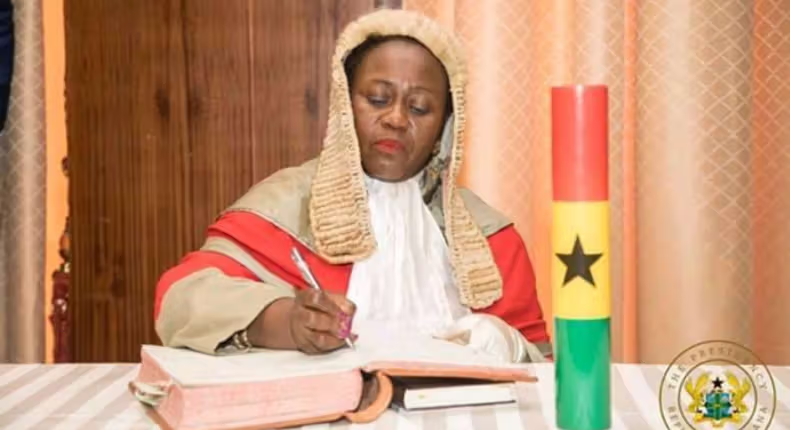
A story published by thelawplatform.online.com disclosed that he was promptly arrested and detained after Chief Justice Gertrude Torkornoo who presided declared his conduct to be disrespectful and cited him for contempt.

Thereafter, Ayamga was led to a detention chamber where he was held awaiting trial for contempt.

It is reported that he had objected to the rejection of his application and the GH¢10,000 fee that was subsequently imposed against his side of the case being heard by the apex court.

The Chief Justice in particular was the target of his impassioned outburst, which made the court decide to act quickly.

Prominent legal experts, such as Addo Attuah and Dr Bassit Bamba, stood forward to ask for forgiveness on Ayamga’s behalf. The Chief Justice voiced concerns about Ayamga’s behaviour despite their best efforts, citing a similar incident at Takoradi High Court. She stressed the significance of upholding professionalism and ethical standards in court, saying that Ayamga’s acts were unworthy of a lawyer.

As reported by thelawplatform.online.com, one Justice Pwamang counselled Ayamga to follow the rules of the legal system and told him that hostility has no place in a courtroom.

Lawyer Addo Attuah, adding his voice to the plea for mercy said that Ayamga was still getting learning when it came to the nuances of legal ethics.

Justice Kulendi, a member of the Supreme Court Bench used the occasion to give a succinct talk about persuasive advocacy, drawing a comparison between it and the art of courting a woman. He underlined that persuasion, not force, is what wins courts over.

The Chief Justice decided to release Ayamga after hearing the cries for mercy and gave him a warning not to repeat the same actions.

76-year-old man in custody for impregnating teenager in Ogun

For allegedly raping and impregnating a 16-year-old girl (names withheld), the Ogun State Commissioner for Women Affairs and Social Development, Mrs Adijat Adeleye, at the weekend confirmed the arrest of a 76-year-old man, David Ogunsanwo,

Ogunsanwo was said to have been arrested in Abeokuta, the state capital, by men of the Nigeria Security and Civil Defence Corps.

Adeleye, who disclosed this while speaking to newsmen in Abeokuta on Saturday, said the suspect would be charged to court, adding that her ministry would follow through to ensure justice was served.

The commissioner, who expressed worries over the increasing rate of sexual abuse cases in the country, appealed to victims to always speak out.

Adeleye said, “The incidence of people going to the police, reporting and withdrawing the case is increasing. And we want to draw the attention of all parents, that if their child is a victim of violation, report the case to the police and do not withdraw it.

“We are aware that cases of violation and abuse are increasing. There’s a huge increase in these kinds of crimes, especially against children.

“When you withdraw the case, it gives the perpetrator the opportunity to continue to do it and also do it to other children.”

PUNCH

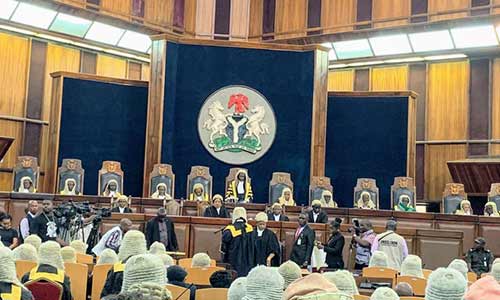
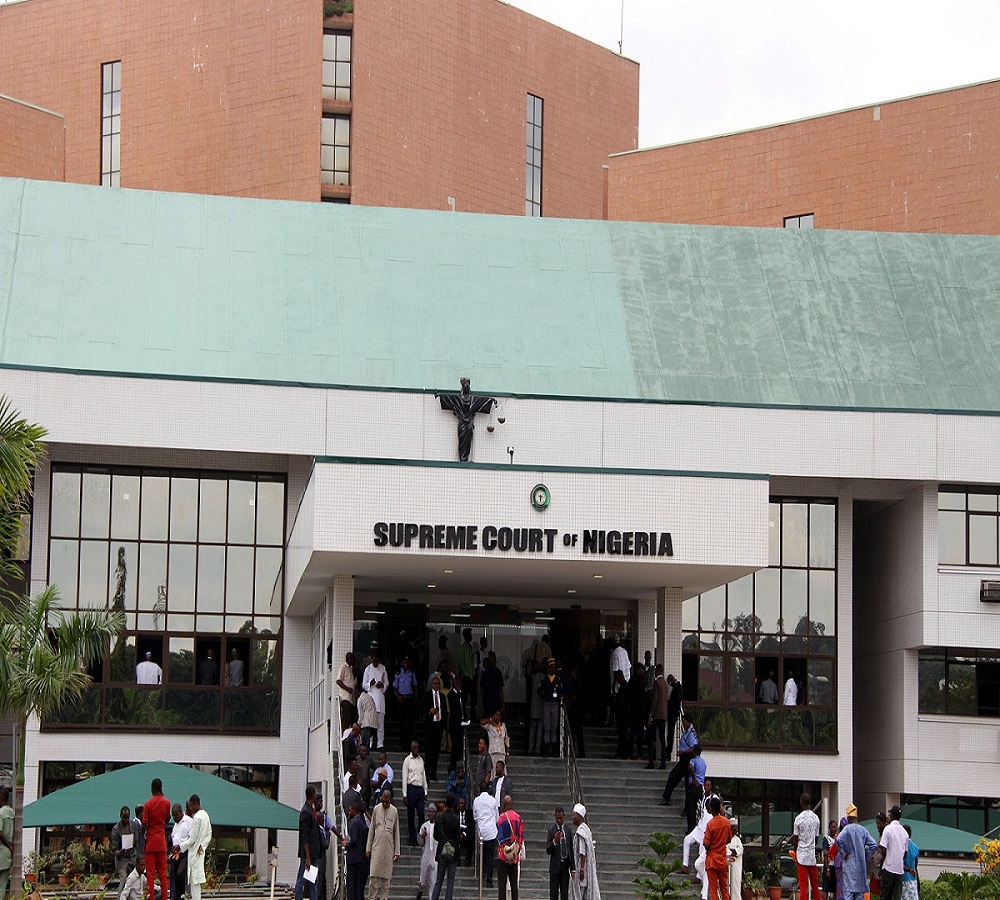
Supreme Court: Disquiet mounts in judiciary over nomination of justices

  • As NJC insists it’s not aware of the list

By Clifford Ndujihe, Isse-Oluwa Ige, Ikechukwu Nnochiri  & Henry Ojelu

The said nomination of 22 justices for Supreme Court appointment is still generating a huge controversy in the judiciary.

This is because some senior serving and retired justices are at daggers drawn over the list released by the Federal Judicial Service Commission, FJSC, last Thursday.

A senior Justice told Vanguard that President Bola Tinubu may be heading towards direct confrontation with a wider section of senior members of the Nigerian bench, saying that “never in the history of Nigeria has appointment of Supreme Court justices been this politicized.”

Another Justice said the case of North-Central zone where the son of a former Chief Justice of Nigeria, CJN was slated as a priority while a senior jurist with over 15 years experience in the Court of Appeal, is placed as reserve, is controversial.

The Justice added that the strangest of the ongoing process is that “the South-South slot where the person adjudged as the very best is curiously pencilled as reserve.

Sources said that during the processing phase, the Justice placed as priority was not short-listed among the four that were sent to the FJSC.

“The question many in the Judicial circle are asking is: how did someone who did not make the short-list suddenly emerge as priority over and above the person adjudged to be the best,” the source asked.

The source disclosed that for the South-South, the Justice placed as reserve now was the priority candidate in 2019 but was dropped then because he was considered to be too young at 53, adding: “How did he suddenly drop four years after when he has been rated so highly? Anyone who wants to check the quality of the Justices can go to the Law Pavilion, which is the electronic law report and see which Justice of the Court Appeal has the highest ratio. The person placed as reserve has the highest ratio.”

In the North-West, some Justices wondered how Justice AB Gumel was dropped from the list “despite being the number one on the list of jurists from his zone.”

In the South-West, the source said a justice who was a reserve candidate in 2019 is still on the reserve list while a justice who had never made the short-list was placed as priority.

If not urgently addressed, some senior members of the Nigerian Judiciary feared that the low morale and rancour in the Judiciary would worsen.

But a renowned academic and a respected member of the inner bar, Prof Yemi Akinseye George, SAN applauded the FJSC’s list that became a public knowledge last Thursday.  

He said it is though possible for human error to have filtered into the list, he nonetheless said he could score the list 99.9%

“When I saw the list of those justices, I felt very proud. I have appeared before many of those justices and I have worked with many of those justices at different committee levels, you know. So, they are excellent names. Most of those names are excellent names. It is possible that one or two may have entered the list, but I dont know, but from what I can see and my interaction with those names, they are excellent justices of the appellate court who merit being in the Supreme Court,” he said.

The silk also said he was comfortable that no candidate from both legal practice and academia made the list, saying any legal practitioner who wants to become a justice of the Supreme Court should start from the high court.

He said Justice Niki Tobi who was a Professor of Law from the academia did not start at the Supreme Court and that he did very well.

He also said many legal practitioners nowadays are party goers with a lot of friends and clients everywhere with love for money, qualities he claimed are antithetical to what should be found in a judge.

Campaign for Bar inclusion hasn’t been rigorous- Prof Erugo, SAN

Law professor, Sam Erugo, SAN in his reaction to the list of nominess, said: “Personally, I am not surprised at the decision by FJSC to consider only the Court of Appeal Justices for nomination to fill the vacant slots at the Supreme Court. We must appreciate that the judiciary is a conservative institution.  Change from the usual practice is difficult. I don’t believe the campaign for change has been rigorous and persuasive enough to achieve the desirable social change.

“Again, the bench is more organized for the contestation-the Justices can easily be assessed by the number and particularly the quality of recent judgments delivered. The Justices are already in the bench; it is only natural that hard-working Justices of the Court of Appeal would be elevated to the Supreme Court as a reward for hard work. 

“In the current scheme of things, the Bar is not strong enough to insist on any slot in appointment to the apex court. The procedure for such an appointment is not settled, and it may cause more division in the judiciary. At the least, there must be criteria to assess the competence of a practising lawyer or academic as a candidate for direct appointment to the Supreme Court. We do not have such set criteria yet, and the urgency of the present appointment will not permit the rigours of usual committees to set standards.”

In the meantime, impeccable sources at both the Office of the Chief Justice of Nigeria and the National Judicial Council (NJC) told Vanguard on Sunday that there was nothing to worry about regarding the purported complaints of the senior serving and retired justices.

According to the source in the Office of the CJN who preferred anonymity, “the appointment of justices into the Supreme Court is a process.  

“While I am not lending any credence to the allegations contained in your question, Paragraph 13 of Part I of the Third Schedule to the 1999 Constitution provides that the Federal Judicial Service Commission (FJSC) shall have powers to advise the National Judicial Council (NJC) in nominating persons for appointment to the office of the CJN, Justice of the Supreme Court, President of the Court of Appeal, Justice of the Court of Appeal, the Chief Judge of the Federal high Court, a Judge of the Federal High Court and the Chairman and members of the Code of Conduct Tribunal, the provision never said the advice shall be mandatorily upheld by the NJC.

“Having said that, the Commission considers a lot of factors in shortlisting candidates including years of service on the bench and the integrity of individual candidates.  

“To properly understand my point, consider this scenario: a person may be on the priority list in 2019 as you said, perhaps based on the factor of seniority on the bench, it may be dropped for a better candidate in 2023.  

“This is because four years is a long period of time and it is possible that between 2019 and 2023, a lot of things might have happened. A judge who has unblemished record in 2019 might have had his record soiled one way or the other years after.  

“Get me right. I never said that was what happened in the cases you cited but I was only trying to tell you that there could be explanations to the cases you cited,” the source said.

Another impeccable source from the NJC who preferred anonymity reiterated to Vanguard that the list was not final.  

“Dont forget, only 11 vacancies were declared by the Chief Justice of Nigeria at the Supreme Court. But the FJSC sent 22 names. The NJC cannot send the same list to the President for the assent of the Senate before the appointment is approved.  

“That there were two lists—priority and reserved—shows that the NJC has a job to do.

“I can therefore confirm to you that the practice at the NJC is that all the 22 candidates will be subjected to rigorous interview session while the best 11 amongst them would be picked.  

“Sometimes, in exceptional cases, candidates who didnt make the two lists—priority and reserve—may still make the Supreme Court.

“I can categorically confirm to you that there had been few occasions in the past when the NJC replaced names on the priority list by picking from the reserved list after such candidates were interviewed.

“NJC is not under compulsion to adopt the FJSC’s priority list.  

“It is a work in progress. I can assure that the best candidates for the job will be forwarded to the President,” the source said.

In the meantime, the NJC insists that reports in the social media alleging that the Council is aware of the nomination of 22 justices for appointment to the Supreme Court is false.

NJC’s Director of Information, Barr. Soji Oye at the weekend restated that the Council did not receive any nomination list for Supreme Court vacancies from the FJSC and described the social media reports of its being aware as a deliberate handiwork of mischiefmakers.

The 22 Justices nominated for appointment at the apex court

The names of the   nominees for appointment as Supreme Court Justices unveiled last Thursday showed that the North-Central   has six nominees, while the South-West and South-South have two nominees each. The South-East also has six nominees, and the North-East has two nominees.

The development is coming after the retirement of Justices Amina Augie and Mohammed Datijo which left the Supreme Court with only 10 serving justices.

SOUTH-EAST

1. Hon Justice Nwaoma Uwa (Abia State)-Priority

1A.Hon Justice Onyekachi Otisi (Abia State) -Reserve

2. Hon Justice Obande Ogbuinya (Ebonyi State)-Priority

2A. Hon Justice Theresa Orji-Abadua (Imo State)- Reserve

3. Hon Justice Anthony Ogakwu (Enugu State)-Priority

3A. Hon Justice Chioma Nwosu-lheme (Imo State)-Reserve

SOUTH-SOUTH

1. Hon Justice Moore Adumein (Bayelsa State)-Priority

1A. Hon Justice Biobele Georgewill (Rivers State)-Reserve

SOUTH-WEST

1. Hon Justice Adewale Abiru (Lagos State)-Priority

1A. Hon Justice Olubunmi Oyewole (Osun State)-Reserve

NORTH-CENTRAL

1. Hon Jummai Sankey (Plateau State)-Priority

1A. Hon Justice Muhammad Ibrahim Sirajo (Plateau)-Reserve

2. Hon Justice Stephen Adah (Kogi State)-Priority

2A. Hon Justice Ridman Maiwada Abdullahi (Nassarawa State) -Reserve

3. Hon Justice Baba Idris (Niger State)-Priority

3A. Hon Justice Joseph Ikyegh (Benue State)-Reserve

NORTH-EAST

1. Hon Justice Haruna Simon Tsammani (Bauchi State)-Priority

1A. Hon Justice Abubakar Talba (Adamawa State)

NORTH-WEST

1. Hon Justice Muhammad Lawal Shuaibu (Jigawa State)-Priority

1A. Hon Justice Bello Aliyu (Zamfara State) -Reserve

2. Hon Justice Abubakar Sadiq Umar (Kebbi State)-Priority

2A. Hon Justice Abdullahi Mahmud Bayero (Kano State)-Reserve

The most part of this report was culled from The Vanguard of 20th November 2023

Re: As Supreme Court Justices groan under the weight of overflowing appeals: We don’t need more than 7 justices in Supreme Court

By R. A. C. E. Achara

We don’t need more than seven justices on our Supreme Court bench – one panel only of the Chief Justice of Nigeria (CJN) and six justices of the court (JJSC) .

Low quality, inconsistent and sometimes incoherent reasoning precipitates the overflow of appeals that we now see.

A top quality bench of SC justices will give coherent guidance sufficient to stanch the avalanche of useless appeals.

Even less work will unnecessarily ascend and task our top court when the irrational requirement of volume rather than quality of advocacy in cases, is eliminated as criterion for the SAN privilege.

We play too much in this country…

Prof. R. A. C. E. Achara, Ph.D. (Nig.), Doctoral winner of the University of Nigeria Postgraduate Prize for Law; Bill & Melinda Gates Foundation Fellow of the Five College African Scholars Program; Millennial Chairman, NBA Enugu Branch 2000-2002; Principal, Prof. RACE Achara Law Chambers, New Haven, Enugu.

TIPS