Home Blog Page 692

An Incoherent Electoral Jurisprudence

By Sam Amadi

Apart from corruption, which has become the badge of the Nigerian judiciary, the other defining characteristic of Nigeria’s judiciary in electoral petition is incoherence.  Decisions of the Nigerian judiciary in electoral petitions are grossly incoherent with the fundamental principle of electoral democracy: to give the people the power to choose those who will make and execute laws on their behalf.

Incoherence in this sense is about the lack of unity in decisions on electoral petitions. This lack of unity can be logical or structural or both. Logical incoherence is a mortal failure of adjudication because the chief merit of adjudication is that it is not whimsical. Judges are not politicians. They are not ordinary folks either. They are Hercule, Robert Dworkin’s mythical judge with the extraordinary ability to unify all disparate principles of law into a coherent moral universe. Judges do not make decisions by instinct or inclination; or by fancy; or even in pursuit of a strategic personal objective. They make decisions that are COMPELLED by the gravitational force of logic. They always strive to make the RIGHT decisions. And the RIGHT decisions cohere and explicate a consistent theory of either the constitutional text or the moral code.

It is the fact that judges are not whimsical or fanciful that makes them trustworthy. The people accept judicial decisions because, although they may not understand the fullness of the reasoning of judges, they trust that they will apply logical principles to established facts. Citizens who are legally enlightened may dispute judicial application of principles to facts, but they do not doubt that judges are coherent and consistent even in their misapplication of the law. The claim that judges are not making law in the guise of adjudication rests on the fact of logical coherence. Without it, the mythology collapses.

Sadly, in recent times, some of the decisions of the Nigerian appellate courts indicate that there is a crisis of coherence in whatever passes as electoral jurisprudence in the country. Every now and then there is a judgement from the higher courts that contradicts the previous decision in terms of the principles they establish. But more dangerous that the inconsistence is the incoherence with fundamental ideas and principles of democracy. This incoherence is dangerous because it demystifies the idealism of judicial decisions, presents them as politics by other means and invites the conclusion that judges are abrogating democracy in the guise of adjudication. We should never forget that the only justification for allowing a few bewigged elites to decide something as fundamental as a dispute about who gets to exercise political authority in a society is that judicial decision-making is assumed to be a search for what is right and wrong. Judges find the RIGHT answers to disputes.

The incoherence of the Nigerian adjudication of electoral disputes lies in the failure to relate decisions on election to principles of democracy. Anyone who reads through some of the notable decisions from the Court of Appeal and the Supreme Court would wonder what the point of it is. What theory of democracy are these decisions explicating. For example, where the court announces that a person who did not contest election should be declared the winner of the election because he or she ought to be the candidate to emerge from a properly conducted party primary, what concept of democracy is the court trying to articulate? The legality of such a decision may be evident, but the principle of democracy it explicates is missing. What element of democracy is served by installing a non-candidate to any election as a Governor? How can a person the citizens did not vote for be their choice as Governor?

Before we look at some of these instances of confusing jurisprudence, it is necessary to note that the real problem of incoherent electoral adjudication in Nigeria is that it undermines democracy and creates pernicious forms of both the politicization of judiciary and the judicialization of politics. If decisions by judges do not make moral and logical sense, then it means that we ought to see judges as political actors whose decisions reflect prior strategic commitment to preferred outcomes. It then justifies efforts to mobilize them to our political wagons through inducement or coercion. When this happens, judges themselves conscript the political space and make decisions that citizens should make as voters. This is politicization of the judiciary leading to the judicialization of politics. Either way, democracy is undermined.

The problem starts with not understanding the core elements of an electoral jurisprudence that is fit for a democracy. The starting point for such understanding is to know that elections are an instrumentalization of the principle of self-determination. Shorn of its technicality, election is an enablement for people in a complex society who can no longer come together to determine their wellbeing by their deliberations and choice to still do so by appointing some of their fellow citizens to act on their behalf. In legal terms, election confers a power of attorney on fellow citizens to represent others in making and executing laws. In olden, small city-states, these citizens could all come together at the Agora or townhall as adult males to exercise the power of rule daily. This is the case with the direct democracy of Athens or of the acephalous Igbo villages. But as society expanded and complicated, direct democracy was no longer possible, necessitating representative democracy, hinged on the right of the people to choose representatives through the ballot.

Three key elements of elections emerge from this intellectual history of democracy. First is that since elections are an instrumentalization of the right of citizens to choose leaders, it is fundamental in a democracy that all adults should be entitled to vote. This element is institutionalized in Nigeria in the constitutional right of all adult citizens to vote. The second element focuses on the quality of the environment in which citizens vote. The essence of self-determination is autonomy. There is no valid election if the citizens do not have the right to form opinions and beliefs, express them freely and organize themselves to advocate such through peaceful means. This constitutes the edifice of political rights, otherwise called fundamental rights in our constitution. The final element of election from the genealogy of democracy is equality of votes. All votes must count equally. No one vote should count more than the other. Therefore, accuracy in counting votes is the heart of electoral democracy. From this perspective, it might be true as Stalin reportedly said that those who count the votes are more important than those who cast the votes. This is why we clamor for an independent and honest electoral management body to supervise elections.

This is the moral universe of electoral democracy which our constitution embodies, and which electoral law and electoral adjudication should explicate and apply in electoral disputes. For adjudication of electoral petitions to promote democracy, it must express these fundamental elements of election. Elections are credible, free, and fair only if these elements are present. The electoral process must be conducted in a political economy of political freedom; citizens must be free to vote without intimidation or violence and the result declared must reflect the actual choices they made at the polls. Electoral jurisprudence is therefore a judicial effort to search out and uphold the will of the people in the choice of their leaders as reflected in actual votes. Any judicial search that ends up substituting the will of people with the will of a technocratic elite, or that pursues a mission of establishing any other form of legality that does not result in confirming the decision the people have made about who governs them is a misnomer. Judges do not have authority in a democracy to decide who rules. They only have authority to enforce the choice the people have made through their votes. If they do otherwise, they fail the coherence test.

The above statement of the essence of electoral jurisprudence appears simple and non-controversial. But it has been several violated even by the Supreme Court. Electoral adjudication in Nigeria could easily be read as an audacious violation of this simple principle. Let us start with the notorious case between Rotimi Amaechi and Celestine Omehia. Here, the Supreme Court held that the winner of the PDP governorship primary was not Mr. Omehia who stood for the governorship election, but Rotimi Amaechi who was not presented to the electorates as candidate. The court ordered Amechi to be sworn in as ‘elected’ Governor of the state. Now, the argument of the Supreme Court for sanctioning such a travesty of justice is that Amaechi who apparently won the primary election was wrongly replaced by Omehia. To avoid a situation where the party will frustrate its decision like in the Ararume case where the PDP still campaigned against Ararume even after the Supreme Court had imposed him as its candidates, it declared Amaechi elected rather than order a fresh election.

The decision has earned deserved ignominy. But it remains an important example of failure to apply the right electoral jurisprudence. We see aspects of this illogic in some other electoral decisions that lose focus on the central principle of electoral democracy, which is to allow citizens to choose leaders through votes. In many of these decisions, the court imposed those who did not contest elections because they OUGHT to be candidates. Part of the supporting logic of this misstatement of the principles of electoral democracy is a statement in the constitution that it is a political party that sponsors candidates for elections and the votes belong to the party. In the reckoning of some of the justices, the court can transfer the vote of the party to the person who ought to be its candidate.

This is a gross error. It is true we do not have independent candidacy. Every candidate is sponsored by a party. But electorates vote for candidates, albeit candidates sponsored by political parties. The essence of election is that the people are afforded the opportunity to choose a candidate. If the people as electorates never had the chance to choose a candidate, the court should not give such a person the mandate to rule under any form of adjudication. This also applies to candidates who stood for elections and are chosen by the people through valid votes. Such candidates should never be removed from office based on procedural failures unconnected with invalid votes. The only reason to remove from office a person who participated in any election and was voted for by the people should be that he or she did not win the election by proper count of valid votes, and never because he or she ought not to be candidate ab initio.  This relates to some of the recent cases like the governorship election in Plateau. It defeats democracy to override the votes of the people on the pretext that relevant agencies that ought to certify candidature failed in their job. If the failure was not rectified before the people went to vote, it stays. The votes of the people trump over any other legality. This means that pre-election matters should be resolved before voting. Votes are supreme in a democracy and should never be upset in pursuit of any other formal legality.

This may look like an abridgement of legalism. Yes, it is, and rightly so. The point of electoral jurisprudence is to uphold the votes of the people, not to promote legalism. The parties and INEC have work to do to ensure regularity. The courts can judicially review what those agencies do before election and determine eligibility. It is the responsibility of INEC to review the emergence of candidates before certifying them fit for elections. Citizens have the right to challenge any of those procedures in court based on the provisions of the electoral law. Once INEC certifies candidates and presents them to the people as fit and proper to be considered for election, and the people make a choice, the time has passed for the legality of eligibility. What now matters is the choice the people make. The court’s province after election has been conducted is to validate the choice the people have made, not to make its own choice in any guise, be it in the guise of legal compliance.


The Rape and Death of Keren-Happuch: The police and government failed us – Victim’s mother

Two years after the death of -14-year-old Keren-Happuch Aondodoo Akpagher, a boarding student of Premiere Academy, Lugbe, Abuja, her family has accused the police of a grand cover-up and insincerity in its investigation.

Speaking at a press conference in Abuja, mother of the late 14-year-old, Mrs Vivien Vihimga Akpagher lamented the failure of government and relevant agencies of government to apprehend the culprits and bring them to book.

Keren died on the 22nd of June 2021 after contracting sepsis from a condom left inside her by a killer-rapist, which compromised her immunity spike her blood sugar, causing hyperglycaemia.

“Since the death of my beloved child, Keren, whom I entrusted to the management of Premiere Academy, Lugbe, Abuja in their boarding care, neither relevant government agencies not the police have been sensitive, faithful or committed to fishing out the culprit or culprits, who did not only rape her, but sodomised and left condom inside her while threatening and numbing her into silence”, Mrs Akpagher lamented.

She said the police also failed to retrieve CCTV footages from the 54 camera in the school, which would have shown that Keren was unable to walk to class and was in pain crying, noting that instead, the police allowed the school to tamper with evidence.

The statement from Mrs. Akpagher reads:

’’Since the death of my beloved child, Keren, whom I entrusted to the management of Premiere Academy, Lugbe, Abuja in their boarding care, neither relevant government agencies not the police have been sensitive, faithful or committed to fishing out the culprit or culprits, who did not only rape her, but sodomised and left condom inside her while threatening and numbing her into silence.

Let me provide a plethora of evidence of acts of compromise by the police or a conspiracy of silence and inaction against government and relevant institutions in the following order:

Upon reporting the complaint of rape and death of my daughter to the FCT Police Command on the 22nd of June 2021 and identified Premiere Academy, Lugbe, Abuja as the prime suspect since she was a boarding student there in addition to credible intelligence given to me by a staff of the school that a few days earlier (16th of June 2021) that Keren was in pains, crying and unable to walk to class from the hostel, what did the police do?

i. The police asked me for a mobilisation fee of N1.2 million naira to start work. I eventually gave them N800,000.

ii. They failed to conduct impartial investigation, instead they allowed the school to dictate to them who to interview including students whom the school had coached.

iii. They even summoned me to the station to investigate me for hearsay claims by a parent of one of their students that I was never at home to take care of Keren, who was in a boarding house. The question you all should ask is – how does my being at home save my child from being raped in the custody of Premiere Academy, Lugbe, Abuja.

iv. Then the FCT Police Command eventually started using all sorts of arm-twisting tactics to prevent us from seeking justice for Keren, tactics which included arrest and gagging of the lead social justice crusader and journalist, Lemmy Ughegbe.

v. NOTE that a lot more shenanigans occurred at the FCT Command, which eroded our confidence and prompted us to ask for a transfer of the case to the Force Headquarters.

MOST IMPORTANTLY, the FCT Police Command held onto and refused to give me, mother of the child the medical report, autopsy report and police report on the death of my child. As I speak, I still do NOT have any of it but the school has been reported by Punch Newspaper to have shown their reporter copies of those reports.

FORCE Gender Unit of The Force CID
We had hope that with the then DCP Gender (now CP) Margaret Ochalla that fairness and equity will be done in investigation. But sadly, she also compromised the case.

i. Lemmy Ughegbe and I shared credible intelligence with her on their retrieving footages from the 54 CCTV cameras in Premiere Academy Lugbe, Abuja. We argued that since a senior member of staff disclosed that the child could not walk to class and had to be helped by her classmates in tears and pain, CCTV footages would unravel what had happened. To our utter shock, instead of the police swinging into action and going for the footages, they called the school to politely request them to bring footages. WHERE ON EARTH IS THAT A PROFESSIONAL PRACTICE? Where do you ask a suspect to bring evidence that may incriminate him? IN THE END, the school claims that “their CCTV footages automatically delete themselves at the end of every month. TAKE NOTE that the school, which has offered that UNBELIEVABLE excuse was able to preserve the footage of 19th of June, but could not preserve the real evidence of 15th and16th of June?
Assuming without conceding that they were honest, committed police would have recovered the footages, but not a compromised one.

ii. We said we needed to be part of the process of DNA matching. But when the police wanted to go and collect the debris of condom and dead spermatozoa to do DNA matching with suspects from the school, they did not notify us. INSTEAD, they went to the hospital with the school and collected everything not samples. This is evidence of a lopsided investigation and collusion to compromise the evidence and that is exactly what they did. AS WE SPEAK, because their hands are NOT clean, 2 years after, they can NOT tell us the result.

iii. We told then DCP Ochalla, now, CP, we wanted to also take samples and send abroad in order to compare outcomes and told her that the school is also at liberty to do so, but she ended up doing behind our back but with the full notice and participation of the school. Where is integrity in the process.

’’PAULINE TALLEN, National Human Rights Commission & FCT Social Development Secretariat

We wish to put on record how the then Minister of Women Affairs, Pauline Tallen rebuffed us and paid no heed to our cries for justice for Keren. The National Human Rights Commission failed to tell us the outcome of our petition received from Lemmy Ughegbe, seeking justice for Keren. The same fate befell us at the FCT Social Development Secretariat. A clear case of the conspiracy of silence and inaction by stakeholders who should drive the process for justice.

As I have always said, nothing will bring my daughter back. So, when I fight to demand justice, it is because I do NOT want the fate that befell Keren to befall any other child after her. I do not want any other mother to walk in my shoes and be in the space I have been in the last 2 years plus. Nothing I do will bring Keren back. Absolutely nothing. But I have done what my child would have expected me to do. I have raised my voice to ensure that her story is told. AND I thank Lemmy Ughegbe for risking his life and putting in his time and substance to support me and hold me up. I thank him, Men Against Rape Foundation and Amnesty International for helping me and my family.

The road ahead is still quite steep. Healing seems so far away. I am in a bad place. But I saw a message recently, which my daughter left me in a book. She told the story of how she was abused brutally. She said they were old men who kept molesting her. Sadly, she did not name them. But she rounded off the message by asking me to focus my energy on her brothers to help them survive the wicked world.

Surely, she is in a better place. And it is time to focus on her brothers. As a family, we shall begin the healing process. It will not be easy. But by God, we shall do all that is possible, to heal. We shall keep Keren’s memory alive with Keren’s Safe Haven Foundation.

I have lived through hell in these last few years. Now, I know what trauma is. I have listened to my beloved child and dropped the N10Billion suit I filed against her school. This is a step in my healing process, for me, as an individual and as a family. I know that the truth will be unravelled one day. And as much as I now want to withdraw into privacy and begin the healing process with my family, I know that the insensitive school will go public with propaganda. When they come to you – tell them to provide CCTV footages of 15th and 16th of June 2021. If they do that and you go through it and do not find anything about Keren’s abuse – I will go on national television to apologise, but until then it is my position that my daughter was raped, sodomised and bullied into silence in that school until she died. They tampered with evidence to escape justice.’’

Signed
Vivien Vihimga Akpagher

The Conclave

Cult killings: Protesters seek removal of Deputy Commissioner of Police, Inspector

  • As missing 12-year-old boy found dead, eyes plucked out, wrists cut in Ogun

Protests on Wednesday rocked Awka, the Anambra State capital as some indigenes protested against what they tagged worrisome spate of cult-related killings in the town.

The protesters, who came from Ezinano, Umuokpu, Eziawka, Amikwo and Agulawka villages, called for the immediate removal of the Deputy Commissioner of Police (DCP), Akin Fakorode, of the State Criminal Investigation Department (SCID), and Inspector Monday Umana, also of the department, for alleged complicity.

They also accused the officers of destabilising a local security outfit, known as “Blue Shed”, established to get rid of criminalities in the city in their selfish interest.

Chief Richard Onurah, who spoke for the group, said they were  protesting to draw the attention of the Inspector General of Police (IGP), Kayode Adeolu Egbetokun, the state Commissioner of Police, Aderemi Adeoye, and the general public to the alleged atrocities of above-named officers.

Onuorah said the protest was against the incessant killings and other waves of crimes in Awka. 

According to him, the elders and leaders of the protesters, comprising 20 villages which form Awka capital, alleged that most of the unholy activities in the town are being aided by the two officers, an allegation dismissed outrightly by the police authorities. 

“We are tired of burying our children. We want peace in our town. We are helpless, the Police authority should come to our rescue,” Onuorah said.

In a reaction, CP Adeoye said the protest was sponsored and designed to blackmail the force. Adding that the sponsor was facing two court trials and was doing all he could to evade trial, Adeoye said Nigerians had freedom to peaceful protest but the command would ensure that the issues are treated.

“It was a sponsored protest by the owner of Blue Shield Security outfit, who is facing trial in two courts, so their action is diversionary.

“We shall not succumb to blackmail, we respect people’s right to peaceful protest but justice must be done,” he said.

In the meantime, the mutilated body of a missing 12-year-old boy, John Soyinka, was on Monday found in a bush at Kotogbo community in Asero Estate, Abeokuta.

Soyinka was declared missing a week ago and the matter was reported at the Obantoko Police Station in Abeokuta.

The Police Public Relations Officer, Ogun Command, SP Omolola Odutola, confirmed the discovery of the dead body to newsmen on Wednesday in Abeokuta.

Odutola said that the gruesome murder of Soyinka, whose eyes were plucked out and wrists cut off, had changed the case to a homicide.

She said that the body had been released to the family for burial, adding that investigation was ongoing to unravel perpetrators of the crime

A resident of the area, who pleaded anonymity, told newsmen that the boy disappeared after he went to see a customer who had done a transaction at a POS shop where the deceased assisted.

“I know the boy very well. He is about 12-years-old and lived with his mother, who I guess is no longer with her husband.

“His mother does menial jobs like helping people to sweep.

“What we heard was that, last week Thursday, he informed people he wanted to check on a customer who had done POS transaction, apparently may be there was something to sort out about the transaction, but the boy never came back.

“The boy and his mother lived at Olasunkanmi community and so the Community Development Association reported the matter to the Divisional Police Officer at Obantoko Station.

“The DPO informed the police at Adigbe and Lafenwa, but it was the boy’s corpse that was seen at Kotogbo community, just beside Olasunkanmi on Monday.

“The two communities are inside Asero Estate, Abeokuta. It is suspected to be a case of ritual killing because the boy’s eyes were removed while his wrists were also cut off,” he said.

Stories from The Conclave/Freedomonline

Re: Supreme Court, should South-West and South-South get extra slots?

By Godswill Iyoha Iyoke

The question has been “when the nomination is concluded and 12 justices are selected for appointment, what will be the criteria for assigning extra slots to a region? Up for nomination on the said list are justices from the South-West and South-South, regions that already have a complete number at the court… Whether 12 or 11 justices are eventually appointed, when the vacant slots are taken, how will the remaining 4 or 3 justices be appointed? What will be basis for their being chosen?”

It was also suggested that 3 extra slots are reserved for Sharia’h law jurists and that although the constitution made similar provisions for Customary law jurists, appointment under this window came only once.

As suggested, the the extra slots should neither be to Shariah nor Customary law jurists. It should be reserved for academics or professors of law, as these have either distinguished themselves in learning or exhibited the aptitude to learn. We can trust such distinguished individuals to guide other jurists in panels. Just as research-oriented academics, professorial jurists are more inclined towards uncovering the truth or the justice in a cause, than business oriented technical jurists, who just wish to dispense with a case and get on with other business. It explains the absence of rhyme or philosophical reasoning in judgments.

As justice is the theme of every cause of action, there isn’t need for customary or Shariah law jurists, as the principles of these laws ought to be construed as facts to be established or proven whenever the need arises. Just as in the principle of Case-stated, in the determination of a constitutional principle, controversial principles of customary or Islamic and law could be stated before any State Sharia’h or customary court as the case may be. This ought to be so, if we are to preserve the integrity of the common law system, which we practice.

Godswill Iyoha Iyoke. Special interest in Public Interest and Development law

How the CJN appointed his nephew into the Kano guber appeal court panel

  • Justice Lateef Ganiyu was elevated to the Appeal Court in September ahead of seniors

The controversy around the judgement of the Court of Appeal in Abuja over Kano State governorship election appear to be unending with the latest revelation made by law teacher and ex- Chair of the National Human Rights Commission (NHRC), Prof. Chidi Odinkalu.

Odinkalu on his X handle disclosed that one of the justices of the Court of Appeal who decided the Kano guber appeal is a nephew of the Chief Justice of Nigeria, Justice Olukayode Ariwoola who was sworn -in on 20 September, 2023 as a justice of the Appeal Court.

“Interesting that 1 of the judges on the Kano Governorship Court of Appeal Panel judgment scandal is a nephew of the current CJN from Iseyin who was only appointed to @CourtOfAppealNG earlier this year & sworn in on 20 Sept,” he wrote, asking the public to also verify.

The three judges of the Court who decided the appeal are Justice Moore Adumein, Justice Bitrus Sanga and Justice Lateef Ganiyu.

Sent to the Court of Appeal in the last round of appointments, Justice Ganiyu was reportedly placed above his senior, Justice Adeniyi, who was then made reserve.

Lateef Ganiyu was born in Iseyin, Iseyin Local Government, Oyo State on July 7, 1966. He became a High Court Judge on June 26, 2014 and on September 20, 2023, his uncle the CJN swore him in alongside eight others as Appeal Court justices.

On November 17, barely two months after his elevation, Ganiyu and the two other justices upheld the ruling of the tribunal on the election petition filed by the All Progressives Congress.

The lower court had declared 165,663 votes of Governor Abba Yusuf, who contested under the New Nigerian Peoples Party (NNPP), invalid on the grounds that they were not signed or stamped by the Independent National Electoral Commission (INEC).

The governor’s votes were then reduced to 853,939 while those of Nasir Ganuwa, his APC rival, remained at 890,705.

The appellate court also maintained that the evidence that was adduced by the parties established that Yusuf was not a member of the NNPP at the time the election was held.

According to the court, Yusuf, under section 177(c) of the 1999 Constitution, as amended, was not qualified to contest the governorship election since he was not validly sponsored by the NNPP.

“A person must be a member of a political party before he can be sponsored for an election.

“Sponsorship without membership is like putting something on nothing,” the court held in its lead judgement read by Justice Adumein.

However, when the certified true copy of the appellate court’s judgement went public on Tuesday, lawyers observed that Yusuf’s victory at the poll was affirmed by the appeal court as against what was read by Justice Adumein, prompting protests.

On Wednesday, the Chief Registrar of the Court of Appeal, Umar Bangari, admitted “clerical error” in the judgement delivered by the court on the Kano governorship election dispute.

In a statement, Bangari said that what happened in the judgement body was a typo error that did not in any way invalidate the court’s decision.

The chief registrar assured Nigerians that the error would be rectified once parties in the matter file formal application to that effect.

He cited Order 23 Rule 4 of the Court of Appeal HandBook which empowered the court to correct any clerical error once detected by the court or any of the parties in the matter.

But the national leadership of the NNPP has since called on the National Judicial Commission (NJC) to investigate the controversy, alleging that the Court of Appeal changed the judgement after concluding deliberations.

Watch Odinkalu speak about judicial capture below.

While the wait for more S’Court Justices continues, should South-West and South-South get extra slots?

By Lillian Okenwa

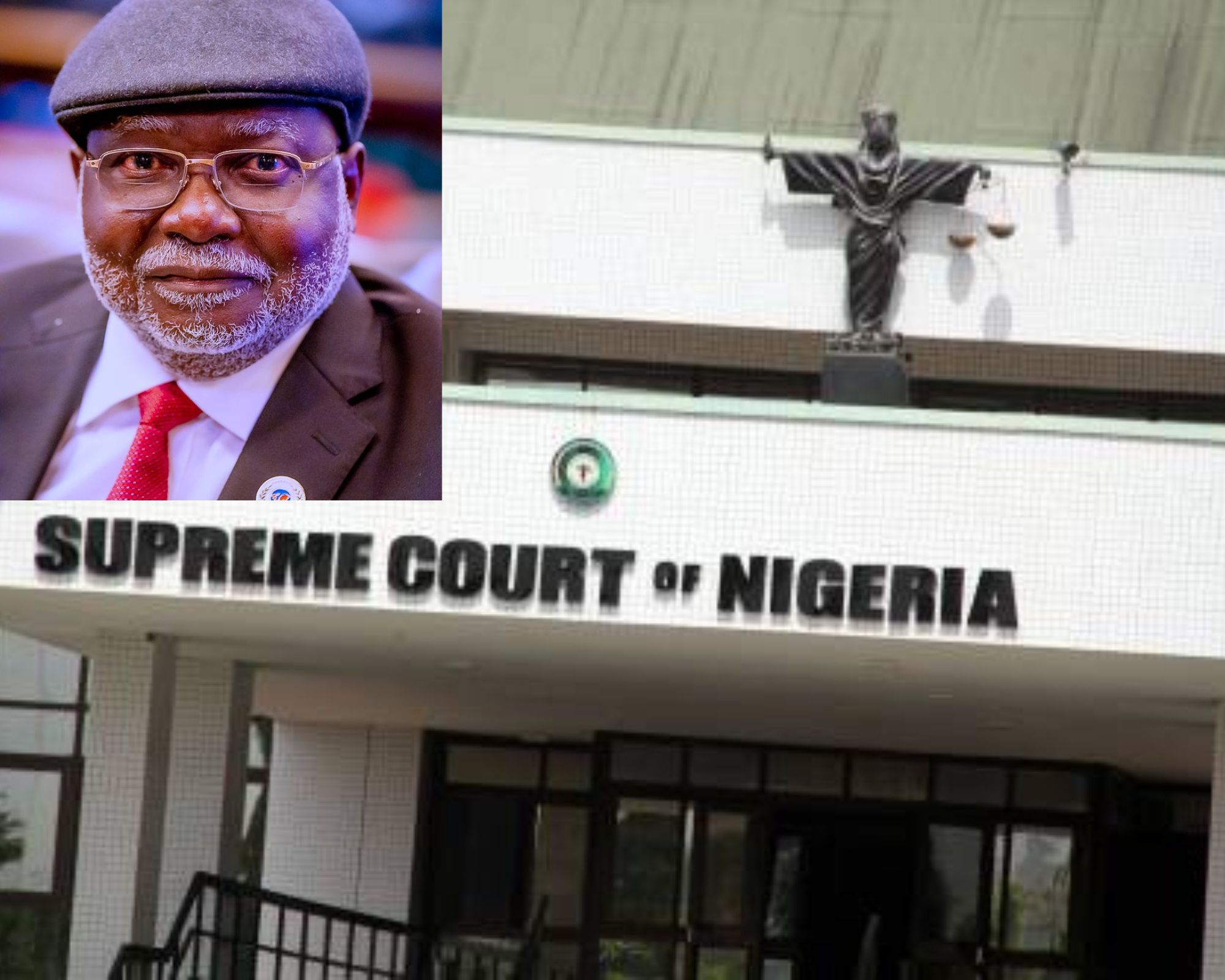
As Nigerians look forward to the appointment of more justices to fill up the yawning vacancies at the Supreme Court although the National Judicial Council (NJC) maintains that it is not aware of the list of 22 justices penciled for elevation to the apex court, a close study of the list said to have emanated from the Federal Judicial Service Commission (FJSC has begun to raise questions.

Currently, the Supreme Court is down to 10 justices. Section 230 of the Constitution provides that the Supreme Court of Nigeria shall consist of (a) The Chief Justice of Nigeria and (b) Such number of Justices of the Supreme Court, not exceeding Twenty-One.

From the constitutional provisions, Nigeria’s apex court is meant to be manned by a CJN and “such number of Justices of the Supreme Court, not exceeding 21…”

As it stands, the North Central and the South-East no longer have any representation at the Court presently constituted by the CJN and 9 justices. The North East and North West have two justices respectively. They will need an extra judge each to make up their number while the South-South and South-West have a full complement with 3 to each. In all, 12 justices will be needed to fill the vacancy.

When the nomination is concluded and 12 justices are selected for appointment, what will be the criteria for assigning extra slots to a region? Up for nomination on the said list are justices from the South-West and South-South, regions that already have a complete number at the court. But it also does appear that the South West always gets an extra judge while the North with more regions retains the highest number. Whether 12 or 11 justices are eventually appointed, when the vacant slots are taken, how will the remaining 4 or 3 justices be appointed? What will be basis for their being chosen?

Law Professor, Prof Alphonsus Okoh Alubo, SAN gave an opinion.

“It is ennobling that the National Judicial Council, has disowned (for now at least), the list in circulation, said to have emanated from the Federal Judicial Service Commission. It is also ennobling that the so-called list, has not been officially published and that has allowed a groundswell of opprobrium to the list, commendably. It is thus time, to make amends and ensure equal representation for all the Geo- political Zones. There must be no additional number of justices to Zones that have their full complements. If it was contemplated, it must be abandoned forthwith. The current vacuum at the Supreme Court is unacceptable and the NJC and the President must move at the speed of light, to ensure the Supreme Court, has the full number of 21 Justices, specified by the Constitution.”

Another teacher of law and former Chair of, the National Human Rights Commission. Prof. Chidi Anselm Odinkalu shared some thoughts:

“The point of this is to lock in long-term disparity in the distribution of the seats on the Supreme Court bench. We have 6 Geo-Political Zones and 21 seats on the Supreme Court. Since 6 is not a factor of 21, it means that if the Supreme Court is at optimum composition, some Geo-Political zones could have more judges than others.

“Now, as you know, replacement on the Supreme Court is done on the basis of zonal like-for-like. So, if a judge from South West goes, another from South West replaces him or her. And although the Supreme Court got a full complement of 21 Justices on November 10, 2020, with the appointment of 8 justices, the number has never been this low and so the disparity in geo-ethnic composition has never been tested. This is the 1st time that is up for grabs. If a Chief Justice from the SW can grab another slot for the Zone, then he engineers long-term advantage for the Zone in the composition of the Supreme Court.

“The thing to do, you would think, would have been to establish a baseline of 3 Justices per Zone and then have a set of substantive criteria with reference to which the remaining 3 are to be allocated but not on the basis of Geo-Political or ethnic equity. So, for instance, it could be used to redress skill or expertise gaps. For example, you could say one goes to academics; another to SANs; to women or to expertise in natural resources law, etc. But no, it looks like it is all ethnic grab to be locked in at the moment.

“In November 2020 when Helen Ogunwumiju (South West) was sworn in with Lawal Garba, (North West), Abdu Aboki (North West), and M M Saulawa (North West), Adamu Jauro (North East), Samuel Oseji (South South), Tijani Abubakar (North East), and Emmanuel Agim (South South), you still had Rhodes Vivour (Lagos), Ariwoola (Oyo), and Kekere -Ekun (Lagos). Ogunwumiju (Ondo) made them 4 from SW. So, now, they have 3 from SW, Ariwoola will say he is appointing a replacement for Rhodes Vivour. And Abiru whom he wants to press into service is from Lagos.”

Prof R.A.C.E Achara had a divergent view:

“I don’t believe much in geographical demographics for judicial appointments. Instead of addressing the monumental problems that undermine the integrity of our judicial, nay entire legal, system, those who have enthroned the rot have continually managed to distract us with peripherals and incidentals, which even if solved one way or another, cannot possibly address the fundamental problems…

“As I have said before, we don’t need more than 7 justices in our Supreme Court – one panel only of the CJN and 6 Justices. Low-quality, inconsistent, and sometimes incoherent reasoning precipitates the overflow of appeals that we now see. A top-quality bench of Supreme Court justices will give coherent guidance sufficient to stanch the avalanche of useless appeals.”

To Dr. Suleiman Nchi, Senior Lecturer and a former Dean Faculty of Law, Nasarawa State University, “It seems the full Supreme Court will still not be 36 Justices (37 + FCT), so you probably have to use the 6 geopolitical zones as some form of equitable basis for such appointments to reflect national spread, hopefully without compromising competence and integrity. Even then some zones may still end up having more members of the apex bench depending on the prevailing and dominating political currents.

“Beyond any constitutional and other legal requirements, appointments into public offices are often finally based on policy and political (networks and relationships) considerations. That’s the reality.

“The ideal is to insist on merit, competency, and integrity. Then, of course, it matters not where an appointee was born! The controversy is because such appointments are cynically regarded as not a call to service but as patronage and when that happens the appointees (who often get appointed not for their competence and integrity but for their descent or social and political connections) see their appointments from those contexts.

“Their loyalty is, therefore, not to the institution or community they are to serve but to their mentors and patrons. Sadly, such appointees are often incompetent and mercenary and so most susceptible to corruption.”

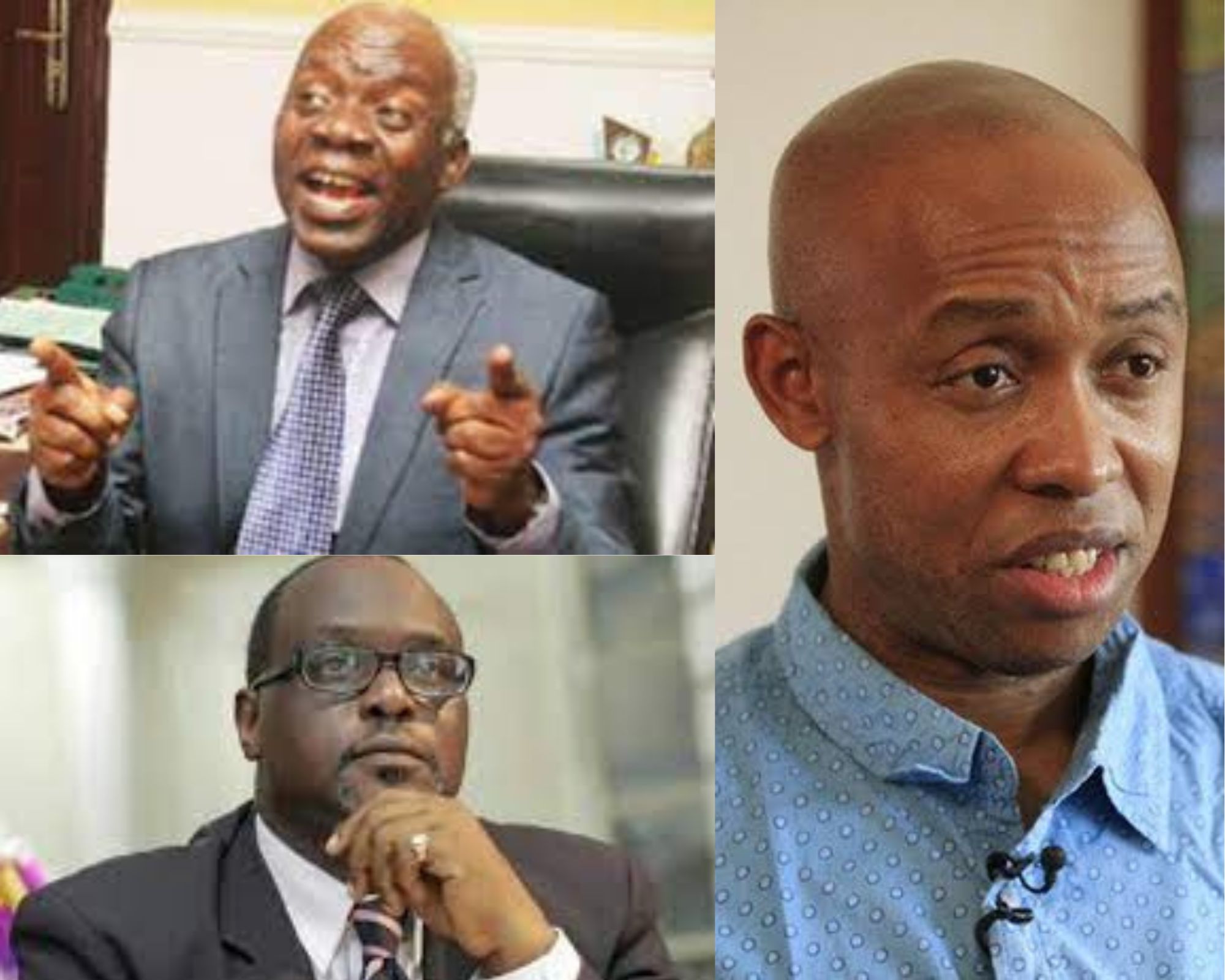
Falana describes contradictions in Kano Guber Court of Appeal judgment as “Scandalous!”

  • It is scandalous judicial debacle — NNPP
  • The judiciary in #Nigeria is crooked — Odinkalu

Senior Advocate of Nigeria and rights crusader, Mr. Femi Falana, SAN, has revealed that despite the general belief that the Kano State Gubernatorial Election Petitions Tribunal, which sat at the Court of Appeal in Abuja, nullified the election of Governor Abba Kabir Yusuf of Kano State, the majority judgement of the Court upheld his appeal and granted all the reliefs sought by the governor.

Speaking last night on Arise News Primetime, Falana said he was surprised when he read a copy of the judgement, to see that the majority judgement set aside the judgement of the lower tribunal and awarded cost in favour of the governor.

“You will be surprised if I show you the judgement. To my utter dismay the majority judgement of the Court of Appeal in Kano upheld the Appeal, set aside the judgement of the lower court and awarded cost in favour of the governor that was removed by the lower Tribunal. There are contradictions which the court can no longer explain, but which is likely to be taken up by the Supreme Court.

Falana described the development as scandalous to the integrity of the judiciary. He also faulted the decision of the court to punish millions of voters for the mistake committed by INEC officials.

“Contrary to the impression that has been given out there, the majority judgement of the Court of Appeal has confirmed that the judgement of the lower court was wrong, and has set it aside in writing, upheld the Appeal and granted all the reliefs sought by Governor Abba. So, you ask yourself, what’s going on?’’

Likewise, Law teacher and ex-Chair of the National Human Rights Commission, Chidi Odinkalu in a tweet said:” When we say the judiciary in #Nigeria is crooked, ppl wonder how so. Look: the Court of Appeal in Kano governorship case resolved all the issues “in favour of the appellant & against the 1st Respondent.” Yet it found the appeal lacking in merit & liable to be dismissed. Explain!”

On its part, the New Nigeria People’s Party (NNPP) said the controversy trailing the judgment is a “scandalous judicial debacle.”

The Certified True Copy of the judgment, which was made public on Tuesday, contradicted what was read at the Court of Appeal Court last Friday

In an appearance on Arise TV’s The Morning Show on Wednesday , the spokesperson for the NNPP, Ladipo Johnson, said the matter would ultimately be resolved by the Supreme Court.

He acknowledged that there are discrepancies between the information that was read out last Friday and the contents of the official CTC report.

“It is very unfortunate that we have come to this low state as a country regarding the judiciary. I am a legal practitioner, and it hurts me; it pains the heart that this is the sort of situation that we find ourselves in.

“You just have a 14-day window to lodge your appeal at the Supreme Court, so when you deliver judgment on Friday and you don’t give the CTC to counsel till some five days later, it really makes no sense,” Johnson said.

The PUNCH reports that the verdict of the court last Friday indicated that the Appeal Court upheld the decision of the petitions tribunal sacking Governor Abba Yusuf.

However, confusion arose on Tuesday when the CTC of the court judgment on the state governorship election surfaced, four days after the judgment had been delivered.

Our correspondent obtained a copy of the CTC, shedding light on a potential mix-up in the conclusions.

The governor, who was sacked by the state governorship election petition tribunal, is the appellant at the Court of Appeal

The All Progressives Congress is the first respondent, the Independent National Electoral Commission is the second respondent, and the NNPP is the third respondent.

Below are the last five contradictory paragraphs of the CTC:

“In the circumstances, I resolve all the issues in favour of the appellant (Abba Yusuf) and against the first respondent (APC).

Then it said, “I will conclude by stating that the live issues in this appeal are hereby resolved in favour of the 1st respondent (APC) and against the appellant (Governor Abba Yusuf)”.

“Therefore, I find no merit in this appeal (which was filed by Yusuf) which is liable to be and is hereby dismissed.”

“The judgment of the tribunal in Petition No.: EPT/KN/GOV/01/2023 between: AL PROGRESSIVES CONGRESS (APC) v. INDEPENDENT NATIONAL ELECTORAL COMMISSION & 2 ORS. delivered on the 20th day of September, 2023 is hereby set aside.”

“The sum of N1,000,000.00 (one million naira only) is hereby awarded as costs in favour of the appellant(Abba Yusuf) and against the 1st respondent(APC).”

The NNPP spokesperson lamented, saying, “How is it that in the CTC signed by the judges, you have that conclusion? Were they two different judgments typed? Leave the facts and the law to the Supreme Court; what we are saying is that the optics are bad, and you cannot stop anyone from saying they have no confidence in the judiciary.

“When the Court of Appeal comes out with that, you begin to know that in this modern day of computer produced document, something must have been there. Was it cancelled? Was part of it removed? Are they going to tell us it’s a clerical error? There is something called a slip rule in law where you can recall your judgment if there is a small error. This is not a small error.

“The Court of Appeal must let Nigerians know how that happened and how they couldn’t get us a CTC for about four days.”

He added, “If we have an unbiased panel, then justice will be done for the millions of people in Kano who do not understand these technicalities. All they know is that they are being cheated.”

The PUNCH had earlier reported that the three-member panel of the court determined that Yusuf was not on his political party’s membership list.

It stated that a party must hold the names of its registered members in both hard and soft copies, citing a clause of the Electoral Act.

Addressing the issue, Johnson said, “A man who is not a member, can he have a membership card? But these are all questions for the lawyers at the Supreme Court to treat.”

Nigerian Military accuses Finland of encouraging separatist leader, Simon Ekpa

  • Blames judiciary for partly contributing to insecurity

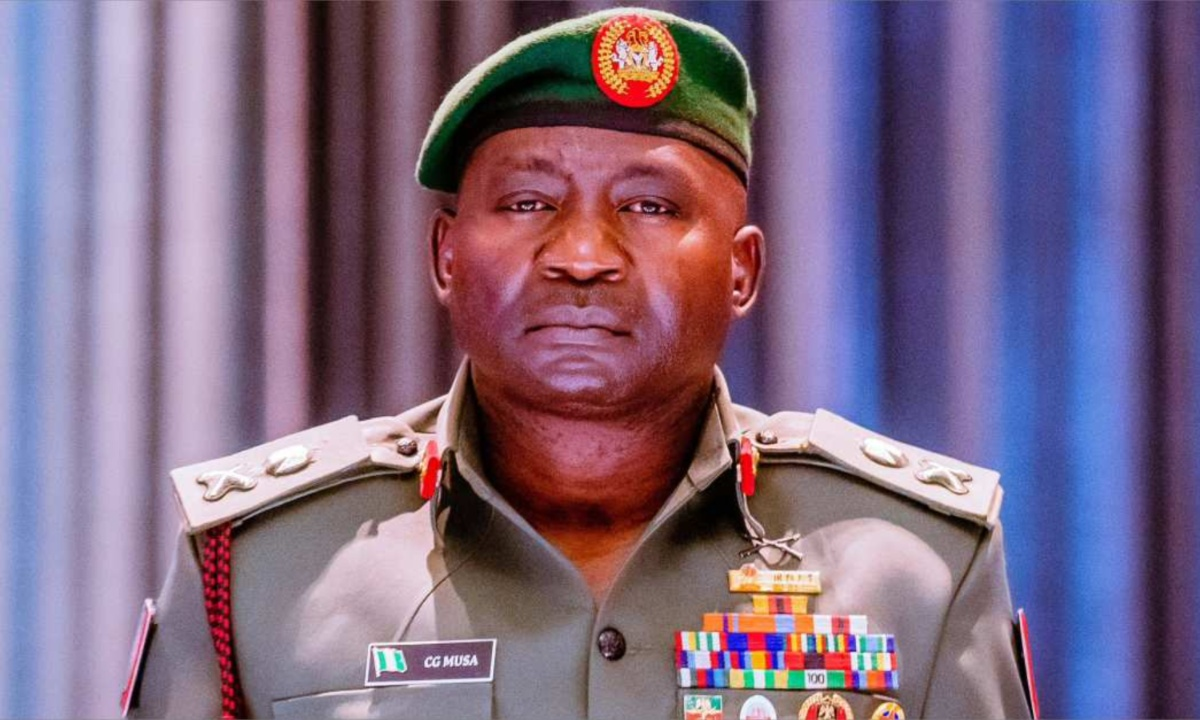
The Chief of Defence Staff, Christopher Musa, says Finland has been encouraging a separatist, Simon Ekpa, to wreak havoc in Nigeria.

Mr Ekpa is one of the leaders of the proscribed separatist group, the Indigenous People of Biafra (IPOB).

The CDS also blamed the judiciary for partly contributing to the lingering insecurity in the country.
Mr Musa said Finland must explain why it continues to protect the separatist leader. He added that the Finland Ambassador to Nigeria should be summoned to provide clarification on the stance of the Finnish government.

The CDS also blamed the judiciary for partly contributing to the lingering insecurity in the country.
Mr Musa said Finland must explain why it continues to protect the separatist leader. He added that the Finland Ambassador to Nigeria should be summoned to provide clarification on the stance of the Finnish government.

it diplomatically. Simon (Mr Ekpa) is having a freeway because they (Finland) are encouraging him to do what he is doing. His utterances and actions are affecting what is happening in Nigeria.

“We should never allow that. Our foreign service should step in,” he said.

Ekpa and Finnish government

Mr Ekpa, who resides in Finland, has repeatedly declared sit-at-home orders across the South-east as part of activities to force the government to release Nnamdi Kanu, the leader of IPOB.

The enforcement of the order often leads to killings and violence in the region.

In February, the former Minister of Foreign Affairs, Geoffrey Onyeama summoned the Finnish Ambassador to Nigeria, Leena Pylvanainen, over threats by the Biafra agitator.

Mr Onyeama, at the meeting, expressed displeasure over the recent sit-at-home orders given by Mr Ekpa to his teeming followers, who he said, consequently embarked on killings, maiming, burning and other destructive activities.

Weeks after the meeting, the Finnish government arrested Mr Ekpa but released him some hours later.

According to an official statement shared with PREMIUM TIMES by the Finnish embassy in Nigeria, Mr Ekpa was arrested as part of an investigation by Finland’s National Bureau of Investigation into a suspected money collection offence.

‘The judiciary is failing us’

Mr Musa also blamed the judiciary for partly contributing to insecurity across the country.

He stated that the judiciary has not been helpful in dispensing justice in the fight against insecurity.

The CDS cited instances where the judiciary released suspects on bail after arrest by the military.

“I have been in the North-east, there were a lot of Boko Haram elements that have been captured. We have kept them for five/six years. We the armed forces can arrest but cannot prosecute. “Some of them have been found wanting but no prosecution. We are keeping them for this lengthy period—everyone is accusing the armed forces of keeping them against their human rights but we cannot prosecute,” he said.

He also disclosed that the military now destroys seized vessels instead of waiting for the court process.

Following the presentation by the service chiefs and the IGP, the lawmakers took turns to ask questions.

However, the House moved into an executive session to receive answers to the questions.

Premium Times

Election Fraud: CSO demands investigation of INEC officials

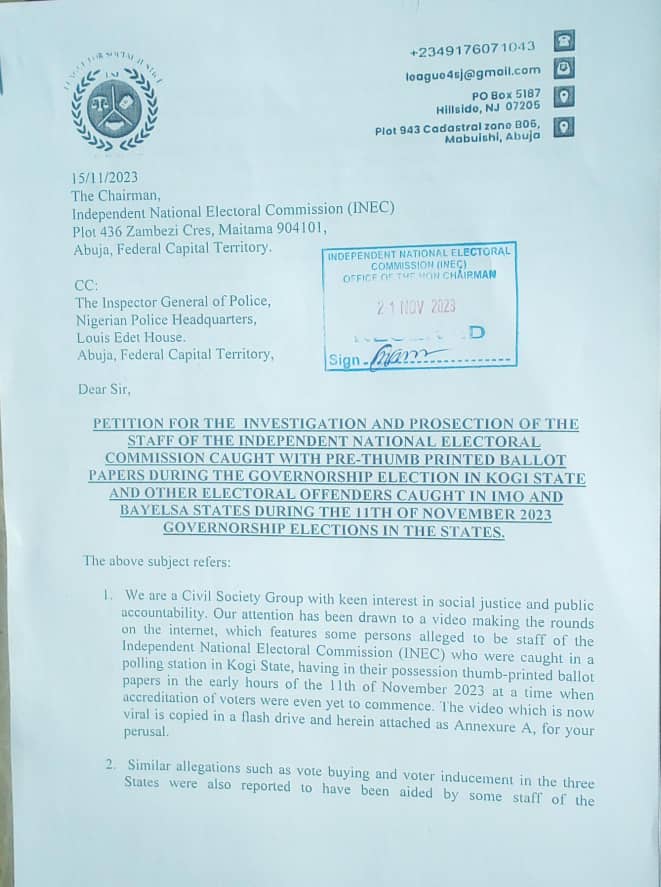
In view of some electoral malpractices recorded in the governorship elections conducted on the 11th of November 2023, the League for Social Justice, a civil society organisation has, through its Chief Legal Officer, Maduabuchi O. Idam, Esq., petitioned the office of the Chairman, Independent National Electoral Commission (INEC) and the Inspector General of Police, demanding among others, the investigation of the INEC officials who were caught with pre-thumb-printed ballot papers in Kogi State before accreditation of voters on the election day, and other electoral fraudsters in Imo and Balyelsa States.

League for Social Justice condemned in strong terms the acts perpetrated by the suspected INEC officers, “as we term it a breach of public confidence and public trust, we vow to follow up and pursue the petition to ensure that same is investigated and the suspects are prosecuted to a logical conclusion.

“We believe that a corrupt-free Nigeria is achievable. Hence, we shall not be deterred in our resolve to fight corruption and corrupt public officers in Nigeria.”

Part of the petition reads: “Similar allegations such as vote buying and voter inducement in the three States were also reported to have been aided by some staff of the Commission, deployed to Kogi, Imo and Bayelsa States for the conduct of the governorship elections in those States.

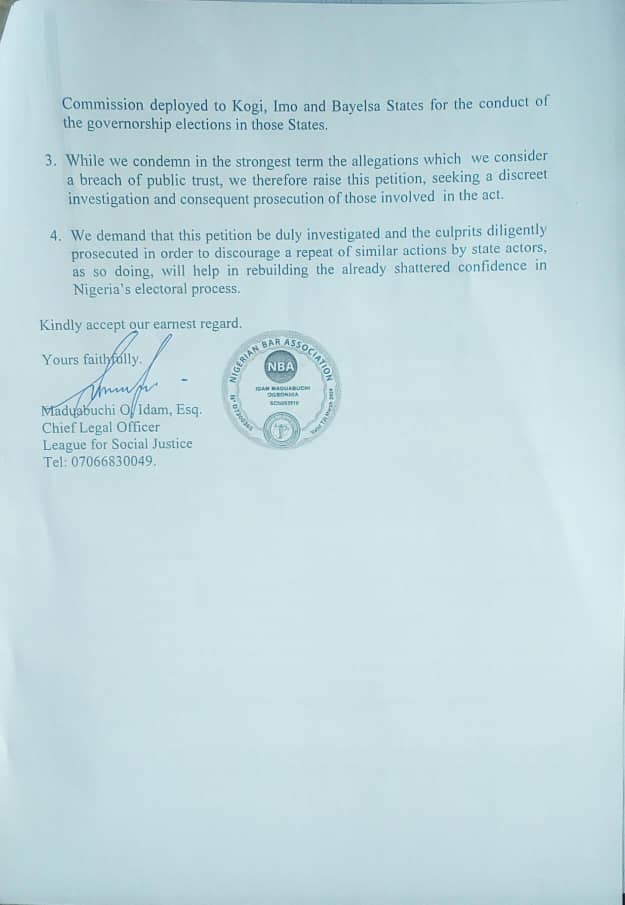
“In light of the foregoing, we frown at the allegations as we consider it a breach of public trust. Hence we raise this petition, seeking a discreet investigation and consequent prosecution of those involved in the act.

“It is important that this petition be duly investigated and the culprits diligently prosecuted in order to discourage a repeat of such inglorious acts by State officials, as by so doing, it will help in rebuilding the already shattered confidence in Nigeria’s electoral process.”

Reckless Spending: States spend N1.7tn on trips, meals, borrow N988bn

The 36 states of the federation have spent N1.71tn on recurrent expenditures including allowances, foreign trips, office stationery, aircraft maintenance, and more in the first nine months of 2023.

This is according to an analysis of their budget performance reports sourced from Open Nigerian States, a budgIT-backed website that serves as a repository of government budget data. 24 states analysed by The PUNCH had budget implementation data covering the first three quarters of the year while 12 states had data for the first two quarters of the year.

The states cumulatively spent N802.43bn on salaries across the data period available, but The PUNCH isolated this data set to focus on other recurrent spending items. If salaries were added, total recurrent spending would have been N2.52tn.

Other recurrent spending items covered in this report include the amount spent on foreign and domestic travel, Internet access fees, entertainment, foodstuff, honorarium/ sitting allowance, wardrobe allowances, telephone bills, electricity charges, stationery, anniversaries/special days, welfare, aircraft maintenance, and more.

Of the 36 states, only 30 states have disbursed security votes (N87.45bn) so far. Also, the total borrowings of the states grew to N988bn as of the third quarter of 2023.

In the first nine months of 2023, Abia spent N17.61bn on housing/rent allowance, meal subsidy, entertainment allowance, wardrobe allowance, social benefits, pension, gratuity, internet access charge, telephone charges, local and international travels, office stationeries, maintenance services, consulting and professional services, fuel, financial charges, miscellaneous expenses, and others.

In the first two quarters, Akwa Ibom spent N92.54bn on allowances and social contributions, social benefits, travel and transport, utilities such as electricity chargers, Internet access charges, and more, materials and supplies such as office stationery, drugs, laboratory and medical supplies, maintenance, training, and more. So far, the state has spent N10 million on hosting/mobilisation of political associations and interest groups, N841.83m on entertainment at meetings, and more.

Adamawa has so far spent N40.90bn on non-salary expenditure as of the end of Q3, 2023. Part of its recurrent expenditure which includes allowances and social contribution includes N1.29bn on furniture allowance, N1.19bn on travel and training including domestic and foreign, N214.37m on office stationery and consumables, and N413.32m on refreshments and meals.

Anambra’s non-salary spend was N15.17bn as of the end of Q2, 2023; Bauchi was N70.25bn. By the end of Q2, 2023, Bayelsa had spent N58.26 on non-salary recurrent expenditure. These expenses include N2.18bn on training and travel, N1.81bn on welfare packages, N78.60m on burial logistics, N1.48bn on town hall meetings expenses, N48.20m on praise night/thanksgiving expenses, N17.70m on marriage ceremony support, and more.

Benue’s non-salary spend was N34.44bn. It spent N387.55m on special day celebrations, N434.17m on welfare packages, N7.06bn on security votes, N1.23bn on materials and supplies such as office stationery, books, and more.

Borno’s non-salary spend as of the end of Q3, 2023 was N32.63bn, Cross Rivers was N43.71bn, Delta was N152.15bn, Ebonyi was N30.91bn, and Ebo was N41.11bn. As of the end of Q2, 2023, Ekiti’s non-salary spend was N31.33bn. Part of this expense includes N2.74bn on local and international travel and transport, and N1.97bn on miscellaneous such welfare packages, refreshments, honorarium and sitting allowances, and more.

Enugu’s non-salary spend as of the end of Q3, 2023 amounted to N33.36bn, Gombe was N24.73bn (for Q1 and Q2). Imo was N58.21bn, where N1.21bn was spent on refreshments and meals, N866.81m on welfare packages, N3.26bn on allowances and more. Jigawa’s non-salary spend was N49.64bn which included allowances of N22.07bn, N1.18bn on transport and travelling, N1.83bn on materials and supplies including drugs, vaccines, medical supplies, stationaries, and more.

Total non-salary spend in Kaduna was N27.87bn as of the end of Q3, Kano was N17.79bn (Q1 and Q2), Katsina was N40.49bn, Kebbi was N24.51bn, Kwara was N41.19bn, Kogi was N58.02bn. Lagos’s non-salary spend was N289.49bn. These expenses include N741.34m as severance pay for political office appointees, N340.95m on aircraft maintenance, N8.07bn on plant and generator costs, N1.13bn on special days/celebrations, N107.79bn on special duties, servicing of meetings N11.45bn, N2.53 on welfare packages for the public, N3.69 on enforcement expenses, and more.

Nasarawa’s non salary spend as of Q3, 2023 was N28.13bn, Niger was N23.43bn (as of Q2), Ogun was N49.27bn (as of Q2), Ondo was N59.70bn, Osun was N42.59bn, Oyo was N24.52bn, Plateau was N7.99bn as of Q2, Rivers was N51.96bn (as of Q2), Sokoto was N20.89bn, Taraba was N24.73bn, Yobe was N25.07bn (as of Q2, 2023), and Zamfara was N29.14bn.

Total spending by states, including capital expenditure, amounted to N4.59tn in the period under review. States may not match their 2022 spending (N8.2tn) due to reduced revenues and macroeconomic challenges. However, there is growing concern that states are spending a lot on irrelevant items.

Government spending has come under increased scrutiny, especially considering the worsening economic challenges in the country. Recently, the governorship candidate of the Action Democratic Congress in Lagos, Funso Doherty, called out Lagos State for how it was spending public funds. This has since been met with public outcry.

In a letter to the government, he wrote, “I have had the opportunity to go through the register of public procurement awards by LASG, its ministries, and Department Agencies for the second and third quarters of 2023, as reported by the Public Procurement Agency.

“This attached schedule highlights selected awards which, in my opinion, require greater scrutiny.”

In the period under review, state governments increased their borrowing to N988.48bn to augment their FAAC allocations and internally generated revenue. 29 states now owe financial institutions and other government enterprises N536.01bn while borrowings from short and long-term borrowing from multilateral lenders such as the World Bank, the International Monetary Fund, Afrexim, and African Development Bank by 33 sub-nationals increased to N452.47bn.

It was observed that the Lagos state had the highest domestic debt (N200bn), then Delta (N70bn) and Oyo(N58.87bn).

Similarly, Delta state is the highest borrower from multi-lateral lenders with N71.45bn in debts, followed by Lagos with N51.36bn, Akwa-Ibom (N27.04bn) and Ogun (N22.82bn).

Recently, The PUNCH reported that state governments borrowed about N46.17bn from three banks to pay salaries between January and June 2023.

Borrowing for recurrent expenditures is a growing concern to economists. An economist and former Vice-Chancellor of the University of Uyo, Prof Akpan Ekpo, recently told The PUNCH, “The situation is bad, but most states do not have enough in terms of internally generated revenue. A lot of the states, even their federal government allocation, cannot pay salaries, which is very dangerous. You should not borrow to pay salaries.

“You should borrow to finance capital projects. States have to think of new ways of increasing their IGRs. If they continue borrowing to pay salaries, it is not good for the economy.”

A development economist, Dr Aliyu Ilias, further noted, “With the current hardship we have in the country, they may not have an alternative than to resort to borrowing. But borrowing to pay salaries is becoming a problem. We must stop borrowing for recurrent expenditure. We can borrow for capital expenditure; that is okay. The consequence is that we are digging ourselves into more trouble.”

Meanwhile, the Ondo State Government has denied media reports that the state governor, Mr Rotimi Akeredolu spent the sum of N7.3bn without the approval of the state House of Assembly.

The Chief Press Secretary to the governor, Mr Richard Olatunde, in a statement on Tuesday said, “It is important to state unequivocally that the referenced N7.3bn constituted the cumulative amount of palliative funds received from the federal government.

“These funds were allocated under the contingency sub-heading to address unforeseen expenses not initially budgeted for but deemed necessary during the fiscal year.

“While the original contingency fund in the 2023 budget was N1.07bn, the additional N7bn represents funds received from the federal government labelled as ‘Infrastructure Support Fund,’ specifically for palliatives meant to cushion the effects of fuel subsidy removal.”

Credits: The Punch

TIPS