Home Blog Page 691

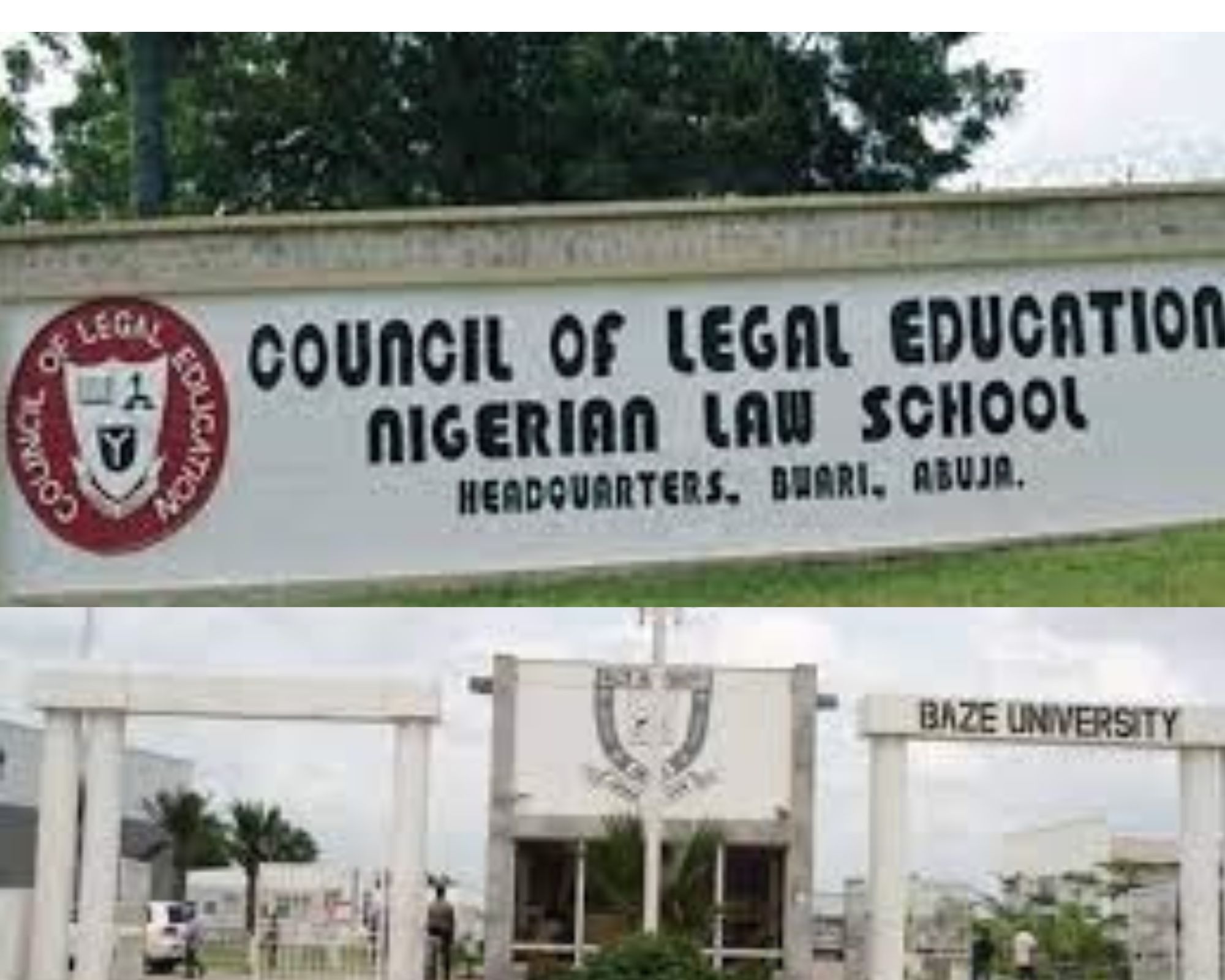
Admission Quota Violation: Council of Legal Education suspends admission into BAZE University Law faculty

Following what the Council of Legal Education described as “consistently and most flagrantly” contravening its admission quota, the Council has placed a temporary moratorium on admissions into the faculty of Law at Baze University in Abuja.

The Council in a press statement signed by Ms. Aderonke Osho, Ag. Secretary & Director of Administration disclosed that: “Since 2017 the Council of Legal Education had  grappled with the excesses of Baze University by admitting over 750 law students which ordinarily would have taken about 15 years of admission based on the quota allotted to the University.”

BAZE UNIVERSITY, ABUJA.

The full text of the statement reads:

At its Quarterly Meeting held on November 23, 2023, the Council of Legal Education (CLE) presided over by its Chairman, Chief Emeka Ngige, SAN, OFR considered the report of the  Accreditation panel to the Faculty of Law, Baze University, Abuja.

It emerged from the findings by the Panel led by the Director-General, Nigerian Law School, Prof Isa Hayatu Chiroma, SAN that:

  • Baze University consistently and most flagrantly had contravened its admission quota of 50 students per session as approved by the Council of Legal Education with the result that the Faculty is currently having a backlog of over 347 law students waiting to be admitted into the Nigerian Law School.
  • Since 2017 the Council of Legal Education had  grappled with the excesses of Baze University by admitting over 750 law students which ordinarily would have taken about 15 years of admission based on the quota allotted to the University.
  • Baze University runs a three (3)-year LL.B programme for some UTME candidates without the approval of National Universities Commission (NUC),  Joint Admission and Matriculation Board (JAMB and Council of Legal Education. Under the NUC Minimum Benchmark  Academic Standard (BMAS) for law degree programme in Nigerian Universities, Law is a five (5)-year programme for UTME candidates and four (4)-year for Direct Entry students.

The Council of Legal Education after thorough consideration of these infractions resolved as follows:

 (i) The imposition of a moratorium on admission of law students  to the Faculty of Law,  Baze University Abuja  with immediate effect;

(ii)  The moratorium will last in the first instance  for a period of 5 years and may be renewed if no satisfactory action is taken to remedy the situation.

(iii) The Council in the interest of the innocent students, parents and guardians will use the 5 year period to find ways to deal with the backlog of law students admitted by Baze University in excess of its admission quota.

(iv) Follow-up visits will be paid to the University to ascertain the extent of the measures it has taken to remedy the anomalies observed during the accreditation visit. 

(v) The National Universities Commission (NUC), Joint Admission and Matriculation Board (JAMB), Parents, guardians, prospective applicants and members of the public are hereby put on notice on the status of Baze University Abuja and its faculty of Law.

Dated at Abuja this 23rd of November 2023.

….…………………………

Ms Aderonke Osho

Ag. Secretary & Director

Of Administration.

WhatsApp introduces face identification protection

In an upgrade to privacy checkup, WhatsApp has introduced additional steps to protect users from identification theft which always leads to hacking and the complete control of users’ phone account by the hackers.

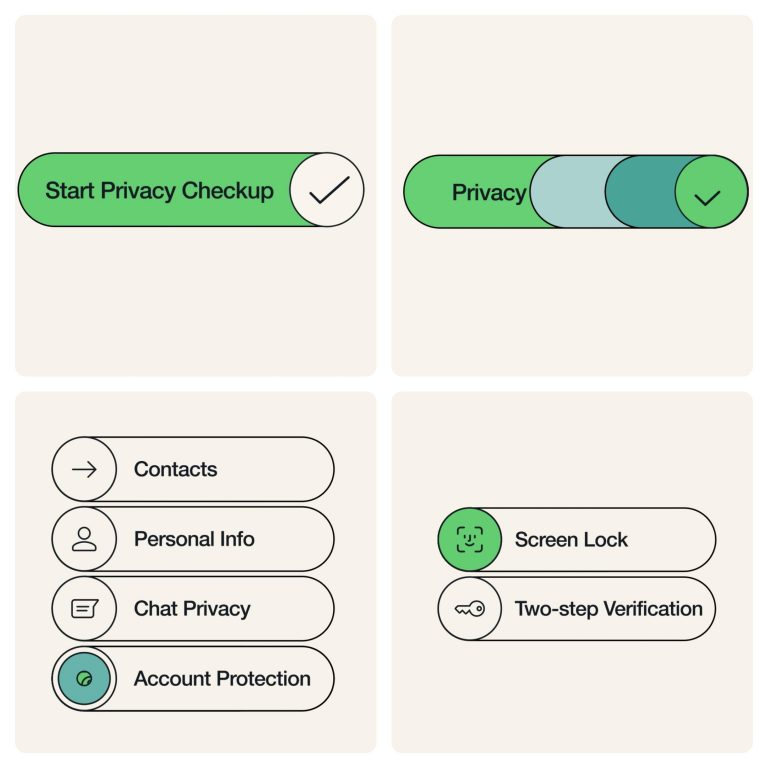
Tagged “Introducing Privacy Checkup” the new upgrade allows owners to “take control of what you share and who you share it with.”

The Privacy Checkup will guide users through privacy settings to help them choose the right level of protection.

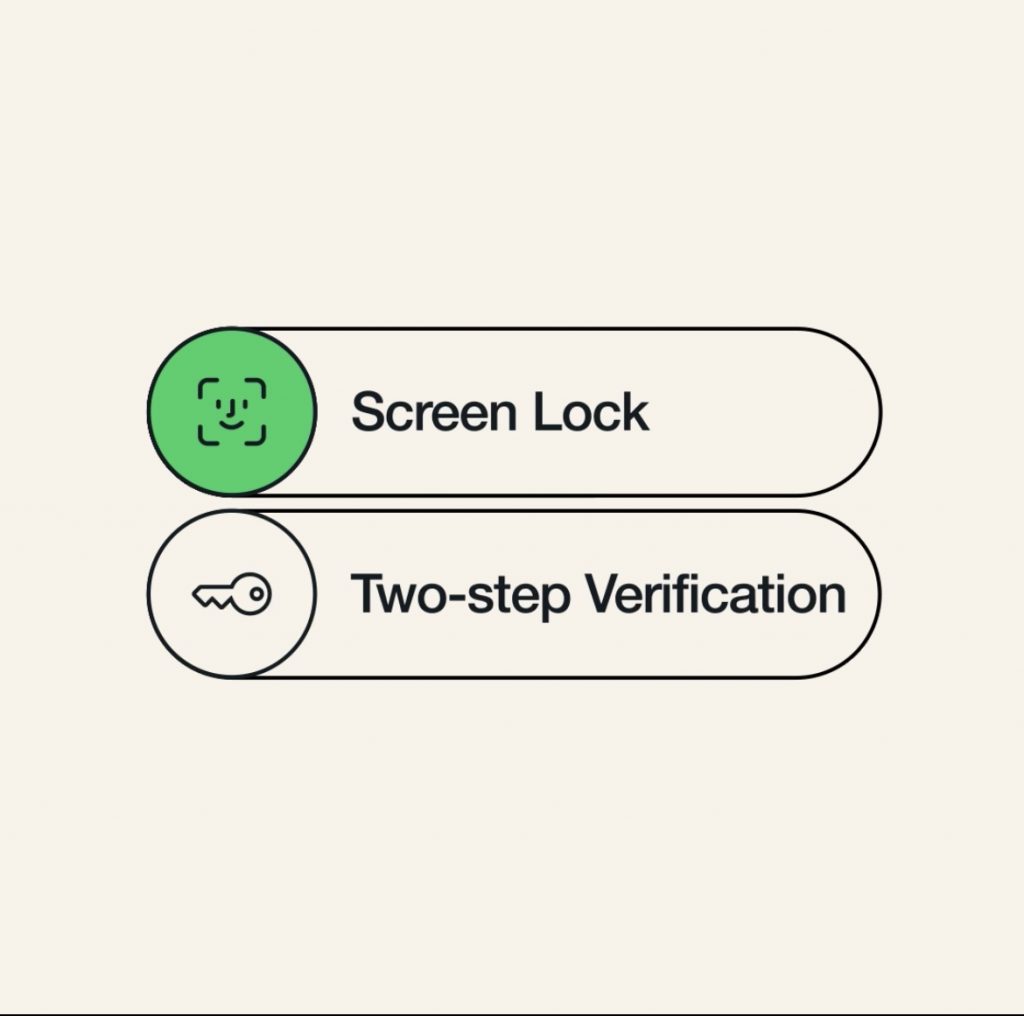
Included in the new upgrade is the Screen Lock which is an enhancement to the initial Two-step Verification.

With the Screen Lock which requires Face Identification, only the users can unlock the WhatsApp screen by positioning their face on the screen for it to be accessed.

The process begins from “Try It” and it leads to the last stage of Face capturing.

The upgrade was sent to all WhatsApp users on Wednesday, November 22, 2023.

The New Americans Mag

UK High Court set to hear claims over Shell’s chronic oil pollution in Niger delta

A London High Court has ruled that thousands of Nigerian farmers and fishermen can bring human rights claims against the fossil fuel company Shell over the chronic oil pollution of their water sources and destruction of their way of life, the high court in London has ruled.

Mrs Justice May ruled this week that more than 13,000 farmers and fishers from the Ogale and Bille communities in the Niger delta were entitled to bring legal claims against Shell for alleged breaches to their right to a clean environment.

The judge ruled it was arguable the pollution had fundamentally breached the villagers’ right to a clean environment under the Nigerian constitution and the African charter on human and people’s rights. Claims under these rights have no limitation period.

Click here to continue reading.

Catalogue of lootings in Nigeria, By Femi Falana, SAN

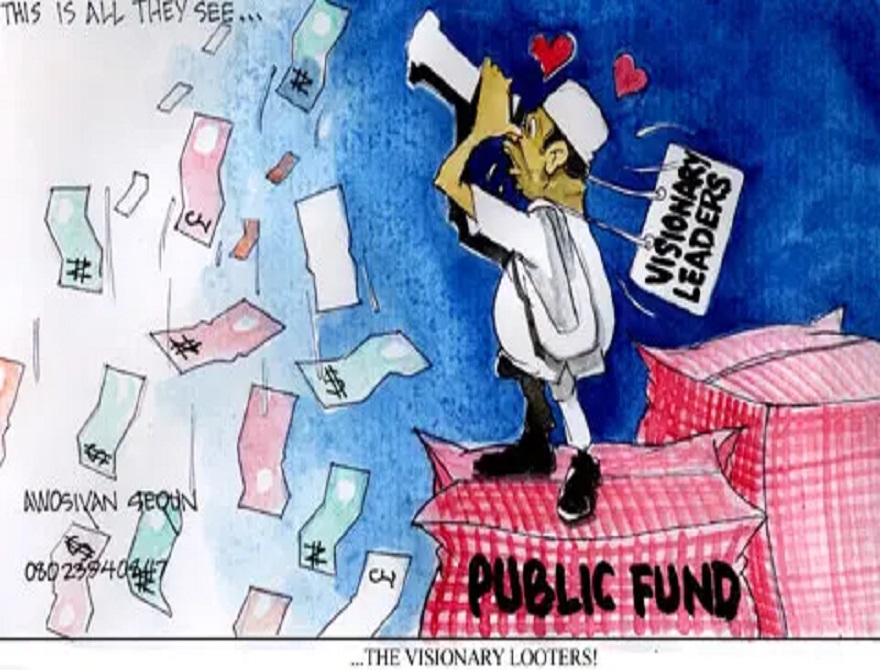
Globally, subsidies, whether for food, transportation, energy or housing, are part of good governance. So, the issue is not subsidies but who benefit from them. In Nigeria, subsidies are primarily of the rich, by the rich and for the rich. I will highlight a few, how they are being manipulated and how huge sums of money can be recovered not just to subsidize fuel but also provide funds for development.

  1. Diversion of N40 billion from Federation Account

A company, Continental Transfert Technique had been hired by the Ministry of Interior to collect the Combined Expatriate Residence Permit and Alien Card (CERPAC) Fee of $2,000 per annum from every expatriate in Nigeria. The revenue from 2019 comes to an average of N40 billion per annum. This collection which violates Section 162 of the Constitution and provisions of the Immigration Act 2015, is then shared on percentages of Federal Government, 30, Interior Ministry, 7, Immigration Service,
and Continental Transfert Technique, 58 per-cent.

We challenged this illegality at the Federal High Court and won the cases. The court directed the NIS to collect the funds henceforth and remit same to the Federation Account. But the contractor and the federal government appealed against the judgment and have continued to share the N40 billion per annum 😔

  1. Additional Revenue of $1.5 billion payable to Federation Account

In July 2015, I drew the attention of the Federal Government to the fact that the 15-year fiscal incentives given to the oil and gas companies operating under the Deep Offshore and Inland Basin Production Sharing Contracts Act had expired in June 2014. When the Federal Government ignored our request, we drafted a Bill for the amendment of the law. The Bill which was adopted and sponsored by Senator T. Orji scaled the first reading in the Senate but was not passed before the dissolution of the 8th National Assembly.

However, the same Bill was modified and passed by both houses of the 9th National Assembly and assented to by President Buhari on November 4, 2019. In justifying the passage of this Bill, Senate President Ahmed Lawan announced that the new law would increase the revenue of the nation by not less than $1.5 billion per annum.

  1. Outstanding royalties of $62 billion

In campaigning for the amendment of the Deep Offshore and Inland Basin Production Sharing Contracts Act, I requested the Federal Government to collect outstanding royalties payable by the International Oil Companies under the Act. The Federal Government admitted that the country had lost a whopping sum of $60 billion. But my demand for the collection of the huge fund was ignored. The governments of Rivers, Akwa Ibom and Bayelsa States then approached the Supreme Court which on October 20, 2018 ordered the Federal Government to collect the royalties for the past 18 years. The Federal Government confirmed that the outstanding royalty withheld by the IOCs is $62 billion but has refused to collect it.

  1. FG denied revenue of $500 million by a group of corrupt public officers

The international Cargo Tracking Note Scheme to protect international shipping and prevent the movement of dangerous cargo and arms shipments was introduced into Nigeria in 2010 via an agreement between the Nigerian Port Authority and TPMS, a private company. Barely a year later, the agreement was suspended. When our attention was drawn to the illegal suspension of the Cargo Tracking Note system, we protested and the suspension was lifted on May 28, 2015 only to be suspended again in 2016.

In 2022, President Buhari issued an executive order which authorized a company to operate the Cargo Tracking Note. But 5 companies sponsored by top government functionaries overruled the President and hijacked the contract. The company that won the contract has since sued the federal government at the Federal High Court. Meanwhile, Nigeria has lost at least $500 million while the security of the nation has been compromised by a bunch of corrupt public officers.

  1. Sale of public assets and enterprises

Successive regimes have been selling assets and enterprises owned by the Federal Government to members of the ruling class in the name of privatisation. The buyers turned round to engage in asset stripping. According to the Bureau of Public Enterprises, between 2004 and 2002, the federal government sold 142 public enterprises to members of the ruling class. The 10 per cent shares reserved for the staff of every privatised enterprise have been cornered by the so called “core investors” contrary to the provision of section 5(3) of the Privatization and Commercialization Act.

  1. $7 billion fixed in 14 banks

Sometime in 2006, the CBN yanked off $7 billion from the nation’s foreign reserves and fixed it in 14 commercial banks in Nigeria. The deposit and the accrued interests were not recovered from the banks.
When I reported the matter to one one of the anti-graft agencies, the CBN claimed that it had forgiven “the forbearance”.

  1. Sale of Heritage Bank, Keystone Bank, Union Bank and Polaris Bank by CBN

The CBN took over Heritage Bank, Keystone Bank, Union Bank and Polaris Bank, spent trillions of Naira to revitalise them only to turn round to sell them under the table. For instance, CBN invested N1.3 trillion in Polaris Bank but sold it for N50 billion!

  1. Theft of Crude oil

The Nigerian Extractive Industries Transparency Initiative (NEITI) has revealed that Nigeria lost 619.7 million barrels of crude oil valued at N16.25 trillion ($46.16 billion) to crude oil theft between 2009 and 2020. Immediate past National Security Adviser, General Babagana said that Nigeria might lose $23 billion in 2023 to crude oil theft.

  1. Theft of gold and other solid minerals

The theft of the nation’s mineral resources is not limited to crude as solid minerals are equally smuggled out of the country by highly placed criminal elements. Former Minister of State for Mines and Steel Development, Dr Uche Ogah recently disclosed that private jets are being used by the rich for gold smuggling in Nigeria. He stated this at an investigative hearing on $9 billion annual loss to illegal mining and smuggling of gold organised by the Senate Committee on Solid Minerals, Mines, Steel Development and Metallurgy. During his contribution at the hearing, Senator Orji Uzor Kalu disclosed that Nigeria lost close to $54b from 2012-2018 due to illegal smuggling of gold.

  1. AMCON is owed N5.4 trillion by the rich

A few years ago, commercial banks were going to collapse due to toxic loans taken by members of the ruling class. To prevent the impending economic doom, the Federal Government set up the Asset Management Corporation of Nigeria (AMCON) to buy off the loans with trillions of Naira provided by the CBN. AMCON has not been able to recover the loans of N5.4 trillion from about 370 corporate bodies.

  1. Indiscriminate import duty waivers

A few privileged members of the business community buy dollars at official rate while they are allowed to import all manners of goods into the country. In the last 5 years, import duties worth N16 trillion were waived for them.

  1. Effort to track and monitor tankers conveying fuel sabotage by NNPC

On August 8, 2018, the Federal Executive Council (FEC) approved the installation of technology monitoring schemes and structures under the Petroleum Equalisation Fund (PEF) for N17 billion. The technology which was designed to track and monitor tankers conveying fuel and other petroleum products was not acquired while the N17 billion approved for it was diverted.

  1. N10 trillion diverted by CEOs of Government enterprises

The Buhari government revealed on December 19, 2018 that government enterprises including the CBN owed about N10 trillion in unremitted operating surplus as at August 2018. The details were provided. The said sum of N10 trillion remains unpaid.

  1. N6 trillion unpaid ground rents by buyers of Government properties

On March 29, 2023, the Senate noted that since 1992, over two million houses across the 36 states and the FCT had been built and allocated to beneficiaries by the federal government without evidence of payment of ground rent on the properties. Consequently, the Senate set up an Ad Hoc Committee to recover over N6 trillion unpaid ground rents from property owners in the country.

  1. Stolen crude oil valued at $29.17 billion

A group of lawyers engaged by NIMASA confirmed that 60.2 million barrels of crude oil valued at $12.7 billion of crude oil was stolen and illegally exported to the United States of America between January 2011 and 2014. This has not been recovered. Also, the House of Representatives investigated and confirmed that undeclared crude oil worth $17 billion was exported to global destinations during the same period. The affected companies are known but government seems to lack the will to bring them to book and recover the sum of $29.7 billion being the value of the stolen crude.

  1. Oil theft of N16.25 trillion

The Nigerian Extractive Industries Transparency Initiative (NEITI) revealed that between 2009 and 2020
Nigeria lost 619.7 million barrels of crude oil valued at N16.25 trillion ($46.16 billion) to oil theft. The security forces have not been able to stop the stealing and smuggling of crude oil from Nigeria.

However, Tantita Security Services Nigeria Ltd (TSSNL), a private company discovered pipelines through which crude oil was being diverted from a 40,000 barrel per day Forcados pipeline to the high seas for export. The indicted oil companies including an IOC involved in this grand theft are yet to be prosecuted.

  1. Deduction of collection costs by FIRS & NCS

The Federal Inland Revenue Service and Nigeria Customs Service are allowed by their enabling laws to deduct percentages of the taxes and duties collected by them as collection costs. Thus, the FIRS between 2016 and 2020 made N533.39 billion deductions while Nigeria Customs Service withdrew N128.64 billion as cost of collection in 2022. The laws which allow agencies of the Federal Government to deduct collection costs are contrary and inconsistent with section 162 of the Constitution which provides that all revenues collected by the Government of the Federation shall be paid into the Federation Account.

  1. Diversion of $6.065 billion approved for turn-around maintenance of refineries

Between 1993 and 2016, successive regimes spent, through the NNPC, about $6.065 billon on the so-called turn around maintenance and rehabilitation of the four refineries at various times. It is public knowledge that the turn-around maintenance of the refineries was not carried out. Therefore, the contractors should be invited by the EFCC and compelled to refund the said sum of $6.025 billion.

  1. Investment in Dangote refinery and rehabilitation of 4 refineries

The Federal Government has invested $2.7 billion in Dangote Refinery while the NNPCL will supply the refinery with 300,000 barrels of crude oil per day. Furthermore, the Government has awarded the contracts for the rehabilitation of the two refineries in Port Harcourt for $1.5 billion, as well as Kaduna and Warri refineries for $1.4 billion. We are compelled to call on the Nigeria Labour Congress and Trade Union Congress to monitor the ongoing rehabilitation and upgrade of the 4 refineries.

  1. Special salaries for top public officers, security votes, and pension for governors

Top public officers have illegally taken themselves out of the general salary structure. For instance, contrary to section 70 of the Constitution which provides that the salaries and allowances of legislators shall be fixed by the Revenue Allocation Mobilization and Fiscal Commission the members of the National Assembly are paid emoluments ranging from N13 million to N15 million per month.

In addition to their salaries the 36 State Governors are paid security votes running into hundreds of millions per month. The largesse has since been extended to all senior public officers, including heads of ministries, departments, and agencies of the federal and state governments, as well as local government chairmen. The security votes paid to senior public officers are about N241 billion per annum.

As if such subsidy is not enough, state governors have been placed on scandalous pension of billions of Naira. But due to public criticisms, the Lagos State Government has halved the pension for ex-governors
while the Governments of Kwara, Imo, and Zamfara States have abolished the payment of the outrageous pension to former governors and deputies. We call on all other state governments to emulate the example of the aforementioned 3 state governments.

  1. Diversion of dividend and feed gas of $33 billion by NNPCL

Nigeria LNG Limited is jointly owned by Nigeria and the OICs. The 49% shares of Nigeria in the joint venture were paid for from the Federation Account in 1989. On March 29, 2021, former President Buhari disclosed that the Nigerian Liquefied Natural Gas (NLNG) had generated $114 billion in revenues, paid $9 billion in taxes, $18 billion as dividend and $15 billion in Feed Gas Purchase to the Federal Government. However, rather than pay the fund into the federation account as constitutionally directed,
the $33.9 billion dividend and feed gas was diverted by the NNPCL.

  1. Diversion of trillions of Naira through fuel subsidy fund

Notwithstanding the allocation of 445,000 barrels of crude oil to NNPC per day for domestic consumption, it has been confirmed that the figures for fuel importation in Nigeria between 1999 and 2023 are as follows:

  1. 1999-2006 =N813 billion;
  2. 2007-2009= N794 billion;
  3. 2010-2014= N3.9 trillion;
  4. 2015-2023= N11 trillion.

Last week, the Chief Executive Officer of the Nigerian National Petroleum Company Limited (NNPCL),
Mr. Mele Kyari stunned the nation when he said that the federal government still owes the company N2.8 trillion in fuel subsidy payments. But the monumental fraud that has characterized the fuel subsidy scam has been confirmed by the Buhari regime.

Thus, on March 27, 2022, former Minister of State for Petroleum Resources, Mr. Timipre Sylva publicly lamented the controversies surrounding the amount of petrol that the nation consumes daily, said the subsidy regime encouraged criminal activities like smuggling, which in turn impact negatively on the nation’s oil resources. He said that, “I am told the figure sometimes rise to as high as 90 or over 100 million litres. I don’t know how that happens. At this rate, I have said if anyone is looking at a criminal enterprise, look no further than the fuel subsidy.” The criminal enterprise ought to be probed by the Bola Tinubu administration.

Conclusion

It is crystal clear from the foregoing that members of the ruling class are heavily subsidized by the peripheral capitalist system while the masses are subjected to excruciating economic pains. We are therefore compelled to call on the Nigeria Labour Congress and Trade Union Congress as well as the progressive extraction of the civil society to mount pressure on the federal government to stop the dollarisation of the national economy, indiscriminate grant of duty waivers, theft of crude oil, gold, and other mineral resources and recover the nation’s looted wealth. In other words, these ‘subsidies’ should be recovered while the nation’s refineries are fixed so that the country can provide genuine subsidies that can make life livable in Nigeria.

Note:
There is also the recent NIGERIA AIR open looting.

Choir Master Cries Out: My pastor snatched and impregnated my wife

The founder of Christ High Commission Church, Araromi-Ugbesi, in Omuo-Oke, Ekiti State, Pastor Noah Abraham, has been allegedly accused of snatching and impregnating the wife of his choirmaster.

The church choir coordinator, Dare Ikuenayo made the allegation while speaking with Vanguard, adding that Abraham announced in the church that he had taken his wife and there was nothing anybody could do.

Ikuenayo said the cleric snatched the mother of his three children when he (Ikuenayo) told him that she had the gift of prophecy and he should allow her to stay with him.

“I joined the church in Kabba, Kogi State, but one day, the pastor called me and notified me that my wife had a gift of prophecy that I should allow her to stay with him for a month and work for God which I obliged,” Ikuenayo said.

“Suddenly, I noticed that my wife was not even willing to see or talk to me. While I was trying to raise my eyebrows, the pastor announced in the church that he had taken my wife and no one could take her from him. I tried my best to no avail until he impregnated her and moved her into his house fully.”

Abraham was arrested by the operatives of the Ekiti State Police Command in collaboration with the National Agency for Prohibition of Trafficking in Persons (NPTIP) for allegedly abducting more than nine persons including children.

Culled from The Vanguard

Police arrests randy Ogun father who impregnated 17-year-old daughter and sought abortion

The police in Ogun State has taken a libidinous father, Ganiyu Aikore, based in the Mokola Isale Tapa area of Abeokuta, the state capital into custody for allegedly impregnated his 17-year-old daughter (name withheld) and attempting to terminate the pregnancy.

PUNCH Metro learnt from a police source on Wednesday that after discovering that he had gotten his daughter pregnant, Aikore approached a nearby pharmaceutical store to procure what was suspected to be abortion pills.

Suspecting that her father was about to terminate the pregnancy, the daughter and other concerned residents in the area reportedly approached the chairman of the community and told him about the goings-on.

PUNCH correspondent gathered that the chairman then took the young lady to the Adatan Police Division to file complaints against the father.

Confirming the incident, the state Police Public Relations Officer, Omolola Odutola, said Aikore was suspected to have had carnal knowledge of his daughter, adding that the pregnancy was precisely 23 weeks.

“We have arrested him. He was suspected to have been sexually involved with his teenage daughter for a very long time. The pregnancy is 23 weeks. We are conducting further investigation,” she confirmed via a WhatsApp message on Wednesday.

The PUNCH

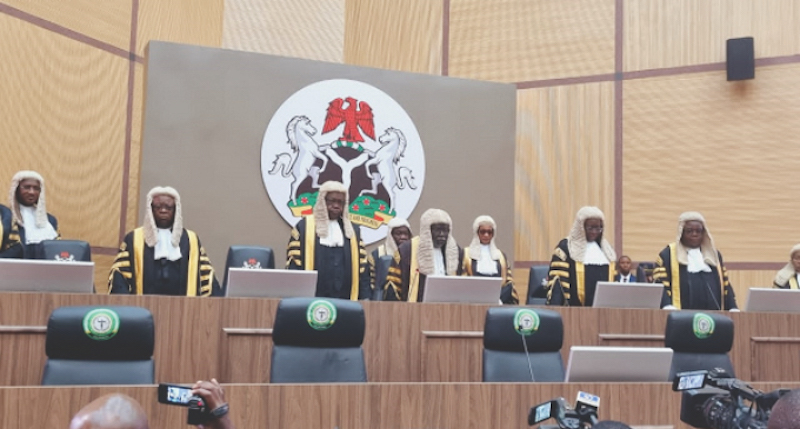
Northern Elders Forum raise the alarm over conduct of Nigerian Judiciary

  • Judiciary becoming coffin of democracy in Nigeria – Shehu Sani

“This erosion of trust in the judiciary can lead to a breakdown of democratic norms and values, ultimately undermining the legitimacy of the political system.”

The Northern Elders Forum (NEF) has expressed deep concern over the current state of affairs within the Nigerian judiciary.

NEF in a statement signed by its Convener, Professor Ango Abdullahi, harped on the need for the judiciary to be careful in its actions to prevent the erosion of its integrity, public trust, and confidence.

Voicing his consternation at the controversies surrounding several recent judicial decisions, particularly those concerning elections, Professor Abdullahi said such occurrences are disheartening and pose a significant threat to the future of democracy in Nigeria.

“The potential consequences of these actions may ultimately validate the concerns raised by Retired Supreme Court Judge Dajjito Mohammed in his valedictory remarks about corruption and undue compromises within the judiciary.

“The Northern Elders Forum recognizes the importance of a fair and impartial judiciary in upholding the rule of law and safeguarding democratic principles. The judiciary plays a critical role in ensuring justice, protecting citizens’ rights, and preserving the credibility of the electoral process. Any actions that compromise these principles undermine the very foundation of any democratic nation,” Professor Abdullahi said.

NEF, therefore, calls on all levels of the judiciary to uphold the highest ethical standards and maintain impartiality in their decision-making processes.

It urges judges to exhibit unwavering integrity and resilience when adjudicating cases, especially those pertaining to elections.

Professor Abdullahi expressed concerns about the current trend that poses a threat of imminent judicial collapse has numerous Implications for constitutional democracy.

The trend, he said, poses a significant threat to the judiciary, the institution responsible for upholding constitutional democracy. He argues that if this trend continues, the nation risks descending into total anarchy.

“The judiciary plays a crucial role in sustaining constitutional democracy by ensuring the rule of law, protecting individual rights, and providing checks and balances on the other branches of government. However, if the judiciary fails to fulfill its responsibilities, it can have severe implications for the stability and functioning of a democratic society.

“The current trend may encourage politicians to view politics as a do-or-die affair. When the judiciary fails to effectively adjudicate disputes and hold politicians accountable for their actions, it creates an environment where politicians feel emboldened to engage in corrupt practices, abuse their power, and disregard the principles of democracy.

“This erosion of trust in the judiciary can lead to a breakdown of democratic norms and values, ultimately undermining the legitimacy of the political system. Furthermore, a collapsing judiciary jeopardizes the safeguarding of constitutionalism, which is the cornerstone of any democratic society.

“The judiciary acts as the guardian of the constitution, ensuring that laws and policies adhere to the principles enshrined within it. Without a functioning judiciary, there is a risk of constitutional violations going unchecked, leading to the erosion of citizens’ rights and freedoms. This can result in a loss of public confidence in the democratic process, as citizens may feel that their voices are not being heard or that their rights are being trampled upon,” he said.

Professor Abdullahi therefore warned that only through a robust and functioning judiciary can Nigeria truly safeguard its democratic values and prevent the descent into anarchy.

“The fairness and transparency of the judicial system are vital for fostering public trust, confidence, and belief in the democratic process,” Abdullahi said.

The Northern Elders Forum also urges relevant authorities to conduct thorough investigations into any allegations of corruption and undue compromise within the judiciary. Any substantiated claims should be swiftly prosecuted, serving as a deterrent to others who may be tempted to taint the judiciary’s reputation.

“NEF believes that the judiciary should be an unbiased and independent arm of government, which is essential to the success of democracy and it should not be seen as compromising the integrity of its decisions particularly at a time when the nation is grappling with a range of challenges.

“NEF therefore calls on the judiciary to consider the consequences of its actions and decisions, and strive to uphold the rule of law in all its activities to justify the confidence reposed on it by Nigerians.

“The NEF called on the public to remain vigilant as to the direction the nation’s judiciary is headed and not to hesitate to expose any perceived misconduct on the part of the judiciary. It is our firm belief that a strong and incorruptible judiciary is crucial for the development and progress of our great nation.

“The Northern Elders Forum, alongside other concerned stakeholders, will continue to closely monitor the conduct of the judiciary and advocate for its ethical revitalization to safeguard the interests of all Nigerians,” he said.

In a related development, chieftain of the Peoples Democratic Party, PDP and a member of the 8th Senate, Shehu Sani has described the judiciary as the coffin of democracy in Nigeria.

The former senator that represented Kaduna Central made the statement in reaction to the Appeal Court judgement that sacked Governor Caleb Mutfwang of Plateau State.

The Appeal Court sitting in Abuja on Sunday sacked Caleb Mutfwang of the People’s Democratic Party (PDP) as the Governor of Plateau State, stating that he wasn’t qualified to stand for the election.

A three-member panel headed by Justice Elfrieda Williams-Dawodu in its judgment Sunday said Muftwang was sponsored by a party without a structure, citing a Plateau State High Court decision which had previously dissolved the leadership of the PDP in the state.

The Court held that the PDP candidate wasn’t validly sponsored to run for governor as the party neither held Congresses at both the Ward and Local government level.

The court declared Dr Nentawe Yilwatda of the All Progressives Congress (APC) the winner of the governorship election while ordering the Independent National Electoral Commission (INEC) to issue a fresh certificate of return to him.

Reacting, Sani said the verdict of the appellate court was unfortunate and unacceptable.

Posting on X, Sani wrote: “The Court of Appeal judgement against the electoral victory of the Plateau State Governor is unfortunate, unacceptable, and condemnable.

“A broad daylight heist of the will of the people. The bench is becoming the coffin of democracy.”

Who will hold prodigal governors accountable?

By Abimbola Adelakun

The various reports of the profligacy of some states in the country accentuate a crucial defect in our system of governance: the absence of autonomous entities that can hold leaders accountable. In several recent reports, the leadership of Lagos, Ogun, and Abia states was called out for the untenable expenses listed in their respective budgets. In the case of Lagos where the call-out was initiated by the governorship candidate of the Action Democratic Congress, Funsho Doherty, we were treated to egregious instances of frivolous spending.

Not only did the various instances of the spending feature reprehensible sums, but the expense also had little or no regenerative value. Abia State was no different. Both the sum the state was accused of expending on consumables (N927m) and the one the state officials countered with (N223m), comparatively exceeded what was reportedly spent on public school facilities within the same period (N25m).

Almost all the angst-inducing items the reports highlighted were about the only thing we the humans of this corner of the world are good at: consumption. From Algeria to Zimbabwe, Africa is full of crackpot embezzlers whose chief preoccupation—aside from their renowned stock in trade of nepotism, tribalism, and religious politics—is state capture. When they get the power, they never use it judiciously well enough to leave their nations better off. What we always get is the same story of people who eat other people into the ground.

Whether we are dealing with resources freely given to us by nature or ones that have been processed into capital, we are not a society with the ethos of production in our genes. All we ever do—and to think we are not even elegant at it—is to consume. We hardly—if ever at all—produce. Why are we so fated? Well, anyone who has ever studied human societies will easily answer that both production and consumption take different levels of mental strength. While the culture of productivity takes some sophistication, a deep burrowing into the life of the mind, the habit of consumption is merely primal.

While the respective states of Lagos, Osun, and Abia are presently in the spotlight, everyone knows that the story is similar in the remaining 33 states (and the FCT) that compose the federation. Regardless of the party platform, our leaders hardly ever differ. When it comes to public resources, they can all be counted on to act like savages that stumbled upon a pot of gold.

All the while I read the various reports, the question I badly wanted answered bordered on the means to accountability. Ok, now that we know that our ever-wasteful leaders are doubling down on their habit of wastefulness even amidst their silly noises of national bankruptcy, where do we go from here? How do we get them to be accountable, and how can these various instances of profligacy be curtailed? Because if nothing will come out of the revelations, what is the point of giving us the information? Not every form of knowledge is power.

Well, given what we know about this country, we can all begin to take it for granted that all the various allegations of overspending will fly for a few days, a government aide on this-and-that will make some media appearances to deny and/or justify the expenses, and then wait for us to be distracted by another sensation and move on like nothing even happened. In fact, and as so often happens, any more revelations of similar financial abuse after a major cycle of outrage has been exhausted will attract nary a whimper. People would have expended themselves so much on the sensation of the initial reporting that the subsequent ones would hardly stimulate them. There is even a possibility that the public’s resignation to unflinching reality will gradually morph into their justification of what they had previously considered abominable.

By now, we can also take it for granted that we will not hear from the anti-corruption agencies, either the Economic and Financial Crimes Commission or the Independent Corrupt Practices and other Related Offences Commission, on this. Even the Department of State Services that meddles in every issue—to the point that their official could be summoned to harass a poor tailor in the market—will not poke their nose into this one. There will be no independent verification of facts, nor will there likely be any reform in budgeting processes. In short, none of the agencies that have—or has imposed on itself—the task of curbing the corruption in our system will pursue this. Other than the usual talk, there will also be no concerted efforts to rethink and redirect resources away from the usual fat cats to more worthwhile projects of development such as the infrastructure of education, healthcare, housing, urban facilities etc.

Oh, and do not expect as much as a cry from any of our one million “opposition” parties. On this one, they will simply bury their heads in the sand until the scandal disappears. In previous articles, I have serially highlighted why political opposition is dead in Nigeria for now. They are incapacitated, yes, but they are also not substantively different from one another either. In fact, as the example of the All Progressives Congress has consistently proven since May 29, 2015, political “opposition” in Nigeria is just a slate of pretentious rogues biding their time until they get their turn at the fleshpot. While I cannot but acknowledge that Doherty’s calling out Lagos stems from the civic role that opposition parties should actively play in government, his efforts seem more like an individual initiative than a collective stand by his party.

House of Assembly members in these states are also not likely to do much that can culminate in reflection, public engagement, accountability, and vigilance. For the most part, the legislature at both the state and federal levels comprise mostly lickspittles who only stand up to executive might when a favourable sharing formula is threatened. Our democracy is so underdeveloped that the legislature exists as mostly just another bureaucracy to ratify executive decisions. Their original purpose of checking the excesses of the other arms of the government has long been abjured, turning them into a tribe of bureaucrats who mindlessly assent to policies to get them over with and get paid.

At this crucial time when virtually every public official who manages to lay his hand on a microphone will not conclude their uninspiring speeches with a rant about how Nigeria has been bankrupted by the previous administration(s), there is still no political mechanism to reform our habits of public expenditure. Ours is a rentier state; public administration is nothing more than a prebendal system of rewarding vassals and foot soldiers that will not allow the system to self-correct.

Even worse is that the profligacy is concurrent with the government asking people to sacrifice and endure the pain of their policies indefinitely. Since the supposedly new administration took off on May 29, they have saturated the atmosphere with the noise of how the APC ruined Nigeria and how the APC has now been saddled with the unenviable task of cleaning the mess the APC made. How often did we not hear of a similar chant during the Muhammadu Buhari administration when the preceding government was also accused of bankrupting the nation? It is a recurring pattern, a musty but trusty weapon of political warfare.

We are going to repeatedly hear all the nonsense under the present administration until—God help us—our ears bleed. In another four or eight years, depending on the direction the political wind wave blows, another round of politicians—including the ones whose state budgets are presently being challenged—will still subject us to another round of the torture of listening to how Nigeria is broke because it was bankrupted under the present administration etc.

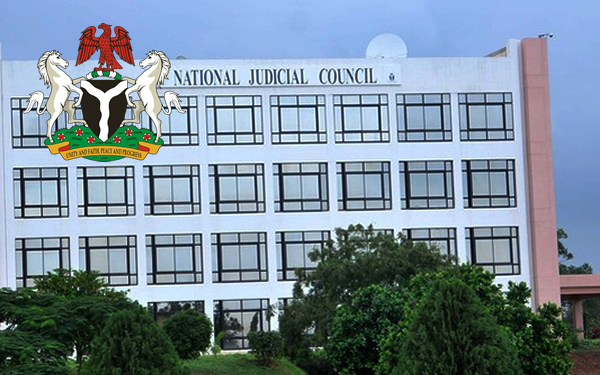
Looming Anarchy: CSO Coalition petitions NJC over A’Court Kano guber election verdict

  • Calls for urgent investigation into page 67 of judgment
  • Says Kano is in great danger for the political stability

A coalition of civil society organisations under the aegis of Open Justice Alliance has petitioned the National Judicial Council, (NJC) to investigate the controversial judgment of the Court of Appeal in the Kano gubernatorial election matter.

In a letter addressed to the Chairman of NJC tagged: “JUDICIAL RECKLESSNESS AND GROSS ABUSE OF THE REVISED JUDICIAL CODE OF CONDUCT FOR JUDICIAL OFFICERS OF THE FEDERAL REPUBLIC OF NIGERIA 2016 BY HONOURABLE MOORE ASEIMO ABRAHAM ADUMEIN, BITRUS GYARAZAMA SAN GA AND LATEEF ADEBA YO GANIYU, JJCA”, the group urged His Lordship to take particular note of page 67 of the judgment and immediately cause an investigation as the verdict contained in the lead judgment “portends great danger for the political stability of Kano State unless your Lordship steps in.

“The portion of their Lordships’ lead judgment which portends great danger for the political stability of Kano State unless your Lordship steps in and immediately cause an investigation into the surrounding circumstances is contained at page 67 of the judgment and reads as follows:

‘I will conclude by stating that the live issues in this appeal are
hereby resolved in favour of the 1st Respondent and against the
Appellant.
In the circumstances, I resolve all the issues in favour of the
Appellant and against the 1s1 Respondent.
Therefore, I find no merit in this appeal which is liable to be and
is hereby dismissed.
The judgment of the tribunal in Petition No.:
EPT/KN/GOV/01/2023 between: ALL PROGRESSIVES
CONGRESS (APC) v. NATIONAL ELECTORAL
COMMISSION & 2 ORS delivered on the 20th day of September,
2023 is hereby set aside. ·
The sum of W1,000,000.00 ( one million naira only) is hereby
awarded as costs in favour of the Appellant and against the 1st
Respondent.”

“My Lord, if there is ever a term like “judicial summersault” in the dictionary of the Nigerian Judiciary, then the above holding of the learned Justices of the Court of Appeal, with respect, aptly exemplifies the same. Your Lordship would note from the quoted judgment of the learned Justices that whereas the first sentence has purported to resolve the live issues in the appeal in favour of the 1st Respondent and against the Appellant, the second sentence strangely purports to ” … resolve all the issues in favour of the Appellant and against the 1st Respondent.”

“As if the above inconsistency was not enough, your Lordship would note further from the third sentence of the quoted judgment that whereas the learned Justices had purportedly found no merit in the appeal brought by the Appellant and had therefore, dismissed same which in effect means that the judgment of the Election Petition Tribunal was upheld, the same Justices in the fourth and fifth sentences of the quoted paragraph of their judgment have strangely set aside ‘the judgment of the tribunal in ‘Petition No.: EPT/KN/GOV/01/2023 between: ALL PROGRESSIVES CONGRESS (APC) v. NATIONAL ELECTORAL COMMISSION & 2 ORS delivered on the 20th day of September, 2023 … ‘ and even awarded ‘the sum of Wl,000,000.00 (one million naira only) … as costs in favour of the Appellant and against the 1st Respondent.’

“Respectfully sir, the questions that beg for answers are:
a. Against and/ or in favour of which of the parties did the learned Justices of the Court of Appeal resolved the issues adopted for the resolution of the appeal?

b. If the learned Justices have dismissed the appeal for lacking in merit as purported by them in the third sentence, why did they at the same time set aside the judgment of the Tribunal and even awarded cost in favour of the Appellant and against the 1st Respondent?

c. If the Appellant’s election was nullified inter alia for non-qualification, why did the learned Justices fail to” … declare the person with the second highest number of valid votes cast at the election who satisfies the requirements of the Constitution and this Act as duly elected” and therefore direct the Independent National Electoral Commission to withdraw the Certificate of Return issued to the Appellant and to issue a new Certificate of Return to the candidate of the 1st Respondent in line with Section 136(2) of
the Electoral Act, 2022?

“The contentious judgment of the learned Justices oi the Court of Appeal, with respect, has sparked grave tension in Kano State such that but for the timely intervention of the security agencies, the situation would have degenerated into a breakdown of law and order. In this regard, thisdaylive.com! has reported on 23rd November, 2023 that:

‘News of the contentious document sparked tension in the city,
with the security forces moving in quickly to disperse youths,

who wanted to stage a protest against the appeal court
judgement.
New Nigeria Peoples Party (NNPP), Yusuf’s party, which aiso
contested the rulings of the Kano Election Petition Tribunal and
the Court of Appeal, urged the National Judicial Council (NJC) to
review the verdicts. It alleged that :11.e appeal court judgement
was doctored in favour of the All Progressives Congress (APC). …

‘Many supporters of the Appellant and some lawyers alleged that
the judgment was in favour of Yusuf before it was manipulated
to favour the APC candidate. They alleged that what the justices
read in court was different from whet was contained in the CTC,
and insisted that the CTC, being a written document, was the
original judgment…’

“We submit that the conduct of the learned Justices has not only put a strain in the already wane confidence that the masses have in the Judiciary but has brought disrepute and opprobrium to the Nigeria Judiciary and therefore, constitute a gross violation of the Revised Judicial Code of Conduct for Judicial Officers of the Federal Republic of Nigeria 2016.

“It is trite law that a violation of any of the Rules contained in the Code of Conduct shall constitute judicial misconduct and or, misbehavior and shall attract disciplinary action. The preamble to the Code reads as follows:

  • An independent, strong, respected and respectable judiciary is indispensable for the
    impartial administration of Justice in a dernocratic State.
  • It is the duty of every Judicial Officer to actively participate in establishing,
    maintaining, enforcing, and himself observing a high standard of conduct that will ensure and preserve transparently, the integrity and respect for the independence of the Judiciary.

For the avoidance of doubt my Lord, rule 2 of the Code has clarified that “the Preamble to this code shall be construed as an integral part of the Code and its provisions shall be as enforceable as the provision of the specific rules h the Code.”

“Your Lordship, a certain level of due diligence is expected from judges and-much more is expected from Justices of the Court Appeal. The conduct of the aforementioned Justices has fallen below the required threshold.

“In the light of the foregoing therefore, we humbly urge your Lordship to cause an immediate investigation into the circumstances surrounding the judgment of the learned Justices concerned and to discipline the Justices in accordance with law if found culpable.

“The statements made by Honourable BITRUS GYARAZAMA SANGA AND LATEEF ADEBAYO GANIYU, JJCA in their contributory judgments accepting the reasoning of the lead judgement and consequential orders thereof, which they had not read makes an immediate investigation by your Lordship necessary. We strongly believe that the subsequent explanation by the Chief Registrar of the Court to wit: that the inconsistencies observed in the judgment was a mere clerical error, is an afterthought and an attempt to
mislead the public.”

Download and read entire petition here.

ACK-NJC-OPEN-JUSTICE-ALLIANCE-LETTER-NOV-2023

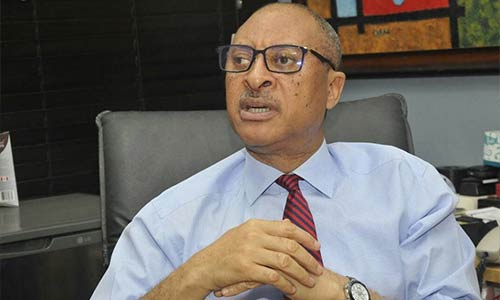
Prostate Cancer: Nigerian men are dying in their prime —Pat Utomi

  • Over 8,517 male deaths in 2020
  • 15,306 men diagnosed in the same year

A state of emergency has been declared on prostate cancer as deaths from the dreaded ailment is increasingly taking a toll on Nigerian men.

As the number of men affected rise, Professor of Political Economy, Pat Utomi, declared at a recent event that prostate cancer is taking away Nigerian men in their prime, adding there was need for men to show extra concern to their health. Over 8,517 prostate cancer deaths and 15,306 diagnosis was recorded in 2020.

Prof Utomi made disclosure on Wednesday at the  2023 Men on Blue prostate cancer webinar, organised by Project PINK BLUE (PPB), Inclusive Cancer Care Research Equity for Black Men Consortium, and JNCI International, both NGOs.

The webinar, which had leading cancer scientists, health system experts and stakeholders, was organised to commemorate the International Men’s Day.

Read: Prostate cancer: What every man should know

Utomi urged Nigerian men to see prostate health as an obligation, as well as to carry out annual medical checkup of their body including prostate cancer, stressing that his father passed away of cancer at age 52.

“At the onset of COVID-19, around 2020, my Prostate-Specific Antigen (PSA) was found to be elevated and I was asked to see a urologist and later had a direct rectal examination.

“The results now showed positive for prostate cancer. A disease is a disease, what is the difference between malaria and cancer? I had 45 sessions of radiotherapy, hormone treatment and other medications.

“Today, my PSA has dropped to a normal level. My hormone treatment will go on till next year,” he stressed.

Read also: Saving Nigerian Men From Prostate Cancer Scourge

Utomi said that there is a lot of ignorance about prostate cancer, wondering why enough has not been done to get men aware.

According to him, there are lots of men of his age who are having problems with their prostate but they are hiding it and unfortunately they are dying.

The Professor noted that treating cancer was not affordable in Nigeria, adding that there  was need for public-private sector collaboration and investment.

He  however, said that so many bottlenecks exist in setting up a cancer centre in Nigeria and that the Nigeria Nuclear Radiation Authority charges for a licence to import equipment, fees to register the premises, and more fees to commission the equipment.

He disclosed that N17.5 million was required to set up one cancer machine, in addition to customs duties, and many other, adding that these charges had now been passed on to the cancer patients.

Utomi, a former presidential candidate, however, said that there was need for rethinking of cancer control and make treatment accessible to many Nigerians.

Mr Runcie Chidebe, the Executive Director of PPB and the convener of the webinar said “Every day in Nigeria, we hear and see breast cancer survivors, but prostate cancer survivors are rarely seen or heard of.

According to him, based on the above fact, many Nigerians still assume that cancer is a ‘woman’s thing’ and that the challenges of men battling prostate cancer are not always discussed and rarely considered for intervention.

He said that the NGO Men on Blue initiative started in 2017 as a platform to create awareness of prostate cancer among Nigerian men and to advocate better policies for men.

Clare Omatseye, the Chief Executive Officer (CEO), JNCI International and Vice President of the African Healthcare Federation, noted that prostate cancer is now the leading cause of cancer deaths in Nigerian men.

“In 2020, 15,306 Nigerian men were diagnosed with prostate cancer, and 8,517 deaths were recorded.

“The risk factors of prostate cancer are first, being a man, second, age, and third being black. Genetically, there is something about Black people that increases the prostate cancer risk and makes it more aggressive in black men,” he said

Mr Solomon Rotimi, professor of Biochemistry at Covenant University, also identified other risk factors of prostate as smoking, obesity, stress and having multiple sexual partners.

TIPS