Home Blog Page 684

Israeli-Hamas conflict is complex, intractable — UI Pol Science Alumni Association

  • Calls for ceasefire

As the woes and human suffering occasioned by the Israel-Hamas war continues to rise, the Political Science Alumni Association of University of Ibadan has called for a permanent ceasefire, which must be predicated on realistic security measures and balanced pressures.

The group in a communique obtained at the weekend by Law & Society Magazine observed that: “The Israeli-Hamas conflict is a complex and intractable conflict with no easy solutions. However, it is important to continue to work towards a relative peaceful resolution of the conflict.”

“This”, they said “will require the international community to play a more active role in mediating between the two sides and pressuring them to implement a two-state solution or one-state reality as they may so choose.”

Read the full text of the communique below.

COMMUNIQUE ON ISRAEL- HAMAS WAR IN THE PALESTINIAN STRUGGLE FOR STATEHOOD

I.   Preamble

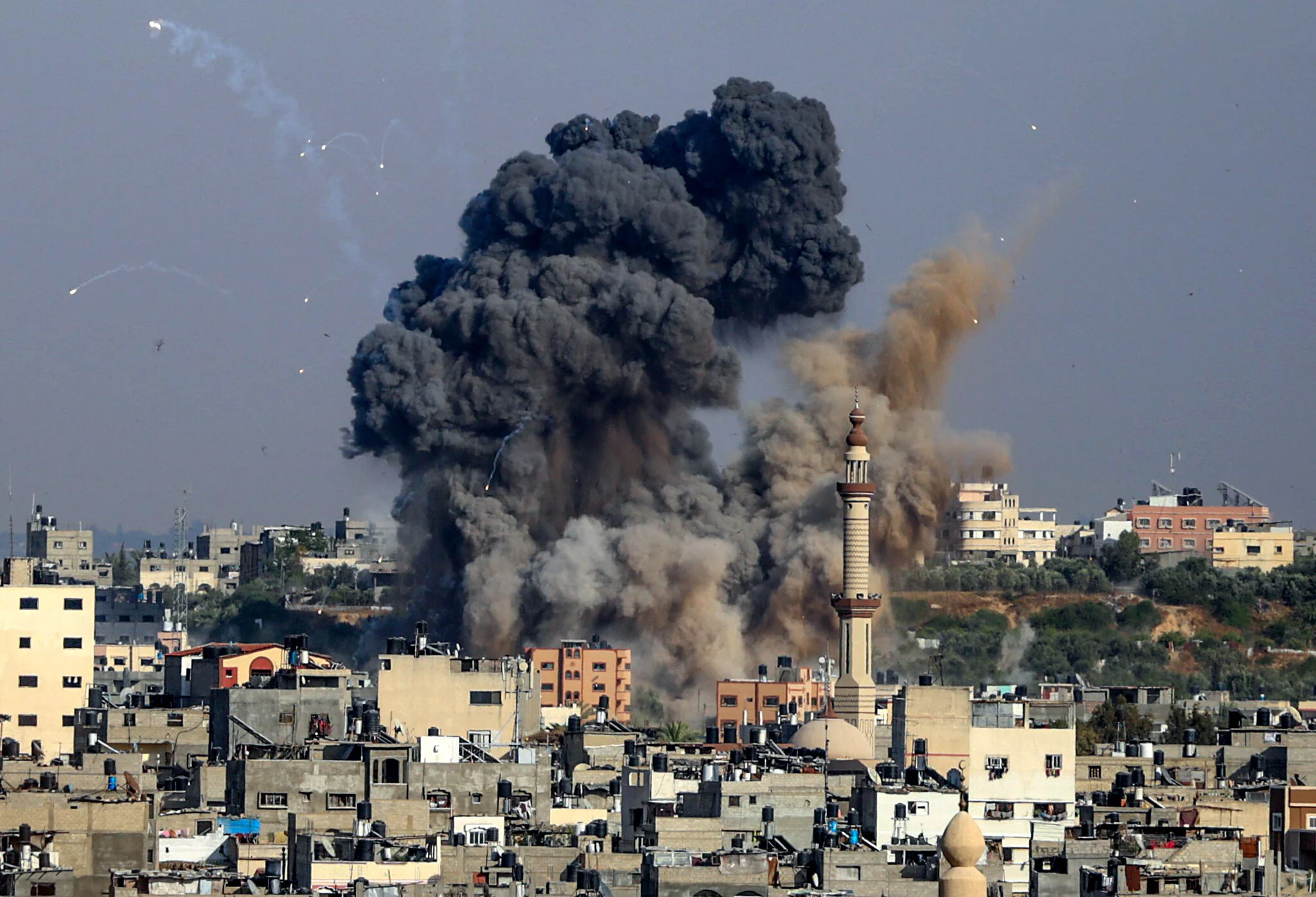
The Israel-Palestine conflict, within the broader Arab-Israel conflict, is one of the most protracted and intractable conflicts in the world. This conflict was again highly inflamed by the Palestinian Hamas militant group on October 7, 2023, in a more gruesome and ferocious surprised attacks on Israel since 1948. Israel’s retaliatory responsive attacks against the Hamas-ruled Gaza enclave have resulted in what has become the Israel-Hamas war. When the war entered its sixth week, precisely on November 11, over 11, 000 people were believed to have been killed in Gaza, according to the Palestinian Ministry of Health in the Hamas- ruled Gaza. On the Israeli side, over 1,200 people were said to have been killed by Hamas on October 7. Also, more than 240 people were taken hostages by Hamas, from 25 countries. International pressures have mounted as the Israeli bombardments on Gaza have continued, which the Israeli military affirmed were against Hamas, but have claimed civilian deaths and caused humanitarian crisis. The conflict is complex and multifaceted, with a deep-rooted history and a variety of contributory factors. The Analytical Patriotic Voice (TAPAV)—the Policy, Program, Events Analyses wing—of the Political Science Alumni, University of Ibadan, acknowledges the gravity of the conflict between Israel and Hamas, recognising the profound impact on regional stability and global peace and security.

II.   Consequences of Hamas’ Approach on Palestinian Statehood

While Hamas’ approach may resonate with most Palestinians, it has generated significant challenges to achieving a peaceful resolution and Palestinian statehood. Hamas’ use of armed resistance and refusal to recognise Israel has led to its designation as a terrorist organisation by several countries, limiting its international legitimacy, especially among the major powers. This isolation hampers potential diplomatic negotiations and cooperation with key stakeholders.

Humanitarian Impact: The cycle of violence between Hamas and Israel has resulted in civilian casualties and widespread suffering, especially in Gaza. The Palestinian people bear the brunt of this conflict, with infrastructure damage, limited access to basic services, and a stagnant economy. Such consequences would hinder the prospects for a stable and prosperous Palestinian state.

Internal Palestinian Divisions: Hamas’ control of the Gaza Strip, separate from the Palestinian Authority in the West Bank has led to a political divide among Palestinians. This division weakens their collective bargaining power and impedes a unified front in negotiations with Israel. It has been part of Israeli government’s strategy, since 2019, to isolate the Palestinians in Gaza, governed by Hamas, from the Palestinians in the West Bank. This articulated policy, among others, the Israeli right had diligently followed for many years. This, according to some analysts, led inexorably and unpredictably to the October 7 slaughters. Unfortunately, too, Israel’s peace talks with the Fatah-controlled Palestinian Authority in the West Bank have not made significant progress since 2014.

III.     Implications of the Hamas-Israel war for the Middle East, the world, and specifically Africa and Nigeria.

The Hamas-Israel war has a number of implications for the broader Palestinian struggle for statehood, the region, the world, and specifically Africa and Nigeria. For the Palestinians, the war has further undermined their hopes for achieving an independent state. The war has also led to a deterioration in the humanitarian situation in the Gaza Strip, with more than 2 million people living in poverty and facing a shortage of basic necessities.

  • For the region, the war has contributed to instability and violence. The war has also raised tensions between Israel and its neighbours, and has increased the risk of a wider conflict, if not curtailed.
    • For the world, the war has highlighted the need for a lasting solution to the Israeli- Palestinian conflict. The war has also shown the dangers of dividing the world into camps, for or against either side. If allowed to fester, there is the risk of bringing the world to a collision.
    • For Africa, the war has a number of implications. First, the war has the potential to destabilize the region and lead to an increase in terrorism. Second, the war could have a negative impact on Africa’s economy, as it could disrupt trade and investment. Third, the war could lead to an increase in refugees and migrants fleeing to Africa from the region.
    • For Nigeria, her neutral approach to the conflict was epitomised by the Minister of Foreign Affairs, Ambassador Yusuf Tuggar, who urged both parties “to exercise restraint and prioritise the safety and well-being of civilians.” He reiterated that ” the prayer of the Nigerian state is with those who have lost their lives in the conflict….” However, Nigeria’s assumed neutrality is under strain as she has already been assigned, among member states of the Organization of Islamic Cooperation (OIC), to mount pressure on the international community to demand for ceasefire.
  • Recommendations

As the war grinds on, we join our patriotic voice, with those of peace-loving people across the globe, calling for permanent ceasefire, which must be predicated on realistic security measures and balanced pressures.

  • The UN Security Council should initiate a comprehensive investigation of Israel’s claim that civilian infrastructures, hospitals and schools, have been turned to embedded military facilities by Hamas in the Gaza Strip. The International Criminal Court (ICC) is already in the process of collecting evidences of war crimes presumably being committed by Hamas and Israel.
    • We believe that a resilient diplomatic approach would be more ideal in finding solution to the Israel-Palestine conflict.
    • No group of people must seek for other people’s non-existence.
    • Under President Joe Biden administration, we strongly recommend that the six major powers—United States, United Kingdom, Russia, China, Germany and France— should convene a comprehensive peace summit to resolve the Israel-Palestine conflict. Other countries in the region should include Saudi Arabia, United Arab Emirates, Egypt and Qatar. If it is two-state or one-state reality solution the parties want, they should decide once and for all.
    • The Nigerian government need to be wary of its involvement in the conflict of the region. Nigeria is a member of the Organization of Petroleum Exporting Countries (OPEC), and some of them have suggested weaponizing oil supply in the conflict. The impact that would have on the Nigerian economy is sure to be profound, either positive or negative. And even though Nigeria is a member of the OIC, Nigeria remains a multi-religious, pluralistic and secular state.
    • V. Conclusion

The Israeli-Hamas conflict is a complex and intractable conflict with no easy solutions. However, it is important to continue to work towards a relative peaceful resolution of the conflict. This will require the international community to play a more active role in mediating between the two sides and pressuring them to implement a two-state solution or one-state reality as they may so choose. TAPAV’s position is further supported by former US President Obama’s statement on the conflict, in which he said:

“In dealing with what is an extraordinary complex situation where so many people are in pain and passion are understandably running high, all of us need to do our best to put in our best values rather than our worst fears on display. This means actively opposing anti-Semitism in all its forms everywhere. It means rejecting efforts to minimize the terrible tragedy that the Israeli people have endured, as well as the morally bankrupt suggestion that can somehow justify the deliberate slaughter of innocent people. It means rejecting anti-Muslim, anti-Arab or anti-Palestinian sentiment. It means refusing to lump all Palestinians with Hamas or other terrorist groups.”

It is our sincere hope that Hamas approach would be reconsidered and allow the Jewish State of Israel to exist side by side an Arab State of Palestine in peace and security. This will be good for the peace of the region and the world.

Signed:

Dr. Ajinde Oluwashakin                              Bolaji Olumide Akeem

Chairman, Analytical Patriotic Voice        Secretary, Analytical Patriotic Voice

NB: The Analytical Patriotic Voice is the policy, program, issue, event analysis arms of the Political Science Alumni, University of Ibadan Nigeria.

Man in detention for raping female native doctor

Considering the spiritual powers attributed to prophets, prophetesses and native doctors, many jaws dropped when news broke in Ocober that a prophetess in Ogun State was raped by a 40-year-old mason, Lekan Sunday, in a church.

It got even more interesting days ago when a man got arrested for raping female native doctor.

The 26-year-old victim and native doctor, whose name was not revealed for security reasons, told a South African media outlet SABC News, that the suspect sexually attacked her after inviting her to his house for spiritual cleansing.

According to her, the incident, which left her deeply traumatized and fearful, occurred at her client’s home where she had gone to perform a spiritual cleansing ritual.

The traditionalist, who had started her practice a year ago, said the experience has shaken her faith in her calling and her ability to trust male clients again.

She said, “Out of nowhere, the guy pushed me. I fell on the bed, and he grabbed me by my arms. I was trying to process everything that was happening because I was in shock. I came here to help someone spiritually, and this is what happens to me.

“I am still very scared to practice or to help, but I know that it is not something I can stop. It is not something I can resign from and say I am packing up my stuff, I am leaving because I have been called for a purpose at the end of the day.”

Also speaking on the incident, some Kimberly-based traditional healers described the development as a wake-up call for female healers in the country on the need to be extra careful.

They urged the government to ensure that the accused rapist receives the appropriate punishment to serve as a deterrent for others.

The accused is currently in police custody and is expected to appear in court soon.

Prior to his arrest by officers of the state command, PUNCH Metro reports that the suspect allegedly committed the crime some time in October.

Lekan reportedly stormed the church, Orioke Aanu Oluwa Gbohunmi, in the Ilogbo Adu area of Kemta in Abeokuta with weapons and met the victim sleeping.

He was said to have held the prophetess hostage while brandishing a knife in her face that he would kill her if she continued to give him a tough time.

When her call for help from people around the premises did not yield results, the prophetess was said to have started pleading with the suspect to pity her.

Despite several pleas with Sunday, the suspect was said to have insisted on her having sex with the prophetess.

After finally forcing her into submission and allegedly raping the prophetess, the victim was said to have approached a nearby police station, where the matter was reported. Having received the complaint, the police launched a manhunt for the suspect who had fled.

While speaking with PUNCH Metro on Tuesday, the state Police Public Relations Officer, Omolola Odutola, who confirmed the incident to our correspondent, said the prophetess recognised the suspect as a mason and labourer in the area.

Adamawa teen in custody for allegedly raping a cock

Perversion was taken to another level over the weekend with the arrest of 17-year-old Lawali Mori for allegedly raping a rooster.

Adamawa State Police Public Relations Officer (PPRO), Suleiman Ngoruje in a statement on Friday said Mori a resident of Viniklang, in the Girei Local Government Area of Adamawa has been taken to police custody for ror having unlawful carnal knowledge of a cock, a crime he described as one that was against the order of nature.

Ngoruje in the statement said the arrest was the result of a complaint filed by one Esther Dimas, a resident of Viniklang, after she caught the teenager in the act.

The suspect during interrogation by the police had revealed he sexually assaulted the male fowl. The police statement further said Mori “could not give any cogent reasons for carrying out the act.”

However, the state Commissioner of Police, Afolabi Babatola, while expressing worries over the act of bestiality, called for a discreet investigation into the matter.

Nigeria among 10 African countries with the highest debts to the IMF

By Chinedu Okafor

Business Insider Africa in this report lists the top 10 African countries including Nigeria — a giant amongst them all with abundant natural resources but hooked on mismanagement and borrowing —hugely indebted to the International Monetray Fund (IMF).

The International Monetary Fund (IMF) is a key player in global finance, offering monetary assistance to governments suffering economic difficulties. However, these loans from the IMF can have deep and varied effects on their economy. These effects are felt in some parts of Africa, particularly in regions where the debt is unsustainable.

Loans from the global financier can also help buff the country’s finances until they can come up with a more sustainable solution to their economic problems. And, additionally, a loan from the IMF can boost a country’s credibility in the eyes of foreign investors. This rise in trust may result in higher foreign direct investment and better access to global capital markets.

However, these loans if not managed or utilized properly could hurt an economy. Aside from the fact that debts owed in general can cause financial stress in any economy, as it represents an expense that the country must take responsibility for, IMF loans often come with stringent conditions, including austerity measures such as reducing public spending, cutting subsidies, and implementing tax increases.

While these measures are intended to address fiscal imbalances, they can lead to social unrest and adversely affect vulnerable populations. These complications can also seep into the country’s exchange rate, making local currencies weaker than they should be.

With that said, below are the 10 African countries with the highest debts to the IMF, courtesy of the IMF’s official website. Also, the list captures the data as of the 6th of December 2023.

RankCountryDebt amount
1.Egypt$11,968,321,674
2.Angola$3,153,816,667
3.South Africa$2,669,800,000
4.Côte d’Ivoire$2,117,559,620
5.Kenya$2,058,982,100
6.Nigeria$1,840,875,000
7.Ghana$1,644,377,000
8.Morocco$1,499,800,000
9Democratic Republic of Congo$1,294,500,000
.10.Tunisia$1,259,139,338

UK Court awards £20m to Nigeria in P&ID case victory

In a major development in the long-running legal battle between Process & Industrial Developments Limited (P&ID) and the Nigerian government, a UK court has awarded Nigeria £20 million in damages and compensation in the long-running $11 billion P & ID case.

This ruling follows Nigeria’s historic victory in October 2023, which saw the court quash the fraudulent $11 billion arbitration award in favor of P&ID.

“Nigeria sought at least £20 million back from P&ID to cover its damages and legal fees. Essentially, what P&ID lawyers were trying to do was limit the amount it would pay to Nigeria as damages, and they fought hard to see if it would be in naira. But the court ruled that they must pay £20 million to Nigeria, which must come in 28 days. Then came the request for appeal. Their request for an appeal on the currency at which they were going to pay Nigeria was also denied. So, in 28 days, P&ID must pay Nigeria at least 20 million pounds,” Arise News Channel reported on Saturday.

P&ID had filed for fresh arbitration to revive their claims against Nigeria for alleged breach of a 2010 gas supply agreement.

However, the High Court in London ruled that the arbitration could not proceed as long as the 2023 judgment remained in place.

On October 23, 2023, Robin Knowles, justice of the Commercial Courts of England and Wales, had halted the award enforcement by upholding Nigeria’s prayer that it was obtained by fraud and in violation of section 68 of the English Arbitration Act 1996.

The judge found that P&ID had paid bribes to Nigerian officials involved in the drafting of the gas supply and processing agreement (GSPA) in 2010.

He also found that P&ID illegally possessed Nigeria’s privileged legal documents during the arbitration hearings.

However, Knowles said he still had to choose from three options after making his determination: (a) to remit the award to the tribunal, in whole or in part, for reconsideration, (b) to set the award aside in whole or in part, or (c) to declare the award to be of no effect, in whole or in part. Nigeria had argued that the award should be set aside, invoking the common law principle that “fraud unravels all”.

In his Final pronouncement on Friday, Knowles said he had decided against sending the award back to the arbitration tribunal.

He crushed the award in its entirety. P&ID is now seeking Knowles’ permission to appeal the October 2023 judgment.

“The court refused to grant P&ID permission to take the matter back to arbitration, saying that the company’s conduct during the process was reprehensible and therefore it completely set aside the $11 billion judgment,” Arise News Channel said.

Business Day

Human Rights Day/16 Days Campaign to End VAWG: WACOL hosts Zoom meeting

Women’s Aid Collective WACOL is inviting you to a scheduled Zoom meeting.

Topic: Marking Human Rights Day & 16 Days Campaign to End VAWG

Description: HUMAN RIGHTS ARE WOMEN’S RIGHTS

Investing in Legal Aid & Support Services for Victims/Survivors of Violence Against Women/Girls (VAWG): Spotlighting WACOL’s Human Rights and Survivor-Centered Interventions (1997- 2023)

Time: Dec 10, 2023, 04:00 PM West Central Africa

Join Zoom Meeting: https://t.ly/fPJW1

Meeting ID: 870 5213 0540

Passcode: 157681

Re: No law empowers the Supreme Court to award costs against lawyers: Odinkalu, Achara disagree

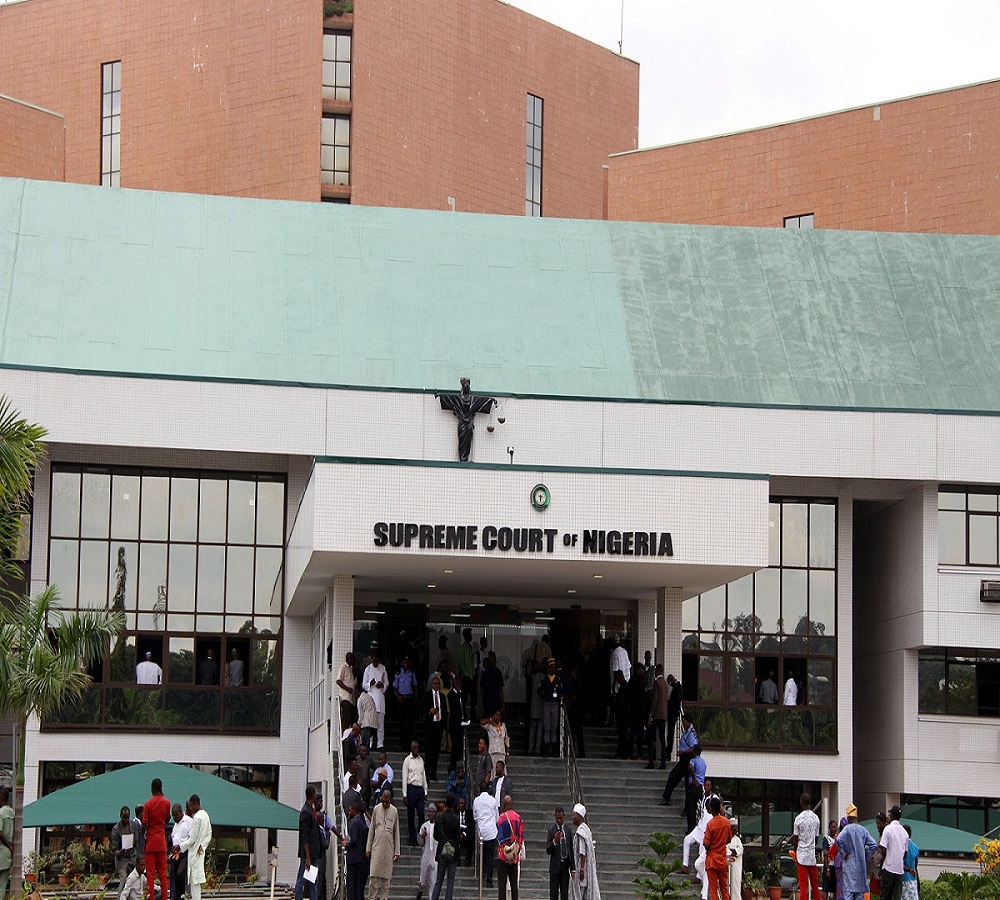
A Senior Advocate of Nigeria and rights advocate, Femi Falana, SAN had in a post earlier published by Law & Society Magazine said no law empowers the Supreme Court to award costs against lawyers.

Prof. R.A.C.E Achara: As usual, the learned silk (Femi Falana) is very logical and persuasive. But I would respectfully call attention to a different line of reasoning applicable to the matter. And, this will not rely on the most recent instance or the reporting which suggests, rather, that the motion moved in that instance was filed in late November of 2023 for a principal relief triggered in 2019.

Prof. Richard Achara

The Supreme Court (and, indeed, any superior court of record in Nigeria) has an inherent disciplinary jurisdiction to protect its processes and proceedings: and, from this, to sanction its ministers including counsel through costs (both under section 6(6)(a) of the 1999 Constitution as well as by the implication of case law from all over the common law jurisdictions, including decisions of the Nigerian Supreme Court).

The trouble is not with the Supreme Court ‘s capacity, but with the scale and process for its deployment of that undeniable and age-old competence.

Nota bene:

This power does not properly fall within the undoubted statutory jurisdiction, which the Supreme Court has to try and to sanction a legal practitioner for an independent charge of professional misconduct under the Legal Practitioners Act.

The jurisdiction under that statute permits specific sanctions none of which, even by a tortured stretch, can cover costs to be awarded to or against any of the parties in an independent suit of which that legal practitioner is not a party.

In a word, the Supreme Court jurisdiction to award costs against counsel is disciplinary and inherent, not currently statutory under the Legal Practitioners’ Act (LPA).

Prof. Anselm Chidi Odinkalu: Compelling as this sounds, I fear it raises even more troubling issues, not with whether or not the Supreme Court has an inherent power, but with this characterisation.

1st, costs are not meant to be disciplinary, are they? We have punitive damages alright but do we have punitive costs?

2nd, if costs are now meant to compete with the professional discipline process, where do we draw the line?

3rd, if the objective of the imposition of costs is “disciplinary”, then wld it not violate the constitutional requirement of due process to impose these by means of summary process without affording the people being disciplined a hearing on the charges that necessitate their being disciplined or is it the proposition that the Supreme Court is above the Constitution?

Read also: Sir Daniel Chukwudozie allegedly behind behind 4.8billion fraud charge against Ibeto

4th, I fear also that this could risk conflating the powers of contempt (in the face of the court) with the issue of costs, enabling the court to proceed to the latter as a substitute for but without the safeguards that attend the former.

I do not agree with Mr. Falana but I find this explanation even more troubling.

Prof. R.A.C.E Achara: The concerns are well taken but slightly overlook a major premise at the start of my earlier submission.

One major crutch of the submission is that the power exists, but that the method, process and even reasonability of its deployment, can be debated in particular instances.

The first functional paragraph indicated an attempt at dealing with the general issue without confining oneself to the most recent instance (for which I’d had occasion to discuss a few days ago).

The problems of conflation of costs with contempt; and or of punitive damages with similar such costs in terrorem, do not seem to arise at this time except in the context of the unarticulated predicate question of whether or not we agree that the Supreme Court (and, indeed, any superior court of record) has an inherent jurisdiction and power (thus necessarily outside statute) to award costs (against a party)?

If we accept that foundational premise, we can then move on to the extent and process by which the court is empowered to award a given type or specie within this overarching genus. And, particularly, whether it can in exercise of this inherent disciplinary jurisdiction as it analogically displayed in Mohammed v. Olawunmi, extend it to counsel who acted for the party. No?

Prof. Anselm Chidi Odinkalu: If we return to the predicate point, Falana is asking for textual bases. That is not necessary if the argument is that a court has inherent powers.

I do agree that a question is: what is the scope of the inherent powers of the Supreme Court and how at large can it be?

However, as usual with Common Law method, we avoid the elephant in the room by resort to text & avoidance of sub-text.

My fear is that a Supreme Court that has bled authority needlessly and recklessly is trying to over-compensate with arbitrary coercion for what a credible Court would easily have seen off with modest assertion of balanced judicial displeasure. That, I fear, is the real issue.

Prof. R.A.C.E Achara: …And that is the crux of my initial critique (some days ago) of the ostensible caprice in severity and agency regarding the Supreme Court costs in the that particular case!

The concern then as here has been not whether the Supreme Court had been judicious in that instance but with whether that respected judex had competence…

If, as seems undisputed, the court has (without need for textual specification) the inherent jurisdiction to award costs against the party at fault (and on a discretionary sliding scale from a pittance up to a total indemnification of the wronged parties for all their costs including fees to their counsel and logistics that could cover air tickets and hotel expenses and taxis), if the court notifies the lawyer on the other side that peculiar circumstances of the case dictate a disciplinary shift of the burden; and offers them an opportunity to show why that (full or mitigated burden should remain with the lay party), does the law preclude the SC from exercising that inherent disciplinary jurisdiction in an appropriate case?

If we step back from the facts of the latest instance of this imposition, it seems to me that the answer becomes less involved…

From the abbreviated report, it was, in the circumstances, a frivolous motion; and, in my respectful submission, abusive of the processes of the court.

My worry is on the growing penchant of the respected SC to not only impose excessive costs, but to place the weight on counsel.

The problem with this often transcends the particular lawyer involved, but subverts the entire judicial system by creating a general chilling effect both for malicious as well as merely mistaken advocates.

Any capricious power is dangerous.

The constitution frowns more on this sort of in terrorem power where it is assumed by a final court and in circumstances where opportunity has not been shown of the charge and an opportunity to the mulcted lawyer to offer a defence, one way or another, to it.

Even for the litigant, the severity, even if not the sanction, ought to conform to some verifiable standards of scale and logic.

We must never descend to a position where justice in our courts can’t easily be distinguished from local vigilante justice.

The knee-jerk vigilante reaction to petty theft is death by wheel tyre incineration; however, the justice we expect in a normal court of law may find guilt but nevertheless constrains its sentencing against graduated guidelines imposed by our civilized notions for the rule of law.

Prof. Anselm Chidi Odinkalu: “….the respected Supreme Court”?

Prof. R.A.C.E Achara: Our protocols for institutional courtesy have their uses…

Prof. Anselm Chidi Odinkalu:: These “protocols for institutional courtesy” are actually underwritten by an implicit bargain: the public offers its respect in return for the judges behaving honorably. That is why they are addressed as “Honorable Justice….”

Those who voluntarily repudiate the obligations cannot expect to receive the courtesy. Indeed, a public that continues to afford the courtesy long after the obligations have been repudiated affords respectability to its own liquidation.

Prof. R.A.C.E Achara: That’s one way to look at it. But then, again, there is yet another way to address ‘most any problem. As Tuco (?) of The Good, The Bad and The Ugly would say: ‘… some are going through the door (but) some others are going through the window!’

So long as victims avoid the trap of fighting themselves over tactics, the oppressors can’t keep winning on strategy over the ruins of their continually divided but otherwise superior opponents.

One flank may choose verbal frontal siege; godspeed to them. Another might see guerrilla courtesy as more efficient or their forte: more grease to them all; so long as all eyes are on the same ball!

75 Years of the Universal Declaration of Human Rights

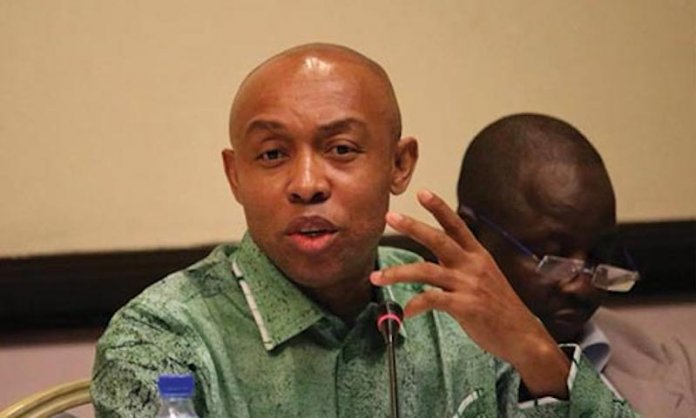
By Chidi Anselm Odinkalu

On this day 75 years ago, on 10 December 1948, the General Assembly of the United Nations adopted the Universal Declaration of Human Rights “as a common standard of achievement for all peoples and all nations.” 48 of the 58 countries eligible voted to approve the Declaration. The Byelorussian Soviet Socialist Republic, Czechoslovakia, Poland, Saudi Arabia, Soviet Union, South Africa, Ukraine, and Yugoslavia abstained, while Honduras and Yemen absented themselves from the vote altogether. There were no votes against its adoption.

The previous day, on 9 December 1948, they had adopted the Convention on the Prevention and Punishment of the Crime of Genocide and just three and a half years earlier, in June 1945, 50 countries had signed the Charter of the United Nations establishing the foundations for a new global order at the end of a profoundly ruinous war. In the three years separating the adoption of the UN Charter from the Universal Declaration, more countries emerged to independence, including Korea, India, Indonesia, Philippines, Myanmar, Pakistan, Syria, and Vietnam. In the decade that followed, the cascade of decolonization arrived Africa.

Two significant events in May 1948 preceded the adoption of the Universal Declaration. In Bogota, Colombia, the countries of the Organization of American States (OAS) proclaimed the American Declaration on the Rights and Duties of Man, according human rights salience on a regional scale that had until then been absent. In the same month, the National Party eked out a win in South Africa’s parliamentary elections, enabling them to take over power and launch a government founded on the idea of the inherent supremacy of one race over all others, which many around the world thought had been defeated with the Nazis in 1945. It was entirely consistent that a country led by such a party could not bring itself to vote for the Universal Declaration.

Like the Genocide Convention, the Universal Declaration was inspired by Nazi atrocities which, in the explicit language of the text “outraged the conscience of the world.” It would have been preferable if that conscience could also have been bothered to notice the preceding atrocities of colonialism and slavery or the genocides at the beginning of the 20th century, including those perpetrated by Germany against the Herero and Namaqua of present day Namibia; King Leopold’s genocide in the Congo; and the Ottoman genocide against the Armenians. Those went un-noticed largely because the victims were – in the dominant wisdom of the day – from expendable races.

Much of what the Declaration promised was aspirational then. Around the world, discrimination was the order of the day. Many of the leading countries at the adoption of the Declaration, notably France, Portugal, Spain and the United Kingdom, were still reluctant to give up their colonies. They could not be taken seriously when they promised not to discriminate because colonialism was founded on an inherent inferiority of colonized peoples. This inequality was racist. A mere quarter of a century earlier, these nations had described colonies in the Covenant of the League of Nations as “inhabited by peoples not yet able to stand by themselves under the strenuous conditions of the modern world.”  

Despite the adoption of the Slavery Convention in 1926, slavery was also still alive at the time. Therefore, simple as it was, the proposition that “all human beings are born free and equal in dignity and rights” was quite radical in 1948. The original draft had confined that entitlement only to men. Hansa Mehta, the feminist educator and writer who was India’s first representative to the United Nations Human Rights Commission, ensured that the final language of the Declaration applied to everyone, not just men. Her imprint on the final text showed that decolonization would profoundly affect the manners and meanings of international law and relations.

Four days after its adoption, the Guardian in London editorialized that the Declaration “is no smug statement of the Western way of life”, calling it “a bold step for the world to take when there is no government in existence which can guarantee, even to its more favourite citizens, all the rights laid down.” On the first proposal, the newspaper was far from accurate; on the second, its insight proved far more durable.

With respect to the former, Kathryn Sikkink recalls that it was the Chilean jurist and diplomat, Álejandro Alvarez, who first proposed the idea of the “international rights of the individual” to the American Institute of International Law in 1917, which eventually evolved into the UDHR. The caricature of the Universal Declaration as some kind of donation by the West to the rest is, therefore, easily shown to be unfounded.

As to the latter, its evident shortcomings notwithstanding, the influence of the Declaration has been seminal. Many of the ideas originally formulated as aspirations in the Declaration have been transformed into binding law domestically and internationally. All the current 193 member states of the United Nations profess fidelity to it with varying degrees of conviction and many have it enshrined by reference in their national constitutions. Its claims to being universal, somewhat ostentatious 75 years ago, are closer to reality today.

The Declaration has inspired a complex of international treaties and mechanisms at global and regional levels patented for the protection of human rights. Courts of human rights exist in Africa, the Americas, and Europe. The 22 countries of the Arab League now have in place an agreement to create one. An active community of advocates around the world toils to ensure that the guarantees inspired by the Universal Declaration continue to prosper. It has spawned a grammar appealing to diplomacy, government at different levels and even to security and intelligence agencies as they seek to communicate or justify their actions.

At the landmark of the 75th anniversary of the Universal Declaration of Human Rights, the evidence of progress is unmistakable, but so are the challenges. The rise of populist authoritarianism increasingly endangers the promise of the Declaration and those who work to defend or realise that promise as well as the integrity of institutions for its implementation nationally and internationally. In Europe, the United Kingdom is increasingly voluble with its sovereign skepticism about the European Convention on Human Rights. In many parts of the world, violent non-state actors such as insurgents, terror groups, or networks of organized crime now endanger the mission of the Universal Declaration.

In a world of permanent crises, the political and diplomatic investments needed to advance human rights are increasingly in doubt, nowhere more so than in the West, as countries as well as multilateral institutions direct their attentions to a succession of pressing crises or foster the idea that the advancement of a more equal world in freedom and rights can suffer deferral to a convenient future time. Appealing as this may seem, it is evident on closer examination that nearly all of these crises are either caused by or the causes of deepening inequality.

In different parts of the world, this inequality manifests itself in different ways between people and communities or between citizens and their governments. Across Africa, for instance, authoritarian government is on the rise; the right to vote is in danger from compromised electoral institutions and captured courts; a metastasis of sovereign debt overhang breeds rising immiseration; fragmentation and instability have increased conflict, atrocities, and associated displacement and rootlessness. Violence is a rising cause of death both directly and also in indirect forms which mostly destitute and endanger women.

Yet exciting new opportunities exist on this anniversary for advancing the message of the Universal Declaration and the mission of a more equal world. The digital revolution, for instance, makes possible new frontiers of awareness, advocacy, and accountability. Even as authoritarianism waxes, concentrations of power are waning in their influence.

75 years ago, the Guardian called the Universal Declaration “a stick with which governments and national consciences can be beaten.” The challenge of the next quarter century to the Centenary of the Universal Declaration will be to advance its realization in ways that do not necessitate anyone feeling clobbered.

A lawyer and a teacher, Odinkalu can be reached at [email protected]

Nigerians ask, who will compensate Rhoda Jatau?

On account of interventions by the civil society, Christian Association of Nigeria, the Nigeria Inter-Religious Council and the Christian Solidarity Worldwide Nigeria, Rhoda Jatau a mother of five who condemned the alleged killing of Samuel Deborah in Sokoto State, regained her freedom after 18 horrendous months in prison.

But what was the offence of this ordinary Nigerian citizen who serves as a health care worker in Bauchi state? Many opine that a rich woman would have been able to higher a dozen Senior Advocates of Nigeria to challenge her detention without trial and claim damages for her.

After all a Federal High Court in Abuja has just awarded N500 million damages to Murtala Ajaka, the Social Democratic Party’s (SDP) candidate in the November 11 governorship election in the state; payable by the Kogi State Government for violation of his fundamental rights. Although he was never detained for a day.

And so while many in Nigeria rejoice over the release of Mrs. Jatau, thankful to God and all those who were instrumental to her release, several ask: “Who pays for all she went through for 18 months? What of her mental state? 18 months are not 18 hours.”

Veteran lawyer and activist Julie Odigie- Oyegun bared her thoughts

“Finally AND Swiftly in the same breath with 18 months intervening!
Bail conditions undisclosed.
Compensation for detention unmentioned.
Prosecution of a Christian by Sharia court unquestioned.
State of health — mental and physical — unknown.
The good news is that Rhoda is back home with her family.
But by no means is this outrage over.
Not till Rhoda gets the justice that — so far — has eluded the late martyr Deborah of blessed memory whose assailants when arraigned were promptly represented in court by 34 lawyers.

Sir Daniel Chukwudozie allegedly behind behind 4.8billion fraud charge against Ibeto

The Legal adviser to Chief Dr. Cletus Ibeto, Sir Marcel Dim-Udebuani Esq. has revealed that the mastermind behind the raging 4.8 billion Fraud allegation against his principal is Sir Daniel Chukwudozie.

Dim-Udebuani who maintains that the allegations leading to the fraud charges has been litigated upon gives a detailed account in the statement below.

CAMPAIGN OF CALUMNY AGAINST CHIEF DR. CLETUS IBETO CON “OMEKANNAYA” AND MIRI MARA UGO AND CALL FOR THE GENERAL PUBLIC TO DISREGARD THE ALLEGED N4,800,000,000 (FOUR BILLION EIGHT MILLION NAIRA) ALLEGED FRAUD AS BEING FABRICATED AND SPONSORED BY SIR DANIEL CHUKWUDOZIE OF DOZZY OIL AND GAS LTD.

The story of Chief Dr. Cletus Ibeto CONOmekannaya and Miri Mara Ugo and Sir Daniel Chukwudozie had been fully litigated upon before High Court of Rivers State, a Court of competent jurisdiction which unambiguously and categorically made its findings which is reproduced verbatim as follows:

  1. “In connection with the monies deposited with the Claimant as part payment of the purchase price for the Claimants’ land, I find that it is improbable that the Defendants, claiming the sum of $USD 3,000,000.00and pegging a value of an exchange rate of 00 (Five Hundred and Two Naira) would make an error of calculation and instruct their solicitors to demand the refund of the sum of N4,000,000,000.00 (Four Billion Naira) instead of N4,801,000,000.00 (Four Billion, Eight Hundred and One Million Naira) which would have been the correct figure if the Defendant had factored in their claim initial deposit of $USD 3,000,000.00 let me quickly add here that I disbelieve the evidence presented by the Defendants that the said sum had been factored into their negotiations for the procurement of the land in dispute. Both parties agreed, and as I find, that a reconciliation document, Exhibit 12 was signed between them on 31/7/2017 and the claimed sum of $ USD 3,000,000.00 was not included. The explanation put forward by the Defendants in their pleadings and testimonies that the sum of N3,295,000,000.00 (Three Billion, Two Hundred and Ninety-Five Million Naira) was calculated for Parcel B only, is in my view too weak to sway and persuade this Court”.
  2. Therefore, document speaks for itself but for emphasis, the trial Court finds at page 20 of the Judgmentthat the only signed document with respect to the land transaction of Chief Dr. Cletus Ibeto CON and Sir Daniel Chukwudozie was made on the 31st day of March, 2017. The said document shows that the entire 10 counts bordering on N4,800,000,000.00 (Four Billion, Eight Million Naira) are not only cosmetic but a trump-up Charge to tarnish the sacred image of Chief Dr. Cletus Ibeto CON but as his name goes the “Miri Mara Ugo Saraya Aha”.
  3. It is Fundamental to inform the General Public that the entire Count 1 to 10 contained facts already litigated upon and final Judgment entered in favour of Chief Dr. Cletus Ibetoand his company.
  4. It is therefore preposterous for Sir Daniel Chukwudozieof Dozzi Oil and Gas who appealed the findings of the Judgment of the High Court which is still subsisting to turn around using the instrumentality of the state apparatus to criminalize simple civil commercial transaction.
  5. It is also funny/ridiculous reading from the media that Chief Dr. Cletus Ibeto CON defrauded Sir Daniel Chukwudozieto the tune of N4,800,000,000.00 (Four Billion, Eight Million Naira) for purchase of landed property in Port-Harcourt, Rivers State. The document tendered and marked Exhibit 12 by Hon. Justice A. Enebeli at page 20 line 14 which I shall reproduce here verbatim for the public to know that there is nothing like N4,800,000,000.00 (Four Billion, Eight Hundred Million Naira) or fraud associated with the total sum of N3,295,000,000.00 (Three Billion, Two Hundred and Ninety-Five Million Naira) deposited for purchase of Chief Dr. Cletus Ibeto’s landed property by Sir Daniel Chukwudozie and there is a document to that fact executed by Chief Dr. Cletus Ibeto CON and Sir Daniel Chukwudozie.
  6. It is a fact that at no time did Chief Dr. Cletus Ibeto CONpay $3,000,000.00 (Three Million US Dollars) for the purchase of the alleged property. The $3,000,000.00 (Three Million US Dollars) that Sir Daniel Chukwudozie gave to Chief Dr. Cletus Ibeto was a separate transaction which Chief Dr. Cletus Ibeto paid its naira equivalent which was N705,000,000.00 (Seven Hundred and Five Million Naira) based on then applicable exchange rate of $1: N235 as at 2015/2016) and has no bearing and relationship with the land transaction which also started only in June 2016 to May 2017 And sequel to all these shenanigans, it is for the best interest of justice and kudos for the Honourable Attorney-General of Lagos State taking over this case as he did on the 5th day of December, 2023.
  7. The media report is sensational and did not represent the position of the law. The letter from the office of Hon. Attorney-General of Lagos State is unambiguous and clear to the blind and audible to the deaf. So, it is quite unfortunate that media is reporting that the EFCC is resisting the Honourable Attorney-General of Lagos State from taking over. However, for the purpose of clarity, the office of Honourable Attorney-General of Lagos State from the letter presented to the Court in accordance with Section 211 of the 1999 Constitution of Federal Republic of Nigeria (as amended)is the new the Prosecutor of this case and not the persecution that has been going on and it is for the overriding interest of justice. It is indeed awesome, fantastic and proper thing to be done in the circumstance to avoid miscarriage of justice.
  8. Sir Daniel Chukwudozieis in total breach of contract and the entire issue concerning the failed land transaction is subjudice and his appeal has been entered at the Court of Appeal Port-Harcourt and Chief Dr. Cletus Ibeto Cross-Appeal has also been entered and the entire count Charge boarders on commercial transaction and there is no paragraph or line where the Fundamental Right Judgment indict Chief Dr. Cletus Ibeto or any of his two companies. The Judgment is hereby published for public consumption to show that the alleged and utopia N4, 800,000,000.00 (Four Billion, Eight Million Naira) purported fraud case is geared towards tarnishing the image of Chief Dr. Cletus Ibeto CON and has no iota of substance in it. It is just only to hoodwink, malign, humiliate and make Chief Dr. Cletus Ibeto CON look bad and bring him to public odium and ridicule.
  9. Chief Dr. Cletus Ibeto CONis an industrious man with impeccable character which endeared him to all his local and international partners and the obnoxious falsehood published in the media by Sir Daniel Chukwudozie media contractors are diversionary and unfortunate just to malign him.
  10. It is ignorant and poor knowledge of journalism cum legal jurisprudence that will made an online media to publish that Economic and Financial Crimes Commission (EFCC) resist taking over of the case by the Hon. Attorney-General of Lagos State.       net/2023/12/06/EFCC-opposes N4, 800,000,000.00 (Four Billion, Eight Million Naira) case takeover by Lagos Attorney-General. The law is settled that the office of the Honourable Attorney-General has taken over the prosecution of the case in exercise of the statutory powers provided under Section 211 (1), (b) (2) of the Constitution of the Federal Republic of Nigeria, 1999(as amended) and Administration of Criminal Justice Law, Lagos State 2021 and all other powers enabling the office in that regards including the ratio desidendi in the case of State Vs. Ilori (1983) 1SCNLR 94 where the court held “that the Powers of the Honourable Attorney-General over criminal prosecution is not subject to review by any Court of law”.
  11. That the powers of the Honourable Attorney-General is a great ministerial prerogative coupled with grave responsibilities that is exercised having regard to the public interest, the interest of Justice and the need to prevent any abuse of legal process.
  12. That the prosecutorial authority of the Economic and Financial Crimes Commission (EFCC) is delegated and subject to the discretion of the Honourable Attorney-General which authority the Chairman of Economic and Financial Crimes Commission (EFCC) cannot sub delegate to Chief Rotimi Jacobs, SAN or any other private legal practitioner or Counsel by way of a fiat as expressed in the legal Maxim “Delegatus non potest delegare”. The judicial authority on this principle can be found in the celebrated case of KATAGUM VS. ROBERTS (1968) NMLR 167. And this is to the effect that a delegate cannot sub-delegate his authority.
  13. Therefore, the publication is not only misleading but also fallacious likewise allegation that Chief Dr. Cletus Ibeto CON sneaked out of the Country and evading arraignment. This is also ignorance dancing at Nkwo Nnewi Market. However, for the records to be very clear, the first time the case came up before Honourable Justice I. O. Ijelu’s Courtis on the 28th day of September, 2023. The Defendants (Chief Dr. Cletus Ibeto and His two companies) had filed and served Notice of Preliminary Objection challenging the territorial and procedural jurisdiction of the Court, which in our criminal jurisprudence it is called pre-arraignment procedure which has not been abolished by the advent of Administration of Criminal Justice Law of Lagos State 2021 precisely Section 273.
  14. It is fundamental to note that there is no proceedings or trial before Hon. Justice I. O. Ijelu’s Court which is contemplated by the provision of Section 273 of the ACJL 2021 of Lagos Stateand Section 40 of the EFCC ACT.
  15. In the instant case of calumny, the plea of the Defendants/ Applicants have not been taken by the trial Court for it to commence trial or proceedings in this matter, which proceedings Section 273 of the ACJL 2021 of Lagos Stateand Section 40 prohibits the Court to stay. The pre-arraignment stage hearings on this case so far is not a trial but one in which it is being contested that there should not be a trial until the trial stage is reached (when the Defendants are called upon to take their plea to the charge or information) there is no proceedings to be stayed as contemplated under Section 273 of the ACJL 2021 of the Lagos State and Section 40 of the EFCC Act and as such an Order made on the 3rd November, 2023 during the pendency of jurisdictional power of the Court with greatest respect is nullity and of no effect and we are confident that by virtue of Section 211 (3) of 1999 Constitution of Federal Republic of Nigeria (as amended) is obviously not for the interest of Justice and for the need to prevent abuse of Legal process. The Honourable Attorney-General of Lagos State has done noble and shown impartiality and need to be commended and not to vilify by sponsored media jobbers and merchants, who can do anything for naira and kobo.
  16. The Honourable Court would not have fallen into the hands of the former prosecutor Chief Rotimi Jacob, SAN by granting his application for bench warrant when the trial has not commenced in line with the Supreme Court decision when a trial in criminal case commences which was treated exhaustively in FAWEHINMI VS. ATTORNEY-GENERAL of LAGOS $ ORS. (No. 1) (1989) 3 NWLR (PT. 112) 707 at 721-722.

“The first leg of the first issue for determination in this Appeal is the issue in respect of the validity of the trial before Longe J. Learned Counsel for the Appellant has submitted that the absence of the two Respondents at the trial of the objections raised by Chief Williams and the failure of the Court to put the two Respondents in the dock and ask them to plead to the information rendered the whole proceedings invalid. There is a misconception in this argument. As pointed out by the learned trial Judge in his Ruling dated 1/08/1988 (Page 87 of the Record) Longe, J, did not claim that he was trying the two Respondents as he made it clear that what was before him at that time was an application challenging the validity of the information filed by the Attorney General of Lagos State…The application is not a trial but one in which it is being contested that there should not be a trial. Until the trial stage is reached, there is no need for the “accused” to be in Court nor in the dock. There is a lot of substance in this reasoning. …The submission before Longe, J., by the learned Counsel for the two Respondents was not that he wanted to make a plea in bar but that the information was invalid and therefore there was nothing upon which his clients should be called upon to plead. This, in my opinion, can always be taken as a preliminary issue before the actual trial of an accused. In a challenge to any action on the ground that it was an abuse of the process of the Court the objection must be raised before the Court start dealing with or trying the action before Longe J., was that the two Respondents should not be arraigned at all on defective and invalid information. Sections 353, 215, 221 and 210 all presuppose that the time for trial has come. Longe, J., rightly in my view, stated that it has not come and there was therefore no reason for the two Respondents to be in Court. … Before a plea is taken the hearing of the information has not commenced but that does not mean that an objection to the information cannot be taken…A trial in criminal case commences when the defendant is called upon to take his plea to the charge and from that stage his personal attendance in Court is required …Once Defendant is asked to take his plea, his trial commences and the Defendant is mandatorily required from that moment to be physically present in Court for his trial until judgment is delivered in the case unless the Court of trial for reasons satisfactory to it excuses his absence. The trial of the Appellant had not therefore commenced at the stage she was ordered to be present in Court for the hearing of the Preliminary Objection to her motion and the motion to quash the charge sheet as to bring into force Section 210 of the C.P.A. The order made by the Court below for her physical attendance at the Court below at that point in time was accordingly, premature and unnecessary…While the other segment of Ezeze vs State  (Supra) dealt with the moving of a motion challenging the charge against the Defendant before plea is taken to it, which the Court held per the lead judgment of Aderemi, J.C.A. (later J.S.C.) on page 504 thereof that-: “…….I say without equivocation that the presence of the Appellant in Court was not mandatory before his motion to quash (the charge) could be heard or taken.” The passage quoted from Ezeze (Supra) is in tandem with Fawehinmi (Supra). Even in Alintah vs. FRN (Supra) 527 it was held that:- “And if an accused person enters an objection, his physical presence in Court will not be necessary for the hearing of the objection or any other preliminary application (before his plea is taken). The presence of an accused person is only mandatory from commencement (and throughout the trial proceedings which begin with a plea to the charge).”… I follow the said cases to hold that the physical presence of the Appellant in Court was not mandatory at the hearing of the objection to have the charge against her quashed at the Court below…At that stage of the proceeding, the Court below had to clear the hurdle of the Preliminary Objection to the charge before the issue of taking plea to the charge would arise. There is thus a significant demarcation between the hearing of a Preliminary Objection to a charge before plea is taken to the charge and proceedings from the time plea of a defendant is taken to the charge and thenceforward to the delivery of judgment in a criminal case. In the latter case, a defendant must be physically present in Court unless for supervening reasons he is excused by the Court from personal attendance in Court, while in the former case dealing with the hearing of Preliminary Objection to the charge, a defendant need not be physically present in Court at the hearing of the Preliminary Objection to the charge which can be moved by his Counsel in his absence.” See also: FRN V DANLAMI & ORS (2021) LPELR – 55668 CA Per Uwa, JCA (Pp. 5253, paras C-D); EZEZE & ANOR v STATE LPELR 2004 5659 CA Per ADEREMI, JCA (Pp. 9-13, paras. B-D).

  1. We also place reliance on an unreported case of Suit No. FHC/ABJ/CR/88/2012; FRN vs. AIR NIGERIA DEVELOPMENT LIMITED & 3 ORSwhere a similar scenario played out. The Federal High Court, Coram. Hon. Justice. Z.S. Abubakar, in entertaining argument on the provisions of Section 306 of the ACJA, 2015 which is in pari material with Section 273 of the ACJL 2021 and Section 40 of the EFCC Act held that the provision can only be invoked when there is a trial or proceedings – when the Defendant/Applicant has been formally arraigned and plea taken. The Court further held that with the compilation and transmission of records and an appeal entered, by virtue of Order 4 Rules 10 and 11 of the Court of Appeal Rules, 2021, the Court (Federal High Court) is divested of jurisdiction to hear any application or conduct any proceedings with respect to the subject matter of that appeal including the instant application which sought to stay proceedings in this matter.
  2. We therefor submit that the facts and circumstances of this case are not similar with those of Ajiboye vs. FRN (Supra) and Onnoghen vs. FRN (Supra) relied upon and cited by the Complainant/Respondent which support the invocation of Section 273 of the ACJL and Section 40 of the EFCC Actbecause there is no proceedings in this matter that has commenced to which the cited Acts can be properly invoked.
  3. Furthermore, the said Section 273 of the ACJL 2021 and Section 40 of the EFCC Actis made subject to the provision of the 1999 Constitution of the Federal Republic of Nigeria (as amended), thus, the provision of the Constitution overrides its application when an Applicant has invoked the provisions of the Constitution and has met all the requirements therein.
  4. Sequel to the above uncontradicted position of the law, Chief Dr. Cletus CON, never sneaked out of Nigeria as it is a common knowledge that his homestead is in United State of America and all his children were bone over there and they are all citizens and his absent from Court is on health ground and lack of jurisdiction of the trial Court to trial him over a pure civil transaction which all the facts took place in Port-Harcourt Rivers State and there is a subsisting Judgment of the Court over the transaction which is already subjudice.
  5. Sir, please permit us to brief introduction of Chief Dr. Cletus Ibeto, OON, CON, to enable you and your most distinguished office to appreciate the need for an urgent in this matter.
  6. Chief Dr. Cletus Ibeto, 71 years old, great philanthropist and an illustrious Nigerian, the Chairman and Chief Executive Officer (CEO) of Ibeto Group Companies. Chief Ibeto, a prominent entrepreneur is an industrialist who has been in the Nigerian business space since the early 1980s.
  7. His business spanned from trading goods and services to manufacturing of motor spare parts, cement production, petrochemicals oil blending plant, CNG gas refinery plant, shipping, real estate, banking, communication and hospitality businesses, among others. He set up his first factory in Nnewi, Anambra State in 1988 which manufactures lead-acid automative battery and plastic motor accessories etc.
  8. Chief Ibetois a recipient of the National Honour of Officer of the Order of Niger (OON) in 2008 and Commander of the Order of the Niger (CON) in 2012 both of which were conferred on him in recognition of his consistent outstanding contributions to the economic development of our great Country, Nigeria.
  9. In 1996, he established Ibeto Petrochemical Industries Limited, which engages in the blending of oil lubricants and various types of petroleum products for local and international markets.
  10. Ibeto Group also built and owns one of the largest liquid storage facilities for petroleum products in Nigeria with a capacity of over 60,000 metric tonnes located at Apapa Wharf and Ibru Jetty Complex, Lagos.
  11. Presently, the Ibeto Group is one of the major indigenous conglomerates employing over 500 Nigerians directly and about 2000 others indirectly.
  12. Chief Dr. Cletus Ibeto, in his illustrious career as one of the leading entrepreneurs in Nigeria, has NEVER BEEN ACCUSED OF ENGAGING IN ANY CRIMINAL ACTIVITY TRANSACTION OR ANY SHADY DEAL and cannot learn it at this time of his life in this ephemeral world of nothingness. Indeed, Sir, Chief, Dr. Cletus Ibetodoes not deserve these embarrassments, character assassination, campaign of calumny and media smear, hence this appeal for your urgent intervention.
  1. BACKGROUND OF THE CASE
  • a. Sir, Chief Dr. Cletus Ibetohad a contractual business with Sir Daniel Chukwudozie, which is civil and outside the realm of criminal action.
  • b. By virtue of a sub-lease dated 19th March, 2010 and registered as Number 45 at page 45 in volume 280 of the Lands Registry, in Port-Harcourt, Rivers State, Ibeto Energy Development Limited became vested with a large track of land situate at Reclamation Road Layout, Bunda Ama, Port-Harcourt, Rivers State.
  • c. The land has a cumulative Area of 22.6536 Hectares, comprising of Parcel A with an Area of 18560.840 square meters (1.8561 Hectares) and Parcel B with an Area of 207975.417 square meters (20.795 Hectares) respectively which are shown on plan No. KES/RV/24/2008.
  • d. Upon acquisition of the swampy land, from both Shipbuilders and Bunda Ama communities, our clients deployed significant resources running into Billions of Naira in engaging professionals including a German company in Reclamation and sand-filling of the waterlogged land.
  • e. Chief Dr. Cletus Ibeto CONalso fenced the land with concrete walls, developed a reasonable part of the land, while the Ibeto cement carries out its operation on a portion thereof.
  • f. Indeed, Chief Dr. Cletus Ibeto CONhas been in quiet and undisturbed possession of the vast Parcel of land since 2007, starting from acquiring some portion of the land from Bunda Ama communities.
  • g. The then Governor of Rivers State, Rt. Hon. Chibuike Rotimi Ameachi wrote to the Ministry of Lands for its perfection which was duly done. The Governor’s letter and the Registration of title documents are hereby attached and jointly marked “A”.

30. RELATIONSHIP BETWEEN CHIEF DR. CLETUS IBETO AND SIR DANIEL CHUKWUDOZIE OF DOZZY OIL AND GAS LTD, THE SPONSOR AND INSTIGATOR OF THE PRESENT CHARGE.

a. Chief Dr. Cletus Ibetohad a contractual business with Sir Daniel Chukwudozie, which is civil and outside the realm of criminal action.

b. Chief Dr. Cletus Ibeto CONhave been in the peaceful possession of its’ property since 2007.

c. However, in 2017, Sir Daniel Chukwudozie, the instigator of the present criminal charge approached Chief Dr. Cletus Ibeto CONwith a request to purchase part of the aforesaid Parcel of land, measuring about 20.795 Hectares to develop petroleum storage tank farms for commercial purposes.

d. Since he did not have sufficient funds, he pleaded profusely that he be allowed to pay for the land in installments. Chief Cletus Ibeto CONaccepted his proposal on the condition that the total amount for the land must be paid in full before the execution of Deed of Assignment or transfer title to him or any of his companies. Sir Daniel Chukwudozie agreed to this arrangement.

e. The agreed purchase price for the land was N6,759,187,500.00 (Six Billion, Seven Hundred and Fifty-Nine Million, One Hundred and Eighty-Seven Thousand, Five Hundred Naira)

f. A memorandum dated 31st day of March, 2017, executed by Chief Dr. Cletus Ibetoand Sir Daniel Chukwudozie as the alter ego of their respective companies, clearly captured the size of the land measuring 20.795 Hectares.

g. Sir Daniel Chukwudoziepaid the sum of N3,295,000,000.00 (Three Billion, Two Hundred and Ninety-Five Million Naira) only, leaving an outstanding balance of N3,259,187,500.00 (Three Billion, Two Hundred and Fifty-Nine Million, One Hundred and Eighty-Seven Thousand, Five Hundred Naira) Attached and marked “B” is a copy of the memorandum executed by Chief Dr. Cletus Ibeto and Sir Daniel Chukwudozie.

h. It is very important to note that this is the only document signed by both parties in this transaction till date.

i. Subsequently, Sir Daniel Chukwudozie requested our client to execute a Deed of Assignment in his favour over the Parcel of land B in respect of which he made part-payment, but this request was politely declined by our client, who reminded him of the agreement and understanding that transfer of title would be made to him upon full payment of the agreed purchase price.

jObviously disappointed but desperate and resolute to force his way through, Sir Daniel Chukwudozie began to claim that another set of unidentified persons who he merely described as the “rightful owners” purportedly sold the same portion of land to him.

k. He claimed that the land in question now belongs to him and that the part payments of the purchase price of the land made to our client was just a friendly loan he advanced to Chief Dr. Cletus Ibeto. According to him, our client must refund the money.

lIn view of the above development, our clients instituted an action at the High Court of Rivers State sitting in Port-Harcourt, Rivers State.

31. SUIT NO. PHC/158/CS/2022; BETWEEN IBETO ENERGY DEVELOPMENT LIMITED AND CHIEF CLETUS IBETO VS. DOZZY OIL AND GAS LIMITED, SIR DANIEL CHUKWUDOZIE AND SUNGREEN OIL AND GAS LIMITED

a. Chief Dr. Cletus Ibeto CONin the said suit claimed sundry reliefs against the Defendants, jointly and severally in respect of the entire Parcel of Land. Sir Daniel Chukwudozie defended the action and also made a Counter-Claim

b. In the Judgment delivered on the 29th March, 2023, Enebeli J. made a declaration that Ibeto Energy Development Limited (1st Claimant) is the rightful owner of the land.

c. The Court further held that Ibeto Energy Development Limited (1st Claimant) is entitled to the Statutory Right of Occupancy over all the land situate along Reclamation Road Layout at Bunda Ama communities, Port-Harcourt City Local Government Area of Rivers State with a cumulative Area of 22,653.6 (1.8561) Hectares comprising of Parcel A and Parcel B; with an Area of 20,795.417 square meters (20795 Hectares) respectively as shown in plan No. KTS/RV024/2008 which were the subject of Deed or sub-lease dated 19th March 2010 registered.

d. Dissatisfied with the decision of the High Court of Rivers State, Sir Daniel Chukwudozie and his companies lodged an appeal as per the Notice of Appeal dated 6th June 2023 poignantly challenging the decision.

e. Chief Dr. Cletus Ibeto CON filed a Cross Appeal challenging an aspect of the decision and same has been entered in the Court of Appeal, Port-Harcourt Division. The Judgment, Notice of Appeal and Cross Appeal are hereby attached.

f. Consequently, with a view to arm-twist, molest, embarrass and intimidate Chief Dr. Cletus Ibeto CON, the said Sir Daniel Chukwudozie approached the Economic and Financial Crimes Commission (EFCC) to criminalize an otherwise civil transaction in the bid to humiliate and embarrass Chief Dr. Cletus Ibeto CON.

g. It fundamental to note Sir, that Chief Dr. Cletus Ibeto was invited by the Abuja office of the Commission, which invitation, he duly honoured. Our client responded to the allegations and supplied all the relevant documents. Chief Dr. Cletus Ibeto CON made statements and was with the operatives for over 10 hours. It took the intervention of well-meaning Nigerians before administrative bail was extended to him.

32. WORRISOME DEVELOPMENT ARISING FROM THE CRIMINAL CHARGE FILED AT THE HIGH COURT OF LAGOS STATE, IKEJA

a. Sir, profoundly traumatized by his experience at the EFCC office in Abuja, Chief Dr. Cletus Ibeto developed serious health challenges arising from the interrogation arising from a most unexpected investigation in a clear business transaction between himself and Sir Daniel Chukwudozie.

b. Currently, our client is in the United States of America battling with is health, which ill health was precipitated by the antics of Sir Daniel Chukwudozie to surreptitiously coerce the instrumentality of the state apparatus in the pursuit of his inordinate unwholesome desires.

c. Chief Ibeto will be happy to return to Nigeria immediately, he is certified to return by his doctors.

d. Painfully, despite the health condition, the Commission orally moved the Court to issue an arrest warrant against him. The Certified True Copy of the record of proceedings is hereby attached.

e. Sir, it is settled that a Defendant must be served personally a charge against him. Chief Dr. Cletus Ibeto has not been served with the charge till date. He got to know of the matter pending in Court through the social media.

f. Notwithstanding that Chief Ibeto was served with the Charge, his Legal representatives informed the Court that he is indisposed and also drew the attention of the Court to the fact that it lacks territorial jurisdiction over the matter, as the subject matter is a land dispute in Rivers State. This is glaring from counts 1, 2, 3, 4, 5, 6, 7, 8 and 9 of the charge. It needs to be said that count 10 is a mere contraption, manufactured by Sir Daniel Chukwudozie to serve his malicious purpose.

g. Surprisingly, the Court refused to hear the application challenging its jurisdiction and issued a bench warrant against our client on the 3rd November, 2023. That caused a miscarriage of justice in a case he ought to have determined whether he has jurisdiction to entertain or not.


TIPS