Home Blog Page 667

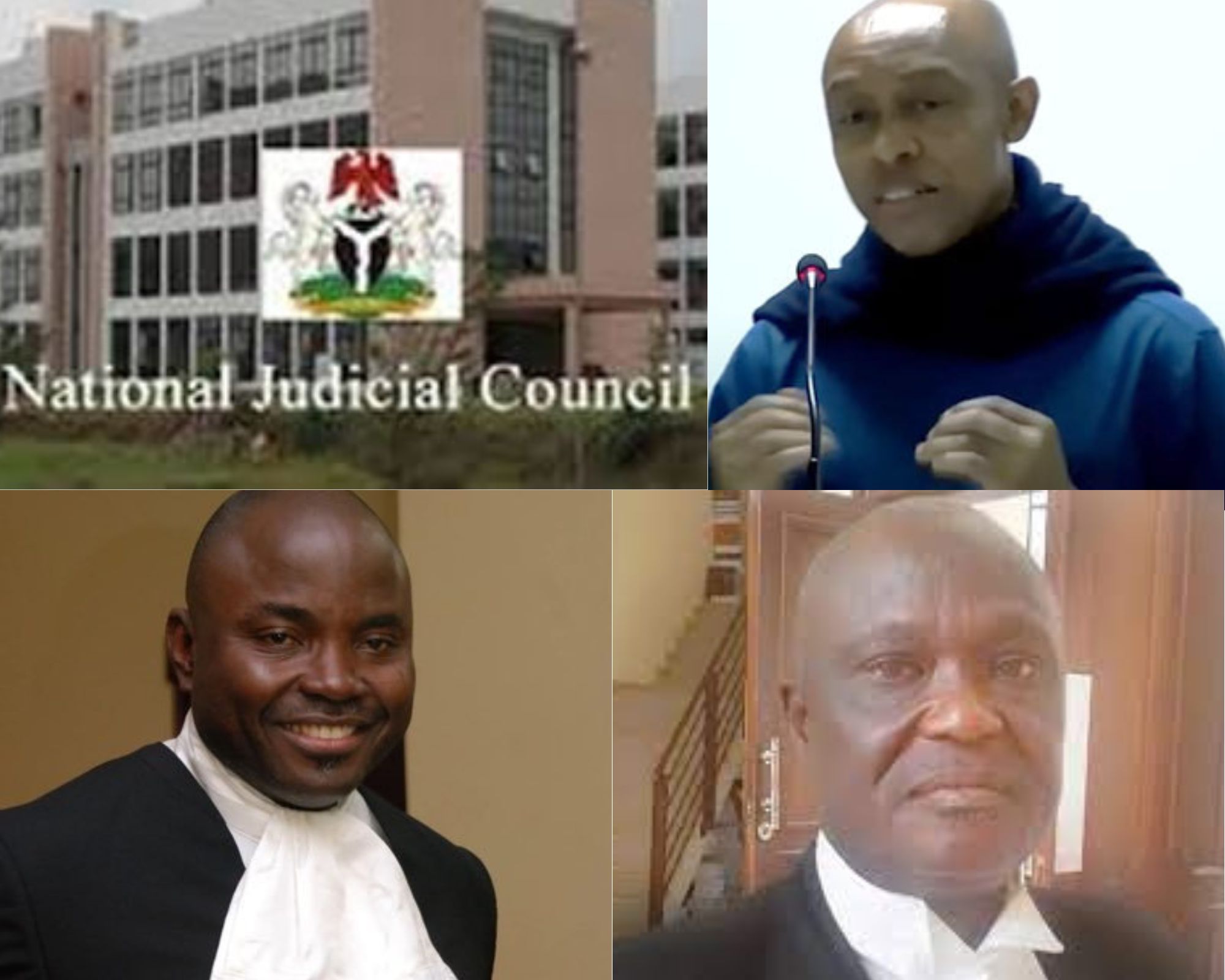
Ex-National Rights Commission Chair lauds Kogi SANs for suing Kogi Government, NJC over “illegal” judicial appointment

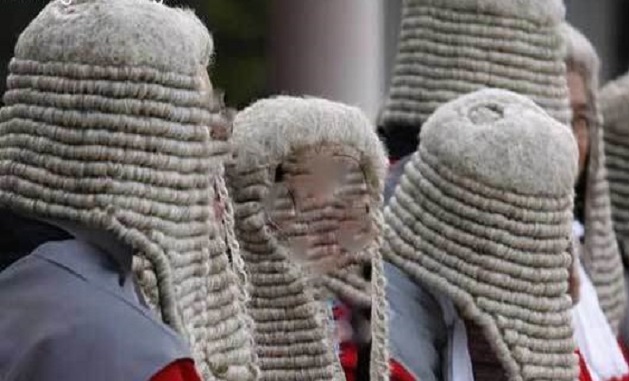
Following their action against the National Judicial Council (NJC) and the Kogi State government over what they termed an “illegal shortlist” for appointments into the state’s judiciary, a former Chair of the National Human Rights Commission, Prof. Anselm Chidi Odinkalu has commended the seven Senior Advocates of Nigeria (SANs) who took the initiative urging that “SANs from other parts of the country cld take a cue…”

Stressing that it “it’s about time”, Odinkalu via his X handle said: “I wld like to thank the Senior Advocates of #Nigeria, #SANs, from Kogi State, including Yunus Ustaz & @jibrinSAN, for #TakingAStand on this abuse of judicial appointments. It’s about time. If only SANs from other parts of the country cld take a cue…

“At last, the #genitalisation of judicial appointments in #Nigeria will #GoToCourt with a challenge to the nomination of the unqualified wife of the Kogi State governor as a judge….”

The Plaintiffs— Chief Yunus Ustaz Usman, J.S Okutepa, Patrick Okolo, Abdullahi Haruna, Reuben Atabo, Shaibu Aruwa and Johnson Usman, are asking for an Interlocutory Injunction, restraining the defendants, their agents, privies and servants from fixing dates for interview of the shortlisted candidates as well as from inviting them for any meeting or from performing any other such functions in relation to the subject matter of this suit pending the hearing and determination of the substantive suit.

Also joined in the suit filed at the Federal High Court in Abuja, are: Kogi State Judicial Service Commission, the Attorney General and the Commissioner For Justice Of Kogi State as defendants.

In the Originating Summons with Suit No: FCT/ABJ/CS/05/2024, the Plaintiffs, by Chief Yunus Ustaz Usman and J.S Okutepa. Others are Patrick Okolo, Abdullahi Haruna, Reuben Atabo, Shaibu Aruwa and Johnson Usman, argued that the selection process violated regulations and constitutional principles of fairness, equity, and merit.

SaharaReporters reported on October 26, 2023 that about 17 Senior Advocates of Nigeria (SANs) from Kogi State called for the suspension of appointment of new Judges into the state judiciary until certain criteria are met.

The lawyers made the demand in a letter to the Chief Judge and Chairman of Kogi State Judicial Service Commission, Justice Josiah Majebi, which was dated October 20, 2023.

Titled “RE: Provisional Short-list Of Candidates Of Ten Judicial Officers Of The High Court Of Justice Shariah Court Of Appeal And Customary Court Of Appeal,” the indigenous Kogi SANs stated that appointment of Judges to superior courts of record is regulated and requires provision of basic facilities such as availability of court rooms/Judges chambers, official cars, residential accommodation as well as equipped library in Judges’ chambers, citing Rules 1-5 of National Judicial Council Revised Guidelines.

In the 12-point issues raised in the letter signed by Yunus Ustaz Usman, Life Bencher for himself and on behalf of 16 other Senior Advocates, the legal luminaries also pointed out that the proposed candidates listed for appointments of judges did not reflect the geographical spread. They noted that the list is lopsided to the disadvantage of other parts of the State.

According to the letter, the candidates listed for customary Court of Appeal are all from Kogi Central and there is no candidate from Kogi East or Kogi West, noting that there are qualified persons from Kogi East and Kogi West that were not selected.

Meanwhile, the legal luminaries, the suit filed today, January 8, 2024, before an Federal High Court, Abuja Division stated that the list were tainted with ethnic and political interference.

Amongst issues raised is the inclusion of Governor Yahaya Bello’s wife, Amina, as a proposed High Court judge when she neither has magistrate experience nor meets other requirements.

Apart from the fact that candidates where concentrated from Governor Bello’s Kogi Central district, the Plaintiffs pointed out that the selection of candidates in Kogi State for appointment as Judicial officers to the superior courts of record should be on the basis of “merits, competence, sound knowledge of law, fairness, equality and geographical spread within Kogi State devoid of ethnic and political considerations”.

The lawyers, however, expressed dismay that despite so many letters had been written on the issue before the court for determination yet little attention was paid to the complaints.

They cited the letter from NBA Lokoja Branch, lawyers of Okun extraction of Kogi State, which comprise of Five Local Government Areas to wit: Ijumu, Kabba/Bunu, Mopamuro, Yagba East, Yagba West, Kogi (Koton-Karfi and Lokoja Local Government Areas), and Igala Youth Leaders Assembly.

In an Affidavit sworn by one of the plaintiffs, Patrick Okolo, SAN, the Plaintiffs insisted that the NJC guidelines and constitutional clauses governing appointments are mandatory and binding.

“That despite the service of Exhibits 2, 3, 4 and 5 on the 1st and 2nd Defendants, they ignored same and went ahead on 23rd November 2023 to invite the said shortlisted candidates to the Department of State Security (DSS) for screening and on 1stDecember 2023, the 1st Defendant’s officials went to Kogi State to conduct an inspection of the facilities such as official cars and office space preparatory for the said appointment.

“That the Defendants are now preparing to invite the shortlisted candidates for interview consequent upon which the successful candidates from the interview will be appointed as Judges of the High Court of Kogi State, Judges of Customary Court of Appeal of Kogi State and Khadis of the Sharia Court of Appeal of Kogi State without further delay from now.

“That the 3rd Defendant is bent on the appointment of the said shortlisted candidates as judicial officers of the Superior Courts in Kogi State before leaving office at the expiration of his tenure on 27th January 2024 since his wife; Amina Yahaya Bello Esq was among those shortlisted.

“That the said Amina Yahaya Bello Esq is No 4 in the shortlisted High Court of Justice List in Exhibit1.

“That I know as a fact that among the Provisional Shortlisted Candidates for appointment as judicial officers to the High Court of Kogi State are two (2) Women from Kogi Central one of whom is Amina Yahaya Bello, Esq; the wife of the Governor of Kogi State who is not in private practice and not a Magistrate.

“That I know as a fact that the said Amina Yahaya Bello, Esq and other candidates in Exhibit 1 do not have the required number of Judgments of both trial and appellate Courts that qualifies them for appointments as Judges of the superior Courts of records in Kogi Sate as required by the Rules of the 1st Defendant.

“That I know as a fact that the three candidates provisionally shortlisted by the 2nd Defendant for appointment as Judges of the Customary Court of Appeal of Kogi State who are all from Kogi Central Senatorial District are Musa Onogo Idris Esq., Maryiann Ozohiu Esq., and Shaibu OzoveheEbenezer Esq,. have seniors from other Senatorial Districts of the State who expressed interest in being appointed as Judges but were not selected in spite of the fact that they are qualified and adjudged by all and sundry as being competent to be made judges.

“That I know as a fact that the 2nd Defendant is doing the bidding of the 3rd Defendant and has wrongly recommended those who did not meet the requirements of appointment to the offices recommended in Exhibit 1 for purely partisan and political consideration as parting gift to the occupant of the office of the 3rd Defendant who is due to vacate office on the 27th January 2024.”

The Plaintiffs formulated two questions for determination and sought for six reliefs from the court in the event that their questions were in affirmative.

Among the reliefs sought are “an order of court restraining the Defendants/Respondents, their servants, agents and privies from taking any further step at all in respect of the recommendation and appointment of the shortlisted candidates pending the final hearing and determination of the substantive suit.

“And for such further or other orders as this honourable Court may deem fit to make in the circumstances of this suit.”

Most part of this report was was culled from SaharaReporters

2024 Budget: Between Politics And Governance

By Mon-Charles Egbo

Beyond the conventional conversations about budgets, there are clear-cut messages that the 2024 budget holds for Nigerians.

Firstly, the stage is now set for an honest assessment of President Tinubu vis-à-vis his electoral promises as well as the relative competencies of his appointees. If he delivers on the revenue and expenditure projections, then there is capacity and expertise.

Secondly, the 10th National Assembly is corporately seeking to earn public confidence through a deliberate commitment to citizens’ well-being and transparency in legislative business.

Thirdly, collaboration in democratic governance is profoundly a viable option, especially in developing nations where the legislature and the executive take joint ownership of budgets for credibility.

Fourthly, a budget is productive only when it is robustly implemented through adequate funding, monitoring and evaluation. Again, a meaningful development is achieved only when the capital expenditure is higher than the recurrent as well as when revenue leakages are substantially plugged and or, budget padding is eliminated.

Then fifthly, the performance of a budget can be predicted only when the budget is consistent with a manifesto or rooted in a functional strategic framework, and above all, under a president who is purposeful about the budget and also firmly in charge of his government.

But please, the veracity of these assertions is established as we read on.

Whether for politics or governance, President Bola Tinubu, while signing the budget into law did not leave anyone in doubt as to his determination to pursue a diligent performance of the budget.

And thankfully, the national assembly is on hand to play complementary roles within the ambit of the law. It has since activated relevant internal mechanisms for relative thoroughness and efficiency. For example, as against the old order, it adopted a joint-committee approach to the sectoral reviews of the budget proposal. There was ample time for the respective committees on Appropriation to take common stands on every allocation, unlike in the past when there had to be a special committee to harmonize the reports of both chambers thereby expending extra time and resources, including sundry distractions.

Again, the executive, through the ministries and agencies, was exceptionally open-minded and enthusiastic in addition to displaying an uncommon commitment to a shared vision. In the end, there was an unprecedented demonstration of interdependence and mutual respect among the two arms culminating in a hitch-free and timely passage of the budget.

Hence, Tinubu, with a sense of fulfilment, acknowledged that “I presented N27.5tn and left the room and I called for expeditious treatment of the budget, the review, the passing, the debate and all that. Today we have a budget of N28.7tn with an increase of N1.2tn over the proposal that I submitted. I thank the National Assembly for this prompt review, adjustment and auditing necessary. This is evidence and a great testament to the excellent relationship between the executive and the legislature. We should keep it up”.

Equally, he was emphatic that the budget was “anchored on reducing the deficit and increasing capital expenditure, particularly in our priority areas. The approved 2024 Budget that we just approved, achieves both objectives. It contains a very good increase in the capital side, a reduction in recurrent expenditure and it brought down the deficit from 6.11% to 3.88%. That, to me, is an achievement”. So, the 3rd and 4th messages above have been underscored!

Instructively, this is not the first time that the legislature is altering presidential budget estimates. It has always been largely motivated by political expediency and primordial sentiments. But today, there are logical justifications for the jerking up of the figures.

According to the Speaker of the House of Representatives, Tajudeen Abbas, “We expect the budget to deliver because there’s no sector that we did not cross-check, scrutinize and make enquiries as to what is required to make the desired impact to the economy and the people”. He further declared that “this is a budget that is going to define the Tinubu administration’s commitment to the people of this country”. Again, this echoes the first message!

Then by way of elaborate insight, the chairman of the Senate Committee on Appropriation, Solomon Adeola, hinted that “the government has just removed the fuel subsidy, the government has also just intensified effort to unify the exchange rate differences that we usually have and that comes with a lot of price and Nigerians are paying dearly for it in terms of price of fuel and dollar rate. When we got the budget document, the president implored us to interrogate and investigate it and make sure we came up with a document that was all-encompassing and could suit the needs and yearning of Nigerians. Again, we did some external consultations, most especially in the area of oil benchmark and petroleum resources, if we had gone in that line, we’d have pegged it at N850/N900 to a dollar but we agreed that we wanted to be conservative in our approach so that nobody will think that we want to increase the budget for any ulterior motive, that was why we left it at N490bn out of which N44bn is for statutory transfer, so effectively, the increment is about N446bn that is going into the Federal Government pocket as consolidated revenue”.

Corroborating Senator Adeola, the chairman of the House Committee on Appropriation, Abubakar Bichi, stressed that “we have inflation and exchange rate for the dollar, the executive proposed N750 to the dollar, but after we studied carefully, we look at it and we know it is unrealistic. So we increased it to N800”. Adding that “we had a meeting with Government-Owned Enterprises and we believe that their submissions are not enough. They have agreed to increase their revenue to N700bn. That was how we were able to get that N1.2 trillion, which we applied to capital. This is the first time the capital is bigger than recurrent. I believe this budget is brilliant and Nigerians will see a lot of impacts”.

Meanwhile, the Minister of Budget Planning, Abubakar Bagudu, lamented that “revenue generation remains the major fiscal constraint to Nigeria’s fiscal viability. However, the government is reviewing current tax and fiscal policies with a view to improving revenue generation.”

Elsewhere, he also emphasized that “this is a budget that has been developed, that came out of recognition of all the planning tools that are available and are our priorities, the Renewed Hope Agenda, the eight priority areas of Mr President, and the clarity by Mr President, that budgeting should reflect our priorities and should be implemented and Mr. President captured it today in his speech, this budget is not only what it is, in terms of ambition, and in terms of reducing deficit, increasing capital expenditure and reducing recurrent deficit, it’s going to be implemented”. Certainly from all these, there is no better way to rephrase the 4th message!

Still speaking, convinced that the buck stops with him, Tinubu remarked that “a budget is only as good as its implementation. We will implement this. I want to assure Nigerians that all the MDAs and our teams have been warned, that’s why we even take our time to separate Economic Planning from Finance. MDAs must have regular reports of the budgetary performance in the areas that we put in place to help ordinary Nigerians. The goal is to promote efficiency, dedication, and accountability. If you cannot do that, you may have to leave us to do the job on your behalf. All MDAs have been directed to take responsibility and provide monthly Budget Performance Reports to the Ministry of Budget and Economic Planning, which in turn shall ensure the veracity of such. The Minister of Finance and Co-ordinating Minister of the Economy shall hold regular reviews with the Economic Management Team and, in addition, I shall Chair periodic Economic Coordination Council meetings”.

Politics aside, this is a true mark of leadership. It is not about rhetoric or grandstanding. It is about leading from the front with eyes on the projected results. So once again, the 5th message is echoed!

Then on the strategies for full implementation, the Minister of Finance and Coordinating Minister of the Economy, Mr Wale Edun, confidently disclosed that because “the budget deficit is down from 6.1% to 3.8%” among other variables, “we’re relying less on borrowing and more on revenue and I think you have to take the two together. I think we’re very optimistic about the improvements in revenue that will take place. We are all ready, even from tomorrow, to apply technology and digitalization to ensure that the revenue that should come to the government from all sources, including from government-owned enterprises, comes into the consolidated revenue fund and on the other side, we are bringing order to government borrowing, so Ways and Means is being eliminated by taking the funding that is required from the market, as opposed to from printing of money by Central Bank. That, in a nutshell, is what is happening on the financing side. We are very optimistic that not only will this budget be funded adequately, but it will be funded on a timely basis as well”.

Walking the talk, President Tinubu has since ordered the closure of the Treasury Single Account, TSA, with a directive for all revenues to be remitted into the newly-created Sub-Recurrent Account, which is an organ of the Consolidated Revenue Fund. Objectively, this is a direct and pragmatic measure to curb economic wastage.

Then, of course, it requires a responsive parliament for these set goals to be realized. As such, the President of the Senate, Godswill Akpabio, has consistently acknowledged that the national assembly under his leadership already has its jobs cut out for them. Hear him: “Ours is to monitor what goes on to ensure that, indeed, it is one thing to do a budget; it is another thing for the budget to be fully implemented. We will make sure that if there is a need we also undertake joint monitoring of the implementation of the budget to ensure that yes, nobody can tell us one thing in the green chambers or nothing in the red chambers. We will make sure that we monitor very well”.

Meanwhile, Akpabio’s legislative agenda has scaled through the major integrity test as Nigerians at last have a comprehensive breakdown of the national assembly’s budget.

The details are in this order: National Assembly Office (N36.73bn), Senate (N49.15bn), House of Representatives (N78.63bn), National Assembly Service Commission (N12.33bn), Legislatives Aides (N20.39bn), Public Account Committee (PAC) – Senate (N130m), (PAC) – House of Representatives (N150m), General Services (N30.81bn), National Institute for Legislative and Democratic Studies (N9.01bn), Service-Wide-Vote (N15.19bn), Office of Retired Clerks and Permanent Secretaries (N1.23bn), Appropriation Committee Department – Senate (N200m), Appropriation Committee Department – House (N200m), NASS Library Complex (Take-Off Grant) (N12.12bn), Procurement of Books for the NASS Library (N3bn), NASS Liabilities (N9.90bn), Constitution Review (N1bn), Completion of NILDS HQ (N4.5bn), Construction of NASC building (Ongoing) (N10bn), Alternative Power Supply (Solar Power System) (N4bn), NASS Zonal Liaison Offices (N3bn), NASS Pension Board (Take-Off Grant) (N2.5bn), NASS Car Park Project – Senate (N3bn), NASS Car Park Project – House of Representatives (N3bn), NASS Hospital Project (N15bn), NASS Recreation Centre (N4bn), Furnishing of Committee Meeting Rooms & other Offices within the Senate Building (N2.7bn), Furnishing of Committee Meeting Rooms for House of Representatives Building Part I & II (N3bn), Upgrade of NASS Key Infrastructures (N3bn) Design, Construction, Furnishing and Equipping of NASS Ultramodern Printing Press (N3bn), Design, Construction, Furnishing and Equipping of the National Assembly Budget and Research Office (NABRO) (N4bn). This settles the 2nd message!

Therefore, if good governance is the motivation, Nigerians should be vigilant and dutifully carry out citizens’ oversight functions on the government.

Empirically, Tinubu and his teams have a common direction. The 10th National Assembly is driven by unity of purpose and ambitiously empathetic with the people. Thus at the fullness of time, Nigerians are the ultimate beneficiaries.

Egbo is a parliamentary affairs analyst.

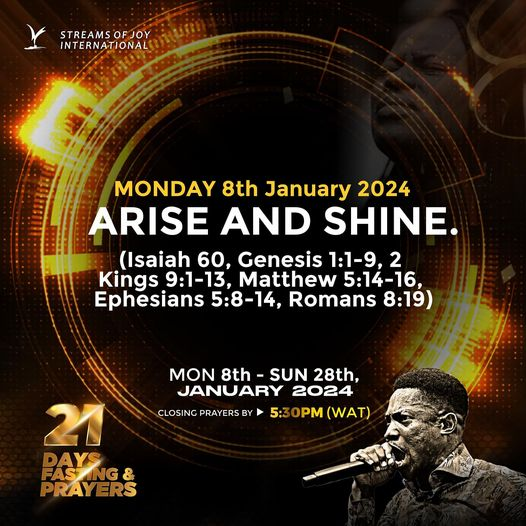
NSPPD 21 days fasting and prayer (Day 3 Prayer Points)

BATTLE AGAINST DELAY & STAGNATION

Read/Study/Meditate on Exodus 14:14-18, Hebrews 11:11, 1 Samuel 1, 2 Samuel 9, Romans 8, 9:28 and make these declarations:

2024: Chapters of DELAY AND STAGNATION, Close!!! The Zeal of The Lord has performed it! (Romans 9:28)

2024 is my year of EL-ROI and Because I have seen the God that sees me, in the order of Hagar, let every journey in the wilderness, End!!! (Genesis 16:13)

I belong to the Altar of Fire and this is my Shiloh!!! Lord encounter me, For every waiting season I have endured, for all the mockery, shame and pain, this 2024, I carry the evidence of my Samuel! (1 Samuel 1)

In my finances/business/career/academics/ministry, in the order of Isaiah 47:1, Virgin Daughter of Babylon, Go down, sit in the dust; sit on the ground without a throne! 2024: NO RIVAL THRONES!!!! (Isaiah 47:1)

The Word of God says weeping MAY endure for A NIGHT! Let mercy speak for me! Every demonic contract I have signed with weeping/negativity/delay/stagnation, be nullified by the Blood of Jesus! (Hebrews 12:24)

I have been bought with a price! Jesus paid in full, I have my receipt! Every mindset of slavery limiting/confining/tying me down to the same old level, I break out! (1 Corinthians 7:23 TPT, Galatians 5:1 AMP, Romans 12:2)

40 Days will not become 40 years, I SAY NO! Wherever and however my family members and I have overstayed in a place of transition into our answers, let it end by Fire! Arrows of distraction/lack of direction/running around in circles/wandering in the wilderness, Break! (Numbers 14:34)

ZIBA, Fire!!! I am not Mephibosheth, As the Lord sends me Help and Helpers out of every season of stagnation, any ZIBA insisting I will remain in the old, let Fire answer! (2 Samuel 9:1-13, 16:1-4, 19:24-30)

This is 2024, Purpose is calling my name and I refuse to settle for less! Lord let your kingdom come, let your will be done in my life as it in heaven! (Philippians 2:6-11, Colossians 1:27, Galatians 2:20)

I hear my name on a Higher level! Angels of the Most High God roll away every stone at the door of my transition! By the power that raised Jesus up from the dead I move upward and forward! (Matthew 28:2)

I am too Loaded to be where I am! Evil hands that manipulate time, age long strongholds, territorial limitations, by the Grace upon Streams of Joy, I am no longer your candidate! Every line I have been unable to cross for many years, I cross by Fire! (Numbers 23:23)

The Lion of the tribe of Judah has prevailed! The Battles are over! It’s a new season of early answers, speedy results, now manifestations! What God cannot do does not exist! (Revelations 5:5)

#nsppd
#21Daysfastingandprayer
#Streamsofjoyinternational
#whatGodcannotdodoesnotexist

See Also: NSPPD fasting and prayer Day 1

See Also: NSPPD fasting and prayer Day 2

Politicization of election disputes in Nigeria’s courts (1)

By Ebun-Olu Adegboruwa, SAN

Some weeks ago, I was a guest speaker at the national seminar organized by Civil Society Legislative Advocacy Centre (CISLAC) at Sheraton Hotel, Lagos where we brainstormed on the Politicization of Election Disputes in Nigeria’s Courts, Key Provisions of the Electoral Act and the Challenges of Technical Interpretation. Permit me to share my thoughts with you.

INTRODUCTION

Nigeria as an independent state is no doubt blessed with a large geography, rich culture, and wonderful people but unfortunately, also with poor institutions where politicians have plaundered the resources of this country for so long. It is common knowledge that this country is bedevilled with numerous challenges but of major concern here in this discourse is the mode and procedure she has adopted to govern the populace and indeed the behaviour of the major players in the electoral system. In some quarters, it has been said that politicians have their ways and they often do not play this game of politics according to the laid down rules and guiding laws. While I agree with these assertions, I must also use this medium to condemn the act of politicking every aspect of our society or to be more precise, I denounce the desperate act of our political players to be politically correct even on the altar of justice and the risk of rubbishing the unity of the country. Politics as it were, is a beautiful game, for it reflects the wishes of the people and also serves as the popularity test of any aspiring leader. Elections which are the true test of democracy ought to be free, fair and credible so as to reflect the true wishes of the people. Unfortunately, elections in Nigeria since the advent of the 4th republic have not really aligned with the true wishes and aspirations of the people. It is common knowledge even in this hall that elections have been marred with violence, vote buying, voter intimidation and suppression, all of which have culminated into voter apathy with the list being endless.

From the empirical facts before us, one can boldly say that elections in Nigeria are no longer conducted and concluded by the electoral bodies as almost every election so far has been subject of judicial scrutiny. The judiciary, as a crucial pillar of democracy, is entrusted with the responsibility of upholding the rule of law and ensuring fair and just resolution of electoral conflicts. In recent years, the judiciary is now increasingly involved in resolving electoral disputes and in the selection of our political leaders. What was designed to be the exception is the new normal and even this, is not spared from the invading powers of the politicians. Election petitions play a crucial role in addressing grievances related to electoral contests. However, these cases often encounter a myriad of challenges, particularly in the realm of technicalities within the Nigerian judicial system. This discourse therefore explores some of the prominent challenges facing election disputes in court while dealing with a major component of election petitions, which is technicalities.

POLITICIZATION OF ELECTION DISPUTES IN NIGERIA’S COURTS

Recently, we all watched on national television where the chieftain of a political party boasted about securing victory at the Supreme Court ahead of his political rivals. If this is not provocative enough, it might also be of interest to remind you that a serving Senator of the Federal Republic of Nigeria alluded to how he deployed his marital association with the head of a vital arm of the judiciary to secure judgment in favour of his colleagues. This increasing trend of politicization has raised concerns about the independence and integrity of the judicial process. One thing we can take from these two unfortunate scenarios is that politicians have taken their game far beyond the field of elections and transferred the same energy to the judiciary. They have shown and indeed there is a deliberate attempt to buy out the judiciary with the aid of some unscrupulous elements in the system.

The term politics is a common concept with much-contested definitions in the social sciences. The contest stems from the inability to submit to a consensus of opinion about what constitutes the political and where exactly politics takes place. This suggests that politics exists wherever human beings interact for certain purposes. Thus, human communication which invokes principles, statements, arguments and disagreements can be explained within the context of politics. Since individuals exist for the actualization of certain interests and such interests conflict with others, politics then becomes the instrument for resolving such conflicts. The desire to get and control power at all times has now made Nigerian politicians to politicize the judicial system.

The conduct of free and fair elections is guided by specified rules. Where the rules and regulations guiding the conduct of an election are deemed to have been compromised and election results rejected, candidates and/or their political parties have another lifeline through election petition. In Nigeria, election petition is the procedure of challenging the result of an election into the federal or state executive offices, legislative houses or local government councils. What this suggests is that the only legal way aggrieved parties can register their displeasure and check the validity of the outcome of any election in Nigeria is through election petitions. Since the outcome of electoral contests remains acceptable to some and unacceptable to others, the party to which the outcome is unacceptable is vested with the constitutional preserve of seeking redress through the election petition process.

It is no longer news that election petition is a proceeding that is sui generis and is considered distinct from other civil proceedings. It is time-bound and demands extreme urgency in the disposition of the same by the election tribunals. Election petition proceedings are free from the procedural clogs of normal civil proceedings. Importantly, the sui generis nature of an election petition translates it into a class of its own, and guided by its own rules and laws distinct from those of civil and criminal laws.

Two factors are critical to an election petition. First are the rules and laws under which it is entertained and adjudicated upon. Fundamentally, an election petition should not be viewed under the same laws that guide civil or criminal proceedings. This is to avoid unnecessary legal technicalities that could arise. Civil and criminal laws, in some situations, allow for the discretion of the judges in adjudicating in such matters; however, such discretion will be placed on the scale of political pendulum aimed at skewing the process and outcome towards certain interests if allowed in election petition proceedings. Therefore, election petitions are resolved under distinct laws of their own. Secondly, election petition is time-bound and hence, requires that any petition arising from an electoral contest should be treated with urgency since occupiers of elective positions are tied to a specified number of years in the various political offices they have vied for.

Politicization refers to the undue influence of political actors and considerations on non-partisan institutions or processes. In the context of election disputes in Nigeria, policization manifests when political interests permeate the judiciary, affecting the impartiality and objectivity that should characterize the resolution of such matters. Politicization of the elections dispute and indeed the judiciary has led to the collapse of public trust in the judiciary. Many emerging and stable democracies of the world alike are known to be battling with the menace. In a huge number of cases, the idea of frolicking with politicians directly or indirectly creates credibility gaps for the judiciary. We can beam our light on the methods of selection, retention and removal of judges to sustain independence and impartiality; the various methods of selecting judges and other judicial members, (in)appropriateness of appointment, retention and removal of judges. The judge and the judiciary in general must be free of inducements, threats, improper influences of any degree and manner, direct or indirect interference from any persons or groups and on whatever grounds.

Father, son remanded for allegedly raping and impregnating 17-year-old daughter, sister in Ibadan

A Family Court in Ibadan, on Tuesday, January 9, ordered the remand of one Michael Ayinde, 51 and his son, Abiola, 19, for allegedly raping his 17-year-old daughter and the latter, his sister. Read previous report HERE 

The magistrate, Mrs O O Ogunkanmi, refrained from accepting the defendants’ pleas and directed their remand at the Abolongo correctional facility in Oyo town.

According to the News Agency of Nigeria (NAN), the defendants, who are the father and elder brother of the complainant, allegedly committed the offense at their residence in the Agboti Olosan area, Alakia, Ibadan. 

Ogunkanmi clarified that the decision to detain the father and son was to await legal advice from the Oyo State Directorate of Public Prosecutions (DPP). 

The court adjourned the case until February 21 for further proceedings.

The Prosecution Counsel, Insp. Gbemisola Adedeji, informed the court that between 2021 and December 2023, Abiola Ayinde engaged in unlawful sexual intercourse with his younger sister, leading to her pregnancy without consent.

During the same period, Michael allegedly had non-consensual carnal knowledge of his 17-year-old daughter. 

Adedeji said the charges filed against them are in violation of section 34 of the Oyo State Child Rights Law, 2006.

NAN

Female breast ironing: Women Affairs minister says perpetrators would be severely punished

The Minister of Women Affairs, Barr. Uju Kennedy-Ohanenye has warned that those who engage in ironing the breast of young females will be prosecuted and severely punished.

The minister concern stems from the practice in Kpaduma, Pygba communities of Abuja, and other places.

Stakeholders in the medical field have since condemned the ironing of breasts of girls by parents and other family members, lamenting that the harmful practice was not only a violation of their rights but also endangers their health.

The physicians said the harmful practice, mostly rooted in the north, exposes the girls to infection, breast tissue damage,  poor milk production after childbirth apart from  leaving them traumatised.

According to the African Health Organisation, breast ironing is a process whereby young girls’ breasts are ironed, massaged and pounded down through the use of hard or heated objects in order for the breasts to disappear or delay the development of the breasts entirely.

The AHO said this cultural practice, which is predominant in the areas where child marriage is prevalent, affects 3.8 million women across Africa, noting that the practice is one of the five under-reported crimes relating to gender-based violence.

The practice can include the use of a variety of objects, such as heated grinding stones, cast-iron pans, ladles, hammers, wooden pestles or spatulas, spoons, brooms, or electric irons.

Experts say the callous  practice is to stop or delay the breasts  from growing or developing or make them flatter with the aim of making the girls unattractive to men.

They noted  that breast ironing, like female genital mutilation, was  a harmful cultural practice carried out on young girls between the ages nine and 15, which leaves them with complication of breastfeeding in adulthood.

During a recent advocacy visit to Garki Chiefdom, Abuja Municipal Council, Uju Kennedy-Ohanenye said the Federal Government would wipe out the dangerous practice adding that that the perpetrators would be severely punished.

She expressed worry over such practice in Kpaduma and Pygba communities in Abuja, insisting that the practice is harmful to women’s health.

Medical experts at different times have said the practice was totally  acceptable, citing  the short-term and long term health risks.

They noted that breast ironing was a harmful cultural practice and abuse which could lead to breast cancer, urging  health workers working with children and young people to watch out for girls who may be at risk.

A Consultant Radiation Oncologist at the Lagos University Teaching Hospital, Idi-Ara, Dr Adedayo Joseph, said, “Though there have not been medical studies on the effects of breast ironing, the practice can cause breast cancer, cysts, depression and perhaps interfere with breastfeeding in later life.

“There are currently 10 cases of diagnosed breast cancer reported from women who were identified as victims of breast ironing. In addition to this, breast ironing puts the girl child at risk of abscesses, infections and permanent tissue damage, resulting in breast pimples, imbalance in breast size, and milk infection.”

“Other possible side effects include malformed breasts. The practice ranges in its severity, from using heated leaves to press and massage the breasts, to using a grinding stone to crush the budding gland. The health consequences vary from benign to acute.

“Also, there might be a delay of breast milk development after giving birth, endangering the life of newborns. Many women also suffer mental trauma after undergoing breast ironing. They see it as a punishment and often internalise blame.”

Corroborating her views, a Consultant Gynaecologist and Obstetrician, Dr Babatunde Rosiji said that the practice thrives in the less informed environment where people do not have access to right information.

He said, “This practice is born out of the decision to suppress the breasts to protect the girls from rape and other sexual abuses without knowing that the practice is more harmful itself. You can imagine using a wooden pestle or heated iron sheet to massage the young girls’ breasts and pound it down. In some cases, you see pus in the young girls’ breasts as a result of the practice.”

Speaking on its consequences, he said, “Due to the instruments being used in the process combined with insufficient aftercare, young girls are exposed to significant health risks. This violates the young girl’s physical integrity. It exposes them to abscesses, infection, dissymmetry of the breasts, and tissue damage.

“This does not only damage a child’s physical integrity, but it also affects their social and psychological well-being. Over 50 per cent of this action is carried out on the children by their mothers and sometimes, without the knowledge of their fathers.

“Yes, some people hypothesise that it could cause breast cancers, but it is yet to be proven by studies. However, it does great damage to a girl child. They find it difficult to lactate or breastfeed their babies after childbirth. It affects glandular tissue, the part of the breasts that makes milk.”

On the solution, he added, “We need a legal framework to fight this just like the genital mutilation in the country. We also need the education of these young girls because the practice thrives in ignorance.

“Normally, a girl beginning to grow breasts all of sudden would wonder what is happening to her chest. She would run to her mother and you can imagine what the mother will tell her if such a mother is bent on doing this. But when such a child is taught about her body parts and development, she would know it’s a process of development and can’t be deceived.”

Clinical Oncologist and Chief Clinical Coordinator of NSIA-LUTH Cancer Centre, Dr Habeebu Muhammad, however, said though there are other harmful impacts of this practice, no studies have documented it as one of the causes of cancers.

A recent study by Mela Fotabong et al, on the “Prevalence, Awareness and Adverse Outcomes of Breast Ironing among Cameroonian Women in Buea Health District” revealed that victims of breast ironing experienced adverse breast outcomes.

The researchers advocated health education and the introduction of legislation against breast ironing to eliminate the harmful traditional practice.

They recommended further research to understand the drivers of breast ironing in other regions where it is practised.

PUNCH

Betta Edu & her CoThievians

By Sisioge Lagos (Ireti Bakare-Yusuf)

As far as I’m concerned, when people show you who they are, believe and stop trying to make it make sense. It will never make sense to those of us who are not that way inclined.

To those saying, “so soon?”

I ask, when would you prefer to know? Next month, next year? After Her tenure?

My people say “efi ni wa” – character cannot be hidden.

Its up to the law to figure out the sense in what is clearly NONSENSE to the majority, average Nigerian. To underscore what many have already judged guilty.

Given the history of Nigerian politicians, and the distrust of the judiciary, stop asking an abused nation for brevity and consideration. If the people believe her and Co to be guilty, let them prove their innocence.

As for the male members of the misogy brigade, STFU with all your moronic sexist missives.

That woman does not represent my gender, just as or Abacha & IBB doesn’t represent a small percentage of your gender in our political space. (argue with history).

Betta Edu represents herself, character and gutterised prideful exhibitionist self.

She wore the crown, so she should answer to her crimes (allegedly), with her coThievians.

Her current woes are NOT gendered. They are Nigerian !

The allegations against her are not unique, they are typical.

She’s an epitome of the typical Nigerian in public office.

#LeaveWomenOutOfThis

Sisioge

Re: Minister of Interior queries why a married woman should come all the way to Abuja for name change

Dear Minister of Interior:

I have expressed similar sentiments about requiring Nigerian Passport holders in the United States to travel to Washington D.C., New York, N.Y., or Atlanta, GA., from wherever they are resident, to have their Nigerian Passport RENEWED – same type of “inhumane” ascription.

From where I reside in Los Angeles, CA. to any of these locations for Passport-renewal is equivalent to traveling from Lagos, Nigeria to London, UK. Since the Ministry of Interior and the Nigerian Embassy could be linked by way of attending-to, and addressing, Immigration and Emigration issues, Mr. Minister of Interior, you could as well look into this concern I have raised.

Sincerely,
Chief Nnamdi A. Ekenna.

Read also: Minister of Interior queries why a married woman should come all the way to Abuja for name change

Our leaders’ insensitive lifestyle

By Martins Oloja

It is beginning to appear that our leaders are not ready to read any writings on the walls. They don’t seem to be interested in any risk analysis of these difficult times. They appear too busy to be aware that our democracy isn’t working. Plato thought democracy was a terrible system, a prelude to tyranny, giving power to selfish and dangerous demagogues. Watching what is happening these days in democracies around the world, especially in Africa’s most populous country, it’s hard to disagree with Plato. Democracy seems to be producing an abundance of incompetent and dishonest political leaders, who exploit people’s credulity and prejudices and thrive on emotion-driven discourse and sensational headlines that signify nothing, after all.

I mean our leaders aren’t resourceful enough to note that people are beginning to lose trust in our elected politicians. And because of rise of incompetent political leaders most people don’t trust democracy to deliver any dividends. This is another time to speak truth to power in Abuja and the 36 state capitals and Abuja now.

As I noted here on Sunday July 23, last year, I wish the new authorities in Abuja would listen to the many voices of reason and wisdom, which have continued to pour in at this time that photo opportunities should be frozen immediately. The new strong man in Africa needs to freeze the meretricious visitations and photo sessions so that he can observe the implications of the flame of fire from the midst of the bush called Nigeria at this moment. The bush is already burning with fire even as the bush isn’t consumed yet.

As I was saying here the other time, the oracles are already out warning our leaders about the fire of inflation rate that is already burning enthusiasm that came with having a New Sheriff In Town. Now is a time to reflect on the likely consequences of rising cost of transport, which Frantz Fanon’s “wretched of the earth” still can’t understand. It is a time for the new men in power to step aside and look closely at the burning bush of rise and rise of cost of living the morning after the removal inexplicable fuel subsidy.

It is indeed a time to organise a think tank on the status of our local currency against the dollars. I hope the duty bearers in our national capital would step out of the Aso Villa’s presidential cocoon and ask for real reports of risk analysis on rising food prices, difficulties in paying school fees at all levels of public and private schools even when the framework for the bait called student loans has not been clearly set up. I hope the risk analysts in the powerhouses in Abuja and 36 state capitals would consider the implications of a report the other day that, “Residents desert roads in states”.

And so as the bush is still burning but not yet consumed, it is relevant to draw attention of the authorities at all levels to engage in some introspection on their personal comfort, personal emoluments within the context of public service and sacrifice. Our leaders should not get it twisted: this isn’t a time for careless public policies and insensitive calls on people to understand the times without concomitant attention to calls too on the leaders to look at their lifestyles.

For their lifestyles today, they have ruined our tomorrow. What is worse, our leaders haven’t been paying attention to the ever-rising cost of governance. They give directives to civil service leaders for reckless employment of even unqualified cronies and emergency friends. They don’t study the colour of expenditure framework before implementing their numerous consultants’ projects. The public service nationwide is full of people they can’t even pay.

The revenue agencies and institutions of governance even have special remuneration packages different from the mainstream public service. But now even the Head of the Civil Service of the Federation or indeed the presidential bureaucracy can’t answer any questions offhand on the number of public officers we have even with Integrated Personnel and Pay System (IPPSS) and other digital tools for payments in the federation.

Expectedly, those who should know have been telling the president that he should not be too distracted to deal with soaring cost of governance. It is however beginning to appear before the people who dwell in the poverty capital of the world that our representatives in the National Assembly do not understand the essence of calls being made to deal with cost of governance. They aren’t ready to listen to the need to deal with their national greed. They are ever ready to increase the cost of governance. Sadly, the power of the national purse, the power to control the treasury and public accounts generally rest with them.

At the inauguration lecture in May last year, President of the African Development Bank (AfDB), Dr. Akinwumi Adesina, charged the then President-elect Bola Tinubu, to cut down the cost of governance.
Adesina noted that the bloated size of government would normally come with high cost of public sector expenditure and its negative impact on the development process in the country. Speaking on the topic, “Strengthening Nigeria’s Economy”, he said, “The cost of governance in Nigeria is way too high and should be drastically reduced to free up more resources for development. Nigeria is spending very little on development.

Today, Nigeria is ranked among countries with the lowest human development index in the world, with a rank of 167 among 174 countries globally, according to the World Bank 2022 Public Expenditure Review report.” He asked Tinubu to rise to the challenge of governance on his first day in office, as the country needs leadership that will reassure it with hope of security, peace and stability. On this same subject, The Guardian, Nigeria did a symposium and contextual report titled, Soaring cost of governance: All eyes on Tinubu (July 2, 2023).

According to the report, President Tinubu who manifested a curiously bloated cabinet was reminded of the need to cut the cost of governance in line with economic realities of the moment. According to the article, dwindling revenue on various fronts, fiscal measures being introduced in the economy, mounting debts, and debt-servicing obligations are already putting strains on the nation’s finances, while government hopes to run the country on shoestring budgets that cannot engender true development.
A corollary to the point at issue is that development economists, public sector experts, are daily stressing that bogus civil service costs Nigeria around 30 per cent of its annual budget. They argue that the Federal Government could reap an estimated N12 trillion annually from the realignment of its national workforce.

In 2022, out of the country’s ₦16.3 trillion budget, ₦6.8 trillion was spent on the payment of salaries and other personnel overheads. Last year, the figure was higher as N8.5 trillion of the N21.82 trillion budgeted was spent paying salaries and allowances of public officers and other ancillary costs.

Indeed, it is estimated from available data that Nigeria can save as much as N12 trillion annually from the merger of government Ministries, Departments, and Agencies (MDAs) that have overlapping functions. This is if it implements the recommendations of the Stephen Oronsaye report (2011) on the reduction of the cost of governance. Nigeria is currently neck deep in debt with the nation’s total debt stock now estimated at N49.85 trillion, according to the Debt Management Office (DMO).

Still, the rising cost of governance is taking a huge portion of the yearly budget, leaving behind peanuts for development projects. During Buhari’s eight years in office, for instance, only 19.7 per cent of the total budgetary spending, or N14.5 trillion went into capital expenditure (CAPEX), much of which would end up in office equipment and sundry items. The total CAPEX outlay was less than half of the over N30 trillion deficits accumulated by the administration, according to fact file from official quarters. Can we continue like this? I asked this last year.

Sadly, within eight years, N59.2 trillion was frittered on overheads, personnel costs, and other items of recurrent expenditure and debt servicing. The African Development Bank (AfDB) had raised the alarm that the rising cost of debt service, which the World Bank said could surpass 100 per cent of retained revenues, would crowd out investment in infrastructure needed to develop Africa.

The Guardian also quoted from the DMO’s file, which also informed us that between October and December 2022, Nigeria spent N406.77 billion on domestic debt servicing, while it spent $312.27 million (N143.74 billion) on external debt servicing, giving a total of N550.51 billion. Between January and March 2023, Nigeria spent N874.13 billion on domestic debt servicing, while it spent $801.36 million (N368.87 billion) on external debt servicing, giving a total of N1.24 trillion.

A detailed analysis of Nigeria’s 2023 budget shows that a total of N18.04 trillion was allocated to all government MDAs. With a total of 541 MDAs, each MDA is estimated to receive about N33.27 billion.
Going by the Oronsaye recommendation that the MDAs be pruned down to 161, Nigeria will only need a little above N5 trillion to spend on all the MDAs put together, saving the nation over N12 trillion. Meanwhile, the ostentatious lifestyle and fiscal indiscipline of elected government officials present even more cause for concern.

In the 2023 budget, Nigeria was to spend N14.2 billion on the Presidency alone while the National Assembly has a budget of N228.1 billion. Former President Buhari between 2016 and October last year, spent about N81.80 billion on the Presidential Air Fleet (PAF) maintenance and foreign trips.

The colossal figures include N62.47 billion for the operation and maintenance of PAF, N17.29 billion for foreign and local trips, and N2.04 billion earmarked for related expenses. The Presidency has maintained 10 aircraft since the inception of the Buhari regime in May 2015.

Under Buhari’s administration, the government created more agencies, including the Nigerian Diaspora Commission (NDC), North East Development Commission (NEDC) as well as the Nigeria Data Protection Bureau (NDPB), amongst many others.

In 2020, the federal government had to borrow the sum of N2.8 trillion from the central bank via the Ways and Means provisions. Debt servicing gulped N3.2 trillion in the same year, while Nigeria spent a total of N5.6 trillion on recurrent non-debt expenditure in 2021.

The money was spent on Personal cost for MDA’s rising from N2.8 billion, in the 2020 budget to N3 billion in 2021 budget. Personal cost for government-owned enterprises (GOEs) also more than tripled from N218 billion (2020) to N701 billion, in 2021.

What is worse, as Nigerians are raising concerns over the over-bloated government spending, the institution, that ought to help check government spending, the National Assembly, has consistently increased its annual budget as can be seen from the increase from N134 billion in 2022 budget to N169 billion, under the 2023 budget. They also just earmarked N70 Billion in an amendment to the N819.5 billion 2022 supplementary budget as support for the “working condition” of new lawmakers.

This has been the attitude of the representatives of the people: they hardly understand the perilous times! The same National Assembly has raised its budgetary allocation by 74.23 per cent to N344.85 billion. This is the highest-ever budgetary allocation to the federal legislature whose initial allocation was pegged at N197.93 billion. This is incredibly insensitive at this time. The Assembly has spent N3.132 trillion in 25 years. The same National Assembly just spent N160 billion on sport utility vans (SUVs).

So, as the Tinubu government desperately seeks ways to cut governance costs due to low revenue from oil sales, stakeholders believe that to save democracy, this is a time to show exemplary leadership and moderation in their lifestyle.

Remuneration of Judges

By Editorial Board

Recently, President Bola Ahmed Tinubu directed the Revenue Mobilisation Allocation and Fiscal Commission (RMAFC) to evolve ways to improve remuneration of judges. The Chairman of RMAFC, Muhammed Shehu, had earlier announced that the salaries of elected politicians, judicial and public officers would be increased by 114 per cent.

Although President Tinubu supports this stance, however, he considers the recommended increment in the remuneration of judicial officers unacceptable, and in consequence, instructed the Commission to come up with a more realistic rate that will reflect the present economic reality.

The issue has provoked a debate on the propriety of the privileged treatment being accorded to judges to the exclusion of other public officers who are equally confronted with the harsh economic circumstances of the country. Some analysts have argued that giving exclusive preference to the pecuniary interests of a select few without any corresponding consideration for the generality of the people is inequitable. After all, every Nigerian worker is making a significant contribution in building the nation; hence deserving of adequate compensation. Worse still, the national minimum wage remains a paltry N30,000 despite the rising inflation.

The 1999 Constitution mandates the government to control the national economy in such a manner as to secure the maximum welfare and happiness of every citizen based on social justice and equality of status. Therefore, attempt by the government to isolate the interests of a singular class of people without making any appropriate arrangement to shield the rest of the society from the adverse effects of its economic policies is perceived as unjustifiably discriminatory.

Nevertheless, the well-being of judicial officers is a matter of national interest. Judges are sui generis. They occupy a distinct pedestal in the order of (superior) national precedence. The importance of the judicial sector in fostering national integration, stability, growth, and development cannot be overstressed. Nigeria is one of the most litigious countries in the world, and the resulting enormous workload placed on her adjudicators is quite burdensome. Effective justice dispensation requires tremendous mental, physical, and psychological exertion. Therefore, to strike a balance, Judges should be entitled to rewarding emoluments.

Across democratic jurisdictions, the judiciary is one of the most revered institutions in the society. Judges are charged with the ultimate decision over the life, freedoms, rights, duties, and property of all persons in a given geographical territory. Simply put, the words of a “judge are literally and figuratively, the law, eternal, and majestic.”

Affirming the importance of the judiciary, the 7th United Nations Congress on the Prevention of Crime and Treatment of Offenders declared as follows: “Whereas it is, therefore, appropriate that consideration be first given to the role of judges in relation to the system of justice…”

Unarguably, justice dispensation is one of the most tasking and self-sacrificing professional calling in the human endeavour. Once a judicial officer assumes office, he is no longer a ‘society person’ but is expected to hold himself aloof from the public to maintain impartiality, neutrality, and independence.

In the words of a former Chief Justice of Canada, Beverley McLachlin, “The task facing the modern judge is not an easy one. But it is one of critical importance. If we fail, the rule of law will fail. It is as simple as that.” Suffice it to say, that the judiciary is the pillar on which society rests.

Judges no doubt deserve quality social security benefits. In contrast, the salaries of Nigerian judges, which were last reviewed in 2007, are unimaginably ridiculous in comparison with their contemporaries in other climes. Magistrates are now abandoning the courtroom in search of greener pastures elsewhere.

In 2021, no fewer than 30 magistrates in Cross River State protested against non-payment of their 24 months salaries. Aggrieved by this sad reality, a Senior Advocate of Nigeria, Sebastine Hon, dragged the federal government to the National Industrial Court of Nigeria in 2022, seeking an upward review of the emoluments and salaries of judges and was graciously obliged by the court. Describing the poor salaries of judges as a “national shame”, Justice Osatohanmwen Obaseki-Osaghae stated that judges have been “victims of great injustice”; hence “it is unconstitutional and unlawful for the RMAFC to refuse to review (their) salaries.”

Despite the risk associated with justice administration, there is a lack of proper safety and security provisions for judicial officers. Lately, Nigerian judges have been subject to unprecedented malicious criticisms, intimidations, threats, and cyber-bullying from disgruntled members of the public. On February 2, 2023, a Customary Court judge was killed during court proceedings in Imo State.

Admittedly, the Nigerian judiciary needs to raise its performance to meet public expectations. Conflicting and controversial judgments churned out by the courts are worrisome. This reinforces the call for urgent judicial reinvention and reforms. To place the citadel of justice on the right footing, a holistic reformation is necessary. This would entail a merit-based recruitment/elevation process; periodic performance assessment; review of controversial judgments; activation of internal disciplinary mechanisms against erring jurists; provision of a conducive and safe workplace; and quality remuneration package, amongst others. Lately, the undue descent of the political class into the judicial arena has tended to cast doubts on the integrity and independence of the judiciary.

The weightier issue is the propriety of the President deciding the salaries of judges. The power to determine the remuneration, salaries, and allowances of federal judges is solely concentrated in RMAFC. Consequently, it is a constitutional aberration for the President to issue directives to RMAFC in that regard. Undeniably, the impartiality of the judiciary will be impaired if the chief executives (president and governors) prescribe the salaries of judicial officers. After all, he who pays the piper dictates the tune. Accordingly, RMFAC should be allowed to discharge its constitutional obligations without interference.

To safeguard the constitutionally guaranteed independence of judges, the judiciary must be financially autonomous. It is constitutionally empowered to handle its affairs and as such should not be drawing its statutory financial entitlements from the executive. It is not the duty of the chief executives to pay judges’ salaries, erect court buildings and other judicial facilities.

These actions are calculated to curry judicial favours. The welfare of federal judges is not a matter subject to presidential approval. It is purely under the purview of RMAFC. Whilst the decision of RMAFC to review the salaries of judges is commendable, the commission should come up with a figure that is fair, just and realistic with current state of the Nigerian economy.

Culled from The Guardian of 07 January, 2024

TIPS