Home Blog Page 666

There is a need for the Supreme Court to revisit its decisions on subpoenaed witnesses, Part 2

By Jibrin Samuel Okutepa SAN

On the 10th of January 2024, I wrote on the need for the Supreme Court to revisit its decisions on subpoenaed witnesses. Many demanded that I should demonstrate that the Evidence Act 2011 as amended is applicable to proceedings before the Election Petition Tribunals and or Court. I took up that challenge and have to improve on what I wrote. Here is an improved version of what I said.

There is no dispute that the Supreme Court of Nigeria is the final court of the land. Its decisions are binding and has force of law. All authorities and courts below it must abide by and respect its decisions. Anyone not happy can criticize it and hope that one day the Supreme Court will see reasons and depart from those decisions.

No doubt also that the Supreme Court is a court of law and a court of policy. As policy court, its decisions must not be rendered to encourage political rascality or interfere with justice and to put road blocks to attainment of justice. Supreme court is not infallible. It is just infallible because it is the final court. The reason for this is self evident as Oputa JSC as he then was, now of blessed memory explained and stated it in Adegoke Motors Ltd vs Adesanya & Anor (1989) 5 SC 113, (1989) 3 NWLR (Pt. 109) 250 at 274 thus: We are final not because we are infallible, rather we are infallible because we are final.

In the case of Prince Yaya Adigun & Ors vs. The Governor Of Osun State & Ors (1995) LPELR-178(SC), his lordship Uwais, JSC, as he then was but late CJN also as he then was, at PP.29-30, paras. C-A, was clear on the point that: This case has clearly illustrated the futility of challenging the decision of this Court, as the apex Court in the hierarchy of our Court system. Apart from the provisions of Section 54 of the Evidence Act, Cap. 112 and the principle of estoppel per rem judicatam, Section 215 of the 1979 Constitution, Cap. 62 of the Laws of the Federation of Nigeria, 1990 provides – “215.

Without prejudice to the powers of the President or the Governor of a State with respect to prerogative of mercy no appeal shall lie to any other body or person from any determination of the Supreme Court.” The powers of the President and the Governors of the States referred to in the section are limited to criminal proceedings only (see Sections 161 and 192 of the 1979 Constitution). The finality of the decisions of the Supreme Court in civil proceedings is absolute unless specifically set aside by a later legislation. The justices that man the Court are of course fallible but their judgments are, as the Constitution intends, infallible.

Therefore any ingenious attempt by counsel to set aside or circumvent the decision of the Supreme Court will be met with stiff resistance.” The reason for this is self evident as Oputa JSC stated in Adegoke Motors Ltd v Adesanya & Anor. (1989) 5 SC 113: (1989) 3 NWLR (Pt. 109) 250 at 274 thus: “We are final not because we are infallible, rather we are infallible because we are final.

That is why it is acknowledged even by the Supreme Court itself that it can make mistakes and its mistakes can cause incalculable damages in the society. Because the Supreme can make mistakes, the Supreme Court has the jurisdiction and power to set aside its own decisions. As his lordship, Ogbuagu, JSC, as he then was now of blessed memory put it: I will add some other cases in which this court has restated the grounds under which it will depart from and overrule its previous decisions or its own judgment set aside. See Samuel Oke v. Lamidi Aiyedun (1986) 4 SC 61, (1986) 2 NWLR (Pt. 23) 548; Ukpe Orewere & Ors v. Rev. Moses Abiegbe & Ors (1973) 1 All NLR (Pt.11) 1 and The Attorney General of the Federation v. Guardian Newspaper Ltd. (1999) 5 SCNJ 324 at 404; (1999) 9 NWLR (Pt. 618) 187 citing several other cases therein.

The reason or rationale behind this power was graphically or beautifully stated by Oputa, JSC in the case of Adegoke Motors Ltd. v. Dr. Adesanya & Anor (1986) 3 NWLR (Pt. 109) 250 at 274; (1989) 5 SCNJ 80, inter alia, thus; “We are final not because we are infallible; rather we are infallible because we are final. Justices of this court are human beings, capable of erring. It will certainly be shortsighted arrogance not to accept this obvious truth. It is also true that this court can do inestimable good through its wise decisions.

Similarly, the court can do incalculable harm through its mistakes. When therefore it appears to learned Counsel that any decision of this court has been given per incuriam, such Counsel should have the boldness and courage to ask that such decision shall be over-ruled. This court has the power to overrule itself (and has done so in the past) for it gladly accepts that it is far better to admit an error than to preserve an error.” See the case of Amalgamated Trustees Limited vs. Associated Discount House Limited (2007) LPELR-454(SC) (Pp. 60-64, paras. F-C).

It is submitted that mistakes of the Supreme Court can cause damages to attainment of justice. It can block justice also. It is on the basis of the foregoing that I think that it is time for the Supreme Court to take a second look at its decisions to the effect that in election Petition cases, written statements of subpoenaed witnesses must be filed along with the Petitions within 21 days allowed by the constitution for petitioners to file petitions before subpoenaed witnesses can be competent to testify.

In making this appeal I find the recent decision of the Court of Appeal very useful and it sets a basis to call the attention of the Supreme Court to the need to take a second look at its decisions on subpoenaed witnesses in election Petition case. I speak of the case of Umar & Anor v Sokoto & Ors (2023) LPELR 61356 (CA).

But before then let me say that the decision of the Supreme Court and perhaps the decision of the Court of Appeal in the Presidential Election Petitions of Alhaji Atiku Abubakar vs INEC and Peter Gregory Obi vs INEC infra, were based on the provisions of the 1st Schedule to the Electoral Act 2022, which provides that oral examination of witnesses shall not be allowed at the hearing of election petition cases and that for election petition to be competently filed, it must be accompanied with written Statements of witnesses the petitioners intend to call at the trial of the petition.

With due respect to their lordships of the Court of Appeal and the Supreme Court, the views that subpoenaed witnesses cannot be called and evidence received even by written testimonies or oral testimonies is not admissible and receivable unless the written statements are filed along with the petitions within the time allowed to file petitions by the constitution and the Electoral Act, cannot be the correct interpretations and position of law, given the wording of paragraph 41(1) of the 1st schedule to the Electoral Act 2022. This is because the law governing receptions of evidence before all courts in Nigeria is the Evidence Act 2011. Evidence Act is a written law.

Section 256(1) of the Evidence Act, 2011, makes the Evidence Act applicable to the proceedings before the Election Petition Tribunals and or Courts established by law and or the Nigerian Constitution. That section provides that: 256. (1) This Act shall apply to all judicial proceeding in or before any court established in the Federal Republic of Nigeria but it shall not apply to- (a) proceeding before an arbitrator; (b) a field general court martial; or……

Section 222(2) of the Evidence Act, 2011, prescribes that a witness may give oral evidence of statements made by other persons about the content of a document if such statements are in themselves relevant facts.

Section 52 of the Evidence Act, 2011, provides that any entry in any public or other official books, register or record, including electronic record, stating a fact and made by a public servant in the discharge of his official duty, or by any other person in the performance of a duty specially enjoined by the law of the country in which such book, register or record is kept, is itself admissible.

A Subpoena is a process by which the Court at the instance of a party commands a witness who has in his possession or control some document or paper that is pertinent to the issues in a pending suit to produce it at the trial. A person attending Court under a Subpoena duces tecum need not be sworn and cannot be cross-examined.

The document he produces does not become evidence upon production. He places the document before the Court and becomes an exhibit only after it is identified by a competent witness who tenders it in evidence. See Famakinwa vs. University of Ibadan (1992) 7 NWLR (Pt.255) 608, Ojokolobo vs Alamu (1991) 1 NWLR (Pt. 165) 1, Anatogu vs Iweka II (1995) 8 NWLR (Pt. 415) 547 and sections 218 and 219 of the Evidence Act, 2011.

In the case of Hon. Kehinde Agboola & Anor vs. Independent National Electoral Commission & Ors (2019) LPELR-48743(CA), it was held by the Court of Appeal that:”subpoena duces tecum has been described as follows: “a subpoena duces tecum is thus a court process, initiated by a party in litigation compelling the production of certain specific documents and other items, material and relevant (emphasis mine) to facts in issue in a pending judicial proceeding which documents and items are in custody and control of the person or body served with the process.” See the cases of OBI-ODU v. DUKE 2006 1 NWLR PT. 961 375 and INCORPORATED TRUSTEES OF ISLAND CLUB & ORS v. SIKUADE 2016 LPELR-42278 CA.

The law on subpoena duces tecum is clear and the point needs be reiterated as hereunder quoted in order to remove any confusion in its regard as follows: “A person who brings forward a document in Court in obedience to subpoena cannot be said to have given evidence not to talk of his having capacity to give or tender in evidence the said document particularly when the person served with the subpoena has the option or liberty to cause it to be produced in Court through any other person of his choice…Once a document is delivered to the Court, the person’s obligation is discharged and cannot be sworn nor cross-examined.

But the delivery of the document in Court in pursuant to Section 192 of the Evidence Act, does not relieve the person who summoned an adverse party to produce the document of the burden of proving the document by having it admitted in evidence by tendering it through a person who has the capacity to do so.” See the cases of FIMAKINWA V. UNIBADAN 1992 7 NWLR PT.255 668 and SANI & ORS V. LERE & ORS 2009 LPELR-4930 CA. Once the person summoned produces the document, he is obliged to be released as he has completed his call and cannot be regarded as a witness. See the cases of ANATOGU V. IWEKA II 1995 8 NWLR PT. 415 547 and INCORPORATED TRUSTEES OF ISLAND CLUB & ORS V. SIKUADE supra.” Per Williams-Dawodu, JCA at PP. 30-32, paras. D-B).

That there are two types of subpoena that can issued by courts or Tribunals is well settled without any controversy. The case cited below identified these subpoenas. In the case of Ibinabo Sonny Amachree & Anor Vs. Independent National Electoral Commission & Ors (2019) LPELR-48677(CA) his lordship Lamido, JCA at PP.17-27, paras. B-E) made the points I am struggling to put across. This is what his lordship said and because it is relevant, permit me to quote his lordship in extenso.

Hear what my lord, Lamido JCA, said: Now it is to be observed that the First schedule to the Electoral Act, has specified in clear terms what an election petition shall contain in paragraph 4 thereof. The relevant provision applicable for this only issue in the appeal is Paragraph 4 (5) (i) (a) and (b). It states thus:- (5)(i) The election petition shall be accompanied by- (a) A list of the witnesses that the petitioner intends to call in proof of the petition. (b) Written statements on oath of the witnesses. Therefore, every election petition shall contain not only the list of witnesses he intended to call in proof of his Petition but also the written statements of the witnesses to be called.

This is mandatory and where a Petitioner fails to adhere to the requirements stated on Paragraph 4(5)(i)(a) and (b) of the First Schedule, then his petition shall not be accepted for filing by the secretary of the tribunal. Paragraph 41 (1) and (3) of the First Schedule also reinforced the above quoted provision. The said provision provides that: 41.(1) Subject to any statutory provision or any provision of these paragraphs relating to evidence, any fact required to be proved at the hearing of a petition shall be proved by written deposition and oral examination of witnesses in open Court. (2)- – – – – (3) There shall be no oral examination of a witness during his evidence in chief except to lead the witness to adopt his written deposition and tender in evidence all disputed documents or other exhibits referred to in the deposition.

The above provision seems to limit proof of oral facts only by filing of written statement from the witness and oral examination in chief is not allowed save for the witness to tender in evidence all disputed documents or other exhibits referred to in the deposition. But the question here is whether the above provision applies to all witnesses without a distinction. A witness is one who testifies in a cause before a Court or tribunal and in a general sense witnesses includes all persons from whose lips testimony is extracted in any Judicial proceeding. See TEJUMADE & ANOR V. OLARENWAJU & ORS (2015) LPELR 25985 and IDOWU V. OLORUNFEMI & ORS (2013) LPELR 20728. The witness whose testimony the trial tribunal disallowed was on subpoena.

The power to issue subpoena to an individual is vested in all our Courts including the trial tribunal. The subpoena in short is an order of the Court or tribunal commanding a named individual in the name of the president of the Federal Republic of Nigeria to attend Court to either testify in any petition, or to produce and tender documents or both. Where the subpoena is to give oral evidence it is referred to as subpoena ad testificandum; where a named person is to produce and tender document, it is called subpoena duces tecum and where it is both for the purpose of testifying and tendering documents, it is called subpoena duces tecum ad testificandum.

In the appeal before us, clearly it is subpoena ad testificandum. See P285A of the Record of Appeal and AKINTAYO V. JOLAOYE (2010) LPELR 3688. Now, the Respondent was all unanimous in their strong opposition to fielding the witness on subpoena on the ground that the proposed witness did not depose to a written statement. This Court has judicially interpreted the provisions in several cases. First, in LASUN V. AWOYEMI & ORS (2009) LPELR 11912 @ 35; Ogunbiyi, JCA (as he then was) held that:- By the provision of the Practice Direction, it is expected that the written depositions of all witnesses ought to be attached to the petition.

It is pertinent to re-state that the party to whom the subpoena in question was issued is a respondent. It cannot therefore be within the contemplation of the provision of the Practice Direction that the respondent should sign a witness statement or deposition on behalf of the Petitioner whose allegation of irregularities was against the said party. In other word it is not within the expectation of the said Practice Direction that the Petitioner would frontload the statement of the respondent.

By the mere fact of the subpoena having been issued, the witness is bound to be sworn in on oath to testify and be cross examined.” Also, in IBRAHIM V. OGUNLEYE & ORS (2010) LPELR 4556 @ 26; Adumein, JCA held that:- I agree that the Court and Tribunal Practice Directions require that witnesses to an election petition should frontload their written depositions with the petition or the reply thereto as the case may be.

However having regard to the facts and circumstances of this case, the tribunal unfairly trivialized and slaughtered Justice on the altar of legal technicalities by refusing a subpoenaed official of the Independent National Electoral Commission (INEC) to be sworn in and therefore, to give testimony in the election petition.” In his concurring Judgment; Ngwuta, JCA (as he then was) held that:- “The tribunal was satisfied on the application of the Appellant that the subpoena be issued and having issued same, the tribunal breached the Appellant’s right to fair hearing by not allowing the witness on its subpoena to give sworn evidence on behalf of the Appellant.

The tribunal did not issue the subpoena in error. It cannot approbate and reprobate.” Finally in IBE V. IGBOKWE & ORS (2012) LPELR 15351 @; Abba-Aji, JCA (as he then was) held that:- “Paragraph 41(1) of the 1st Schedule to the Electoral Act provides that subject to any statutory provision or any provision of these paragraphs relating to evidence, any fact required to be proved at the hearing of the petition shall be proved by written deposition and oral examination of witnesses in open Court.” Paragraph 41 (1) of the 1st Schedule is made subject to any statutory provision which include the Evidence Act. 2011. DW3 was commanded to come to court under subpoena Exhibit 17 to give evidence and to produce documents and the Evidence Act allowed him to testify.

A person summoned with subpoena ad testificandum is one summoned to testify and will therefore be required to go into the witness box and testify on oath or affirmation.” See OMIDIRAN V. ETTE (2010) LPELR 9160; ADEYELA V. ADEYEYE & ORS (2012) LPELR 3618 and OLANIYAN V. OYEWOLE (2008) 5 NWLR (PT 1079) 114. It is to be noted that at the pretrial conference, learned counsel for the Appellant informed the tribunal that they are calling 10 witnesses and 2 witnesses will be on subpoena.

The tribunal in its pretrial report granted the Petitioners liberty to call 12 witnesses out of which 2 will be on subpoena. See P291 of the Record of Appeal. The tribunal subsequently issued a subpoena on one Yusuf Mohammed, a supervisory presiding officer. See P285A of the Record. Now, having granted the Appellants request to call 2 witnesses on subpoena and also having issued a subpoena to the witnesses, the tribunal seems to be blowing hot and cold in disallowing the subpoenaed witness from testifying. Importantly, by making an application for a subpoena to issue to the witness, it shows that the Appellants who are desirous of proving their case or an aspect of it from the subpoenaed witness cannot ordinarily bring such witness in Court on their own; hence the application for subpoena.

The witness though available cannot be said to be a willing and voluntary witness and having his deposition readily available to file along with the Petition may not be possible, more so the witness on subpoena is an adversary. Until he obeys the subpoena and appears in Court the Appellant may not have real access to the witness and in all these circumstances, deposing to a written statement becomes an impossible task. I believe, neither the Electoral Act nor the 1st schedule thereto readily contemplated this scenario. It is also my belief that the aim of the Electoral Act is not to make the onerous task of proving the petition on the petitioner any heavier, by insisting that the Petitioner shall frontload the written statements of all witness including adversaries that are on subpoena.

Although the Respondent’s have in their various briefs strongly attacked the authorities cited by the Appellants in support of their argument on grounds that the authorities are not precedent that ought to be followed by this Court, but the law is trite that for an earlier authority to serve as a precedent and thus binding, the facts and the law must be similar. However, the fact here means significant or relevant facts to the resolution of the issue to be determined. See OGBA V. VINCENT & ORS (2015) CAR 130 @ 157. In the instant appeal, the issue is whether the tribunal was right in disallowing a subpoenaed witness from testifying and all the authorities cited by the Appellants are similar to the issue before this Court. The authorities are relevant and followed by this Court.

Conclusively, by disallowing the subpoenaed witness from testifying, the Appellants’ right to fair hearing is in breach. Having issued the subpoena, the trial tribunal ought to allow the witness on subpoena to proceed and testify. Having failed to, the tribunal was in grave error. The ruling of the tribunal disallowing the subpoenaed witness from testifying is wrong and it is hereby set aside. The subpoenaed witness is entitled to be heard so as to give effect to the subpoena issued by the tribunal.

Now back to the view of his lordship, Mbaba JCA, earlier referred. The view of the Court of Appeal was well articulated in Umar & Anor v Sokoto & Ors (2023) LPELR 61356 CA, where his lordship Ita Mbaba JCA who presided in the panel that heard the appeal made profound erudite statements that resonate with justice and my own understanding of justice. Because of the importance attached to his lordship’s view, permit me to quote him in extenso. This is what the erudite jurist said: “The decision of the Tribunal was predicated on the evidence that the PW29, PW30 and PW31, being subpoenaed witnesses, did not have frontloaded statements on oaths filed with the Petition within 21 days, pursuant to Paragraph 4(5) of the First Schedule to the Electoral Act; and that there was no dichotomy between an ordinary witness and a subpoenaed witness, with regards to the need to frontload evidence within the required timeframe.

This issue has become quite a topical and thorny one, in this dispensation of election cycles. Before this time, opinion appeared to favour the reasoning that demanding a subpoenaed witness to have frontloaded his statement on oath, with the Petition, before being qualified to give evidence, was to demand for an impossibility, especially where the subpoenaed witness belonged to the opposite camp and would not willingly volunteer his evidence on oath, for obvious reasons, and that within 21 days the Petitioner is mandated to file his Petition. Of course, it is a known fact that where the opposite camp is required to give evidence, or to produce vital document, needed to decide the case in favour of an opponent (the Petitioner), it is certain that the witness would gladly decline to do so, and would frustrate the Petitioner in the process to get justice.

Thus, in my view, it amounts to asking for the impossible, to expect some subpoenaed witness to frontload their evidence with the election Petition. And that would enthrone denial of fair hearing. See the case of Hamisu vs Abacha & Anor (2023) LPELR – 60476 CA, where it was held: “There are two types of subpoena and a witness may either be subpoenaed to testify, or to tender documents. A witness can also be subpoenaed to tender document and testify. PW1 is clear was subpoenaed to tender documents and he was cross-examined by the Appellant on the documents so tendered.

There is nowhere that a witness subpoenaed is obligated to have a written statement on oath.” Per HASSAN, JCA (P. 31, paras. C-E) See also the case of Isah Bashir & Anor Vs Kurdula & Ors (2019) LPELR – 48473 CA, where my Lord Wambai, JCA extensively considered the issue as follows: It is my firm belief that the Electoral Act would not have contemplated a scenario where a petitioner would be expected, nay, required, to frontload the deposition of his adversary or that the adversary will willingly without any collusion or illegality, depose to a statement in favour of the petitioner.

Since the Respondents are mandated by law to defend the petition. “It cannot be within the estimation of the law, in a normal situation, that a respondent will actively take deliberate steps or actions in support or proof of his opponent’s case. I believe strongly, that it cannot be the intendment of the 1st Schedule or the Practice Direction that a Respondent in an election petition will voluntarily make a deposition on Oath in favour of the petitioner for frontloading or to require a Respondent at any stage of the trial to voluntarily make any such deposition in favour of the petitioner.

This is more so that statutorily, a Respondent in an election petition is mandated to defend and not to support the petition. The law commands that which is reasonable and possible and not what is illogical or naturally impossible. Thus, the legal maxim “lex non cogit ad impossibilia” “the law does not command the impossible” applies here. It follows that the Respondent can only testify for a petitioner if compelled to do so by a subpoena. This is the import of the Appellant’s application for the issuance of “subpoena duces tecum ad testificandum” to compel, through the instrumentality of the subpoena, the subpoenaed witnesses to testify on their behalf, a function which the subpoena is intended to perform.

It is to be noted that a subpoena is a Court process commanding any person to attend to Court and produce a document or evidence before it. In his explanation of a subpoena, Kekere-Ekun JCA (as he then was) in Omidiran vs. Patricia Etteh (supra) held thus to say: – “A subpoena is a formal document issued by the Court commanding a person required by a party to a suit to attend the Court at a given date, to give evidence on behalf of the party or bring with him and produce any specified documents required by the party as evidence or for both purposes.” Let me say here that the question thrown up by the scenario in this appeal is not novel. It is a scenario upon which this Court has spoken and it did so eloquently through Ogunbiyi, JCA (as he then was) in the case of Lasun vs. Awoyemi and Kekere-Ekun, JCA (as he then was) in the case of Omidiran vs. Patricia Etteh (Olubunmi) (supra). Ogunbiyi, JCA (as he then was) in his characteristic manner succinctly held inter alia: – “It cannot therefore be within the contemplation of the Practice Directions that the respondent should sign a witness statement or deposition on behalf of the Petitioner whose allegations of irregularities were against the said party. In other words, it is not within the expectation of the said Practice Directions that the Petitioner would frontload the statement of the Respondent.” In respect of such a Respondent subpoenaed by the Tribunal at the instance of the Tribunal, his lordship continued: “By mere fact of the subpoena having been issued, the witness is bound to be sworn on oath to testify and be cross-examined. The authority in the case of Onyemelukwe v. Alberto [2001] All FWLR (Part 83) 2166 at 6184 is relevant…” See also the case of Muhammad Bashir Olatunji Ibrahim vs. Olatunji Adende Ogunleye & Ors (2010) LPELR-4556(CA) per Adumein, JCA. It follows that the provisions of Paragraph 4(5)(i)(b) and 41(3) of the 1st Schedule of the requirement of frontloading witnesses’ deposition on Oath only contemplates willing and voluntarily witnesses who elect out of their volition to testify for the petitioner.

They do not and cannot be contemplated or intended to apply to witnesses who are compelled by an order of Court through a subpoena duces tecum ad testificandum, to testify before the Tribunal, as it is not logical to expect such subpoenaed witnesses who are Respondents to the petition to prepare witness deposition to aid the case of his adversary. Any such expectation will go beyond the realm of any reasonable logic. Of course, the above position and concern appear to have been overthrown by the latest decisions of this Court and of Apex Court in the case of Obi Vs INEC & Ors: CA/PEPC/3/2023 delivered on 6/9/2023, (and affirmed by the Supreme Court) which the Tribunal had relied on to hold as follows: “In this case, the Court of Appeal reviewed the various decisions of the Court on this and concluded that the Supreme Court’s decision in the case of Oke V Mimiko (No.1) (2014) 1 NWLR (Pt.1388) 225 represents the position of the law. And that is in an election Petition a witness cannot testify if his deposition on oath was not frontloaded at the time of filing the Petition. We therefore hold that PW29, PW30 and PW31 are not competent to testify and their testimonies before the Tribunal are expunged from the record.

The objection to this effect is upheld and sustained (Page 3389 of the Records of Appeal). See also Atiku Abubakar & Anor Vs INEC & 2 Ors: SC/CV/935/2023, where the Apex Court held that by Section 285(5) of the Constitution of the FRN, 1999; Paragraphs 4(5) and 14(2) and 41(3) of the First Schedule to the Electoral Act, 2022, a witness must be listed in the Petition or Reply and his deposition frontloaded in the Petition or Reply before he can testify before a Tribunal in support of a party. Of course, the Apex Court had added that the requirement to frontload a witness statement (whether ordinary or subpoenaed witness) along with the Petition, filed within 21 days of declaration of winner of an election, is mandatory in election Petition. That is the settled position of the law, for now, notwithstanding the fears, concerns and worries discussed by my Lord, Wambai JCA in Bashir Vs Kurdula (supra), and discussed above. This Court is bound by that latest position of the law. And with that decision, the proverbial fear of “throwing away the baby with bath water”, appears to be permitted as the evidence and the documents (Exhibits) produced by the said witnesses PW29, PW30, and PW31 and the documents they produced stand rejected and expunged from the Records!

Thus, despite the fact that the PW29 and PW30 were officers of the 4th Respondent, and the documents they produced would have been relevant to the trial, and presumed under Section 137 of the Electoral Act, 2022, the said documents have been defiled by means of the virus of the incompetent witnesses, who produced them, unfortunately! The decision of the Apex Court had explained that the requirement of frontloading of subpoenaed witness statement on oath, applies to Elections Petition and may not apply to other civil causes, and that is because of the sui generis nature of Election matters.

I respectfully opine that the phrase, sui generis, which also applies to Fundamental Right actions, sometimes appear to be employed, unfortunately, as euphemism for injustice and enthronement of undue technicalities, as opposed to doing substantial justice. See Obisi Vs Chief of Naval Staff (2004) LPELR – 2184 (SC); Omoju Vs FRN (2008) LPELR – 2647 (SC), where it was held: “Courts of law have long moved away from the domain or terrain of doing technical justice to doing substantial justice.

This is because technical justice, in reality, is not justice but a caricature of it. It is justice in inverted comas and not justice synonymous with the principles of equity and fair play. Caricatures are not the best presentations or representations. Substantial justice, which is actual and concrete justice, is justice personified. It is secreted in the elbows of cordial and fair jurisprudence with a human face and understanding. It is excellent to follow in our law.

It pays to follow it as it brings invaluable dividends in any legal system anchored or predicated on the rule of law, the life blood of democracy. See generally State v. Gwato (1983) 1 SCNLR 142; Union Bank of Nigeria Plc v. Ikwem (2000) 3 NWLR (Pt. 648) 223; Sha v. Kwan (2000) 8 NWLR (Pt. 670) 685; Adebayo v. Okonkwo (2002) 8 NWLR (Pt. 768) 1; Asims (Nig.) Limited v. Lower Benue River Basin (2002) 8 NWLR (Pt. 769) 349; Afro-Continental (Nigeria) Ltd. v. Co-operative Association of Professionals Inc. (2003) 5 NWLR (Pt. 815) 303.” Per TOBI, JSC (Pp. 14-15, paras. D-B) Section 137 of the Electoral Act, 2022 says: “It shall not be necessary for a party who alleges non-compliance with the provisions of this Act for the conduct of elections to call oral evidence if originals or certified true copies manifestly disclose the non-compliance alleged.”

There is nothing more useful I can add to the views expressed by their lordships of both the Court of Appeal and the Supreme quoted hereof by his lordship Mbaba JCA as referred to above. Sui generis nature of election petition can not and must not make justice subservient to doing of substantial justice. No, it should not and must not. I feel the Supreme Court has a duty and responsibility to set precedents in aid of justice and not in slaughtering it on the altar of technicalities. That in the words of Niki Tobi JSC as he then was will be caricature. See Afro-Continental (Nigeria) Ltd. vs. Co-operative Association of Professionals Inc (2003) 5 NWLR (Pt. 815) 303 at PP.14-15, paras.
16.0.

The Supreme and the Court of Appeal have in many of their decisions warned about resort to technicalities in proceedings including election petition cases. His lordship, Oguntade JSC as he then was spoke extensively on this point in Amechi vs INEC (2008) LPELR-446(SC) at PP.67-68, when his lordship made it clear that:

“A Court must shy away from submitting itself to the constraining bind of technicalities. I must do justice even if the heavens fall. The truth of course is that when justice has been done, the heavens stay in place. It is futile to merely declare that it was Amaechi and not Omehia that was the candidate of the PDP. What benefit will such a declaration confer on Amaechi? Now in Packer v. Packer (1954) P.15 at 22, Denning F M. R. in emphasizing that there ought not to be hindrances or constraints in the way of dispensing justice had this to say:- “What is the argument on the other side? Only this that no case has been found in which it had been done before. That argument does not appeal to me in the least. If we never do anything which has not been done before we shall never act anywhere.

The law will stand still whilst the rest of the world goes on and that will be bad for both.” The Supreme Court in Nigeria has followed the same approach. In Engineering Enterprises Contractor Company of Nigeria v. Attorney-General of Kaduna State (1987) 1 N.S.C.C 601 at 613; (1987) 2 NWLR (Pt. 57) 381, Eso, J.S.C. observed:- “One stream that permeates through all these decisions, and I hold the view that this is a good sign for the administration of justice in this country, is the clear, unadulterated water filled with great concern for the justice of the case.

The signs are now clear that the time has arrived that the concern for justice must be the overriding force, and action of the Court. I am not saying that ex debito justiciae, by itself is a cause of action, it is to be the basis for the operation of the Court, whether in the interpretative jurisdiction or basic attitude towards the examination of a case.” The sum total of the recent decisions of this Court is that the Court must move away from the era when adjudicatory power of the Court was hindered by a constraining adherence to technicalities. This often results in the loser in a civil case taking home all the laurels while the supposed winner goes home in a worse situation than he approached the Court.

In Inakoju vs Adeleke (2007) LPELR-1510(SC), the Supreme Court spoke clearly on the need to avoid technical justice in our courts. This is what Niki Tobi JSC as he then was now of blessed memory said at 124-125 paras C-A of the report: For quite some time now, this Court has moved from the regime or domain of doing technical justice to the regime or domain of doing substantial justice.

This is in keeping with the jurisprudence of the wider world and its legal system. The need for court of law to do substantial justice becomes more imperative when considering the provisions of the Constitution, the fons et origo of any democracy. In Attorney-General of Bendel State v. Attorney- General of the Federation (1982) 3 NCLR 1, Idigbe, JSC, said at page 68: “I incline to the view that in suits calling for decisions on issues relating to the Constitution this court ought not unduly to allow technicalities to deter it from making vital pronouncements.” Nnamani, JSC, added at pages 112-113: “If the plaintiff is entitled to be heard by this court how he comes to be heard may be immaterial.

I do not agree that in a complex suit such as this touching on matters which lie at the very foundations of the stability of this country this court should be unduly bogged down by technicalities. This court has in many recent decisions, while affirming the importance of observance of Rules of Court, stated that it is more concerned with doing substantial justice between the parties.” The statement by Nnamani, JSC, is germane to this case when the learned Justice mentioned the stability of the country.

The plethora of removal proceedings in respect of Governors is not only frightening but is capable of affecting the stability of Nigeria. It is almost like a child’s play as some State Legislatures indulge in it with all the ease and comfort like the way the English man sips his coffee on his breakfast table. Unless the situation is arrested, Nigerians will wake up one morning and look for where their country is. That should worry every good Nigerian. It does not only worry me; the idea frightens me so much. With the above parenthesis, I take the case of Famfa Oil Limited v. Attorney-General of the Federation (2003) 18 NWLR (Pt. 852). 453 where Iguh, JSC, said at pages 471 and 472: “I should perhaps mention in the above regard that this court for quite some time now has consistently shifted away from the narrow technical approach to justice which characterized some earlier decisions of courts on various matters and now pursues, instead, the course of substantial justice. Accordingly, courts of law should not be unduly tied down by technicalities, particularly where no miscarriage of justice would be occasioned. Justice can only be done in substance and not by impeding it with more technical procedural irregularities that occasion no miscarriage of justice.

The need to avoid technicality in election jurisprudence has been emphasized over and over again by our superior courts particularly the Supreme Court and the Court of Appeal. To underscore the points sought to be made, it will be necessary to refer to in conclusion the case of Osigwelem vs INEC and Ors (2008) LPELR-4805 (CA) at 25-28, where the point was made by the Court of Appeal that: Again, in a more recent case, concerning scores at an election this Court insisted on need of Court to eschew technicalities and substantial justice to the parties before it. This Court per Ikongbeh, JCA of blessed memory held thus: “I must repeat what I said in my contribution in WILLIAMS v TINUBU & ORS (unreported No. EPT/CA/L/03/03 decided on 18-07-03 regarding the increasing incidence of over-dependence on technicality in election petitions: – Indubitably an election petition is a matter sui generis and need to be disposed of as expeditiously as possible. That, with all due respect, is not an invitation to adopt the most cavalier method of dealing with it. The need for speedy disposal of the petition must be weighed against the wider need not only to do justice but also to be seen to be doing it, taking into consideration the nature of an election petition and what the entire process entails for the body polity. In this regard I would like to recall the words of wisdom and caution issued by Holden, J., DOGARAI v GWARZO & ORS (1985) NNLR 9 at 10 on this point.’ ‘If this were an ordinary civil action, I would have no hesitation in refusing the application. In a civil action, if the parties or their Counsel cannot take the trouble to get their application right, the Court shows them no mercy, but in an election petition we are not concerned with the interest and claims of private individuals. It has been alleged that the election in this constituency was not properly conducted. That is a matter in which the interest of the community is seriously concerned, and in which public interest completely over-shadows the interests of the individuals involved. It is necessary that the allegations of impropriety in the conduct of the election be enquired into and pronounced upon judicially, and no technicalities can be allowed to stand in the way of that injury. Accordingly, I will overlook the fact that this application is in the wrong form and without notice and without any supporting affidavits or reasons of any sort, and I will do-what I think best for the purpose of bringing this petition on for hearing, in spite of the mistakes of Counsel for the Petitioner.’ That decision was given under a different electoral law, but the same principle that was embodied in it has run through all electoral laws that we have had since, including the present one. Unhappily one cannot pretend to be unaware of the growing tendency in recent time among judges who are called upon to hear and determine election matters to shy away from this sacred duty of hiding behind technicalities. The Nigerian society is a very delicate one. There is nobody can honestly dispute this, widespread discontent. In my view, the best panacea for creating a peaceful and conducive atmosphere is to keep all avenues of ventilating grievances as wide open as possible. While we must work according to and within the provisions of the law and the rules, we must do all we can to avoid enthroning technicality above everything else, even, ray, especially in election petition matters.” (Underlining supplied for emphasis.) Not done yet, the erudite Jurist went on to hold that in the case of AJUDUA V. NWOGU No. 1 (2004) 16 NWLR (Pt.898) as follows:- “If what one reads in the press today is anything to go by, then we in the judiciary need urgently to look inward with a view to reversing the uncomplimentary views the people hold of us. One can hardly quarrel with Harry Nwana who warned that ‘Where a people are willfully injured by men in power, and they have no recourse to turn to for redress, it aggravates the injury. Such people can behave irrationally and may take it out on neither have nor their person. See Vanguard of Wednesday, 23-07-03 p.13.” He no doubt echoed the view of a great majority of Nigerians when he lamented and advised that- “If a revolution should occur in Nigeria, it may not be because injustice was done, but because no civilized legal redress is available to the injured. If and when that happens our judiciary and the politician who impede justice must hold themselves accountable.

The politicians may do as they like, and their parties may abuse the system as they think fit but let it be known that when the judiciary is suffocated and the poor and lowly cannot look up to it for basis justice, the last hope of the common man would have been extinguished….” Election grouses should not be resolved on the same principle as those that govern civil complaints….

Facts should take precedence over legal jargon… The danger in, as it were, gagging those who feel aggrieved by throwing them out of the Tribunal or Court on technical grounds is that the grievance, real or imagined, is bottled up. When the bottle burst, the whole messy trouble will come spewing on us all, especially the poor. It is better to let all who feel aggrieved have their say on the substance of their complaint. If there is no substance in it then let them be so told after they have been heard unless, of course the non-compliance is so glaring as justify the premature termination of the hearing.

The avoidable tension will then have been diffused.” I am of the firm view that though the Petitioner had not made the scores of the parties an issue in his petition even if he had done so, the law has gone beyond the times of strict interpretation of the provisions of Paragraph 4(1)(c). This is the attitude modern Courts now adopt to election petitions. Hear the parties who have come to the Tribunal with a grievance. I am of the further view that if the Election Tribunal had read these warnings from this Court as spelt out in the cases supra; they would in reluctant to strike out the petition.

It therefore necessary in the light of all that I have said above for the Supreme Court to revisit its decisions on subpoenaed witnesses in election petition.
Otunba Olumofin J.S.Okutepa SAN
11th January 2024.


There is a need for the Supreme Court to revisit its decisions on witnesses

By Jibrin Samuel Okutepa, SAN

There is no dispute that the Supreme Court of Nigeria is the final court of the land. Its decisions are binding and have the force of law. All authorities and courts below it must abide by and respect its decisions. Anyone not happy can criticize it and hope that one day, the Supreme Court will see reasons and depart from those decisions.

There is no doubt also that the Supreme Court is a court of law and court of policy. As a policy court, its decisions must not be rendered to encourage political rascality or interfere with justice and to put road blocks to attainment of justice. The Supreme Court is not infallible. It is just infallible because it is the final court. That is why it is acknowledged even by the Supreme Court itself that it can make mistakes and its mistakes can cause incalculable damages in society.

It is submitted that mistakes of the Supreme Court can cause damages to the attainment of justice. It can block justice also. It is on the basis of the foregoing that I think that it is time for the Supreme Court to take a second look at its decisions to the effect that in election Petition cases, written statements of subpoenaed witnesses must be filed along with the Petitions within 21 days allowed by the constitution for petitioners to file petitions.

In making this appeal I find the recent decision of the Court of Appeal very useful and as a basis to call the attention of the Supreme Court to the need to take a second look at its decisions on subpoenaed witnesses in election Petition case. The view of the Court of Appeal was well articulated in Umar & Anor v Sokoto & Ors (2023) LPELR 61356 CA, where his lordship Ita Mbaba JCA who presided in the panel that heard the appeal made profound erudite statements that resonate with justice and my own understanding of justice.

Because of the importance attached to his lordship’s view, permit me to quote him in extenso. This is what the erudite jurist said:
“The decision of the Tribunal was predicated on the evidence that the PW29, PW30 and PW31, being subpoenaed witnesses, did not have frontloaded statements on oaths filed with the Petition within 21 days, pursuant to Paragraph 4(5) of the First Schedule to the Electoral Act; and that there was no dichotomy between an ordinary witness and a subpoenaed witness, with regards to the need to frontload evidence within the required timeframe.”

This issue has become quite a topical and thorny one in this dispensation of election cycles. Before this time, opinion appeared to favour the reasoning that demanding a subpoenaed witness to have frontloaded his statement on oath, with the Petition, before being qualified to give evidence, was to demand for an impossibility, especially where the subpoenaed witness belonged to the opposite camp and would not willingly volunteer his evidence on oath, for obvious reasons, and that within 21 days the Petitioner is mandated to file his Petition.

Of course, it is a known fact that where the opposite camp is required to give evidence, or to produce vital document, needed to decide the case in favour of an opponent (the Petitioner), it is certain that the witness would gladly decline to do so, and would frustrate the Petitioner in the process to get justice. Thus, in my view, it amounts to asking for the impossible to expect some subpoenaed witness to frontload their evidence with the election Petition. And that would enthrone denial of fair hearing. See the case of Hamisu vs Abacha & Anor (2023) LPELR – 60476 CA, where it was held:

“There are two types of subpoena and a witness may either be subpoenaed to testify, or to tender documents. A witness can also be subpoenaed to tender document and testify. PW1 is clear was subpoenaed to tender documents and he was cross-examined by the Appellant on the documents so tendered. There is nowhere that a witness subpoenaed is obligated to have a written statement on oath.” Per HASSAN, JCA (P. 31, paras. C-E) See also the case of Isah Bashir & Anor Vs Kurdula & Ors (2019) LPELR – 48473 CA, where my Lord Wambai, JCA extensively considered the issue as follows: It is my firm belief that the Electoral Act would not have contemplated a scenario where a petitioner would be expected, nay, required, to frontload the deposition of his adversary or that the adversary will willingly without any collusion or illegality, depose to a statement in favour of the petitioner. Since the Respondents are mandated by law to defend the petition. “It cannot be within the estimation of the law, in a normal situation, that a respondent will actively take deliberate steps or actions in support or proof of his opponent’s case. I believe strongly, that it cannot be the intendment of the 1st Schedule or the Practice Direction that a Respondent in an election petition will voluntarily make a deposition on Oath in favour of the petitioner for frontloading or to require a Respondent at any stage of the trial to voluntarily make any such deposition in favour of the petitioner.

This is more so that statutorily, a Respondent in an election petition is mandated to defend and not to support the petition. The law commands that which is reasonable and possible and not what is illogical or naturally impossible. Thus, the legal maxim “lex non cogit ad impossibilia” “the law does not command the impossible” applies here. It follows that the Respondent can only testify for a petitioner if compelled to do so by a subpoena. This is the import of the Appellant’s application for the issuance of “subpoena duces tecum ad testificandum” to compel, through the instrumentality of the subpoena, the subpoenaed witnesses to testify on their behalf, a function which the subpoena is intended to perform. It is to be noted that a subpoena is a Court process commanding any person to attend to Court and produce a document or evidence before it. In his explanation of a subpoena, Kekere-Ekun JCA (as he then was) in Omidiran vs. Patricia Etteh (supra) held thus to say: – “A subpoena is a formal document issued by the Court commanding a person required by a party to a suit to attend the Court at a given date, to give evidence on behalf of the party or bring with him and produce any specified documents required by the party as evidence or for both purposes.”

Let me say here that the question thrown up by the scenario in this appeal is not novel. It is a scenario upon which this Court has spoken and it did so eloquently through Ogunbiyi, JCA (as he then was) in the case of Lasun vs. Awoyemi and Kekere-Ekun, JCA (as he then was) in the case of Omidiran vs. Patricia Etteh (Olubunmi) (supra). Ogunbiyi, JCA (as he then was) in his characteristic manner succinctly held inter alia: – “It cannot therefore be within the contemplation of the Practice Directions that the respondent should sign a witness statement or deposition on behalf of the Petitioner whose allegations
of irregularities were against the said party. In other words, it is not within the expectation of the said Practice Directions that the Petitioner would frontload the statement of the Respondent.”

In respect of such a Respondent subpoenaed by the Tribunal at the instance of the Tribunal, his lordship continued: “By mere fact of the subpoena having been issued, the witness is bound to be sworn on oath to testify and be cross-examined. The authority in the case of Onyemelukwe v. Alberto [2001] All FWLR (Part 83) 2166 at 6184 is relevant…” See also the case of Muhammad Bashir Olatunji Ibrahim vs. Olatunji Adende Ogunleye & Ors (2010) LPELR-4556(CA) per Adumein, JCA. It follows that the provisions of Paragraph 4(5)(i)(b) and 41(3) of the 1st Schedule of the requirement of frontloading witnesses’ deposition on Oath only contemplates willing and voluntarily witnesses who elect out of their volition to testify for the petitioner. They do not and cannot be contemplated or intended to apply to witnesses who are compelled by an order of Court through a subpoena duces tecum ad testificandum, to testify before the Tribunal, as it is not logical to expect such subpoenaed witnesses who are Respondents to the petition to prepare witness deposition to aid the case of his adversary.

Any such expectation will go beyond the realm of any reasonable logic. Of course, the above position and concern appear to have been overthrown by the latest decisions of this Court and of Apex Court in the case of Obi Vs INEC & Ors: CA/PEPC/3/2023 delivered on 6/9/2023, (and affirmed by the Supreme Court) which the Tribunal had relied on to hold as follows: “In this case, the Court of Appeal reviewed the various decisions of the Court on this and concluded that the Supreme Court’s decision in the case of Oke V Mimiko (No.1) (2014) 1 NWLR (Pt.1388) 225 represents the position of the law. And that is in an election Petition a witness cannot testify if his deposition on oath was not frontloaded at the time of filing the Petition. We therefore hold that PW29, PW30 and PW31 are not competent to testify and their testimonies before the Tribunal are expunged from the record. The objection to this effect is upheld and sustained (Page 3389 of the Records of Appeal). See also Atiku Abubakar & Anor Vs INEC & 2 Ors: SC/CV/935/2023, where the Apex Court held that by Section 285(5) of the Constitution of the FRN, 1999; Paragraphs 4(5) and 14(2) and 41(3) of the First Schedule to the Electoral Act, 2022, a witness must be listed in the Petition or Reply and his deposition frontloaded in the Petition or Reply before he can testify before a Tribunal in support of a party.

Of course, the Apex Court had added that the requirement to frontload a witness statement (whether ordinary or subpoenaed witness) along with the Petition, filed within 21 days of declaration of winner of an election, is mandatory in election Petition. That is the settled position of the law, for now, notwithstanding the fears, concerns and worries discussed by my Lord, Wambai JCA in Bashir Vs Kurdula (supra), and discussed above. This Court is bound by that latest position of the law. And with that decision, the proverbial fear of “throwing away the baby with bath water”, appears to be permitted as the evidence and the documents (Exhibits) produced by the said witnesses PW29, PW30, and PW31 and the documents they produced stand rejected and expunged from the Records! Thus, despite the fact that the PW29 and PW30 were officers of the 4th Respondent, and the documents they produced would have been relevant to the trial, and presumed under Section 137 of the Electoral Act, 2022, the said documents have been defiled by means of the virus of the incompetent witnesses, who produced them, unfortunately!

The decision of the Apex Court had explained that the requirement of frontloading of subpoenaed witness statement on oath, applies to Elections Petition and may not apply to other civil causes, and that is because of the sui generis nature of Election matters. I respectfully opine that the phrase, sui generis, which also applies to Fundamental Right actions, sometimes appear to be employed, unfortunately, as euphemism for injustice and enthronement of undue technicalities, as opposed to doing substantial justice. See Obisi Vs Chief of Naval Staff (2004) LPELR – 2184 (SC); Omoju Vs FRN (2008) LPELR – 2647 (SC), where it was held:

“Courts of law have long moved away from the domain or terrain of doing technical justice to doing substantial justice. This is because technical justice, in reality, is not justice but a caricature of it. It is justice in inverted comas and not justice synonymous with the principles of equity and fair play. Caricatures are not the best presentations or representations. Substantial justice, which is actual and concrete justice, is justice personified. It is secreted in the elbows of cordial and fair jurisprudence with a human face and understanding. It is excellent to follow in our law.

“It pays to follow it as it brings invaluable dividends in any legal system anchored or predicated on the rule of law, the life blood of democracy. See generally State v. Gwato (1983) 1 SCNLR 142; Union Bank of Nigeria Plc v. Ikwem (2000) 3 NWLR (Pt. 648) 223; Sha v. Kwan (2000) 8 NWLR (Pt. 670) 685; Adebayo v. Okonkwo (2002) 8 NWLR (Pt. 768) 1; Asims (Nig.) Limited v. Lower Benue River Basin (2002) 8 NWLR (Pt. 769) 349; Afro-Continental (Nigeria) Ltd. v. Co-operative Association of Professionals Inc. (2003) 5 NWLR (Pt. 815) 303.” Per TOBI, JSC (Pp. 14-15, paras. D-B) Section 137 of the Electoral Act, 2022 says: “It shall not be necessary for a party who alleges non-compliance with the provisions of this Act for the conduct of elections to call oral evidence if originals or certified true copies manifestly disclose the non-compliance alleged.”

There is nothing more useful I can add to the views expressed by their lordships of both the Court of Appeal and the Supreme qouted hereof by his lordship Mbaba JCA as referred to above. Sui generis nature of election petition can not and must not make justice subservient to doing of substantial justice. No, it should not and must not. I feel the Supreme Court has a duty and responsibility to set precedents in aid of justice and not in slaughtering it on the altar of technicalities. That in the words of Niki Tobi JSC as he then was will be caricature. See Afro-Continental (Nigeria) Ltd. vs. Co-operative Association of Professionals Inc (2003) 5 NWLR (Pt. 815) 303 at PP.14-15, paras.

US-based group trains 80 widows in entrepreneurship skills, computer training

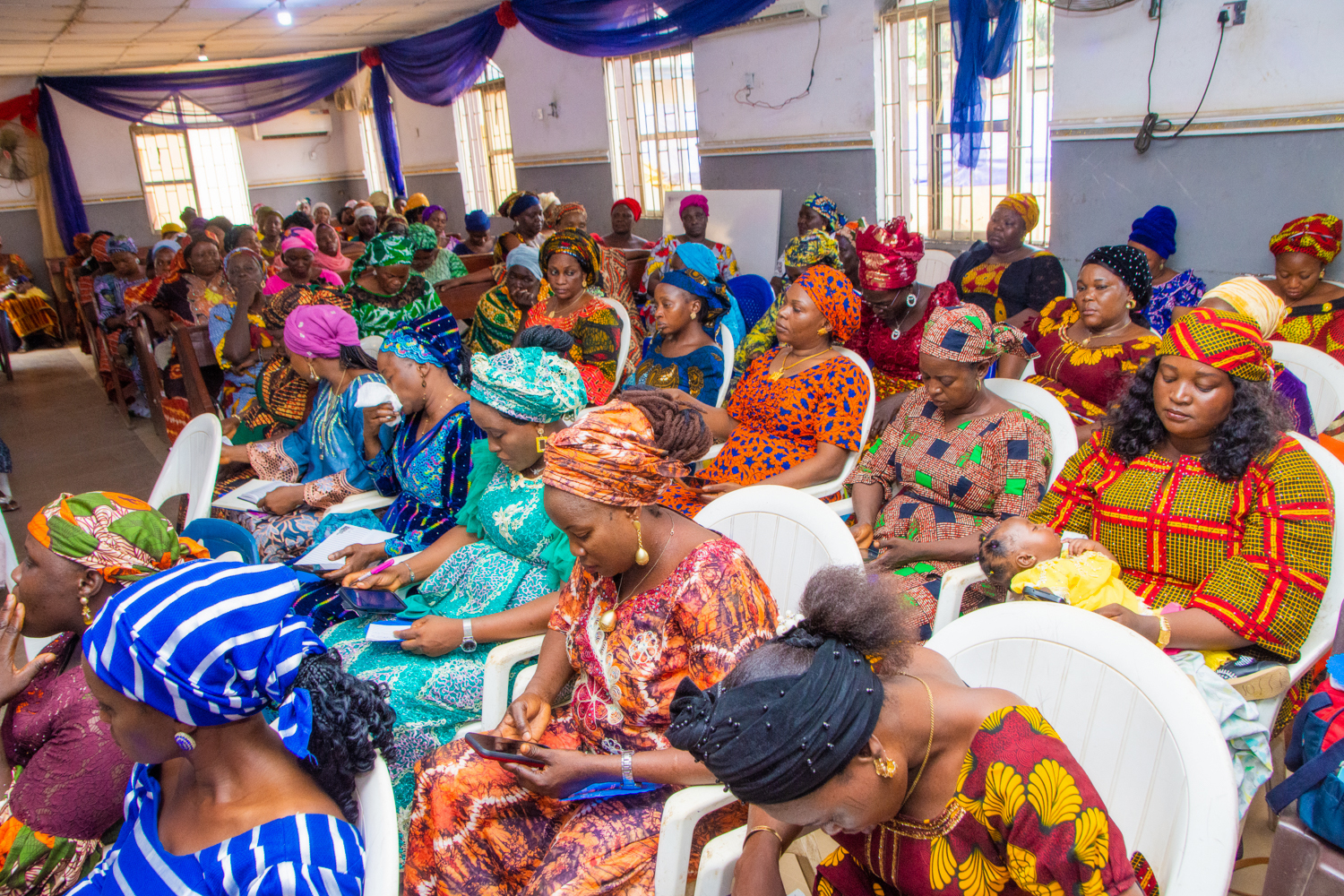
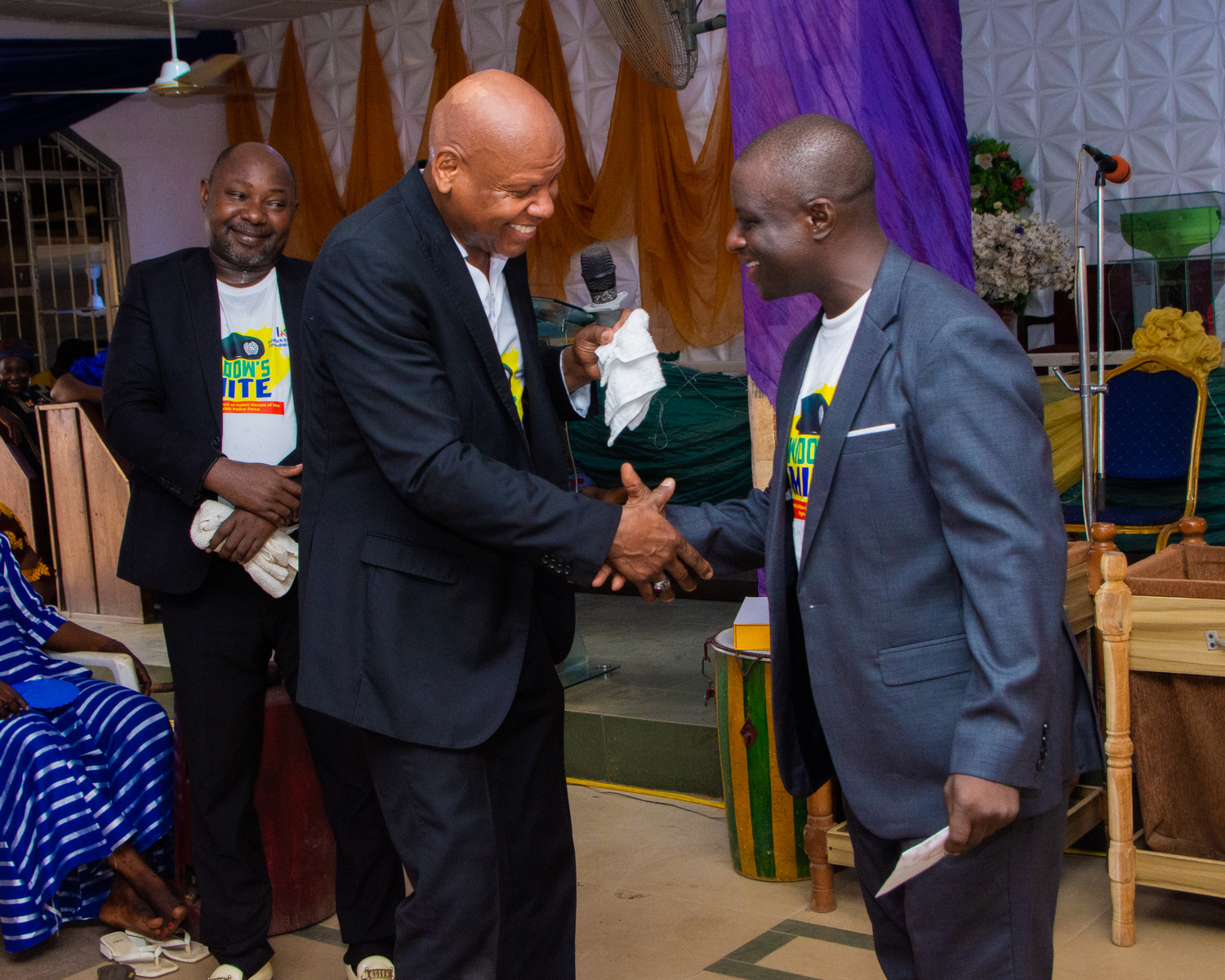
A charity organization based in the United States, Kedrick Scribner Foundation has put smiles in the faces of more than 80 widows of Nigeria police officers that have been killed on duty.

The event, which took place at the United Church of Christ in Nigeria at the Mounted Troops Police Barracks, Ikeja in Lagos, had widows of the fallen heroes gracing the occasion alongside their children.

The gesture, under the organisation’s flagged-off edition of its Widow’s Mite 3.0 programme was in display of compassion and commitment towards the surviving families of Fallen Heroes of the Nigeria Police Force

The Chief Executive Officer of the Foundation, Kedrick Scribner, said the beneficiaries were carefully selected from different barracks within the Lagos metropolis, which includes the following: Mounted Troops Police Barracks, Ikeja, Police Barracks, Obalende, Mopol 20 Police Barracks, Ikeja, Mopol 22, Police Barracks, Alapere, Police Barracks, Idimu and Highway Police Barracks, Ikeja.

Building on the successes of the previous edition of the Widow’s Mite 1.0 and 2.0, Scribner said the third edition solidifies the foundation’s commitment to supporting the underprivileged.

He said third edition of the Widow’s Mite 3.0 witnessed the inauguration of the Kedrick Scribner Vocational Center, a testament to the Foundation’s dedication to widows’ empowerment in Nigeria.

The Center, according to him, promises to offer sewing vocational training and Information and Communications Technology (ICT) for the widows and their children.

He said, “A six-month certificate course in sewing, covering pattern cutting, dressmaking, and traditional wears making will be featured in the Vocational Training centre. Trained widows will have access to sewing machines to support their families by crafting clothing for sale. Additionally, a three-month computer application course will be offered, covering beginner basic computer training to advanced-level skills”, he said.

Scribner who is a Minister of the Gospel and in Law Enforcement in the United States, while expressing delight over the success of the event shared his motivation for supporting families of the falling heroes in Nigeria:

“I grew up in a home, with four siblings. My mother was a single parent, we lived in the projects in Baltimore city, which is one of the most dangerous projects in Baltimore city called ‘Murphy Home ‘. My mother worked for Social Security Administration for 50 years, and that is where I got my work ethic from.

“So growing up, we were poor, but my mother maintained a good home as where there is food on the table, clothes on our backs and made sure that we went to school. This is what has engrained in me to help those that are not as fortunate as myself, because I understand the plight of being poor and I understand what it is like to not be able to have very much and to have your mother go out and slave, just so she could provide something on the table for her children.”

Betta Edu: Where are the real perpetrators? How much did each one get…?

By Ayodeji Fadugba

But truth be told, politicians are very good about using media influencers to change the narrative and divert attention. I know you are one so my apologies, my comment below is not directed at you in any way but I am angry at the whole charade.

I am amazed by the ignorance and quite bewildered by the trend of conversation around this sleaze.

  1. How much did the Minister pocket for herself?
  2. The list of notables who got money is long including the President’s Personal Chief of Staff, a brother to his Lawyer, another Minister etc. The list is public. Where is the outrage? Are they not all men?
  3. The contract for which over 400 million was paid was to survey 11 million houses, do the math! How much per house? If it is a decent sum, no problem!
  4. What other services were rendered by other co-receiver? Value?
  5. Someone came out to say that it is the practice to pay monies into private accounts to controvert the single treasury account. How many MDAs are doing this and for how long? Why continue with a system everyone is trying to sabotage? Has it not created more avenues for corruption? Why should we keep it?
  6. How far in the hierarchy is this scandal going?

I notice that the debate went from corruptiom pure and simple to the parody of women in high office and how they are worse than men. Is 3Billion the worst of the sleaze we have seen? Or are we saying “don’t use women, they are thieves” better eat alone among boys?

So we are not even asking deep questions of our leaders. They know how to distract us as a people. The same people taking the female Minister to the public square for lynching have not spoke about the other participants in any depth. It is actually infantile.

Gbajabiamila and Tunde Ojo have had access to power for over a decade, how much monies like this have they collected? They are still collecting?

He will launch Gbajabiamila projects in Lagos and we will huu and haa about how much he is giving to Lagos. From monies meant for women, youth and children living in refugee camps and going without schooling, proper housing, food, and sanitary facilities? In subhuman conditions?

The UN fought hard for the Women, Peace and Security agenda under Resolution 1325. Each country created structures to implement that resolution; in my country people are sharing that money? The lack of empathy for the poor and outrage of the citizen who should be informed is alarming. All we analyse is the beauty and gender of the accomplices not the real perpetrators?

Where are the real perpetrators? How much did each one get and for what?

Yorubas suffer thieves badly. Our culture reflects it. Ẹni bá jalè léèkan, to ba di ogún ọdún, to farán bori, aso olè ló dà bora! Irredeemable offence in the eyes of society. No gender attached! When a child is being named in those days, the elders use red oil to show the child that oil on white is as good as a permanent stain. We as a society can look within our culture for reference. A thief is a thief for all seasons!

My take!

Corruption Incorporates is a better name for this country!

Our money has been shared, we are not demanding accountability but discussing the beauty of the women? Their caricature? etc. How did we get this shallow? We are abused and traumatised but the abuser has turned our face to the other way so that malfeasance can continue.

Maybe if we applied the same standards to men by degree, we should see penises being hung out to dry.

Between the BBC and T.B. Joshua 

By Olusegun Adeniyi

I was taken aback on the evening of 9 January 2009 when my principal, the late President Umaru Musa Yar’Adua asked, “Who is Prophet Joshua?” I wasn’t sure how to respond in case the late cleric had been recommended to him. Apparently sensing my unease, he explained what led to the question. Following the Economic Community of West African States (ECOWAS) meeting which ended that day, he (Yar’Adua) had asked then president of Ghana, Professor John Atta Mills, to stay the night in Abuja so they could have dinner together. But the man insisted he would spend the weekend in Lagos with the said Prophet. “I have not heard the name before,” the president told me while reeling out the names of prominent Christian clerics in the country with whom he was familiar. With that, I felt comfortable enough to share what I had read and heard about the late Pastor Temitope Joshua whom I never met.  

What I found remarkable about the episode was that Atta Mills had only been sworn in as Ghanaian president five days before arriving Abuja for the ECOWAS session. Yet, he chose to spend the first weekend of his tenure in Lagos to attend The Synagogue Church of all Nations (SCOAN) thanksgiving service. “I am no stranger to the Synagogue. Indeed, I have been here very regularly. And I have known the man of God for more than 10 years,” late Atta Mills told the congregation on Sunday 11 January 2009 while crediting his victory at the polls to Joshua’s prediction. And we are talking about a professor of law who obtained his LLM from the London School of Economics and Political Science and PhD at 27 from the School of Oriental and African Studies. “Now, if there is anybody who does not believe in God, I would say our elections should change that person’s mind. God gave us more than we asked for,” enthused Atta Mills who then faced Joshua, “Man of God, I want to thank the Almighty for using you and many others.”

From the late President Frederick Chiluba of Zambia to the recently ousted President Omar Bongo of Gabon, to former President Joyce Banda of Malawi, to South African Zulu King Goodwill Zwelithini, to the late former Zimbabwean Prime Minister, Morgan Tsvangirai, numerous African leaders (political and traditional) placed great faith in the late Joshua as their spiritual mentor. However, a new documentary by the British Broadcasting Corporation (BBC) has, to put it mildly, painted a rather unflattering profile of the cleric. Since the serious allegations are already in the public domain, I see no point in repeating them here.  

Although SCOAN has issued a rebuttal, arguing that the BBC turned “itself into a weapon for a hatchet job as gangsters in the garb of journalism with a destructive ulterior motive for personal gains against a perceived enemy”, the only official line in the documentary is that most of the allegations now being peddled were also levelled against Joshua when he was alive, and none was proven. That may not be entirely correct. In September 2014, for instance, there was a building collapse at the SCOAN headquarters in Lagos that claimed several lives, mostly foreigners. Following the tragedy, the late Joshua told tales of how he received a call that a mysterious aircraft was hovering over his prayer room before getting another call shortly after “that the jet has moved to the church and that was it.” Not only was his claim disputed, but the Lagos State Coroner’s Inquest also indicted the church leadership for “criminal negligence” and recommended prosecution for the death of 116 persons. 84 of those unfortunate victims were South Africans, 22 were Nigerians, two each were Beninoise and Togolese and one, Zimbabwean. The nationalities of five could not be ascertained. According to the Coroner’s Court, presided over by Chief Magistrate Oyetade Komolafe, the Church did not obtain the necessary permit or approval before commencing construction of the building.  

I am aware that the late Joshua means many things to many people. And I have seen some pushback against the BBC for airing the documentary. Incidentally, Pastor Chris Okotie of the Household of God had openly challenged Joshua’s doctrines and practices when he was alive, so controversy had always swirled around the man. My sister, Dr Abimbola Adelakun of the University of Texas, Austin, United States, also wrote several uncomplimentary articles about Joshua and his ministry. Now that he is late, what is being imputed by the BBC are serious crimes not only against Nigerians but also foreigners. It is therefore in the interest of our country, and SCOAN itself, that the allegations be fully investigated. It is also important to stress that until then, the late Joshua remains innocent in the eyes of the law. 

However, we should all be concerned about the role of religion in Nigeria. In September 2019, as many as 300 chained inmates, including children, were rescued by thepolice from the‘Sheikh Ahmad Bin Hambal Islamic School and Rehabilitation Centre’ in Kaduna State. It was a story that caught global attention as survivors shared sordid tales of torture, sexual exploitation and bestiality. Today, nobody knows what has happened to those hapless victims and there is no report that anyone has been brought to justice for the heinous crime against humanity. Four years ago, Dr Hadiza Kere Abdulrahman, a lecturer in Inclusive Education, Bishop Grosseteste University, United Kingdom, used the sordid Kaduna spectacle to explain the socio-political dynamics in Nigeria and the lessons we have all refused to learn. 

According to Abdulrahman, “the abuse found in these so-called ‘Qur’anic schools’ is replicated in several other contexts in Nigeria—in homes with people hired as domestic help being whipped for minor misdemeanors.” Such abuse, she further stated “is also replicated in other religious establishments where people are taken for deliverance, in Nigeria’s prison system where everything goes, and in government boarding schools which can sometimes be brutal. This abuse is seen even in the few government-owned rehabilitation facilities where inmates are shackled.” She then concluded: “It would be a mighty shame—and a missed opportunity—if Nigerians didn’t use the opportunity of the horror stories to take a hard look at themselves.” Of course, no lessons were learnt from that tragic episode and many already believe that the BBC documentary on Joshua may also compel no action. Yet, this should be another teachable moment. Just yesterday, Daily Trust newspaper published an investigative report on one Hassan Patigi, a preacher and exorcist who draws huge crowds in Kwara and Niger States where he abuses and defrauds the sick people he claims to be healing. 

Since African culture frowns at speaking ill of the dead, it is understandable that some would question the motive of the BBC in running a documentary on Joshua who can no longer defend himself. But those who follow the media outfit, and its crime investigation series, know there is nothing unusual about this episode. ‘The Reckoning: the horrendous true story behind the Jimmy Savile case’ for instance details allegations of sexual abuse against British television personality Jimmy Savile. It was only after his death in 2011 that numerous allegations emerged about his predatory behaviour, hence the posthumous documentary. Similarly, ‘House of Maxwell: Like Father, Like Daughter’ is about Ghislaine Maxwell, currently in jail for helping American billionaire, Jeffrey Epstein (who committed suicide in detention) to sexually abuse teenage girls. She is the daughter of the deceased (and disgraced) newspaper tycoon Robert Maxwell.   

Because the BBC documentary on Joshua is a media investigation, it does not on its own convict of guilt. But the allegations deserve to be properly investigated by appropriate authorities for the good of society. Beyond that, it is also important for the leadership of both the Christian Association of Nigeria (CAN) and Pentecostal Fellowship of Nigeria (PFN) to be interested in this matter. There have in recent times been many reports of unwholesome practices by people who claim to be Christian clerics of various denominations. Many of the reports border on abuse of their members. Some are told to eat grass. Some are stamped upon. Some, especially female members, are made to unclothe before clerics who openly fondle their private parts. Tales of midnight ‘deliverances’ that end in bed abound. All these in the name of performing ‘miracles’ by perverts who prey on the ignorance and desperation of our people.   

This of course is not a new phenomenon, and the challenge is global. Literature that readers may find useful include ‘Soft Shepherd or Almighty Pastor: Power and Pastoral Care’ by Annemie Dillen and Cristina Traina’s ‘A Wolf in Sheep’s Clothing: Dealing Honestly with Pastoral Power’. Triana, whose thesis focuses on “the undeniable power of many kinds—social, ecclesial, and psychological, among others—that resides with the pastor,” argues that the unequal power relationship imposes both a measure of responsibility and duty of care. “When a person enters a church or a church-related environment and seeks direct help from and relationship with a pastor, in a very visceral way, God has been called into the conversation, too, and for some of the most broken persons, the minister’s words and God’s words become one and the same.” 

What the BBC documentary has shown quite clearly is that healthy boundaries must be set between clerics and members of their congregations. And that is where the problem lies in Nigeria. As we can see from other areas of our national life, boundary violations derive from unequal powers and to the extent that these dynamics are now very prevalent in the church, we must begin to deal with them.

Overall, regardless of what anybody may believe concerning the allegations against Joshua, four critical issues have been raised. First is how easy it is for religion to mask sundry violations of human rights. Second is an unfortunate anachronism about our society. A supposedly modern nation based on rational principles is still chained to primordial superstitions and practices, patronized openly by those in power and the guardians of civic morality and conduct. And because of that, human rituals, recourse to strange ‘prayer sessions’, seeking occult solutions to basic human problems or health afflictions requiring simple medical cures, etc. are now the order of the day. Third, in Nigeria today, religion and politics continue to meet and mix. It is therefore little surprise that so-called men of God use the power of belief to chain their followers to degrading abuses just as spurious politicians hoodwink the poor and helpless to steal the commonwealth. Four, in a system where powerful people permit themselves the indulgence of operating above the law, those who are supposed to set examples for the rest of society can only end up as outlaws. When that happens, we are all losers.  

To change the narrative, we must begin to hold people in power—whether it be in the political, academic, business or religious realm—accountable for their actions. 

• You can follow me on my X (formerly Twitter) handle, @Olusegunverdict and on www.olusegunadeniyi.com   

Divide Deceit: Story of Patigi, preacher who tortures Nigerians seeking spiritual help

PART 1

For years, Hassan Patigi, a preacher and exorcist from Patigi community in Kwara State, has been touring many towns and villages in Nigeria on a self-imposed mission to heal the sick and save the poor. However, his quest has left a trail of abuse, especially in villages across two North-Central states, Niger and Kwara. During his crusade, he orders the torture of men and the public humiliation of women, accusing them of witchcraft. Alongside these unlawful acts, he extorts money from the victims, causing division and disgrace within the families affected. In this investigative report, Yunusa Umar of WikkiTimes exposes the atrocities committed by another self-proclaimed ‘Man of God’ in Nigeria, showing a disturbing pattern of rights violations of the Nigerian citizens without any apparent sanctions from government authorities.

Hassan Patigi, a self-acclaimed preacher and spiritual healer, has been organising crusades in various communities in the north-central region of Nigeria where he invites people for spiritual healing and financial liberation. Patigi would fervently pray over sachets of water and instruct his devoted assistants to distribute the sachets to people suffering from various diseases and afflictions. The list of people who regularly attend Pategi’s crusade includes the blind, the deaf, the lame and women seeking the fruit of the womb. A few minutes after drinking the water, some persons would troop out to claim transformative healing experiences that were invisible to others.

Many Visits, but No Healing

Audu Suleiman, a native of Mokwa local council of Niger State, was one of those who sought help from Patigi. His legs have been paralysed since 2016 and confined to a wheelchair. So, he visited Patigi’s healing centre for healing, but his several visits did not bring him succour.

H

E

“I visited his healing centre three times, but no healing happened. He would tell the people with paralysed legs to stand up, but I never did,” he told WikkiTimes.

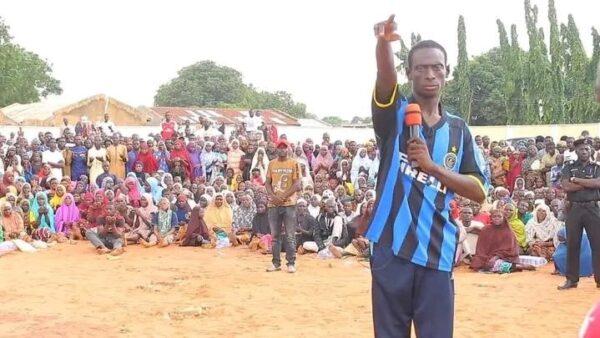
During the crusade, the healer points finger to the people seeking help at his miracle centre, claiming to be hunting for witches who were on the mission to kill him and other people in the crusade. Nna’ba, a woman from Bukka, a few kilometres away from Mokwa, was completely disgraced in the public on the allegation of witchcraft.

paitigi
Patigi Pointing to the crowd

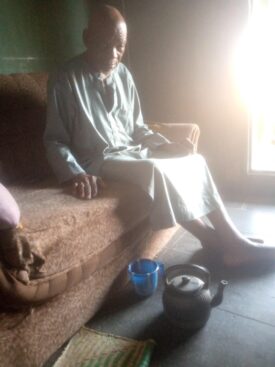
Another victim of the exorcist is Alhaji Saba Alheri who lost his vision to glaucoma. Pa Alheri, 76, had just finished Asr (evening prayer) when WikkiTimes visited him. The reporter met with him sitting on a Sofa and counting the rosaries.

paitigi 2
Alheri sitting on a sofa in his sitting room/ Photo Credit: Yunusa Umar

“I went to his centre several times, but nothing happened. I had to later resign my fate to my creator. He gives and takes everything. Whatever comes to me, God knows,” the old man told WikkiTimes.

Earlier, the faith healer had urged the old man’s kin to fetch flowing water in Rabba village, about a few kilometers away from Mokwa, to help him restore his sight.

“One of my children, Ndaba, had to travel to Rabba village around 4:00 am to fetch water as instructed by Hassan Patigi, ” Alheri told WikkiTimes. But it was an effort in futility. Pa Alheri’s sight was never restored.

“Hassan later said if my sight wasn’t restored, the eye of a young Hausa man would be removed and replaced with mine, but I declined. What would I tell my God if someone else’s eyes were removed to replace mine?” the old man said.

He further told WikkiTimes that the faith healer had made several prophecies that turned out to be inaccurate. His daughter, Aisha, corroborated his statement.

“At least, my father visited him three to four times in succession before telling us to get stream water. None of what he pronounced came to pass,” Aisha said. “It was at the fifth time that my father resigned to fate.”

paitigi
Locals at one of the crusades organised by Patigi

Glaucoma is one of the leading causes of blindness in the world. In 2017, Glaucoma was the leading cause of blindness worldwide and in Nigeria with a prevalence of 16.7 per cent, second only to cataract, according to Dr Adeola Onakoya, head of glaucoma service and acting head of department of ophthalmology, Lagos University Teaching Hospital, Idi-Araba.

According to a 2023 report by WHO, nearly eight million people suffer glaucoma in the world making it the number four cause of blindness globally. Glaucoma is incurable, yet Patigi claims he could cure it.

The self-acclaimed healer, WikkiTimes learnt, would stand in the midst of thousands of people, stretching and pointing his finger around the people. Some people, who claimed they had been healed of their affliction, shouted for joy. But many are left wondering about the invisible miracle. Mohammed Ibba is one of those in shock for he could neither talk nor walk despite several visits.

paitigi 2
Patigi standing in the midst of unhealthy ones

The boy’s mother, Yalami Ibba, told WikkiTimes that her son had been struggling for years to speak and talk.

“I have visited many places seeking help for him. I even went to Pastor Enoch [Adeboye] and other places seeking help, but his problem remains,” she said.

She told WikkiTimes that her family could not afford to take her sick son to hospital for proper examination, lamenting that his father also suffered a waist problem.

“Due to financial constraints, we were unable to visit the hospital to learn about his condition. Instead, we sought out Mallam Hassan in Mokwa, who was known for healing people. Unfortunately, despite his proclaimed healing abilities, he was unable to restore the ability for our son to walk or talk, despite our persistent efforts.”

Patigi Promised to Sponsor Poor People to Hajj, but It’s a Scam

Between 2020 and 2021, when the impact of Covid-19 pandemic was still raging, the National Hajj Commission of Nigeria allocated a very limited number of seats to intending pilgrims in Nigeria, yet Patigi promised to sponsor thousands to Hajj.

paitigi 2
A Facebook post made during his healing process in Patigi

Mohammed Usman Ndarifun, a leader of Patigi local film academy in Lade, narrated his experience to WikkiTimes.

“The cleric called and promised me Hajj, including Chief Iman and other people. We were about 26 that he promised Mecca seat. He boasted that when I got home I should inform everybody that I will be airlifted to Mecca. But he told us that the ‘lucky ones’ would pay for their forms.”

Ndarifun said he and his team did not buy the form, but many other locals who were also promised free Hajj bought the form at amounts ranging between N500 and N20,000.

paitigi 2
The Hajj’s forms / Photo credit: Yunusa Umar

Subsequently, the cleric invited those who bought the form to come to Ilorin where they would be airlifted.

Ndarifun said he did not follow others to Ilorin because of the ridiculousness of the invitation. According to him, those who travelled to Ilorin were handed a black nylon instead. They were assured that the content of the black nylon would turn to money which they would use to pay for their flight tickets.

paitigi 2

Another victim, Mohammed Ndagi, aged 60, paid N20,000 to purchase the form. Indeed, it was his son who was promised Hajj during his visit to Hassan Patigi’s miracle centre in Patigi. The son instead asked his father to use the opportunity since he could go another time.

“I was among the promised pilgrims that went to Ilorin Airport and spent seven days there. We were later sent away from the premises of the airport. We got to the camp at midnight to meet a man whom Mallam Hassan said would contact us in Ilorin. But the man never showed up despite the fact that we called him several times.”

After spending a week in Ilorin, the man came but never gave us any information. Instead, each applicant was handed black nylon to be kept safe at home. In doing that, the nylon which contained faeces and leaf would turn out to be their promised fund.

“I was also among those he gave black nylon that would miraculously turn to money,” Ndagi told WikkiTimes.

paitigi 2
Promised Pilgrims holding Nylon bags

Angry at the way he suffered in Ilorin, the old man cursed that he would never forgive Hassan for his dubious act.

paitigi 2
Farooq/ Photo Credit; Yunusa Umar

Umar Farooq, an elderly resident of Lade village in Kwara State, found himself among the purported beneficiaries of a pilgrimage to Mecca orchestrated by Hassan Patigi. The news of his selection brought joy, prompting well-wishers to gather at his home upon seeing his name on the list posted on the wall.

However, when Farooq was informed of the need to pay N30,000 for the required form, he expressed his inability to raise the amount. As a peasant farmer, raising such funds was a considerable challenge for him. He appealed to Hassan’s team, requesting N500,000 instead to establish a business at home and support his family, opting for a more sustainable option over the costly pilgrimage. Unfortunately, his plea was declined.

Hassan Patigi continued to assure numerous individuals, both from his village and other places, of their chances to embark on the Mecca pilgrimage, despite the Saudi government’s restrictions. A 2021 report by Al-Jazeera highlighted that foreign pilgrims were prohibited from participating in the Hajj that year due to Saudi Arabia’s response to the COVID-19 pandemic. The restrictions limited the annual pilgrimage to citizens and residents, with a maximum of 60,000 pilgrims allowed.

Fatima Mohammed, another victim, along with her husband, fell victim to the scam. The couple paid N40,000, with the promise of being airlifted for the pilgrimage in the same year. Fatima, a 48-year-old housewife and a relative of Hassan Patigi, revealed that her mother was also affected by the fraudulent activities of her kinsman.

“I went to Ilorin Airport with others who were promised to be airlifted. In our group, there were three of us, including my husband and son. We went to Ilorin, but we were never airlifted,” she said, confirming the accounts of other victims who were given black nylon bags to keep at home.

“I was also given a nylon bag. When he handed it to me, I gave it to one of his wives, Nna Shemi, as he instructed us to keep it at home”.

“We had resigned our hope to God since he promised to take us to holy land but we did not have the opportunity, ” said the housewife.

Many victims who spoke to WikkiTimes were displeased with his activities and how doubly they were extorted using one of Islam’s obligations to swindle them of their hard-earned money.

Barren Women Deceived and Extorted

This reporter also interviewed several victims, especially women struggling with infertility, who were doubly exploited and misled by the faith healer.

One such victim, Maryam Umar, shared her bitter experience of being deceived and extorted by Pategi.

“Many barren women bought bread for him as part of a sacrifice to conceive,” she revealed during the interview.” I bought him N300 worth of bread when my husband and I visited him.”

She explained that she didn’t regret the offering, as her husband had given her N11,000 before leaving home.

Clearly distressed by the ordeal, Maryam spoke cautiously, hesitating to narrate the full extent of her past experience. “Our money was never returned, and I never got pregnant till now,” she said.

Another victim, Fatima Mohammed, married for nearly a decade without a child, shared her own painful encounter with Hassan Patigi.

The woman struggling with infertility was informed that Hassan Patigi could assist barren women in conceiving after making a financial sacrifice. However, in Fatima’s case, the sacrifice did not yield any results.

“I was told that he helped barren women get pregnant when they visited him,” she recounted. Intrigued by the purported miracles, she and her husband decided to visit his center.

“When my husband and I went to his center, we paid him N10,000. He instructed us to leave the money with him and come back for a refund if Idid not become pregnant. He gave me a small piece of paper with a note promising settlement.”

She never got pregnant despite numerous visits, and there was no refund either because the ink on the paper faded over time.

The couple were discouraged from seeking medical professionals for pregnancy tests. Instead, they were directed to designated individuals who charged N500 per test, with the warning that consulting certified doctors would cause their supposed spiritual pregnancies to vanish without a trace.

Another victim, Fatima Jibrin, recounted her journey from Sakpefu village in Kwara State to Mokwa in search of spiritual help from Pategi.

Recalling her experience at his miracle centre, she said, “I travelled to Mokwa and stayed there for almost a week. I learnt about his supposed miracle activities when he was in Mokwa.”

Mrs. Jibrin emphasised that she spent a significant time, one week, at his miracle centre in Mokwa.

“My husband paid him N10,000, and I, along with other barren women, sat there counting money repeatedly until he asked us to stop,” she said.

Barren women counting money

“After we finished counting the money, he told us our days of bareness had ended. He instructed us to go home and wait for what God would do.”

However, the faith healer later advised Mrs. Jibrin and her husband not to engage in sexual intercourse for a month.

“Mallam Hassan told us to abstain from sex for one month, and we followed his instructions,” she said, burying her face as she spoke. “At times, I felt like I was pregnant, but eventually, I didn’t experience anything.”

The woman lamented that despite her husband being extorted, she never became pregnant, and the promised miracle did not materialise.

Umar Hawawu, a 40-year-old woman from Patigi village in Kwara State who has been married for ten years without conceiving, told WikkiTimes that she was fortunate enough to recover her money.

“It was when I was in this town that a relative told us about a healer from Kutigi in Niger State. And my husband and I went to his place. I went to his place with N11,000 but he returned the money immediately.”

The exorcist had told the barren woman and her husband to hold hands. In doing that, the barren woman would be pregnant instantly but Hawawu said she was yet to conceive.

“I heard the news that some women gave birth, and some deaf, and lame people were healed, but I do not know these people,” she said.

Many women seeking conception confirmed that they paid Pategi and could not get their money back, but they were unwilling to speak to WikkiTimes‘ for fear of spiritual attack.

This investigation is produced with support from the Wole Soyinka Center for Investigative Journalism (WSCIJ) under the Collaborative Media Engagement for Development Inclusivity and Accountability Project (CMEDIA) and funded by MacArthur Foundation

Culled from Daily Trust

Female banker kills self inside bank’s toilet

A 32-year-old female marketing staff member of a bank in Ikorodu, Lagos State, has taken her own life.

Amarachi Ugochukwu reportedly drank an insecticide and ended her existence.

According to PUNCH Metro, the incident happened on Monday within the bank’s premises.

At about 1pm on Monday, the deceased Ugochukwu was said to have gone to the restroom, where she drank the insecticide, unknown to her colleagues.

Other members of staff had started looking for her when the phone she left on her table kept ringing and she was not around to pick the calls.

A police source confirmed to our correspondent that Ugochukwu was later found dead inside the toilet with the bottle of insecticide and her suicide note.

In the suicide note made available to our correspondent, the lady blamed hard economy for her decision to end her life, saying nothing was working well for her.

“Nothing is working in my life. My figures are low. My brain is clogged up. The economy is getting harder. My decisions are wrong. My mind is messed up. The future doesn’t seem bright at all. I see extreme hardship. I can’t bear the pain anymore,” she wrote in the suicide note.

Ugochukwu apologised to her parents and other members of her family in the suicide note.

“I’m sorry mum, I’m sorry dad, I’m sorry Nene, Okwe, Toto, Nazor, Chuchu, Ifunanya,” she added.

She concluded by writing, “Dear Lord, have mercy on me!”

PUNCH Metro gathered that the manager of the bank had reported the incident to the police.

The bank manager had reportedly told the police that Ugochukwu locked herself up in the toilet to commit suicide, and she was found dead when the door was forced open.

Our correspondent gathered that a medical doctor examined Ugochukwu and confirmed her dead.

“The corpse was removed by the police and deposited at Ikorodu General Hospital for autopsy. The police in Lagos are investigating the incident,” the source added.

Contacted, the Lagos State Police Public Relations Officer, Benjamin Hundeyin, did not pick several calls made to his phone, neither did he reply a text sent to him.

PUNCH

NSPPD 21 days fasting and prayer (Day 4 prayer points)

OH LORD, GIVE ME A GLORIOUS 2024

Read/Study/Meditate: Haggai 2:9, Isaiah 25:6-8, Revelations 21:1-7, John 14:12, Luke 1:28-37, 4:18-21

Make these declarations:

January to December 2024: GLORY!!!! 7x

I AM THAT GREATER LIGHT and I refuse to show up with the Glory of 2023 in 2024! Abba, Let a fresh weight of your Glory rest upon my life. (Genesis 1:16, Haggai 2:9)

2024 is the year I move from bottles to wells! From not enough to more than enough! From average results to extraordinary! From the familiar to the supernatural! My eyes will see it, my hands will carry the evidence, my mouth will testify that I have truly seen the God that sees me! (Genesis 21)


There are thrones and crowns with my name on them! Father purge me of any character/mindset/posture that is not befitting of my glorious destination! Any garment I have accepted that is not of the Royal Priesthood I have been called to be, tear by Fire! (Peter 2:9)


Grace, Mercy and Help have been laid in my 2024! The Lord cleared territories for me, gave me my own, established me, consolidated me in cities I do not know! I started my 2024 with joy, journeyed with celebrations and it ended in praise! Hallelujah! (1 Corinthians 3:11)


Any relationship that will turn my God ordained Glorious 2024 into a story of pain/shame/regret, Fire! Let the right connections that will launch me into a greater path of destiny fulfillment enter!


2024: I Arise, I shine for my Light has come and the Glory of the Lord has arisen upon me! Great grace is manifesting over me! Where others say there is a casting down, I receive Help and Helpers, The Goodness and mercies of God are evident in my life! Hallelujah!(Isaiah 60:1-3)


This is that year I become another man! This is that year the giant in me emerges! This is that year I exceed all expectations! Let everything begin to align by Fire! (1 Samuel 10:10-11)


I carry Glory! No matter how many persons are looking for what I am looking for, It will be given to me. No matter how many millions are in a place, I will be the preferred one! (Esther 2:17)


Every Spirit of Herod/Jezebel/Ataliah/Adonijah that shall arise to stand in the way of my glorious emergence in 2024, the anger of the Lord is against you! Go down by Fire! (Ephesians 4:27, James 4:7)


EL-ROI, let your power be made perfect in my weakness! In places where I wondered “How shall this thing be?”, takeover! This is that year I manifest every prophecy, every spoken word over my Glorious destiny! Amen! (Luke 1:30-35, 2 Corinthians 12:9)


Lord, Show me your Glory!!! In this next phase of my journey, I access new levels, deeper realms and higher dimensions of your presence! 2024: From Glory to Glory! (2 Corinthians 3:18)


For all the seasons of trials, pain and affliction I endured through previous years, let a far more exceeding weight of God’s glory find expression in my health, my business/ministry /academics/career/finances this year! (2 Corinthians 4:17)


And El-Roi said YES! Where there was lack, He furnished a table for me in the wilderness! Where others failed, His favor went ahead of me, when others were disappointed, The Glory of God was my introduction, where others were rejected, protocols were broken for me! Indeed, What My God Cannot do does not exist! (2 Corinthians 1:20)

See also: NSPPD 21 days fasting and prayer (Day 3 Prayer Points)

See also: NSPPD Fasting and Prayer Points 9th January 2024 (Day 2)

See also: NSPPD 21 days fasting and prayer 2024 begins today

Is Betta Edu a scapegoat or sacred cow?

By Jide Ojo

Former President Muhammadu Buhari created the Federal Ministry of Humanitarian Affairs, Disaster Management and Social Development on August 21, 2019. However, after President Bola Tinubu took over in May 2023, the name was changed to the Federal Ministry of Humanitarian Affairs and Poverty Alleviation. Prior to this, the National Emergency Management Agency, National Social Investment Office, North-East Development Commission, National Commission for Refugees, and National Agency for the Prohibition of Trafficking in Persons, which are agencies under the ministry, were either under the Office of the Vice President or in other ministries.

Out of all the agencies under the ministries, the National Social Investment Office is the cynosure of all eyes and the one most enmeshed in controversies. The National Social

Investment Programme was established in 2016 as a social safety net to care for the poor and needy. The seed fund then was N500bn. It was the biggest welfarist programme in Africa at inception. The programmes under the NSIP are fourfold. The N-Power programme is designed to assist young Nigerians between the ages of 18 and 35 to acquire and develop lifelong skills for becoming change makers in their communities and players in the domestic and global markets and given a stipend of N30,000 monthly. There are four sectors in N-Power namely; education, agriculture, health and vocational training. The Conditional Cash Transfer programme directly supports those within the lowest poverty bracket by improving nutrition, increasing household consumption and supporting the development of human capital through cash benefits to various categories of the poor and vulnerable. The support is conditioned on fulfilling soft and hard co-responsibilities that enable recipients to improve their standard of living.

Government enterprise and empowerment programme is a micro-lending intervention that targets traders, artisans, enterprising youth, farmers and women in particular, by providing loans between N10,000 and N100,000 at no monthly cost to beneficiaries. The home-grown school feeding progra mme is reducing the incidence of malnutrition (especially among the poor and those ordinarily unable to eat a meal a day), empowering community women as cooks, and supporting small farmers that help economic growth stimulation. There is no gainsaying that the motive behind the establishment of the NSIP is noble and laudable. However, the implementation has been enmeshed in swirling controversies and corrupt practices.

On January 2, 2024, Tinubu ordered the immediate suspension and investigation of the National Coordinator and CEO of the National Social Investment Programme Agency, Ms. Halima Shehu, over alleged financial malfeasance. With the suspension and investigation into the allegations, the National N-POWER Program Manager, Dr Akindele Egbuwalo, has been appointed in an acting capacity as the NC/CEO pending the conclusion of the investigation. Her suspension is coming about three months after the confirmation of her appointment by the Senate in October 2023.

After the axe fell on Halima, the Economic and Financial Crimes Commission invited a former Minister of Humanitarian Affairs, Sadiya Umar-Farouq, for questioning over a purported N37.1bn money laundering issue. She did not honour the invitation last week’s Wednesday purportedly due to ill health but made herself available last Monday, January 8, 2024. Umar-Farouq was grilled for about 12 hours by the EFCC detectives over the ongoing probe into the N37.1bn allegedly laundered during her tenure in office, through a contractor, James Okwete. The ex-minister was questioned from 11am to 11pm by investigators seeking information on how the huge sum was allegedly laundered by top officials who served under her.

Meanwhile, data from the Budget Office indicate that the ministry, erstwhile known as Humanitarian Affairs, Disaster Management and Social Development, had a N2.38tn budget from 2020 to 2024. Figures from the budget office showed that in 2020, 2021, 2022, 2023, and 2024, the total allocations to the ministry and agencies under it were N453.3bn, N456.1bn, N507.9bn, N426bn and N532.5bn respectively.

As if the Ministry of Human Affairs is under a curse, the recently appointed minister, Betta Edu, who had previously served as Commissioner for Health in Cross Rivers State and the National Women Leader of the All Progressives Congress was suspended on Monday for breaching Public Finance Regulations. The scandal involving Edu burst open after a leaked memo revealed that the suspended minister directed the Accountant-General of the Federation, Oluwatoyin Madein, to transfer N585m to a private account owned by one Oniyelu Bridget, who the ministry claimed currently serves as the Project Accountant, Grants for Vulnerable Groups. The minister had claimed that the N585m payment was meant for vulnerable groups in Akwa Ibom, Cross River, Ogun, and Lagos states, describing the allegations against her as baseless. The Media Assistant to the minister, Rasheed Olarewaju, said in a statement that it was legal within the civil service for such payments to be made into private accounts of staff members, especially project accountants.

The position of Olanrewaju is at variance with the Federal Government’s Financial Regulation Chapter 7, page 713 which says personal monies shall in no circumstances be paid into a government bank account, nor shall any public money be paid into a private bank account. An officer, who pays public money into a private bank account, is deemed to have done so with fraudulent intention. Interestingly, this may have been the practice in the past because a December 27, 2021 report in Dataphyte publication named Data Dive reported that, “Some Federal Government Ministries, Departments and Agencies in three months paid N4.08 billion into personal accounts, a breach of the Nigerian financial regulation. The payments were made between June and August 2021 into personal accounts belonging to individuals who are neither contractors nor suppliers. Dataphyte analysis from the Open Treasury Portal showed that amounts totalling N2 billion (2,022,215.301.00) were paid in June, N1.8 billion (1,833,481,669.50) was paid in July while N193 million (193,110,472.00) was paid in August. All payments were made into personal accounts.”

The report said further that, “In June 2021, a sum of N2 billion (2,022,215.301.06) was disbursed into accounts belonging to Miss Afangekung Okon, Sani Saleh and Aniegboka O. Peter by the New Partnership for African Development and National Investment Office respectively.”

What is not clear is why Betta did not consult with her Permanent Secretary who is supposed to be the Chief Accounting Officer of the ministry or any of the directors of the ministries before penning that memo to the AGF. The National Social Investment Office is a parastatal under her, why did that memo not emanate from the National Coordinator and CEO of NSIPA, Ms. Halima Shehu? Obviously, her action in that memo did not follow due process.  Aside from the N585m memo controversy, billions of naira were allegedly paid to some companies as consultancy fees to build the National Social Register. In fact, some sections of the media report alleged that New Planet Project Limited, a company founded by the Minister of Interior, Olubunmi Tunji-Ojo, with registration number 804833, registered on March 3, 2009, got a contract for N438.1m as a consultant for the National Social Register contract to verify 11 million homes in Nigeria, carried out in one month.

Did these consultancies go through due process before they were awarded? Was there a tenders board meeting and did the process go through competitive bidding? Time will tell if Edu is indeed a scapegoat or a sacred cow! However, the president did well by suspending her and asking for a thorough investigation into the matter.

X: @jideojong

Jide Ojo

As 34-year-old emerges new Prime Minister of France, Odinkalu says Nigeria is battling #NotTooYoungToRuin

While Nigeria grapples with corruption and electoral fraud; France emerging with Gabriel Attal as its youngest Prime Minister at 34, an ex-Chair of the National Human Rights Commission (NHRC), Chidi Odinkalu has expressed dismay that those who had been deemed #NotTooYoungToRun in Nigeria and who eventually got the opportunity to make a difference changed the slogan to #NotTooYoungToRuin.

Speaking via his X handle, Odinkalu said: “2024 is an interesting year for #NotTooYoungToRuin. In Abuja, a minister born in 1986 decided that young ppl are Betta Edu-cated to plunder the public purse. In Paris, an embattled president plucked for his PM, a guy born in 1989 who left uni in 2012 to work mostly as Spox.”

Dr. Betta Edu, the now suspended Minister of Humanitarian Affairs and Poverty Alleviation has been in the news for days following controversies about financial transactions she authorised in her ministry.

Meanwhile France’s Gabriel Attal has promised to be bold and act fast to help the middle class weather the rising cost of living, after President Emmanuel Macron, seeking to breathe new life into his second term, on Tuesday made him France’s youngest ever prime minister.

Reuters reports that the appointment of the 34-yers-old Attal, a popular and media-savvy rising star of French politics, signals a desire by Macron to move beyond divisive reforms and improve his centrist party’s chances in European Parliament elections in June.

In a social media post addressed to the new Prime Minister, former President Emmanuel Macron said: “Dear @GabrielAttal, I know I can count on your energy and your commitment to implement the project of revitalisation and regeneration that I announced.”

Attal a close ally of Macron was a former minister and government spokesman.

According to Reuters, widespread public discontent over surging living costs and last year’s contested pension reform have seriously hit Macron’s ratings, and his chances in the EU ballot, where his party trails badly behind Marine Le Pen’s far-right.

“I’m well aware of the context in which I take on this job,” Attal said.

“Too many French doubt our country, doubt themselves or our future. I think in particular of the middle class … who get up every morning to go to work … and sometimes can’t make ends meet,” he said, promising to work to “control our destiny and free up France’s potential”.

Shorn of a working majority in parliament, Macron has battled to push through his second-term reform agenda, and is now set to focus on more consensual objectives such as aiming to reach full employment.

Attal has polled as one of France’s most popular politicians in recent months. A Macron loyalist, he became a household name as government spokesman during the COVID pandemic and earned a reputation as a smooth communicator.

Macron, 46, and Attal have a combined age just below that of Joe Biden, who is running for a second term in this year’s U.S. presidential election.

“The youngest president in (France’s) history is appointing the youngest prime minister in (France’s) history. I want to see it as a symbol of audacity,” said Attal, who is also the country’s first openly gay prime minister.

Attal replaces Elisabeth Borne, 62, only the second woman to hold the prime minister role in France. A dutiful and hard-working technocrat, her year and a half in office was marked by months of protests over the pension overhaul and riots over the police shooting of a teenager of north African descent.

Macron and Attal may take several days to name a new government. An Elysee aide said the usual Wednesday cabinet meeting was unlikely this week.

In recent weeks Macron, who has struggled to deal with a more turbulent parliament since being reelected in 2022, had signalled that it was time for change.

Some voters seemed to welcome that.

“I think it’s very good to have a young person .. because it’s a different concept, it’s more dynamic,” said 81-year-old retiree Remi Blondel.

However others were sceptical, with opponents – and some voters – saying not much would change, as Macron takes on the bulk of decision-making himself.

“What can the French hope for from this fourth Prime Minister and this fifth government in seven years? Nothing,” said Le Pen.

Attal is “young” and “fits nicely into the frame. But beyond that what does the reshuffle change for us? Personally, not much,” Parisian Sophie Varillon said.

MP Patrick Vignal, who belongs to Macron’s Renaissance party, praised Attal, who he said was “a bit like the Macron of 2017”, referring to the point at which the President first took office as the youngest leader in modern French history, at the time a popular figure among voters.

Attal “is clear, he has authority”, Vignal said.

The reshuffle is likely to intensify the race in Macron’s camp to succeed him in the next presidential election in 2027, with former prime minister Edouard Philippe, Interior Minister Gerard Darmanin and Finance Minister Bruno Le Maire all seen as potential candidates – alongside Attal.

Majority report by Reuters

TIPS