Home Blog Page 650

Who are your true friends?

‘There is a friend who sticks closer than a brother.’ Proverbs 18:24 NIV

Cicero said, ‘Friendship improves happiness and abates misery, by the doubling of our joy and the dividing of our grief.’ The fact is, it’s impossible to have more than a few close friends, because true friendship takes time, attention, and commitment. ‘ One who has unreliable friends soon comes to ruin, but there is a friend who sticks closer than a brother’ (v. 24 NIV). The hallmarks of real friendship include these:

1) Trust. Ralph Waldo Emerson wrote: ‘The glory of friendship is not in the outstretched hand, nor the kindly smile, nor the joy of companionship; it is the spiritual inspiration that comes to one when he discovers that someone else believes in him and is willing to trust him.’

2) Giving and receiving. Sometimes one person will be the primary giver, and sometimes the other. But true friendships are always two-sided.

3) Sharing your lives. Helen Keller said: ‘ My friends have made the story of my life. In a thousand ways they have turned my limitations into beautiful privileges and enabled me to walk serene and happy in the shadow cast by my deprivation.’

4) Mutual enjoyment. In a true friendship, you spend time together just for the joy of it. What you do isn’t necessarily of significance. Unfortunately, the busyness of life makes us forget what a joy this can be.

5) Respecting one another. How do you build respect? By not letting obstacles or circumstances become more important than the relationship. When the pressure is on, you continue to treat one another with patience and kindness. And when the relationship is struggling, you work to preserve it.

Exodus 25-26, Matthew 20:17-34

Those hilarious lawsuits (Part 2)

Man sues Michael Jordan for looking too much like him. 

Ezra Shaw / Getty Images

Allen Ray Heckard from Portland sued the basketball legend and Nike for promoting Jordan for more than $800 million.

Drinking beer does not make fantasies come true?

Jonathan mcintosh / Flickr

Richard Overton sued Anheuser-Busch for $10,000 for false advertising.

Lawsuit over using just 75% of lip balm tube.

Dragana991 / Getty Images

You can’t get that last bit of lip balm out of the tube unless you scrape it out.

El Guapo’s Chile Pod Controversy 

In a spicy turn of events, McCormick faced a lawsuit over its El Guapo brand New Mexico chile pods. The lawsuit claimed consumers were misled into believing these chile pods were grown in New Mexico. The plaintiffs are represented by Spencer Sheehan, a plaintiffs’ attorney notorious for filing hundreds of food and beverage labeling lawsuits. 

Polar Inc.’s Lemon-Flavored Legal Battle 

Polar Inc. was recently dragged to court over its lemon-flavored carbonated water. The lawsuit, filed by—you guessed it—Spencer Sheehan, alleged the seltzer water packaging was misleading due to images of lemon slices floating in bubbly water. Although the seltzer waters are lightly infused with lemon, the lawsuit alleges that the flavor wasn’t strong enough. Chicago judges were left with a sour taste in their mouths after dismissing the case.  

Taco Bell’s Meaty Misrepresentation 

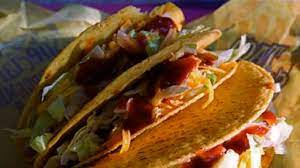
Taco Bell is in a crunch over its Crunch Wrap Supreme. The fast-food giant, known for its late-night cravings and affordable delights, was slapped with a lawsuit accusing them of false advertising over the meat content in their products. The plaintiff alleges that Taco Bell’s photography is misleading and is asking the chain to pay a shocking $500 per item purchased.  

Velveeta’s Mac and Cheese Misunderstanding 

A Florida woman filed a $5 million lawsuit against Kraft, claiming its Velveeta mac and cheese cups took longer to cook than advertised. She claimed the packaging was misleading because it did not factor in time to open the packaging, add water, and stir in the cheese. Fortunately, a federal judge dismissed the case.  

Man sues himself for $5 million.

The Crimson Ribbon / Getty Images

A prison inmate sued himself for $5 million, claiming that he violated his religious beliefs and got himself arrested.

Credits: Institute for legal reform/USAToday

Intimate Affairs: My mummy is getting married

By Funke Egbemode

Lola is 59 and getting married again. She has been single for 27 years and had, with the grace and help of God, raised four children all by herself. She made the announcement at New Year dinner with her children in Canada and all four of them dropped their cutleries. Their eyebrows simultaneously shot up.

That was followed by what felt like an hour-long silence. Then, somehow, they all found their voices at the same time.

‘No Mum, Haba!’

‘Tell us you are joking!

‘What do you mean?’

‘What will people say?’

‘Really, seriously, you are almost 60, for crying out loud, what do you need marriage for?

It was a sad end to a well laid out delicious family dinner. All Lola’s four children were bewildered, confused and didn’t understand why their mother wanted to marry in her old age.

Why are children like that? I’m smiling even as I type this.

We – you and I – were once children and I can bet we would also have rejected the idea, perhaps more violently, if our mothers announced that they were re-marrying. I guess it’s part of being a child and protecting what you consider your territory.

Imagine some guy wanting to move in on your father’s territory. Imagine your mother moving out of the family house into another man’s home or even changing her surname. Bros, it’s difficult to even picture, right? A child is a child. No matter how old he or she is, his mummy is his mummy,. Case closed.

That exactly is why a widow or single mother needs to explain patiently and lovingly why she wants to remarry to her children. She must have her arguments ‘documented’ with a well rehearsed speech. And that exactly was what Lola did. She explained lovingly but stood her ground.

“I was armed to the teeth with my points but with love oozing out of my every pore. I knew their objections were coming from a place of love, concern, even fear. It was going to be a totally new arrangement and I understood it was going to take time for them to get used to it,” Lola said.

Lola asked her first daughter who is now married if she would want her (Lola) to move in with her at least throughout 2024. The girl gasped.

First point: Today’s children do not want their mothers living permanently with them. Yet they don’t want their mothers to live with anybody else. Why? Did she commit an offence punishable by eternal loneliness? Don’t laugh. Your son and daughter-in-law will transform into something you can’t recognise the moment you become a live-in grandmother. It is better for all concerned, and that includes the grandchildren, if grandma occasionally visits or they even have to beg her to do so.

None of Lola’s children wanted ‘Mummy’s trouble’ permanently under their roofs. She raised them with two iron hands and they turned out well, but now, they love to love her from a distance.

“But we can employ a domestic staff for you, so you won’t be all alone in the house”. Lola’s son suggested.

“Then, I reminded them of a story of a former Nigerian governor whose mother was killed by a domestic staff and another friend whose driver and maid strangled and dumped in a well.

They remembered how I was traumatised for weeks after we discovered my friend’s decomposing corpse in a well.

I told them I didn’t begrudge them their decision to live abroad but that they should consider carefully my situation, my position in the current equation. I had retired from the bank, I have plenty of time in my hands, most of which I spend doing one church activity or the other but I still have to return to my quiet apartment at the end of each day. And for a whole day, I may not have a full sentence of an adult conversation. The only companion I had at meal time is either Netflix or DStv.

These days, we are beginning to see more and more women in their 50s and 60s taking twilight shots at marriage. Not for the purpose of making babies (It’s late anyway), but for companionship. Some of these women are accomplished in business and their chosen careers. They have their own money and have made names. So you cannot accuse them of using marriage as social ladder.

I have a friend who was widowed by a plane crash that took her husband when she was only 26! Yes. Sad. The thing is she has vowed she must marry again even if she has to wait till 70 to do it. “I did not get to enjoy marriage. I have raised my child alone, lived alone, done everything all by myself. This cannot be the life I will die living. I want to be loved, be cared for by a man who will marry me before God and man.” She’s 52 and determined.

For people like my friend and Lola, marriage is worth a second shot. For others, once is enough. It does not matter if the first marriage ended in widowhood or divorce. There are women who the lonely years have wearied and worn out too deeply to try again. The choice to remain single until they close their eyes in death should also be respected for what it is: their choice.

However, loneliness is as real as life itself. Even God acknowledged it. That’s why the holy book recorded marriage as an institution formed by God to tackle loneliness. Companionship is key and in a woman’s latter years, having a man by your side is not a luxury. After devoting decades to career and raising children, folding up and waiting for death is definitely not an appropriate reward for the sacrifices that single parenting brings. If a woman suddenly finds herself alone, widowed or divorced and decides to invest her all in her children and career instead of remarrying, she deserves to attempt to live again. She deserves to remarry if she so chooses.

And for those who think that sex and companionship are the same thing, shame on you! Sex is on every street corner. Any man who can get an erection can service a waist. There are also runs boys and side guys. If you have the money, you can buy sex. Indeed, you can pick and choose. Companions are scarce and rare. They are not for sale. A companion is the dude you look forward to seeing and spending time with, your scrabble and ludo partner, your gossip mate and down memory-lane friend. For a 50-year-old woman, he’s the guy you can dance oldies with and sing Boney-M songs with. The dude you can argue about which came first; Spear or Drum magazine? You can go into the deep recesses of local markets to shop for old brands of any product and drive back home in a BMW. All the gossips and games can lead to needle-work or not. Sex is just an added advantage when it comes to twilight union.

The twilight wife will remind her husband of his anti-hypertensive drugs and he will also drive her to the hospital in the dead of the night if he notices her breathing is laboured. They wake each other to pray and decide fasting days. He scrubs her back and she massages his knees.

‘You don’t need a husband. Your children are your husband.’ You’ve heard that too, right? It is balderdash, absolute rubbish. If you don’t believe me, ask a 70-year-old whose children are in America and Europe on days she needs real assistance and all she has is herself and her weak knees and stiff back. Ask a 75-year-old woman who has suffered a heart attack and survived because a neighbour found her just in time. The children will always love you but when they leave the nest, do what will lengthen your days in good health and give your children little or no stress.

Remarrying daddies and their matters arising? That’s a matter for another day, soon.

The author could be reached via: [email protected].

Tinubu, Nigeria is sinking and streets are full of tears

By Farooq Kperogi

The searing torment that everyday folks are going through in Nigeria right now is so dire, so unbearably extreme, and so unexampled in its rawness that even diasporan Nigerians like me who live tens of thousands of miles away from home can feel it not just vicariously but also experientially.

The unending streams of requests for help to meet the most basic obligations of life that we get from previously proud, resourceful, and self-sufficient family members, friends, acquaintances, and even strangers are the conduits through which we have experiential encounters with the ongoing cost-of-living turmoil in the country.

The lower classes are sinking deeper into soul-depressing depths of poverty, despair, and hopelessness, and the middle class is so hobbled by the economic crunch that it is disappearing faster than soap bubbles. The lower and the middle classes are now united by a common sensation of emptiness, agony, and anxiety for the future.

Every day is worse, less hopeful, and more precarious than the previous day for most Nigerians. Even hope, which French philosopher François de La Rochefoucauld assured us is the last thing that dies in humans, is desperately going into a death spiral. That’s an ominous signal President Bola Ahmed Tinubu would do well to not take lightly.

Nigeria is famous for its superabundant supply of self-regenerating hope, even in the midst of the most nerve-racking existential strain. You know you’re dealing with a potentially explosive social rupture when hope is grasping for breath among people who are famed for feasting on hope.

The current state of affairs isn’t unavoidable. It’s the predictable consequence of the pig-headed pursuit of a ruinous policy of subsidy removal from petrol, the lifeblood of Nigeria. I sounded an early warning about this a month before Tinubu was inaugurated.

In my April 29, 2023 column titled “Six Agenda Items for Tinubu’s Success,” I specifically warned Tinubu to resist the neoliberal anti-subsidy seduction of Western financial institutions, which they have successfully brainwashed Nigerian economists and civil society members into not just accepting but also aggressively evangelizing.

I wrote: “I know that there is now an artfully manufactured consent, particularly among the gilded classes in Nigeria, about the undesirability of ‘fuel subsidy.’ I don’t care what it’s called, but any policy (call it deregulation, subsidy removal, appropriate pricing, etc.) that results in an arbitrary and unbearable hike in the price of petrol without a corresponding increase in the salaries of workers and an improvement in the living conditions of everyday people will sink Tinubu.”

I concluded: “I can assure Tinubu that if petrol price hikes deepen people’s misery, he’ll have a tough time governing.”

The dramatic spikes we have seen in abductions for ransom all over the country are attributable to the rising tide of unheard-of deprivation that the removal of petrol subsidies has activated. And that’s just one auxiliary after-effect of the removal of petrol subsidies without a cushion or an alternative.

Other after-effects are the total collapse of the informal sector and what remained of Nigeria’s manufacturing sector. It also instigated the unprecedentedly hyper-inflationary pressures that are being exerted on the economy. Prices of basic goods and services and even of medications for common illnesses are now beyond the reach of people. That’s an unsustainable magnitude of agony.

But it was always obvious to anyone with even a halfway functioning brain that removing petrol subsidies in a weak, oil-producing economy that is organically petrol dependent, that has no well-developed public transportation system, that has weak infrastructures, and that is the poverty capital of the world would trigger infernal anguish on the vast majority of the people and tank the economy to the ground.

These are not birth pangs. They are not the pains before the gains. There is no light at the end of the tunnel. The tunnel is condemned to unrelieved darkness. The blight Nigerians are contending with now is the certain and inevitable result of a conscienceless implementation of disconnected and irrelevant economic policies inspired from outside Nigeria.

I came of age during General Ibrahim Babangida’s regime. IBB started the so-called Structural Adjustment Programs (removal of subsidies, devaluation of the naira, mass retrenchment, etc.), which inaugurated Nigeria’s descent into the abyss. I heard the exact same things the current government is spouting during IBB’s time: that it would get worse before it got better, that after the birth pangs a big bouncing baby would be born, that there was delayed gratification awaiting us if only we could be a little more patient.

None of the promises materialized. Instead, suffering was elevated to crushing heights. Advanced Fee Fraud (also called 419) blossomed. Corruption was fertilized. Brain drain to the West got wings. This period also unleashed the naira’s irrecoverable slide into the deep hole of worthlessness.

Decades after, the same SAP about which hundreds of books and articles have been written and whose irreversible damage we continually lament, has been artfully repackaged, disguised, deodorized, and huckstered by a well-oiled gang of soulless apes who deployed all manner of clever rhetorical trickery to coax Nigerians into consenting to their own self-incineration.

The idea that petrol subsidies had to go because they were riddled with corruption and that they consumed a disproportionate share of our national budget is a mere propagandistic cop-out. If petrol subsidy administration is rid of corruption (that is perpetrated in cahoots with the government, which explains why no “subsidy thief” has ever been apprehended much less brought to justice), it would consume no greater share of our national budget than any governmental obligation.

It certainly won’t be anywhere near the colossal venality that is perpetuated at the Federal Ministry of Humanitarian Affairs, Disaster Management and Social Development under the guise of giving money to the poor.

The truth is that we have no original, independent thinkers among people who make or influence economic policies in Nigeria. They are all hopelessly mindless parrots of ill-comprehended economic prescriptions of the Bretton Woods institutions. They do not have the cognitive and intellectual sophistication to transcend what I call derivative or regurgitative knowledge.

There is not a single example of a country in the world that has developed on the basis of the prescriptions of the World Bank and the IMF. On the contrary, the only countries that have achieved inclusive growth and development outside the West are precisely the countries that have bucked the World Bank and the IMF. And every country that uncritically adopts the recommendations of these institutions has been wracked by utter devastation.

Unfortunately, if either Atiku Abubakar or Peter Obi were president today, Nigeria would experience exactly what it is going through now. Like Tinubu, Atiku and Obi said they would remove petrol subsidies “on day one.” When you remove petrol subsidies “on day one” in a desperately poor, inordinately petrol-supported economy with no public transportation, you get what Nigerians are going through now. It’s not rocket science.

Similarly, both Atiku and Obi said they would float the naira and let its fate be determined by the vagaries of demand and supply. When you do that in an import-dependent economy, you can’t escape what the naira is going through now.

Atiku tweeted in March 2021—and in several policy documents—that “Nigeria must move towards a single exchange rate to be determined by market forces.”

On April 9, 2022, Obi also tweeted: “The truth is that for long market forces have not determined the exchange rate of the Naira…. It has to end. Let the exchange rate be determined by the forces of demand and supply. It’s that simple.”

In other words, Tinubu is doing exactly what Atiku and Obi had proposed they would do, and the results would have been the same. The hyperinflation and hurt Nigerians are going through now won’t have been evaded because it is Atiku or Obi who removed petrol subsidies “from day one.” The naira’s glide to the bottom wouldn’t have been avoided because Atiku or Obi “floated” the naira.

That is why Atiku- or Obi-supporting critics of Tinubu come across as ignorant partisans who have drunk the Kool-Aid of their cult leaders. Atiku and Obi supporters should be grateful that their idols are not president today. They would have been bearing the reputational brunt of the boneheaded, discredited rightwing economic policies they also advocated, which have thrown Nigeria into the current mess.

Interestingly, in response to Obi’s 2022 tweet rhapsodizing over the imperative of subjecting the naira to the “forces of demand and supply,” a supporter of his by the name of Abel (with the handle @governance9ja) wrote a riposte, which has turned out to be prescient. He wrote: “So @PeterObi will float the currency for a country where most factor inputs into local manufacturing is imported? We already have cost push inflation reducing real income of many Nigerians. Floating naira will ruin many households. @PeterObi and @OfficialABAT are two of a kind.”

Obi supporters who have wet dreams of a Nirvana if Obi were president should wake up. His economic policies are exactly like Tinubu’s. Personalities aren’t the issue; policies are.

Tinubu and his team need to face the reality confronting them and change course. I know that Nigeria has been so polluted by neoliberal propaganda that even news that the government was paying subsidies through the backdoor to stop petrol prices from getting to N1,000 per liter was seized upon by the opposition to poohpooh the government, which compelled the government to deny paying any subsidies.

I’ve never seen this level of self-crushing inanity in my life. Assistance to the needy (which is what subsidy literally means) is now a dirty word that everyone avoids like the plague.

But the government should know that even hope is dying in Nigeria. When a usually hopeful nation spawns armies of hopeless and angry people through thoughtless economic policies dictated by outsiders, it sows and nurtures the seeds of its self-destruction.

Nigeria vs South Africa: Beyond football, By Lasisi Olagunju

Sports, especially football, have opiatic effects on Nigerians. I call it kinetic booze. The ongoing Africa Cup of Nations (AFCON) football competition has been remarkable in numbing the people’s terrible pain and pangs of hunger. Since this thing started, morbid fears of violent death and of mass abduction get forgotten every night in sporty ecstasy. “Let’s give them opium, and let them sleep and dream.” That is from Miguel de Unamuno’s Don Manuel, a fictional Catholic priest with no belief in afterlife but who keeps himself happy doing good. We kill our misery drinking football to stupor. We dream of winning the next match and the next with the cup of victory. We are happy. The government should be happy too – and I think it is. Like all festivals, however, this season must end – and it will on Sunday, 11 February. But then, government won’t be government again if it does not have for the people another means of “illusory happiness.”

But what is at stake in AFCON’s semifinal match on Wednesday between Nigeria and South Africa is more than football. Every goal scored by either side will go to settling some mordant scores. We watched the AFCON quarter final match between tiny Cape Verde and big South Africa on Saturday night. Was that really a match between those two? Nigerians took it as their war; they say South Africans are not our friends. We invested money, men and emotions in their freedom from apartheid. We lost every kobo of those investments. The harvest from that field has been barns of hurtful engagements on all fronts. They do not hide their disdain for us; they dislike us – in sports and in politics, in business and in everything.

From banking to pay TV to food retailing, and from telecom to sports, Nigeria and South Africa have teams slugging it out. In football, South Africa’s Bafana Bafana will face Nigeria’s Super Eagles in the AFCON semifinal on Wednesday at 6pm. In telecoms, the fixture has always been Nigeria’s Globacom versus South Africa’s MTN. They play in Nigeria and have played in Ghana. I think they play in a few other places. It has been intriguingly tough for the Nigerian side but it is significant that Glo has diligently manned the post to the anger and discomfort of the competition from outside.

When mobile telephony was launched here in 2001, we were stunned that we made one second’s call and paid for 60 seconds. Nigerians grumbled, they whined and complained. We demanded that we should be billed based on our consumption. A strong pushback, led by MTN, said no, billing per-second was not possible here – but it was possible in South Africa where it came from. We were helpless until 2003 when indigenous Globacom came in and set us free from the snares of the alien.

Trapped tigers when freed feed on their helpers. That is why we say ingrates are not better than thieves (Eni t’a se l’óore tí kò dúpé, bí olósà kóni l’érù lo ni). We push delicious bush meat to them, they unleash on us snakes. People have died; people have lost valuable investments in South Africa just because they are Nigerians. When President Bola Tinubu and South Africa’s Cyril Ramaphosa met at the United Nations headquarters in New York in September last year, they hugged as brothers and their countries as friends. But, “what greater wound is there than a false friend” (Sophocles). Even in international relations and politics, friendship should be a two-way street.

Here, it is breached. A Nigerian diplomat was quoted by Paris-based English quarterly magazine, The Africa Report in its September 2023 edition as saying that “there are over 100 South African businesses in Nigeria” but “there are less than 10 registered Nigerian companies in South Africa.” The magazine goes further to note that “several Nigerian businesses have experienced little success in South Africa and exited.” It gave examples. Every fair and foul move you see on the football field of play is displayed across other sectors where Nigeria and South Africa engage. In most cases, the Nigerian side always loses because of unfair deals -and because of the Nigerian state’s peculiar I-don’t-care attitude to such challenges.

There is this character, Wago, in Elechi Amadi’s The Great Ponds. Wago is a fearsome, fearless champion who does not fight fair. He does everything to have his way: he bullies, he threatens, he does sorcery. He does not say sorry and will not beg whenever he is proven wrong; even his plays are hard tackles. “I am Wago, the leopard-killer,” boastful and haughty, he tells his terror-stricken listeners. He thinks his strength represents his village’s superiority over the other villages. He sets out to subdue his opponents and hoists up his community as the ultimate dispenser of favours. And he has had his way many times. Now, he must fight this war over the great ponds of Wagaba. Wago has an old rival to fight and settle all claims, once and for all. If his rival falls, he rises above all men, and his village becomes the exclusive owner of the ponds that serve all. The story ends with Wago and his land failing, disastrously – a victim of his own dark ways of doing the business of war.

Powerful entities, countries, strong men and their ways always lead me to Wago’s story. South Africa brought the long word ‘xenophobia’ into my consciousness. And, I am not alone. In business, they loathe, bully and muzzle whatever is Nigerian – even on our own soil. They milk us right here – how much was your DSTV subscription three months ago? How much is it now? Their telecoms foothold here, MTN, what is your experience doing business with it? Television station owners in Nigeria should also have stories to tell of their experiences with their South African host. So, it was not a surprise to see Nigerians on Saturday fully backing Cape Verde in wishes and prayers against South Africa. My friends who supported South Africa said they did so not out of love. They said Nigeria peeling and munching the Bafana Bafana in the semifinal would be sweet revenge for that country’s past and present monkeying acts. Another friend who has relations in South Africa did not want Nigeria to face that country in the semifinal “because we will defeat them and our people may be targets of attacks in South Africa.” But, for how long will that fear alter the direction of our supplication?

What they do to us here, we dare not do to them there. I maintain more than one telephone line because my job demands that I do. I have a Glo line and an MTN line. I have one other. Two weeks ago, my MTN line stopped working. The company said the line was barred because I had not linked the SIM with my NIN. But that was a lie. I did that a long time ago – the same day I linked my Glo line which is still working – perfectly. It turned out that I was just one person out of millions of Nigerians who suffered that barring of lines. While the problem was across all service providers, the difference has been in how customers are treated.

The unjust penalty was not the biggest headache victims have had to contend with. Getting it fixed is a pilgrimage of sorts to the way the behemoth from South Africa treats its Nigerian customers. It has been a yellow-fever experience for millions everywhere they go. At all the centres where I went to try to do as I was ordered, I met people under the searing rays of the sun – waiting for attention. They are still there in tens and scores, suffering and sweating. I finally got my line fixed on Friday but I will be naive to think that it will not happen again.

The Ogiyan of Ejigbo in Osun State, Oba Omowonuola Oyeyode Oyesosin, who clocked 50 years on the throne a few days ago, is one of the deepest speakers of Yoruba language I have (yet) met. About a decade ago, he told me that people who are too big for reprimand will ultimately ruin their society (a tóbi má se é bá wí, wón máa nba ìlú jé ni). South Africa is big in everything good and bad. Until 1989, it was a nuclear power on the African continent. I remember I joked with my friends when in October 2015, the Muhammadu Buhari regime slammed a $5.2billion fine on MTN for failing to disconnect unregistered phone lines. I told my friends that if at all anything would be paid, the money would not come from the South African pocket. I told my friends that they and all other Nigerians who were on that network would pay the fine. Reports said the company eventually negotiated its way out, settling Nigeria with $1.7billion. But, who really paid?

Certainly, Nigerians. And the practice that led to that fine, was it fixed? If it was properly fixed, my line and millions of others would not be axed two weeks ago. The same company recently declared a trade dispute with Globacom over interconnectivity fees. MTN claimed N7.05 billion from Globacom; Globacom fought back with counterclaims. A threat to disconnect Glo lines was made and was rebuffed by the threatened. The Bola Tinubu government did well here; it intervened and asked both parties to do reconciliation. Reports say the reconciliation exercise brought the figure down from N7.05 billion to N2.3billion. I had thought that hyperbole existed only in literary and rhetorical heavens. However, with this, I could see that making exaggerated claims can serve as havens if you are big enough. But, should there not be consequences for such a hand-of-God attempt at scoring a goal against an opponent? There will be none. We are dealing with a well-heeled pampered behemoth here.

If you call your food bowl a po, your neighbour will poo into it. It is how you dress that you will be addressed. We allow free-range hunters to poach our elephants. And, because big misfortunes have wrestled down the giant, small ones are finding the courage to play with its balls. Someone said it wasn’t only in Nigeria they do what they do. They say business cemeteries in Ghana, Iran, Afghanistan, Syria, etc contain skulls of those who dared the powerful. For too long, we’ve played soft with South Africa and its twigs. We’ve got wounded and stretchered off the field. That is not how to win against a team of bullies. There should be reciprocal gestures – you bite me, I bite you. A country that will survive and be respected will protect its own and, while dealing with the outside, do as Niccolo Machiavelli counseled: Act as “a true friend and a true enemy” at the same time.

The AFCON semifinal match coming up on Wednesday is a metaphor for settling scores. People who think they are powerful wear the costume of the gods. They toy with the rules and do whatever they like without consequences. Powerful persons and entities are gods; impunity is their turf. Whatever they do, you can’t call them to account. That is why they are gods – they are pampered with sweets of unquestionableness. South Africa, a country beautified with our feathers, with its businesses, does that with us routinely at home and abroad. As of 2019, official records in Nigeria showed that we lost 118 lives to xenophobic attacks in South Africa, 13 by the South African police. I do not have more current figures. That country looks down on us with disgust because we indulge it – even when the field of play is built on our soil.

My history teacher in secondary modern school took me through the stories of imperial Rome, Hannibal, Carthage, the three Punic Wars and delenda est Carthago – the patriotic, defiant phrase which ended Cato’s every speech in the senate. Defeating South Africa on Wednesday will serve some poetic justice.

Health Sector Crisis Alert: CMD says over 500 workers left National Hospital in 2 years

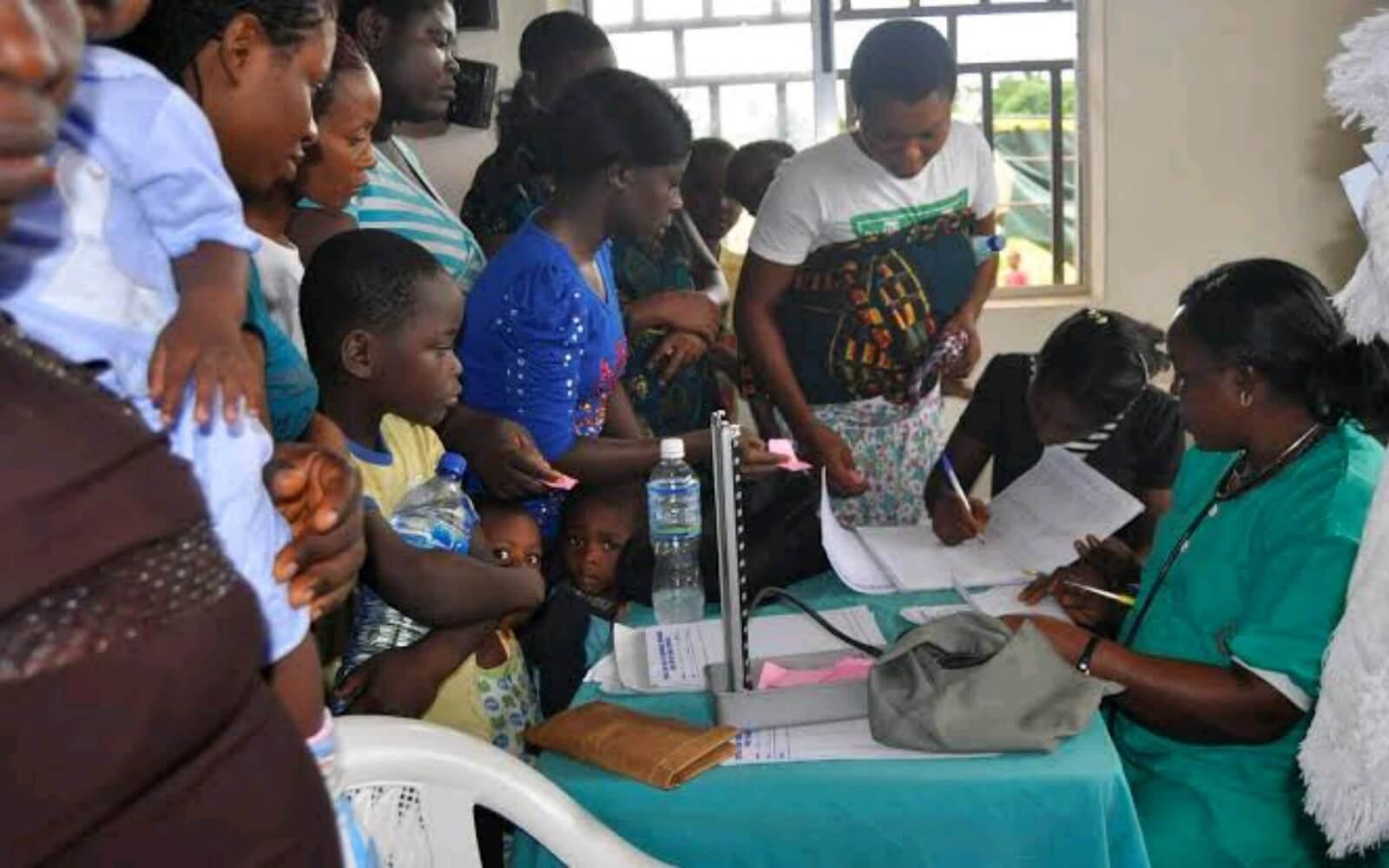
The woes are deepening in Nigeria’s health sector and it does not seem like there is any hope in sight.

Not long ago the Nigerian Medical Association (NMA) expressed concerns over the mass exodus of health workers to developed countries and its negative effect on Nigeria’s health system.

The association noted that unless governments at all levels urgently provide better working environment for medics, pay better and more competitive remuneration, the ongoing trend will leave Nigeria is on the verge of a significant crisis in the health sector.

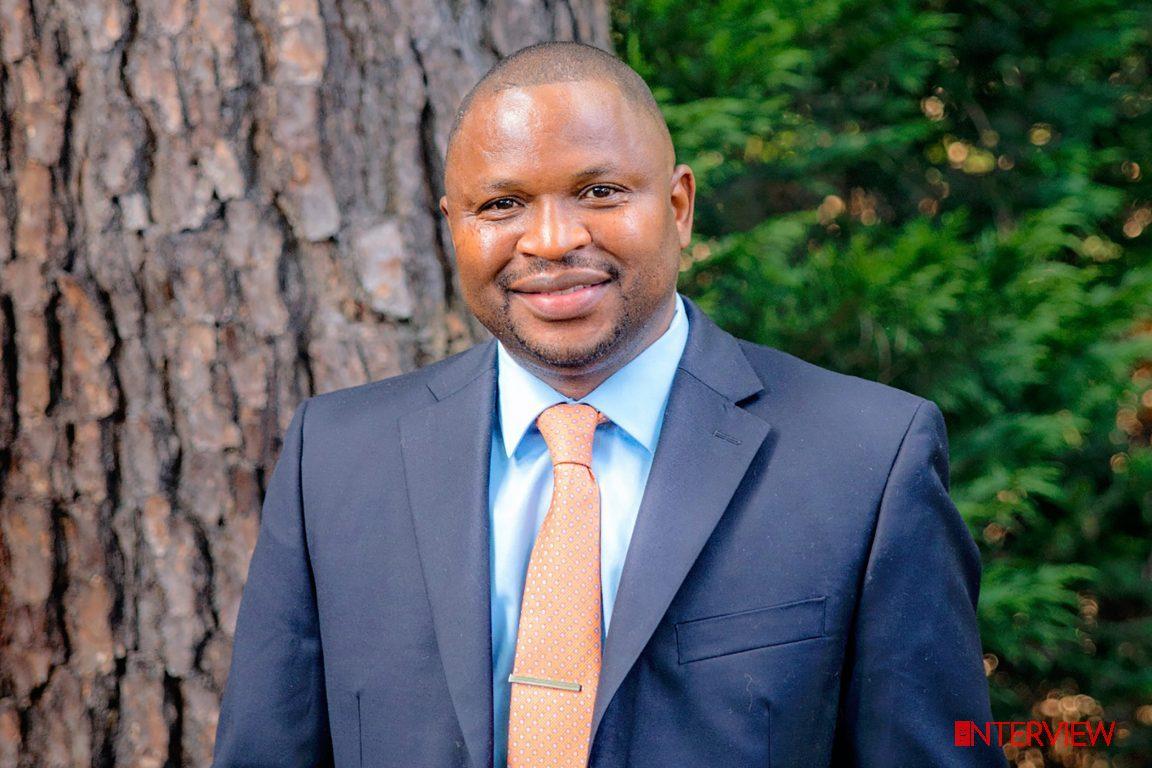
On Sunday, the Chief Medical Director of National Hospital, Abuja (NHA), Prof. Mahmud Raji told News Agency of Nigeria (NAN) that National Hospital alone lost over 500 personnel to brain drain in the last two years.

Alarmed stakeholders posit that if 500 medical personnel left the services of National Hospital in the last two years for greener pastures, one can only image the number that left other tertiary medical institutions, regular hospitals and healthcare providers.

Prof. Raji who said the brain drain syndrome was an almost everyday activity as he treats two or three files of young people wishing to leave added: “The way they leave is a very hurtful thing for all hospital administrators….

“The most pitiful and worrisome aspect of it is the amount of money the Nigerian government has invested into each of these individuals either a doctor, a nurse, a pharmacist, a physiotherapist or whoever it is that leaves.”

“Sometimes, not only young people. Some people have actually gone through the ranks with lots of experience that they could teach other people. So, Nigeria is losing so much, painfully.

“Here, we have lost a number of quite senior doctors, especially the middle cadre doctors, and the very young ones.

“Nurses have also left from the middle cadre and the younger ones. Some of our medical engineers are hotcakes outside and have left. I must tell you, Nigeria trains people so much,. Nigerian graduates and staff are well sought after, all over.”

On reasons for their departure, he said that remuneration and job satisfaction had always topped the list.

“For instance, if a doctor or a nurse comes here, he or she needs to see an environment that is quite serene, quite beautiful, even to rest in a very comfortable area during their one hour break.

“At least you are able to have something to eat, replenish your energy before you go back to the next phase of work, but usually, in our hospitals in Nigeria, we don’t have such.

“In terms of the remuneration, it may not be as good as what you would expect elsewhere. Even though I must say the purchasing power in Nigeria is far better than the purchasing power elsewhere and our money is still able to buy something.

“We should also look at the unsolved problem of inter-professional rivalry that also eats into people’s psyche. People should be comfortable with the next person they’re working with, be it a nurse, a physiotherapist or whoever.”

Raji also said that the necessary equipment needed to work were not there and when these equipment are either non-existent or obsolete, the healthcare practitioners feel that more should have been done.

He, however, said that past governments had tried by taking very decisive stance on matters of health.

The current government has also put in a lot to rejig the health sector, he added.

“From what we can all see, the current administration has actually rekindled that hope in us that in the next couple of months, at couple of years, we will be able to see a change or a shift in this mindset among Nigerian health professionals eager to leave the country.

“Hopefully, we should even be able to attract them to come back while we retain the ones that are here.”

He, however, said that NHA had employed various strategies to try to retain the healthcare personnel working in it.

“I may not be able to change their remuneration since this is within the purview of government, we try to pacify them because remuneration is usually the first thing people complain about.

“Secondly, in terms of welfare, at least we have tried as much as possible to relieve some of them.

“We have established cooperatives to assist staff, either financially or in whichever way they can be supported to get mortgages for their homes and other things.

“On our own, we sometimes get these mortgage organisations to come and assist our staff. We have been able to get some buses to relieve the stress that the staff get in conveying themselves from work back home and from home to work.

“We are trying to also make the environment where they work a bit more serene and accommodating for them. This would require a lot of funding, but at least with the little that we are able to get, we are able to do bit by bit.”

In terms of training, he said that since training out of the country may be expensive, the hospital arranges local trainings and, when it is able to, it supports them to go for trainings within the country and sometimes out of the country as the funds allow.

The CMD said the hospital was also trying to fix the equipment that were not working efficiently or not working at all.

“Through budgetary and intervention pathways, we are also trying to get in some more new equipment that will make them happy while doing their jobs.

“When you go to our laboratories now, you will see that they are not as they used to be.

“We have so many automated machines; with these machines, all you need to do is just to put in samples and then the thing runs by itself, unlike earlier on where a person will have to run this, after this, you do that. So, now, they have it a bit easier.

“They also feel like, yes, we are working where we would wish to have flown to, to work. So we are upgrading our laboratories or rather, to a very large extent, we are comfortable to call them automated laboratories.

“That’s what we are trying to do, at least in our own little ways, to make life better and the good thing is, some of them do appreciate it.

“But, however much you try, some people are already fixated on leaving,” he said.

On the issue of inter-professional rivalry in the healthcare profession, he said that even though it exists in other institutions, at NHA, there has been some sort of a very harmonious relationship.

He added that hardly were there local strikes at NHA in the last couple of years because of that harmonious relationship.

“But the staff are not in isolation as they also mingle with other people outside.

“So, once in a while you would hear such complaints, but then some of these issues are actually realistic that you find in other centres and it can really be quite bad.

“It sometimes affects the function of some of such organisations but we are lucky here that we are able to, at least, control it.”

To put an end to it or at least control it, he said that several attempts were made to resolve the problem, but sometimes when solutions were about coming, some other bodies may lobby to stop it.

He recalled that a couple of years ago, a certain committee was set up by the Federal Government to look into it and the committee made some recommendations.

“I am not sure those recommendations have been fully implemented, but things might probably have changed now such that it’s time to probably have a new committee set up to look into this.

“I assure you that with the current administration and the mandate given by the president to resolve the issues in healthcare and the ministers we have running the ministry, people have the confidence that they have the roadmap to solving this problem.

“We have to look at it holistically such that you don’t just see doctors as a group, solve their problem, but while solving their problem you will have problem of nurses.

“So also, when you call the nurses and solve their problem, you cause a problem for the radiologist or the pharmacist and things like that.

“From the feelers we’re having from our interactions with those of our leaders in the ministry now, they’re likely going to look at it in that holistic manner, where it should be a win-win for all facets of healthcare.”

The exodus of healthcare professionals, especially doctors, pharmacists, and nurses to developed countries has been on the increase.

With a doctor-patient ratio over five times worse than the WHO recommendation, Nigeria has continued to lose hundreds of doctors annually to brain drain, a large number of them to the UK. Various statistics show that over 5,000 Nigerian medical doctors have migrated to the UK between 2015 and 2022.

Data documented by the development Research and Project Centre (dRPC), shows that in 2015, 233 Nigerian doctors moved to the UK; in 2016 the number increased to 279; in 2017 the figure was 475, in 2018, the figure rose to 852, in 2019 it jumped to 1,347; in 2020, the figure was 833 and in 2021, it was put at 932.


Never stop learning and growing (1)

By Bob and Debby Gass

‘Wisdom excels folly as light excels darkness.’ Ecclesiastes 2:13 NKJV

The most important skill you can acquire is learning to learn. Gifted people can sometimes act like they know it all, which makes it hard for them to keep growing. Teachability isn’t so much about competence and mental capacity as it is about attitude; it’s an innate hunger to grow. It’s a willingness to learn, unlearn, and relearn .

The famous football coach John Wooden said, ‘ It’s what you learn after you know it all that counts.’ Only as you remain teachable will you keep growing and continue to make an impact on the world around you. Lifelong learning is an ongoing daily pursuit.

The Roman scholar Cato the Elder started studying Greek at eighty years old. When asked why he was tackling such a difficult task at his age, he replied, ‘It’s the earliest age I have left.’ Unlike Cato, many of us regard learning as an event instead of a lifelong process. It’s estimated that only one-third of adults read an entire book after leaving school.

Why? Because they view education as a period in life, not a way of life. Science confirms that while your physical body may atrophy, your mind retains much of its capacity for continued growth. Every stage of life presents lessons to be learned. You can choose to be teachable and keep on learning, or you can close your mind and stop growing.

Try this simple experiment for a week: ask others for their advice…deliberately withhold the advice you would normally give…and at the end of each day write down what you have learned by being attentive. You will be amazed!

It’s a Sunday. Rest.
Well, rest doesn’t have to mean not doing anything. You can read a book or start to learn a language.
Enjoy your day.

Exodus 23-24, Matthew 20:1-16

Credits: The Word for Today

Fun time in the US: Davido, Chris Brown, Asake…

Sighted together in the United States ❤

Davido, Chris Brown and Asake…

Source: StatiSense

48yrs old ECOWAS after Burkina Faso, Mali, and Niger’s exit

With Burkina Faso, Mali, and Niger’s withdrawal of their membership of ECOWAS, here is what becomes of the 48yrs old institution:

ECOWAS
1 🇧🇯Benin
2 🇨🇻Cape Verde
3 🇨🇮Cote D’Ivoire
4 🇬🇲Gambia
5 🇬🇭Ghana
6 🇬🇳Guinea
7 🇬🇼 Guinea-Bissau
8 🇱🇷Liberia
9 🇳🇬Nigeria
10 🇸🇳Senegal
11 🇸🇱Sierra Leone
12 🇹🇬Togo

….Announced withdrawal:
1 🇧🇫Burkina Faso
2 🇲🇱Mali
3 🇳🇪Niger

Source: StatiSense

Delusion of indoctrinated ideologies called religions, Richard Odusanya

Religion is a social phenomenon. It is a religion that is confusing, not God. Man-made religions. God did not! God is merciful and not difficult to please. Therefore, the biblical phrase “Do for others as you would have them do for you.” Be kind, be caring, and be loving. Treat everyone with respect and understanding. Do not harm and do as your father teaches you inside your heart. Does he tell you that you should say mean things? If so, that is not god. That is religion.

The mere fact that there are so many religions in existence boggles my mind. How can followers attest that theirs is the absolute “truth” and that it should be followed? Religion is nothing more than a social construct, conceived by con men and administered by those who seek fortune and control over others.

As a pejorative term, indoctrination implies forcibly or coercively causing people to act and think based on a certain ideology. Some secular critics believe that all religions indoctrinate their adherents, as children, and the accusation is made in the case of religious extremism. Here it has been argued, contrary to the established view that delusional states of mind are epistemically problematic, that delusions can (at least under certain circumstances) exhibit a quality called ‘epistemic innocence’. That is, they may ‘[deliver] a significant epistemic benefit, that could not be obtained otherwise’.

According to Wikipedia:

Indoctrination is the process of inculcating a person with ideas, attitudes, cognitive strategies, or professional methodologies (see doctrine). Humans are social animals inescapably shaped by cultural context, and thus some degree of indoctrination is implicit in the parent–child relationship and has an essential function in forming stable communities of shared values. Because we have mirror neurons in common and are social creatures, humans can instantly and subconsciously match one another’s emotions. We share feelings.

Certainly, for sure, a delusion is a fixed false belief based on an inaccurate interpretation of an external reality despite evidence to the contrary. Delusions are false beliefs or judgments about external reality. Not all beliefs and judgments can be characterized this way, because even if calibration is incorrect then relative associations can still be consistent and true. This is why so much of physics is tenable despite the limitations of our access. However, many of our beliefs are delusional – and we are unaware of this fact until some frameshift occurs in our experience.

Characteristically, since the mention of God’s name became money making machine, every Tom, Dick and Harry wants a slice. Put differently, in our religious bigotry and manipulation, the African man just like our rulers (leaders), uses the devil as an excuse for his failures, rather than getting rid of the cankerworm called corruption that has eaten every part of governance system and the failure to keep the numerous promises made to citizens to get their votes, they are even asking us to pray. Some foolish ones would gather and starve themselves (fasting and praying), and what do they (leaders) do in return, they increase their looting, their lies, and their dishonesty. 

Moreover, in life the moment you refuse to admit a wrong choice you made which led to your immediate condition, you will find it difficult to move past that stage regardless of how many days you spend praying, fasting, rolling on the floor, and knocking your head against the wall. In addition, the popular belief that religion is the cause of the world’s bloodiest conflicts is central to our modern conviction that faith and politics should never mix for any reason. Therefore, it is important to separate the two of them ‘faith and politics’.

Conclusively, It is very likely, that people get more religious if times are tough. As such, religious activities are in decline in the Western world where they originate from – not only in the Western world but in every developed country including Japan and South Korea. Religion is based on old scrolls, the modern world is based on science. It is not surprising that belief in old book scrolls is in decline. Whereas, it is a booming business in third-world countries where there is a trust deficit and deficiencies in governance and public policies.

Finally permit me to share with you the profound words of Matthew Hassan Kukah, the current bishop of the Roman Catholic Diocese of Sokoto. Bishop Kukah characteristically posited: “We must be ready to embrace modernity and work out how to preserve our religions and cultures without turning religion into a tool for tyranny”

Richard Odusanya

[email protected]

TIPS