Home Blog Page 634

Judicial Accountability Conference: Nigerian society does not encourage accountability

Communique issued at the end of the Tap Initiative Conference (Organized with support from Open Society Foundations), On Impact Of Judicial Accountability On Democratic Resilience And Public Trust In The Legal System, held at the Shehu Musa Yar’adua Center, Abuja on 1st March 2024 by 10am

 BACKGROUND

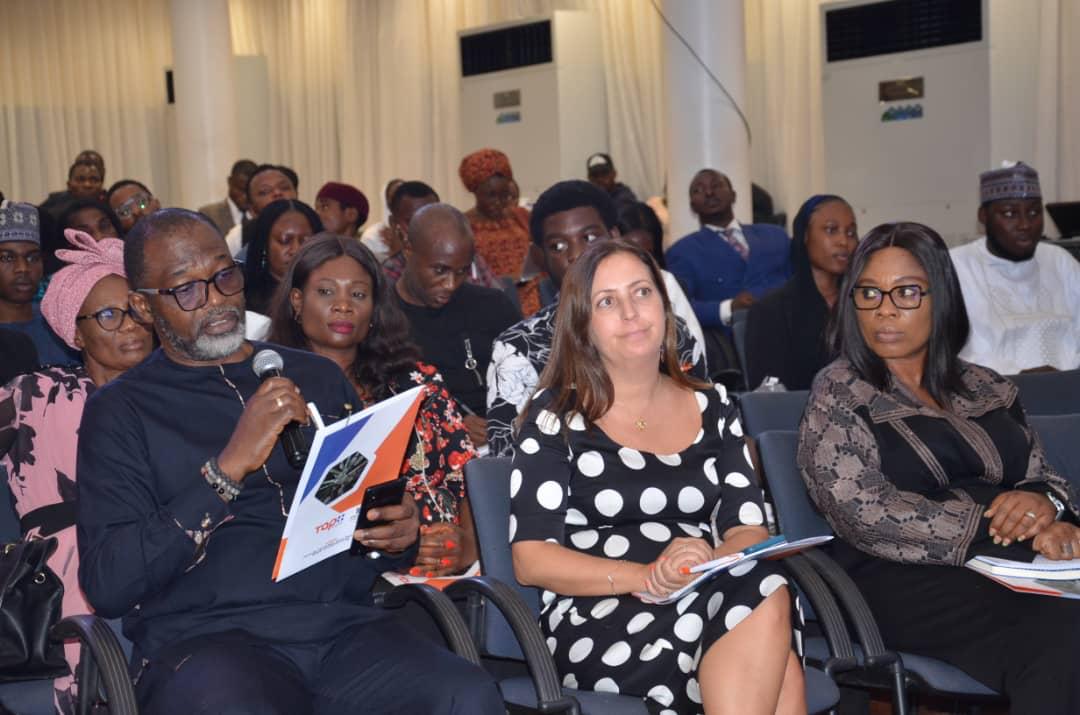
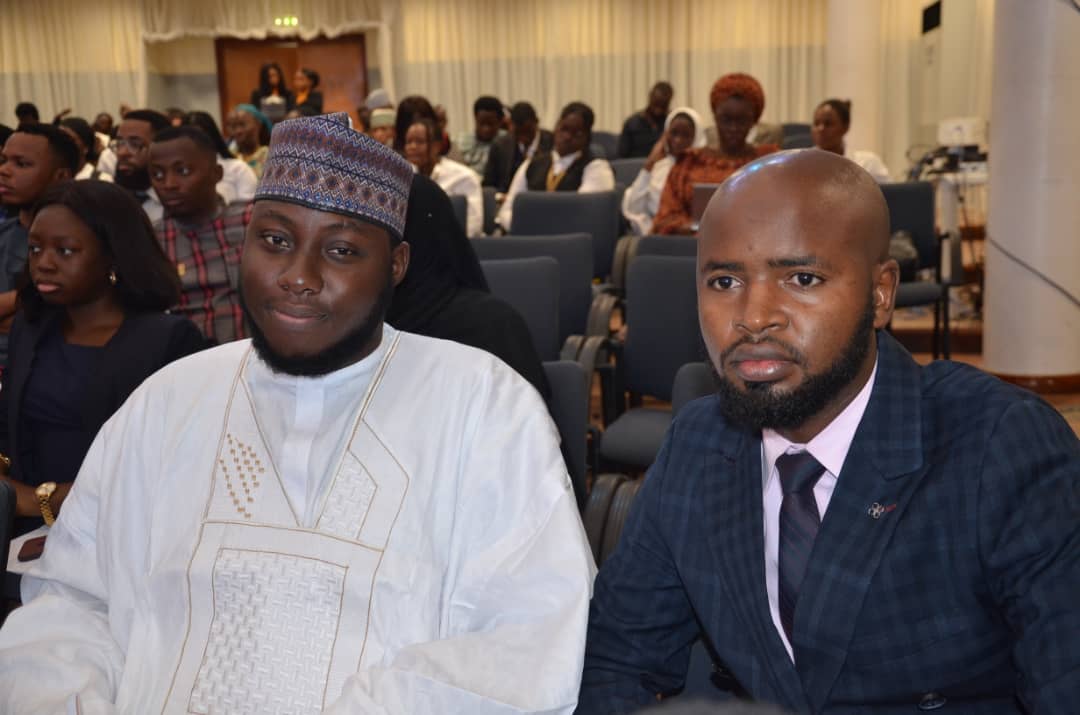
The Conference was convened to acknowledge the critical role of the Judiciary in Nigeria’s democracy and to recognize the far-reaching impact of judicial pronouncements on the lives of citizens. The conference had 540 participants drawn from judiciary, civil society actors, lawyers, university students, Embassies and High Commissioners as well as other international development partners,

  1. The Conference which featured a keynote address from Honourable Justice Ibrahim Buba, Rtd and a robust panel of discussants from the Senior Advocates of Nigeria, gender rights groups and the media addressed several key themes and was able to coalesce some thoughts on the way forward.
  2. The keynote address emphasized that the quality of the Bar reflects the quality of the Bench and in seeking judicial accountability, we cannot divorce one from the other.  Thus, all ministers in the temple of justice must embody integrity and accountability at all times. The address also admonished members of the legal profession to jealously guard the profession and ensure that only principled people who can fearlessly call public officers to order are appointed to the bench.
  3. While the discussants noted that accountability is not an innate human trait, it nonetheless challenged judicial officers to rise to the occasion and to act in tandem with the nobility of their profession and therefore be deliberate and unequivocally accountable in the discharge of their judicial obligations to state and citizens. The Conference also observed that the lack of accountability is further compounded by the High-Power Distance culture in certain societal contexts, which makes it appear disrespectful and unthinkable for ordinary citizens to demand accountability of judicial public office holders who many may regard as demi-gods who themselves are above the law.
  4.  Additionally, discussants and participants at the conference recognized that our value system as a society is currently at its lowest ebb and the Judiciary is not isolated from this decadence. Transparency in judicial appointments was identified as a veritable medium to curb the decadence in the judiciary. It was buttressed that transparency is necessary to achieve Judicial Accountability and any accountability without transparency to the citizens remains insufficient in the circumstances. It is germane to note however that Judicial officers cannot be held to account by the citizens, if they (citizens) do not know what the judicial officers are doing.
  5. Emphasizing the role of Judges in restoring the faith of the common man in the judiciary, it was agreed that the responsibility falls on the shoulders of members of the legal profession; both the bar and bench to use their powers to speak up against, question and sanction conducts of public office holders.
  6.  In identifying the root cause of lack of accountability in the Judicial system, the discussants  singled-out the structure of the Nigerian society as one that does not encourage accountability. Everyone awaits an opportunity to benefit from the rot and are seldom willing to advocate for change and accountability because it would be in their interest “when their time comes.
  7. The topical issue of nepotistic appointment of heads of courts was also raised and opinions seemed to be divided on its propriety. The keynote speaker noted that there was nothing wrong with heads of courts appointing their family members into judicial offices so long as they meet the requirements. The question posed was whether merit and qualification alone is sufficient basis to appoint a family member or whether the underlying moral and ethical considerations make it inappropriate. A greater majority of panelists frowned at this practice and felt it infringed inalienable moral and ethical duties of the implicated heads of Courts.
  8. While discussing how to tackle corruption in the Judiciary, the discussants and participants agreed that corruption takes place in secret and it is difficult to uncover but with transparency, significant improvements can be made. It was also agreed that until there is an assurance that culprits will be punished, people are less likely to whistle-blow and perpetrators will continue to thrive.
  9. The discussants also questioned the overbearing and ubiquitous power of the Chief Justice of Nigeria on the accountability structures of the Judiciary especially the National Judicial Council where the CJN almost single-handedly appoints all the members. The discussants identified this as one of the greatest reasons for the dwindling trust Nigerians have in the judiciary. The National Judicial Council exercises disciplinary control over judicial officers and if they are appointed by CJN, they are delimited in exercising such disciplinary measures against the CJN if the need arises.
  10.  The discussants and participants ended the conference by stating that the duty to restore the trust of the common man in the judiciary rests on every member of the profession starting with the Judges and especially the heads of Courts. The Conference urged the judiciary to take urgent steps to improve transparency within its governance processes especially appointment of Judges.

RECOMMENDATIONS

  1. That the office of the CJN should be unbundled especially as chairman of National Judicial Council, Federal Judicial Service Commission, National Judicial Institute and Legal Practitioners Privileges Committee.
  2. The Conference recommends that these conversations will continue and that all Nigerians will make their voice heard and the judiciary would listen and not take the calls for accountability as a challenge of its authority but rather an opportunity to win public trust again.
  3. Strengthen the integrity requirement of appointment of judges and make it more transparent.
  4. Strengthen the NJC to hold judicial officers accountable.
  5. The code of ethics for judicial officers by the NJC needs no review but proper political will by the CJN to investigate and sanction erring judicial officers.
  6. The participants and discussants suggested that the conference should be made periodic to review the state of accountability in Nigeria’s judiciary.

Signed:

Hon. Justice Ibrahim Buba

J.S. Okutepa, SAN

Adamson Adeboro, SAN

Ohiozoba Ehiede, Esq., CP

Lillian Okenwa

Chioma Onyenucheya-Uko

Mbasekei Martin Obono, esq

Ojugo Onyelukachukwu

Victoria Benson

Nigerian nurse arraigned in UK over forgery of emergency health badge

A 38-year-old Nigerian psychiatric nurse, Sophie Adebayo, has been arraigned before Bexley Magistrates court in the United Kingdom for using a forged emergency health badge to park her Mercedes for free in a pay-and-display area near her home.

The Health Emergency Badge is a London-wide scheme, which allows users to park on yellow lines and in resident bays and parking bays while attending medical emergencies in patients’ homes.

Adebayo, who was caught using the photocopied badge in a restricted parking space, pleaded guilty to two counts of fraud by false representation, namely that on March 31 and May 31, 2023 in Devonshire Drive, Greenwich she dishonestly displayed a copy of the badge in a restricted parking bay.

A parking officer spotted the fraudulent badge in the Mercedes of the single-mum who has worked for the NHS for 15 years.

The Nigerian who stays in Hatfield House, Merryweather Place, Greenwich claimed she was working at the time she used it, but the prosecuting council said this was unlikely.

She also pleaded guilty to possessing an article for use in fraud, namely the photocopied badge, between March 31 and May 31, 2023 and making an article for use in fraud on March 31.

Adebayo was fined £507, with £1200 costs and must pay a £203 victim surcharge.

Magistrate Michael Foley told her: “What you have done is wrong. You have paid the fines for parking, but that is no excuse for what you have done.

“We have discussed the prospect of custody and what that would mean to you, but we have taken into account your remorsefulness and defence.

“When you are entitled to something, you are entitled to it, but when you’re not, you’re not.”

Adebayo graduated from Middlesex University, has a Masters degree from the University of East London and is employed by Oxleas NHS Foundation Trust, which provides mental health services in south-east London.

Bexley Magistrates court in the United Kingdom
Prosecutor Lidia Iancu, representing the Royal Borough of Greenwich, told the court: “When she parked her vehicle on these two occasions she displayed a copy of the Health Emergency Badge to gain a parking concession.

“The parking officer recognised it was not genuine because of the colour etc. and that it must be a photocopy.

“No loss can be quantified and it is minimal. It is just what she could have gained from free parking.

“The most serious charge is making the forged article and she is clearly motivated by financial gain and it was not a one-off because she has been seen on two occasions.

“She has photocopied a badge that is provided in the course of her employment and this was persistent in nature and it is she that gained by obtaining the forged Health Emergency Badge.”

The tearful Adebayo made full and frank admissions when interviewed by Greenwich Council and does accept she made a copy of the badge and that was incorrect.

Adebayo’s lawyers had asked the council to drop the criminal case, but this was refused.

Ms Iancu added: “We made it clear such an outcome was unlikely due to the seriousness of the charges.

“I do not have direct evidence she was going to home visits, but these badges are only valid in housing estate zones and do not allow parking in a roadside bay.

“I cannot say where she was, but it suggests she was not using it in the course of visiting a patient.”

Adebayo’s lawyer Tahera Ahmad told the court: “These are serious allegations and Ms Adebayo is of good character with no previous convictions.

“She has entered a guilty plea at the earliest opportunity as she has made a mistake and accepted that mistake.

“Unfortunately she had little awareness that the photocopy would be an act of fraud.

“Her own mental health nurse was her inspiration to give back to the community and she attended university and obtained a degree.

“She was recently promoted to clinical lead and has worked for the NHS for 15 years and has a 14 year-old son.

“This has led her being extremely depressed and she had an anxiety attack the night before her last court appearance.

“She is now aware of the consequences on her work, but they are yet to be realised.”

The convictions will be reported to the Nursing and Midwifery Council and Adebayo may also face professional misconduct charges that could threaten her career.

“She works extremely hard and is not a person who makes criminal decisions and lives a law-abiding life and pays her rent on a limited income,” added Ms Ahmad.

“She gives back to the Royal Borough of Greenwich working as a mental health nurse and the two times she used the badge was to attend to her clients.

“The financial loss would have been the payment of parking. She received parking tickets and paid them.”

Before leaving, Mr Foley told Adebayo: “Let this be a big wake-up call for you. You do things for the community, but this was very foolish and we do not want to see you in court again.”

Culled from Daily Mail

Depressed woman commits suicide in front of Police Station, leaves three little children behind

As the hardship, suffering and mental turmoil continue to soar in Nigeria, an unidentified woman and mother of three little children in Enugu State reportedly took her own life over the weekend at Enugu.

The woman was said to have ran into a moving vehicle in front of Ogui Police Station in Enugu and died instantly.

It was gathered that the woman who might have been suffering from depression, dropped off her three young children at the police station, pulled her clothes, and ran naked into a moving vehicle which crushed her to death.

The eldest of the children, when asked about their father, said their father “got lost.”

“She could not give any other information about their family, their town, or residential address”, a police source told the Nation correspondent.

Meanwhile, the wife of Enugu State governor, Mrs Nkechinyere Mbah, has announced sponsorship of a scholarship for the three siblings (under seven years) who lost their parents in mysterious ways.

The governor’s wife announced the scholarship when she paid an unscheduled visit to Ogui Police Station Enugu, where the children were kept in police custody.

Mrs Mbah, who was touched by the pathetic story surrounding the death of the mother of the children, said she would take care of the children and train them from Nursery school to University level.

She announced sponsorship of the children’s education from Nursery school to University level.

She also directed the immediate relocation of the children from Ogui Police Station to a home where the state government will take care of them.

Mrs Mbah urged people who were depressed to seek help and go for counseling to avoid taking drastic decisions.

She also urged the Commissioner for the Ministry of Children, Gender and Social Development, Mrs Ngozi Enih, to intensify sensitisation and counselling of people, especially depressed persons to help them come out of the situation

Pastor apprehended for abducting member’s teenage daughter, raping and impregnating her

  • Watch the video

Officers of the Ogun state police command have arrested a Cherubim and Seraphim pastor, Adeleye Dada Dollar, for raping the daughter of a member of his church, Adekunle Kabirat, for several years and getting her pregnant.

The mother of the victim, Joke Adekunle, who spoke to newsmen, said Kabirat left the house on January 8, 2024, after being scolded for a misdeed and told not come to their shop as a disciplinary measure. 

She further narrated that on returning home in the evening, she discovered that Kabirat had left the house.

It turned out that the young lady removed her books from her school bag and used the bag to pack some of her clothes.

Mrs. Adekunle said she immediately called her pastor to inform him about the situation but that he failed to respond to her calls.

According to the victim’s mum, the pastor came to their house later and told her that he saw her missed calls but couldn’t pick because his phone was bad. 

She said she informed him about the development and wanted to know if Kabira was at his place but he denied knowing anything about her whereabouts.

Stressing that the said pastor was around on the day her daughter left the house and even rebuked her for placing curses on her daughter, Mrs. Adekunle added that during the search for Kabira, the clergyman would come to her house to comfort her.

She said Kabira was found after making a call to her mum to come and rescue her.

When interrogated, the victim who is already six months pregnant said that the clergyman had been raping her since 2021. She said on the day of the incident, the suspect took her to an uncompleted building where he raped her.

On being interrogated, the cleric pleaded with the world to have mercy on him. 

Watch a video of them speaking below…

Linda Ikeji

Kumuyi, Tortoise and looters of noodles

By Lasisi Olagunju

Wise old Tortoise sat his children down. “My dear ones, two things are essential for your growth and wellbeing in life: Always tell the truth, and never ever take whatever is not yours.” The attentive children nodded; they promised to do as their father counseled. They bowed before their dad and left. Four years down the road, there was a severe famine in the land. Food was as scarce as masquerade’s shit. Husbands bartered their wives for grains; wives traded their husbands for a basket of yam. It was as bad as Ireland’s Great Hunger of 1845 which killed one million out of a population of eight million people.

Upright Tortoise’s household was hit by this mother-of-all-famines. There were casualties in his neighborhood. His own children may soon join the fallen. Tortoise panicked. What was he going to do? He talked to himself. He went out one day and came back home with a solution to hunger in his home. On his head was a big basket containing a variety of food items. Tortoise told his children that he found the foodstuffs abandoned in the forest. “It must have been God at work,” he told his children. His disappointed children exchanged looks. They knew that their father had just lied. He stole the items and they told him so: “Father, but you told us never to take what is not ours, and never to lie.” Embarrassed, Tortoise could only mutter some incoherent words. Then he found his voice: “I did it for you, my children. These are terrible times.”

This last Friday at a place called Dogarawa near Zaria, a truck driver transporting cartons of noodles thought it was time to say his Jumat prayers. He parked his BUA truck and joined the congregation. Like predatory soldier ants swarming a bunch of palm nuts, an army of looters invaded the truck and stripped it of every item it was carrying. “Not a single carton of the noodles the truck was carrying was left by the hoodlums,” an eyewitness told a reporter. The driver was helpless. The people he shared the prayer ground with largely made up the looting party. The invaders left the mosque for the truck. They were contemptuous of the law and disdainful of morality. They had no fear of God to whom they prayed. They chose food over faith. “Ba imani (they have no faith),” a disappointed man who video-recorded the event lamented. Ten of the looters were arrested. I will be shocked if the looters agree that they committed any offence.

Hunger makes a thief of any man” is a popular quote among famine and poverty scholars. It is originally from Pearl Buck’s 1931 Pulitzer Prize-winning novel, The Good Earth. The book is the first volume of her House of Earth trilogy which largely contributed to her winning the Nobel Prize for Literature in 1938. The novel’s protagonist, poverty-stricken Wang Lung, nurses a starving family. One day, one of his sons brings home stolen meat. Wang Lung sees the stolen item and vows that his sons must not grow up to become thieves. In anger, he throws away the stolen meat. But his wife disagrees – there is a family to feed. She gets up, calmly picks up the meat and cooks it. Wang Lung may deplore that act of thievery and his wife’s disgraceful act of receiving a stolen property, but the hungry must eat. The food is ready; the family eats the forbidden and washes it down with cold water. Fast-forward to years of unremitting poverty and hunger. The same upright Wang Lung later in the story joins a food riot, invades a rich man’s house, takes all the rich man’s money and builds his wealth from the heist.

I am scared because rain does not fall on one roof. In 2024 Lagos, a stampede for rice killed many. Yesterday (Sunday), there were reports of yet another invasion of a government warehouse in Gwagwa, Abuja, by looters of stored food items. Some of the looters probably left Sunday’s church service to partake in the looting. A week before the Zaria truck looting incident, some trailers loaded with foodstuffs in the Suleja area of Niger State suffered the same fate. Bags of rice and other food items in the vehicles were looted by wanton boys and girls. The loot-takers probably thought they were poor because the truck owners were rich. Such a line of thought is dangerous. It is equally dangerous to assume that the hungry are responsible for their own hunger and should, therefore, fix themselves.

Jibia is a border town in Nigeria’s North-West. One Sade Rabiu, a leader of that community, told Qatar-based Aljazeera last week that his people were dying of hunger. “Poverty can lead to theft and murder…anything for survival,” the community leader was quoted as saying. What he said was very unpleasant but may be brutally true. Colonial archives are replete with records of hunger-induced crimes in every corner of Nigeria. Kostadis Papaioannou in 2014 did extensive work on this issue covering the years between 1912 and 1945. He quotes documents and persons; he cites books. He uses “historical newspapers and government reports to explore food shortages, crop-price spikes and outbreaks of violence.” The picture you get after reading his 43-page report tells you that what we saw in Zaria on Friday and in Abuja yesterday were simply a reenactment of the blights of the last century. Nothing new is happening under our heavens. The poor have refused to change in their larcenous reaction to hunger; the society has remained inattentive to implications of mass poverty. In 100 years, we’ve moved without progressing.

There was a very bad famine in Nigeria in 1913 which saw people doing the unthinkable to survive. There are always social consequences for food inadequacies. Colonial official A. C. G. Hastings (1925: 111) recalls that “…the ghost of famine stalked aboard through Kano and every other part. The stricken people…ravenous in their hunger, seized on anything they could steal or plunder.” In a particular province, “the local inhabitants, in need for food, plundered and stole everything in their way.” That was in 1913. Similar experiences dotted the years of lean or no harvest throughout our colonial period. Judicial statistics, police and army documents on that period, according to Papaioannou, showed increased crimes in Ogoja (present Cross River), Ondo and Enugu – all due to increased food prices, decreased income, and generally heightened economic pressures.

People react differently to hunger. Dirty, hungry Tortoise tells the soap hawker at his backyard: “When I have not washed my inside, how can I wash my outside?” Last December, the General Superintendent of the Deeper Life Bible Church, Pastor William Folorunso Kumuyi, asked members of his church to redirect their offerings from the church to the poor and the needy in their communities. He said: “All the offerings are not just for the church. There are poor people around. There are unemployed people around. There are indigent people around. We must build our campground – I understand; we are going to build it. But, while you are building (the church), your neighbours are dying. Those who do not have anything to feed are there. Your brothers, your sisters have nothing to send their children to school. Which one comes first when your house is leaking and your mother is dying? How will you spend it (your money) —mending the leaking room or taking care of your mother?” He said his church would go back to “the good old days” when religion served God by taking care of the poor. And, truly, unlike now, the poor used to have a space in the heart of priests and prophets.

Pastor Kumuyi’s sermon was a breath of fresh air. In that short message, he radically redefined religion’s engagement with the people. The former should subsidise the latter; it should not be the other way round. I am not a member of Kumuyi’s church and, so, I do not know how far he has gone in making real what he said on the pulpit. But he did well and should not be alone. Others, particularly the Imams of northern Nigeria, should extend their mandates beyond leading prayers and mobilising the poor for politics. A Jumat service and a looting spree happened at the same place, same time in Zaria last Friday. How else do we define failure of religion? People are stealing to survive. Pastors are losing their flock to satanic fodders; Imams are losing their followers to grains of haram.

The rich cannot continue to ignore the poor – particularly when the poor are poor due to no fault of theirs. We (the elite) are an unfeeling lot. We relate with hunger only as mere media content. We take it as mere texts read in newspapers and as staid social media posts. We think today’s suffering is unreal, contrived. How do you tell the hungry that his hunger is not hunger; that it is exaggerated, or that his loud protests are sponsored? It is time we dispensed with our disgust for the dirt of the poor. Time is running out. We should stop gawking at the grotesque of want. Can we “stop a moment” and “see the poor” as Rebecca Harding Davis asks the rich to do in her ‘Life in the Iron-Mills’? Can we, like Davis, stop taking heed of our “clean clothes” and plunge “into the thickest of the fog and mud and foul effluvia” and save our skins by stopping the hunger in the land? The clock is ticking. Any age that packs what Jacob Riss (1890) calls “ignorant poverty” and “ignorant wealth” into its social space incubates a big bang. New York’s Fifth Avenue is a metaphor for world-class luxury. ‘The Man with the Knife’, Riss warns, stands at the corner of the “Fifth Avenue”. Helping him to drop the knife is helping ourselves.

Nigeria can’t be tired of helping the poor. Forget about the government and its voodoo economics on subsidy. The social consequences of mass hunger are never pleasant. The developed world today has various social safety nets for vulnerable families and individuals in poverty. The society that does this is neither stupid nor is it a spendthrift. It has simply come to accept that people can be poor without being hungry. My people say when hunger is removed from poverty, poverty is dead. Looting of stores and trucks are bad omens. These acts nudge us to wake up and act responsibly. We may not eradicate poverty but every good society, from the earliest times, knows that the way to peace and security is in taking starvation out of people’s poverty.

There was a time Western Europe burnt its fingers trying to de-subsidise the needy and legislate the poor out of existence. It failed. I use England here as an example. In 1834, England introduced what it called the New Poor Law to regulate paupers and their unenviable lives. The rich and powerful welcomed the law; they applauded its provisions which reduced the cost of looking after the poor. The new law created what was called ‘workhouses’ to house and hide the poor. The privileged were happy that the workhouse provision would “take beggars off the streets and encourage poor people to work hard to support themselves.” Critics called the workhouses “prisons for the poor.” Of course, the workhouse concept failed; it suffered riots and the structures were victims of attempted arsons. You are very conversant with Charles Dickens’ Oliver Twist. The story draws its plot from this experience of structures without humanity; its message mimics mansions of well-fed masters and hungry, scrawny inmates. If the Poor Law had worked and the workhouse had been a success, Oliver Twist would not have asked for more.

Between 21 and 25 October, 2009, I was in Las Vegas, United States for that year’s Conference of American Black Mayors. One of the leaders who spoke at that event was the then vice president of Malawi, Mrs Joyce Banda. Banda, who spoke on the African woman and resilience in the face of hardship, said “African women don’t cry. They don’t feel pain. Touching fire is nothing.” The African woman was always a hero in very bad times. She would feed her family even from nothing. Banda likened her to Hare who was seen cooking something in a season of hunger. The story teller said all the other starving, helpless animals saw smoke coming out of Hare’s hearth and rushed to her kitchen. “I am not cooking food. I am boiling stones,” she told her guests. Disappointed, the guests hissed, and Hare told them softly not to rebuke her: “At least I am doing something about the situation.” Our government has repeatedly told the hungry to be patient (E lo f’okàn balè). I hope what is cooking in Abuja’s pot is not what Hare was boiling – stones.

France poised to make abortion rights constitutional

Lawmakers in France are expected on Monday to vote for the right to abortion in the country’s constitution, in a move that has garnered overwhelming public support.

A congress of both houses of parliament in Versailles will find the three-fifths majority needed for the change after it overcame initial resistance in the right-leaning Senate.

If congress approves the move as publicly reported, France will become the only country in the world to clearly protect the right to terminate a pregnancy in its basic law.

President Emmanuel Macron pledged last year to include enshrine abortion  legal in France since 1975 — in the constitution after the US Supreme Court in 2022 overturned the half-century-old right to the procedure, allowing states to ban or curtail it.

France’s lower-house National Assembly in January overwhelmingly approved making abortion a “guaranteed freedom” in the constitution, followed by the Senate on Wednesday.

When political campaigning began in earnest in 1971, “we could never have imagined that the right to abortion would one day be written into the constitution,” Claudine Monteil, head of the Femmes Monde (Women in the World) association, told AFP.

Monteil was the youngest signatory to “Manifesto of the 343”, a 1971 French petition signed by 343 women who admitted to having illegally ended a pregnancy, along with up to 800,000 of their compatriots each year.

Abortion was legalised in France in 1975 in a law championed by health minister Simone Veil, a women’s rights icon granted the rare honour of burial at the Pantheon after her death in 2018.

But another leading feminist, Simone de Beauvoir, had told Monteil the year before that “all it will take is a political, economic or religious crisis for women’s rights to be called into question”, she recalled.

In that sense, “the behaviour of the US Supreme Court did women all around the world a favour, because it woke us up”, Monteil said.

Macron has celebrated celebrated what he called the Senate’s “decisive step” and immediately called for the parliamentary congress on Monday.

The last time one was called to change the constitution was in 2008, when lawmakers only just approved wide-sweeping reforms under former president Nicolas Sarkozy.

Those changes included limiting a president’s time in office to two terms, as well as better safeguards for press independence and freedom.

Linda Ikeji

Kidnap of Edo Chief’s Pregnant Wife: Civil Rights Coalition writes IGP for intervention

Press Release

The Inspector General of Police, Mr Kayode Egbetokun, has been called upon to ensure the prompt release of the kidnapped pregnant wife of a traditional leader in Agbede, Edo State.

The Nigerian Human Rights Community (NHRC), a coalition of various community-based and civil rights groups across the country, has called upon the IG to deploy his specialized team to rescue the pregnant wife of the traditional chief and apprehend the perpetrators.

In a letter addressed to the IG, the NHRC expressed their deep concern regarding this distressing incident and the humiliation it has brought upon the kingdom and people of Agbede, an ancient Islamic community in Edo State. The incident occurred while Chief Alh. Mutairu Kabiru Igene, also known as Amari, and his pregnant wife, Mrs Mujanetu Kabiru Igene, were harvesting yams on their farm on February 28, 2024. Suddenly, a group of armed men believed to be of Fulani descent attacked them in an attempt to kidnap them.

Chief Mutairu Igene bravely resisted, but he was brutally assaulted with heavy sticks and machetes, sustaining severe injuries to his head and various parts of his body. Left for dead in a pool of blood, Chief Mutairu Igene was only discovered in the bush yesterday morning and immediately rushed to a private hospital, where he is currently in the intensive care unit (ICU). Unfortunately, his pregnant wife, Mujanetu Igene, remains captive under deplorable conditions, enduring torture, humiliation, and degradation, as stated in the NHRC’s official statement signed by the Assistant General Secretary, Taiwo Adeleye.

Time is of the essence, as the pregnant woman lacks access to medical care, putting both her and her unborn baby(ies) at high risk. Without immediate intervention, there is a grave possibility of losing both lives, according to the NHRC.

“The pregnant woman is naturally in a state of vulnerability and weakness. Being abducted and forced to trek for several kilometers in the wilderness with her Chief husband hospitalized is the epitome of cruelty. We urge you to prioritize the release of the Chief and his wife,” Adeleye stated.

The NHRC has reported that the armed men suspected to be of Fulani origin, as confirmed by eyewitness, are currently demanding a ransom of N20 million for the release of the pregnant woman.

The Agbede community has been facing continuous threats from Fulani herds and armed men for many years, resulting in the destruction of their farm crops, the assault of their women, and the harm of their loved ones. This situation is deteriorating day by day. Regrettably, the Etsako West Area command police have not shown significant concern regarding this matter, leaving the community exposed and distressed.

The organization has observed that incidents of kidnapping in the Agbede region have reached a critical level, leading to many individuals abandoning their ancestral farmlands with severe repercussions on food security and livelihoods in the community.

The NHRC has acknowledged that the nearly killing of the Chief and the abduction of his wife has sparked widespread outrage in the community, cautioning that further protests are likely if the Chief’s pregnant wife is not freed promptly.

Signed

Adeleye Taiwo

As Police arrest 15 for warehouse vandalism in Abuja, Ezeilo, SAN, says severe hunger can push Nigerians towards criminal activities

Although the Federal Capital Territory (FCT) Police Command said it has arrested 15 suspects in connection with the vandalism of a warehouse belonging to the Federal Capital Development Authority (FCTA) in Abuja, a Senior Advocate of Nigeria, Prof. Joy Ezeilo has called for more empathy towards the plight of starving Nigerians.

Following Sunday’s invasion of a warehouse in the FCT, by hungry Abuja residents, the Professor of Law and ex-UN Special Rapporteur on Human Trafficking in a tweet stated that: “The severe hunger and extreme poverty faced by many poor and vulnerable Nigerians can push them towards criminal activities…”

“It is disheartening to read about the looting of the Abuja warehouse belonging to FCT. The severe hunger and extreme poverty faced by many poor and vulnerable Nigerians can push them towards criminal activities. We should all be aware of this situation.   I remember a case from 1994 where I defended a 17-year-old orphan girl on appeal. She had been sentenced to three years in prison for stealing cassava from a farm.

“She was hungry and desperate, yet the magistrate still applied the law. However, I pleaded as a Pro bono defence lawyer, then representing the Society for the Welfare of Women Prisoners (SWEWP), for her to be acquitted based on her age, being a first-time offender and the circumstances that led her to commit the crime.  The lesson for Nigerians in these challenging and desperate times is that stealing is a crime, and if caught, you will be held accountable according to our Penal Laws.

V

“Unfortunately, the poor have limited choices and often must choose between a rock and a hard place.  Notwithstanding, stealing and converting goods and food shouldn’t be an option. Now is the time for the government, at all levels, to work in partnership with non-profit organizations and the private sector to consider implementing food banks, food stamps, and other social security and safety net options to provide food for the poor and most vulnerable Nigerians. This is especially important for children, pregnant women, nursing mothers, and the elderly.”

The Police Public Relations Officer in the FCT,  SP Josephine Adeh, had in a statement on Sunday disclosed that two security guards employed by the warehouse management were among the suspects, arrested for the vandalism of the warehouse in Tasha area of Abuja.

According to Adeh, 26 bags of maize, five Motorcycles and some vandalised aluminum roofing sheets were recovered from the suspects.

“The Police Command in the FCT is fully informed about the impulsive attack on Agric Department Strategic food store located at Tasha area of Abuja, on March 3.

“The attack has resulted in the vandalism and looting of the warehouse.

“The command wishes to state that normalcy has since been restored to the area and the situation, under control,” she said.

The Agricultural and Rural Development (ARD) Secretariat of the FCTA had, earlier, confirmed the looting of its warehouse on Sunday, by some hoodlums

PUNCH also reports that he police have beefed up security at the warehouses belonging to the National Emergency Management Agency nationwide following the looting of food warehouses in the Federal Capital Territory, Abuja, on Sunday, by suspected hoodlums.

This according to PUNCH Correspondent was as soldiers foiled an attempt to raid a factory warehouse at the Idu Industrial District, Jabi, Abuja, on Sunday morning, arresting five of the attackers.

The factory was involved in the production, processing, and packaging of various agro-commodities including grains, rice, pulses, and edible oil.

Several incidents of attacks and looting of warehouses and food trucks have been reported in many cities against the backdrop of the hardship and the cost of living crisis in the country,

Last week, some youths stole food items from trucks stuck in traffic along Kaduna Road in the Suleja area of Niger State.

The attackers reportedly overwhelmed the truck drivers and looted scores of bags of rice before they were dispersed by soldiers.

The Abuja incident occurred around 9.30am on Sunday shortly after some hoodlums attacked a warehouse belonging to the Agricultural and Rural Development Secretariat of the FCT Administration located in the Dei-Dei area of the capital city.

They reportedly came in large numbers of about 200 to 300 people with motorbikes and tricycles, carrying sticks and long knives.

The spokesperson for the ARD Secretariat, Zakari Aliyu, said the FCT Mandate Secretary, Agric Secretariat, Lawan Geidam, visited the warehouse, which was vandalised, pointing out that the looters also stole roof and windows.

He added that the FCT Minister of State, Dr Mariya Mahmoud and Geidam, would again visit the facility on Monday (today) where more detailed information would be given regarding the incident.

Aliyu stated, “We visited the scene of the incident this morning. We visited with the secretary and some other officials of the secretariat. So, by tomorrow (today), the secretary, I think with the Minister of State, will pay another visit to that place.

“I am sure that a lot of information that will be useful to you, you will get it. If you can just be patient, tomorrow you will get all the information you need. If you go there, there is nothing there. Do you know that they removed the roof, and the windows, apart from the food items?’’

Speaking on the incident in a statement on Sunday, the NEMA spokesman, Manzo Ezekiel, however stated that the looted warehouse did not belong to NEMA.

The statement explained that the NEMA Director-General, Mustapha Ahmed, had ordered that there should be improved security at its zonal offices and warehouses nationwide, “to forestall any security breach at NEMA facilities.”

The statement read, “The attention of the National Emergency Management Agency has been drawn to media reports on Sunday alleging that the agency’s warehouse was looted by some hoodlums in Abuja.

“This is to clarify that the looted warehouse does not belong to NEMA. However, the agency sympathises with the owners of the looted facility.

“To forestall any security breach at NEMA facilities, the Director-General, Mustapha Ahmed, has directed zonal directors and heads of operations to strengthen security in and around the agency’s offices and warehouses nationwide.”

On account of these attacks on the Abuja warehouses, the police commands in Bayelsa, Kaduna, Delta, Osun, Sokoto, Gombe, and other states have deployed personnel to protect warehouses, food stores, silos and other infrastructure.

UNODC indicts Nigerian judiciary, says corruption is pervasive

By Ameh Ejekwonyilo

Although like the Chief Justice Justice of Nigeria, Hon. Justice Olukayode Ariwoola who at the last conferment ceremony of Senior Advocates of Nigeria scored the judiciary very high, a retired Justice of the Federal High Court, Justice Ibrahim Buba followed suit at a recent judicial accountability conference, the United Nations Office on Drugs and Crimes (UNODC) maintains that corruption is widespread in the Nigerian judiciary.

L-R: Hon. Justice Ibrahim Buba (Rtd.), Ohiozoba Ehiede, CP legal, Adeboro Ademsoa, SAN

Justice Buba in his Keynote address titled ROLE OF JUDICIARY, JUDICIAL ACCOUNTABILITY AND PUBLIC TRUST IN THE LEGAL SYSTEM asserted that: “No amount of Judicial Activism by the judges can better a society if the political class  are not willing to play by the rules of the game, according to the constitution of their parties enacted by them and given to themselves, a fotiori the constitution of Nigeria.

J.S Okutepa, SAN, Hon. Justice Ibrahim Buba (Rtd.), Ohiozoba Ehiede, CP legal, Adeboro Ademsoa, SAN, Chioma Onyemucheya Uko and Lillian Okenwa

However, a representative of the UNODC, Melissa Omene, at the event last Friday at Abuja disclosed that a 2019 survey which was conducted by the UNODC and the National Bureau of Statistics (NBS) “found that 20 per cent of those who had contact with the Nigerian judiciary were confronted with a request for the payment of a bribe.

“Indeed, corruption in the Nigerian judiciary is extensive and both male and female judges are party to it.”

In a comparative analysis of the matter in question, Omene stated that a UNODC study on gender and corruption in 2020, revealed that “male judges are far more likely to be involved in bribe-seeking conduct than their female colleagues.”

The study said corruption amongst judicial officers had eroded “public confidence in the judiciary.”

‘Why public trust in judiciary waning’

Weighing in on the quality of justice dispensation by Nigerian courts, a lawyer, Jibrin Okutepa, blamed lawyers and judges for the loss of public confidence in the judicial system.

Mr Okutepa, a Senior Advocate of Nigeria (SAN) and a former member of the Legal Practitioners Disciplinary Committee (LPDC), said the country is in a moral decay.

He decried the conduct of senior lawyers who compromise judges to get favourable verdicts.

“There is no accountability from the judiciary because the Nigerian society does not demand accountability,” he said.

The lawyer criticised the process of appointment of judges that is based on “rationing.”

Mr Okutepa pointed out that recent judgements of the Supreme Court on crucial cases dealt a fatal blow to public confidence in the judiciary to do justice on matters that come before it.

L-R: Ojugo Onyelukachukwu (Tap Initiative), J.S. Okutepa, SAN, Martin Obono, (Tap Initiative/Conference Convener) Photo Credit: Premium Times

“The Supreme Court has elevated the rules of court above constitutional provisions. There is no accountability from the Nigerian judiciary,” he submitted.

He lamented that the age-old principle of judicial precedent has been bastardised across the courts in Nigeria.

“You can see five different decisions of the Supreme Court on one issue that are inherently contradictory,” Mr Okutepa said, adding that “precedents are set based on who is before the court.”

In the build-up to last year’s general elections, the Supreme Court delivered two separate judgements affirming the candidacy of Ahmad Lawan, a former Senate President, and Godswill Akpabio as authentic ticket-holders for the National Assembly elections in their respective states of Yobe and Akwa Ibom.

Adeboro Ademsoa, SAN, Chioma Onyemucheya Uko and Lillian Okenwa

Messrs Lawan and Akpabio were presidential aspirants in the All Progressives Congress and could not have been aspirants at the same time for the parliamentary polls because of the latest provisions of the Electoral Act 2022.

But the Supreme Court in 2022 declared them winners of the legislative primary elections of the APC, a development that drew outrage amongst close observers of the Nigerian judiciary.

Mr Akpabio, a former governor of Akwa Ibom State and minister under ex-President Muhammadu Buhari, would later win the main election to become the current Senate President.

Similarly, a panellist at the event, Chioma Onyenucheya-Uko, said the judiciary missed an opportunity to bolster its public image when the Presidential Election Petition Court in Abuja last year rejected requests by the two leading opposition candidates – Atiku Abubakar and Peter Obi – to have the court’s proceedings televised.

Chioma Onyenucheya-Uko

The panel, moderated by Lillian Okenwa, a journalist and lawyer, questioned whether appointmement of family members on the basis of qualification alone, should override merit in judicial appointments.

Lillian Okenwa

But, a former judge of the Federal High Court, Ibrahim Buba, rated Nigerian judges high in the discharge of their duties.

Hon. Justice Ibrahim Buba (Rtd.)

Delivering a keynote address on the topic, “Impact of judicial accountability on public trust in the legal system,” Mr Buba said Nigerian judges stood up to dictators and democratic leaders in their judicial functions.

“…having regards to the conditions and environment of work, with all modesty, I say KUDOS to the Nigerian bar and the Nigerian bench, take away politics, where people differ on opinions and questions of law and both may be right, the Nigerian judiciary has given a very good account of itself,” Mr Buba said.

He explained that politicians “who cannot have their way undermine the independence of the Nigerian judiciary, not only starving it of funds but ensuring an erosion of independence of the judiciary and having friction and try to remove the chief judges unconstitutionally.”

“Nigerian judges are courageous, very, very courageous, they have dared the military, they have dared the political class, like every society, they have also dealt even with their colleagues who are found wanting.”

The event was organised by Tap Initiative, a not-for-profit organisation.

Below are more photos of the event

TAP Initiatives’ Martin Obono
Adeboro Ademsoa, SAN

Aside from the introductory part, this article written by Ameh Ejekwonyilo was originally published by Premium Times as Corruption in Nigerian judiciary is extensive – UNODC on 1 March 2024.

Photo Credit: Tap Initiative

Bill for Extension of Retirement Age of National Assembly Staff Members: Lawyer urges Tinubu to refuse assent

Dear President Bola Ahmed Tinubu,

             LETTER OF PROTEST

RE: BILL FOR EXTENSION OF THE RETIREMENT AGE OF STAFF MEMBERS OF THE NATIONAL ASSEMBLY

I read in the newspapers that the tenth Assembly on Thursday, the 28th day of February 2024, passed a bill seeking to extend the tenure of service of legislative staff at the National Assembly from thirty-five years to forty years, and their retirement age from sixty years to sixty-five years. The bill now awaits Your Excellency’s assent.

Without pretence, I daresay that the bill is yet another unpatriotic selfish legislative exercise, which the tenth National Assembly is characterized with, noting that the bill is intended not to address the myriad problems assailing the country at the moment but to serve the interest of those who consider public office as a retirement home.

Your Excellency, I am disappointed that such a bill which encourages monotony in public office was considered and passed by the National Assembly at a time when young Nigerians yearn for inclusion into the nation’s polity in order to contribute their fresh ideas to the system.

Your Excellency, I crave your indulgence to, without hesitation, employ your powers to reject, decline or refuse to assent to the bill as same is grossly undemocratic, self-serving and self-motivated.

Please, accept the assurance of my best regard.

Yours faithfully,

M.O. Idam, Esq.

TIPS