Home Blog Page 612

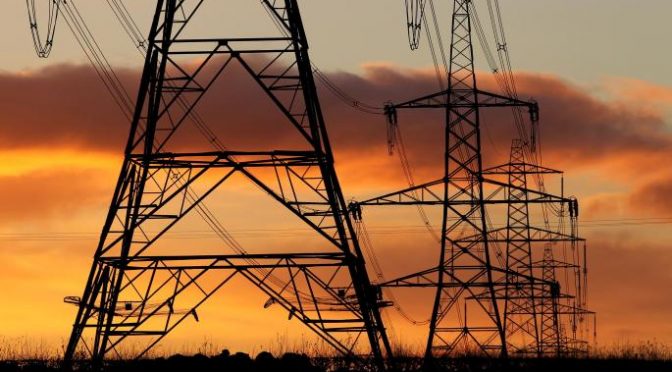
Electricity networks are medieval in design, totally incapable of supporting industrial health & development

By Engr S O Uwaifo 

The Nigerian Electricity Regulatory Commission, NERC, produced a new tariff for Nigeria, and the Federal Government, FGN, approved it for implementation. NERC began implementing, but started with only Band A customers. To those customers across the country, the new tariff would apply from April 4, 2024.

Who are these Band A customers? They are the select group of consumers of electricity, who, at the time of negotiation, were willing to pay the price at which the Disco was willing to sell one kWh of electric energy whose statutory characteristics were stated by the Disco, for a daily availability of 20 to 24 hours.

Some will argue as in here, that the financial problems of Nigerian Electricity Supply Industry (NESI) have been reduced to the quantum of Disco’s monthly revenue streams, and that apparently because they could not deal with the engineering and commercial issues that limited it, they decided to increase electricity prices for Band A customers for a start. This is overtly discriminatory, unjust, unfeeling, punitive, but insidious because the targeted customers are in any country those, who make or mar economies including the electric power industry. Without them there would be no NESI. All of Nigeria would have kept to primordial oil lamps and the overly rich would have had their private generators.

This Himalayan increase, along with the straight line meter tariff, will in its aftermath, result in serious reduction in the amount of kWh Discos can sell.

The government did signal its intention to tackle this lingering problem head on, but no one thought that ad hoc chats with engineers, public hearings by NERC on its behalf, and NASS undertaking public hearings, were anywhere enough to resolve decades old problem. This is a most serious engineering and commercial engineering problem affecting the entire country, It’s late for the increase, but it’s not late for the eventual solution. Hand it over to appropriate Engineering experts. The Chartered Institute of Power Engineers of Nigeria, CIPEN, can help.

Some Nigerians have argued that the problem is that there’s too little power generated in the country. That is true only if it is limited to the grid. Note, however, that the grid ought to generate only for available load, and  Nigeria’s grid load is stuck currently to about 5000 MW, in total fidelity to the available residential and medium-sized commercial electric load. Therefore the argument discounted the private generation by industrial plants across the country.

In normal situations, residential and commercial electric load would be barely elastic. Even the thinking that Nigeria may have become the poverty capital of the world, should convince us that electric load on our grid will hardly grow at these times when people have been cutting back due to increasing hardship.

Sadly, this is all a continuation of the systemic mismanagement of NESI of several decades. Every government contributed to it. Everyone of them would surround themselves with friends, sympathizers including pseudo experts, and begin chasing after shadows.

Low quantum of monthly revenue stream is a symptom of a crippling disease that no publicly-owned electric utility has ever survived even in the United States of America. The standard solution has always been by financial transfusion, subsidy, followed by aggressive Commercial Engineering, if the utility has the engineers equipped with the knowledge. Sadly, Nigeria has not got any and it needs them.

There are investor-owned electric utilities of course. In the United States, utilities such as American Electric Power, do not expect subsidies; so, they stick to electric utility marketing, Commercial Engineering, which they have perfected. Those investor-owned electric utilities survive, flourish, or sink, according to their marketing capabilities.

Government has to understand that there can be no development unless there is abundant supply of electrical energy. It’s the lifeblood of industrialisation. In Nigeria even the pedestrian supply has been made more difficult by the pathways NERC dreamed up in the areas of regulation and electric rates design. Its bad choices suffered a backlash when the medieval and decrepit networks attracted no investments, though they keep strangling growth and development in every sector deepening Nigeria’s decades long social anguish.

Performance Based Regulation, PBR, is an ultramodern mode of electric utility regulation, which is still to be accepted in all the states of the United States of America, a decade after Nigeria accepted it. They say it limits electric rates legal cases that normally dominate American utility courts. PBR is thought to be more business-friendly than the Cost of Service Regulation, COSR, the other method of regulation. Its weakness is said to be the abundant data required. COSR is simple. It requires no more than the data usually available.

Note that NESI has never once been in court for tariff issues in over seven decades. Under PBR, Nigeria has to deal with a coarse and harsh tariff designed by the Regulator, with little or no electric utility experience. You don’t dare talk to them about jara, but they force-feed you with tales about business friendliness. How? They want to modernise how Nigeria regulates electricity before the country modernises its dominant informal economy! Must carts always come before horses in Nigeria? We say no.

Nigeria is blessed with several primary sources of energy such as geothermal, wind, solar, biomass, coal and hydropower, which are distributed generously across the country. Unfortunately, the military built no power plant in its thirty years in power. Civilians after them have, in spite of abundant choices of resource, limited themselves to gas that became the choice of the world, and grew too expensive. Nigeria’s survival  and economic transformation needs careful economic fuel choice for base-load generation and a competent energy mix for general generation for the next decades.

No one that understands rate-making and structuring as well as the circumstances of NESI would choose Straight-line meter tariff structure. It’s hostile to higher energy consumption. Structures are available to incentivise growth and NERC should not have remained unflinching since 2013 while NESI was being destroyed.

Every culture in Nigeria has its jara concept. Rate-making has its block tariff. In common, they both incentivise sales. Straight-line meter tariff does nothing of the kind and you would wonder why NERC needed to creat a harsh aura around electric energy. The structure is coarse and hostile to industrialisation. Disco would often shop for more money. It would list services such as prompt response to power failure, which is inherent in electric utility business. It would term them Prestige or Premium service, and would demand that customers pay more for them. And the Regulator who was absent when Disco negotiated with the customer, would approve.

Meanwhile, NERC had not thought it necessary that Disco should have a Customer Service Policy document written, published and advertised for customer education. Why the hide and seek?

The end of the seeming collusion between NERC and Disco is the N225/kWh rate imposed on Band A customers across Nigeria. For some of those customers, that would be a monthly cost of electricity that would double the monthly expenditure for food and beverage for wife and husband. That’s like mounting food on an altar rooftop high, and asking the lame and famished to reach for it.

Electric utilities serve every customer. Traditionally, it divides them into three main customer groups: residential, commercial, and industrial. Each has its demand characteristics such as inelastic, elastic, and very elastic according to whether they are residential, commercial or industrial demand. The same utility serves the group except in Nigeria after industries broke with NESI in the upper 1980s because it could not provide electricity as prescribed by the statute.

Quite noticeably, Dunlop and Michelin, both international Motor tyre manufacturers, left Nigeria at that time. Industries that wanted to remain, built their individual power plants, creating parallel utilities from which NESI has not recovered because of the deleterious effects the exodus had on the overall economy and its earnings.

Elsewhere, especially in the United States, electric utilities prompt or entice industries to their areas of franchise because they are the principal drivers of successful electric utilities. In Nigeria, industries die all the time because they cannot compete with others of other countries in the local market. Governments intervene many times, but smugglers always have their way.

Often, the key reason is that industries had passed onto their products, horrendous manufacturing costs due to huge spending on in-house power. How distressing to look back at anaemic NESI, as it watched industries as they died. Now on its deathbed, it has no industries to pay its hospital bills. Its problem was and remains that it has not learned commercial engineering. In six decades? That is ludicrous! Yet it has to be corrected, or electric utility practice in Nigeria will remain the joke that it is.

In their book, Development of the Nigerian Electric Power System (1973 — 1990) Nigeria’s late and beloved Engr. Lawrence Abiodun Amu, F.A.Eng., and Engr. Foluseke Abidemi Somolu, F.A.Eng., described Nigeria’s distribution networks as ‘the untidy “last mile” in the electricity supply chain.’

The networks were and are still medieval in design. When both engineers described it, it had gone decrepit with age and lack of maintenance. Since then it has been rehashed repeatedly across Nigeria. Now in the 2020s, it should be expected to be totally incapable of supporting industrial health and development, forty years or more after industries quit them. Best practices have found that networks of poles, insulators, and conductors, have a useful life of forty years. In Nigeria we seem to believe that they live forever, and we are paying dearly for that belief.

Nigeria should re-engineer and rebuild these networks to solve the sectors lingering financial problems. Indeed, the medieval design networks with its lack of flexibility has been Nigeria’s Achilles heel for decades. Definitely government is serious this time, otherwise it would not have countenanced the murderous rates it imposed on Band A customers. Can it with that seriousness solve the network problems now? In outline, what we need to do, probably phased, is to strip the networks of all secondary distribution lines, that is, end distribution at utilisation voltage and replace it with distribution at primary distribution voltage, which was first recommended to Nigeria in a paper published in The Nigerian Engineer in 1969, but typically Nigerian, acceptance and implementation came three decades after the introduction.

A sprinkling of distribution at primary voltage exists side by side with the other and since it will remain a radial system, nothing is really new except that we would clear the networks of its debris or surplus wires. In place of huge distribution transformers on many streets, we will need a large number of smaller ones whose sizes will be decided as part of the re-engineering process.

The Himalayan rise in Band A rate will exacerbate suffering and deepen poverty in the land, but will achieve little else. By approving the tariff that NERC made, government shot itself in the foot. It should have known that the problem is not just about the quantum of Naira, but about a system destroyed by incompetence; the proverbial square pegs in round holes at all levels, over the years.

Nigeria has supplied power to residential and commercial customers with hardly any industrial consumption since the late 1980s. It had to have been at colossal cost because the mix of customers was wrong and load factors were low while we hoped in futility for growth. Industries were on their own serving themselves with power at crippling costs. Their businesses declined, but they didn’t stop hoping that relief would come. It was an awful combination of problems that harmed Nigeria, its people and its economy.  The situation remains dire and Nigeria needs to get out of it, quickly.

It’s hard to quarrel with the idea that NESI needs more money from its business. But at the same time, it’s easy to understand that government making people pay to cure a symptom and to accept a return to shoddy services after, is ridiculous and unworthy of rational governance. Why should Nigeria suffer and pay more while the problems remain? There were engineers appointed by government and paid taxpayers money to prevent this. This is why government should hold itself bound to subsidise NESI until the problems are resolved within five years of its decision to act.

In economies across the world, the only way to bring electric rates down for residential use is to ensure higher industrial productivity, which makes load factors climb higher. Electric utilities do this through symbiotic marketing by its Commercial Engineering departments. Unfortunately, NESI had Commercial Engineering Departments from 1951 to 2013, but never practiced Commercial Engineering from about 1963 after the colonial era appointee Chief Commercial Engineer returned to the UK. For all those years governance allowed NESI to get away with that.

As it is, to solve Nigeria’s lingering power supply problem, government should ensure that public networks wherever they are in Nigeria, supply electricity with characteristics exactly as they are defined by the statute, and that all industries are connected to the public networks. That is the solution to the problematic nightmare of NESI — a problem like a needle in a haystack. Let’s end the long and self-sustaining decadence.

This is not to suggest that there are no problems in generation and transmission. Those problems are mostly typical of power systems and they are known to the engineers that operate them. They are not beyond their capabilities to solve whenever government policies are right, and clear, and funds are available.

The quickest way forward is to start the process of re-engineering and rebuilding the networks now with improved technology as previously described. There should be adequate controls provided for operational flexibility. That should very drastically reduce voltage and energy losses and ensure much higher economies of scale, without which power supply in Nigeria will remain a mirage. Higher economies of scale achieved, should rebound to Nigeria’s ability to serve its people electricity at the lowest possible cost without recourse to overt discrimination as overzealously and blatantly dished out by NERC.

Several stories have been told of where the problems of NESI began. That’s history. What’s important at this point is to solve the problem. It is submitted and affirmed here that the preceding paragraphs of this post are the recommended engineering solutions. Government is assured that it would have taken the right and appropriate steps to solve a problem that has been intractable since the 1980s. However, TCN and Gencos should have close looks at their links in the power supply chain for uncompleted projects.

An inchoate problem made urgent by the signing into law of the 2023 Electricity Act, is provision of adequate 330-kV service to every state capital. Places such as Lagos and Abuja should have a minimum of six injections from different directions to avoid weather disruptions. No state capital should have less than three 330-kV injections.

In the rehabilitated and revamped situation envisaged, a good guess of peak load will be higher than 20,000 MW and growing.

Nigeria should prepare for a massive retraining of engineers in every area. Every engineer must learn planning economics. NAPTIN and technological universities should be equipped with the right manpower to teach the various specialties.

NERC works with people from other disciplines, but that it is an engineering organisation, can hardly be denied. It’s led and should always be led by an engineer, who should be competent and experienced for the task. Engineering is at the heart of the NESI mess. There’s no doubt that tariff is a crying shame. Everyone and everything has its tariff. Ridiculous in the extreme. How and who bills these if we weren’t using prepayment meters? Yet most village customers can’t use enough energy to pay for monthly amortising the cost of a prepayment meter. There are two options for addressing this. Concerned Disco should deploy Credit meters or there should be a resort to flat rate tariff. For each of the options, Commercial Engineers specialised in rate-making are needed.

Electric utility concept of mass electric service to customers as proposed by Thomas Alva Edison and Samuel Insull, remains true. And let’s be clear, creating a plethora of cost centres to extort money from hapless customers, is a disservice to humankind. In Lagos, Nigeria, Maryland Crescent, Shonibare Estate, Cappa Estate and GRA Ikeja are separated by walls and a road, Bank Anthony Way, but residential customers in those places pay different electric rates though fed by the same primary feeder! Price difference for living across walls and the opposite sides of same road? This is Nigeria!

Has NERC allowed true electric rates fall where they may? What population of cities and places did NERC use for its computation? There’s no reason for Ikeja to pay the same electric rate as Epe. Why should Kaduna pay the same electric rate as Zaria? Has Nigeria appetite for egalitarian tariffs? Has NERC used true unit cost per kilowatt for every town and location? These are fair questions to which experts will need answers, which will help them free Nigeria from electric power supply inadequacies. Engineering intends thorough application because human life depends upon it.

Uwaifo (F.A.Eng), a former District Manager of Northern Region, defunct Electricity Corporation of Nigeria (ECN), poet, playwright, author and joint winner of the LNG Nigeria Prize for Literature in 2004, as well as an Eisenhower Fellow, writes from Lagos.

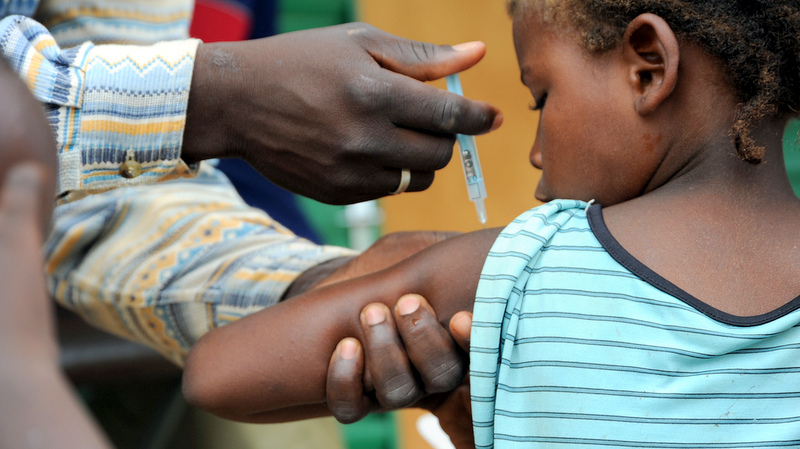
WHO announces Nigeria as first to introduce new 5-in-1 Vaccine against meningitis

Nigeria has achieved a landmark in global health by becoming the first country to deploy the newly recommended World Health Organisation (WHO) vaccine, Men5CV, which offers protection against five strains of the Meningococcus bacteria. This initiative marks a significant step in the fight against meningitis, particularly in the African Meningitis Belt, where Nigeria is among the 26 hyper-endemic countries.

The WHO highlighted the introduction of the Men5CV vaccine as a historic development. It is designed to combat multiple strains of the meningococcal bacteria—A, C, W, Y, and X—providing broader immunity than previous vaccines that targeted only one strain. This comprehensive vaccine, leveraging technology similar to the MenAfriVac® that eradicated Meningococcus A epidemics in Nigeria, offers hope for substantial reductions in meningitis cases and progress toward its eventual elimination.

Funded by Gavi, the Vaccine Alliance, the vaccine rollout coincides with a surge in meningitis cases across Africa, with a reported 50% increase in 2023 alone. In response to a specific outbreak in Nigeria, which led to over 1,700 suspected cases and 153 deaths, a critical vaccination campaign was launched in late March 2024, initially reaching over a million people aged 1-29 in the most affected states.

Dr Tedros Ghebreyesus, WHO’s Director-General, praised the rollout as a pivotal moment in the global effort to eliminate meningitis by 2030. He underscored the vaccine’s potential to prevent outbreaks and save lives.

Similarly, Nigeria’s Minister of Health and Social Welfare, Prof. Muhammad Pate, emphasised the country’s preparedness and community support for the vaccine’s introduction, particularly highlighting the active involvement of local leaders like the Emir of Gumel in Jigawa, who personally initiated the vaccination campaign.

This significant advancement not only addresses the urgent needs arising from recent outbreaks but also positions Nigeria as a leader in global health security, paving the way for future immunisation expansions to combat this deadly disease further.

Follow National Updates on WhatsApp for more at whatsapp.com/channel/0029VaCf0r4B4hdKCffAx40z

This failed state called Nigeria can be resurrected if the president is serious about it

By Nkereuwem Akpan, Esq.

Many Nigerians don’t understand this their country so today I want to shed some light on how the embarrassing situations we find ourselves arose.

How many cities in Nigeria today have pipe borne water ?

The taps cannot run because those who have boreholes and are into selling pure water will be out of business so the pipes are deliberately vandalized

How many cities in Nigeria have steady electricity?

Steady electricity will put those importing Generators and diesel out of business

How many Refineries are working in Nigeria?..

The 4 Refineries are sabotaged from within the NNPC by moles on the payroll of independent petroleum marketers so they can keep importing PMS and collect stupendous amounts as “subsidy”

I can go on and on

The president should suspend all other BS new Capital projects and fix the Refineries Once the Refineries are fixed , the 95% of our problems would have been solved

Ban the importation of generators and you’ll see the vandalisation of TRCN assets will reduce.

Ban the production and sale of pure water and the Water Board will no longer be sabotaged by those selling pure water.

@chiefnkereuwem on X (Twitter)

Now that bobrisky has been jailed

By Usani-Odum, Esq.

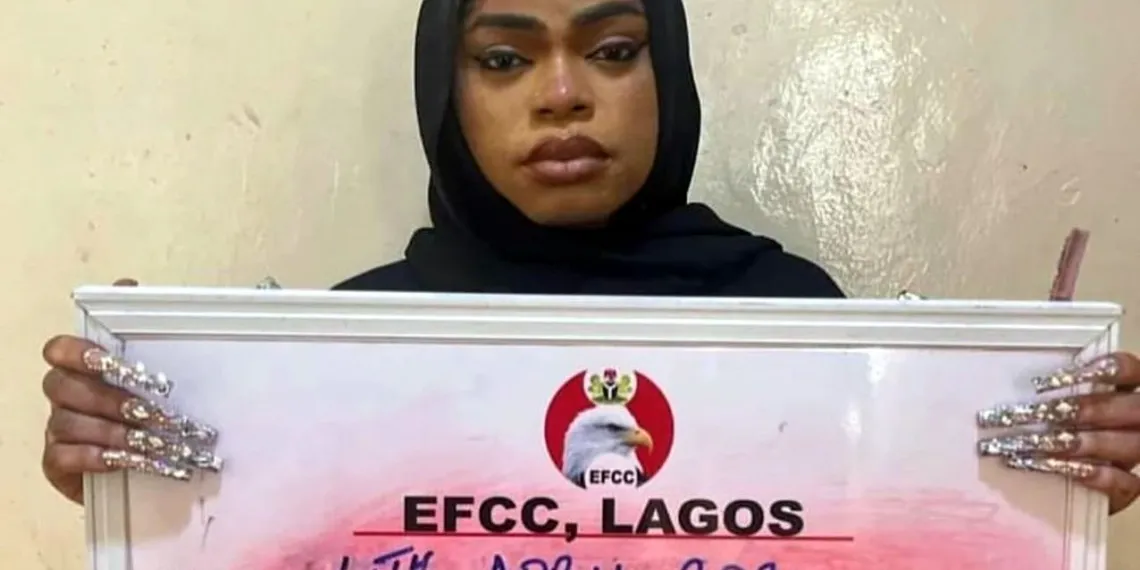
Now that Bobrisky has been sent to prison in a minor offense that could be punished with a fine, in what looks more like a mob lynching through the court,

  • I hope we now get steady light in the country, since he was the biggest evil thing deserving that must be done away with;
  • ⁠I hope our public morality is restored as a people since his biggest offense was corrupting public morals, yet those who commit real economic crimes are walking free;
  • ⁠I hope youth unemployment becomes a thing of the past ;
  • ⁠I hope ferries and boats ensure their passengers are given life jackets before crossing d water;
  • ⁠I hope workers are given sustainable living wages, not what bobrisky told govt to be paying;
  • ⁠I hope all pensioners are paid their pensions;

Because these and more are the things that affect other people’s lives, not the personal life of Bobrisky, which seems to be the main reason for her predicament.

Usani-Odum

The ‘Risky’ business of cells and public conveniences in Nigeria

By Lillian Okenwa

The recent jail sentence on Idris Okuneye, popularly known as Bobrisky and Justice Abimbola Awogboro’s question about whether he is a man or a woman has brought the letter written by a legal practitioner to the National Assembly requesting that they either criminalize gender transition or pass a legislation for the establishment of a separate cell rooms in all detention facilities and conveniences in public places for transgender individuals In Nigeria to the fore.

Asked why he wrote the letter, whether Nigeria has transgenders or transgender issues, M.O. Idam said: “Well, in an attempt to answer your question, I will say that the younger generation is at risk of being influenced by those who have switched their gender and are making money off it as a result of publicity.

“Recall that few years back Anti-Guy law was passed which did not capture transgender issues. Hence, people hide under the lacuna to switch their gender which is purely un-African.

“Howbeit, recently the integrity of the Nigerian system was brought to question when a certain Bobrisky ( a transgender) was arrested and the issue arose as to which cell room should he/she be kept. I’m not sure how that issue was resolved. This is just one out of many other ‘Riskys’ known and unknown out there.

“The question now is, should we wait until there is a surge in trans people before laws are made to either criminalize it or regulate their activities so that they don’t compromise the fundamental rights of normal people.

“Have you also thought of trans foreigners coming into Nigeria or using public conveniences in the airport or other public places. Don’t you think it is necessary to pass laws as a country in order to take a position on the issue?

“Recall further that laws are made proactively and not retroactively. No nation waits for an incident to happen before making a law to regulate it. Society is evolving, once you foresee something that is likely to affect members of your clime, the only thing to do is to act proactively to provide for or against it.”

Below is Idam’s letter to the National Assembly.

06/04/2024
The National Assembly of Nigeria,
Three Arms Zone,
Federal Capital Territory (FCT),
Abuja,
CC:
The President of the Senate.
The Speaker House of Representatives.

Dear Sir,

DEMAND TO EITHER CRIMINALIZE GENDER TRANSITION OR PASS A LEGISLATION FOR THE ESTABLISHMENT OF A SEPERATE CELL ROOMS IN ALL DETENTION FACILITIES AND CONVENIENCES IN PUBLIC PLACES, FOR TRANSGENDER INDIVIDUALS IN NIGERIA.

The above subject refers.

Following the growing cases of gender switch in Nigeria, I, Maduabuchi O. Idam, Esq., write as a human rights and public interest activist to demand that the National Assembly should forthwith pass a legislation to either discourage gender switch in Nigeria or alternatively ensure that both transgenders and cisgenders’ rights are adequately protected, in order to preclude one from violating the other, by introducing separate cells and conveniences like toilets, bathrooms or wash rooms in public places particularly for individuals with artifical gender.

Although I consider gender switch to be unethical, I respect the opinions of those who believe otherwise. Nonetheless, I demand that if transgenderism cannot be discouraged, the National Assembly must ensure that cisgenders’ rights are not compromised in a bid to observe transgenders’ rights.

It is noted therefore, that cisgenders are not expected to be comfortable sharing the same cell rooms and conveniences with trans individuals. Meanwhile, it is my view that it amount to a violation of cisgenders’ rights to privacy and dignity of human person to permit trans people to access places like cells and conveniences that are exclusively designated for cisgenders and vice versa. Hence, the need to quickly consider this demand with a view to legislating on the subject matter.

Please accept my earnest regard.

Yours faithfully,

M.O. Idam, Esq.
PP: M.O. Idam Attorneys

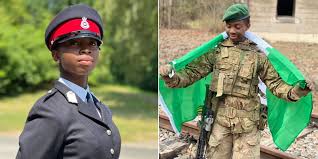
Meet Owowoh Oluchukwu Nigeria’s first female graduate from Sandhurst

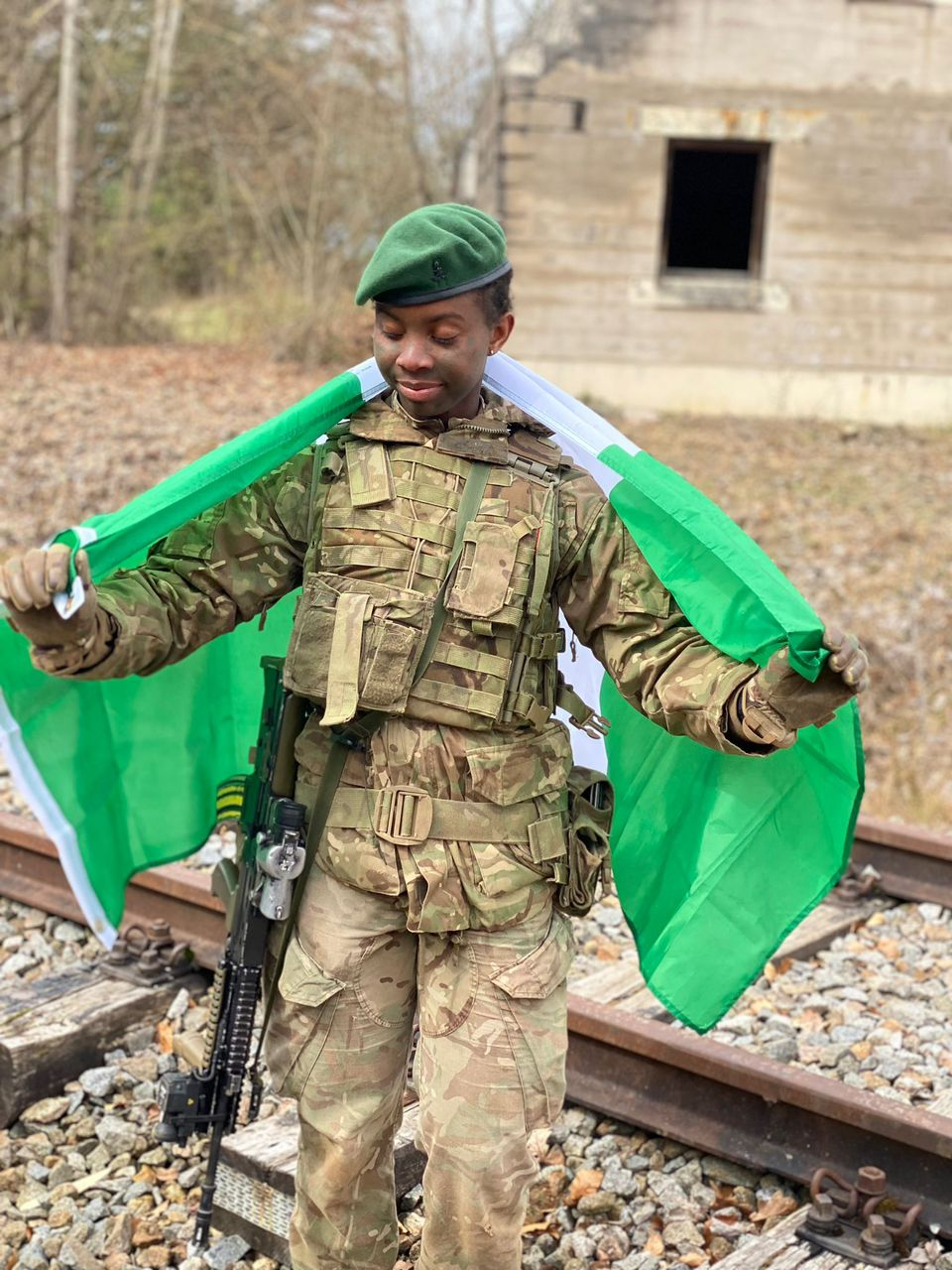
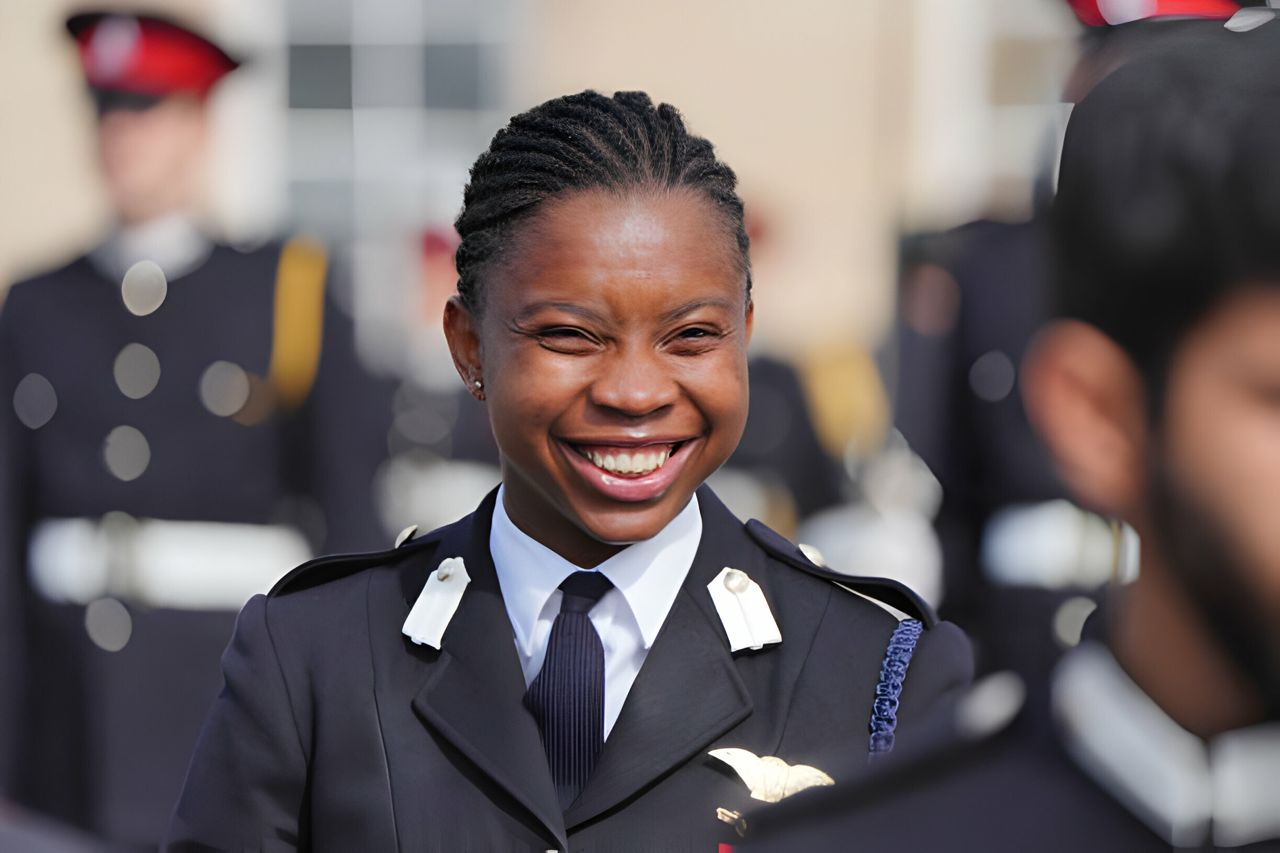
Officer Cadet Princess Owowoh Oluchukwu made history on Friday as she became the first Nigerian female officer to graduate from the esteemed Royal Military Academy Sandhurst in the United Kingdom.

 At just 24 years old, Oluchukwu joined 134 other Officer Cadets in London for the Sovereign’s Parade, marking the culmination of 44 weeks of rigorous training as part of Commissioning Course 232.

This was contained in a statement by the Senior Communications and Public Diplomacy Officer of the British High Commission in Abuja, Atinuke Akande-Alegbe, on Friday.

Princess Owowoh Oluchukwu

Oluchukwu’s achievement not only adds to the legacy of Nigerian officers at RMAS, which includes notable figures like former Nigerian Head of State, Yakubu Gowon, and Major General Emmanuel Undiandeye, but also highlights the enduring commitment of the UK to support Nigeria’s military education and training.

Her journey began at the Nigerian Defence Academy in Kaduna State in 2018, where she quickly distinguished herself.

From being appointed as Cadet Lance Corporal in her second year to assuming the prestigious role of Company Senior Under Officer Charlie in her fifth year, she consistently broke barriers.

 In her fourth year, Oluchukwu excelled academically, earning First-class Honours in Biological Sciences, further demonstrating her dedication and capability.

Her graduation as the 190th Nigerian graduate from RMAS is not only a personal triumph but also a testament to the ongoing partnership between the UK and Nigeria in defense and security.

Speaking of her achievement, she said, “It is a profound honour to be the first Nigerian female officer to commission from the esteemed Royal Military Academy Sandhurst.

“This achievement is not mine alone, but a testament to the unwavering support of my family, mentors, instructors, and countless individuals who believed in me every step of the way.

“As I look ahead to the future, I am committed to representing Nigeria with pride, and to making a positive difference in the world.”

G

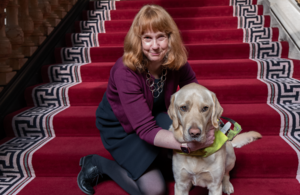
Victoria Harrison: UK’s first blind ambassador to serve overseas

Victoria Harrison will become the UK’s first totally blind ambassador, leading the UK government’s relationship with Slovenia from August 2024

She will be the first ambassador to be accompanied by a guide dog, her 2-year-old Labrador golden retriever cross ‘Otto’

Approximately 15% of the Foreign Office’s UK-based workforce has a declared disability, as the government department aims to become more representative of the UK

In a historic milestone for the UK Diplomatic Service, the Foreign, Commonwealth and Development Office (FCDO) has appointed the first totally blind British ambassador, the most senior position within a British Embassy overseas.  

Victoria Harrison, born in Dumfries, will become His Majesty’s Ambassador to Slovenia from August 2024, charged with leading the UK government’s work to promote UK interests in the country. 

Victoria also becomes the first ambassador to serve in the position with a guide dog. She will be accompanied by 2-year-old labrador golden retriever cross Otto, matched to her by British charity Guide Dogs

Following the appointment, Victoria Harrison said: 

It’s an honour to represent the UK as our next ambassador to Slovenia. During my career I’m pleased to have witnessed the Diplomatic Service become much more reflective of the diversity of the country we serve and I’m proud to be part of this change.

Thanks to Guide Dogs for providing me with my second life-changing guide dog, Otto, who will be accompanying me, and my colleagues who have supported me on this journey. I can’t wait to get started in Slovenia later this year, with Otto in tow! 

Deputy Chief Executive at Guide Dogs, Pete Osborne said: 

Victoria has had an incredible career so far and we’re thrilled that she will have her guide dog Otto by her side on this next step as the UK ambassador to Slovenia.  

It’s clear they have an extraordinary bond and have achieved remarkable things together. Our guide dogs not only help people with a vision impairment to live the life they choose but can truly change a person’s life. We wish Victoria all the very best.

Joining the UK Diplomatic Service in 1997, Victoria was the first person with a declared disability to be recruited by the Foreign Office following the introduction of the Disability Discrimination Act putting into law equality for those with disabilities.

Her career has included postings to Helsinki and Sarajevo, as well as working on the Ukraine response and Afghanistan on her path to reaching the senior rank today. 

Today, approximately 15% of UK-based Foreign Office staff have a declared disability, which includes 10% of those serving in senior positions. The FCDO is committed to having a workforce which reflects the diversity of the UK.

Kasarachi: Attacked by husband in the dead of night

Although her maiden family name, Egbule, literally means “don’t kill,” the man she married 15 years ago took no heed to the admonition. And so, when she went to bed on Saturday, April 6, 2024, Kasarachi had no premonition of the fate that awaited her in the dead of night.

Nothing prepared residents of the tranquil Umugaa Umunagbor, Amagbor autonomous community in Ihitte, Ezinihitte Mbaise local government area of Imo for the gory spectacle that confronted them in the wee hours of Sunday.

Although Kasarachi will never be the same again., the fact that she is still alive today after that dreadful night is indeed a miracle.

When she married about 15 years ago, young Kasarachi Egbule from Umuokoroma, Umunachi, Agu na Ebere autonomous community in Ezeagbogu, also in Ezinihitte Mbaise local government area had lofty dreams. What she didn’t expect was that her husband, Alex Nwogu, an okada rider, would make domestic violence a pastime. Ultimately, the marriage became hell on earth for the mother of four – three boys and a girl.

On that fateful Saturday, Alex took domestic violence notches higher. Kasarachi was already fast asleep when he viciously attacked her, inflicting near-fatal machete cuts on her that resulted in serious bodily injury. Leaving her for dead, Alex, disappeared into thin air. It was the distraught children who raised alarm. By this time, their mother was unconscious, having lost so much blood. The cuts were so deep that one of her hands was almost severed. The children reported that their father had initially tried using a gun to shoot their mother but miraculously, the trigger malfunctioned. In frustration, he dropped the gun and settled for the machete to accomplish his devilish task.

Narrating what happened, Chris Egbule, Kasarachi’s elder brother, a tipper driver at Aboh, headquarters of Aboh Mbaise local government area, said the pool of blood he saw where his sister was attacked “was like where two cows were killed.”

“We are yet to know exactly what happened. Kasarachi is yet to talk and tell us what really happened and the man who committed this atrocity, my supposed brother-in-law, is still with the police and we are yet to have access to him.

“All I call tell you is that very early in the morning of Sunday, April 7, I got a frantic call from my mother’s younger brother who hails from Ihitte demanding to see me immediately. The community where my sister married happens also to be our maternal home.

“I was terribly alarmed and quickly jumped on a motorbike and headed to Karasachi’s house because when I asked him what happened, he had told me that ‘Kasarachi has been killed. When I got to the house, people were everywhere echoing what my maternal uncle told me on phone – Alex has killed Kasarachi. The door to the house was locked but the blood that flowed out to the veranda was frightening. It was like where two cows were killed.”

But before he arrived, the rattled villagers had rushed his sister to Cecilia Memorial Hospital at Afor Ogbe, in Ahiazu-Mbaise local government area and the distraught children had been taken away. By the time he got to the hospital, the doctor had referred her to the Federal Medical Centre (FMC) in Owerri. Speaking to TheNiche, Dr. Obioma Ekennia, a highly experienced medical doctor and proprietor of the hospital, said what he saw when Kasarachi was brought to the hospital was frightening.

Dr. Ekennia, who once represented Ezinihitte State Constituency at the Imo State House of Assembly and served as the Deputy Chief Whip, said: “She was really in a very bad shape when she was brought here on Sunday morning. When I came in, she had lost so much blood. She needed blood transfusion but to make matters worse, her blood group is O negative and the implication is that while everyone can receive O negative blood, which is why it is called the ‘universal blood type,’ she can only be transfused with blood from the same group because O negative blood type can only receive O negative blood. But we were able to manage the situation and stabilize her.”

At the Federal Medical Centre, Kasarachi was taken directly to the Intensive Care Unit (ICU) where delicate surgeries were carried out. When contacted on Friday, a doctor at FMC, who pleaded anonymity, admitted that without the medical attention she received at the Cecilia Memorial Hospital, the story may have been different.

But even at that, doctors are not guaranteeing full recovery because of the severity of the injuries.“We managed to revive her before referring her to the Federal Medical Centre. They have carried out surgeries particularly on the head where she had very deep cuts but I am not sure that she will fully recover the use of the hand again because it was almost severed. But we thank God she is alive,” Dr. Ekennia further told TheNiche.

Ekennia, who incidentally hails from the same Ihitte community with the abusive husband, however said he never met the man. “I don’t know him. But he must be a fool to do what he did to his wife.”

Incidentally, while his kinsmen were looking for him, Alex Nwogu reported himself at the State Police Criminal Investigation Department (CID) Owerri where he was promptly detained. It is not yet clear what his motive was because the police have not allowed access to him. But a policeman involved in the investigation told TheNiche that whatever the issue may have been, “Anyone who is able to inflict that level of injury on any human being, not to talk of his wife, is not fit to live in a human community. He is an animal.”

He may not be far from the truth. Kasarachi’s brother confirmed that she has been in an abusive relationship for a long time. “Her husband has a reputation for violence. It is a very long story. He will beat my sister and sometimes bite her. It was as if he derived joy from inflicting injuries on her. My sister has no phone because he smashed her phone during one of their fights and forbid her from getting another one,” he explained.

“He is an okada rider and my sister is a petty trader in front of their house. But his people – brothers, sisters and even his mother never supported him. In fact, when the violence got out of hand and the relationship became so abusive, his mother, fearing that he may kill my sister, reported him to their own traditional ruler, Eze Mike Orji – Dimgba 1 of Amagbor Ihitte.

“When the monarch looked into the matter, he found Kasarachi’s husband guilty and spared no words in condemning his bad character. The Palace fined him one he-goat and some amount of money and the traditional ruler ordered that his motorbike be kept at the palace until he paid the fine“

Beyond that, Eze Mike Orji also advised us to go home with our sister until the husband shows readiness to behave well and we did just that. We took Kasarachi back home and she was with us for some months until the young man came with his family members and some people from their village to ask for forgiveness. They begged us to forget and forgive, that the man had repented from his bad ways and promised that such a thing will not happen again. That was precisely a year ago – April 2023.

After much pleading from him and his people, we conceded and he took back Kasarachi. We sincerely believed that he had learnt his lessons and changed for good. And we did not hear of any other problem from them since then until this incident happened. Apparently, the man deceived us. He was bidding his time and his goal this time was to finish the job by killing her. But God thwarted his hideous plan,” Chris further said. He is of the opinion that the attack was premeditated.

“One thing we have found out in the last one week is that in all the pictures, particularly their wedding pictures, he marked X wherever my sister appeared. Not only her, he did so to his mother and other people who, apparently, he saw as his enemies because they told him that what he was doing was bad. I suspect that he marked them for elimination starting from his wife. So, as long as he is free, even his mother and his brothers and sisters who never supported him are at risk of being eliminated.

“We are pleading with the police not to treat the matter with kid gloves. All we are asking for is justice.” As Kasarachi remains in hospital battling for her life and the husband is in police custody awaiting justice, their four children face very uncertain future in the care of their paternal grandmother.

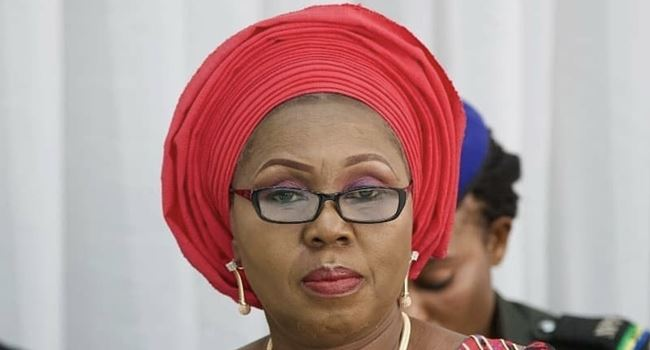
4 Takeaways from Chief Betty Anyanwu-Akeredolu’s “Remarriage” Ceremony

By HW Emmanuel J. Samaila

1. Relationship with husband’s family under customary law

It is not uncommon that a widow will desire to remain in her husband’s house and continually live with the members of his family, people that have become her family over the years. It is a beautiful thing to see such cordial relationship between families united by customary marriage.

2. Peculiarity of customary marriage ceremony

In every custom exists a procedure for a widow to remain in her husband’s house. While she may be allowed to remarry with conditions, she may also be allowed to continue living in her matrimonial home with their children (if any). The Mgbafu Mgbe rite for widow performed at Umuikea Emeabiam Community, as explained by the family, fits into the second scenario. (See news item no.1).

3. Fallacy of assuming the existence of a general marriage custom

When the news of the “remarriage” broke out, some commentators were critical of the ceremony opining that it did not comply with the requirements of a customary marriage. Such statements were obviously premised on the presumption of the uniformity of customary practices across tribal or ethnic groups. Nothing is as fallacious as such an assumption. Custom is so peculiar to a group of people to the extent that even among the same ethnic group within the same area, variations in a practice are not uncommon. Therefore, a person from Ikeja has no legal standing to dictate to a person in Nnewi, Katsina-Ala or Maiduguri what their customary practice is. Apart from not being fallacious, the assumption of the existence of a uniform practice among all ethnicities negates one of the essences of customary law: non-uniformity.

4. Validity of a customary marriage

Many commentators opined that the elements of a valid customary marriage were absent in the ceremony performed at Umuikea Emeabiam Community. It is apparent that they were x-raying the “marriage” ceremony through the lens of their custom and on the assumption of the existence of a general marriage custom with trite features. But as Prof. Odinkalu said in the 3rd news item, “marriage is a relationship between the parties to it and between family & peoples too.”

So, whatever the components and nature of the ceremony performed at Umuikea Emeabiam Community by the two families, even if they tag it “marriage rites”, that is what it is. No one, not even the Court, can dig into the nature of the ceremony performed and rule that it does not constitute a valid marriage.

More importantly, a widow’s decision ought to be respected. She knows best what steps to take to deepen her relationship with her in-laws and also protect the interest of her children.

References:

1. https://theeagleonline.com.ng/akeredolus-family-speaks-on-marriage-of-widow-to-brother-in-law/

2. https://lawandsocietymagazine.com/betty-akeredolu-marries-husbands-younger-brother/

3. https://lawandsocietymagazine.com/betty-akeredolu-there-is-no-suggestion-of-widow-inheritance-here-odinkalu/

4. https://lawandsocietymagazine.com/betty-akeredolus-remarriagesuch-traditional-practices-are-fuelers-of-gbv-priscilla-usiobaifo-braveheart-initiative/

*Upper Customary Court, Gwantu. Email: [email protected]

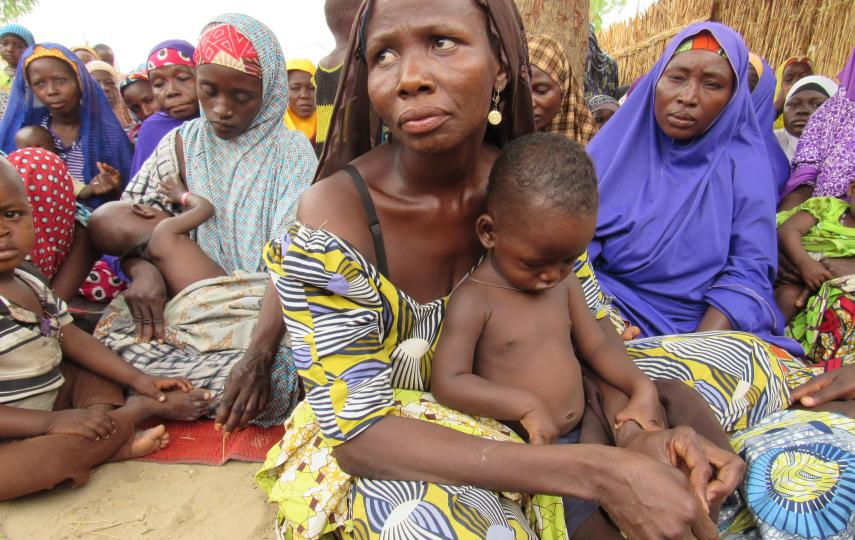
Women face the toughest hurdles in Northeast Nigeria

By Chi Lael and Dr Kelechi Onyemaobi

Aisha and her eight children have spent the last three months hiding in the bush in northeast Nigeria. Her husband was killed last year, shot by members of Boko Haram. Aisha managed to escape. “We ran into the forest,” said Aisha, “me and my eight children. We stayed there for three months. Every day, I would look for firewood and risk taking it to town to sell, so I could feed my children.”

Aisha and her children were eventually taken in by a kind family who they still live with. They are amongst the one million people being helped by WFP as food insecurity in northeast Nigeria. “I really appreciate this food. If we didn’t have it, my children would go out to beg around the community,” said Aisha.

Tragically this crisis is not the result of a drought, but conflict that has been spreading through the region during the last decade. It is estimated that more than 30,000 people have been killed in the fighting – and Aisha’s husband is just one of them. The state of Yobe – where Aisha lives – Adamawa and Borno, have borne the brunt. The seemingly bucolic idyll – the camels grazing by the side of the road, the ox-carts ferrying goods for sale – belie the underlying atmosphere of fear.

Nor is Aisha alone in her plight: one in four women in northeast Nigeria are now widows as a result of the conflict, leaving many of these families to suffer from the absence of their fathers and husbands.

Added to this, an estimated 2.1 million people have also had to flee their homes, which in a largely agrarian community severely increases the threat of hunger. If people can’t grow food, work their land, then they risk starving.

Ya Kaka, 25, and her children also receive support from WFP with funding from the European Union (EU). But she is a victim of another aspect of the conflict – forced marriage. When she was 18, Ya Kaka was kidnapped by insurgents to become a ‘bride’ for a soldier – however, Ya Kaka was already married, with children. After three years – having given birth to a baby in captivity – Ya Kaka finally managed to escape and return home.

“I was always scared that I might get caught. But one day, I woke up and decided to escape. I was ready to do whatever it would take,” she said.

Unfortunately, when she returned, Ya Kaka’s first husband rejected her and her new baby because she’d been married – albeit as a kidnap victim – to another man.  Now Ya Kaka lives, with four children, in the village of Kukareta, near Damaturu, only able to feed them with the food she receives from WFP.  “I’m hoping and praying to God to take away all my pains, I want to forget all I’ve gone through or all that I’m always thinking about,” said Ya Kaka.

Almost 5 million people currently suffering acute food insecurity in need of urgent assistance in the conflict-affected states of Borno, Adamawa and Yobe. WFP is supporting up to 1 million people with emergency food and nutrition assistance for children, supported by its donors including the EU.

●Chi Lael and Dr. Kelechi Onyemaobi work for the United Nations World Food Programme, the world’s largest humanitarian organization saving lives in emergencies and using food assistance to build a pathway to peace, stability and prosperity for people recovering from conflict, disasters and the impact of climate change. They can be reached via email at [email protected] and [email protected]

TIPS