Home Blog Page 598

Disaster as father loses daughter over alleged Access Bank’s mobile App failure

In a blood curdling turn of events, a Nigerian father is mourning the loss of his 9-year-old daughter allegedly due to the malfunctioning of the Access Bank mobile app.

The tragic incident, reported by an individual identified as PIDOMNIGERIA, underscored the devastating consequences of technological glitches in critical moments.

According to the distraught father, whose identity remained undisclosed, the inability to transfer funds using the Access Bank mobile app directly contributed to his daughter’s demise. The child, who was in urgent need of medical attention, was admitted to an emergency unit at a local hospital. Tragically, she was left unattended as her parent grappled with the financial constraints imposed by the malfunctioning app.

The father, described as a single dad working offshore, recounted his harrowing experience, stating, “Failure of Access Bank @myaccessbank app to function since yesterday has caused him to lose his 9-year-old daughter in a medical emergency.” His anguish and frustration were palpable, echoing the sentiments of many who have faced similar challenges with the bank’s app reliability.

Expressing his grief, the father lamented the recurrent issues plaguing the Access Bank mobile app, condemning the institution’s lack of accountability and explanation for the frequent disruptions. “Access Bank is a complete shit bank. They always have issues with their bank app without any explanation every now and then,” he asserted.

As the family mourns the loss of their beloved daughter, questions linger about the accountability of financial institutions in ensuring the seamless functioning of essential services, especially during emergencies

Access Bank was yet to respond to the allegations or provide clarification regarding the reported app malfunction at press time, meanwhile, the grieving father and his family grapple with the devastating aftermath of this preventable tragedy.

Leadership

Court says it’s not illegal for a husband to force wife to engage in sexual acts

An Indian judge has dismissed a woman’s complaint that her husband committed “unnatural sex,” because under Indian law it’s not illegal for a husband to force his wife to engage in sexual acts.

The ruling, made in the Madhya Pradesh High Court last week, shines a light on a legal loophole in India that doesn’t criminalize marital rape by a husband against his wife, if she’s over age 18.

Campaigners have been trying to change the law for years, but they say they’re up against conservatives who argue that state interference could destroy the tradition of marriage in India.

A challenge to the law has been winding its way through the country’s courtrooms, with the Delhi High Court delivering a split verdict on the issue in 2022, prompting lawyers to file an appeal in the country’s Supreme Court that is still waiting to be heard.

According to the Madhya Pradesh High Court order, the woman told police her husband came to her house in 2019, soon after they were married, and committed “unnatural sex,” under Section 377 of India’s penal code.

The offense includes non-consensual “carnal intercourse against the order of nature with any man, woman or animal,” and was historically used to prosecute same sex couples who engaged in consensual sex, before the Supreme Court decriminalized homosexuality in 2018

According to court documents, the woman alleged the act happened “on multiple occasions,” and that her husband had threatened to divorce her if she told anyone about it. She finally came forward after telling her mother, who encouraged her to file a complaint in 2022, the court heard.

The husband challenged his wife’s complaint in court, with his lawyer claiming that any “unnatural sex” between the couple was not criminal as they are married.

Delivering his judgement, Justice Gurpal Singh Ahluwalia pointed to India’s marital rape exemption, which does not make it a crime for a man to force sex on his wife, a relic of British rule more than 70 years after independence.

“When rape includes insertion of penis in the mouth, urethra or anus of a woman and if that act is committed with his wife, not below the age of fifteen years, then consent of the wife becomes immaterial … Marital rape has not been recognized so far,” the judge said.

India’s Supreme Court increased marital consent from the age of 15 to 18 in a landmark judgement in 2017.

The woman also accused her in-laws of mental and physical harassment “on account of nonfulfillment of demand of dowry,” the court order said. A trial is pending.

Ahluwalia’s remarks have once again raised questions over India’s treatment of women, who continue to face the threat of violence and discrimination in the deeply patriarchal society.

The world’s largest democracy of 1.4 billion has made significant strides in enacting laws to better safeguard women, but lawyers and campaigners say its reluctance to criminalize marital rape leaves women without adequate protection.

Lawyer Indira Jaising, who is among several advocates fighting to outlaw rape within marriage, said “many women will benefit” if the exception is struck down.

She called for the courts to address the issue as a matter of urgency.

“The crime has been invisible. Today these women have nowhere to go,” she said. “Fast-tracking the case will send a message to everyone that violence against women matters.”

According to the 2019-2021 National Family Health Survey by the Government of India, 17.6% of more than 100,000 women ages 15-49 surveyed said they were unable to say no to their husband if they didn’t want sex, while 11% thought husbands were justified in hitting or beating his wife if she refused.

Women alleging rape in India have some avenues of potential legal action against their husbands.

For example, they can seek a restraining order under civil law or charges under Section 354 of India’s Penal Code, which covers sexual assault short of rape, and Section 498A, which covers domestic violence.

These laws are open to interpretation and judges can use them to impose prison sentences for sexual assault in cases where a married woman has alleged rape, but many don’t, lawyer Karuna Nundy previously told CNN.

Many married women are also ignored when they try to file a police complaint, a 2022 study showed.

The study examined records from three Mumbai public hospitals from 2008 to 2017 and found that of 1,664 rape survivors, no rape cases were filed by police. At least 18 of those women reported marital rape to the police, including 10 women who alleged rape by a former partner or husband.

Four women were explicitly told by police that they could not do anything as marital rape was not a crime, the report said.

CNN’s Esha Mitra contributed reporting.

NBA-ICLE kickstarts fully funded partnership with Nigerian Content Development And Monitoring Board (NCMBD)

The Nigerian Bar Association Institute of Continuing Legal Education (NBA-ICLE) led by Tobenna Erojikwe in partnership with the Nigerian Content Development and Monitoring Board (NCMBD) has concluded arrangements for the commencement of an all-expense-paid in-person energy sector training for shortlisted Nigerian lawyers.

Applications for the training open today, 7th May 2024, and close on 27th May 2024. The training is expected to equip Nigerian lawyers with the knowledge and skills required to advise on transactions and engagements in all facets of the energy sector. The application link is https://bit.ly/3JN1tpH.

The NCMDB and NBA-ICLE have noted that the training is of strategic importance to both institutions as a means of growing local advisory capacity in the energy sector and expanding the knowledge base and income-earning ability of Nigerian lawyers.

Chairman of the NBA-ICLE, Tobenna Erojikwe revealed that: “The NBA-ICLE has continued to build partnerships with various stakeholders for the purpose of improving the knowledge base of lawyers and adding value to their practices. This is one critical way that Bar Associations all over the world add value to their members.

“This training is the first in the series of such trainings under the NCMDB partnership and is open to only lawyers who are based, or are practising, in any of the six states in the South-South zone of Nigeria. Similar trainings covering lawyers in other zones will be announced in due course.”

The trainings will take place in Yenagoa, Bayelsa State from 16th to 18th June 2024 and will be facilitated by experts drawn from the Energy Law and Policy Faculty of the NBA-ICLE. Under the terms of the partnership, as negotiated by NBA-ICLE, all expenses of the shortlisted in-person applicants will be fully borne by NCDMB.

To ensure national stability, development deployment of Law is paramount —NBA Abuja Chair

  • View photos of the thanksgiving service

Chairman of the Nigerian Bar Association (NBA), Abuja Branch (Unity Bar) Afam Okeke Esq. has restated how the deployment of law will ensure total national stability and development.

Mr. Okeke while addressing a press conference to announce the commencement of the Unity Bar’s 2024 Law Week with the theme: Deploying the Law to Attain National Stability and Development stressed that:

“As lawyers, we have a firm belief that once the law is properly deployed, we will have national stability and development as law is key to the development of any country.

“Because of the challenges our country is facing now, we are now suggesting to the political actors and leaders that there is the need to deploy the law to solve the issues bedeviling the country, ranging from the economy and insecurity to other challenges.

“ We don’t have shortage of laws, we have sufficient laws to solve our problems but the challenge is in doing the right things’’.

The NBA Abuja Chair added that the seven day event would include four sessions of discussion of different topics, one of which is The Role of the Judiciary in Upholding Democratic Values and Principles in Nigeria.

“Looking at the legality of constituency project issues recently raised at the National Assembly, we thought it wise to bring eminent legal practitioners and other knowledgeable Nigerians to come together to discuss the legality or otherwise of the constituency project.

“We have to look into the law and constitution to know if we are doing the right thing’’.

Also, Okeke revealed that insecurity, as one the challenges facing the country will be thoroughly discussed under the topic `Using Technology and Other Non-Kinetic Means to Solve Insecurity Challenges in Nigeria’.

He believed that at the end of that session participants should be able to get an insight on how to make their own contributions on tackling the insecurity challenges in the country.

He added that the branch would visit an orphanage and also some of their members who are facing one challenge or another to encourage them and give them a sense of belonging.

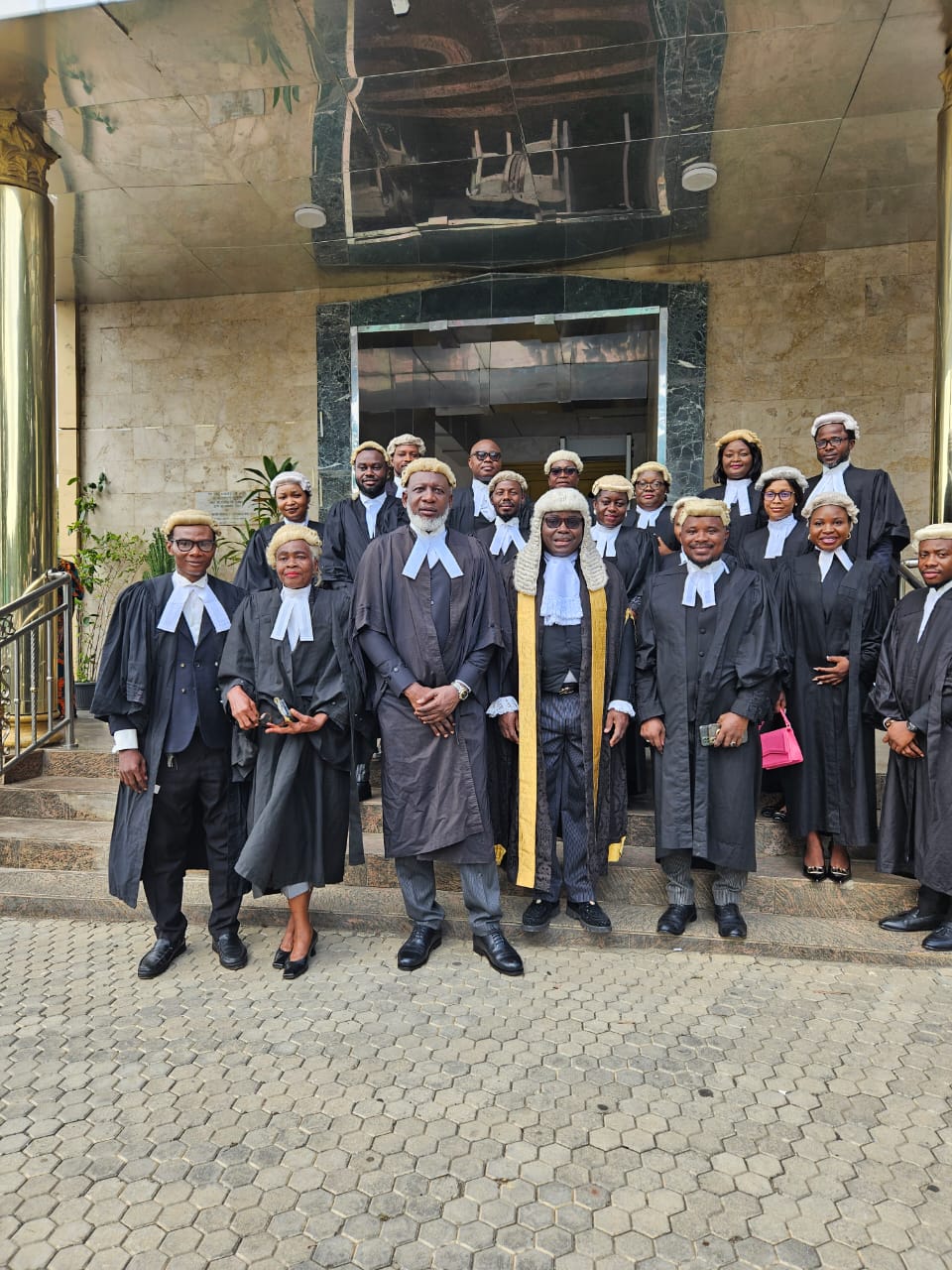
Below are photos of the Law Week thanksgiving service on Sunday at St Matthews Anglican Church Maitama Abuja.

Reverse CBN’s 0.5% cybersecurity levy in 48-hrs or we meet in court —SERAP to FG

As Nigerians wonder at the rational behind the Federal Government’s new levy on citizens already overburdened with numerous taxes and charges, the Socio-Economic Rights and Accountability Project has issued a warning urging the President Bola Tinubu Administration to reverse the 0.5 per cent cybersecurity levy imposed by the Central Bank of Nigeria.

SERAP also threatened to deal in legal action against the government if it failed to reverse the levy within a 48-hour timeframe.

The non-governmental organisation stated this Tuesday via its Twitter handle, calling for the immediate reversal of what it regarded as levy ‘imposition’.

SERAP tweep @SERAPNigeria stated, “The Tinubu administration must immediately withdraw the grossly unlawful CBN directive to implement section 44 of the Cybercrime Act 2024, which imposes a 0.5% ‘cybersecurity levy’ on Nigerians.

“We’ll see in court if the directive is not withdrawn within 48 hours.”

The Central Bank of Nigeria has ordered banks operating in the country to start charging a cybersecurity levy on transactions.

A circular from the apex bank seen by Punch Online on Monday disclosed that the implementation of the levy would start two weeks from then.

The circular was directed to all commercial, merchant, non-interest and payment service banks, among others.

The circular revealed that it was a follow-up on an earlier letter dated June 25, 2018 (Ref: BPS/DIR/GEN/CIR/05/008) and October 5, 2018 (Ref: BSD/DIR/GEN/LAB/11/023), respectively, on compliance with the Cybercrimes (Prohibition, Prevention, Etc.) Act 2015.

Below are the current bank transaction taxes in Nigeria.

CYBERSECURITY LEVY: SENDERS now bear;
₦5 on ₦1,000
₦50 on ₦10,000
₦500 on ₦100,000
₦5,000 on ₦1,000,000
₦50,000 on ₦10,000,000

STAMP DUTY: RECEIVERS bear;
₦50 on ₦10,000
₦50 on ₦100,000
₦50 on ₦1,000,000
₦50 on ₦10,000,000

TRANSFER FEES: SENDERS bear;
₦10 on ≤₦5,000
₦25 on ₦5,001 — ₦50,000
₦50 on >₦50,000

VALUE ADDED TAX: SENDERS bear;
₦0.75 on ₦10 Transfer fee
₦1.875 on ₦25 Transfer fee
₦3.75 on ₦50 Transfer fee

SMS FEE: SENDERS & RECEIVERS bear;
₦4 on each electronic transfer notification.

All applicable on eligible electronic transactions.

Credit: Tijani Alabi Fatai

Minister says FG working towards zero-malaria target

  • Unilorin don invents mosquito repellent cream from neem plant

In order to achieve the zero-malaria target in Nigeria, the federal government has emphasised the need to move from idealism to pragmatism.

The coordinating minister of health and social welfare, Prof Mohammed Ali Pate, stated this at the ministerial roundtable meeting on “Rethinking Malaria Elimination in Nigeria” held in Abuja.

The meeting was aimed at providing stakeholders the opportunity to assess the current malaria situation in Nigeria, evaluate the effectiveness of the existing tools in addressing the malaria scourge and to rethink the approach, the factors facilitating or mitigating the progress towards the elimination of malaria in Nigeria.

Pate said, “We need to move from idealism to pragmatism to be practical as to what is possible. Have high ambition but also have realism. We need to shift from business as usual.

“To shift from fragmentation to more coherent approaches in the context of the sector wide programme. From approaches that lean more towards one side to more multilevel certification. Shifting from focus on input and processes to focus on the outcomes that matter, which is reducing malaria burden, increasing survival and reducing mortality.

“From an inefficient state of approach to being a bit more efficient giving the limitation of resources. From focusing on accountability but shifting that accountability from duty bearers to the right bearers; to the people, to the citizens so that we deliver for the outcome that matters to them.”

He also called for the collaboration of community leaders across sectors, stating that the fight against malaria requires collective efforts.

“It also brings in the community leaders across sectors, the need to come together because it will take a movement of Nigerians, nobody will come from Geneva to solve the problem of malaria in Nigeria. It is Nigerian leaders in communities: traditional leaders, religious leaders and private sector leaders that will come together and join hands to solve malaria problems,” he said.

The minister regretted that as much as malaria is a preventable and treatable disease, yet it remains a leading cause of illness and death in the country.

Meanwhile, the World Health Organisation (WHO) and other stakeholders have urged the Nigeria government to invest in data, and apply effective and sustainable approaches to malaria elimination in the country.

WHO regional director for Africa, Dr  Matshidiso Moeti, who spoke during the meeting, stressed the importance of having accurate and reliable data in the healthcare system, saying it is crucial to accelerating the fight against malaria in Nigeria.

She said, “For Nigeria to accelerate its effort, it needs to invest more in data from local communities across the country to know exactly what is going on there.

“We have technology today that can help us improve some of the ways we are dealing with data in the health sector. We can use data to identify the location that needs intervention.”
Moeti, however, commended the Nigerian government for its efforts, especially with the increase in health budget, describing it as an excellent and a very courageous decision.

She said, “What we need first and foremost in order to change the state in our countries is political commitment translated into action like we are seeing here in Nigeria with the increase in the budget.”

On drug production, the national coordinator, unlocking healthcare value-chain initiative, Dr Abdu Mukhtar, said the country needs to look inward in terms of drug promotion, adding that local production of anti-malaria drugs will improve access to effective treatment.

Also, the wife of the Ooni of Ife, Olori Temitope Ogunwusi, stressed the need for collective efforts in the fight against malaria.

She said, “We need a community tour where everyone needs to be engaged in this. Enough of the talk, we are ready to walk the talk.” The event brought together many local and international partners.

Meanwhile, a University of Ilorin lecturer, Prof. Isaac Aremu, says he has invented an insect and mosquito repellent cream from neem plants.

Aremu, of Department of Pharmaceutics and Industrial Pharmacy, disclosed this in Ilorin, while delivering the 252nd inaugural lecture of the university.

The News Agency of Nigeria (NAN) reports that the lecture was entitled: “Drug Formulation as Essential Construct for Safe Delivery,”
According to him, neem plants contain thousands of chemicals, with the most important of them being the terpenoids.

The don said that the safety of the dermal application of neem seed oil cream had been investigated.

“For any drug formulation, safety, especially to the organs, is of utmost importance.

“Acute toxicity study was carried out with the application of neem seed oil cream to the dorsal part of both female and male albino rat for 14 days, to observe any adverse effect and whether such is sex-related or not.

“There was no breakdown in the architecture of organs, such as the liver and the kidney,” he said.

Similarly, Aremu stated that insect repellent action against Anopheles mosquitoes was carried out, adding that prevention of mosquito bites was one of the main strategies to control or minimise malaria.

He said that neem seed oil cream from natural resources had great potential against mosquito bites.

The don observed that the production of the cream could be supported by continuous sourcing of oil from natural sources without going through the rigours of synthesis.

He stressed the need for focusing on plant materials and looking inwards for availability of medicines.

This, the expert said, would eventually lead to reduction in the demand for foreign currency and increase in medicine’s security, while it would also boost agricultural activities and the nation’s economy.


46-Year-Old Nigerian Law Professor murdered by bandits in Benue State

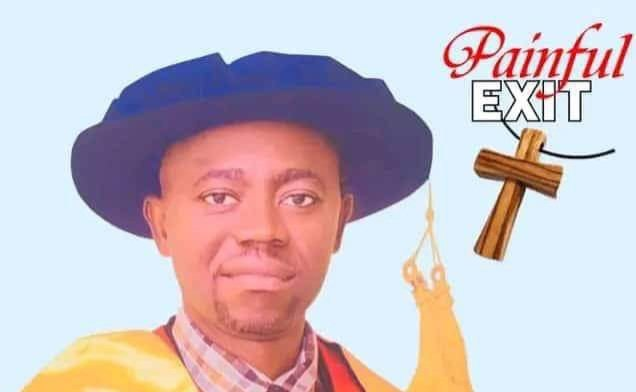
Grief has engulfed the Prince Audu Abubakar University community in Kogi State following the death of Dr Sarinu Ettor Kabo, an esteemed associate professor from the Faculty of Law.

The 46-year-old Law Sarinu Ettor Kabo was reportedly killed by bandits about a week ago.

According to a statement issued by Prof. Marietu Ohunene Tenuche, the Vice Chancellor of the university, Dr Kabo’s burial is scheduled for Saturday, May 4, at Gboloko Bassa in the Dekina local government of Kogi State.

Dr Kabo met his untimely demise at the hands of bandits while traveling back to Kogi State from Taraba in Benue State. The fatal incident occurred along the Makurdi-Naka Road, between Adaka and Kula communities in Benue State on Monday, April 22, 2024. At the time, Dr Kabo was on sabbatical leave at the Taraba State University Jalingo.

His death has reverberated through the university and the wider Nigerian educational community, with colleagues and authorities mourning the loss of a dedicated educator.

In a tearful tribute, Vice Chancellor Tenuche condemned the circumstances surrounding Dr Kabo’s death and called for urgent action to address insecurity challenges plaguing the nation.

Reflecting on the tragedy, Tenuche remarked, “When you hear news about insecurity and armed bandits attacks, you will think it is far and will never get to you, but here we are today mourning our very own. What has happened to Kabo today is the tragedy of a nation called Nigeria.”

The Vice Chancellor extended her sympathies to the law faculty, Dr Kabo’s wife, and his family members, acknowledging the profound impact of his loss on the university community.

Colleagues and the Chairman of the Nigerian Bar Association (NBA) Kogi State chapter paid tribute to Dr Kabo, remembering him as a kind-hearted individual whose absence leaves a significant void.

Will SLTv be that affordable alternative to DSTV’s stranglehold?

As a sequel to the decision of the broadcasting company, Multichoice to increase the prices of its offerings in Nigeria four months after its last increment many people have been on the search for a better alternative.

When Multichoice revealed its new offering, there was outrage from the public online with many arguing that the increment was coming at the wrong time.

Kelvin Odanz, who tweets as @MrOdanz, told Nigerians to explore other options rather than complain about the increase.

“If you can afford stable Internet, there are so many other services you can use aside from DSTV. For football and other entertainment. Because aside from football, nothing dey DSTV. Explore these options and stop whining.

“I am not even a fan of DSTV one bit. Aside from football, there’s basically nothing of note there. But this whole outrage over them hiking their price is quite hypocritical. Everyone has hiked the price of their goods/services. Even small businesses. So why shouldn’t DSTV do the same?” he tweeted.

While others are still lamenting the increase, some social media users looked for a cheaper alternative to DSTv.

Many suggested SLTv as an affordable alternative rendering the same service as DSTv.

SLTV is a premier satellite television company operated by Metro Digital Limited based in Nigeria.

Metro Digital SLTV has over 50 HD channels with 10 Sports channels that show live football matches from the Premier League, Champions League, Laliga, Seria A, and UEL among others with a monthly subscription ranging from N5,000 and N2,500.

A. Ayofe, who tweeps as @abdullahayofel said, SLTv is the best alternative for DSTv, noting that it is cheaper and offers the same service as the DSTv.

A. Ayofe wrote, “Well lemme be sincere with you in my review on SLTV 1. If you are a football person then SLTV is for you. If you have kids that won’t allow you to watch TV shows except cartoons then SLTV is for u. If you are someone who has a wife that loves Telemundo and Zeeworld then SLTV is for you. If you are someone that loves local TV news stations then SLTV is for you. If you are someone that loves CNN and ALJEZERRA then SLTV is for you.

“If you are someone that loves Yoruba and English epic movies then you manage it sha if they will improve on that in the future. If you are someone who loves American action movies then SLTV is not for you. If you are someone that loves crystal clear pictures then SLTV is not for you. If you are someone who can manage 80 percent picture quality then SLTV is for you.

“If you are a music lover then SLTV is not for you. 11. If you are someone that is very tired of DStv and you wanna migrate then SLTV is the best answer for you. Note: for football lovers just know that SLTV football matches are a few seconds late to DStv but as for me I don’t think that is an issue as I am saving like 25k due to the few seconds lateness.”

Also, Maurice Otu, who tweets as @mrblaaast advised Nigerians to opt for SLTv, saying it is cheaper and DSTv dish can be used to operate it.

Maurice Otu wrote, “Guys don’t stress about the. Jejelly purchase only an SLTV decoder and still use your #DSTV dish and LMB to install and connect SLTV and you won’t miss out on live matches from all the leagues. Abi na that stale movies still Dey keep you for #dstv?”

Another user, Godgrace, who tweeps as @flourishbidex lamented that she had been wasting money on DSTv while SLTV offered the same service at a cheaper rate.

@flourishbidex wrote, “So, these are the channels SLTV offers for just 5k and I have been wasting my money on DSTv sub nice one bye bye to DStv.”

Another user, Wealth, who tweeps as @Ola_Wealth001 wrote, “SLTV is the new movement, my people. God pun!sh Dstv. All their channels sub na 5kall football channels.

In April, Multichoice increased the prices of its offerings in Nigeria four months after its last increment.

It reviewed prices in its packages across the board with the new prices will take effect from May 1, 2024.

PUNCH

Man recounts how he exhumes bodies from cemeteries, kill for money ritual

33-year-old Ademola Akinlosotu has told the sordid tales of how he exhumed corpses from cemeteries and sold the parts to money ritualists in Lagos State.

Akinlosotu disclosed this during a parade by the Lagos State Police Command on Friday, May 3, 2024.

The suspect, who was paraded alongside nine other suspected ritualists, said he got the human parts from dead bodies buried at the cemeteries before graduating to killings – a job he had been doing for years.

The leader of the gang disclosed that he moved to people’s killing because his clients requested fresh parts rather than dead body parts.

Akinlosotu said while he and some members of the gang would do the killings, he would supply the parts.

Akinlosotu said he usually supplied the parts to a 52-year-old man, Ahmed Wahab, popularly known as Alfa Bororo, who operated from Badagry in Lagos State and Ogun State to supply his clients.

According to him, a fresh human head is sold at N45,000 or N50,000 while a dried human head sells between N30,000 and N35,000; a heart for N70,000 and hands for N50,000.

The suspect added that he only killed two persons, including a friend he met on social media before he was arrested.

He said before they killed anyone, the herbalist would be contacted to consult an oracle to determine whether the killing would be successful or would bring trouble.

The suspect said a traditional ruler in Badagry wanted him to kill his son because the son was giving him problems.

Akinlosotu revealed that the day they were to carry out the killing was the day the friend he met online visited him and he was killed.

Akinlosotu added that all he needed when he killed was the person’s head, the heart, and the hands.

Speaking, the Lagos State Police Public Relations Officer, SP Benjamin Hundeyin, said the suspects would be charged to court upon the conclusion of investigations.

15-year-old Kwara public school student nets 362 in UTME

  • 16-year-old with 354 UTME score tells how he was groomed by parents

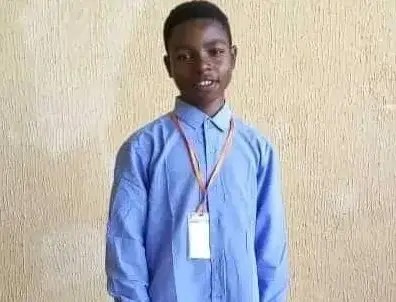
Olukayode Victor Olusola, a 15-year-old student of a public secondary school, Government Secondary School, Omu Aran, Kwara State scored 362 in the just concluded Unified Tertiary Matriculation Examination, UTME.

Olusola is now among the contenders for the highest scorers in the examination.

Though the Registrar of the Joint Admission and Matriculation Board, JAMB, Prof. Isaq Oloyede, organisers of the exam, had said the Board would not announce the highest scorer to avoid last year’s experience of confusing claims, Olukayode’s score is celebratory, as it is among the highest in recent years.

He scored 95 marks each in Mathematics, Physics and Chemistry and 77 in English Language.

His exploit, according to a report by Vanguard, was coming against the backdrop of the poor performance of candidates in the exam in which 1.4 million scored less than 200 marks out of 400. The exam was taken by over 1.8 million candidates

“Also, Olukayode’s excellent performance is coming at a time when confidence is greatly eroding in what public schools have to offer and some private schools are boasting of being the most expensive in the country,’” the report said.

Olukayode was born in 2009 and hopes to study Electrical Electronic at the University of Ilorin, Kwara State.

His mother, Beatrice Tosin, while giving all the honour to God, also praised the studious and hard working nature of her child.

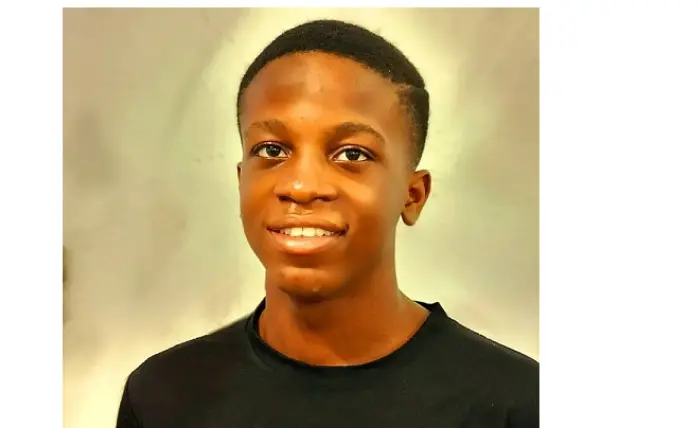
Similarly, Faithful Ebube Ejealor, a 16-year-old student of Hallel College, Port Harcourt, Rivers State, revealed the secret behind his 354 score in UTME.

Faithful Ejealor, the current Head Boy of his school, scored 95 in Mathematics, 95 in Physics, 93 in Chemistry, and 71 in English usage.

Born in Umuohie-Ukwu Eziama of Ngor-Okpala local government area, Imo State, Faithful’s upbringing was rooted in values of hard work, determination, and faith.

His parents, recognising his potential from an early age, made a phenomenal investment in his future by purchasing him with a comprehensive collection of JAMB past questions spanning from 1978 to 2023. 

The boy revealed this in an interview with Vanguard, saying, “My parents bought JAMB past questions from 1978 till 2023 for me, and I was able to use them to practise by solving the questions.” 

Armed with these resources, Faithful embarked on a rigorous study routine, spending countless hours solving problems, understanding concepts, and sharpening his reading skills.

However, Faithful’s journey was not solely defined by academic preparation. In January, he embarked on a spiritual journey, fasting for 15 days and praying fervently for success in his upcoming exams. 

He asserted that this fusion of faith and action underscored his belief in the power of hard work coupled with divine intervention.

“I fasted for 15 days in January and prayed to God to give me success in my exams this year. And I took action by reading and studying for the exams. I studied really hard,” he affirmed.

Throughout his preparation, Faithful remained focused and disciplined, undeterred by distractions as his dedication was unwavering, fueled by his ambition to study Electrical/Electronics Engineering at Covenant University.

As Faithful prepares to embark on the next chapter of his academic journey, his story serves as an inspiration to aspiring students everywhere. 

His advice to stay focused, determined, and prayerful resonates deeply, reminding others that success is attainable through a combination of hard work, faith, and perseverance.

“My advice for those coming behind me is to stay focused, be determined, study and don’t allow distractions when you are studying. And after that, everything you are doing should be put in the hand of God. We should always be prayerful,” he added.

In the annals of Hallel College’s history, Faithful Ebube Ejealor’s name will forever be etched as a symbol of excellence, a beacon of hope, and a testament to the transformative power of education and faith. 

TIPS