Home Blog Page 593

Are you hooked on pornography?

By Bob and Debby Gass

‘I made a covenant with my eyes not to look lustfully at a young woman.’ Job 31:1 NIV

There are certain doors in life that once opened are hard to close – pornography is one of them. And like any addict, once you’re hooked, you need increasing doses to satisfy yourself until finally, you end up shocked and shamed by the depths to which you have sunk. And statistically speaking, the problem is exactly the same in the church as it is in society. Jesus taught us to pray, ‘Deliver us from evil,’ (see Matthew 6:9-15), and some of that evil is now brought into our homes through television and the internet.

Parents, protect your children from things that can cloud their minds and hurt their chances of building healthy relationships. And if you’re addicted to pornography, pray this prayer: ‘Lord, “… cleanse me from my sin” (Psalm 51:2 KJV). Help me to stop setting myself up for shame and failure by the things I open myself up to (see Romans 13:14). I repent and ask for your deliverance now. Reveal to me the emotional needs I’m attempting to fulfil, and give me the courage, strength, and wisdom to deal with them in a manner that honours you.

I want to follow Job’s example, because he made a covenant with his eyes not to look upon, wish for, or lust after sinful things. I can’t do it in my own strength. Fill me with your Spirit. Give me someone I can trust to be honest with me – someone who will share this burden with me in prayer and believe for my deliverance. Give me a longing for you that will surpass and destroy all lustful thoughts. In the name of Jesus I pray. Amen.’

SoulFood: Deut 32:29 – 34:12 Mark 9:1-13 Ps 62 Pro 12:18-19

The Word for Today is authored by Bob and Debby Gass and published under licence from UCB International Copyright 2024

Low grades threw her out of OAU, then she made a First Class in Economics!

Ibukunoluwa Areo withdrew from Obafemi Awolowo University (OAU) because her low grades were below average.

But providence smiled on her when by dint of hard work she eventually graduated with a 4.84 CGPA from another university.

The young Miss Ibukunoluwa Areo not only obtained her bachelors degree in Economics at Bowen University, Nigeria with a first class honors, she also earned the award of best graduating student in her faculty.

Celebrating her achievement on Linkedin, Ibukunolowa stated that the academic journey came with its own challenges but she was able to bring out positivity from them.

She said that she initially enrolled at OAU but had to withdraw in 2016 because of her poor academic performance.

”When life throws lemons at you, sit still and make lemonades out of it. This sounds sweet, sharp and sleek but in reality, it’s a tough battle of the mind,”’ she said.

Ibukunoluwa stated that the year after she took a Cambridge examination and even though she passed it her grade could not get her admission.

She wrote the Cambridge exam the year after and passed.

Though she passed, she could not be admitted into the University of Ibadan due to an issue with the subject combination.

Ibukunoluwa said in 2019, she resumed as a Direct entry student at Bowen University to obtain first-class honors upon graduation.

However, she met people who knew better and wanted more than good grades.

Ibukunoluwa said that even though she was astonished, she decided to show interest in their goals.

”I chose growth over mediocrity. It stretched me beyond my imagination, but I knew it was a seed-sowing season. After 3 years of building brick upon brick, I am proud to say that I graduated with the first 1. With a first-class honors degree in Economics,” she said.

Aside from being the best graduating student in her college, Ibukunoluwa was the third overall best graduating student in 2020/2021 set fo Bowen University, Nigeria.

She stated that in addition to her academic success, she served in various leadership capacities, the highest of which was being the Deputy Vice-Chancellor of the school for 1 day.

Ibukunoluwa said she was thankful to God for grace, strength, provision, and the special gift of family, friends & people who stood by her throughout the challenges. She thanked them for believing in her even when she had failed before.

Ibukunoluwa said she was also grateful for the platforms that she served on that gave her pictures of how life looks outside the school walls.

She said there was still more to come in terms of personal growth and development.

Scholarshipregion.com

Speaker Sarkindaji should marry off his underaged girls before conducting the mass marriage of underaged orphans – Presidential aide

President Bola Tinubu’s Senior Special Assistant on Community Engagement (North Central), Ms. Abiodun Essiet has accused the Speaker of Niger State House of Assembly , Barr. Abdulmalik Sarkindaji, of instigating traditional and religious leaders against the federal government’s stance on underaged marriage.

Essiet in a long post on X revealed that among the 100 orphan girls are minors that dropped out of school in JSS 3 and SS 1 respectively.

“My attention has been drawn to the media interview of the speaker of the Niger state house of Assembly, Barr. Abdulmalik Sarkindaji, concerning the marriage plans of 100 orphan girls I have been in touch with the speaker, the local government chairman, some of the girls, the Governor of the state, and other traditional and religious stakeholders on this issue.

“I offered to empower these girls and also capture them in federal government programs which was communicated to the speaker and the local government chairman. The speaker through his media interviews has successfully instigated traditional and religious leaders against the federal government’s position on underaged marriage in our child rights Act 2003.

“The President, on Monday, launched a campaign to promote inclusive education, skill development, and gender equity. The campaign tagged, #WeAreEqual, is an initiative of the Organization of African First Ladies for Development (OAFLAD). The campaign has been launched in 15 African countries in different iterations, focusing on health, education, economic empowerment, and gender-based violence.

“The Niger State Imam Forum has vowed to go ahead with the marriage plan on grounds that it-did not contravene any sections of the Nigerian constitution and teachings of Islam. My team have been to Bobi , shadadi and Banji communities in Mariga local government Niger state where the orphans lives and we discovered that some of the orphans are under aged and dropped out of school at JSS 3 and SS 1.

“The speaker in his interview stated that his children are in the best private schools in Minna while he wants to marry of underaged orphans of the poor people. My advice to the speaker is to marry off his underaged girls before conducting the mass marriage of underaged orphans.

“I am not against conducting marriage for orphans above 18 years of age if they give their consent to the marriage but I am against underaged marriage. Let children be children When senior state officials hide under the cloak of religion or culture to embark on policies and programs that exploit the economically handicapped, increase poverty, and deepen ignorance, they are only fueling the prevailing inequality and weaponizing poverty in our country. I stand against child marriage.

[Video] Sexual Harassment: Alliances for Africa engage with Vice chancellors, others

Alliances for Africa (AFA) an international African-led human rights, peace and sustainable development organisation recently engaged with Vice chancellors of Universities and their Heads of Gender unit towards addressing sexual harassment in Nigerian universities.

Various studies found that 34.2% of the 160 students surveyed said that sexual violence was the most prevalent form of gender-based violence. 

Also a 2018 World Bank survey discovered that 70 per cent of female graduates were sexually harassed in class by their classmates and lecturers.

Meanwhile, President Bola Tinubu has been urged to give assent to the Sexual Harassment Prohibition in Tertiary Education Institutions Bill as advocates and other concerned Nigerians maintain that sexual harassment in tertiary institutions is a national emergency that demands swift and decisive action.

Alliances for Africa’s engagement with the tertiary institutions’ leaders was captured by Arise News. Watch the video below.

AfA works to promote an end to violence against women and girls, advocate for human rights protection, gender justice and promotion of women’s leadership in governance and decision-making.

On Tuesday 7 July 2020, Nigeria’s Senate passed the bill on sexual harassment in tertiary institutions after reading it for the third time. The bill titled: ‘A Bill for an Act to prevent, prohibit and redress sexual harassment of students in tertiary educational institutions and for matters concerned therewith, 2019’, was sponsored by the Deputy Senate President, Ovie Omo-Agege, and 106 other senators.

Unfortunately, former President Muhammadu Buhari failed to sign it into law and after nearly one year in office, the bill is still lying idle on President Tinubu’s desk notwithstanding that even the House of Representatives has given it a nod.

Premium Times recounts the Sexual Harassment Bill’s history.

Bill history

In 2016 Ovie Omo-Agege, as then a member of Nigerian senate, introduced the bill to prevent sexual harassment in tertiary institutions.

Debates on the bill were not concluded as of the end of the 8th National Assembly in 2019. But Mr Omo-Agege, when he later became the the Deputy Senate President in the subsequent 9th National Assembly, alongside 106 other senators, reintroduced the bill in 2019.

The bill titled: ‘A Bill for an Act to Prevent, Prohibit and Redress Sexual Harassment of Students in Tertiary Educational Institutions and for Matters Concerned therewith, 2019’, was reintroduced in the Senate on 9 October 2019 and scaled second reading on 6 November 2019.

he bill, which seeks to promote and protect ethical standards in tertiary institutions, proposes up to 14 years jail term for offenders.

It also seeks to protect students against sexual harassment as well as prevent sexual harassment of students by educators in tertiary institutions.

But the leadership of the Academic Staff Union of Universities (ASUU) opposed the bill when it was introduced.

The then President of the Union, Abiodun Ogunyemi, a professor, said the bill was targeted at stigmatising lecturers of higher institutions.

Mr Ogunyemi made his position known during a public hearing on the bill in February, 2020.

Both houses of the National Assembly, however, passed the bill in June and transmitted it to the president for assent. But the president has yet to assent to the bill.

Harassment as epidemic

Ms Ogunrotimi noted that the recent protest against the Dean of the Faculty of Law, University of Calabar (UNICAL) by some “brave students” underscores the urgency to confront the gravity of the issue and demand immediate action to protect the rights and well-being of students across the nation.
“The epidemic proportion of this issue serves as a poignant reminder that we must address the root causes and implement robust measures to dismantle the culture of sexual harassment that pervades our institutions of higher learning,” she said.

She said there are various initiatives to combat the scourge of sexual harassment including a sexual harassment prohibition policy co-designed and validated by the Independent Corrupt Practices and Other Related Offences Commission (ICPC), the GMI, and higher education institutions, and endorsed by the Federal Ministry of Education.
“However, a critical void persists as an urgent need for a comprehensive legal framework that provides statutory backing to criminalise sexual harassment in higher education institutions is necessry,” she said.

She added that the absence of a dedicated legal framework leaves a critical gap that must be filled “to ensure the effectiveness and sustainability of efforts against sexual harassment.”

Promising solution

The GMI Lead Director noted that the passing of the Sexual Harassment bill to become a law remains the promising solution.

She said the legislation is crafted to address the nuances of sexual harassment, providing a clear definition of offenses, establishing stringent penalties for perpetrators, and outlining mechanisms for the prevention and redress of sexual harassment.

She added that the president’s action will send a powerful message about the nation’s values and its dedication to fostering an environment where every student, particularly female students, can thrive.

Ms Ogunrotimi noted that the need for statutory backing is not just a formality, but a fundamental requirement to ensure that the provisions of the bill are legally enforceable to effect real change.

Additional reports from Premium Times.

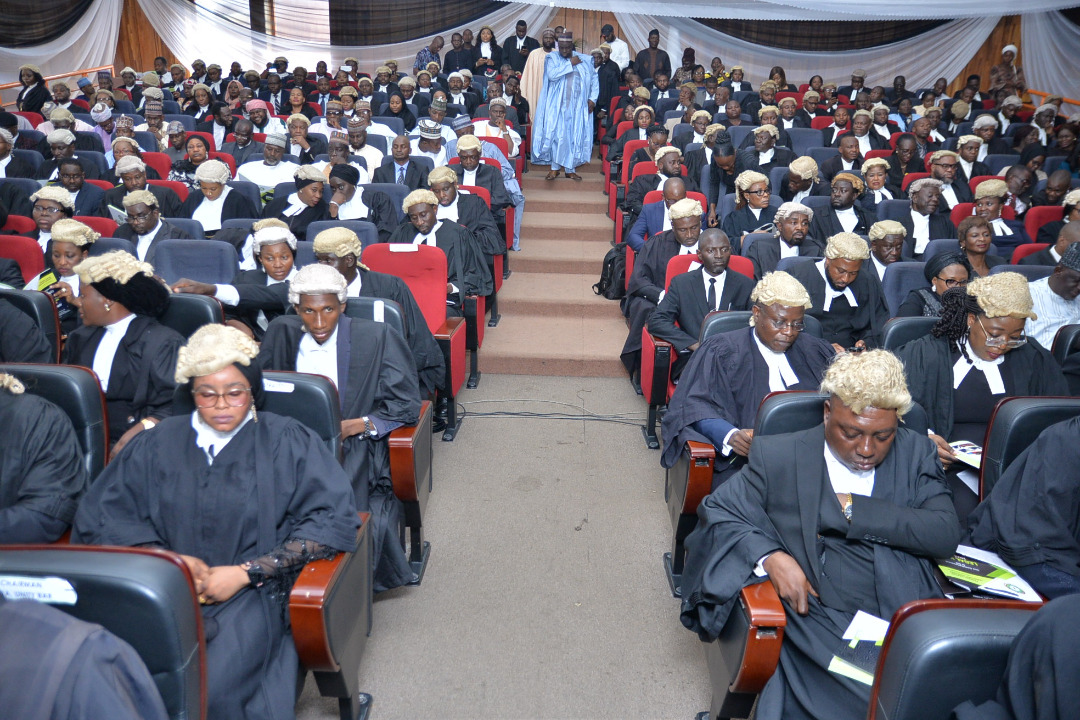
The MMA judgment and resurgence of NBA-balkanization-disease in the legal profession

By Sylvester Udemezue

(1). The status of the NBA as a voluntary organization, has been settled by appellate courts. The reality is, no one has forced anyone to subscribe to NBA’s membership; as of the day of subscription, every application to the membership of the NBA knows the legal and practical implications of being a member of the Nigerian Bar, namely: that one would upon being admitted to the Bar, automatically join the NBA, and with the NBA you become thenceforth like an inseparable set of Siamese twins.

(2). Section 40 Constitution of the Federal Republic of Nigeria (CFRN), 1999 dealing with freedom of association, has been court-interpreted in respect of the NBA. If one doesn’t like to bear with the consequences of being a member of the Bar in Nigeria (which is automatic membership of the NBA), let one refrain from applying to join the Bar; because from the moment one joins the Bar, one is a member of the NBA and is bound by all its rules. The principle is Volenti non fit injuria

(3). The extant law is what makes the NBA what the NBA is today. The laws regulating the NMA are poles apart with those regulating the NBA. The MMA judgment being applauded as a landmark is actually far from it, with due respect, because it has done nothing more than just restate the law. Only by an amendment of the extant law may this type of judgement (the MMA judgment) happen in respect of the NBA. Hence, comparing NBA to NMA in this regard appears inapt.

(4). Now, regarding the NLS (Nigerian Law Society), as of today, all members of the NLS are also members of the NBA. Ask them, they’d tell you. Besides, please note that promotion of the NLS is a mere grandstanding aimed to distract the powers that be in the NBA; NLS is being promoted mostly by lawyers who are unable to manage their or their bosses’ or candidates’ or friends’ NBA election losses. Check this out: as another round of NBA elections is now around the corner, do you still hear anything about or from the NLS? Everyone and every bloc has fielded its candidate, and hoping to win the NBA national elections in July 2024. However, immediately after the election, and unless the election umpire is careful to manage the election carefully, especially with regard to ensuring transparency, a new round of “crisis” would spring up, although to still naturally die off in 2026 during the build-up to NBA national elections 2026, while NBA itself continues to wax stronger, and standing like the wall of Gibraltar.

(5) . The NLS’ case/judgement has nothing to do with the fact, already settled by the courts, that all lawyers in Nigeria are members of the NBA. There was actually little or no reason for the NBA to have opposed a suit that has a zero negative effect, and would have only a zero negative effect, on the NBA. In my opinion, NBA’s opposition to the registration of NLS was ill-advided, unnecessary.

(6). I think the NLS’ judgment only says that any group of lawyers can register any association they like. That’s what the right to freedom of association entails; that existence of NBA can’t stop them from freely associating. However, the court did not say that members of the NLS or other lawyers in Nigeria are free to exit the NBA. I agree with the judgment. But the question one should be asking oneself, after the NLS judgment is, Does the fact that some lawyers have FORMED or have JOINED the NLS exempt the affected lawyers from membership of the NBA? Answer: a block NO. The reality is, until the extant law is amended, we all are stuck with the NBA like an inseparable set of Siamese twins. Recall that an association of lawyers known as LSN (Law Society of Nigeria) was registered in or around 1994 (about 30 years ago) and is still in existence. Where is it today? what has it done?leave all these; na post-election discontent na im dey cause all these NLS agitations. NBA dey kanpe(it’s post-election discontent that is causing all these agitations. NBA is still standing as the wall of Gibraltar). LSN or NLS is just as BOSAN, MULAN, NACL, CLASSFON, EBF, etc. They each are various associations of some lawyers in Nigeria. But the NBA remains what it’s created to be: the umbrella association of ALL LAWYERS IN NIGERIA.

(7). In N B.A. v. KEHINDE (2017) 11 NWLR (PT 1576) 225 AT 250 -251 paras H- A, His lordship, NIMPAR.JCA, stated as follows:
“The Nigerian Bar Association (NBA) was established for the purpose of regulating the affairs and conduct of all legal practitioners in Nigeria and upon being called to the Nigerian Bar, there is automatic membership to the NBA on a lawyer …

(8). In CHINWO v OWHONDA (2008) 3 NWLR (Pt. 1074) 341, at 361, the Court of Appeal declared as follows:
“The appellant was not compelled to take up the profession of law and its attendant compulsory membership of the Nigerian Bar Association. However, once he made the choice to study and practice law and thereby placing his name on the roll of honour of belonging to the profession, he stands bound by the internal rules and regulations of the Association. There would therefore be no issue of a breach of the Constitution of the country if the rules demand of him, UNDIVIDED LOYALTY”

(9). Meanwhile, this is why I tire for the style of public interest advocacy being adopted by some lawyers in Nigeria; some are just lost in pursuit of frivolousness and irrelevancies. Imagine that, instead of thinking of how to emulate the NMA members in fighting for the welfare and economic advancement of NBA members just as members of the MMA are known to have been doing, the only thing that thrills some Nigerian lawyers is how to destroy or balkanize NBA. Their public interest advocacy and human rights activism start and end with fighting to balkanize NBA. Pity!

(10). Today, in the public service, resident Doctors are paid an an average of about ₦500,000 to ₦800, 000 monthly. Professors of medicine and consultants are paid something in the region of ₦1 million- ₦1.5 million per month. In comparison, (a) Some lawyers in public service are paid less than ₦200,000 monthly. (b). Professors of law are hardly paid more than ₦400,000. (c). Lawyers in Ministries of Justice are paid peanuts. (d). Majority of Lawyers in private practice employment are paid between ₦20,000 and ₦70,000 monthly. Some are not paid at all. Only below 2 percent of those employed get more than ₦200,000 monthly as salary. Compare all these with doctors. (e) Do you know how much doctor-NYSC-members are paid monthly? Compare that to lawyers’ and you’d shed tears. (f). Meanwhile, while the Medical Ethical Code in Nigeria allows doctors in public service to engage in private practice, and the Federal Government and all State Governments have endorsed it, and no doctors witch hunts his colleague over this, some lawyers (some, I mean) who are “human rights activists” (not all) are filing applications in courts to object to appearance by colleague-lawyers in public service for clients in any private capacity. (g) While doctors negotiate and easily get whatever they want from government, some lawyers believe that the only way to engage Government is by confrontation and filing hostile lawsuits in courts. Unfortunately, and ironically, where has this style taken lawyers? No where!

(11). Now, a High Court has just delivered a judgment in case by a doctor against the NMA, and some lawyers are so elated that all they (lawyers) are thinking is that perhaps very soon, the court may give a similar judgement in respect of the NBA, so that NBA would get balkanized.🤣🤣🤣. They don’t care about the welfare of lawyers in Nigeria; nothing but the balkanization of the NBA is in their minds. In their minds, the only way to achieve results in their “human rights activism” (we know those who are true activists) is to have the NBA balkanized. Ask any of them what efforts they themselves have ever made towards solving any of the real challenges facing lawyers in Nigeria. And they’d run away. They’re not interested in discussing the challenges of the legal profession, because as far as they’re concerned, the only challenge facing the legal profession is for NBA to get destroyed. Once that is done, all our problems are over. But, no be juju be that?

(12). CONCLUSION: I respectfully think that some lawyers in Nigeria are suffering from a new disease known as NBA-BALKANIZATION-DISEASE. And it appears this ailment is incurable, or, the carriers just usually won’t accept any cure, meaning they are also incorrigible — they work, sleep, wake up, eat, walk, sit and talk, think and pray only about NBA-BALKANIZATION. Nothing else! The only other way they’d accept to be cured of their current ailment is if they’re allowed to control the soul of the NBA. So theirs, in truth, is a disease of either-you-let-me-control-the-NBA-or-let’s-work-to-get-NBA-destroyed. Na waaaooo!! This is an infantile disease.

(13). MY HUMBLE SUGGESTION: Please let’s learn to channel all our energy and efforts towards discussing and working to resolve the real challenges facing the legal profession in Nigeria; balkanization of the NBA is out of it, in my opinion, with due respect. Let’s Face Reality, please. See: A CHECKLIST OF 70 CORE CHALLENGES FACING THE LEGAL PROFESSION IN NIGERIA PLUS TASKS BEFORE STAKEHOLDERS. By Sylvester Udemezue_
https://www.
(Published on courtroommail.com and on many others).

Respectfully,
Sylvester Udemezue (Udems)
Proctor,
Reality Ministry of Justice (RMJ).
(A Public Interest Legal Advocacy Group)
08039136749.
[email protected].

(16/05/2024)

Nigeria Bar Association and this idle debate, fatuous brouhaha about “freedom of association” among lawyers in Nigeria

By Sylvester Udemezue

Although the higher courts in Nigeria have settled the issue of NBA membership vis-a-vis the freedom of association provisions of the Constitution of the Federal Republic of Nigeria, 1999, some lawyers argue that we should have more than one umbrella association of lawyers’ in Nigeria, “as we have in the UK”. Proponents of this redundant view care less about the fact that, unlike in Nigeria, there’re two different professions within the legal profession in the United Kingdom; (a) the Barristers’ profession and the Solicitors’ profession. So, notwithstanding that it really makes a lot of sense that the UK has two umbrella bodies of lawyers, some lawyers in Nigeria are more comfortable with comparing Nigeria to the UK; they want things done as they’re done in the UK. Well, it is their right. No one begrudges anyone of one’s right to freedom of speech and expression. However, it’s important we take a look at some of the things happening in the UK, but not happening in Nigeria, so that the advocates of “let’s copy the UK” could see there are far more important, beneficial things for Nigerians to copy in the UK, than mere multiplicity of lawyers associations.

1️⃣Your president, Vice president, and political office holders’ hospitals are domiciled in the UK, not in Nigeria. Yet, no citizen of the UK, not even a mad man in the UK, thinks of coming to Nigeria for medical tourism. Nigeria, to them, is good for nothing other than corruption.

2️⃣. UK has steady, uninterrupted public power supply. Nigeria has no public power supply at all, or has an epileptic supply. Hence Nigeria is, by Nigerians, baptized, a “Generator Republic” meaning a country living in darkness.

3️⃣. In the UK, almost all lawsuits filed in court in 2022 – 2023 have been determined/decided in the courts of first instance, and many have gone on appeal, and even determined. In Nigeria, 90 percent of all cases filed in courts of first instance within the last 10 to 15 years are still pending in the courts of first instance, and no hope of conclusion. In Nigeria, a lawsuit could stay in court for up to 20-40 years. And this is not exceptional, unlike in the UK wherein cases are decided within 01-02 years.

4️⃣. Nigerians are japaing (escaping from Nigeria) to the UK in droves, as a result of hunger, starvation, frustration, joblessness, bad governance and insecurity in Nigeria. No UK citizen is interested in coming to Nigeria since Nigeria is a no-go area and UK is a stable economy, safe and conducive for business and living.

5️⃣. There is low insecurity in the UK. There is high, worsening insecurity in Nigeria. Nigeria is currently rated the 3rd most terrorised country in the world; life has lost its value; citizens are being killed daily, with the killers operating with impunity.

6️⃣. There’s good governance in the UK, unlike Nigeria where bad governance is the order.

7️⃣. UK’s electoral system is effective, ensuring the people’s choices are returned during elections, unlike in Nigeria where the election system is so, corrupted, hollow and manipulable that democracy has become a government of a few by the few for the few, to the exclusion of the people. Under Nigeria’s democracy, leaders are selected, not elected. Power belongs in reality, to the leaders, not to the people.

8️⃣. In the UK, an Indian is the prime minister, while some of the Ministers are not of UK origin but accepted for leadership in the UK. In Nigeria, on the other hand, citizens from certain segments are barred or forbidden, by some unwritten rules, from national leadership; some fellow Nigerians foolishly tagged “Dot in a Circle,” are, by some unwritten rules, excluded from national leadership, from becoming president, and from occupying certain public offices.

9️⃣. In Nigeria, ethnicity jingoism, tribalism, religious bigotry, party/sectional affiliation, and clannishness, guide public appointments and formulation and implementation of government policies, leading to disastrous consequences. In the UK, capacity and merit largely determines who gets what in the public and private space.

🔟. In Nigeria, the education system is devastated, debased and devalued because neglected. In the UK, priority is on education of citizens; hence even Nigerians are running to the UK for quality education.

1️⃣1️⃣. Only lawyers undertake criminal prosecution in UK courts. Over 95 percent of all criminal prosecutions in Nigerian courts is undertaken by quack, non-qualified, non-lawyer policemen, while lawyers roam the streets in search of non-available jobs

1️⃣2️⃣. In the UK, no non-lawyers would ever dare to steal, or do, a lawyer’s job. In Nigeria, many of the lawyer’s jobs have been stolen and are being done by outsiders while lawyers look on helplessly.

1️⃣3️⃣. In the UK, lawyer’s fees, professional charges and remuneration are so inpregnably standardized that it’s near impossible for any outsider to take away lawyer’s fees or for any client to shortchange a lawyer. In Nigeria, in more than 80 percent of all cases/jobs, lawyers are underpaid, shortchanged and they do absolutely nothing about it.

1️⃣4️⃣. There’s hardy any thing like police brutalization of lawyers in the UK, unlike Nigeria where police brutality is the inthing, and lawyers are completely clueless about it.

1️⃣5️⃣. In the UK, as of February 2024, there are six major oil refineries in the UK, supplying up to 85% of the country’s inland market requirements. As of February 2024, there’s no single operational/functional oil refinery in Nigeria. Nigeria, the world’s 6th largest exporter of crude oil, depends 100℅ on import for its inland market requirements.

1️⃣6️⃣. About 130 million Nigerians live below the poverty line — wallowing in extreme poverty — in Nigeria, unlike in the UK

1️⃣7️⃣. Unemployment Rate in the United Kingdom is 3.80 percent as of January 2024. In Nigeria, “Nigeria Unemployment Rate Rises to 33%, Second Highest on Global List” (According to bloomberg.com)

1️⃣8️⃣.The economy of the United Kingdom is a highly developed social market economy. It is the sixth-largest national economy in the world while Nigeria is the 26th largest economy in the world.

1️⃣9️⃣.
(A). SALARY OF A PROFESSOR IN THE UK: The average salary for Professor is £83,259 (₦166.5 Million) per year in the United Kingdom. The average additional cash compensation for a Professor in the United Kingdom is £4,866 (₦9.7 million). Total: ₦176.2 million per annum
(B). SALARY OF A PROFESSOR IN NIGERIA: Maximum of ₦6 million per annum.
➖➖
(A)BASE SALARY OF A POLICEMAN IN THE UK:▪Between £29,137 (58,274,000) and @£40,000 (₦80,000,000: eigthy million naira) per annum

(B). BASE SALARY OF A POLICEMAN IN NIGERIA: Police Constable Grade Level 03:▪ ₦43, 294 per month.▪₦520,000 (five hundred and twenty thousand naira) per annum

2️⃣0️⃣. The list is endless,of those things that place the UK over 100 years ahead of Nigeria. Yet, campaign to pull NBA down is what is at the back of the minds of some lawyers in Nigeria. Please, dear colleagues, let’s first copy all these things, mentioned above, and have them in place, as they’re in the UK, and our country will be fine and making progress. Retaining NBA as the umbrella association of all lawyers in Nigeria, is not among the problems of Nigeria. Let’s stop chasing after shadows, leaving substance! My humble opinion, please.
◾To be continued, please🙏
Respectfully,
Sylvester Udemezue (udems)
08109024556.
[email protected].
(19 February 2024)

Chicago teen who got into college at 10, bags PhD at 17

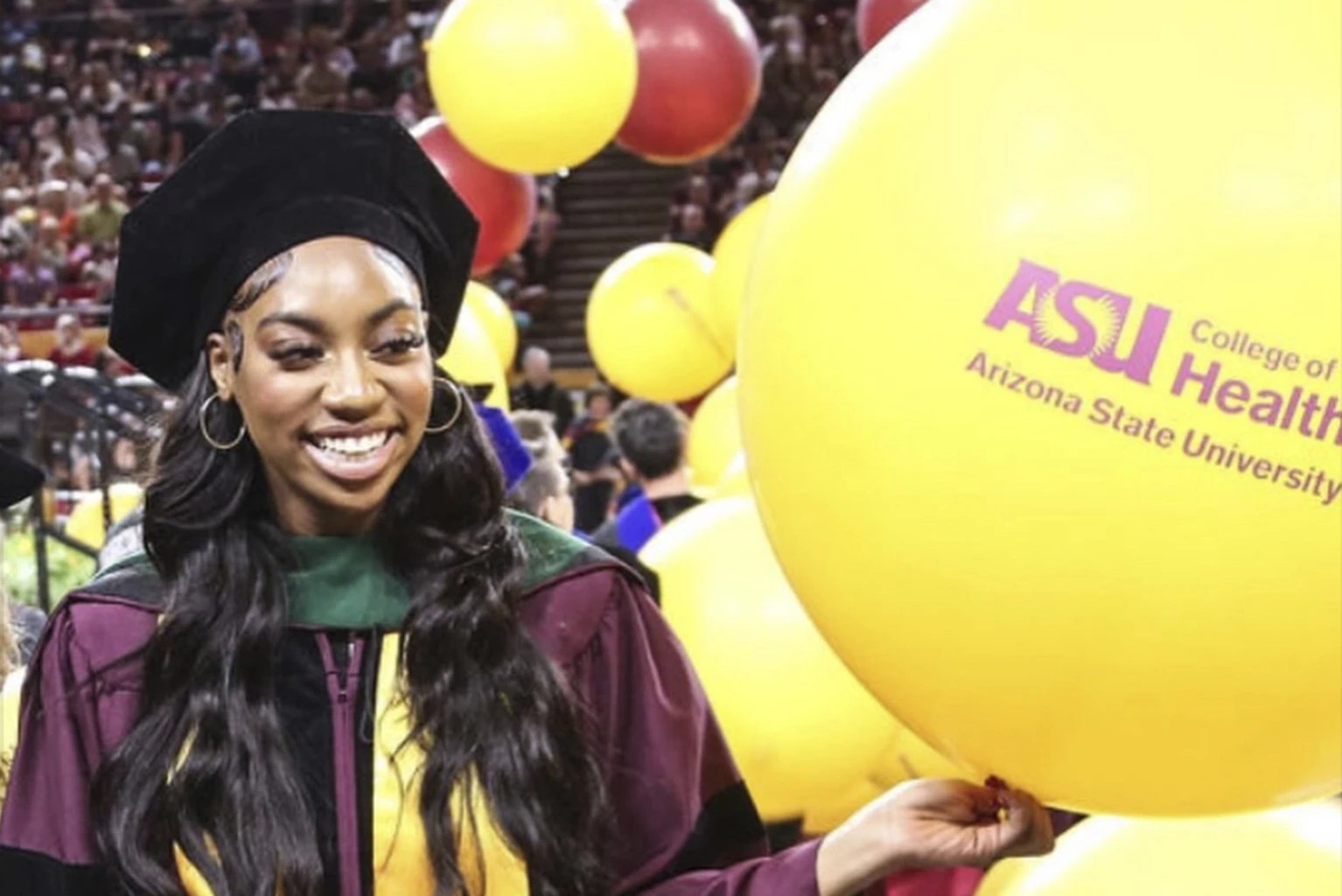
Dorothy Jean Tillman II’s participation in Arizona State University’s May 6 commencement was the latest step on higher-education journey the Chicago teen started when she took her first college course at age 10.

In between came associate’s, bachelor’s and master’s degrees.

When Tillman successfully defended her dissertation in December, she became the youngest person — at age 17 — to earn a doctoral degree in integrated behavioral health at Arizona State, associate professor Leslie Manson told ABC’s “Good Morning America” for a story Monday.

“It’s a wonderful celebration, and we hope … that Dorothy Jean inspires more students,” Manson said. “But this is still something so rare and unique.”

Tillman, called “Dorothy Jeanius” by family and friends, is the granddaughter of former Chicago Alderwoman Dorothy Tillman.

When most students are just learning to navigate middle school, her mother enrolled Tillman in classes through the College of Lake County in northern Illinois, where she majored in psychology and completed her associate’s degree in 2016, according to her biography.

Tillman earned a bachelor’s in humanities from New York’s Excelsior College in 2018.

About two years later, she earned her master’s of science from Unity College in Maine before being accepted in 2021 into Arizona State’s Behavioral Health Management Programme.

Tillman did attend her Arizona State commencement in person and addressed the graduating class during the ceremony.

Tillman told The Associated Press on Tuesday that she credits her grandmother and trusting in her mother’s guidance for her educational pursuits and successes.

“Everything that we were doing didn’t seem abnormal to me or out of the ordinary until it started getting all of the attention,” said Tillman, now 18.

There have been sacrifices, though.

“I didn’t have the everyday school things like homecoming dances or spirit weeks or just school pictures and things like that … that kind of create unity with my peers,” she said.

She has found time to dance and do choreography. Tillman also is founder and chief executive of the Dorothyjeanius STEAM Leadership Institute. The program includes summer camps designed to help young people in the arts and STEM subjects.

She said her plans include public speaking engagements and fundraising for the camp, which Tillman said she hopes to franchise one day.

Tillman is motivated and has innovative ideas, said Manson, adding, “And truly, I think what is inspiring is that she embodies that meaning of being a true leader.”

Jimalita Tillman said she is most impressed with her daughter’s ability to show herself and her successes with grace, but to also understand when to “put her foot down” when choosing between social outings and her education.

Credits: AP

Electricity Tariff Hike: Renewable energy options for Nigerians

By Victor I. Fagorite, PhD and Ifeoma Malo

The electricity deficit in Nigeria devastatingly affects the country’s economy and the well-being of its people. According to the World Bank, Nigeria has the most significant electricity access deficit globally, with 45% of the population, or about 90 million people, cut off from the national electricity grid. World Bank data further shows that there are also significant gaps in electricity access between urban centres (84 per cent) and rural areas (26 per cent).

The recent Nigerian Electricity Regulatory Commission tariff increments affecting households and businesses aggravated the energy access deficit. NERC introduced electricity bands on April 3 and raised the tariff for those in Band A from N68/KWh to N225/kWh until May 6, when it was reduced by 8.1 per cent. Meanwhile, Band A customers should optimally receive 20-24 hours of electricity daily. Subscribers under Band B should enjoy 16 to 20 hours of power supply, while those in Band C should receive 12 to 16 hours daily.

These tariff hikes have convinced many Nigerians that now is the time to shift to alternative energy. Renewable energy from solar and hydropower is a beacon of hope, offering a concrete solution to the high energy cost and environmental pollution caused by fossil fuels.

Solar Energy: A Bright Solution

Harnessing the abundant sunlight to potentially revolutionise energy accessibility, with an average of 6.25 hours of sunshine daily across the country, solar panels can help homes and businesses break free from the constraints of the national grid by adopting Solar Home Systems (SHS), reducing electricity expenses, and insulating against price fluctuations.

An estimated 6.2 million people (6% of the non-electrified population) in Nigeria are best served by SHS solutions due to their distance from grid infrastructure and low housing density, according to the SEforALL and AfDB market assessment published in 2018. SHS can be considered across two categories based on the different customer groups addressed. These are trim/entry-level, which provides basic power requirements to households (e.g., lighting) and Large SHS – Providing more significant power outputs for domestic use (e.g., TVs, fans, and kitchen appliances for an increasing middle-class market).

Looking at the whole SHS landscape, the Rural Electrification Agency (REA) has spearheaded various funded projects in line with this. Some key players in Nigeria’s solar market involved in the SHS business include Lumos Nigeria, Arnergy Solar Limited, Greenlight Planet, Solar Energy Nigeria, Rubitec Solar, Blue Camel Energy, Solynta Energy, Havenhill Energy, Auxano Solar, and Solar Force Nigeria Limited.

Hydroelectricity: Tapping into Rivers and Streams

Hydropower has substantially contributed to Nigeria’s grid for several decades, accounting for 20% of the total grid supply today. While large-scale hydropower is well established, there is significant untapped potential in small hydropower across Nigeria. Many river systems, providing 70 micro dams, 126 mini dams and 86 small sites, supply a technically exploitable capacity of 3.5GW, but only 1.7% (0.06GW) of these resources are currently being tapped. For instance, a small hydro-power system with an operating capacity of 400kW, owned by Taraba State and managed by the Mambilla Beverages Company, factory, and local communities around the Mambilla Plateau. The United Nations Industrial Development Organization (UNIDO) supported the project to supply clean electricity and renewable energy to the vicinal communities, including Kakara, Kusuku, Galadima, Nguroje, and Furmi.

Such efforts could be replicated with flowing water and the required machinery in other areas. They will be well-suited for providing neighbourhoods not served by earlier grid infrastructure with the desired energy solutions. The main categories of hydropower plants include Small Hydro, Mini Hydro, Micro Hydro, and Pico Hydro.

Incorporation of solar energy and hydroelectricity to real estate development

Clean Technology Hub surveyed to review the perception of real estate developers and residents on the feasibility of incorporating renewables (solar and hydro) into residential infrastructures. All survey respondents acknowledged the importance of integrating renewable energy into real estate projects, although most currently do not utilise any renewable energy sources in their homes. The popularity of solar energy is highlighted by the unanimous agreement among respondents that solar energy is the most cost-effective option for real estate development. One compelling reason for this is the decreasing cost of solar technology and its long-term cost savings compared to traditional renewable energy sources such as hydropower.

Regarding incorporation into real estate development, 71.4% of estate developers consider solar energy the most suitable for real estate development. In comparison, 28.6% expressed a mixed consideration, suggesting a preference for a combination of renewable energy sources.

The survey further provides insights into various aspects of implementing renewable energy schemes, focusing on timelines, costs, comparisons with current options, and suggestions for improvement. Respondents’ estimates for setting up renewable energy schemes varied from less than a month to up to two years, a variation which may be due to differences in knowledge of the technology and perceptions of administrative processes or technical complicatedness. Implementation cost estimates ranged from 200,000 NGN to 10 million NGN, likely affected by the project’s scale, technology, and infrastructure requirements.

For household scenarios: 

Powering a 3-bedroom home with multiple appliances (two air conditioners, a freezer, two television sets, two decoder sets, a standing fridge, and eight lighting points) will cost between N8 to N10 million, ensuring stable five hours at noon and five hours at night with the battery powering the system when the sunlight is no longer available.

A 2-bedroom setup could range from N6 to N8 million with appliances (an air conditioner, a fridge, a TV, and decoder set, a microwave, and six lighting points) ensuring stable five hours at noon and five hours at night with the battery powering the system when the sunlight is no longer available.

A one-bedroom option costs around N5 to N6 million and includes appliances (one television set, one decoder set, and two standing fans). It guarantees 10 hours of power, just like the two- and three-bedroom homes.

It is worth noting that many Nigerians may not be able to afford N5 to N10 million to install solar power systems. There are cheaper options. A solar power system with a one-year warranty costs N2 to N3 million and can power the same load for 10 hours. Also, a solar power system that costs N200,000 to N1 million with a warranty for less than a year can power the same load for five hours or less. Likewise, there are subscription options.

Call to Action

Solar energy has become the most valued resource as it has proven cost-effective and continuously supplies power. People can minimise conventional grid electricity, which is costly due to high tariffs. Similarly, the survey shows solid agreement that renewable energy needs to be part of real estate development, emphasising its effectiveness in dealing with electricity challenges in Nigeria.

The transition to renewable energy in the country will surely be possible when the government and businesses work together. To spur renewable energy development, policymakers and stakeholders must address the upfront costs of solar installations and promote the benefits of renewable energy to the public. The government can also address the issue using incentives such as tax breaks and subsidies for renewable energy to make them available to the public.

Despite the unresolved challenges, the survey results reveal a keen desire for green technologies in Nigeria. Adopting renewable energy will enable Nigeria to start from the basics, i.e., addressing electricity tariffs and inconsistent power supply, to a more sustainable and resilient energy future.

Ifeoma Malo is the founder and CEO, and Victor Fagorite, PhD, Lead Researcher at Clean Technology Hub, Abuja 

Copyright infringement: NCC accuses MTN Nigeria CEO of evading service

The legal team of the Nigerian Copyright Commission (NCC) has accused Karl Toriola, Chief Executive Officer of MTN Nigeria, of evading service in a copyright infringement case.

NCC’s lawyer, Gladys Isaac Ojo made the claim before the Federal High Court sitting in Abuja on Tuesday.

The case, marked FHC/ABJ/CR/111/2024, was filed by the NCC against MTN Nigeria Communications Limited; Karl Toriola, Chief Executive Officer of MTN Nigeria; Nkeakam Abhulimen; Fun Mobile Limited; and Yahaya Maibe.

The NCC had alleged that MTN and others used several soundtracks as callback ringtones without the consent and authorization of the original owners and in contravention of the Copyright Act.

Count one of NCC’s charge sheet reads:

“That you, (1) MTN Nigeria Communications Ltd., (2) Karl Olutokun Tariola “m”, (3) Nkeakam Abhulimen “f” all of MTN Plaza, Falomo Round About, Ikoyi, Lagos and (4) Fun Mobile Limited, (5) Yahaya Maibe “m” both of No. B24 NICON Town, Lekki, Lagos sometime between the period of 2010 to 2017, within the Judicial Division of the Federal High Court, did sell, exposed and/or offered for sale for the purposes of trade or business, infringing copies of the whole or substantial parts of the musical works/sound recordings which include 911, Minimini-wanawana, Stop racism, Ewole, 911 instrumental, Radio, waist, and No bother; by using them as Caller Ring Back Tunes, without the consent authorisation of Maleke Idowu Moye in whom copyright subsists and thereby committed an offence contrary to and punishable under section 20 (2) (a) of the Copyright Act, Cap. C28, Laws of the Federation of Nigeria, 2004.”

Meanwhile, MTN Nigeria Communications Limited reacted by asking the Federal High Court, Abuja, to strike out the alleged copyright infringement case instituted against the defendants by the Nigerian Copyright Commission (NCC) for allegedly being defective.

“An order striking out Charge No. FHC/ABJ/CR/111/2024-Nigerian Copyright Commission v. MTN Nigeria Communications Limited & Ors. for being incurably defective and incapable of activating the jurisdiction of this Honourable Court,” MTN’s relief reads.

Meanwhile, Justice Inyang Ekwo had fixed Tuesday, May 14 for the defendants to take their plea.

What transpired in court
on May 14 was rescheduled arraignment of the defendants but only the fifth defendant appeared in court.

Ojo, who stood in for the NCC, said the MTN CEO allegedly refused to be served.

“My lord, the matter today is slated for arraignment and plea. The last time, we told my lord that we are having issues serving the MTN CEO. We sent our officers to the MTN office in Lagos to serve them but we were denied access. We also sent the charge via DHL”

But Obafemi Agaba, counsel for the first second and third defendants(MTN, its CEO, and another), told the judge that the CEO is yet to be served with the charges in the NCC suit.

He explained that “the rules of the court is that they be served personally. The NCC has not applied for substituted service.”

He also drew the attention of the court to his application challenging the jurisdiction of the court and the competence of the suit.

But Justice Inyang Ekwo advised the MTN lawyer to do everything to ensure that his clients are served with the process.

The judge also said the NCC lawyer ought to know the necessary legal steps to take regarding service.

“Nobody can evade service except you don’t know what to do,” Ekwo to the NCC lawyer.

The judge further adjourned the case to June 27, 2024, for plea.

“However, if the court becomes aware of any application that has been filed before that date, parties will receive hearing notices before that date,” Ekwo said.

The Conclave

14 years in prison without trial, man freed after developing mental illness

Fourteen years after, the Lagos Division of the Court of Appeal has freed one Idris Musa who developed mental disorder while in prison without trial.

Musa who was arrested in 2010 by the police over the murder of one Ali Kolo was abandoned at the Kirikiri prisons for 14 years without trial.

His prison records show that Musa was first arraigned by the police before an Ebute Metta Magistrate Court that was presided over by Magistrate Doja Ojo, who ordered his remand in prison custody on holding charge pending legal advice from the Directorate of Public Prosecution.

Although the advice was issued several months later for his arraignment before the High Court, it took over two years before he was eventually charged before Justice Oluwatoyin Taiwo, now retired.

However, his trial was suspended when a prosecution witness testified that he was not the ‘Idris Musa’ who killed the deceased for which he was charged.

Meanwhile, neither the police nor the office of the Attorney-General of Lagos State pursued the matter; leaving the defendant in jail.

In 2017, the law firm of Charles Mekwunye & Co. sought Musa’s release and filed a fundamental human rights enforcement suit against the State Commissioner of Police; the office of the Attorney-General and the Deputy Comptroller-General of Prisons.

In 2018, a Lagos State High Court in Igbosere dismissed the suit, insisting that the arrest and continued detention of the defendant without any formal charge or trial for eight years at the time of delivering the judgment, was not unconstitutional or a violation of the defendant’s fundamental right to liberty.

The court then ordered the Attorney-General’s office to expedite Musa’s prosecution before a court of competent jurisdiction.

Despite the court order, the defendant continued to languish in prison as no attempt was made by the AG’s office to bring him for trial before any court.

In 2020, Dr. Charles Mekwunye, SAN, filed an appeal before the Lagos State Court of Appeal on behalf of the defendant, asking the court to set aside the judgment of the lower court and order Musa’s unconditional release with compensation and public apology.

Mekwunye contended, among other things, that the continued detention of the appellant in prison for 10 years without trial and the Lagos AG’s refusal to still arraign him before any court as earlier ordered by the lower court, is a breach of his constitutional right to liberty.

However, the appellate court in a judgment delivered by Justice Jimi Bada, disagreed with Mekwunye’s argument, insisting that an arrest and remand was properly made as in the instant case, and cannot constitute a breach of fundamental human rights.

The judge held that there are other avenues for the defendant to seek justice for the purported infringement of his fundamental human rights.

The court, however, took notice of the evidence that the appellant had developed a mental disorder following his long years of incarceration and ordered his unconditional release.

Justice Bada held, “Before I make a final order on this appeal, I’ll draw attention to the fact that the appellant has been in the custody of the third respondent for the past 14 years without trial.

“And according to paragraph 12 of the affidavit in support of the Fundamental Right Application filed at the trial court sworn to on July 18, 2017, the appellant, as a result of his years of confinement, without trial, has developed grave signs of mental disorder.

“There is no counter-affidavit to contradict that fact from any of the first, second and third respondents. Therefore the appellant is hereby ordered to be released unconditionally to any member of his family to enable them to take care of him adequately.”

The two other judges on the panel, Justice Folashade Ojo and Justice Paul Bassi both agreed with the lead judgment.

TIPS