Home Blog Page 591

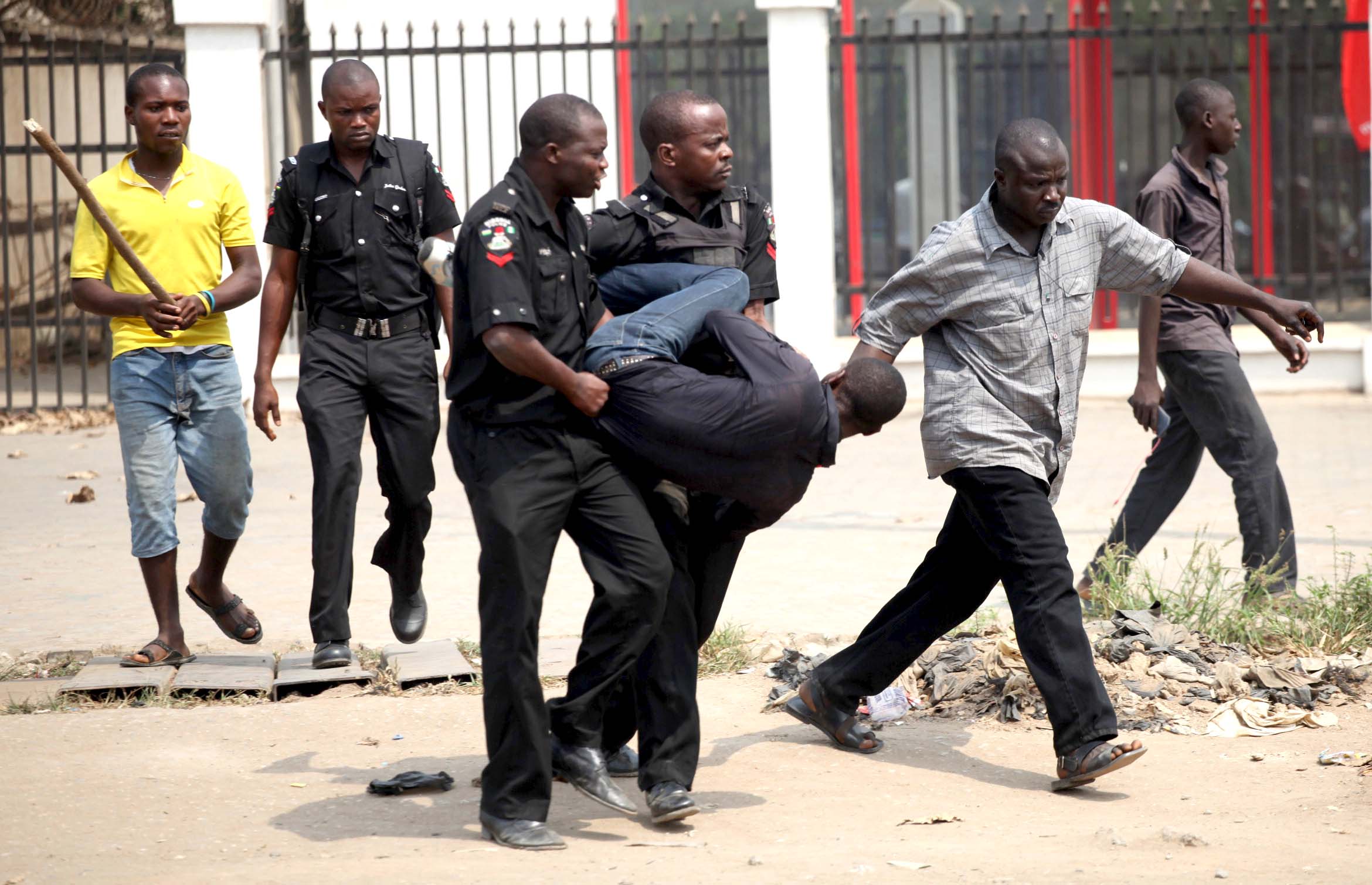
Working with the police killed my lofty vision and budding activism

By Olanlokun Omolodun, Esq

I remember when I graduated in ‘92 and Gani was my role model and I swore I would become a human rights advocate like him. It is amazing how much a 4-year LL.B course opens one’s eyes to citizens’ rights and the amount of wrongs and injustices we overlook due to ignorance, begging, societal pressure, etc.

When I was posted to Port Harcourt for Youth Service at the Ndele campus of the college of education I saw it as an opportunity to serve Nigerians and help change our country for the best. My old man was a litigator and assured me that after service he would get me suitable pupillage with a firm of SANs but I told him I would not need it as I was determined to make it on my own.

So, bristling with legal principles and with the mindset to fight for the oppressed at every opportunity to occasion legal engineering, I went for service and my place of primary assignment was the prisons office or HQ on Ikwerre Road. I reported to the office and one officer told me to enter into an arrangement where I could sign away my monthly allowance in exchange for someone signing my monthly clearance notices and forwarding them to NYSC so I could return to Lagos to return for discharge but I refused and said I was there to serve my fatherland. There was dead quiet in the open plan office as everyone paused to look at the idealistic fool who just spoke.

So I was detailed to the Rumuokoro police station to oversee removal of detainees to the prison on Aggrey Road. It was a rude introduction to detention facilities in our police stations. They never did anything in a hurry even with relatives of detainees and their lawyers pleading for the release and seeking to prove wrongful detention.

Then the holding cells were the sorriest sights I ever saw when they needed to corral detainees for Black Maria evacuation. Approaching the cell, one was literally hit by a wall of stench of human bodily waste, unwashed nearly naked bodies with almost everyone clinging to the cell bars. It was a most dejecting experience. Nobody did more to knock the budding activism to engineer legal revolution in Nigeria more than watching how policemen work and treat ordinary citizens. Their insensitivity to human suffering is so baked in as to almost be part of their DNA.

From the prison it was too late to return to the office so I went back to the flat I was sharing with other ‘corpers’ and the first thing they said was I smelt terribly. Even after having a bath I still could taste the stench of the police station in my mouth and it killed my appetite. It was our Ikwerre landlord who suggested they ‘take the Lagos boy out and give him pepper-soup so he can regain appetite’ that saved me that night.

The police assignment was, with hindsight, probably deliberate because the next day at the office I noticed that no one spoke to me and I just went to write up my report of the previous day. All the while I was looking around for the guy who made me the offer to sign away my ‘allawee’ to see if I could get redeployed to a private law firm. When he eventually showed up around noon and saw me he bellowed ‘corper Gani how was yesterday’?’ I took him aside and whispered that I wanted to redeploy to a law firm. But he laughed and turned around to announce to the entire office that ‘our Gani say him wan redeploy say him nor wan fight for the masses and his fatherland again.’ The entire office exploded into laughter as I slinked back into my seat.

I eventually got a Law firm which also handled criminal briefs and quickly learned that any assignment to any police station to secure release of any detained person or property was a whole day affair which seldom yielded desired results.

Meanwhile, in litigation there, one got per diem fees of N2k for each file one appeared in, so 3 files daily for at least 3 times weekly was a great week for this rookie associate in the mid-90’s. Upon my relocation to Lagos in 2001, litigation was more dynamic and financially rewarding and made me look back on those days when I thought I could be a people’s advocate in the mold of Gani.

Watching the police work effectively killed that vision for me.

Olanlokun Omolodun, Esq. lives and practices in Lagos.

400L student arrested for raping schoolmate

A 400 level student of the Nasarawa State University, Keffi(NSUK), Gabriel David, has been arrested by the police for allegedly raping a 100 level female student of the same institution.

The Police Public Relations Officer in Nasarawa State, DSP Ramhan Nansel made this known on Saturday to journalists in Lafia.

According to Nansel, the suspect was arrested by police operatives attached to the Agwan Lambu Division close to the university in the Keffi Local Government Area of the state for allegedly raping the 100 level student on May 9, 2024.

“Preliminary investigation revealed that the suspect travelled to the village where he and the victim come from. So the victim’s parents gave the suspect some foodstuff to give to the victim since they are schooling in the same school.

“When he brought the food items, he called the victim to come over to his place of residence to collect the foodstuff sent by her parents.

“On her arrival, he lured the victim into his room and had unlawful carnal knowledge of the victim,” he said.

The police spokesperson further explained that upon his arrest, the suspect was immediately transferred to the State Criminal Investigation Department in Lafia, where he confessed to committing the crime.

“He will be arraigned upon the conclusion of investigation into the matter,” he added.

The Conclave

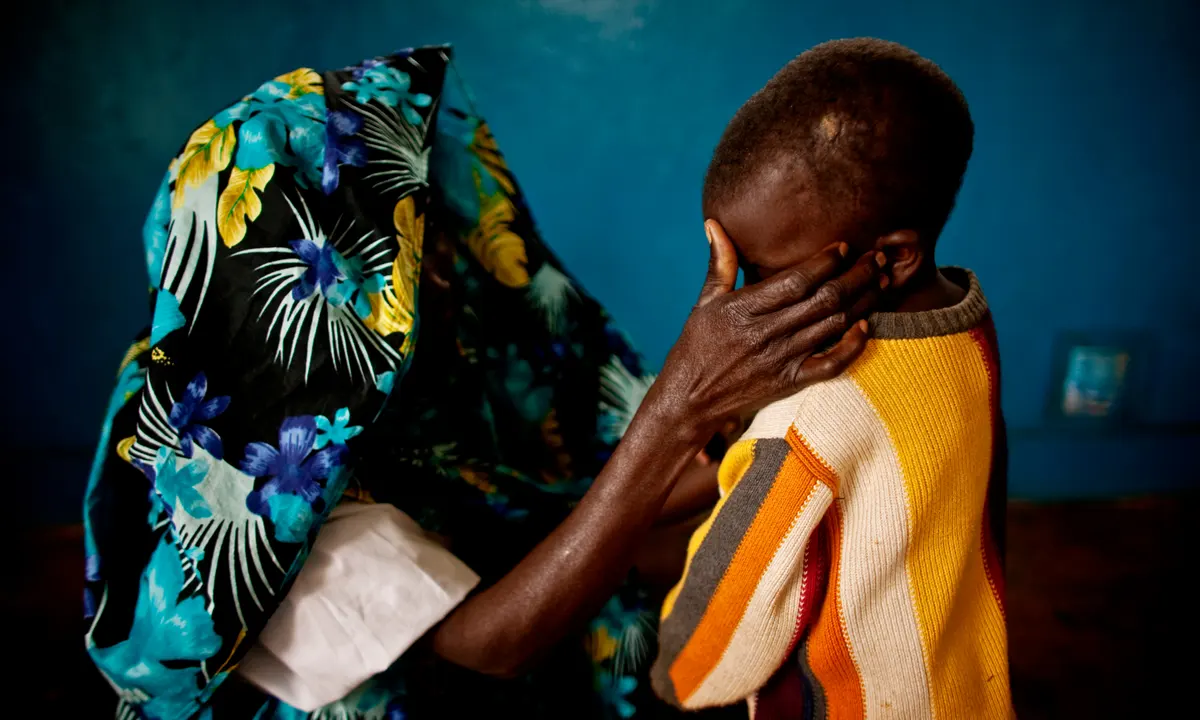
Teacher remanded for allegedly defiling seven-year-old girl

A Chief Magistrates’ Court in Jimeta Yola, on Friday ordered the remand of a 37-year old teacher, Adamu Ayuba for allegedly defiling a seven-year-old girl in school.

The police charged Ayuba of Rawani of Jambutu, Yola, with defilement contrary to section 211 of penal code law of Adamawa state.

He pleaded not guilty to the charge.

Chief Magistrate, Musa Adamu, adjourned the matter until May 29, for further investigation into the matter by the police.

“This case has been adjourned until May 29, to enable the police finish their investigation and to forward the case file to the Department of Public Prosecution (DPP)for legal advice,” the Chief Magistrate said.

Earlier, the prosecution counsel, ASP Ezra Bulus told the court that the complainant Fatima Isah, mother of the minor, reported the matter at the police station on May 2, at about 6p.m.

Bulus alleged that the complainant’s daughter, a student of Anur Modern Academy Yola, returned from school on April 29 and complained of severe pain in her private part.

The counsel informed the court that the alleged offense is criminal in nature which requires legal advice and prayed the court to adjourn the matter until May 29.

He stated that the offence contravened the provisions of Section 211 of the Penal Code law of Adamawa 2018

NAN

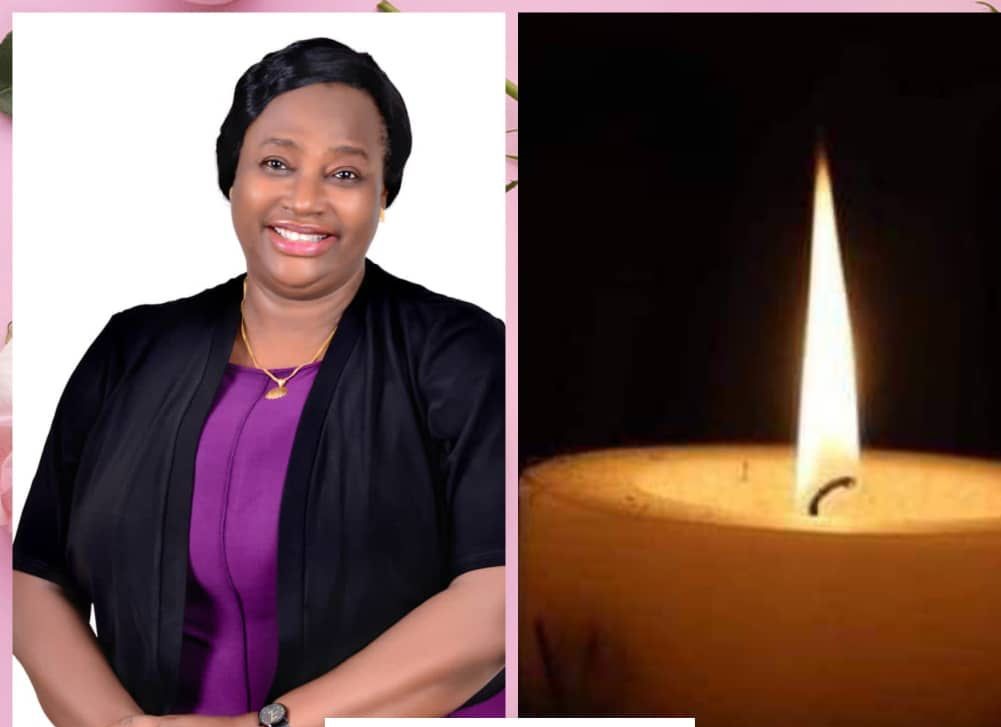
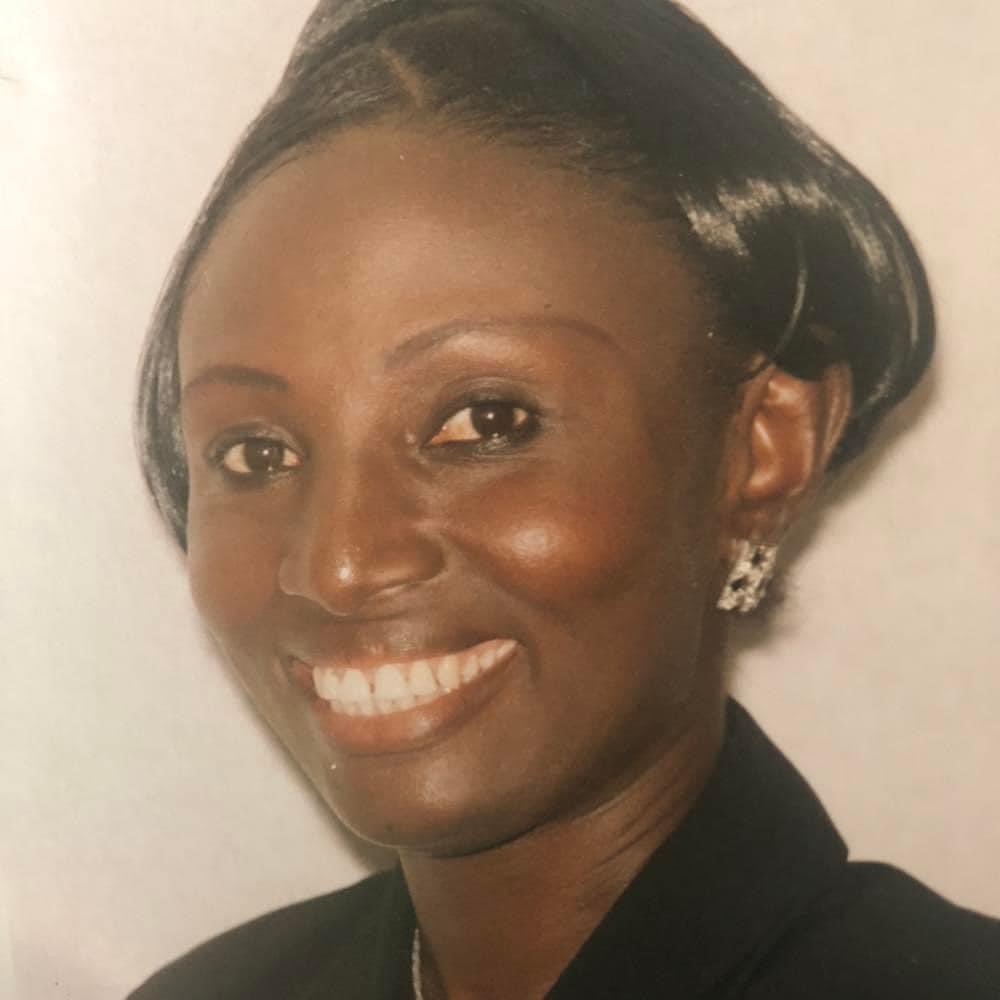
UBTH mourns Professor (Mrs.) Aihanuwa Eregie

Press Statement

It is with profound sorrow that we announce the passing of a distinguished member of our medical community, Professor (Mrs) Aihanuwa Eregie (MBBS, MD, FMCP, FACE, FEMSON, FRCP), who departed this life on Friday, May 17th, 2024.

Professor (Mrs) Eregie was a towering figure in the field of Medicine, specializing in Endocrinology and Metabolism. As a Consultant Physician and Head, Endocrinology Unit, UBTH, she dedicated her life to the advancement of medical science and the improvement of patient care.

She served as an examiner for the Faculty of Internal Medicine at the National Postgraduate Medical College of Nigeria from 2002 until her passing and chaired the Curriculum Development Committee for the subspecialty of Endocrinology, Diabetology, and Metabolism. Her leadership as Vice-President from 2017 to 2022 and subsequently as President of the Endocrinology and Metabolism Society of Nigeria from 2022 till date, underscored her commitment to her field.

Beyond her professional achievements, Professor Eregie was an exemplary educator and mentor, revered by her students and colleagues alike. Her role as a past president of the Medical Women Association of Nigeria (MWAN), Edo State, and her tenure as the Honourable Commissioner of Health for Edo State from March 2013 to November 2016, highlight her dedication to public healthcare service delivery and governance.

Professor Eregie was known for her calm demeanor and peaceful nature, earning the respect and admiration of all who knew her. Her legacy will endure in the many lives she touched and the vast body of knowledge she contributed to.

She is survived by her beloved husband, Professor Charles Eregie, a respected elder of our community, her children, and the entire UBTH family, who will miss her deeply.

We extend our heartfelt condolences to her family and all those who were privileged to know and work with her. Her loss is immeasurable, but her contributions to medicine and her impact on our lives will remain forever.

May her soul rest in perfect peace.

Signed
Prof. Darlington E. Obaseki
Chief Medical Director
University of Benin Teaching Hospital

In her tribute, Lawyer and Ex Chief Diversity Officer, World Bank Group, Mrs. Juliana Oyegun, wrote: “I mourn because perhaps not everyone has that calm and reserved demeanor you were known for. This is hard for me but I can’t question God.”

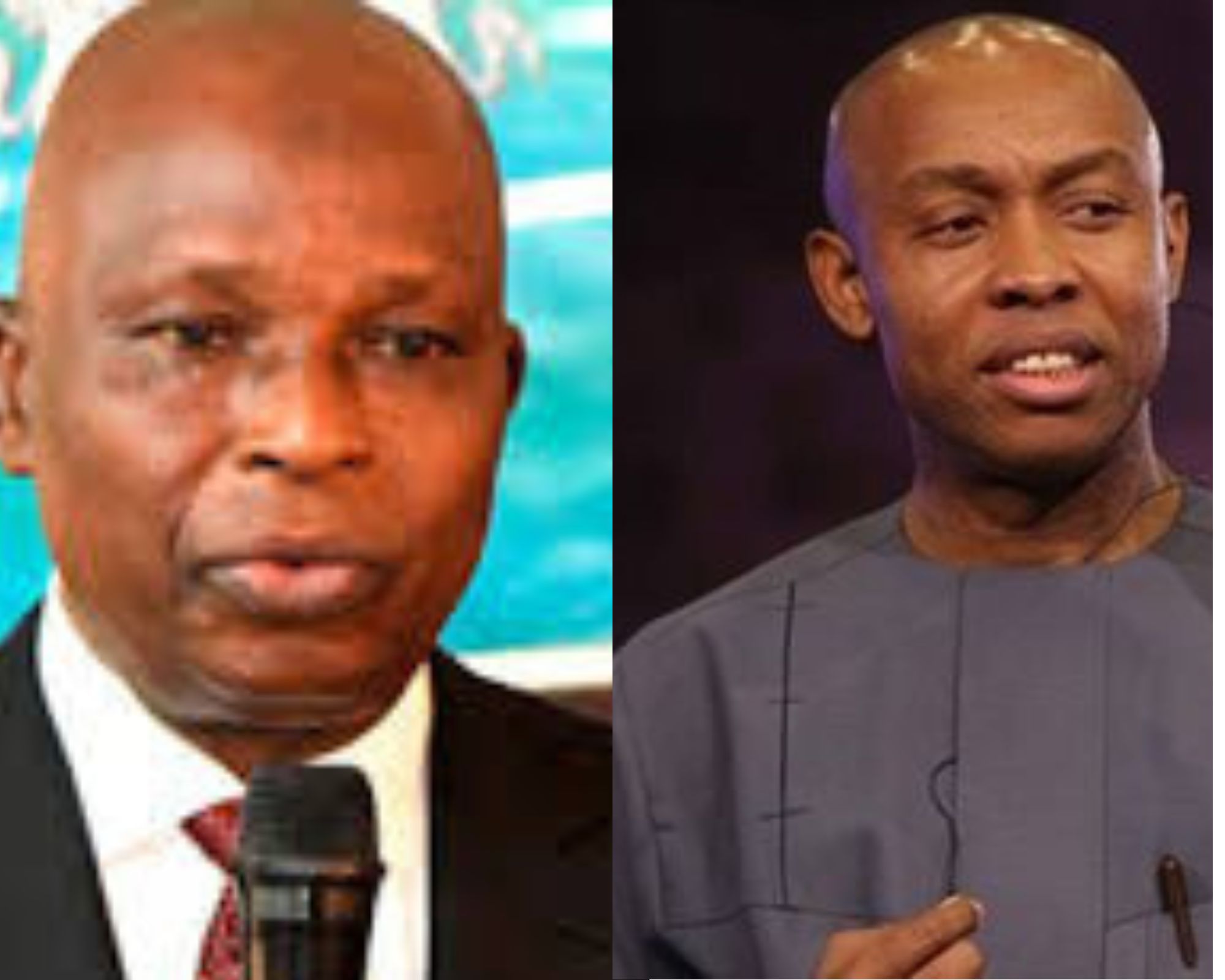
Odinkalu, AGF Fagbemi differ on remuneration of judicial officers

  • “It hardly helps the interests of the administration of justice if judges’ wages are undiminishable while those of their staff are non-existent.” – Odinkalu

President Tinubu approves N37.2 billion for construction of new Abuja Division building, Appeal Court President considers closing some divisions over operational costs

• As President Industrial Court President Proposes 4-Year Review of Judicial Officers’ Salaries

At a one-day public hearing on the advancement of the welfare of the judiciary and the need to rescue a starving judiciary, the Attorney General of the Federation and Minister of Justice, Prince Lateef Fagbemi, SAN on Monday expressed deep concern over the neglect in the remuneration of judicial officers for close to 17 years, a situation he said is opposed to any meaningful judicial reform.

However. law teacher, rights advocate and ex-Chair, National Human Rights Commission, Prof. Chidi Odinkalu observed that “It hardly helps the interests of the administration of justice if judges’ wages are undiminishable while those of their staff are non-existent. Far from guaranteeing more efficient delivery of justice, therefore, Nigeria’s new judicial salaries may just achieve the opposite in the absence of a quick and equitable resolution of the negotiations concerning wages for workers generally, including judiciary staff.”

Prince Fagbemi who appeared with the Minister of Finance, Wale Edun, before the Senate committee on Judiciary, human rights and legal matters for the commencement of hearing on a bill for an Act, to prescribe the salaries and allowance, and fringe benefits of judicial office holders in Nigeria and related matter bill 2024 had pointed out that while between May 1999 and March 2011, the Federal Government reviewed the salaries and allowances of Public Servants and Political office holders on four occasions, specifically in 2000, 2005, 2007 and 2011 and New regimes of national minimum wage, were also put in place within the same period, the salaries of judicial officers were only reviewed twice during the same period.

But in an article titled: Judges and Political Mating Games, Odinlalu said: ” At the beginning of April, 2024, the National Assembly passed the Judicial Office Holders (Salaries and Allowances, etc) Bill. It took all of three weeks, having only been transmitted by the presidency on 19 March. The bill updates judicial salaries, last reviewed in 2008. In particular, it will become effective from 1 January 2024, which ‘implies that if signed into law, the new rates of emoluments for judicial officers will be deemed to have become payable from January 1, in which case arrears will have to be paid.’

“The bill guarantees a basic annual salary of N36.84 million for high court judges and N51.16 million for the Chief Justice of Nigeria, achieving a notional increase of over 800% on current judicial remuneration. That is still way off the N84 million for high court judges and N120 million for the Chief Justice computed by Osatohanmwen Obaseki-Osagie, a judge of the National Industrial Court of Nigeria, in a self-help judgment issued on 4 May 2022. As a negotiating gambit, however, the judges may take the view that the judgment has served its purpose…

“It hardly helps the interests of the administration of justice if judges’ wages are undiminishable while those of their staff are non-existent. Far from guaranteeing more efficient delivery of justice, therefore, Nigeria’s new judicial salaries may just achieve the opposite in the absence of a quick and equitable resolution of the negotiations concerning wages for workers generally, including judiciary staff…”

And while President Bola Tinubu had in the course of last week approved the sum of N37.2 billion for the construction of a new building for the Abuja Division of the Court of Appeal, the President of the Court Hon. Justice Monica Dongban- Mensem announced that she might be shutting down some divisions of the court as operational cost has become a major challenge.

Her Lordship who revealed that salaries and welfare are not the only crucial issues lamented that low budgetary provisions are greatly hampering the court’s operations.

On the Court of Appeal question, Prof. Odinkalu in his article had this to say:

“Topping off a spectacular month of rich helpings from the political goodie-bag for Nigeria’s judiciary, the President during the week approved a whopping N37.2 billion for the construction of a new building for the Abuja Division of the Court of Appeal.

“Contrary to the impression suggested by this decision, the court is not like another internally displaced person (IDP) in Abuja. In truth, it has one of the finer judicial edifices in the Federal Capital located also in the Three Arms Zone, just a shouting distance from the Presidency and the Supreme Court. This is why some people believe that the idea of an “Abuja Division” building is an excuse for executive generosity to the Court of Appeal hierarchy.

“Also working its way through the National Assembly at this time, the House of Representatives has passed a constitutional amendment bill to increase the number of Justices of Appeal by 67% from the current 90 to 150. It seeks to ‘increase the number of justices of the Court and provide for the appointment of a minimum of 6 justices in every Judicial division of the Court.'”

Meanwhile, the President of the Industrial Court, Hon. Justice Benedict Kanyip, has proposed a 4-year periodic review of salaries of judicial officers.

Organ Harvesting Hearing: The Other Narrative of Nigerian Media

By Muhammed Suleman

Since the organ harvesting story broke in August 2023, I have taken a keen interest in the case and followed it closely with an open mind. To understand the facts firsthand, I attended as many court sessions as possible. So far, I have not missed any, from the arraignment of the suspects to the ongoing hearings, which took place from Monday, 6th May, to Thursday, 9th May, 2024, until Honourable Justice Kezziah Ogbonnaya adjourned the hearing to Tuesday, 21st May, 2024. The revelations have been both intriguing and thought-provoking.

My experience in court during the four days of hearings, in which six prosecution witnesses testified and were cross-examined, was shocking and eye-opening. The headlines do not always communicate reality; media sensationalism often diverges from the facts. The courts, however, deal strictly with facts, not sentiments. As CP Scott said in 1921, “comments are free but facts are sacred.”

Although I have not attended many court sessions in my life, I am intelligent enough to recognize a fair process. I commend Justice Kezziah Ogbonnaya, the presiding judge, who is detailed, patient, and thorough. She frequently interjects during witness statements for clarity and reminds the audience of her legal right to do so.

The Latin maxim “ei incumbit probatio qui dicit, non qui negat” (the burden of proof rests on who asserts, not on who denies) played out during the testimonies and cross-examinations of the key witnesses. The 62-year-old judge listened attentively, waiting for key evidence to do justice to the matter before her.

So far, she appears disappointed with the prosecution’s representation. The key witnesses faltered several times under cross-examination by the defense counsel. On two occasions, Tuesday, 7th May, and Wednesday, 8th May, during the cross-examination of prosecution witnesses two and three respectively, the judge expressed her disappointment in Pidgin English, saying, “NAPTIP, una see una self?”

All three kidney donors, Oluwatobi Saliman (Prosecution Witness 1), Musa Yahaya (Prosecution Witness 2), and Yahuza Aminu (Prosecution Witness 3), admitted under cross-examination by defense counsel, Afam Osigwe, SAN, that they did not discuss the sale of their kidneys with any staff of Alliance Hospital and were not offered any money by the hospital staff. Notably, all prosecution witnesses stated that they never met the Medical Director of Alliance Hospital until they saw him at the police station when he came to bail his staff months after their surgeries.

The three donors testified that their agreement for the organ sale was with Abdulrahman and Mayor (the first defendant) and was made outside of Alliance Hospital. They were paid after the surgery, mainly via money transfers from the agents after their discharge from the hospital. They used the money to buy mobile phones and stay in hotels, according to their testimonies.

My independent observation shows that the initial storyline of the donors portrayed them as ignorant kids lured or forced into surgery. However, cross-examination and confrontation with defense documents revealed a pre-existing bargain and agreement of terms between the boys and the agents before they arrived at Alliance Hospital.

The defense counsel presented two documents to each of the three donors with the judge’s permission: an informed consent form signed by the donors and a court affidavit with their photographs and signatures. All the boys stated in their affidavit that they were above 18 and donated willingly without financial inducement. The judge asked if they signed the documents. The first two witnesses confirmed but claimed the content was not explained to them, while the third witness denied all documents presented, including his witness statement at NAPTIP. Nevertheless, the documents bore his pictures and similar signatures.

On the fourth day of the hearing, Thursday, 9th May, Abdullahi Mohammed, a phone dealer, testified that he received ₦500,000 as payment for a ₦290,000 phone on behalf of Oluwatobi Saliman, who lied that the transfer was from his uncle. The dealer deducted ₦290,000 and refunded the ₦210,000 balance. Apparently, the ₦500,000 was from an agent paying Oluwatobi for his kidney. All three donors admitted agreeing to receive one million naira for their kidneys. According to their testimonies, the recruiting agent was Abdulrahman, who has not appeared in court.

The NAPTIP chief prosecutor informed the court they have two more witnesses, including Mr. Liman Yusufu, the investigating officer. Hopefully, the other will be Abdulrahman. Mr. Yusufu was scheduled to testify on Thursday, 9th May, but the chief prosecution counsel, Barrister Hassan Tahir, reported that he developed headaches and was unable to testify. The judge suggested adjourning the hearing to the next day, Friday, 10th May, but the prosecution had other engagements. The hearing was rescheduled to Tuesday, 21st May, 2024.

Earlier, on Wednesday, 8th May, the prosecution brought the parents of Oluwatobi Saliman and Musa Yahaya to testify against Dr. Otabor Christopher, the Medical Director of Alliance Hospital. They alleged that Dr. Otabor approached them at the police station to withdraw the case in exchange for an out-of-court settlement, offering to cater to their children’s education. The prosecution tried to present this as an admission of guilt. The defense counsel moved to expunge the statement, arguing that settlement statements cannot be used as evidence in court. The judge ruled in favor of the defense, emphasizing that out-of-court settlements are encouraged by public policy and that using such statements as evidence could backfire.

Since the hearing began, I have read with surprise and pain the biased reports from some media outlets. Despite fewer than four media personnel in court, hundreds of media outlets have reported a syndicated bias. As an independent observer, I deduce a calculated attempt to malign certain actors, particularly Alliance Hospital and its medical director, Dr. Otabor. Sensational statements from prosecution witnesses are blown out of proportion, while cross-examinations that challenge these claims are ignored. This is a disservice to the nation, misleading the public.

Like witnesses in court, journalists should be made to swear an oath to unbiased reporting without fear or favor.

I look forward to the continuation of the hearing on 21st May, 2024, and ultimately for justice to be done and seen to be done.

***Comrade Muhammed Suleman writes from Abuja.

Kneeling for Imams of northern Nigeria, By Lasisi Olagunju

A minister suffered severe abuse and reprimand from the elites of the North last week because she asked the North to choose mass education first before mass marriage. Sixty-four years after independence, we are still struggling to understand Nigeria’s Muslim North and its ways.

A 1950 letter to the editor of Gaskiya, northern Nigeria’s preeminent Hausa newspaper, should tell us something about the mystery of the region.

The letter appeared in the newspaper’s number 391 of 8 March, 1950 on page 2.

It reads:

“To the Editor – I beg to lay this complaint before you, so that you may approach the Sultan in order that I may achieve my desire. I am of slave descent, belonging to one of the families of court slaves. Both my father and mother were slaves of a certain emir. My mother’s name is Munayabo, and my father’s Ci-wake. A well-to-do man has fallen in love with me, and I love him too, but he has got four wives already. For this reason, we find it difficult to make arrangements for living together. I asked a learned mallam, who told me to ask my father’s consent first, according to Islamic law, and also that of the authorities. If they agree to the proposal, I can become his concubine, Islamic law allows it. This is what the mallam told me.

Well, Mr. Editor, my father, Islamic law, I myself and the rich man have agreed, only the authorities remain. May they agree to make proper arrangements for me so that I may be allowed into the harem of the man. My father’s and my mother’s names show that I really belong to a family of former slaves.

“I believe there are quite a number of girls such as me in the North. We have found that if girls in our position were allowed by the authorities, as is permitted by the law, to live as concubines in the harems of princes and well-to-do and important officials, the number of prostitutes who walk the streets would be reduced considerably. In this way, it may be possible for some of us to give birth to children who will one day be useful to the country. In this way, I may give birth to a son who may even one day become an emir. This will be better than our walking about in the towns and giving birth to children without proper fathers.

“Our religion permits it, but it is the authorities that are closing the door against us. I am sure that if the authorities allowed it, certain great houses in the North would accommodate thousands of us.

Mr. Editor, I have given you a full explanation. We have come to an agreement with the said rich man, and are only waiting for the consent of the authorities on behalf of the Sultan. I wish you would lay my statement, as set out here, before the authorities and not allow room for destructive criticism. I should like the critics to understand that it is not my father who is trying to sell me into slavery. It is at my own free will that I desire to live in a big harem with a man who has already got four wives. I adjure you by Allah, Mr. Editor, to publish this letter so that I may get a reply and permission from the authorities.

(Signature)”.

I got the above letter from Joseph Schacht’s ‘Islam in Northern Nigeria’, published in Studia Islamica, 1957, No. 8. The author said the signatory of the letter was “a well-educated young girl who had passed with distinction through the modern Government College for Girls.” Note that the letter was not written in the 19th century. It was written a few years before independence.

For better or for worse, a lot has shifted since that letter was composed. I do not think girls are still born over there into ‘slavery’ and thus have to beg to be allowed to marry. What I know (and everybody knows) is that the North routinely stages mass weddings for hordes of nameless girls and ladies. Are they children of slaves?

I am a Muslim from southern Nigeria and each time strange things happen in the North in the name of Islam, I exchange glances of surprise with my brothers here. Schacht (1902-1969), the author of ‘Islam in Northern Nigeria’, was a British-German professor of Arabic and Islam at Columbia University in New York. He was the leading Western scholar on Islamic law. In that article, he said the Muslims of our North whom he saw in 1957 “form a very isolated community.” He wrote that “most of their isolation is voluntary and intentional” and that “they are generally afraid of being contaminated by modern ideas, and particularly by the non-Islamic South.” I strongly believe they still prefer their isolation from “modern ideas” and from the South. And we are still in the same country.

I am being very careful choosing my words as I write this. I have written some paragraphs and cancelled them because I am, like the girls of Niger State, an orphan with no capacity for self-defence. But, it would appear that northern Nigeria’s biggest business today is mass wedding and mass production of children. After child-making, it has religion, very economically lucrative political religion. With this combo, it wrecks itself and stunts the country, and sows contagious poverty across the land. I hope no one is going to contest these.

I will be shocked if you did not follow last week’s big fight between the Minister of Women Affairs, Uju Kennedy-Ohanenye, and the northern elite led by imams from Niger State. The woman offended the North because she said no to a plan to shell out 100 orphaned girls to some randy men in a mass wedding. And because of that, press conferences and acid rains of sermons poured across the swarthy region on Friday.

They said the ‘condescending’ female minister from the South overstepped her bounds. They said it was their religious culture to assist female orphans to solve their problems by marrying them off en masse, so that they can multiply and fill the earth with children. They did not tell us if their culture has plans only for the girls while male orphans are left to roam the street as Almajirai.

The image a mass-wedding evokes in me is that of tethered rams at sallah markets. Or, more appropriately, a mass of what slave merchants called dabukia (female with plump breasts) and farkhah (female with small breasts) in mid-19th century Sokoto, Kano and Katsina slave markets. I have read some defences for the botched mass wedding of Niger State. Some said the girls and their families begged for it and the speaker paid as a man of God. Let us assume the girls truly begged for the weddings, couldn’t their helper just give the ‘help’ without the humiliation of a mass sale?

Yet, it is said that the loud mass weddings we see in the North are followed almost immediately by quiet mass divorces. Yusuf M. Adamu and Rabi Abdulsalam Ibrahim, both of Bayero University, Kano, did a seminal work on what they call “the rashness of divorce in Hausa society.” In their ‘Spheres, Spaces and Divorcees in Zawarawa: A Hausa movie (2018)’, quoting Solivetti (1994:252), they say Hausa Muslim society has “one of the highest rates of divorce and remarriage in the world.”

It is also in that piece that I see a raw passage on commodification of marriage in Hausa land. A character in the movie exclaims: “The prices of things in Nigeria are rising, especially crude oil, gold and diamond. The prices are rising. But why has the value of women fallen so low? (Tattalin arziki ya na ta tashi a Nijeriya, musamman ma na man fetur da gwalagwalai da lu’ulu’u. kullum dada hauhawa su ke. Amma farashin mata, ya a ke ya fadi wanwar?).”

Read the various defences in support of the controversial mass weddings in Niger State. Do a character assessment of the suitors, especially the two said to have assisted their in-laws to pay ransom but now want “marriage without delay or their money back.” Have the angry Imams and mallams asked what kind of husbands those ones will be?

Nigeria is a composite of contradictions; what is poison in the south is sweet sauce in the north. The Ovimbundu (Bantu) people of Southern Africa say that the mist of the coast is the rain of the desert. In the place where I come from, mass children is interpreted as mass misery (omo beere, òsì beere). We also warn that marriage is easy to contract, what about soup money? Mass weddings were conducted yesterday, last year and in the last decade in the North. What happened to them? Where are the benefits beyond their adding to the hardship of the destitute? Where I come from, we say a mother does not feel the weight of her baby (omo kìí wúwo l’éhìn ìyá è).  But the trunk of the North’s elephant is, by choice, made a burden for it to carry.

The North’s way of life hurts where I come from – Western Nigeria. I am not the only one who has this thought. While the southern bird avoids waters that degrade the girl-child, the duck of the North preens and bathes in it. Embarrassing stories such as of this mass weddings stuff are so common with northern political and religious leaders. A hail of threats against counter views comes common too. And when they happen, questions are asked down south about the sense in sharing this Nigerian complex.

‘Season of Migration to the North’, described by a reviewer as a “sensual work of deep honesty and incandescent lyricism”, is a 1966 novel by Sudanese novelist, Tayeb Salih. Its setting should have been northern Nigeria. Forced marriage is part of that story. And, in that story, we hear the voice of Hosna bint Mahmoud promising “like the blade of a knife” that “if they force me to marry, I’ll kill him and kill myself.” And, she does just that. Such involuntary, fatal nuptials are routinely tied in our North. They always do it. We will always beg them to stop because their way hurts us.

The people I am begging here are the real kabiyesis of the North – the Imams and the mallams. They make the rules and reign as the lords of the north-west, the north-east and parts of the north-central. But, will they listen and stop? They will not. They are what the Yoruba call kò níí gbà, omo elétíkunkun. And we won’t keep quiet.

Nigeria is an unending struggle against conscientious ignorance. The fundamentalism that rules Afghanistan has its professors in northern Nigeria. It is not edifying to faith. Read again the letter I started this article with.

Pre-independence northern Nigeria had what was called ‘Fight Against Ignorance Committee’. There is no need to ask what the result of that initiative was. If the committee succeeded, the North would not have the world’s largest number of out-of-school-children; it would not attack a minister for asking it to choose education over marriage; banditry and terrorism and mass poverty would not be the region’s stable staple.

So, when we ask the elite of the North to drop their bad ways, it is not because we hate them and their North. No. It is because we benefit from the Hausa wisdom that emphasises peace over pie: “it is easy enough to find food but hard to get away to a place where you can eat it in peace (Ba samu’n abinchi ke da wuya, wurinda zaka chishi ke da wuya)”.

We live in the same house with the North, and while doing so, we strongly believe that we deserve our peace. That was why that woman minister from the south, Uju Kennedy-Ohanenye, tore the North’s mass-wedding scroll and insisted on Nigeria adding real value to the lives of those 100 hapless girls. It is the reason I wrote this.


NBA Abuja Mourns: Ex-Social Secretary, Comfort Enejo passes

  • FIDA Abuja Grieves

The Nigerian Bar Association (NBA) Abuja, Unity Bar has announced the death of its member and a former Executive Committee member, Comfort Enejo.

The branch broke the sad news on Monday via a statement signed by its Chair, Adam Okeke.

The statement reads:

We regret to announce the death of our colleague, Comfort Enejo, after a protracted illness.

She served the Branch in various capacities, including as Social Secretary. This news is heart breaking, and a great loss to our Branch.

Please keep her and her family in your prayers. May her gentle soul rest in peace🙏🏾

A condolence register has been opened at the Branch Secretariat.

Afam O. Okeke, Esq. AICMCChairman, NBA Abuja

Meanwhile, the International Federation of Women Lawyers, FIDA Nigeria Abuja branch in a statement signed by its Welfare Secretary, Ifeoluwa Johnson also announced the passing of Ms. Enejo who died in her hometown in Benue State.

A part of the statement reads:

“It is with a heavy heart that we announce the passing unto glory of our beloved sister and member, Comfort Enejo, who passed on in her hometown. We are deeply saddened by her demise.

We extend our heartfelt condolences to her family and loved ones during this difficult time…

May her gentle soul continue to rest in peace, and may we find comfort in the memories we shared with her…”

Judges and Political Mating Games

By Chidi Anselm Odinkalu

“In the general course of human nature, a power over a man’s subsistence amounts to a power over his will.” Alexander Hamilton, Federalist, No. 79, cited in O’Donoghue v. US, Id., 531 at 516

Nearly one year before he eventually prevailed in the legal contest over the destination of the governorship election which occurred in Ekiti State in 2007, on 20 November 2009, Kayode Fayemi addressed the 52nd Annual Conference of the African Studies Association in New Orleans, in the state of Louisiana, United States of America, to offer some reflections on ten years of the return to elective government in Nigeria.

Dr. Fayemi’s address to the conference dwelt significantly on what he called useful “analytical categories in explaining why elections go the way they do in Nigeria with unpopular candidates ‘emerging’ as ‘winners’ in questionable elections.” He identified and named several gods that needed to be appeased by those with any hope of having their political ambitions blessed with success. His list included the Independent National Electoral Commission (INEC); security agencies (especially the police and the army); political “thugs and bandits”; and what he called the “money god”. The list additionally included “the judiciary” which Dr. Fayemi located rather tellingly in between the thugs and bandits on the one hand and the money god on the other. The most successful politicians, he suggested, were those who found ways to achieve intimacy with these gods.

Borrowing a leaf from Dr. Fayemi’s manual of electoral success, senior politicians in Nigeria and their counterparts in the judiciary appear to have been engaged in a prolonged mating game since before the general elections of 2023. As with many mating games that end up in intimacy, the results of the consummation are now showing themselves in unconcealed protuberances.

In his second week as president, the current incumbent indicated assent to a constitutional amendment ending the dichotomy between the retirement age of judges of the high courts around the country and that of Justices of the Court of Appeal and of the Supreme Court. Until then high court judges retired at 65 while their counterparts in the Court of Appeal and the Supreme Court retired five years later at 70. This new law granted all judges at the level of the high court or its equivalent a career extension of five years. For Chief Judges at the state level, they all received an increase of five years in office, meaning an extension of the good times. However, judges with ambitions or expectations of succeeding into leadership at the state level in the judiciary saw this as career stultification. The politicians who made this possible gained good friends in high judicial office.

At the beginning of April, 2024, the National Assembly passed the Judicial Office Holders (Salaries and Allowances, etc) Bill. It took all of three weeks, having only been transmitted by the presidency on 19 March. The bill updates judicial salaries, last reviewed in 2008. In particular, it will become effective from 1 January 2024, which “implies that if signed into law, the new rates of emoluments for judicial officers will be deemed to have become payable from January 1, in which case arrears will have to be paid.”
The bill guarantees a basic annual salary of N36.84 million for high court judges and N51.16 million for the Chief Justice of Nigeria, achieving a notional increase of over 800% on current judicial remuneration. That is still way off the N84 million for high court judges and N120 million for the Chief Justice computed by Osatohanmwen Obaseki-Osagie, a judge of the National Industrial Court of Nigeria, in a self-help judgment issued on 4 May 2022.

As a negotiating gambit, however, the judges may take the view that the judgment has served its purpose. That is more than can be said for other workers in Nigeria in respect of whom negotiations with the federal government over the Minimum Wage broke down during the past week. Reflecting a peculiar legacy from military rule, Labour in Nigeria is federalized as an item under the Exclusive Legislative List although cost of living is location-sensitive. This is a story for another day.
When the Supreme Court of the United States spoke in 1933 about “the undiminishable character of the compensation of the judges”, they could not have known that the Great Depression had not yet hit the mid-point of its ultimate duration nor did they reckon with the laws of macro-economics. It hardly helps the interests of the administration of justice if judges’ wages are undiminishable while those of their staff are non-existent. Far from guaranteeing more efficient delivery of justice, therefore, Nigeria’s new judicial salaries may just achieve the opposite in the absence of a quick and equitable resolution of the negotiations concerning wages for workers generally, including judiciary staff.

Topping off a spectacular month of rich helpings from the political goodie-bag for Nigeria’s judiciary, the President during the week approved a whopping N37.2 billion for the construction of a new building for the Abuja Division of the Court of Appeal. Contrary to the impression suggested by this decision, the court is not like another internally displaced person (IDP) in Abuja. In truth, it has one of the finer judicial edifices in the Federal Capital located also in the Three Arms Zone, just a shouting distance from the Presidency and the Supreme Court. This is why some people believe that the idea of an “Abuja Division” building is an excuse for executive generosity to the Court of Appeal hierarchy.

Also working its way through the National Assembly at this time, the House of Representatives has passed a constitutional amendment bill to increase the number of Justices of Appeal by 67% from the current 90 to 150. It seeks to “increase the number of justices of the Court and provide for the appointment of a minimum of 6 justices in every Judicial division of the Court.” If it becomes law, this will make the President of the Court of Appeal the unquestioned master or mistress of the judicial dark arts in Nigeria.

All this has happened in the week in which the National Judicial Council met to allocate new judicial appointments. The winners included the current Chief Judge of the High Court of the Federal Capital Territory (FCT); one of his predecessors; and a recent Chief Justice of Nigeria, each of whom had one of their daughters formally recommended for appointment to the bench of the FCT High Court.
Another evident winner is the current Chief Justice himself who got his wish to have his daughter-in-law appointed a judge of the FCT High Court in what one source described as granting him his “last wish as CJN.”

One of the “new” appointees is Buetnaan Mandy Basi, the daughter of the current president of the Court of Appeal. The same NJC had appointed her a judge of the High Court of Plateau State in 2021 where she is currently serving as a judge. How many times can one person be appointed afresh to the same level of the Nigerian judiciary?

Another winner was Nyesom Wike, (the current Minister of the same FCT much admired by the CJN), whose wife, Eberechi, was formally recommended for elevation to the Court of Appeal and whose sister-in-law was also recommended for appointment to the FCT High Court.

The one clear loser was Yahaya Bello, the fugitive immediate past governor of Kogi State whose wish to have his wife, Amina, relocated from his bedroom to the courtroom as a judge of the High Court of Kogi State the NJC turned down. It is not that the Council suddenly suffered a Damascene conversion to rectitude in judicial appointments.

Indeed, senior judicial figures privately attest to the enormous “generosity” of Yahaya Bello. They found the nomination of his wife on this occasion too much of a heavy lift, however, because he is out of favour with the ruling hierarchy. Far from controverting it, therefore, the NJC’s decision to decline the appointment of Yahaya Bello’s wife was the ultimate confirmation of Kayode Fayemi’s “analytical categories” from nearly 15 years ago.

A lawyer and a teacher, Odinkalu can be reached at [email protected]

NBA drags minister of Industry, Trade & Investment to court over ETIP agreement

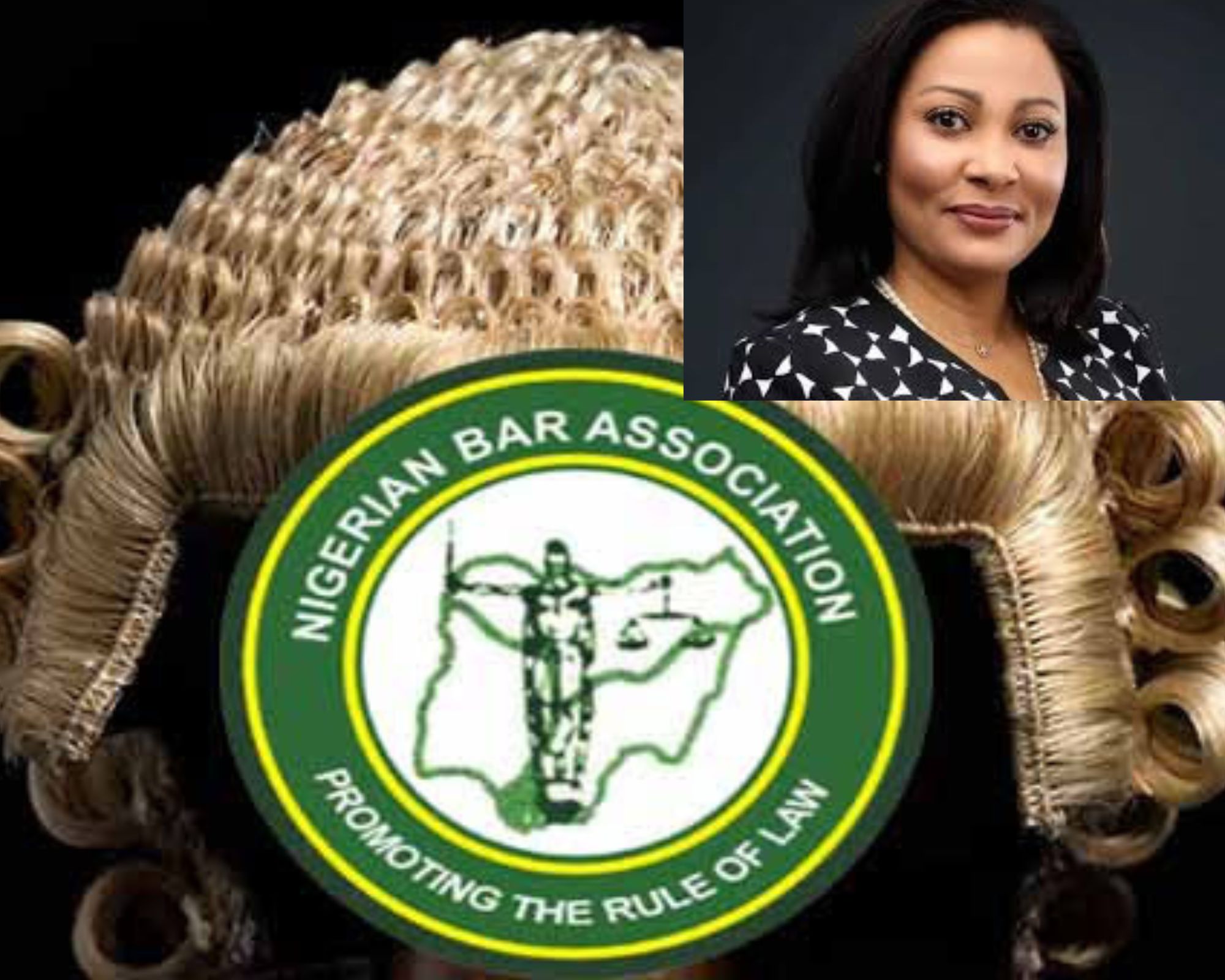
The Incorporated Trustees of the Nigerian Bar Association (NBA) have instituted an action against the Honourable Minister of Industry, Trade & Investment, Doris Nkiruka Uzoka-Anite, at the Federal High Court today, May 17, 2024. The case challenges the Memorandum of Understanding (MoU) known as the Enhanced Trade Investment Partnership (ETIP) Agreement, dated February 13, 2024, between Nigeria and the United Kingdom. The NBA’s contention revolves around provisions within the MoU that permit legal services to be provided by individuals not registered with the Supreme Court of Nigeria.

On February 12, 2024, the Honourable Minister tweeted, expressing her delight over the signing of the ETIP Agreement, which she described as groundbreaking. The now-deleted tweet highlighted that the agreement would allow British lawyers to practice in Nigeria, marking a significant milestone in UK-Nigeria relations. She emphasized the agreement’s potential to collaborate with the film and media industry, remove obstacles for UK lawyers practicing international law in Nigeria, and amplify UK legal services exports. The Minister also noted Nigeria’s impressive combined trade value of €8.20 billion, indicating promising prospects for future collaboration and economic growth. This tweet was widely reported by several online news blogs.

The Minister’s tweet sparked considerable debate within the legal community on social media. On February 13, 2024, the NBA President, Mr. Y. C. Maikyau, OON, SAN, issued a formal statement condemning and rejecting the ETIP MoU as it pertains to the provision of legal services in Nigeria. In response to the backlash, the Minister deleted her initial tweet and posted a follow-up, denying any provisions in the MoU that allow UK lawyers to practice in Nigeria.

Mr. Maikyau has been vocal about his opposition to the MoU, as he addressed newsmen in a state of the nation broadcast on the same issue. Despite a series of correspondences between the NBA and the Minister, the NBA President remained unsatisfied with the Minister’s explanations, leading to the current lawsuit.

It is unclear which court will hear the case or when the hearing will take place.

The originating summons was signed by Mr. Stephen Adehi, SAN, the caretaker Chairman of the NBA Section on Public Interest and Development Law (SPIDEL), following a unanimous resolution by the NBA National Executive Council (NEC) in Jos, Plateau State, on February 29, 2024.

Sources at the NBA headquarters confirmed that the NBA-NEC, during an emergency meeting held on April 20, 2024, resolved to constitute a legal team led by the NBA President to challenge the legality of the ETIP Agreement as it relates to legal services and other related issues.

Below is a copy of the originating summons.

NBA-v-Minister-of-Industry-Trade-Investment

The Metro Lawyer

TIPS