Home Blog Page 569

Lagos state judiciary accused of wasteful spending in the face of glaring needs

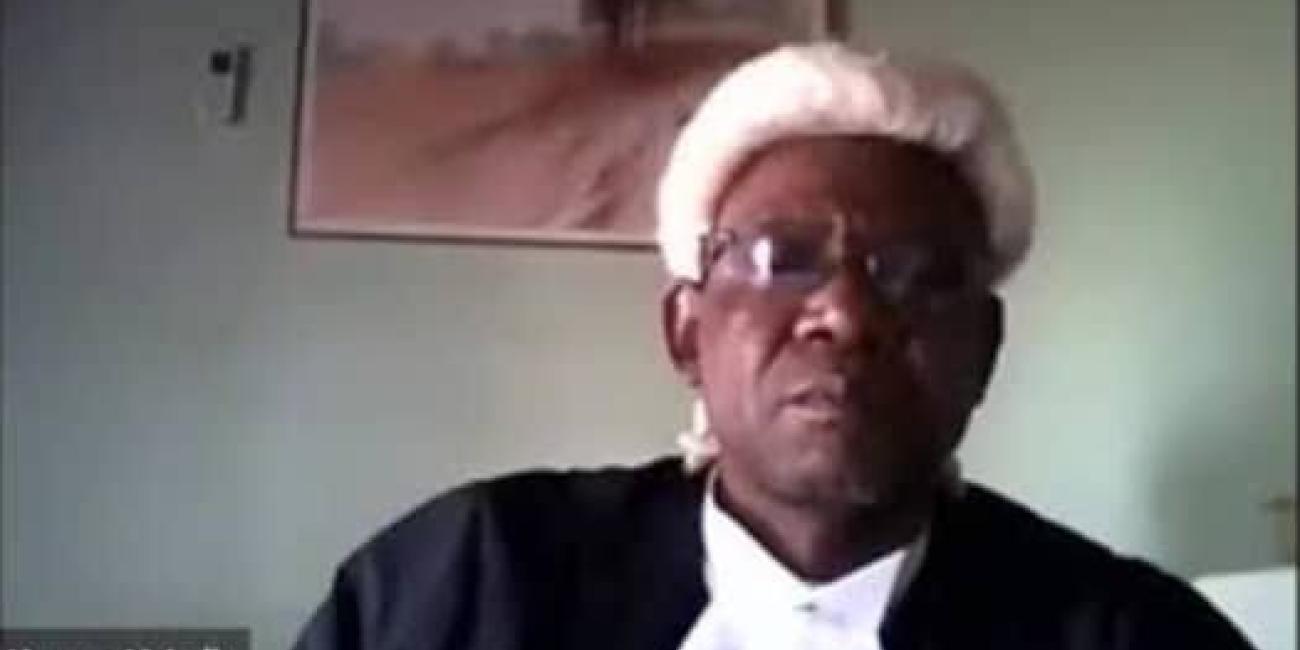
The Lagos State judiciary has been accused of wasteful expenditure as 75 judges of the state’s High court are said to have been scheduled to go for judges retreat in the United Kingdom.

Law & Society checks gathered that their Lordships will spend seven days in England, in the month of July , 2024.

Keynote speakers, and other support staff! are also billed to travel with the contingent.

A concerned citizen who chose to remain anonymous puts it thus way:

“Let’s figure out the unnecessary costs. Round trip tickets for about 90 people. Lagos, London, Lagos. Hotel accommodations, feeding, estacodes

“Why are the world standard facilities and resorts in Nigeria not utilized? Kuru, Jaji, Tinapa, Obudu, and many others‼

“Issues that affect Judiciary.

1) Igbosere High Court has not been rebuilt, Lagos State is soliciting for funds through rebuild Lagos initiative to rebuild the courts.

2) The various courts switch on power by 10am and off by 2pm when they are on generator, while working hours is between 8.00am to 4pm.”

Writing on corruption and wastage in governance in Nigeria, Tunde Ajaja in an article published by PUNCH Newspaper said: “”Apart from the perpetuated high cost of governance despite the cash crunch, brazen looting by people in government, politicians and civil servants inclusive, unremitted funds by MDAs and other forms of corruption continued to erode the country’s much-needed revenue…

“In January 2022, the EFCC revealed that it recovered N152bn and $386m stolen funds between January and December, 2021. And in 2022, the commission revealed that it recovered N134.3bn and $121m stolen funds and 3,615 convictions in the first 10 months of the year. In previous years, the commission made similar recoveries, a testament to the brazen corruption in the country.

“While the government on one hand continued to borrow from domestic and external sources, an individual, a former Accountant General of the Federation, Ahmed Idris, was arrested in 2022 for alleged N109bn fraud. The EFCC Chairman, Abdulrasheed Bawa, disclosed that the commission had recovered a whopping N30bn from the erstwhile AGF.

“At the moment, many former and incumbent governors, National Assembly members and civil servants are either under investigation or are being prosecuted for stealing. Some have been convicted, while many escaped justice due to political affiliation, weak prosecution or lack of evidence, collusion with corrupt judicial officers and executive interference, in which case fraud cases are withdrawn by the Attorney General of the Federation.”

Legislative probe turns tragic as Customs officer slumps, dies during hearing in House of Reps

  • As terrorists abduct High Court judge, wife, aides in Borno state

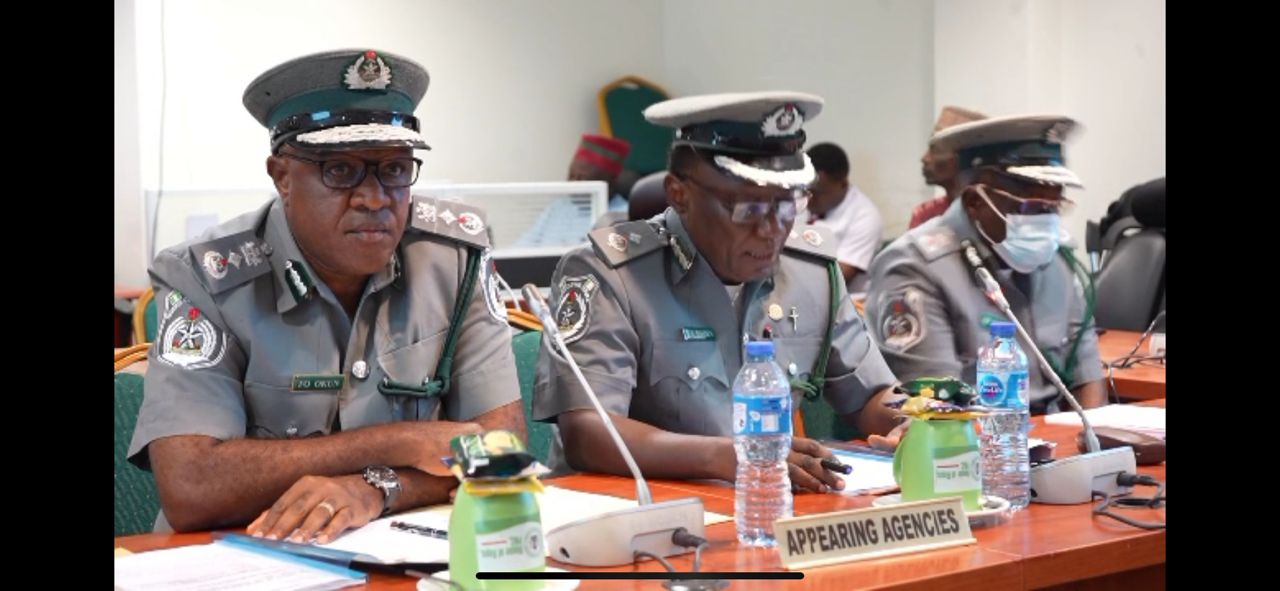
An event that was perhaps indented to straighten the records of the Nigeria Customs Service (NCS) became tragic when Andrew Essien, a Deputy Comptroller of the Nigeria Customs Service (NCS), died on Tuesday while being questioned by the House of Representatives Committee on Public Accounts.

Essien who was in charge of revenue in the NCS’s Account Unit, was answering questions about customs revenue when he coughed, requested for water and then collapsed while struggling to uncork the bottle.

“Sir, I might need to take some water,” Essien said while struggling to open the bottle of water in front of him.

Shockingly, before a colleague could assist him to open the bottle , he collapsed and was rushed to the National Assembly Clinic, where he was pronounced dead.

Spokesperson of the House, Akin Rotimi who announced the Deputy Comptroller’s passing said the officer developed health complications during the interaction with the lawmakers.

“During the engagement, which occurred around 1:00 p.m. on Tuesday, 25 June 2024, the official developed sudden health complications. Despite the immediate and diligent efforts of first responders and medical personnel at the National Assembly clinic, he unfortunately passed away,” Rotimi said in a statement.

The Public Accounts Committee (PAC), chaired by Bamidele Salam (PDP, Osun), was conducting its routine investigation into the NCS’s activities when the incident occurred.

In a statement by its spokesperson, Abdullahi Maiwada, The NCS expressed sadness over the death of the officer.
“Our thoughts are with his family, friends, and all who had the privilege of knowing and working with him. His exemplary service and unwavering commitment to duty will be remembered and cherished by the entire NCS community.

In the meantime, terrorists suspected to be Boko Haram members have abducted a High Court Judge, Justice Haruna Mshelia together with his wife, driver and orderly on Biu to Maiduguri road In Borno State.

The judge was abducted on Monday, while he was travelling in his vehicle, with his driver, a security escort and his wife, a source familiar with the region, Zagazola Makama, said.

“As they approached a curve in the road between Burutai and Buni-Gari, a group of armed men emerged from the bushes, their weapons blazing and barricaded the road.

“The judge’s vehicle screeched to a halt, then attempted to maneuver its way to escape. In the chaos that ensued, Justice Mshelia’s vehicle was stopped by another team of insurgents,” he said.

Premium Times/SaharaReporters


There was no legal justification for detention of Pius Awoke, Esq. for three years without arraignment/trial; NBA should ask critical questions

J. S. Okutepa, SAN

I have read the explanations of the President of NBA. It is good that Mr. President secured the release of Mr Pius Awoke and his cousin in collaboration with other members of NBA as acknowledged by my president.

Be that as it may, if there is a court order that found prima facie that Mr Awoke was a member of the prescribed IPOB, and that he should be arraigned in court within 30 days from June 2023, why did the DSS failed to obey that order.

When did the DSS become aware that Mr Awoke was a membership of the prescribed IPOB? Why did it take DSS a whole three years plus without filling terrorism charges against Mr Awoke. Did Nigerian constitution not prescribing the period of detentions of Nigerians citizens as between twenty four hours or maximum of two days or such longer period as may be allowed by court in which case it should not be more than 14 days under Administration of Criminal JusticeAct 2015.

There are the Federal High Courts in every corner and states in Nigeria. There is a Federal High Court in Minna. There are Federal High Courts in Abakalike and even Abuja. Why did it take this long time to arraign him in court?

As an association, we must ensure that NBA holds these agencies accountable and responsible. I do not think the orders of the Federal High inure in favour of this long detentions of Mr Awoke.

Given the pictures of Mr. Awoke circulating on social media after his release, which I saw, he must have undergone very high psychological trauma of indescribable agony while in detentions.

While not holding forth for Mr. Awoke, necessary probing questions need to be asked by our association. Under what circumstances did Mr Awoke fail to deny his membership of IPOB. Was it while in detentions, or there is a membership register in which his name appears.

Let it be noted that Nigerian citizens are many languishing in detentions across this country’s detentions centres not only in DSS but other security agencies, too. These citizens are awaiting trials. Some are in detentions because they stepped on the toes of the mighty and powerful and those well connected not necessarily for any known offences.

Some people got terrorism charges filed against them for political reasons. Some are in detentions simply on civil transactions that metamorphosed into criminal allegations wrongly framed by security agencies.

I think the release of Mr. Awoke his detention and subsequent release should wake up the monitoring spirit of NBA across the various branches. NBA president can not be everywhere. Everything should not be unitarised in the hands of NBA President, either the current or the ones coming after him. This is my take

Family accuses Lagos hospital of ‘manipulating’ bills, detaining mother’s corpse

The family of late Mrs. Charity Broderick has accused a Lagos hospital of manipulating medical bills and detaining her corpse.

In an exclusive interview with The PUNCH, her children, Solomon and Joy Broderick, alleged that the hospital demanded a payment of N515,000 despite inadequate care provided to their mother.

They also claimed that the hospital moved her corpse without their knowledge or consent.

The family is appealing to the hospital to release her body so they can give her a proper burial.

When contacted, a hospital representative, Mrs. Nkechi, explained that the payment was for dialysis treatment and that the outstanding bills must be settled, and a death certificate issued before the body can be released.

Watch the video below.

PUNCH Newspaper

Smart Nigerian girl gains admission to Canada University at 15, earns bachelors at 17 and Doctor of Pharmacy at 21

A brilliant Nigerian lady named Theodora Udounwa who gained admission into the University of Toronto, Canada at the age of 15 has bagged her bachelor’s degree and a Doctor of Pharmacy degree at the age of 21.

Theodora bagged her Doctor of Pharmacy degree from the University of Toronto, Nigera after which she had earned a bachelors degree within two years of enrolment at the same universitry

She gained admission into the University of Toronto at the age of 15 to study for a degree in Pharmacology and Biomedical toxicology with a minor in physiology.

Born and raised in Nigeria, Theodora graduated from high school at a very young age due to a combination of an early start to kindergarten and skipping a grade due to her outstanding academic performance.

Two years after she enrolled at the University of Toronto, she completed her bachelor’s degree and began her doctor of pharmacy (PharmD) program at the university’s Leslie Dan Faculty of Pharmacy.

“Pharmacy was always the plan. I enjoyed pharmacology greatly, but I was also interested in patient care, and I saw pharmacy as a bridge between applying those theoretical principles to patient care,” Theodora said.

“There are also a lot of career options in addition to patient care, like academic and research, that I thought would be a good fit for me,” she added.

She mentioned that her experience in a boarding house while in high school back in Nigeria helped her pull through at the university hostel where she was younger than her peers. In addition, the proximity to her older sister who attended university nearby meant she was able to spend holidays with family members in the area.

Theodora said she also took it upon herself to get involved with student groups such as the Nigerian Students’ Association, where she was able to meet students from her home country and share her culture.

Because she started the PharmD program during the first year of the COVID-19 pandemic, Theodora grasped the opportunity to contribute to the public health response and strengthen her training.

She is delivered more than 1,600 COVID-19 vaccinations as well as numerous flu shots at Discovery Pharmacy pop-up clinics. Theodora also completed rotations at different hospitals, drugstores, and pharmacies across Toronto and the Canadian Armed Forces.

Aside from the Nigerian Students Association, Theodora was also involved with other student groups, holding several positions with the Black Pharmacy Students’ Association and the university’s chapter of the Canadian Association of Pharmacy Students and Interns (CAPSI).

She stated that one of the highlights of her time at the university was attending CAPSI’s 2023 professional development week where she supported 16 of the university’s delegates and took advantage of several educational and networking opportunities.

Theodora’s involvement in extracurricular activities earned her numerous awards including the University of Toronto Student Leadership Award and a Canadian Pharmacists’ Association Centennial Leadership Award.

Looking ahead, Theodora said she is keeping her options open but plans to work directly with patients in some capacity. She said her next step is her industry residency at pharma giant Novo Nordisk’s medical affairs and strategic operations department.

Scholarship Region

Police Inspector killed by Naval Officers in Lagos

The Lagos State Police Command announced it has commenced an investigation into the alleged killing of a police Inspector by some naval officers in the Okokomaiko area of Ojo.

The command’s spokesperson, SP Benjamin Hundeyin, said this on Sunday, June 23, 2024.

Hundeyin said a report on the incident was received at the Okokomaiko Police Station from some residents at about 4:30 p.m. on Saturday, June 22.

He stated that the report revealed that some policemen, who were on routine patrol along Igbo-Elerin, tried to impound a motorcycle riding against traffic at the Beno filling station.

The police spokesperson said two men on the motorcycle in mufti, who claimed to be officers of the Nigerian Navy, resisted arrest and attacked the policemen.

Hundeyin noted: “Other naval personnel in uniform arrived at the scene and supported their colleagues in the attack.

“It was when one Inspector (name not given) slumped and was unconscious that the naval officers escaped from the scene.

“The Inspector was rescued and rushed to a hospital in the area where he was confirmed dead.

“The body has been deposited at the Idi-Araba Mortuary, Yaba, for autopsy, while an investigation is ongoing.”

Rehoboam, presidential jet and Nigerians’ aparo eggs

By Festus Adedayo

Nigerians have indeed suffered tremendously in the last one year. Not strictly the hunger tugging at our bellies. That pestilence of hunger was brilliantly conveyed by the whammy soundbite, “Ebi npa wa o,” as the Lagos Island people’s response to the president’s fleet of gleaming SUVs last year. As an aside, permit the pun, I think that national soundbite deserves a Grammy. Lacerating words from those who rule us even rub salt on our hunger injury.

They make Christians race for their bibles to read the famous and incredulous story of King Rehoboam, Solomon’s son and successor. Some young men had helped Rehoboam design a Manifesto anchored on how to effectively govern Israel. Perhaps, it was 80-paged, too? Or probably christened “Renewed Hope” as well? Whereas his father-predecessor inflicted heavy yoke on the people, counselled the young men in the Manifesto, Rehoboam’s administration would add to the yoke. So, Rehoboam’s Manifesto had the catchphrase, “whereas my father scoured you with whips, I will scourge you with scorpions.” In a language devoid of political sentiment, it looks like the transition from Muhammadu Buhari to where we are now has a Rehoboamic flavour.

I was not old enough to have cognition of what happened during the Nigerian civil war so, pardon my comparative shortcoming. Were Nigerian lives this miserable during the war? Many have, in the last one year, died of Rehoboamic scorpion stings. Many are in the sanatorium. Many depressed compatriots are looking vacantly into the sky and muttering lullabies to God-knows-who. Many husbands have lost their economic manhood. The sick who cannot afford the spiking drug costs are now at the conference table with their Creator. The president and his kitchen crew have become Eddy Iroh’s Toads of (our) War. They are growing “big fat stomachs,” apologies to Fela Kuti. N21 billion just renovated the Vice President’s palace. Our First Lady got billions of naira voted for her kitchen, so that tomatoes and pepper can be plenty on the shelf.

Last Tuesday, our president cavalierly dismissed our sufferings. What the hell are we howling about? “You are not the only ones suffering!” he admonished the Ebi npa wa orchestra. Though it was from a statement issued by spokesperson Ajuri Ngelale, I imagine our president fluffing the arms of his agbada proudly and majestically like Mother Eagle. If you dissemble the president’s words properly, they are almost akin to Queen of France, Marie-Antoinette’s famous statement during the French revolution. French people were starving, “Let them eat cake,” the Queen had said, totally removed from the pangs of the people’s hunger. With hunger decking the bellies of the French, the Queen was literally asking the people the impossibility of making a gangan drum with the hide of an elephant.

The president was comfortable comparing malaises and not wellness. Seyitan Atigarin of Arise television provided a perfect anecdotal explanation of the president’s infelicity yesterday. Aso Rock’s gaffe can be compared to the words of a gym instructor. To an obese person looking up to him for the conquest of fat, the instructor asked the obese to look at the sea of the obese like him in the gym for inspiration. Shouldn’t he exemplify hope by citing those who had conquered their fat?

Our Rehoboamic experience bonds very well with the submission of a content creator who I recently stumbled upon on YouTube. He is Tomiwa Adio of Agogo Ede Multimedia concept. While trying to correct what he calls mis-usages of Yoruba aphorisms, Adio unknowingly informed us about our Rehoboamic world. The wise-saying, which he claims we misuse, is in the form of a fable. For ages, the Yoruba have always said, “Af’agò k’éyin àparò, ohun ojú wá l’ojúú rí” – the one who packs the eggs of the bird called pheasant (aparo) inside a local cage deserves no pity. They only got their due recompense. The pheasant is a very alert bird. It moves about with the fear of running into a human trap. To avoid human irritancy, pheasants build their nests safely away from any human environment. At any slight suspicion of an adversary’s presence, the pheasant flies away. In Adio’s clarification, the Af’agò k’éyin àparò, ohun ojú wá l’ojúú rí” aphorism is a misuse of language. The right usage, he says, is “the one who lurks in wait to catch a pheasant, in order to pick its eggs” (agè’gùn k’éyin àparò) “deserves the aftermath.” In the process of lurking in wait for the pheasant to leave its nest where the eggs are laid, a number of inconveniences occur. As such, the one who lurks to kill the àparò and harvest its eggs not only needs patience, s/he must know that s/he could suffer the bite of the giant ant (tanpépé), the wasp (agbón) or the sting of the bee (oyin). S/he must suffer the experience in silence. So, did Nigerians lurk around this long to pick the eggs of a pheasant?

You do not need to slide the panes of your window to see tears, pain and anguish all over Nigeria. Suffering is our ever-present guest. It sits at table with us, in company of its compatriot of tomfoolery in high and low places. But, don’t our elders say if the deity, the Orisa, cannot remedy a situation, it should not worsen it? When system henchmen ask why we make these issues a daily refrain, we tell them that our case is synonymous with that of a poor man whose fowl was stolen by a rich man (èdá t’ó gb’ádìye òtòsì) and who, by that very fact, has courted to himself, not only the ire of the poor but a global amplification of the poor man’s fate (ó gbelé t’aláròyé). The whole world must hear of the inequity.

An example is the rude and unnecessary debate on whether our president should purchase a jet to add to his harem, pardon me, fleet of ten jets. This is coming at a time when “ebi ńpa wá” has become a national ringtone and Nigerians can’t see tomatoes and pepper on their dining table. We can however see a presidential “bùgá” and “bragging right.” Then, presidential spokesman, Bayo Onanuga, came up with a widely-adjudged common error of reasoning. In a reaction to criticisms against the purchase of a presidential jet by this government, Onanuga demanded if critics wanted the president to die in flight like Malawian Vice President, Saulos Chilima or Ebrahim Risi, the president of Iran. Let us not dwell on the element of indecorum and gloating at the dead noticeable in the statement. Known as “emotive bullying” or “emotional gangsterism,” that presidential statement was an argumentative reasoning that sought to appeal to consequence. In Symbolic Logic, Onanuga’s argument is identified by a Latin word called argumentum ad consequentiam. In such argument to consequence, the one arguing creates an atmosphere of pity. They base the truth or falsity of their argument on whether the premise leads to pleasant or unpleasant consequences, waylaying their opponent by appealing to the consequences of the action of accepting or rejecting their line of argument.

Nigeria’s case is like that of the proverbial rolling stone that gathers no moss, something I have elsewhere referred to as a multidimensional malaise. This was what late Babatunde Olatunji couched to arrive at the title of his 1978 Yoruba novel, Egbìrìn Òtè. Are you following the tomfoolery going on in Rivers and Kano States? In both, you can see the hands of the Leviathan. It is obvious that year 2027 is high on the calculations of decisions being taken on the two states. If human casualties litter the streets of Port-Harcourt and Kano, so be it. A president who desires peace in Rivers knows what to do.

A major irreverent piece in a faggot, which the Yoruba call “Igi wórókó,” which is upturning the peace of the earthen space, (ààrò) is right inside the president’s trousers (sòkòtò) in Abuja. So, why pretending to be going to Sokoto to find it? If Nigeria’s No 1 Citizen desires peace in Rivers and Kano this moment, it will happen in a twinkle of an eye. All he needs do is agree that 2027 belongs to God and not to any human, no matter their buga. In Rivers, he only needs to pour cold water on this Rivers hot faggot that took residency with him right there in Abuja and remove it from the fire. Kano has a Siamese portent with Kaduna. The president only needs to allow that impish irritant he is afraid would snatch the race baton from him in 2027, who he is hounding in Kaduna through a remote control, stew in his own broth. The belief that the Kano emirate, friendly to the imp, will help him in 2027 may not necessarily follow.

One of the multidimensional malaises happened in Zamfara State last week. Governor Dauda Lawal flagged off the construction of an airport. This is in a state where the number of out-of-school children rivals a migrating colony of bats. N62 billion of state funds was the sacrificial lamb, oil and cowries propitiated to this god of elite appetite. On the list of the malaises of last week, too, was the appointment of 85-year old Chief Bisi Akande as Chairman, Governing Council of our own UI. Akande, we are told, does not even have a university degree. Don’t our elders say gold should be given only to he who knows its worth? Four persons on the Council membership list are said to be immediate family members/political fawners who hail from Akande’s homestead in Ila-Orangun.

I am sorry for digressing this considerably. Today is clearly no day for all those malaises, the peculiar messes in high and low places. It is certainly not an epistle on the sting or bite of Tanpépé, agbón and oyin which we have stoically endured in the last one year. As I write this, I am listening to Odolaye Aremu’s elegy to S. L. Akintola and Adegoke Adelabu. Both had died in the First Republic. While Akintola was killed in the military coup of January, 1966, Adelabu died in a fatal automobile accident on March 25, 1958. He was aged 43. The unfortunate death happened in a place called Mile 51 on Lagos–Ibadan Expressway, near Shagamu, today’s Ogun State. In the company of a Syrian businessman, Adelabu’s car had hit an oncoming vehicle.

“Soldiers are killing people (àwon sójà ńpàà’yàn); the number of the dead is innumerable (èmí t’ó bó ò l’óñka),” the arguably one of the greatest musicians to have come from Ilorin, Kwara State, sings. It was a musical reminiscence on the aftermath of Adelabu’s car accident. This petrel of Ibadan politics’ supporters had claimed his death was spiritual assassination, leading to a deadly protest. Over 500 people were arrested by the police and 102 others charged to court. Odolaye’s most profound quip in that track and my takeaway in the midst of this Nigerian peculiar mess is, a tear-provoking happening that stupefies deserves to be confronted with laughter. It is same I canvass today. Odolaye sang it as “Òrò t’ó bá j’ekún lo, èrín làá fií rín”.

Each time I try to make sense of the various existential challenges Nigeria battles, I have, countless times, had recourse to Can Themba. Born in Marabastad, near Pretoria, South Africa, Themba was one of the most poignant South African writers whose works were done in Sophiatown, Johannesburg. An investigative journalist as well, Themba worked with the defunct Drum magazine. His famous award-winning short story entitled The Suit supplies answers to my worry on Nigeria’s uncountable malaises. It tames my wandering wonder. The story is about Philemon, a middle-class lawyer. He had an adulterous wife called Matilda and both of them lived in Sophiatown. Devoted as Philemon was to Matilda, the latter was always fond of turning his home into a tryst immediately he leaves for his office. On this particular day, Philemon was told of the escapade of his wife again. Rather than his wont of leaving for home late in the evening, Philemon went home midday. As the lawyers say, he caught his wife in flagrante with the lover. In the melee that ensued, the lover scampered out of the window but forgot his suit.

To effectively deal with Matilda, Philemon then concocted a strange and bizarre punishment for her. This was a routine he spelt out where Matilda had to behave to the suit which he hung on the shelf as a honored guest. This involved treating it with utmost respect, feeding it, providing ample entertainment for the suit and taking a walk with it, while discussing with it as an animate object. In conceptualizing the punishment, Philemon reckoned that this treatment would serve as a bitter and constant reminder to Matilda about her adultery. Remorseful, psychologically beaten and humiliated, Matilda eventually died of shame of her adulterous escapades. The treatment our Aso Rock tormentors and their predecessors inflict upon us is similar to Philemon’s. Were we at any time adulterous as a people? Is this their way of dealing with us?

Ojude Oba, Durbar and Musawa’s African Grammy

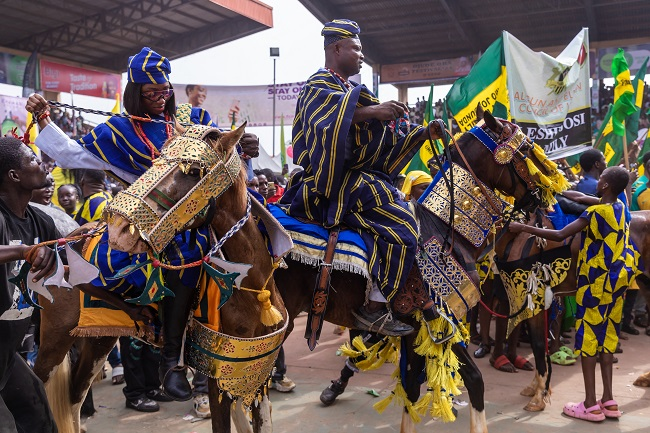
Last Tuesday’s cultural display of the Ijebu people of Ogun State in their yearly Ojude Oba festival caught the eyes of the world. Translated as Festival of the King’s Courtyard, it has over the years been one of the most glamorous cultural and spiritual festivals held in Nigeria for over a century now. Many people have queried the rich sartorial depth and affluence of the Ijebu in the midst of Nigeria’s national ferment. Among Yoruba festivals, the glitz and colours associated with this festival place it outside the ranks of any cultural festival in Nigeria. Usually held to coincide with the Islamic Eid-l-adha ceremony, the festival holds on its third day.

Oral historical accounts put the emergence of the festival to Chief Kuku Oduyingbo, who later became Balogun of Ijebu, and or Imam Tunwatoba. Either or both, having recently converted to Islam, gathered friends, families, and well-wishers in homage to then Awujale, Oba Fidipote, who reigned around 1885. It was to appreciate him for the opportunity he gave them to practice Islam without hindrance. Ever since, thanks to Dr. Mike Adenuga’s Globacom which heavily funds the festival, Ojude Oba has transformed from being a Sallah homage into a cultural melting point for the Ijebu.

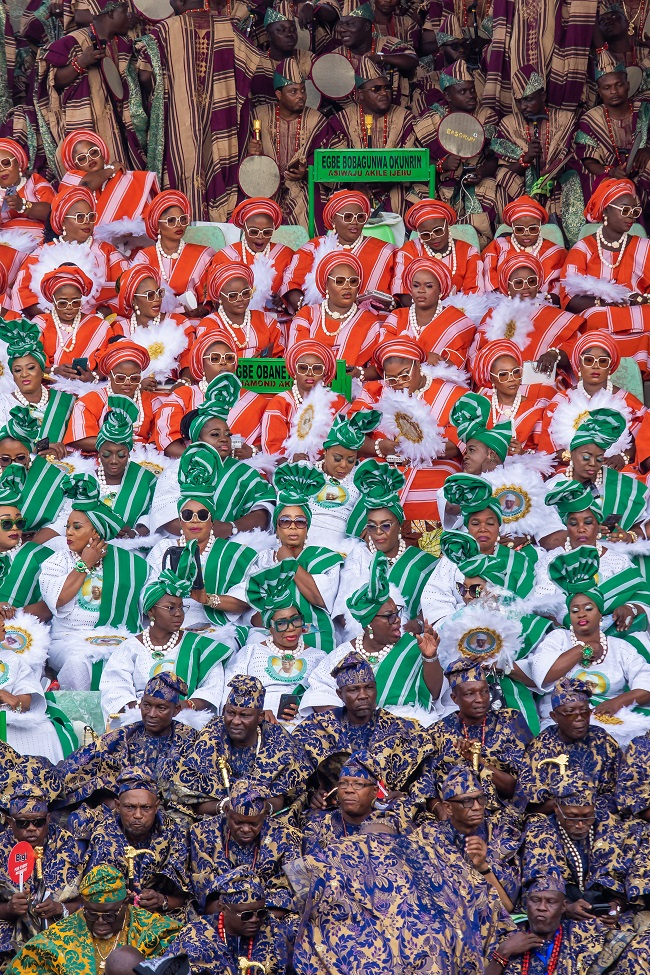
The Ojude Oba goes beyond the glamour of the participants’ dressing, or the equestrian display. Today, it speaks directly to the cultural, religious, social, and military significance of its yearly celebration. It is attended by over a million people. Apart from the visual niceties it brings, it also speaks to the importance of group association as the bedrock of development. You can see this in the gathering and parade of age grade societies called Regberegbe. Established in the 18th century, the age grade societies are known collectively as Wompari. The aim is to bring about amity among groups and ultimately, development into Ijebu land. Wompari is further broken into Egbe Gbobaniyi comprising male and female (1962-1964); Egbe Bobagunte male and female (1956-1958); Akile of Ijebu (1959-1961); Mafowoku, Egbe Arobayo male and female; Egbe Jagunmolu (1965-1967), Egbe Bobakeye, and Egbe Bobagbimo. Most of the Wompari are top industry barons, successful captains of industry and A-List professionals.

What Nigeria advertises to the world in Ojude Oba is cultural elegance and communal cohesion. It does same in the Argungu Fishing festival where showpieces are made of the hugest fish catches. Also in the mode of the Ojude Oba is the Durbar festival, an ancient traditional annual Hausa cultural, religious and equestrian festival which began in the 14th century. Native to northern Nigerian original ancient emirates of Kano, Katsina, Gombe and Akko, it is also celebrated in Sokoto, Zazzau, Bauchi and Bida. It rekindles Hausa’s ancient horsemen preoccupation in the Sahara and Sahel. Like the Ojude Oba, it is also a homage to the Emir and signposted by a colourfully mounted parade of the king’s retinue of horsemen. Musicians and artillerymen also add vibes to the festival.

Over the years, Nigerian creatives have also begun a renaissance to jumpstart the country’s creativity, especially in music. From African traditional music of Dan Maraya in Jos, Ogene songs of Oliver Decoque and Igbo highlife, a contemporary musical genre that combines highlife and Igbo traditional music, lifted into stardom by Chief Stephen Osita Osadebe, to the Yoruba Sakara, Juju and Apala music, Nigeria has evolved into gaining recognition on the global stage. Today, our boys advertise their craft on global audience stage and harvest audiences in the realm of millions. Tiwa Savage, Burna Boy, Davido, Wizkid, Rema, Asake, and many others are doing Nigeria proud in that regard. Blends of Afro beats and hip-hop parade artists like Plantashun Boiz, Def ‘O’ Clan, Remedies, Trybesmen with world class producers like OJB Jezreel. While they ply their trade at the global stage, these music wizards have also pushed our entertainment industry into becoming a major contributor to the Nigerian economy. Indeed, Nigeria’s entertainment industry is ranked “second-best entertainment and media consumer market” globally with the American music industry being the clear leader.

So, it becomes bothersome when news streaked in that the Nigerian government, represented by Hannatu Musawa, the Minister of Art, Culture, and Creative Economy, is entering into partnership with the American Grammy Awards to establish an African version of the Grammy Award. In a Global Music Industry Growth by Region rating, while Latin America had 21.5%, Asia 12.8%, Europe 6.2%, US/CAN 4.2%, MENA 19.8%, Sub-Saharan Africa had a whopping 28.8%. So why subordinate the master to his apprentice? The question to ask is, will this Africanization of the Grammy bring any good the way of Nigeria or her music industry? The answer is no. The idea is at best imperialist. There can be no two Grammy Awards. The original, which America monopolizes, has a high, if not total dosage of American music flavor. It prides itself as “the music industry’s highest honour” whereas our globally acclaimed musicians from Africa seldom crack its nut. It is why Nigerian superstars hardly win the Grammy. To have dross of Grammy in Africa as Musawa is contemplating is to accept the superiority and then inferiorize our own globally-sought music stars.

As a music enthusiast, I am convinced that what the Minister should be doing by now is to partner existing continental music award platforms which will strengthen and not overshadow them. African music awards institutions like South African Music Awards, (SAMA) Trace Awards, Headies, Ghana Music Awards (GMA), Soundcity MVP Awards, AFRIMA and such like will promote the continent’s music rather than this neo-colonial idea being toyed with by Musawa. She should also devise ways of revving the strides made by Ojude Oba, Durbar, Argungu and allied festivals into making those crafts recognized by the whole world. I hope the minister is listening?

Festus Adedayo is an Ibadan-based journalist. 

Ijebu and their Ojude Oba

By Lasisi Olagunju

Persons who answer Ijebu typically party as hard as they work. They sweat out their heart to make money; they rock their money in ways that add value to their personal and group existence. Their pitch could be high, it could be mid or low; what they choose depends on what point they want to prove. In doing these, they skillfully walk the thin line of balanced responsibility. When Chief Obafemi Awolowo transited to immortality in May 1987, Fuji mega star, Kollington Ayinla, sang about Ijebu’s unmatchable ability to balance their acts. He said “the yams of the Ijebu are six. They sell two; they eat two. The remaining two they give to their gods (Isu méfà ni’su Ìjèbú/ Wón nta méjì; wón nje méji sí’kùn ara won/ Ó l’Órìsà tí wón nfi méjì t’ókù bo…”).

I find them a fascination. I am writing this not because I am Ijebu; I am not one of them. I am a proper Òyó-Yoòbá. Never poor players too; but we are a people who can be loud and subtle at the same time. My lineage is Ìlòkó, Erúmosá omo aj’óbalólele/ Tètù o j’óba l’óhùn èrò (offspring of forebears who never answered the king softly). If you think not speaking softly to the king should have consequences, it means you’ve not heard Oyo say: Màá wí, màá wí/ oba kìí mú òkorin (speak out, the king does not arrest the bard).

Malawians say “life is when you are together, alone you are an animal.” I don’t know if the Ijebu have an anthem – old or new. But I know their oríkì glides with their gait: Oni mi je nu’bu omo Olúweri/ Omo Aj’ebu j’osa de Igbobini/Omo As’ale jeje booni nobinren/A b’aya kun’le tititi (Rovers of the deep sea, offspring of Oluweri/ Rovers of deep waters as far as Igbobini/Whose forebear indulged concubines as if not married/Whereas his home is packed full of women). If you want more of this, my source, Ayinde Abimbola’s ‘Poets as Historians’ has the oríkì in full.

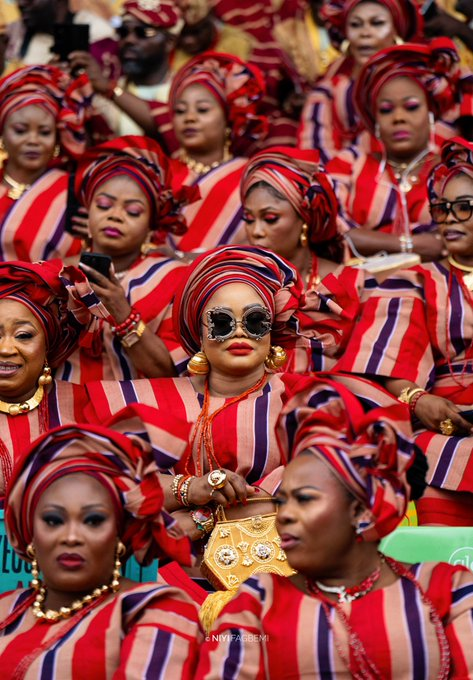
Members of the Egbe Gbobamayegun Obinrin gather during the annual Ojude Oba festival in Ijebu Ode on June 18, 2024.  (Photo by TOYIN ADEDOKUN / AFP)

Flavour, the musician in his ‘Big Baller’ asks: “How much is money?” He goes on to assert that “it’s nothing.” Flavour has probably not met them – the Ijebu. They say they are money (Kékeré Ijebu owó/àgbà Ijebu owó). They are wealthy because they don’t walk alone; they bond, holding hands in life and in business. They band in dancing too. They lace their drumbeats with sèkèrè – the netted, rattling gourd which does not go on outings of shame. Their drums, in shrill and mellow tones, remind them of their forebears who had been spending dollars before the Oyinbo man arrived these shores. For them, it is “premium or nothing.” Their neighbours secretly envy them.

Three days after the Ileya festival last week, the Ijebu-Yoruba, home and abroad, staged their annual breathtaking Ojude Oba festival. Their paramount ruler, the Awujale, Oba Sikiru Adetona, aged and glorious, sat at the event receiving the tens of age-grade groups of his male and female ‘children’. Those ones, the ‘règbè-régbè’, gaily dressed, came around to pay homage to their oba. They do it every year and there is no sign that they will ever get tired of doing so. On horse backs there were ‘aristocrats’ said to be from warrior families in Ijebuland. Others from other illustrious and not so illustrious segments of the land staged their own acts in colours that dim the rainbow. People danced; horses pirouetted; the ground quaked.

They came out heavier this year than they ever did, and so heavy have been the reviews. There have been ‘disputes’ and ‘fights’ on several internet platforms on the event. Some question the ‘sanity’ and the ‘wisdom’ in spending so much just to show how wealthy people are. Some of the critics insist Ojude Oba is nothing more than an annual display of ostentation and flamboyance. Some say they only come home to party, they don’t build factories and set up businesses at home; others say they should spend on renewing the rust of their city. I reacted in a Yoruba leaders’ WhatsApp group at the weekend that the bonding across age groups that we see yearly at Ojude Oba, to me, trumps all charges of ostentatious display of wealth.

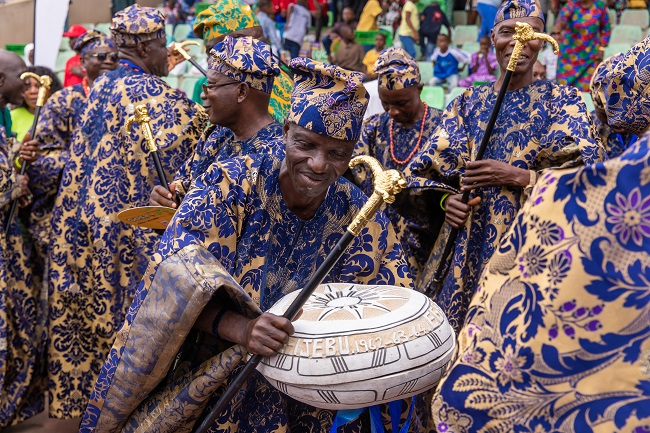
 A general view of members of the Egbe Gobaniyi Okunrin, Egbe Jagunmolu Obirinrin, Egbe Obaneye and Egbe Bobagunwa Okunrin during the annual Ojude Oba festival in Ijebu Ode on June 18, 2024. – Ojude Oba festival is an ancient festival celebrated by the Yoruba people of Ijebu Ode, a town in Ogun State Nigeria. This annual festival usually takes place the third day after Eid El Kabir to pay homage and show respect to the King the Awujale of Ijebuland. (Photo by TOYIN ADEDOKUN / AFP)

I ask if the value of everything should be calculated in naira and kobo, brick and mortar? One of the greatest bequests of Ancient Greece to the modern world is their art – their drama and festivals. But the drama and festival-loving Greeks were sternly rebuked for investing generously in these ‘wasteful’ items of art. Read David Pritchar’s ‘Costing Festivals’. Pioneer economic historian, August Boeckh, attacked Athenians for “squandering away public revenue in shows and banquets…” Plutarch accused third-century Athenians of spending more on the production of tragedies (drama) than on the maintenance of their empire. Plutarch, in his ‘On the Glory of Athens’ wrote that: “If the cost of the production of each drama were reckoned, the Athenian people would appear to have spent more on the production of ‘Bacchaes’ and ‘Phoenician Women’ and ‘Oedipuses’ and the misfortunes of ‘Medeas and Electras’ than they did on maintaining their empire and fighting for their liberty against the Persian.”

If you are a critic of Ojude Oba and similar festivals, and you hold that Plutarch was right and Boeckh’s judgment justified, think of African literature in English without Greek texts: We have J.P. Clark’s ‘Song of a Goat’ adapted from the Greek’s ‘Agamemnon’ which was authored by Aeschylus. We have Wole Soyinka’s ‘The Bacchae of Euripides’ which has Euripides’ ‘Bacchae’ as its source text. Ola Rotimi’s ‘The Gods Are Not to Blame’ is rooted in Sophocles’ Oedipus Rex. Felix Budelmann’s ‘Greek Tragedies in West African Adaptations’ has a long list of this class of works. Even, ordinarily arrogant Western cultures have no problem admitting that Greek tragedies are part of their cultural heritage. Yet, there was a time when expenditures by Ancient Greece on the arts were termed wasteful and thoughtless. One day soon in the future, glamorous Ojude Oba and the other festivals that we pillory will serve as the cornerstone of our cultural economy.

Ojude Oba started as an extension of the annual Muslim Sallah celebrations. Today, it has evolved into a massive secular event so much that even insular Christian Pentecostals soak their souls in it. It should be an applause for that festival that ‘pious’ Christians who won’t eat Sallah meat on Sunday saw nothing wrong feasting with Muslims on Tuesday.

We yearly watch these united people going home to ‘display’ without fears. What they do annually is a proverb for other peoples who have abandoned their own hometowns to ‘witches’ and ‘wizards’. Such peoples should ask the Ijebu how is it that they go home and wine and dine and do not get eaten. Ojude Oba teaches a lesson in knowing that what kills is not death but the fear of death.

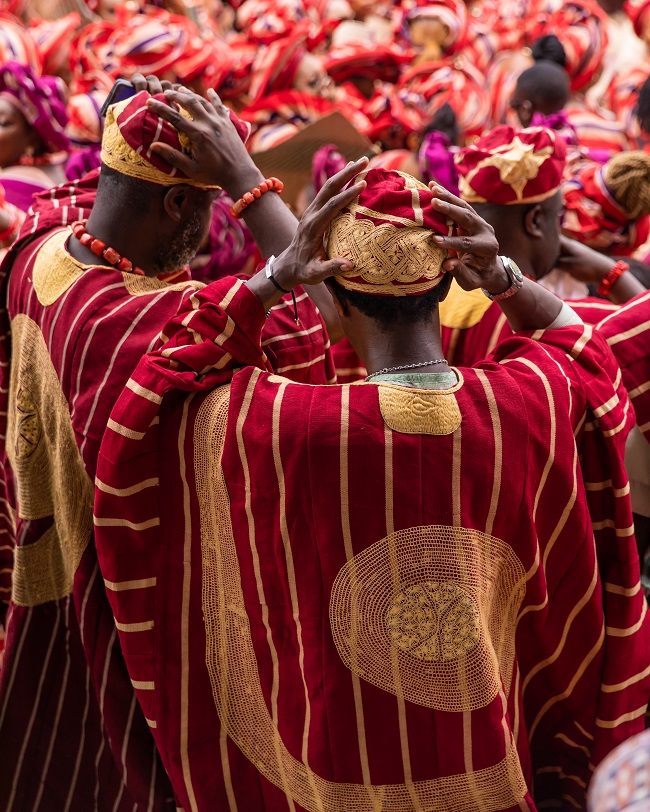
Two men adjust their caps before the procession to pay homage to the King, Awuja Ile of Ijebuland, during the annual Ojude Oba festival in Ijebu Ode on June 18, 2024.  (Photo by TOYIN ADEDOKUN / AFP)

Yoruba person ordinarily values home. And, to them, home is where the unbiblical cords and the placentas of a child’s ancestors are buried. You will understand this when you look at the Owu-Yoruba, for instance. Dispersed and scattered everywhere by an avoidable war 200 years ago (1821), they still spend their love on Orile Owu, their destroyed homestead located in present day Osun State. Someone once told me that M.K.O. Abiola, billionaire Egba-Gbagura man, remembered to plant his bookshop somewhere at Ojoo, Ibadan, where his Gbagura story started over two centuries ago.

A man from Egbe Gobaniyi Okunrin dances as he bears a gift to present to the King, Awuja Ile of Ijebuland, during the annual Ojude Oba festival in Ijebu Ode on June 18, 2024.  (Photo by TOYIN ADEDOKUN / AFP)

Justice Kayode Eso (God bless his soul) was an Ijesa man who lived his years mainly in Ibadan. He once laughed at the ignorance of a friend who queried why he had a home in Ibadan, Oyo State, and another in his hometown, Ilesa, Osun State. The experience is captured in the Foreword he wrote in Lillian Trager’s ‘Yoruba Hometowns’ (2001: XI-XII). Justice Eso’s words speak better: “A friend, seeing the picture of my regular residence, was also shown the picture of my second home built in my local community. He could not resist asking why one should have two homes.” The late jurist recounted that experience while discussing questions raised by Trager’s American students on why the Yoruba have so much attachments to their hometowns. The questions, according to Trager, are: “Why do people who no longer live in a place, who may never have lived there, continue to spend their money and time there? What is the motivation for someone who may have an important job, who is well known and involved in urban organizations to come home to a small city or rural town or village?”

Around year 2000 or 2001 when Prince Tunde Ponle was building his MicCom Golf Hotels and Resort in his hometown, Ada, Osun State, I interviewed him and asked him if he did not think the investment could be a waste. He responded that one of his sons also expressed the same fears but his position was that if you have money and you refuse to develop your hometown, when you die, your corpse will be taken to that undeveloped place. I nodded. He looked at me and smiled and we switched to other issues.

My people say that if a child offends the sun outside, they should have the shade of home to run to (bí omodé bá d’áràn oòrùn, o ye kí ó rí ‘bòji ilé sá sí). We also say that a child who throws home away has erected a hanger for tribulation. One Ijesa person told Lillian Trager that “at present in Nigeria, the only place you have security, the only place you can be sure of, is your hometown. That is the place where you are known, and where people will protect you.”

People make money and willfully get lost abroad. But Ijebus do not have that problem of not going back home to celebrate their success and uplift their land. The physical celebration of that spirit is what we see annually in their Ojude Oba. The involvement of their big men and businesses, particularly Dr. Mike Adenuga and his Globacom in sponsoring the event since forever – and till eternity – attests to that spirit. There is no part of Nigeria without big men and women. The difference is in what difference they make in their people’s lives. Social scientists would insist that our federation’s constituent parts are states. Some would say they should be regions; yet, some stress that they are ethnic groups. I say they are communities built on what I.A. Akinjogbin conceptualized as the “ebi system.” When every elephant and every ant in every community takes adequate care of the life of their home and of their community, we are likely to have a country.

Reps’ drunkard democracy

By Lasisi Olagunju

I had thought that our lawmakers in Abuja cared only for big cars, big bucks and big boobs. I never knew they also have deep love for alcohol – dry gin – and would do anything to protect it from the ravages of restrictive laws. And, because the standards of public and private morality have fallen terribly low, I feel we had better talk now before our democracy becomes synonymous with kaikai, with shekpe, ogogoro and ogwofy.

“No man’s life, liberty or property is safe while the legislature is in session…” is one very popular quote found in an 1866 New York court decision. The judge was Gideon Tucker. Given what we see daily here, I wonder how many Nigerians will say today that the judge lied.

There is this agency called NAFDAC which first barged in on our consciousness when adorable Dora Akunyili was its boss. That woman fought many wars – the one we knew she lost publicly was her long battle with cancer. May God continue to rest her beautiful soul.

The agency she nurtured is never short of wars. It was created to be constantly in the trenches. Some destinies are that wired. And, it has forever been that for NAFDAC. Because of ogogoro, the agency, this moment, faces a low-intensity battle from one of the chambers that make laws for our country.

Whether gin or jenever, spirit drink was at a time here famously called ‘fire-water.’ And, as that name predicts, uncontrolled liquor is fire, it burns the body and chars the soul.

So, on 21 May 2010, at the 63rd World Health Assembly in Geneva, the 193 member-states of the World Health Organisation adopted what they called “global strategy to reduce the harmful use of alcohol.” Nigeria was there, it participated actively in the deliberations, and it signed, pledging its commitment to that policy. The subsequent alcohol-in-sachets ban by our government was an activation of Nigeria’s fidelity to that commitment.

On February 1, 2024, NAFDAC announced that it had started the enforcement of the ban of alcohol sold in sachet or in less than 200ml PET bottles. If that agency and, particularly, its Director General, Prof. Mojisola Adeyeye, thought the announcement was the end of those small stuffs, they were mistaken. The agency, mid last week, told the press that it was being ‘advised’ by the House of Representatives to lift the ban. It said several meetings had been held on this between them and the lawmakers.

Something is not clear to me here. The Green Chamber can soak itself in green bottles, our health authorities have not said it shouldn’t. The people who have crossed the river of fortune to the opulent side called the House of Representatives do not drink what NAFDAC banned. Indeed, what they drink no one dare ban. So, of all the existential problems besetting Nigerians, the priority of the National Assembly is Sapele water retailed in abject packs. Are the lawmakers in sympathy-bed with the poor drinkers or with the affluent merchants?

I am shocked that our Reps do not care that official statistics say abuse of alcohol (especially gin in small packs) accounts for 50 percent of road accidents and for 29 percent of deaths in Nigeria. I am also curious to know why a House presided over by a northern Muslim speaker will be making a strong case for easy access to strong drinks. Where the speaker hails from, alcohol sale and consumption have been illegal there since Uthman Dan Fodio’s Jihad of 1804. But NAFDAC’s press statement said the last pro-alcohol-in-sachet meeting of Thursday, June 13, 2024 was at the instance of the speaker and it held in his office with his Chief of Staff standing in for him!

Sometimes you watch drunk bus drivers and tipsy okada riders doing suicidal, homicidal spins. You see them poor and broken and you wonder how they fund their regular inebriation. The answer is in the cheap cost of alcohol in sachets and in small bottles. It is the affordability and the accessibility and the havoc it wreaks that the ban targets.

Because pure water costs more than dry gin in sachet, you can’t use cost to convince the guzzlers to stitch their throats against the burns of the fire they drink. We’ve always had alcohol abuse challenges in this country. There was a time under the British when gin functioned as convertible currency. In one instance, some unscrupulous government officials were accused of accepting gin as payment for fines. Today, there is an epidemic of drunkenness, even among children.

“Children who drink alcohol are more likely to use drugs, get bad grades, suffer injury or death, engage in risky sexual activity, make bad decisions, and have health problems,” NAFDAC’s Director-General, Professor Adeyeye, said in February this year while explaining that the ban was focused on controlling unrestricted underage access to alcoholic drinks. She said “It is a response to the growing concerns about the health risks associated with excessive alcohol consumption, particularly among the youths who are the primary consumers of these sachet and small bottle alcoholic beverages.”

I thought lawmakers are leaders and leaders exist to protect the led from all forms of harm – including from affordable spirits.

On September 1, 2005, BBC’s Africa Live opened a discussion on whether home-brewed alcohol had a place in modern Africa. It mentioned Ogogoro in Nigeria, Umkomboti in South Africa, Nsafufuo or Muratina in Ghana and Chang’aa in Kenya. The BBC got varied and very interesting responses from across the continent. The one from Nigeria particularly interests me. One Owolabi Kayode from Nigeria told the BBC that: “In Nigeria among the lower classes, local brew has become an integral part of their every day diet. As early as 0700 in the morning you find people at the bus park taking their usual ‘shot’ as they call it. The most painful part of it all is that the bus drivers also ‘mark register’ with the sellers. Hence, I am of the opinion that it does more harm than good to the society, as these drinks cause more health problem to these folks.” You and I know that what that fellow told the BBC 19 years ago was very true then and it is truer now. If there is any variation between what was in 2005 and what is now, it is just that spirit in sachet has largely displaced local brews.

History is a beast. It repeats itself in very ghastly details. Long before independence; in fact, long before amalgamation, the white man was torn, as our lawmakers are today, between stopping our people from destroying themselves with cheap liquor and protecting the business interest of white importers of spirit drinks.

From the last decades of the 19th century to the first two decades of the 20th, a robust campaign against the liquor trade was met with equal response by the importers. Pro-liquor government officials argue that “drink produces an amount of revenue which cannot be surrendered without a complete dislocation of finances.” The abolitionists sneered at what they called the “moral bankruptcy” of the officials.

The British House of Commons took a hard stance against this drink pejoratively called ‘fire-water’ on 24 April, 1888. The 1890 Brussels Conference of the European Powers in Africa had time to also consider the matter. It banned the spread of liquor sale to “where it had not yet been established” – northern Nigeria. Lord Lugard, in a confidential memo dated 8 April, 1916 described the liquor trade as “a sterile import which does not improve the standard of life or add to the well-being and comfort of the people.” The colonial government subsequently tried all tricks to tackle the gin trade. It imposed higher import duties, it didn’t work. It ordered a reduction in the quality and ‘strength’ of the drinks; the drinkers drank heavily still. Then in January 1919, the government “prohibited the importation of spirits into Africa. This was effected in Nigeria by the Customs Tariff Ordinance (1916) of 25 March, 1919”.

I suggest that our lawmakers read Ayodeji Olukoju’s ‘Rotgut and Revenue: Fiscal Aspects of the Liquor Trade in Southern Nigeria, 1890-1919’. I drew the above from there, and from Richard M. Bird’s ‘Taxing Alcohol in Nigeria’. I also drew strength from other related sources. During his time, the white man chose the side of humanity – he took measures that disincentivized buying alcohol cheap and drinking alcohol heavy. Our current lawmakers can help protect the law by not getting our democracy drunk. They will do this by pocketing their lift-the-ban advice. It is a poisonous brew.

Justice Umaru Abdullahi loses first son

A former President of the Court of Appeal and Ex-Chair, Body of Benchers, Hon. Justice Umaru Abdullahi has lost his first son.

A close family member told Law & Society Magazine that Nasiru Umaru Abdullahi who joined the Nigerian National Petroleum Corporation (NNPC) in 1993 died on Friday after a brief illness.

Described as gentle, calm and extremely humble, Nasiru Abdullahi will be greatly missed by family, friends and colleagues.

A graduate of Abubakar Tafawa Balewa University Bauchi, he attended Kaduna Polytechnic from 1986-1990 and was at College of accountancy, Jos. Nigeria between 2002/2003.

He was married with children.

TIPS