Home Blog Page 558

How Enugu Catholic priest flogged choir members for failing to clear church field

An enraged Catholic Priest of Enugu Diocese identified as Reverend Father Linus Okwu, has reportedly flogged choir members of his church for allegedly failing to clear the church field.

Okwu, who is the Parish Priest of St. Bartholomew’s Catholic Church, Agbani, Nkanu West Local Government Area of Enugu State, allegedly whipped choir members comprising mothers, young men, ladies and teenagers.

Trouble started when the irate priest, armed with canes, interrupted a choir practice in his parish and demanded an explanation on why the church field was yet to be cleared.

Not satisfied with the responses he got, he ordered the choir members to kneel and started flogging them mercilessly.

One of the victims who pleaded anonymity said she went home with bruises. She further stated that the shock would continue to live with her for a lifetime.

The source said: “The Priest, who was visibly furious while addressing the choir members told us that since we hardly comply with the teaching and instruction of the church, that he would apply the stick approach to ensure compliance.

“I was sitting on a row of seats where teenage members of our choir were, so, when he started flogging, I withdrew to the back seat with the hope that he wouldn’t flog adults and mothers amongst us, but to my surprise, he flogged everybody, including myself.

“When I tried to put up resistance, he told me that if my father flogs me at home when I wrong him, he also reserves the right to whip members of his congregation as the father of the church if they falter. I was badly bruised when he finished with me.”

Vanguard

Video: Heart warming moment Nigerian mum danced and sang after son’s graduation from UK university

A Nigerian mum caused a stir at her son’s graduation from a UK university.

 The overjoyed mother stormed the graduation with her Catholic Women Organization wrapper which she placed on her son as she sang and danced at the graduation. 

Her son who shared the video wrote:

‘’when immigration officers forgot to search my mom properly cos tell me what CWO uniform and how my ancestors/tradition entered the UK”

Watch the video below

Linda Ikeji

History made as UK gets first woman, first Muslim Lord Chancellor

In a historic ceremony at the Royal Courts of Justice, MP Shabana Mahmood was sworn in as the first female Muslim Lord Chancellor of the United Kingdom.

The event marked a milestone in British history, with Mahmood swearing her oath on the Holy Quran. By law, the Lord Chancellor is secretary of state for justice and the minister of the Crown responsible for the administration of the courts and legal aid in England and Wales.

Presiding over the ceremony, Dame Sue Carr, the first female Chief Justice, highlighted the multiple historic elements of the occasion. She noted: “Today marks a ‘triple first’: the first Lord Chancellor to swear on the Quran, the first female Lord Chancellor, and the first time a female Chief Justice has sworn in a Lord Chancellor. These milestones represent the ongoing evolution of our constitution to mirror the society it serves.”

Ms Mahmood, known for her “shrewd advocacy and deep knowledge of professional ethics”, expressed gratitude and commitment. She reflected on her journey from a young girl in Small Heath, Birmingham, working in her parents’ corner shop to her current role.

“Being the ‘first’ is both a privilege and a burden. Getting this right can open doors for future generations, showing that even the oldest titles of the land are within reach for us all,” she stated. She also noted that she is the first Lord Chancellor who can speak Urdu.

The event was attended by prominent figures, including Law Society President Nick Emmerson and Bar Chair Sam Townend KC, who praised Ms Mahmood’s dedication to justice and anticipated her positive impact on the legal system.

Ms Mahmood pledged to continue “defending the international rule of law and upholding human rights” as she was sworn in at a ceremony in London. She also said that the judiciary must make decisions “without political pressure and undue influence”, pledging to be a “champion for the rule of law” during the event at the Royal Courts of Justice.

Published in Dawn, July 16th, 2024

As Nigeria creepily becomes an impossible country

Ikechukwu Amaechi

By Ikechukwu Amaechi

In his 1994 book, “The Impossible Country: A Journey Through the Last Days of Yugoslavia,” Brian Hall related his encounters with Serbs, Croats, and Muslims – real people, likeable people – he said, who had tragically been overcome with suspicion and anxiety about one another.

He painted the eerie picture of a country, its politics, its history, and its seemingly insoluble animosities. Reviewing the book, Atlantic Monthly, the iconic American magazine founded in 1857, said it was “a tragic portrait . . . presented with sympathy and frequently with humor . . . (of) a disparate people who were never united except by their resentment of a foreign conqueror.”

The question that concentrates on my mind each time I read Hall’s book is whether Nigeria, like the ill-fated Yugoslavia, has become an impossible country. Why is it that nothing works in the real sense? Why are there no statesmen who hanker after public good? Instead, there is a glut of wayward, errant political actors and there is a world of difference between the politician and statesman because as James Freeman Clarke, the 19th century American author poignantly noted: “A politician thinks of the next election; a statesman of the next generation. A politician looks for the success of his party; a statesman for that of his country. The statesman wishes to steer, while the politician is satisfied to drift.”

Nigeria increasingly epitomises Yugoslavia in its dying days with citizens that have become paranoid with mutual suspicion for one another orchestrated by self-serving and dubious leaders who cling to power by ensuring that the people unceasingly tear into each other.

The only difference between the disintegrating Yugoslavia that Hall encountered and a terribly challenged Nigeria is that while as Yugoslavians were never united except by their resentment of a foreign conqueror, “Nigerians,” as Chinua Achebe, one of the greatest personalities of world literature and unarguably, the father of modern African literature, once noted “will probably achieve consensus on no other matter than their common resentment of the Igbo,” which makes the Nigerian situation even more precarious.

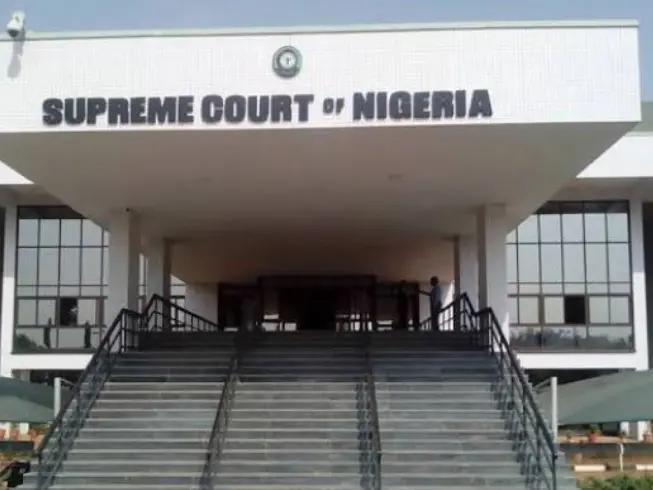
Nigeria is drifting and every issue is viewed from the prism of politics, which is why the Supreme Court ruling on Thursday, July 11, 2024, granting financial autonomy to the 774 local governments in the country has become an albatross. Those who went to Court to procure the judgement have their eyes on the next election rather than the next generation.

In the unanimous judgement of its seven-member panel, the Supreme Court upheld the suit brought by the federal government to strengthen the independence of local governments in the country, by granting them financial autonomy.

Insisting on what it termed the demand of justice which requires a progressive interpretation of the law, Justice Emmanuel Agim, who read the judgement said: “It is the position of this court that the federation can pay local government allocations directly to the local governments or through the states. In this case, since paying them through the states has not worked, justice demands that local governments’ allocations from the federation account should henceforth be paid directly to the local governments. I hold that the states’ retention of local government funds is unconstitutional.”

Of course, the Justices of the apex court know that their claim is not true. Instead, what is unconstitutional is their decision which flies in the face of Section 162(3) of the 1999 Constitution (as amended).

Yet, the people welcomed the judgement because over the years, acting with impunity, governors, typically, had made a huge mess of what ought to be an easy constitutional task.

By granting financial autonomy, the Supreme Court ordered the federal government to pay the 20.60 per cent monthly allocation of the 774 LGs directly to their exclusive accounts and not to accounts controlled by governors. The Court also ruled that state governors do not have the power to dissolve elected LG councils and replace them with caretaker committees as that violates Section 7(1) of the Constitution.

Senator Orji Uzor Kalu, former governor of Abia State, ululated thereafter: “The Supreme Court judgement on the autonomy of local governments is one that should be hailed and applauded especially for the courage and independence shown by the judiciary. The Supreme Court being a policy court did what is right and beneficial to the society.”

How independent Nigeria’s judiciary is especially in the current dispensation remains to be seen. But those in Kalu’s corner have a point. Since 1999, governors have fouled up the local government system by not only fiddling with the allocations to the Joint LG Accounts, but also, contrary to the dictates of the Constitution which states unequivocally that local governments must be democratically elected, continue to run them with caretaker committees.

But some Nigerians like Chief James Ibori, former governor of Delta State, demur.

Ibori, who together with Kalu belong to the Class of 1999-2007 governors with President Bola Tinubu, said on the contrary, the judgement is a coup against true federalism.

“Supreme Court has dealt a severe setback on the principle of federalism as defined by section 162(3) of the 1999 Constitution (as amended),” Ibori lamented, adding, “The court’s ruling on the matter is an assault on true federalism. The federal government has no right to interfere with the administration of local governments under any guise whatsoever. There are only two tiers of government in a federal system of government.”

Ibori believes that if the judgement subsists, it will erode the powers of the state governments and give more powers to the federal government, contrary to the principles of federalism. This, he contends, will be a dangerous precedent because “if the federal government can directly intervene in local government finances, it could potentially use this as a tool for political leverage.”

That is the crux of the matter – lack of political altruism. While it is true that governors have made a mess of the purpose for creating local governments, Tinubu, who created 37 local council development areas in Lagos, is not a great apostle of local government autonomy. The fact that his administration as governor of Lagos State unilaterally and unconstitutionally reallocated money meant for the 20 local governments in the state to entities unknown to the law is probably the beginning of the malaise he pretends to be fighting today.

What Tinubu is saying today is that President Olusegun Obasanjo was right in seizing the funds meant for Lagos State. So, not being a believer in the autonomy of local governments given his antecedents, the judgement is more political than legal. Could it then be that the executive railroaded the judiciary into handing Tinubu control of local governments for the purposes of 2027 elections?

But how far can the president go? He who plays the piper dictates the tune. Even if elections are conducted as mandated by the Conducted, as long as governors control the State Independent Electoral Commissions (SIECs) created by section 197 of the constitution, there is not much anyone can do. They will decide who wins elections at that level and LG autonomy will continue to be a mirage.

In fact, in their brazenness, most governors routinely dissolve SIEC boards put in place by their predecessors and reconstitute them with their own loyalists as soon as they assume office.

The credibility and quality of elections into local governments have to be sorted out if LG autonomy is to be guaranteed. But how can that be when the Secretary of Local Government and other key administrative staff are appointees of the state government? Besides, the state Houses of Assembly which exercise oversight on local governments are still strongly tied to the apron strings of their respective governors and could be used to witch-hunt any LG chairman or councillor who fails to do their bidding.

Some have suggested that the Independent National Electoral Commission (INEC) should be saddled with the responsibility of conducting LG polls. But with what the Prof Mahmud Yakubu-led INEC has become, there is little or no difference between SIEC and INEC.

And that takes me back to Brian Hall’s book. Nigerians are right now overcome with suspicion and anxiety about one another, a disparate people never united, not even by their collective misery inflicted on them by the ruling class – their oppressors.

To make matters worse, there are no statesmen. All we have are desperate politicians adept at gaming the system, people who will do everything no matter how egregious to win the next election. That is why barely one year after wangling themselves into office and making a total mess of governance, all permutations are towards 2027.

So, it does not really matter what the Supreme Court rules or what the Constitution actually says, governors will continue to rape the third tier of government, governance will continue going to the dogs and Nigeria will remain an impossible country until Nigerians insist on having transformational leaders unencumbered by foul smelling skeletons in their closets.


Meet Didi Esther Walson-Jack, Nigeria’s new Head of Civil Service

Prior to her recent appointment as Head of Civil Service of Nigeria’s Civil Service, Didi Esther Walson-Jack was the Permanent Secretary, Federal Ministry of Education.

Described as a civil servant that embodies professionalism, she was also Permanent Secretary, Federal Ministry of Water Resources.

Called to the Nigerian Bar in 1987, Didi Walson-Jack who holds a holds a Bachelor of Laws degree from the University of Lagos is married to Hon. Nimi Walson-Jack, a former General Secretary of the Nigerian Bar Association(NBA)

A gender activist, and an Ambassador to FEMinWASH, the Network of Female Professionals in WASH in Nigeria, during her time at the Federal Ministry of Water Resources, the WASH Gender Policy was developed.

Mrs. Didi Walson-Jack has built a remarkable career in public service, spanning several decades. Her journey began as a State Counsel in the Rivers State Ministry of Justice, and she has held various significant positions across both state and federal levels. Her wealth of experience and dedication to public service are evident in her numerous roles and achievements.

Following the creation of Bayelsa State in October 1996, Mrs. Walson-Jack was among the pioneer staff of the Bayelsa State Ministry of Justice and the newly formed Bayelsa State Civil Service. She played a crucial role in establishing foundational legal and administrative structures in the state.

As the only certified Legal Drafter in Bayelsa State, Mrs. Walson-Jack established and administered the Legal Drafting Department of the Ministry of Justice and the Legal Department of the State House of Assembly. She was responsible for drafting all edicts promulgated by Military Administrators from 1996 to 1999 and executive bills enacted as laws by the State House of Assembly from 1999 to 2002.

In the Federal Civil Service, Mrs. Walson-Jack served as an Assistant Director in the Ministry of Niger Delta Affairs, where she was later promoted to Deputy Director. Her leadership and administrative skills were further demonstrated during her secondment to the Bayelsa State Government, where she held key positions such as Deputy Chief of Staff, pioneer Commissioner of Science, Technology and Manpower Development, and Chief of Staff, Government House.

Mrs. Walson-Jack’s contributions to public service have earned her numerous accolades. She was named African Iconic Female Administrator of the Year (2024), received an Award of Excellence from the Ministry of Women and Children Affairs & the Wife of the Governor of Bayelsa State (2019), and was recognized as Public Administrator of the Year for Bayelsa State (2008). She is also a member of the National Institute for Policy and Strategic Studies, Nigeria’s foremost public policy think tank.

Beyond her public service career, Mrs. Walson-Jack is an accomplished author. Her best-selling autobiography, “Roses in the Thorns,” details her journey of resilience and triumph, offering insights into her personal and professional life.

Didi Walson-Jack’s appointment as Head of the Civil Service of the Federation, effective August 14, 2024, marks a significant milestone in her career. She takes over from Dr. Folasade Yemi-Esan, CFR, and is expected to bring her innovative flair, integrity, and stringent adherence to the rules and regulations.

Video: Why should a man want a house given to his wife back after love goes sour?

By Lillian Okenwa

  • As son of Nigeria’s ex-UK High Commissioner throws wife and sons into the street
  • FIDA Abuja vows to secure justice

“Why should a man want a house given to his wife back after love goes sour?” is the question now being asked following the viral video of Jamila Sidi Sirajo Tafida, ex wife of Mohammed Tafida and her three sons who were evicted from their home in Abuja.

Following a marital dispute, a Sharia Court of Appeal, Abuja in 2021 granted Jamila who was married to Mohammed Tafida, the son of Ambassador Dalhatu Tafida, a former Senate Leader and one-time Nigerian High Commissioner to the United Kingdom the custody of her three children.

Mohammed had demanded custody of their children, urging the court also to give an eviction order against his estranged wife.

The court granted her custody but declined granting an order that she vacates the property.

Mohammed was also asked to give her maintenance in the sum of N30,000 monthly but never paid even once. He reportedly proceeded to remove the children from school for more than a year and seized all their documents including passports and birth certificates.

Thereafter, his father, Ambassador Dalhatu Tafida reportedly sued Jamila at an Abuja Magistrates’ court demanding that she moves out of the property. This was also refused and the matter went on appeal which is still ongoing.

The family dispute appears to have taken a different dimeson with Jamila’s allegation in the viral video that some men influenced by her ex-husband threw her and the children and their belongings out of their home.

Law & Society Magazine gathered that the aggrieved woman had at different times been represented in court by the International Federation of Women Lawyers, FIDA Nigeria Abuja and that there is a subsisting matter in court.

All through the period the case moved from the Sharia Court, to Sharia Court of Appeal, FIDA Abuja kept a watching brief on the development.

Expressing her concern over the matter, Rekia Racheal Adejo-Andrew, a former Chairperson of FIDA Abuja said: “Their case has been ongoing for a long time now. I recall ADAMA and I used to go with her to the Sharia Court. It’s so pathetic and unfortunate. The husband throwing her things out alongside 3 children with 1 autistic child while their matter is still pending in Court is wicked and cruel.

“Increasingly, we’re seeing more of this Jankara cases in FCT Abuja. Another retired Army General threw the wife’s things out about two weeks ago from their Maitama home while matter is pending in Court.

“Why should a man want a house given to his wife back after love goes sour? Women need to be sensitized more about securing their properties by getting such gifts duly registered at the Land Registry in case love ever gets lost in the marriage. When will all of this madness stop?”

Jamila’s ex-husband’s highly connected family are said to be punishing her because she refused to give up her children.

The question now, asked Ogechi Abu, an Abuja Lawyer and ex-Vice Chair of NBA Abuja (Unity Bar) is: “What are the options under the law..? Should he sell a matrimonial home without discussing it with his wife even if he bought it? Is she just a mere occupant in the house at his mercy? This is a litmus case.

“This has become a terrible trend in the FCT. Selling a house without the knowledge of the woman and the FCT High Court will proceed to execute a warrant and steal in the process. I am involved in another case where it happened.”

Vice Chair of FIDA Abuja and Chairperson, Litigation Committee, Francisca Akaniro-Opara threw more light on the situation.

This woman is still FIDA’s client.

I can remember she returned to the office and complained about more injustice meted on her by her ex-husband and his family.

Moji our general secretary was assigned the file despite the fact that she already had a lawyer, who was representing her in Court. The General Secretary began to watch brief in her matter and when she couldn’t attend, sent representatives to court.

At a point, Moji called this woman’s ex after his best friend asked for mediation on the matter. However, on the day of mediation only the woman, CISLAC representatives, the General Secretary and Chioma our Secretariat Staff attended physically. The ex’s friend spoke to them through his phone apologizing for his absence and the absence of the ex who said he was not in Nigeria and away on an official assignment.

Following that meeting, FIDA got to speak to both sides and tried to calm things down, where they all agreed to settle out of court. We were still in the process of resolving the issues, especially as both parties refused to agree on the issue of the house, when the man probably took this step! Plus, he was the one asking that all cases in Court should be withdrawn and we are wondering why he would resort to this level of wickedness.

We are also aware that she has lawyers representing her, but FIDA will continue to fight for her and ensure she gets Justice.

Watch the video below.

Supreme Court got it wrong on LG autonomy

By Punch Editorial Board

Federalism is the imaginary bedrock of Nigeria’s constitutional democracy, designed to balance power between the centre and the sub-nationals. However, the recent judgement by the Supreme Court concerning local government autonomy has raised critical questions about the integrity of this federalist structure. The judiciary should interpret the Constitution to reinforce decentralisation.

In its latest judicial intervention on the suit filed by the Attorney-General of the Federation and Minister of Justice, Lateef Fagbemi (SAN), challenging the state governors’ control of LGs, the Court declared that the government is portioned into three tiers – federal, state, and local. This is a blatant assault on the tenets of federalism.

The judgement barred the governors from receiving, retaining, or spending the LG allocations. The Court held that states receiving LG funds violate Section 162 of the 1999 Constitution. It asserted that the Constitution states that any money leaving the Federation Account must be distributed to the three tiers of government. This is erroneous: in federalism, there are only two units of government – the centre and the federating units.

The Supreme Court erred in its judgement as the LGs have no place in a federal constitution. Therefore, one of the fundamental flaws of the 1999 Constitution is to list the 774 LGs in it. This must be corrected.

In federal jurisdictions, such as the United States, India, and Brazil, the constitution recognises only the centre and province/region/state governments. States fund the LGs as the councils are under them. Thus, the Supreme Court judgement is a conspiracy against federalism.

The Court ruled that state governors do not have the power to dissolve elected LG councils and replace them with caretaker committees. This violates Section 7(1) of the Constitution. While we agree with the justices that the councils should be run only by democratically elected officials, the question of financial autonomy for LGs has no place in a federal constitution.

The State and Local Government Joint Account was created because council bosses were looting funds and not paying primary school teachers. Since that account was created, primary school teachers are no longer owed salaries. Sadly, paying the monthly allocation directly to the councils would not stop the diversion of council funds.

Rather than chasing shadows at the Supreme Court, the Bola Tinubu Administration should focus on the political and economic restructuring of the country along the lines of true federalism. Federalism, as envisioned by the founding fathers, was intended to balance power between the central government and the constituent units, ensuring efficient governance, fostering development, and accommodating the country’s vast ethnic, cultural, and regional diversity.

The journey towards federalism has been fraught with challenges, inconsistencies, and deviations from its core principles. Nigeria’s federal structure was designed to prevent the concentration of power at the centre and promote regional autonomy.

The principle of federalism was meant to allow each region to govern itself while contributing to the collective unity and progress of the country. This was seen as essential for a country as diverse as Nigeria, with over 250 ethnic groups and many cultural identities.

Despite having the constitutional framework for federalism, Nigeria operates more as a centralised system. The Federal Government wields significant legislative and executive powers, often encroaching on areas that should fall under state jurisdiction. With 68 items, the Exclusive Legislative List entrenches the impunity of the Federal Government.

States should stop the illegal practice of dissolving elected councils and appointing caretaker committees. Local elections should be free, fair, and credible to ensure accountability.

The journey to true federalism in Nigeria requires a collective commitment to restructuring the current political and administrative framework. By bridging the gap between the theoretical foundations of federalism and the practical realities, Nigeria can harness its diversity, foster development, and build a more united and prosperous country.

PUNCH

Do you know the 5 most downloaded apps in the world?

In this article, Vanguard gives a rundown of the top 5 most downloaded apps in the world.

In today’s digital age, mobile apps have become an integral part of our daily lives, offering a wide range of functionalities from social networking to productivity.

With millions of apps available across various platforms, it’s fascinating to see which ones have captured the attention and preference of users worldwide.

In this article is a rundown of the top 5 most downloaded apps in the world in the first quarter of 2024, per rankings from backlink:

Most Downloaded Apps in the World

1. Instagram – 166 Million Downloads

Instagram, the social media giant known for its photo and video-sharing capabilities, continues to dominate the app market. The app’s constant updates, new features like Reels, and its focus on visual storytelling have kept it at the forefront of social media trends. The recent enhancements in shopping integration and direct messaging have also contributed to its high download numbers.

2. Facebook – 141 Million Downloads

Despite facing increased competition, Facebook remains a staple in the social media landscape. With 141 million downloads in Q1 2024, the platform’s wide range of features, from social networking to marketplace options, keeps it relevant. Facebook’s focus on community building and connecting users around the world ensures its place among the top apps.

3. TikTok – 137 Million Downloads


TikTok, the short-form video platform, continues to capture the attention of users globally with 137 million downloads. Its engaging content, viral trends, and powerful algorithm that curates personalized feeds have made it a favorite, particularly among younger audiences. The app’s influence on pop culture and its ability to drive viral content are unmatched.

4. WhatsApp Messenger – 115 Million Downloads


WhatsApp remains a crucial communication tool for millions of people around the world. With 115 million downloads, its end-to-end encryption, user-friendly interface, and diverse functionalities, including voice and video calls, make it indispensable. The app’s role in both personal and professional communication keeps it highly popular.

5. Telegram – 79 Million Downloads


Telegram rounds out the top five with 79 million downloads. Known for its robust privacy features, large group chat capacities, and extensive file sharing options, Telegram is a favorite among users looking for secure and versatile messaging options. The app’s continuous innovation in providing unique features, such as chatbots and channels, adds to its appeal.

Vanguard

How four kidnapped women, nursing mother and her 6-month-old baby escaped from bandits in Zamfara

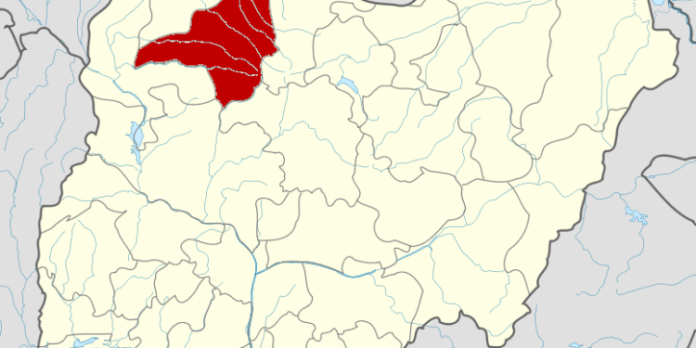
Five women, including a nursing mother and her 6-month-old baby who were abducted in Dan Isa village, Kaura Namoda Local Government Area of Zamfara State have escaped from their abductors. 

Bandits attacked the village on Sunday, July 14, 2024, killed five, and abducted 150 others. 

The secretary of the Ward Head of Dan Isa Village, Malam Hassan Isa, who confirmed the development to Daily Trust on Tuesday, said they all returned to the village on Monday. 

Hassan, popularly known as Yarima, said: “Those that escaped from the bandits are Na’imah Bashar and her baby, Sudais Bashar, Safiya Isau, Inno Lawal Mai Roba, Samira and the wife of one Alhaji Mukhtar Sani.”

Yarima, however, said the number of those that have been killed has risen to five as an additional corpse was found in the bush

“We first recovered the lifeless bodies of Sabi’u Daudu, Haruna Akyarkyara, Abdulmutallib Rabi’u and Bashar Idris in the early hours of Monday, and later in the evening, we discovered that of Zaharaddeen Aliyu,” he said. 

“So far, a total of 99 people have been confirmed to have been abducted on Sunday, but we are still compiling our list because the attack was launched on different villages

“This is the third time the bandits are attacking villages in this areas in recent days. They attacked a neighbouring village, Maguru, on Monday, July 8, 2024.  They attacked Dogon Kade on Saturday, July 13, 2024; and the following day, Sunday, July 14, they attacked Dan Isa village

“On Monday, July 15, the bandits came and shot one person and he is currently receiving treatment at Kaura Namoda General Hospital. They returned and rustled animals, looted foodstuffs and abducted people including women and children. This is the worst attack we have ever witnessed in the history of this village

“Following the attack, not a single woman sleeps in our village. Only members of the vigilante group and some men spent the night in the village, while the rest fled their homes for safety.

On what the current situation is in the village, Yarima said: “I swear to Allah, presently, we do not have food to eat in the village. We are lucky this morning (yesterday), one of us that is residing in Lagos donated 100 loaves of bread to us which we shared among the few people that have returned to the village.”

Another resident of the village, names withheld, said the lifeless bodies of the slain victims of the attack were buried on Monday, July 15

“We have to seek for protection from the personnel of Zamfara State owned security outfit, Askarawa and the local vigilante group to conduct the burial,” he said. 

“Several other people have sustained various degrees of injuries during the unfortunate attack. Yakubu Yahuza, Abdulsalam Yusuf, Shafi’i Yahuza Babbar Ruga, Zahra’u Sani and Kabiru Umar were all injured during the attack. Zahra’u is a pregnant woman and she sustained a fracture in her leg.”

Recounting her ordeal, Na’imah, who escaped together with her son, told the Daily Trust on the phone that she managed to jump from a moving motorbike that was carrying her from Dan Isa village.

“We were beaten up by the bandits as they dragged us to mount the motorbikes. Two abducted men sustained gunshot wounds; one was brushed by a bullet in the head and the other wounded in the stomach,” she said. 

“I am very grateful to God; this is the only thing I can say. It was by his Grace that I escaped.” 

Linda Ikeji

Police reveals how Lagos traditional ruler was scammed of multimillion-naira by Snapchat lover

The police on Tuesday arraigned a suspected fraudster, Oluwatobi Ajibola, before the Ikeja Chief Magistrates’ Court in Ogba for defrauding a traditional ruler, Emmanuel Olofinjana, to the tune of N6.3 million.

The defendant, 29, was arraigned on three counts bordering on stealing by extorting the traditional ruler that she was pregnant and had given birth to twin babies for him, knowing it to be false.

Appearing before Magistrate Lateef Owolabi, the police counsel, Insp. Oluwasegun Dada urged the court to take the defendant’s plea.

Mr Owolabi said the offence was committed between August 2023 and July 2024 at Kayode Oduba Drive, Thomas Estate, Ajah, Lagos. He said the defendant tricked the complainant to the tune of N6.3million.

“On July 9, at the above-mentioned address, she conducted herself in a manner likely to cause a breach of peace by deceiving the complainant.

“She told him that she had given birth to twins for him, knowing fully well that it was false,” he said.

The defendant pleaded not guilty when the charges were read to her.

The prosecutor said the offences contravened sections 168(f), 314(1)(2) and 323(1) of the Criminal Law of Lagos, 2015.

Section 314 attracts 15 years’ imprisonment for anyone guilty of defrauding another under false pretences.

Section 323 attracts two years’ imprisonment for anyone found guilty of a fraudulent trick to obtain money or goods.

In view of the plea, the defence counsel, Emmanuel Apasobi, urged the court to grant her bail in the most liberal terms.

In his ruling, the magistrate, Mr Owolabi, granted the defendant N400,000 bail with two sureties in like sum.

Mr Owolabi instructed that one of the sureties must be a family member while the other a civil servant. He also said proof of tax payments to the Lagos State government must be provided, as well as a verified address.

The case was adjourned until July 29 for trial.

Narrating his ordeal after court proceedings with journalists, Mr Olofinjana, the Aare Oba Ogboni Isedale, stated that he was a victim of an online romance scam.

Mr Olofinjana said he met the lady online through Snapchat, and they had an affair briefly before he travelled to the UK.

He said the lady called him to say she was pregnant and started extorting money from him till she deceived him into giving birth to twins.

NAN

TIPS