Home Blog Page 545

CAC writes Attorney General, wants fiat to prosecute Nigerian Law Society

  • *As NLS insists on compliance with January court order

Notwithstanding a January 2024 order of a Federal High Court in Abuja which ordered the Corporate Affairs Commission (CAC) to approve the registration of Nigerian Law Society (NLS), a new professional body of lawyers, the Registrar General of the Corporate Affairs Commission Hussain Ishaq Magaji, (SAN), has written the Attorney General of the Federation, Prince Lateef Fagbemi, requesting for an approval to prosecute the Nigerian Law Society and other corporate entities operating without registration in the country.

The Senior Advocate of Nigeria in a letter dated 15, August 2024 requested for the Attorney General’s fiat to carry out the prosecution.

The letter —CAC/RG/FMOJ/060/2024/Vol.llt — titled “REQUEST FOR FIAT OR CONSENT TO EXERCISE PROSECUTORIAL POWERS OF THE ATTORNEY GENERAL OF THE FEDERATION IN SECTION 174 OF THE 1999 CONSTITUTION MADE PURSUANT TO SECTION 104 (2) OF THE ADMINISTRATION OF CRIMINAL JUSTICE ACT, 2015,”  sighted by Daily Trust is believed to be targeted at curbing high level fraud in corporate administration.

A part of the letter reads: “The request is brought under S.104 (2) of the Administration of Justice Act, 2015. The delegation would facilitate effective exercise of regulatory powers against registrable entities that refuse to register or formalize their businesses or commit other criminal offences in corporate administration.

“Apart from general Fiat, I also specifically request for consent to prosecute Trustees of the Nigerian Law Society who have commenced operational activities without registration in direct violation of section 863 (2) of the Companies and Allied Matter Act, 2020.

”The CAMA 2020 empowers the CAC as the sole registration body and regulator of all businesses and corporate entities as well as Associations in the country…”

City Lawyer had earlier reported that the NLS has vowed to commence contempt proceedings against the principal officers of the CAC unless it issues “a genuine and authenticated disclaimer, denouncing the defamatory Public Notice, purporting to have been issued by the Commission.”

In a statement made available to CITY LAWYER, the embattled lawyers’ association stated that it was giving the commission the “benefit of doubt” in the “age of misinformation, disinformation and fake news.”

Signed by its new President, Chief Mela Audu Nunghe SAN, the NLS however warned that if its demand is not met within 48 hours, “the Nigerian Law Society will immediately commence contempt proceedings against its principal agents.”

CAC had refused to approve the name “Law Society of Nigeria” among two others, stating that the “name is closely similar to Nigerian Bar Association and will mislead.”

This led the nascent association to head to court to press its registration by the commission. CITY LAWYER recalls that Justice Gladys Olotu of the Federal High Court sitting in Abuja had on December 15, 2023 directed the CAC to register the lawyers’ association.

The court ordered CAC “to approve for registration and thereafter register any of the proposed names submitted to it on behalf of the plaintiffs… and issue a certificate of registration to that effect”. The NBA has however appealed against the decision as an interested party.

The arrow-heads of the new association are Chief Bolaji Ayorinde SAN, Mr. Mela Audu Nunghe SAN and Amb. Garba Gajam among others. The Bar Leaders are listed as Trustees of the association.CAC had in a notice dated August 6, 2024 and titled “STATUS OF NIGERIA LAW SOCIETY” stated that “Section 863 (2) of the Companies and Allied Matters Act No. 3 of 2020 makes it an offence for individuals, corporations or associations that require registration under the Act to commence operation or activities without prior registration.“The above named society has not only opened a physical office at No.73 Ebitu Ukiwe Street, Jabi, Abuja but has also appointed board of trustees, opened state chapters and established an online presence at www.nls.org.ng where it is actively recruiting members.“We therefore advise members of the general public to refrain from dealing with the society to avoid aiding and abetting illegal activities.”Contempt proceedings for disobedience of a court order usually includes a request to jail the defaulters.

The statement reads:

PRESS STATEMENT BY THE NIGERIAN LAW SOCIETY IN REACTION TO CAC’S DEFAMATORY PUBLIC NOTICE OF MONDAY, AUGUST 5, 2024

The attention of the Nigerian Law Society (NLS) has been drawn to a misleading and defamatory Public Notice purportedly issued by the Corporate Affairs Commission (CAC) and the NLS wishes to react as follows:

Firstly, Section 40 of the Constitution of the Federal Republic of Nigeria guarantees the right to associate freely, with or without incorporation.

Section 823 of the Companies and Allied Matters Act, 2020 (CAMA) clearly makes it an option for an association of persons to register with the CAC; while Section 863 (2) of CAMA cited in the said Public Notice, is clearly inapplicable to non-profit organizations.Section 823 of CAMA provides thus:

“Where two or more trustees are appointed by any community of persons bound together by custom, religion, kinship or nationality or by anybody or association of persons established for any religious, educational, literary, scientific, social, development, cultural, sporting or charitable purpose, they MAY, if so authorized by the community, body or association (in this Act referred to as “the association”) apply to the Commission in the manner provided for registration under this Act as a corporate body.”

Secondly, the Court of Appeal in NBA vs Fawehinmi (1986) 2 NWLR (Pt. 21) 224, p. 241, paras C-D, also validated the legal status of unregistered associations.

The foregoing notwithstanding, it is public knowledge that the NLS had applied to the CAC for registration, failing which an action was brought against the CAC in Suit No.:

FHC/ABJ/CS/482/2023 Chief Bolaji Ayorinde, SAN & 5 Ors. vs CAC; and judgment was entered in favour of the NLS on 15th December, 2023, directing the CAC to register the NLS forthwith.

In the age of misinformation, disinformation and fake news, the NLS is minded to give the CAC the benefit of doubt. Accordingly, the CAC under the leadership of its learned Registrar-General, is hereby given 48hrs to issue a genuine and authenticated disclaimer, denouncing the defamatory Public Notice, purporting to have been issued by the Commission; failing which the Nigerian Law Society will immediately commence contempt proceedings against its principal agents.

In the meantime, the general public is urged to kindly ignore and discountenance the purported public notice.

Tuesday, August 6, 2024.

I am vindicated – Shehu Sani says after Senator Kawu disclosed N21million monthly earnings

Shehu Sani, A Former Lawmaker, Has Reacted To A Statement By Senator Sumaila Kawu Who Revealed That He Receives A Total Of N21 Million Monthly In Salaries And Allowances.

Sani, Who Previously Represented Kaduna Central Senatorial District, Had Asserted That Senators Receive A Monthly Running Cost Of ₦13.5 Million And A ₦750,000 Salary.

In Response, The Revenue Mobilisation Allocation And Fiscal Commission (RMAFC) Contradicted Sani’s Claim, Stating That A Senator’s Salary Is Approximately N1.06 Million.

However, In A Recent Interview With BBC Hausa Service, Senator Sumaila Kawu Stated That His Monthly Salary Is Around N1 Million, With Deductions Bringing It Down To About N600,000. He Explained That His Total Monthly Take-Home, Including Allowances And Other Expenses, Amounts To N21 Million, Which Covers The Operational Costs Of His Senatorial Office. Kawu Also Noted That The RMAFC Manages Some Of The Salary Deductions.

Reacting To Kawu’s Revelation, Sani Took To X To Write: “Yesterday, The RMFAC Refuted My Statement But I’m Vindicated By Senator Kawu Sumaila Who Confirmed That The Monthly Alert Is N21 Million And Not N1 Million.

“RMFAC Make Una Mind Yourself.”

NBS reveals Lagos LGAs received highest revenue from Federation Account in first half of 2024

National Bureau of Statistics’ (NBS) latest data has revealed that all 774 local government areas (LGAs) across the 36 states and the federal capital territory (FCT) received a total net statutory allocation of N1.69 trillion from the federal account allocation committee (FAAC) in the first half of 2024.

It however revealed that all 20 LGAs in Lagos received more FAAC revenue compared to others in Nigeria.

NBS data showed that Alimosho LGA received N11.13 billion in the first six months of 2024, making it the highest FAAC recipient among the 774 local councils, according to the NBS.

Ajeromi/Ifelodun LGA came next with N8.90 billion, while Kosofe LGA received N8.80 billion in the first half of 2024.

Other top monetary receivers include Mushin (N8.69 billion), Oshodi/Isolo (N8.66 billion), Ojo (N8.58 billion), Ikorodu (N8.41 billion), and Surulere (N8.24 billion).

The lowest LGA FAAC earners include Ifedayo LGA in Osun state, – N1.30 billion, Ilejemeji in Ekiti which got N1.38 billion, and Bakassi in Cross River – N1.39 billion.

On July 11, 2024, the supreme court  ordered the federal government to withhold allocations of LGAs governed by unelected officials appointed by governors.

Here are the top 35 LGAs in Nigeria by FAAC allocation in the first half of 2024.

S/NStateLGA AREANet statutory allocation
1Lagos ALIMOSHON11,125,569,058.06
2Lagos AJEROMI/IFELODUNN8,904,728,579.89
3Lagos KOSOFEN8,803,368,865.59
4Lagos MUSHINN8,693,172,825.22
5Lagos OSHODI/ISOLON8,655,276,499.40
6Lagos OJON8,575,594,528.96
7Lagos IKORODUN8,414,325,544.95
8Lagos SURULEREN8,238,506,999.04
9Lagos AGEGEN8,080,824,853.54
10Lagos IFAKO/IJAYEN7,964,424,656.85
11Lagos SOMOLUN7,861,958,799.65
12Lagos IKEJAN7,562,322,910.33
13Lagos AMOWO-ODOFINN7,548,291,846.14
14Lagos LAGOS MAINLANDN7,537,561,759.80
15Lagos ETI-OSAN7,524,930,309.64
16Lagos BADAGRYN7,325,668,449.83
17Lagos APAPAN7,176,937,789.60
18Lagos LAGOS ISLANDN7,140,136,090.46
19Lagos EPEN7,123,051,691.47
20Lagos IBEJU-LEKKIN6,821,145,324.58
21FCT Abuja ABUJA MUNICIPALN6,294,647,971.10
22Rivers PORT HARCOURTN4,432,519,769.65
23FCT Abuja BWARIN4,289,385,337.67
24Rivers OBIO/AKPORN4,104,556,959.77
25FCT Abuja GWAGWALADAN3,987,711,966.03
26FCT Abuja KWALIN3,814,664,563.40
27FCT Abuja KUJEN3,813,776,540.26
28FCT Abuja ABAJIN3,602,765,765.03
29Kano NASSARAWAN3,553,724,933.52
30Rivers KHANAN3,513,494,113.36
31Rivers OGBA/EGBEMA/NDONIN3,489,521,634.05
32Rivers OBUA/ODUALN3,478,140,399.80
33Bauchi BAUCHIN3,419,144,260.39
34Rivers ETCHEN3,406,781,729.40
35Rivers AHOADA WESTN3,338,745,927.24

The full list can be found here.

LindaIkeji/TheCable

Taraba housewife in custody for burning lips of 8-year-old step-grandson

A 42-year-old housewife, Ngozi Onwuasoalya has been arrested and detained by the police in Taraba State for allegedly burning the lips of her eight-year-old stepgrandson, Julius Chinecherim over a N500 dispute.

The acting police spokesperson in the state, Gambo Kwache, confirmed her arrest to PREMIUM TIMES on Monday in Jalingo, the state capital.

Mr Kwache said the case was before the criminal investigation department while the culprit was in custody at the Wukari division.

The boy, on admission at the Federal University Teaching Hospital in Wukari, had his lips burned with firewood for misplacing N500.

The police arrested the woman on Wednesday following a tip-off from concerned community members.

The Chairman of Wukari Local Government, Samaila Dauda, also confirmed the incident to PREMIUM TIMES.

“The authorities have acted quickly in response to the situation, and the accused is currently in detention,” Mr Dauda said.

Mr Dauda said the accused woman would be charged in court soon.

Community members who spoke with our reporter demanded justice for the lad.

One of them, Julius Iliya, urged the state government and child protection organisations to intervene.

He called for measures to protect vulnerable children in the state against domestic abuse.

Premium Times

Ariwoola’s closing appointments: Odinkalu condemns appointment of two judges from one dad within a month

  • As Okutepa insists on merit based judicial appointments

The National Judicial Council (NJC) has just announced the appointment of some new state high court judges but law teacher and rights activist, Chidi Anselm Odinkalu questions some of the appointments, pointing out that the last-minute judicial appointments by the exiting Chief Justice Justice Olukayode Ariwoola, does not mean well for the Nigerian judiciary.

Odinkalu in an X post beamed his spotlight on Ondo State where two siblings whose father was an ex Chief Judge of the state and whose other sibling is a serving judge have been appointed judges within a month.

The teacher of law in the tweet said: “So, @njcNig just cleared the last judicial nominations under Olukayode Ariwoola. In Ondo State, they nominated 6 for the High Court. 1 of them: her Dad was a CJ; her sister is a judge; her brother was appointed judge of @fcthighcourt last month. Now she is [appointed],”

Read also: NJC recommends Justice Kekere-Ekun as CJN, 28 others as Judges of diverse Courts

Likewise, a Senior Advocate of Nigeria Jibrin Samuel Okutepa called for the freeing of the judiciary from the abuses it faces in the country.

Okutepa in a statement released Thursday, stressed on the key role of the judiciary and the legal profession in nurturing and fortifying democracy. “All over the world, the judiciary and the legal profession hold the key to democratic growth and development,” Okutepa stated, arguing that democracy cannot thrive in a society where the judiciary is controlled by the political class.

Stressing the importance of the rule of law, Okutepa called upon all well-meaning Nigerians, particularly members of the legal profession, to champion the fight for judicial independence. He criticized the practice of summoning judges to government houses to receive cars, which are then celebrated as achievements of the executive. Okutepa argued that providing cars to judges is not an achievement but an entitlement and that the judiciary should not be treated with less dignity.

While acknowledging the difficulty in comprehending allegations of judicial corruption without empirical evidence, the Senior Advocate noted that some decisions and pronouncements by certain judges appear to lend credence to such allegations. He emphasized the need to return to the days when judgments had justice in both content and character, highlighting the existence of incorruptible judicial officers in Nigeria who have the strength of character to resist temptations and pressures.

Okutepa lamented that these upright officers often suffer stagnation and indignity in silence, lacking support for their elevation. He called upon the legal profession to identify and fight for the elevation and celebration of these judicial officers. Furthermore, he urged Nigerian politicians to leave the judiciary alone, emphasizing that the judiciary must handle its own affairs, from appointments to elevations and assignments, without outside interference.

The Senior Advocate called upon the National Judicial Council (NJC) to understand Nigerians’ concerns about the declining integrity and awe of judicial institutions. He stressed the need for the NJC to recommend only the best candidates for judicial positions, resisting any pressure to recruit individuals with character deficits. Okutepa emphasized the seriousness of a judge’s job and the importance of appointing knowledgeable lawyers who cannot be influenced by pecuniary or other considerations.

Asserting that Nigeria cannot develop if the judiciary is seen as weak and incapable of asserting its independence and impartiality in decisions, Okutepa urged the Nigerian judiciary to liberate itself from domestic domination and avoid any conduct suggestive of its availability to be used by any person or group. He highlighted the superiority of the judiciary in societies where the rule of law prevails, emphasizing that judicial decisions are not political decisions to be negotiated in breach of the constitution.

In conclusion, the Senior Advocate called upon Nigerian politicians to respect the judiciary and charged the judiciary to respect itself, stating that once the judiciary respects itself, the people will have confidence in it. He emphasized the need for confidence in the judiciary for sustainable democratic growth and development, stating that this is the way forward for Nigeria.

NJC recommends Justice Kekere-Ekun as CJN, 28 others as Judges of diverse Courts

  • As Oduduwa group petition Code of Conduct Bureau/Tribunal over alleged false declarations and unverified statements by CJN-Designate

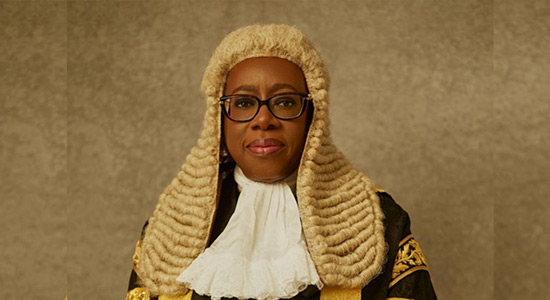
The National Judicial Council has recommended Justice Kudirat Kekere-Ekun to be the next Chief Justice of Nigeria.

The recommendation was made in an impromptu closed-door meeting initially slated for Friday but brought forward to Thursday in Abuja.

The NJC also made recommendations for 27 others as judges of the state high court in the meeting, which is still ongoing.

A Thursday 15 August statement signed by Soji Oye, Esq., NJC’s Director, Information announced the appointments. Read the full text below.

The National Judicial Council at its 106th Meeting presided over by the Hon. Chief Justice of Nigeria, Hon. Justice Olukayode Ariwoola, GCON, held on 14 & 15 August 2024, recommended Hon. Justice Kudirat Motonmori Kekere-Ekun, CFR, to President Bola Ahmed Tinubu, GCFR, for appointment as the Chief Justice of Nigeria.

This is imperative as Hon. Justice Olukayode Ariwoola, GCON, will formally bow out of office as the Hon. Chief Justice of Nigeria next week Thursday on 22 August 2024.

Council also recommend twenty-seven (27) candidates for appointment as Judges of States Courts and a candidate for appointment as Kadi of the Sharia Court of the FCT, Abuja to their various State Governors and Mr. President as follows:

CHIEF JUSTICE OF NIGERIA

  1. Hon. Justice Kudirat Motonmori Kekere-Ekun, CFR

SIX JUDGES, HIGH COURT OF KWARA STATE

  1. Olawoyin, Ibijoke Olabisi
  2. Abdulrazaq, Fatimah Funsho
  3. Folorunsho, Oba Muritala
  4. Dikko, Yusuf Adebayo
  5. Adeniyi, Oluwatosin Adenike
  6. Osuolale-Ajayi, Temitope Olalekan

ONE JUDGE, HIGH COURT OF KADUNA STATE

  1. Zubairu, Murtala Ja’afaru

FOUR JUDGES, HIGH COURT OF BENUE STATE

  1. Kor, Vincent Tersoo
  2. Ikwulono, Maigida Maimuna
  3. Adagba, Nguhemen Julie
  4. Tor, Damian Tersugh

TWO JUDGES, CUSTOMARY COURT OF APPEAL, BENUE STATE

  1. Onche, Ogah Inalegwu
  2. Igba, Theophilus Terhile

EIGHT JUDGES, HIGH COURT OF RIVERS STATE

  1. Onyiri, Frank
  2. Ugoji, Victor Chinedum
  3. Obomanu, Godswill Vidal
  4. Oguguo, Rita Chituru
  5. Fubara, Alatuwo Elkanah
  6. Kokpan, Bariyima Sylvester
  7. Obu, Ibietela Innocent Madighi
  8. Wifa-Adedipe, Lesi

SIX JUDGES, HIGH COURT OF ONDO STATE

  1. Daomi, Williams Adebisi
  2. Fabuluje, Adewumi William
  3. Ogunwumiju, Mobayonle Idowu
  4. Demehin-Ogunbayo, Inumidun Happiness
  5. Kpemi, Ojufisintei Justinah
  6. Adegoroye, Olufunke Adeola

ONE KADI, SHARIA COURT OF APPEAL, FCT ABUJA

  1. Muhammad, Lawal Munir

All recommended candidates are expected to be sworn-in after the approval of the NJC recommendations to the President and their respective State Governors.

Meanwhile a group known as Oduduwa Descendants Coalition for Justice has dragged the CJN-designate to the Code of Conduct Bureau and Tribunal over allegations bordering on the non-declaration and false declaration in the forms she submitted to the anti-graft body at various times.

In the petition dated the 10th of August, 2024 and signed by the National Coordinator, Comrade. Kehinde Johnson Olawale, the group alleged that “as a Judicial officer, Hon. Justice Kudirat Kekere-Ekun failed or refused to abide by the provisions of the Code of Conduct Bureau and Tribunal Act, which has been in force since 1991. For example, in May 1999, at the end of her tenure as Chairman of the Robbery and Firearms Tribunal, Ikeja Zone ll Lagos, she failed to submit her assets declaration.”

Olawale equally stated that “in 2013, at the end of her tenure as a Justice of the Court of Appeal Nigeria, she failed to submit her assets declaration form. The assets declaration form she eventually filled and submitted upon assumption of office as a Justice of the Supreme Court of Nigeria contained false declarations and unverified statements”.

In the concluding part of the petition, the group advised the anti-graft agency that “the report of your investigation will assist the National Judicial Council and the Senate of the Nigerian National Assembly to come to a balanced decision as to the suitability of Hon. Justice Kekere-Ekun for appointment as Chief Justice of Nigeria.”

The petition which was received by the Chairman of the Code of Conduct Bureau on the 12th of August 2024, was sighted by this reporter.

The Chairman of the National Judicial Commission, Senate President and Attorney General of the Federation were all copied.

When contacted, a staff of the Intelligence, Investigation and Monitoring Department of the anti-graft agency who pleaded anonymity, said that the usual practice was that the Chairman of the Bureau would request the public officer against whom the petition was written to offer an explanation in writing in response to the allegations made out in the petition.

If truly there is no infraction of the Code of Conduct Bureau and Tribunal Act, the petition will be dismissed. But, if after investigation a prima facie case is established, the matter will be referred to the Code of Conduct Tribunal for prosecution of the accused.

He referred to the similar case of a former Chief Justice of Nigeria Hon. Justice Walter Onnoghen, who was investigated and prosecuted by the Code of Conduct Bureau.

[VIDEO] Senior Attorney commends Anambra lawyer for exposing alleged extortion attempt by court clerk in Awka

Lawyer and public affairs analyst Sonnie Ekwowusi has condemned the recent extortion attempt by a court clerk in Awka, Anambra state while commending the lawyer who went public with the information for his courage.

A lawyer in Awka, Anambra State, had sparked outrage after alleging an extortion attempt by a court clerk at Magistrate Court 2, Awka. The lawyer, who did not disclose his name shared his ordeal in a video posted on X.com under the handle @BishopPOEvang..

Saluting his courage and urging citizens not to succumb to extortion, Ekwowusi said: “Thank you for sharing. This is the spirit. We must not succumb to the extortionist bid of our court personnel-registrars, court clerks, court bailiffs etc.

“But other lawyers and other litigants have already succumbed to it? And so what? You must not succumb to it. Say No to bribery and extortion. I know it is difficult to maintain one’s integrity in the Nigerian judiciary.

“Nevertheless you should not join them. Stand your ground as this young lawyer in this video has done.

“I have written several petitions against corrupt Magistrates and Judges whom I have encountered in the course of my legal practice.

“We must redeem the battered image of the Nigerian judiciary. Can you imagine the Nigerian judiciary being listed as the most corrupt institution in Nigeria? Also, can you imagine Nigerian judges being listed as the most bribe takers in Nigeria?

What is happening to us? I am ashamed of being called a Nigerian lawyer. You can argue from now till thy kingdom come but the public verdict stands.”

The lawyer who spoke in the video explained that after the magistrate granted bail to his client, who had met all the bail conditions, the process was obstructed by the court clerk, who demanded a bribe of 20,000 naira before proceeding with the necessary documentation.

“The Clerk of the court demanded that I must give her 20,000 naira before she takes the records (surety bonds) to the Magistrate to sign,” the lawyer said, adding that the clerk insulted him when he refused to comply.

He went on to stress that this incident is indicative of broader corruption within the justice system, emphasizing the need for fair treatment, especially for ordinary citizens.

The lawyer challenged the practices surrounding bail, stating, “When somebody is granted bail, bail is free at the police station and in the court. Nobody has the right to demand any money before the bail bond is perfected.”

Vera Okolo—A forgotten heroine and the Super Falcons’ ongoing struggles

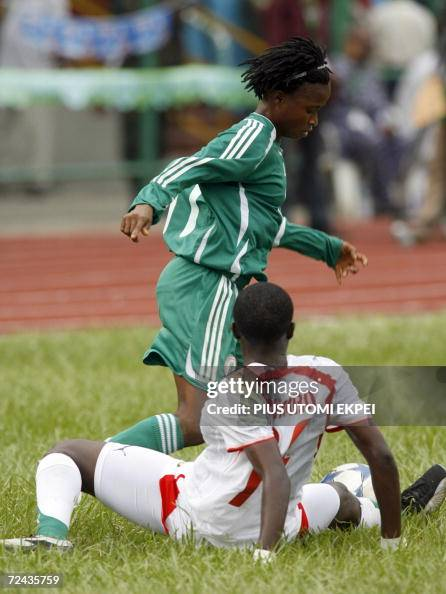
In the history of Nigerian women’s football, Vera Okolo’s name stands out as a symbol of triumph and resilience. As a key player for the Super Falcons, Okolo with injury made history by scoring Nigeria’s only winning goal at the Olympics, a decisive strike against Japan during the Athens 2004 Games at the Karaiskakis Stadium. This moment remains the only victory the Super Falcons have celebrated against Japan, the second-best female team globally at the time, highlighting Okolo’s significant contribution to Nigerian football.

Despite her on-field achievements, Okolo’s post-retirement life has been marked by neglect and hardship. Her career faced a tragic turn during the 2008 Olympic qualifiers in Ghana, where she suffered a severe injury while playing for Nigeria. The injury, sustained while representing her country, led to the termination of her contract with KPV FC Kokkola in Finland, leaving her career in jeopardy. Shockingly, the Nigerian Football Federation (NFF) abandoned Okolo at the Airport upon their return to the country and for eight months thereafter, providing no support or assistance during a critical period.

During the period of these 8months, Vera Okolo underwent a minor surgery which she paid for at the University Collage Hospital (UCH), Ibadan from where she was referred for a major surgery in Germany. After much persuasion and media reports, the NFF committed to sponsor the surgery and after surgery therapy in the Vivantis Hospital, Berlin, Germany. After finally receiving surgery in Germany, Okolo found herself stranded and abandoned once more, by the NFF, which left her without the necessary funds for after surgery therapy. Struggling to make ends meet, she resorted to begging at the Nigerian Embassy in Germany to afford after surgery therapy and secure her return to Nigeria. This experience reflects a broader issue of neglect and lack of support for athletes who have dedicated their lives to representing the country.

Upon her return to Nigeria, she continued her after surgery therapy in Lagos for 9 months sponsored by the NFF. This ordeal took her over two years and kept her out of football for the period and technically ended her international football career.
Upon recovery, she joined the Rivers Angel football club and thereafter moved over to Delta Queens and retired from active football in 2014. However, in 2015, she went on a self sponsored 1year coaching program at the National Institute of Sports (NIS), whereas her contemporaries in other states were sponsored by their state governments.
In the same year the Delta State Sports Commission halted Okolo’s salary despite her qualifications and experience, she faced exclusion from the system, while others with less impressive credentials were integrated. Currently she is undergoing a self-sponsored CAF C coaching course, Okolo remains a valuable, yet untapped, resource for Nigerian football.

The recent loss of the Super Falcons to Japan in the 2024 Olympics, with a score of 3-1, underscores the ongoing challenges faced by the team. This defeat brings back memories of Okolo’s historic goal against Japan in 2004, the only win the Falcons have achieved in their Olympic history against Japan. As the national team continues to seek success, Okolo’s story serves as a stark reminder of the sacrifices made by athletes and the need for recognition and support.

Given her vast experience, knowledge, and dedication to the sport, Okolo should be included on the coaching team of the Super Falcons. Her firsthand understanding of the game and her journey through the highs and lows of Nigerian football make her an invaluable asset. Her inclusion would not only provide the team with a seasoned professional but also serve as a significant step towards rectifying the neglect she has faced.

Vera Okolo’s journey is a tale of a talented footballer who brought glory to Nigeria but was abandoned in her time of need. Her experiences highlight the systemic issues within Nigerian sports administration and the urgent need for better treatment and recognition of female athletes who have given so much to the nation. It is time for figures like Okolo to receive the accolades they deserve and for the country to address the neglect that has plagued its sporting heroes. Including Okolo in the coaching team would be a meaningful acknowledgment of her contributions and an opportunity to elevate the Super Falcons’ coaching staff with her rich expertise.

Culled from The Authority

Concerned Lawyer issues a 7-day ultimatum for Odinkalu to write an apology to CJN, CJ FCT, Justice Sylvanus Oriji

THE NEEDLESS FLIPPANCY OF CHIDI ODINKALU: URGENT NEED FOR RESTRAINT, RESPECT FOR JUDICIAL OFFICERS, AND RESPONSIBLE AND SENSIBLE CRITICISM, DEVOID OF POLITICAL UNDERTONES, AN ULTIMATUM TO ISSUE  A WRITTEN APOLOGY TO THE CHIEF JUSTICE OF NIGERIA, CHIEF JUDGE OF THE HIGH COURT OF FCT AND HON JUSTICE SYLVANUS ORIJI, BY PROF CHIDI ODINKALU, WITHIN THE NEXT SEVEN DAYS

In the past weeks, the nation of Nigeria has been engulfed in protests, which in some states turned violent. Most states of the federation foresaw the likelihood of violence, destruction of properties, and massive lootings by miscreants taking advantage of the protest to perpetrate their evil acts. They took remedial steps to curb the spread of vandalism by limiting the protest only to specified locations.

The proactive measures taken by Lagos and Ogun states, which applied to the court to limit the protest within certain locations, underscore the crucial role of the legal process and the rule of law in preventing violence and looting while balancing the rights of protesters in Nigeria.

Given the precedents set by other states, it was not unexpected that the FCT administration would also seek lawful measures, through the High Court of FCT, to restrict the areas for demonstrations or protests to the stadium. This action was a crucial part of maintaining law and order and ensuring the safety of the public by the Minister of the FCT, just as done at the directive of the governors of other states of the Federation.

It was, therefore, disheartening to read Chidi Odinkalu’s disrespectful and disparaging remarks against the revered Hon. Justice Sylvanus Oriji, particularly in relation to the court orders. This incident underscores the need for respectful criticism based on verifiable facts, procedural rules and law, especially from a legal professional of his stature, a Professor of law, and a human rights activist who once led the National Human Rights Commission in the Federal Republic of Nigeria.

One may wish to forgive the Professor of Law for his inherent and palpable ignorance of judicial processes since the Professor is not a known practising lawyer in Nigeria. However, given Prof Chidi Odinkalu’s now frequent, incessant, and consistent insults and disrespectful comments against judicial officers, it became necessary to put the facts straight.

Not too long ago, before the protest that took place in the nation,  Prof Chidi Odinkalu, wrote on Thisday online publication accessible at THE ROMANCE BETWEEN THE EXECUTIVE AND JUDICIARY – THISDAYLIVE, against the Chief Judge of FCT and Hon Minster of FCT, Nyesom Wike, as follows:

Two years after his inauguration in October 2021 as Chief Judge of the High Court of the Federal Capital Territory (FCT High Court), Husseini Baba Yusuf, decided in November 2023 that it was time to indulge in a sport of institutional mating games with the newly installed Minister of the Federal Capital, Ezenwo Nyesom Wike. By a stroke of coincidence, both men are members of the Body of Benchers, which describes itself as “the legal body of practitioners of the highest distinction in the legal profession.”

            To initiate the mating, the Chief Judge relocated to the office of the Minister with the judges of the court where they proudly put their assets on display for the edification of the minister. At the meeting, he reminded the Minister that “as a judiciary we are part of the government and we expect that we should be able to do things that should make government work….”

The Chief Judge was desperate to let the Minister know how ready he was to consummate this relationship. To ensure that he got fullest ministerial attentions, the Chief Judge made it known that he had instructed the Administrative Judges in charge of the various judicial divisions of the FCT High Court that all cases involving the Federal Capital Territory “would only be assigned by the Chief Judge.”

            The following quarter, when the FCT High Court went into the market for judicial appointments, they allocated one out of the 12 new vacancies on offer to the FCT Minister, to which he promptly deputed his sister-in-law. As the new judges got inaugurated in July 2024, the Minister quickly announced that the judges in the FCT the proud beneficiaries of new housing development. The relationship between the Chief Judge and the Minister had moved from intent to intercourse.

Again, after the interim orders, obtained by the Federal Capital Territory Administration, Prof Chidi Odinkalu, was quoted in Premium Times online publication, accessible on In the matter of the yam eating division of the FCT High Court, By Chidi Anselm Odinkalu (premiumtimesng.com), as follows:

With little ado, this yam-eating court quickly granted all the orders sought, including “an order restraining the 1st-5th defendants from gathering or parading themselves along any roadway, street, offices and or public premises/property within the FCT between 1st-10th August 2024 or any other day thereafter pending the hearing and determination of” this case. Instead, the Court required all intending protesters from anywhere within the 7,315 km² of the FCT to converge at the Stadium at the entrance into the city…

It is, therefore, given the above background, that it became expedient to call Prof Chidi Odinkalu to order. Persistently disparaging judicial officers, without any iota of proof, beyond his putative, illusory, and delusive perception of the state of affairs from his warped, pessimistic and jaundiced stance against judicial officers of the government of the Federal Republic of Nigeria, is criminal in nature and ought to be investigated, to act as a deterrent.

It is, therefore, incumbent on my person, as a minister in the temple of justice, and indeed every other lawyer in Nigeria, to protect the integrity of the institution of the judiciary in Nigeria. The institution may not be perfect. There may be a few bad eggs, but certainly, not Hon Justice Sylvanus Oriji of the High Court of FCT, the Chief Judge of the FCT High Court or the Chief Justice of the Federation. Every Lawyer in FCT will attest to the sterling and exceptional records of Hon Justice Oriji, in the bench of the High Court of the FCT, Abuja.

It is, expedient to bring to the attention of the general public, misinformed by the disparaging remarks of Prof Chidi Odinkalu, the facts as they pertain to the motion ex parte granted by Hon Justice Sylvanus Oriji.

FILING AND ASSIGNMENT OF CASES DURING THE ANNUAL VACATION OF THE HIGH COURT OF FCT

It is to be noted, and for the information of Prof Chidi Odinkalu, that during the vacations of the High Court of FCT, vacation courts are constituted, with the most senior judge, acting as the administrative head of the vacation court. When cases are filed before the vacation courts, the administrative judge has the discretion to assign the cases to either any of the appointed vacation judges or to himself, depending on the nature and subject matter of the case, and also given the experience, and age of the judges in the bench among several other innumerable factors.

Given the delicate nature of the case at hand, one was therefore not surprised that Hon Justice Oriji, being the most Senior Judge among the vacation judges, assigned the case to himself. Several other factors may have also played roles in the decision of the judge to assign the matter to himself, including the availability of other judges, given the looming protest and its concomitant dangers. Another factor that may have also swayed the decision of the judge to hear the application is the exigency of time and national security, at the moment.

We must also bear in mind that prior to the order of the FCT High Court, about two or three other states had already gotten the same orders from the various High Courts for the safety of lives and properties in those states. So, did Hon Justice Sylvanus Oriji, do any wrong by assigning the matter to himself and hearing it expeditiously? The answer is a definite No.

INJUNCTIONS, ESPECIALLY INTERIM INJUNCTIONS, VIA EX PARTE APPLICATIONS ARE NOT GRANTED AS A MATTER OF CAUSE

While it is true that injunctions, whether interim or interlocutory, are granted at the discretion of the courts, such discretion is applied judicially and judiciously. Over time, the apex court in Nigeria has laid down certain conditions that have to be met before an order of injunction, whether interim or interlocutory, is granted by a court of law. These conditions are guiding criteria for the application of judicial discretion in either granting or refusing an application ex parte for interim injunctions.

Conditions for the grant of interim injunction

Interim injunction is a preservatory measure taken quite early before the Court has had an opportunity to hear and weigh fully the evidence on both sides, and it is intended to preserve matters. The principles governing the grant of an interim injunction are –

  1. The Applicant must show that there is a serious question to be tried, and that there is a real urgency.
  • He must show that the balance of convenience is on his side; that is, that more justice will result in granting the application than in refusing it.
  • He must show that his conduct is not reprehensible for example that he is not guilty of any delay.
  • No order for an interim injunction should be made unless the Applicant gives a satisfactory undertaking as to damages. see Akinpelu V. Adegbore (2008) 10 NWLR (Pt. 1096) 531 SC; Obeya Memorial Specialist Hospital V. A-G., Fed. & Anor. (1987) 3 NWLR (Pt. 60) 325 SC at 238,  Ita V. Nyong (1994) 1 NWLR (Pt.318) 56.

I am certain that the Claimants/Applicants demonstrated by the affidavit in support of the motion on ex parte that there was real urgency, that damages would be inadequate, and that the balance of convenience was in their favour before Hon Justice Sylvanus Oriji exercised his discretion in granting the application. Balance of convenience means the disadvantage to one side or the other, which damages cannot compensate. It is also defined as – “A balancing test that courts use to decide whether to issue a preliminary (i.e. interlocutory) injunction stopping the Defendant’s allegedly infringing or unfair practices, weighing the benefit to the Plaintiff and the public against the burden on the Defendant“. – see Black’s Law Dictionary, 9th Ed.

It is to be further noted that the balance of convenience is predicated and presumed actively on the existence of “competing legal rights” to the res. “In the absence of such competition of rights, there is nothing for the Court to balance” – see Leasing Co. (Nig.) Ltd. v. Tiger Ind. Ltd. (2007) 14 NWLR (Pt.1054) 346. In the case under reference, the legal rights in issue are the constitutional rights of the public in FCT to the safety of their lives and properties and the constitutional rights of the protesters to express themselves and move freely. Weighed on the imaginary scale of justice, every right-thinking or reasonable individual will naturally come to the conclusion that the balance of convenience was in favour of granting the application rather than refusing it.

The determination of where the balance of convenience lies is a question of fact and not law. The Court is expected to deduce the answer from the facts before it- see Agbogu v. Okoye (2008) All FWLR (Pt.414) 1524, where Nzeako, JCA, added that “it is a question of justice”. Consequently, if no steps were taken actively by the Court, as already done in a few other states of the federation, while the suit is pending before the court, lives and properties will be destroyed in the FCT.  

Nnaemeka-Agu JSC in Kotoye v. C.B.N. (1989) 1 NWLR (Pt.98) 419, said thus, while considering the issue of balance of convenience:

“It means that more justice will result in granting the application than in refusing it.”

In the face of national security, in the face of palpable threats to the lives and properties of the majority of the citizens of this great country Nigeria, resident in Abuja, was more justice served by the granting of the application? The answer is a definite yes.

UNRESTRAINED AND PERSISTENT INSULTS ON JUDICIAL OFFICERS, NOW A PART-TIME HUBBY OF PROF CHIDI ODINKALU

Section 287(3) of the Constitution of the Federal Republic of Nigeria, provides as follows:

The decisions of the Federal High Court, National Industrial Court, a High Court and of all other courts established by this Constitution shall enforced in any part of the Federation by all authorities and persons, and by other courts of law with subordinate jurisdiction to that of the Federal High Court, National Industrial Court, a

Reference is also made to the case of AG ANAMBRA STATE v. AG FRN & ORS(2005) LPELR-13(SC) where the Supreme Court held as follows:

“The law in this instance is clear that it is settled that it is the unqualified obligation of every person against or in respect of whom an order is made by a court of competent jurisdiction to obey it unless and until that order is discharged and this the moreso, where the person affected by the order believes it to be irregular or void. In so far as the order exists, it must be obeyed to the letter. See Military Govemor of Lagos State v. Ojukwu & Anor. (1986) 1 NWLR (Pt. 18) 621 SC. An order of court, no matter the fundamental vice attaching thereto, remains legally binding and valid until set aside by due process of law.”Per TOBI ,J.S.C ( P. 54, paras. C-F )

Further reference is made to the case of PEOPLES DEMOCRATIC PARTY v. AJANG ALFRED ILIYA & ORS (2023) LPELR-61537(CA); where it was held as follows:

When a Court of law makes an order that affects the status of a party or group of persons, it no longer lies within the discretion of that party to elect how to obey that Order or whether to obey it. Compliance to Court Order must be total and not partial. Judgments of Court must be obeyed to the latter or in full. The effect of noncompliance with subsisting Court’s order will be devastatingly earth-shaking, equivalent to an earthquake. A Court of law must not only bark but must bark and bite and if situation warrants, break the bones not for anything but to teach a party in disobedience that it was a joke taken too far to overlook a subsisting order of Court and pretends as if the order does not exist. Democracy is anchored on the rule of law, not on rule of might. Where a person makes an attempt to disparage an Order of Court, the Court that made the Order or another Court of competent jurisdiction that is seised of the proceedings where the alleged disobedience is raised should do everything possible to ensure that the order is not treated with disdain. This is to maintain the integrity and sanctity of the Court of law.”

Per ABANG ,JCA (Pp. 22-23, paras. A-C)

Prof Odinkalu, a human rights activist, should know better that all courts of record in Nigeria exercise their powers by virtue of the powers as donated to them, by section 6 of the Constitution of the Federal Republic of Nigeria. Reference is made to section 6(6a&b) of the Constitution of the Federal Republic of Nigeria, 1999 as amended which provides as follows:

(6) The judicial powers vested in accordance with the foregoing provisions of this section –

(a) shall extend, notwithstanding anything to the contrary in this Constitution, to all inherent powers and sanctions of a court of law;

(b) shall extend, to all matters between persons, or between government or authority and to any persons in Nigeria, and to all actions and proceedings relating thereto, for the determination of any question as to the civil rights and obligations of that person;

From the provisions of the Constitution above, the discretionary exercise of powers by courts draws its legitimacy from the Constitution, which is the grundnorm. The Constitution equally gave a right of appeal to any individual dissatisfied with the decision of court. See sections 241 and 242 of the Constitution of the Federal Republic of Nigeria.

As a renown human rights activist, one expects that Prof Chidi Odinkalu, should be conversant with the provisions of the Constitution of the Federal Republic of Nigeria, as it pertains to:

  1. Obedience to orders of court.
  2. Appeal against judgments of court.

If Prof Chidi Odinkalu is aggrieved by the decision of the High Court of FCT, Abuja, presided over by Hon Justice Sulvanus Oriji, why did he not appeal against the decision.

The conducts of Professor Chidi Odinkalu, by posting false, and ,malicious allegations against not just Hon Justice Sylvanus Oriji, the Chief Judge of FCT, and the Chief Justice of the Federation, offend the provisions of sections 24 and 26 of the CYBERCRIMES (PROHIBITION, PREVENTION, ETC) AMENDMENT ACT, 2024.

DEMAND FOR APOLOGY TO THE HON CHIEF JUSTICE OF NIGERIA, HON CHIEF JUDGE OF FCT HIGH COURT, HON JUSTICE SYLVANUS ORJI, AND INDEED TO THE NIGERIAN JUDICIARY BY PROF CHIDI ODINKALU

It is, therefore, given the foregoing, that I call on Prof Chidi Odinkalu to publish a written apology to the Nigerian Judiciary, to the Chief Justice of Nigeria, Chief Judge of the FCT, and Hon Justice Sylvanus Oriji, for his mendacious, malicious and disrespectful statements against them. If he fails or neglects to apologize for his conduct, we will petition the state security services, the Nigeria Police Force and all other relevant security agencies for his investigation, arrest and prosecution before a court of law for his conduct which offend sections 24 and 26 of the CYBERCRIMES (PROHIBITION, PREVENTION, ETC) AMENDMENT ACT, 2024.

Sir, Nkem Okoro Esq (LL.M)

For and on behalf of concerned Lawyers

In the Federal Capital Territory of Abuja, Nigeria

The call for “Ndi Igbo” to leave Lagos is a treasonable offence

Press Statement

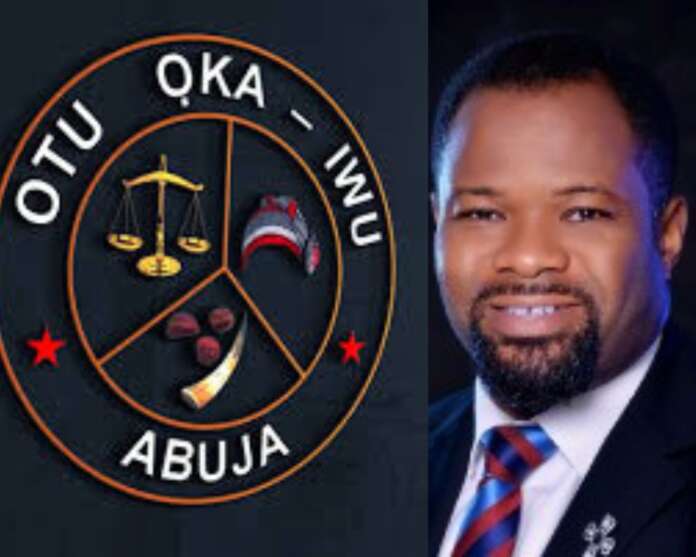
Otu Oka-Iwu Abuja vehemently condemn the renewed call for Igbos to leave Lagos, along with all associated threats that jeopardize the existence of Ndi Igbo in Nigeria. Such statements and threats should be considered treasonable offences, and those responsible must be arrested and prosecuted for threatening the peace and unity of the country.

This is not the first time such dangerous rhetoric has surfaced, and it is time to put an end to it once and for all. During the 2023 elections, similar calls were made in Lagos and were met with a lackluster response. It is, therefore, unsurprising that some individuals now feel emboldened to threaten an entire section of the country. We must remember that this very trend led to the civil war, yet the security agencies have taken little to no action against those inciting such dangerous sentiments.

Otu Oka-Iwu wishes to remind those responsible for these threats that the Constitution of the Federal Republic of Nigeria, 1999 (as amended), is clear in its provisions. Specifically, Section 41 of the Constitution of the Federal Republic of Nigeria 1999 (as amended) provides that: Every citizen of Nigeria is entitled to move freely throughout Nigeria and to reside in any part thereof, and no citizen of Nigeria shall be expelled from Nigeria or refused entry thereby or exit therefrom.

Similarly, Section 43 provides that: “Subject to the provisions of this Constitution, every citizen of Nigeria shall have the right to acquire and own immovable property anywhere in Nigeria.”

The Igbo community has long been subjected to negative stereotyping, often portrayed as secessionists or criminals in both government-controlled and independent media. Such false narratives have fueled resentment and further marginalized the Igbo people. Moreover, there have been instances of censorship and suppression of pro-Igbo voices, further silencing the region in national discourse.

The insinuation that the recent #Endbadgovernance protest was masterminded by Igbos is particularly unfortunate and was clearly a tactic to scapegoat the Igbo community once again. We commend the calls by Ohanaeze Ndigbo and other well-meaning Igbo leaders who urged restraint and advised the Igbo community to stay away from the protests. It is noteworthy that there were no reports of protests in any of the Southeastern states.

Otu Oka-Iwu earnestly expects the Inspector General of Police to take action before the expiration of the 14-days ultimatum issued by Dr. Sam Amadi to act or an action will be instituted for an order of mandamus. Indeed, this call for the Inspector General’s action is long overdue. All well-meaning Igbo Associations should rise to the occasion and demand caution from those who threaten the unity of this country.

It is on record that the Igbos have always been at the forefront of Nigeria’s progress and unity, from the time of Dr. Nnamdi Azikiwe to the demands of Dim Odimegwu Ojukwu (Ikemba). Consequently, the collective sensibility of the entire Igbo Nation cannot be undermined by political opportunists or social media provocateurs seeking attention or traffic to their platforms.

We however, appreciate President Bola Ahmed Tinubu, GCFR, the Commander in Chief of the armed forces for condeming such alterances in his #endbadgovernance speech to the Nation and commend all individuals and organizations that have stood in solidarity with the Igbos across the country and have condemned these uncultured and provocative pronouncements.

Chidi Udekwe, Esq.
President
Otu Oka-Iwu (Igbo Lawyers)
Abuja

TIPS