Home Blog Page 535

The wahala that will kill Tinubu’s door

By Abimbola Adelakun

Thirty years ago, Nigeria was in severe crisis. In the wake of the previous year’s elections that was annulled and the attendant protests, 1994 was an unpleasant time.

General Sani Abacha had rigged his way into power through a coup and was setting the country on edge. Media houses had been shut, and journalists serially harassed and detained.

Acclaimed winner of the 1993 presidential election, Moshood Abiola, was in prison along with scores of activists who had protested either the fuel prices inflation or the election annulment. Ken Saro-Wiwa too was in prison. The Niger-Delta region was restless due to the state-induced violence racking the region.

NADECO members were arrested and charged with treason for their audacity to challenge Abacha. Government critics had their homes raided, and some were attacked. That was the year Prof. Wole Soyinka went into exile.

Decree after decree expanded the government’s power to punish. They could detain—without charge or trial—anyone suspected of subversive activities.

The Senate that had been inaugurated the previous year was disbanded. Six of the lawmakers who had taken a stand against the government were arrested and charged with “treasonable felony and conspiracy.” They were initially granted bail, and five of them re-arrested months later. The sixth person? That was Bola Tinubu.

By now, I am sure you already see where I am going. As you would have read, this week the police arrested and charged 10 people who allegedly participated in the #EndBadGovernance protests last month for the same crime Abacha’s government had once arrested Tinubu: treason.

Those 10 people, along with another 700 police said they also arrested, were some of the thousands who responded to the strangulating economic and political conditions the same way Tinubu and his fellow travellers did in 1994.

Tinubu is either forgetful of history or, since he once confessed that he took a major economic policy while under the influence of a “spirit,” has been fully possessed by Abacha’s ghost. It does not matter which is true; the shame is that a severe charge like treason is being trivialised by a government that cannot brook citizens towing the same path that brought him into power.

I want to believe that Tinubu’s fellow pro-democracy activists, some of whom were imprisoned on frivolous charges during the dark days of Abacha’s rule, are looking at the unfolding chain of events and terrified at the uncanny repetition of history.

Wherever he is now, Abacha must be exultant. He should rejoice; he is not the only tyrant whose ignominious history would be tossed into the sewers of our national history. By the time their time passes, Tinubu and company would have personified the Orwellian pigs who became indistinguishable from the “man” they kicked out of the animal farm.

When we find the mouth with which to tell the story, we will understand how we sought statesmen but were rewarded with executioners.

After reading the police’s press release issued by a fellow called Olumuyiwa Adejobi, I still fail to see how the protests are treasonable. Which “foreign sources” gave “substantial backing” to the #EndBadGovernance protesters?

Or was it just that one Briton, Andrew Wynne, who constituted the so-called “foreign sources”? Given that last month, the Department of State Services also arrested about eight Polish nationals who were on an education tour in Kano State while the protests were ongoing, this might just be a case of using white Europeans to create a sensation.

DSS spokesperson Peter Afunanya said those Polish nationals were arrested “because of where they were found during the protests and for displaying foreign flags.” I am yet to understand the method to the madness of this “foreign-phobia” among our security agencies.

There are several wild accusations in Adejobi’s document that need substantiating. I am not saying Adejobi plagiarised Abacha’s playbook, but the allegations are a frightful recrudescence of the military era. He says, “preliminary findings suggest they orchestrated and funded violent protests…to create anarchy and justify their illegal plot to overthrow…government.”

But what is the pedigree of these individuals that they could organise what is tantamount to a coup? How would their supposed plan to overthrow the government through protests have led them to Aso Rock? Did they have an armoury, or the weapons of their supposed warfare were just placards? What were their plans to take over the National Assembly, for instance?

Adejobi also says they are investigating how these people planned to “orchestrate violence across the country”? I am genuinely curious how this bunch of individuals (including a shop attendant) can have the means to organise the violence that will disrupt the entirety of a complex country like Nigeria.

Meanwhile, hear Adejobi on how they established Wynne’s guilt: We went to invade (Wynne’s) bookshop. As we asked questions, he came out. If you have a genuine business, are you not going to ask the police what we went to do in his shop or his office? You read that and you wonder at the quality of investigation that sort of rudimentary extrapolation of evidence can possibly produce.

Meanwhile, let us not forget that the “comprehensive investigation” on which they planked their whole case took place in less than a month. If they are that efficient, how come they find it hard to solve kidnapping problems?

Whether they like it or not, protests are a democratic right. You can charge people who committed crimes of looting or violence during protests, but you cannot stifle the right to protest.

I never thought the day would come that I would look back and compare Muhammadu Buhari’s government favourably with anyone, but looking wistfully from inside the fire of Tinubu’s government, I am beginning to think we were better off inside Buhari’s frying pan.

Even in all his pathological madness, Buhari did not go to the extent of charging the #EndSARS protesters for treason. He did accuse them of trying to topple him, but the ghost of Abacha that had been haunting Aso Rock did not possess him fully.

The ghost waited until the perfect person usurped his path into power before completing Abacha’s historic mission of perpetuating himself in power using democratic means.

You listen to the families of those arrested and you realise these people have no new game; they are stuck in historical time. Unfortunately, we are trapped along with them.

The Nigeria of 2024 is not that different from that of 1994. There is hardship in the land. Prices of goods and services are skyrocketing; purchasing power is dwindling, and it is getting harder and harder to get by. The marriage of Asiwaju and Shettima of last year has become Àşetì 2023.

Nobody’s hope has been renewed, and people are more combustible than the fuel they are expending hours on their lives on extended queues just to purchase. The days ahead are likely to be filled with protests, and the government is preemptively charging protestors with arrests to intimidate.

Meanwhile, this same government faces a million other challenges. There is economic insecurity, a serious threat to the lives and livelihood of Nigerians. Shouts of “ebi ń pa wá” have replaced the “on your mandate we shall stand” anthem in many mouths; hunger is resetting the political loyalties of those whose heads were climbed into power but have now been forgotten.

The government appears confused by the complexity of the situation; they have undone several economic knots, and they know not how to re-tie them. Then there is the issue of kidnapping that has become a national epidemic and revealed the police as impotent.

Let us not even talk about banditry, plus the one million problems of poor infrastructure that bedevil the country.

Rather than the Tinubu administration concentrating on what it can solve, it compounds its own problems by investing administrative time and energy hounding people for treason.

Like the Yoruba door that eventually gets unhinged when endlessly swung back and forth, the Tinubu regime too has found the wàhálà that will wear it down. I almost feel sorry for them.


Zamfara govt disowns document alleging payment of huge funds to bandits

The Government of Zamfara State has said it remains resolute in the fight against banditry, kidnapping and other criminality across the state.

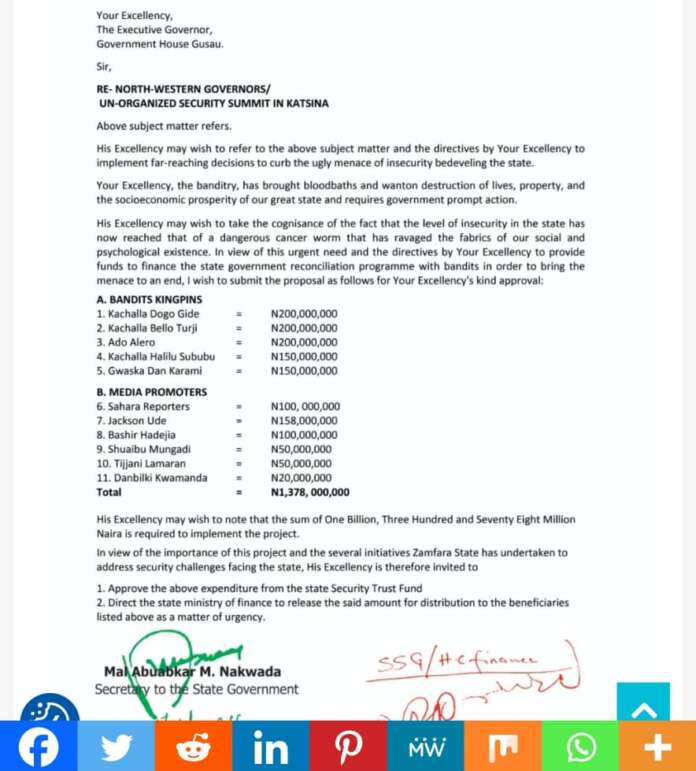
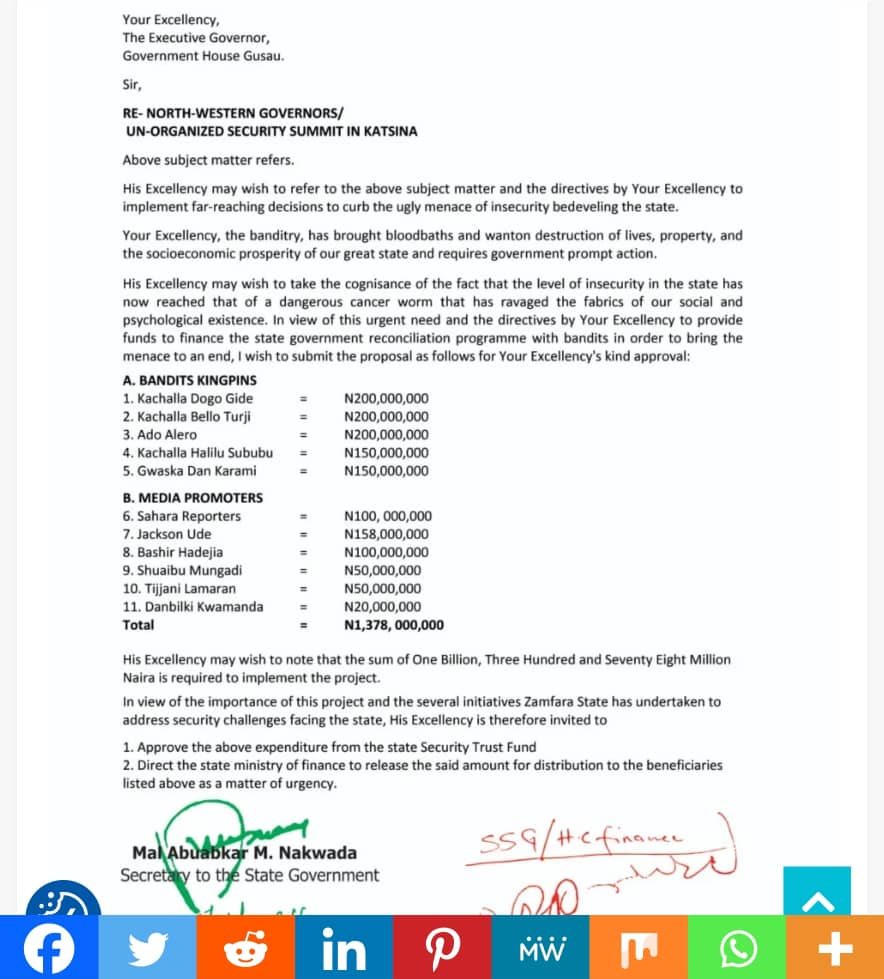
It disowned some documents being circulated, insinuating that it had released huge funds to some bandits’ kingpins for dialogue in the state.

The Secretary to the State Government, SSG, Abubakar Nakwada who addressed newsmen in Gusau on Thursday said the documents “were not only fake but also mischievous, misleading, malicious and false.”

Nakwada said that the documents with his signature and other top government officials were forged.

He said the security agencies had been properly briefed and were on trail to track down the social media source.

The official also faulted the claims that money was paid to some media promoters under the guise of “reconciliation efforts” from the state Security Trust Fund.

“This is very crucial that we address this matter with transparency and urgency.

“Ordinarily, we should have ignored this, like we have ignored many other fabricated lies aimed at distracting the administration of Gov. Dauda Lawal from its commitment in rescuing and rebuilding the state.

“But due to the sensitivity of the security, which remains one of the priorities of this administration, we are compelled to make some clarifications,” the SSG said.

Nakwada said to set the records straight, the purported memo allegedly said to have originated from his office to Gov. Dauda Lawal was entirely fake and mischievous.

“The state government has consistently announced its firm stance against negotiating with the bandits and terrorists.

“We still maintain the position that we will not negotiate with terrorists.

Our administration has been unequivocal in its approach to addressing the security challenges facing our state,” Nakwada explained.

He said the state government had implemented strategic measures to combat the menace of banditry, adding that the efforts were always guided by integrity, accountability and an unwavering commitment to the safety and well being of people.

“The fabricated document and the baseless claims it contains are not only distracting but also an attempt to erode the trust and confidence that the people of Zamfara have in Gov Lawal’s administration to restore peace and order,” he said.

Daily Post

Leaked memo indicates Zamfara Govt. might be settling bandits from state’s security vote, financing gold extraction

A leaked memo appears to indicate that Governor Dauda Lawal of Zamfara State used security funds to finance his gold mining interests and pay off notorious bandits.

The document showed that a substantial amount of money was approved to finance a reconciliation project, totaling over one billion Naira.

However, sources claim that the funds were used to settle bandits and finance gold extraction in a newly discovered large gold deposit.

The former Chairman of the Zamfara State Security Trust Fund, MD Abubakar, was sacked after he allegedly refused to comply with the governor’s scheme.

Abubakar had written a memo requesting funds to procure patrol vehicles and logistics for community protection guards, but was rejected by the governor.

Sources close to the matter reveal that Governor Lawal held a meeting with commissioners to increase the state budget to meet the demands of bandits and finance gold extraction.

According to the Governor’s media aide, Nuhu Salihu Anka, MD Abubakar has been spending the Security Trust Funds on irrelevant and unnecessary travels, including foreign trips without the governor’s approval.

But other sources claim that one billion naira was allegedly withdrawn from the ex-IGP’s office to settle some wanted bandits kingpins, in order to allow Governor Dauda Lawal to extract gold and settle some media promoters to divert Nigerian attention from the just concluded #Endbadgovernance protests, which resulted in the loss of lives and destruction of properties worth billions of Naira.

A source at the office of the former IGP (whose name was withheld) confirmed that he wrote a memo entitled: ‘Urgent Need to Use Trust Funds to Procure Patrol Vehicles and Other Logistics’ to support community protection guards amounting to N800, 000,000, which was also rejected by the governor, further infuriating the former IGP.

The source further said that another conflict arose between the governor and the former IGP emanating from a meeting the governor held with the Commissioners for local government and chieftaincy, that of Budget and planning, as well as finance, Alhaji Ahmed Yamdi, Abdulmalik Gajam, and Bello Auta respectively, as well as Prof Kabiru Mato, Barau, Modibbo, and the state Account General to increase the state budget to the tune of more than One billion Naira to meet the demand of some bandits to allow the governor to continue his gold extraction in a newly discovered large gold deposit in a forest near Dankurmi Under Maru Local government area of the State, and also finance some selected Media promoters to create significant divisions within the northern region.

Another revelation indicated that the former IGP was not happy with the way Governor Dauda not only declined the approval of his memo but also used the same memo for other missions with the Security Trust Funds Money without his knowledge.

It will be recalled that Governor Dauda Lawal has vowed to never negotiate with bandits, but unfortunately went back on his words and employed a controversial scheme by accepting the bandits’ demand to allow him to get access to the newly discovered large gold deposit sites in the State.

“I believe the dramatic sacking of the former IGP M.D Abubakar by Governor Dauda was connected to the disagreements between the former Police boss and Governor Dauda Lawal,” said the source who requested to remain unknown.

Further information gathered in the same scandal reveals that a hasty completion of Zamfara State Cargo airport by the government of Dauda Lawal was to bring in modern mining processing equipment from outside the country into the State, despite the banning of mining activities and declaring Zamfara as a “no-fly zone” State.

It will be recalled that the Zamfara state assembly refused to screen and confirm former IGP M.D Abubakar due to his bad records and mismanagement of public funds, which resulted in denying some house members their eight months salaries and allowances.

According to our reporter in Gusau, the members who protested against the appointment of M.D Abubakar alleged that the former police boss would not do the job but rather mismanage and divert public resources for his personal use.

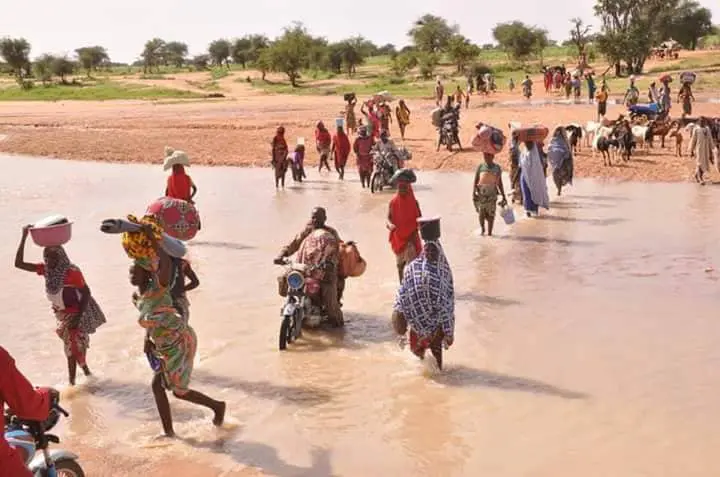
Last month, over 20 people were recorded to have died in Kali community of Gumi Local Government Area, Zamfara State, while escaping from bandits’ attack.

DAILY POST learnt that their boat capsized in a river.

Zamfara residents fleeing from bandits

According to a resident who pleaded anonymity, the bandits besieged the village at 1:00 pm last Sunday.

“The bandits were seen moving towards Kalli village on motorcycles with sophisticated weapons to attack the community, which forced the villagers to flee for their safety,” he added.

According to him, the boat was overloaded and it capsized along Birnin Magaji River, which led to the death of 20 villagers.

He explained that five corpses were recovered at Falale River, four at Birnin Magaji River, while three were also recovered at Gadar Gummi River.

Speaking further, he said that the bandits terrorised communities of Kwammaka, Kwammaka Jibi, Kwammaka Mai Katsina, Kallin and Kazura villages, all in Gummi local government area.

The police are yet to issue any statement on the reported incident.

Daily Post/AbujaBizReports

Nigeria’s first Olympic Games medalist ‘buried with borrowed flag’

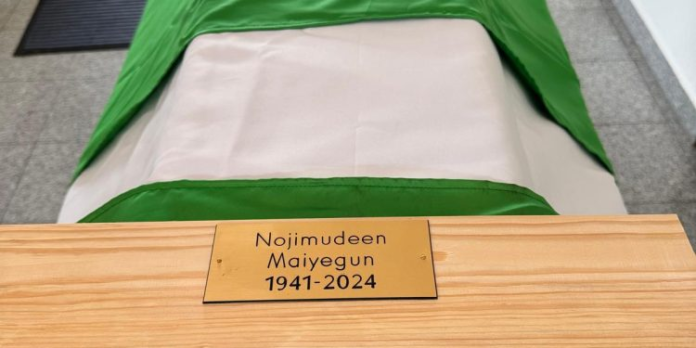
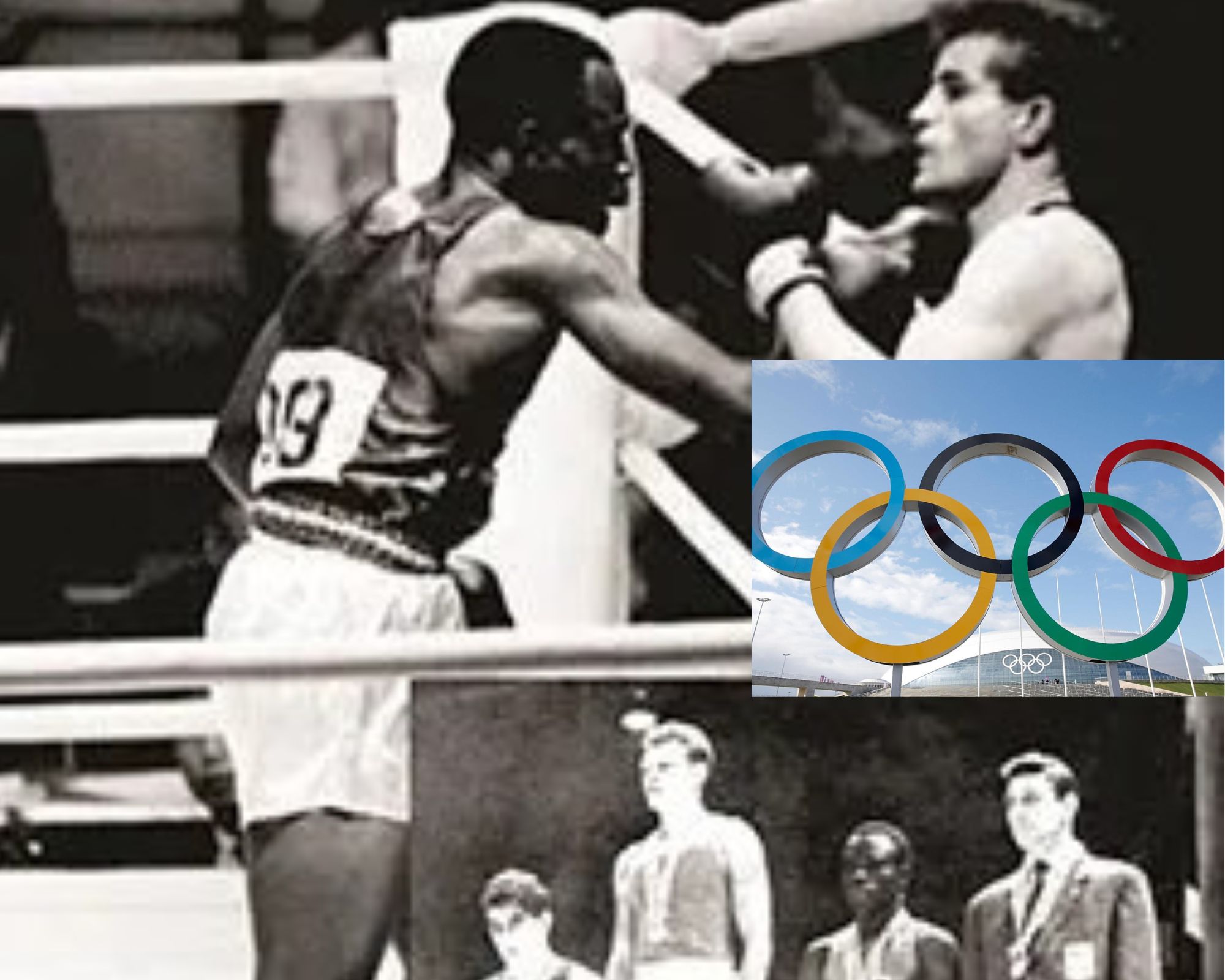
The first Nigerian to win a medal at the Olympic Games, Nojimudeen Maiyegun, has been buried.

He was buried in Vienna, Austria without the presence of Federal Government delegation or officials of the Nigerian mission in Austria.

Maiyegun, a brave boxer who possessed a deadly left punch in his fighting days, opened the way for Nigeria in the Olympic Games with the bronze medal he won in Tokyo, Japan in 1964.

A Nigerian living in Austria described the treatment meted to the 83-year-old retired boxer by the Nigerian government as a national shame because the body was buried “with a borrowed Green-and-Green Nigerian National Flag”.

Nojim Maiyegun

He wrote: “Attention: Presidency (Aso Rock Villa) Nigeria Federal Ministry of Sports
Nigeria Ministry of Foreign Affairs.
“The Federal Government of Nigeria has neglected another National hero in death.
Nojim Maiyegun, the first ever Nigerian citizen to win an Olympics medal was buried in Vienna, Austria like a nobody to the extent that the Nigerian flag used in covering his coffin was borrowed.

The question that came to mind was “Is Nigeria worth dying for?”
“Not even a condolence book was opened for him at the Nigerian Mission in Austria. We demand an immediate apology by the Federal Government of Nigeria, a belated message of condolence to the family of the late legend, and a posthumous National honour.

“It is worth mentioning that the only government agency that sent a condolence message to the family of the deceased was NIDCOM (Hon. Abike Dabiri Erewa)”.

Sextortion and Teens Death: Two Nigerian brothers bags 17 years jail in US

Two brothers from Nigeria were sentenced to 17 1/2 years in federal prison Thursday after pleading guilty to sexually extorting teenage boys and young men across the U.S., including a 17-year-old from Michigan who took his own life.

A federal judge sentenced Samuel Ogoshi, 24, and Samson Ogoshi, 21, after hearing emotional testimony from the parents and stepmother of Jordan DeMay, who was 17 when he killed himself at his family’s home in Marquette, in Michigan’s Upper Peninsula.

The Ogoshis, both from Lagos, Nigeria, had previously been extradited from Nigeria to stand trial. The brothers each pleaded guilty in April to conspiring to sexually exploit teenage boys.

They were accused of running an international sextortion ring in which they posed as a woman, a scheme which resulted in DeMay’s March 2022 suicide. The siblings were accused of inducing DeMay to send a naked picture of himself and then extorting him. Federal prosecutors said their sextortion schemes targeted more than 100 victims, including DeMay.

“Today’s sentencing of Samuel and Samson Ogoshi sends a thundering message,” U.S. Attorney Mark Totten said in a statement. “To criminals who commit these schemes: you are not immune from justice. We will track you down and hold you accountable, even if we have to go half-way around the world to do so.”

Sexual extortion, or sextortion, involves persuading a person to send explicit photos online and then threatening to make the images public unless the victim pays money or engages in sexual favors. The offense has a mandatory minimum sentence of 15 years in prison and a maximum penalty of 30 years.

U.S. District Judge Robert J. Jonker, who also sentenced the Ogoshis to five years of supervision following their release, said he would decide what restitution the brothers must make once he receives additional information.

Before sentencing the brothers, Jonker said the case called for long sentences. He said both of the defendants had shown a “callous disregard for life,” while noting that the siblings had continued their sextortion scams even after learning that DeMay had killed himself.

“The continuation of the overall scheme even after there was certain knowledge that one individual, the individual in this case, took his own life points to the need for a high sentence,” the judge said during Samson Ogoshi’s sentencing hearing.

DeMay’s mother, Jennifer Buta, told the court during Samuel Ogoshi’s sentencing that her son’s death had left her “shattered to the core, infuriated and trapped in grief.” She said the last text her son sent her was “Mother I love you” — a text she awoke to and thought was endearing until she learned that Jordan had killed himself in his bedroom.

“What I thought was an endearing message from Jordan was his goodbye and his reassurance of his love for me,” Buta said. “I would never have imagined that while I was asleep both of the defendants hid behind their screens and tortured Jordan for hours while he was alone.”

DeMay’s stepmother, Jessica DeMay, said during her tearful testimony that she and Jordan’s other relatives will “never again experience pure joy” because every happy moment would be tainted by “a small cloud of sadness around it” that comes from Jordan’s death.

The teen’s father, John DeMay, told the court he is haunted by the image of “my son laying on his bed dead with a gunshot wound to his head.”

“Jordan was an amazing young man. He was resilient, he was smart, he was educated, he was an athlete. He was my only son. And you got to talk to him for the last time in his life. That’s horrifying to me,” he said.

Samuel Ogoshi’s attorney, Sean Tilton, said his client has cooperated with authorities and has written a letter of apology. He said Samuel Ogoshi is remorseful “and feels a tremendous sense of guilt of the loss of life in this case.”

Samson Ogoshi’s attorney, Julia Kelly, said during his sentencing that her client is “very remorseful” and that he was 18 when he began taking part in extortion and scam attempts. She said such scams are common in Lagos, Nigeria, and he saw those as a quick way to make money.

Kelly wrote in a court filing that “hundreds of people just like him were involved in similar scamming.”

“He was told who could get him a hacked account, how to make a fake profile, how to boost accounts and, because English is not his first language, was given a script of what to say,” she wrote.

Banditry: Hausas will not farm after killing Fulanis – Bandit leader, Turji Bello

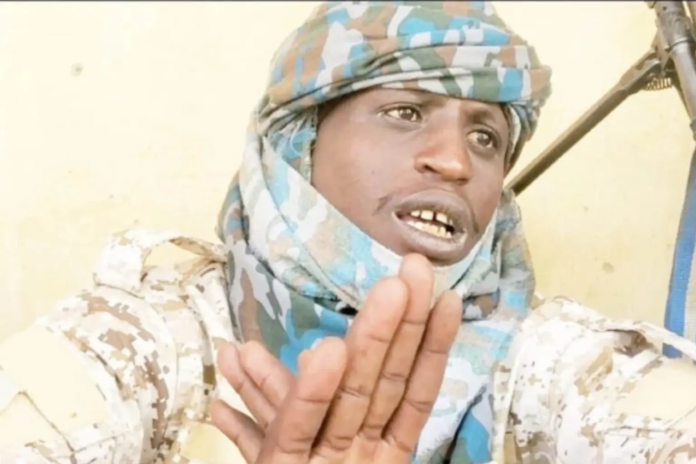
In his newly released video, bandit leader, Bello Turji has issued a serious warning to the Hausa people of Northwestern Nigeria.

Turji accused the Hausa community of being “traitors and hypocrites,” stressing that they are responsible for the killing of innocent Fulani people and their livestock in the past.

In the footage released on Wednesday night, Turji vowed to continue waging war against the Hausa people if the killing of Fulani tribes does not cease.

According to Turji, “You, the Hausa community, have killed our brothers and sisters, and nobody has said anything about it.”

Turji claimed that his gang possesses a variety of weapons, adding that their primary targets are not security personnel, but rather the Hausa people.

“I hold Hausa responsible for the deaths of many Fulani people,” he said.

Turji also drew parallels between his group’s fight and conflicts in other parts of the world, citing the ongoing wars in Afghanistan, Pakistan, and Iraq.

Referring to Osama Bin Laden’s death, Turji noted that even after the demise of the Al-Qaeda leader, the conflicts in Afghanistan and Iraq continued.

He warned that Hausa people would not be allowed to continue farming on what he called “our land,” adding that Fulani people and their livestock could not be killed without consequences.

The bandit leader also vowed to ensure that the Hausa community cannot harvest their crops.

“You will not harvest your farms. If you dare to, you will die. No farming this time around,” Turji warned.

Daily Post

Fleeing doctor arrested over death of woman undergoing butt enlargement in Lagos

Following the death of a 36-year-old woman during a buttock enlargement surgery at a clinic in the Lekki Phase 1 area of the state, the Lagos State Police Command has arrested a medical doctor, Idara Bassey.

Last week Tuesday after the Maroko Police Division received a report at about 11:40 am from the driver of the deceased. the nurse who administered an injection to late Abiola, allegedly under Bassey’s orders, was arrested.

The spokesperson of the command, SP Benjamin Hundeyin, who confirmed the development to Punch on Tuesday, September 3, said that Bassey is currently being investigated at the State Criminal Investigation Department in Panti.

Bassey had previously fled after Abiola died during a buttock enlargement procedure at her clinic on August 26, 2024.

The woman had left her home in the Diamond Estate, Sangotedo, in the Ibeju Lekki area and directed her driver to take her to the clinic for the buttock enlargement procedure. 

After the nurse allegedly administered the injection on the doctor’s instructions, the driver who brought Abiola to the clinic reported to the police that she had lost consciousness and began gasping for breath.

Asked whether Bassey would face charges and on what grounds, Hundeyin said answers to these questions would be provided “after the investigation.”

The people of the Sudan have suffered unimaginable tragedy, By Joy Ezeilo, SAN

Today, we released our first report as an Independent International Fact-Finding Mission on Sudan. GENEVA (6 September 2024) 

PRESS RELEASE

Sudan: UN Fact-Finding Mission outlines extensive human rights violations, international crimes, urges protection of civilians Both the Sudanese Armed Forces (SAF) and the Rapid Support Forces (RSF), as well as their respective allies, were found to be responsible for patterns of large-scale violations, including indiscriminate and direct attacks carried out through airstrikes and shelling against civilians, schools, hospitals, communication networks and vital water and electricity supplies. 

The warring parties also targeted civilians – as well as those assisting survivors or documenting violations – through rape and other forms of sexual violence, arbitrary arrest and detention, as well as torture and ill-treatment. These violations may amount to war crimes related to violence to life and person and committing outrages upon personal dignity, the report found.

“The people of the Sudan have suffered unimaginable tragedy,” said Expert Member Joy Ngozi Ezeilo. “A sustainable ceasefire must be prioritized to halt the fighting in which the civilian population is caught and enable the effective delivery of badly needed humanitarian assistance to all those in need, regardless of their location.”

https://ohchr.org/en/press-releases/2024/09/sudan-un-fact-finding-mission-outlines-extensive-human-rights-violations… Read the full report here. More information on the work of the Fact-Finding Mission on Sudan can be found here.

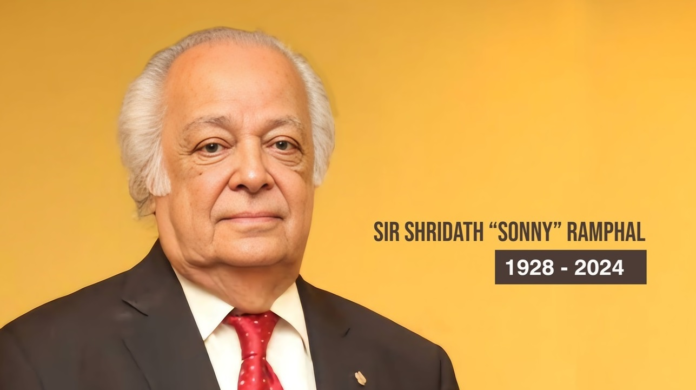
Obituary: Sir Shridath ‘Sonny’ Ramphal, Lawyer, Commonwealth Secretary-General


The energetic and skilled orator who delighted the Queen but clashed with Thatcher over sanctions on apartheid South Africa

At any Commonwealth meeting in the 1980s Sir Shridath Ramphal would be on hugging terms with most people in the room. And if that wasn’t the case with Queen Elizabeth II, the organisation’s secretary-general was said to have got on famously with the British monarch. It was only when he found himself under the gimlet eye of Margaret Thatcher that the bonhomie ended abruptly.

Matters came to a head at the 1985 Commonwealth heads of government meeting in Nassau, in the Bahamas. The Guyana-born Ramphal had been an enthusiastic advocate of imposing sanctions on apartheid South Africa. For her part, the British prime minister regarded him as a civil servant who was overreaching his brief.

Thatcher would later bow to pressure to impose economic sanctions on South Africa, but was not ready to do so at Nassau. “I noted that they were busy trading with South Africa at the same time as they were attacking me for refusing to apply sanctions,” she recalled in her memoirs. “I wondered when they were going to show similar concern for the abuses in the Soviet Union … I wondered when I was going to hear them attack terrorism. I reminded them of their own less than impressive records on human rights.”

A small, rotund man who exuded geniality, Ramphal had similar views on the Commonwealth to the Queen — though he said it was anachronistic for it to be led by a monarch — and he was given almost unbridled royal access. “She transcended the barriers of race, colour and caste very easily, and she was never lofty or remote,” he said. “In all my 15 years, I never met a prime minister or a president — Marxists and republicans included — who did not set the greatest store by the 20 minutes she spent with each of them at our heads of government meetings.”

Such royal favour was perhaps one reason Thatcher’s personal criticism of the liberal diplomat, known as Sonny, was less vehement than it might have been. The same could not be said for her husband, Denis. “He and I didn’t get on,” Denis recalled. “He was so left-wing. I used to say: ‘Sonny Ramphal, you really are a terrible man … You do more harm than good.’ He came back after the election and I said: ‘You’ve got us for another four years, Sonny. I hope to Christ we’re not going to have you.’”
Emboldened perhaps by another gin and tonic, Denis continued: “Who do you think is worse? Sonny bloody Ramphal or Ma bloody Gandhi?”

However, to a whole political generation of the developing world, Ramphal was a passionate and articulate advocate of their demands for a fairer world — even if what he was campaigning for did not always lead to one. As secretary-general of the Commonwealth between 1975 to 1990 he helped to broker the decolonisation of Rhodesia into Zimbabwe, and arguably played no small part in helping to abolish apartheid in South Africa.
Shridath Surendranath Ramphal was born in New Amsterdam in British Guiana, now Guyana, in 1928. His great-grandmother, exiled from India after refusing to immolate herself on her husband’s funeral pyre, had come to Guyana to work on a sugar plantation owned by John Gladstone, father of William, the Liberal prime minister.

Ramphal’s father, James, who was educated by Canadian Presbyterians and converted to Christianity, was a teacher and member of the capital Georgetown’s middle class, able to give his son a solid education — first at a school for the children of the elite in Georgetown and then at the University of London. James was the first Guyanese to be appointed to a government position when he was made a commissioner in the department of labour after the outbreak of the Second World War.

Ramphal read law at King’s College London, and in 1951, the same year he married Lois King, an English nurse, he was called to the Bar at Gray’s Inn and became a legal probationer for the colonial office. King died in 2019. Ramphal is survived by their two sons and two daughters.

Shortly after Ramphal entered the chambers of Dingle Foot, the elder brother of Michael, the future Labour leader, the colonial office dispatched him to Kenya to help to deal with the Mau Mau emergency. His patron soon brought him back and secured him an appointment as crown counsel in Guyana instead.

An able lawyer, a quick-witted politician and a gifted speaker, he spent a year at Harvard Law School in 1962 but was soon back in Guyana, where he drafted the nation’s independence constitution. Proclaiming himself a proud West Indian, he held a variety of ministerial positions, including as foreign minister under the newly elected black Guyanese prime minister, Forbes Burnham.

Ramphal used his office to carve out for himself a wider role in the councils of the developing world. He was twice elected vice-president of the UN general assembly and led his country’s delegation to the UN every year between 1967 and 1974. During his chairmanship of a meeting in Georgetown of the foreign ministers of the Non-Aligned Movement — states that would not ally with the US or Soviet Union during the Cold War — in 1971 he steered them towards more radical and articulate criticism of western neglect and exploitation of the developing world.

A Commonwealth heads of government meeting in Jamaica three years later gave him a bigger opportunity. There he was appointed secretary-general, succeeding the first holder of the post, the Canadian diplomat Arnold Smith, who had fought a tenacious but modest battle to build up the secretariat as a focus of the institutional Commonwealth against the resistance of Whitehall.

Ramphal’s approach was anything but modest. He steadily expanded the size and scope of the secretariat, consistently advocated measures to increase the Commonwealth’s range of interests and particularly its services to its developing members.
The African member nations held particular opportunities. At the heads of government meeting in Lusaka, Zambia, in 1979 he was among those who called on Thatcher, recently elected, to accept independence for Zimbabwe. Throughout the Lancaster House negotiations that followed, Ramphal was in the margins, pressing the views of the developing Commonwealth countries. In some eyes he was helpful and constructive; in those of Lord Carrington, the foreign secretary, he was “cocky and meddlesome” — Carrington claimed that Ramphal helped Robert Mugabe to gain his election victory.

From Zimbabwe, Ramphal turned his attention to South Africa, and he did much to orchestrate Commonwealth concern for apartheid and oppression there over the next ten years. When Nelson Mandela came to power he showed his appreciation by quickly bringing his country back into the Commonwealth.

Ramphal had for some time had his eye on bigger things: he wanted to be secretary-general of the United Nations and had been building a broader international reputation, involving himself in a series of initiatives of the international great and the good, starting in 1977 with the former German chancellor Willy Brandt’s group on international development and moving on to the Swedish prime minister Olof Palme’s study of disarmament and security.

He first campaigned to be UN secretary-general in 1981, and although he had the support of Pierre Trudeau, Canada’s prime minister, he was not appointed. He claimed afterwards that it was his criticism of the organisation that had deprived him of the prize, but Carrington had famously said he would swim the Atlantic to prevent Ramphal getting the job.

Ramphal turned back to the Commonwealth and to yet more international commissions: humanitarian issues, environment and development, the problems of the developing world, and questions of global governance. In many ways the commissions suited Ramphal better: he had a talent for words and instinct both for the real needs of the poor and for the fanciful ambitions of their spokesmen and women. Some accused him of being just as meretricious — all posture and little substance — but people listened to him. Even Thatcher confessed that just occasionally his cheerfulness could sweep her off her feet.

By the time the Commonwealth heads of government met in Kuala Lumpur in 1989, Ramphal was approaching the end of his third term as secretary-general. At the end of his service the British government put his name forward to Buckingham Palace for appointment as Knight Grand Cross of the Most Distinguished Order of St Michael and St George (GCMG) but it was typical of his fractious relationship with Britain that, days after a generous farewell dinner in his honour at 10 Downing Street, a London newspaper reported him as having criticised his hostess, Thatcher.

He was still only 62 — and as energetic and full of ideas as ever. He was chairman of the West Indies Commission, president of the World Conservation Union and an active chancellor of two universities: the West Indies and Warwick. He travelled restlessly and audiences of the like-minded hung on to his words.

Some argued that he used his oratorical and political skills to enhance the bargaining power of the poor countries against the rich. But there were few who took him as seriously as he thought he deserved, and after each of his rhetorical acts there remained the facts of power and poverty, wealth and impotence.

Sir Shridath Ramphal, Commonwealth secretary-general, 1975 to 1990, and lawyer, was born on October 3, 1928. He died on August 30, 2024, aged 95

Culled from The Times

Rise in Femicide: Adekunle Gold tells men in Nigeria, “Let’s redefine masculinity by holding each other accountable”

In the face of a rise in femicide cases, Nigerian singer-songwriter, Adekunle Gold has called on men to hold each other accountable.

This is coming on the heels of the murder of Christianah Idowu, a student of Federal University of Agriculture, Abeokuta, Ogun State (FUNAAB).

She was reportedly kidnapped and murdered by one Ayomide Adeleye after collecting ransom from her family.

Taking to his X (formerly Twitter) page, the singer wrote that a man’s strength is not in staying silent while fellow men commit horrific acts against women.

He wrote: “Men, true strength is not about staying silent but about standing up to your friends who abuse, rape, or demean women. Let’s redefine masculinity by holding each other accountable.
#JusticeforChristianah.”

"Let

This comes after a 15-year-old boy named Goodluck Bison went into the home of a 14-year-old girl and allegedly hit her on the head with a pestle multiple times before raping her, leaving her inches away from death.

Read also: Man reveals how his sister would have been murdered by Ayomide Adeleye, suspected killer of FUNAAB student

Days later, a man named Ayomide Ayodele kidnapped his friend Christianah Idowu and murdered her after collecting ransom from her family.

TIPS