Home Blog Page 534

The streets are empty

By Suyi Ayodele

Is the president back in the country from China? If he is back, how many vehicles did he see while riding from the airport to the Villa? If he saw the roads empty, it was because of him and the ‘boldness’ he celebrated in Asia last week. Smile has left the streets.

Maybe, I should use one of the most destructive wars in Yoruba history, the Ijaye War, as the allegorical platform to deliver my message to the president.

The Ijaye War (April 10, 1860 – March 17, 1862) was one of the fiercest Yoruba internecine wars fought in human history. The war and the huge losses from both camps and their allies show that when there is hunger in the land, the people take desperate actions. History records that during the war, which the Ibadan forces won, one of the Ibadan warlords, Balogun Ogunmola, caused a census of his slave-soldiers to be carried out so that he would know how many men he lost on the battlefield. He was ingenious in doing that. The old warrior got basket weavers to make a giant basket, and he put the cap of every slave-warrior of his that was killed in the basket. When the last gunshot was fired on March 17, 1862, Ogunmola had 1,800 caps in his basket, all of slave-soldiers “exclusive of freeborn soldiers; and that was for one single chief; what then of the whole of Ibadan army and those of the provinces; what of the Ijayes, the Egbas, the Oyos and the Oke Ogun people, and Ijebus engaged in this!”  (See: The History of the Yorubas, the Rev. Samuel Johnson,402-432).

The late Yoruba historian, Johnson, narrated this ugly incident in the quoted book above under two sub-headings: “Circumstances that led to Ijaye War”, and “When Greek Meets Greek”. Aare Ona Kakanfo Kurunmi, who led the Ijaye Army started the battle on a good note. Alaafin Atiba, had towards the twilight of his reign, proclaimed a new succession that changed the tradition of the Crown Prince being buried along with his father. Alaafin Atiba got all Ibadan warlords to support the new plan and stand by the Crown Prince, Adelu, to succeed him. Upon the demise of Atiba, his son, Adelu, was made king. But the Generalissimo of Yorubaland, Aare Kurunmi of Ijaye, felt that it was not proper to change the ancient landmark. Adelu, he reasoned, must die alongside his father according to the dictates of the custom. There was a stalemate. One thing led to the other and Alaafin Adelu had no choice than to declare war on his own Aare. To wage the war, Ibadan warlords were mandated to fight the Alaafin battle.

The lead warrior in Ibadan then, Basorun Oluyole, felt that the matter could be resolved without a fight. Besides, Oluyole told the Ibadan warriors, Ijaye people were relations of Ibadan, and Aare Kurunmi was old and feeble, having very little time to spend. But the Alaafin had ordered a battle, which must be a battle. Kurunmi on his own did not help matters. While it was agreed that his insistence on Adelu’s death after his father, Alaafin Atiba, was right under the custom, he forgot to realise that every good leader must always recognise the tide of times and how the people he leads swim. Aare Ona Kakanfo was Aare only because he had other warlords who were loyal and ready to obey him. Any Aare becomes vulnerable when his war commanders have different opinions on matters of common interest. Rather than reason along the tide of time, Kurunmi chose to impose a blockade on Oyo. He also did not allow the movement of foodstuffs and other goods to Ibadan. He imposed heavy taxes on traders along those axes. There was inflation at the beginning, and then acute famine later. Life became unbearable for the people.

There was hunger in the land because of the artificial famine imposed by Kurunmi. Ibadan mobilised against him. Balogun Ogunmola led that expedition. It was devastating! All those who were hungry joined the army. Kurunmi did not only lose the battle, his first son, Arawole, and four other siblings, died in the battle. Ibadan’s Balogun Ibikunle was said to have shed tears on account of Arawole’s death. Kurunmi was the one who suppressed the Fulani incursion to Yorubaland. He was not expected to suffer such a calamity at that ripe age. But he suffered the fate because he felt he was fighting a noble cause. He did not choose his time well. Many historians also believed that Aare Kurunmi was not as altruistic as he was projected. The Ijaye war, they reasoned, brought out his true character. Rev. Johnson recorded that character portraiture of Kurumi, as “When Greek Meets Greek (pg. 409), an adaptation of the 17th century play, “Death of Alexander the Great”, otherwise known as “The rival Queens”, where the clause, “When Greek meets Greek, then comes tug of war”, was first used.

When leaders fail to be realistic and practical, the people they lead suffer untold hardship. Nigerians have now gotten to that level that nobody can bamboozle them with tales of the superlative performances of their President, Bola Ahmed Tinubu, while he was the governor of Lagos State, at the start of this political dispensation in 1999. All the media hype and third-party whitewashing of President Tinubu as the man with the magic wand are gone. The people have now realised that the fable of “Tinubu built Lagos” is nothing but a ruse; a nauseating lead up the garden path! The reality of the failure of his identikit as the man who has what it takes to get the nation out of the woods is too damning for us. It is a case of what affects the eyes, equally affects the nose (òrò tó bá ojú ti bá imú).

This is not the time for blame game. It is also not the time for anyone to say: “did we not warn you?!” Yes, it is true that not a few of us indeed warned about the calamity a Tinubu presidency would be. We were labelled with all sorts of names. Today, only a very few are still holding on to the ‘superior’ judgement of Tinubu above other contenders for the presidency in 2023. Those are the very few who are pathologically impolitic because they don’t want to accept that they made an error in their political choice. Some genuinely believed President Tinubu could reshape Nigeria’s troubled history and shift the narrative. Those ones have my sympathy. There is nothing wrong in investing one’s trust in another individual. Those genuine supporters of Tinubu with the belief that the man has all that it takes to make a difference, are like the proverbial chameleon. Our elders say nobody blames the chameleon for the failure of its child to dance very well. The blame goes to the child Alágemo ti bí omo tán, ààmòójó kù s’ówó omo Alágemo).

The problem with the Tinubu presidency now is the same problem Aare Kurunmi had a few centuries ago. President Tinubu is behaving like Kurunmi, who failed to flow with the tides of time. Like Kurunmi, Tinubu is also imposing artificial famine on Nigerians. Life is now almost unbearable under the watch of the one they told us is the wisest man after the Biblical Solomon. It is shocking, and completely paralysing, that the president has not realised that his unguarded pronouncement of “Subsidy is gone”, made on May 29, 2023, at his inauguration, is the reason Nigerians are suffering now. It is appalling that the president has failed to realise that Nigerians are dying, the way Aare Kurunmi sang in his war cry, before the Ijaye War broke out thus: “A frog is kicked and lies on its back/We shall all die by myriads” (A ta òpòló n’ípàá, ó sùn kakàá/ gbogbo wa ni yíòò kú beere – pg. 405)! If the president knew this, he would not be boasting of taking “bold steps” to set Nigeria on the right path- same bold measures he has refused to take in curbing the profligacy of his administration. Kurunmi was also taking a bold step when he insisted that Adelu must die alongside Alaafin Atiba. That was what the custom prescribed. But he failed to juxtapose what the custom demanded with what the situation then warranted. Kurunmi paid dearly for that failure of judgement.

Yearly, every Nigerian knows that there has never been anything like a fuel subsidy. Nigerians know that, unlike the government of other sane climes, no government in Nigeria has ever paid any subsidy for the populace to enjoy. The question is: can Tinubu, in good conscience, swear that he stopped fuel subsidy for a day since he made that impulsive pronouncement in May 2023? How much was a litre of petrol before the “subsidy is gone” misadventure, and how much is it now? If the president actually stopped the subsidy, can he please tell us how much he has saved from that? And what has he done with the savings from the stoppage of subsidy? The high cost of fuel today is because Tinubu created artificial scarcity of the product with his May 29, 2023, pronouncement. The vultures around him are now feeding fat on the pain of the people. History is certainly not going to be kind to those profiteers in and outside the government!

Who is close to the President and can take the message to the one who sits in Aso Rock, that the streets are not smiling? What type of music does President Tinubu listen to? What do those around him tell him about the anguish and abject want in the land? Why is the music of hypocrisy louder than the daily pathetic wail of the people? When will President Tinubu hear that Nigerians are now comparing his administration with that of his immediate predecessor, the very lethargic General Muhammadu Buhari, and are saying: Buhari time nor beta pass this Emilokan? When will the music of anguish on the streets become audible to the president? When will Tinubu hear the people’s song of sorrow, to wit: Láyé Ònálù, li a ró òkan lé òkan/Láyé Kúrunmí li a ró ‘gba ró ‘gba/ L’áyé Adélù ni ìpèlé di ìtélè ìdí (During Onalu’s reign, we changed our dresses frequently/During Kurunmi’s, we used the finest of clothes in their hundreds? It is the time of Adelu that the smaller outer cloth becomes our best dress)? When will our president make life bearable for the people? Just WHEN?


Take a faith-based risk

‘The Kingdom of Heaven has been forcefully advancing, and violent people are attacking it.’
Matthew 11:12 NLT

Peter gets unfairly criticised. He is the disciple who denied Christ three times, but he is the only one who got close enough to Jesus to get caught. He is the disciple who impulsively cut off Malchus’s ear when the lynch mob came to arrest Jesus, but he is the only one who came to Jesus’ defence. He is the disciple who sank in the Sea of Galilee, but he is the only disciple who walked on water.

It’s so easy to criticise people from the comfortable confines of the boat. Basically, there are two kinds of people: creators and criticisers – those who get out of the boat and walk on water and those who sit in the boat and criticise the water walkers.

When everything is said and done, our greatest regrets will be the God-ordained risks we didn’t take. German author Johann Wolfgang von Goethe said, ‘ Hell begins the day that God grants you the vision to see all that you could have done, should have done, and would have done, but did not do .’ Jesus said, ‘The Kingdom of Heaven has been forcefully advancing, and violent people are attacking it.’

What do you believe God is leading you to do? What is the persistent prompting of the Holy Spirit urging you to do? Do it. Failing to take a faith-based risk is like permanently misplacing a piece from the jigsaw puzzle of your life. It leaves a disappointing hole. *When we reach the end of our lives, our biggest regrets will be those missing pieces. So today, go ahead and take a faith-based risk.

Song of Songs 4-5, 2 Corinthians 9

Take a faith-based risk (2)

‘Without faith, it is impossible to please [God].’
Hebrews 11:6 NKJV

When making important decisions, especially when they can affect the lives of others, the Bible says you should do two things. First, count the cost (see Luke 14:28). That means you should evaluate and investigate, and you should seek guidance and counsel. ‘The way of fools seems right to them, but the wise listen to advice’ (Proverbs 12:15 NIV).

How certain should you be before you move forward? In his book, The Next Generation Leader, Pastor Andy Stanley writes: ‘Generally speaking, you are probably never going to be more than 80 per cent certain. Waiting for greater certainty may cause you to miss an opportunity.’ What are you waiting for? A guarantee that you won’t make mistakes? That you won’t be criticised or experience embarrassment? If so, you will get nowhere.

When you have done all that wisdom demands, you must trust God and take a faith-based risk. If you don’t, you will end up living with regret. In a research study done by two Cornell University psychologists, they learned that time is a major factor in what we regret. We typically regret our actions over the short term. But over the long term, we are inclined to regret our inactions. The study found that in an average week, action regrets were somewhat higher than inaction regrets – 53 per cent to 47 per cent. But when people think about their lives as a whole, inaction regrets exceed action regrets 84 per cent to 16 per cent.

In other words, you won’t regret the errors you made as much as you will the God-ordained opportunities you missed. So, go ahead and take a faith-based risk.

Song of Songs 6-8, 2 Corinthians 10

Take a faith-based risk (3)

‘I will build my church, and the gates of Hades will not overcome it.’
Matthew 16:18 NIV

Gates are defensive devices, and storming those gates requires offensive measures. Think of the church as a battering ram. Instead of complaining about the culture, we need to present better options. We must produce higher-calibre films and compose more extraordinary music, write more notable books, start superior schools, and form better businesses. The old aphorism indicates we should stop cursing the darkness and start lighting some candles .

In Roaring Lambs, Robert Briner writes: ‘Why not believe that one day the most critically acclaimed director in Hollywood could be an active Christian layman in his church? Why not hope that the Pulitzer Prize for investigative reporting could go to a Christian journalist on staff at a major daily newspaper? Is it really too much of a stretch to think that a major exhibit at the Museum of Modern Art could feature the works of an artist on staff at one of our fine Christian colleges? Am I out of my mind to suggest that your son or daughter could be the principle dancer for the Joffrey Ballet Company, leading a weekly Bible study for other dancers in what was once considered a profession that was morally bankrupt?’

Paul didn’t criticise the philosophers on Mars Hill and tell them they were going to hell. Pointing to their altar to the unknown God, he indicated, ‘I’ve come to tell you who He is, and His name is Jesus.’ What was the result? ‘Some mocked, while others said, “We will hear you again on this matter”’ (Acts 17:32 NKJV). Go ahead; take a faith-based risk and see what happens.
Isaiah 1-2, 2 Corinthians 11

UCB

When a child turns out bad

By Funke Egbemode

It is God who gives babies. It is the God-assigned duties of parents to nurse and nurture those babies into adulthood. It is a long journey, onerous task to grow babies into adults. Every parent, every aunt and uncle knows that that long journey is bumpy, painful and lonely. Many times we stumble. Many times we get it right. Occasionally parents fail, sometimes woefully. Sometimes because they did not do the right thing at the right time or failed altogether to do anything. Sometimes, circumstances just work against both parents and children and things go totally belly up and everybody lives miserably afterwards.

What all that mean is that we can safely say there are successful parents and not-so-successful parents. When a child turns out bad, the parents get blamed. It is generally assumed, in this society, that a man or a woman cannot claim to be totally successful if their children are bad. And who are bad children? A bad child is one who drops out of school into nothing? That teenage girl who could not write her O’level examination because she got pregnant in her fifth year in secondary school is a bad girl. The boy who sneaks out to smoke ‘kolos’ or ‘shisha’ when his mates are studying is not a good fruit. That girl that prefers being runs-girl to writing UTME or the one who has had three children for three men is bad. The one who joined a cult and ended up being rusticated from the university and the one who stole his mother’s gold to fund a birthday party for his friends are the ones nobody is proud of. The Yahoo Boy and his Yahoo Plus friends whose lives were cut short in a car crash on their way from a ‘loud’ party are cited as examples of bad parenting. A bad child is the one other parents keep their children away from.

Bad children are private pains. They keep their parents awake at night. They make their parents weep when nobody is looking. Their mothers’ heads are permanently bowed. A bad child is like a sore on the forehead that won’t heal. It is there for all to see and there is nothing you can do about the pain and the oozing odour.
A child that turns out bad is one of the worst things that can happen to any parent. The pain is worsened where and when the parents of this bad child are successful in their careers and or business. At work, they are respected role models. At home are reminders of the other side of their lives.

So daddies and mummies, how will you rate yourself in the parenting department? Would you say you have given parenting your best shot? Do you know your children, their strengths and weaknesses? Are you as devoted to your divine assignment as custodians of these children as you are to your career and business? Do you treat them like the files on your table? Do you know that your children are the true measure of how you spend your days, your real investments? Maybe not in Europe and America but in Nigeria, people sneer behind your back when you win awards or spray money at parties if your children are considered bad children.
So, I ask again, do you really know your children? Have you done your duties to them and God?

When you haul a child who does not respect you or fear God off to America at age 17 and he gets there and starts experimenting with everything from older women to crack cocaine, will you say you couldn’t have done better? Do your children know the consequences of their actions or they think if they do bad stuff they are hurting mummy? Have you told your daughter that she will live the rest of her life with the choices she makes today? Does your son know that he will hurt himself more if he continues to prefer tequila to water and night clubs to church or mosque? Do our children know that the people they hang out with will make or mar them, their destinies?

Have you grown them or spoilt them? Have you taught them hard work or do you just give them everything they ask because you don’t want them to suffer like you had to? Please remind yourself that it is the hard road you walked that shaped your success. The softies you are raising will always need to lean on you and you would turn in your grave if you could look back from the other side at the wreckage of your legacies, the choices you made in raising them.

Of course, there are bad children of good parents. There are good children of bad parents, not many of them but I’ve met them. There are also good children of good parents. And then there are bad children of bad parents. Even as you read this, deep down you know the category you fall into. A parent who needs 50 houses to feel good is not likely to be a good parent of good children. The sick things we do will eventually infect our children.

Do your children ‘chill’ on Sunday mornings or go to church? Are they irritated when your pastor visits? Alhaji, do your children go to the mosque on Friday or it is a day for sleeping in? Do you pray with your children or you have left their destinies in the hands of the society and modernity? There are parents who believe it is only in Nigeria that praying and prayers are needed. Well, neither Islam nor Christianity originated in Nigeria. It is part of our job description to do everything to raise great children.

Your children know all the names of all wines and spirits and the location of all the night clubs in the city. They hang out with all kinds of friends whose parents and background you don’t know and you call your carelessness modern parenting. Should your 26-year-old even still be living at home without picking any of the housekeeping bills. Was that the way you were raised? This pampering, this my-children-will-not-suffer-what-I-suffered mantra is why today’s children do not know that they must climb the stairs to get to the next level. If they can’t find an elevator, they just throw their hands up and mope.

You, daddy, have you taught them that the Prado and G-Wag in your garage did not happen overnight, that you paid a price, sweated and worked your way from the slum to GRA? The children you spoon-feed today will pawn away the precious stones you starved to acquire.

Daddy, neither you nor your wife is a devotee of Amadioha or Sango, so why does your son weave his hair? Is that also modern parenting? Why do your sons spot dreadlocks they were not born with? Why do our daughters and sons go to the same salons? Why can’t we differentiate girls from boys unless we look closely. Both of them wear earrings, nose rings, studs and even paint their nails. Fashion? I’m too ‘bush’ not to be worried.

Oga, your Yoruba son is steadily looking like a tribal chief of an interesting group in a remote community in East Africa. Did you just say he’s an artiste? Wow! He has not released a single track that anybody has heard or even had a waka-pass role in a movie. Why does he have more ‘effizy’ than the multi-millionaire successful artistes? Maybe it is just fashion, fashion funded by daddy’s hard-earned money. It’s sad when a man respected in business circles has a 30-year-old son who cannot watch over his business for even one week.

Modern daddy, what does your son do when you are not looking, bar-hopping, crack coke-sniffing or rape? Modern mummy, how many abortions have you ‘brokered’ for your daughter? Does she still have a womb?

Fellow parents, take a sincere look at your children and score yourself. Are you proud of what came out of your loins and what you have done with the innocent baby who made you so happy when you held her/him for the first time? Is God proud of your parenting? We will all answer for our bad parenting or over-parenting here on earth and in the hereafter. That is for sure.

Egbemode can be reached on [email protected]

‘Those who are about to die salute you’

By Lasisi Olagunju

From William Bascom, American folklorist and anthropologist, I got a Yoruba story. It is here retold, substantially in my own words, in some areas using his words: A certain Chief Lowa was careless with his tongue. Every priest has a priest; Lowa’s own warned him to be careful so that his mouth would not disgrace him. Chief said he had grown taller than disgrace; he was too surefooted to be put to shame. Because he had money and medicine in super abundance, he thought there was nothing he said or did that would have repercussions. His secrets he made subjects of boasts at palm wine joints. He would say anything on impulse and credit it to spasms from unseen spirits.

Then it happened that an unknown tale bearer had gone to inform the king that Lowa had a goat that talked like a human being. The king sent for the chief and the chief appeared before the king. “Is it true that your goat speaks like you and I?” Lowa said it was true. The palace responded with gasps of disbelief. Are you sure? He said he was sure and swore in the name of the town’s ancestors that what he said was the truth and the whole truth. “Well then. Bring your goat before the throne in four days’ time.” The king ordered him and vowed that if, indeed, the goat talked, he would give Lowa half of his possessions, but if it did not, Lowa would be given the goat treatment – barbecued. Chief Lowa smiled and shrugged. He was sure of his goat and its human vocal cords.

Lowa in four days’ time brought his goat before the king. The palace grounds hosted the noble and the not so noble. Every ear wanted to hear the unnatural; every eye was desirous to behold the goat that was human. Lowa rose and spoke to his goat; the goat kept mute. He talked to his goat more frantically, Lowa’s goat ignored Lowa; it refused to answer its owner. It was clear to all that Lowa’s truth was an empty boast; they said he had fooled the king and the ancestors. The people said what he did no one had ever done and gone back home in one piece. Palace guards seized Chief, got him bound, hands and feet, while a huge fire was prepared in fulfillment of the king’s vow.

Chief was stripped naked and his body passed slowly back and forth across the huge fire. On the third pass, the goat opened its mouth and asked, “Why are you trying to kill my owner?” There was a commotion in the palace. “The goat talks!” The people shouted. Lowa was saved and taken off the fire while the king ordered that half of all his possessions be given to him. He was richer but sober. Bascom said as Lowa was taking his goat home, he asked the animal, “Why did you let them pass me over the fire three times?” The goat replied, “Should I have answered the very first time and let you get all this wealth without any suffering? If one becomes rich through trade, do we not see its scars on one’s body?” May our mouth not set us up for trial.

The president spoke to Nigerians before he left China a few days ago. He spoke about his “very bold and unprecedented decisions” at home; he linked his audacious boldness with the unprecedented hike in “fuel prices” and then asked: “can we help it?” No one there could tell him we could – if we searched well and in the right places and using the right persons. Is it not true that the market owes its access not to just one road? While the president was sawing our spine abroad, NNPC was sinking its teeth into our neck at home. It said petrol price in Nigeria would be “determined by global market forces.” And you wanted to ask what that meant. Dangote Refinery is active too, painting ambiguous portraits of oily prices on canvas. Everyone is tugging at the wounded entrails of the helpless.

Writing for ‘The Reading Teacher’ in March 2004, Salli Forbes said “to err is human, to self-correct is to learn.” She was correct. A leader may have the courage to make a mistake but he must not lack the wisdom to know that an error has occurred. And, it is not enough to spot the mistake; the leader must have the competence to correct himself, to repair the damage and stitch up the error. Buying petrol now is like paying for the last supper – dining, then dying. And it is all because someone spoke the wrong words on a wrong day last year. That person has not agreed that his error threw the nation under the bus; he is instead doubling down, praising his priest of pain.

Ben Sira’s wisdom of the ancient counsels whoever must speak to “say much in few words.” Eugene MacNamee, author of ‘The Government of the Tongue’, has a more extreme maxim: “Whatever you say, say nothing.” MacNamee warns that “saying the wrong thing at the wrong time, or even saying the most banal of things in the wrong place with the wrong accent could lead not only to offence but to death…” You would agree with MacNamee if you agree with South African researcher, Khona Dlamini, who thinks “the tongue is fire.” And with Douglas Ewart who insists that “the tongue is mightier than the sword.” Richard Turnbull says “by the tongue, men are led into error through false doctrine.” The wise men who founded Ile Ife had a million gods. But they said one deity worthy of their worship is the mouth. What they offer the mouth till tomorrow is a mouthful of carefulness; they gave it a tongue-twister name, olubobotiribo. Its cognomen is ‘baba ebo’ (father of offerings). May our mouth not disgrace and defeat us.

Darkness has a heart. If you like, call it ‘Heart of Darkness’ with all the pun Joseph Conrad’s novel of that title evokes. Nigerians entered last year and suffered the stroke of escalating petrol prices – one of Buhari’s parting gunshots. Today’s president, as that president’s reluctant candidate, campaigned vigorously against the pains of that era. On his campaign rostra, Bola Tinubu told the distraught to trust him with their votes: “E lo f’okàn ba’lè (be calm), we will bring down the price of petrol.” The candidate on heat got what he wanted and, in his very first speech as president, the conquistador pulled the plug on the livelihood of hope: “subsidy is gone.” He fired that shot into the darkness of our market and nothing has remained the same for all since. He said in China that he could not help it. When he made the be-calm promise before the election, did he know that what he said was a lie? In every context (and contestation) of lies, at least one side is not deceived. And that is the liar. Lies can kill, and they kill. The lie teller may keep his body while victims of his untruth lose theirs. But he loses his essence. “Lying is dying…There is a taint of death, a flavour of mortality in lies”. For the source of that line, check Conrad’s ‘Heart of Darkness’.

While the petrol price tragedy drags on forever, people are dropping dead farm and stream. Nothing walks the land at this moment except poverty and pain. But the president said in China that our eyes needed to see what we are seeing for Nigeria to be sturdy and stable. It is in Orwell’s dystopian ‘1984’ that you read that a stable society is “only possible on a basis of poverty and ignorance.” Listen to Orwell: “For if leisure and security were enjoyed by all alike, the great mass of human beings who are normally stupefied by poverty would become literate and would learn to think for themselves…” (page 198). No one, not even regime backers, are free from this pain. For I have seen some very committed Emilokan people writhe in pain, wetting their withering plants with tears. Why are they not excused from what we suffer? “It is deliberate policy to keep even the favoured groups somewhere near the brink of hardship, because a general state of scarcity increases the importance of small privileges…” (Orwell’s Nineteen-Eighty-Four; page 199).

The city burns but Nero has just finished playing tambourine in Chinese cafes. The end of the world is having the street empty. It is having ghostly trekkers casting no shadows everywhere. It is Nigeria becoming Cowley’s “empty streets of air.” How many will live to tell the end of these hard times, only God knows. Bill Gates said in Abuja last Tuesday that “the actual tax collection in Nigeria is actually low.” Our president echoed him in China on Friday that the petrol we buy must be this costly for the country to stand. Eleven years ago, a barrage of austerity measures was wracking the people of Greece. Just as Nigeria has its own husbands feeding it doses of poison as elixir, Greece had Germany as its guardian angel, its doctor which prescribed for it poisonous doses of magical wellness. Germany’s finance minister, Wolfgang Schauble, paid a visit to Greece on Thursday, July 18, 2013. To welcome that visitor, a troublesome Greek newspaper exclaimed: “Hail Schaube, those who are about to die salute you.”

The Greek newspaper got the about-to-die salutation from Ancient Rome. In ancient Rome, captive gladiators are routinely driven to death in a horrid game supervised by the emperor. They called it a gladiatorial match. The fights had large, loud crowds watching and applauding as men hacked men to death. It was an event that saw fighters die after fighters until the last man standing dropped dead. In AD 52, Emperor Claudius reviewed an edition of that ‘game’, then he heard those fated to die let out a cry: “Hail, Emperor, those who are about to die salute you (Ave Imperator, morituri te salutant).” And the emperor responded in practical terms demanding that they died.

Malcolm Cowley’s poet persona hears a scratching at his door, “the noise of someone fingering the latch once.” He opens “and found the night empty of sound, empty.” A long time ago, Emeritus Professor Ladipo Akinkugbe’s uncles heard their own “scratch at the door.” They also found “night” but it was not “empty”. He writes: “Asleep in their little mud hut, they were suddenly roused by some knock at the door in the middle of the night. His elder brother bade him open the door as he had assumed that this was a neighbour seeking assistance. He refused and soon the knocking ceased and the caller’s footsteps faded into the darkness. Peeping through a small hole in the mud wall, they discovered to their horror that it was a leopard. Had that door been opened, they both would never have lived to tell the story.”

My muse told me we’ve finally opened our door to the leopard of Big Brother. It was the muse’s summation of the many things that happened at the same time last week. Reports of trials and tribulations, of protesters in police courts, and of traumatized paupers at petrol pumps. Petrol, for the first time since 1914, sells for more than a thousand naira per litre. If you can buy, buy it quietly and drive home; if you are too poor to buy, trek home silently in peace. Whichever you choose, BIG BROTHER IS WATCHING YOU. Those words in capital letters you find in George Orwell’s ‘Nineteen Eighty Four’. They make up the caption beneath a huge poster that displays “…an enormous face, more than a metre wide”. It is not enough that the face is enormous, you find, to your horror and dread, that the eyes in the poster “follow you about when you move.”

The leopard-at-the-door story above is a paragraph in Akinkugbe’s autobiography, ‘Footprints & Footnotes’. The book is a personal story which provides some ghastly details about this country, the demons in its forest and why it may never work well. A leopard at the door cannot be a friend or a totem of good fortune. Not all who knock at doors seek help or seek to help. Beware of those you open your heart or stall to, especially when it is dark. You may be sorry if every rap on your door unbolts the access. Nigerians did this – many times during their election cycles. They are always sorry after the act. They did it yesterday, – and today, they are very sorry. But, they will do it again.

Afam Osigwe, SAN must unite the Bar now, lead from the front – Ojogbane

  • Condemns forum shopping
  • Urges Osigwe to take a closer look at the activities of LPPC
  • Says “We paid more this year for NBA conference and all we got was biro  jotter and tag”

The Lead Counsel and Senior Partner of Signature Law Firm, Mr. Jonson Ojogbane, has outlined some major tasks the newly elected President of the Nigerian Bar Association (NBA) Mazi Afam Osigwe, SAN must immediately tackle to engender unity in the Bar, which has struggled with cohesion and credibility in the last few years.

Addressing the question of discontent within the Bar including the formation of the Law Society of Nigeria (LSN) and the SPIDEL imbroglio, Ojogbane who spoke over the weekend from his Abuja office said: “My advice to him is to call a meeting urgently with all the branch chairmen and their secretaries from the associations across the country.

“A conference of that kind of seniority; to sit down and woo everybody back to this fold. I don’t think it is in our interest to break up the Bar currently as it is. The trouble we have had in the Bar for me — that is my personal opinion — is not sufficient to break up the Bar now. We are better together. Our voice will be stronger. The NBA has a role to play even in policy formulation in the country.

“There is so much suffering in the land. Fuel and food prices have gone higher and people are suffering. Should the NBA sit on the fence and say oh! we are just lawyers, we are not going to do anything? No! We have a role to play because we are one of the greatest voices in the country today that people listen to.”

Speaking on indiscipline within the Bar and the Bench, Ojogbane expressed confidence in the capacity of the Bar President to restore dignity in the bar and impact the bench positively.

“I have this absolute confidence in his ability to navigate the judicial process in Nigeria; that is the Bar and the Bench and come up with a more constructive development for the Bar. We have a problem of conflicting judgements of court across the land, particularly political cases; election petitions.

“People go to what we call forum shopping. People go to one court and take an order. Another goes to another court and takes an order. Sometimes we blame the politicians and ask why they are running around. But the question is: “Who is taking the cases to court for them?  It is us, lawyers.

“A lawyer gets an order from court A; the other one goes to court B and gets another order on the same set of facts and issues. So I am hoping that Afam Osigwe, SAN, will use his experience at the Bar and his goodwill among lawyers both the senior level, middle level and even young lawyers. I hope he will engage with the lawyers – those of us very senior lawyers there already, the intermediate and junior ones to encourage lawyers to do more for the sake of the association than for personal gains.

“Lawyers are the ones taking these cases to different courts and getting these conflicting judgements. It is my hope that Afam Osigwe, SAN will be able to navigate through what is the interest of lawyers in terms of their rewards for their professional advice as per services and public interest.

“Can we continue like this, no we can’t. We can’t be getting judgments like we are going to market to buy yam from Wuse market and buy another one from Utako. No, we can’t continue like that. There must be some level of decorum among lawyers; a level of discipline that says that if a court has taken an order on a particular set of facts, the option open to a lawyer is to either apply for that particular order to be set aside or appeal to a higher court to take a different look to the case rather than go and get an order and I will go and get my own.

“What about the judiciary themselves, who are the ones giving these orders? Lawyers have their problems going to these courts and the judges have their problems entertaining these cases. Somebody goes to the Federal High Court in Abuja here to get an order; another person goes to the FCT High Court and they are courts of coordinate jurisdiction.

“I hope that Afam Osigwe will be able to navigate these processes and change the narrative. Engage with the judiciary at the highest level, the NJC, the Office of the CJN, Office of the Chief Judges across the states and maybe, we should do a re-orientation. If the judiciary continues to give out conflicting orders among themselves and lawyers continue to support the process, the system will not survive. My advice to the Learned Silk is that he should take this as a major priority because what it is doing to the judiciary and the Bar is denigrating the system.

“And talking about denigrating the system, I told the Learned Silk during the Bar conference that going forward, he needs to have a committee set up to work with the Bar and the Legal Practitioners Disciplinary Committee (LPDC).

The discipline in the legal profession is going down, we are not saying it is completely ruined but we are saying we can do more to be more disciplined than this.

“Is there no case you can say, for the sake of my integrity I am not going to be involved in? For example, corruption cases. There are regulations ongoing, with the new anti-money laundering law that was passed expecting lawyers to do some reporting to the Special Control Unit Against Money Laundering (SCUML). The Control unit has to issue certificates to lawyers. These have raised a lot of controversies but in the rule of operations conducted for lawyers, these regulations have been there to guide lawyers to say these are the limits you can go.

“These are things you cannot do but guess what? A lot of lawyers don’t even know the rules. They don’t even know what their limit is. What is the relationship between you and your client? At what point do you separate yourself from confidentiality? If a crime is committed, are you going to say, you are going to maintain your confidentiality with your client? If your client is about to commit a crime, are you going to sit back and collect your fees and behave as if nothing happened? Lawyers don’t live in another world. They live in the same society. So we can’t sit on the fence and be asking for things to change when we are not changing.

“So, I am hoping that the Learned Silk, Mazi Afam Osigwe SAN, will be able to bring his wealth of experience to cause further education among lawyers. There are things you cannot afford to be doing. There are steps we cannot take. We have moral issues. We have even religious issues. We have societal expectations. When I was growing up under the then Director of the Nigerian Law School, Ibironke, lawyers were the most respected people in every society. If you say something in your neighbourhood, your resident association meeting or even tenants’ meeting, they listen because they think lawyers know what to do.

“Lawyers should know what is wrong and what is right. We can’t take every case. We can’t ask for every order, and that is why because of a lack of discipline among we lawyers, you have the case of fake lawyers erupting all over the place. I told the NBA President during my conversation with him that issue of fake lawyers should be seriously addressed. If we are a compact unit, if we work together as a team, if we don’t leave an opening, these people cannot just step in and start doing what they are doing.

“Osigwe should do more and make a difference. There are disciplinary issues among lawyers. For instance, this issue of conflicting court orders, is it not high time we took it before the disciplinary committee? Lawyers taking money from their clients and not doing exactly what they promised their clients that they would do. In the States that is what they call malpractice and you can be sued, you can pay heavy fines, you can even be de-robed and they can take away your license.

“I would also advise him to take a closer look at the activities of the Legal Practitioners Privileges Committee (LPPC); the issue of conferment of SAN. There are lots of complaints out there among lawyers and among the public that, wow, SANship has now become like it is in the market. You can buy whatever you want to buy. But I can say without any doubt in mind that over a greater percentage of those who are conferred with this rank actually merit it.

“And when there are cases of people saying that money has been used, there is no society that does not have those complaints when things are done. Sometimes, what gives birth to these accusations of somebody getting SAN without merit, is the performance of these lawyers in the court. For you to be a SAN, one of the major conditions is that you have practiced law in the court; you have gone to court; and you started your case from the beginning to the end at the lower court, Court of Appeal and Supreme Court.

“That means you’re versatile, you know the rudiments of the law, you know practice, you know appearance in court, what to say, what not to say, you stand on your feet, you speak the law. You see, some SANs stand up in court and sometimes they really mess up. And then you see them dribbled by a younger lawyer.

“When that happens, people are prone to start talking about it. Did this one get his own SAN from the highest decision-making body in the legal profession? Or where did he get his own from? These are observations people make.

“The Learned Silk and his team should engage the LPPC and raise the standard for the conferment of SAN. If you’re going to confer at all, confer on somebody who can defend it.

Addressing the question of whether Mr. Yakubu Maikyau underperformed as NBA President, the former EFCC Senior Prosecutor said: “The last two years have been a lot of issues. It is not because Y.C. underperformed. It is not because he wasn’t what we thought he was going to be when we elected him but as you know about life, things happen. People do their best and sometimes your best may not be what people want.

“During his tenure, there were lots of controversy. There is a new association – Law Society of Nigeria hoping to be registered with the CAC. They have a matter with the CAC about registering that association. Apart from even the Law Society issue, SPIDEL people went to court against the Bar conference that was held, asking the court to stop the conference from holding. That to me was sacrilegious.

“When the BAR conference gathers together, that’s the largest gathering of lawyers in the whole world. NBA Nigeria is the largest gathering of lawyers in the whole of sub-Saharan Africa. The NBA conference is the largest in any part of the world. For a unit in the NBA to ask the court not to allow the NBA to hold election, for me was sacrilegious.

“We are hoping that Afam Osigwe will use his extensive knowledge of the Bar to foster unity; to talk to leaders of thoughts in the legal profession; even those who are too old to attend conference; to talk to Chairmen and Secretaries of the Bar across the branches in the country.

“Today, look at what is happening and I want this to be heard very well. NBA conference. We go to conference. We pay for practicing fees. We pay our participation fees. This year we even paid more and there was no conference bag for this conference.

“My son, his colleagues’ who came from his chambers and other lawyers were asking the same question — ‘where is the conference bag?’ We went to a conference and all we got was a biro and a jotter and our tag.

“I want to ask Afam Osigwe through this medium to please do better next time. Let it not repeat itself. Let it not happen that lawyers will go to Bar conference after they have paid their practicing and conference fees, and there is no bag to put your materials in while you are in a conference moving around. I think we should not allow that to happen. My candid advice.”

Justice Mshelia of Borno High Court released by abductors, family Members still in captivity

Hon. Justice Haruna Mshelia, the The Borno State High Court Judge who was kidnapped with his wife, Binta, their driver and an orderly on June 24, 2024, has been freed from Captivity by his Abductors.

Although Mshelia, who was kidnapped by suspected Boko Haram members, was released in the early hours of Sunday, his wife who is a magistrate, and his driver as well as the orderly are still being held captive.

An earlier message about the Judge’s release reads “Alhamdulillah, we have just received the news of the release (from BH captivity), of Justice Haruna Mshelia. May Allah Almighty protect us all from any form of mishap.”

At the time of the abduction, Justice Mshelia, his wife, and cousin who is also his driver were travelling from Biu in the southernpart of Borno State to Maiduguri.

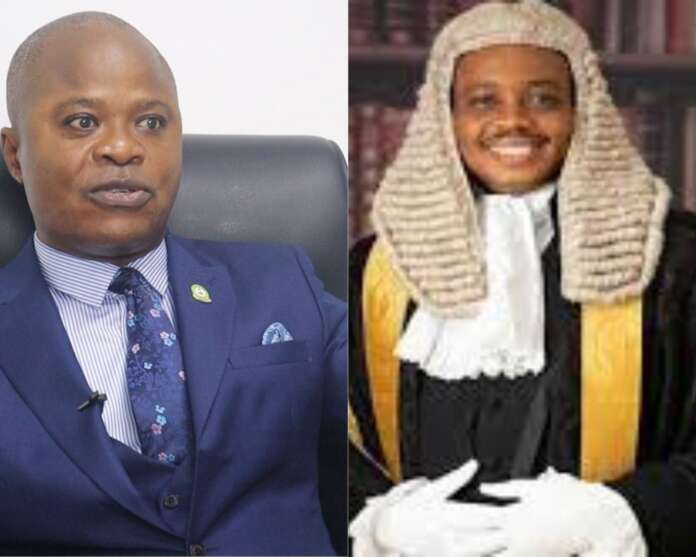
UK set to nominate Dapo Akande for election as judge to International Court of Justice

The United Kingdom’s (UK) Ambassador to the Netherlands, Joanna Roper CMG has announced that the UK National Group will nominate Professor Akande in 2026, for election as a judge to the International Court of Justice, based in The Hague.

In a statement published on the website of GOV.UK, His Majesty’s Ambassador to the Netherlands Joanna Roper CMG said:

“The UK is pleased to announce that Professor Dapo Akande will be nominated for election as a judge to the International Court of Justice in 2026 by the UK National Group.

Professor Akande is an outstanding international lawyer, who will bring deep legal expertise and experience to the ICJ. Professor Akande reflects the UK’s firm commitment to international justice, human rights and the international rule of law.”

HM Ambassador to the Netherlands represents the UK Government at International Organisations in the Netherlands, including the International Court of Justice.

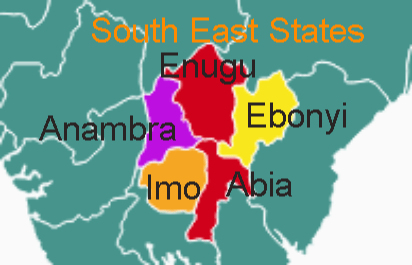
South East has the highest glaucoma, cataract prevalence – Ophthalmological Society

By Dennis Agbo

The Ophthalmological Society of Nigeria (OSN), has revealed that the southeastern part of Nigeria has the highest low vision, glaucoma, cataract and other eye defect prevalence, more than other regions in Nigeria.

The OSN stated that the reason for the high prevalence was not because of environmental factors, but because the region has the lowest intervention rate more than any other part of the country.

The Society made the disclosure during its 49th Annual General Meeting and 48th Scientific International Conference, ongoing in Enugu.

Speaking at the opening ceremony of the conference, the President of OSN, Dr Abiola Oyeleye said that the Society has over 700 Ophthalmologists in Nigeria, noting that the most common cause of blindness through Cataract was age but that the society was educating people on how to take preventive measures.

A former President of OSN, Prof Sebestin Nwosu said that it was true that the south east has the highest rate of not just glaucoma but also prestrous segment because of genetic factor which the people in the south east are prone to.

“The best way to tackling it is by creating awareness, to ask people to go for examination. When people present themselves early they will be examined and the disease will be controlled because now there are many powerful drugs that are used and when it’s recalcitrant surgery comes in.

“The most important thing is to spread the news that glaucoma runs in families. Anybody who knows relatives of one with glaucoma should come for eye check in any of the hospitals that have Ophthalmologists. Very importantly, do not put medicines that will destroy your eye because some of them destroy the optic nerve and make your matter worse. Do not put things in your eyes such as urine, breast milk or kerosene,” Nwosu advised.

Corraborating the disclosure, the Chairman of the Local Organising Committee of the conference, Prof Nkiru Akariwe said that, “the south east zone has the highest prevalence of low vision, it also has the highest prevalence of glaucoma in the country, and highest prevalence of prestrous segment diseases and causes of blindness.

“It’s much of a genetic thing but for some other causes, there have not been much of intervention, like non governmental intervention in the South Eastern part of the country, it’s not about environmental factors.”

Governor Peter Mbah who was represented by the Secretary to the State Government, Prof Chidiebere Onyia noted that the state government has been doing some health interventions in the state in it’s one year of administration.

The State Commissioner for Health, Prof Ike Obi noted that the state government has been supportive of Ophthalmology practice through its teaching hospital and hopes to make the services available in its State University of Health and Applied Sciences, Igboano.

Re: “Uduak Akpan who killed job seeker, Iniubong hanged to death” (From Gistmania)

MY HUMBLE COMMENT
A well-deserved death; those who live by the sword deserve to die by the sword. The guy did not appeal his conviction and sentence probably because he knew he didn’t have any cause to. This notwithstanding, we all know that if the convict had appealed, he would have had the opportunity of living his life for at least another 25 years because the appeal would last at least 09-10 years at Nigeria’s Court of Appeal and thereafter about 15-25 years at Nigeria’s Supreme Court.

A Law School student appearing before my panel for Portfolio Assessment a few days ago on 04 September 2024, was so sad to announce to the Panel that he was at the Supreme when a matter was adjourned from 2024 to 2028.

QUESTIONS ARISING
What impression are we leaving in the mind of such a Bar aspirant? What type of lawyer would he be, upon call to the bar?

With due respect, Nigeria’s judiciary has reasonably proven to be grossly INEFFECTIVE in fulfilling its objectives to our society. The judiciary is thus among the major contributors to, and enablers of, the problems of Nigeria; among the worst hindrances to Nigeria’s progress and stability. The worst part is that no one (within or without the judiciary) is doing anything at all, currently, to change this nauseating situation; the judiciary and its leaders are either UNSERIOUS or CLUELESS about the way out. It’s therefore clear that the future of justice delivery, and by extension of the country, is bleak; hopelessness pervades our society.

I respectfully crave to be invited on national TV to discuss more on this. It’s time to begin to ask uncomfortable questions and to demand immediate answers from those who lead us. To whom much is given, much is expected in return. With due respect, Nigeria’s judiciary receives much but gives too little in return. The maxim that “Justice delayed is justice denied” means that if legal redress or equitable relief is available for a party that has suffered some injuriy, but is not coming in a timely fashion, it is effectively the same as having no redress at all. Hence those who argue that “delay of justice is injustice” are right. In the book, A People’s History of the United States: 1492 – Present, Howard Zinn wrote: “The cry of the poor may not always be just, but if you don’t listen to it, you will never know what justice is”.:See: “Nigeria’s Supreme Court About The Slowest In The World” By Sylvester Udemezue (21 June 2022; https://guardian.ng/features/law/nigerias-supreme-court-about-slowest-in-the-world/

FOR FURTHER READING:

(2). Prolonged Justice Dispensation As The Bane Of Nigeria’s Judiciary: Leadership By Example As The Cure ” By Sylvester Udemezue (11 August 2021; TheNigeriaLawyer)

(3). “Let Only High-profile Nigerians Fund The Supreme Court; The Supreme Court Of Nigeria Is A court Of/for Only High-profile Cases”
By Sylvester Udemezue (17 June 2022; TheNigerianVoice);

(4). “How Leaders of Nigeria’s Judiciary Dissipate Valuable Time on Irrelevancies to the Detriment of Effective, Efficient Administration of Justice (Part 1)” By Sylvester Udemezue (17 May 2020; TheGrundNorm) ;

(5). “Continual Shutdown Of Courts As A “Demonic Stronghold” Obstructing Effective Justice Administration In Nigeria” By Sylvester Udemezue (Thenigerialawyer: April 06, 2021);

(6). Sylvester C. Udemezue, ‘Snail-Paced Justice Dispensation In Nigerian Courts: Factors and Actors’ in U.D. Ikoni, T.F. Yerima, and P.H. Faga (eds), Judicial Autonomy, Administration of Justice and Contemporary Trends in Development of Legal Profession In Nigeria: Essays In Honour of His Lordship, Hon Justice S.O Itodo (1st, Wisdom Books & Publishing, Makurdi, Nigeria 2023) 511-530.

(7). “How To Stop The Unacceptable Delay In Court Justice Delivery In Nigeria” By Sylvester Udemezue (TheNigeriaLawyer; 03 January 2022).

God help the Nigerian Judiciary. Amen🙏

Respectfully,
Sylvester Udemezue (udems)
Proctor,
The Reality Ministry or Justice (TRM).
08109024556.
[email protected].
(07/09/2024)

When judges suffer terror

By Chidi Anselm Odinkalu

Around 26 May 2020, the Police in the Democratic Republic of the Congo (DRC) announced that Raphael Yanyi, a senior judge, “had suffered a suspected heart attack” leading to his death. The Ministry of Justice quickly clarified, however, that the remains of the judge “did not exhibit any toxic substances.” Following an autopsy, Justice minister, Celestin Tunda Ya Kasende, disclosed that Judge Yanyi had died from “blows of sharp points or knife-like objects, which were thrust into his head.”

Contrary to the claim by the police, the judge did not die of a heart attack. Instead was murdered. At the time of his killing, Raphael Yanyi was presiding over the high profile corruption trial of Vital Kamerhe, Chief of Staff to President Felix Tshisekedi.

The killers of Raphael Yanyi have yet to be unmasked and it is impossible presently to say whether they were state or non-state actors.

Zimbabwean advocate, Justice Mavedzenge, makes the distinction between attacks on the independence of judges on the one hand and the persecution of judges on the other. While the former are usually institutional, the latter seek to harm the lives, persons or wellbeing of judges and their families. This goes beyond the weaponization of judicial ethics or the targeting of judges for political reasons. It is not exactly new in Africa.

On 21 September 1972, for instance, elements in the army of Uganda’s Field Marshall Idi Amin Dada, abducted Chief Justice, Benedicto Kiwanuka, from his chambers at the Supreme Court of Uganda. Four days later, Marshall Amin shot and killed his captive, Chief Justice Kiwanuka, at the State Lodge in Nakasero, Kampala, Uganda’s capital.

Nearly 10 years later, on 30 June 1982, unknown persons abducted three serving judges of the High Court of Ghana: Cecilia Koranteng-Addow, Frederick Poku Sarkodee, and Kwadwo Agyei Agyepong. They transported the judges to the Bundase Military Firing Range near Accra where they were shot and killed. To cover up the act, the perpetrators set fire on their bodies. Their charred remains were located the following morning. Joachim Amartey Quaye, a senior member of the ruling Provisional National Defence Council, PNDC, was one of the people found guilty of the judges’ murder. He was subsequently executed by firing squad on 18 August 1983.

Elective government found in most of Africa today, is supposedly more subtle. The predominant contemporary arc of the judicial trajectory around the continent reflects intersecting trends of both “regime capture of the courts” and willing abdication of independence by the highest levels of judicial leadership. However, there remain many examples of judges possessed of both integrity and courage. To bring such judges into line, they are increasingly targets of persecution and harm.

The assumption that the state, government or ruling political parties have a monopoly over these kinds of malefaction appears to be supported by both experience and evidence. It is also the state or ruling parties that are best placed to weaponize mechanisms of judicial ethics in order to terrorise upright judges into submission. However, in many African countries these days, the presumed monopolies of the state are contested by sundry entities. In Burkina Faso, Mali, Mozambique, Niger, Nigeria, Somalia, and Sudan – to cite a few examples – there exist belligerents, insurgents, or armed movements, who exercise quasi-state capacities, enabling them to target judicial officers or other public officials at will or to harm them.

In the face of a slow build-up of this reality in Nigeria, for instance, there has been a concerted effort to deny it or avoid conferring upon it the stamp of official acknowledgement.

At the beginning of January 2012, for instance, an unknown gunman entered the house of Baba Loskurima, Registrar of the High Court of Borno State in north-east Nigeria and “fired several shots into Baba’s head and chest with a Kalashnikov rifle in front of his wife and children.” He stood no chance.

Nine months later, in September of the same year, Zanna Mallam Gana, the Attorney-General of Borno State was also assassinated. The killings of both Baba Loskurima and Zana Mallam Gana were suspected to have been the handiwork of assassins from the Islamist insurgent group, Boko Haram.

These were not the first attacks by suspected non-state actors in Nigeria designed to bring judges to harm. In 2009, Florence Duroha-Igwe, a judge of the Imo State High Court in south-east Nigeria suffered an attack in which both her driver and police orderly sustained severe gunshot injuries.

The following year, the judge-president of the state’s Customary Court of Appeal, Ambrose Egu and senior Magistrate, Pauline Njemanze, were abducted near the Sam Mbakwe International Cargo Airport near Owerri on official duties.

In March 2011, high court judges in the state embarked on a strike to protest the abduction of one their colleagues, Theophilus Nzekwe.

Emboldened by the incapacity of the Nigerian state to exact accountability, the perpetrators of these attacks grew in both audacity and intensity and started trading judges for ransom. In October 2019, a senior Justice of Appeal from the Imo State, Chioma Nwosu-Iheme, was abducted in Benin City while on duty presiding over election disputes. She spent a fortnight in captivity.

In September, 2021, former Chief Judge of Abia State, Nnenna Oti, was abducted in Orlu, Imo State. Seven months earlier, Presiding Justice of Appeal in Owerri, Rita Pemu, needed an extra supply of native wiles to survive the perils of abduction.

The non-state perpetrators of the most recent attacks on the safety of Nigeria’s judges are no longer keen to hide their provenance. Janet Gimba, a judge of the Upper Customary Court of Kaduna State in north-west Nigeria, was abducted with her four of her children on 24 June 2024 by reputed bandits who brutally killed one of the children in order to drive home their bargain for both money and prisoners. The children were released after 15 days in captivity.

On the date in June on which Judge Janet Gimba and her children were abducted, in the Borno-Yobe borderlands in north-east Nigeria, elements suspected to be from the Islamic State, West Africa Province (ISWAP), abducted Haruna Mshelia, a senior judge of the High Court Borno State together with his wife, Binta (who was nursing a fracture), their driver and an Orderly. For two years until 2010, before his appointment as a judge, Haruna Mshelia was the Chairman was the Nigerian Bar Association (NBA), in Maiduguri.

While the fate of the judge, his spouse and their staff remain uncertain, it is prudent to prioritise their safe return. As such, it may be premature to dwell too closely on their case. It is not difficult, however, to speculate as to why a senior judge who is deeply respected for his integrity could be the target abduction by an armed quasi-state actor like ISWAP.

The real question that must be addressed is how legitimate institutions of the state and of organized civics should respond to this kind of situation. 77 days since the abduction of this senior judge and his wife, very little official or public information exists about their plight or about efforts to free them. That could, of course, be because public authorities have decided that this is the best guarantee for their safe return.

The good news in that is that this suggests that government trusts that the judge, his wife and other abductees with him are alive. The risk, however, is that this could also enable government to demobilize pressure for their safe return. That could guarantee their erasure from public consciousness and, even worse, bring closer the day when the abduction by non-state actors of conscientious judges will become normalized in Africa’s most populous country.

A lawyer and a teacher, Odinkalu can be reached at [email protected]

TIPS