Home Blog Page 507

Release Detained #Endbadgovernance protesters forthwith

By Sonnie Ekwowusi

The continued detention of the EndBadGovernance protesters by the Tinubu administration demonstrates that the administration has blossomed into full-blown despotism and totalitarianism. It is no wonder that the international human rights watchdog, Amnesty International, has recently called for the immediate and unconditional release of over 1,000 #EndBadGovernance protesters who are currently in prison custody nationwide due to their participation in the recent nationwide #EndBadGovernance protest.

Similarly, the Catholic Bishop Conference of Nigeria (CBCN), Transparency International (TI), renowned human rights activist Femi Falana SAN, and others have vociferously urged the federal government to expedite the release of the #EndBadGovernance protesters and other individuals being detained in connection with the protest.

According to Falana, no fewer than 2,111 protesters have been arrested in connection with the nationwide protest, out of which 1,403 have been secretly arraigned in various courts and ordered to be remanded in prison custody due to lack of legal representation.

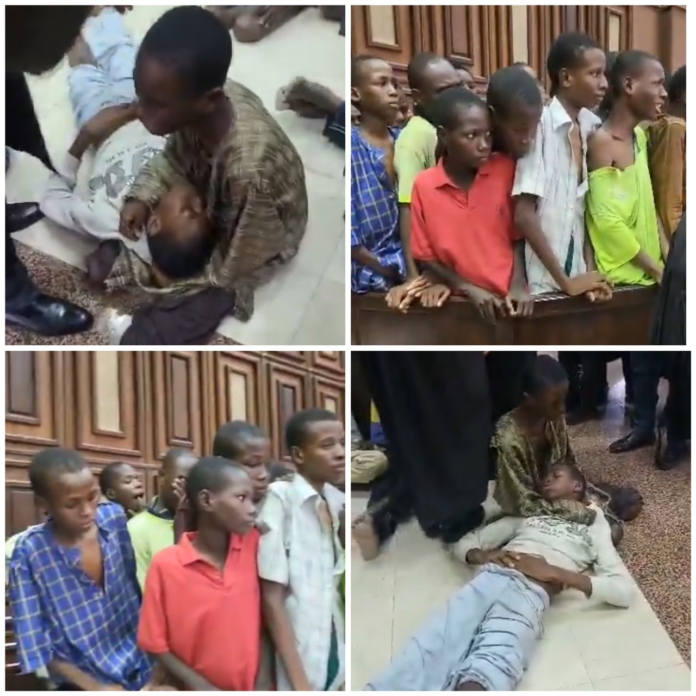
This follows the surreptitious granting of a 60-day extension to the police by Justice Emeka Nwite of the Federal High Court in Abuja to detain 124 alleged protesters, including at least 22 minors. In another development, a Federal High Court in Abuja has issued an order freezing the bank accounts of 32 individuals and companies allegedly linked to the #EndBadGovernance protest.

Meanwhile, the Campaign for Democratic and Workers’ Rights (CDWR) has drawn the attention of the federal government to the deteriorating health of some of the detained protesters, particularly Michael Adaramoye, Mosiu Sodiq, and Eleojo Opaluwa.

The nationwide #EndBadGovernance protest spanned ten days, from August 1 to 8, 2024. It is noteworthy that, prior to the protest, the federal government and some state governments openly acknowledged that the right to protest is a constitutional right and, therefore, urged the would-be protesters to conduct their protest in a peaceful manner devoid of violence.

The Lagos State government not only permitted the would-be protesters to protest but also directed them to do so in designated places in Lagos. It is therefore surprising that the protest has drawn the ire of the Tinubu government, culminating in the arrest and detention of over 1,000 protesters, including minors aged 14-17, who have been thrown into prison on accusations of terrorism, treason, and treasonable felony under the Terrorism (Prevention & Prohibition) Act.

The minors being detained include: Muktar Ishaq Alhassan, 16; Sani Aliyu, 17; Mahmud Mustapha, 16; Umar Abdullahi, 17; Habibu Sani, 17; Mustapha Abubakar, 17; Sani Hassan Idris, 17; Abdulrahaman Ibrahim, 17; and Salisu Adamu, 16. Others are Bilal Auwalu, 15; Amir Muhd, 17; Abdul’aziz Adam, 15; Sadiq Sunusi, 15; Ibrahim Sani, 17; Hassan Muhd, 17; Saifullahi Muhd, 15; Umar Ali, 17; Musa Isyaku, 15; Muhd Musa, 14; Usman Amiru, 14; Abdulganiyu Musa, 15; and Sunusi Nura, 14.

If the federal government had initially acknowledged the right of the protesters to protest under the Constitution and even permitted the protesters to go out and protest, why is the same federal government now turning around to arrest and detain the protesters, accusing them of committing terrorism, and treasonable felony? Why detain harmless minors who probably joined the protest for the fun of it?

It is unfortunate that the Tinubu administration has been unlawfully arresting, torturing, and detaining some of the protesters and promoters, contrary to sections 39 and 40 of the 1999 Constitution, which guarantee the right to freedom of expression and assembly. Additionally, the government has been unlawfully freezing the bank accounts of some of the #EndBadGovernance protesters and promoters.

The aforesaid actions of the Tinubu administration are illegal and unconstitutional. The continued detention of these protesters and the freezing of their bank accounts are capable of triggering another round of protests. We have yet to recover from the damaging effects of the last wave of protests, yet the government is not laying the groundwork for peace. Instead of giving peace a chance, the government is persecuting the #EndBadGovernance protesters and promoters.

Why should citizens suffer prolonged incarceration for exercising their fundamental rights and expressing their views about Nigeria? The truth is that young people in this country—those in the age bracket of, say, 18 to 45, who could technically be categorized as the younger generation—are seething with anger, perhaps now more than ever, over the way they are constantly being shortchanged in Nigeria. They are angry about the country’s deteriorating politics, increasing youth unemployment, the failed education system, and, in short, about everything. They are angry that President Tinubu is living in a lap of wasteful expenditure and opulence at the expense of the Nigerian people, who are dying of hunger and human misery.

The paradox is that Nigerian youth constitute a significant percentage of our population, yet they are completely marginalized in the scheme of things.

The worrisome aspect is that while the government has developed a proclivity for arresting and detaining young people on any flimsy excuse, political office holders who have looted the treasury are freely walking the streets untouched. Do we have two criminal justice systems in Nigeria—one for the rich and another for the poor?

The painful aspect is that while there are abundant laws against police brutality and human rights violations in Nigeria, the Nigerian police still go about arresting and detaining suspects and dumping them in prison without bail or trial. As clearly stipulated in our 1999 Constitution, every citizen is presumed innocent until proven guilty by a court of law of competent jurisdiction.

Additionally, any person who is arrested or detained shall be informed in writing within 24 hours, in a language they understand, of the facts and grounds for their arrest or detention. If a person is arrested either for the purpose of being charged in court or upon reasonable suspicion of committing an offense, they must be charged in court within a reasonable time not exceeding 48 hours, failing which they should be granted bail.

Therefore, the Tinubu administration is urged to immediately initiate the processes for the release of the #EndBadGovernance protesters. The government should halt any further clampdown on #EndBadGovernance protesters. Nothing is gained by seeking revenge against these protesters and their supporters. After all, they are our children. Rather than wage war against our youth, the government should, in the coming weeks, order the release of the detained young protesters. It is self-destructive to continue shortchanging the young people, the leaders of tomorrow.

The beauty of democracy, in contrast to the totalitarianism and dictatorship we witnessed during the military regimes in Nigeria, is that citizens are free to express their opinions without any form of intimidation, persecution, or victimization. The rule of law ought to reign supreme over the arbitrary and capricious exercise of power.

Arbitrarily arresting peaceful protesters undermines the rule of law and further erodes public trust in the Tinubu government. Peaceful protest is a fundamental human right enshrined in the Nigerian Constitution. The detention of a suspect in prison without bail or trial is unconstitutional and actionable in law. In a democracy, the government must respect the voices of its citizens. Peaceful protests are a means for people to express their views, grievances, and demands.

Suppressing a peaceful protest by young people undermines democratic principles and can lead to more protest against the government. Nigeria is a signatory to various international treaties and conventions, such as the International Covenant on Civil and Political Rights (ICCPR), which protect the rights to freedom of assembly and expression.

Arresting peaceful protesters flagrantly violates these obligations and can damage Nigeria’s international reputation. When citizens are denied the right to protest, they may resort to other, less peaceful means of expressing their dissatisfaction. This can lead to instability, violence, and disruption of public order, which is detrimental to the nation as a whole.

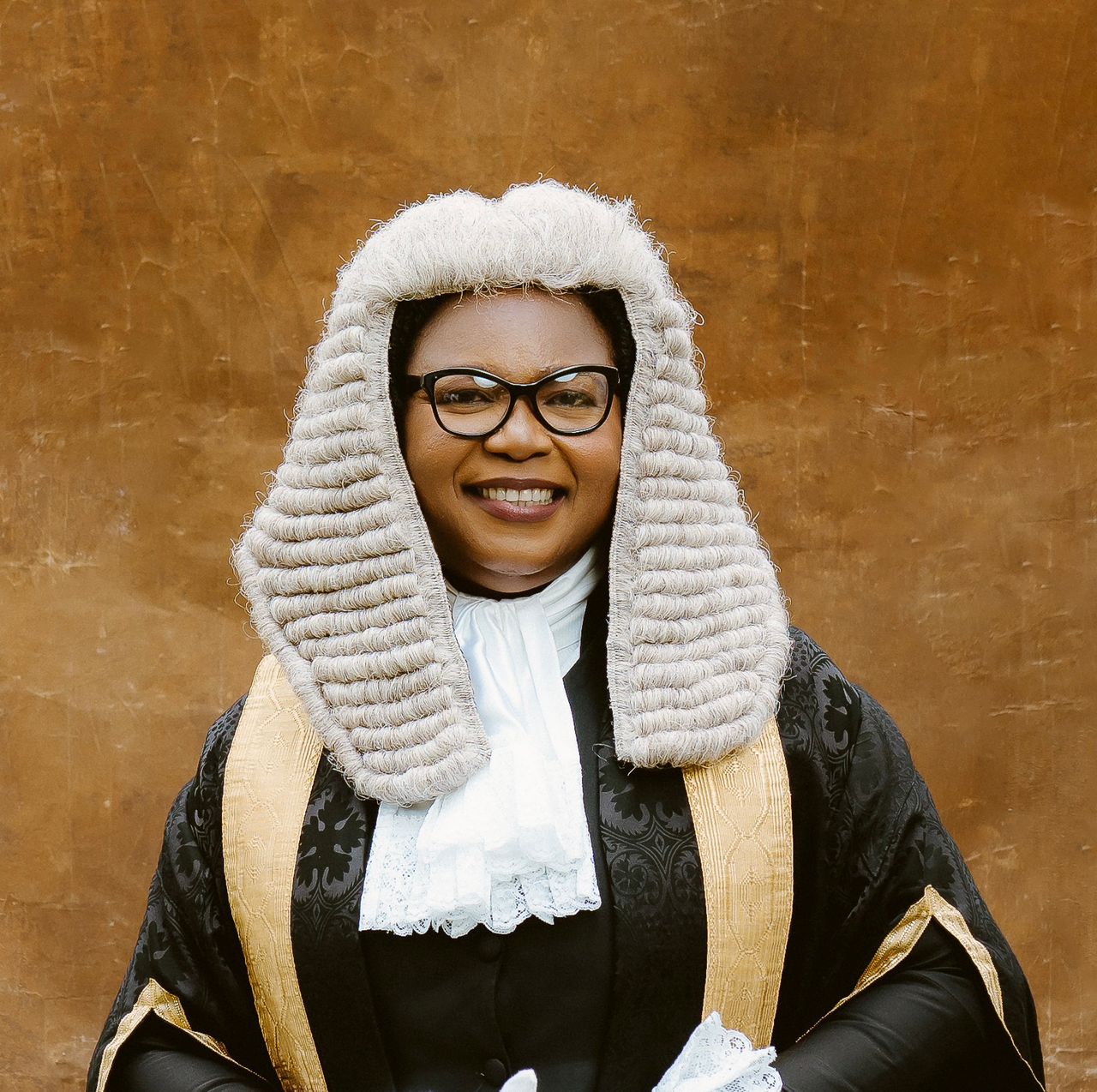
Detention and trial of minors should only be used as a last resort— Ezeilo, SAN

By Joy Ezeilo, SAN

Children’s rights are human rights, and Nigerian children’s rights must be respected and upheld. Children who are in conflict with the law should be redirected away from the formal judicial process.

Recent events have significantly undermined our justice system, representing a clear violation of state, national, regional, and international legal frameworks concerning children’s rights and the justice system.

Children who are alleged to have committed crimes must be kept separate from adults in detention facilities.

Their privacy and identities should be protected. Detention and trial should only be used as a last resort, and if necessary, a Juvenile Court or Juvenile Judge should handle such proceedings.

The administration of criminal or the juvenile justice system must ensure a treatment that promotes their sense of dignity and worth, considers their age, and aims at their reintegration into society to assume a constructive role.

This ugly phenomenon of starving children facing charges of mutiny and treasonable felonies must stop. It shames us as a nation.

We demand accountability now for those who failed to respect extant laws.

A prosecutor should know better and always do the right thing in the temple of justice.

Our Duty to Protect: A call for justice and humanity in the treatment of #endbadgovernance peaceful protesters, including children

By Mabel Adinya Ade

Recent images and reports of young, frail, malnourished Nigerian children being detained and brought before adult courts for participating in peaceful protests against bad governance are a searing reminder of the state’s responsibility towards its citizens, especially its most vulnerable. These are not the actions of rebels or criminals; these children are simply exercising their constitutional rights in a plea to bring light to their plight. Instead of being heard, they face an unimaginable response detained, humiliated, and denied the dignity every human being deserves.

This shocking treatment is an affront to Universal Human Rights, Nigerian Constitutional values, and indeed, our cultural ethos that places a high premium on the well-being of children. For a government to subject children to such conditions behind bars and in adult courts begs the question: Are we no longer bound by our duty to protect and nurture the young? Our constitution is clear: every Nigerian, regardless of age, has the right to be heard, respected, and treated with dignity. When young citizens are bold enough to peacefully raise their voices against the injustices affecting their lives, this act of bravery should be met with commendation, not brutalization.

Children Are Being Failed by Their Government

Witnessing children collapse from hunger and deprivation as they stand before the courts is a glaring reflection of the challenges facing the nation today. These children should be in school, with access to shelter, healthcare, and food. Instead, they are left on the fringes, denied basic needs, and now criminalized for expressing their desperation. The Nigerian government has a solemn duty to ensure the welfare of these children, a responsibility that should compel every public servant to address these grievances, not silence them through detention.

It is impossible to separate the challenges facing these young people from the broader crisis in Nigeria. Our nation is plagued by ongoing insurgencies in the North Central, North East, and North West regions, widespread food insecurity, and unprecedented levels of inflation and economic instability. The devaluation of the Naira has left many families struggling to afford basic necessities, and social security and protections are but a distant dream for the majority. This harsh economic climate has pushed millions to the brink, leaving children innocent and deserving of our care without the resources needed to survive, let alone thrive.

The Rising Tide of Despair Among Our Youth

These children, facing neglect and abuse in the hands of those meant to protect them, are also growing up in a world where the dangers of kidnapping, human trafficking, and violence lurk around every corner. The economic situation is strangling opportunities, forcing many into drug addiction, internet fraud, ritual killings, and suicide. When a society fails its young, despair sets in. And when young people lose hope in their future, it is the entire nation that suffers.

Instead of further traumatizing these children by exposing them to the harsh realities of detention and adult courtrooms, we should be listening to their voices and addressing their concerns. Are our judicial systems no longer advocates for justice and protection? Nigerian law provides for family courts precisely to protect minors from the harmful impacts of adult judicial processes. Yet, here we are, allowing children to be tried as though they were adults stripping them of their innocence, subjecting them to psychological trauma, and effectively branding them as outcasts.

The Violence Against Persons Prohibition (VAPP) Act: An Essential Shield at Risk

The Violence Against Persons Prohibition (VAPP) Act is a critical shield for Nigeria’s vulnerable populations. It protects children, women, and other marginalized groups from physical, emotional, and psychological harm. Recognizing and enforcing this law is vital. It prohibits acts that would expose young protesters to harm, degradation, or any form of violence, especially at the hands of those entrusted with their protection.

Imagine the repercussions if this law were repealed or disregarded. Without the VAPP Act, cases of abuse, harassment, and violence would spiral further, unchecked. Children, like those peacefully protesting, would lose any legal recourse against the very authorities failing them now. Without VAPP’s protections, children could be detained without appropriate safeguards, exposing them to trauma that can last a lifetime. This would undermine any remaining trust in the system and deepen the cycle of disillusionment already rampant among young Nigerians.

The enforcement of the VAPP Act isn’t a luxury; it is a necessity. It is a legal instrument that provides a safety net for Nigeria’s most vulnerable. The government must not only uphold but strengthen its implementation to protect children from the kinds of abuses we see today. Repealing it or diminishing its importance would be a catastrophic reversal, sending a message that Nigerian vulnerable/children’s lives, safety, and dignity are expendable.

The Government’s Role in Restoring Trust and Hope

Our leaders must ask themselves: if these children were their own, would they accept this treatment? The answer is undoubtedly no. So why, then, is it acceptable for these young citizens? We call on the Nigerian government to recognize this as a moment to prioritize the welfare and rights of our children. We must listen to their voices, which are a reflection of the growing disillusionment in our country Nigeria.

Inaction will only deepen the sense of betrayal that many young Nigerians feel towards their leaders. Instead, we urge the government to consider the following advocacy actions:

1. Immediate Release and Rehabilitation: The detained children should be released immediately and provided with care to address the physical and emotional harm caused by their detention. Rehabilitation and support services must be made available to help them heal.

2. Commitment to Dialogue: The government should initiate platforms for youth voices, especially those marginalized by poverty and instability, to express their concerns constructively without fear of arrest and detention.

3. Strengthen Family Courts: The judicial system must adhere to the standards for handling cases involving minors, ensuring they are directed to family courts where they can receive the care and protection they need.

4. Strengthen Social Protection Programmes: It is vital to provide social safety nets for the most vulnerable, ensuring that children have access to food, education, healthcare, and a safe environment.

5. Invest in Mental Health and Counselling for young people: We must expand mental health resources to address the growing crisis among our young people, providing avenues for healthy expression and support.

6. Prioritize Enforcement of the VAPP and Child’s Right Acts: The government must reaffirm its commitment to the Violence Against Persons Prohibition (VAPP) Act and Child’s Right Act, enhancing enforcement to protect the rights and dignity of children and other vulnerable groups from all forms of violence.

7. Hold Leaders Accountable for Children’s Rights Violations: We call on the international community to hold Nigeria accountable to its commitments under the United Nations Convention on the Rights of the Child and other human rights frameworks.

To the Nigerian Government and International Community

This is a plea, not only from Mabel and concerned citizens but from young voices crying out for justice, dignity, and compassion. Detaining children for peacefully protesting is an international embarrassment, a violation of their rights, and a betrayal of the trust they place in us as their protectors. Every child in Nigeria deserves a future filled with hope, not trauma. Our country has the capacity to create a brighter, more compassionate Nigeria; one where young people can look to their leaders with respect rather than despair.

The time to act is now. Let us release these children, address their grievances, and commit to creating a Nigeria that honours the dreams, rights, and dignity of all its citizens, especially the most vulnerable among us.

Mabel Adinya Ade

Executive Director,

Adinya Arise Foundation (AAF)

[email protected]

Nigeria: A call for a country founded on law and due process

The recent actions by the Federal Minister, Nyesome Wike, involving the forceful revocation of the Certificate of Occupancy (C or O) for the plots of land in the Katampe District, Abuja, belonging to Julius Berger and inviting the heads of Nigeria’s Appeal and Supreme Courts to supervise the subversion of the Law and due process is troubling.

This unilateral action to seize land under private possession, repurpose it for a judges’ quarters, and orchestrate a ground-breaking ceremony with the Chief Justice of Nigeria, Justice Kudirat Kekere- Ekun and the President of the Court of Appeal of Nigeria, Justice Monica Dongban-Mensem in attendance raises deep concerns for the rule of law, judicial independence and respect for due process in Nigeria.

The dignity and stability of government depends on justice and the appearance of its objective application.
The Constitution of Nigeria guarantees the right to property as does the African Charter on Human and Peoples’ Rights. Lawful interference with this right is regulated by law.

The testimony of the F.C.T. Minister as to the circumstances of the revocation of the title of Julius Berger to the land suggests arbitrariness and abuse of power. Litigation is foreseeable. The presence of the Chief Justice and President of the Court of Appeal at the confession by the Minister compromises the impartiality and integrity of the judicial branch. This potentially creates a conflict of interest and erodes public confidence in the court’s ability to operate independent of political or executive influence.

The actions of the F.C.T. Minister and of the Chief Justice and the President of the Court of Appeal reveal a cavalier disregard of both the design of the Constitution and the cannons of the Judicial Code of Conduct. Justice is a pillar upon which democracy rests and it must not only be done but also be seen to be done. By their actions, the Minister, Chief Justice and President of the Court of Appeal imperil both the institutional standing of the judiciary as a co-equal branch of government and the constitutional structure of government founded on the separation of powers.

There are disturbing reports that activists and senior legal professionals such as Dr. Sam Amadi, Professor Chidi Odinkalu, and Jibrin Okutepa SAN, amongst others, who have voiced concerns and publicly condemned the actions, are now facing pressure from the Minister and his acolytes. This calculated targeting of critics is an attempt to silence dissent and demonstrates a troubling pattern of intimidation and manipulation aimed at stifling free speech and suppressing accountability. Such actions stand in direct opposition to the principles of justice, transparency and democratic governance.

Nigeria’s Justice System must not be exploited as a tool for silencing legitimate criticism or shielding questionable practices. These actions set a dangerous precedent that must be addressed, as they compromise the ethical standards expected from public office holders and the sanctity of legal institutions.

The Nigerian Constitution protects freedom of speech and expression under Section 39(1), which states: “Every Person shall be entitled to freedom of expression, including freedom to hold opinions and to receive and impact ideas and information without interference.” No government official should abuse their authority to undermine this right. In particular, we call attention to Principle 23 of the United Nations Basic Principles on the Role of Lawyers (1990), which provides:

“Lawyers like other citizens are entitled to freedom of expression, belief, association and assembly. In particular, they shall have the right to take part in public discussion of matters concerning the law, the administration of justice and the promotion and protection of human rights and to join or form local, national or international organizations and attend their meetings, without suffering professional restrictions by reason of their lawful action or their membership in a lawful organization.”

In the light of the above, the undersigned call on the following actions to be taken immediately to address these pressing concerns:

  1. Nigeria’s Judiciary needs to publicly reaffirm commitment to the constitutional investment in the independence and impartiality of the third branch. The leadership of the judiciary needs to show that it is committed to a judicial system that is capable not merely of delivering fair and just administration of justice but even more importantly ensuring that this is manifestly seen to be done, unimpeded by political or personal interests. Considering the travesty that has already taken place the Chief Justice and President of Court of Appeal are called upon to publicly affirm recusal in both judicial and administrative capacity from any case involving Minister Nyesom Wike to address public perception of bias.
  2. The Courts shall be a neutral venue where the judicial powers vested in the courts are fairly applied to all persons to ensure the democratic foundations upon which Nigeria’s legal and judicial system are built are insulated from threats and public trust in the Judiciary is restored.
  3. The Minister of the Federal Capital Territory should respect the independence of the Judiciary in the F.C.T. and refrain from insinuating himself or his office into the work of judges or fostering the impression that he is invested in doing that.
  4. The Chief Justice of Nigeria as the Chair of the National Judicial Council should commit to the highest standards of personal rectitude as that is the only way to bring credibility to the urgent task of policing disciplinary control of erring judges.
  5. Nigeria should take steps to bring itself in compliance with the UN Basic Principles on the Role of Lawyers. Accordingly, activists and legal professionals must be protected from Intimidation. The Nigerian Bar Association must stand firm against attempts to stifle the voices of legal professionals who speak out against injustice; their commitment to the rule of law and public accountability should be supported by the Nigerian Bar whose core mandate is the promotion of rule of law.

We call on all relevant authorities to take immediate steps to address these pertinent concerns.

Signed:

Africa Judges and Jurists Forum

Gloria Mabeiam Ballason Esq, House of Justice, Nigeria

Prof. Danwood M. Chirwa, Dean of Law, University of Cape Town, South Africa

Abiodun Baiyewu Esq
Global Rights

Deus Valentine Rweyemamu, Centre for Strategic Litigation, Zanzibar- Tanzania

Silas Joseph Onu Esq
Open Bar Initiative

Arnold Tsunga, Tsunga Law International Harare- Zimbabwe

Citizens Governance Initiatives, Yaounde- Cameroon

Iheoma Obibi, Alliances for Africa

Eriya Nawenuwe, Alliance for Key Population Advocacy-AKPA , Uganda

Paul Kamara, Citizens’ Watch,
Makeni- Sierra Leone.

Martin Obono Esq TapNitiative

Chinedu Orji Esq, Swords of Truth Advocate

Digicivic Initiative, Nigeria

Chepkorir F. Sambu, Advocate of the High Court of Kenya

Rachel Greenwood, Global Rights

Nelson Olanipekun, The Gavel

Dr Eki Yemisi Omorogbe, United Kingdom.

Ministry Education nulifies controversial appointment of Bernard Odoh as Nnamdi Azikiwe University VC

  • University insists due process was followed
  • Federal University Gusau denies Odoh’s Professorship claims

The Federal Ministry of Education has invalidated the recent appointment of Bernard Odoh as the Vice-Chancellor of Nnamdi Azikiwe University in Awka, Anambra State.

The Governing Council of the University recently appointed Odoh as the school’s 7th substantive vice-chancellor.

Under controversial circumstances, Odoh was on Tuesday, October 29, 2024, appointed by the University’s Governing Council led by the Pro-Chancellor and Chairman of the Council, Amb. Greg Mbadiwe.

In a letter addressed to the Pro-Chancellor/Chairman of Council by Mrs. R. G. Ilyasu for the Permanent Secretary of the ministry, and dated November 1, the ministry said it had been agreed that there would be no appointments without reconciliation with the aggrieved parties of the school.

The letter reads, “Sequel to your meeting with the Honourable Minister of State for Education, (HMSE) held on Friday, 25th October, 2024, it was formally agreed that no appointments should be carried out by your Council without reconciling with the aggrieved parties in the University Community.

“It has come to the attention of the Ministry that your Council had gone ahead to appoint a Vice Chancellor for the University without the Representative of the Ministry, the internal council members and other Stakeholders on Tuesday, 29th October 2024. This is a gross disregard to constituted Authority and is not in line with Extant provisions.

“Against this backdrop: I am directed to inform you that all appointments made so far are null and void. You are therefore requested put on hold all other appointments in the University pending the assumption on duty of the new Honourable Minister of Education,” it added.

The letter was copied to the Executive Secretary of the National Universities Commission.

However, in a letter dated November 1st, and signed by the University Registrar and Secretary to the Governing Council, Barr Mrs R.I. Nwokike, in response to the letter from the ministry, the school management said the University Governing Council followed all the laid down procedures on the appointment of the new vice chancellor and registrar.

“Contrary to any assumption of a formal engagement, the Pro-Chancellor did not have an official meeting with the Minister of State for Education.

“Instead, informal discussions took place between the outgoing Minister of State and the Council of Nnamdi Azikiwe University. It is important to clarify that these discussions do not supersede or alter the enforceability of the court’s judgment.

“The Council, in discharging its duties, adhered strictly to a valid judgment from a competent court, which directed the Council to exercise its statutory authority in appointing the Vice-Chancellor. Please find attached the court judgment for reference.

“In response to concerns regarding the absence of the Ministry’s representative, certain internal Council members, and other stakeholders at the Vice-Chancellor appointment meeting on Tuesday, 29th October were observed,” the letter read.

It explained that invitations were duly issued to all relevant parties, to ensure that everyone was informed and given the opportunity to attend.

According to the school, “The meeting saw participation from representatives of the Federal Character Commission, external and internal Council members, and various other stakeholders, demonstrating a broad representation of interests.”

The management of the institution insisted that it had the attendance register, photographs documenting the proceedings, and copies of the official meeting notice sent to stakeholders for consideration to validate its claims.

In addition, the school confirmed that the quorum was duly constituted in compliance with the statutory requirements set forth in the Nnamdi Azikiwe University Act, Cap 139 (as amended), LFN 2004.

“In accordance with Section 6(a) of the Nnamdi Azikiwe Standing Orders of the Governing Council,” it said, “the quorum requirement mandates the presence of five members, including at least one of the following: the Vice-Chancellor or his Deputy, one appointee of the Visitor, and one appointee of the Senate.

“For reference and validation, please find attached the Council’s constitutional documents and additional information linking these requirements to the University Act.”

It emphasised that, “Due process was meticulously observed throughout the selection and appointment processes for both the Vice-Chancellor and the Registrar.

“The suggestion of ‘reconciling with aggrieved persons’ is not relevant to this procedural integrity.

“Of the eighteen applicants for the position, fifteen attended the interview, and score sheets were duly documented.

“The Council, within the scope of its lawful authority, has fulfilled its mandate with transparency and adherence to the University’s regulations,” the school added in the statement.

Meanwhile, the Federal University Gusau in Zamfara State has denied having any academic relationship with the newly appointed Vice-Chancellor of the Nnamdi Azikiwe University in Awka, Anambra State, Bernard Odoh.

This followed claims that Odoh became a professor at the Federal University Gusau in 2015.

The declaration made by the Federal University Gusau followed an inquiry made by Kingsley Awuka Esq, Principal Partner at Awuka, Okafor & Partners.

The school disclosed this in its reply to the lawyer dated October 28, 2024, and titled ‘RE: Request For Disclosure Of The Academic Status Of Dr. Ifeanyi Bernard Odoh Of The Department Applied Geophysics, Federal University Of Gusau, Pursuant To Sections 1(1) (2); And 2 (3) (D) (VI) Of The Freedom Of Information Act, Laws Of The Federation 2011.’

The letter obtained by SaharaReporters signed by Mal. Shehu Suleiman, Senior Staff Officer for the Registrar, reads, “I write on behalf of the Registrar to acknowledge your correspondence dated 4th October, 2024 on the above subject.

“Our records show that Dr. Ifeanyi Bernard Odoh never a staff nor a pioneer Head of the Department of Geology. Never shown up in the Department or though (sic) any course(s).”

Man bags 14 years for defiling five-year-old girl in Kano

A High Court of Justice in Kano presided over by Hon. Justice Maryam Sabo on Friday, jailed one Shamsu Adamu to 14 years imprisonment with sundry work in a correctional centre for defiling a five-year-old girl.

The convict, Adamu, an adult resident of Kunture in Ungogo Local Government Area, was found guilty of rape contrary to section 283 of the Penal Code Law.

To prove his case beyond any doubt, Prosecution Counsel, Barr A.U. Adamu presented three witnesses, including the victim, neighbours, and an investigative police officer.

Leading in evidence, the witnesses testified that on or about 7th June 2021 at about 4:00 pm, at Kunture Village in Ungogo LGA within Kano Judicial Division, the convict lured the victim into his room, attached to their house and raped her, then pushed her outside the room and ran away.

When the charge was read to the suspect, he pleaded not guilty and testified as a sole defense witness after that.

He was arraigned on a two-count charge of rape contrary to section 283 of the Penal Code and an unnatural offense against the order of nature, punishable under Section 284 of the Penal Code.

In her judgment, Justice Sabo, said although there was no direct evidence linking the defendant to the offense, however, according to her, “by the circumstantial evidence adduced before the court during the trial, especially that of the victim’s mother who saw blood on the private part of her child. Also, the prosecution, who similarly led the investigation team to the room of the defendant, I strongly believe that the prosecution counsel was able to prove the offence of rape against the defendant beyond a reasonable doubt.”

She added, “Consequently, I found you Shamsu Adamu, male adult of Kunture Village in Ungogo LGA guilty as charged of the offense of rape, under Section 282 of the Penal Code Law and Punishable under Section 283 of the same Law.

“I hereby convict and sentence you to 14 years imprisonment with hard work in the correctional centre.”

Similarly, in her judgement, Justice Sabo averred that from the evidence before the court, the prosecution has failed to prove the offence of unnatural offence against the defendant.

“The Evidence of PW 3 is insufficient to establish the offence of unnatural offence against the defendant.

“I therefore discharge and acquit the defendant for the offence of unnatural offence charged under Section 284 of the Penal Code.”

Man jailed for attempting to write UTME for daughter

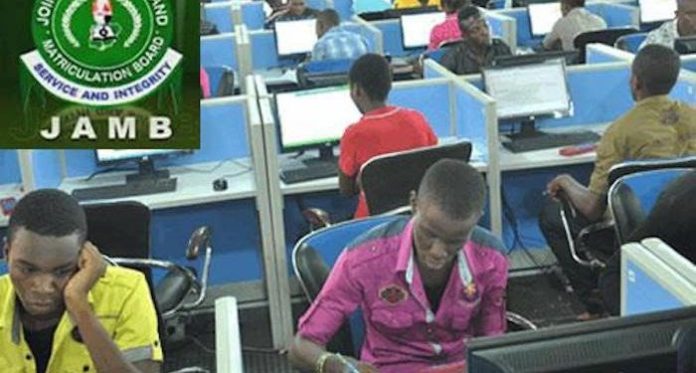
A Chief Magistrate Court in Wuse Zone 2, Abuja, has sentenced one ‘Professor’ Jide Josiah Jisos to six months in prison for impersonation during the 2019 Unified Tertiary Matriculation Examination,UTME.

The convict was apprehended by officials of the Joint Admissions and Matriculation Board,JAMB, while monitoring the 2019 UTME at Brix Academy in Abuja.

The board which confirmed this in a statement, Sunday, by its spokesman, Fabian Benjamin, said ‘Prof.’ Jisos had presented himself to JAMB examination officials as a representative of a non-governmental Organisation, NGO, claiming he was there to oversee the examination.

“However, his deception was uncovered when he was questioned by the leader of the monitoring team in the examination hall, who asked him to clarify his purpose.

“Unable to substantiate his claims, Jisos was arrested and handed over to security personnel for further investigation. During interrogation, he confessed that he was not affiliated with any NGO and was actually in the examination hall to assist his daughter in taking the 2019 UTME.

“Chief Magistrate Honourable Justice Folashade Oyekan found Jisos guilty of a one-count charge of impersonation and sentenced him to six months in prison, with an option of a N100,000 fine, “the statement read.

The statement did not state the day the judgment was given.

Kudisprudence

By Chidi Anselm Odinkalu

“The partiality that inevitably affects judges has been noted in cases with a political flavour.”

David Pannick, KC, Judges, p. 44 (1987)

The state as we know it enjoys three notional monopolies. One is a monopoly of legitimate taxation. The second is a monopoly of the legitimate instrumentality of violence; and the third is a monopoly of legitimate dispute resolution. In Nigeria, all three monopolies are now contested by non-state entities.

Of these three monopolies, many focus on the legitimate instrumentality of violence but it is the capacity of a state to resolve disputes lawfully and peacefully among those who live in it that makes the other two monopolies worthwhile. That is why courts, administrative and even traditional institutions exist.

David Pannick, KC reminds us that “as part of the function of deciding disputes, the courts provide a public service, at almost no charge to customers (who pay for their lawyers but not for the judge and the courtroom).” This is the ideal. Nigeria’s judicial system is in a profound crisis of legitimacy today because of ample evidence suggesting strongly that the requirement that litigants should not pay for the judge or the courtroom may not apply to certain categories, especially among political litigants.

To be clear, the most important reasons for which people sometimes end up in court often are not things to which it is possible to assign any value – dignity, equity, justice, memory, safety or human life. These are all invaluable. Without them, organized society fails. Jurisprudence is the system for organising knowledge about judicial decisions that ultimately deliver and govern these invaluable public goods.

However, judicial business is not confined to these. Many disputes that end up in court involve property or things of material value, such as land, inheritance, shares, stocks, or chattels. Some others may extend to intangibles of value, such as status or reputation. There could also be cases concerning access to political power from which perch the people involved hope to reap benefits that are material in consequence.

These are all things for which the currency of transaction or exchange is money. In Nigerian parlance, that is called “Kudi”. When a court system prioritises disputes affecting things measured in the currency of money over things that are entirely invaluable, it replaces a system of jurisprudence in favour of a preoccupation with “Kudisprudence”.

By way of full disclosure, I did not invent this expression, “Kudisprudence”. I was introduced to it by a friend and school mate of long standing who also happens to be a diligent Senior Advocate of Nigeria (SAN). He has not licensed me to disclose his identity, and I am obliged to respect his anonymity.

Two cases occurred this past week to illustrate how this distinction between jurisprudence and Kudisprudence affects judicial decision making in Nigeria. On 30 October, the police arraigned a member of the House of Representatives, Mascot Ikwechegh, on charges of assault against a gig-economy driver working with Bolt. A now viral video clip showed Mr. Ikwechegh had assaulted the driver in words and deed. He called the driver vermin in different forms and threatened to “disappear” him without consequences, before proceeding to satiate on the driver his thirst for physical violence.

For those conversant with that Nigerian rat-killer, the material on the video clip portrayed Mr. Ikwechegh as the member representing “Otapiapia” Federal Constituency in the Rat Killers Assembly. On his arraignment, the court granted him bail on an oral application in the sum of N500,000 with sureties who only had to show evidence of utility bills for proof of their residence. The case was adjourned for one week.

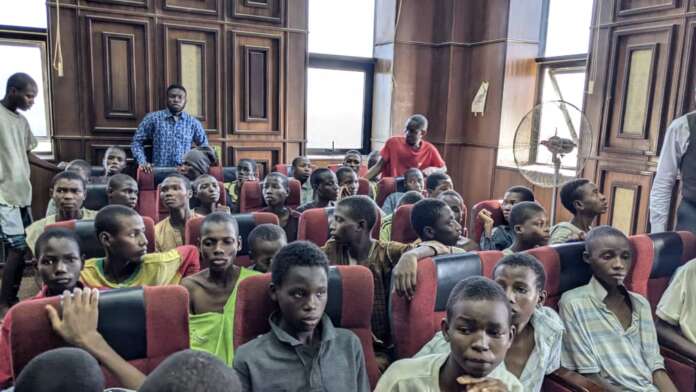
Two days later, on 1 November, another court in the same Abuja was host to proceedings charging at least 114 children according to the British Broadcasting Corporation, BBC, with treasonable felony. These charges arose in connection with the #EndBadGovernment protests which occurred last August around the country. Arrested in different locations in northern Nigeria reportedly, these children were transferred to Abuja where they had been detained en masse for 93 days.

On arraignment, they all looked “visibly unwell and malnourished.” In their short spell in  court, at least four of them suffered fainting feats. Having beheld all of this, the presiding judge promptly rewarded the children with bail in the sum of N10 million Naira each or a total of N1.14 billion Naira, with two sureties each of whom must be a senior federal civil servant of at least Grade Level 15. He adjourned the case to 24 January 2025. These terms were manifestly such that none of these children can hope to comply with.

This is a court system in which material things, such as status, make all the difference between receiving justice or being on the end of the administration of law even when it is manifestly unjust. The parliamentarian received jurisprudence from a court system that was happy to serve malnourished children with anything but that.

There is an even more worrying scenario to which the expression “Kudisprudence” may be applied. That can be the case where a judicial decision follows upon a bargain – implicit or explicit – between a judge or magistrate on the one hand and a party (disclosed or undisclosed) on the other. This was the sense in which Stanislav Andrzejewski, the former Polish soldier and prisoner-of-war who founded the Sociology Department at the University of Reading in England coined the word “kleptocracy” in 1968, which he defined as “a system of government [that] consists precisely of the practice of selling what the law forbids to sell.” Among the things a kleptocracy can buy and sell in its political open market, Professor Andrzejewski included “even judges.”

The fact that Kudisprudence in the second sense occurs in certain courts in Nigeria is not in question. Many disciplinary cases concluded by the National Judicial Council (NJC), no less, testify to this fact. The only issue left to be determined is how pervasive this is. One thing seems clear: political cases increasingly appear to suggest – very much as David Pannick writes – a higher predisposition to what look like outcomes of Kudisprudence.

For evidence of how this system of Kudisprudence can work, a recent report by the advocacy group, Citizen Gavel, names a notorious former governor and current minister who has a long track record of “building judicial infrastructure and offering other forms of support” to the judiciary in acts of generosity that “often coincide with periods when he has faced significant legal challenges. This raises the possibility that these actions may have indirectly influenced judicial decisions.” Law professor, Fidelis Oditah, SAN adds that in the courts in the Rivers State disputes may have been “corruptly procured” and that the decision have more than a whiff of “a rat” about them.

In its nature, judicial quid pro quo does not necessarily occur on social media or with receipts. Verified cases are more likely than not to be fewer in fact than the number of actual incidents. Many more followers of the recent goings on in Nigeria’s judicial system may themselves have evidence to conclude that it has evolved from a system of jurisprudence to one preoccupied with Kudisprudence.

On its own, that would be sufficient cause for worry; but the reason the system now suffers an overwhelming sense of crisis of credibility is because it cannot be ruled out that this preoccupation with Kudisprudence in the first sense is not the result (in a significant number particularly of political cases), of Kudisprudence in the second – transactional – sense.

David Pannick concludes that courts offer to “those who are greedy, vexatious, exhibitionist, aspiring to canonisation, or just plain impossible a platform to perform.” Every one of them has a right to a court system that regards the public interest in justice as something that money cannot buy.

A lawyer and a teacher, Odinkalu may be reached at [email protected]

FIDA Nigeria says arraignment of #EndBadGovernance minors contradicts Child Rights Act/Law, demands immediate release

The International Federation of Women Lawyers (FIDA) Nigeria and human rights group, Amnesty International, have asked the Federal Government to release the minors who were arrested over the #EndBadGovernance protest in August.

Asserting that, “The prolonged detention of these minors raises critical questions about the ethical standards of our correctional facilities and judicial system”, FIDA in a statement signed by its Country Vice/National President, Amina Suzanah Agbaje pointed out that “it not only violates their fundamental human rights but also directly contradicts the provisions of the Child Rights Act/Law, which establishes a separate justice pathway for minors.”

The full text of the press release reads:

“The International Federation of Women Lawyers (FIDA) Nigeria, condemns in its entirety the recent reports of children who participated in the #EndBadGovernance protests from various states, being held in correctional facilities for a period exceeding Ninety (90) days. Their visibly malnourished appearance in court in addition to viral news reports of six (6) of these minors fainting in court has cast serious doubts on the adequacy of our legal system to handle juvenile cases.

“These minors were arraigned at the Federal High Court in Abuja on charges of treason, rather than being brought to Family Court within their jurisdiction in their respective states, as mandated by Nigerian law.

“This inhumane treatment not only violates their fundamental human rights but also directly contradicts the provisions of the Child Rights Act/Law, which establishes a separate justice pathway for minors. Such treatment is deeply alarming and highlights the serious flaws in our juvenile justice system, it casts a shadow on Nigeria’s commitment to safeguarding the welfare of its young citizens.

The prolonged detention of these minors raise critical questions about the ethical standards of our correctional facilities and judicial system badly damaging Nigeria’s international image and reputation. Detaining and prosecuting minors in this manner signifies a clear disregard of their rights to legal protection and family support thereby increasing their risk of physical, psychological and emotional harm.

“It is trite that arraigning children in adult courts, especially when they appear visibly malnourished, reflects poorly on our Judicial system and exposes systemic failures in handling juvenile cases.

FIDA Nigeria urgently calls upon all relevant authorities to release these minors immediately as they have been incarcerated for a long time, or ensure their transfer to family court as appropriate for juveniles for fair hearing. We earnestly urge Government agencies to ensure that these children receive immediate medical attention, proper care and nourishment in addition to every legal protection they are entitled to under the law.

“The welfare of Nigerian children should be a priority for us all and not an afterthought! Our justice system must uphold its duty to treat all minors with compassion, dignity and respect.

“FIDA Nigeria remains committed to its mandate of protecting, preserving and promoting the rights of women and children and shall continue to doggedly advocate for the enforcement of these rights. Most importantly, we unequivocally demand for urgent reforms in justice pathways with respect to minors to forestall future violations of the rights of Nigerian children.”

On its part, Amnesty International described their arrest and detention as illegal.

“Amnesty International condemns President Bola Tinubu’s government for the continues detention of minors for participating in the August #EndBadGovernanceInNigeria protests. The attempts to put the minors through a sham trial over alleged ‘treason’ shows the government’s utter disregard for the rule of law. The authorities must release them immediately and unconditionally.”

“Putting minors through these horrifying detentions for participating in protests against hunger and corruption is — so far — one of the deadliest attempts to suppress freedom of assembly. President Bola Tinubu must unconditionally release minors detailed since August:

“In Katsina, at least 12 children under 16-years-old were detained. The children ended up in detention for just being on the streets during the #EndBadGovernance protests. Children with their whole lives ahead of them are now at the risk of being tried on trumped up charges.

“Right now charges of treasonable felony are being read to another group of 43 protesters in the same Federal High Court #Abuja. The Nigerian authorities are only escalating attempts to deprive people the right to peaceful protests, through horrifying detentions and sham trials.

“The government of President Bola Tinubu must uphold the constitutionally and internationally guaranteed human rights of everyone in the country — including the rights to freedom of expression and peaceful assembly. All protesters currently on trial or detained must be released.

“The Nigerian authorities detained these minors unlawfully — putting them through horrifying experiences — for exercising their right to peaceful protest. Government must release them all — immediately and unconditionally.”

Between August 1 and August 10, 2024, protesters trooped out to the streets across Nigeria over the nationwide hardship.

However, some of the protesters were seen waving Russian flag, an action the Federal Government condemned, ordering arrests.

Subsequently, the protesters were arrested in Abuja, Kaduna, Kano, Katsina, Sokoto, Gombe, among others.

Some of those arrested were arraigned at a Federal High Court in Abuja, on Friday.

At least, four of them, including two minors – Yahaya (14 years), Muktar Ishak Alhassan (16 years) – slumped in the court.

However, when the matter was called, Audu Garba counsel of the Inspector-General of Police, informed the court that the matter was slated for arraignment of the 76 defendants, who had been in detention.

Shortly after they were called into the dock to take their plea, four of them slumped in the open court.

Videos and pictures of the incident have triggered anger among Nigerians, particularly on social media

Read Also: [Updated]Despite troubling videos showing malnourished minors arraigned in Fed. High Court Abuja, judge grants N10m bail

The Oyingbo human parts shop

By Tribune Editorial Board

There must be something that the occult manipulators called money ritualists see in this country that the rest of the society does not see. This is why cases of money ritualism and the sale of human parts continue to be reported almost on a daily basis even as security operatives keep arresting and prosecuting suspects. Last week, personnel of the Rapid Response Squad (RRS) of the Lagos State Police command  arrested three suspects for alleged possession of suspected human tongues.

According to the command’s spokesman, SP Benjamin Hundeyin, two of the suspects were apprehended on October 15 with human parts in a taxi during a routine stop-and-search on Otedola Bridge. He said: “Further investigations led the operatives to the apprehension of the third suspect from whom the parts were bought in Oyingbo Market, Lagos.” According to Hundeyin, an investigation is ongoing at the command’s headquarters, and the suspects will soon be arraigned in court if found culpable.

Such cases are legion. In February, the Ogun State Commissioner of Police, Abiodun Alamutu, revealed how his command arrested a certain prophet and a native doctor and their clients for involvement in a case of money ritual that led to the murder of a lady, Adijat Sulaimon. Before their arrest, some of the suspects had been demanding a refund of the sum they had paid to the native doctor, one Oluwo Mandela, since the concoction he prepared for them had been ineffective.

In April, officers of the Kaduna State Police command swooped on a cemetery located in Dutsen-Abba ward, along the Zaria-Kaduna expressway, where they rounded up a gang of nine suspected ritualists who described themselves as members of the Neo Black Movement (NBM). A search of the vehicle the suspects had brought to the cemetery showed two locally made pistols, one Beretta pistol, two jack knives, two calabashes and a jerrycan filled with human blood. Questioned as to the source of the human blood in the jerrycan, the suspects confessed that it was the blood they had drawn from an aged man whom they had earlier butchered and whose body they had dismembered along the Jaji military cantonment in neighbouring Igabi Local Government Area (LGA). The victim’s vital body parts had been taken away by another gang which came from Kaduna, Kaduna State. 

In May, personnel of the Niger State command of the Nigeria Security and Civil Defence Corps (NSCDC) arrested a syndicate which specialised in genital mutilation for rituals, gang-raping of minors, assault and other criminal activities in Pandogari town of Rafi Local Government Area of the state.

In August, a  14-year-old boy, Malik Kareem, was allegedly beheaded by his three friends in the Olorisaoko community located in the Akinyele Local Government Area of Ibadan, Oyo State. Malik and his friends had approached a cleric, seeking wealth through ritualistic means. However, these friends had actually conspired with the cleric to offer him as “sacrifice” instead. When they arrived at the cleric’s place, Malik was strangled, then beheaded. Said a witness: “We found Malik’s lifeless body, decapitated and lying in a pool of blood.”

Of course, the preoccupation with occult manipulations is not peculiarly Nigerian. In May this year, a Lusaka-based woman, Inness Banda, stunned the Matero Local Court in Zambia when she produced her red underwear which her husband had allegedly buried in their yard to bewitch her.

It is distressing that somewhere in Oyingbo market, Lagos, some people allegedly trade in human parts. Such people are not buying foodstuff or clothing, but vital organs taken from the bodies of victims who may or may not have been dead before such parts were harvested. Just who are the sellers and how do they get their supplies? Although many suspects have been arrested for digging up corpses with a view to collecting “needed” body parts, it is not unreasonable to assume that the major source of supply for those involved in this dark trade are innocent Nigerians abducted and murdered in the most brutal fashion and then cut up like animals.

It is terribly agonising to imagine the spectre of innocent people on their way to work, school, market or a place of religious worship being abducted and murdered in cold blood by a band of bloodthirsty criminals intent or trading in their body parts. That is an extremely gory spectacle that ought to be forestalled with every resource available to the Nigerian State. Those involved in that dark trade ought to be apprehended and sentenced to death without further ado. They do not deserve a space in any society.

 As we have said countless times already, there are no ritualists on the Forbes’ rich list. If anyone wishes to know what people like Elon Musk, Jeff Besos, Larry Ellison or Mark Zuckerberg sell, all they need is a simple internet search. The world’s wealthiest individuals are in the positions they occupy because they saw certain critical human needs and designed ways of meeting them.

If people are buying and driving Musk’s cybertrucks, for instance, it is because they feel they need them, and get a certain thrill riding them. If someone comes along and offers something better, people will simply abandon those trucks and go after the new thing on offer. That is how life works. Over the years, Nigerians are yet to see a moneybag whose self-confessed trade is money ritualism or the trade in human parts, yet innocent people keep getting killed in the country because certain people believe that the human body can be a certain kind of mint.

To tackle this deadly trade, the Federal Government, which in February 2020 promised to launch a national sensitisation campaign against the growing scourge of money rituals, must work with the state governments to stamp out the scourge. The then Minister of Information and Culture, Alhaji Lai Mohammed, said there was “great concern across the country over the rising cases of ritual murders by unscrupulous people, most of them very young, who are seeking to get rich at all costs.” He added: “For those who may still be in doubt, ritual killings have assumed a worrisome dimension in recent years. According to an NGO, Foundation for Partnership Initiatives in the Niger Delta (PIND), 150 women and girls were killed for ritual purposes between January 2018 and December 2021.” It is time for action.

Regarding the present case, the police must get to the root of the matter. They must unravel the brains behind the bloody business, which is apparently not listed on the Nigerian Stock Exchange. 

Culled from Tribune online.ng published 31 October 2024
 

TIPS