Home Blog Page 506

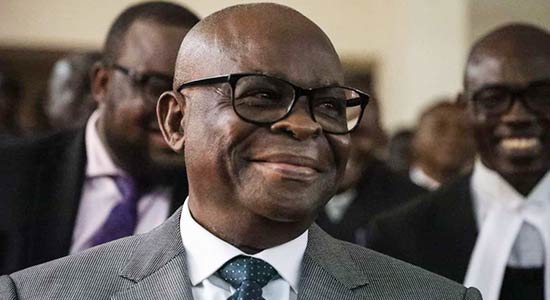
Who cheers the acquittal of the former Chief Justice of Nigeria, Hon. Justice Walter Nkanu Onnogen by the Court of Appeal?

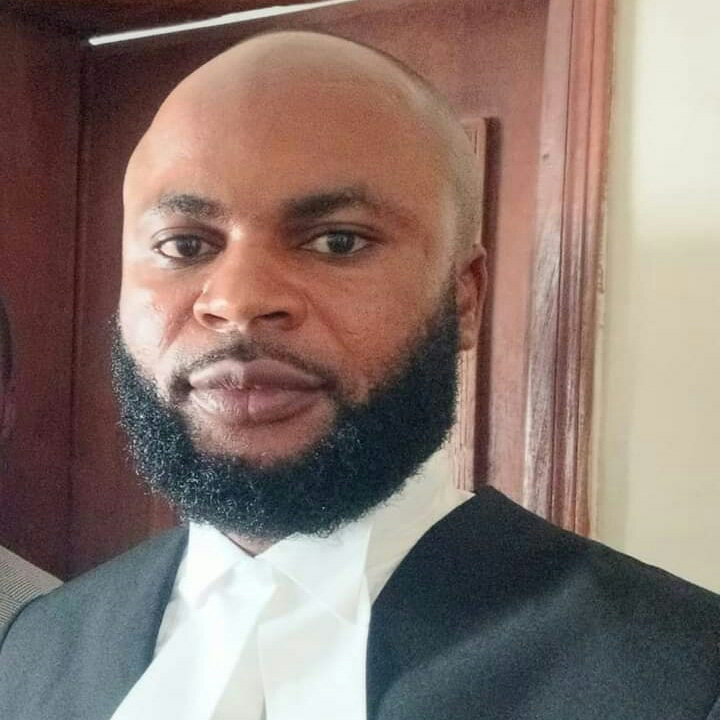
By M. O. Idam. Esq.

I am not in the least impressed. No thanks to the judgment. The acquittal is, to me, best described as a stale snack, served cold to a dying man who must die whether or not he eats of it. As one of the lawyers who volunteered my appearance in solidarity for the former Chief Justice of Nigeria during the hatchet trial at the Code of Conduct Tribunal, I could sense that the trial was more or less a premeditated script simply handed down by the past President to achieve an insidious purpose.

Sadly, the Judiciary could not rescue itself from the shackles of the Executive to protect one of its own. Consequently, he descended from that topmost height and fell scornfully. There was no one to pat his back or rescue him. Oh! I just remembered that those perceived to be his allies on the bench had their fair share of persecution. May the soul of Hon. Justice Ngwuta continue to rest.

As a lawyer who participated in some of the proceedings at the CCT, I will not give a nod to the news, nor do I expect him or any member of his family to do so. Unless and until former president Buhari tenders a public apology for that hatchet job against him.

The Judiciary must recover itself from the grip of the Executive by making bold judgments no matter whose ox is gored, and resisting every form of enticement or else, judges will continue to play pawns in the hands of the executive.

Till the apology is rendered, I will not commend the acquittal.

M. O. Idam

US Election: Lessons for Nigeria

By Suyi Ayodele

We are a nation in perpetual contrast! We claim to want the best for our country. But at every election turn, we hand over the country to those who have the lowest mental aptitude to govern a complex country like Nigeria!

In the heat of the 2015 election between President Goodluck Jonathan and General Muhammadu Buhari, I asked one of the Buhari supporters, a PhD holder, why he would support Buhari who paraded a questionable West African School Certificate (WASC) qualification against Jonathan, with a PhD. His response determined our relationship since then. “Even if it is a goat, I will still vote for him against Jonathan!”, he told me. The result is what we are seeing today. When you vote for a goat, you don’t expect the agility of a lion from it!

The first five chapters of Chude Jideonwo’s book, with contribution from Ademola Williams, How to Win Elections in Africa (2017), contain interesting topics. The chapters which run from page one through page 32 have the sub-topics: Legacy doesn’t matter as much as it used to, Change matters. Period.; Anger matters, more than you know; Establishment matters and Candidates matter, first and foremost.

The authors, on the qualities of candidates, say: “All the messaging in the world, all the ideas in the world, all the great plans and purposes and visions in the world amount to nothing if they cannot find the candidate who embodies this, that expresses it and that symbolises it” (Page 26).

The excerpt above underscores the importance of the competence of any candidate who seeks to rule over a people. The greatest problem bedevilling Nigeria, I say without hesitation, is leadership, quality leadership.

We have been so unfortunate in the last 25 years to have had almost the dreg of humanity at the helm of our affairs as a nation. The situation has been more terrible for Nigeria in the last nine and half years under the administrations of President Muhammadu Buhari and Bola Ahmed Tinubu.

Buhari was elected in 2015 under the guise of a pseudo-legacy of honesty, discipline and a strong stance against corruption. Nigerians learnt too late to realise that all the robes Buhari was decorated with were borrowed ones and misfits in fabrics, sizes and styles. Under his watch, corruption wore three-piece suits on the streets of Nigeria while the Mai Gaskiya kept on picking his teeth!

Buhari’s successor, President Tinubu, gained access to the Aso Rock Villa because his handlers were able to successfully sell the dummy of a man with inimitable legacies of sterling performances when he held sway as the governor of Lagos State.

All attempts to convince the people, especially the poor masses, that the masquerade they were asked to come and behold at the political arena in 2023 was nothing but a normal human being with guttural voice and terrestrial robes, fell on deaf ears. Today, we are all victims of the choice we made last year. The tendency that we may remain victims of the lacklustre performance of Tinubu for the next six and half years is very high.

In the United States (US), today, November 5, citizens will be out to elect a new president who will take over power in January 2025. I have followed the US election with little or no interest. The problems at home here are more than enough to bother about what happens or does not happen in the US.

I agree that whoever becomes the president of the so-called God’s Own Country will have multiple effects on us here in Nigeria and the entire world. It is not lost on me, nor on many Nigerians, that Nigeria has rarely benefitted anything from the Western. In fact, the West often takes more than triple of whatever it offers us! Regardless of who emerges as the US president, their primary focus will always be “America First”!

This is where I think we should focus our attention. We should, in my own thinking, begin to ask if there will be a time when we will have a leader who will put Nigeria first before his personal ambition. That is the biggest lesson I have learnt from the US election and its electoral processes so far.

The US is not a Superpower because God created it to be so from day one. No! Leaders after leaders developed the country to be what it is today because the US has been fortunate to have leaders who think “America First”.

Nothing captures this more than the attitude of the incumbent President Joe Biden. Biden had sought to be US president for a second term. He was the choice of his party, the Democratic Party, until the love for the country came in and he had to bow to public opinion by yielding the stage to a more robust candidate, Kamala Harris, a woman and Biden’s Vice President.

The US is an institutionalised country. Nobody aspires to be the president without subjecting himself or herself to public scrutiny. It is not a place where a president-to-be will call the bluff of the people and refuse to participate in public debates.

The presidential debate in the US goes beyond an avenue to lay before the people, the presidential candidates’ programmes and plans. The presidential debate is essentially the avenue provided for the mass of the people to test the mental capacity of whoever aspires to lead the country.

The US has developed to that level of political maturity where the beauty of a candidate’s manifesto does not sway voters. While manifestoes are valuable, citizens prioritise the candidates’ ability to read the manifestoes, understand and effectively implement the ideas and ideals outlined in these documents.

This is what Jideonwo and co point out when they posit that: “All the messaging in the world, all the ideas in the world, all the great plans and purposes and visions in the world amount to nothing if they cannot find the candidate who embodies this, that expresses it and that symbolises it” (op cit).

The above test is what President Biden failed during the June 27, 2024, presidential debate with his main challenger then, former President Donald Trump, who is also running as the Republican candidate in today’s election in the US.

At the debate hosted by CNN in Atlanta and watched by over 51 million viewers in the country, President Biden was rated poor in all ramifications and his performance was declared by Elliot Morris and Kaleigh Rogers of ABC News’ 538 as a “disaster”.

One major weak point that the public noticed in Biden’s performance at the debate was his “frequent loss of train thought while he gave meandering, confused answers.” The general opinion was that Biden failed to convince anyone that he had the capacity and capability for another four years.

Little wonder all hands; party officials, fundraisers, undecided voters and volunteers, were up for him to step aside. The Democratic Party and the public correctly judged his mental ability. Biden had no choice but to step down for his vice president, Harris, to take over.

That is one of the beauties of the US democracy; the very one Nigeria claims to have copied. One single debate took Biden out of the race. But what do we have in Nigeria? How do we test the mental preparedness of our would-be presidents?

I have read a lot of comments by Nigerians about the US election and the Trump versus Biden debate. I have friends who were promoters of the spine-chilling cliche of “Buhari-can-have-NEPA-bill” – a reaction to the argument that beyond having no minimum certificate to contest the 2015 election, Buhari does not possess any inspiring mental aptitude for the office he sought- jumping and calling for Biden’s withdrawal from the race.

I did not also find it amusing that many Nigerians who did not see any wrong in President Tinubu asking his aides to answer questions thrown at him at the charade called Chatham House outing in 2023, pontificating on the Biden debate with Trump!

It is on record today that since 2015, there has been no presidential election debate in Nigeria. Yet, within that period, we have held three consecutive presidential elections in 2015, 2019 and 2023. The implication is that for the past nine and half years, Nigerians have never had the opportunity to access the mental aptitude of their would-be presidents.

The argument has always been that debates have nothing to do with performance! This argument, sadly, is the position of many Nigerians who stayed glued to their TV sets, keeping vigils, to watch the US presidential debates between Trump and Biden, and between Trump and Harris!

This lazy mental reasoning also played out in the recent Edo State governorship election where the two major political parties, the Peoples Democratic Party (PDP and the All Progressives Congress (APC), refused to push forward their candidates for any debate.

Ours is a nation where all a Fulani man needs to be president is to line up all the Almajiris of the North behind his candidature and his Yoruba counterpart to enlist the support of all street-urchins of Lagos on the election day! The Igbo candidate, of course, can always bank upon the home support of the Nzobu nzobu orchestra of Ndigboland!

A nation that sacrifices merit for mediocrity can never rise above the mediocrity of its leaders. The physiological, physical, mental and character configuration of a leader matter. The health and mental fitness of a president will have negative or positive effects on his output. This is why we should not support any candidate who is not willing to put his mental and health issues to test at public debates before any election. If Biden had not participated in the June 27, 2024, presidential debate, the Democratic Party would have fielded a “disaster” as its flagbearer.

Nobody gives what he does not have. We have dwelt too much on lies and propaganda. We keep dressing dregs of humanity in our country in the celestial robes of Angels. We place ethnicity above competence and go after money at the expense of our collective future.

Those who should not hold the lowest councillorship positions are leaders of governments and legislative bodies in Nigeria today.  We elect leaders based on sentiments and we expect them to be fair, just and equitable. Sorry, it doesn’t work that way. Check out all the leaders in the executive and legislative posts; what do you find?

A last quote from Jideonwo: “Elections begin with candidacies. And often, they rise and fall on candidates. If the essential candidacy is defective or inadequate, almost everything else is doomed to fail.” Do we need a further prognosis of our woes?

Court terminates treason charges against 119 #Endbadgovernance protesters

  • VP Shettima to formally hand over minor to Kano state Governor Abba Yusuf at Presidential Villa

The Federal High Court, Abuja has ended the treason charges brought against the #EndBadGovernance protesters filed by the Inspector General of Police (IGP).

Hon. Justice Obiora Egwuatu struck out the charges on Tuesday following their withdrawal by the Attorney General of the Federation (AGF) and Minister of Justice, Prince Lateef Fagbemi, SAN, on behalf of the federal government.

Meanwhile, officials of the Kano State Government led by the spokesman to the Governor, Sanusi Bature have welcomed the decision of the Federal High Court which struck out the charges against some #EndBadGovernance protesters arrested from Kano.

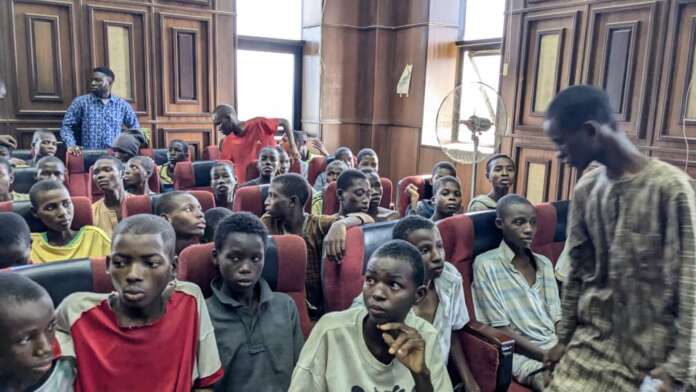
The team was at the court in Abuja to show solidarity with the teenagers who are being moved to the Presidential Villa where they will be officially handed over to the Kano State Governor Abba Yusuf.

Vice President Kashim Shettima is expected to formally handover the victims to Kano state Governor Abba Yusuf at the Presidential Villa.

They will be moved to Kano by air in the evening for rehabilitation and subsequent handover to their families.

The AGF, represented by the Director of Public Prosecution of the Federation (DPPF), M.D. Abubakar, announced during proceedings that he was exercising Section 174 of the 1999 Constitution to take over the case from the Inspector General of Police.

After Justice Egwuatu granted the request, the AGF proceeded to invoke the same section of the Constitution to discontinue the trial of the accused persons.

With no objections from the various lawyers representing the accused, Justice Egwuatu granted the request and struck out the charges.

Although the accused persons were not present in court, the judge ordered their immediate release from prison.

On Monday, President Bola Tinubu directed the AGF to terminate the charges against the accused, most of whom are reportedly minors and therefore protected by law from facing such trials.

Kano doctors withdraw services following female commissioner’s alleged assault on female doctor

Sequel to an alleged assault on its member by the state Commissioner for Humanitarian Affairs, Amina Abdullahi, the Kano State chapter of the Nigerian Medical Association (NMA) has ordered its members to suspend services at the Murtala Muhammad Specialist Hospital.

The NMA also issued an ultimatum to the state Governor Abba Yusuf to sack Madam Abdullahi.

The union said the alleged actions of the official “constitute misconduct, punishable by dismissal as enshrined in Section 3(a)(0), (iü), (iv), and (v) of the Public Service Rules.”

In a statement signed by its Chairperson, Abdurrahman Ali, and secretary, Ibrahim Muhammad, the NMA said it was “deeply alarmed and outraged” by the incident that took place on 1 November at the Emergency Paediatric Unit of Murtala Muhammad Specialist Hospital.

“In this distressing incident, a female doctor on duty, who was all alone manning all the paediatric units in the hospital with over a hundred patients in her care, was subjected to harassment and physical assault by a group led by the Commissioner for Humanitarian Affairs, Amina Abdullahi, HOD, accompanied by security personnel and other unidentified men.

“This assault arose over the unavailability of a prescribed medication–an issue that was entirely beyond the doctor’s control,” the NMA stated.

The group said as a representative body for medical professionals, “the NMA Kano Branch finds it particularly disturbing that an official entrusted with the welfare of the state’s citizens would misuse their authority in this manner.

“Such actions not only demonstrate a lack of empathy for the hard-working healthcare professionals but also reveal a troubling disregard for the systemic challenges facing our public health sector, such as chronic understaffing, resource shortages, and security concerns for medical staff.

“Incidents like this are becoming all too frequent, putting medical professionals at unacceptable personal risk while they strive to fulfill their duties to the public under highly challenging conditions.”

The association said it discussed the incident at its recently concluded Ordinary General Meeting (0GM), “and we unequivocally condemned the misused of authority, thus, the Association’s Congress has resolved to call for the dismissal of the commissioner who has demonstrated a gross lack of respect and compassion for frontline healthcare workers and a disturbing disregard for the ethical standards expected of public office holders.

“Also, the NMA demands the implementation of the minimum benchmark for the number of doctors required to provide adequate care thereby preventing the extreme overstretching of medical personnel, which puts both patients and healthcare workers at risk.

“We call for the immediate provision and continuous maintenance of adequate security measures in all units of the hospital to ensure the safety of medical staff and patients alike” the NMA said.

Notice of Suspension of Services

The NMA gave its members a 48 hours ultimatum to suspend all medical services indefinitely at the Murtala Muhammad Specialist Hospital.

The association said the “painful decision reflects the gravity of the challenges and risks that healthcare professionals face daily.

“Our doctors and healthcare staff deserve a safe, respectful, and adequately supported working environment to effectively serve the people of Kano State”, it added.

The association said it was aware that the decision would affect the immediate availability of services in one of the state’s busiest hospitals. However, it said the measure was necessary to highlight the urgent need for action.

“Our intent is to underscore the unsustainable conditions under which healthcare professionals are working, conditions that threaten the quality of care available to the public. We appeal to the good people of Kano and the entire Nigerian public to understand that this decision is not intended to punish patients or deprive them of care.

“On the contrary, it is a critical step toward fixing our ailing healthcare system and securing a safer environment for all healthcare professionals, which ultimately benefits everyone.

“The NMA remains committed to working with the government and all stakeholders to restore and strengthen Kano’s health system so that every resident can receive timely and quality medical care,” the association said.

Call to Action by the government

The NMA also called on Governor Abba Yusuf to act swiftly in addressing the issues it has raised.

“The safety, dignity, and well-being of our healthcare workers must be prioritised to prevent the disruption of services that are already limited. We hope that this incident will serve as a catalyst for the long-overdue reforms needed to ensure that healthcare professionals can continue their vital work in an environment of respect and security.

“The NMA Kano stands in solidarity with all healthcare workers across the state and will remain steadfast in advocating for their rights, safety, and well-being. We are confident that, with the support of the government, stakeholders, and the public, we can build a more resilient healthcare system that meets the needs of the people of Kano State,” the statement concluded.

Credits: Premium Times

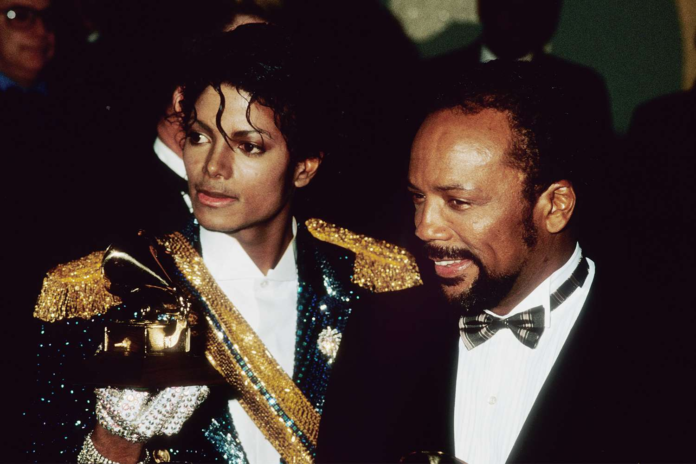
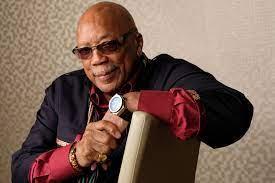
Quincy Jones Obituary: Music producer for Jackson, Sinatra

Monday, November 04 2024, The Times

Giant of the record industry whose credits included Thriller, the biggest-selling album in pop history

When Quincy Jones produced Michael Jackson’s Thriller, he had to deal not only with the King of Pop’s notorious caprices but also with the menagerie which he brought with him to the studio. There was Jackson’s pet chimpanzee Bubbles, who bit Jones’s daughter. Then there was the singer’s pet snake Muscles, which coiled itself around Jones’s leg.
“Man, I didn’t like that at all. It would crawl across the console,” he recalled. One day the snake went missing. “We went downstairs and Muscles was in the parrot cage. He had just eaten the parrot.”
In the midst of this zoological chaos, Jones helped Jackson to record the biggest-selling album in pop history. Thriller went on to sell an estimated 100 million copies worldwide and spawned seven top ten singles, including Billie Jean, Beat It and the title track, which became Jackson’s signature tune.

Not that Jackson was particularly grateful. When Jones was nominated for a Grammy award as best producer for his work on Thriller, Jackson — who had received seven nominations of his own — lobbied his record label to withdraw Jones’s nomination. Thriller was “his” record, he argued, and he did not see why he should share the credit with anyone else. His record company refused and Jones duly won his award.

It was one of 27 Grammys he won in his long career as conductor, band leader, producer, arranger and composer. Jones’s work spanned jazz, soul, rock, pop, disco, ballads and funk and by the time he was booked to produce Thriller, he was already the hottest “back room” man in the music industry.

Quincy Jones


The scheduled start date for the sessions had to be postponed while he finished making an album with disco queen Donna Summer. Once work had belatedly begun on Jackson’s album, recording had to stop again while Jones took a leave of absence to cut a record with Paul McCartney. Then Steven Spielberg called and gave him a month to record the soundtrack to the movie ET, while Frank Sinatra was waiting in the wings for Jones to produce his next album.

Jones took to spending days on end in the studio, deprived of sleep and never going home. “Yeah, but that’s where the creative stuff comes in, the unconscious mind,” he said. “It was tough. But we did it.”

Despite being wedded to his work, Jones found time to father seven children with five different women. He was married to Jeri Caldwell from 1957 to 1966 and to the Swedish actress Ulla Andersson from 1967 to 1974. Both marriages were annulled.
The day after his divorce from Andersson, he married Lipton, whom he had been introduced to by his teenage daughter, and who gave up her career to become a stay-at-home wife and mother. After their divorce, he lived with German actress Nastassja Kinski from 1991 to 1995, and they had a daughter named Kenya, who is a model. He also claimed to have dated Ivanka Trump. He is survived by his daughter Jolie, a singer, from his first marriage; a second daughter Rachel, from a brief affair with Carol Reynolds; Martina, a model, and Quincy, a music producer, from his second marriage; two daughters, Kidada and Rashida, both of whom are actresses, from his third marriage; and his sixth daughter Kenya.

Yet it came at a cost and destroyed his 13-year marriage to the actress Peggy Lipton and mother of two of his children. “Our love never changed but Quincy’s life changed after his success with Michael,” Lipton said. “The popularity made demands on his time and his life and he had to change to meet them. He was doing his own thing, and I was doing mine.”
At a time when mixed-race marriages were unusual, his choice of partners attracted comment, some of it hostile. Blond-haired and blue-eyed, Lipton recalled: “It could be ugly out there. Wherever Quincy and I went, there was an edge to people’s reactions.”

Although Jones recorded big-selling hit albums under his own name, it was his ability to assist others to realise their musical vision for which he was best known. When asked who had impressed him most among those he worked with in his long career, he reeled off “a little list” that included Oscar Peterson, Charlie Mingus, Roland Kirk, Dizzy Gillespie, Miles Davis, Sarah Vaughan, Billie Holiday, Ella Fitzgerald, Louis Armstrong, Lionel Hampton, Duke Ellington, Tony Bennett, Diana Ross, Lena Horne, Ray Charles, Sinatra, Gene Krupa, Louis Jordan, Dinah Washington, Andy Williams, Billy Eckstine, Charles Aznavour and Aretha Franklin.

Tellingly, Jackson didn’t even make his top 25. Nor did Bob Dylan, Stevie Wonder, Bruce Springsteen, Paul Simon, Tina Turner and Lionel Richie, all of whom he corralled into a studio in 1985 to record We Are the World, the biggest-selling single of all time.

Most of the names on his list reflected his love of jazz, although he was anything but a purist. “A jazz musician can either be an artist and do progressive things or he can work on pleasing the people,” he noted early in his career. “I think a happy medium between the two can be reached.”

They were sagacious words that provided the maxim that underpinned his entire career.
Born Quincy Delight Jones in Chicago, Illinois in 1933 his mother Sarah worked in a bank and his father Quincy Delight Jones Sr worked for a notorious pair of gangsters, who were rivals of Al Capone. When he was seven his mother suffered a breakdown and was sent to an asylum. The memory of seeing her taken away by men in white coats never left him.
When his father remarried, his stepmother beat him. Jones ran wild. He recalled seeing “dead bodies and machine guns” on the streets of Chicago’s South Side. “It was the biggest black ghetto in the worst depression. There was nothing but gangsters around us and I wanted to be one, too,” he said.

His life changed at the age of ten when he discovered a piano in a property he was robbing. “When I touched the keys every cell of my body said: “This is what you’re going to do for the rest of your life.” That day I stopped wanting to be a gangster and started wanting to be a musician.”

Shortly after the family moved to Seattle, where at high school Jones learned to play the tuba, then the saxophone and finally the trumpet. At 14, he formed a band with Ray Charles and fell under the spell of the blind singer whom he called his “big brother” until Charles’s death in 2004.

In 1951 he won a scholarship to the Berklee College of Music in Boston, where he is feted as one of the school’s most celebrated alumni, his application housed in a glass display case. In truth, Jones dropped out after his first year when he landed a job playing trumpet in Lionel Hampton’s band.

By 1953 he had moved to New York City and was soon working on arrangements for some of the biggest names of the day, including Sarah Vaughan, Count Basie and Ellington.
Yet he had no intention of abandoning his ambitions as a performer and in 1957 he landed a contract with ABC Records, releasing his debut album as a bandleader. By then he was also trumpeter and musical director in Dizzy Gillespie’s band.

In 1957, he moved to Paris to study under Nadia Boulanger at the American Conservatory, where he also attended lectures by the composer Olivier Messiaen and Pierre Boulez.
He relished the bohemian multi-culturalism. “In the America I grew up in there was apartheid, but I went to Paris and it taught me there could be a balance between black and white,” he said. “When Ray Charles and I were kids in Seattle we didn’t have the black role models that young black people have today, like Oprah and Barack.’

In Paris he played in the clubs in the Latin Quarter and landed a job as music director at the French record label Barclay, where he worked with the leading French singers of the day, including Aznavour and Jacques Brel.

He also hung out with Josephine Baker, Francoise Sagan and Pablo Picasso, who had his studio over the street from Jones’s apartment. He recalled lunch of sole meunière with the painter, who got out his brush and adding a few stokes in red, yellow and blue to his plate, alongside the fish bones. When the waiter brought l’addition, Picasso gave him the plate.

He returned to New York in 1961 to become musical director of Mercury Records and enjoyed immediate pop success producing Lesley Gore’s No 1 hit It’s My Party. By 1964, he had been promoted to vice-president, the first African-American to hold such a senior position with a big record label.

In the event, his tenure was short-lived for around the same time, Sidney Lumet asked Jones to compose the score for his film The Pawnbroker. Buoyed by the film’s success, he resigned from Mercury and relocated to Los Angeles to move into the lucrative world of film scores. Over the next three decades he composed soundtracks for more than 30 feature films, including In the Heat of the Night, Bob & Carol & Ted & Alice, The Getaway, The Italian Job, and The Colour Purple. He also worked profitably in television, writing the theme music for Roots, Ironside, The Bill Cosby Show and the Fresh Prince of BelAir.

After meeting Frank Sinatra in France in 1958, he was hired to arrange the singer’s 1964 album It Might as Well Be Swing, creating definitive versions of Fly Me To The Moon and The Best Is Yet To Come. He also conducted and arranged the live album, Sinatra at the Sands, recorded in Las Vegas.

At the time black musicians were served their meals in the kitchen, not the casino, and were forced to stay at cheaper “black” hotels. Sinatra demanded that all members of his orchestra should be treated alike and assigned a posse of bodyguards to look after Jones and his other black backing musicians. “If anyone so much as looks at them funny, I want you to break both of their legs,” Sinatra instructed. “Frank was tough, man. But he got rid of racism there,” Jones said.

Two decades later Sinatra summoned Jones back to produce his final solo studio album LA Is My Lady. After they had finished the record, Sinatra took off his gold ring with his family crest engraved upon it and gave it to his producer, who wore it for the rest of his life.
Two cerebral aneurysms and major brain surgery in 1974 almost cost him his life and resulted in him having to give up playing the trumpet — but his greatest triumph was still to come.

While working with Diana Ross and Michael Jackson on the soundtrack for the 1978 film The Wiz, Jackson asked Jones to recommend a producer for Off The Wall, his first solo album since leaving Motown. Jones told him he would be happy to take a shot at it himself.
Jackson’s new label, Epic, was initially opposed and claimed that Jones was “too jazzy”, but the success of the producer’s own funk-fuelled 1981 solo album The Dude — which included three Top 20 hit singles in Just Once, One Hundred Ways and Razzamatazz — sealed the deal.

Off the Wall sold 20 million copies, a figure exceeded by 1982’s Thriller, while 1987’s Bad — Jones’s third production for Jackson — racked up a further 35 million sales.
They never worked together again, not least because Jones had no time for superstar narcissism. When he corralled the world’s biggest stars to record We Are the World, he pinned a sign to the studio door which read “Check your ego at the door”.

Jones’s own fortune was estimated at $400 million yet he insisted he had never made music for money or fame. “Not even Thriller. God walks out of the room when you start thinking about money.”

Quincy Jones, music producer, was born on March 14, 1933. He died on November 3, 2024, aged 91

Culled from The Times UK

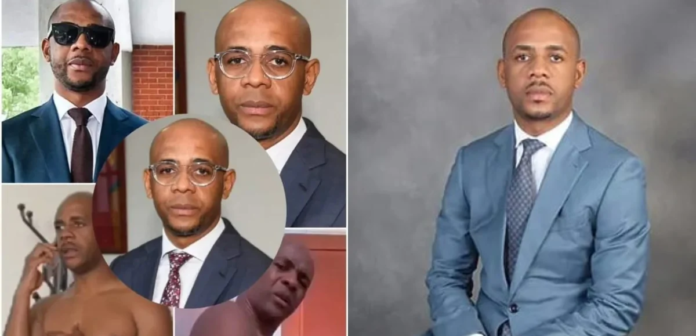
Equatorial Guinea’s DG of National Financial Investigation Agency caught in sex tango with multiple women

  • Over 400 sex tapes recovered

The Director General of Equatorial Guinea’s National Financial Investigation Agency (ANIF), Baltasar Ebang Engonga, is currently embroiled in a salacious sex scandal.

The adventurous Engonga has been arrested for allegedly recording over 400 sex tapes involving wives of prominent persons in the country including his uncle’s wife, brother’s wife, cousin, the sister of Equatorial Guinea’s President and more.

The videos were also alleged to feature encounters with high-profile individuals, such as the wife of the Inspector General of Police and about 20 of the country’s ministers’ wives.

Engonga was also accused of misusing surveillance equipment for personal gain, recording over 400 intimate videos in various locations, including professional and public spaces.

The footage, discovered in his office, was said to have been recorded with consent and has since been leaked online, causing a media uproar.

In a report by a local media platform, Ahora EG, Engonga has since last October been involved in a sexual scandal unprecedented in the history of Equatorial Guinea.

The former ANIF DG better known as “Bello” had sexual relations with several women, some of them married, and filmed these intimate encounters.

The report said, “The most striking thing is that some scenes took place in his work office, including moments in which he is seen sleeping with a woman next to the National Flag. Based on this sexual scandal, the Executive has stated that the measure is a direct response to the acts that have affected the image of the country.

“With these new measures, the Government hopes to establish a clear precedent on the expected conduct of public officials in order to create a more respectful work environment in the public and private administration of Equatorial Guinea.

“For days now, erotic videos have been circulating on social media featuring Baltasar EBANG ENGONGA, better known as “Bello”, who is currently the Director General of the National Financial Investigation Agency (ANIF) and is currently imprisoned for alleged corruption issues.

“Baltasar EBANG ENGONGA is said to have filmed these scenes with the consent of the women themselves, which exonerates him from a possible crime of violation of integrity.

“In the videos, he is seen having unprotected sex with several women, including those married to powerful and well-known people in the country, but also with the most “diva and influential” single women in Equatorial Guinea. Some scenes take place in hotel rooms, houses, even in the protagonist’s office at the Ministry of Finance,” it added.

The Attorney General of the country, Nzang Nguema reacting to the viral sex tapes, emphasised that although the images suggest that the women involved were not forced to participate, the law does not consider consensual sexual relations to be a crime unless coercion or violence is proven.
Nguema emphasised that the risk is not only for the women involved but also for their partners and the wider community, adding, “The possibility of a contagious disease being spread through these sexual interactions makes the situation even more critical.”

He also pointed out that the onus is on victims to come forward in cases of rape or assault, highlighting the need for an environment where people feel safe and supported to report such incidents.

Equatorial Guinea decided to take action on Monday by immediately suspending all officials who have had sexual relations in the offices of the country’s ministries.

The government claimed that the move was part of its “zero tolerance” policy towards behavior that compromises the integrity of the public service.

Equatorial Guinea’s Vice President, Nguema Mangue emphasised that “ethics and respect are fundamental in our Administration,” and that irresponsible attitudes that put citizen trust at risk will not be allowed.

Leadership

#Endhungerprotest: Trial of Malnourished Minors: 24 pro bono lawyers ready to join as defence counsel

  • As families of detained minors cry for justice
  • CSOs demand immediate, unconditional release of detainees

Twenty-four lawyers under the Human Rights Defenders’ forum, a social media WhatsApp group set up by Kunle Edun, SAN to fight for and protect the Rights of the less privileged in the society have agreed to make their services available pro bono and to work with Femi Falana, SAN in the defence of the 37 minors charged by the Inspector General of Police before the Federal High Court, Abuja.

This is even as families of the detained teenagers, including 28 minors accused of joining the protest in Kano and Kaduna states, have cried out for justice.

The names of the lawyers who include Raps Nduka, former National Publicity Secretary of the NBA and Daniel Kip, the immediate past Assistant General Secretary of the NBA are:

  1. Tsembelee Daniel Sorkaa Esq.
  2. Nnaemeka E. Duhu Esq.
  3. Godspower Eroga Esq
  4. Adam Tanko Jibril, Esq.
  5. Anthony I. Sidi, Esq.
  6. Fabian Egbuna Esq.
  7. Ihensekhien Samuel Junior Esq.
  8. Eloho Avwaruroro-Okoye (Mrs.) Esq.
  9. Philip Bethel Andrew Esq.
  10. Daniel Kip, Esq.
  11. Uzoma Lyanni Aneto Esq.
  12. UZOMA Felix Izuma, Esq.
  13. Emmanuel Ejim, Esq.
  14. Vincent Adodo, Esq.
  15. Akpokona Omafuaire Esq.
  16. F. Baba Isa, Esq.
  17. Bashiru Musa Esq.
  18. Ikechukwu Ogbonna, Esq.
  19. Daniella O. Ajayi.
  20. Opeyemi A. Okeowo, Esq.
  21. Itieubong Usoroh, Esq.
  22. ⁠ADEFOLAJU A. AYOBIOLOJA Esq.
  23. IKEDI ABONYI ESQ

Parents and relations, who spoke to Daily Trust, said that their children were innocent of the alleged treason, asking the authorities to facilitate their release.

The families said they are poor and cannot meet the “stringent” bail conditions granted on Friday by a Federal High Court in Abuja.

The 76 protesters arrested during the August 1 to 10 #EndBadGovernance demonstration were brought to a Federal High Court in Abuja on Friday.

Videos released soon after their arraignment sparked global outrage, with some commentators describing the incarceration of the minors as “the height of insensitivity” by the President Bola Ahmed Tinubu administration.

Some government officials, like the Inspector General of Police, Kayode Egbetokun had made attempts to justify the arrest of the children.

Also, one of the prosecution lawyers who spoke at the court’s premises on Friday, insisted that all those taken to the court were adults.

These positions had further angered millions of Nigerians who called for accountability.

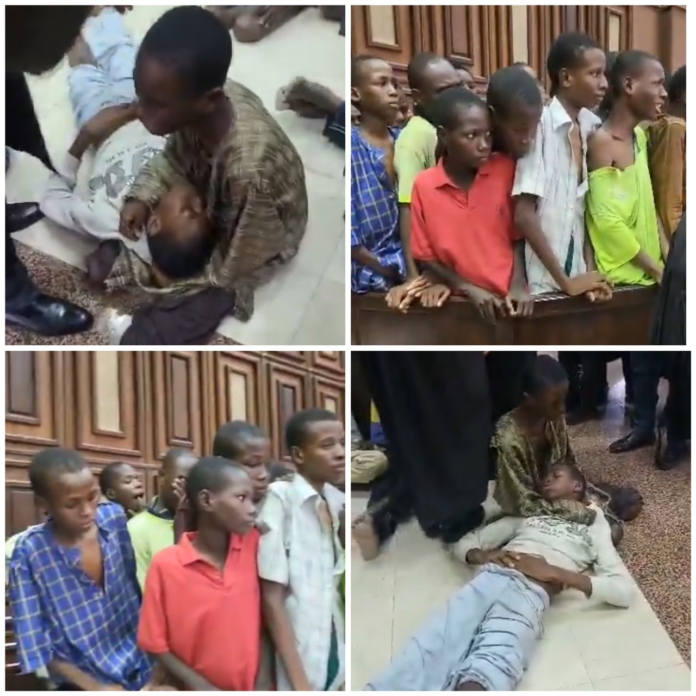
Most of the minors appeared malnourished after spending months in detention.

They were brought for trial from the police’s Intelligence Response Unit (IRT).

The court had remanded them in the Kuje correctional facility pending the fulfilment of their bail terms after they pleaded not guilty to a 10-count charge bordering on treasonable felony.

The court had also imposed N10 million and two sureties of one civil servant and a sibling on each of the 76 defendants.

The Attorney-General of the Federation and Minister of Justice, Lateef Fagbemi, had on Friday written the Nigeria Police to transfer the case file of the #EndBadGovernance protesters to the Director of Public Prosecution of the Federation on Saturday.

Reports indicate that the AGF has taken over the case on Saturday.

‘We’re distraught’

Speaking to Daily Trust in Kano yesterday, Bilkisu Dauda, mother of Abbas Hamza, who is defendant No. 27 before the court and whose father is late, described her son as an innocent teenager who had been working hard to support his five younger sisters.

She said the family could not meet the bail condition granted to him as they were “struggling to survive”.

“The family has no means of meeting his bail condition and therefore we are appealing for his release to us because he was the one supporting the family, especially his young ones,” his sister, Sadiya Hamza, said.

Saifullahi Muhammad, who is 15 years old, is defendant No. 68 and his grandmother, Rakiya Ali, said he is an orphan and no one in the family has the means to meet his bail condition.

She said he was attending school at Gwagwarwa and working as a labourer at a block-making industry in the area to support his education.

“Saifullahi was innocent; he was not among the protesters, but was arrested by the police. We plead for his release, he is an orphan,” she said.

Muhammad Sani, who is the father of Umar Muhammad Sani, defendant No.38, said until Friday when his son appeared in court, the family was not aware of his condition and was shocked to hear that he was fed only once a day, looking malnourished and unkempt.

He also said the family could not meet the bail conditions.

Other parents in Kano like Abubakar Yahya and Muhammad Yahya expressed the same ordeal, asking for clemency for their children.

‘I thought my son was dead’

In Kaduna, the mother of Umar Yakubu, Mariya Yakubu, said the family had searched for their son for more than three months and could not find him at police formations in the state until when they saw him in the dock.

She said her son, who was sick on the day of the protest, was detained by security personnel near Ranchers Bees Township Stadium.

“He is my seventh child. I have ten children, but three of them have died. Umar is one of the few who survived, and now he is missing. I have made several efforts to see him. They first held him at the State Police headquarters before transferring him to Abuja. Since then, we haven’t heard a word from him,” Mariya said.

On the N10 million bail bond imposed on her son, she said: “We don’t have money to hire a lawyer or even to visit him in Abuja. We are pleading to the federal government to release these innocent children.”

Another parent, Shuaibu Jibril, known as Baban Jibril, talked about the arrest of his 19-year-old son, Jibril Shuaibu.

He said: “I was at home and didn’t allow my children to go out on the day of the protest. When security personnel arrived at my house at 2:30 am, I was shocked. My son was innocent; he never participated in the protest.

“He was only taken to court once, and since then, he has been remanded in a correctional centre. I don’t understand why they’re treating him like this. I don’t know what to do next. He’s innocent, and it’s heart-breaking to see him in this situation”, he said.

Sani Shehu Sanusi, a lawyer representing the 25 arrested protesters from Kaduna, said they were innocent.

“None of the 25 protesters I represent is a minor; they are above 18 years of age, but were arrested in different locations and didn’t even know each other,” he said.

He also alleged that “the police often arrest people randomly to show they are taking action. It is troubling to see how they handle these cases. There was one man who was simply out to buy medicine and another who went to pray. They were swept up in this crackdown.”

Trial sign of official high-handedness – ACF

The Arewa Consultative Forum (ACF) yesterday called on the Federal Government to halt the treason trial of #EndBadGovernance protesters.

The ACF’s National Publicity Secretary, Professor Tukur Muhammad-Baba, in a statement, described the trial of minors as a show of shame.

“Equally unsettling was the dramatic departure from the court of the presiding judge on sighting some of the under-aged detainees collapsing from hunger and suffering,” he said.

Muhammad-Baba said the ACF viewed these citizens as victims of the Nigerian criminal justice administration system and mindless bureaucracy.

He said the ACF demanded that the federal government investigate the circumstances that led to the detention of the suspects for over three months way beyond the constitutional limits of 24 hours, extend financial compensation to the detainees for their unnecessary and unjustified detention for over three months.

He said the government should also arrange medical examination, treatment and provide professional psychological evaluation and counselling to the detainees and re-evaluate its strategies for processing protests strictly in line with constitutional due processes, principles of good governance and international best practices.

“The very unhelping and insensitive words, to the press, of the prosecuting attorney and those of the Inspector-General of the Police were just as distressing, amounting to an attempt to rationalise (“justify” is a very wrong term to apply) the mis-action, adding to the absurdity of the sham trial. A telling symptom of a justice system gone wild is that the suspects were offered bail for the sum of N10 million each plus some other stringent conditions. From their looks, most of the detainees cannot raise as little as N10, 000 to post bail.

“Subsequent, statements by senior government officials to the effect that the welfare of the detainees will henceforth be taken care of does not inspire confidence. Similarly, the hint that the detainees may be tried in juvenile courts also begs the question: these hapless citizens should not be detained or tried at all, especially as the instigators of the protests have been freely roaming the streets,” he said.

While expressing ACF’s disappointment in the apparent resort to abandoning court by the trial judge as well as the unreasonable bail conditions he granted the detainees, he said: “It was not just the impossible monetary condition but to ask the detainees to provide sureties who must be senior government officials is beyond belief, these being citizens from the lower rungs of society who may never have been to Abuja!

“The ACF join other Nigerians, national and international human rights groups to strongly condemn the ‘charade of a trial and naked, strong-arm tactic, reminiscent of strategies employed by authoritarian and intolerant but weak regimes aimed at muscling citizens”, he said.

Falana challenges bail terms

Human rights lawyer, Femi Falana (SAN), has indicated his intention to challenge the continued prosecution of the minors among the #EndBadGovernance protesters arraigned in court.

This is even as a lawyer, Hamza Dantani, had prepared an application for bail variation and expressed confidence that the court would vary the conditions when he files it today (Monday), given the physical conditions of the minors.

Kano State Governor, Abba Kabir Yusuf had directed the state’s Attorney-General and Commissioner for Justice, Haruna Isa Dederi, to get the detainees back to the state.

Falana, whose chambers has been in the matter, as defence lawyers, has filed a notice of preliminary objection asking the judge to decline jurisdiction in the case and for an order mandating the complainant to pay their school fees till at least senior secondary school or university level.

Falana said the application is in line with “Section 18 (3) (a) (b) (c) of the 1999 Constitution, Section 15 of the Child’s Rights Act, Section 2 of the Universal Basic Education Act, and Article 17 of the African Charter.”

Falana argued that the Federal High Court “lacks the jurisdiction to try them by Section 251 of the 1999 Constitution,” stressing that, under “Section 204 of the Child’s Rights Act, they can only be subjected to the child justice system.”

CSOs demand immediate, unconditional release of detainees

Several civil society organisations yesterday asked the federal government to immediately and unconditionally release the detainees.

Auwal Musa Rafsanjani, Executive Director, Civil Society Legislative Advocacy Centre (CISLAC) and Head of Transparency International-Nigeria And chairman Amnesty International Nigeria, said it is disturbing and damaging to Nigeria’s global image to witness such treatment of young citizens who were only exercising their constitutional rights.

Also, Hauwa Mustapha, Convener, Movement for the Transformation of Nigeria and the Country Director of ActionAid Nigeria (AAN), Andrew Mamedu, said government must release the detainees or risk nationwide mobilisation against “state repression”.

Ibrahim Zikirullahi, Executive Director, Resource Centre for Human Rights and Civic Education, said all the protesters must be immediately and unconditionally released.

Similarly, the Arewa Broadcast Media Practitioners’ Forum yesterday demanded the immediate release of the detained minors, describing their arrest as a breach of their rights.

The chairman of the forum, Abdullahi Yelwa, in a statement, said it was a violation of right to dignity of the victims to be physically terrorised and malnourished by a government that ought to have protected them.

Additional Reports from Daily Trust

Breaking!!! Finally Appeal Court clears Onnoghen of false asset declaration charge!

  • BOB Chair, Asiwaju Awomolo, SAN lauds verdict

Five years after ex-Chief Justice Samuel Walter Nkanu Onnoghen was suspended from office, and convicted for alleged false declaration of assets, the court of appeal in Abuja on Monday discharged and acquitted him.

The intermediate court discharged Onnoghen after adopting the terms of settlement reached between the federal government and the defendant.

Hon. Justice Abba Mohammed who presided ordered that the former CJN’s four bank accounts be restored to him.

“The Code of Conduct Tribunal (CCT) also lacks jurisdiction to entertain the matter without resorting to the National Judicial Council (NJC),” the appellate court held.

“The bank accounts maintained by the appellant with Standard Chartered Bank (Nig) Limited, Wuse 2, Abuja, that were frozen by the judgment, shall be unfrozen forthwith.

“Parties shall take all steps necessary to give positive effect to these terms of settlement.

“In consequence, the appellant herein is hereby discharged and acquitted.”

Praising the Appeal Court verdict, Asiwaju A.S. Awomolo, SAN who has been an arrowhead in the matter right from inception had these to say:

“The decision of the Court of Appeal delivered this morning is historical and very significant. It is significant in that, it restored the dignity, honour and integrity of  Honourable Justice Walter Samuel Nkanu Onnoghen GCON, past Chief Justice of Nigeria.

“More than these personal gains to His Lordship is the fact that the damage done to the honour,  integrity, dignity and  Independence of the judiciary, the 3rd arm of government under the Constitution of the Federal Republic of Nigeria 1999, as amended, has been rebuilt and restores.

“Two decisions and actions of the executive arm of Government between 2016 and 2019 did grave damage to the public perception, integrity and independence of the judiciary. The first was the invasion of the homes of judicial officers of the realm, including justices of the Supreme Court in the early hours of the night, like a common criminal and bandits. It was claimed that there were allegations of corruption against the judicial officers. In the end, none of the judges, publicly humiliated, was found guilty of any corruption charges.

“The second was the unconstitutional removal of the Hon Chief Justice of Nigeria, the Head of the Judiciary, an arm of government,  in breach of clear provision of the Constitution. The impurity of the Executive has no precedent and justification.

“These two events have resulted in the poor public perception of the Judiciary and low confidence in the integrity and independence of the Judiciary.

“We thank, the Honorable Attorney General of the Federation and the Minster of Justice, Prince Lateef Olasunkanmi Fagbemi, SAN for his candor and forthrightness as demonstrated in this appeal.

“Through the Honourable Attorney General, we send our appreciation to His Excellency, President Bola Ahmed Tinubu, GCFR, for upholding the spirit and letter of the Constitution of the Federal Republic of Nigeria by affirming to the Independence of the Judiciary and respect for the Rule of Law

“The Judiciary remains the foundational structure, the bulwark upon which
Nigeria’s Constitutional democracy rests.

“Nigerians must be encouraged to have confidence and trust in the independence, impartiality and integrity of the judiciary, in just resolution of disputes brought to the Courts.

“Justice is rooted in confidence and that confidence must not be dislodged by Executive interference with the independence and integrity of the Judiciary.

It is hoped that never in this Country will the independence, integrity, honour and dignity of the judiciary be trampled upon as was done before.”

In April 2019 a three-member panel of the CCT led by Danladi Umar, chairman of the tribunal at the time, convicted Onnoghen on six counts bordering on false assets declaration and ordered that he be removed from office.

In the appeal marked CA/ABJ/375 & 376 & 377/2019, Onnoghen prayed the court to void and set aside the CCT’s judgment on various grounds.

The former CJN argued that the tribunal chairman was biased and denied him fair hearing.

Listing some of the “errors” in the CCT’s verdict, Onnoghen argued that he was a judicial officer at the time the charge was filed against him on January 11, 2019, and should not have been subjected to the jurisdiction of the lower tribunal.

He added that only the NJC had the power to discipline him for misconduct and not the lower tribunal.

Onnoghen also challenged the ruling on the confiscation of his assets. He said the order violated provisions of paragraph three of section 23 of the CCB Act, which only permits the seizure of such properties “if they were acquired by fraud”.

He faulted the failure of the prosecution to present Denis Aghanya, whose petition led to the charges against him.

In defence of nepotism

By Lasisi Olagunju

Wahala no dey finish for Nigeria. Because President Bola Tinubu appointed an acting Chief of Army Staff last week, my northern friend sent me a WhatsApp message from Zaria: “It comes as a surprise as Oduduwa takes over the lead agencies of the critical safety sector: Army (military), Police (security), DSS (Intelligence), EFCC (anti-corruption).”

My friend was talking fairness. I heard him and remembered the quaint saying about equity and clean hands. So, I replied him: “Can you name those who served in those four positions under Buhari and where they came from?”

John Milton, legendary blind poet of seventeenth century England, said something about truth and falsehood grappling. Truth, the stronger, will always put the weaker to the worse. My friend thought he had the facts on his side, and so, he answered me: “Buhari picked those security chiefs across the north east, north west and north central…”

That was a half-truth, and I’ve heard it said many times that a half-truth will always mean a half-lie. And a half-lie is a lie nicely dressed. I asked my friend: “When you people met in Kaduna earlier on Monday and took a position on VAT, rejecting Tinubu’s tax reform bills, did you meet as three zones? No. You met as one North, one region. Those appointments made by Buhari were for that one North.” As I typed that response, I remembered that ‘One North, One Destiny, One People, Irrespective of Religion, Rank or Tribe’ was the motto of the Northern People’s Congress (NPC), the North’s ruling party at independence. NPC may be long dead, but the North has dutifully kept its flame glowing. We still feel the spirit in every inter-regional discourse.

My friend argued more forcefully. He spoke as a northerner. I responded as a Yoruba man, not as a southerner, because there is nothing so called. I told him he was obviously not speaking for the other two zones in the South. I asked him if the North wanted the Chief of Army Staff position to go to the Igbo of the South-East. His response was that there was a time under Buhari when he campaigned for that arrangement. I asked him to speak for time present, not time past. “Would you want a South-East/South-South person to be Chief of Army Staff or Inspector-General of Police?” My friend did not reply me. He did not answer that question. I asked how he would feel if the positions go to the North today. He replied me with silence.

Finally, my friend quipped: “Personally, I pray for Tinubu to succeed but he doesn’t need to be nepotistic like Buhari, the disaster.”

Has Tinubu been unduly favoring the Yoruba in his appointments? Personal aides, yes. Security appointments, no. A list of 22 security appointees was circulated online at the weekend. Fifteen of them are from the North, five from the South-West, one from the South-East, one from the South-South. If anyone would complain of inadequate representation here, it should be the South-East/South-South corridor.

Sixty-four years after independence, Nigeria has remained a very delicate union of bickering partners. Despite several state creation exercises, the division along the original three regional lines has remained very strong. Today, the three arms of Nigeria’s armed forces have their chiefs chosen from the West (Army; East (Navy); North (Airforce). This would be fair enough except we are saying that one service chief is bigger than the others.

Army, SSS, Police, EFCC. For his complaint, why would my friend pick just four out of the 22 identified positions? Read my friend again. He described the four as “critical safety sector.” Buhari set the precedent by filling those posts with northerners; Tinubu has also filled them with westerners. If the East produces a president tomorrow, he will most possibly fill them with his regional brothers. But why?

Adebayo Faleti, late Yoruba playwright and culture scholar, wrote in his 1968 short story ‘Ogun Awitele’ (Foretold War) that war does not kill the coward; it also does not kill the fearless. The one who gets killed by war is the one who is careless (ogun kì í pa ojo; ogun kì í pa akin; aláìfòrànpòràn ni ogun npa). My playwright says war kills the careless. I will use the experience of Buhari’s predecessor, Goodluck Jonathan, to discuss this. When Jonathan became president, he, like most of his predecessors, was very careful not to rupture the tenuous tendons of whatever we had as a country. But Jonathan overdid it. He apparently wanted to be another national hero and proceeded to make many strategic appointments which undid him. Jonathan’s 2015 election time Inspector-General of Police was a gentleman from the north. When it mattered most, the falcon refused to hear the falconer. The super cop did not just see his kinsman, Muhammadu Buhari, to victory, he publicly followed him to collect his Certificate of Return from INEC in April 2015. The gentleman officer abandoned his defeated Commander-in-Chief. Blood is thicker than water. The policeman came out three years later to celebrate what he did. He declared that the police under him forced Jonathan to concede victory to Buhari. Hearing him in an August 2018 interview gives reasons for appreciating the true meaning of blood and water and what made one thicker than the other. The former IGP said: “We forced those who lost elections to accept the results. The Nigeria Police forced those who lost elections to accept the outcome. It was the action of the police that made them to have a change of mind and accept the results. The heroes of that election should have been the police…I attended the presentation of certificate to the president-elect…”

Nigeria was deflowered in 2015. The hymen of innocence, once lost is lost forever. If the police were strategic in determining election winners, what wise president would then hand its rein to ‘outsiders’? Jonathan’s successor, Buhari, learnt from the Ijaw man’s fatal error. He inherited Solomon Arase from Edo State as IGP, kept him for one year and as the stakes were getting high, he quickly took the position ‘home’ and gave it to Ibrahim Kutigi from Niger State. From then on till he left in 2023, the baton passed from one northern state to another. Was Buhari being street-wise to have kept the Inspector-General’s position in his regional pocket for seven out of his eight years in power? If Buhari was not wrong that time, should we expect Tinubu to do today what Jonathan did which burnt his nimble fingers day before yesterday?

Jonathan’s ‘harakiri’ in politics started long before that appointment. He did several things which no one had ever done before. It was therefore not a surprise that his eyes saw what no one ever saw before. The Ijaw man made Fulani man, Attahiru Jega, INEC chairman in an election in which his main opponent was a Fulani. The man was praised by his nemesis and he enjoyed it. As the West African Pilot of 2 April, 1964 warned in an editorial: “The road to ruin is often smooth. Those who travel it pay the fare.” Three years after he was dusted and ousted, Jonathan wrote in his ‘My Transition Hours’ (page 75): “For some inexplicable reasons, the INEC had been able to achieve near 100% distribution of Permanent Voter Cards in the North, including the North-East which was under siege with the Boko Haram insurgency, but it (INEC) failed to record similar level of distribution in the South which was relatively more peaceful.” Because Buhari was no Jonathan, when it was time for him to replace Jega in November 2015, the Fulani man from Katsina went for a Fulani man from Bauchi. After eight years of uncommon tutorial from Muhammadu Buhari on how to (mis)manage a people’s diversity, it is not possible for any subsequent president (from the south) to do bobo nice again – especially with appointments strategic to their personal and political survival. A new INEC chairman is due for appointment in November next year (2025). Watch out for Tinubu. He will not be a Jonathan.

Key security appointments have become an armour for the president of Nigeria. The lesson taught by history is that a leader, while cuddling his neighbour, must never allow kin-blood to be diluted with water of whatever colour.

The politics of appointment into the head of the army started soon after independence. How did the government of Tafawa Balewa handle it? Sidi H. Ali, author of ‘Power of Powers: A biography of Alhaji Muhammadu Ribadu’, Nigeria’s first minister of defence, wrote about the intense ethnic maneuverings and bitterness that attended the appointment of the country’s very first indigenous head of the army when the last expatriate, Major General Christopher Welby-Evarard, left in February 1965. “The four possible candidates were all brigadiers at the time. They were Ironsi, Ademulegun, Ogundipe and Maimalari. Ironsi was the most senior of all…After all the bickering, Ribadu came out to announce the appointment of Ironsi as the commanding officer of the Nigerian Army. This, of course, was received with mixed feelings…” (page 18). If Balewa were to come back from the dead today and is asked to pick his army chief, would he still go for Ironsi? Among the four gentlemen officers of 1964, who do you think Balewa’s choice would be?

Balewa is not coming back but his democratic successor was Shehu Shagari who came in 1979 and had Lt.-General Alani Akinrinade as his Chief of Army Staff. Shagari soon replaced the Yoruba man with his kinsman, Gibson Jalo. Jonathan inherited a chief of army staff, Abdulrahman Dambazau, from his late boss, Umaru Yar’Adua. He couldn’t sleep until he picked someone from his area, Azubuike Ihejirika, to man that goal post.

Every elected Nigerian leader since the end of the first republic knows why crab does not sleep. What it stays awake doing is 24/7 recce for the safety of its head. Its eyes should be its binoculars – and they are. Even Olusegun Obasanjo as civilian president did not deny himself that wisdom, although he was very nuanced about it. He had three Inspectors-General of Police and all three were from his western region. His DG SSS from 1999 to 2007 was Colonel Kayode Are, his Abeokuta kinsman. For the army, Obasanjo, a southern Christian, in eight years, had four gentlemen as his Chief of Army Staff. He started in 1999 with Victor Malu, a Christian from the North; then he moved south and picked Alexander Ogomudia, a southern minority. After two years, two months, Obasanjo took the position back to the North. But he did not give it to those who might use it to injure him. He picked Martin Luther Agwai, a southern Kaduna minority Christian. Three years down that road, he went south again and picked Andrew Owoye Azazi, another southern minority. It was clear that he was deliberate about what he did. He was wide awake, mixing his nationalist broth with condiments of small nepotism here, a little of altruism there. The Obasanjo experience ended almost twenty years ago. This is the age of reason, apology to Thomas Paine. The gloves are off.

But, I think the people who are reading north and south into today’s appointments had better shine their eyes and see where the real danger is. The fish gets rotten from the head – and it is always progressive. Under Buhari, the president’s wife ran the alternate presidency while a regional cabal revved up the old engine of the man we elected. Today, we are not sure whether it is the man we elected or the wife or the son (with their business friends) that is at the top. After this set, we may have grafted on the trunk of our democracy a hereditary oligo-monarchy.

And we cannot say a president should not have a family – and friends. Wither the way then? Igbó rèé, òna rèé (the bush is here, the road is here). Where should we face?

The founding fathers of the United States feared what we see now. In her review of Adam Bellow’s ‘In Praise of Nepotism: A Natural History’, Joanne B. Ciulla says “nepotism was very much on the minds of America’s founding fathers. The last thing they wanted in their new country was hereditary rule.” She writes further (and this is interesting) that “one of the many qualities that made George Washington attractive as the first president was the fact that he did not have any children (who would share his powers or even seek to succeed him). When John Adams ran against Thomas Jefferson, his detractors feared that, because Adams had a son, he might try to start a dynasty.” Indeed, in that election dubbed ‘Revolution of 1800’, Jefferson, who did not have a son, defeated incumbent President John Adams.

But that cautious beginning notwithstanding, America has evolved to mint its own brand of ‘safe’ nepotism. Ciulla writes: “Let’s cut to the 2000 presidential election in the U.S. It pitted a son of a president against the son of a senator. When George W. Bush won, he appointed Michael Powell, son of Colin Powell, to be chairman of the FEC; Elaine Cho, wife of Senator Mitch McConnell, to be Secretary of Labor; and Eugene Scalia, son of Supreme Court Justice Antonin Scalia, to be the chief labor attorney. In addition to these appointments, Bush made the Vice President’s daughter, Elizabeth Cheney, deputy assistant secretary of state, and her husband chief counsel for the Office of Management and Budget. At the request of Senator Strom Thrumond (and to the dismay of some people), Bush gave Thurmond’s twenty-eight-year-old son the job of U.S. Attorney for South Carolina.” The American system, from the above, draws a line between “bad nepotism and good nepotism.” Ciulla says the US now defines nepotism “not as hiring a relative but as hiring an incompetent relative…”

That is in the US. Here in Nigeria, competence is discounted. The concern is more on the history and the geography of the hired and the motive of the appointing authority.

In all these nepotism matters, the peace of the country and the happiness of the people are the casualties. Every hour spent by the leader ignoring competence but checking the bloodline or the ethnicity of the man for the next post is the hour just before darkness. And, if the nepotist succeeds in burying his long heel in this sand, it is bye bye to peace and amity. As Olusegun Obasanjo said in 2019 at the height of Buhari’s glass ceiling-bursting nepotism: “If you cannot trust me, why should I trust you?…The person who is our leader now is saying he cannot allow another ethnic group to work with him because he cannot trust them. If he cannot trust my tribe or your tribe, of what benefit is he? And he is saying my tribe and yours should come and vote for him. He can ask for our votes, but he cannot trust us to work in good positions. Life is give and take.”

Release Detained #Endbadgovernance protesters forthwith

By Sonnie Ekwowusi

The continued detention of the EndBadGovernance protesters by the Tinubu administration demonstrates that the administration has blossomed into full-blown despotism and totalitarianism. It is no wonder that the international human rights watchdog, Amnesty International, has recently called for the immediate and unconditional release of over 1,000 #EndBadGovernance protesters who are currently in prison custody nationwide due to their participation in the recent nationwide #EndBadGovernance protest.

Similarly, the Catholic Bishop Conference of Nigeria (CBCN), Transparency International (TI), renowned human rights activist Femi Falana SAN, and others have vociferously urged the federal government to expedite the release of the #EndBadGovernance protesters and other individuals being detained in connection with the protest.

According to Falana, no fewer than 2,111 protesters have been arrested in connection with the nationwide protest, out of which 1,403 have been secretly arraigned in various courts and ordered to be remanded in prison custody due to lack of legal representation.

This follows the surreptitious granting of a 60-day extension to the police by Justice Emeka Nwite of the Federal High Court in Abuja to detain 124 alleged protesters, including at least 22 minors. In another development, a Federal High Court in Abuja has issued an order freezing the bank accounts of 32 individuals and companies allegedly linked to the #EndBadGovernance protest.

Meanwhile, the Campaign for Democratic and Workers’ Rights (CDWR) has drawn the attention of the federal government to the deteriorating health of some of the detained protesters, particularly Michael Adaramoye, Mosiu Sodiq, and Eleojo Opaluwa.

The nationwide #EndBadGovernance protest spanned ten days, from August 1 to 8, 2024. It is noteworthy that, prior to the protest, the federal government and some state governments openly acknowledged that the right to protest is a constitutional right and, therefore, urged the would-be protesters to conduct their protest in a peaceful manner devoid of violence.

The Lagos State government not only permitted the would-be protesters to protest but also directed them to do so in designated places in Lagos. It is therefore surprising that the protest has drawn the ire of the Tinubu government, culminating in the arrest and detention of over 1,000 protesters, including minors aged 14-17, who have been thrown into prison on accusations of terrorism, treason, and treasonable felony under the Terrorism (Prevention & Prohibition) Act.

The minors being detained include: Muktar Ishaq Alhassan, 16; Sani Aliyu, 17; Mahmud Mustapha, 16; Umar Abdullahi, 17; Habibu Sani, 17; Mustapha Abubakar, 17; Sani Hassan Idris, 17; Abdulrahaman Ibrahim, 17; and Salisu Adamu, 16. Others are Bilal Auwalu, 15; Amir Muhd, 17; Abdul’aziz Adam, 15; Sadiq Sunusi, 15; Ibrahim Sani, 17; Hassan Muhd, 17; Saifullahi Muhd, 15; Umar Ali, 17; Musa Isyaku, 15; Muhd Musa, 14; Usman Amiru, 14; Abdulganiyu Musa, 15; and Sunusi Nura, 14.

If the federal government had initially acknowledged the right of the protesters to protest under the Constitution and even permitted the protesters to go out and protest, why is the same federal government now turning around to arrest and detain the protesters, accusing them of committing terrorism, and treasonable felony? Why detain harmless minors who probably joined the protest for the fun of it?

It is unfortunate that the Tinubu administration has been unlawfully arresting, torturing, and detaining some of the protesters and promoters, contrary to sections 39 and 40 of the 1999 Constitution, which guarantee the right to freedom of expression and assembly. Additionally, the government has been unlawfully freezing the bank accounts of some of the #EndBadGovernance protesters and promoters.

The aforesaid actions of the Tinubu administration are illegal and unconstitutional. The continued detention of these protesters and the freezing of their bank accounts are capable of triggering another round of protests. We have yet to recover from the damaging effects of the last wave of protests, yet the government is not laying the groundwork for peace. Instead of giving peace a chance, the government is persecuting the #EndBadGovernance protesters and promoters.

Why should citizens suffer prolonged incarceration for exercising their fundamental rights and expressing their views about Nigeria? The truth is that young people in this country—those in the age bracket of, say, 18 to 45, who could technically be categorized as the younger generation—are seething with anger, perhaps now more than ever, over the way they are constantly being shortchanged in Nigeria. They are angry about the country’s deteriorating politics, increasing youth unemployment, the failed education system, and, in short, about everything. They are angry that President Tinubu is living in a lap of wasteful expenditure and opulence at the expense of the Nigerian people, who are dying of hunger and human misery.

The paradox is that Nigerian youth constitute a significant percentage of our population, yet they are completely marginalized in the scheme of things.

The worrisome aspect is that while the government has developed a proclivity for arresting and detaining young people on any flimsy excuse, political office holders who have looted the treasury are freely walking the streets untouched. Do we have two criminal justice systems in Nigeria—one for the rich and another for the poor?

The painful aspect is that while there are abundant laws against police brutality and human rights violations in Nigeria, the Nigerian police still go about arresting and detaining suspects and dumping them in prison without bail or trial. As clearly stipulated in our 1999 Constitution, every citizen is presumed innocent until proven guilty by a court of law of competent jurisdiction.

Additionally, any person who is arrested or detained shall be informed in writing within 24 hours, in a language they understand, of the facts and grounds for their arrest or detention. If a person is arrested either for the purpose of being charged in court or upon reasonable suspicion of committing an offense, they must be charged in court within a reasonable time not exceeding 48 hours, failing which they should be granted bail.

Therefore, the Tinubu administration is urged to immediately initiate the processes for the release of the #EndBadGovernance protesters. The government should halt any further clampdown on #EndBadGovernance protesters. Nothing is gained by seeking revenge against these protesters and their supporters. After all, they are our children. Rather than wage war against our youth, the government should, in the coming weeks, order the release of the detained young protesters. It is self-destructive to continue shortchanging the young people, the leaders of tomorrow.

The beauty of democracy, in contrast to the totalitarianism and dictatorship we witnessed during the military regimes in Nigeria, is that citizens are free to express their opinions without any form of intimidation, persecution, or victimization. The rule of law ought to reign supreme over the arbitrary and capricious exercise of power.

Arbitrarily arresting peaceful protesters undermines the rule of law and further erodes public trust in the Tinubu government. Peaceful protest is a fundamental human right enshrined in the Nigerian Constitution. The detention of a suspect in prison without bail or trial is unconstitutional and actionable in law. In a democracy, the government must respect the voices of its citizens. Peaceful protests are a means for people to express their views, grievances, and demands.

Suppressing a peaceful protest by young people undermines democratic principles and can lead to more protest against the government. Nigeria is a signatory to various international treaties and conventions, such as the International Covenant on Civil and Political Rights (ICCPR), which protect the rights to freedom of assembly and expression.

Arresting peaceful protesters flagrantly violates these obligations and can damage Nigeria’s international reputation. When citizens are denied the right to protest, they may resort to other, less peaceful means of expressing their dissatisfaction. This can lead to instability, violence, and disruption of public order, which is detrimental to the nation as a whole.

TIPS