The topic of the legal meaning and effect of the doctrine of next of kin was widely received with meaningful responses from Nigerians. I will share some of these responses with you anonymously for now.
REJOINDER 1:
1st Respondent:
“I respectfully do not share your views on this matter. By virtue of the 2nd Schedule to the 1999 Constitution ( as variously altered), inheritance is a residual matter. I do not think that the National Assembly has the vires to make law on inheritance for the whole country. It may make such a law for the FCT only. The federal government can cover the field only where the matter falls within the concurrent list. Read Items 60 (a) and 68 of the Exclusive Legislative List and Paragraph 2 of Part III of the 2nd Schedule to the Constitution, pursuant to which the National Assembly enacted the Child Rights Act. Apart from the Constitution (next to which is the African Charter), none of the relevant laws is sacrosanct; their validity is open to scrutiny and they can be struck down in legitimate cases.
The constitutionality of a presumed legislative power to regulate post-mortem affairs is not a given; it can (and should) be dispassionately and objectively interrogated against the prism of the fundamental rights and freedoms enshrined in the Constitution. It is trite law that most (not all) of those rights can only be derogated from in the circumstances stated in Section 45 of the Constitution. In other words, the question is: whether those laws are reasonably justifiable in a democratic society in the interest of public order, public health, defence, morality, etc, or are necessary to protect the interest of other persons. Needless to say, any law that fails these tests is invalid.”
2nd Respondent:
“Next of kin taking decisions if a person is incapacitated. Dear SAN, is there a provision of Power of Attorney for Health and Financial matters in the Nigerian Constitution. If a person becomes incapacitated, I agree Next of Kin is there to be informed but may not have the power to make decisions while the person is alive though incapacitated without a Power of Attorney. I hope I have not diverted from your intended discussion. Thank you very much, interesting topic.”
The issue of the right of choice of a testator should speak during his lifetime, but once he has transited to the great beyond, he loses the power of absolute control over his assets in terms of sharing and distribution. The right of choice is subject to certain limitations in law. In this regard, I have in mind the case of Chief Obafemi Awolowo v. Federal Ministry of Internal Affairs (1962) LLR 177 on the interpretation given by the Supreme Court to the right of choice of counsel. In that case, the appellant (Awolowo) who was standing trial for treasonable felony and conspiracy engaged the service of a British lawyer, Mr. E.F.N Gratiaen Q.C. to defend him. On arrival in Lagos, Mr. Gratiaen was denied entry into Nigeria by the federal ministry of internal affairs (respondent). The appellant approached the High Court of Lagos (1) for a declaration that:
(a) the plaintiff is entitled under the Nigeria (Constitution) Order-in-Council to be defended in the Charge No. LA/68C/1962 in which he is the 27th accused person by Mr E. F. N. Gratiaen Q.C., or any other counsel of the plaintiff’s choice whether British or indigenous.
(b) the order of the defendants prohibiting the entry of the said Mr E. F. N. Gratiaen into Nigeria for the purpose of defending the plaintiff in the aforementioned Charge No. LA/68C/1962 is ultra vires the said Nigeria (Constitution) Order-in-Council and is therefore null and void.
(2) An injunction restraining the defendants from preventing the said Mr. E. F. N. Gratiaen Q.C., or any other British counsel who might be counsel of the plaintiff’s choice from entering into Nigeria for the purpose of defending the plaintiff in the said Charge No. LA/68C/1962.”
In determining the case, the trial judge referred to section 13 of the Immigration Ordinance (Cap. 84 in the 1958 Laws of the Federation of Nigeria and Lagos) which provides that:
“13. Notwithstanding anything in this Ordinance contained, the Minister may, in his absolute discretion, prohibit the entry into Nigeria of any person, not being a native of Nigeria.”
In his decision, the learned trial judge (Udoma, J.) held that the Minister acted within his powers under that section 13 when he directed that Mr Gratiaen should not be allowed to enter Nigeria; and in regard to the issue of breach of appellant’s constitutional right to counsel of his choice, the judge held that:
“The Constitution is a Nigerian Constitution, meant for Nigerians in Nigeria. It only runs in Nigeria. The natural consequence of this is that the legal representative contemplated in s. 21 (S)(c) ought to be someone in Nigeria, and not outside it. It is clear that any legal representative chosen must not be under a disability of any kind. He must be someone who, if outside of Nigeria, can enter the country as of right; and he must be someone enrolled to practice in Nigeria.”
Being dissatisfied with the judgment of the High Court, the appellant lodged an appeal against it, contending that the denial of entry into Nigeria of Mr. E.F.N. Gratiaen was a breach of the appellant’s constitutional right to counsel of his choice and thus section 13 of the Immigration Ordinance should be struck down for being unconstitutional. The Supreme Court upheld the judgment of the trial court and held that the disability imposed upon Mr. E.FN. Grateaen by law did not constitution an infringement of the Constitution.
“It appears clearly enough that this provision of the Constitution recognises the legality of the Immigration Act, and we cannot see anything unconstitutional in the provision of section 13 of the Act which confers power on the Minister to prohibit in his absolute discretion the entry into Nigeria of any person who is not a native of Nigeria, or who is not a citizen of Nigeria (according to section 26(1) of the Constitution).”
The right of a litigant to be represented by counsel of his choice in court is expressly granted by the Constitution and courts rarely interfere in the exercise of this right. But in Awolowo’s case, that right was impeded by the inability of his counsel to obtain a relevant permit to enter the country to render legal services to his client. So long as the law vests the grant of permit to enter a country in the sovereign, the consideration of the right of an individual cannot in any way override an existing law. In relation to a testator, nobody denies him the right to his assets or the choice of how he wants them distributed but the procedure of the exercise of that right can be regulated by law without necessarily taking away his choice. A citizen of Nigeria is entitled to aspire to study law and graduate as such but for him to be qualified to practice law as a barrister and solicitor, he must go through the compulsory training of the Council of Legal Education and must be called to the Bar by the Body of Benchers.
That certainly cannot constitute a hindrance to the exercise of the right of choice. To my mind, the Administration of Estates Law of the various States as well as the Wills Law fall within the category of those laws that ‘are reasonably justifiable in a democratic society in the interest of public order, public health, defence, morality, etc, or are necessary to protect the interest of other persons.’ Even without these laws, the chaos and mayhem attending the distribution of estates are enough to warrant legislative intervention to guarantee public order, public health, public peace and morality. Furthermore, these laws are clearly needed to protect the interests of those who may have been excluded arbitrarily from the estate for one reason or the other. This will achieve equity and justice which are part of the cardinal objectives of legislation.
Though the Constitution is the grundnorm of our legal system, it contains provisions to preserve existing laws that are necessary for the smooth management of society and I dare say that all legislations addressing the mode of distribution of assets of a deceased person deserves to be protected and enforced. The ultimate goal is to see to it that the wish of the testator is respected. If any beneficiary has reason to question the mode of distribution of an estate, the law permits him to approach the court for redress, instead of aniline the entire law regulating the process. Given the importance of this topic, I do not think that it can end here through this medium. In the course of time, useful interventions from many quarters will help to shape the fate of assets of deceased persons in such a way that will engender peace, justice, equity and harmony for the beneficiaries and society at large.
‘Bad boy’, Gambaryan, chose the day of love to throw sand in the gari of honour of the officials of this government. He chose Valentine’s Day to go for the jugular of officials of the Bola Tinubu government whom he accused of unimaginable graft.
The American understands Nigeria very well. He said so himself that he “met amazing people in Nigeria”, but regrettably, “It’s a shame that these muppets are in charge.” He knew the psychology game he wanted to play, and he went for the very soul of the nation’s security architecture by accusing the National Security Adviser (NSA), Malam Nuhu Ribadu, of demanding bribes running into millions of dollars from him.
Do Nigerians trust their governments – federal, state and local? Do they have confidence that at any given time those in charge of the nation’s affairs will do that which is right, noble and of goodwill? In any dispute or accusation between the officials of the Nigerian government and any foreign body, who will the Nigerian populace believe, who will they trust?
Lack of trust between our government and the citizenry has been a disturbing issue from time immemorial. This is so because of the three ingredients of Trust: Competence, Character, and Caring, enunciated by the American military psychologist, Patrick J. Sweeney. Our leaders are below zero point in all! If there are a few exceptions among them, the number is so small and abysmally inconsequential.
This is why when the American fugitive, Tigran Gambaryan, an executive of the notorious Binance Holdings Limited, who was released on ‘parole’ by the Nigerian government in October 2024 after many months in detention, came calling with his allegations of bribery against top officials of the government, many Nigerians believed him. You cannot blame them!
Trust is a phenomenon that any government takes lightly at its own risk. It is too key an issue to be treated with levity. Unfortunately, in this clime, the government cares less about its trust equity with the people. This is why they carry on in the art and act of governance in the usual street parlance of business-as-usual! Too bad, too sad!
There is no gainsaying that corruption wears a three-piece suit in the Nigerian governance circles. Corruption in Nigeria is not just endemic, permeating every facet of our system, it is as old as the foundation of the entity itself. The only era in the history of Nigeria where one can say with boldness that great men ruled would be the First Republic. Thereafter, it has been a free fall to the bottomless pit of monumental sleaze!
This present political dispensation which began in 1999 has opened our eyes to see the stuff our leaders are made of. The recycling of those who took the batons of leadership in 1999 in our political firmament has shown that there is nothing altruistic in the scrambling for power in Nigeria. This is why it is easy for someone, using one political platform, to be speaker of a House of Assembly for eight years: governor of the same state for another eight years under the same party and in the next round of election to pick up a ministerial appointment for another eight years in the opposition party. Rotimi Amaechi of Rivers State comes to mind in this case.
Gambaryan and his fellow felon, Nadeem Anjarwalla, were in 2024 arrested by the Federal Government on the accusation of financial impropriety. The duo, who were then top executives of the cryptocurrency firm, Binance, were accused of manipulating FX rates in Nigeria thereby destroying the country’s economy. They were charged to court. While on trial, Anjarwalla ‘escaped’ from custody and simply walked out of Nigeria! The excuse those in charge of his security gave was that he was allowed to go and pray!
Until the American Government intervened, Gambaryan was in custody and appearing in court. Then the Federal Government dropped all charges against him and he was released. Seizing the opportunity of his negotiated ‘freedom’, Gambaryan, last week released some tweets on his X account, accusing Ribadu of demanding bribes from him
Understandably, the reactions of Nigerians to the allegation were that of affirmation. Many, who believe that nothing good could ever come out of the Nazareth of this government were ready to dance to the drumbeats of shame Gambaryan was beating for Ribadu.
This is so because Gambaryan had earlier last year accused three members of the House of Representatives of demanding bribes in the sum of $150 million from Binance to bury the case. That allegation led to one of the accused, Ginger Obinna Onwusibe, who is the Chairman of the House of Representatives Committee on Financial Crimes, to sue him, claiming the sum of $3bn as damages.
In his latest accusation, Gambaryan alleged that Ribadu demanded “billions in payouts to fund his future political ambition.” The American claimed: “@NuhuRibadu invited us to the official meeting and worked through Sa’ad Abubakar. Another key figure in this situation was Hamma Adama Belloji,” Gambaryan wrote… “Ribadu emphasized that he wanted billions in payouts to fund his future political ambition. However, when the corruption scandal came to light, he was trapped — because any settlement would now be perceived as a bribe. I guess he really wanted his boss’ job.”
This is where I lost it with Gambaryan. His claim that Ribadu needed the alleged bribe because the NSA “really wanted his boss’ job”, is, to me, off the mark. That is what fired my suspicion and why, in this matter, I would rather hold on to my hunch that Gambaryan was and is up to something different.
I am not the ‘Devil’s Advocate’ here; get that! I also do not hold brief for Ribadu’s publicist or any of the other persons named in this ‘scandal’. But many things are not adding up and I strongly feel that we cannot just allow that to pass.
The first is that going by the Patrick J. Sweeney’s three “Cs” component of Trust (Character, Competence and Caring), Gambaryan, the modern-day ‘accuser of the brethren’ is not in any position to accuse any Nigerian of corruption. Why? Simple. Both Gambaryan and the company he represented here in Nigeria, Binance, are the very artistic impression of corruption.
A man like Gambaryan, who had his trial for corruption negotiated by his home country, without exploring all the legal opportunities to clear his name, is not in any position to accuse anyone of corruption. It would have been a different ball game if he had availed himself the opportunity to defend his name, and the accusation of corruption levelled against his company.
He was equally accused of offering a $5 million down payment in exchange for his freedom, in favour of a more beneficial settlement with the American government. He didn’t wait to defend that before he got his country to negotiate his ‘freedom’. How do we then resolve the issue of his complicity or otherwise in the $5 million settlement?
A man of “Character”, in Sweeney’s reckoning, would not accept a negotiated deal to abort his trial the way Gambaryan did. If he had no skeleton in his cupboard, and as a man of integrity that he is portraying himself to be, one would have expected that he would see his trial through. The fact that his partner-in-crime, Anjarwalla, ‘escaped’ while on trial, speaks volumes of the duo. Would one be safe to conclude that Gambaryan too would have ‘escaped’ if given the opportunity “to go and pray?”
Again, what of the antecedents of the cryptocurrency firm, Binance, in terms of corruption? What happened to its operations in China, Canada and even in the United States of America? Why was the company fined, deregistered and banned in those countries? A man who seeks equity must come with clean hands. I would have preferred if Gambaryan’s company had come clean in all its operations in the past. When the USA, for instance, got Binance to forfeit the sum of $2,510,650, 588 and pay a criminal fine of $1,805,475,575 for a total financial penalty of $4,316,126,163, why did Gambaryan stay on the Board of the company? How come his pot is the one to call the kettle black and we would be dancing Azonto for him?
I know that the argument that Binance is corrupt does not mean the allegations of bribery against Ribadu and the three legislators cannot be true. My point here is that the man making the allegations is not someone that we can trust because he lacks the “Competence, Character and Caring” elements to earn our Trust. The Federal Government of Nigeria accused Gambaryan and his company of destroying our economy. Rather than defend his name, the man got the USA to negotiate his release. On what terms? Nobody knows.
Then the next we heard from him is how the NSA demanded for “billions in payouts to fund his future political ambition”, concluding that Ribadu. “…really wanted his boss’ job.” What is the motive behind those statements? What did he want to achieve? Methinks that Gambaryan knows too well how important the Office of the NSA is in this government. And concluding that our leaders are “muppets’, he knew that such an allegation of ambition when Ribadu’s principal is angling for a second term, would no doubt cause a disconnect in the system. But that is the government’s ‘cup of tea’, as they say.
My worry for Ribadu in this scandal is that I know it will take the second coming of our Lord for him to convince Nigerians that there was nothing to the allegation but sheer blackmail. Nobody will believe him, not necessarily because Nigerians believe that Ribadu is corrupt; but more because of the political company he keeps! Bad company, they say, corrupts good manners!
The Office of the NSA stands topmost in the nation’s security architecture. That position is usually reserved for the president’s most trusted ally. So, if we may ask, at what point did Ribadu become Tinubu’s most trusted ally? What changed? What happened? These are the gaps in Ribadu’s relationship with his principal, Tinubu vis-a-vis the allegation of bribery Gambaryan threw at the NSA. Ribadu needs all the energy, wisdom and strategies at his disposal to build the Trust in the public that he is just a victim of a depraved American mind, who in an attempt to save himself from drowning would drag anybody down to the depth of the sea.
In closing, we consult Aristotle, who in his Nicomachean Ethics (1876), says: “Trust is a virtue because this character trait, along with being trustworthy, assists us to achieve eudaimonia” (state of happiness). Ribadu is no doubt walking precariously in his white garment at the Gambaryan’s palm oil store. This is not the time ‘silence is golden’ for him. The NSA owes the duty to convince Nigerians to Trust him or believe the American. I do not envy him, honestly!
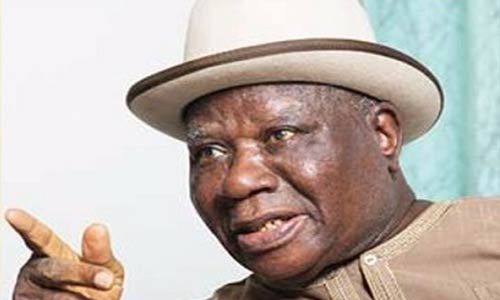
The outspoken elder-statesman and Pan Niger Delta Forum (PANDEF) leader, Edwin Clark, is dead.
The death of the former Federal Commissioner for Information and South-South leader’s death aged 97, was confirmed in a statement by a representative of the family, Prof. C. C. Clark, on Tuesday.
The statement read, “The Clark-Fuludu Bekederemo family of Kiagbodo Town, Delta State, wishes to announce the passing of Chief (Dr.) Sen. Edwin Kiagbodo Clark OFR, CON on Monday, 17th February 2025.
“The family appreciates your prayers at this time. Other details will be announced later by the family.”
Born 25 May 1927, Clark is an Ijaw leader and politician from Delta State who collaborated with the administrations of military governor Samuel Ogbemudia and head of state General Yakubu Gowon from 1966 to 1975.
In 1966, he served on an advisory committee to the military governor of the Mid-Western Region, David Ejoor, and was appointed Federal Commissioner of Information in 1975.
Known for his philanthropy, he founded the Edwin Clark Foundation and established a university, Edwin Clark University in his hometown, Kiagbodo, Delta State.
Clark was born in Kiagbodo, in the Ijaw area of what is now Delta State. He attended primary and secondary schools at Effurun, Okrika and Afugbene before completing further studies at the Government Teacher Training College, which later became Delta State University, Abraka. Thereafter, Clark worked briefly as a school teacher before travelling abroad to earn a law degree.
The notable Nigerian poet J. P. Clark was his younger brother.
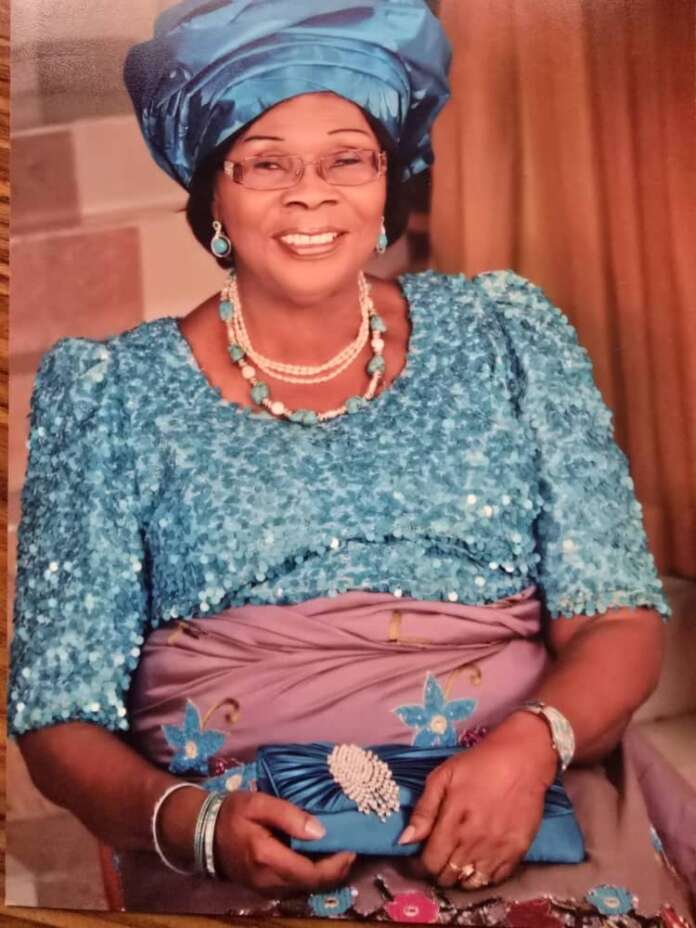
The announcement of her passing was made known to the public in a press statement.
The distinguished diplomat and public servant breathed her last on Wednesday, February 12, 2025, in Lagos, according to the statement from her family.
The late ambassador hailed from the esteemed families of Late Brigadier General George T. Kurubo of the Grand Bonny Kingdom in Rivers State and Late Eze Sir Daniel Okereke of Okpala, Ngor Okpala Autonomous Community in Imo State. Her passing has been met with deep sorrow but also gratitude for a life well spent in service to the nation.
Ambassador Kurubo’s illustrious career spanned decades of service in both civil and public sectors. She began as a schoolteacher and later rose to the ranks of principal, administrator, and permanent secretary. Her dedication to national development saw her serve in the Rivers State Government before assuming the esteemed role of Nigerian Ambassador to Trinidad and Tobago from 1999 to 2003.
Her tenure as a diplomat was marked by unwavering commitment to strengthening Nigeria’s international relations. “She played a key role in fostering diplomatic and economic ties between Nigeria and Trinidad and Tobago, earning respect for her leadership and integrity. Beyond diplomacy, her contributions to the country’s administrative and educational sectors left a lasting impact on generations of Nigerians,” the statement added.
In a statement, the family described her as “a remarkable woman whose contributions to the growth of Nigeria will never be forgotten.” They added, “Her leadership, dedication, and selfless service were an inspiration to many.”
A devout Christian, Ambassador Kurubo remained steadfast in her faith throughout her life. “She lived by the values of faith, service, and integrity until her last breath,” the family said.
She is survived by her children, including Colonel Boma Kurubo, Mr. Gogo Kurubo, Mrs. Kalanne Gigi Ojukwu, and her siblings, Dr. Tati Okereke, and Prof. Mrs. Ndi Okereke-Onyiuke, among other cherished family members.
The family has announced that funeral arrangements will be communicated in due course.
“May her soul rest in perfect peace,” the statement concluded.
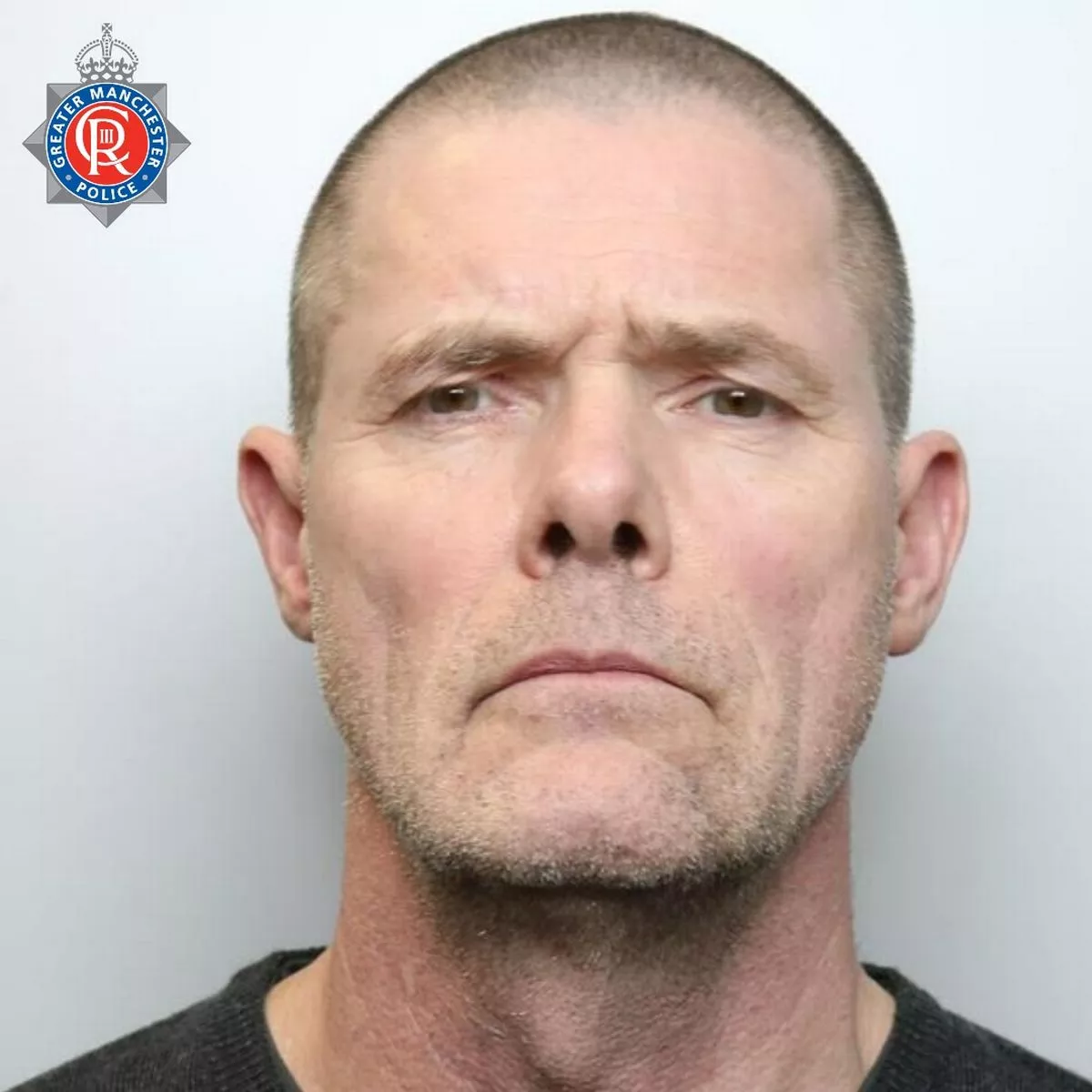
Carl Jones was a respected figure in his community. A father, with a good job in a position of power, he was seen by many from the outside as the ‘perfect dad’.
He was trusted, and was quick to offer a favour. But behind this façade lay his true character. Jones, from Salford, was a sexual predator, who offended with impunity for 20 years.
He targeted his victims with skill and cunning. Jones’ home, with a huge TV, a pool table, slot machines and game consoles, was a ‘carefully manufactured magnet’ for children.
And once he had lured them in, Jones would abuse them in the worst ways imaginable. Among his 11 young, vulnerable victims, was a boy he should have gone out of his way to protect.
But such were his vile urges that Niall Johnson, Jones’ own son, was not spared from his campaign of abuse. For years, Niall was routinely and systematically sexually abused by his own father.
More than two decades after that abuse began, Niall, now 27, addressed his dad in court as Jones was handed a life sentence. Niall’s speech, in front of a packed courtroom, was one of the most courageous and remarkable displays seen in Manchester’s courts in recent years.
He looked over at his dad, who, others noticed, kept his gaze away from his offspring, as Niall detailed the graphic and moving account of how the unspeakable abuse has affected his life. Niall recounted ‘multiple’ suicide attempts, psychological torment, and helplessness. All the while, he maintained a composure and dignity which he could have been understandably lacking.
He is not part of the ‘hang ‘em’ crowd’. Rather than calling for the noose, Niall says he would even like to meet his dad again in the future to discuss his crimes in more detail, and partly to help his father reform himself. It is possible to report all of this for the first time after Niall bravely waived his automatic right to anonymity and gave an in depth interview to the Manchester Evening News.
He has even changed his career, and is training to become a social worker to help other young people who may face similar trauma. Niall has not let what happened to him ruin his life, as it so easily could have.
He has a family of his own, is engaged to be married and is a dad. Niall wants his remarkable story of bravery and forbearance to be told to help other victims of abuse, to assist in stopping perpetrators and to tackle abuse which he has shockingly received in the aftermath of his father’s court case.
It is a reality which, although years in the past, is still graphically vivid for Niall. His parents split when he was just four.
He would be with his mother during the week, before spending the weekend with his father. The abuse, which would involve Jones sexually assaulting his son, continued for years until he was 12.
“From what I remember there was a lot of sexual acts going on, mainly him to me,” Niall recalled. “There’s a lot of vivid memories of being in the bed, having clothes on, waking up unclothed.
“It would just be the same routine every weekend. Going there, it might happen once, it might happen twice, or it might not happen at all. It was very hit and miss, you wouldn’t know what you were walking into.
Evil dad
“When I got to about seven, alcohol was introduced. He always said ‘if you drink now, you won’t be bothered when you’re 18’. I don’t know if that was the case, or if it was to get you drunk so you didn’t remember or didn’t realise what he was doing.
“There were only five vivid images in my head, that I replay, from five occasions. But when we counted I knew it happened every weekend, it’s just you have a mental block.
“That’s what I reported to the police, I said ‘I can only tell you about five, but it happened near enough every weekend, between the ages of five and the age of 12.”
Niall says his mother had no knowledge of what was happening when she packed her son off to his father for the weekend. He said: “She had no idea until about three years ago when I told her. Nobody really knew.”
Nail says, “If anything, it takes a lot more strength speaking about it.” (Image: Manchester Evening News)
“When I got to about seven, alcohol was introduced. He always said ‘if you drink now, you won’t be bothered when you’re 18’. I don’t know if that was the case, or if it was to get you drunk so you didn’t remember or didn’t realise what he was doing.
“There were only five vivid images in my head, that I replay, from five occasions. But when we counted I knew it happened every weekend, it’s just you have a mental block.
“That’s what I reported to the police, I said ‘I can only tell you about five, but it happened near enough every weekend, between the ages of five and the age of 12.”
Niall says his mother had no knowledge of what was happening when she packed her son off to his father for the weekend. He said: “She had no idea until about three years ago when I told her. Nobody really knew.”
He said that he tried to talk about it when he was five, but that being so young, he was unable to utter the correct words to describe what was happening to him.
Niall said: “The way it came across was, I said ‘dad’s gay’. Obviously I now understand it’s not ‘gay’, it’s paedophilia. I thought boy on boy, I know that as being gay.”
The next time he spoke about his ordeal was at the age of 17. At the time, he did not feel ready to go to the police.
Asked why, Niall said: “It’s that stigma in society, especially from a male perspective. It’s not spoken about, it’s shameful. It’s not until the past few years where it doesn’t bother me anymore.
“I’ve had to deal with it, I’ve had to get therapy for it. It needs to be spoken about more to end the stigma and the shame of it.
“It’s nothing to be ashamed about, it’s not something you’ve asked for. It’s something that has been put on you, and something you have had to deal with.
“If anything, it takes a lot more strength speaking about it.” The fact that his abuser was the one who should have been looking out for him more than anyone else has only exacerbated his hurt.
“That’s what has made it the hardest,” Niall said. “It is your dad, and you have that emotional connection of, that’s your idol.
“Take the sexual abuse aside, you would have seen him as, and a lot of society did see him as the perfect dad. The perfect, functional person.
“He was loved. He was absolutely loved by everybody. Whether that was a façade, or whether that’s who he is. Everybody loved him, he was the person that you could rely on, the person who was always there for you, the person who would always listen, he would help you out at any given moment.
“He worked in management, he worked in manufacturing and production and was a manager. He was really well respected there as well, in a position of power and trust.”
At one time, Jones became aware that Niall had been starting to discuss the abuse more openly. But Niall claims he quickly moved to try to discredit his son.
Niall said: “Even when he did get wind of how I did say these things, it got shut down. Basically being called a liar, that I’m just doing it to get him in trouble or doing it for money, that sort of thing. Obviously that’s not what I’m bothered about. I don’t need money. I just said it because it needed to be said. I started to get this sense of ‘I need to protect others’.”
Niall admits he feels a sense of guilt. More boys were abused after Jones turned his attention from his own son to other children.
He said: “That guilt of thinking I could have saved somebody else, that’s what gets me the most. It shouldn’t be up to the child to say it. It should be the parents, the teachers, the care givers who ask those awkward questions.”
Jones’ false cloak of respectability finally came crashing down in March last year. The mother of another of his victims went to the police.
Niall felt that the time was right for him to speak out. The day after that first report, he went to the police.
He recalls: “At the time I was settled. I had totally moved away from everything, getting a fresh start. But I had this gut feeling that I had to do something.
“I rang them [the police] up. It was fate. Literally as I was ringing them, they were about to release him from custody. With my statement, they were able to hold him for a little bit longer.
“Because I was very close with my dad I knew where all his hiding places were. I was able to direct the police exactly to where things might have been.
“Then I got a phone call from the police at around 3am saying ‘thank you very much’. Then I went down the next day and did a formal statement.”
The first indications were that Jones would contest the allegations. He denied any abuse of Niall.
Later he pleaded guilty to some offences in court, but held out on others. But at the 11th hour, as he was set to go on trial, he changed his plea to guilty on all charges.
“It was a surprise,” Niall says. “He is a proud man. But I think with the amount of people who came forward, the amount of evidence we were able to accumulate between us all, there was no denial really.
“I don’t think he wanted to go through with that trial. I don’t think he wanted to listen to the evidence and be judged.
“It could have been to save us all from the pain, he might have had a little epiphany. But it was a massive relief. I thought ‘I don’t think I can go through months and months of that’, but I was ready to if I needed to.”
In total, Jones had admitted abusing 11 boys including Niall. In total Jones pleaded guilty to 47 offences, including multiple counts of rape of a child, sexual assault of a child, engaging in sexual activity in the presence of a child, causing a child to engage in sexual activity, and indecent assault.
It was Friday, January 31 that justice would finally be done. Court five in Minshull Street Crown Court was packed with Jones’ victims and their loved ones, offering each other support on a momentous day.
Niall was sat in what is usually the jury box, in the old Victorian, wooden panelled court room, allowing him to look straight at his father. Jones was brought up the stairs from the cells downstairs into the dock to learn his fate.
“I felt in a position of power, for once,” Niall said. “But it was very strange seeing him in that environment. I recognised him but it was also seeing a stranger at the same time.
“I needed him to hear what he had done. A lot of the time you don’t see physically, it’s all inside your head.”
After the prosecutor had outlined Jones’ crimes to the judge, then came Niall’s turn to speak. He rose to his feet, looking straight at his dad, to read his statement.
“I’m glad I held it together to make it so everybody heard,” he said. “The judge’s response was very nice as well, he sort of smiled and gave me a nod of like, ‘thank you, well done’.
“I felt proud, I felt relieved. I felt very empowered in that moment.”
What he read out is surely among one of the most harrowing statements ever uttered in that courtroom, which has been in operation since the 19th century.
“When someone you love is doing things like that to you, that’s how you portray love,” Niall says, detailing the impact of the crimes on him. “It caused a lot of psychological problems, a lot of mental problems.
“It caused a lot of confusion around sexuality. I used to sit there thinking ‘am I homosexual because I’ve done these things with my dad?’ In my head, I didn’t know what I was.
“But I learned not to let that define me, then I realised I was a straight male. But then I didn’t know how to love or how to be loved, which caused a lot of depression and anxiety.”
Niall told how he’d made suicide attempts on ‘multiple’ occasions from the age of 16. “That’s the time when you are trying to find your identity,” he said. “I just didn’t know what I was, what I wanted to be, what I wanted to do. I had all this anger, all this guilt, everything inside of me all at once.
“I just didn’t know how to deal with that. I tried hanging myself. I’ve had some sort of guardian angel over me to make it unsuccessful which I’m very grateful for now.
“It gets harder when you have children of your own, because you’ve not been parented right. How do I transfer that love onto my children? It was very hard and made me depressed. But I try and be the best parent I can be.
“It has made me vulnerable as a person. It has caused a cycle of grief and harm. Even now I’m still getting therapy and help, and trying to be a positive person in my kids’ lives. I’m just trying to go day by day.”
After his dad’s barrister gave his speech in mitigation, it fell to the judge to tell Jones that he was receiving a life sentence. Under the terms of the punishment, Jones must serve at least 25-and-a-half years in prison before he can even be considered for release.
He must satisfy the Parole Board that it is safe for him to walk the streets again, before they can make any such decision. Jones, now 57, will be in his 80s by the time his potential release is up for discussion.
Niall said of the sentence: “I think it will give him a lot of time to hopefully reflect and get better. But it’s very much a conflict of feelings.
“You’ve got that inner child inside you saying ‘that’s my dad’, but then you’ve got this adult, rational person in your head saying ‘this person needs to get some help, this person needs to have justice served onto them’.
Despite what he went through at the hands of his father, Niall is not ready to totally rid himself of him. He says: “I wouldn’t want a close relationship, but I’d like to do restorative justice. I study criminology so I see how it works, not just for the perpetrator but for the victim as well. It has a good success rate.
“I’d love to sit down at a table, as a man now, not a child, and tell him what he has done and how it has affected me. I’d love to have a really detailed conversation of every stage of my life, saying ‘this is how what you’ve done has affected me’.
“To really make it resonate, to really make him want to change or to make other people be put off from reoffending. And even for myself, to get it off my chest.
“I feel like justice has been served, but I feel like I’ve got so much more to say to him, so much more to make him understand. Court only gives a snippet of that person’s life.
“This has been the past 22 years of my life. I’ve got 22 years of grief and anger to offload.”
While he would be forgiven for wanting to move on, Niall is planning on using his ordeal to benefit others in the future. “I’ve gone from engineering and I’ve retrained doing psychology and criminology,” he said. “I’m going to further that ahead to help people.
“Adverse childhood experiences are massive. It can put you on the fence, of whether you make what’s happened to you define you, or whether you beat it. I think it just needs that one person with that lived experience with that guidance.”
A key theme of the work he wants to assist with in future is the societal response to the crimes he was subjected to. He was dismayed to witness the response which the M.E.N.’s reporting of his father’s case received online in some quarters.
Some of the comments were political, while others speculated on topics like race.
He says the heartless, uninformed comments made by some keyboard warriors ‘broke’ him. “The victims just got lost,” Niall said. “It became a political playground, it became a racial playground.
“It doesn’t matter what colour you are, it doesn’t matter what race you are. It doesn’t matter what political party is in power at the time.
“What has happened has happened. The perpetrator can be anybody. Race isn’t a factor. What political party is in power at the time isn’t a factor.
“Out of the hundreds of comments that were made I probably saw a handful of people who said ‘I hope the victims get the help they deserve’.
“People start to use these high profile crimes as a platform to get their agenda across. We need to stick to the subject, because this is why victims don’t speak out.
“They don’t feel like they are listened to. I looked at that and thought ‘why have I done this?’ It hasn’t made anything better, it’s not spreading any awareness.
“I did get into some arguments because it was frustrating. It was like I was being lost all over again as a victim.
“I could have just gone back to my house and sat there quietly. But after seeing the comments it was hurtful. That’s why I wanted to come forward. I want to spread awareness of what’s happened, but also the aftermath, and empower victims to come forward.
“Hopefully with more people coming forward and people like me speaking about it, maybe we might educate people to be a bit more empathetic and focus that energy in the right places like improving services.
“I’m still waiting for victim support services, for counselling. If you want to say something political, tell the government to improve funding so that victims aren’t having to wait.”
Niall says of his father: “He’s in prison. He’s not going anywhere. He’s got all these services, he has got his three meals, he’s warm, he has a bed. Yeah he can’t get out, but he has got everything he needs.
“Us as victims have got to walk the streets. We have got to go and be functional in work, we’ve got to take the kids to school in the morning. We’ve got to try and get on with it, with no support apart from each other. That’s where the focus should be going.”
Jones, from Little Hulton, pleaded guilty to 47 offences, including multiple counts of rape of a child, sexual assault of a child, engaging in sexual activity in the presence of a child, causing a child to engage in sexual activity, and indecent assault. In relation to Niall, Jones pleaded guilty to three counts of indecent assault and four counts of sexually assaulting a child under 13.
He will serve a minimum period of 25-and-a-half years in prison, before he can be considered for parole.
After the sentencing hearing, Detective Sergeant Katie Halstead, of GMP Salford’s Child Protection Investigation Unit, said: “Jones is no short of a depraved man who preyed on children, with complete disregard for the trauma his abhorrent actions caused.
“The victims and survivors in this case had their childhoods tainted in the most awful way, and at a very young age, they experienced what no one should ever have to. I want to commend their bravery for coming forward to speak with us about their abuse and remaining strong throughout this incredibly difficult process.
“They played a vital role in reaching today’s outcome; ensuring justice is reached and Jones resides in prison, far away from causing harm to the community. We are here to always listen to victims and give them a voice when they are ready. These boys and men will continue to be supported through our partner agency’s specialist support services as long as they need.
“Child protection is GMP’s top priority, and our dedicated teams are working relentlessly to safeguard victims and hold anyone causing harm accountable.”
Jo Palmiero, Senior Crown Prosecutor for CPS North West’s Rape and Serious Sexual Offence Unit, added: “Carl Jones groomed and sexually abused young boys for his own gratification. He plied them with alcohol, money and gifts and exploited the boys in the worst way, with no thought for the lifelong impact his abuse would have on them.
“The impact of sexual abuse on survivors can be deeply profound and I would like to thank the victims for supporting the prosecution and bringing Jones to justice. The Crown Prosecution Service is working hard to improve our services to victims – including recruiting dedicated victim liaison officers in every part of the country – to make the criminal justice process easier to navigate.
“I hope this case will give other survivors of sexual abuse the confidence to come forward. It is never too late to seek justice.”
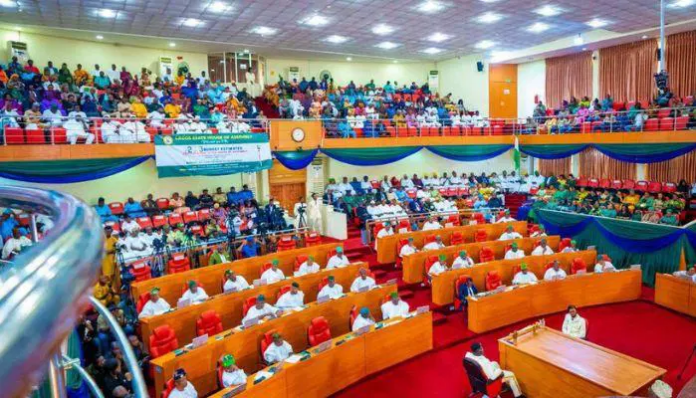
Members of the Lagos State House of Assembly have described the invasion of the Assembly complex by operatives of the Department of State Services (DSS) and the Nigeria Police on Monday, as a “rape of democracy, an aberration, and a national embarrassment.”
During a plenary session attended by 36 members, the lawmakers demanded an explanation from the Lagos State Director of DSS regarding the reasons behind the invasion.
They also called on the National Security Adviser, Nuhu Ribadu, to investigate the incident and provide the public with a comprehensive briefing on the findings. Additionally, the Assembly urged President Bola Tinubu to intervene immediately and prevent the situation from escalating further.
Expressing their outrage, the lawmakers unanimously condemned the invasion, describing it as an abuse of legislative procedure and a threat to democratic governance.
Speaking during the session, Hon. Abiodun Tobun said: “This is not a government ruled by the barrel of a gun. This is an aberration of democracy and a step toward anarchy. What happened today is a total embarrassment and an act of harassment.”
He further affirmed the lawmakers’ loyalty to the Speaker, saying: “Nobody can dictate to us. God chooses and removes leaders. We are solidly behind your leadership, Mr. Speaker—nobody can remove you.”
The lawmakers suggested that powerful and influential individuals or groups might be behind the incident, calling for a thorough investigation to uncover those responsible.
The House remained united in its stance, insisting on protecting the independence of the legislature and ensuring that such actions do not undermine democratic processes in the state.
Meanwhile, the State Assembly passed a vote of confidence in Speaker Mojisola Meranda, dispelling speculation about her possible resignation.
During Monday’s plenary session, Oladipo Ajomale, representing Oshodi-Isolo Constituency 2, moved the motion affirming the assembly’s trust in Meranda’s leadership. This comes amid heightened security presence at the assembly complex in Ikeja, as rumours swirled about her potential exit.
Despite the tense atmosphere, with a deployment of police and task force personnel surrounding the premises early Monday morning, Meranda received a warm welcome upon arriving at the assembly complex, greeted by cheers and applause from lawmakers and staff.
“Madam speaker… madam speaker,” they chanted as she walked in with a confident smile, acknowledging the support while flanked by her security detail.
Meranda was elected as the first female speaker of the Lagos legislature on January 13, 2025, following the impeachment of Mudashiru Obasa. Her appointment led to the dissolution of all principal positions and committees within the house.
However, Obasa, upon returning to Nigeria, challenged the legitimacy of his removal, insisting due process was not followed and maintaining that he remained the rightful speaker.
With the assembly’s latest show of support for Meranda, the unfolding power struggle within the Lagos legislature remains a developing story.
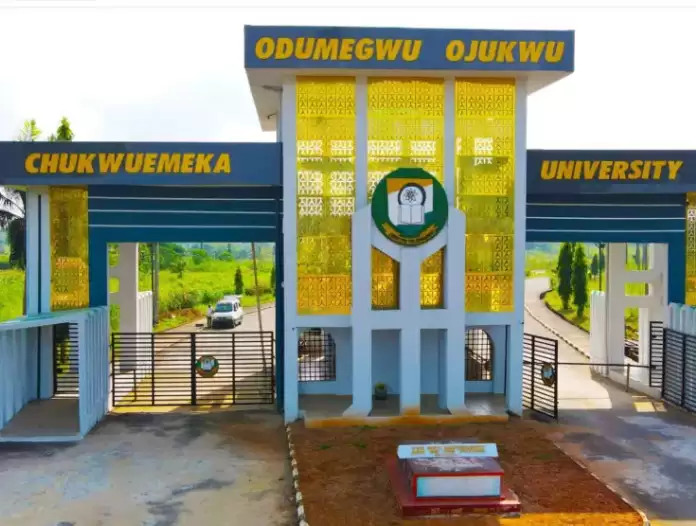
Chukwuemeka Odumegwu Ojukwu University (COOU) has witnessed some controversies in the past few days that have put the university in the public glare. Starting with the letter allegedly written to the Economic and Financial Crimes Commission (EFCC) by an Abuja-based law firm (Sword and Shield) on behalf of some anonymous staff of COOU to the publication of the plight of students of the Medical College of the university who cried out and alerted the whole world of their deprivations.
When it seemed that a can of worms was about to be opened as it pertains to the management of the university, the management went into a hotch-potch of denials and attempts at image laundering. The Students Union Government of the university came out to read a scripted defence for the management in respect of the alleged petition to the EFCC.
Unfortunately, the Student Union government of the university seems to have been too hasty in sending out the purported rejoinder to the EFCC petition which has nothing to do with students. It was expected that the Acting Vice Chancellor of COOU would have written a rejoinder by herself, denying the allegations in the said petition because she alone knows the truth about those allegations. The denial published by the university’s PRO, Dr. Harrison Madubueze was more or less an empty document that rigmaroled without denying any of the said allegations in specific terms.
Assuming but without conceding that the hired parrots speaking for the Acting Vice Chancellor in respect of the EFCC petition are correct, how do they reconcile their position with the press release done by the President of the medical students, which was corroborated by the Provost of the college both of which documents appear to have given Credence to the EFCC petition with respect to the case of the N20million Solar system installation in the college alleged to have been executed by the Ag Vice chancellor’s son, Nelson Omenugha and has never worked for a day.
Be that as it may, there is a petition before the EFCC and it is the duty of the anti graft agency is to investigate the allegations contained in it and it is the responsibility of the Ag. Vice Chancellor, Prof. Kate Azuka Omenugha to provide answers to their interrogations on those issues and more that she may need to answer.
Chukwuemeka Odumegwu Ojukwu University is a flagship institution in Anambra state. And there are signs that the Governor of the State and visitor is making efforts to reposition it to give Ndi Anambra a befitting citadel of learning especially for children who desire quality education but may not have the financial capacity to access private universities. In the Town Hall meeting between the Staff of the university and the Honorable Commissioner of Education Professor Ngozi Chuma-Udeh, the Pro-Chancellor Professor Chidi Odinkalu and the university staff held at the Igbariam campus on the 19th December 2024, the Pro-Chancellor announced that the Visitor Professor Chukwuma Soludo had directed him to institute and he has instituted a Genius Fund that will avail indigent Ndi Anambra to access quality education in the university. That gesture brought so much joy to the hearts of well-meaning Anambrarians who have witnessed the state suffer low male enrollment in schools, particularly the Tertiary Institutions.
Unfortunately, however, information making the rounds in the university and the state is that the admission process as regards new intakes into the 2024/2025 academic year has been high-jacked, compromised and grossly monetized by the Ag Vice Chancellor Professor Kate Azuka Omenugha, her son, Nelson Omenugha and the admission officer, Dr. Agubosim. It was alleged also that Prof. Omenugha created one scheme she called “Friends of the University” with which she has collected so much money from members of the public in the guise of doing one project or the other in their name and offering admissions into the five departments in question in the university to them in return. The funds collected for most of those projects have never been accounted for and would remain so unless somebody scrutinizes the admission process of the university this year.
It is a general lamentation in the university that the children of the less privileged were deliberately schemed out of admission into the core courses of Medicine, Law, Pharmacy, Nursing and Medical Laboratories Sciences which were allegedly sold to the highest bidders by Prof. Kate Omenugha and her cohorts. In the alleged unprecedented level of admission racketeering that took place in the university in the just concluded admission of fresh students into the 2024/2025 academic year.
Admission into courses such as Faculty of Law, Medicine and Surgery, Nursing, Pharmacy and Medical Laboratory Sciences were allegedly sold for as much as N3,000,000.00 (three million naira) to undeserving candidates. Merit was not considered in about 80 percent of the admissions into those faculties and departments. Selling points were allegedly designated for those admission and the sellers are known staff of the university. It got to a point where people considered to have paid less for the admissions were removed from the list once desperate people that paid higher sums emerged. Not even respected officers of the university could secure admission for their wards.
What is more agonising about the malfeasance pointed out is that the Governor of Anambra State has been passionate in providing infrastructure in public institutions for the purpose of educating the children of the less privileged. The Council of Chukwuemeka Odumegwu Ojukwu University has established an endowment fund (genius fund) for taking care of the fees of the less privileged from the state. The question is: Now that the only university Ndi Anambra can call their own is selling admissions for as much as N3,000,000.00 (three million naira) each, who will buy such admissions for those children of the less privileged that are targeted by both the Governor of Anambra State and the Council of the university. It is a case of the worst inhumanity to Ndi Anambra and it should form part of the EFCC investigations.
Finally, mention must also be made of the alleged fleecing of the beneficiaries of the TETfund Institution-Based Research grant from Chukwuemeka Odumegwu Ojukwu University. It is circulating among the staff of the university that kickbacks were collected from the seventy-two (72) beneficiaries of the grant who were compelled to pay between N190,000.00 (one hundred and ninety thousand naira) and N600,000.00 (six hundred thousand naira) each depending on each person’s ability to resist the coercion and threats that followed the demand for the kickbacks. The sums were paid into Account No. 6500318770 belonging to Uwabunommuta Integrated Services at Moniepoint Microfinance Bank.
It is alleged that the administration of the university is now a case study in corruption and impunity. There is much work for the EFCC, the Council of the university and the Visitor to the university, the Governor of Anambra State who must take steps to end the tragedy and human suffering that the Prof. Kate Azuka Omenugha Administration at COOU is alleged to have become.
Otu Oka-Iwu Abuja congratulates the newly inaugurated Board Members of the South-East Development Commission and extends commendation to His Excellency, President Asiwaju Bola Ahmed Tinubu, GCFR on the successful inauguration of the Board of the South East Development Commission. This significant step marks a new chapter in the development and progress of the South East region.
We acknowledge the Chairman of the Board, Dr. Emeka Nworgu for his insightful thank you speech, where he highlighted that the Commission will address the critical issue of pipeline infrastructure in the South East. We strongly advocate that it is very imperative that the Board prioritizes this matter, as the exclusion of the South East from the nation’s high-pressure gas pipeline infrastructure has long been a concern. Addressing this issue will not only drive industrialization and economic growth in the region but also ensure equitable development across Nigeria.
Otu Oka-Iwu Abuja consequently urges the Board to take immediate and decisive action to include the South East in the national pipeline projects and to advocate for the region’s interests in all future development plans. We further call on the Nigerian Gas Infrastructure Company, a subsidiary of the Nigerian National Petroleum Corporation (NNPC), to urgently commission and facilitate the construction of gas pipelines through the Southeast.
The Southeast is rich in natural resources, particularly in terms of natural gas production. Our region is endowed with vast reserves that have the potential to transform our energy landscape. Despite this abundance, however, our region continues to lag significantly in developing the necessary infrastructure required to support, transport, and harness these valuable resources effectively. The glaring absence of a well-connected gas pipeline network severely restricts our access to affordable and reliable energy, stifling economic growth and progress. This limitation presents significant challenges to industries and businesses that rely on natural gas as a key input for their operations, and it poses a substantial barrier to attracting new investment.
The Southeast being a significant producer of natural gas, remains the only region without a high-pressure gas transmission pipeline. The Ajaokuta-Kaduna-Kano (AKK) pipeline project, which runs through Ajaokuta, Kano, and Kaduna, and its second phase extending to Gusau in Zamfara State, highlights the stark disparity in infrastructure development. This project includes benefits such as pressure metering and reduction stations in Gwagwalada for Abuja, Kaduna, Kano, and Gusau.
In 2007, the Nigerian Gas Master Plan, designed by Dr. Ibe Kachikwu, proposed a 121 km pipeline extending from Aba in Abia State to Owerri, Enugu, Onitsha, and Nnewi. However, the government’s proposal for a Trans-Nigeria Gas Pipeline (TNGP) extension from Abia State to Ajaokuta, with a second phase from Abia State to Enugu and then Ajaokuta, diverts gas away from the Southeast. This diversion deprives the Southeast of the benefits and utilization of natural gas, including power generation, industrial growth, job creation and other essential services. Natural gas is a crucial driver for economic development, and the absence of a pipeline infrastructure significantly hampers the region’s potential.
The Economic opportunities, growth and the benefits of investing in comprehensive pipeline infrastructure are manifold and far-reaching. A well-designed and expansive gas pipeline network can attract investments, new businesses while supporting the growth and expansion of existing industries, job creation, stimulate local economies, and uplift the standard of living for countless families. With enhanced pipeline connectivity and infrastructure, energy costs will be reduced for households, small businesses, and larger industrial consumers alike resulting in increased disposable income and more resources for businesses, and economic vibrancy. It is essential to recognize that natural gas presents a cleaner alternative to oil, and by improving and expanding gas infrastructure national and global environmental targets are met.
This infrastructure deficit has profound implications for the region’s economic integration, transformation, and development. The Southeast Development Commission, the Governors of the Southeast, and the Federal Government of Nigeria must address this issue to ensure equitable distribution of resources and promote regional development.
We further call on the Southeast Caucus of the National Assembly, the Southeast Governors, and all relevant stakeholders, including the Nigerian National Petroleum Corporation (NNPC) and the Nigerian Gas Infrastructure Company, to address this critical infrastructure gap. The Nigerian Gas Infrastructure Company should immediately prioritize the commissioning and construction of gas pipelines through the Southeast to harness the region’s natural gas resources for the benefit of its people and the nation as a whole.
We recommend the commissioning of a feasibility study to assess the technical and economic viability of extending high-pressure gas pipelines through the Southeast. We note that there is need for a proactive engagement with the Federal ministries and agencies as well as regulatory bodies to organize a stakeholder forum to discuss and strategize on the implementation of gas pipeline infrastructure in the Southeast Region.
The Southeast region’s exclusion from the national gas pipeline network is a significant oversight that is unacceptable and must be corrected. By ensuring equitable distribution of resources and infrastructure, the region’s full economic potential will be unlocked and to contribute to the overall development of Nigeria.
We therefore urge all relevant parties to prioritize this initiative and work collaboratively towards achieving a robust and comprehensive gas pipeline infrastructure in the Southeast.
Chidiebere Nwabueze Udekwe PRESIDENT Otu Oka-Iwu Abuja
Are you a legal professional or a recent graduate from the Nigerian Law School looking to gain practical skills in the regulatory compliance sector? The BCB is your chance to unlock endless opportunities!
Kwik Compliance Hub Limited & Innova Crystal Consults Limited, presents the Business Compliance Bootcamp (BCB) —a comprehensive training program designed to give you a competitive edge in the world of business and corporate compliance.
What is the BCB?
The Business Compliance Bootcamp is a specialized training program aimed at equipping participants with practical knowledge and skills in essential compliance areas that are currently in high demand today.
This bootcamp bridges the gap between theoretical knowledge and real-world application, making you ready to handle compliance-related tasks with confidence.
Training Scope:
At the BCB, through the guidance of experts from different government regulatAt the BCB, through the guidance of experts from different government regulatory agencies and firms, you will gain in-depth knowledge and practical skills in:
✅ Trademark Registration – Get
✅ PENCOM Registration – Learn how to ensure compliance with pension regulations for businesses.
✅ NSITF Compliance – Understand the steps to register and comply with the Nigeria Social Insurance Trust Fund (NSITF).
✅ BPP Compliance – Master the processes involved in registering with the Bureau of Public Procurement.
✅ SCUML Registration – Learn the requirements and procedures for the Special Control Unit Against Money Laundering. a step-by-step guide to protecting intellectual property through trademark registration.
✅ Tax Clearance Certificate – Acquire knowledge on obtaining and managing tax clearance for businesses.
✅ Expatriate Quota & Business/Work Permit – Understand the regulatory framework for hiring expatriates and securing necessary permits.
✅ NAFDAC Registration – Master the process of registering food, drugs, and other regulated products with NAFDAC.
What are the Benefits of Attending?
Here’s what you stand to gain:
✨ Expert Training: Learn from industry leaders with extensive practical experience.
✨ Practical Knowledge: Gain hands-on experience to handle real-world compliance challenges.
✨ Career Advancement: Build a standout resume and position yourself as a compliance expert.
✨ Networking Opportunities: Meet and connect with professionals and peers in the field.
✨ Certification: Receive “BCE Certification” as a business compliance expert in the training areas to showcase your expertise.
Event Details
📅 Date: 19th – 21st March, 2025. ⏰ Time: 10am – 3pm Daily 📍 Location: Hall 3, Novare Training Room, (Shoprite Building), Wuse Zone 5, Abuja / Zoom Meeting Platform for virtual participants.
How to Register
Pay the registration fee as prescribed in the training flyer to the following account details: 0893695641, Innova Crystal Consult Ltd., GTB.
Send your proof of payment with the description “BCB Reg” via WhatsApp to 08102273639 or 08138779399.
Upon confirmation of your payment, you will be enrolled in the BCB group, where you will receive updates and essential information and materials to prepare for the training.
🔗 Reserve your spot now! or contact 08102273639 or 08138779399 for more information.
Don’t Miss Out! Limited Slots Available!
The Business Compliance Bootcamp (BCB) is your stepping stone to a successful career in the lucrative regulatory compliance sector. Equip yourself with the skills and knowledge to excel.
Act fast – register today!
Click on the link below to join our WhatsApp platform 👇👇
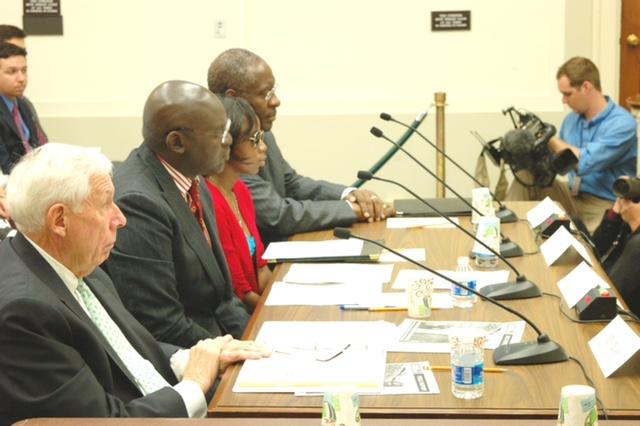
Former Republican U.S. Congressman Hon Frank Wolf (left) and International Human Rights lawyer Emmanuel Ogebe testifying before the Congressional human rights committee.jpeg
Dear Rep Scott Perry,
Your statement claiming USAID funds Boko Haram terrorists has sent shockwaves through Nigeria and elicited targeting of innocent Christians and aid workers because of your baseless claims.
To make matters worse, you have further endangered hundreds of American diplomats in one of the largest U.S. embassies in the world many of whom already lost their jobs due to the vampiric shutdown by lawless non-state actors in DC.
You may not know this but I evacuated along with hundreds of American diplomats from Nigeria after a bomb was planted in a US embassy compound in Abuja by Islamist terrorists. They and their families were internationally displaced for months before returning in early 2023 to Nigeria. For you to make such false and unfounded allegations, right after Musk’s admission that USAID’s $50 million condoms used for bombings by Hamas terrorists was untrue, irresponsibly jeopardizes the security of American diplomats and their families, local Christians and aidworkers in Nigeria.
It also a slap in the face to several of your house colleagues who have courageously traveled with me on bipartisan fact-finding CODELs visiting victims of persecution and Boko Haram terrorism. I hope you will quickly repudiate your false claim regarding Boko Haram before anyone gets hurt. No political propaganda or showboating is worth putting Americans lives at risk abroad for a lie.
Our site uses cookies. By clicking “Accept All Cookies”, you direct Law and Society Magazine to store cookies on your device and disclose information in accordance with our Cookie Statement: cookie policyACCEPTREJECT
Privacy & Cookies Policy
Privacy Overview
This website uses cookies to improve your experience while you navigate through the website. Out of these cookies, the cookies that are categorized as necessary are stored on your browser as they are essential for the working of basic functionalities of the website. We also use third-party cookies that help us analyze and understand how you use this website. These cookies will be stored in your browser only with your consent. You also have the option to opt-out of these cookies. But opting out of some of these cookies may have an effect on your browsing experience.
Necessary cookies are absolutely essential for the website to function properly. This category only includes cookies that ensures basic functionalities and security features of the website. These cookies do not store any personal information.
Any cookies that may not be particularly necessary for the website to function and is used specifically to collect user personal data via analytics, ads, other embedded contents are termed as non-necessary cookies. It is mandatory to procure user consent prior to running these cookies on your website.