Home Blog Page 435

Alleged Gross Misconduct: Senate fires CCT Chair, Danladi Umar

The Senate has sacked the Chairman of the Code of Conduct Tribunal, Danladi Umar, over alleged gross misconduct.

This decision was made under Section 157(1) of the Constitution of the Federal Republic of Nigeria (1999, as amended), which empowers the Senate to remove key public officials following due process.

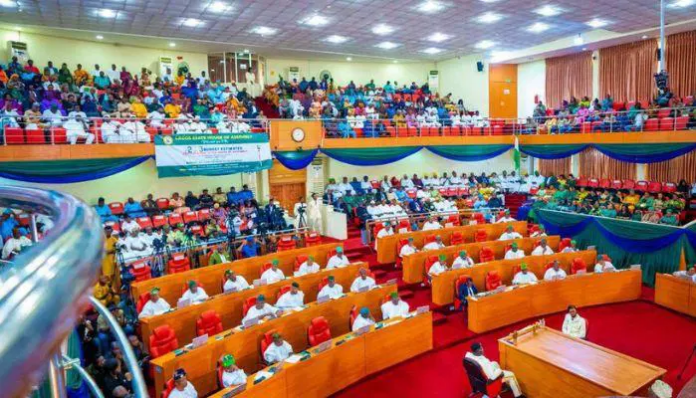
Danladi Umar’s final fall followed a closed-door session lasting over one and a half hours.

On resumption of plenary, the Senate announced that more than 84 lawmakers supported the decision.

The motion leading to his removal was sponsored by the Senate Leader, Opeyemi Bamidele, who highlighted the pivotal role of the CCT in maintaining high standards of morality and accountability in government.

Bamidele stated, “The Code of Conduct Tribunal, as a statutory institution, is expected to uphold virtues of integrity, probity, and accountability”, adding that a statutory institution of such magnitude is expected to be an epitome of moral rectitude and “should be seen to uphold the virtues of integrity, probity and accountability.

Read Also: Karma visits CCT Chair, Danladi Umar

According to him however, ‘the conduct of Mr Yakubu Panladi Umar, who is the Chairman of the Tribunal, has fallen short of the requisite standard of a public officer to conduct the affairs of such Tribunal.”

Senator Bamidele further pointed out that “The Senate has been inundated with series of petitions and allegations of corruption/misconduct against the Chairman, a situation that necessitated the 9th Senate, through the Senate Committee on Ethics Code of Conduct and Public Petitions to invite him to series of its investigative hearings in order to unravel the circumstances surrounding those allegations.

Umar was said to have appeared before the Committee only once and thereafter avoided subsequent invitations.

“Also concerned about his alleged absenteeism from office for more than one month, without permission and recuse to his position, coupled with preponderance of corruption allegation, misappropriation, and physical street brawl with a security man in the FCT vis-à-vis his current investigation by the EFCC, ICPC and the DSS.

“All these are tantamount to acts of negligence and gross misconduct, unbecoming of a Chairman of such a reputable Tribunal; “Aware of the series of overwhelming allegations against the Chairman, Mr President, Senator Bola Ahmed Tinubu, GCFR, forwarded the name of Mr Abdullahi Usman Bello to the Senate for confirmation as the new Chairman of the Tribunal, and at the Plenary Sitting of the Senate on Thursday, 4th July 2024, his appointment was duly confirmed, hence the need for the erstwhile Chairman to vacate the office for the substantive Chairman to officially resume office, ” Bamidele concluded.

Credits: The PUNCH

Otu Oka-Iwu condemns alleged memo cautioning officials “To be careful of Igbos”

Press Release

Our attention has been drawn to a statement credited to the former African Action Congress (AAC) presidential candidate Omoyele Sowore during an appearance on the Honest Bunch Podcast.

Sowere alleged that “a secretive government memo exists, which cautions officials to ‘be careful of Igbos’, and that this divisive stance towards the Igbo community permeates the government circle.”

Otu Oka-Iwu Abuja expresses a grave concern and totally condemns such a memo if indeed there’s an iota of truth in what Sowore alleges. The existence of such a memo is wicked and barbaric, it is a symbol of prejudice, discrimination, a threat to the unity and progress of our Nation and, against the principle of dignity of labour, fairness and international standards set at workplaces, especially in an establishment like the civil service.

We have maintained and still state without fear and favour that Ndi Igbo is an integral part of Nigeria. Ndi Igbo, like every other ethnic group in Nigeria, has contributed immensely to the development and growth of our country. Ndi Igbo as entrepreneurs, scholars, artists, and leaders have played pivotal roles in shaping Nigeria as a country.

Consequently, no amount of intimidation from any quarter can deter the efforts Ndi Igbo are making to ensure that Nigeria develops in all ramifications.

Nigeria is a diverse country, rich in culture, language, and traditions. Thus, to single out any ethnic group and label them as a threat is not only unjust but also dangerous. It fosters division, breeds mistrust, and undermines the very fabric of our Nation. Such a memo goes against the principles of equality, justice, and unity that we hold dear.

We must remember that our constitution guarantees the rights and freedom of every Nigerian, regardless of their ethnic background. It is our duty to uphold these rights and ensure that every citizen is treated with dignity and respect. Discrimination in any form is unacceptable and must be condemned in the strongest terms.

Unfortunately, we observe that since this allegation was made, there’s no counter to it from any government quarter, hence lending credence to the allegation. Silence can not be golden in this circumstance considering the tension caused by the post and the reactions from well-meaning Nigerians.

We had earlier called on security agents when Ndi Igbo were threatened with an ultimatum to leave Lagos, to declare any such violative statements as a treasonable offence. It is in the same vain, that we call on heads of government parastatals and agencies to ensure equal treatment in terms of benefits and promotion to Ndi Igbo at any and all levels of service, they should be accorded their due entitlements.

As we move forward, let us reject the narratives that seek to divide us. Let us embrace our differences and work together to build a Nigeria where every individual, regardless of their ethnicity, can thrive and contribute to the common good. It is only through unity and mutual respect that we can achieve the greatness that lies within our reach. Tribalism and favouritism have never helped any developing Nation.

Chidi Udekwe
President
Otu Oka-Iwu Abuja

Uncomfortable questions surrounding J.B. Daudu’s defense of Wike’s housing program for Judges handling Rivers cases

By Sylvester Udemezue

Learned silk J. B. Daudu’s said position was published on 19 November 2024 under the title, “DAUDU: HOUSING FOR JUDGES NOT FCT MINISTER’S PERSONAL PROJECT, BUT CONSTITUTIONALLY APPROVED PROGRAM” in several news platforms in Nigeria.

With utmost respect and considering that the very respected learned silk J. B. Daudu himself is Lawyer to Nyesom Wike (the FCT Minister), especially in some of the cases pending before some of the Federal High Court (FHC) judges who are direct beneficiaries of Wike’s “official” housing largesse — cases directly affecting Wike and or his proxies and associates — one is hardly taken aback by the position now being taken by the said respected learned silk. So, I think the best and most democratic way to approach the matter is to agree to resolve that the learned silk is entitled to his opinion, however groundless such an opinion is or is not.

Having said that, there are questions immediately and (I submit) reasonably arising from the learned silk’s wobbly defence and justification of an obvious-repugnant and clear-unprepossessing scenario which has both undoubtedly and rightly provoked in the minds discerning bystanders, the uncomely impression of existence of REASONABLE LIKELIHOOD OF BIAS on the part of the beneficiary-judges some of whom are handling pending Rivers State lawsuits directly affecting the judges’ “official” benefactor Nyesom Wike and or his associates, and in which (this is the most interesting part) the same respected learned silk is Lawyer/Counsel for Wike, associates. Among such questions arising are:

(1). Why didn’t the “official” housing largesse for the judges start until when many of the lawsuits directly arising from ongoing loggerheads between ex-Governor Wike and current Governor Fubara of Rivers State were (albeit curiously) moved to Abuja and assigned to the now beneficiary-judges? Or, why is it that all the pending cases involving Wike are being assigned, by the CJ of the FHC to the same judges who are among the beneficiaries of the Wike-initiated, Wike-executed, and Wike-supervised housing projects?

(2). Why are there no such sudden or similar ongoing housing projects for teachers, doctors, engineers, etc, but only for judges whose salaries and allowances were recently increased by 300 percent while teachers’, lawyers’, doctors’ etc salaries remain the same so-called ₦70,000 minimum wage? Are lawyers, doctors, teachers, and others in the public service (especially those in the FCT) not in much more urgent need of such “official” housing largesse from a “caring” FCT Minister Nyesom Wike than the judges? Is sauce for the goose not sauce for the gander?

(3). What has happened to the official budget for the Judiciary as an independent arm of government? Are there no appropriations for capital projects (such as building of residential houses for judges of federal courts)? Or, has the Nigerian judiciary ceased to be the third and independent arm of Government but now an appendage or an offshoot or annexe of the Executive arm (and if so) to the extent that the judiciary is now the Servant while the Executive is the Master, such that the Master is now building houses for the Servants even while Servants sit in adjudication over lawsuits involving the Master as a Party?

(4). If things have got that bad (I’m not saying they have) that it’s now the Executive Arm that builds official houses for members of the judiciary, then how did it become the responsibility or schedule of duty of Wike’s FCT Ministry (instead of the Federal Ministry of JUSTICE ) to build houses for Federal High Court judges? Is the Federal High Court now a Parastatal or an Agency or a Section under Wike’s FCT Ministry?

(5). If this is the case, and for God’s sake, what has happened to Ministry of Justice that should oversee the affairs of JUSTICE? What does the Federal Ministry of Justice exist for if Wike’s FCT Ministry is now responsible for building or overseeing building of houses for members of the Federal Judiciary?

(6). How on earth did Wike’s FCT Ministry suddenly find its way into officially building houses for justice delivery officials of the Federal High Court as a “constitutionally approved program”?
So, respected learned silk Daudu want us to agree that Wike’s FCT Ministry is now “constitutionally” the overseer of the Federal Judges and their Housing Programs? Okay, if the FCT Ministry building houses for FHC judges is a “constitutionally approved” program, why hasn’t that aspect (if any) of the Constitution got implemented until Nyesom Wike became the FCT Minister and especially until a fierce fight broke out between Wike and his political godson (Sim’s Fubara) with many lawsuits arising from the filed being (curiously) filed at the Federal High Court, Abuja Division and also assigned for judicial determination, to the same FHC Judges for whom Wike’s FCT Ministry is building the houses for?

Before I proceed, fellow Nigerians, permit me to say that if care is not taken, we may one day wake up to find that Wike’s FCT Ministry has taken over (as part of its “constitutionally approved program”) the jobs of erecting housing, buying cars, laptops, tables, chairs, printers, photocopiers, paper and pen, for Supreme Court justices, and ultimately taking over the job of actual management and control of the entire institution of justice delivery at the Federal level in Nigeria! I ask again, what does the Federal Ministry of Justice exist for if Wike’s FCT Ministry is now overseeing an aspect of the affairs of Federal judges whose sole job is ADMINISTRATION OF JUSTICE? Please tell me that he who pays or builds houses for the piper wouldn’t end up being better-placed to dictate the Piper’s tunes? Or, tell me I’m dreaming.

(7). Has the judiciary become so emasculated and caged (that’s, if it has) that its managers and leaders cannot ask for or are incapable of asking for financial provisions to be made in Judiciary’s Annual Budget for such capital projects as building houses for Federal Judges, including those of the Federal High Court?

(8). Why are the housing projects coming AT THIS TIME when Nyesom Wike (who is the FCT minister) and his associates have more than 10 cases pending before the Federal High Court (FHC), Abuja Division, and almost all the cases are being handled by some of the same FHC judges who are the direct beneficiaries of those Wike’s “official” housing projects?

(9). Why are there FHC judges in Port Harcourt, capital of Rivers State, if they wouldn’t handle cases arising from River State whose capital is Port Harcourt?

(10). What has happened to the rule regarding reasonable likelihood of bias? Have we forgot that, in this regard, the relevant, determining FACTOR, is not whether WIKE’s FCT Ministry’s “official” housing gestures would or have indeed led to ACTUAL BIAS on the part of the housing project beneficiary-judges who are also involved in Wike cases, but whether the scenario does not raise or have not created a REASONABLE LIKELIHOOD OF BIAS in the minds of discerning bystanders? Thus, the material question is not about what has actually happened but about the IMPRESSION REASONABLY raised in the minds of disinterested people who are watching what is happening. It’s not whether those judges have actually been influenced but about whether reasonable people would think they might! What impression does the scenario create in the minds of detached right-thinking men?

(11). Why are the cases arising from Rivers State not being assigned to be handled by FHC judges sitting in Port Harcourt, Rivers State so as to clear the possibility of all such LIKELIHOOD OF BIAS. Or, are there no longer any FHC judges sitting in Port Harcourt?

(12). Is it a mere coincidence that suddenly, all cases involving Nyesom Wike and his associates are being assigned not to FHC judges sitting in Port Harcourt but to those sitting in Abuja who are direct beneficiaries of Wike’s FCT Ministry’s “official ” housing largesse?

(13). What are the moral, ethical and legal implications of Wike (whose Ministry is executing those projects for the judges) being a litigant before the same judges who are beneficiaries of the projects?

(15). If you were one of the affected judges or you were in the shoes of the said judges who are direct beneficiaries of Wike’s Ministry’s “official” and ongoing housing largesse, exactly how would you feel going against Wike or his proxies or associates in any of their cases pending before you?

(14). Finally, one may ask, “Why and how Are the above Questions Necessary in the Circumstances?”

In the UK case of Metropolitan Properties Co. (F.G.C.) Ltd. vs. Lennon (1969) 1 Q.B. 577, 598, Lord Denning, M.R., stated, in respect of the law regarding nemo judex in causa sua, as follows: “A man may be disqualified from sitting in a judicial capacity on one or two grounds. First, a ‘direct pecuniary interest’ in the subject matter. Second, ‘bias’ in favour of one side or against the other.”

Then, regarding likelihood of bias, the same Lord Denning, MR, in R. v. Amber Valley DC, ex parte Jackson [1985] 1 WLR 298, [1984] 3 All ER 50, gave an insight into the determining factors:
“The court looks at the impression which would be given to other people. Even if he was as impartial as could be, nevertheless if right-minded persons would think that, in the circumstances, there was a real likelihood of bias on his part, then he should not sit. and if he does sit, his decision cannot stand. It is irrelevant whether he was in fact biased, because justice is rooted in [public] confidence. “

In the case of Serjeant vs. Dale (1877) 2 Q.B.D. 558, 567, Lush, J. drove the point further:
“The law, in laying down this strict rule, has regard not so much perhaps to the motive which might be supposed to bias the Judge as to the susceptibilities of the litigant parties. One important object, at all events, is to clear away everything which might engender suspicion and distrust of tribunal, and so to promote the feeling of confidence in the administration of justice which is so essential to social order and security.’

This rule has been applied in several cases in Nigerian and elsewhere, to strike down decisions reached in such circumstances of reasonable likelihood of bias. The cases of R. v. Bow Street Magistrate ex parte Pinochet (No. 2) [2000] 1 AC 119 , [1999] 1 All ER 577 and R. v. Secretary of State ex parte Kirkstall [1996] 3 All ER 304 easily come to mind. See also the Nigerian case of ZAMAN v. STATE (2015) LPELR-24595(CA) where the court had this to say about the disqualifying factors under the circumstances:
“There must be circumstances from which a reasonable man would think it likely or probable that the justice or chairman, as the case may be, would, or did, favour one side unfairly at the expense of the other. The Court will not inquire whether he did, in fact, favour one side unfairly. Suffice it that reasonable people might think he did. The reason is plain enough. Justice must be rooted in confidence; and confidence is destroyed when right-minded people go away thinking: ‘the judge was biased.’….”

In Olve & Ors. vs. Enenwali & Ors. (1976) 1 NMLR the Supreme Court of Nigeria held (per Nasir, JSC, as he then was), as follows:
“The principle that a judge must be impartial is accepted in the jurisprudence of any civilized country and there are no grounds for holding that in this respect the law of Nigeria differs from the law of England or for hesitating to follow the English decisions.”

Enough asked, said. Speaking generally, I shall write to advance (by contributing to) ongoing discussions on this subject because administration of court-justice in Nigeria appears of late to be taking such a shape as portends grave dangers for present and future generations of Nigerians and especially stakeholders. Besides, from the look of things, it appears senior stakeholders are going to be the ones to preside over the celebration of final desecration and eventual destruction of Nigeria’s once-glorious Justice system. Meanwhile, and still speaking strictly generally, I recall a declaration by respected Bayo Akinlade, Esq, Coordinator of a group operating under the name, Fight Against Corruption in the Judiciary in Nigeria, and who has also shown himself to be a committed advocate of a clean, fearless and independent judiciary in Nigeria; the said declaration should serve as Memory Verse for all stakeholders in justice administration and delivery in Nigeria:
“Anyone who fights for his or her own personal right without considering or respecting the rights of others is NOT a crusader nor a revolutionary….. He or she is simply selfish and self centered.”
God help us!
Respectfully,
Sylvester Udemezue, Udems
[Proctor, The Reality Ministry of Truth, Law, and Justice (TRM) (a non-aligned, nonprofit public interest law advocacy group). 08109024556.
[email protected]].
(19 November 2024)

After 100 days in detention, NBA CLC secures release of six minors

  • As NBA Lagos former Vice Chair faults AGF on ‘no law forbids trial of minors’

After spending 100 days in detention, six minors who were arraigned before Hon. Justice A. M. Dume of High Court No.10 in Borno State, Maiduguri finally got their freedom through the advocacy of the Nigerian Bar Association, (NBA) Citizens Liberties Committee.

This is even as Abiye Tam-George, a former Vice-Chair, NBA, Lagos Branch faulted the Attorney General, Lateef Fagbemi SAN’s position that no law forbids forbids trial of minors.

“Every child, regardless of the nature of the offence, is entitled to special protection and consideration within the child justice system. Children cannot be tried as adults, and courts have a discretionary duty to ensure their rights are protected.

NBA CLC members and the happy minors

“In cases involving serious offences such as treason or murder, the court must take extra precautions. Specifically, the judge should instruct a Child Development Officer to prepare a Social Inquiry Report on the minor. This report provides crucial context on the child’s background, circumstances, and developmental needs.

“Failure to follow these essential procedures constitutes an injustice, is illegal, and raises serious moral concerns,” she said.

Six out of the 11 Defendants arraigned in the said BOHC/MG/CV/217/2024 were minors. They were all released to their parents on the application made by Adamu Askira, Esq. Member NBA CLC, though the said Application was aggressively contested by the Prosecution Counsel.

The defense presented the Certificates of birth of the minors from the Bar. Their names are as follows:
1. Halle Dahiru
2. Bashir Ahmad
3. Sadiq Abubakar
4. Musa Lawan
5. Abubakar Tijjani
6. Mohammed Abubakar

This intervention was made possible through the efforts of the NBA Citizens’ Liberties Committee, led by Chairman Nuhu Egya, with the support of Daniel Kip, and in partnership with Hope Behind Bars Africa and members of the NBA & lawyers in Borno state.

Prior to the court sitting, Advocacy letters were sent by the NBA CLC to key stakeholders, including the Attorney General, to ensure justice was served.

The Minors left the Court with smiles on their faces, having reunited with their families.

17-yr-old son of Oluchi Face of Africa, wins Macau Grand Prix

Ugo Ugochukwu, the 17-year-old Nigerian-American racing prodigy, clinched the 2024 FIA Formula Regional (FR) World Cup title on Sunday at the 71st Macau Grand Prix.

He is the son of Oluchi Onweagba-Orlandi who won The Face of Africa contest as an 18-year-old in 1998 in Lagos and Luca Orlandi, an Italian fashion designer.

Now based in New York City, the Nigerian model grew up in the suburbs of Lagos.

Her young son dominated the race from start to finish, representing R-ace GP, with Olivier Goethe of MP Motorsport and Noel León of KCMG IXO by Pinnacle Motorsport finishing second and third, respectively.

With this victory, Ugochukwu became the first American driver to claim the prestigious Macau Grand Prix title in more than four decades.

Reflecting on his historic achievement, Ugochukwu credited his resilience and confidence as the keys to his success. “I can’t describe the feeling; of course, I’m super happy. It was quite a tricky race. I was pushing the whole way, but I was confident in the pace – ever since Q2, we’ve been really quick,” he said.

Oluchi and son in his younger days

“Of course, we won the Quali race as well, but there was still one more thing to do, which was win the main race, and we managed to do it. I can’t thank the R-ace GP team enough. We had a great weekend, and yeah, I’m super happy to finally get the job done.”

Ugo Ugochukwu, a Nigerian-American driver born on April 23, 2007, in New York, USA.

He began his racing journey in 2014 by competing in the Micro ROK Cup USA. He quickly made his mark, winning his first American championship title that year. His exceptional talent and charisma propelled him to claim two more American championships in 2014 and 2015.

In 2016, Ugo expanded his horizons by competing in the European series, securing second place in the Mini ROK Cup and Mini 60 Italian Championship. The year 2017 was a breakthrough, as he won the Mini X30 IAME All-Star Finals and the IAME International X30 Mini Cup, showcasing his prowess on the global stage.

Ugo continued to dominate in 2018, earning the title of Junior ROK-Challenge of the Americas champion and finishing as vice-champion in the Junior ROK – Florida Winter Tour. Despite the challenges of the COVID-19 pandemic in 2020, he remained focused and was signed by Zak Brown, CEO of McLaren F1 Racing Team, as the first member of the McLaren Junior driver program. That year, he secured second place in the OK Junior Champions of the Future Championship and won the OK Junior FIA European Championship.

Before transitioning to single-seater racing in 2022 with Carlin Racing in the British F4 Championship, Ugo concluded his karting career on a high note by finishing second in the OK Senior WSK Euro Series in 2021. His journey reflects relentless determination and a bright future in motorsport.

Vanguard

Family of Nigerian medical doctor who died in Jordan insist he was killed, call for justice

  • Watch the full video of his story

Three months after arriving in Amman, Jordan, Dr. Chukwuemeka Agbo, a 45-year-old medical doctor who worked with the World Health Organisation, WHO, was dead.

He was said to have fallen from the 3rd floor of the apartment building where he lived on 9, June 2024. The only snag is that he lived on the 1st floor. How then did he fall to his death from the 3rd floor?

Indeed the circumstances surrounding the death of this Nigerian polio specialist, have sparked concerns among his family and friends in the medical profession.

He was working WHO as a polio technical officer and it is now being alleged that he was killed by a fellow staff member. An autopsy investigation suggested the fall was not the cause of his death.

The WHO described Dr. Emeka as a valued member of its workforce for 10 years, supporting immunisation, polio eradication, and Ebola outbreak response in the African and Eastern Mediterranean regions. 

He joined the Polio Eradication team in Amman Jordan early this year in February 2024. 

Family sources said that a few weeks before his death, Agbo expressed deep concerns due to the persistent hostile attitudes of some WHO colleagues since he took up his position in the WHO office in Jordan. 

At the time of notification, the family was told by WHO in Amman that he fell from the roof of a three-storey building to the ground – a story which turned out to be different from the information received by the family while in Amman, Jordan as more enquiries were made. 

Agbo’s brother, Jideofor Agbo, who travelled to Amman from London to identify the deceased, said that when he saw Emeka’s corpse, it didn’t look like someone who fell from any height. 

He said that the injuries on the body of his brother looked like someone who had been attacked. Two autopsies have since been conducted to ascertain what happened to Dr. Emeka Agbo. 

One of the autopsies was conducted by the Jordanian authorities, and the second was conducted in Nigeria at the request of the family. 

According to Jideofor, “The reputable pathologists confirmed that my brother’s skull was shattered by blunt force trauma and conclusively ruled out suicide or accidental death. We have requested the initial report from WHO Jordan on how they concluded that my brother fell from the roof of the three-storey building to the ground. They are yet to respond to this request. 

“The lack of communication from the Jordanian authorities also has been a significant challenge, and we are concerned that the delay may result in loss of crucial evidence,” Jideofor further lamented.”

The family lawyer, Femi Falana (SAN), believed that based on the autopsy findings, the cause of Dr. Chukwuemeka Agbo’s death is homicide and called for justice. 

Falana noted that the doctors examined the body and established a case of massive intracranial haemorrhage (bleeding within the brain or its surrounding tissues), multiple skull fractures, and injuries that could not have arisen from a single fall.

According to Falana, “The autopsy suggested consistent trauma, and interestingly, the findings of the pathologists here were reconfirmed by the Jordanian autopsy in their investigation.” 

“The World Health Organisation should have investigated the incident even without demand from the family. I wrote to the Director General of the WHO on behalf of the family, and I’m yet to receive a response from him,” stated Falana.

Before joining the Polio Eradication Programme in Amman, Dr Agbo served as the GPEI Coordinator for Kenya, managing the response to cholera and polio outbreaks.  

From February 2022 to December 2023, he served as the GPEI Coordinator in Malawi, where he led the outbreak responses to the importation of wild poliovirus type 1, measles, and cholera. 

For 10 years, he served WHO and the Gates Foundation and successfully led large-scale responses to disease outbreaks in the Horn of Africa. 

Before joining WHO, Dr. Agbo worked in the private sector and with a non-profit organisation as a medical officer in the Netherlands and Nigeria. 

Married with three children, Emeka hailed from Neke in Isi-Uzo local government area of Enugu State.

Citizens are of the opinion that the Federal Government of Nigeria through the Diaspora Commission should step in to find out from the WHO in Amman on how they arrived at the submission that Dr. Agbo fell from the balcony, which his autopsy has proved otherwise. 

Medical health practitioners are also afraid that if Agbo’s homicide is left unresolved, the lives of Nigerians embarking on foreign medical missions may as well be in jeopardy. 

Watch the video below.

Enugu Local Government Chair appoints special aides on ‘pepper, garden egg, yam’

  • Insists it will boost agriculture in the state

Governance in Enugu State has become really spicy and full of health benefits with Dr. Eric Odo, the Chairman of Igbo-Etiti Local Government Area, of State appointing Senior Special Assistants, SSAs, on Agriculture, Garden egg, Yam and Pepper.

Fauling the negative media reports and reviews his appointments are attracting, Odo who said the appointment of SSAs on Agriculture, Garden Egg, Yam and Pepper would satisfy local demands and boost export added that it was a strategic move to boost the production of the crops in large quantities in his local government.

One of the appointments contained in a letter dated November 1 and addressed to Ezeugwu Federick Ogbonna reads: “I am pleased to inform you that the executive chairman Igbo Etiti LGA has approved your appointment as senior special assistant to the local government chairman on agriculture (yam and pepper.)

“You should report to the executive chairman Igbo Etiti LGA, Ogbede, for briefing and deployment.

“It is pertinent to note that this is not a career civil service appointment but a temporary appointment which you hold at the pleasure of the executive chairman of Igbo Etiti LGA.”


A second letter of appointment bearing the same date was addressed to Nwodo Everestus Ugonna. He was appointed as Special Adviser on Garden Egg and Pepper.

Faulting the wide-range condemnation of his appointments, Odo insisted that it was important for the public to know that Igbo-Etiti does well in growing these crops.

He said they had a great comparative advantage, hence the need to engage individuals who have the competence to develop that aspect of agriculture.

This, he said, was to ensure that local farmers receive adequate attention, needed resources, support, and expertise to enhance production, improve market access, and increase income for farmers.

According to him, “In essence, the appointment, which is wrongly misunderstood by disgruntled individuals, bad losers and opposition, reinforces my determination to create a thriving local economy based on the strengths and potentials of Igbo-Etiti’s agricultural landscape.”

The chairman added that the decision was a well-thought-out one aimed at enhancing productivity, job creation, and to uplift farmers and communities in a way that resonates with both short-term and long-term development goals.

He urged the public to disregard any online or offline comment aimed at discrediting the laudable and visionary efforts to reposition and set Igbo-Etiti LGA on the path of massive food production and sustainable development.

IMF urges Nigeria to rethink reform strategies

Although President Bola Tinubu has remained resolute in pursuing his administration’s economic reforms notwithstanding the increasing challenges and hardship Nigerians face daily with the World Bank charging him to sustain the ongoing reforms, the International Monetary Fund, IMF has called on the federal government to rethink its strategies.

The IMF, in its latest Regional Economic Outlook for Sub-Saharan Africa report, noted that the countries involved in deep reforms including Nigeria, Ghana, Ethiopia and Kenya, may now be experiencing what it called ‘adjustment fatigue’ while some are facing civil resistance.

Nigeria, for instance, has recorded multiple civil unrests and labour shutdowns following disenchantment with the impact of the macroeconomic reforms, especially in petrol and foreign exchange deregulations.

The IMF’s recommendations emphasized broad-based engagement with the populations, a communications strategy clearly articulating the benefits of reform, forging partnerships with key figures in the country, appropriate design and sequencing of reforms, establishing complementary and compensatory measures, and fostering inclusive growth.

The Fund sees an opportunity for making a success of the reforms if the frustrations faced by the citizens are adequately addressed.

The report stated: “In the face of popular frustration, there is also an opportunity to work to mobilize support for large, deep reforms, of the sort that, for instance, Ethiopia, Ghana, Kenya, and Nigeria are pursuing.

“Realizing this opportunity requires rethinking reform strategies, to build and maintain pro-growth coalitions among constituent leaders and the general public. This will require greater attention to communication and engagement strategies, reform design, compensatory measures, and rebuilding trust in public institutions”.

Giving further details on what should be done, the report stated: “In particular, policymakers will need to focus on broad-based engagement with populations; a participatory approach, involving a two-way dialogue with stakeholders and the population at large, can help design policy approaches; building a sense of ownership among the public, and garner support from both business and civil society”.

IMF added, “Communications should clearly articulate the benefits of reform, the costs of inaction, the accompanying compensatory measures, and correct misinformation and misperceptions.

“Partnering with key figures including parliamentarians, community leaders, and independent researchers is also essential. The emphasis should be on listening to concerns and designing appropriate responses. Providing regular updates on reform progress, and establishing ongoing feedback mechanisms, will help maintain support over time.

“Appropriate design and sequencing of reforms; the costs and benefits of multiple reforms should be appropriately spaced through time so as not to overburden populations. Demonstrable, upfront gains will boost support, and beginning with reforms that do not threaten the core benefits of multiple social groups has been shown to improve success.

“Complementary and compensatory measures; Appropriately designed and well-targeted policies to support those most affected by reforms (such as stronger social safety nets, job search assistance, and retraining) can help overcome resistance to reform by mitigating potential social costs.

“Fair and transparent management of public resources; A strong governance framework that fosters trust in government and in its ability to adequately implement policies—including by promoting transparency, increasing accountability, strengthening the rule of law, and controlling corruption—is a precondition for public backing of any reform strategy.

“Opinion surveys indicate that trust in the government’s ability to use public resources to promote the population’s well-being is still relatively low in many sub-Saharan African countries

“Fostering inclusive growth; As painful as the current policy choices are, deeper and broader reforms will be required to guarantee that countries reap the gains, and not just the pain, of reform. Most of the region is struggling with low growth, lack of jobs, and widespread social exclusion. Unlocking more durable and inclusive growth, by making the economy work more effectively for all, will simultaneously reduce both macroeconomic vulnerabilities and social frustration, easing the task of policymakers”.

The Regional Economic Outlook is the IMF’s regular update on the group of economies within the region addressing challenges and the growth opportunities.

Contrarily, the World Bank Vice President and Chief Economist, Indermit Gill who spoke recently at the Nigerian Economic Summit (NES30) in Abuja, emphasised that maintaining these reforms is crucial for long-term growth, especially for a resilient economy in Sub-Saharan Africa.

CIAPS to Host Africa’s 1st Class Action Workshop for Legal Professionals and Stakeholders

The Commonwealth Institute for Advanced and Professional Studies (CIAPS) will host an international one-day workshop on class action law. It is the first of its kind in Africa.

The programme is designed for individuals and entities that may sue, be sued, or adjudicate class action cases.

The workshop, tagged “Class Action: Past, Present, and Future,” is scheduled for Wednesday, November 27th, 2024, in Lagos.

This workshop aims to equip participants with a thorough understanding of class action procedures, legal frameworks, and best practices. It addresses the needs of plaintiffs, defendants, and judges involved in such cases.

Participants will engage in expert-led sessions covering strategic topics such as Class Action and Locus Standi, Initiating Class Action, Class Action and the Media, Managing Wavering Clients, and an Overview of Class Action in Nigeria, the UK, the USA, and Canada.
Legal professionals will gain practical insights into effective case management, ensuring they are well-prepared for the complexities of class action cases.

The workshop was conceived to provide valuable tools and knowledge to those in various capacities of class action law, empowering them to navigate the unique challenges these cases present with confidence and proficiency.”

Confirming the CIAPS Class Action Programme, CIAPS Director, Prof. Anthony Kila, said that this training in class action was chosen because “class action is one of those important areas of law to which legal experts and leaders in developing countries dangerously do not pay attention.”
Interested participants can register for the event by visiting the CIAPS Website
https://ciaps.org/programmes/class-action-past-present-and-future/

The feeding worms of Lakurawa

By Onikepo Braithwaite

The Lakurawas

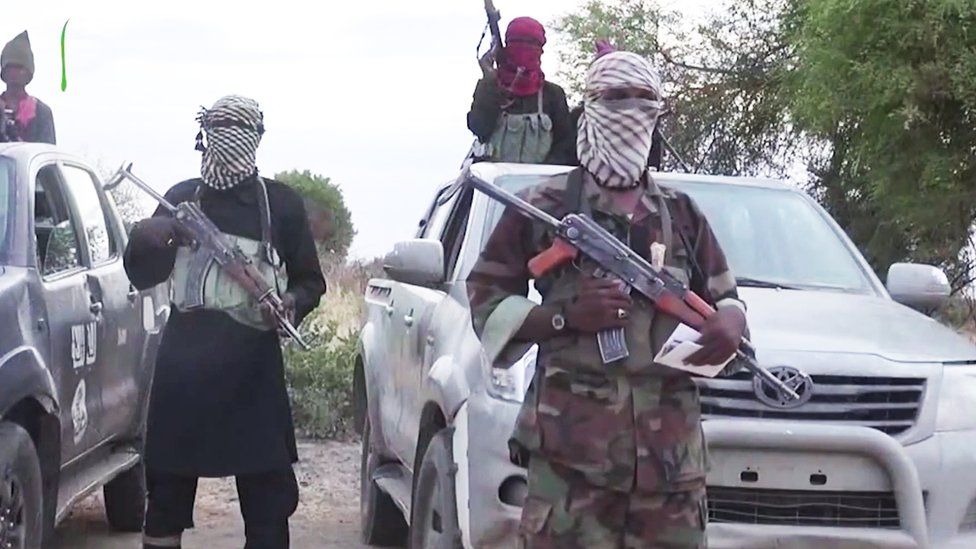
Last week, the issue of yet another violent so-called Islamic Terrorist group, possibly Tuaregs (Berber Nomadic Herders) from neighbouring Niger and Mali, “Lakurawa”, that has infiltrated North West Nigeria, particularly Sokoto and Kebbi State, was a topic of conversation. Apparently, the Lakurawas have been in those areas since 2016/2017. I call it a ‘so-called Islamic group’, because there is really nothing Islamic about the activities of groups like Boko Haram and this group. They steal, they kill, maim and partake in activities that are strictly prohibited by the Holy Quran. See Quran 4:29 on stealing.

Similarly, the Quran prohibits killing a soul, unless for another soul (legal retribution for murder) or for corruption done in the land – Quran 5:32. Many of these so-called Islamic terrorist groups use the ‘corruption done in the land’ as the excuse for the mayhem they cause, claiming they are fighting the government because of their corrupt ways, when the fact of the matter is that they are cold blooded killers and thieves who do not fear God or practice Islam, but go about killing and maiming innocent citizens who are struggling to eke out a daily living, and have absolutely nothing to do with governance, let alone corruption. The murders these groups commit, and the hurt they cause, cannot be justified by any means whatsoever. 

Even though Section 14(2)(a) of the 1999 Constitution of the Federal Republic of Nigeria (as amended)(the Constitution) provides that “sovereignty belongs to the people of Nigeria from who Government through the Constitution derives all its powers and authority”, and Sections 4, 5 & 6 thereof vest the powers of the Federal Republic of Nigeria in the Legislature, Executive and Judiciary respectively, the Lakurawas are said to be happily exercising these same powers in several areas like Gudu and Tangaza in Sokoto State – imposing taxes and levies on the people, closing schools, trying to impose strict Sharia laws, forcing men to wear beards and sport certain hairstyles, not permitting secular music and punishing those who listen to same, engaging in dispute resolution among the people (justice administration) and carrying out other government functions. In short, these suspected non-Nigerian Tuaregs, are somehow challenging the sovereignty of Nigeria and Nigerians. See the case of AG Kaduna State & Ors v AGF & Ors (2023) LPELR-59936 (SC) per Emmanuel Akomaye Agim, JSC on the sovereignty of Nigeria and Nigerians. Also see Section 2(1) of the Constitution. 

Reasons Why these Groups Can Get a Foothold in Nigeria

Some of the reasons why groups like Lakurawa are able to gain ground in Nigeria are as follows:-

1) Failure of Government

Apparently, in 2017 or thereabouts, the Lakurawas were initially invited by the village heads to Gudu and Tangaza, to come and protect their people against banditry attacks. When the State/Government fails in its primary duty to protect the lives and property of the people (see Section 14(2)(b) of the Constitution), the people will resort to self-help, as self-preservation is the first law of nature. The Lakurawas didn’t force their way into these areas, they were welcomed with open arms. Once they got in and saw how easy it was to gain control, they got comfortable, changed on the people, started to spread their warped ideologies and subsequently, get violent and oppress them. 

2) Lack of Education 

I blame most of the Northern leaders who came after people like the Sardauna of Sokoto, Sir Ahmadu Bello, KBE (Premier of Northern Region), for the way so-called Islamic extremism and terrorism appear to be thriving in the North. Several decades before Section 18 of the Constitution was enacted, that is, the educational objectives of the Nigerian State set out in the Constitution, leaders like Chief Obafemi Awolowo, GCFR, SAN (Premier of Western Region) and Sardauna, had already realised the importance of education. Till today, not only is Chief Awolowo’s name synonymous with free education, Sardauna established Ahmadu Bello University, and was particularly passionate about the education of the girl child. He travelled around the Northern region, encouraging parents to send their daughters to school. Sardauna was determined to modernise the North, using education as one of the means to achieve his goal.

Unfortunately, no Northern leader appears to have carried on Sardauna’s legacy in this regard, and sadly, today, the North lags behind in terms of education. For example, in 2022, while Anambra State had the highest cut off mark of 139 for entrance into Unity Schools, Sokoto, Taraba and Yobe had the lowest cut off marks, even making a distinction between males and females – for males the score was 9, 3 and 2 respectively, while their females, though they fared slightly better, were also very low, 13, 11 and 27. 

Whether the military, or the politicians, or the people themselves, or a combination of all, the North has the lowest literacy rate in the country. The standard of education appeared to be better, under the military. With the advent of the politicians, not only have educational standards dropped at all levels, Nigeria possibly has the highest number of out of school children in the world under their watch, while the politicians have also used the people’s lack of education as a weapon against them, so much so that, many of them are not at all versed in the religion they profess to practice. 

For instance, Quran 33:49 & 4:141 enjoins Muslims to overlook annoying talk, ignore the words of blasphemers and avoid their company. It doesn’t prescribe the death penalty for blasphemy. Sections 210 & 213 of the Penal Code Act 1960 (PCA) (applicable in the North of Nigeria) and Section 204 of the Criminal Code Act 1916 (CCA) (applicable in the South of Nigeria) both prescribe a punishment of a maximum of 2 years imprisonment (or a fine or both under the PCA) upon conviction for committing the offence of Insult to Religion (Blasphemy). The act of blasphemy doesn’t appear to be punishable in the Quran, while it is nothing more than a misdemeanour in the PCA & CCA. The fact that an offender in the North, where the Muslim population is largest, can even get off with a fine for blasphemy, is telling. Yet, many people believe what their extremist Imams have taught them about blasphemy, and stone people to death or burn them alive for allegedly blaspheming instead, because they haven’t really studied the Quran and Hadith (or the law); they may not even be literate. 

The 2022 case of University of Sokoto student, Deborah Samuel Yakubu, a Christian, who was allegedly stoned to death and her body burnt by fellow University students of the Islamic faith, on account of allegations of blasphemy levelled against her by them, still sends shock waves down the spines of right-thinking Nigerians, because it is expected that students of a tertiary institution should know better and let the law take its course, than to engage in jungle justice. It appears that no one was prosecuted for Deborah’s murder, as the Sokoto State Police Command/Government were obviously not interested in ensuring that the culprits were brought to book. 

Definitely, this kind of environment, where the people have already been brainwashed to think it is ‘saintly’ or will earn them martyrdom, to murder people (in the name of a religion that doesn’t tell them to do so), and where politicians use religion to manipulate the people and keep them in a permanent state of regression and primitiveness, with extremists (and others sponsored by unscrupulous politicians) then indoctrinating them to believe that the western education which can free them from their blindness and lack of knowledge, is forbidden, while the politicians themselves breach those same Sharia laws with gusto and aplomb, is an attractive, fertile ground for these terrorists/criminals who want to pursue their sinister agendas. The truth is that when you give such people an inch, they take much more than a yard; where you provide a conducive, enabling environment for them, they find comfort there and want to stay forever.

3) State/Government Disregard  for the Rule  of Law

To make matters worse, though Section 10 of the Constitution is clear that neither the Federal Government nor any State shall adopt any religion as a State Religion, from the year 2000, 12 Northern States instituted Sharia law into their States, particularly the criminal aspect of the law, even though the Constitution doesn’t confer criminal jurisdiction on the Sharia (or Customary) Courts. The Sharia Courts are established for Islamic Personal Law like marriage, inheritance and family matters.  See Sections  262 & 277 of the Constitution on the jurisdiction of the Sharia Court of Appeal of the FCT and that of the States, respectively. Also see the case of Magaji v Matari (2000) LPELR-1813 (SC) per Abubakar Bashir Wali, JSC & per Uthman Mohammed, JSC where the Supreme Court held inter alia that the jurisdiction of the Sharia Court of Appeal had been clearly set out by Section 242 of the 1979 Constitution (now Section 262 of the 1999 Constitution), and that by virtue of Section 242 (1) & (2) of the 1979 Constitution (now 262(1) & (2) of the 1999 Constitution), the jurisdiction of the Sharia Court of Appeal was confined to Islamic law of personal status. Also see the case of Fauziya Ali & Ors v Mandu Bashir Maiduguri SC. 406/2017 delivered on 7/6/2024 per Abubakar Sadiq Umar, JSC.

Again, States in which the Governments are happy to bypass constitutionality and enthrone illegality for their own personal political gain masked as love for religion, are a prolific ground for misguided extremists, or those who simply want to destabilise the country to thrive. See Section 38 of the Constitution; practice of religion is voluntary. 

4) Porous Borders

Successive governments appear not to have taken the security of the people, as seriously as they should have. I watched an interview of the Minister of Interior, Hon. Olubunmi Tunji-Ojo last week, and he appears to want to reverse this negative trend that has landed Nigeria in this situation of insecurity, and take the issue of border security more seriously than has been done in the last few decades, as this is one way that foreign criminals gain access to Nigeria – through the endless, porous borders. 

Though Nigeria doesn’t share a border with Mali, her border with Niger spans about 1,497 km and there are several border crossings between the two countries in Sokoto, Kebbi and Katsina State. Niger however, shares a border with Mali. The fact that our borders are porous, is a strong reason why foreign criminals are able to waltz into Nigeria at will, and because of some of the reasons I outlined above, it is easy for them to establish themselves here. Some Nigerian tribes share ethnicity with these foreign criminals, and this again, makes it easier for them to slip through the cracks and infiltrate Nigerian communities. Just like the Yoruba people from Cotonou and Badagry are strongly connected, particularly because of the geographical proximity, so much so that it may sometimes be difficult to tell the difference, we also have Nigerian Tuaregs in Sokoto, Kebbi, Zamfara, Kano and Katsina, while we have Fulanis and Yorubas all over Africa. It appears that Sokoto and Kebbi have the largest Tuareg population in Nigeria.

Also, as a result of poor border infrastructure and the seemingly lack of will on the part of the Buhari administration to take decisive action against these foreign criminals, their activities escalated during the eight years of that administration, and the security situation declined to an all time low. Apparently, when an alarm was raised about the Lakurawas about five years ago, the authorities were alleged to have declared them harmless, though they were armed! Does that make sense? 

Hon. Olubunmi Tunji-Ojo appears to be taking the issue of border security more seriously than has been done in the last few decades, and is leveraging on technology to achieve this goal. It is obvious that controlling a 1,400km border is challenging, but a combination of physical barriers like building walls, checkpoints, control tower systems (like America has on its Mexican border), surveillance equipment like cameras, drones, satellite imaging  and other forms of modern technology, proper border security personnel equipped with weapons, are required. In manning the Saudi Yemeni border for instance, apart from infrastructure and technology, the Saudi Government has about four levels of security to secure the borders. In the case of the Indian Bangladeshi border, both sides are up and doing in terms of border protection. It’s time for Nigeria to raise a proper Border Cintrol Force. 

5) Corruption

Bribery and corruption – be it amongst the grossly inadequate Nigerian border control officials, or the law enforcement agencies that allow suspicious people to enter Nigeria, or fail to take appropriate action against them because they have taken bribes, or they themselves are involved in criminal activities like smuggling with these criminals, they allow these terrorists to gain ground.

5) Inadequate Cooperation from the People

The importance of good old fashioned information obtained from the people, cannot be underestimated. However, the lack of trust in the authorities and fear of retaliation by terrorists on informants and their loved ones, since there are moles within the law enforcement agencies, are some of the reasons why people may be reluctant to report known terrorists/criminals who live among them to the authorities.

Conclusion 

The Lakurawas must be swiftly and permanently driven out of Nigeria, before that organisation evolves into a full grown monster that becomes too difficult to tame or annihilate. Addressing the six issues that I have outlined above as a matter of urgency, that is, to attack the Lakurawas raison d’etre, is a step in the right direction. State Governments, particularly of the States affected by religious terrorism, cannot continue to play politics with religion – it has backfired on them. The poverty in the land, has also made terrorism and criminality more attractive to our own people, who join hands with these foreign criminals to destabilise Nigeria and make the people’s lives hell.

[email protected]

TIPS