Home Blog Page 431

May it not be said that his legacy was Advocacy for Tenure Extensions: Attorney-General of the Federation (AGF) Fagbemi’s interventions on tenures of the IGP and Osun LGA Chairmen

By Tonye Clinton Jaja

“May Allah guide us to the right path (and may we not stray from the said path)” in Arabic is: “اِهْدِنَا الصِّرَاطَ الْمُسْتَقِيمَ” (Ihdinā aṣ-Ṣirāṭ al-Mustaqīm).

This phrase is directly taken from the first chapter of the Quran, Surah Al-Fatihah, verse 6.

Between the years 2019 and 2023 at my place of employment, I shared an office with a very “street” wise and devout Muslim. He had a lot of native intelligence.

He seemed to have a practical solution for any challenge that I posed based on his years of experience as a public official at a Polytechnic and as a former special assistant to a former President of the Senate.

He was the person who shared with me the opening words that I quoted from the Quran.

The meaning of those words is that: “Almighty God can guide us to the right path, but it remains our responsibility to remain and maintain our lane on the said right path”.

Attorney-General of the Federation (AGF) seems to have started well on the right path (when compared to his immediate past predecessor who was generally regarded as the most incompetent AGF in Nigeria’s history).

AGF Fagbemi was widely celebrated in July 2024, when he led the federal government to win a judgment in favour of financial autonomy for all Local Government Areas (LGAs) at the Supreme Court of Nigeria. It was reported as follows:

“In May this year, (2024) the federal government—through the attorney-general of the federation (AGF) and minister of justice, Prince Lateef Fagbemi, SAN—filed a suit at the Supreme Court of Nigeria accusing the state governments of running the local government aground. On July 11, the apex court gave a landmark judgment on the financial autonomy of Nigeria’s 774 local governments. It also condemned the dissolution of elected local government councils by state governors.”

However, in recent times, it appears that AGF Fagbemi is drifting off that “straight path” especially with respect to the issue of the legality of tenure extensions for the Inspector-General of Police (IGP) and more recently the Chairmen of LGAs in Osun State.

Perhaps it is time to respectfully remind, Hon. AGF Fagbemi of the golden advice of the late Justice of the Supreme Court of Nigeria, Niki Tobi, JSC, when he wrote:

“I see from Exhibit EP2/34 the need for Nigerian Judges to maintain a very big distance from politics and politicians. Our Constitution forbids any mingling. As Judges, we must obey the Constitution. The two professions do not meet and will never meet at all in our democracy in the discharge of their functions.

“While politics as a profession is fully and totally based on partiality, most of the time, judgeship as a profession is fully and totally based on impartiality, the opposite of partiality.

“Bias is the trade mark of politicians. Non-bias is the trade mark of the Judge. That again creates a scenario of superlatives in the realm of opposites. Therefore the expressions, “politician” and “Judge” are opposites, so to say, in their functional contents as above; though not in their ordinary dictionary meaning.

“Their waters never meet in the same way Rivers Niger and Benue meet at the confluence near Lokoja. If they meet, the victim will be democracy most of the time and that will be bad for sovereign Nigeria. And so Judges should, on no account, dance to the music played by politicians because that will completely destroy their role as independent umpires in the judicial process.

“Let no Judge flirt with politicians in the performance of their constitutional adjudicatory functions. When I say this, I must also say that I have nothing against politicians. They are our brothers and sisters in our homes. One can hardly find in any Nigerian community or family without them. There cannot be democracy without them and we need democracy; not despotism, oligarchy and totalitarianism. They are jolly good fellows.

“The only point I am making is that their professional tools are different from ours and the Nigerian Judge should know this before he finds himself or falls into a mirage where he cannot retrace his steps to administer justice. That type of misfortune can fall on him if the National Judicial Council gets annoyed of his conduct. Ours are not theirs. Theirs are not ours. I will not say more. I will not say less too. So be it.” — Niki Tobi, Late Justice of the Supreme Court.

Dr. Tonye Clinton Jaja,
Executive Director,
Nigerian Law Society (NLS).

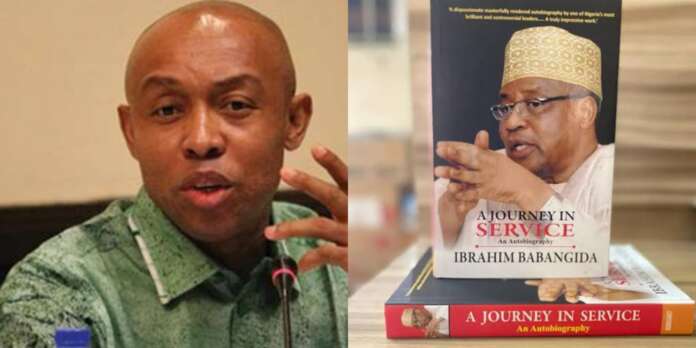
IBB’s book full of lies, allegations against dead persons who can no longer controvert him – Chidi Odinkalu

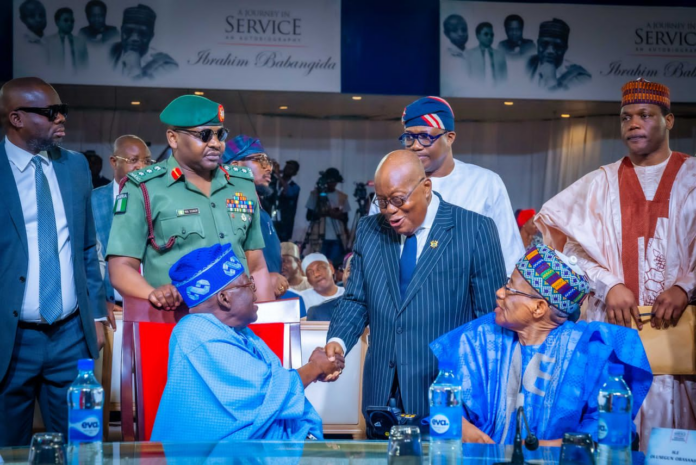
Law teacher, rights lawyer and ex-chairman of the Nigerian Human Rights Commission (NHRC), Prof. Chidi Odinkalu, has countered Nigeria’s former military Head of State, General Ibrahim Badamos Babangida rtd. (IBB) for filling his autobiography, “A Journey In Service” with lies.

Odinkalu said that Babangida deliberately waited until all the people he accused died before launching the book he filled with allegations against dead men and women who could no longer controvert his claims and allegations against them.

Describing the former military ruler as the “Grand Commander of the Order of Cowardice”, Odinkalu said that Babangida portrayed himself in the book as a victim of dead men and women.

Babangida was Nigeria’s military ruler from 1985 to 1993, a period marked by significant political and economic changes as well as controversies. 

His regime is controversially remembered for the annulment of the June 12, 1993, presidential election won by Chief M.K.O. Abiola. 

Babangida annulled the presidential election widely regarded as the fairest election in Nigeria’s history, leading to widespread unrest and political instability, significantly impacting Nigeria’s democratic progress till date.

Babangida’s government faced criticism for human rights abuses with one of the most notable incidents being the 1986 parcel bomb assassination of investigative journalist Dele Giwa, who had been reporting on corruption and human rights violations. 

His regime witnessed multiple alleged coup attempts, resulting in executions and imprisonments of military officers. 

However, in the autobiography he launched on Thursday in Abuja, Babangida admitted that Abiola won the June 12, 1993 election but blamed the late former military dictator, General Sani Abacha for the annulment of the election.

He claimed that Abacha announced the annulment of the election without his approval.

Reacting to the contents of the book, Odinkalu in a series of posts on his X page on Friday said, “Ibrahim Babangida’s book is filled with allegations against dead men and women. 

“He waited until they were all dead and none of them could controvert him and he portrays himself as a victim of all these dead men and women.”

According to Odinkalu, “This damns him even more than he already was as lacking in character.”

Odinkalu added, “The only question that must be pursued by those interested must be how a man so devoid of character and values was allowed to travel so far in the military to the point where, for a generation, he could routinely pick and choose at his whim which soldier could or should rule Nigeria.

“Conveniently, Babangida, a committed record-keeper, could not produce any contemporaneous records, minutes, notes or other evidence to corroborate any of the serious claims and allegations he makes about these dead men and women. 

“All hail the Grand Commander of the Order of Cowardice!”

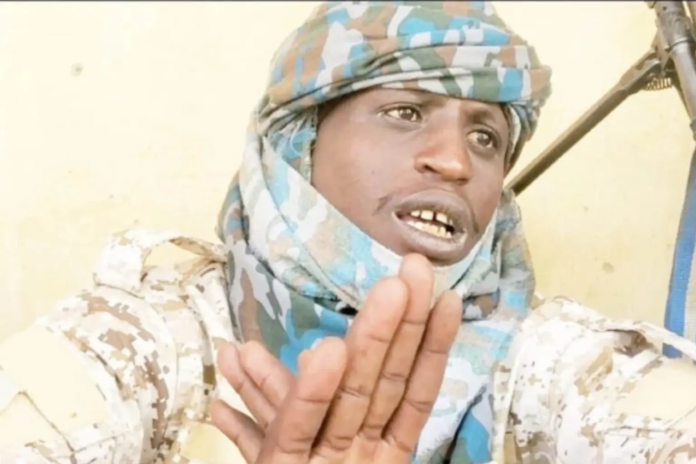
Audacious bandits’ leader, Bello Turji fines Sokoto communities N22m over slain gang member

On account of the death of a gang member during a military operation, notorious bandit leader, Bello Turji, has imposed a N22 million levy on four villages in Sokoto State.

Vanguard learnt the fine is also intended to cover the cost of firearms allegedly lost during the raid.

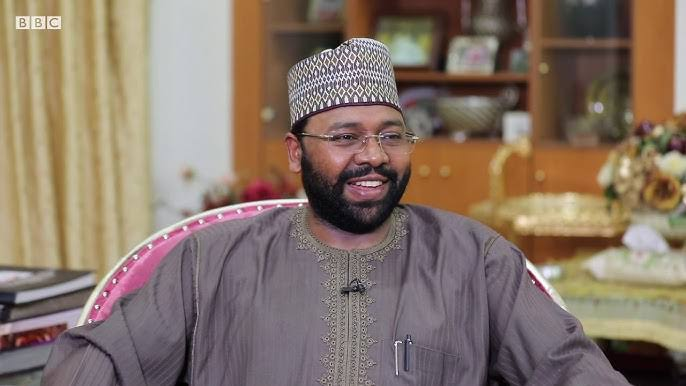
Aminu Boza, a lawmaker representing Sabon Birni West in the Sokoto State House of Assembly, told journalists that one of the affected villages is Garin Idi, the hometown of Deputy Governor Idris Gobir.

Boza further revealed that Turji had shifted his base to the eastern part of Isa Local Government Area (LGA) of Sokoto. “He is just like a businessman who has multiple shops and is going around to supervise them,” Boza stated. He is currently in the eastern part of Isa. That was where the villagers met him for negotiation, and he reduced the money from N25 million to N22 million.”

The lawmaker criticised the military for not maintaining a sustained presence in the area, leaving villages vulnerable to attacks whenever troops withdraw.

“I have always criticised the military for not sustaining their operation in the eastern part of Sokoto because anytime they withdraw, it is the villages that bear the brunt,” he said.

Despite multiple assurances from the Ministry of Defence—whose officials have visited Sokoto several times—Boza lamented that banditry remains a significant threat. He highlighted a recent attack in which six members of the Sokoto Community Guards were killed.

Boza also revealed that Turji is demanding N250,000 from the family of each of the 13 worshippers abducted in Sabon Birni LGA about two weeks ago. So far, five captives have been released after their families paid the ransom.

The lawmaker urged the military to intensify and sustain their operations in the eastern part of Sokoto, emphasising that consistent military action is crucial to restoring peace and protecting vulnerable communities.

‘They envied my father,’ Sadiq Abacha says as IBB’s book launch triggers fresh criticism

  • ‘Weakling’ — Gumsu Abacha posts cryptic message as IBB blames dad for June 12 annulment

Sadiq Abacha, son of Nigeria’s former military ruler, the late General Sani Abacha, has defended his father’s legacy, asserting that his leadership remains significant despite ongoing criticism.

In a Facebook post on Saturday, Sadiq suggested that his father was a victim of envy and subtle betrayal but expressed confidence that history would eventually judge him favourably.

Likewise, his sister Gumsu shared a cryptic post on X, seemingly responding to former military president Ibrahim Babangida’s claims about her father’s role in the annulment of the June 12 presidential election.

In a one-word post on her X handle on Friday, Gumsu wrote: “Weakling.”

Sadiq’s defence follows the release of former military President Ibrahim Babangida’s memoir which has reignited debates about Nigeria’s political history.

A significant revelation in the book involves the annulment of the June 12, 1993, presidential election which Babangida admitted was won by Moshood Abiola.

Babangida claimed that the annulment was influenced by forces within his administration allegedly led by Abacha without his full awareness.

Defending his father, Sadiq wrote: “The man Abacha—you have always been the one they envied with silent deceit. History shall remember you for being a better leader, no matter how much they try to put you down.”

He noted that he was very proud of his father, adding that Abacha’s critics wished they were him.

“As a son, I am most proud of you today. You indeed are the man they wish they were half of,” he wrote.

Sadiq concluded with a Hausa proverb, “Duk wanda yayi jifa a kasuwa,” meaning, “Whoever throws a stone in the market…”—a reminder that every action carries consequences.

Gumsu Abacah made her post amid the ongoing conversations on the book, ‘A Journey in Service,’ the autobiography of Babangida, launched in Abuja on Thursday.

In the 420-page memoir, Babangida addressed issues about the annulment of the June 12, 1993, presidential election, which was won by the late MKO Abiola of the Social Democratic Party (SDP).

Babangida described the annulment of the election as an “accident of history” that is “most regrettable”.

The former military president, who oversaw the annulled election, said he was in Katsina when the cancellation of the election was announced by the press secretary of his second-in-command without his knowledge or permission.

Babangida said he later discovered that the forces against the June 12 election were led by Abacha, his then chief of defence staff, who later became military head of state.

The former military leader said after several brainstorming sessions with various groups, he had contacted Abiola and offered him an interim position.

Babangida hinted that Abiola was hobnobbing with Abacha while being deceived that the election would be revalidated once he was overthrown.

In the wake of the protests that trailed the annulment of the election, Babangida stepped down as president in August 1993 and installed an interim government, led by Ernest Shonekan, which Abacha would remove from power in November 1993.

Abacha later clamped Abiola into detention for declaring himself president.

Some individuals have argued that Babangida painted the late Abacha as the villain in the annulment of the June 12 election.

Gumsu had also reposted some of the sentiments suggesting that Babangida knew that Abacha could no longer defend himself.

Chief Judge of Bauchi bemoans rise in witchcraft cases

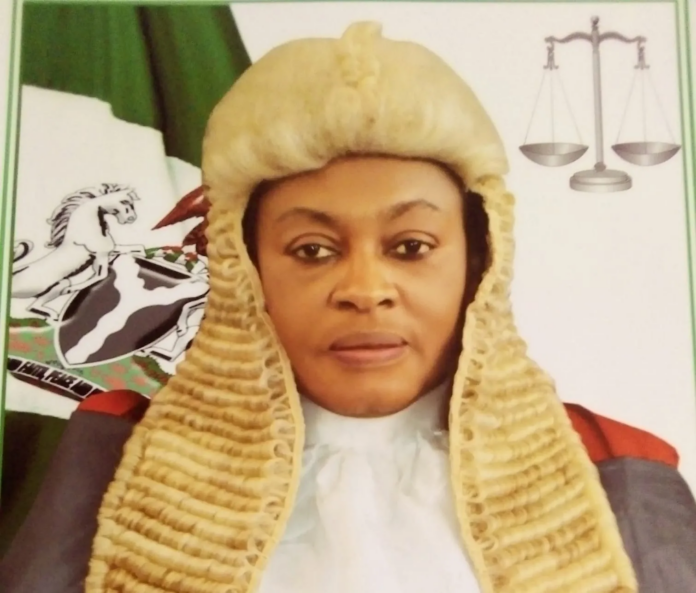
The Chief Juge of Bauchi state, Rabi Umar, the chief judge of Bauchi state, has expressed concern over the rise in the number of cases bordering on witchcraft. 

Speaking during a review of awaiting trial cases at the Jama’are Maximum Correctional Centre in Bauchi, the chief judge described the concept of witchcraft as a challenge to legal jurisprudence.

“If you are not a witch, you cannot know who is a witch. It is an issue that could hardly be established unless the witch confesses to be one,” she said.

Umar also cautioned judges and magistrates against imposing excessive compensation on convicts, particularly in cases where there is an option of a fine. 

She highlighted that high compensation fees often prolong inmates’ stay in correctional facilities, making reintegration into society even more difficult. 

She warned judicial officers that moving forward, “any judge who imposes unreasonable compensation on a convict will be required to pay or settle it themselves”. 

Criticising the trend of hefty compensation amounts ranging from N100,000 to N300,000, she argued that such practices could push convicts further into criminal activities.

“I am troubled by the trend of excessive compensation imposed by judges. Where do you expect a convict to get such large sums? If they cannot pay, they may resort to crime again upon release just to meet the court’s demands,” she said. 

Asking convicts to repay the full value of stolen or lost property, especially after serving years in prison, is often unfair, she stated.

She advised that victims may have to accept partial forfeitures rather than expect full restitution.

“When sentencing a convict, consider the punishment they have already served. If they have been imprisoned for two or three years, requiring them to repay the full value of stolen items could be unfair. The other party may have to forfeit something as well,” the chief judge added. 

During the review exercise, she ordered the release of 18 inmates awaiting trial from Jama’are Maximum Correctional Centre, seven from the Bauchi Custodial Centre, three from the Ningi Correctional Centre, and one from Misau Correctional Centre. 

Addressing those released, she said: “You have been in custody for too long without being charged or taken to court.

“Even if convicted, your sentence would not have exceeded the time already spent here. That is why this committee has decided to release you unconditionally.” 

The review was conducted under the administration of the justice committee, which includes key legal and security officials such as the state controller of custodial centres, the state grand khadi, the commissioner of police, the director of public prosecution, and the chairman of the Nigerian Bar Association in Bauchi.

The exercise aligns with ongoing efforts to decongest correctional facilities and ensure that justice is served fairly and efficiently.

BBC undercover filming exposes Indian pharma firm fuelling opioid crisis

It is a business that is damaging the health and destroying the potential of millions of young people across West Africa.

In the city of Tamale, in northern Ghana, so many young people are taking illegal opioids that one of the city’s chiefs, Alhassan Maham, has created a voluntary task force of about 100 local citizens whose mission is to raid drug dealers and take these pills off the streets.

“The drugs consume the sanity of those who abuse them,” says Maham, “like a fire burns when kerosene is poured on it.” One addict in Tamale put it even more simply. The drugs, he said, have “wasted our lives”.

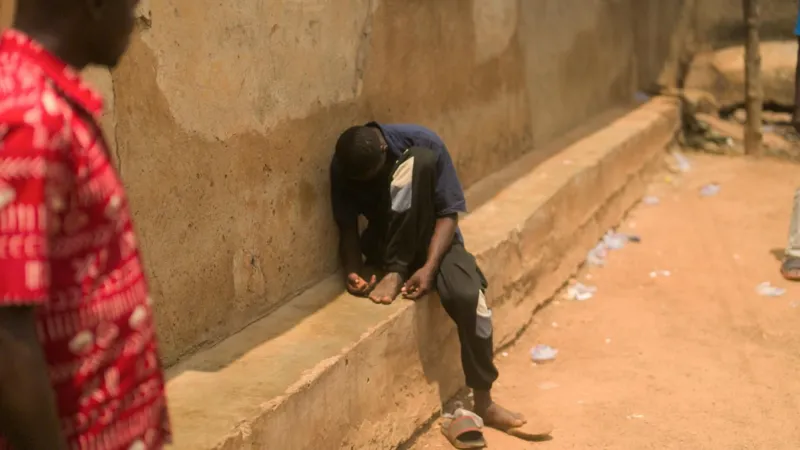
The BBC team followed the task force as they jumped on to motorbikes and, following a tip off about a drug deal, launched a raid in one of Tamale’s poorest neighbourhoods. On the way they passed a young man slumped in a stupor who, according to locals, had taken these drugs.

Click here to continue reading.

Ibrahim Badamasi Babangida: Hypocrisy, elite consolidation and collective amnesia

By Ademola Adewusi

I want to publicly thank Professor Isaac Albert for his wonderful tutelage on Elite Consolidation and Fragmentation during my second sojourn in the University of Ibadan. His course on the introduction to Peace and Conflict Theories was one of the high points of my MA in Peace and Conflict Studies. Today, his theory came to play.

The launch of the memoirs of former President, General Ibrahim Badamasi Babangida has dominated the airwaves today. I have tried to justify the celebration of Babangida by the elite and political class today. I have tried to find justification for the great things they said about him today. I have searched for the rationale for the celebration of his person and what his legacy denotes. I have searched my brain for the motivation for the words of adulation, heaped at IBB today. Before today, I knew never to speak ill of the dead. Now I know, that through hypocrisy and elite consolidation, we can speak good of the living, even when their evil deeds stare us in the face.

I have watched the videos again and again. People who ran from the evil genius now sat comfortably to praise his brilliance. People who were cowered by his “elimination squad” stood up to praise him boldly. The monied class, the political elite, the rentiers and profiteers, across political leanings all came to pay homage to the man who once held Nigeria by the jugular and emboldened Abacha to send hundreds into exile. It was a macabre spectacle.

The economic elite also came to pay obeisance and doll out money to build a presidential library in honour of a tainted legacy. The man took enough money to build his hilltop villa in Minna. Why not give him enough money to build a “Presidential Library”?. Was he even our “President”? The man who annulled the best election ever held in Nigeria was being feted and honoured by the same political elite he tried to extinguish. Not a surprise in a nation where a former military head of state, who took power by force and declared himself “president”is usually the first person people with national political ambition would consult before they seek the votes of the common man! All of them have gone to seek his support to rule us, the maradona has given them tips on how to dribble us. The “evil genius” has shared the tricks of enslavement with them. Fitting it is, that they support his final attempt to dribble us out of his place in history and extort more, from the privileged class.

I am not part of this collective amnesia. The political elite usually convene around interests rather than ideology. Nigeria’s politics has no ideological anchor, anyways. But to whitewash and canonise the man who began the systemic institutionalisation of corruption into our public life seemed like a stretch the limits of our
imagination until today. What a conclave!

Of particularly pathetic note was Professor Yemi Osinbajo, threading the delicate balance of creating a synthesis between the account of the author and the legacy of the author, known to everyone who was an adult when Babangida ruled. His brilliant mind, fecund and ever-ready to engage; struggled to make meaning of the dissonance, today. Even with his flashes of brilliance and beautifully delivered anecdotes, Osinbajo struggled to reconcile the man, his actions, his account of history and our collective memory. He annulled the best election to avoid a bloody coup! Who believes that? Same guy who retired military officers prematurely and was implicated in sending a faulty C130 to convey young military officers to their doom!

My first job ever was at Police Affairs Office on Ribadu Road, Ikoyi. I ran into IBB severally, while going home. I know the fear he instilled in people. I witnessed it first hand. The Officers’ Mess of the Brigade of Guards was annexed to Dodan Barracks at No. 3 Ribadu Road. I know the vibe that enveloped that place after he became head of state and “President”. Soldiers practically lost their courage. His innocent mind belies a ruthless mind. His sharp mind, quick wit and disarming demeanor disguised the psychography of a psychopath. Someone who invited academics, technocrats and technical experts to power, just to demistify them by sabotaging them. Ask Tai Solarin and Maria Sokenu.

He played this country like a fiddle. I was in Obafemi Awolowo University, I know how many student union leaders he detained. I know how many times we came out to protest against him. I know how many times our school was shut down during his regime. I don’t know how many people disappeared without a trace. I know Mamman Vatsa was killed for attempting the exact thing that brought Babangida to power. Mamman was the best man at his wedding, yet his life was snuffed out at the command of his friend. I was at Obalende, eager to witness Gideon Orkar overthrow him on that fateful Sunday before Tola Zidon and Raji Rasaki reinforced and rescued him. I know the ruthlessness and deviousness with which he ruled this country. I know Dele Giwa did not do more than write articles. He paid with his life. We know his last words…. “This must be from the President”.

Let them canonise the evil genius. It tells us more about all of them, than about all of us. It is their collective hypocrisy, not ours!

  • Ademola Adewusi

Babangida’s Confession and Atonement: Quo Vadis?

By Professor Mike Ozekhome, SAN

I have carefully read and listened to former Nigerian military president, General Ibrahim
Badamosi Babagida’s public remorse and regrets over the atrocious annulment of the June
12,1993 presidential elections. He did this 32 whopping years later. I want to very quickly say that it takes a man with strong guts and balls and a man who has become repentant, born again and has seen the face of God to publicly recant his earlier wrongful deeds and offer public apology to the entire nation. This was no doubt meant to heal gaping wounds and balm wounded and bruised hearts.

The polls, the best, most transparent and credible elections, ever held in Nigeria till date,
were meant to end decades of military d The annulment threw Nigeria into turmoil and
widespread unrest, protests, maimings and killings. This forced Babangida to ” step aside”;
the enthronement of the Ernest Shonekan’s Interim Government; and the arrest and detention of Chief Moshood Abiola, the presumed winner who later died in Aso Villa in questionable and suspicious circumstances. Of course, General Sani Abacha who was his second in command later sacked Shonekan in a bloodless coup.

For years, IBB prevaricated on the annulment, claiming he did it in the best national interest. But on Thursday the 21st of February 2025,Babangida during the presentation of his memoirs, “A Journey In Service”, pointedly regretted in the public: “I regret June 12. I accept full responsibility for the decisions taken and June 12 happened under my watch. Mistakes, missteps happened in quick succession. That accident of history is most regrettable. The nation is entitled to expect my expression of regret “. And wait for it:: he acknowledged for the first time that Abiola won the elections fair and square, trouncing his major opponent, Alhaji Bashir Tofa.

I want to salute Babangida for having the courage and humility to own up like a man; that
everything that happened during the June 12 crisis took place under him as the head of state and the president who was also the Commander-in-Chief of the Armed Forces of the Federal Republic of Nigeria. I salute him for acknowledging that his government which actually organised unarguably the freest, fairest and most credible elections in the electoral history of Nigeria when it introduced option A4 from electoral books that were hitherto unknown to Nigeria or to the world. But unfortunately, regrettably, like he now admits, he again turned around to annul the same elections in a way that was most bizarre, curious and unnatural.

To me, that he has come out to open up to doing something wrong and egregious to a
bleeding nation should be appreciated. I believe that Nigerians should forgive him because
to err is human and to forgive is divine ( Eph 4:32 ). I personally have now forgiven him
because I was also a victim of the June 12 crisis. It threw up all manners of challenges to me as a person, where in my very youthful age; in my thirties, I found myself marching on the streets of Lagos every day- from Ikeja bus stop roundabout to Ikorodu road; up to Tejuosho market; from there to Ojuelegba, Surulere; to Mushin; to Shomolu and Igando, Alimosho.

Every day, we were on the streets, protesting the mindless annulment. Some of us were killed in the process; some were lucky enough to escape abroad on self-exile. But some of us- very few indeed- refused to flee our dear country; we stayed back. We stared at the military eyeball to eyeball. We challenged authority and spoke truth to power. We challenged impunity and repression. I suffered several detentions across different detention centres. I virtually could not find a means of livelihood for my youthful family because I was profiled, my phones bugged and no briefs were coming in. But I personally forgive him because it takes tons of guts to make public confession of having erred and atone for the same as he has now done.

It is confession that leads to penance and penance leads to restitution and then forgiveness. If Babangida were to die today, I believe that he will see the face of God because he has prayed God to forgive him; and he has prayed Nigerians to forgive him. Beyond that historic and epochal mistake of the annulment of the June 12 election which constitutes his original sin, let me place it on record that Babangida is one of the greatest presidents that Nigeria ever had in terms of his ingenuity, rulership mantra; ideas for national resurgimento; ideas that contributed greatly to nation-building. These were aside the IMF-induced loans and pills which he introduced and which we again valiantly fought against successfully.

Babangida it was who gave birth to the Federal Capital Territory and laid the solid foundation for virtually everything you see there today. His government was peopled by intellectuals and not by half illiterates and quacks. He recognized and used intellects. He was luminous and he built bridges of understanding, friendship and brotherhood across Nigeria. Nigerians, please, accept IBB’s confession and forgive him his sin of annulling the June 12,1993 elections. Let the wounds heal; let the heart melt; and let the spirit of national triumphalism prevail.

Insecurity is no excuse for police extortion, corruption in South East

The Chairman of the Police Service Commission, Hashimu Argungu said police operatives should not use insurgency and Biafra agitation as excuses for corruption and extortion in the South-East states.

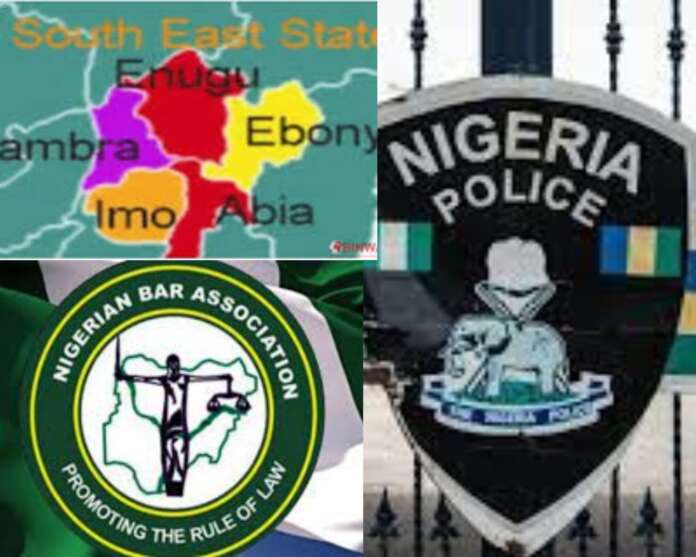
Argungu gave the warning at the South-East Stakeholders Summit on Peace and Security organised by the Nigerian Bar Association (NBA) in partnership with South-East Civil Society Organisations in Enugu on Friday.

NBA President, Mazi Afam Osigwe has expressed concern over the attitude of the federal government on growing insurgency in the South-East states.

Represented by Ikechukwu Ani, the public relations officer of PSC, Argungu said the commission was aware of insecurity fuelled by Biafra agitators in the region, but warned that it must not be an excuse for corruption and extortion.

“The Commission is very much interested in what is happening here today, especially as it affects the entire South-East. We are no more comfortable with the abuse of office by some security personnel detailed to provide security across this region.

“We understand that there is a high-level of insecurity in the zone, especially with the ceaseless and senseless attacks from brainwashed youths from this zone masquerading as freedom fighters and killing their brothers and sisters. But that obviously should not and never be an excuse to relapse into corruption by the security Agencies.

“The Commission has continued to observe the corruption and extortion that dots all the roads traversing this region by virtually all the security operatives who are supposed to safeguard the roads and restore unhindered movement of people, goods and services.

“The road blocks mounted by these security agencies have unfortunately turned into toll gates where road users are forced under gunpoint to part with money.

“The Commission is also aware of the serious human rights violations by some misguided police officers in the South-East, who against the Commission’s several warnings to stay away from civil matters, have continued to swim in it because of the financial attraction”.

Argungu warned that the Commission will no longer tolerate this serious act of indiscipline and human right abuses, and will henceforth not hesitate to put its disciplinary processes in motion to see to the dismissal of such errant Officers.

On his part, NBA President, Mazi Osigwe expressed concern over what he described as the deliberate refusal of the federal government to confront the rising cases of insecurity South-East states.

He said the federal government was yet to address insecurity in the zone even as it was spreading.

Osigwe said, “The violence we see in the South-East is man-made and has made it difficult for people to live their lives normally. Federal government appears to have abandoned the South-East as there is no sustained effort to address the issue. I just wonder why there is no deliberate effort to address it.

“Many Igbo people can’t go to their villages, and we have a very big problem. The economy of the South-East is dying as people are scared of investing”, Osigwe said.

For his part, human rights lawyer, Prof Chidi Odinkalu who was the keynote speaker on the topic: “Fostering lasting peace and security: Collaborative approaches to address insecurity and human rights violations in the South-East,” identified cultism, disregard for policing, porous borders, lack of coordination among South-East office holders, biased judiciary, hard drugs, local gun running, and appropriation of Igbo identity as some of the fuelling factors of insurgency in the zone.

Credit: Leadership Newspaper

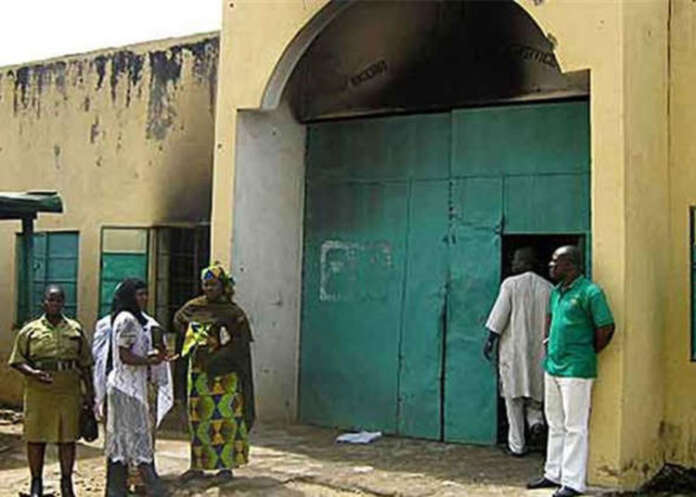
Federal Gov’t Approves Relocation Of 29 Custodial Centres

The Federal Government has approved the relocation of 29 out of Nigeria’s 256 Custodial Centres due to rapid urbanisation.

Minister of Interior, Dr. Olubunmi Tunji-Ojo, disclosed this on Friday in Abuja during the commissioning of 39 mini-Green Maria for transporting inmates to and from court, along with five bullet-resistant guard booths at the Nigeria Correctional Service (NCoS) headquarters.

LEADERSHIP Newspaper reports that Dr. Tunji-Ojo also explained that paramilitary jobs were not poverty alleviation schemes but rather serious career paths, with the establishment of a paramilitary academy aimed at fostering young talent for the Service.

“In terms of relocating our Correctional Centres, the President has graciously approved the relocation of about 29 of our Custodial Centres. The process has started, and we are determined to complete it,” the Minster said.

He further emphasised that the academy, similar to institutions like the Police Academy and the Nigerian Defence Academy (NDA), would serve as a degree-awarding institution to help nurture young Nigerians for lifelong careers in paramilitary roles.

“The idea is to catch them young,” the Minister added, noting that in some areas, custodial facilities are located near state government houses, markets, or residential areas.

The minister also unveiled five Bullet-Resistant Guard-booths stationed at various key locations, including the NCoS national headquarters in Abuja, Kuje Medium Security Custodial Centre, and Maximum Security Custodial Centres in Port Harcourt, Kano, and Lagos. The booths, equipped with long-range surveillance capabilities and resistance to high-level threats such as 12.7mm ammunition, will bolster security at the facilities.

The vehicles and guard booths were part of NCoS’ efforts to address challenges related to inmate transportation and security, especially concerning Awaiting Trial Persons (ATPs).

LEADERSHIP gathered that as of February 17, 2025, the total population of inmates stood at 80,066, with 66 per cent (53,225) being pre-trial inmates, highlighting the ongoing need for secure and efficient transportation to court.

TIPS