Home Blog Page 385

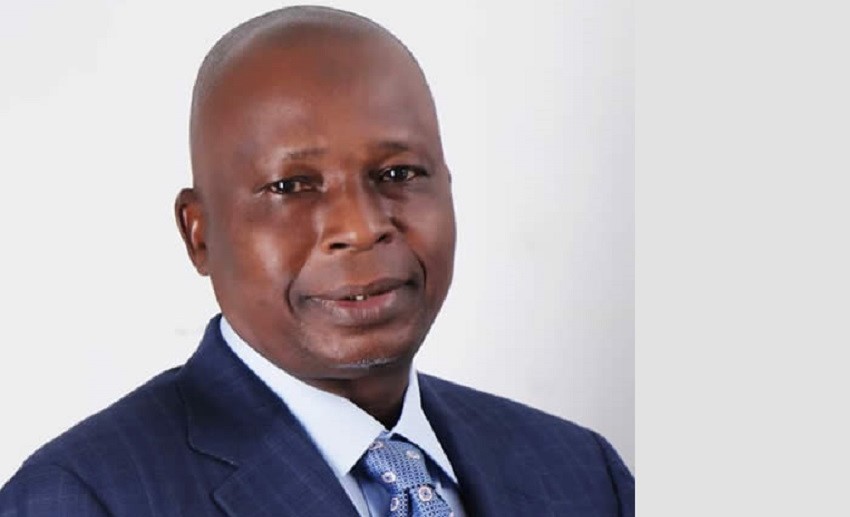
Onye-Nburu Na Turn By Turn-The AGF as A Night Soil Man: The History of Lawsuits Against Previous Attorney-General (AGFs) as A cautionary tale of one of the occupational hazards facing AGF Prince Lateef Fagbemi, SAN

By Dr. Tonye Clinton Jaja.

Since the year 1999, when Nigeria returned to democratic governance, apart from Godwin Kanu Agabi, SAN, Bola Ige, SAN and Adetokunbo Kayode, SAN, every other Attorney-General of the Federation (AGF) has been involved subjected to litigation for both their words and actions during their tenure!!!

This is one of the occupational hazards that any occupant of the office of AGF is exposed to.

As the cliches go, the possibility of litigation goes with the territory!!!

However, the purpose of this write-up is to sound a note of warning to the incumbent AGF, who is a neophyte considering that this is his first time holding public office in Nigeria.

There are three sets of persons that are likely to serve as the agent provocateur that goad and lures any AGF to face litigation arising from their line of duty.

The three sets of persons are as follows:

  1. politicians;
  2. civil servants, and
  3. the AGF’s personal desire to enrich themselves through embezzlement of public funds and other personal desires.

Politicians and civil (“evil”) servants whom any AGF must work with are the most dangerous species of humans. 99.9% of the lawsuits that are brought against any AGF are as a result of acting upon the directives, instructions and counsel of both politicians and civil servants!!!

In the case of politicians they often issue both ILLEGAL and UNETHICAL directives and instructions to the AGF which later boomerangs and results in litigation against the AGF.

In the case of civil servants they deploy two methods to entrap any AGF. The two methods are as follows:

  1. They inform the AGF that their illegal and unethical methods of doing things is the way that things have been done from time immemorial; and
  2. Even if the AGF initially refuses to succumb to the illegal and unethical suggestions of the said civil servants, they would frustrate the said AGF by refusal to implement the “righteous” directives of the said AGF.

A few weeks after the appointment of this incumbent AGF, I held two meetings with his good self at his office at the Federal Ministry of Justice.

The foregoing is based on first-hand experience of my working with three AGFs including the incumbent!!!

For example, a German international donor organisation had offered funding for training of staff of the Federal Ministry of Justice in an aspect of labour law. However, even though this was at no cost to the said Federal Ministry of Justice, and was happy endorsed by the AGF, up till today it has never happened because the civil servants saw no immediate financial benefits of the said training to themselves.

The duty of any AGF is akin to the duty of the historical “night soil men” to the extent that it is their duty to invent legal means to handle and dispose of the unpleasant and often illegal and unethical instructions of politicians and civil servants.

Before the advent of water flushing toilets, even up to the 1980s, the toilets were made of buckets which were evacuated at the end of the week by persons known as “night soil men”.

Below is a brief description of “night soil men” as follows:

A “night soil man” was a person, historically, whose job was to collect human waste, often euphemistically referred to as “night soil,” from privies and other receptacles, typically at night, and transport it for disposal or use as fertilizer.

Here’s a more detailed explanation:
Historical Context:
The term “night soil” is a historical euphemism for human excreta, and “night soil men” were the workers who removed this waste, usually at night to avoid public scrutiny.

Occupation :
Their work involved scooping waste into barrels or tanks on a wagon, emptying and cleaning privy vaults, and dealing with the often-unpleasant aspects of the job.

Social Significance :
Night soil men were often marginalized, and the work was considered unclean, leading to them being seen as outsiders.

Other Names :
They were sometimes also known as “gong farmers” or “nightmen”.

Modern Usage:
The term “night soil” is now largely seen as historical, with “fecal sludge” and “fecal sludge management” being more common terms used in discussions about sanitation in developing countries.”

Below are some litigation that were faces by previous AGFs as follows:

“On 13th April 2018 it was reported as follows:

“The Federal High Court in Abuja has ruled that a former Justice Minister and Attorney General of the Federation, Mohammed Adoke, cannot be held personally liable for his role in the $1.1 billion Malabu oil scandal.

In a judgement delivered by Justice Binta Nyako on Friday, the court agreed with the submissions of Mr Adoke that his involvement in the controversial deal which resulted in the sale of Nigeria’s oil well, OPL 245, was in compliance with his constitutional duties.

In a suit filed by the Economic and Financial Crimes Commission (EFCC) in December 2016, Mr Adoke, a former Minister of Petroleum Resources, Dan Etete, and other defendants were accused of fraudulent diversion of $1.1 billion in the controversial transaction.

In a reaction to that charge, however, Mr Adoke sued the Minister of Justice and Attorney-General of the Federation, Abubakar Malami, asking the court to declare his trial for the said transaction illegal.

Mr Adoke requested the court to determine whether by virtue of sections 5(1), 147(1), 148(1) and 150(1) of the 1999 Constitution a serving minister can perform the “executive power of federation vested on the president as directed by the president.”

Section 5(1) of the Constitution deals with the executive power of the president and how such powers can be exercise or delegated.

Section 147(1) and 148(1) outlines the duties and responsibilities of ministers and how those responsibilities are exercised in accordance with the wishes of the president while Section 150 (1) specifically deals with the responsibilities of the AGF.

Mr Adoke submitted that his entire involvement in the OPL 245 oil deal was “in full compliance to lawful directives given to him,” by former President Goodluck Jonathan.

He prayed the court to declare that he cannot be held personally liable for actions emanating from his obedience to lawful directives made by the president.”

In the year 2019, it was reported as follows:

“The immediate past Attorney General of the Federation and Minister of Justice, Mallam Abubakar Malami will on June 14, 2019 face the Disciplinary Panel the Legal Practitioners Privileges Committee over a prejudicial statement made against the detained former National Security Adviser, Colonel Sambo Dasuki.

The Hearing Notice obtained by PRNigeria which was signed by Patricia Orhomuru Esq, the Secretary Disciplinary Committee of the Legal Practitioners’ Privilege Committee has a reference No: PET/LPPC/23/2018 and dated May 16, 2019.

The Notice read in part: “Take notice that the above matter is fixed for hearing by the Disciplinary Committee of the Legal Practitioner Privileged Committee of the Office of Registrar Supreme Court of Nigeria Abuja on June 14, 2019 at 11.00 o’clock in the forenoon.

Malami is expected to face the panel for investigation in a statement credited to him in the Voice of America (VOA) Hausa Service on July 13, 2018 in which he was quoted that Dasuki would not be released despite all subsisting court orders for his release on bails.

In the audio recording of the interview he granted VOA, Malami had accused Dasuki of being responsible for the deaths of over 100,000 Nigerians during Jonathan’s era.

In the interview, Malami had said; “Remember, we are talking about a person who was instrumental to the deaths of over 100,000 people. Are you saying that the rights of one person are more important than that of 100,000 who lost their lives?”

Another example of a lawsuit against a former AGF is reported as follows:

“On February 23, 2022
Justice Kudirat Kekere-Ekun of the Supreme Court in a unanimous judgment delivered on December 10, 2021, affirmed a judgment of the Court of Appeal, Calabar division, which had earlier upheld a Federal High Court decision that barred the former Minister under late President Umaru Musa Yar’Adua’s administration from occupying public office in Nigeria.

A former Attorney-General of the Federation and Minister of Justice, Michael Aondoakaa, a Senior Advocate of Nigeria, has been barred from holding public office in the country for life.
Justice Kudirat Kekere-Ekun of the Supreme Court in a unanimous judgment delivered on December 10, 2021, affirmed a judgment of the Court of Appeal, Calabar division, which had earlier upheld a Federal High Court decision that barred the former Minister under late President Umaru Musa Yar’Adua’s administration from occupying public office in Nigeria.”

In the year February 2019, it was reported as follows:

“Bayo Ojo (SAN), former Attorney-General and Minister of Justice, on Thursday admitted receiving a “compensation” of $10million from former Petroleum Minister Dan Etete for his work as a legal adviser in the sale of OPL 245.

Ojo made the admission in a passage of his examination in Milan in the ongoing trial of former top officials of Royal Dutch Shell and Italian Agip-Eni over the payment of $1.092billion to Etete, the former Minister who awarded himself the lucrative OPL 245 by willing it to Malabu Oil and Gas, a company he had earlier set up using a false identity. He was also convicted of money laundering in an unrelated case in France in 2007.

Among the defendants in the matter are the CEO of the ‘Dog six-legged’, Claudio Descalzi; his predecessor, Paolo Scaroni; their accuser and former Manager of the Sahara area, Vincenzo Armanna; and also the same company and Shell.

Ojo admitted, in fact, that the worth of his compensation was $50million but he only received a part.”

China slams 84% revenge tariffs on US goods hours after Trump’s 104% levy – as global financial markets sink again

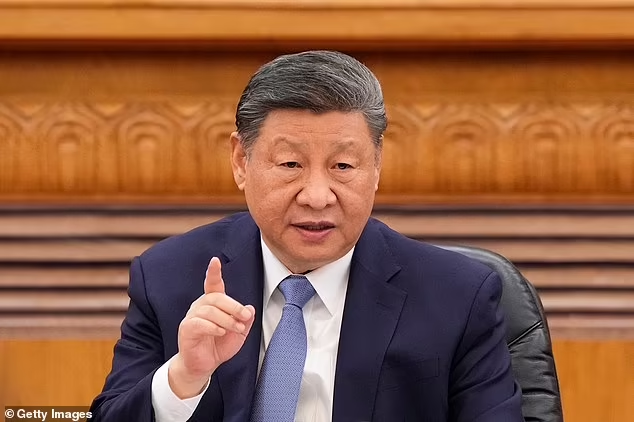
China will an additional 34 per cent tariffs on all American imports, beginning April 10, in retaliation for Donald Trump's 34 per cent levy. Pictured: Chinese President Xi Jinping during an international business meeting on March 28

China will impose a massive 84% tariff on American goods from Thursday, 50% higher than previously announced, in a massive escalation of a global trade war. 

Financial markets across the world have crumbled since US president Donald Trump announced a massive raft of reciprocal tariffs on ‘Liberation Day’, in response to what the Republican leader said was exploitation of the US by other nations. 

Imports to the US from almost all nations on Earth were hit with a baseline 10% levy, with Trump’s administration increasing the percentage based on trade deficits. 

But China was hit particularly hard, with Trump slapping imports from Xi Jinping’s nation with an effective 104% levy. 

Trump’s tariffs have caused global markets to drastically crash. So far today, the FTSE 100, an index fund detailing the value of Britain’s 100 largest firms, dropped 3.6% at time of publication. 

Germany‘s DAX was down 4%, while the French CAC 40 was down 4%. US index funds are also expected to fall when they open at 2.30pm UK time. 

However, Trump last night appeared unrepentant for the economic damage his decisions have caused, bragging to the National Republican Congressional Committee Dinner in Washington: ‘I am telling you, these countries are calling us up, kissing my ass. 

‘They are dying to make a deal. “Please, please sir, make a deal. I’ll do anything sir.”‘

China said its revenge tariffs would take effect from around noon local time (5 am UK time) April 10, giving global supply chains less than a day to reorient themselves and piling more pressure on the world’s economy.

It added that it was putting export controls on 12 more American companies and had added six more US firms to its list of ‘unreliable entities’ that are largely banned from doing business in China or with Chinese companies. 

These companies have not yet been announced.  

China today told the World Trade Organisation that the US’ decision to impose these mass tariffs threatens to further destabilise global trade.

‘The situation has dangerously escalated. …As one of the affected members, China expresses grave concern and firm opposition to this reckless move,’ China said in a statement to the WTO on Wednesday that was sent to Reuters by the Chinese mission to the WTO.

The financial world has been rattled by Trump’s tariffs, and have begun to seriously question his decisions. 

Dario Perkins, an economist at macroeconomic forecasting consultancy firm TS Lombard, told Bloomberg earlier this week: ‘For the first time in my career, I’m hearing widespread skepticism about the competency of US policymakers. 

‘This isn’t about politics… And it isn’t about ‘policy mistakes’… It is about recklessness. 

‘That is why many global investors are also making the comparison with the UK’s “Liz Truss moment”.’

Earlier today, the Bank of England said Trump’s tariffs have ‘contributed to a material increase in the risk to global growth’ and financial stability. 

The full extent of the tariffs that will be levied at nations across the globe starting at midnight, though Trump announced the ones on China were increased Tuesday The full extent of the tariffs will be levied on nations worldwide starting at midnight, though Trump announced that the ones on China were increased on Tuesday.

Reciprocal Tariffs

Including currency manipulation and trade barriers

CountryTariffs Charged to the U.S.A. *U.S.A. Discounted Reciprocal Tariffs
China67%34%
European Union39%20%
Vietnam90%46%
Taiwan64%32%
Japan46%24%
India52%26%
South Korea50%25%
Thailand72%36%
Switzerland61%31%
Indonesia64%32%
Malaysia47%24%
Cambodia97%49%
United Kingdom10%10%
South Africa60%30%
Brazil10%10%
Bangladesh74%37%
Singapore10%10%
Israel33%17%
Philippines34%17%
Chile10%10%
Australia10%10%
Pakistan58%29%
Turkey10%10%
Sri Lanka88%44%
Colombia10%10%
Peru10%10%
Nicaragua36%18%
Norway30%15%
Costa Rica17%10%
Jordan40%20%

In the central bank’s Financial Stability Report, published hours before China announced the retaliatory tariff measures, it said that the economic hostility between the US and other nations has increased ‘uncertainty… for inflation globally.’

But it stressed that ‘UK household and corporate borrowers have remained resilient’, adding that it ‘maintained its judgement’ that British banks would still be able to support households and businesses even if the economy turned ‘substantially worse than expected.’

The disruption from Trump’s tariffs made it ‘imperative’ for the UK to deepen its links with the EU, UK chancellor Rachel Reeves said today. 

Despite the flood of anxiety from the financial world, US Treasury Secretary Scott Bessent said he believed America’s tariffs would lead to nations signing deals favourable to the US. 

He said, citing ongoing trade discussions with Japan, Vietnam, South Korea, India and Britain: ‘I think we are going to see a rapid succession of these deals that will give CEOs greater certainty.’

Bessent also warned China not to ‘devalue their way out’ of the trade war, and urged its

leaders to come to the table for a formal discussion. 

Read Also: China begins major trade war response with 34% additional tariffs on US goods as payback for Trump’s 34% levy

More to follow. 

Daily Mail.

Nigeria at a Crossroads: The Erosion of decorum, the assault on women, and the future of our democracy

By Mabel Adinya Ade

A nation’s strength is not only measured by its economic power, military might, or political influence. It is also gauged by the values it upholds, the dignity it grants its people, and the level of inclusivity and respect embedded within its institutions. Today, Nigeria stands at a dangerous crossroads. The recent developments in the 10th National Assembly, marked by physical and verbal abuse, character assassination, and an alarming display of disregard for women, are not just political scandals they are a symptom of a larger decay that threatens the very soul of our democracy.

When a young senator physically and verbally abuses a Bolt driver, it signals a troubling trend of impunity among those who should be model citizens. When Senator Natasha Akpoti-Uduaghan, a woman who has fought against corruption and injustice, is met with unimaginable dehumanising abuses, online bullying by some of her colleagues in the Senate and an unjust suspension at the hands of Senate President Godswill Akpabio, it exposes a legislature that has abandoned decorum and fairness. When Senator Onyebuchi Onyebonyi launches public insults Hon. Senator Natasha and demeaning words at women, including a former Minister of Education, it underscores the systemic misogyny that continues to thrive in Nigerian politics.

But beyond these individual incidents lies a more sinister reality. This culture of unchecked power, where leaders believe they can disrespect, humiliate, and attack women with impunity, seeps into society at large. Today, Nigeria is witnessing an increase in the brutalization of women and girls ritual killings targeting young girls, rising cases of rape and gender-based violence, and domestic violence that has claimed the lives of countless women, often at the hands of their own husbands. This week alone, I have read the news report of a husband who butchered his wife, a police officer who constantly raped a 12 and 23 year old girls at gun point and the 13 year old is pregnant. I have lost count of the number of girls brutally murdered and their organs removed. I have read of young boys killing even their mothers for money rituals. I have read and seen many girls that were trafficked. I have written a few articles about these terrible happenings.

What future can we speak of when the very leaders who should champion justice and equality are the ones perpetuating oppression? What kind of democracy are we building when women in leadership are bullied into silence while those in the grassroots suffer in greater numbers, with no one to speak for them?

A Nation in Moral Crisis

The Nigerian Senate should be the highest platform for decorum, intellectual engagement, and policy-driven discussions. Instead, it has become an arena for public humiliation, power play, and gender-based degradation. When a senator one of the few women in the chamber is silenced through unjust means, it sends a loud message: that women, no matter how competent, are unwelcome in governance. It emboldens men in society who already see women as lesser beings.

The consequence of this is evident in our homes and streets. More young girls are being lured into dangerous situations, their lives cut short in ritual killings. More women are dying in the hands of abusive husbands. More cases of sexual violence are reported daily, yet justice remains elusive. The normalcy of these horrors is proof that we are breeding a generation of men who see violence as a tool of power and a generation of women who live in fear of speaking out.

The Need for Urgent Intervention

Progressive leaders across the world are pushing for the inclusion of women, girls, and marginalized groups in governance and decision-making. They recognize that societies thrive when the voices of all are heard. Yet, in Nigeria, we are witnessing a backward slide an environment where women in politics are bullied out of their seats, where misogyny is given a stage, and where gender-based violence is dismissed as mere domestic issues.

Women bring a different perspective to leadership, one rooted in empathy, inclusivity, and long-term planning. They see the impact of policies not just in economic numbers but in human realities. A nation that silences its women silences half of its potential. A democracy that sidelines its women is not a democracy at all.

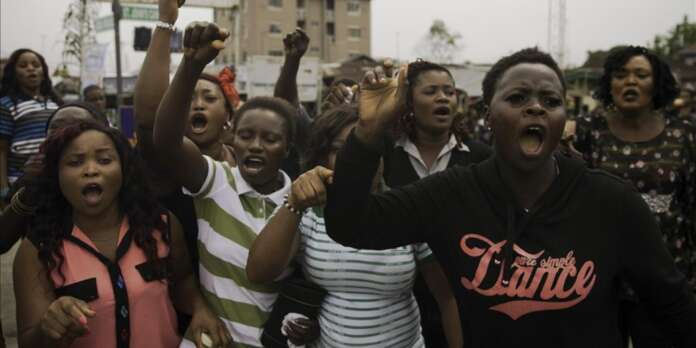
We cannot afford to normalize this descent into lawlessness and moral decay. Civil society, human rights organizations, and the Nigerian people must demand accountability from their leaders. We must push for legislative reforms that protect women in leadership and criminalize all forms of abuse, including online bullying and character assassination. We must stand against the growing wave of violence against women and girls, ensuring that perpetrators face the full force of the law.

This nonsense of total disrespect for human rights, the law and abuse of democracy is not just a women’s fight it is Nigeria’s fight. The very fabric of our democracy is at stake. If we continue to allow the abuse, intimidation, and degradation of women at the highest levels of government, what hope is there for the ordinary girl child? What hope is there for the young woman dreaming of leadership?

Every sane mind in this country must rise against this trend. We must refuse to let impunity reign. We must demand a Nigeria where respect, integrity, and inclusion are the foundation of governance.

A country that disrespects its women is a country that disrespects its future. And without change, that future is bleak.

Mabel Adinya Ade
Executive Director,
Adinya Arise Foundation (AAF)
8 EKET Close Area 8 Garki Abuja

Okey Ignatius Anichebe: An unfortunate passing of a huge voice

By Sylvester Udemezue

Admitted to the largest Bar in Africa in 1991, Okey I. Anichebe was the first lawyer to come from Umulokpa Town, just as Christopher Alexander Sapara Williams was the first lawyer in Nigeria. Accordingly, Okey Anichebe was a pioneer of the legal profession in Umulokpa

He had opened the door and led the way for Umulokpa’s entry into the law profession; we then followed the path he opened, into the legal profession, a peregrination we do not regret.

Learned senior, Okey was a top-notch in Zenith Bank’s Legal Department.

I must say that unknown to many, Mr Okey Anichebe had contributed a lot to my growth in one special way: just as our views and opinions are different in the same way our faces are different, we enrich our reservoir of knowledge and wisdom when we are treated to different sides of every arguments and issues. On a great deal of a lot of issues, Mr Anichebe and I held different opinions – i. e., disagreed, yes, we did – which I think was normal because being on different sides of discussions gave me an opportunity to learn a lot; holding different opinions encouraged me to consistently and persistently be on research and objective verification of all information available to me, and of all my positions on every and all such subjects, all towards, in search of, and in promotion of, truth. Such consistent efforts at research and verification increased the horizons of my knowledge and wisdom which wouldn’t have been possible if I did not have someone who never agreed with me nor ever believed in me.

Truth is, speaking generally, there’s hardly anything anyone can learn from anyone else who always agrees with one, but from one with whom one always disagree. A philosopher once said that “The greatest learning comes from those who challenge your assumptions”. Thus, he who has learned to disagree without being disagreeable has discovered the most valuable secret of a diplomat. As Linus Pauling put it, “The only way to have a good idea is to have lots of ideas….”. Freedom is hammered out on the anvil of discussion, dissent, and debate. Great leaders are those who can cut through argument, debate and doubt, to offer a solution everybody can understand. Accordingly, as Robert Jones Jr. wrote, “We can disagree and still love each other unless your disagreement is rooted in my oppression and denial of my humanity and right to exist.” Thank you, learned senior, sir; you’ve played your part according to your convictions. Unfortunately, death struck without notice to cut short a huge voice. Sad!

An unfortunate, sudden death! Death is a certainty, an inevitable realization, the only thing that we know will befall us. Indeed, just like birth, aging and sickness, death too is an inescapable reality of life. This emphasizes its certainty and undeniable nature, and encourages people to cherish life by acknowledging that death will eventually end the life we live. However, as Laura Bohannan’s said, “We all owe life a death, an inevitable death which we can meet. But the unnecessary death that wastes life denies all consolation.” In my opinion, the present death is a huge tragedy to us all – tragic to Enugu-na-Uwani, to Akiyi-Umulokpa, to Uzo-Uwani, to Enugu State, and to Nigeria. We have lost a notable figure. Unfortunate!

Dear Mr Okey I. Anichebe, LL.M, Barrister and Solicitor of Supreme Court of Nigeria, I would miss my elder brother and a great lawyer. Sir, rest in peace in the Lord’s exalted bosom. Amen🙏


Respectfully,
§¢µð𝓮̂𝓶𝓮̂𝔃µ𝓮̂
Sylvester Udemezue (udems),
Legal Adviser,
Akiyi-Umulokpa Town Union (ATU).
(02 April 2025)

    Breaking! UK’s first baby born to woman with transplanted womb debuts

    A “miracle” baby girl has become the first child in the UK to be born to a mother using a donated womb.

    The baby’s mum, Grace Davidson, 36, was born without a functioning uterus, and received her sister’s womb in 2023 – in what was then the UK’s only successful womb transplant.

    Two years after that pioneering operation, Grace gave birth to her first child in February. She and her husband, Angus, 37, have named their daughter Amy after Grace’s sister, who donated her womb.

    Holding baby Amy – who weighed just over two kilos (four and a half pounds) – for the first time was “incredible” and “surreal”, new mum Grace says.

    Click here to continue reading.

    Clerical Slips or Judicial Overreach? A closer look at the court’s power to correct its own judgments

    By Tiamiyu Aliyu Imogbemi

    The power of a court to correct clerical errors, accidental slips, or omissions in its own judgment is well-established in Nigerian jurisprudence. It is a power rooted in both procedural rules and the inherent jurisdiction of the courts to ensure that justice is not hindered by inadvertent technical mistakes. However, the exercise of this power is subject to clear limits: it must not become a vehicle for the substantive review or re-evaluation of the case under the guise of correction.

    It is now well settled beyond any doubt that where a judgment is in need of clarification or correction in respect of clerical slips or omissions, the same court that delivered the judgment is empowered under the law to make such corrections. This position was affirmed in Asiyanbi & Ors. v. Adeniji (1967) 1 All NLR 82, and has since been followed and applied by the courts in several cases, including Umunna & Ors. v. Okwuraiwe & Ors. (1978) 6–7 SC 1 and Berliet (Nig.) Ltd. v. Kachalla (1995) 9 NWLR (Pt. 420) 478 at 493–494.

    In Umunna & Ors. v. Okwuraiwe & Ors., the trial court had mistakenly assumed that the plaintiffs sought a declaration of title to land, and accordingly entered a non-suit against them. However, during the delivery of judgment, the plaintiffs’ counsel drew the court’s attention to the fact that the actual relief sought was a declaration for exclusive possession. Upon realizing the error, the trial judge invoked the court’s inherent power, and relying on the slip rule under Order 20 Rule 11 of the Rules of the Supreme Court of England, 1965 (then applicable), corrected the judgment and delivered a proper decision in favor of the plaintiffs on their claim for exclusive possession. The court also found in their favor on the claims for damages and injunction, all without inviting further address from counsel.

    Dissatisfied, the defendant appealed to the Supreme Court, contending that the trial judge erred in correcting the judgment without first inviting counsel to address the court. The Supreme Court dismissed the appeal. Obaseki, J.S.C., delivering the lead judgment, held that in addition to the powers under the rules of court, the trial court possesses original or inherent power to correct any slip or omission in its judgment, provided the error is brought to its attention at the time of delivering the judgment.

    The principle was similarly affirmed in Berliet (Nig.) Ltd. v. Kachalla, where the Supreme Court held that even where the judge who delivered the original judgment is unavailable, another judge of the High Court is, by virtue of the general powers granted under sections 6(6)(a) and 236(1) of the 1979 Constitution [now sections 6(6)(a) and 272(1) of the 1999 Constitution], in as good a position to correct any palpable clerical errors, accidental slips, or omissions in the judgment. This further underscores that the power to correct errors resides not solely in the individual judge but in the court itself.

    In Federal Public Trustee v. Mrs. C. A. Sobamowo (1967) NMLR 350, Taylor, C.J., acting as trial judge, rightly exercised the power to correct accidental slips or omissions in the judgment and orders of the court. This was affirmed by the appellate court, which regarded his intervention as proper and within the limits of the court’s corrective powers.

    The courts have therefore established that the correction of clerical errors and accidental omissions is permissible, whether by the same judge who delivered the judgment or by another judge of the same court, and such correction may be made either under specific procedural rules or by exercising the court’s inherent jurisdiction.

    However, while courts enjoy this power, it is not without limits. Where a judgment contains an error or omission on a matter of law, the court cannot correct it, even if it appears on the face of the judgment or order. This restriction is aimed at preserving the finality of judgments and preventing courts from revisiting or re-evaluating matters already adjudicated under the guise of correction.

    This limitation was clearly stated in the English cases of Bright v. Sellar (1904) 1 K.B. 6 and Re: Gist (1904) 1 Ch. 398, both of which were cited with approval by the Supreme Court in Umunna & Ors. v. Okwuraiwe & Ors. (supra). The guiding principle from these authorities is that the power to correct should not be used to alter a substantive finding of the court or to review a concluded decision.

    The Supreme Court reaffirmed this boundary in Race Auto Supply Co. Ltd. & Ors. v. Alhaja Faosat Akib [2006] 13 NWLR (Pt. 997) 333 at 352–354. In that case, the appellants sought to have Shitta-Bey, J. determine the specific time at which the 1st appellant was to cede four shops and two stores in a reconstructed property pursuant to a consent judgment earlier delivered by Obadina, J. The trial court treated the application as one seeking clarification or correction of an accidental omission. However, the Supreme Court disagreed. In dismissing the appeal, the court held that what the appellants sought went far beyond the scope of a clerical error or accidental slip. The issue of timing, which the trial court attempted to determine, required interpretation of the consent judgment, which is not permissible under the guise of correction. Mohammed, J.S.C., emphasized that Shitta-Bey, J. was not entitled, either inherently or by statute, to subject the judgment to interpretation, particularly in a manner that effectively reviewed the consent terms.

    This important distinction has been consistently maintained in various decisions, including Alao v. A.C.B. Ltd. (2000) 9 NWLR (Pt. 672) 264 at 299–300, Sodipo v. Lemminkainen OY (1985) 2 NWLR (Pt. 8) 547, Speaker, Bendel State House of Assembly v. Okoye (1983) 7 SC 85, and Minister of Lagos Affairs, Mines and Powers v. Akin-Olugbade (1974) 9 NSCC 489. In all these cases, the courts emphasized that a court becomes functus officio once judgment is delivered, and it cannot, under the cover of correcting a slip, undertake a re-evaluation of the issues or re-interpret its findings.

    By and large, Nigerian courts possess the power, both inherent and procedural, to correct clerical errors, accidental slips, or omissions in their judgments. This authority is essential to ensuring that judgments accurately reflect the court’s intention and are not undermined by unintended mistakes. However, this power must be exercised within its narrow limits. Courts may not revisit, interpret, or vary the substance of their judgments under the guise of correction. Any correction that touches on substantive matters must be left to appellate intervention. The careful balancing of these principles preserves both the integrity of the judicial process and the finality of judgments.

    If you found this discussion insightful, let’s connect or share your thoughts below!

    Tiamiyu Aliyu Imogbemi is a law graduate of Usmanu Danfodiyo University, Sokoto

    Contact: 09027976446, Email: [email protected]

    The Legality of Recent Protests in Nigeria and Police Response: A comprehensive legal analysis

    By E. Monjok Agom

    The recent protests in Nigeria, notably in Abuja, Port Harcourt, and Lagos, and the reported deployment of tear gas by police against demonstrators have ignited urgent debates on civil liberties under Nigerian law. This analysis scrutinises the constitutional and statutory frameworks governing peaceful assembly, judicial precedents, and the legality of police actions while advocating for systemic accountability.

    1. Constitutional Framework for Peaceful Assembly
      Section 40 of the Constitution of the Federal Republic of Nigeria 1999 (as altered ) guarantees every person the right to “assemble freely and associate with other persons.” This provision is amplified by Article 11 of the African Charter on Human and Peoples’ Rights (Ratification and Enforcement) Act (Cap A9, Laws of the Federation of Nigeria (LFN) 2004), which explicitly protects the right to “free assembly” under international law domesticated in Nigeria.

    The Nigerian state bears a positive obligation to protect peaceful assemblies, as affirmed in All Nigeria Peoples Party v. Inspector General of Police [2008] 12 WRN 65. In this landmark ruling, the Court of Appeal declared:

    “The right to demonstrate and protest on issues of public concern is a fundamental one… It is not a gift of the state; it is inherent in every citizen’s status as a free member of society.”

    Courts have consistently held that restrictions on this right must be narrowly tailored and justified by imminent threats to public safety, not mere convenience or speculative risks.

    Additionally, Section 39 of the Constitution, which enshrines freedom of expression, complements the right to protest, as protests inherently involve the dissemination of grievances. The Supreme Court in Director of SSS v. Agbakoba [1999] 3 NWLR (Pt. 595) 314 underscored that these rights are “interwoven” and essential to democratic governance. Justice Uwaifo famously noted:

    “A protest is the audible voice of the marginalised… To silence it is to suffocate democracy itself.”

    1. The Public Order Act and Judicial Reforms
      The Public Order Act (Cap P4, LFN 2004) historically mandated police permits for public assemblies, granting law enforcement excessive discretion. However, Nigerian jurisprudence has progressively invalidated these provisions:
    • Inspector General of Police v. All Nigeria Peoples Party (ANPP) [2007] 18 NWLR (Pt. 1066) 457 (Court of Appeal):
      The Court of Appeal unequivocally ruled that requiring police permits for assemblies violates Sections 39 and 40 of the Constitution. Justice Adekeye held:
      “The Public Order Act, insofar as it demands permits, is a relic of colonial tyranny… The police must act as custodians, not oppressors, of civil liberties.
      The court emphasised that the police’s role is to facilitate protests, not arbitrarily restrict them.
    • Anambra State Chapter of the Civil Liberties Organisation (CLO) v. Federal Republic of Nigeria [2013] 6 CLRN 1 (Federal High Court):
      Justice Ademola declared Sections 1, 2, 3, and 4 of the Public Order Act unconstitutional, reiterating that citizens need only notify the police of a planned protest, not seek permission. This aligns with global norms under the United Nations Human Rights Committee’s General Comment No. 37 (2020), which mandates that restrictions on assemblies meet strict tests of necessity and proportionality. The Comment states:
      “Peaceful assemblies… may only be restricted in exceptional circumstances, and any such restrictions must be the least intrusive means.”

    These judgments render the Public Order Act’s permit system void, obligating police to protect, not obstruct, lawful protests.

    1. Police Use of Tear Gas: A Breach of Proportionality and Constitutional Rights
      The deployment of tear gas against protesters in Abuja and Port Harcourt raises grave legal concerns. Under Nigerian law, force by law enforcement is permissible only when strictly necessary to counter imminent violence and must be proportionate to the threat.
    • Violation of Constitutional Rights:
      The actions contravene:
    • Section 34 (right to dignity, prohibiting inhuman treatment),
    • Section 40 (right to assembly),
    • Section 33 (right to life, as excessive force risks bodily harm).

    In Nwaorgu v. Attorney-General of Imo State [2018] LPELR-44433(CA), the Court of Appeal condemned police brutality during protests, awarding damages for unlawful assault. Justice Oho lamented:
    “When the state turns its weapons on its unarmed citizens, it betrays the very essence of its existence.”

    • International Standards*:
      The UN Basic Principles on the Use of Force and Firearms (1990) mandate that non-violent crowds should not face tear gas or batons. Principle 14 emphasises:
      “Law enforcement officials shall not use firearms except in self-defence or defence of others against imminent threat of death or serious injury… and only when less extreme means are insufficient.”
    • Contempt of Judicial Authority:
      By enforcing a permit regime already invalidated by courts, the police disregard binding precedents, undermining the rule of law. Justice Niki Tobi warned in A.G. Lagos State v. A.G. Federation [2003] 12 NWLR (Pt. 833) 1:
      “A judiciary whose orders are ignored is a corpse… and a nation that tolerates such ignominy is a graveyard of justice.”
    1. Judicial Remedies and Pathways to Accountability
      Affected individuals and civil society organisations may pursue redress through:
    • Fundamental Rights Enforcement Applications:
      Under Order II of the Fundamental Rights (Enforcement Procedure) Rules 2009, victims can seek injunctions, declarations, or damages for rights violations. The High Court’s expansive jurisdiction under Section 46(1) of the Constitution facilitates swift relief. In Abacha v. Fawehinmi [2000] 6 NWLR (Pt. 660) 228, the Supreme Court affirmed:
      “The doors of justice must remain perpetually open to those whose rights are trampled upon by state power.”
    • Public Interest Litigation:
      Organisations like the Socio-Economic Rights and Accountability Project (SERAP) have successfully challenged state repression. In SERAP v. Federal Government [2016] 15 NWLR (Pt. 1535) 433, the court mandated transparency in security sector expenditures, illustrating the judiciary’s role in checking executive overreach.
    • Criminal Prosecutions:
      Officers responsible for excessive force may face charges under the Criminal Code Act (Cap C38, LFN 2004) for assault or homicide. The Police Act 2020, though progressive on paper, requires rigorous enforcement to deter impunity.
    1. Systemic Challenges: Bridging the Gap Between Law and Practice
      Despite progressive jurisprudence, Nigerian authorities frequently disregard court rulings under the guise of “national security.” The 2020 #EndSARS protests exemplified this dissonance, where judicial orders to investigate police brutality were ignored.
    • Human Rights Reports:
      Amnesty International’s 2021 Report on Nigeria documents recurrent police violence against protesters, noting:
      “The Nigerian police have weaponised tear gas and live ammunition to suppress dissent, often targeting young activists demanding accountability.
    • Legislative Reforms:
      The National Assembly must repeal or amend the Public Order Act to reflect constitutional and judicial standards. A 2022 draft bill proposing a “Notification System” for protests remains pending, underscoring legislative inertia. Professor Chidi Odinkalu, former NHRC Chairman, remarked:
      “A law that criminalises protest is a law that criminalises citizenship… Nigeria’s legislature must choose: democracy or dictatorship.”

    Conclusion: Upholding the Rule of Law in the Face of Repression
    The tear-gassing of protesters in Abuja, Port Harcourt, and Lagos constitutes is without a doubt a flagrant violation of Nigeria’s constitutional order and judicial authority. Courts have unambiguously affirmed that peaceful assembly cannot be curtailed by obsolete statutes like the Public Order Act.

    To forestall further erosion of civil liberties, stakeholders must:

    1. Enforce Compliance: The National Human Rights Commission (NHRC) must leverage its mandate to investigate and prosecute police misconduct.
    2. Legislative Action: Expedite passage of the Public Order Reform Bill to codify notification-based protests.
    3. Judicial Activism: Courts should adopt punitive measures, including contempt charges, against agencies flouting rulings.

    As articulated in ANPP v. IGP [2007] 18 NWLR (Pt. 1066) 457:

    “A democracy without dissent is a dictatorship in disguise.”

    Nigeria’s commitment to constitutionalism hinges on translating judicial ideals into tangible protections for its citizens.

    …..
    References

    • All Nigeria Peoples Party v. Inspector General of Police [2008] 12 WRN 65
    • Director of SSS v. Agbakoba [1999] 3 NWLR (Pt. 595) 314
    • Inspector General of Police v. ANPP [2007] 18 NWLR (Pt. 1066) 457
    • Anambra CLO v. FRN [2013] 6 CLRN 1
    • Nwaorgu v. AG Imo State [2018] LPELR-44433(CA)
    • SERAP v. Federal Government [2016] 15 NWLR (Pt. 1535) 433
    • Abacha v. Fawehinmi [2000] 6 NWLR (Pt. 660) 228
    • UN Basic Principles on the Use of Force and Firearms (1990)
    • Fundamental Rights (Enforcement Procedure) Rules 2009

    E. Monjok Agom
    8th April, 2025

    A Rejoinder To Wike and Turner’s Taunts that Governor Fubara’s Suspension was Not Greeted By Protests on The Streets: Lessons from the history of Opobo Kingdom’s preference for non-violent forms of protests through the courts of law and parliament

    By Dr. Tonye Clinton Jaja

    On 5th April 2025, an online newspaper reported as follows:

    According to him (Turnah, Secretary of Peoples Democratic Party (PDP)-South-Zone): “The lack of protest from Ijaw youths against Governor Fubara’s removal suggests that Wike’s assertion that Asawana will disappear when the law speaks is accurate as evidenced in today’s Rivers State. Thus, Wike’s perspective holds merit. Not even in Opobo, where Governor Fubara comes from, did we witness any form of protest by any Ijaw youth to suggest any kind of form of anger over the removal of governor Fubara from office. In fact Governor Fubara has been abandoned to his faith”.

    The foregoing statements accredited to both His Excellency Nyesom Ezenwo Wike (NEW) and his protege, Turnah, provide evidence of their combined ignorance of the indigenes of Opobo Kingdom and their history of preference for Non-Violent Forms of protest!!!

    Unlike Wike and Turnah and their supporters, it is not in the genes or DNA of indigenes of the Opobo Kingdom to resort to violence (of any form, including judicial violence by bribery of judges) as a form of protest.

    To the contrary, from the date of establishment of the Kingdom of Opobo, both its founder (King Jaja of Opobo) and indigenes have CONSISTENTLY demonstrated a preference for the application of legal means and Non-Violent Forms of Protests to press home their legitimate demands!!!

    Let me provide some illustrative examples.

    As a result of the civil war that was waged in the ancient Kingdom of Bonny, King Jaja of Opobo and 14 War Canoe Houses migrated and founded the present-day Kingdom of Opobo in the year 1870.

    King Jaja of Opobo achieved this by signing a legal document (Treaty) with the then-King of Andoni, who provided the parcel of land upon which the Kingdom of Opobo was founded.

    Again whereas other Kingdoms of the then Niger Delta were involved in waging all kinds of guerrilla warfare against the colonial British Government, (as their methods of protests against colonial incursion into their territories) King Jaja of Opobo signed a Treaty with the colonial British Government in the year 1873. This Treaty of 1873 clearly defined the economic and trading relationship between the citizens of Opobo Kingdom and the trading merchant ships of the British Colonial Government.

    Even when in 1887, the British colonial Government violated the terms of the said 1873 Treaty by illegally arresting, then subjecting King Jaja to an unfair trail and subsequent deportation and exile.

    The response of the son of King Jaja and some chiefs was Non-Violent; they sent a delegation to the Parliament of Britain wherein they submitted a written protest. The legislators debated the matter and passed a Resolution that stated that the official of the British colonial Government who arrested King Jaja of Opobo acted in an illegal manner. The Parliament ordered that King Jaja be returned to his hometown from the illegally imposed exile. In the year 1940, the Parliament of Britain also approved the payment of compensation for the confiscation of arms and ammunitions of the Kingdom of Opobo by the British colonial Government.

    The British colonial Government had taken this step to prevent any suspected violent uprising that could arise from their illegal arrest, trial and deportation of King Jaja of Opobo in the year 1887!!!

    Another example of how the DNA of Non-Violent Forms of handling affairs of the Opobo Kingdom is during the election of the Amayanabo (King) of Opobo in the year 1942.

    Both from oral tradition and written records, I learned that my grandfather (from my mother’s side), Chief Siminilayi Chinaka Jaja was one of the contestants, and he emerged as the runner-up, he was defeated by just one vote by Sodienye Jaja III (Douglas Mac Pepple) who went on to be crowned the Amayanabo of Opobo and reigned from 1942 to 1980.

    Even though the runner-up (my grandfather) was by then one of the richest men within Opobo Kingdom, he did not resort to the use of his wealth to hire an army of protesters to unleash mayhem or to bribe the kingmakers to elect him at all costs!!!

    In the year 1980, following the death of King Douglas, when it was time for his son, Danderson Jaja, to assume the throne, some chiefs of some of the war canoes houses of Opobo Kingdom raised a protest.

    Their argument was that the Kingship of Opobo Kingdom was not the exclusive preserve of the lineage of King Jaja of Opobo. They argued that the Kingship ought to rotate amongst all the original 14 War Canoe Houses of Opobo Kingdom.

    Again, as evidence of the DNA of Non-Violent Forms of handling matters, this matter was referred to a court of law and lasted for twenty years before the Supreme Court of Nigeria in December 2003 delivered judgment to the effect that the Kingship of Opobo Kingdom was the exclusive preserve of the King Jaja dynasty!!!

    Following the said Supreme Court judgment, the current King Dandeson Douglas Jaja was crowned as Amayanabo of the Opobo Kingdom in the year 2004!!!

    So from the foregoing, it has been established that DEEPLY INGRAINED within the DNA of the average indigene of Opobo Kingdom is a preference for resort to Non-Violent Forms of Protests such as resort to courts of law and submission of protests to Parliaments or legislatures!!!

    There is no amount of provocation or taunting or injustice perpetrated against the indigenes of Opobo Kingdom, including the suspension of Governor Fubara, that will make us to go against our DNA preference for resorting to Non-Violent Forms of protest!!!

    Generals without shame

    By Moses Oludele Idowu

    “It is not titles that honour men but men that honour titles.” Niccolo Machiavelli

    Sometime in the 1980’s or 1990’s a troubling fact came to light from a retired army officer based on statistics to the effect that Nigeria has the highest number of retired generals in the world. Much more than Israel, the Soviet Union, the United States, etc., and other nations involved in heavy military combat.

    I think it was the late Joe Garba who said it, but I can’t remember precisely now. That was about 30 years ago. With the gale of retirements every time government changes baton in the last few years, the situation will now be worse.

    So we have more generals, retired generals than any nation on Earth. But more does not mean better. And it is now time to question the processes by which a person rises to become a general in the Nigerian Army and compare that process and interrogate it with other nations.

    Evidently, something is not right. If we have produced this humongous number of generals, both serving and retired, and we are now more insecure both as individuals and a nation, something definitely is not adding up. If a community has produced more academic professors and still has the largest number of illiterates in the entire region, then it is proper to ask how and who made these people professors and how they acquired their titles and climbed to the professoriate. If the effects of their knowledge have no bearing and cannot be seen in the immediate environment, then their authenticity is in doubt.

    I decided to write this article a few days ago because I was deeply troubled. Not just for the insecurity and killings and terrorism but by a letter.

    A general was kidnapped in his own house by gunmen and kidnappers and taken to the forest in Katsina State. He was the former director of NYSC. He could not be rescued by the authorities and security agencies – the same agencies that could monitor protesters and their phone conversations.

    The friends of this general now came together, formed a WhatsApp Group and began to raise money to free their colleague and friend. The terrorists demanded for N400 million (four hundred million naira), but the family began to negotiate while his friends, both serving and retired, were raising money. They paid the ransom, and he was released. Another general who coordinated the whole raising of ransom now posted a letter of appreciation on Social Media. This is what shocks me.

    First, let me begin. I congratulate the family of General M I. Tshiga for his successful release from terrorists’ den, safe and sound, after 56 days in captivity. Only soldiers or someone trained in the military could survive 56 days in the forest without harm. I salute his resilience.

    But still, I am troubled and deeply too about the Army, Security Agencies and even NIgeria. Has it come to this? I am particularly troubled by the letter of appreciation of another general, Abdullahi, about how they raise money for ransom to terrorists. Haba! In Nigeria? Generals raising money for ransom? Generals don’t pay ransom; they fight. Generals don’t raise money, they lead soldiers and warriors to the battlefield to save their fatherland.

    If army generals are now paying ransom to terrorists, then what is the fate of the rest of us, “bloody civilians”? This battle is lost already. Even before it begins. Fellow countrymen, forget it. As long as these types of men are in charge of our affairs both in the political arena and in the Army, we have lost the battle.

    I know a bit of military history. I have studied a bit of War History, and I know that even generals rarely even come into the picture. Some of the spectacular actions and cases in military history were not even planned by generals but by younger and middle-level officers like colonels and majors.

    Here are a few cases.

    • The Israeli war hero of the Six-Day War, Guy Jacobson, was not even a general for all his marvels.
    • Yoni Netanyahu, elder brother of current Israeli Prime Minister who led the Entebbe operation – one of the rarest in military history – was not a general. He was only a Colonel.
    • Charles Peace, who trained and started the Delta Force, American Special Forces that did marvels during the Gulf War, was just a Colonel.

    Israel faced the kind of terror Nigeria is now facing in the 1960s. The Security Council had no answer because these were terrorists, not a conventional army. That was where Ariel Sharon first showed his military genius. He was only a major in the Army. With his Unit 201 of commandoes, they made terrorists think twice before striking Israeli targets. Just a major. He became so popular that whenever a Security Council was meeting the Prime Minister, David Ben Gurion would ask, ” Where is Major Sharon?” even brushing aside military protocols, to the envy of generals present.

    And by the time he became general, he dealt with Hamas terrorists ( sorry, freedom fighters), even pursuing them to Lebanon and Tunisia.

    The mysterious killing of Abu Jihad ( Abu Nidal) in Tunisia on Sunday morning in 1983 by Israeli commandoes was another masterpiece in military history and literature. Abu Nidal was the leader of the Black September Organisation, a dissident Palestinian faction who masterminded the 1973 Munich Olympic massacre of Israeli athletes.

    Soldiers are going deep into another nation to bring terrorists to justice. It is generals who are paying ransom to them in Nigeria. How about that?

    Egypt was rocked by Islamist terrorists in the 1970s who even assassinated Anwar Sadat, a general and a hero of the Yom Kippur War. Thus, when Gen. Hosni Mubarak took power, he took on the terrorists head-on. He dealt so bitterly and fatally with them that they scattered in all directions and left Egypt. To even be found with any of their subversive literature of Islamic Jihad or Muslim Brotherhood was a serious offence punishable with several years of torture in prison. Many renounced terror and became normal Muslims. Others fled to Afghanistan to fight Russia, some to London, Gaddafi’s Libya, and Iran. But not Egypt.

    Under Mubarak, if you threw a stone into a church building and you were reported, you’ll need to be pitied.

    One man defeated terrorism in Egypt. That was a general. Ariel Sharon did it in Israel. That was a general. Colin Powell designed the strategy that brought victory in the Gulf and cleared Iraqi soldiers out of Kuwait. Generals fight terrorists, they don’t pay them. Generals confront terror; they don’t accommodate it.

    Oturkpo, the hometown of David Mark, another general, is now under siege by Fulani terrorists. And nothing is happening and will happen. Mark is not talking and silent.

    The other day, a general annulled a free and fair election because, according to him, he doesn’t want to die like a chicken. He didn’t want to take the bullet for his nation – the same nation that trained him and gave him a commission.

    Years later, another video now on YouTube shows generals kneeling to beg majors after the unravelling of a coup plot.

    Hundreds of thousands of barrels of crude are stolen daily in a nation where there is an Army, an Air Force and a Navy. And always, army generals are named. They are also the ones named in illegal mining, as Adam Oshiomole publicly accused them the other day.

    And now generals are being picked up by terrorists like ripe cherries off a tree by terrorists without any fight and their colleagues are raising ransom to free them. Generals in name only or indeed?

    Which Army School trained our own generals? Where is shame, where is honour when generals are paying ransom to terrorists and criminals? I am ashamed for Nigeria. I am ashamed for the black man.

    People criticize Abacha and say all manner of evil about him. But you must give Abacha his due. He would have fought the terrorists to standstill. Tunde Idiagbon would have fought them even if he died in the process. Benjamin Adekunle would have fought them. Danjuma would have fought them. Murtala Muhammed would have fought them to standstill.

    It is a different story now. We are producing generals at a fast rate and retiring them with hefty pensions and gratuities. And now we are stranded. The highest number of generals and, possibly, the most insecure nation on Earth. Yet, every day billions of dollars are used to procure arms to fight insecurity.

    It is well.

    This nation should return to a Culture of Honour. We have no honour again. And now, no shame, too. We lost the capacity for shame when we lost our Culture of Honour. Now, even generals are not ashamed to publicly admit that they paid ransom. How bad can it get?
    It is time for all retired generals to meet and have a Conference. It is time for them to look at the level of insecurity in this nation before this fire consumes them too. We are all in it together.

    May The Good Lord have mercy on this nation.

    © Moses Oludele Idowu
    April 7, 2025
    All Rights Reserved

    Uromi killings and Sandalili nursery rhyme

    By Suyi Ayodele

    Uromi, nay, the entire Edo Central and Edo North Senatorial Districts, have been under the siege of Fulani herders and kidnappers for a long time. The locality has been on the edge as farmers are attacked without any help from the State. Not a few women have suffered rape in the presence of their husbands. Daughters, too, have been molested while their parents watched helplessly. Going to the farm is more difficult for Uromi people and their neighbours than making the right hand of the judgement throne! The people over there are daily pummelled by killer herdsmen and kidnappers.

    The town was a combustion waiting to be ignited before the penultimate Thursday killings in the area. Were the victims of the Uromi killings victims of mere suspicion, or were they what their assailants called them, kidnappers? Why would a group of hunters be mistaken for kidnappers in the first instance? A nursery rhyme played up in my head as I pondered over this.

    I am a journalist in my country (Oh yes!)

    Everybody knows me well

    If you look me up and down

    Chorus:

    Standard living/Standard living (Sandalili/sandalili)

    Standard living/Standard living (Sandalili/sandalili)

    Standard living/Standard living (Sandalili/sandalili)

    Standard living/Standard Question

    Only a very few of my agemates had the opportunity of attending a nursery and primary school, where the “A for Apple” alphabetical rhymes were the order of the day. But my generation missed nothing! God bless the Iya Pelus (my primary school teacher) of this world who took their time and energy to teach us our local rhymes.

    Though we attended what was derisively called ‘gaari schools’ of that time, our Eskisi sirs and Eskisi mas gave us their very best. Instead of the modern-day Standard Living nursery rhyme corrupted as ‘Standalili’, our teachers of yore taught us the affirmative rhymes of eyin egbe mi, agbejoro le mi o se (My classmates, I will be a lawyer). Kin nro’jo (2ice), ki ngb’owo (2ice); kin l’aya, ki nbi’mo, agbejoro lemi o se (I will advocate, I will collect money, I will marry and have children; I will be a lawyer). Depending on the profession we chose, a symbol of that calling would form part of our costume for the stage act.

    One grew old before the import of those affirmative rhymes set in. Why for instance, would a child be made to wear the Anglican Church choir robe with the accompanying hat to depict a professor? Or why would the old wig of that era be placed on a child’s head to show him or her as either a lawyer or a judge? Those who formulated the educational policies of the early days were the best career planners of their era.

    The significance of the costume is to the effect that a practitioner of any profession must be known by the insignia he or she puts on. Nobody needs any further explanation to be identified as a medical doctor, for instance, when such a person puts on a white laboratory coat and has the stethoscope hanging on his or her neck. This is exactly what the modern-day schools demonstrate during their career days when the pupils are made to be decked in the apparels associated with their intended careers.

    The same way with traditional trades like hunting, farming, blacksmithing and the rest. A man carrying a Dane gun, with a chain of amulets hanging on his neck and waist and a carrier bag soaked in blood-like substance will definitely pass for a hunter. When such a man is confronted by an inquisitive being, the paraphernalia of his trade will easily betray his profession.

    The elders of my place say people don’t regard the cat as a hunter because it comes home empty-handed (A pa imudele ni ko je ka mo pe ologbo nse ode). This is where the curiosity of the 16 northerners killed in Uromi, Edo State, penultimate Thursday begins for me.

    Variously described as ‘travelling hunters from the North’, the deceased were accosted by a group of vigilantes on a guard duty at Uromi axis of Edo State. Information available in the public space is to the effect that the unfortunate victims were suspected to be kidnappers terrorising the locality. They were summarily executed most viciously by their assailants. Besides killing them, the deceased had their bodies set ablaze alongside the truck conveying them.

    There is no way any rational mind would be able to justify the killings of those 16 Nigerians. Even if it were to be true that they were kidnappers, there is no provision in our statutes which allows an individual or a group of individuals to take the laws into their hands and execute fellow Nigerians. Killing the deceased and setting their corpses on fire is pure barbarism! Such an act, one would have thought, ended with the cavemen of centuries gone.

    It is unfathomable and highly condemnable that in the year 2025, some felons in Uromi would apprehend fellow human beings and have them murdered and cremated on the mere suspicion of being kidnappers! Little wonder that nobody, not even the kith and kins of the arrested suspects of the dastardly act, has come out to defend the killings. This shows, to a greater extent, that the people of Esanland, where the inhuman act took place, take exception to such animalistic behaviour.

    Esan Descendant Assembly (EDA), a socio-cultural group of the people of Edo Central Senatorial District, while condemning the act noted that it was at variance with the civilisation of an average Esan man or woman. The killings, EDAN further noted, “is one that has shaken the soul of Esanland and brought sorrow to many homes beyond our borders.”

    Governor Monday Okpebholo, who incidentally hails from Esanland, wasted no time in also condemning the act. Within 24 hours of the dastardly act, Okpebholo was in Kano State, the home state of the victims, where he commiserated with the families of the deceased, and assured that those fingered in the act would be brought to justice. That leadership move by the governor, to a larger extent, calmed frayed nerves.

    But beyond the condemnation of the killings of those 16 men, many questions are begging for answers. One of the questions informed the nursery rhyme above. Who were those 16 men killed in Uromi? What was their mission? Were they hunters in deed, and indeed? I am particularly curious about the identity of those 16 victims of Uromi killings.

    One, I find it extremely difficult to believe that a group of 16 hunters would be travelling all the way from Port Harcourt, Rivers State, where they were said to have gone to hunt for games, and at Uromi, not a single game was found on them! That sounds strange to me. I will explain that.

    The argument is that those ‘travelling hunters’ were going home for the Eid celebration. How come that in the vehicle conveying them, not a lap of grasscutter, a leg of an antelope and the chest of a deer were found on them? If they had left Kano to hunt in Port Harcourt and were returning home to their families for the Sallah celebration, what were they taking home to show their loved ones as the gains of their ventures in the forests?

    How rational is it for us to argue that those hunters were going back home for a festivity, and they did not have a single game on them, or with them? Hunters?

    While we are searching for answers, can we also ask ourselves the type of adventure that propelled a group of hunters to leave Kano State to come to Port Harcourt to hunt? Which games were they looking for: Buffalos, the Niger Delta pythons, or the proverbial three-legged animals of our mother? Actually, no law says that a hunter cannot travel from Maiduguri to Iyanfoworogi in Ile-Ife to hunt game. But there are some arguments that one will put up and one will sound dull-witted. This, no doubt, is one of such arguments given the fact that those 16 victims were completely illiterate, who did not speak any other language besides their mother tongue, Fullfude! The greatest worry here is: how were they communicating with the local hunters they encountered while hunting in the forest? Or are we also to believe that while their hunting expedition lasted, they never had reason to interact with anybody until they got to Uromi?

    Like we said earlier, nothing justifies the murder of those men. Nigeria is still a decent nation, the behaviours of our leaders and those raping the nation with reckless abandon notwithstanding. This is why I believe, and strongly recommend, that the law should not spare all those involved in the killings of those 16 Nigerians.

    While at that, we must also not allow the underpinning issues that could have warranted the Uromi killings to be swept off by the euphoria of the dastardly act. The entire Nigerian landscape is a killing field! There is no single state in the Federation that is not experiencing one bloodletting or the other. Bokkos, Plateau State, a few days ago had its share of the mindless killings happening in Nigeria as over 50 residents were murdered. The response so far is the usual condemnation and empty promise to fish out the culprits!

    The eight rudderless years of the tooth-picking lethargic General Muhammadu Buhari witnessed unprecedented cases of killings by herders and other felons. The Daura-born General, like the President-do-nothing he was, remained unperturbed. Nigerians had high hopes that President Tinubu would stem the tide. But, alas, the situation has gone from bad to worse under him.

    When people are pushed to that level, as we had in Uromi before the ugly incident, we cannot but have the type of unfortunate incident that took place there. That Nigeria has totally become a failed nation in terms of security is no longer contestable. Kidnappers, especially in the urban areas, have left the highways, and moved into people’s homes to take them into captivity. The response from the State is the usual refrain of ‘enough is enough’, or ‘we will go after the perpetrator’.

    To underscore the level we have sunk, retired Generals and other security personnel are also victims of this nefarious act. In all this, the State appears lost on what to do to arrest the situation. The feeling one gets is that after the security of the locusts in power, the rest of us can seek refuge in the Almighty!

    When a situation gets to that level, bestiality, the type we had in Uromi, will become the order of the day! This is why the government must rise above the tide, drop the ineffective rhetoric and get more practical. Those who think they are safe today must watch it. We cannot continue like this and think that there will not be consequences. The safety of those who live in the fortresses serviced by the State will be in jeopardy the day the people feel completely unsafe in their homes! We are closer to that stage!

    TIPS